Category Archives: Texas

Birds and Books

As always, we’d be delighted if you share this post with anyone you think might be interested.
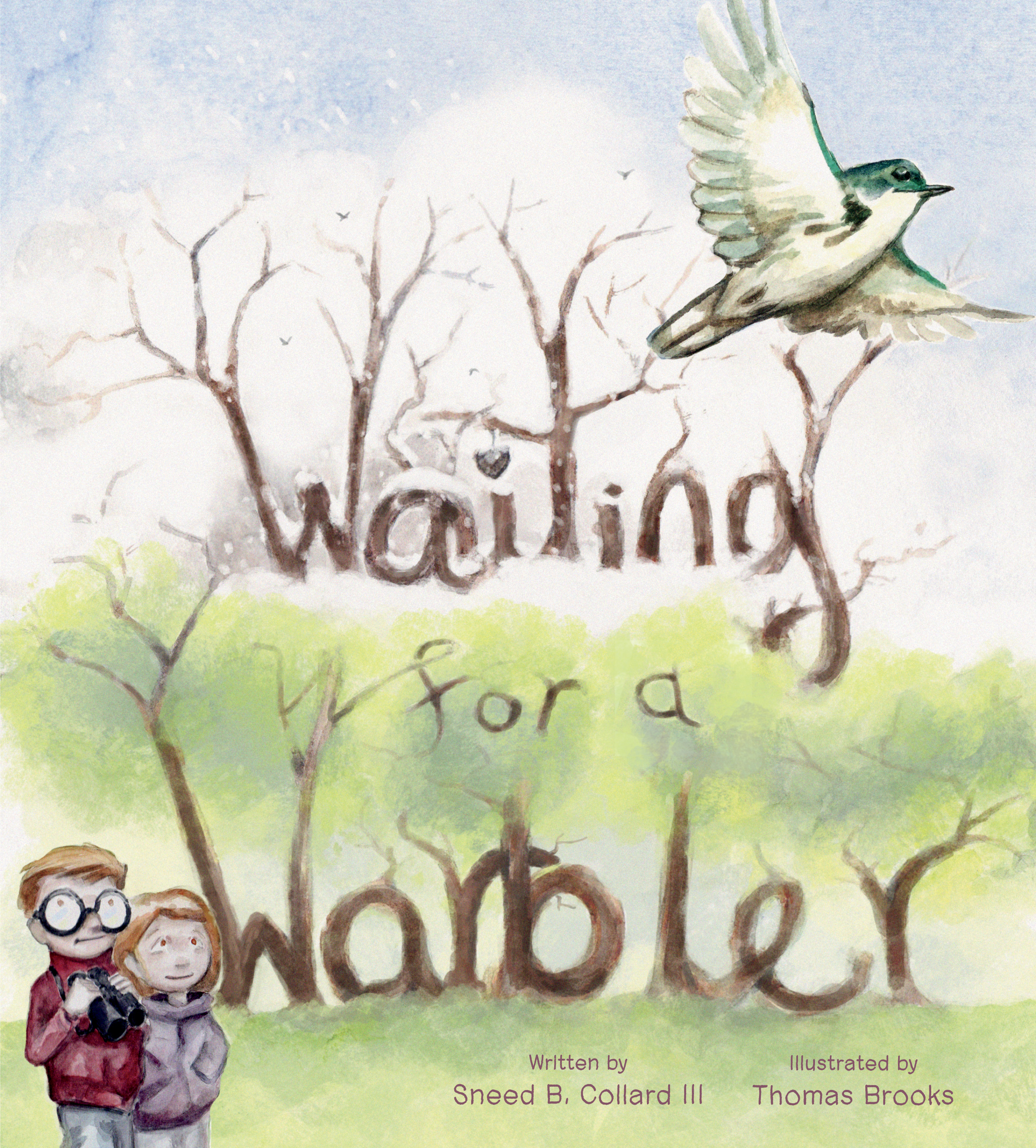
Waiting for a Warbler (Tilbury House, 2021) is my first illustrated picture book in more than a decade. It tells the charming stories of a migrating Cerulean Warbler, and a family that has been improving its backyard habitat for birds. You can order it now by clicking on the image or, better yet, placing a call to your local independent bookstore.

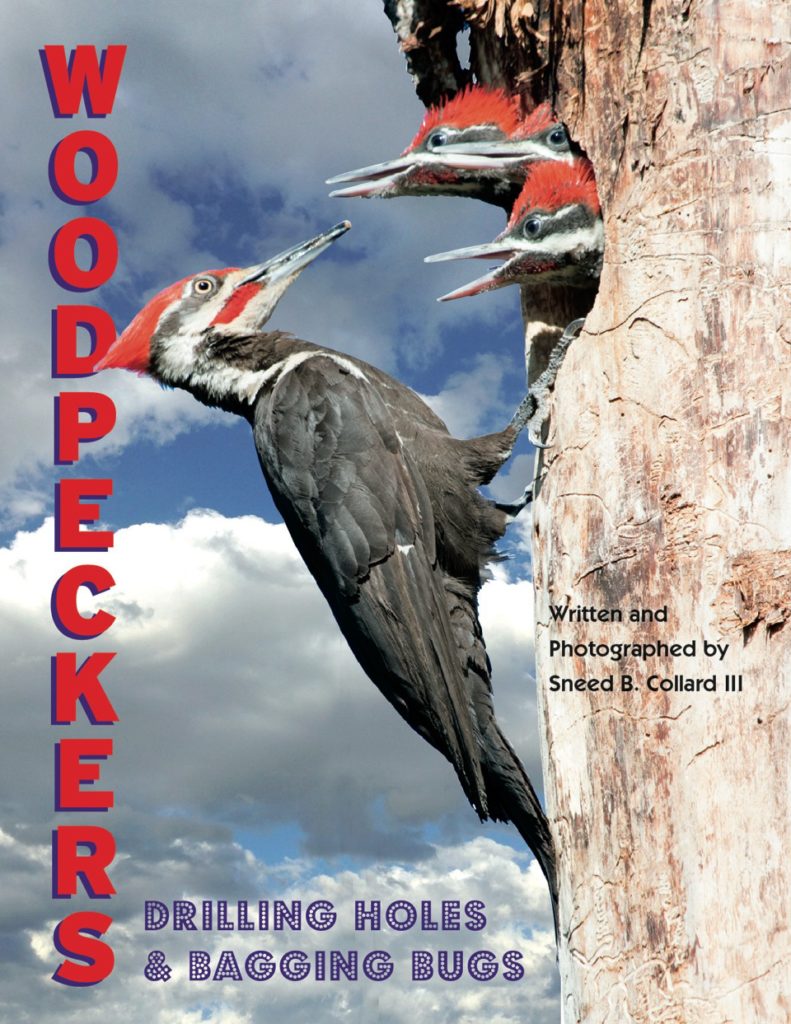
As a writer, birding gives me much more than inspiration. It has granted me a second lease on my career. When Braden and I dived into birding, it was the heart of the Great Recession and, like now, publishers were buying zilch. I was trying different things with mixed results, but felt more or less directionless. Birding changed all that. The more we saw and learned about birds, the more ideas I had to write—ideas that have resulted in adult books and magazine articles, and in my children’s books Fire Birds; Woodpeckers: Drilling Holes & Bagging Bugs; and Birds of Every Color. My newest title, Waiting for a Warbler, has a special history I’d like to share.
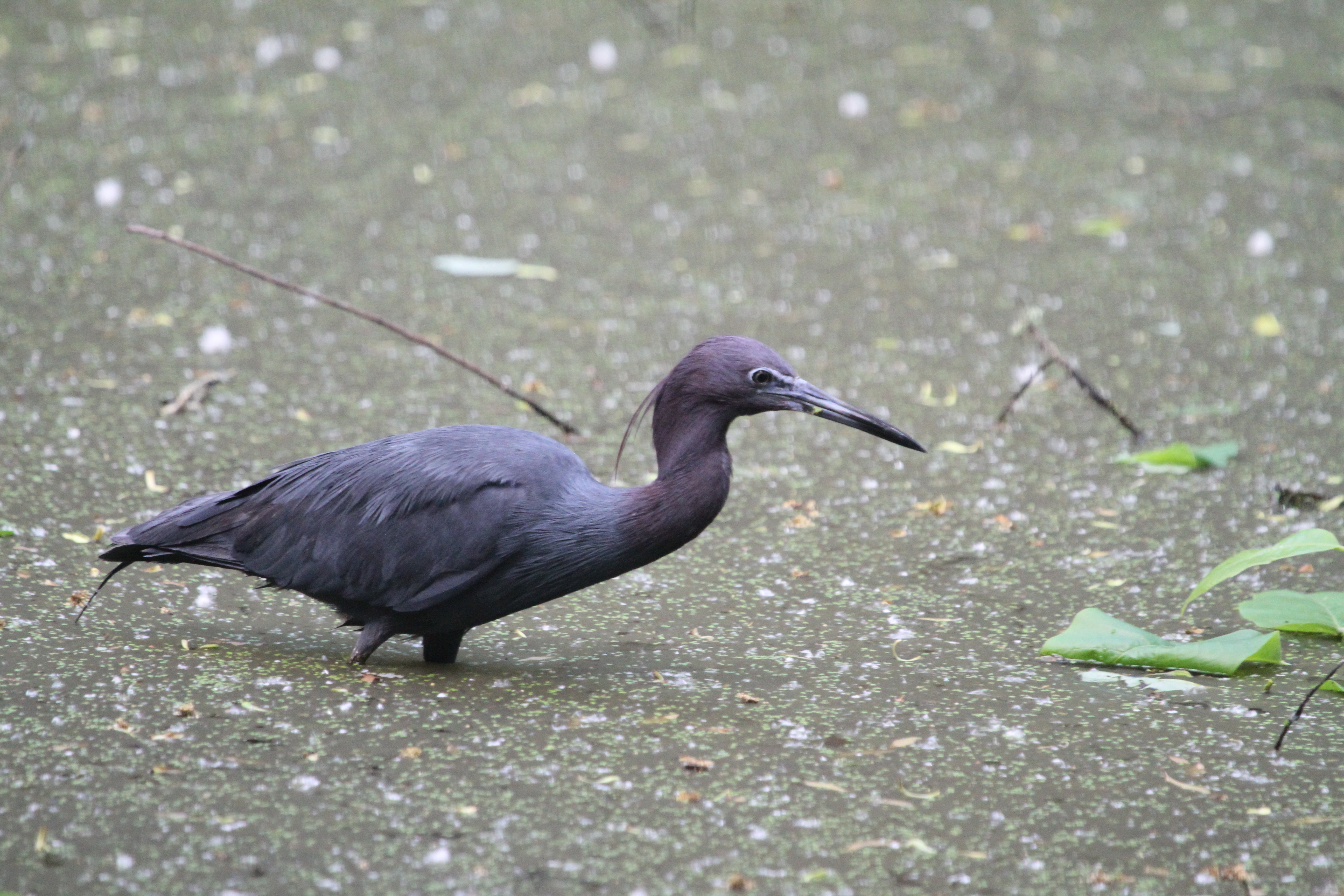
The idea to write about warbler migration blossomed in my brain only days after Braden and I visited High Island, Texas during our 2016 Big Year of birding. High Island is what’s called a migrant trap. The shelter and food it provides lures thousands of exhausted, migrating songbirds as they complete their marathon eighteen-hour flights across the Gulf of Mexico. We spent only a day at High Island, but during that time observed more than a dozen kinds of warblers along with tanagers, thrushes, vireos, and many other songbirds, and I was so inspired I quickly wrote down a story and sent it to a publisher who had expressed interest. I heard . . . nothing. No call. No feedback. No offer.

I let the idea sit for a year or so—often a useful thing to do to get perspective on a manuscript—and took another look at it. I realized it read a little stiff and impersonal, and decided to recast it as the story of one individual warbler crossing the Gulf of Mexico. I sent it to a different publisher, who wrote back within a month or two and said that he liked it, but what about working in the idea of a family waiting for the warbler to arrive? It was a great suggestion and I quickly revised the story and sent it off. Two years later, the book has been published!
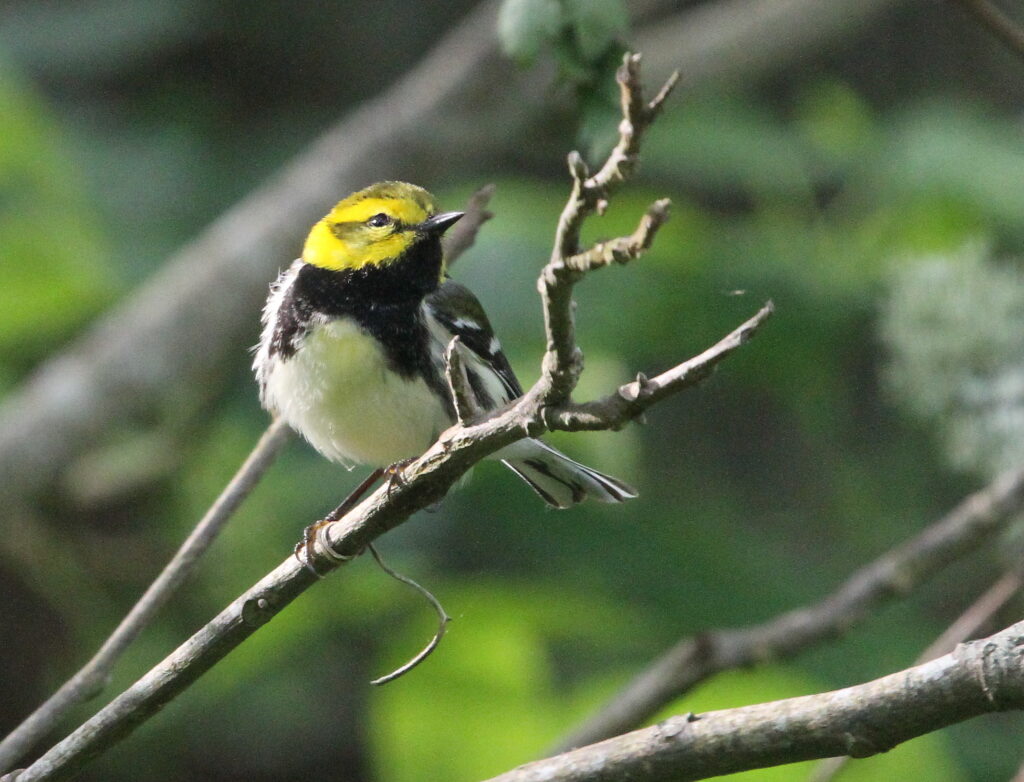
The book recounts the epic, dangerous journey of a male Cerulean Warbler that runs headlong into a storm halfway across the Gulf of Mexico, but it also focuses on a family that has been working hard to improve its backyard habitat for birds and other wildlife. The two children had glimpsed a Cerulean Warbler the year before, but the bird had not stayed, and they hope to see the bird again this year. I will leave the rest to your imagination—or, better yet, until you read the story for yourselves—but I have to say that I am extremely proud of this book both because of the adventure it shares and the positive role models it offers. The delightful illustrations by Thomas Brooks help make Waiting for a Warbler both a perfect read-aloud and a useful resource for a family or class-room conservation project. Braden and I hope that you all enjoy it, and would be grateful if you share this post with friends, teachers, and others. Bird—and write—on!
Hard Birding in Houston

If you enjoy these posts, please share them with friends, family, and other birders. Also, be sure to subscribe by filling out the form down in the right-hand column. Tweet-Tweet!

If you’ve been following this blog at all you know that Braden and I love birding Texas. Not only does the Lone Star State offer a delicious smorgasbord of temperate and tropical bird species, it provides an equally delicious variety of food, from Tex-Mex to BBQ. Little wonder I jumped at the chance to lead a professional development workshop for teachers there last week. I quickly learned, however, that birding in Texas in June is a far cry from birding there almost any other time of year.

I don’t know about you, but I’m getting sick of Houston’s annual “Hundred-Year Floods”, which, among other things, wreak havoc with birding plans!

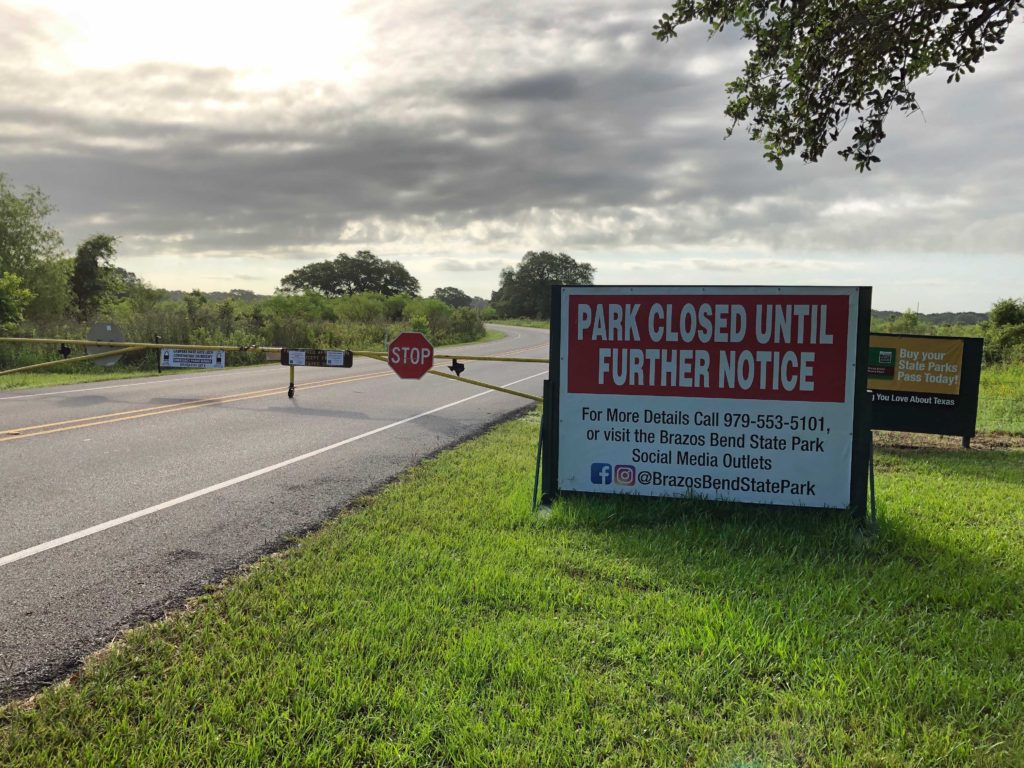
I should have guessed that birding would be tough when my flight down got diverted to San Antonio for four hours because of thunderstorms over Houston, eliminating an entire afternoon of birding I had planned. Nonetheless, I scored some great Tex-Mex food at Gringo’s that night and the workshop the next day went fabulously well. The following morning, I optimistically set off early to check out Brazos Bend State Park, which I raved about in last year’s post Winter Birding at Brazos. Unfortunately, at the entrance I was greeted with a giant sign informing me that the park was closed because of recent flooding.

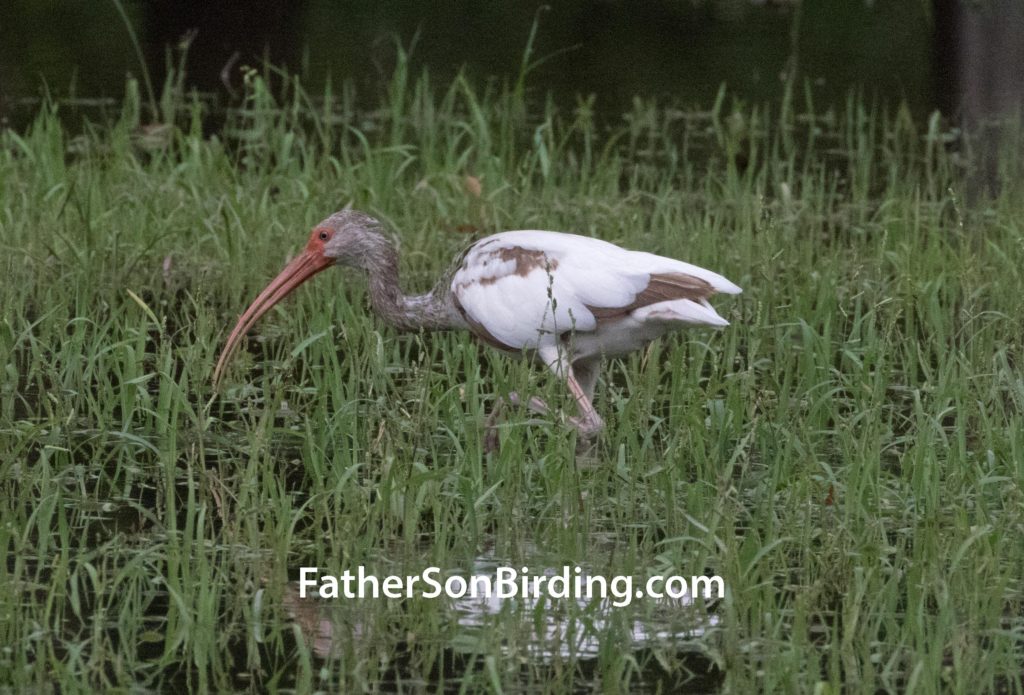
The flooding did afford me some close-up looks at White Ibises, including this juvenile, which was foraging on the flooded lawns of Bear Creek Pioneers Park.

“What?” I exclaimed, outraged. At least the drive there and back proved fruitful as I spotted a Crested Caracara and Scissor-tailed Flycatcher, along with an impressive display of Cliff Swallows at a bridge. Alas, I found more flooding at my next stop, Bear Creek Pioneers Park. I walked around for more than an hour and managed some great looks at White Ibises and a Red-bellied Woodpecker, but by then temperatures were edging past 90 with a heat index above 100. I wiped my brow and muttered, “I’m good for one more spot. Then it’s back to the hotel to watch HBO.”

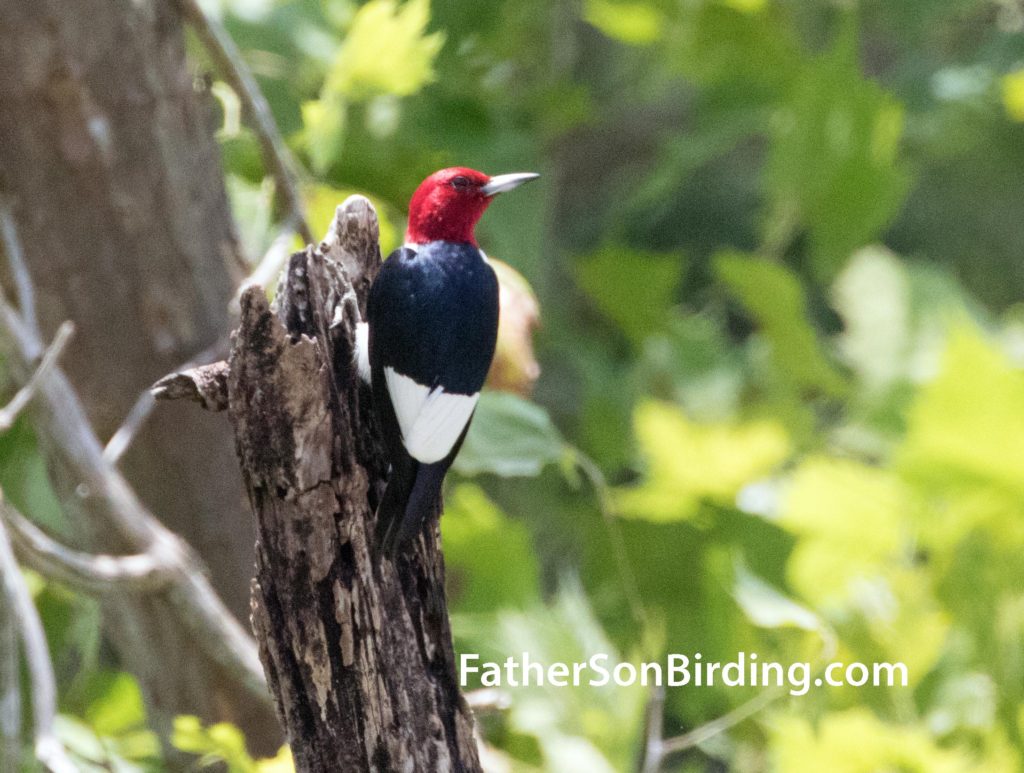
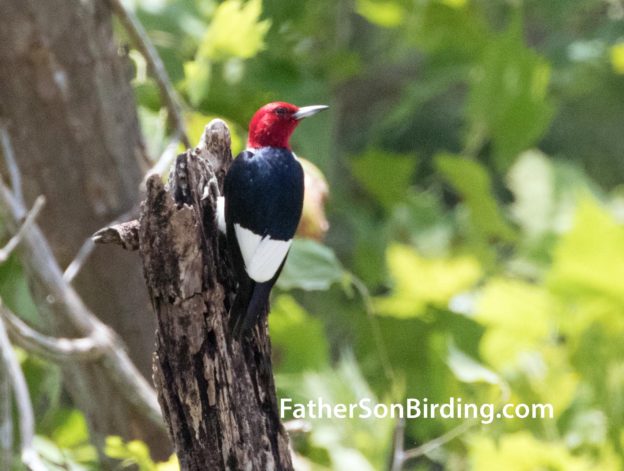
For my last birding gasp, I chose one of Braden’s and my favorite Texas birding spots—Jesse H. Jones Park & Nature Center. I guzzled a pint of water, donned my hat and insect repellent, and set out to see if any birds could actually survive in Houston’s legendary heat and humidity. Not much stirred, but I had a fun encounter with Carolina Wrens and two separate experiences with one of my favorite Texas birds, Red-headed Woodpeckers—including a juvenile that had just fledged. The woodpeckers didn’t entirely make up for the day, but they helped—along with seafood enchiladas and a margarita at Gringo’s!

It’s hard to complain too much about a day that presented not one, but five Red-headed Woodpeckers. A former Team Collard nemesis bird, Braden and I first tallied RHWOs at this same park in 2016!

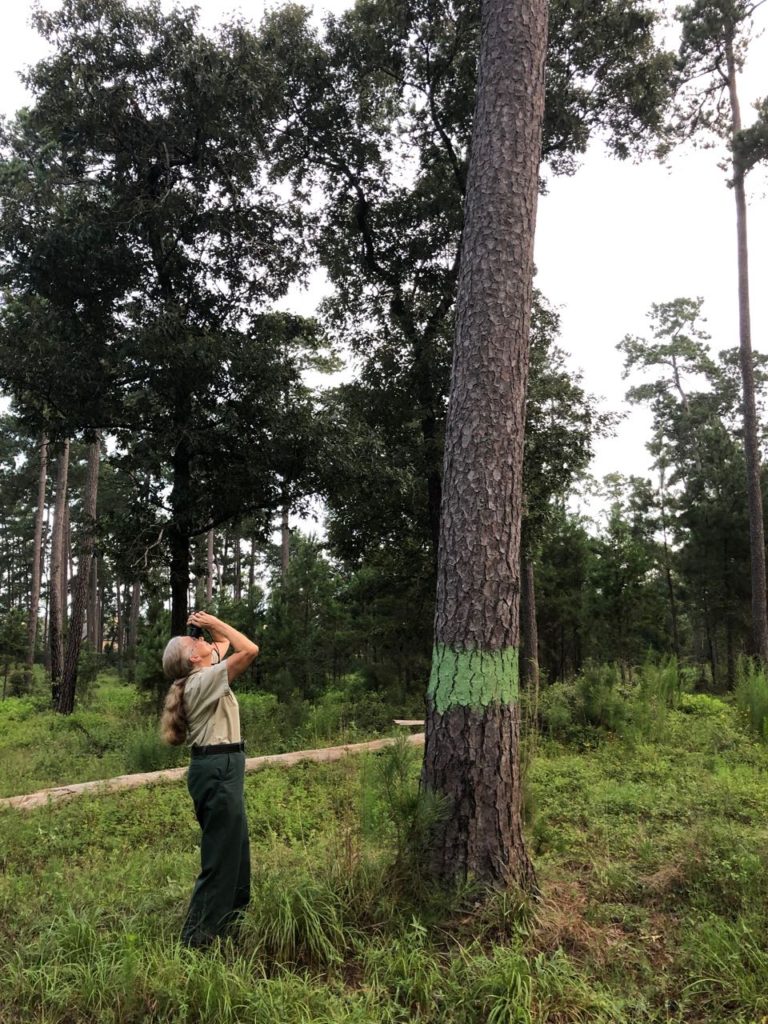
Before my flight home the next day, I had one more mission—to meet with biologist Donna Work at the W.G. Jones State Forest. The forest is the best place near Houston to learn about and observe endangered Red-cockaded Woodpeckers. Populations of these interesting birds have declined over the decades, mainly due to the destruction or replacement of the longleaf pines that they prefer to nest in. Donna met me just as dawn light reached across the sky and we chatted about all things woodpeckers while hoping to see the birds leave their roosting holes.

Biologist Donna Work was kind enough to meet me at 5:45 a.m. to observe Red-cockaded Woodpeckers at W.G. Jones State Forest and tell me about their management in a place now surrounded by suburbs. The green paint marks trees the birds use or have recently used for roosting or nesting.

We missed the birds’ exit, but did glimpse them in the trees overhead. Donna explained that the forest hosts about four RCWO family groups and that nesting success varies year to year. This year, the group we were watching had fledged only a single chick. I asked her if the birds would survive without active management. “No,” she replied, explaining that the birds were too isolated from other RCWO populations to avoid getting inbred. To make up for this, forest managers bring in woodpeckers from other areas to breed with the resident birds. The forest itself also requires active management to mimic the natural fire regime that maintains conditions conducive to the woodpeckers. Despite the tough birding, I left Texas with my belly full, and felt glad that so many people are working hard to protect Texas’s avian treasures.

San Antonio Botanic Garden: Messier is Betterer

To Subscribe to FatherSonBirding—and nothing else—please fill in your email address in the box down in the column to your right. Thanks!

As I recounted last week, I had the recent good fortune to speak at the TCTELA conference in San Antonio. Additional good fortune? My flight home didn’t leave until Monday evening, leaving an entire day to bird. My initial plan was to visit the Mitchell Lake Audubon Center, but naturally the center is closed on Mondays, so I instead opted for the San Antonio Botanical Garden.

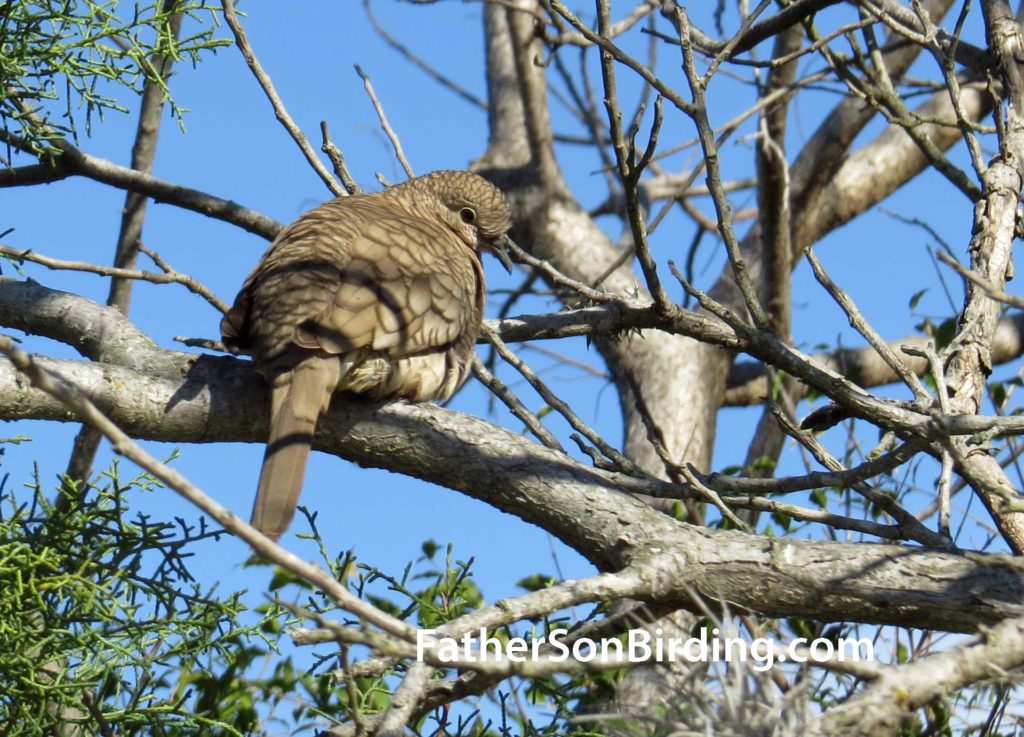
Hard to get tired of Inca Doves, especially when they never come close to Montana!

Taking my very first Uber ride (worked like a charm), I arrived almost at opening time and proceeded to feel my way through the garden’s 38 acres. The birds were active and I immediately found Northern Mockingbirds, American Goldfinches, Northern Cardinals, and the especially raucous Blue Jays among other common species. My main targets of the day were Ladder-backed and Golden-fronted Woodpeckers, as they’d both shown up on recent eBird checklists, but neither those nor other extraordinary species showed themselves. . . that is, until I wandered into a small, unkempt part of the grounds near the back.

I was delighted to find this guy trying to stay undercover in the Garden’s “messier” reaches!

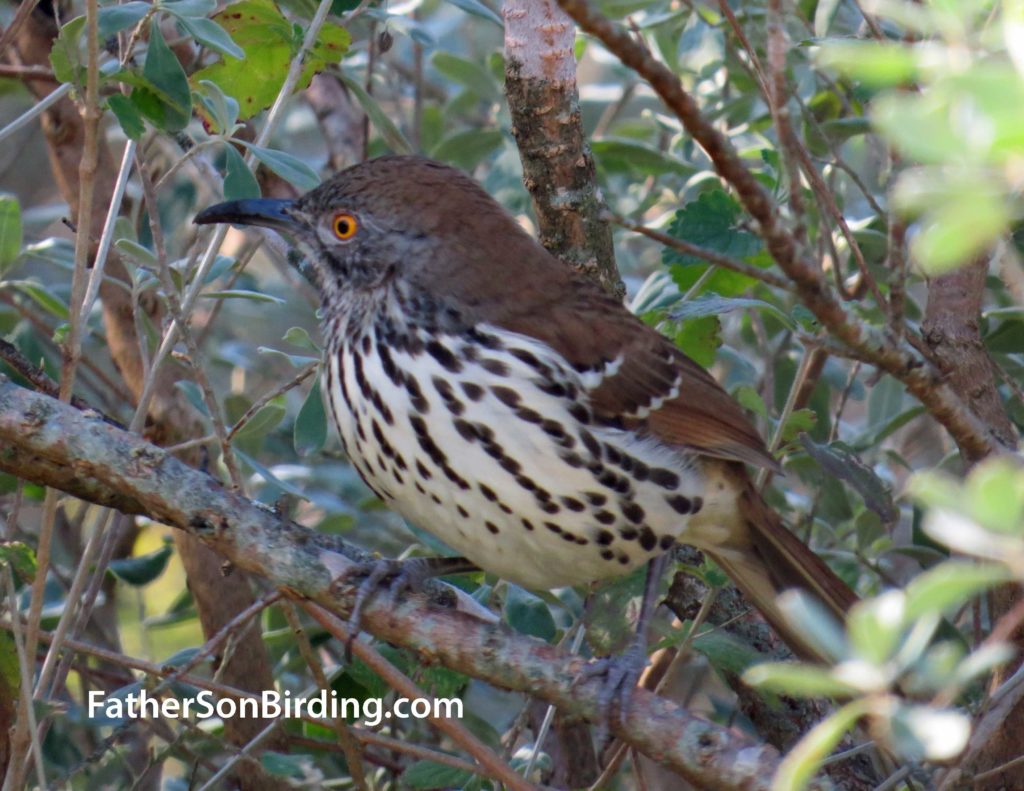
With my hearing aids in, I detected the regular contact chip of what I guessed was some kind of warbler and, sure enough, I soon spotted a Yellow-rumped. I also saw another tiny bird dive into a bush, but failed to get a good look. “Just stand for a minute and be patient,” I told myself. Sure enough, the mystery bird flew into a closer bush and, even better, I got my binocs focused on it. I didn’t recognize the markings at first, except that I knew it was not a warbler. Then, I saw the distinct pale eye of a White-eyed Vireo. Whoo-hoo! And if that wasn’t enough, moments later, I spotted the furtive brown figure of a Long-billed Thrasher! Now, we were gettin’ somewhere!

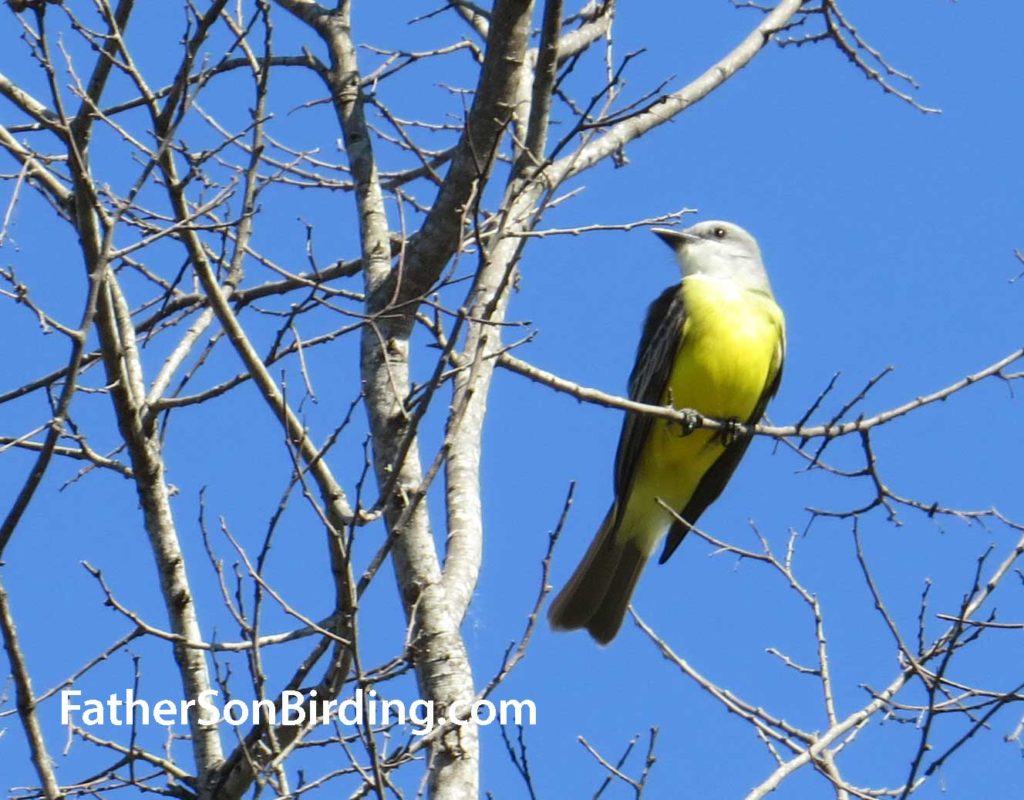
Exploring more, I discovered Inca Doves, Red-shouldered Hawks, and Black Vultures, but after a lunch break, bird activity took a nosedive along with my birding enthusiasm. Before summoning another Uber, however, I decided to return to the same unkempt spot as before. Jackpot! There, I picked up more Yellow-rumpeds, an Orange-crowned Warbler, and a Blue-gray Gnatcatcher. But who was making those annoying cheeps, sometimes punctuated by a loud rising and falling call”? I followed the sounds for more than ten minutes. Finally, I spotted a gray bird with brownish wings and a vivid mustard breast on a branch.

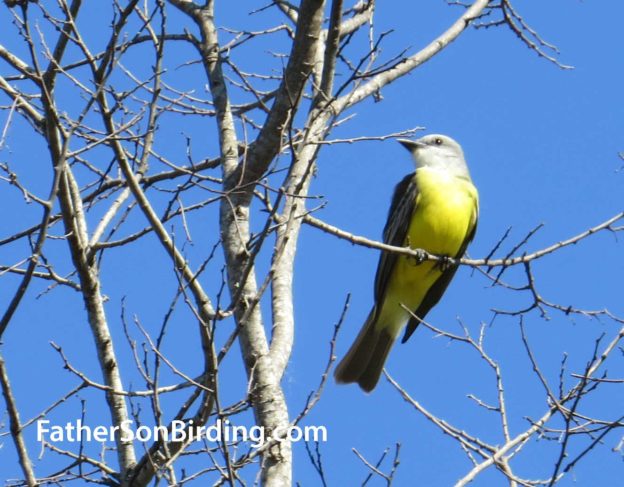
The distinctive call of “Beer!” finally led me to this stunning Couch’s Kingbird.

Right away, I knew it was a king bird, but which kind? A quick look at the eBird checklist pointed to Couch’s Kingbird, which I confirmed by listening to its “Beer!” call on my phone.

I left the garden without my coveted woodpeckers, but feeling pretty good about the birds I’d been able to find. The day also reinforced a lesson for botanical gardens and yards alike: for birds, messier is betterer!

Birding San Antonio’s River Walk? Are You Nuts?

To Subscribe to FatherSonBirding—and nothing else—please fill in your email address in the box down in the column to your right. Thanks!

If you’ve ever visited the downtown River Walk area of San Antonio, you’d be forgiven if you viewed it as less than a premier birding destination. Grackles, starlings, pigeons, and freakazoid hybrid ducks that grew up too close to Chernobyl overrun the place. Still, as a birder, I felt obligated to give it a legitimate chance, so on my work trip last weekend, I determined to explore the River Walk’s distant outposts.

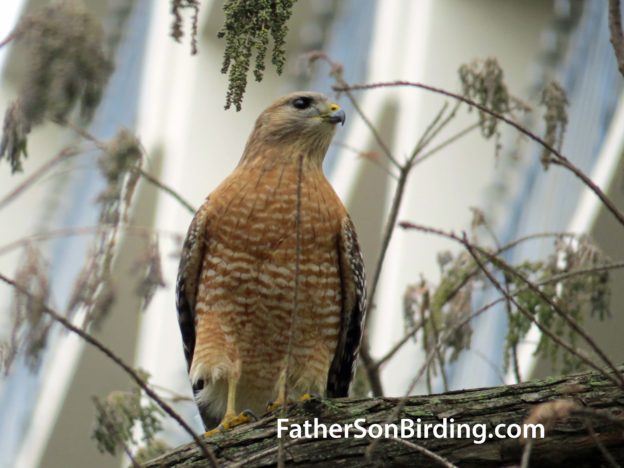
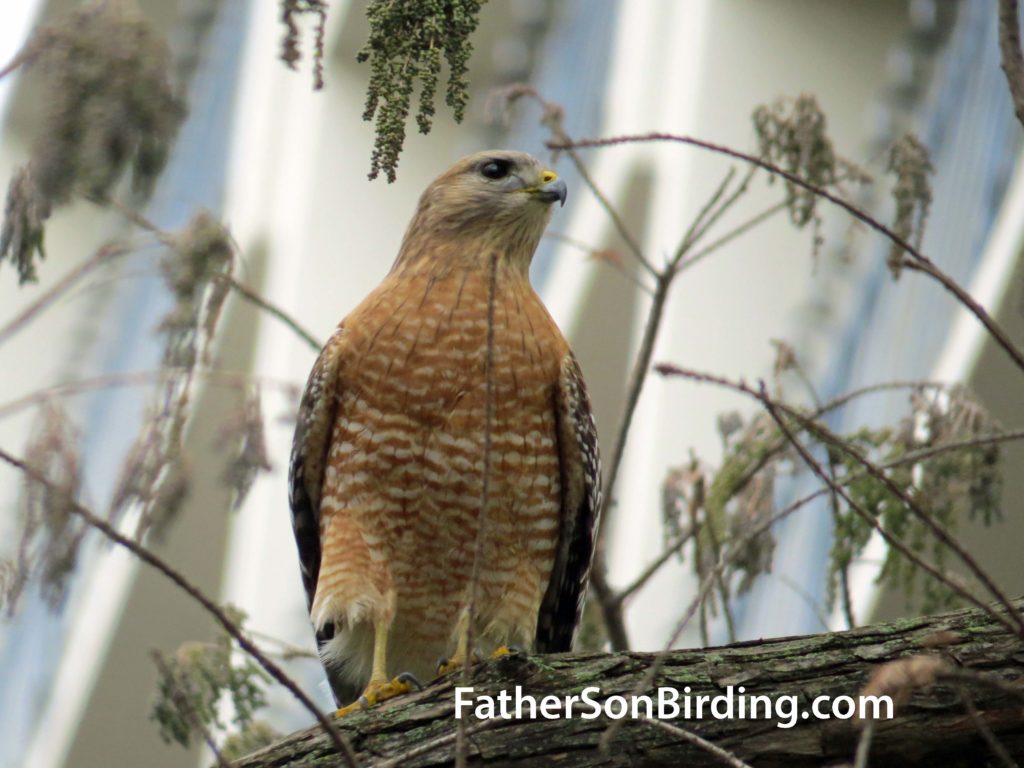
From our recent trips to Texas and Georgia, we are learning just how well Red-shouldered Hawks adapt to an urban lifestyle. A big thank you to my daughter for letting me steal her point-and-shoot camera for the trip!
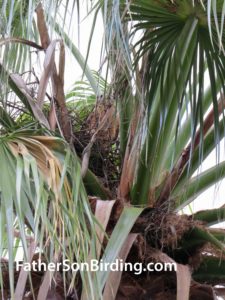
How many margarita-wielding tourists do you suppose notice this Red-shouldered nest?

Day 1: Even before leaving the main tequila-drenched tourist loop, I caught a surprising shape flashing above the river and landing in a nearby tree. I hurried to the top of a bridge for a closer look and, sure enough, IDed a Red-shouldered Hawk surveying potential prey (tourists?) below. Its mate soon swooped by and I located their nest in a tall palm near the junction of Commerce Street. “Whoa! Good start,” I thought to myself, but more surprises awaited me.

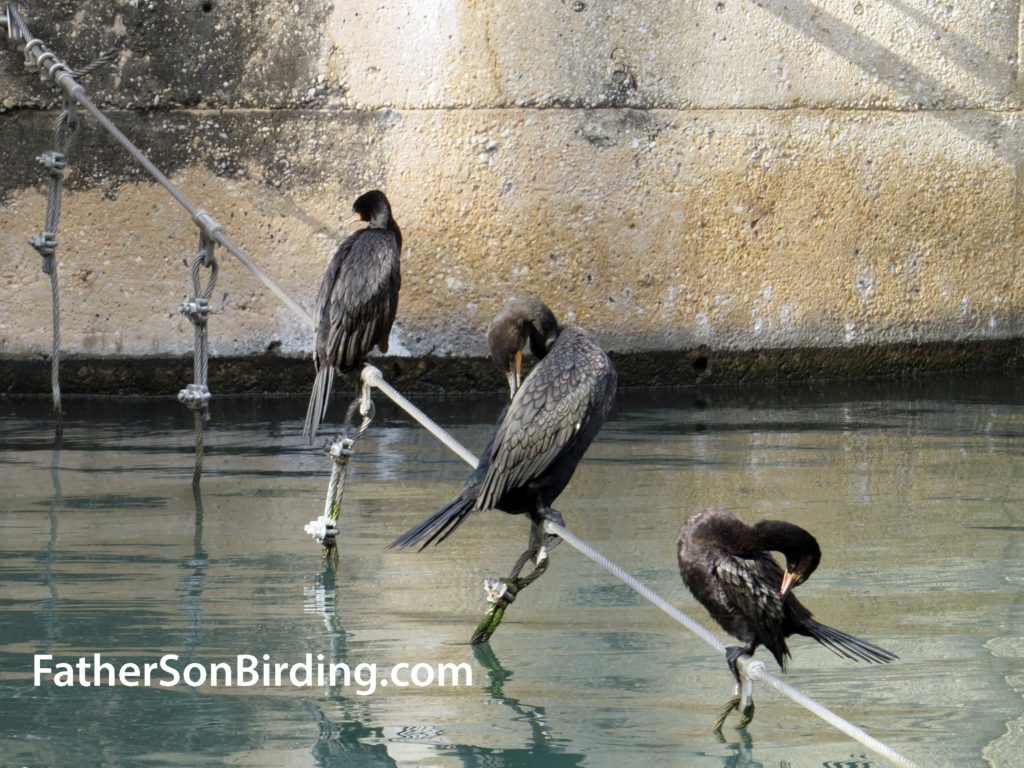
In the nearby Villita market area, I picked up Blue Jays, White-winged Doves, mockingbirds, and an unanticipated Orange-crowned Warbler diving into a drainage grate. Then, joining the main river, I began working my way downstream to meet a trio of Double-crested Cormorants near a small dam. “What the heck are they doing here?” I asked, astonished—but then found seven Neotropic Cormorants nearby! Before hurrying back to my conference, I rounded out my three-mile expedition by picking up Yellow-rumped Warblers, Ruby-crowned Kinglets, Northern Cardinals and my biggest prize of the day, a Lincoln’s Sparrow co-mingling with some House Sparrow hoi polloi.

Even though I saw them on the eBird checklist, the presence of cormorants on the uber-engineered San Antonio River caught me by surprise.

Day 2: After delivering a keynote address at the wonderful TCTELA conference, I had nervous energy to burn so decided to skip lunch and head directly upstream. As on the previous day, the farther I got from downtown, the better the habitat, and the better the birds. I saw some of the same species as the day before, but was delighted to flush six Inca Doves and a Yellow-rumped on the grounds of the San Antonio Museum of Art while two Black Vultures circled overhead.

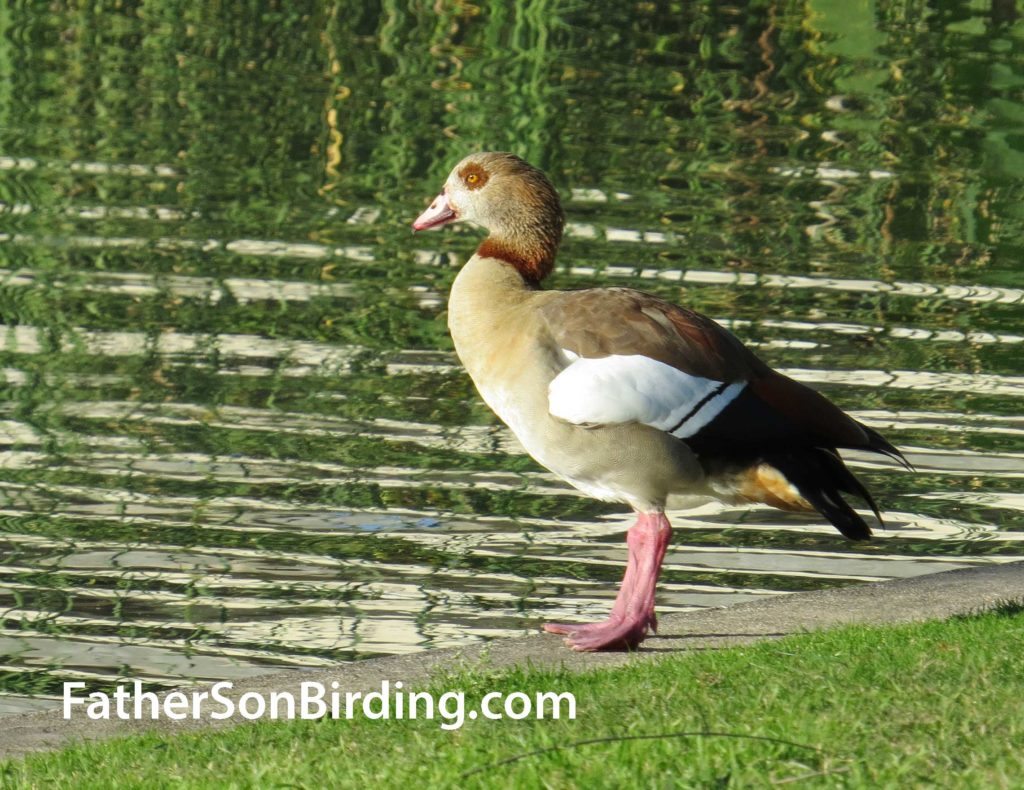
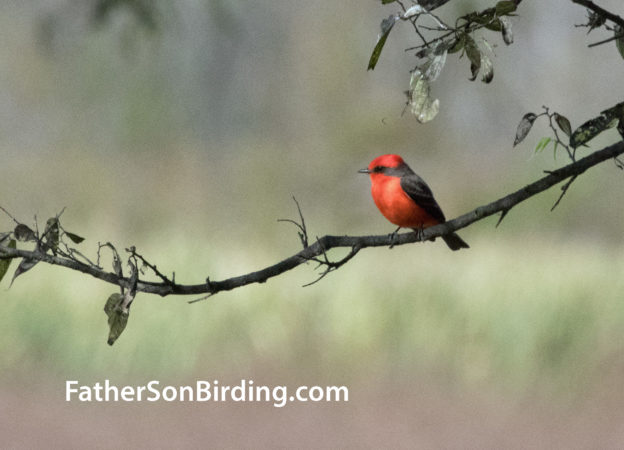
I hadn’t intended to hike all the way to Brackenridge Park (about three miles each way), but am glad I did. In oaks along the trail, a Rufous Hummingbird landed next to me and I spotted an elusive songbird of some sort moving through the trees. I spent five minutes trying to get a clear view, and then . . . Blue-headed Vireo! Only my second one ever! In the marsh at the south end of Brackenridge, I added a lone Egyptian Goose, an Eastern Phoebe, and a Great Egret to my growing list. Then, I saw a startling splash of red fly to a nearby branch. Vermillion Flycatcher!

Okay, I admit it. When I saw this Egyptian Goose, I at first thought it was a Black-bellied Whistling Duck. In my defense, it was only the second time I’d seen these guys!

The lesson? Once again, that birding never fails to surprise and please, and can turn any trip into an adventure. After returning to the main tourist area, I decided to reward myself for my exploits with cheese enchiladas and a Corona, all the while gazing up at the flights of grackles and starlings above me.

Up next: my report on my first Uber ride and San Antonio’s Botanical Gardens—if Braden doesn’t come up with something even better!

Winter Birding at Brazos

It was Saturday, November 17 and I have to admit I was feeling a bit down on myself. Before my work trip to Houston, Braden had set a goal for me of 100 species, something I thought I could easily achieve. My visits to Anahuac and Bolivar Flats, however, had left me only at 75 confirmed species—well short of my goal. With only one free half-day left of my trip, I searched the eBird hotspot map and asked myself, “Where could I score big and still get back to my last book signing on time?” My eyes landed on Brazos Bend State Park.

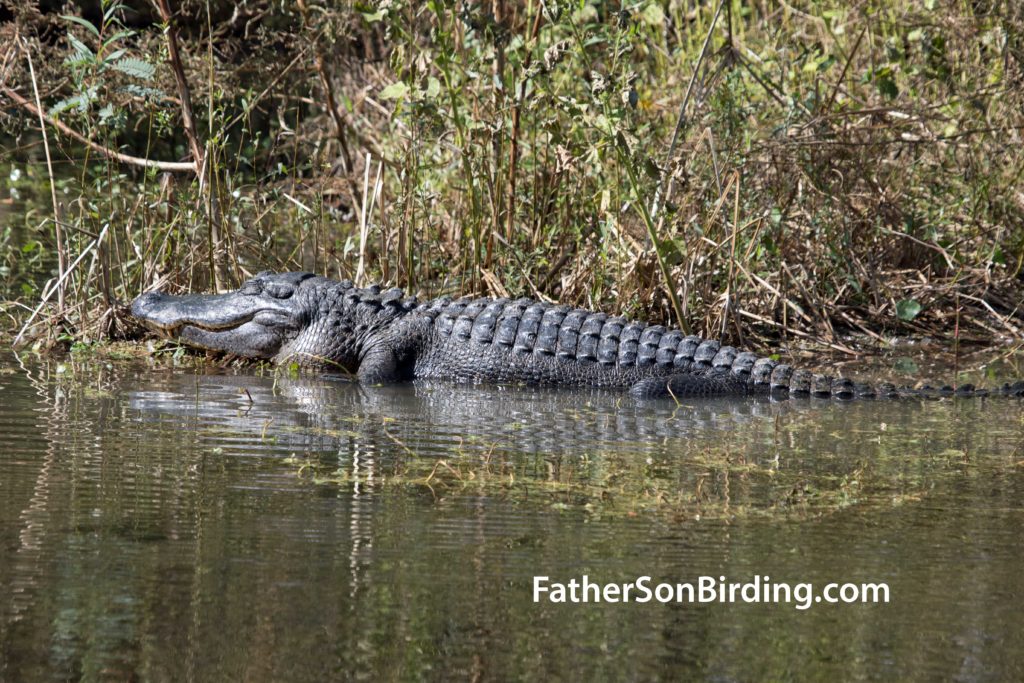
Alligators seem to be the main attractions at Brazos Bend, but the birds are far more interesting!

The official motto of Brazos State Park is “Come for the gators, stay for the birds.” Okay, I’m making that up—but it should be the motto because the birds are far more interesting. On the recommendation of the park attendant, I kicked off my visit with a counterclockwise circumambulation of 40 Acre Lake. The lake surface held far fewer species than I had predicted: coots, Common Gallinules, Pied-billed Grebes, and only two duck species—Blue-winged Teal and Black-bellied Whistling Ducks. Herons, Anhingas, Cormorants, and other water birds abounded, however, and as I walked, I started picking up some prized forest birds as well.

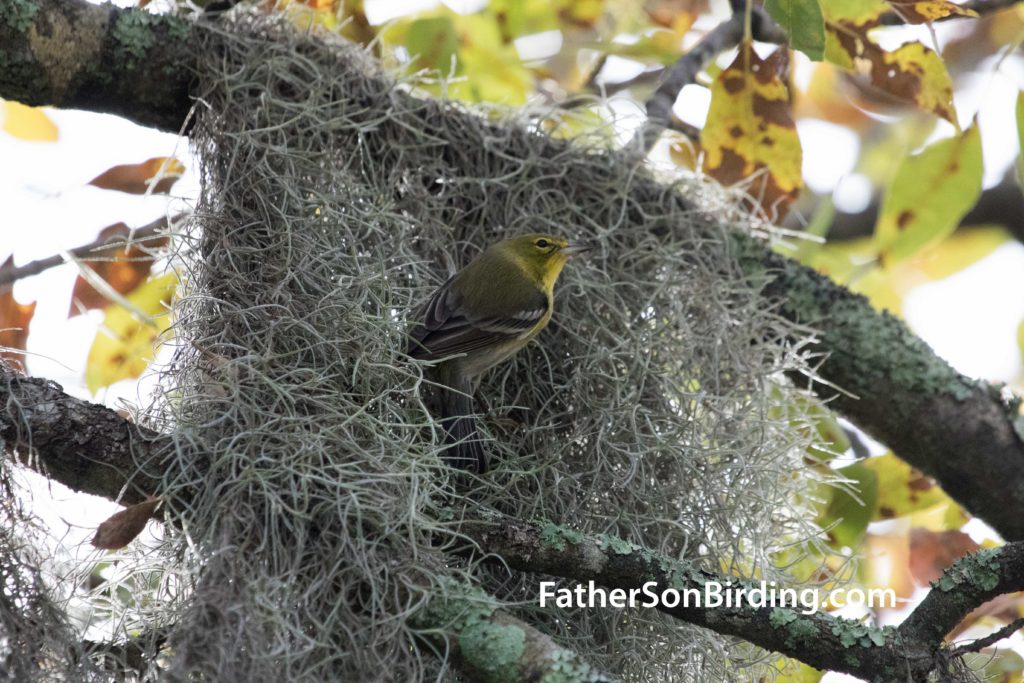
I first saw a Pine Warbler on Braden’s and my Texas trip in January, so seeing one again was like seeing an old friend.

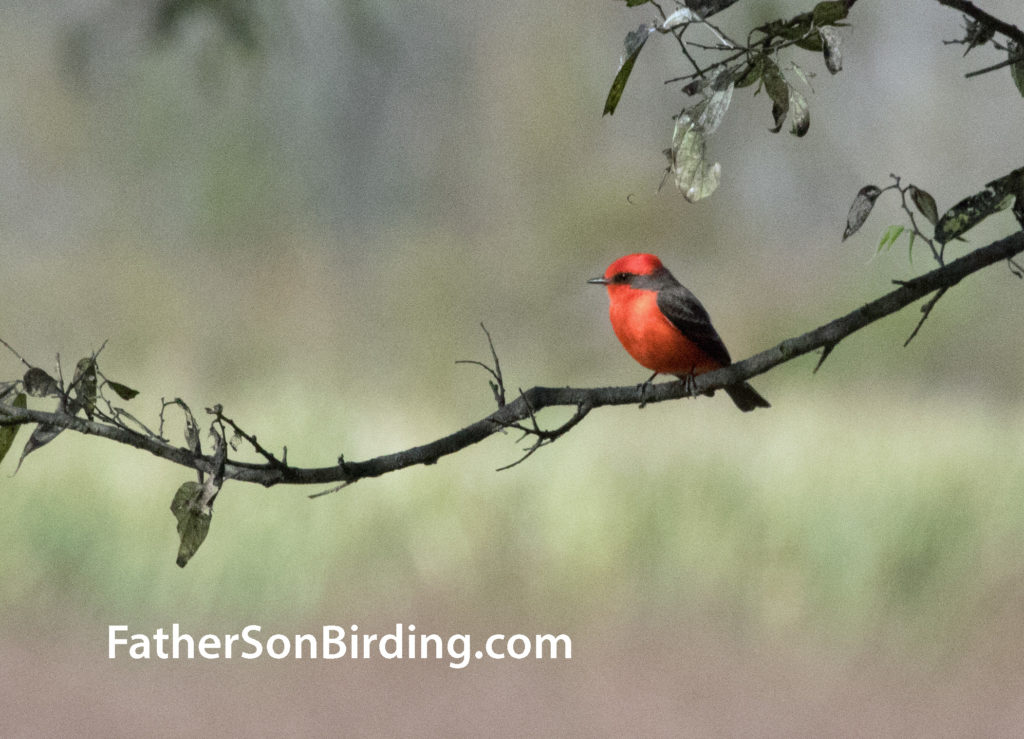
Before my trip, I had hoped to see all three wintering warblers in the area: Yellow-rumped, Pine, and Orange-crowned but had only spotted the Yellow-rumped earlier. Within fifteen minutes, though, I happened upon a great mixed flock where I picked up my missing two warblers—and Golden-crowned Kinglets to boot! A little while later, I saw a pair of Vermillion Flycatchers—my first ever in Texas. It was a good start, but I wanted more!

Vermillion Flycatchers were a real surprise at Brazos, but I guess they shouldn’t have been.

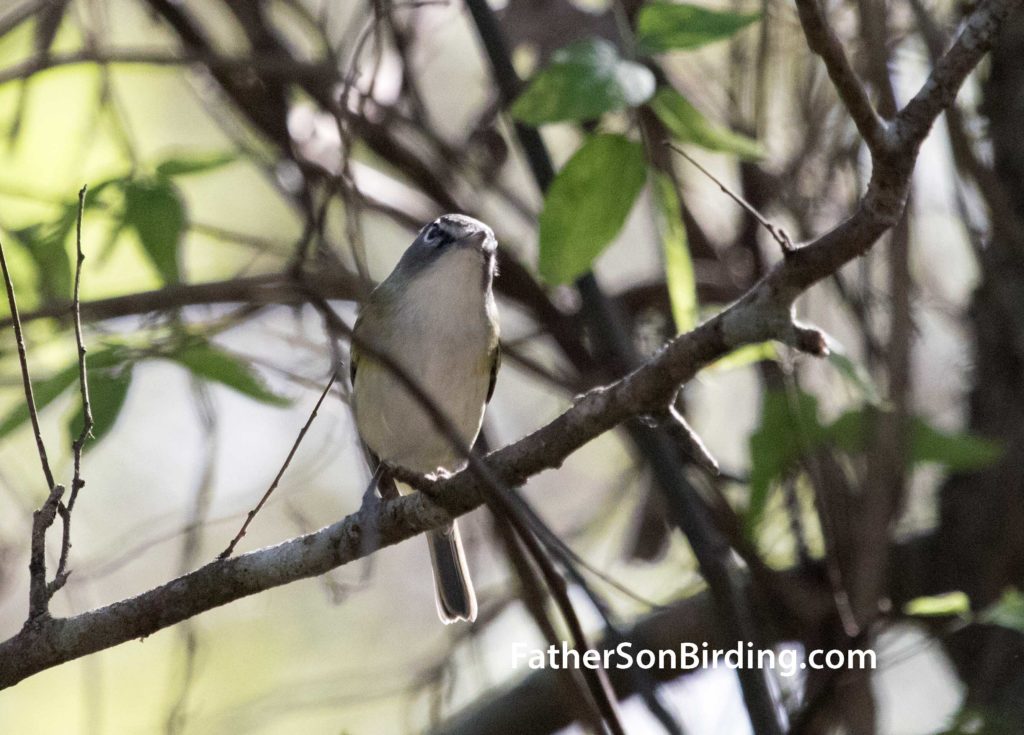
Driving to Elm Lake, I decided to bushwack through some promising forest across from the parking lot. I could hear a variety of birds there, but needed to see them for the IDs. The birds made me work for them! First, I found the noisiest birds—a pair of Carolina Wrens. Then, I happened to see a Blue-gray Gnatcatcher. I could see something else, but dang it, the bird just kept flitting out of my vision. I thrashed through the brush until I finally managed a decent ID shot with my camera. Slather me in BBQ sauce! It was a Lifer: Blue-headed Vireo! I was elated, and minutes later I scored a Year Bird, Yellow-bellied Sapsucker!

I was tickled to ID this Blue-headed Vireo myself. I didn’t even realize it was a Lifer until Braden later pointed it out to me! Number 778!

Afterward, I hiked the two miles around Elm Lake, but except for some impressive gators, it was fairly unproductive. I didn’t mind. I was thrilled with my “birdservations” for the day. Which I’m sure is leaving you all wondering: did I reach my 100-bird goal? Alas, no. Five species short. But I had discovered a wonderful new birding location, a place I was sure to return.