Tag Archives: Wetlands

Costa Rica’s La Angostura Florencia Wetlands: Turning Disappointment into Delight

Today, we wrap up our 2026 Costa Rican adventure with a post from Braden. Our nine-day trip was filled with incredible birds—and a share of setbacks caused by unexpected weather and road closures. In fact, circumstances prevented us from visiting our major final destination, El Copal (see Braden’s 2024 post). That disappointment, however, turned into great good fortune. Why? Because it redirected us to what would become one of our favorite birding locations of the trip.

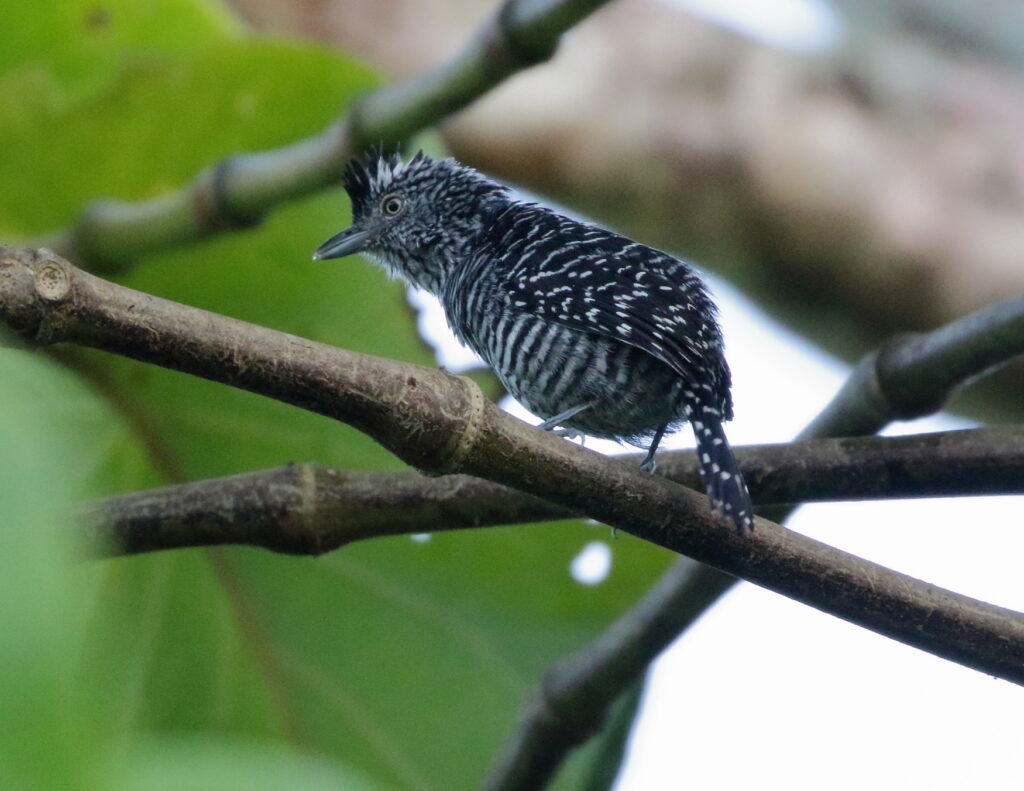
My dad and I woke to the sound of a Barred Antshrike singing outside our Airbnb. After packing our stuff and stepping outside into the bright, clear morning, we realized that there were two antshrikes, one singing from each side of us. It took little prompting for both the male and the female to come in, giving us the best looks at the species so far on our trip and knocking off another target from my dad’s list. The antshrikes, along with several cooperative White-eared Ground-sparrows on the lawn of the property and the steady flyovers of parrots and oropendolas, started our day off strong.
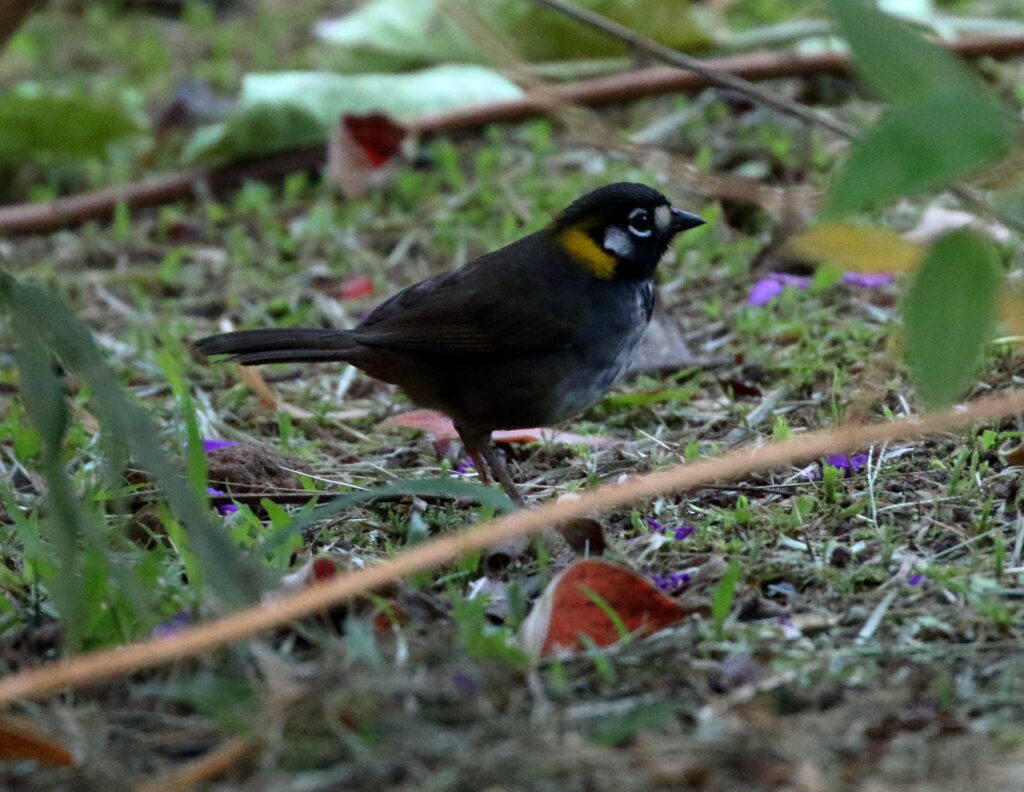
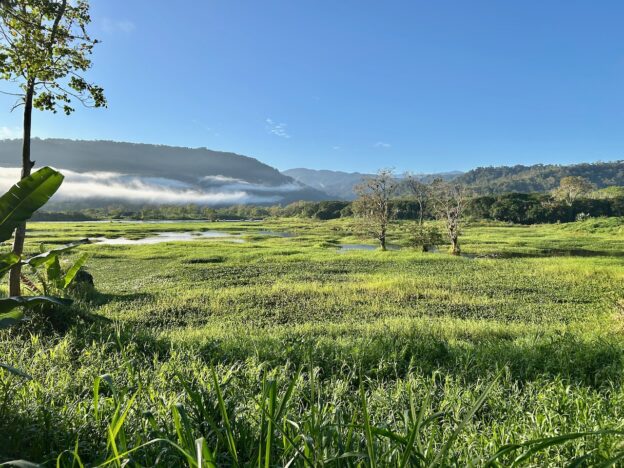
We’d been so successful with our target birds on the trip that our plans for this morning were simple: bird somewhere not too far out of the way back to San Jose, and spend one last morning enjoying Costa Rica’s birds. The night before, we’d decided on a nearby wetland called La Angostura Florencia, where the wide open habitat would render the birds easier to see than in the dense, rainforests we’d spent the last few days. 
So far, during the trip, we’d had pretty bad luck with just looking at eBird hotspots and trying to bird them. Some hotspots were closed, and we had caught David, the manager of Tranki Garden, off guard by showing up without calling ahead of time. One place we’d gone to was just completely private property (which we hadn’t known ahead of time), and the owner asked us to leave. La Angostura Florencia wetlands, however, was great—no locked gates, no private property signs, just a public, protected wetland nestled into the foothills of the Talamancas. As soon as we pulled onto the dirt road leading towards the water, we started spotting things.
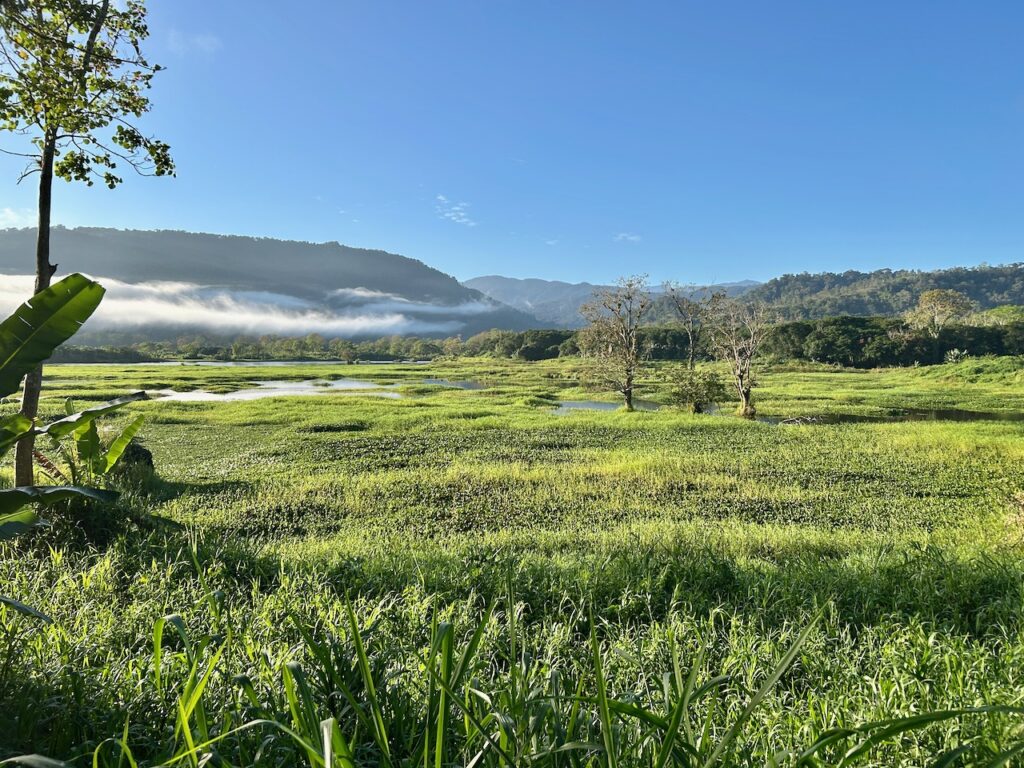
As La Angostura Florencia rolled into view, we immediately became excited by its birding potential—potential that would be fully realized!

The first sighting of the day was our most unexpected. We stopped to scan a little creek, and my dad spotted a Black-crowned Night-Heron lurking on a rock. As I stepped out of the car to look, movement caught my eye—a large, brown mammal trotting through the forest on the other side of the road. As it grew closer to us, I realized this wasn’t a coati (which is a fairly common mammal across most parts of Costa Rica) but a tayra! Tayras are large members of the mustelid group (the group of mammals that includes weasels, otters and martens) and I’d never seen one before, despite all the time I’d spent in Costa Rica. We turned our attention towards the tayra as it scaled a tree and disappeared into the foliage above. Despite the mosquitos moving in on us from all sides, the day was off to a great start!
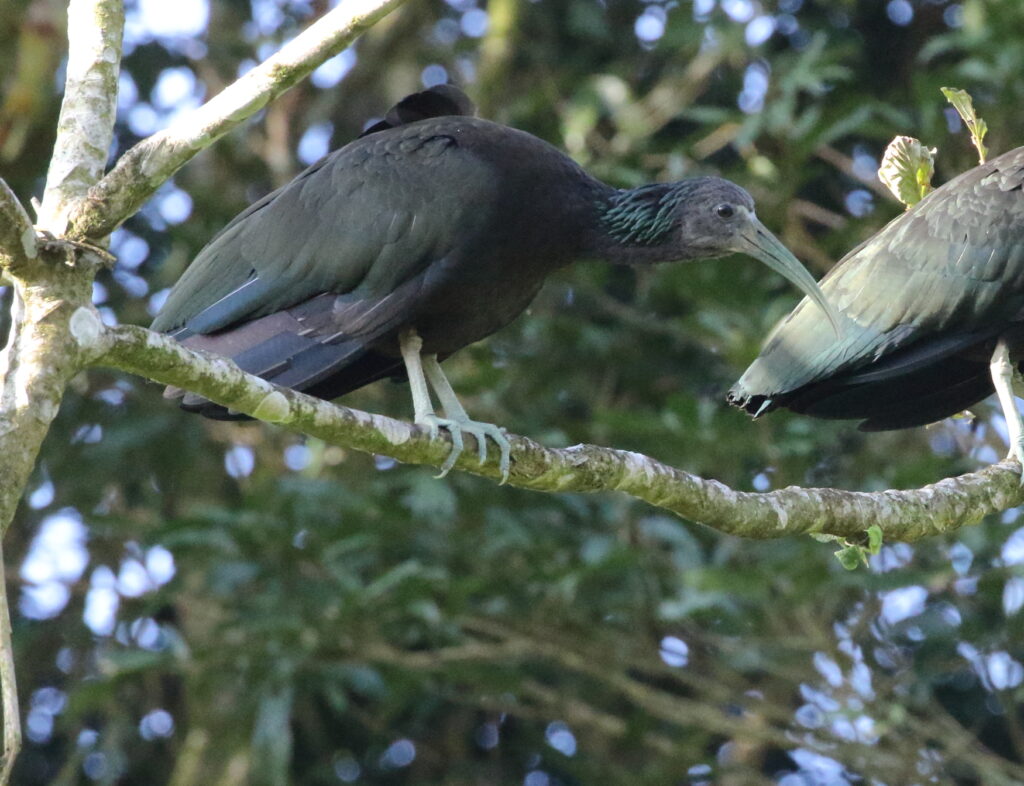
Though we’d seen a Green Ibis earlier on the trip, this pair at La Angostura Florencia gave us our first close, leisurely looks. Unlike other ibises, the Green Ibis prefers swampy or flooded forests to wide-open wetlands.

We kept driving slowly, rounding a corner and flushing a bird up from the road. “Sunbittern!” my dad yelled as it escaped into the trees. We got out again in an attempt to relocate it, but couldn’t get eyes on it again. Fortunately, there were tons of other birds around, calling, singing and foraging in the trees above and around us. We slowly made our way down the road, identifying warblers and other neotropical migrants above our heads as a variety of species gave us great, eye-level views. The dawn chorus consisted mostly of flycatchers, but we did hear a Thicket Antpitta singing from the shrubby, overgrown edge of the road!

As the wetlands came into view, we again got out and walked towards them, sidestepping a massive mud puddle in front of us. Two Green Ibises croaked from a Cecropia tree a dozen meters away, and we stopped to watch a Gray-headed Kite, our second of the trip, hunting and soaring over us. The heads of waders and waterfowl kept popping up from the grassy marsh in front of us, and we identified them one at a time.
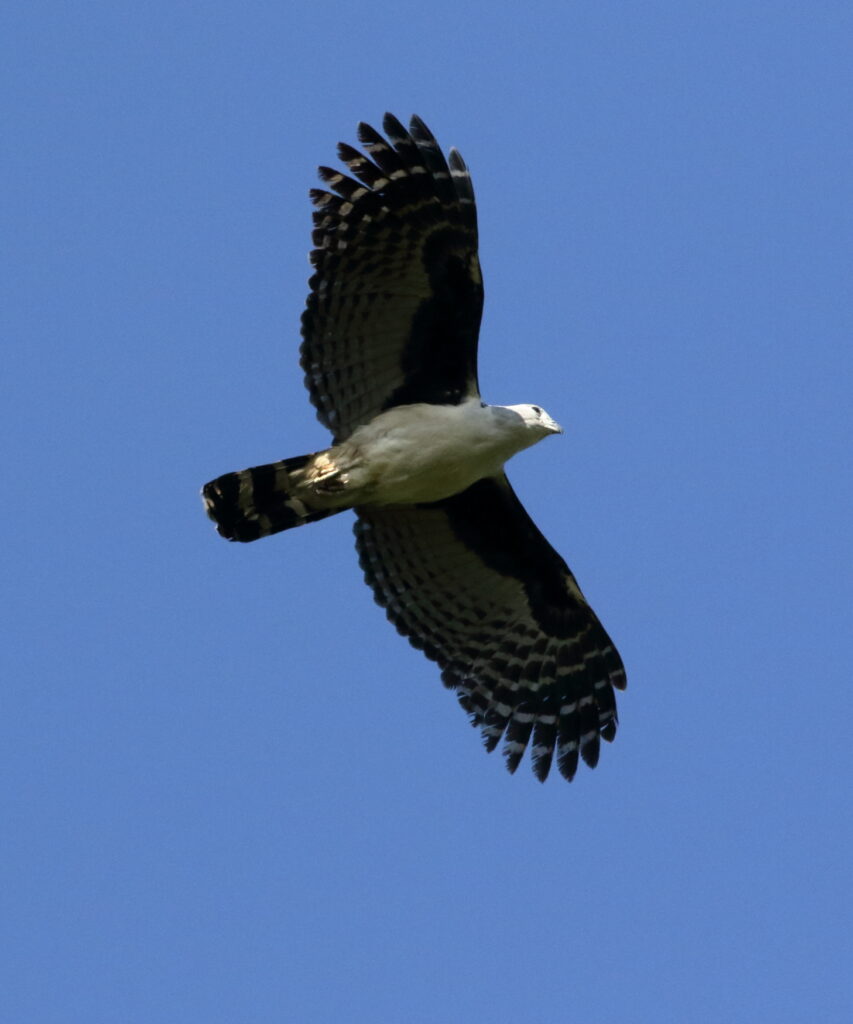
We got wonderful views of this Gray-headed Kite both perched and in flight—one of our best raptor experiences of the trip.

“Snowy Egret!”

“Black-bellied Whistling-Duck!”

“Purple Gallinule!”

“Ooh, that one’s a Limpkin!”

While many of the wetland birds were the same as the birds we’d seen at Caño Negro, seeing them in a new location felt satisfying. Costa Rica isn’t known for its extensive wetlands, but the presence of these birds at La Angostura Florencia meant that at least several populations of these species could be found in abundance in the country. We spotted some fun songbirds in the shrubs on the border of the wetland, too. Both Olive-crowned and Gray-crowned Yellowthroats sang from the grass, and a Slaty Spinetail rattled off from a bush near the road. 
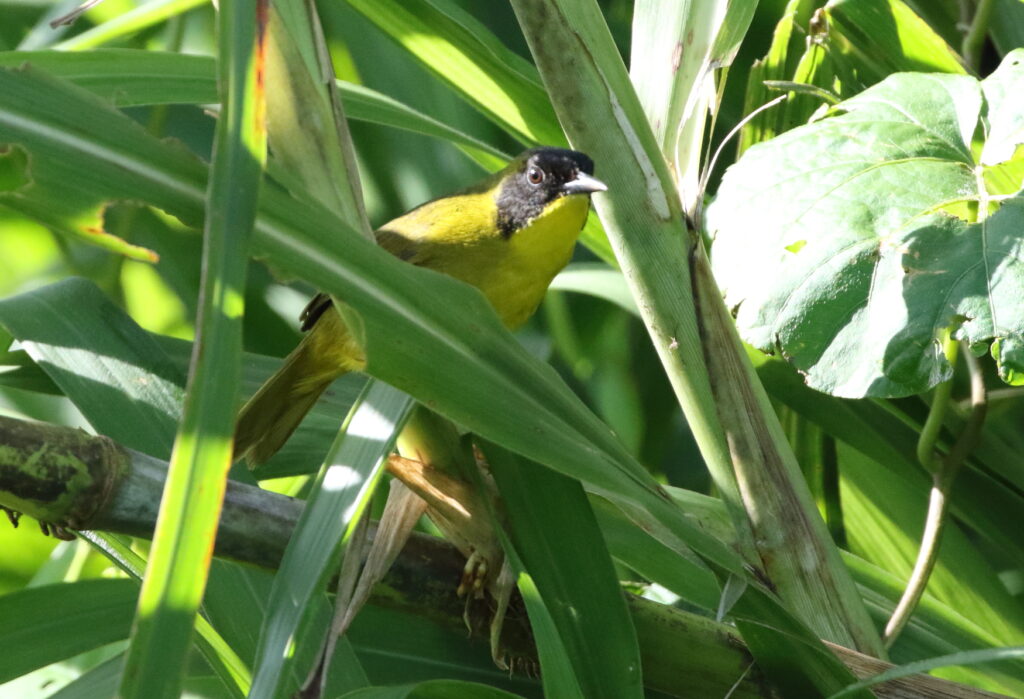
Olive-crowned Yellowthroat

Near the center of the wetland, the grass gave way to a large river. On a sandbar in the river stood a Wood Stork alongside a couple of egrets, and a Muscovy Duck floated by with a horde of babies in tow. From one overlook, my dad and I got both Ringed and Amazon Kingfishers while White-throated Crakes sounded off in the tall grass. 

As we reached the end of the road, a flash of movement and tail feathers caught our eye. A small, gray raptor had launched out of trees, just missing what we assumed to be a Squirrel Cuckoo as it dove for the cover of the grass. The raptor landed on a low bough in front of us, and as I raised my binoculars, I realized that it was not the Gray Hawk I’d assumed it to be. No, this was an accipiter, slate gray, with a dark cap, yellow eyes and rufous legs.

“That’s a Bicolored Hawk!” I yelled, probably too loudly, though the bird seemed unperturbed.
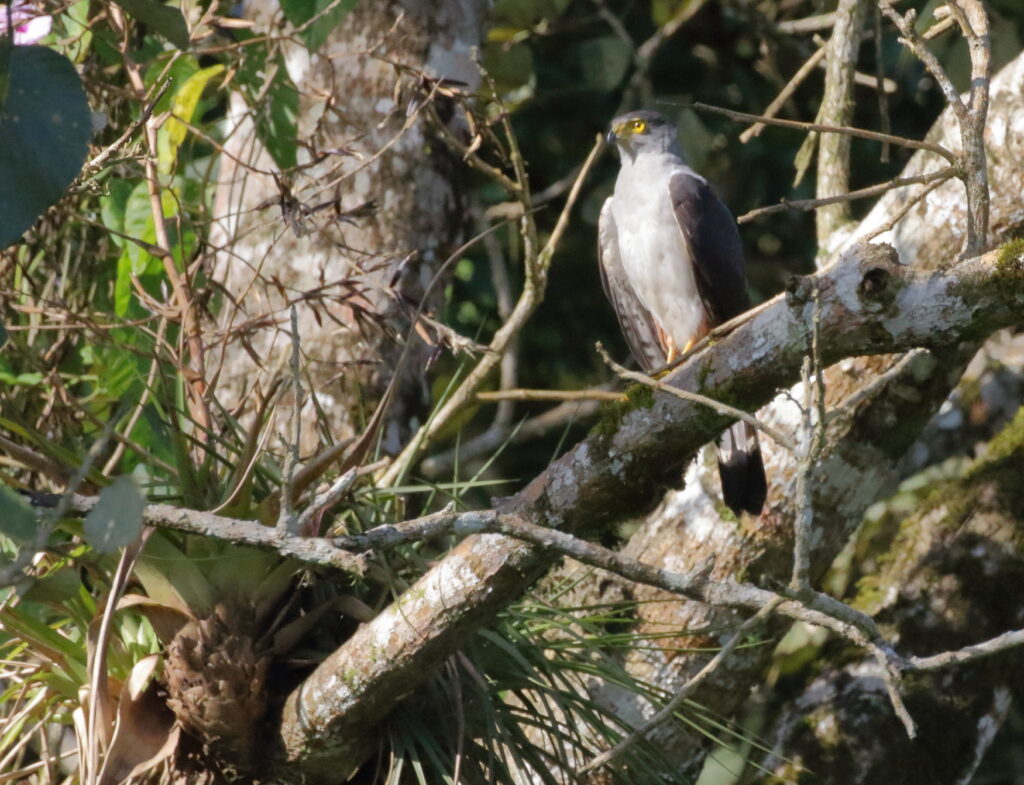
One of our best raptors of the trip, Bicolored Hawk was a bird I had longed to see since first coming to Costa Rica two years earlier.

Literally two days ago, after seeing a Black Hawk-Eagle, I had been texting my friend Drew about the raptors I had yet to see in Costa Rica. Raptors are some of the coolest, and most difficult, birds in the neotropics. They’re hard to target and show up seemingly at random. Over the months I’ve spent birding in Central America, I’d slowly accumulated most of the uncommon raptors in the region—White Hawk, Ornate and Black Hawk-Eagle, Barred Hawk, various kites and falcons. But the few that I’d never seen before are not only elusive but quite rare, and the two I wanted most were some of the rarest: Bicolored and Tiny Hawks. Both of these species are widespread across Latin America but very infrequently reported, and while I’d been looking for spots to search for both (especially Bicolored) as my dad and I had journeyed across the country, I’d just had to admit to myself that nowhere were these species reliable. By this last day of the trip, in fact, I’d given up on seeing them.
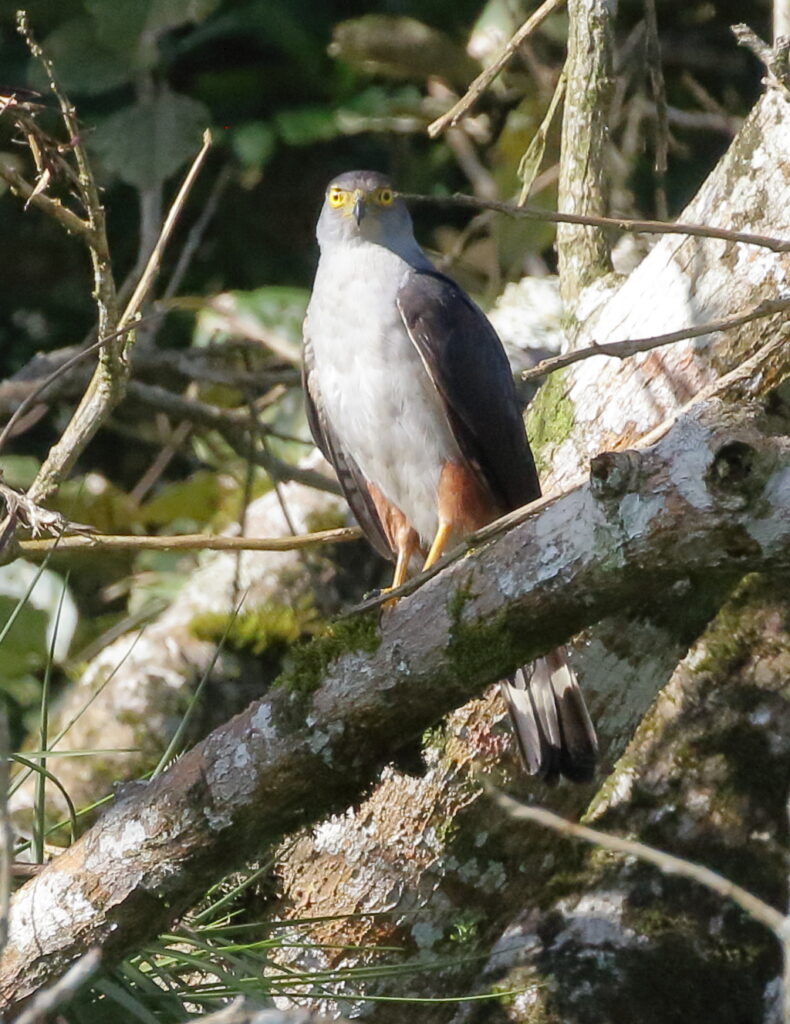
“You lookin’ at me? I’m lookin’ at you, Braden!”

But suddenly, there was an adult Bicolored, taking in the sunlight, fifty feet away. My brain went into shock as my dad and I stared at it and snapped pictures. It felt like seeing a ghost. After about five minutes, the ghost flew away, leaving its vivid image seared into my memory forever.

My dad and I high-fived, then turned around, not quite believing our luck. And our luck continued.

On the way back down the road, we ran into a trio of birders—two from Great Britain and their guide—who had just spotted a Great Potoo a couple hundred meters away. They wanted to scope the wetlands for Snail Kites first, but said they would walk back to show us where the potoo was afterwards. We forged on ahead, hoping to find the roosting nocturnal bird by ourselves. As we passed a gap in the trees, I spotted exactly what the other birders had been looking for—a single Snail Kite soaring over the marsh. This location was known for the species, and it was only my second sighting of one ever, after the ones I’d gotten to see with Nick in Florida in 2022. (See THIS POST.)
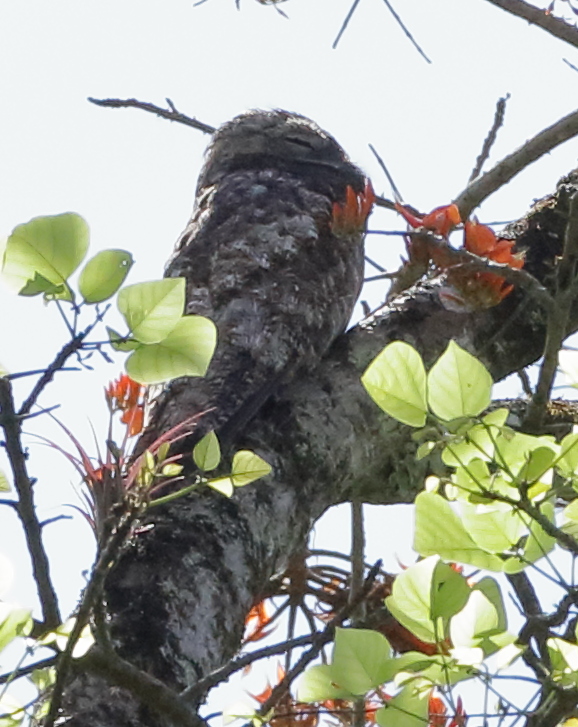
As much as we’d been looking forward to seeing one, we had to admit that our first ever “potoo lump” er, huh, lacked in excitement.

We kept walking, my dad taking the lead, when a small, yellow and white flash caught my eye. I snapped my fingers, alerting my dad to walk back towards me. There, in the shade on the side of the road, perched a White-collared Manakin. My dad had been trying to get good looks at manakins during the whole trip, but they had been incredibly uncooperative. I’d spotted a White-ruffed while he was in the restaurant at Arenal, and we’d spent hours trying to get good looks at Long-tailed a few days before. And now, here was my favorite of the bunch, a spectacular male White-collared, sitting and posing right in front of us. Between the manakin, the Bicolored Hawk and the antshrike this morning, it felt as if the trip had come completely full circle.
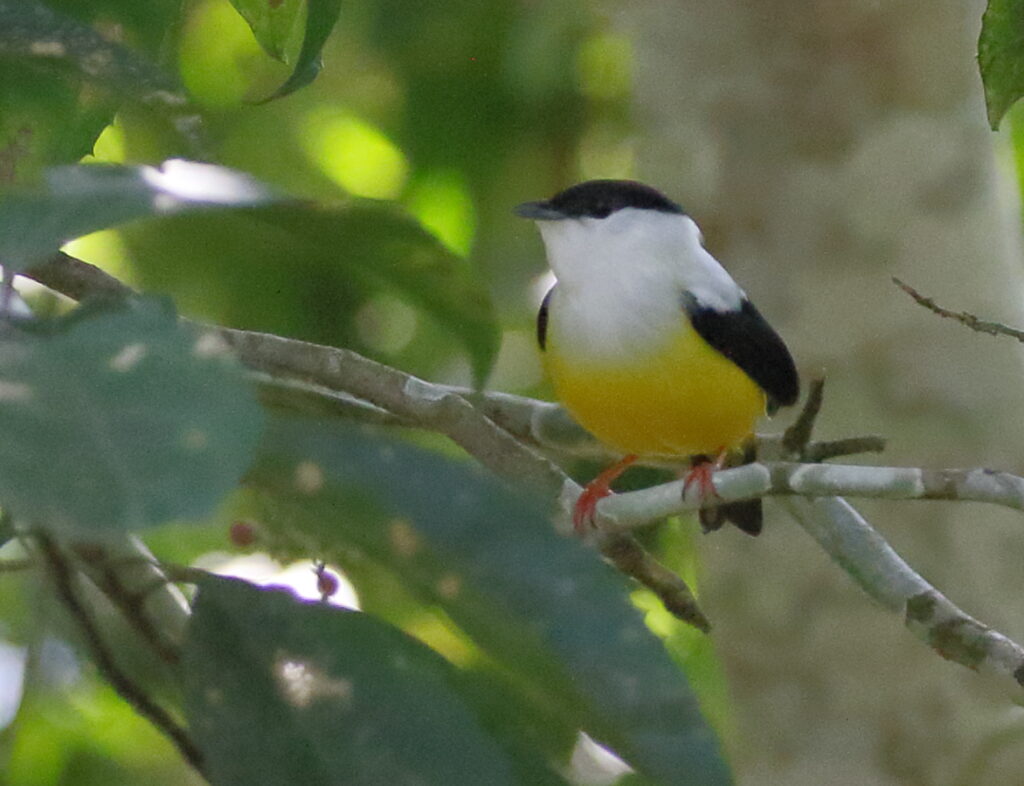
This great look at a White-collared Manakin finally ended a string of frustrating close calls my dad had experienced trying to get a good look at one.

To make things even better, the British birders returned and showed us where the Great Potoo was! It was a little underwhelming, given that the bird was far away and completely still, but a lifer’s a lifer! We finished the morning with around 95 species, far exceeding my expectations for the wetland and wrapping up our phenomenal Costa Rica expedition.

Link to our Costa Rica eBird Trip Report: https://ebird.org/tripreport/482094

If you enjoyed this post, here are links to the previous Costa Rica posts in this Series:

Birding Costa Rica—Beginning at the Airport

Arenal for Antbirds

Caño Negro: Costa Rica’s Epic Wetland
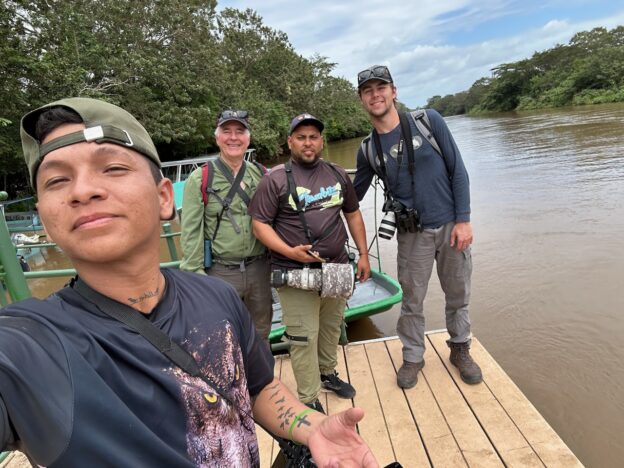
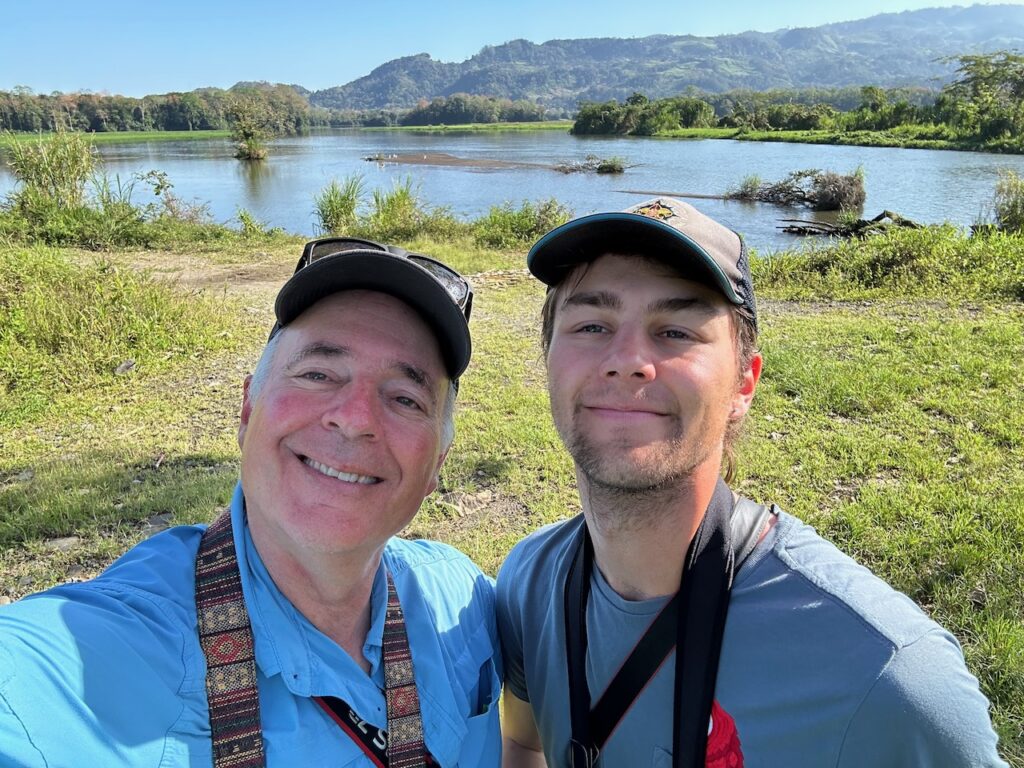
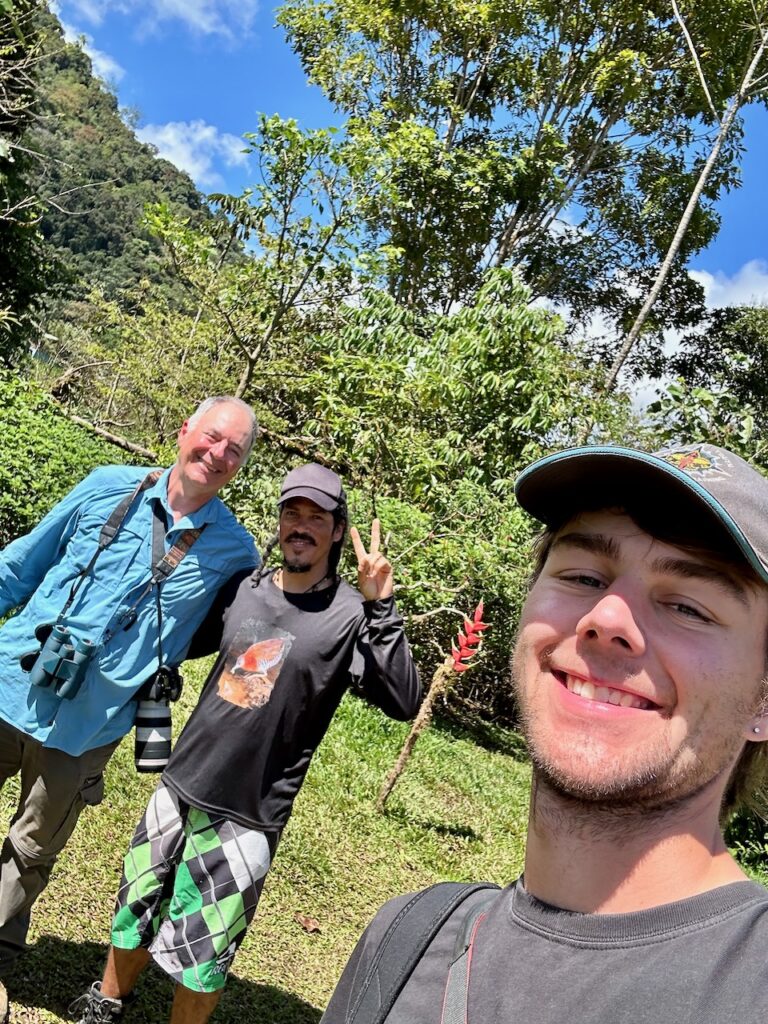
A final selfie on what turned out to be one our best birding outings of the trip.

Caño Negro: Costa Rica’s Epic Wetland (Birding Costa Rica, Part 3)
If you’re enjoying FatherSonBirding, please consider subscribing by filling out the box down and to the right. We won’t ever sell or give away your information and you can unsubscribe at any time. And do feel free to share this blog with others or link to it—but please contact us for any other uses!

When blogging about a birding trip to Costa Rica, it’s almost impossible to choose which things to cover. As anyone who’s been there knows, every day offers avian delights, whether you’re walking through rainforest or hanging out in a town or city. One place we simply cannot overlook, however, is Caño Negro Wildlife Refuge.

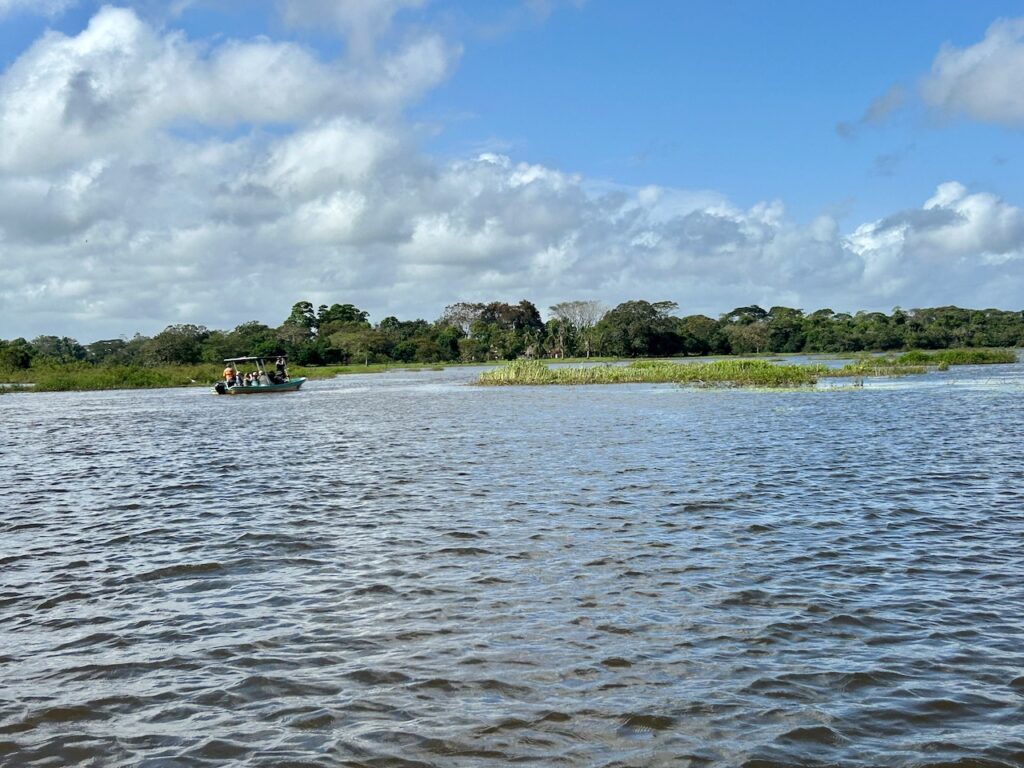
The lagoon area of Cano Negro, at high water because of recent rains.

Caño Negro is one of Costa Rica’s rare, large interior freshwater wetland areas and lies almost within sight of the Nicaraguan border. I had never heard of it until Braden sang its praises when he studied abroad down there two years ago. As he planned our itinerary for this year’s trip, he left no doubt it was a must-see destination. To reach it, we left the La Fortuna area (see our post Arenal for Antbirds) and drove an hour and a half up highway 35 through flat agricultural country, before turning west on the access road to the refuge.

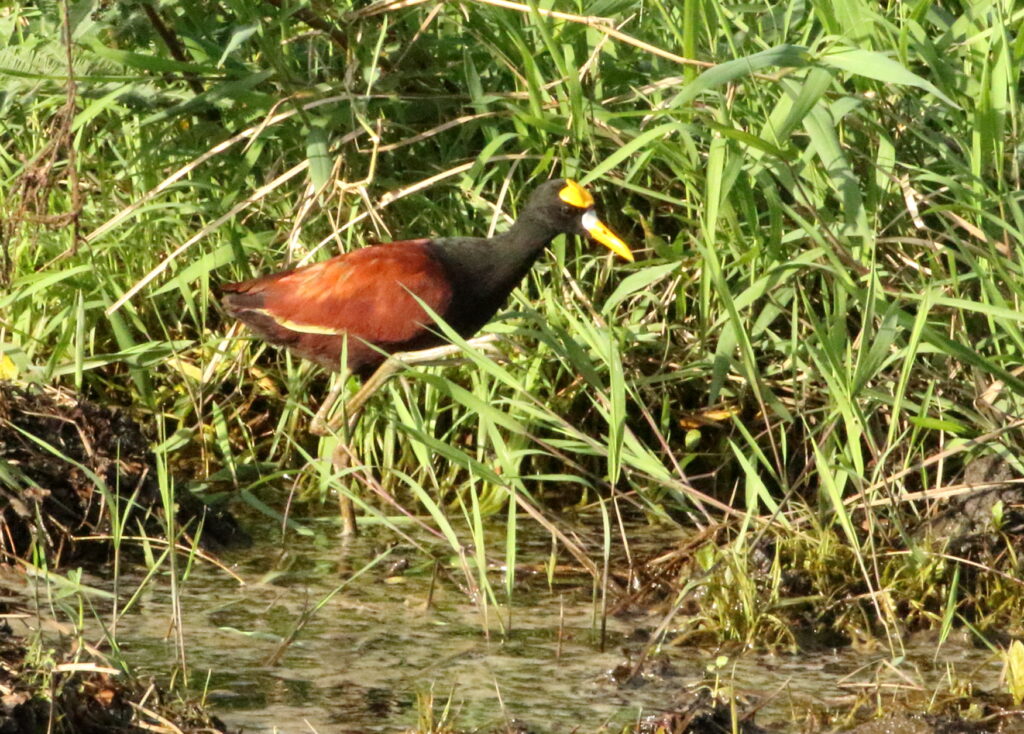
Seeing such large numbers of Northern Jacanas was a first for me!

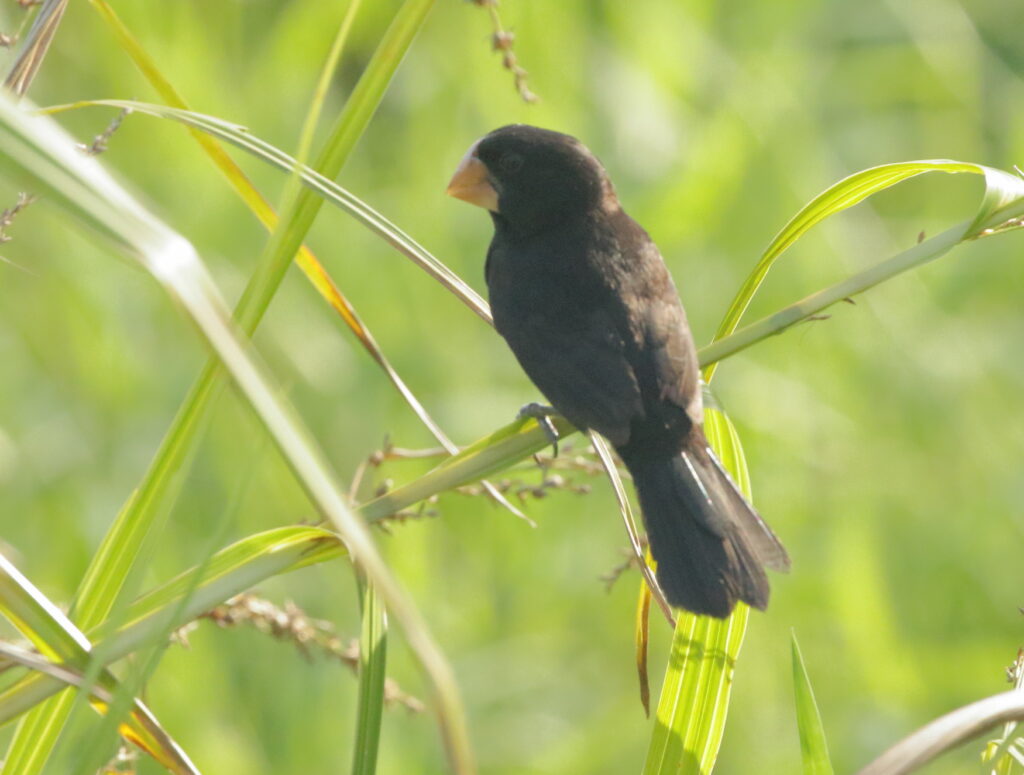
The access road is one of those tricks perpetuated with great amusement on tourists. Paved for its first few miles, it suddenly degenerates into a cratered track that reduces the speed of rational drivers to about 10 km/hour. Nonetheless, this road is not to be endured, but to be birded. Along its stretch are a rich variety of grasslands, mini-wetlands, and patches of trees that are loaded with birds. I was thrilled to see my first Northern Jacanas and Purple Gallinules of the trip, but these were quickly overshadowed by the Variable and Morelet’s Seedeaters (see our post Chasing Morelet’s Seedeaters), and Thick-billed and Nicaraguan Seed-Finches. The highlight of the drive was a brief, but spectacular view of yet another lifer for Braden—a Black-collared Hawk!

These overcompensating “giant-billed” Nicaraguan Seed-Finches are a specialty of the northeast part of Costa Rica.

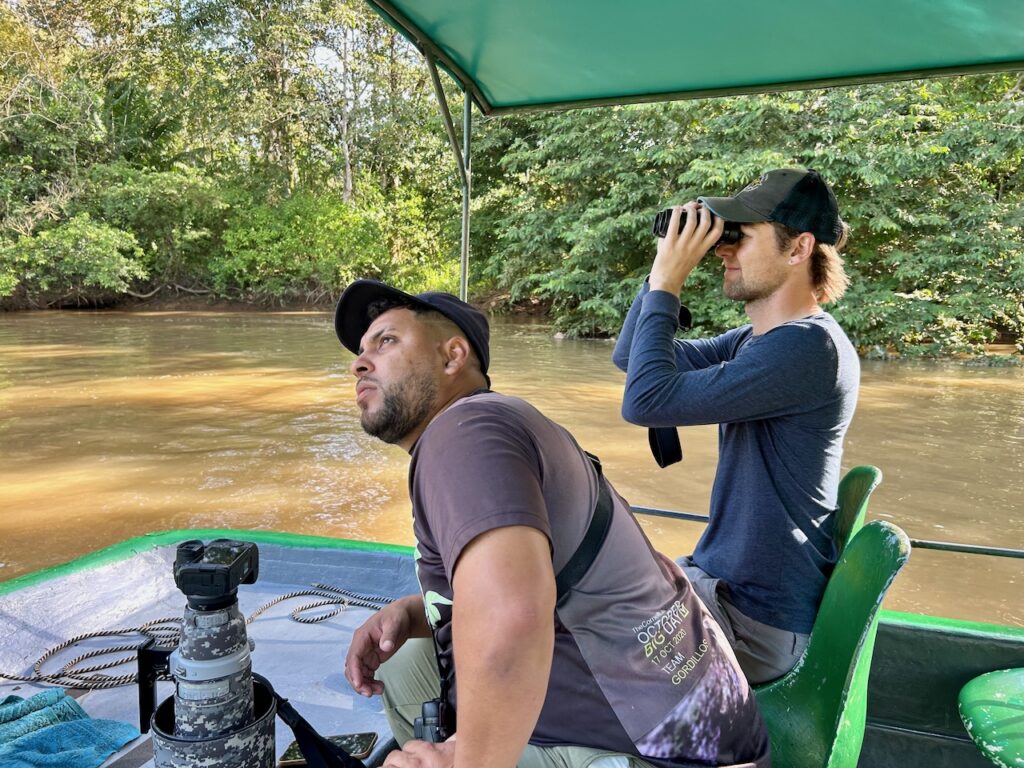
The next morning, we eagerly met our guide, Chambita, and his boat driver/assistant, Yalvin, at one of the town boat docks. Because of the heavy unseasonable rains, the Rio Frio was running higher than usual, but still flowed along at a placid pace perfect for birding. Most birding boat tours have two components—the river itself and a lagoon that feeds into it. From Braden’s past comments, I was most excited about the lagoon, but the river relentlessly amazed us.

Chambita and Braden proved a dynamic duo in detecting Caño Negro’s astonishing bird life.

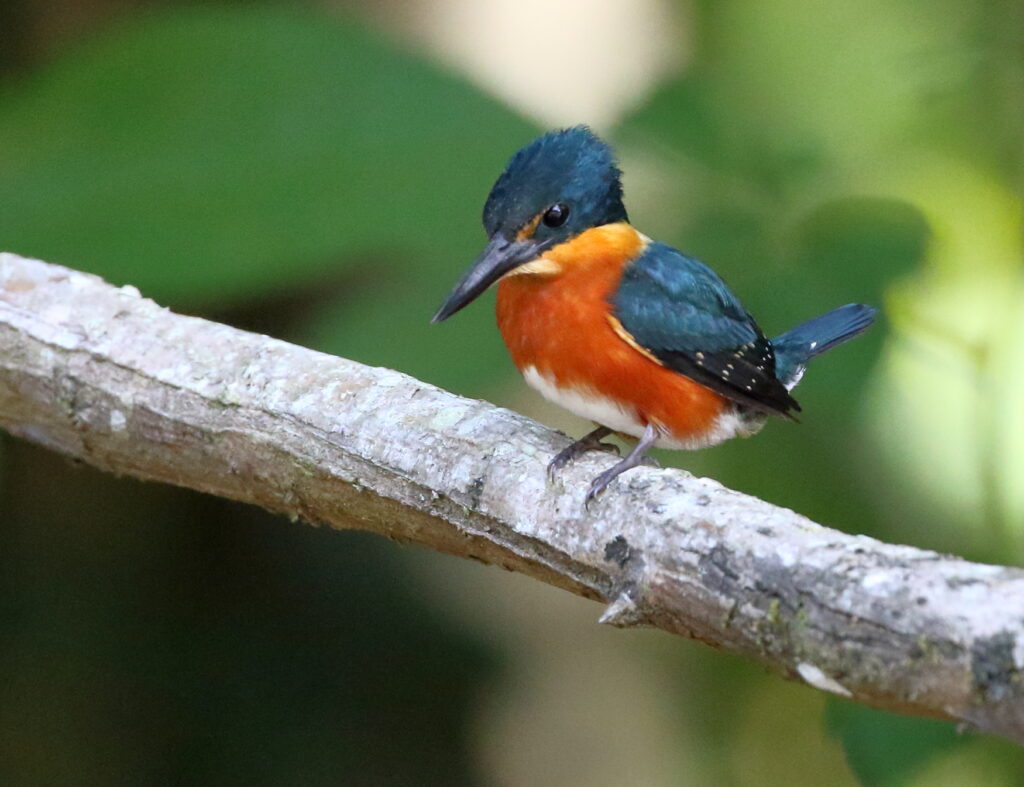
As we began slowly making our way downstream, I was thrilled to see both new and familiar species. Over the first hour, the kingfishers stole the show, as we saw five of Costa Rica’s six kingfisher species, missing only the most common one—our own Belted Kingfisher that we enjoy back home. The ones we saw included both the big bruiser Ringed Kingfishers and the two that are hardest to find: Green-and-Rufous Kingfisher and American Pygmy Kingfisher.

I’m a sucker for kingfishers and was ecstatic at seeing FIVE species, including this American Pygmy Kingfisher.

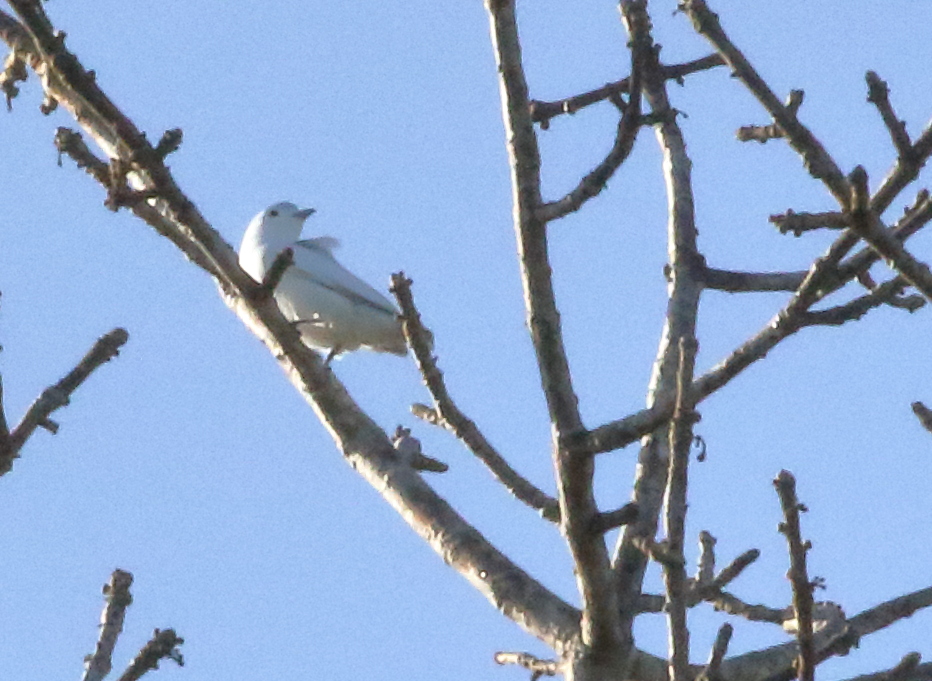
Chambita, though, quickly demonstrated why he is a local legend among expert birders by calling out dozens of other bird songs and calls, many of them flycatchers that I had no hope of recognizing, but that Braden raptly absorbed. Then, we spotted a species Braden most hoped to see—Snowy Cotingas.

I’ll just say it: Cotingas are bizarre. And I’m not alone in thinking so. Birds of the World remarks, “No family of birds exhibits more diversity of auditory, behavioral, and plumage elaborations, all the result of rampant sexual selection, than do the cotingas.”

We saw five Snowy Cotingas on our outing—an unusually high number that pretty much made Braden’s entire day.

I actually didn’t think I’d ever seen a cotinga until Braden informed me that two of Latin America’s most spectacular birds, the Andean Cock-of-the-Rock and Three-wattled Bellbird, are cotingas. Even then, I only started getting interested in them as a group when mi amigo Roger and I saw Black-tipped Cotingas last year in Colombia, inspiring a spate of jealousy from Braden.

Today, when we saw the Snowy Cotingas, I had to restrain Braden from jumping out of the boat. “I wanted to see them,” he gushed, “but I didn’t think we would!” That, of course, got me super excited about them, too—delicate white birds perched atop trees high above the river.

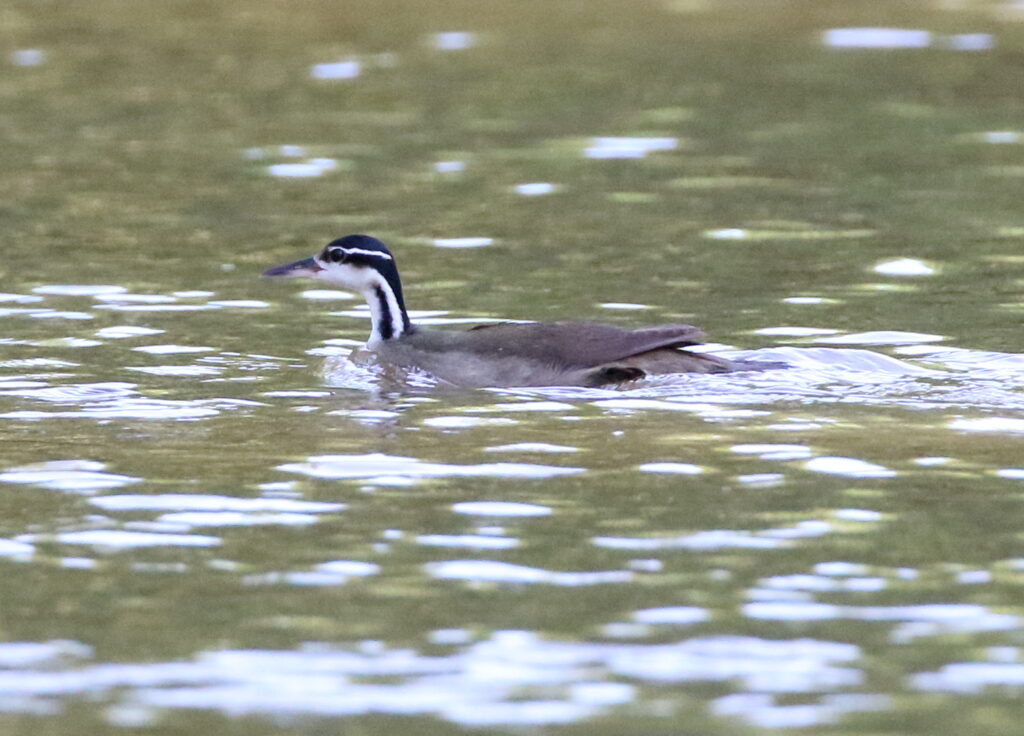
Though not rare, Sungrebes can be shy and difficult to find, so we felt lucky to see one. The birds are actually more closely related to rails than grebes.

The river offered many other treasures including a rare Sungrebe, eight species of warblers, three kinds of orioles, and four kinds each of woodpeckers and parrots. Oh, and caimans and monkeys, too. And that’s before we turned around and went to the lagoon.

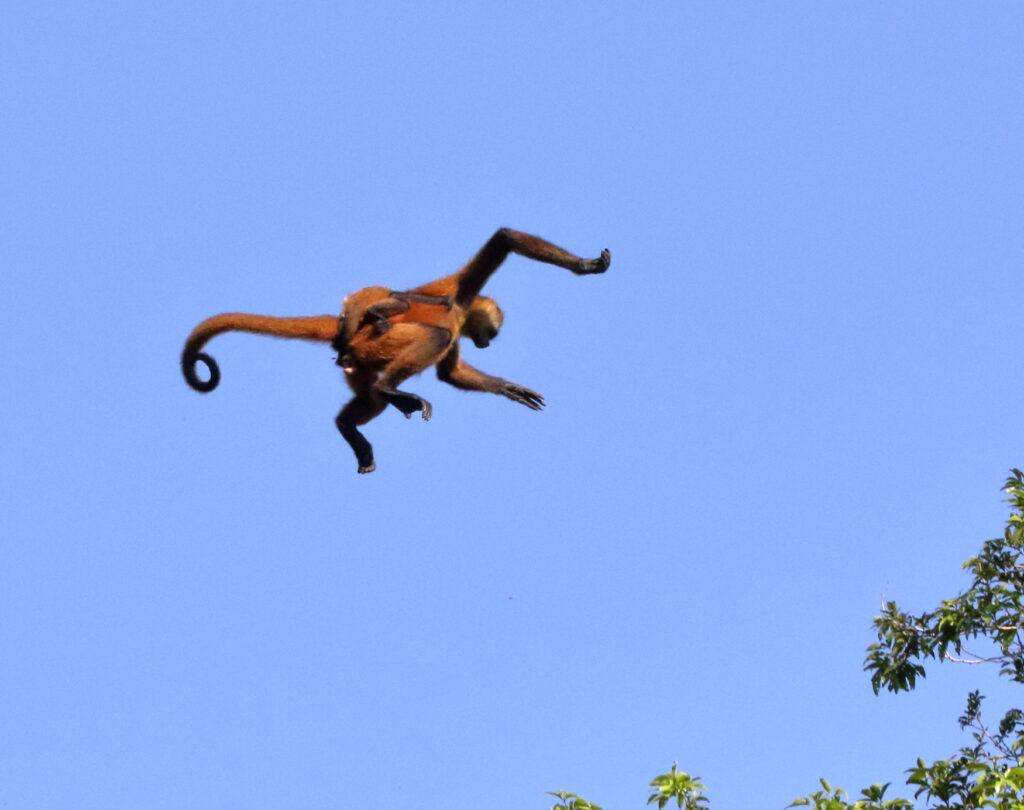
A troop of Squirrel Monkeys provided us with a welcome bonus as they fearlessly leaped a twenty-foot gap between trees. Look closely and you can see a baby on this one’s back! Talk about Livin’ on a Prayer!

When we reached it, the lagoon presented a totally different view than Braden had previously experienced. On his past visits, the water had been relatively low, i.e. perfect for wading birds. Recent rains, however, had raised the water dramatically. We still found a great diversity of birds, but numbers were lower than usual.

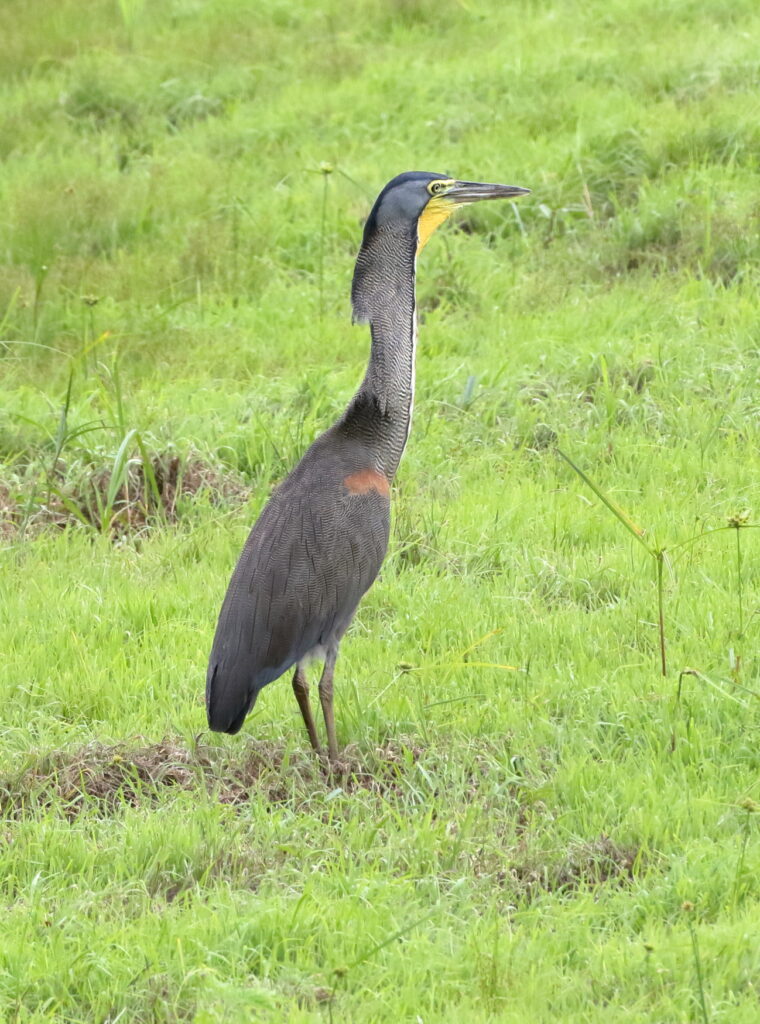
Ever since seeing a Fasciated Tiger-Heron with Roger in Colombia last year, I have been in love with tiger-herons, and this was my first chance to get good looks at Bare-throated Tiger-Herons!

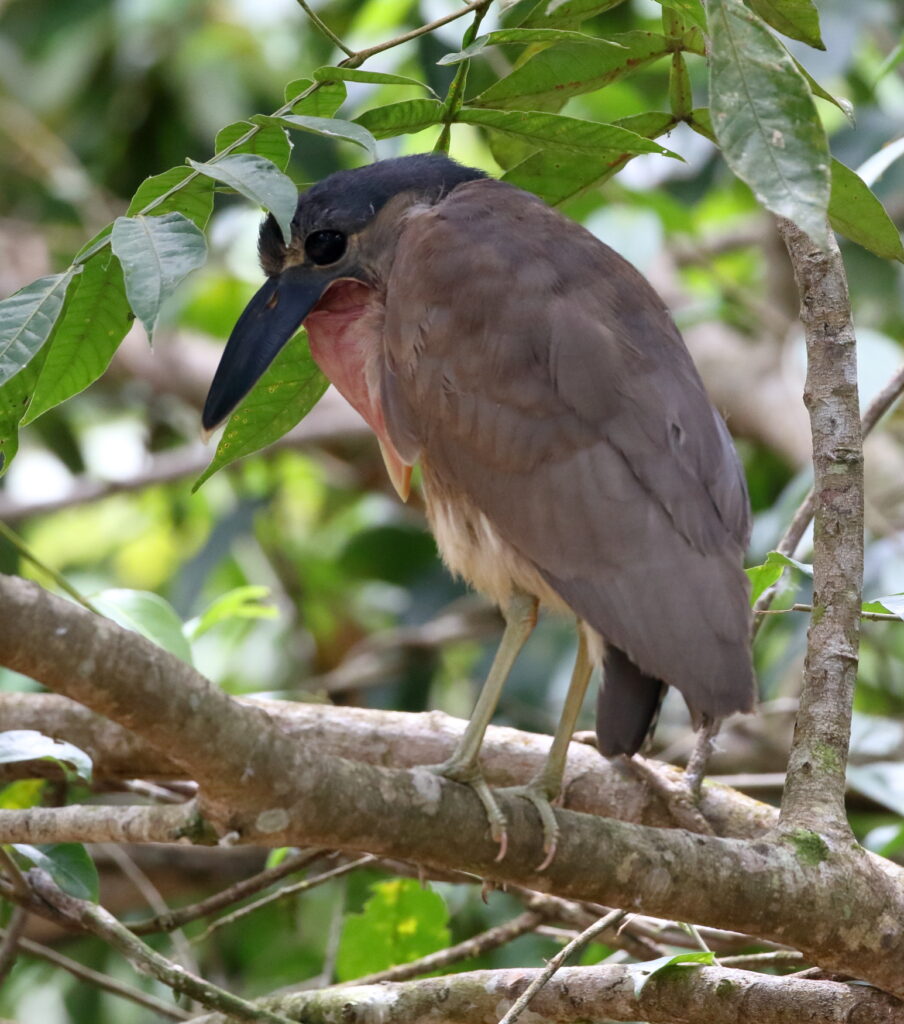
Still, all manner of wading birds presented themselves. My favorites were Bare-throated Tiger-Herons and the uber-strange Boat-billed Herons. It was a tough call, though, with Tricolored Herons, a Roseate Spoonbill, Little Blue Herons, Green Herons, and three kinds of ibises—Glossy, White-faced, and Green—all competing for our attention.

A yawning Boat-Billed Heron is a bird after my own heart. Not only is it one of the coolest birds in Costa Rica, it needs its afternoon nap, just like moi!

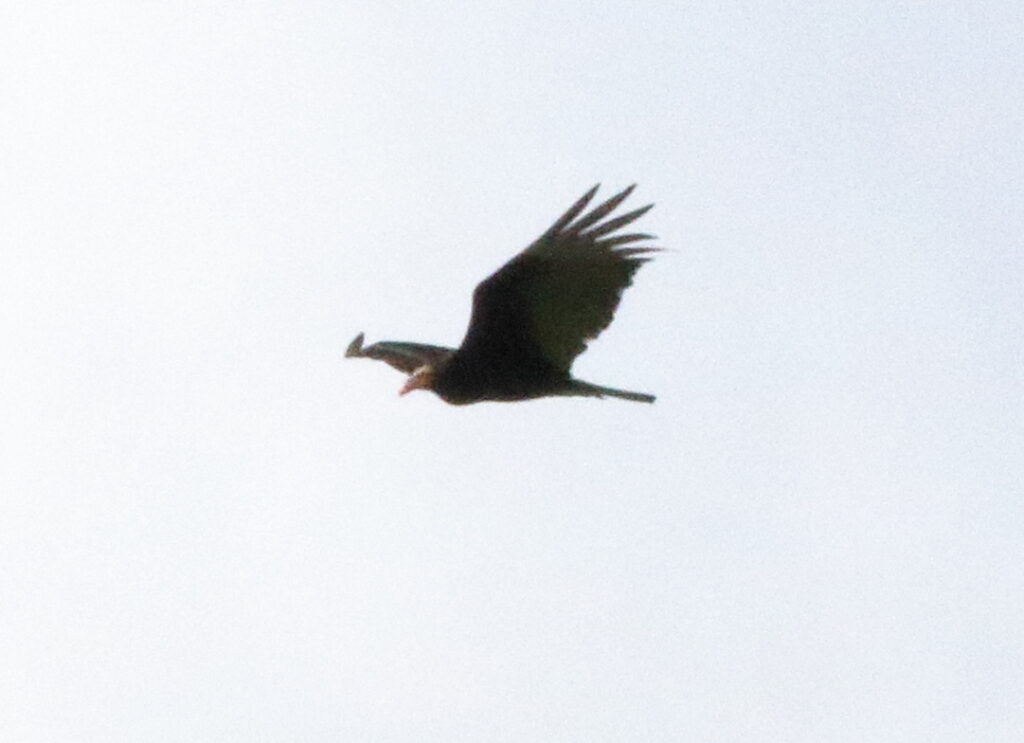
A special treat for both Braden and me was getting to see our first Lesser Yellow-headed Vulture, which Chambita identified from a distance as it swooped down low over the lagoon and passed within a couple hundred yards of our boat. Resembling a Turkey Vulture—and sharing many of its characteristics—the Lesser Yellow-headed’s yellow head became visible only as it approached more closely. I love vultures.

This intriguing Lesser Yellow-headed Vulture was a special first for both Braden and me.

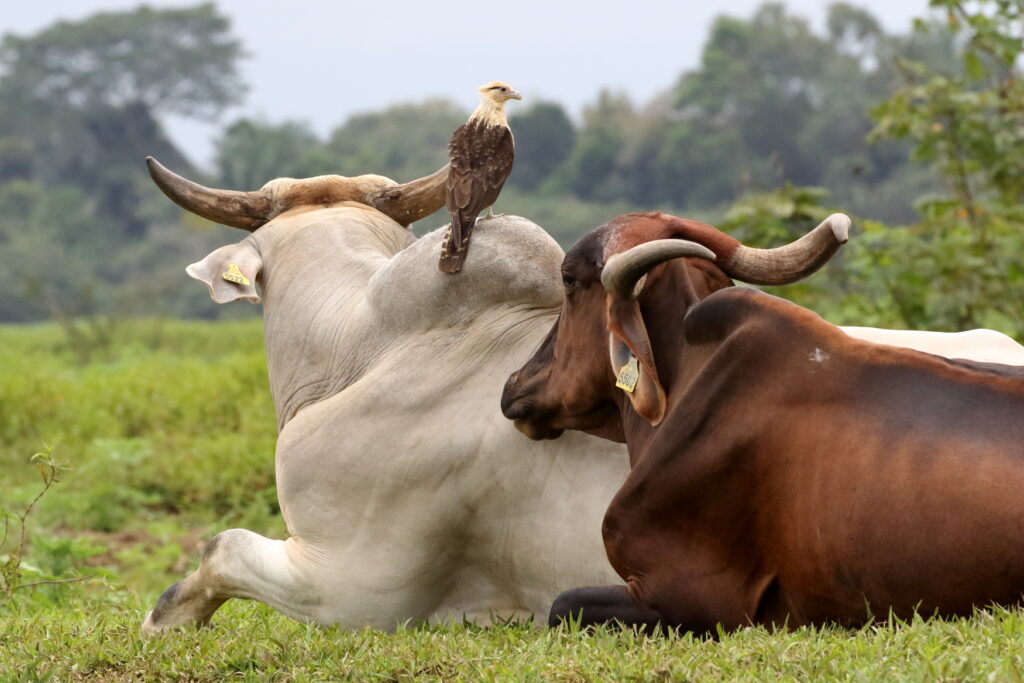
As we continued to explore, many more species kept showing up including a couple of Wood Storks, a Greater Yellowlegs, and both Crested and Yellow-headed Caracaras.

Roger and I had seen a Yellow-headed Caracara leap up onto a cow last year in Colombia, but this guy gave Braden and me an even better show.

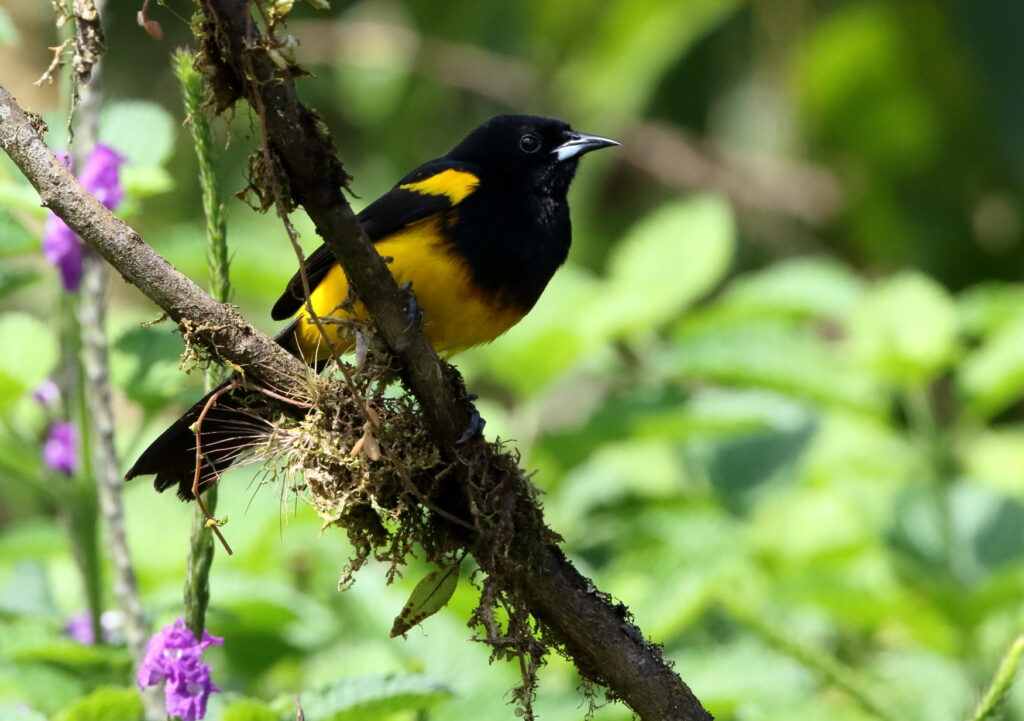
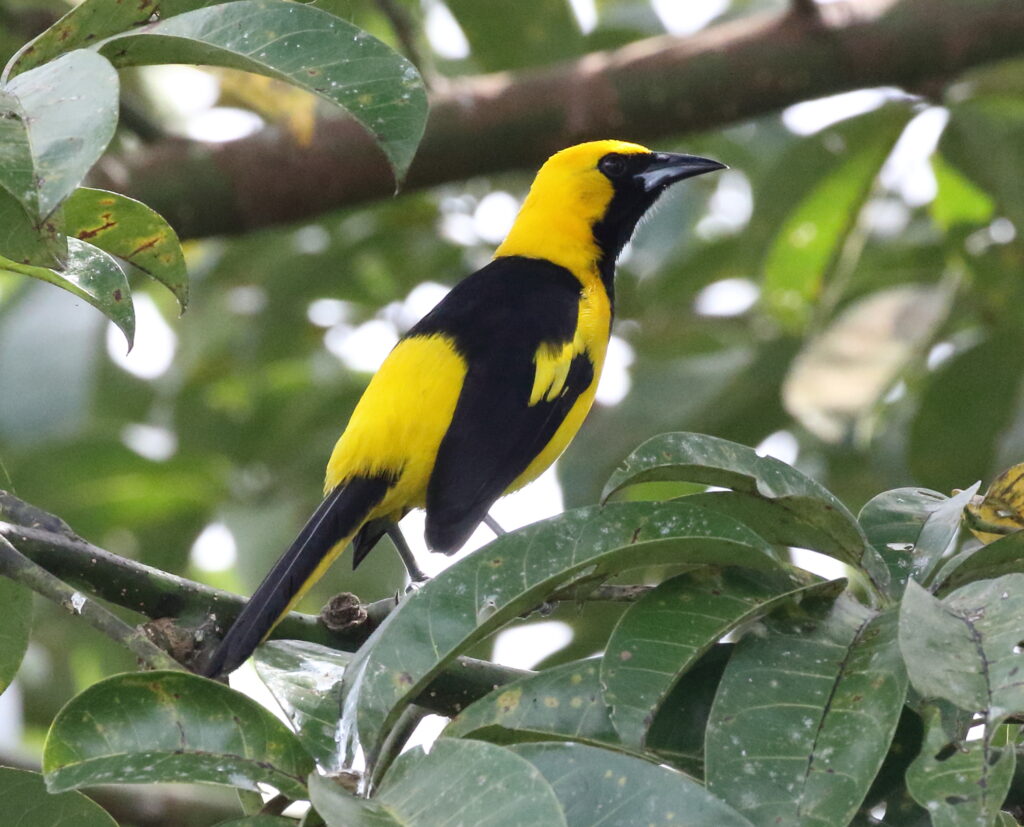
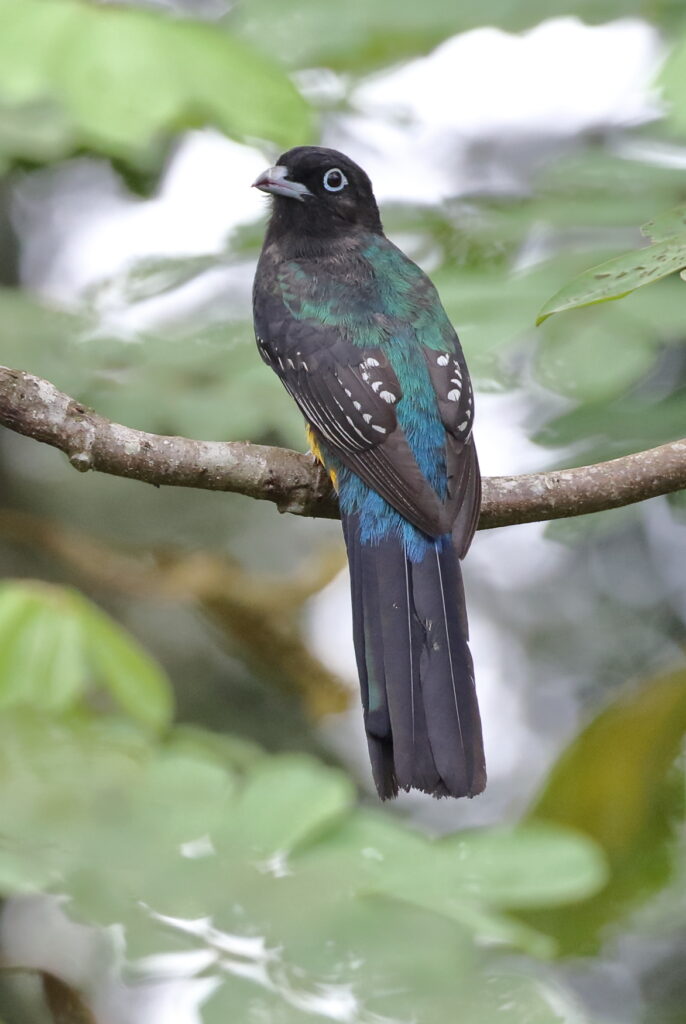
A couple more of our favorite finds were a pair of Yellow-tailed Orioles and a Black-headed Trogon, all of which offered close up incredible looks.

We were happy that Chambita and Yalvin seemed as excited by the day as we were. They spent far more time with us than was strictly necessary and you can bet we appreciated it.

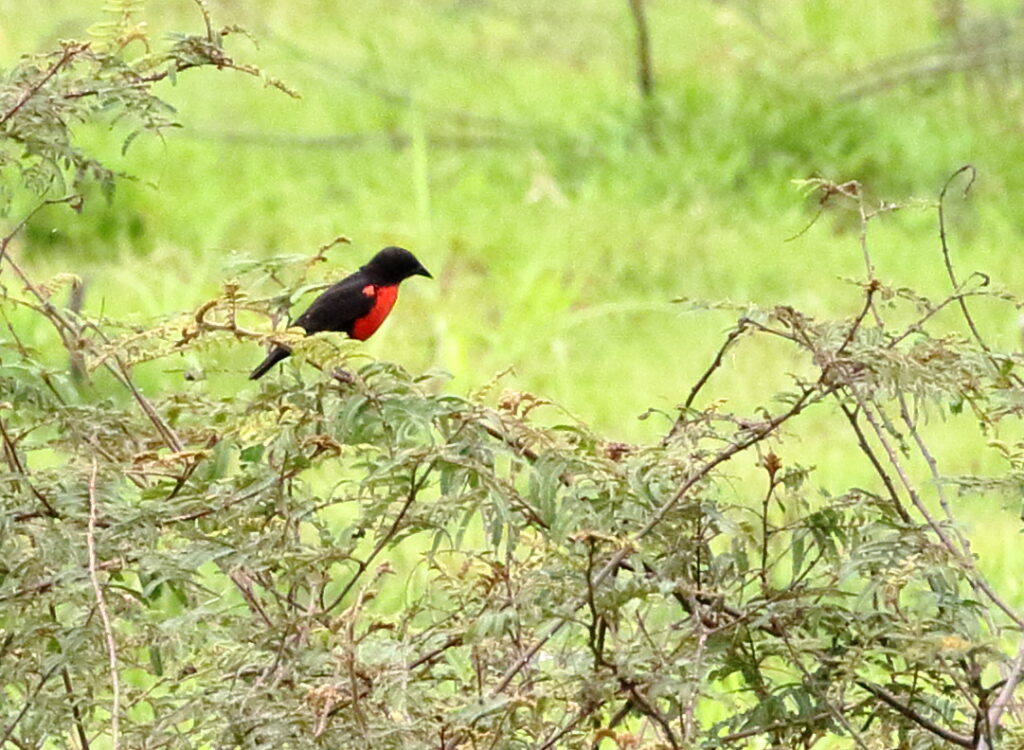
After bidding them farewell, we headed back out the same cratered road we came in on and were rewarded as richly as on the day before. On the drive, we paused to enjoy Green Kingfishers, Common Tody-Flycatchers, a Fork-tailed Flycatcher, and the perfect capstone to the day—our lifer Red-breasted Meadowlarks! We ended the day with more than 130 species, one of our best days of birding ever. Pura Vida!

Our Caño Negro checklist: https://ebird.org/checklist/S303336007

I was especially thrilled to see a Red-breasted Meadowlark after recently reading that the similar-looking South American Pampas Meadowlark is critically endangered. Loss of grassland habitat and rampant use of pesticides has drastically reduced populations of many meadowlark species, including those found in the US.

To arrange a trip with Chambita, check out his Facebook page: https://www.facebook.com/profile.php?id=100047210666376.