Tag Archives: Manakins

Costa Rica’s La Angostura Florencia Wetlands: Turning Disappointment into Delight

Today, we wrap up our 2026 Costa Rican adventure with a post from Braden. Our nine-day trip was filled with incredible birds—and a share of setbacks caused by unexpected weather and road closures. In fact, circumstances prevented us from visiting our major final destination, El Copal (see Braden’s 2024 post). That disappointment, however, turned into great good fortune. Why? Because it redirected us to what would become one of our favorite birding locations of the trip.

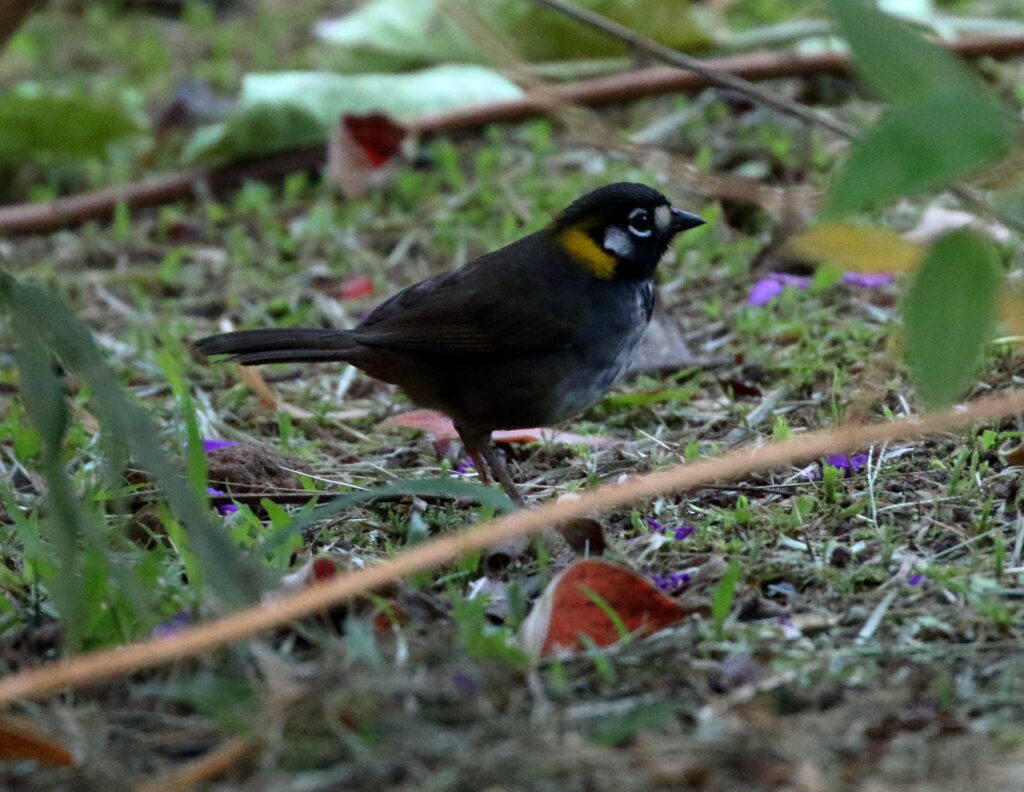
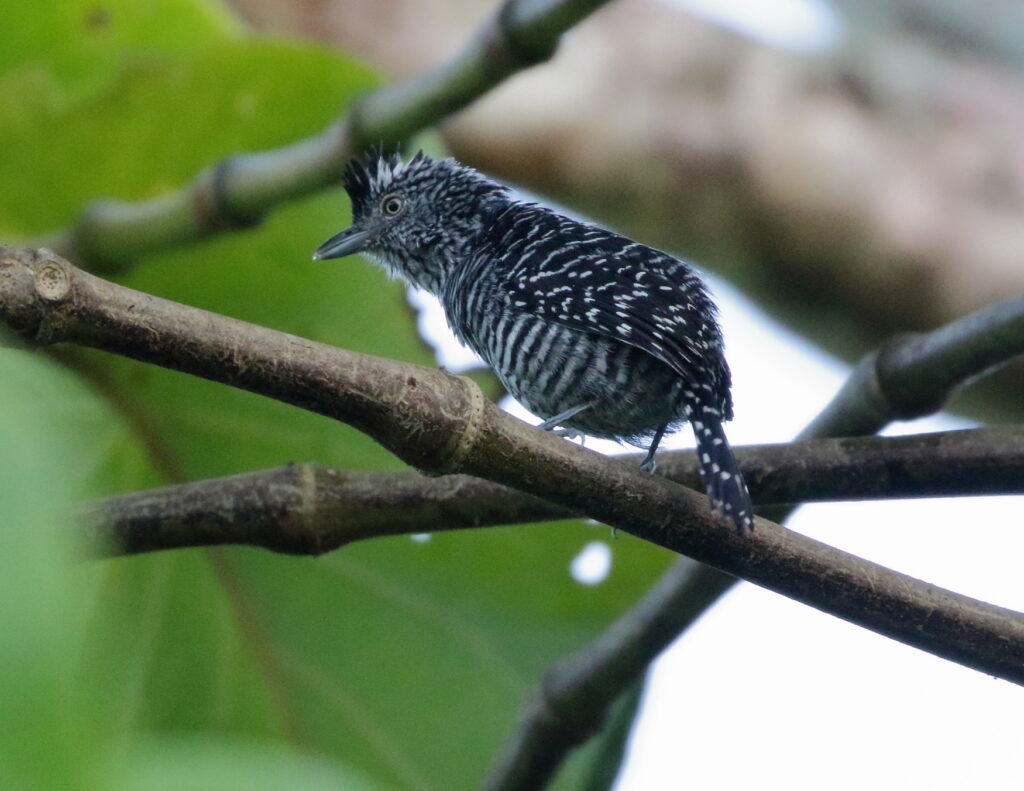
My dad and I woke to the sound of a Barred Antshrike singing outside our Airbnb. After packing our stuff and stepping outside into the bright, clear morning, we realized that there were two antshrikes, one singing from each side of us. It took little prompting for both the male and the female to come in, giving us the best looks at the species so far on our trip and knocking off another target from my dad’s list. The antshrikes, along with several cooperative White-eared Ground-sparrows on the lawn of the property and the steady flyovers of parrots and oropendolas, started our day off strong.
We’d been so successful with our target birds on the trip that our plans for this morning were simple: bird somewhere not too far out of the way back to San Jose, and spend one last morning enjoying Costa Rica’s birds. The night before, we’d decided on a nearby wetland called La Angostura Florencia, where the wide open habitat would render the birds easier to see than in the dense, rainforests we’d spent the last few days. 
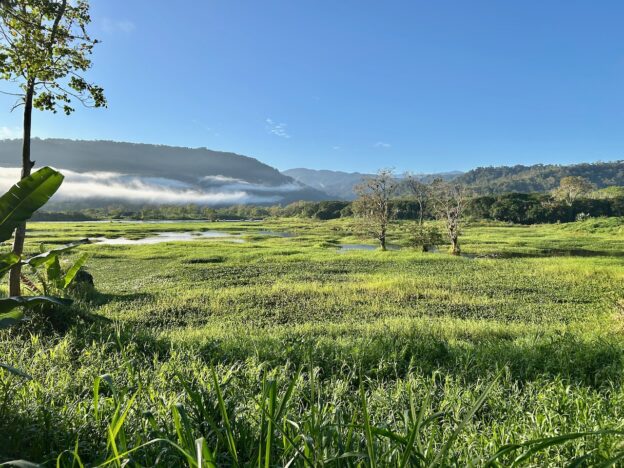
So far, during the trip, we’d had pretty bad luck with just looking at eBird hotspots and trying to bird them. Some hotspots were closed, and we had caught David, the manager of Tranki Garden, off guard by showing up without calling ahead of time. One place we’d gone to was just completely private property (which we hadn’t known ahead of time), and the owner asked us to leave. La Angostura Florencia wetlands, however, was great—no locked gates, no private property signs, just a public, protected wetland nestled into the foothills of the Talamancas. As soon as we pulled onto the dirt road leading towards the water, we started spotting things.
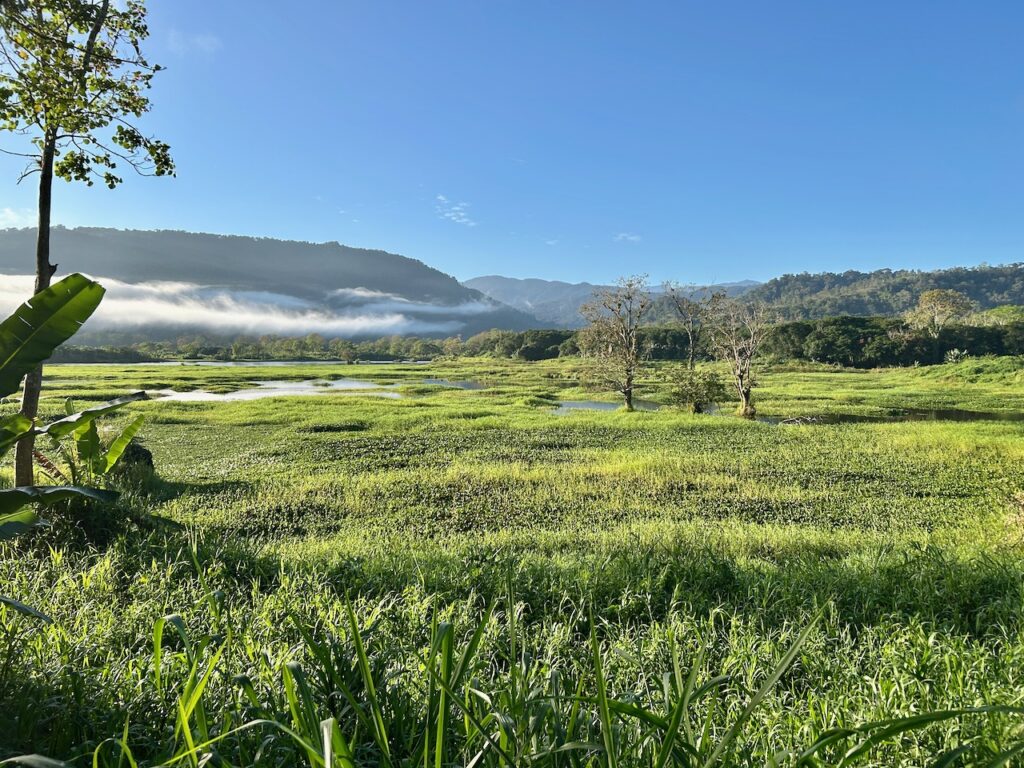
As La Angostura Florencia rolled into view, we immediately became excited by its birding potential—potential that would be fully realized!

The first sighting of the day was our most unexpected. We stopped to scan a little creek, and my dad spotted a Black-crowned Night-Heron lurking on a rock. As I stepped out of the car to look, movement caught my eye—a large, brown mammal trotting through the forest on the other side of the road. As it grew closer to us, I realized this wasn’t a coati (which is a fairly common mammal across most parts of Costa Rica) but a tayra! Tayras are large members of the mustelid group (the group of mammals that includes weasels, otters and martens) and I’d never seen one before, despite all the time I’d spent in Costa Rica. We turned our attention towards the tayra as it scaled a tree and disappeared into the foliage above. Despite the mosquitos moving in on us from all sides, the day was off to a great start!
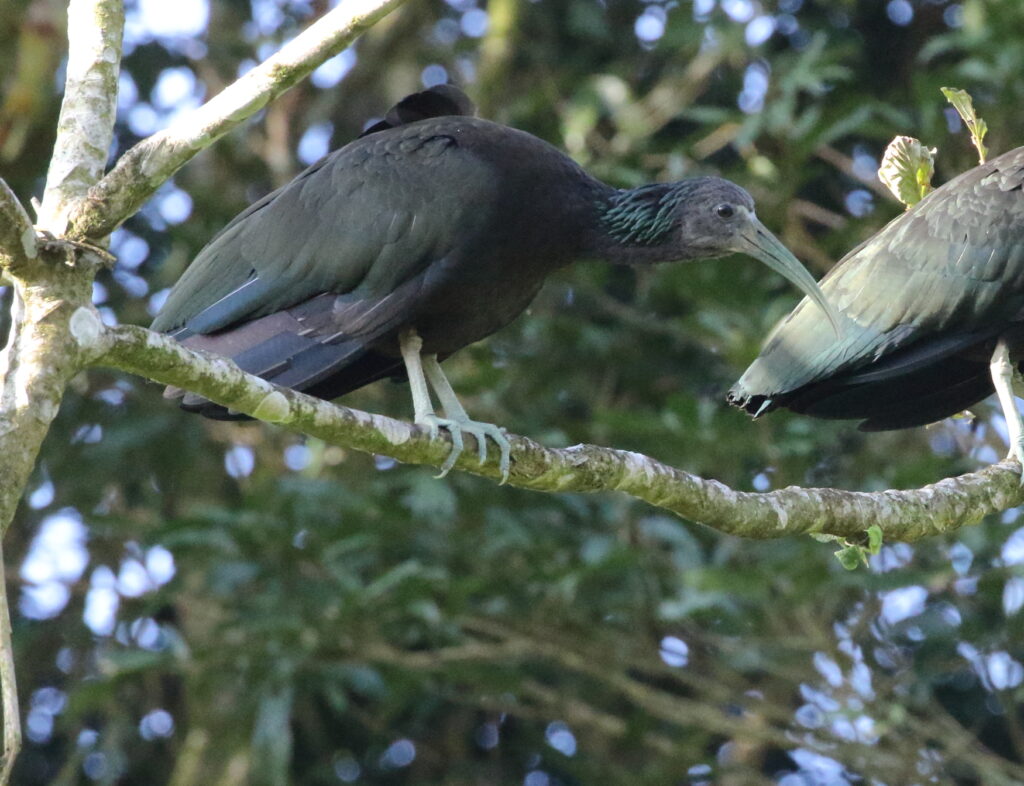
Though we’d seen a Green Ibis earlier on the trip, this pair at La Angostura Florencia gave us our first close, leisurely looks. Unlike other ibises, the Green Ibis prefers swampy or flooded forests to wide-open wetlands.

We kept driving slowly, rounding a corner and flushing a bird up from the road. “Sunbittern!” my dad yelled as it escaped into the trees. We got out again in an attempt to relocate it, but couldn’t get eyes on it again. Fortunately, there were tons of other birds around, calling, singing and foraging in the trees above and around us. We slowly made our way down the road, identifying warblers and other neotropical migrants above our heads as a variety of species gave us great, eye-level views. The dawn chorus consisted mostly of flycatchers, but we did hear a Thicket Antpitta singing from the shrubby, overgrown edge of the road!

As the wetlands came into view, we again got out and walked towards them, sidestepping a massive mud puddle in front of us. Two Green Ibises croaked from a Cecropia tree a dozen meters away, and we stopped to watch a Gray-headed Kite, our second of the trip, hunting and soaring over us. The heads of waders and waterfowl kept popping up from the grassy marsh in front of us, and we identified them one at a time.
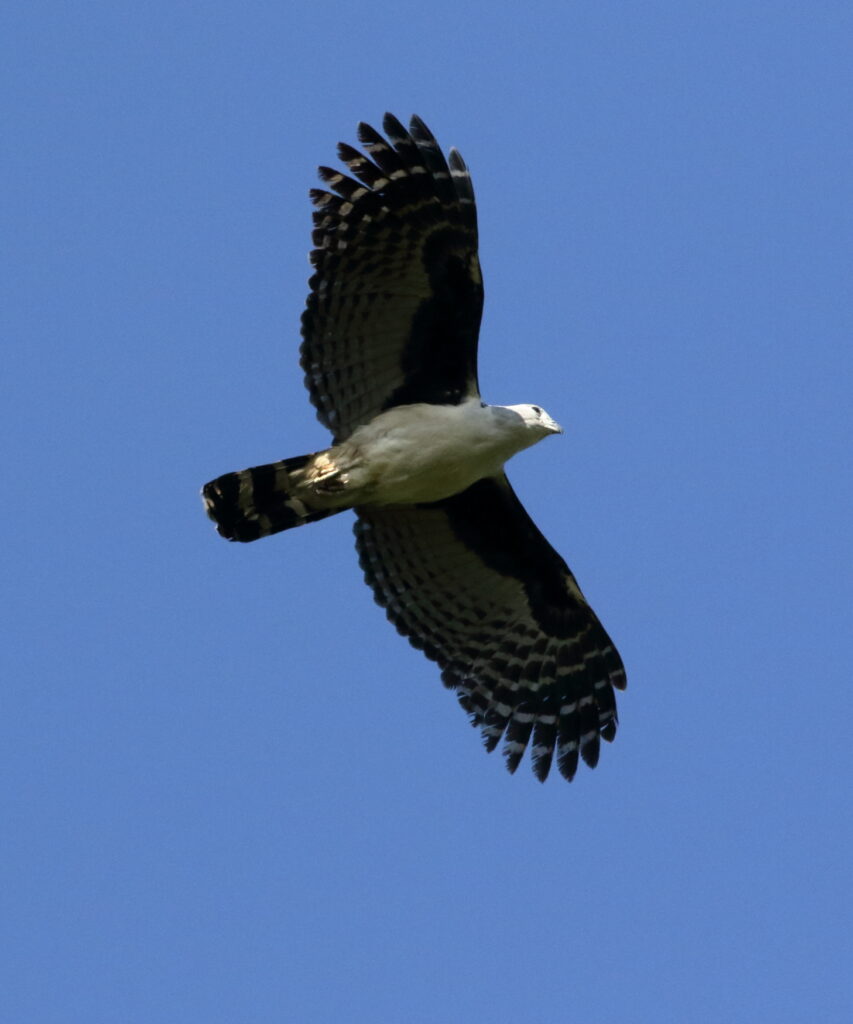
We got wonderful views of this Gray-headed Kite both perched and in flight—one of our best raptor experiences of the trip.

“Snowy Egret!”

“Black-bellied Whistling-Duck!”

“Purple Gallinule!”

“Ooh, that one’s a Limpkin!”

While many of the wetland birds were the same as the birds we’d seen at Caño Negro, seeing them in a new location felt satisfying. Costa Rica isn’t known for its extensive wetlands, but the presence of these birds at La Angostura Florencia meant that at least several populations of these species could be found in abundance in the country. We spotted some fun songbirds in the shrubs on the border of the wetland, too. Both Olive-crowned and Gray-crowned Yellowthroats sang from the grass, and a Slaty Spinetail rattled off from a bush near the road. 
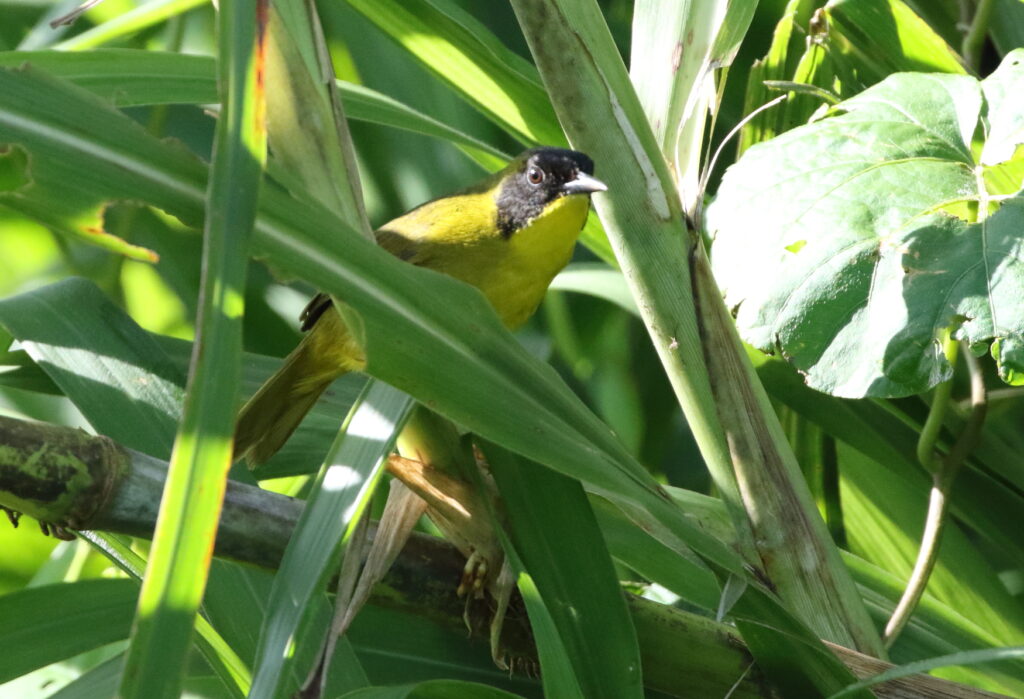
Olive-crowned Yellowthroat

Near the center of the wetland, the grass gave way to a large river. On a sandbar in the river stood a Wood Stork alongside a couple of egrets, and a Muscovy Duck floated by with a horde of babies in tow. From one overlook, my dad and I got both Ringed and Amazon Kingfishers while White-throated Crakes sounded off in the tall grass. 

As we reached the end of the road, a flash of movement and tail feathers caught our eye. A small, gray raptor had launched out of trees, just missing what we assumed to be a Squirrel Cuckoo as it dove for the cover of the grass. The raptor landed on a low bough in front of us, and as I raised my binoculars, I realized that it was not the Gray Hawk I’d assumed it to be. No, this was an accipiter, slate gray, with a dark cap, yellow eyes and rufous legs.

“That’s a Bicolored Hawk!” I yelled, probably too loudly, though the bird seemed unperturbed.
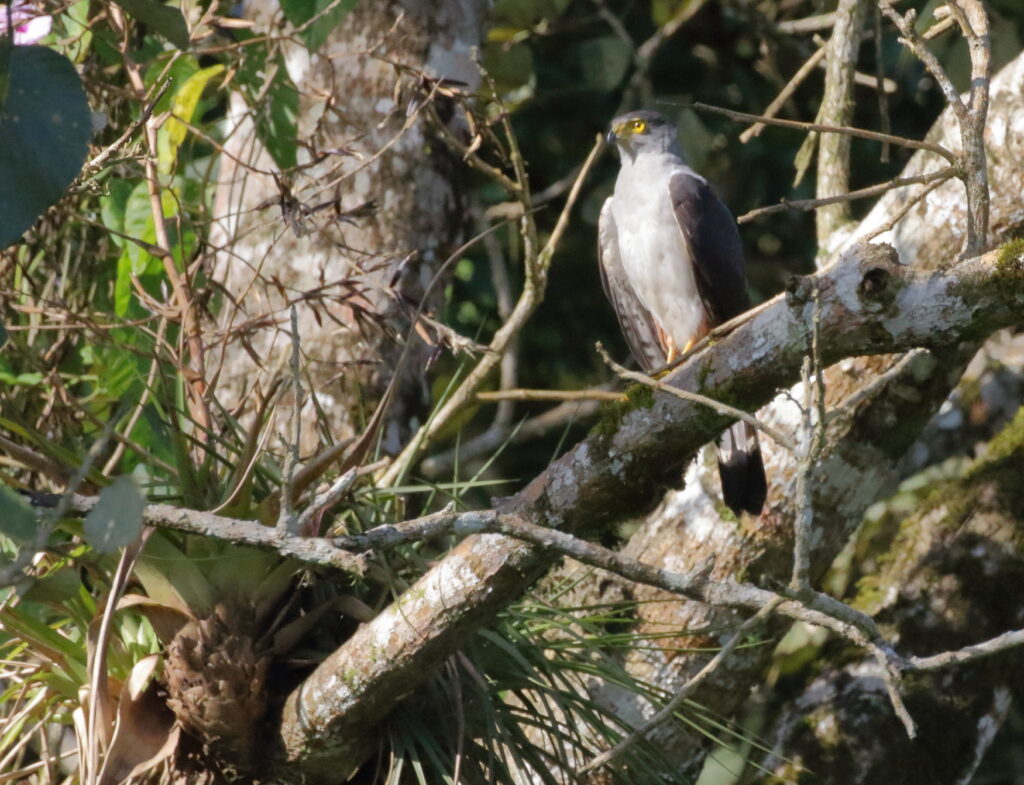
One of our best raptors of the trip, Bicolored Hawk was a bird I had longed to see since first coming to Costa Rica two years earlier.

Literally two days ago, after seeing a Black Hawk-Eagle, I had been texting my friend Drew about the raptors I had yet to see in Costa Rica. Raptors are some of the coolest, and most difficult, birds in the neotropics. They’re hard to target and show up seemingly at random. Over the months I’ve spent birding in Central America, I’d slowly accumulated most of the uncommon raptors in the region—White Hawk, Ornate and Black Hawk-Eagle, Barred Hawk, various kites and falcons. But the few that I’d never seen before are not only elusive but quite rare, and the two I wanted most were some of the rarest: Bicolored and Tiny Hawks. Both of these species are widespread across Latin America but very infrequently reported, and while I’d been looking for spots to search for both (especially Bicolored) as my dad and I had journeyed across the country, I’d just had to admit to myself that nowhere were these species reliable. By this last day of the trip, in fact, I’d given up on seeing them.
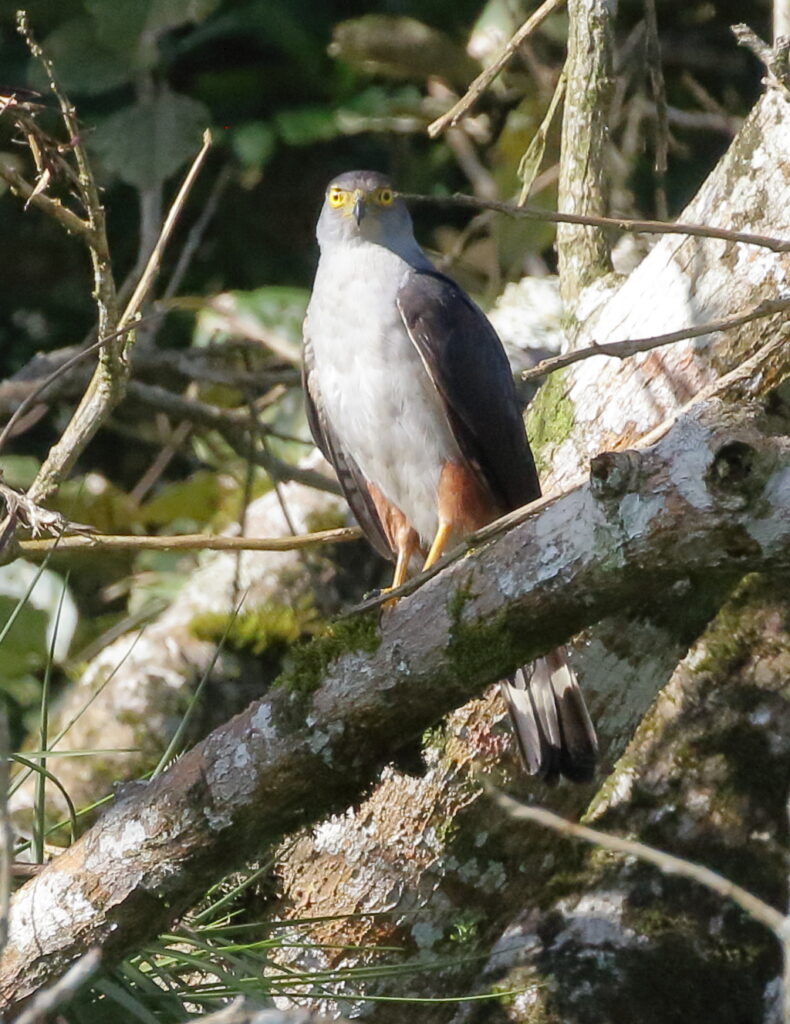
“You lookin’ at me? I’m lookin’ at you, Braden!”

But suddenly, there was an adult Bicolored, taking in the sunlight, fifty feet away. My brain went into shock as my dad and I stared at it and snapped pictures. It felt like seeing a ghost. After about five minutes, the ghost flew away, leaving its vivid image seared into my memory forever.

My dad and I high-fived, then turned around, not quite believing our luck. And our luck continued.

On the way back down the road, we ran into a trio of birders—two from Great Britain and their guide—who had just spotted a Great Potoo a couple hundred meters away. They wanted to scope the wetlands for Snail Kites first, but said they would walk back to show us where the potoo was afterwards. We forged on ahead, hoping to find the roosting nocturnal bird by ourselves. As we passed a gap in the trees, I spotted exactly what the other birders had been looking for—a single Snail Kite soaring over the marsh. This location was known for the species, and it was only my second sighting of one ever, after the ones I’d gotten to see with Nick in Florida in 2022. (See THIS POST.)
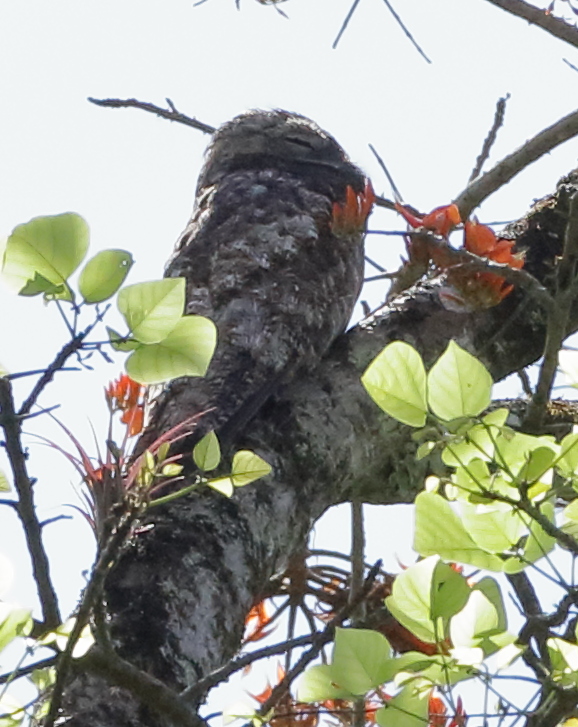
As much as we’d been looking forward to seeing one, we had to admit that our first ever “potoo lump” er, huh, lacked in excitement.

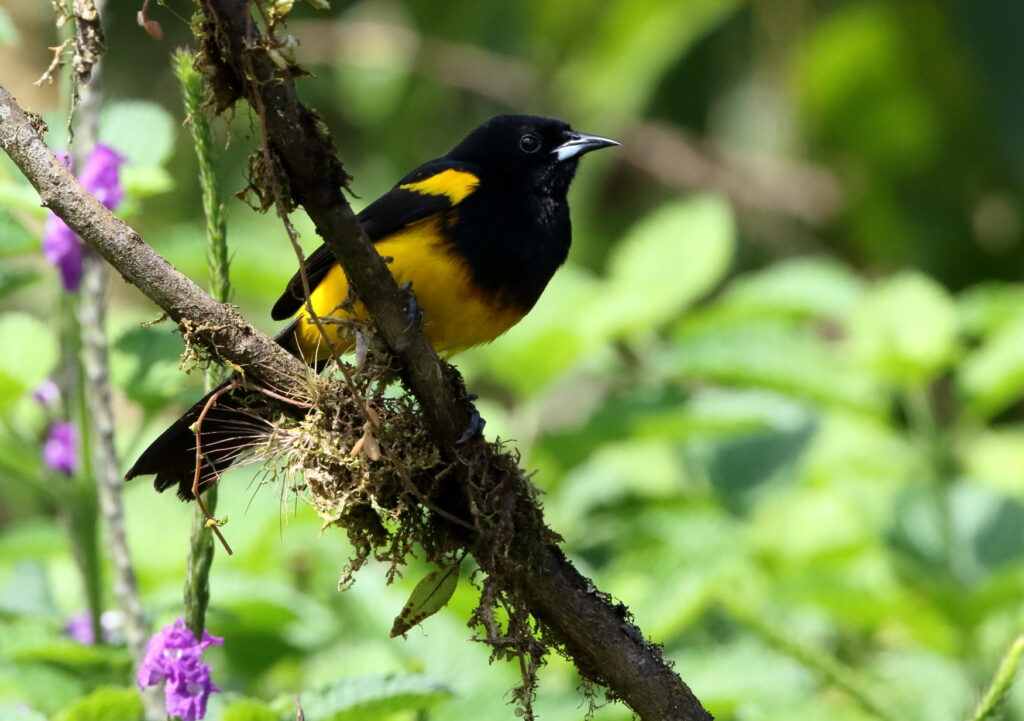
We kept walking, my dad taking the lead, when a small, yellow and white flash caught my eye. I snapped my fingers, alerting my dad to walk back towards me. There, in the shade on the side of the road, perched a White-collared Manakin. My dad had been trying to get good looks at manakins during the whole trip, but they had been incredibly uncooperative. I’d spotted a White-ruffed while he was in the restaurant at Arenal, and we’d spent hours trying to get good looks at Long-tailed a few days before. And now, here was my favorite of the bunch, a spectacular male White-collared, sitting and posing right in front of us. Between the manakin, the Bicolored Hawk and the antshrike this morning, it felt as if the trip had come completely full circle.
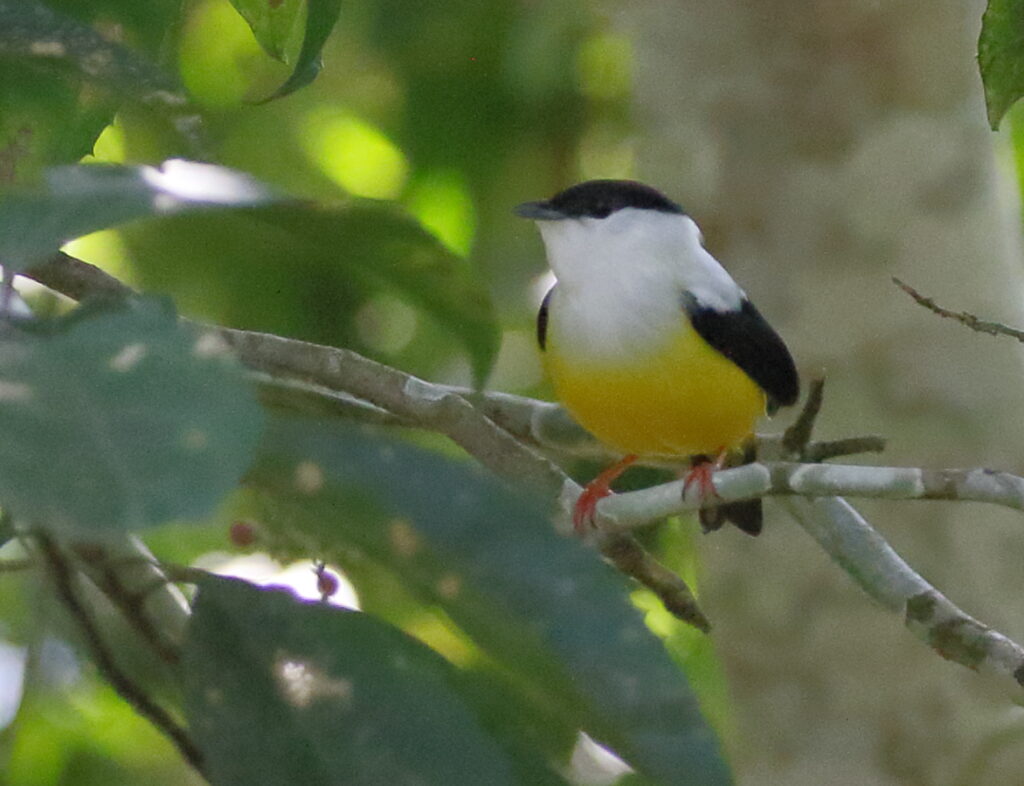
This great look at a White-collared Manakin finally ended a string of frustrating close calls my dad had experienced trying to get a good look at one.

To make things even better, the British birders returned and showed us where the Great Potoo was! It was a little underwhelming, given that the bird was far away and completely still, but a lifer’s a lifer! We finished the morning with around 95 species, far exceeding my expectations for the wetland and wrapping up our phenomenal Costa Rica expedition.

Link to our Costa Rica eBird Trip Report: https://ebird.org/tripreport/482094

If you enjoyed this post, here are links to the previous Costa Rica posts in this Series:

Birding Costa Rica—Beginning at the Airport

Arenal for Antbirds

Caño Negro: Costa Rica’s Epic Wetland
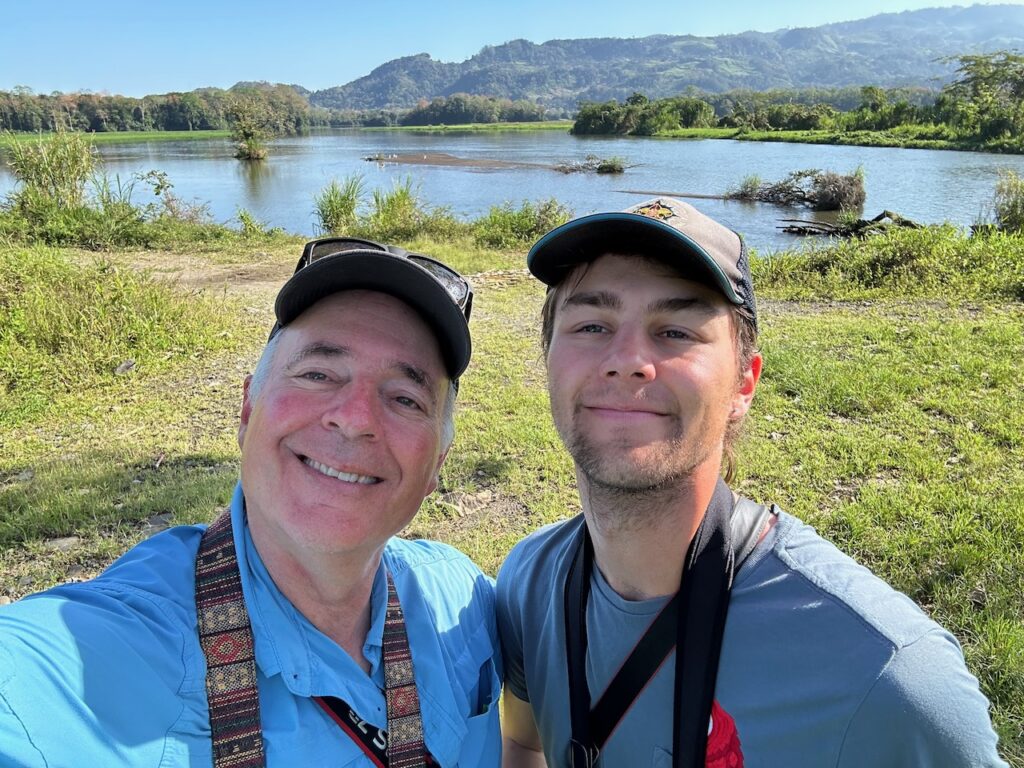
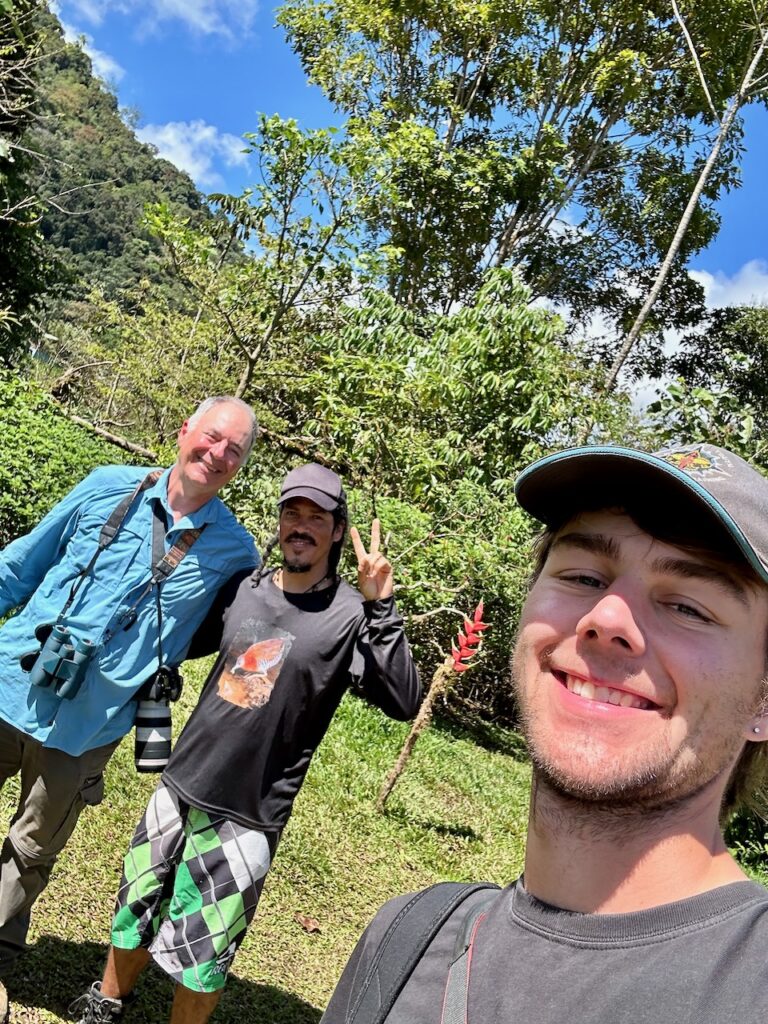
A final selfie on what turned out to be one our best birding outings of the trip.

Braden’s Costa Rica Report #4: Osa Peninsula Adventure

Braden and I write FatherSonBirding in the hopes of sharing the wonders of birds and birding, and the urgency to protect them. We do not accept advertising or donations, but if you’d like to support our work, please consider buying *NEW* copies of some of Sneed’s books—First-Time Japan, for instance, or my recent Orbis Pictus Award winner, Border Crossings. We appreciate your interest and hope you will keep reading!

A low growl emanated from the dense jungle up the hillside from the highway, stopping me in my tracks. The sun hadn’t even thought about rising yet, since I’d woken up before 5 a.m., but some animals were awake, including the Crested Owl I’d just heard call from the rainforest. I laughed in disbelief as I stood on the side of the highway, looking up the hill. While I could not see the animal, Crested Owl was one of the country’s largest owl species and one I’d been hoping for but not expecting to get during my time here. And yet here one was, singing for me as I began my trek from El Chontal (my hostel) to the Río Rincon Bridge in extreme southwestern Costa Rica.

The walk from the hostel to the bridge was about an hour, and as I plodded along the highway, I could hear and feel the forest waking up. Little Tinamous and Great Curassows called in the dark, and about half an hour before dawn many other species of birds started up. Immense roars echoed from high in trees as male Mantled Howler Monkeys welcomed the sun into the sky, and I eventually arrived at my destination, the bridge spanning the Río Rincón. Nearly every birder visiting the Osa Peninsula stopped here, albeit usually with a vehicle and not on foot. The bridge offered great views of mangroves to the east and rainforest to the west, as well as a wide open vista from which to watch parrots of many species leave their roosts in search of food. The primary reason birders stopped here, however, was for a specific, critically-endangered bird species: the Yellow-billed Cotinga. 

My early morning walk rewarded me with multiple looks at Yellow-billed Cotingas, rare and beautiful birds endemic to southwest Costa Rica.

Cotingas are a strange, remarkable and hilarious group of birds. These plump birds feed primarily on fruit and come in a wide variety of shapes and colors, including tangerine orange, like the Andean Cock-of-the-rock, shadow black, like the Bare-necked Umbrellabird, or electric blue, like the Turquoise Cotinga. The family features some of the world’s weirdest species, like the monk-like Capuchinbird, and the loudest birds in the world, the bellbirds, one of which resides in Costa Rica (and will be my target for my final weekend trip in this country, so stay tuned!). 

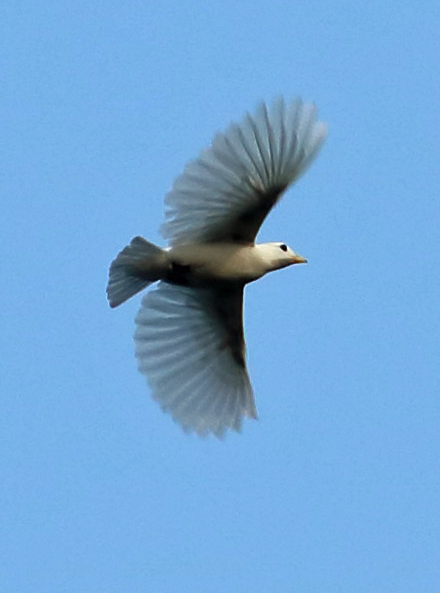
Yellow-billed Cotingas are angelic white, and are endemic to southwestern Costa Rica and extreme western Panama. They live in extensive lowland rainforest and mangroves, and thanks to habitat decimation, are largely restricted to the Osa Peninsula, one of the country’s wildest remaining areas. This species was one of the primary reasons that I had requested to skip classes this week and visit this far-away peninsula, and the Río Rincón Bridge was the most reliable place to see them.

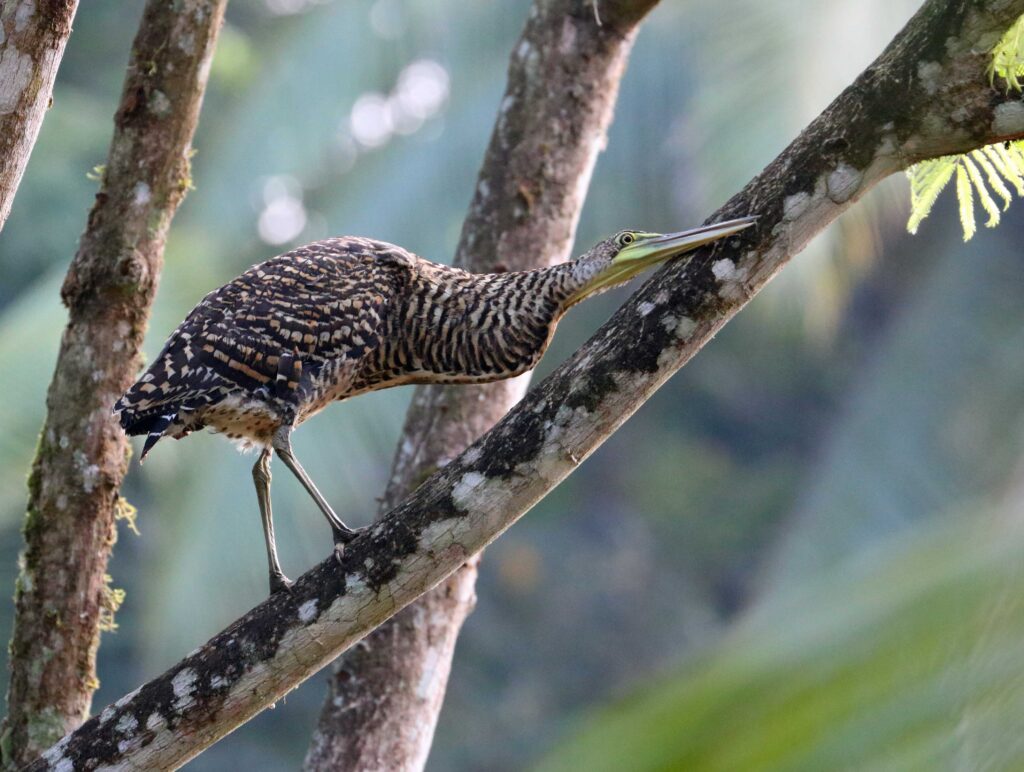
By the time I arrived, barely before dawn, the birds were already active. Hordes of parrots, from the pint-sized Orange-chinned Parakeets to the chunky Red-lored Parrots to the spectacular Scarlet Macaws, flew over me towards distant locations. A Bare-throated Tiger-Heron hunted for fish in the river, and another one, a juvenile covered in its namesake black and orange stripes, watched from a nearby tree. The sandy river island hosted several Spotted Sandpipers, a Willet and a Northern Jacana—the first I’d ever seen. Jacanas have massive feet which they use to walk atop lily pads, although there weren’t any lily pads in sight here. Flocks of swallows and swifts wheeled overhead, and I spotted a few Fiery-billed Aracaris swooping across the river, their flame-colored bills shining in the sun.

Even though I’d already seen them on the trip, I had yet to grow bored seeing a Bare-throated Tiger-Heron.

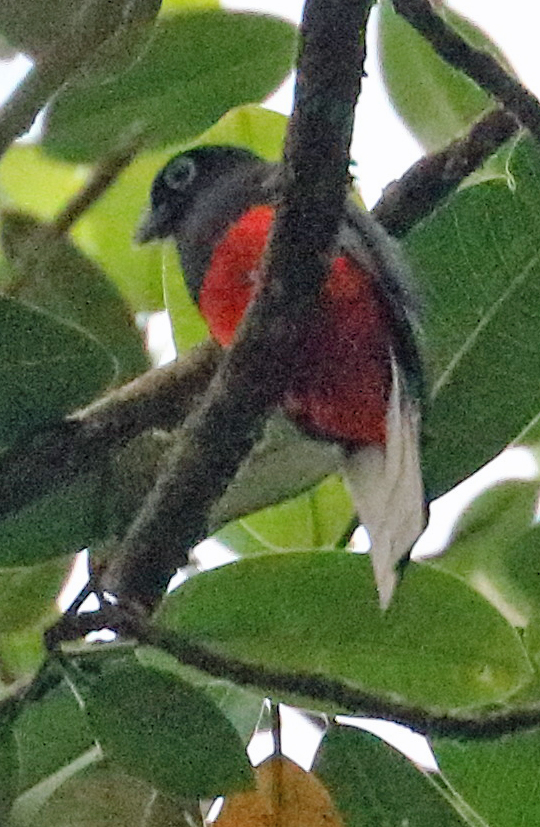
As I stood on the bridge, unsure of where to look for the cotingas, I heard a distinctive song from a nearby tree. The “bouncing-ball” call sounded exactly like a Wrentit, a bird native to the chaparral of California, which had never been recorded in Costa Rica and probably never will be. I knew exactly what it was, though, since I’d studied the song the night before and noticed the resemblance it had to a Wrentit. I walked over to the tree and whipped out my speaker, playing the call right back at the bird. Then, a large, blue and red bird flew in and landed several dozen feet above my head in clear view: Baird’s Trogon. This had also been one of my chief targets on the Osa, given that it was difficult to find nearly anywhere else in the country, and I snapped some poor photos of it before returning to my cotinga watch. After about fifteen minutes, that watch paid off, as a mottled gray female cotinga flew over, landing briefly in a tree in front of me before disappearing in the foliage. “Well, that wasn’t the view I’d hoped for,” I said to myself, a bit disappointed but still relieved that I’d seen my target species. The cotingas weren’t done yet, though. Over the next hour and a half, I spotted seven more of the birds flying over, many of them strikingly-white males. I got a decent picture of one in flight, too.

Despite the poor photo, Baird’s Trogon was one of the chief targets of my Osa Peninsula trip—and at least the sixth species of trogon I’d seen in Costa Rica!

After two hours of great birding, I walked back along the highway to my hostel. From there, I packed up and caught the bus down to Puerto Jiménez, the largest city on the Osa (which is still quite small). I found a small soda (the name for any number of small, family-owned restaurants in Costa Rica) and waited there for about an hour before a tiny, run-down van pulled up in front of it at 11. “Dos Brazos?” asked the lady driving it, and I nodded, throwing my bag in the van and climbing up after it. The interior of the van was in rough shape, although the seats were comfortable, and I taught the lady’s young son how to use my binoculars as we rattled up dirt roads towards the “town” of Dos Brazos, hidden deep in the rainforest.

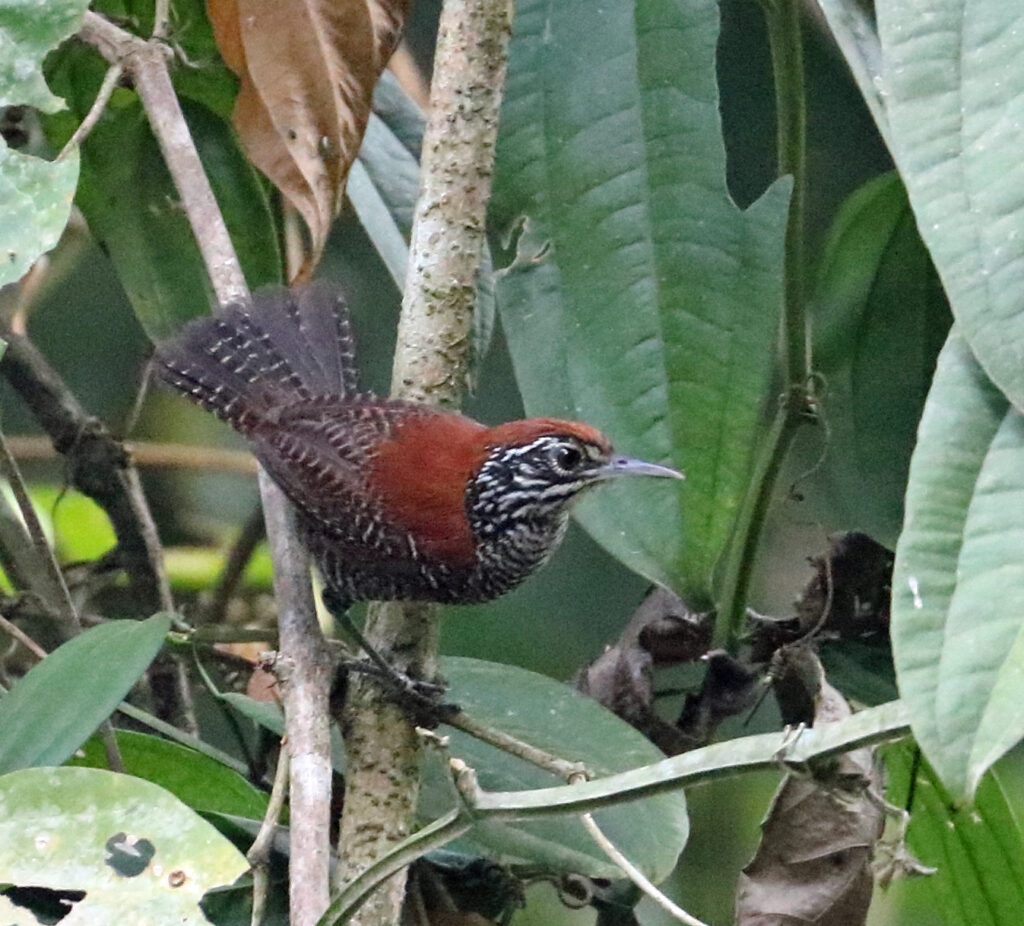
Riverside Wren—Costa Rica’s Most Stylish Wren???

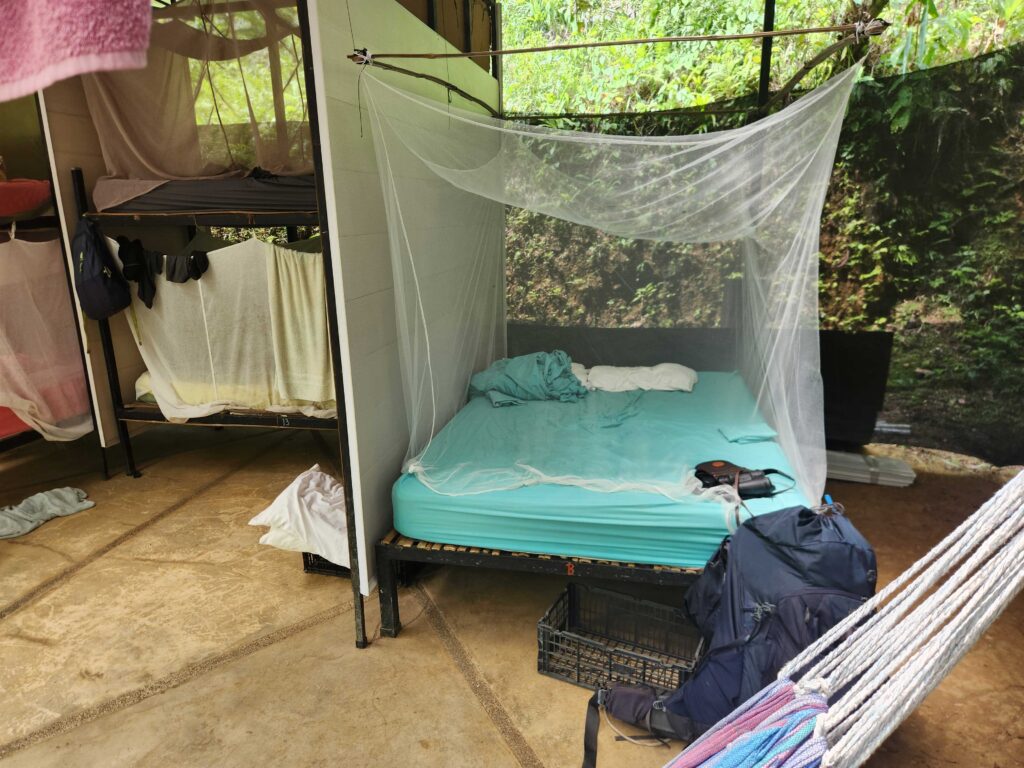
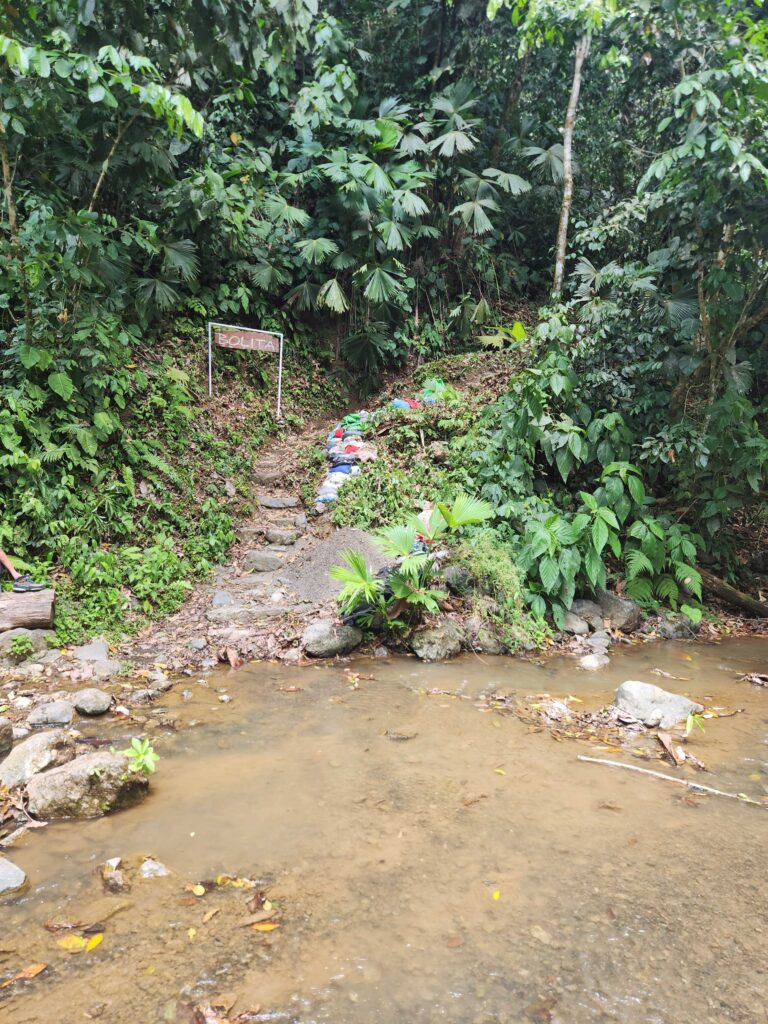
The woman let me off in front of the reception house for the Bolita Rainforest Hostel, where an American greeted me. “Welcome to Bolita! The hostel is a 30-minute hike that way,” she pointed up into the jungle. So, I set off, my heavy pack on my back. I spotted a pair of Buff-rumped Warblers next to a creek I had to cross, and eventually arrived at the open-air hostel, caked in sweat. Another American and several volunteers from all over the world greeted me cheerfully, showing me to my “room”, an outdoor bed with a mosquito net over it. There was no “inside” at Bolita, except maybe the supply closet, which hosted half a dozen roosting bats on its walls. After I settled down, Pascal, an older French volunteer, noticed my binoculars.

I wonder how many Hilton Honors points I’ll get for my stay at the Bolita Rainforest Hostel—a place with superb “air-conditioning!”

“Are you a birdwatcher?”

I nodded, and she proceeded to pull out a faded “Birds of Costa Rica” book, flipping it open to a page with small, colorful birds on it. She pointed to the bird that just so happened to be my number one remaining target for the entire trip: Orange-collared Manakin.

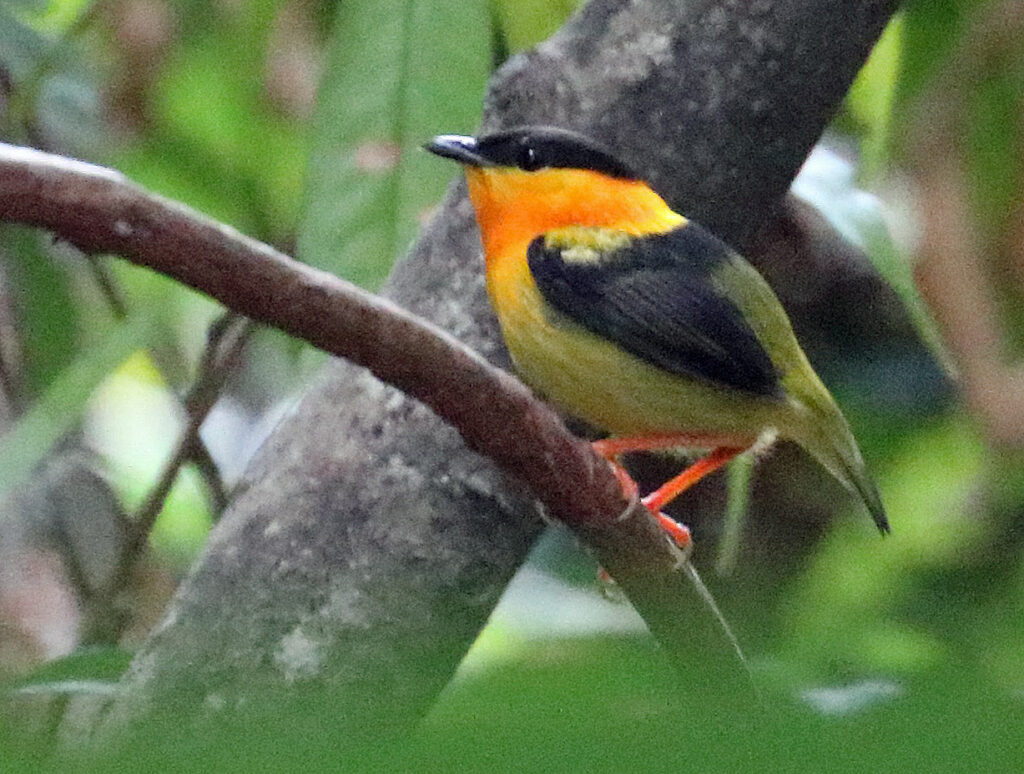
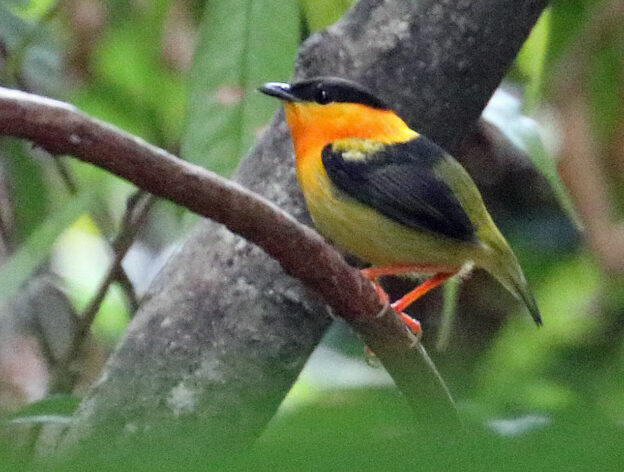
“I saw these guys here! The males all dance for the females at places called leks, and I found a lek on one of the hostel trails. I can show you if you’d like!”I nodded profusely—fate had somehow delivered to me the perfect opportunity to see the bird I wanted to see most here. Soon, Pascal led me and a few other interested guests up the “Big Banana Trail.” After twenty minutes of hiking, we rounded a corner and heard claps from the nearby trees. Pascal waded a few feet into the foliage off the trail, and pointed. There they were, tiny, football-shaped birds with sunset-colored collars and tiny black caps, like the White-collared Manakins I’d seen in Sarapiqui but with fiery rather than white throats. We enjoyed them for fifteen or minutes or so before everyone else wandered back down towards the hostel. I decided to poke around the trails a bit longer—and I’m glad I did.

Once I arrived at the hostel, and thanks to a new friend, it took me only minutes to find my last remaining Osa Peninsula target bird, Orange-collared Manakin.

Almost immediately, I heard the loud, repeating call of a wren coming from a tangle near me, and with a little verbal coercion, I was able to spot the culprit: a Black-bellied Wren, another southwestern Costa Rica specialty bird. This wren happened to be the beginning of a large mixed flock and I spotted several more wrens as well as antshrikes, antwrens, a foliage-gleaner, and a Little Tinamou, a hard-to-see forest bird, feeding right on the trail in front of me. I stopped at one lookout and watched as the birds came to me: parrots, flycatchers, hummingbirds and more. Highlights included a female Thick-billed Seed-finch, a tiny bird with a massive bill; an Olive-sided Flycatcher, a bird that winters in South America and summers in the boreal forest of Montana and Maine; and a Purple-crowned Fairy, a flashy, usually-arboreal hummingbird that steals nectar from flowers rather than pollinating them. Extremely satisfied with this mid-day birding, I headed back to the hostel to watch the sunset.

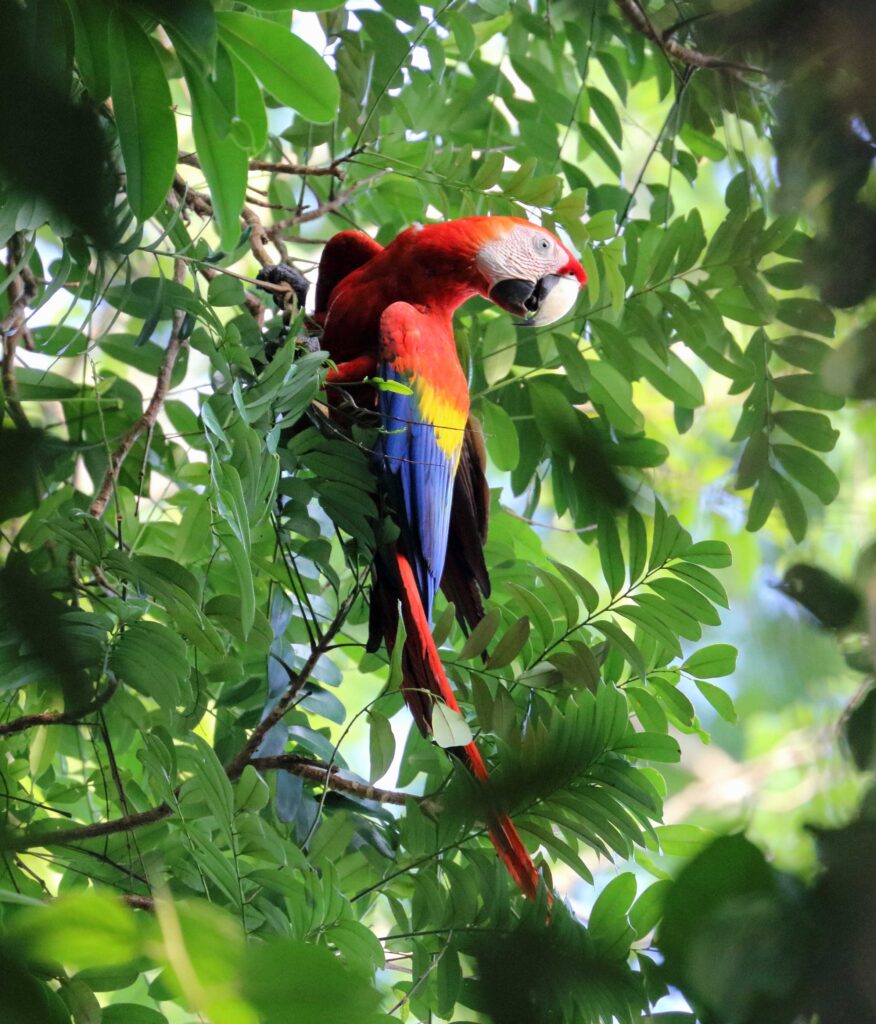
Scarlet Macaws are one of the birds most people want to see in Costa Rica, and in the Osa Peninsula, I found no shortage of these spectacular creatures.

I found a nice little bench overlooking much of the rainforest and quickly realized that even the hostel had great bird activity. Piratic Flycatchers, Scarlet-rumped Tanagers and Bananaquits flew around me, and about an hour before dusk, I spotted another bird that blew me away: another cotinga, this one the color of the sky. I’d looked for Turquoise Cotingas three days earlier and completely missed them, and yet here they were, delivered right to my doorstep in all their blue and violet glory. I had gotten, quite simply, every bird I’d wanted to see on the Osa Peninsula. And I still had one morning left!

One of the trails I explored near the Bolita Rainforest Hostel.

That morning was spent exploring more of the trails behind the Bolita Rainforest Hostel. With no real targets, I just set off into the jungle, hoping to discover something unexpected, and I did! I spotted three more lifers, including Black-crowned Tityra, Black-cheeked Ant-tanager (the only species completely endemic to the Osa Peninsula) and a Northern Black-throated Trogon, which was one of four trogon species I reported on my hike. I heard dozens of antbirds, antwrens, antshrikes and antthrushes, spotted groups of Scarlet Macaws flying high above me, and watched the sunrise over the misty hills stretching all the way out to the Pacific Ocean. I’d seen some beautiful places in Costa Rica so far, but none had been so wild as here. From one vantage point, I could see no signs of human habitation—just forest and sea. Even for a country that has done so well protecting its environment, places like this are rare, and I’m so happy I got to experience it.

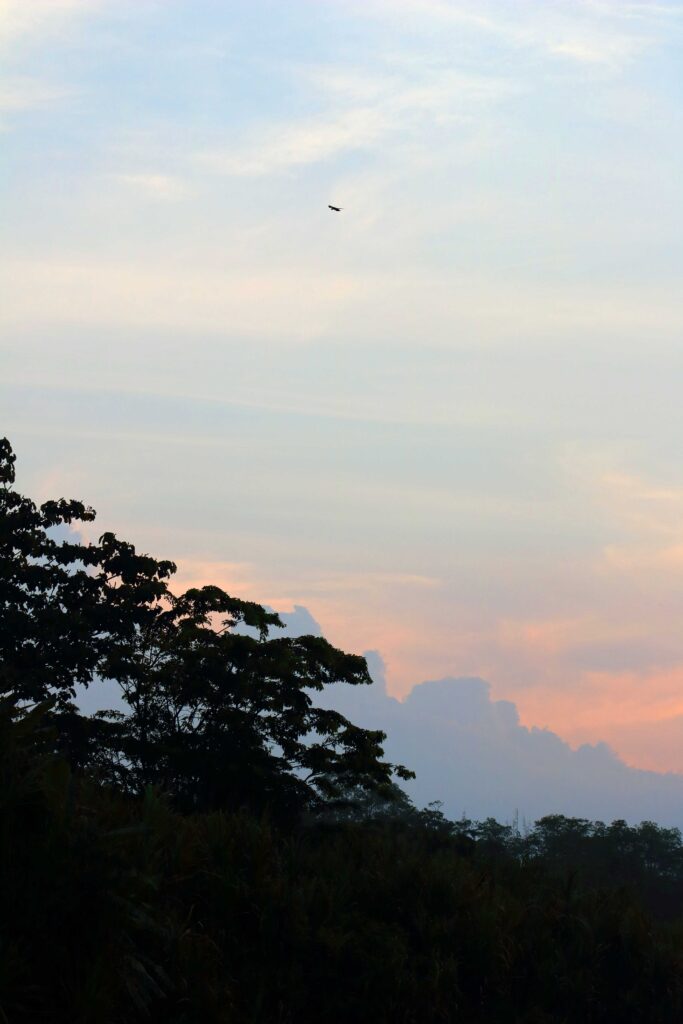
A lone Scarlet Macaw flies across the dawn sky—my last morning in the Osa Peninsula, and one I’ll never forget.

You can experience it too! Whether you want to see the jungles of Central America, like me, or the snow-capped peaks of the Alps or the Andes, the castles of Europe, the hubbub of Tokyo or the grasslands of the Serengeti, you can, with the help of the Gilman Scholarship! I’m sure I sound like a broken record, but it’s because it’s true—the Gilman can help low-income college students reach far away destinations to study abroad with just a simple application! I urge you to apply today, so you can have a life-changing, international experience during your college years, like me!