Category Archives: Spring Migration

March Madness Birding in Missouri

Congratulations to our loyal follower Roger Kohn for notching his 300th Life Bird this week—and a Golden Eagle no less! Way to go, Rog, and may it be just a prelude to a great spring birding season!

I can’t believe we didn’t post the entire month of February. Nonetheless, we appreciate your loyalty and devotion, and believe it or not, we picked up our 100th subscriber in the last few weeks. We should have more than that, but Russian hackers led to a subscriber catastrophe some years back. No matter, we are glad to have you with us.

But back to the lack of posts, we’ve had solid excuses. Braden has been studying hard for a tough group of science and math classes this semester while I’ve been laboring to complete two new books and get them turned in. Mission accomplished! I celebrated by heading off to the Children’s Literature Festival in Warrensburg, Missouri. It was my “dozenth” or so time there, and this one proved particularly delightful, with more than twenty authors speaking to thousands of kiddos over the course of two days. This trip was made even more delightful by the fact that I roped several of those authors into joining me for a birding excursion!
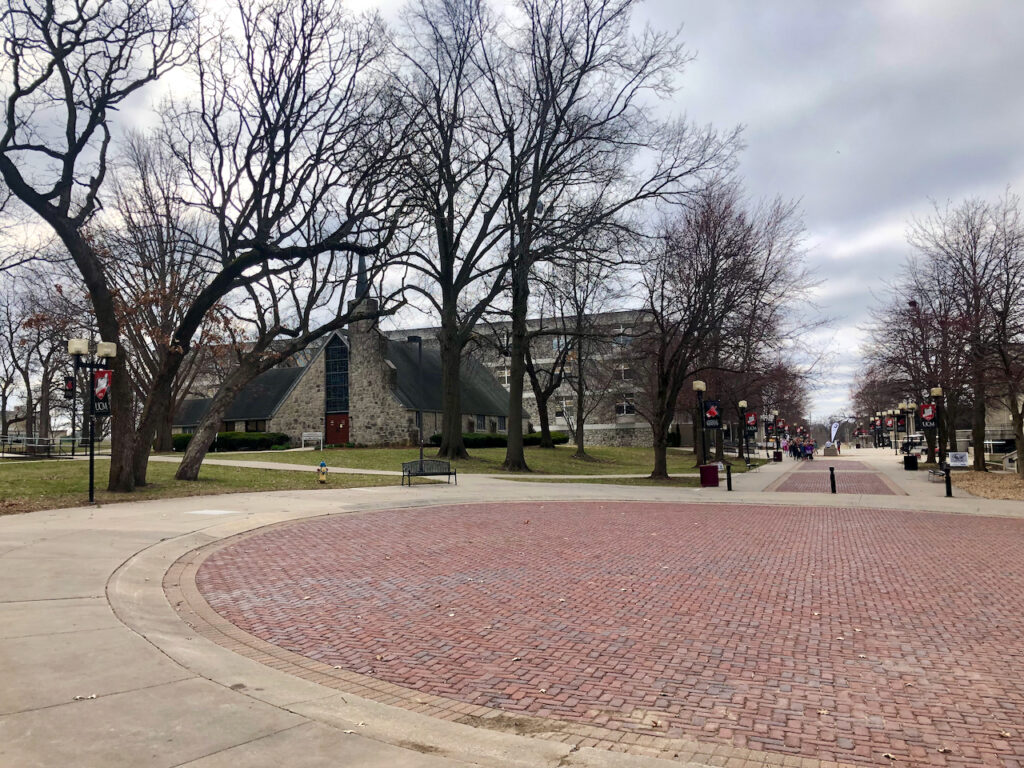
The University of Central Missouri in Warrensburg provided a friendly, intimate setting for 54th Children’s Literature Festival—the first full festival since Covid!

My one complaint about the literature festival is that it always happens before spring migration hits Missouri. Undaunted, I led authors Padma Venkatraman and Samantha Edwards, and Samantha’s husband, Jason Tucker, to Cave Hollow Park this past Sunday morning. Braden and I had birded the park many years back, but before we really knew what we were doing. We’d seen only a handful of species and had left disappointed. This time, I hoped for a better result—and was richly rewarded!

Working the woods that lined the large grassy areas, our intrepid crew saw—and heard—Northern Cardinals and Eastern Phoebes. Then, an American Kestrel flew over, not to be outdone by Red-bellied Woodpeckers, a Northern Flicker, and one of our biggest surprises, a Pileated woodpecker. Of the three woodpeckers, I discovered that the Red-bellied is definitely the most common in the Show Me State. That seemed wonderfully strange for a guy accustomed to Downy Woodpeckers holding down the top spot!
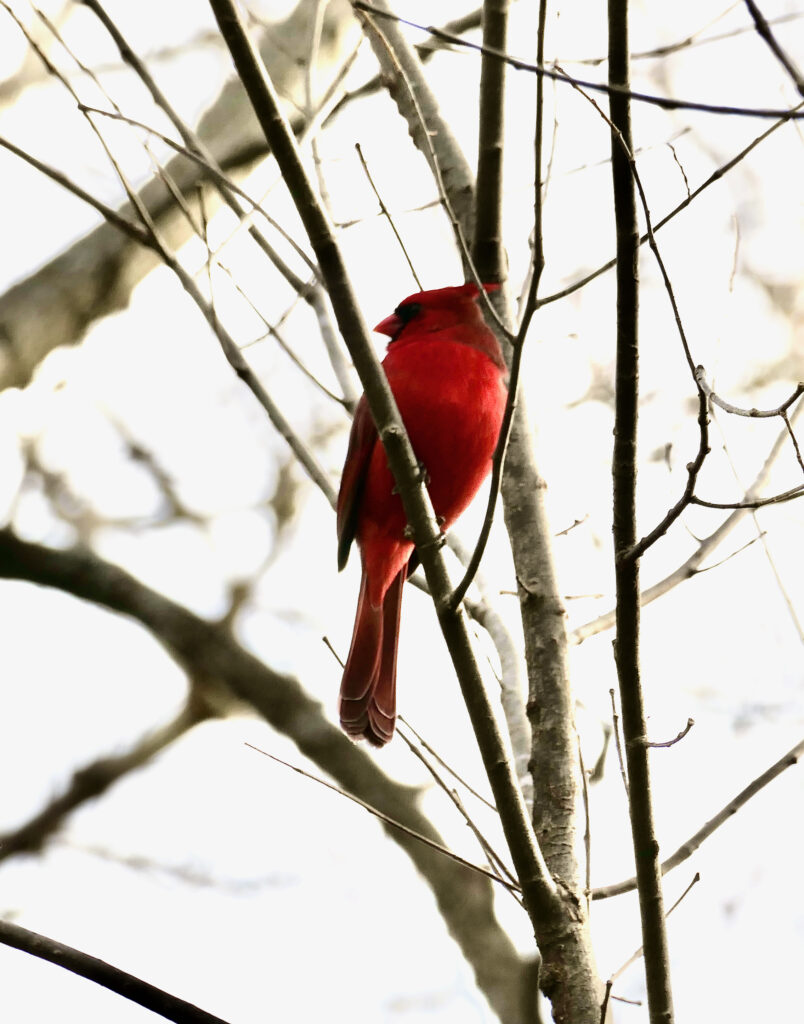
The trip to Missouri was my first opportunity to test my new Panasonic “travel camera” and as you can see from this Northern Cardinal, I didn’t really know what I was doing. Am hoping I’ll get to share better photos with you soon!

We continued our excursion, venturing into the park’s wooded trail system. This is where Braden and I had pretty much struck out before, but today our group was pleased to encounter Black-capped Chickadees, Tufted Titmice, and a surprise White-breasted Nuthatch. For the first time, I also recognized the “Fee-bee” call of an Eastern Phoebe. “Ah,” I told my companions, “that’s how they got their name.” To my satisfaction, my companions loved our outing, as did I. While we didn’t see anything rare, I don’t often get a chance to enjoy the birds of the East, so it was a special treat to get out there on this sunny, crisp morning. It was also great to have such enthusiastic company!
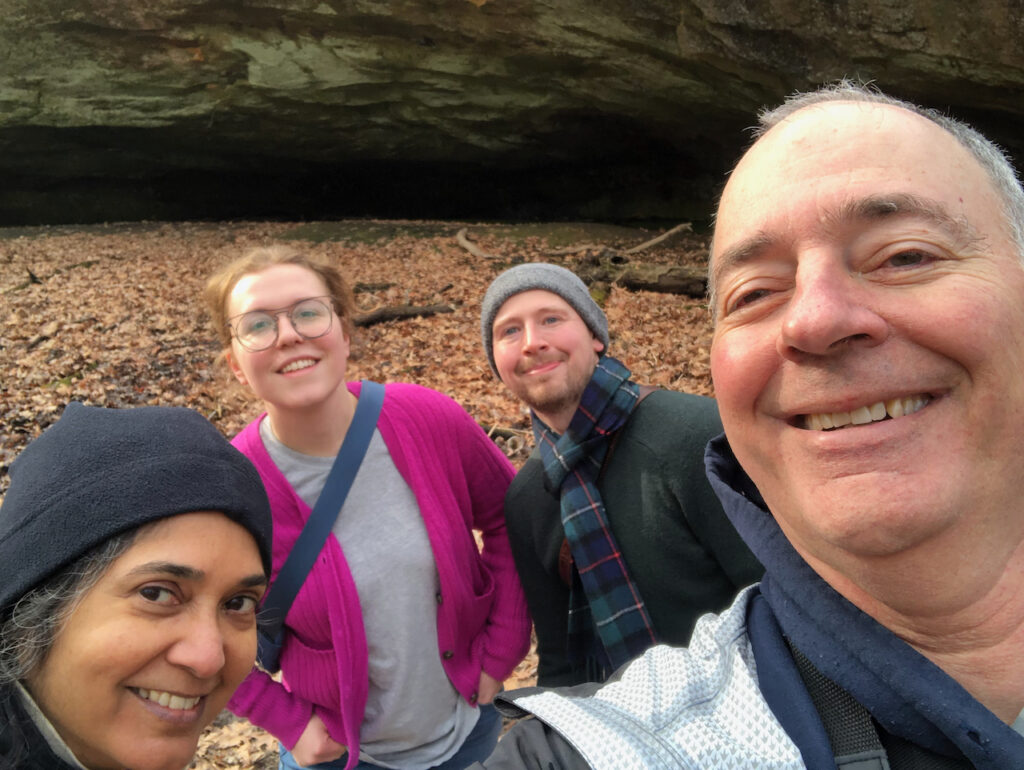
My intrepid fellow birders and I were excited to discover some of the “hollows” for which Cave Hollow Park is named (Left to right: Padma Venkatraman, Samantha Edwards, and her husband, Jason).

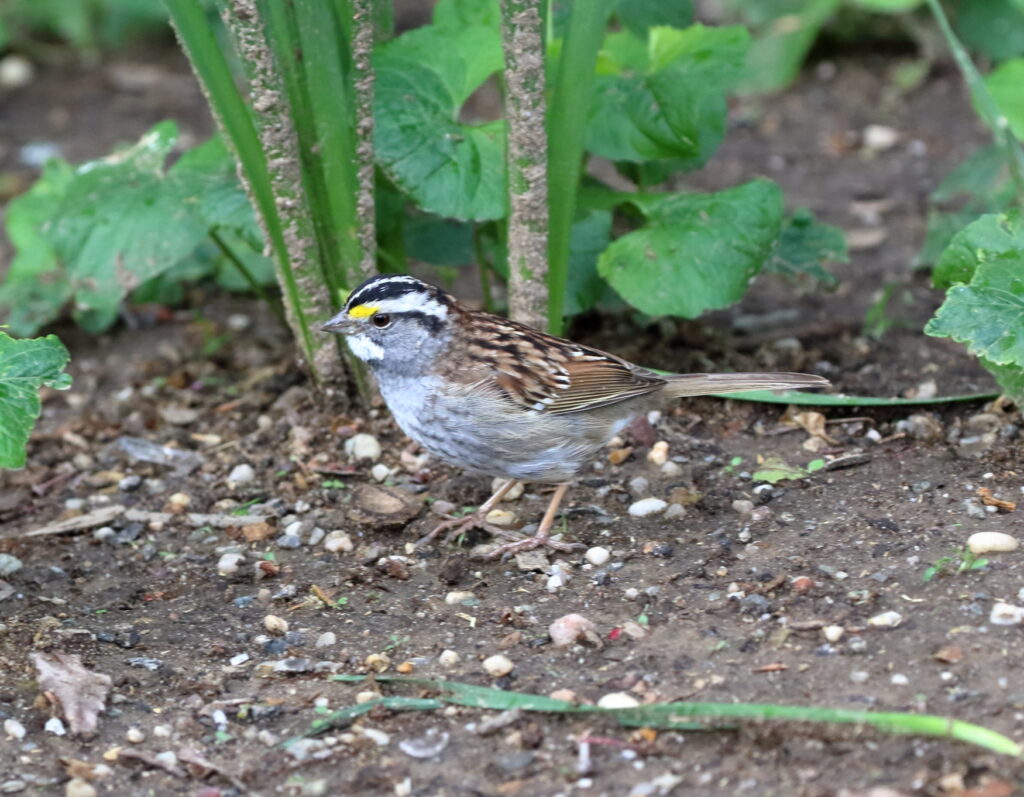
I was so pumped that I woke early the next morning and birded the woods right next to our hotel. I had barely set out when I saw eight or ten sparrows close by. The yellow above the eye made me at first think “Savanna Sparrows.” Then I realized with excitement that they were White-throated Sparrows—a species that wasn’t even on my radar! More surprises followed with a look at a Song Sparrow and Turkey Vulture. Then, I heard an even bigger surprise—a Carolina Wren. That afternoon, I bumped my Missouri Life List to 31 species when a Red-shouldered Hawk landed on a lamp post next to the hotel as I and my friend and fellow author, Roland Smith, returned back from work. I ended the trip more than happy with my March Missouri birding . . . but that doesn’t keep me from dreaming they’ll one day move the festival to April when the full flush of spring songbirds will be moving through!
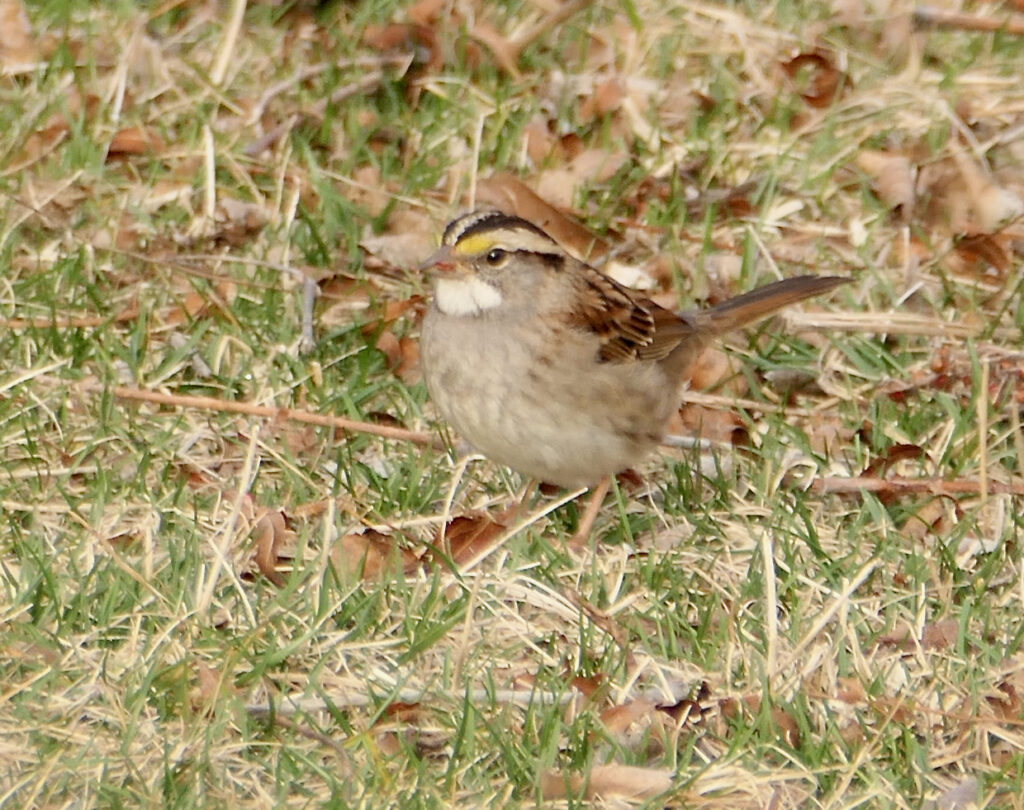
I’m not sure why, but White-throated Sparrows just make me happy. I hope you’re getting to see some wherever you are! Fun fact: President Teddy Roosevelt especially enjoyed listening to White-throated Sparrows on the grounds of the White House!

Advance Warning: You will most likely have to endure another lengthy delay before our next post as I (Sneed) is about to embark on a major trip. The good news is that I will be traveling to a country I have never been, and I can almost guarantee that your patience will be rewarded!
Birding Central Park

We continue our spring birding blog blitz by picking up on our New York City trip last week and the nail-biting account of our Central Park birding adventure. If you’re afraid you will get TOO excited while reading this, I suggest you ask someone to hold your hand. And don’t forget to tune in tomorrow for our next post “Birding Brooklyn”!

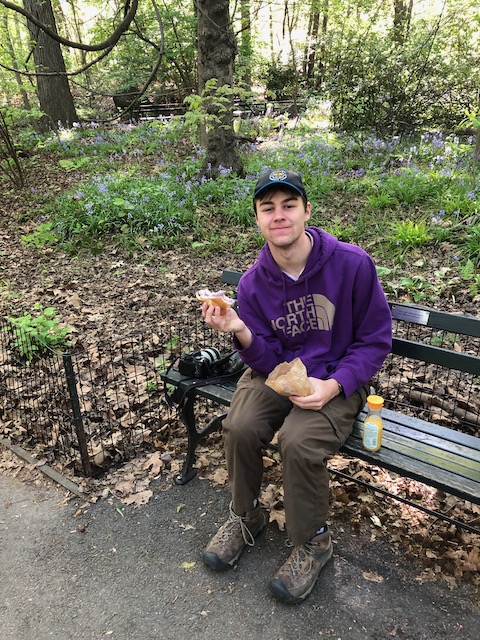
On Monday, Tessa and I left Amy to continue recovering and rode the Hudson Line up to see our good friends, fellow author Larry Pringle and his delightful wife Susan. After taking a great walk at Nyack Beach State Park and eating a nice lunch, we returned to Manhattan in time to meet Braden at Penn Station after his first year as a college student! Bright and early the next morning, though, he and I jumped on the C train to do something we’d dreamed about since we began birding eight years ago: bird Central Park during spring migration! (Well, after a stop at Liberty Bagels on 35th St., that is.)

People often ask us the key to successful birding. Our trip to New York provided the definitive answer: bagels.

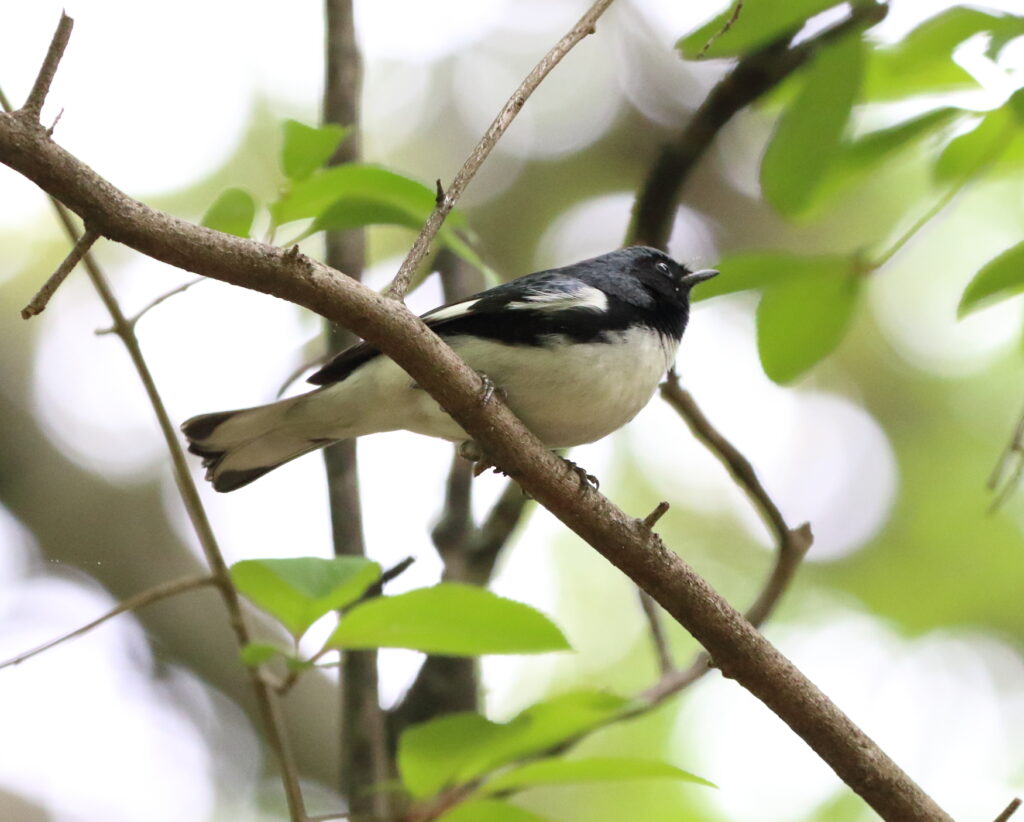
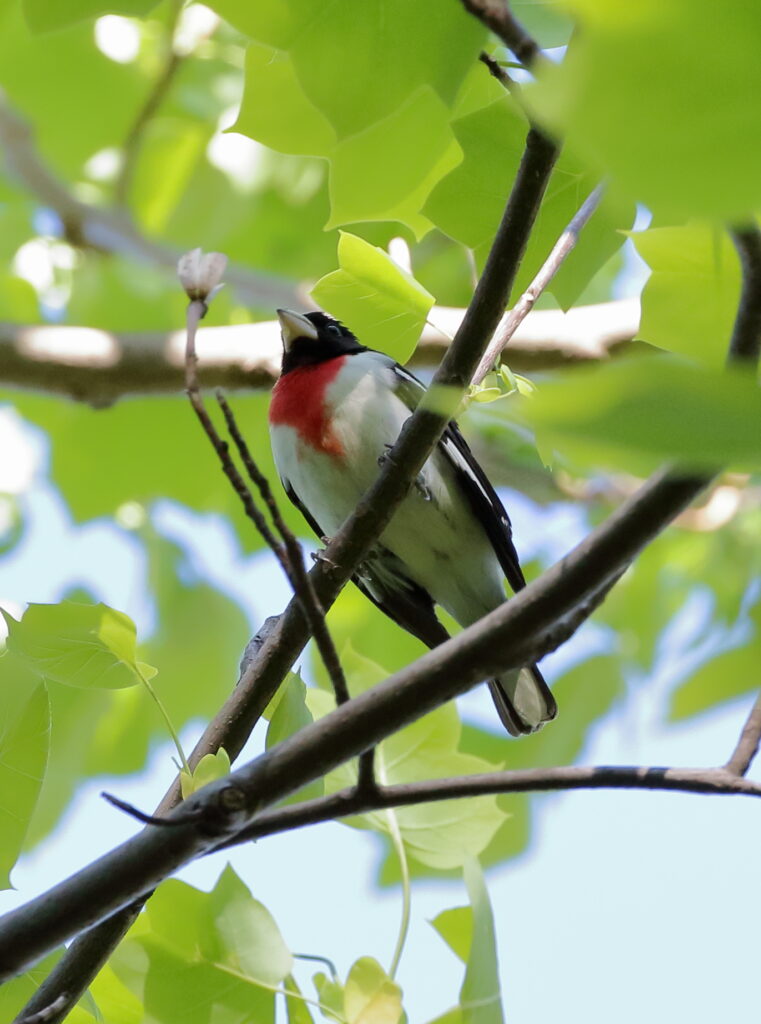
Just as Tessa and I had done two days earlier, we jumped off at 81st St. and immediately crossed over into Central Park, entering a particularly birdy area known as The Ramble. As mentioned in our last post, I worried that the birds might have left NYC already. Most migrating passerines only appear in the park during brief windows ranging from a few days to 2-4 weeks. They also come in waves that one can easily miss. Within a few minutes, however, the birds put my fears to rest when Braden called out a Black-throated Blue Warbler, a Life Bird for me and one of the most stunning of all warblers. Over the next hour and a half, a veritable songbird hit parade followed with sightings of Worm-eating Warbler, Nashville Warblers, Northern Parulas, Northern Waterthrushes, American Redstarts, Swainson’s and Hermit Thrushes, Magnolia Warbler and much more, including a male Rose-breasted Grosbeak high in the trees.

Black-throated Blue Warbler landed at Number 502 on my ABA (American Birding Association) Area Life List—and what an entry it was!
Not the best view, but this was our first male Rose-breasted Grosbeak since we’d hit High Island, Texas during our 2016 Big Year—so we took it!

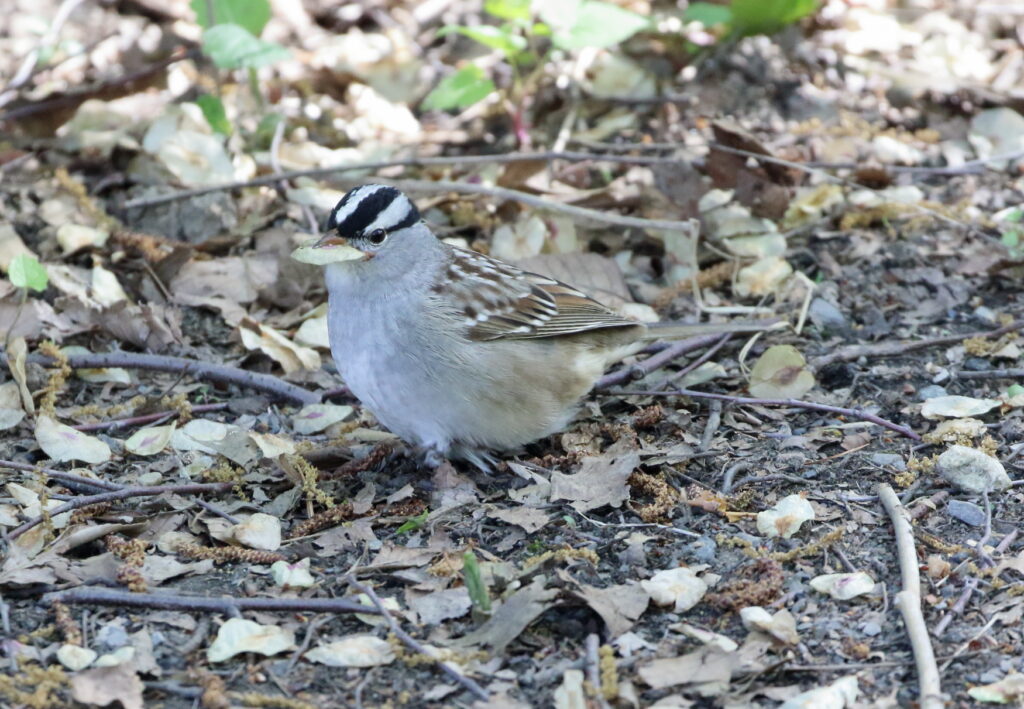
Among birders, it’s a well-known fact that seeing a lot of birds can generate an enormous appetite, so Braden and I were forced to sit down and attack our bagels. Mmmm . . . lox shmear . . . Partly satiated and with cream cheese smearing our faces, we again rose and made our way to our second birdy destination—an area of Central Park called North Woods. Along the way, we passed multiple landmarks familiar to anyone who has ever watched movies or Seinfeld including Belvedere Castle, the Jacqueline Kennedy Onassis Reservoir (where Dustin Hoffman jogged just before getting his teeth ripped out without anesthetic by a sadistic dentist), and the Central Park Tennis Center. We also made more bird discoveries such as a large group of White-crowned Sparrows.

Surprisingly, large numbers of White-crowned Sparrows are rare in Central Park. We were lucky to run across a group of five on our walk up to the North Woods section of the park.

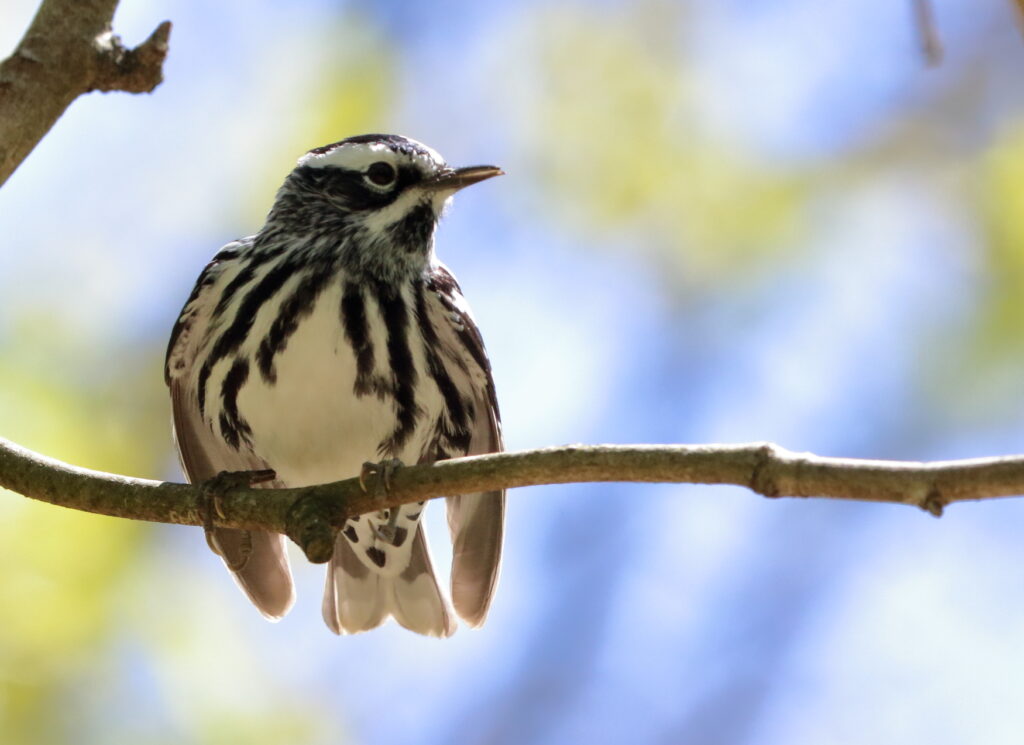
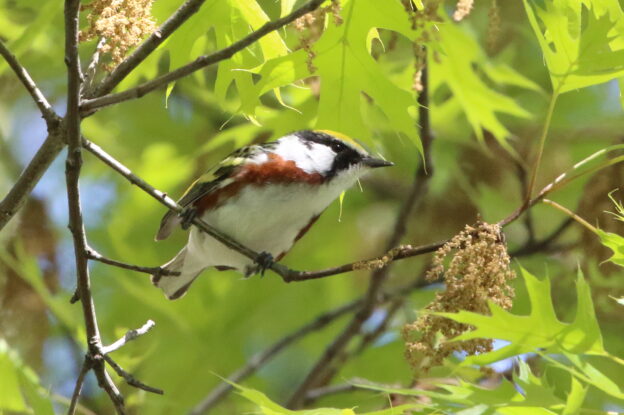
To be honest, however, we didn’t think the North Woods could possibly match The Ramble for birds, but we soon learned that . . . it CAN! Two targets, a Yellow-breasted Chat and a Red-headed Woodpecker had created a buzz in that section of the park, and we (ahem) chatted with several birders about them, but it was the other birds that grabbed our attention. These included incredibly cooperative Black-and-White Warblers, glorious Chestnut-sided Warblers, a Veery and Blue-headed Vireo. We struck out on the chat, but making our way east, we followed the creek through an area called The Loch and continued to rack up amazing sightings. These included a quick glimpse at the now-famous Red-headed Woodpecker, several Red-bellied Woodpeckers, a Yellow-throated Vireo, a Great Egret flying overhead, and a bird I especially wanted to see, Swamp Sparrow.

You wouldn’t think an animal that is just black and white could be so stunning, but Braden and I savor each encounter with Black-and-White Warblers.

By now we had birded for five straight hours and our energy was starting to flag, so we reluctantly dragged ourselves to the 103rd St. subway station and caught a ride back downtown. We learned later that we might have picked up Cape May and Blackburnian Warblers if we had hit a part of the Ramble called the Point, but did we mind? Only a little. In fact, our day had exceeded all of our expectations for birding Central Park. During our long morning, we had logged a remarkable 57 species including an amazing 13 kinds of warblers—as many as we could hope to find during a whole year in Montana!

Our Checklist.

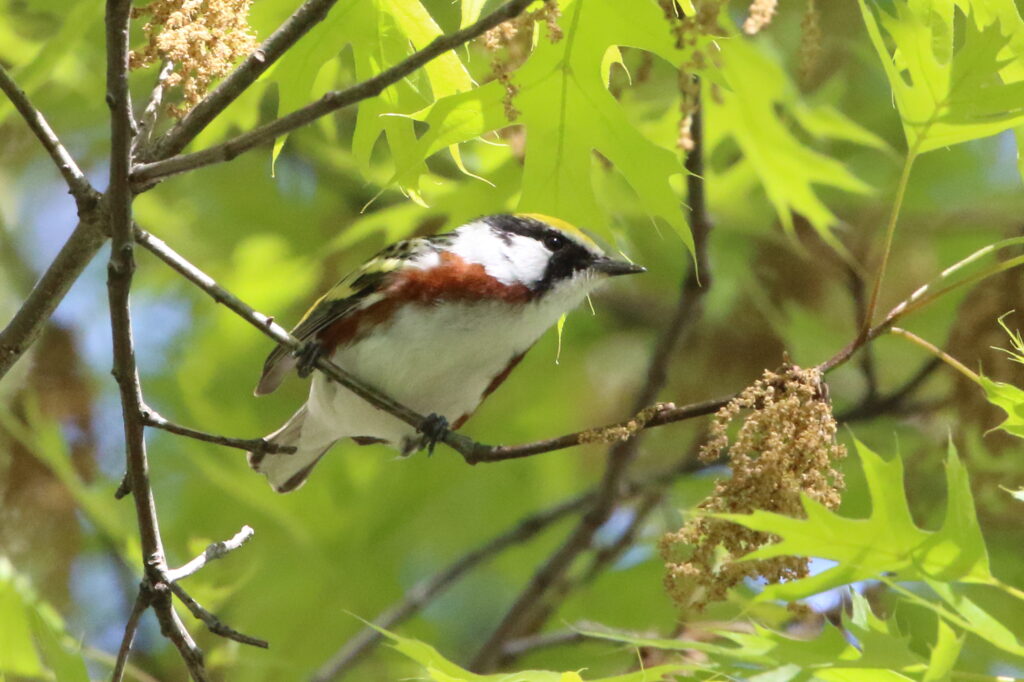
Though I’d seen Chestnut-sided Warblers when taking Braden back to college in Maine last fall, this was my first technicolor, breeding male!

Even better, when we returned to our hotel, Amy was feeling much better and had spent the day with Tessa at Ellis Island and the Statue of Liberty, so we all went out to a nice meal at Kung Fu Kitchen. Can you spell pork soup dumplings???? Then, while Braden and Tessa strolled Times Square, Amy and I set off to see The Book of Mormon, a musical we were supposed to see in Seattle when covid struck. But lest you think Braden’s and my Big Apple birding adventures had concluded, stay tuned for our next post . . .

Birding the Big Apple: Manhattan Practice Runs

We know you’ve been dying for Braden’s last installment of his Florida trip, but just to keep you waiting impatiently a bit longer, here is the first of a new series for you: our spring trip to New York—during migration season! Stay tuned for rapid installments, and to make sure you don’t miss a single one, be sure to subscribe by filling out the boxes down and to the right!

All birders have bucket lists and birding New York’s Central Park during spring migration stood close to the top of ours. Just when that would happen, we didn’t know, but this year the end of Braden’s spring semester, ahem, pigeon-tailed perfectly with my daughter’s desire to return to New York City, so we decided to make a family trip of it. We did not plan the exact dates around spring migrants, but first encounters bore promise.

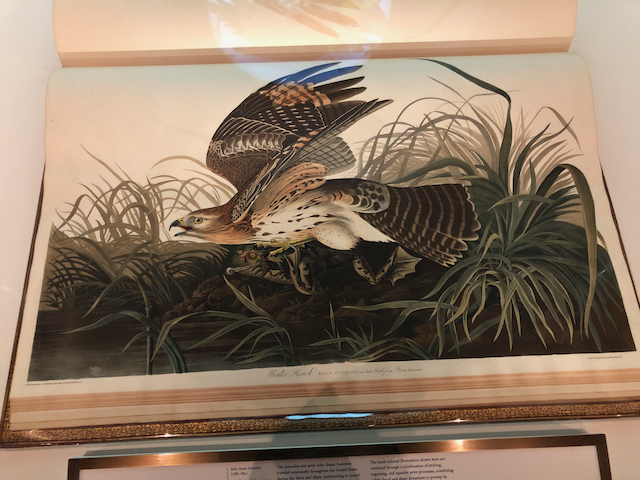
Seeing an original copy of Audubon’s Birds of America in all its giant glory was an unexpected, great way to launch my New York birding experience!

Amy, Tessa, and I arrived Friday, May 6, but Braden wouldn’t pull into Penn Station until the following Monday and I tried to hold off birding until then. I failed. Despite a rainy day Saturday, we wandered back through Bryant Park after an excursion to the New York Public Library, where I got to see a copy of Audubon’s original Birds of America (WOW!). Bryant Park lacked good habitat, but in a few short minutes I glimpsed Gray Catbirds, White-throated Sparrows, and a Hermit Thrush. The message was clear: THE BIRDS ARE HERE! Even more exciting, Tessa and I planned to take Amy to a well-known hotspot, Governor’s Island, for Mother’s Day the next day. Alas, that night Amy came down with a crummy cold, so Tessa and I decided to instead plan a visit to the American Museum of Natural History (AMNH).

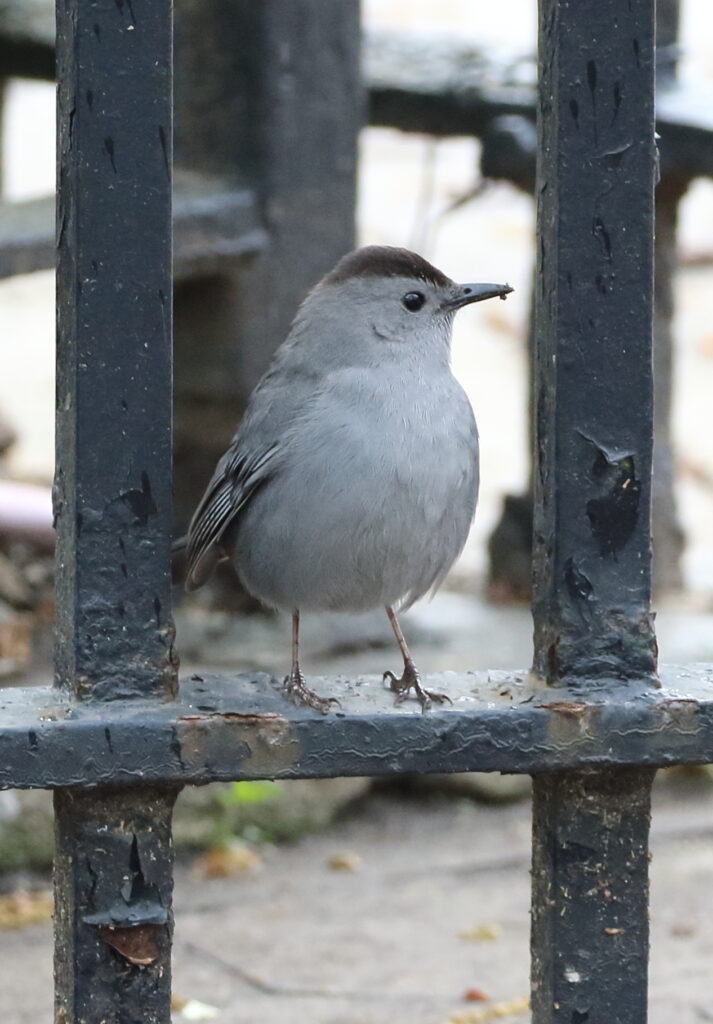
“I’ve been framed!” Actually, this Gray Catbird is not in jail—just visiting the Bright Lights and Big City Life on its way to breeding grounds.

The next morning, as is my wont, I rose way before Tessa so decided to do a bit ‘o bird reconnoitering before we hit the AMNH. Our overpriced, mediocre hotel stood fairly close to the Hudson and I thought There’s gotta be some birds down along the river, right? Uh, not really. Sure, I saw a cormorant, robins, a couple of fish crows (identified by their anemic calls) and the usual city birds—along with a giant aircraft carrier—but was disappointed by the paucity of greenery. On Google Maps, however, I noted a park a few blocks uptown and decided, “What the heck.”

My first cool bird of NYC, White-throated Sparrows are one of Braden’s and my favorites—probably because we have to work so hard to see them in Montana!

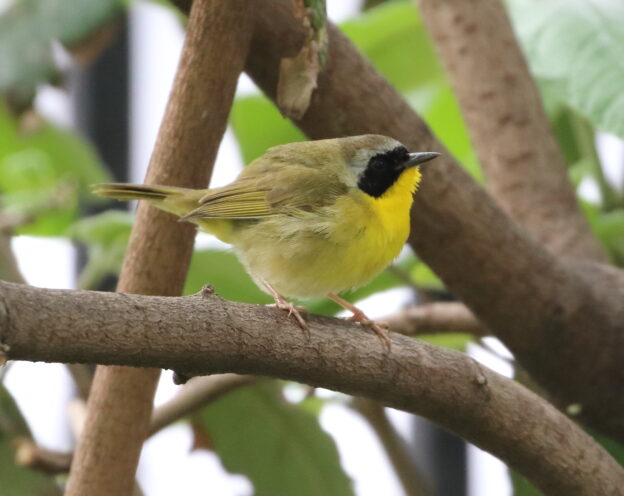
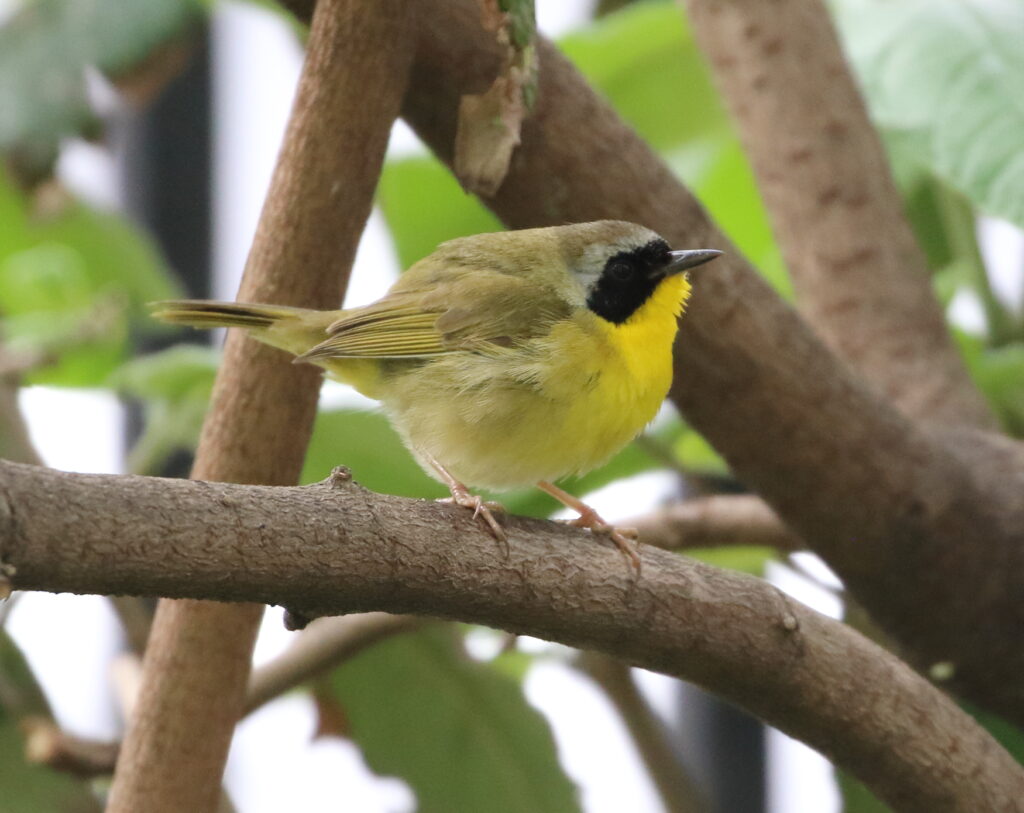
DeWitt Clinton Park would be considered a “postage stamp park” in Montana, but I’m guessing it’s an invaluable resource for its neighborhood New Yorkers, consisting of a doggie park and various courts. More important, even before entering I saw that it held trees and strips of shrubbery, and my pulse quickened with the possibilities. Sure enough, as soon as I walked up the first steps, I spotted a small shape scampering along a tree trunk—one of my favorite birds, Black-and-White Warbler! My Bird Excitement Meter surging, I hunkered down to some serious birding, and was rewarded by more catbirds and White-throated Sparrows, and then saw both Hermit and Swainson’s Thrushes. The biggest surprise? A Common Yellowthroat, very far from water—an obvious migrant passing through!

What are you doing here? Seeing a Common Yellowthroat in a postage stamp park in Manhattan both surprised me—and got me really excited about what else might be passing through the crowded megalopolis!

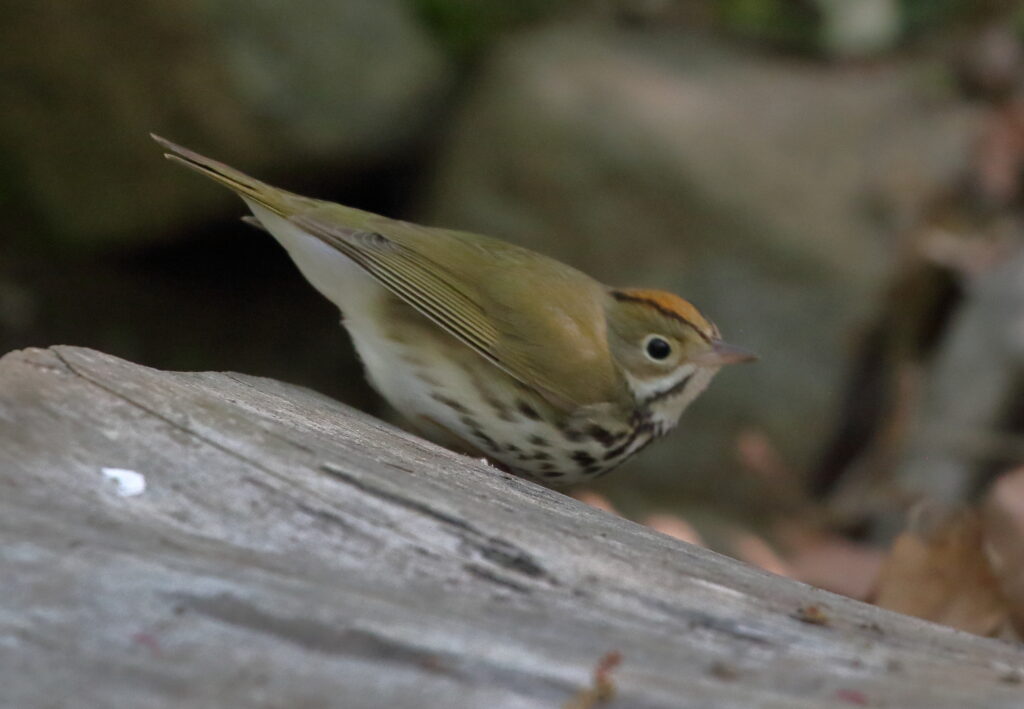
Returning to the hotel, I made sure Amy had what she needed for a day in bed, and then Tessa and I caught the C train up to 81st St. We had ANHM entry reservations for noon and arrived early enough for a quick stroll of Central Park across the street. I kept my expectations low as it was an overcast day and, well, I just didn’t know what spring migration might be like Out East. Within a couple of hundred yards, however, I spotted a small tan bird on the ground with a bold stripe on its crown. “Worm-eating Warbler?” I considered. “No, Ovenbird!” And not just one, but two.

Another bird challenging to find in Montana, Ovenbirds were evidently swinging through Manhattan in large numbers the week we arrived!

Emboldened, we continued walking, seeing catbirds, a blue jay, more WTSPs, a Red-tailed Hawk, and a surprise Chipping Sparrow. Then, a bold flash of yellow caught my eye. I had worried that I might not be able to ID some of the Eastern warblers, but this was a bright, bold male. Even better, it’s a bird I had for years been staring at on the cover of The Sibley Guide to Birds—Magnolia Warbler! Honestly, the bird was just stunning. I didn’t have my camera, but in a way that was better as I could just focus on enjoying this first male MAWA I had ever seen. Even Tessa, a non-birder, appreciated the warbler’s sublime beauty. With a twenty-minute list of 12 species (not even including Rock Pigeon!), we headed off to the museum, fingers crossed that the birds would still be here when Braden and I would get to bird Central Park in earnest two days later.

Crossbill Sunday: the Final Day of Birding Therapy Week

Thank you for following our Birding Therapy Week posts. Please share and don’t forget to subscribe to receive future posts!

To wrap up Birding Therapy Week, I leaped onto my bike Sunday morning and pedaled to a spot I’d been sorely neglecting this year: the Missoula Cemetery. One thing that got me through the first year of the pandemic was cycling out there on a regular basis just to see what was flitting around. I’d ended 2020 with a total of 50 species, firmly cementing my position of Cemetery King, and seeing many surprising birds as a result. Braden and I had ventured out there once this winter and been rewarded with a flock of Common Redpolls, but I needed to get out there again before the trees fully leafed out, making it difficult to spot passerines.

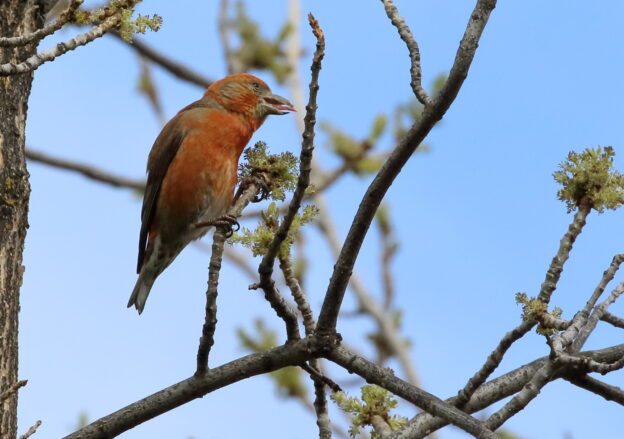
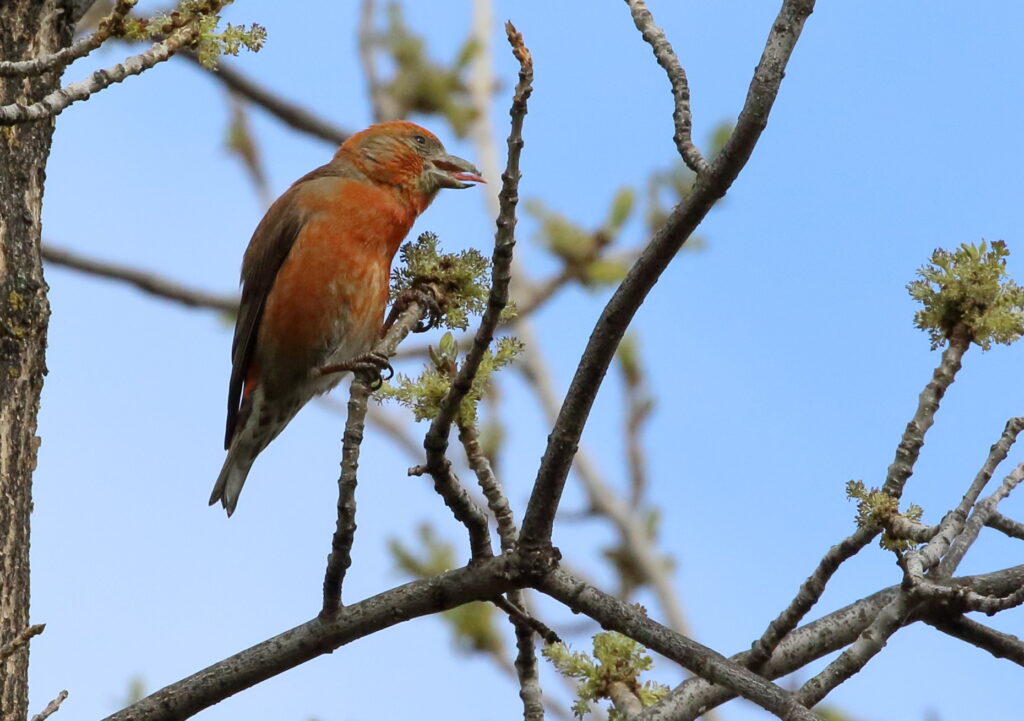
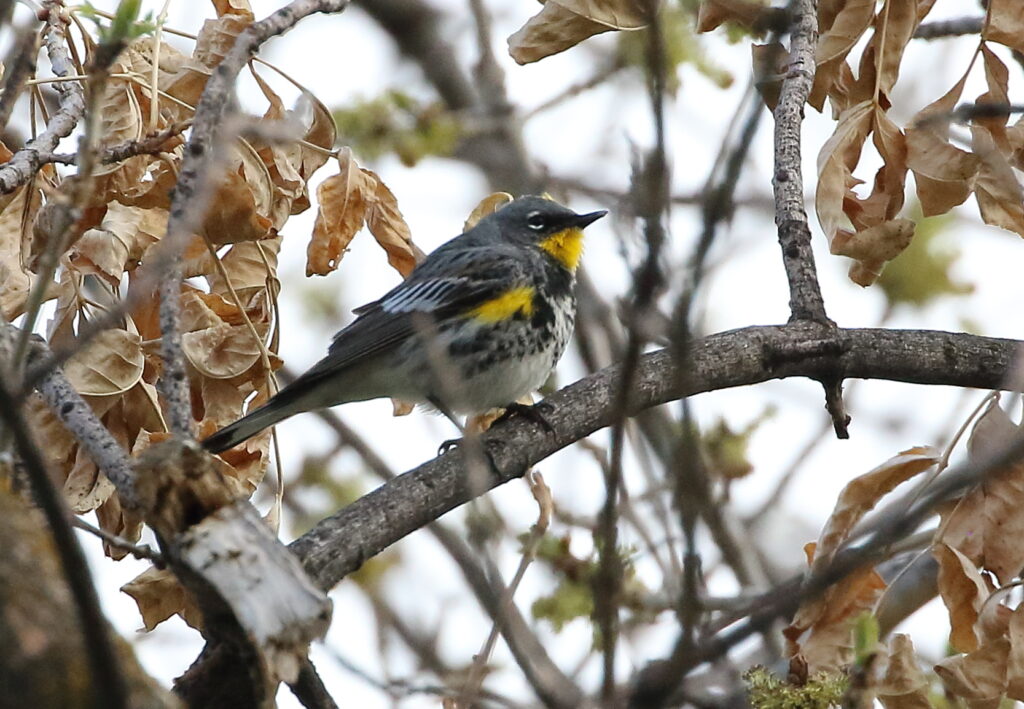
As usual, I parked near the entrance to put in my hearing aids, grab a drink of water, and stretch out before beginning my tour. As I tried to loosen my hamstrings, however, I was already hearing some interesting sounds. “Hm . . . maybe Pine Siskins?” That’s when I looked up to see a flock of 20+ Red Crossbills! Not only was this a new sight for the cemetery, just that morning we’d seen our first ever crossbills at our backyard feeder. In fact, this was shaping up to be our best crossbill year yet, and I spent a solid 15 minutes enjoying the cemetery flock, which also contained liberal doses of Pine Siskins and a Yellow-rumped Warbler.

The wonky bills of Red Crossbills have evolved to pry open cone scales, allowing the birds’ long tongues to extract the hidden seeds.

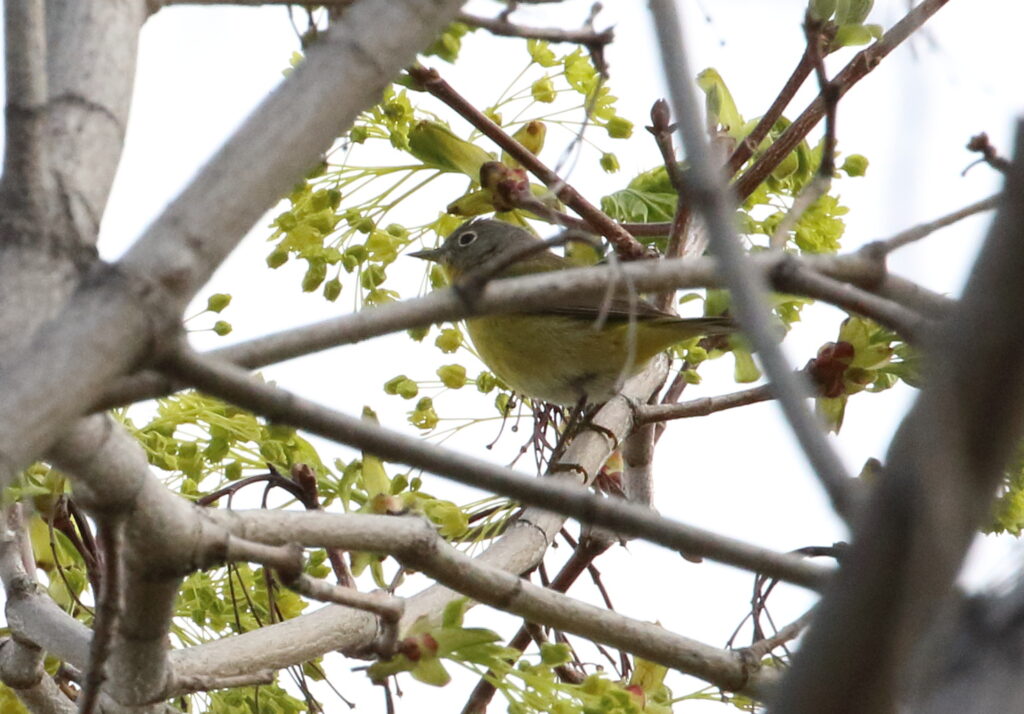
Setting off through the tombstones on my bicycle, I wasn’t sure what else I’d find, but encountered other common cemetery birds such as robins, ravens, and flickers, but it was a weird morning, a bit cool and breezy and I began to lose hope that I’d see the unusual passerines I really craved. Turning on to the last access road, however, I stopped to investigate a couple of little birds that turned out to be House Finches. But among them, I spotted a flash of yellow—a Nashville Warbler!  

Alas, I failed to find any sparrows in the spot I’d seen both Song and White-throated Sparrows before, but I did get my Year Brewer’s Blackbird and a new “location bird”—Turkey Vulture—while racking up a total of 17 species. All of which left me satisfied—but not really.

One thing Braden and I have noticed during the past seven years of birding is how much better many of our public open spaces could be for birds, insects, and other wildlife. The Missoula Cemetery is a great example. I mean, it potentially has everything: lots of land, trees, even a fountain, and the dedicated staff obviously works hard to keep it looking nice. Unfortunately, the place is groomed to death—literally. Dead limbs and trees that could provide insect food for birds are meticulously removed. Messy brush—the stuff many songbirds love—is absolutely not tolerated. I could smell some kind of chemical—weed killer, I’m guessing—emanating from the lawns. Even the fountain where birds could drink is blue from some kind of bleach or detergent in it.

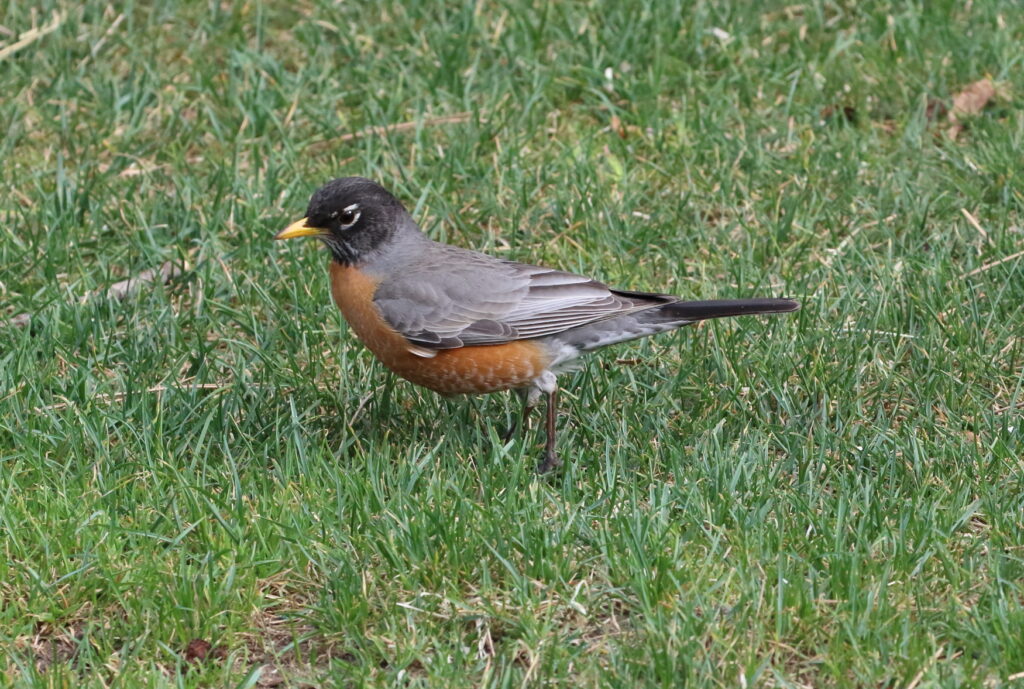
American Robins seem to thrive in almost any urban environment, but many more sensitive species need more habitat—and fewer herbicides & pesticides—than many parks and other open spaces provide.

Sadly, this is a situation that repeats itself over and over across America. Our vision of what is nice, neat, and orderly actually represents an extremely unhealthy environment, one that is undoubtedly harmful to wildlife and perhaps humans as well. No one really is to blame. It’s in our nature to want to make things neat and orderly. However as our knowledge has improved, this is something we as citizens can change. As I wrapped up Birding Therapy Week, I promised myself that I would redouble my efforts both to educate others and perhaps change some of our outdated thinking about both our personal and public open spaces.

Quarrying Species: Birding Therapy Day Six

Enjoy these posts? Please share and subscribe using the box down below and on the right.

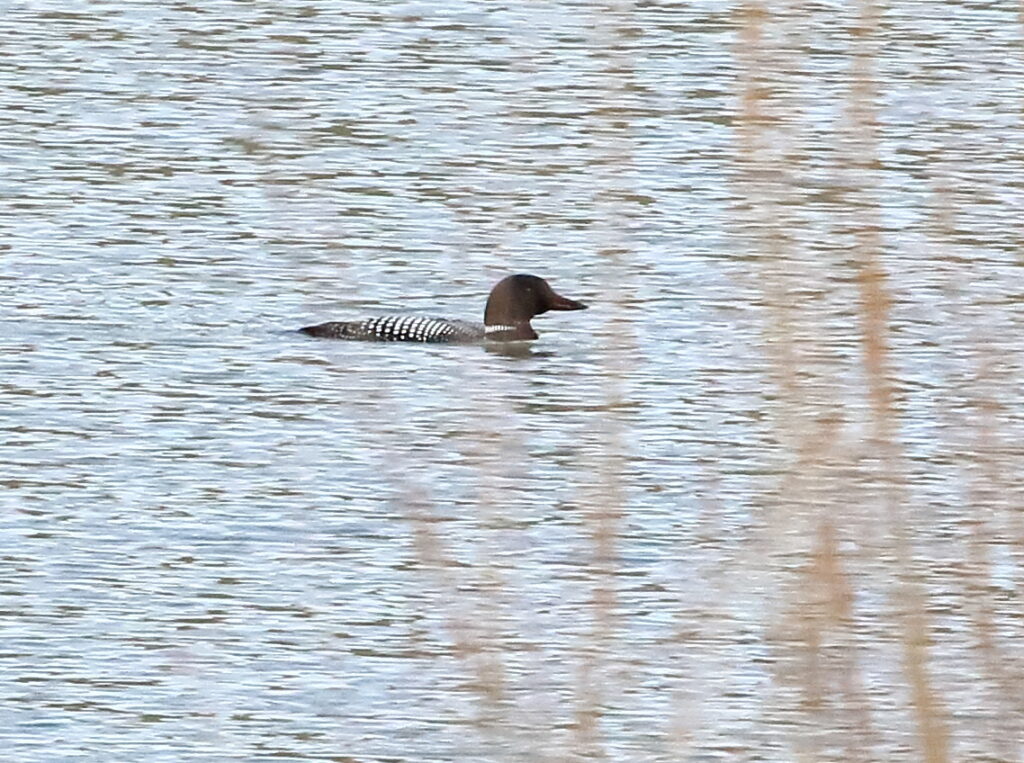
Saturday, Day 6 of my Birding Therapy Week, I arrived at Fort Missoula at 7:45 a.m. with my daughter for the first of her two soccer games that day. While she warmed up with her team, I took Lola back over to the gravel quarry hoping to catch some magical morning birding. I didn’t have to wait long to kick off a great session. Even before leaving the soccer fields parking lot, my first Barn Swallow of the year flew past me, and once I reached my first stop at the northward quarry pond, I found myself struggling to keep up with all of the species I saw and heard. On the ponds themselves, I ID’ed eight species of ducks, Canada Geese, a Horned Grebe, and a Common Loon—perhaps the same one I’d seen two days before.

I had to play hide-and-seek with this loon even to get this poor shot, but I didn’t mind. Was just thrilled it stopped by the quarry on its way to its breeding grounds.

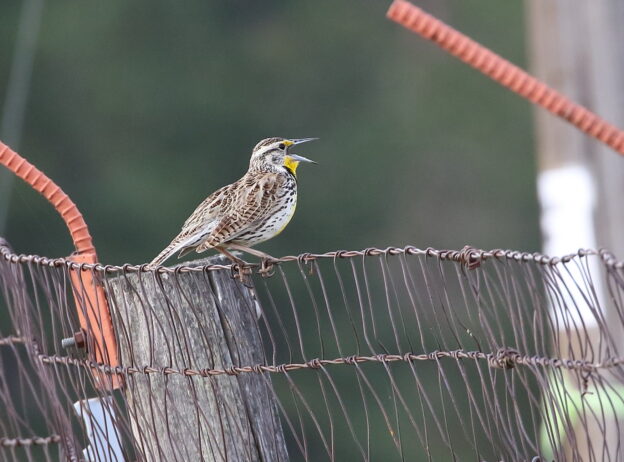
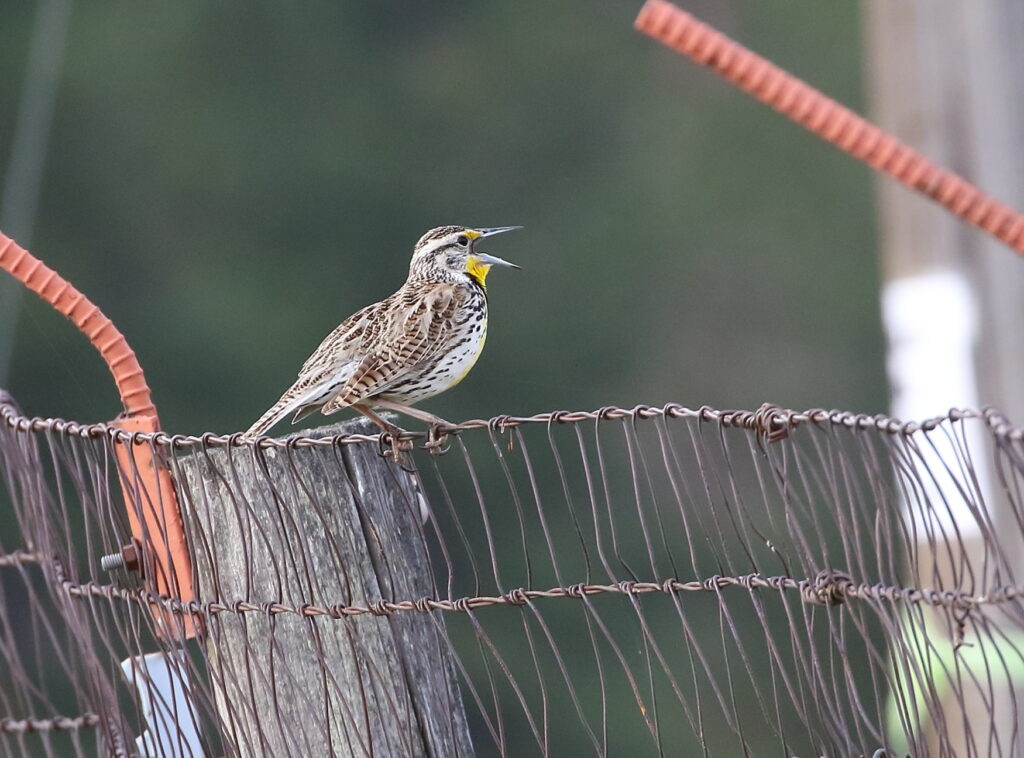
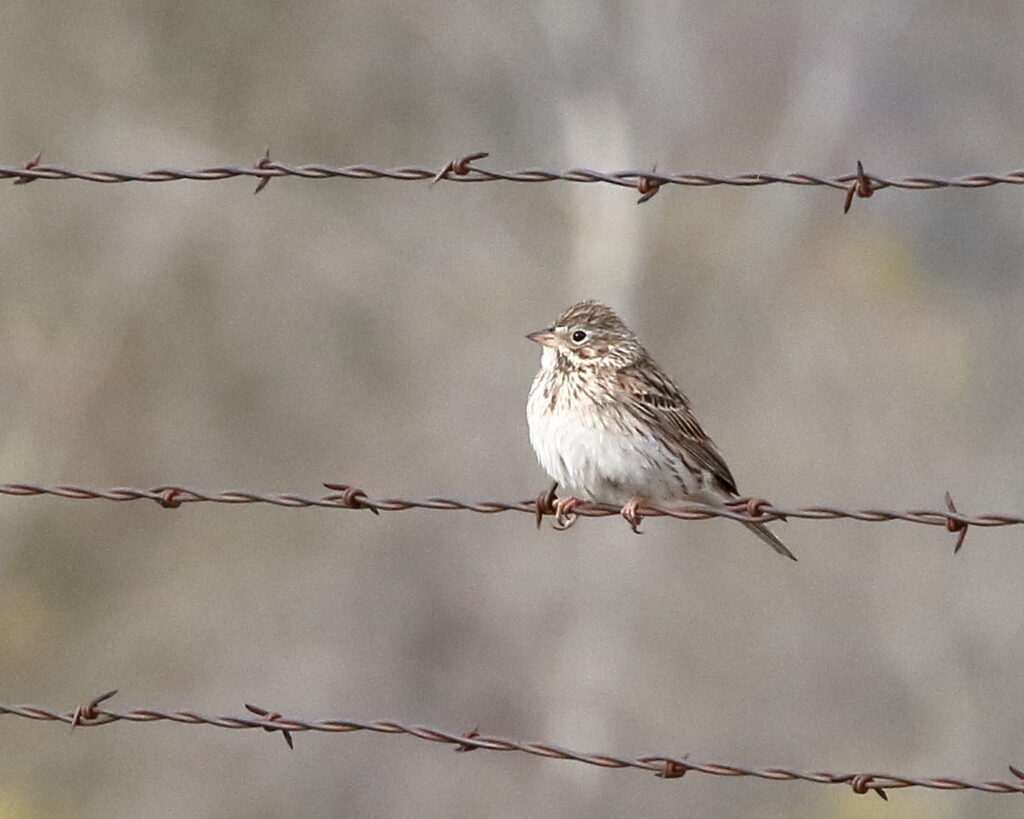
As I walked along the fence line, a sparrow popped up with a bold face pattern and pale “moustache”—the year’s first Vesper’s Sparrow! Nearby landed a Savannah Sparrow while a Western Meadowlark serenaded us. At the cliff edge above the river, Northern Roughed-Winged and Tree Swallows swarmed while a Red-tailed Hawk, Osprey, and Great Blue Heron sauntered by.

Meadowlarks always make me pause to ooh and ah, especially when they perch and sing in full view!

The hits kept on coming: two Red-naped Sapsuckers, a pair of Wood Ducks flushing from beside the river, a Yellow-rumped Warbler. As before, I made a special effort to find unusual sparrows. In one of our favorite spots, I located a couple of White-crowneds and then I saw something that really got my heart thumping: a bold bird with a peaked crown and distinct gray and brown facial lines. Even more exciting, I thought I detected a bit of yellow on the sides of the breasts—sure signs of a Lincoln’s Sparrow. Unfortunately, the bird was facing away from me and I was just moving in for a better look when two good-natured women walked up behind me and loudly shouted “Good morning!” I turned around and smiled, putting my finger to my lips, but it was too late. The sparrow fled.

Sigh.

Still, it was an amazing morning, with 36 species and delightful experiences. Even better, my daughter’s team won her soccer game. I’ll get you next time, Mr. Lincoln.

Here is my complete checklist: https://ebird.org/checklist/S86803129

I missed the Lincoln’s Sparrow, but was delighted to find my first Vesper’s Sparrow of the year. Braden got his first in a different location the very same day! Note that Vesper’s Sparrows are identified by their bold facial pattern including white eye ring and white “handlebar moustache” curving down and back from its bill. When they fly, look for the white outer tail feathers. Many also show an upside down “heart” on their breasts—though this one is “heartless.” Poor thing.