Category Archives: Owls

My Accidental Big Year

Enjoy these posts? Why not subscribe in the box down and to the right?

If you’ve been a loyal fan of FatherSonBirding, you probably know about Braden’s and my 2016 Big Year in which we saw 337 species in the American Birding Association (ABA) region in a calendar year. Since then, we have never set out to topple that record even though, with our vastly improved birding skills and knowledge, it would be a relatively easy thing to do. In fact, a couple of times we have come perilously close without really trying thanks to trips to Texas, California, and in Braden’s case, a band trip to Hawaii. When I received two invitations to Texas for this fall, however, I thought to myself “You know, maybe it’s time to give this a shot.”

Mind you, it was still a long shot. When I left for The Hummerbird Celebration in September I had managed to scrape together only about 260 species in Montana, Idaho, and Washington for the year, and knew I’d have to go BIG that first trip to Texas. I did, scoring about fifty Year Birds—but still left myself more than 20 birds short in perhaps the toughest time of year to bird. “Still,” I thought, “if I can somehow get ten or twelve more species on my second Texas trip, I might get within striking distance.”

I knew I would need help.

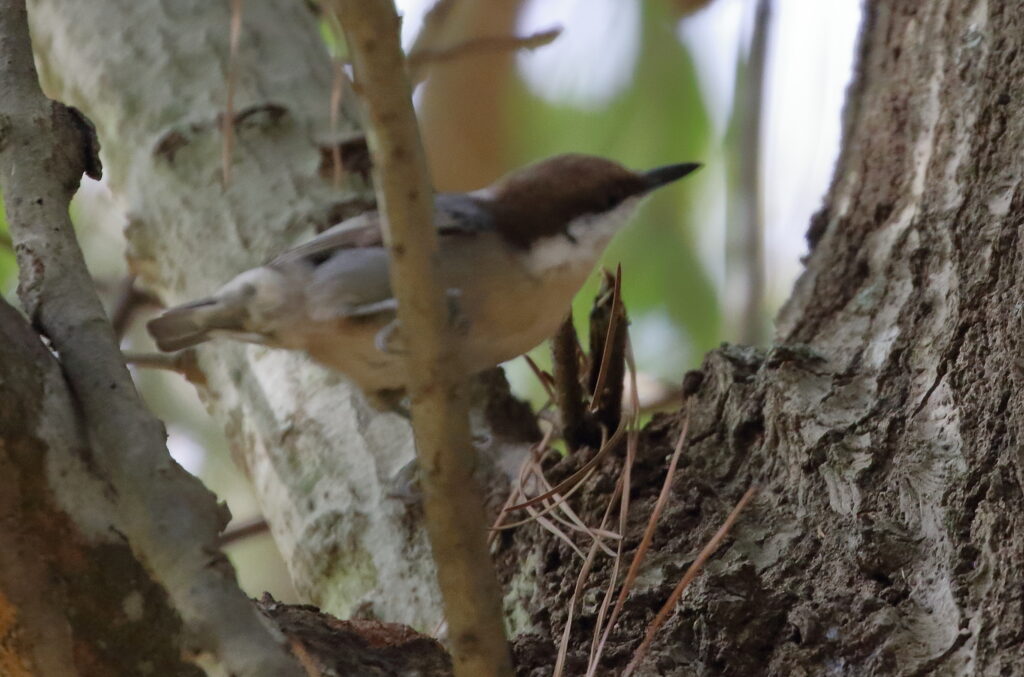
I’ll take a blurry Lifer any day—including this beautiful Brown-headed Nuthatch. By the way, this bird brought my ABA Life List to 498 birds! Only two hours later, I got number 499, Monk Parakeet! What will be 500?

My trip last week unfolded when I was invited to give a keynote address at Houston Audubon’s (HAS) annual Avian Affair fundraising gala (more on that in my next post). As you probably know I love HAS and was honored to accept, but I brazenly asked my hosts if there was a chance anyone could take me birding when I arrived. Before I knew it, a team of expert birders, all HAS board members, had been assembled with the express goal of helping me tackle my Texas “needs” list! In fact, within twenty minutes of my arrival, Bill Matthews picked me up at the airport and whisked me off to our first stop, the W.G. Jones State Forest—home to some of the state’s most accessible Red-cockaded Woodpeckers.

To be honest, I didn’t think we’d find the RCWOs since they can forage over a large area, but I was also hoping for a Life Bird, Brown-headed Nuthatch. As we began walking around the forest, we found no woodpeckers near their roosting trees, so decided to take a longer walk down a trail. Very little stirred, leaving me feeling that maybe we wouldn’t see much—until, that is, we had walked about half a mile. Then, all of a sudden, Eastern Bluebirds were flying everywhere. Other Year Birds soon surrounded us—Carolina Chickadees, a Yellow-bellied Sapsucker, Tufted Titmice, Pine Warblers, and oh joy, Brown-headed Nuthatches!

My W.G. Jones eBird List.

Though Braden and I had seen Monk Parakeets in Israel before the pandemic, this was my first ABA Monk Parakeet. Bill Matthews mentioned that the severe freeze in Texas earlier in the year had pared down the parakeets’ numbers significantly.

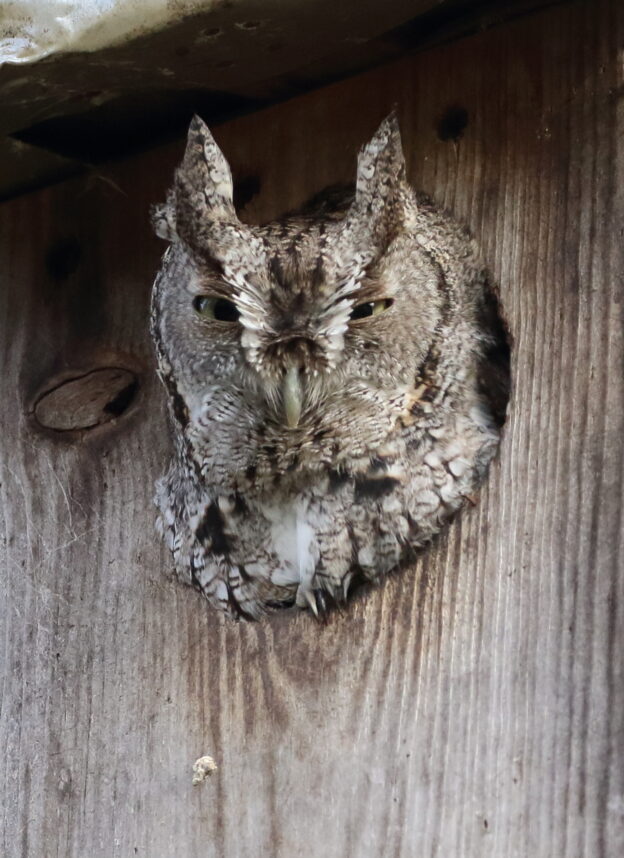
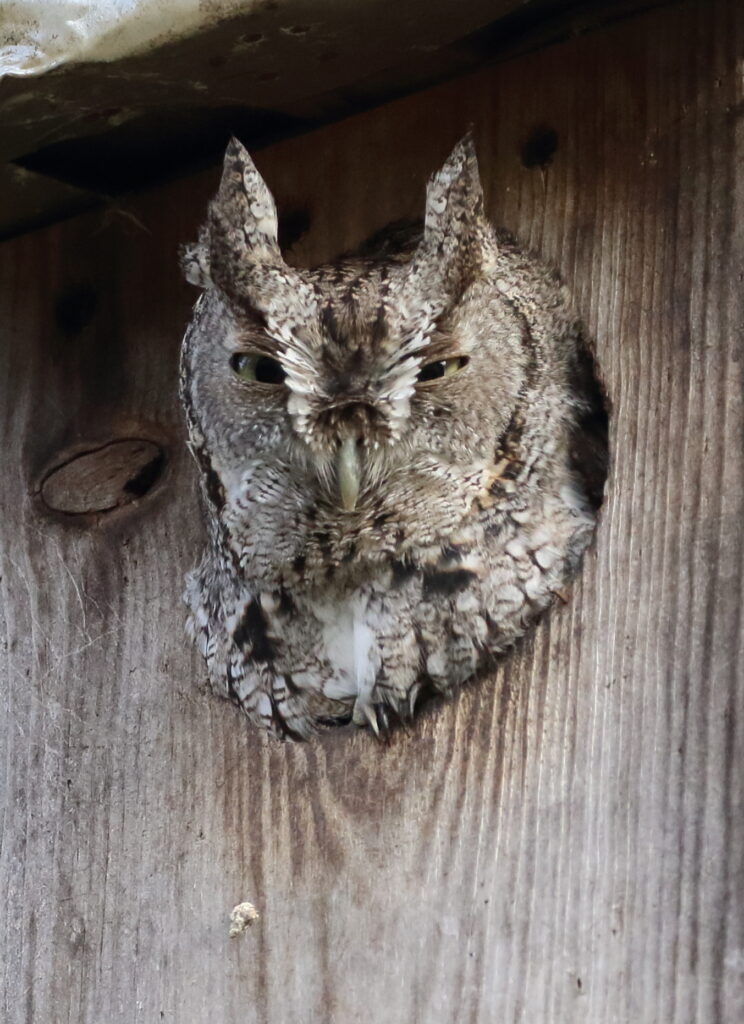
We left without RCWOs, but I was elated with our finds. Bill hadn’t finished with me, though, as we stopped by a roosting Eastern Screech-Owl in a neighborhood nesting box and two Monk Parakeets behind his wife’s studio. By this time, Bill’s fellow board member and well-known bird guide Glenn Olsen joined us, so after the parakeets, we adjourned to Molina’s Cantina for some great Tex-Mex food and to plan our next day’s conquests. Unfortunately, the next day proved a lot tougher than the first, but we still were able to hear a Limpkin—a rare visitor to Texas—at Sheldon Lake, and see some incredibly cool Brown Boobies on a “tower of power” at Baytown Nature Center, accompanied by yet another great birder and HAS board member, Skip Almoney.

World’s Most Cooperative Owl? This Eastern Screech just may take the prize!

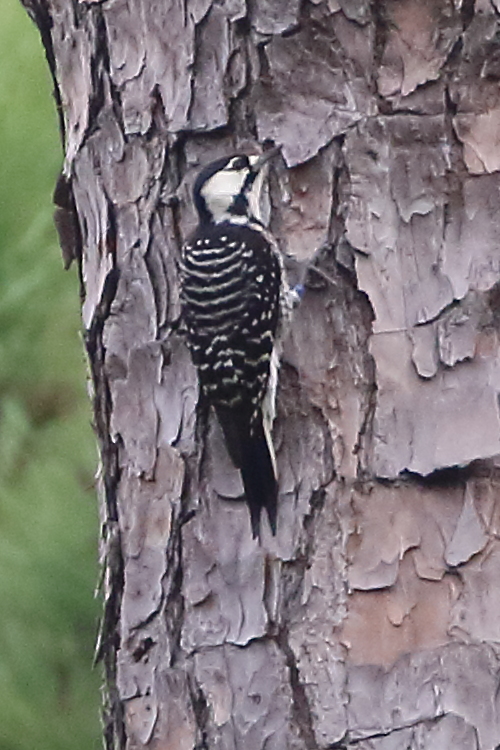
With a total of 8 Year Birds, I was fairly satisfied as I actually did some work the following day, speaking to fifth-graders at Western Academy—and saw Year Bird #9, Scaly-breasted Munias! Glenn Olsen was not satisfied, however, so on my last morning, he picked me up early before my flight and we headed back out to W.G. Jones, meeting up with another great HAS board member, Eric Mayer, out at the site. Again, I didn’t think we’d see the woodpeckers and we didn’t. After an hour, in fact, it was time to head back to the car so Glenn could take me to the airport. As we approached the parking area, though, Glenn shouted, “Woodpecker!” I got my binoculars on a black-and-white bird landing on a pine tree and guess what? Red-cockaded Woodpecker! It was a great way to finish up a great trip, and left me with a flock of wonderful new friends—and only 11 birds to break my record. Will I make it? Good question. While in Texas, I missed four or five migrating rarities in Montana and it appears they have left the state. I will keep up my quest, however, so stay tuned!

I was a doubter, but this Red-cockaded Woodpecker really wanted me to break my Big Year record!

10,000 Views—and Time for Reflection

During our Birding Therapy Week posts, FatherSonBirding achieved the milestone of receiving our ten thousandth view! To celebrate, we’d first like to thank all of you who have been following our adventures and other stories about our favorite non-human animals (including our dog, Lola,). We know that everyone has an avalanche of blogs, news, posts—and yes, even books and magazines—competing for reading attention, and we greatly appreciate each and every one of you. It also, though, seems like a good time to reflect and re-evaluate.

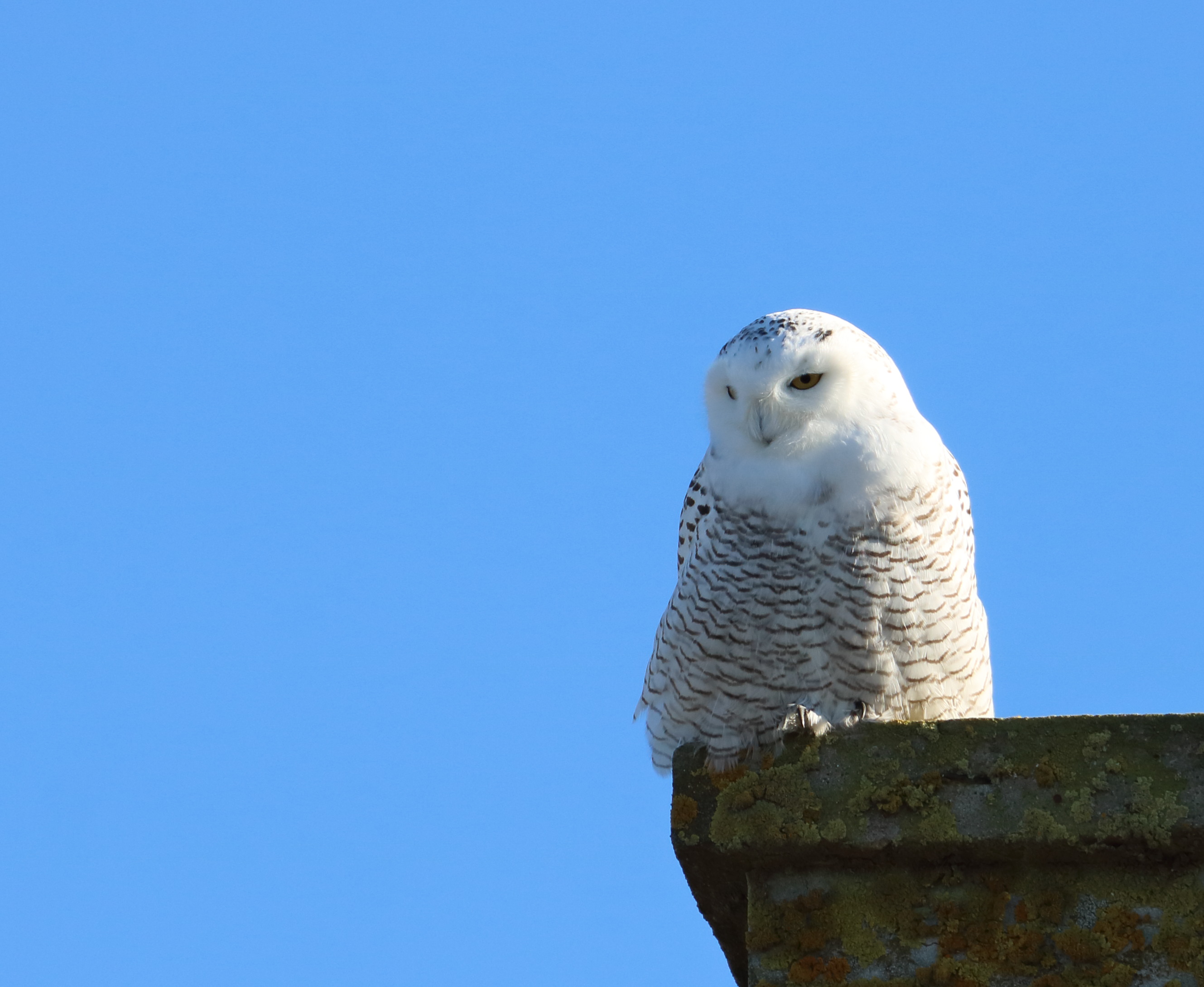
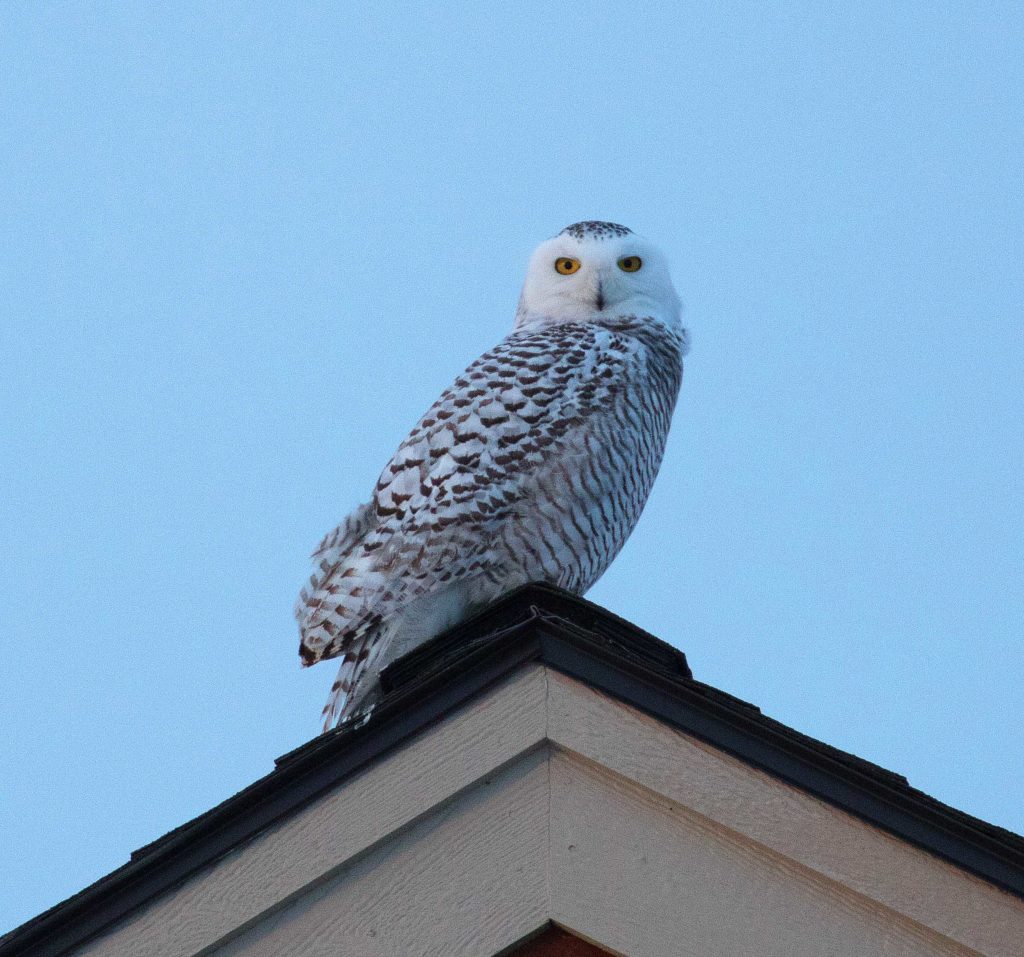
Our Lifer Snowy Owl—from our very first blog post on March 13, 2018

It seems hard to believe, but we launched FatherSonBirding more than three years ago with our post A Quest for Snowy Owls. Since that time, we’ve posted 81 times, and garnered 65 subscribers (there were actually more, but we lost several dozen while getting hacked by suspected Russian provocateurs). On average, about a hundred people read each post. Which is all good, but like a certain ex-president’s approval ratings, our numbers don’t really budge much. On top of that, Braden will be heading off to the University of Maine soon to begin his college career, highlighting the bittersweet fact that we will not have nearly as many birding adventures together as we’ve enjoyed the past few years.

That said, we could shift the focus of the blog from our birding exploits to bird conservation, bird education, or something else. In fact, if you are reading this, we ask that you send us your thoughts on where we might take this forum going forward—including just chugging along as we are, posting occasionally about something that strikes our fancy. Honestly, I (Sneed) have so many mixed feelings about social media that we will probably never do what it takes to build a huge following. I mean, we probably should have launched a blog about watching MineCraft videos or breaking plates over our heads or cooking Julia Childs’ recipes, but we didn’t. Still, we have enjoyed sharing with you and would love it if you’d take time to send us your honest thoughts about what might come next.

As you ponder those, we’d like to leave you with some photos from our best Montana Big Day ever last week, during which we drove 500 miles and found 114 species—the first time we’d ever seen more than 100 different birds in a day in Montana. Ironically, our Bird of the Day was one that we didn’t even see—an American Bittern that we heard calling in the Swan River National Wildlife Refuge! We’d gone looking for AMBIs at least seven or eight times the past two seasons, so it was a real thrill to finally hear one. We hope that you all are having great birding adventures this spring, whether it’s watching your backyard feeder or planning your own Big Day, Big Week, or Big Life!

—Sneed and Braden

Payin’ Raptor Dues, Reapin’ Raptor Rewards

Gamblers and fishermen are famous for being superstitious. Birders aren’t much better. Sure, we feed ourselves platitudes such as, “The more you get out, the more you’ll see,” but deep down, we know that the birding gods control our fates, and that our success depends on whether we’re deemed worthy. In our last post, I recounted how Braden and I spent six hours and two days looking for a Gyrfalcon near White Sulpher Springs, only to endure the gods’ wrath. Yesterday morning, when we set out on a quest for a Snowy Owl, we wondered if the gods would continue to scorn us, or whether we had proven ourselves humble and dedicated enough to curry their birdly favor.

Northern Harriers and other raptors were abundant wherever we looked. They, unfortunately, were not the birds we set out to see!

We left the house at 6:30 a.m. and by 7:30 were at Ninepipe National Widlife Refuge, where we hoped to score an elusive Year Bird, Short-eared Owl. We drove the dirt roads for more than an hour and saw more than a dozen Red-tailed Hawks, Rough-leggeds, Bald Eagles, Harriers—even a Merlin. No Short-eared Owl. “Ah, well,” I told Braden. “We’ll get ‘em next time.” Inside, though, I was thinking, “Oh, man. Is it going to be that kind of day? Again?

Well, apparently, it was. Reaching the Snowy Owl neighborhood near Kalispell, we again drove for more than an hour without so much of a glimpse of a white owl. By now, I realized that the BGs must be really pissed at us. We decided to chase some other birds and come back later, however, and did score our first Gray-crowned Rosy-finches in three years at the Kalispell dump—while getting bawled out by the “dump lady” for our efforts. We also found a White-winged Crossbill among a flock of Red Crossbills feeding on some nearby spruce trees. Nice, but not a Snowy Owl.

Mallards are no doubt the most underrated duck, but this flock of five thousand birds made a big impression on Braden and me!

After a lunch at Panera Bread (hey, more chicken in my Napa Almond Chicken Salad Sandwich, please!), including our favorite kitchen sink cookies, we hit an amazing field full of about 5,000 Mallards. Stunning! Then, we returned to the Snowy Owl site, where we encountered several other birders. None of them had had any success, either, but while we were commiserating, a photographer named Dick Walker introduced himself and asked, “Are you the father-son birding team?” We’d never been called that, but I answered “Yes,” and he started talking about the Mallard spot we’d just left. He showed us photos of Lapland Longspurs and, most exciting, a Gyrfalcon he had seen only thirty minutes before!

We tore back to the place, forever hopeful. No longspurs. No falcon. After fifteen minutes, though, a massive group of a thousand Mallards lifted off and seconds later, a sleek, jet-fighter shape zoomed across our field of vision. “It’s the Gyr!” Braden shouted.

Our first Gyr was a darker bird and left no doubt it was master of the skies. We’ll never forget it!

Indeed it was. We quickly lost it in the distance and decided to race over to another road closer to where it disappeared. We got there and jumped out of the car just as the amazing raptor reappeared, obviously enjoying terrifying the thousands of ducks and geese swirling around it. While Braden set up our scope, I tracked the bird with my binoculars. It seemed to toy with a large group of ducks, but its madness had some method as more and more Mallards peeled off until only two remained. As I watched, breathless, the Gyr hit one of them and took it to the ground. “It got a duck!” I shouted.

I was astounded how quickly this Baldie swooped in to steal the Gyr’s kill. It made me wonder how many ducks the falcon has to kill before it actually gets to eat one!

Its victory was temporary. Within thirty seconds, a much larger brown shape swooped in—an immature Bald Eagle. It effortlessly drove the Gyr from its kill, eliciting shouts of outrage from yours truly. We continued watching the amazing creature for another fifteen minutes before it vanished again. Then, after another unsuccessful Snowy Owl circuit, we began the long drive home. As we headed south along Flathead Lake, I thought about BB King, who often talked about paying his dues, and asked myself why we’d seen a Gyrfalcon here, in the last place we’d ever expected. “Maybe our efforts in White Sulphur Springs satisfied the birding gods after all,” I speculated. “Or maybe we just had to pay our birding dues to see the Gyr.” Either way, it had been one of the best birding days Braden and I had ever experienced—even without the Snowy Owl.

2020 Wraps, 2021 Underway!

Our loyal followers have undoubtedly noticed that our posts have slowed in the past year. While we have been birding as much as ever, Braden has less time to write as college looms, and I too am busy plotting what I want to do when I grow up. Nonetheless, we want to wrap up 2020 for you and give you a taste of 2021 so far.

Sneed’s Bird of 2020, the Northern Hawk Owl, a Lifer we found on Braden’s seventeenth birthday. May his 18th bring him as much birding luck!

2020, in fact, was an epic year for Team Collard. It kicked off with our amazing trip to Israel and Jordan, and once back home we embarked on a mission of seeing 250 species in Montana. For perspective, my previous Montana record was 222 species in a year and Braden’s was 225, so we knew that we had our work cut out for us. Astoundingly, we surpassed 250 by last August, leaving the question, how high could we go? For me, the answer turned out to be 267, and for Braden, 274! With Braden probably heading out of state for college next fall, it seems unrealistic we could equal that number for 2021, so we’ve invented some new goals for ourselves.

Goal #1: to end the year with an eBird checklist in every Montana county. (Braden still has nine counties to bird in and I have ten.)

Goal #2: to see birds we’ve never seen in Montana before.

Goal #3: to reach a Montana Life list of 300 species (currently Braden is at 293 while I am just behind at 289).

How are we doing so far? Even though it is still January, we are making progress on all fronts. Last weekend, we embarked on a thousand-mile, three-day birding safari to the center of the state. We added Meagher County to our eBird list, and added two Montana Lifers: White-winged Crossbills in Bozeman’s Sunset Hills Cemetery and Pine Warbler—a bird that shouldn’t have been within 1000 miles of Montana—at a feeder in Red Lodge. We had hoped to add at least two other species, but the birding gods were against us. The White-winged Dove in Bozeman that has lit up the Montana birding boards got eaten by a Sharp-shinned Hawk about half an hour before we saw it! Or more accurately, we saw the bird being devoured! We had also hoped to see our first Gyrfalcon, but despite searching the White Sulphur Springs area for more than six hours, the majestic predator was a no-show. Sigh.

Thanks to the generosity of Susan Hovde, who not only discovered but has been feeding him, we were able to spend a glorious winter morning with this out-of-range Pine Warbler—a Lifer for Braden and Montana Lifer for me!

Nonetheless, we found a lot of other great birds and met some terrific other birders. In the process, we set a January species record with still a couple of weeks to go. We do not know what the rest of 2021 has in store for us, but we will keep you updated as we are able. In the meantime, we wish you peace and health, and offer our hopes that this year will see some meaningful progress not only in saving birds, but in protecting this incredible planet we all share.

Though not much to look at from a distance, we were thrilled to see our first-ever White-winged Crossbills in Bozeman’s Sunset Hills Cemetery!

250 Montana Birds or Bust!

As always, we encourage you to share this post in the hopes that it might keep education rolling during these difficult, unprecedented times. Thank you!

In our last post, I explained how close Braden and I had come to reaching our goal of 250 Montana species for the year. Braden, in fact, had reached 245 birds while I pulled up the rear with 239. Now, as some of your comments pointed out, 250 species would seem like a slam dunk with six months to go in 2020, but not so. Not only had we exhausted our supply of “easy birds”, but another large birding safari seemed unlikely—until, that is, Braden and his birding buddy Nick Ramsey came up with the idea for a Big Day. The plan? To get up before dawn and drive 500 miles, birding Ninepipe National Wildlife Refuge, the Swan River Valley, Glacier National Park, all the way to Malta, home of Bowdoin NWR. Insane? Yes. Would we do it? Definitely!

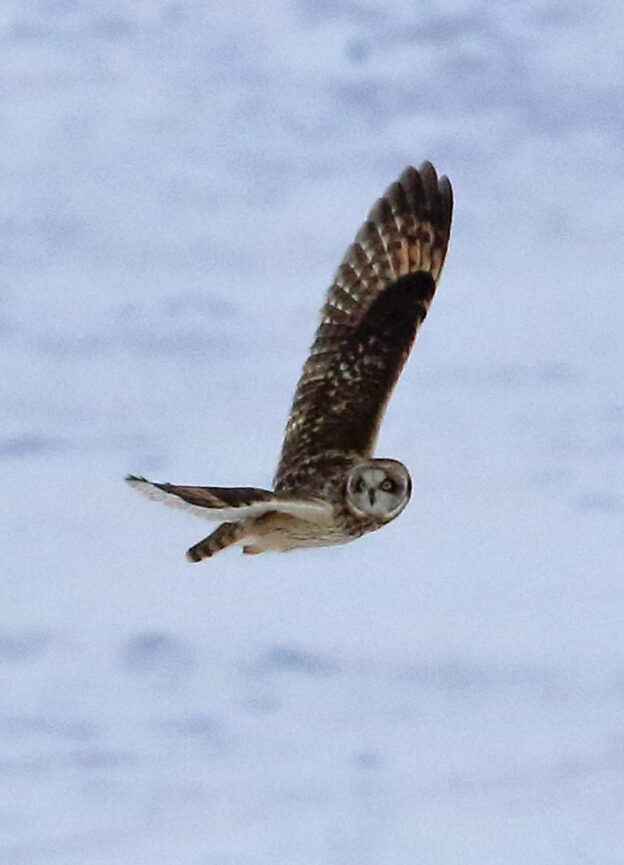
None of us knew how many species we might see in a day. Our record for a day in Montana was only in the 80 or so species range, but we’d never attempted anything like this and hoped we might get as many as 150. Alas, the weather gods frowned on us the morning of June 30, with steady drizzling rain. Undaunted, we set off, missing a number of target species here in Missoula and near the National Bison Range. At Ninepipe NWR, however, we hit Short-eared Owl City! Braden and Nick both still needed SEOWs for their Year Lists, but neither of us had ever seen one at Ninepipe until I spotted one about a month ago. This morning, driving Duck Road in the rain, we hadn’t gone a mile before Braden shouted, “There’s an owl!” In the next three miles, we saw NINE MORE! Maybe they should call the refuge Nineowls?

Our first Big Success of our first Big Day was to hit the Short-eared Owl Jackpot at Ninepipe NWR.

After missing LeConte’s Sparrow at Swan Valley (but seeing lots of Lincoln’s Sparrows), we headed to Glacier, where my top priority of the trip just might be located: Harlequin Duck. With the coronavirus raging, we didn’t know what kind of traffic we might expect, but the poor weather ended up a blessing as we cruised right into the park and made record time to Avalanche Creek. Still, none of us really expected to see a Harlequin Duck as the males had fled and breeding was probably winding down. We walked out onto the beach on the river, though, and sixty seconds later, we all saw a duck flying downstream. It was a female Harlequin! Even better, it landed fifty feet from us! None of us could believe it. After admiring the beautiful creature, we walked around a bit, picking up the eerie calls of Varied Thrushes, but failing to get our pie-in-the-sky target, Black Swifts. Still, our stop a success, we headed back out to West Glacier and began the six-hour drive to Bowdoin, picking up new birds all along the way and ending up with a day’s total of 119 species—a personal Montana record and not bad given the weather.

One of my favorite all-time birds, this Harlequin Duck was just waiting for us as we zoomed into Glacier National Park during our (first) Big Day!

Of course, the problem with doing a Big Day that finishes up in a place like Malta, Montana, is that you have to get back home again! Not surprisingly, we spent two days finding our way home—and not without some adventures that included Braden almost stepping on a rattlesnake, almost getting our minivan permanently mired in mud far from civilization, and getting a rear tire blowout—fortunately, just at an exit in Butte.

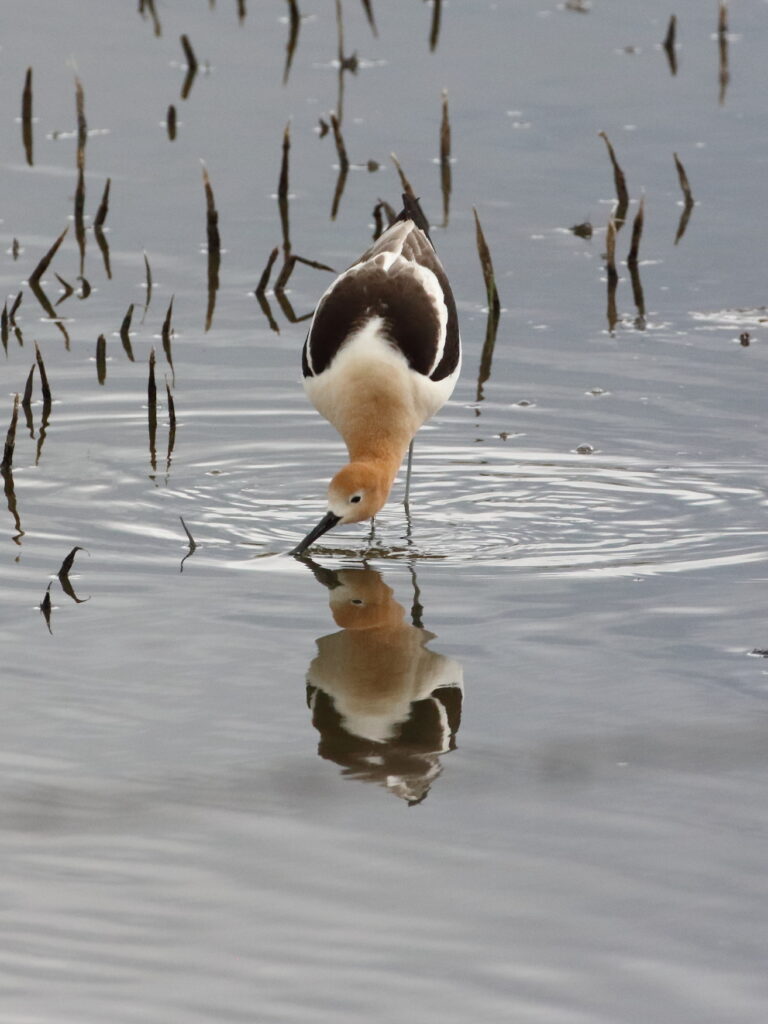
On Day 2 of our, ahem, Big Day, we had some of our best experiences with nesting shorebirds—including the spectacular American Avocet at Bowdoin National Wildlife Refuge!

“So did you make your 250 birds?” you may be asking yourselves. Well . . . YES! Braden finished the trip with 255 species for the year while I slipped in there with 251. Which begs another question, “What now?” Well, fortunately birding is fun, interesting, and educational even without keeping track of lists. Every day, in fact, we see cool birds and learn more about them. Will we object if our species counts climb higher in the next six months? No way, but do we need them to? Naw. Birds are great any time and in any season—even if we’ve seen them before.