Category Archives: Bird Festivals

A Rare Warbler in Western Montana—and our Wings Across the Big Sky Festival Report 2024

In case you missed our last post, Sneed’s new book, Like No Other: Earth’s Coolest One-of-a-Kind Creatures, is now out just in time to enhance summer science education. To order, click on the book jacket in the right column!

Have you ever contemplated attending a birding festival? Braden and I have attended festivals in Monterey Bay, San Diego, and Rockport-Fulton near Corpus Cristi. All were terrific. I have to say, though, that our favorite is right here in Montana. After last year’s Wings Across the Big Sky birding festival in Great Falls, I was skeptical that this year’s fest in Helena could match it. How wrong I was! This year’s festival would not only prove wonderful in itself, but provide the perfect launch pad for Braden’s and my 13-day birding safari to eastern Montana. In fact, even before we reached Helena, Braden made what may be his greatest Montana bird discovery yet.

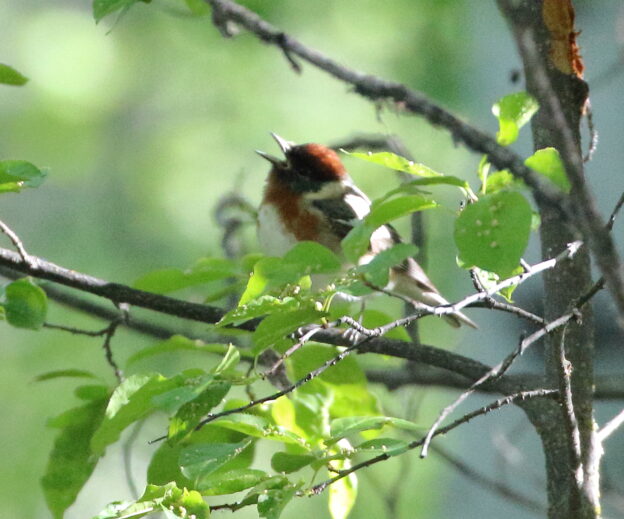
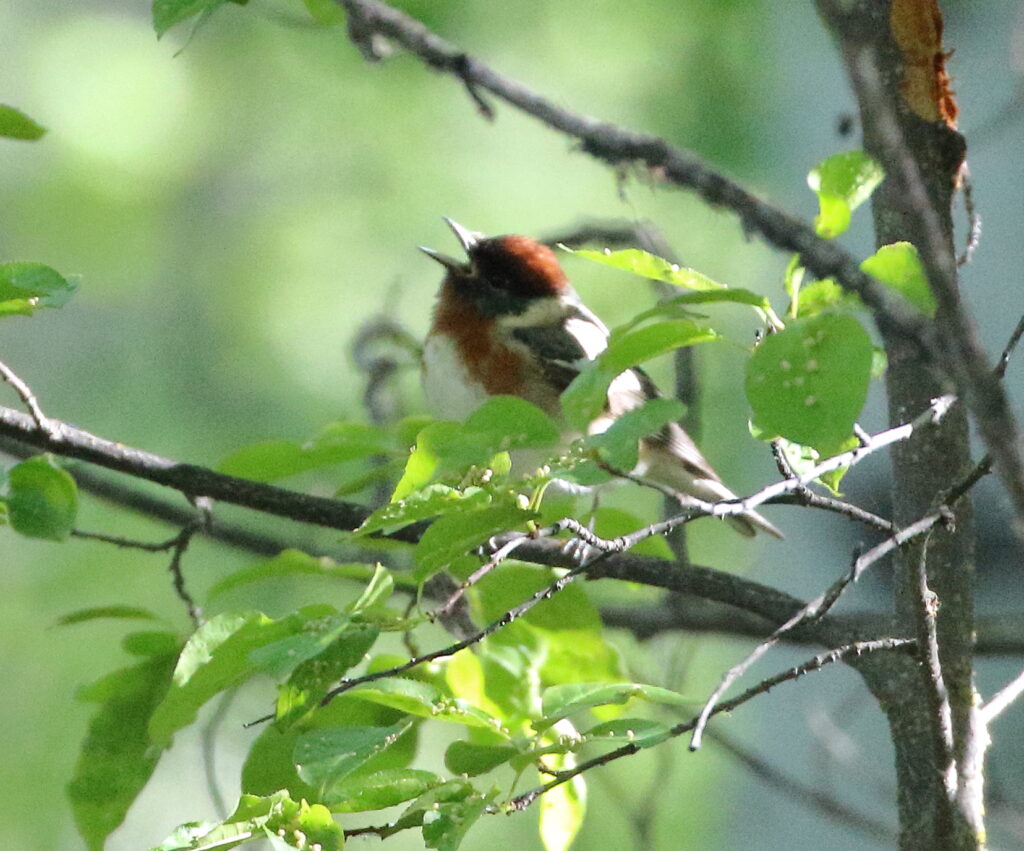
We left Missoula early on Friday, May 31st. Our first destination? Browns Lake, site of many past wonderful birding experiences—but nothing like we would have today. After the turnoff to Browns Lake, we always stop at a little riparian area and, as usual, got out to listen and look. Right away, we heard Dusky Flycatchers, Warbling Vireos, and Yellow and Yellow-rumped Warblers. Then, Braden heard an American Redstart and began “pishing” it in so that we could catch a look. I had my camera focused on a Yellow Warbler when Braden urgently hissed, “Daddy! Get over here now!” I rushed over to find him training his binoculars on a mind-blowing find: a Bay-breasted Warbler!

Perhaps Braden’s best Montana bird find ever, this glorious male Bay-breasted Warbler gave us great looks despite my horrible photos. This bird made the Montana Rare Bird Alert.

For those of you who don’t know it, Bay-breasted Warblers breed mainly in spruce forests of northern Canada across to the far northeast of the U.S. During migration, they almost never pass through eastern Montana, not to mention western Montana. True, I had seen a female in Missoula several years ago, but the gorgeous male in front of us shouldn’t have been anywhere within 500 miles of where we were standing—and, accordingly, made Montana’s Rare Bird Alert.

With that auspicious beginning, we happily proceeded to Carroll College in Helena for the Wings Across the Big Sky opening banquet. That featured an excellent talk by Tiffany Kersten, who set the Lower 48 Big Year record in 2021, and spoke eloquently about the challenges of birding as a solo female. Tiffany now is the proud owner of NatureNinja Birding Tours, and I can only guess that her guiding and tour experiences are not to be missed.

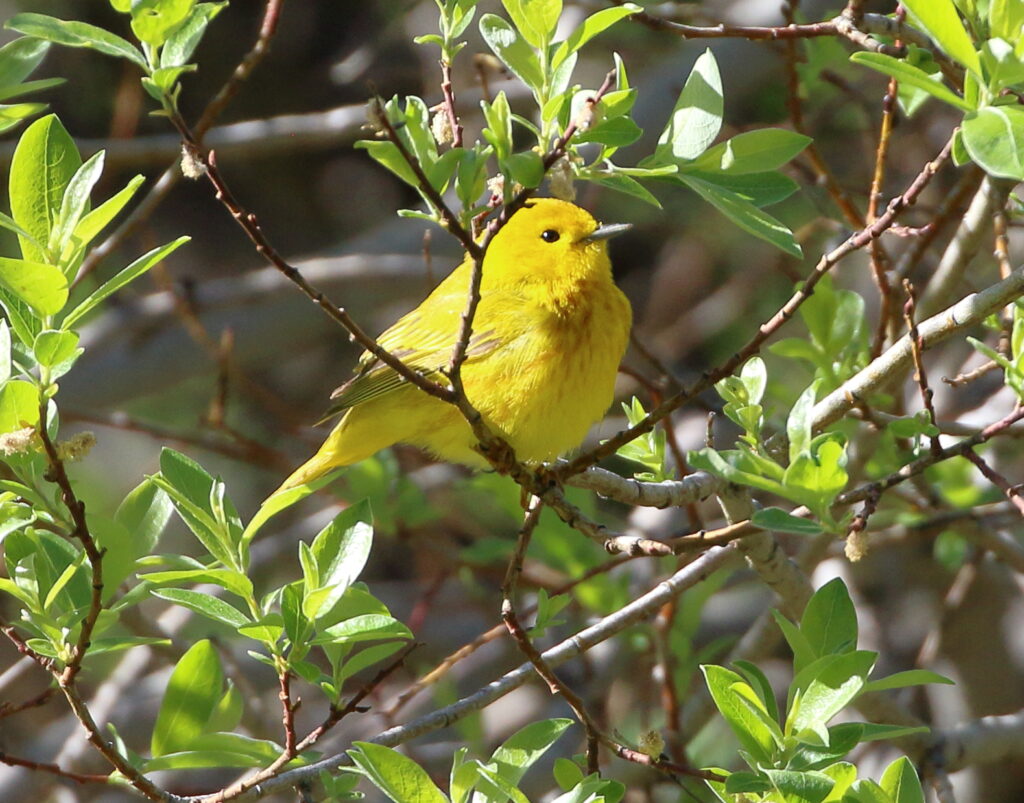
Usually uncooperative, Yellow Warblers gave us great looks at Vigilante Camprground near Helena.

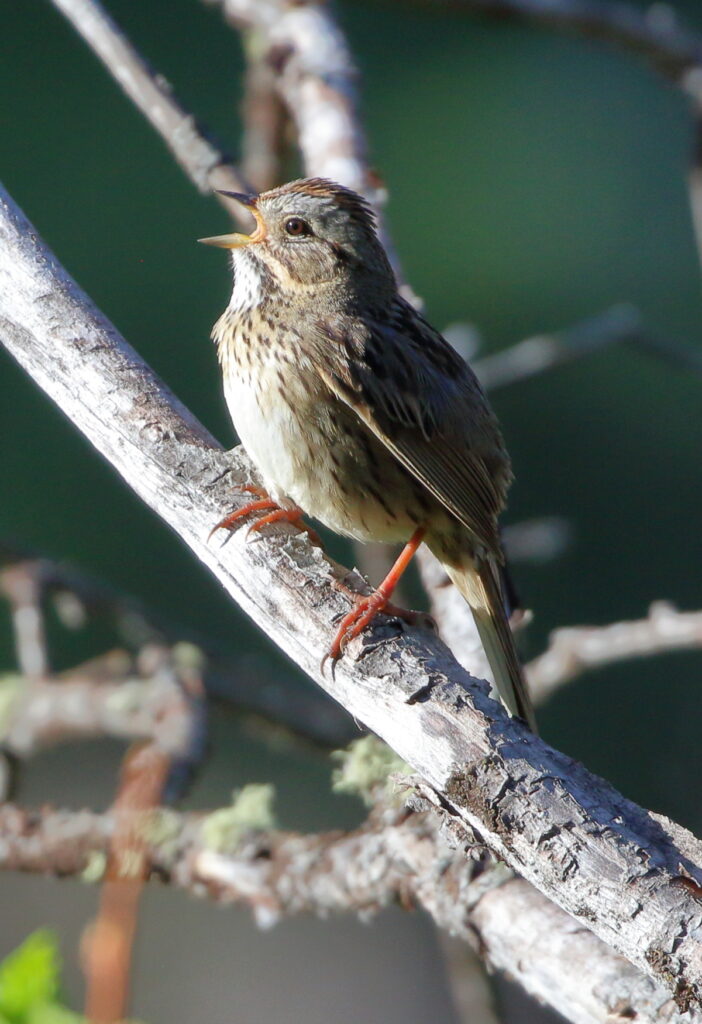
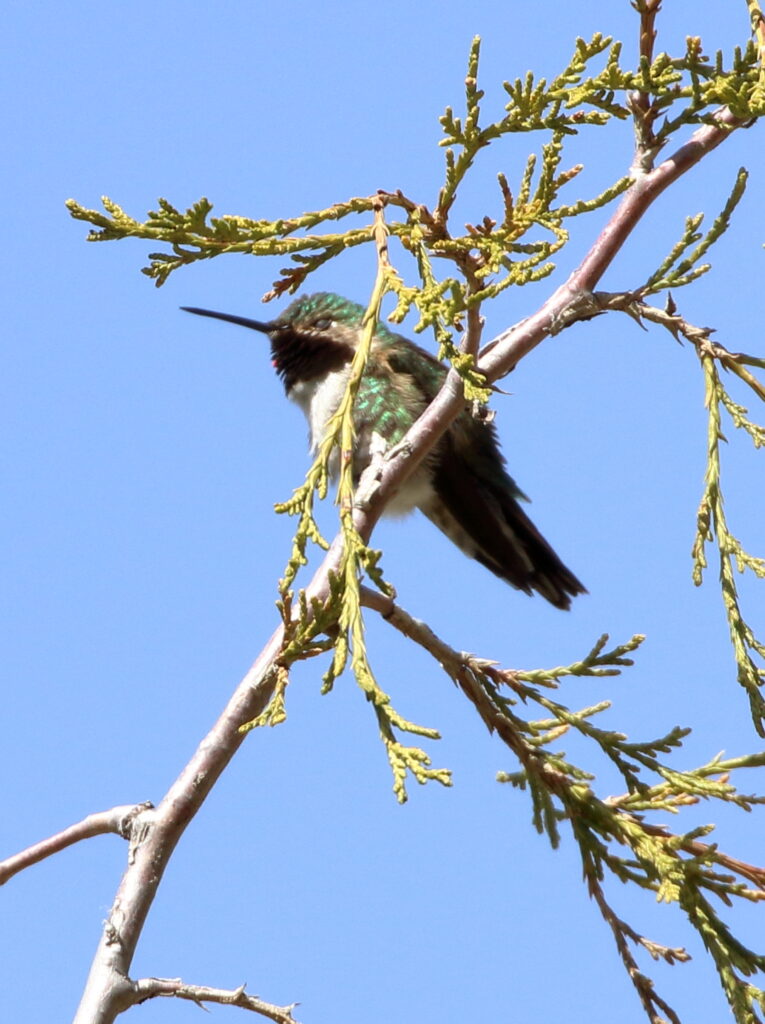
Saturday morning, Braden and I convened at the festival breakfast for our first field trip, led by the highly-skilled veteran Montana birder, Sharon Dewart-Hansen. We were excited about the field trips we had signed up for because they would take us to places we had never before birded, and Sharon led us to Vigilante Campground northeast of Helena. After driving up a spectacular canyon, about 15 of us piled out to bird. Immediately, a Broad-tailed Hummingbird loudly buzzed us—a Montana Lifer for both Braden and me. Walking the campground, we were regaled with the songs of Ovenbirds, MacGillivray’s Warblers, Hammond’s Flycatchers, Veerys, and always my personal favorites, Lincoln’s Sparrows. A Ruffed Grouse drummed cooperatively several times.

Have I posted more Lincoln’s Sparrows than any other bird on FatherSonBirding? Perhaps, but who can blame me? I just love these guys!

After scouring the campground, we headed up canyon on foot and were treated to Violet-green Swallows and White-throated Swifts. On the way to the Vesta Cerra Ranch, whose owners generously allowed us to stop to eat lunch and admire their hummingbird feeders, we stopped for better looks at Broad-tailed Hummingbirds!
This Broad-tailed Hummingbird was a Montana Lifer for both Braden and me. These birds are quite rare and localized in the state, with the heart of their breeding range south of Montana.

Our Vigilante Campground List.

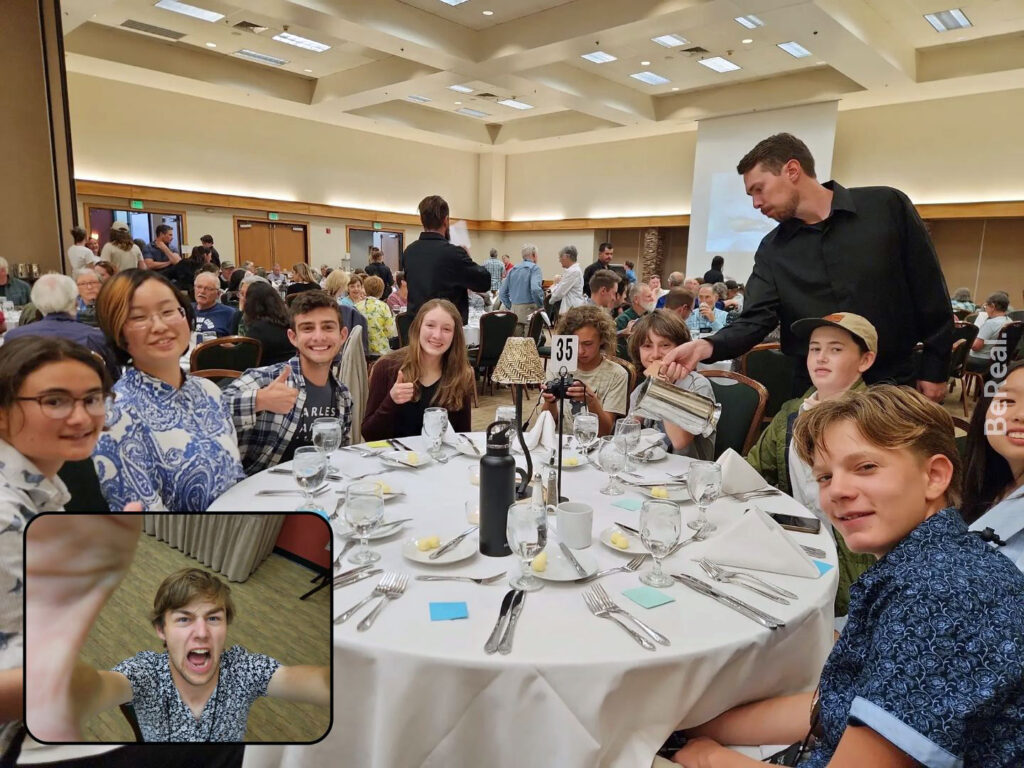
After some fascinating afternoon seminars, Saturday night’s dinner featured a wonderful report on Montana Audubon’s conservation activities by Executive Director Larry Berrin. These included a program I am particularly excited about, the Audubon Conservation Ranching program, which works with ranchers to maintain vital grassland bird habitat. Most touching was the presentation of Montana Audubon’s annual conservation award to the sixteen pioneering young people who successfully took the State of Montana to court for not taking sufficient actions to protect us all from climate change. Truly inspirational.

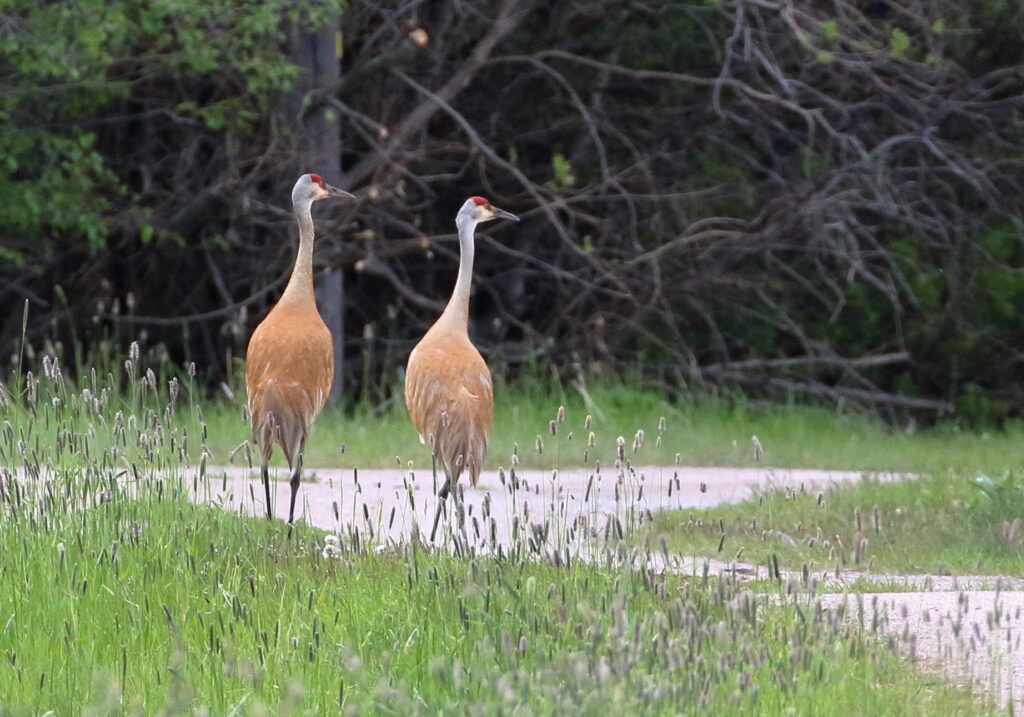
After packing up our car early Sunday morning, we headed out for our second field trip, guided by expert Montana birders Hilary Turner and Andrew Guttenberg. Once again, we were treated to fabulous birding through brand new territory that featured awesome grassland, riparian, and canyon birding. The highlight was a visit to the private Phantom Springs Ranch, where we recorded 45 species, including wonderful looks at displaying Bobolinks. Here, two Sandhill Cranes tried to join our group, but we had to politely inform them that our field trip was full.

These two Sandhill Cranes tried to join our group at Phantom Springs Ranch, but we had to politely turn them away.

After birding several other wonderful spots northwest of Helena, Braden and I sadly said goodbye to our intrepid birding companions. That sadness quickly turned to excitement, however, as we steered north on the next stage of what would become a 2,500-mile birding extravaganza . . .

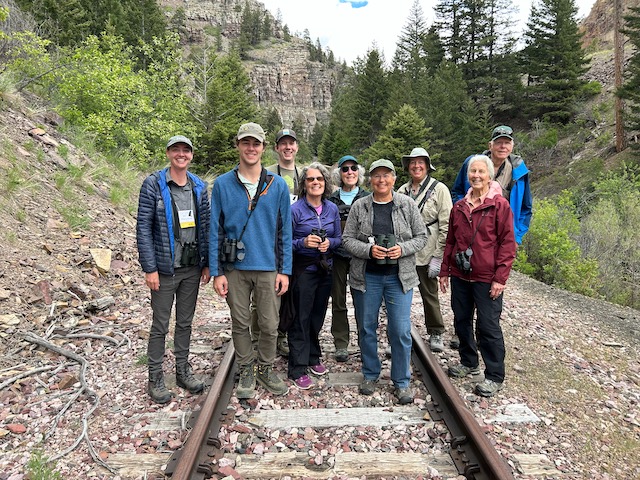
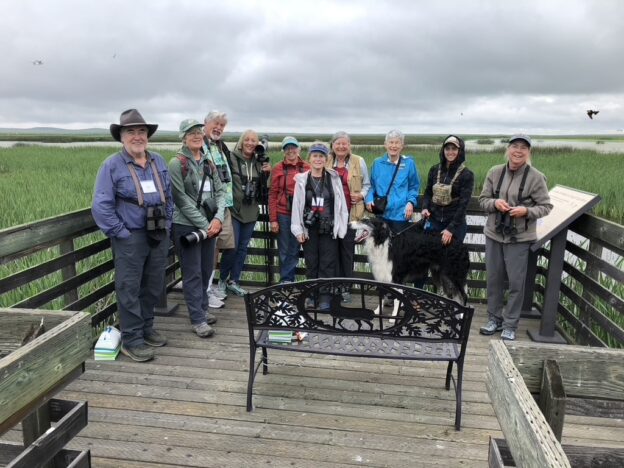
Led by trip leaders, field biologist Hilary Turner (far left) and Andrew Guttenberg (third from left), our group enjoyed superlative birding in places Braden (second from left) and I had never before explored.

Our Phantom Springs Ranch List.

Note: Next year’s Wings Across the Big Sky festival will take place right in our hometown of Missoula. I hope we see you there!

Our Official 2023 FSB Recap: Bird Names, Bird Clubs, and Lifers

2023 proved to be another wildly surprising year for the FatherSonBirding team. Not only did Braden and I see birds we never dreamed we’d see, but birding opportunities and the enthusiasm of our loyal FSB followers exceeded every expectation. But first, some 2023 stats:

Blogs Posted: 32

FSB Views: 9,361 (easily eclipsing last year’s record of 7,185)

Most Viewed Post: Avian Reveal: Our Five Picks for New Bird Names (598 views)

In addition to the above stats, we surpassed 30,000 lifetime blog views and have now published 174 posts since we began FSB in 2018. Even though this is far short of what is required to annoy you with paid advertisements, it’s still remarkable to us. When we began FSB, Braden and I thought we might keep at it for a year or two at most. Now, almost six years later, FSB has actually generated a body of work that we are immensely proud of. It’s been a way for us to share our adventures, promote birding, and connect with other birders. It’s also been a fun vehicle for educating others about birds and bird conservation. So let’s get to 2023’s highlights for each of us.

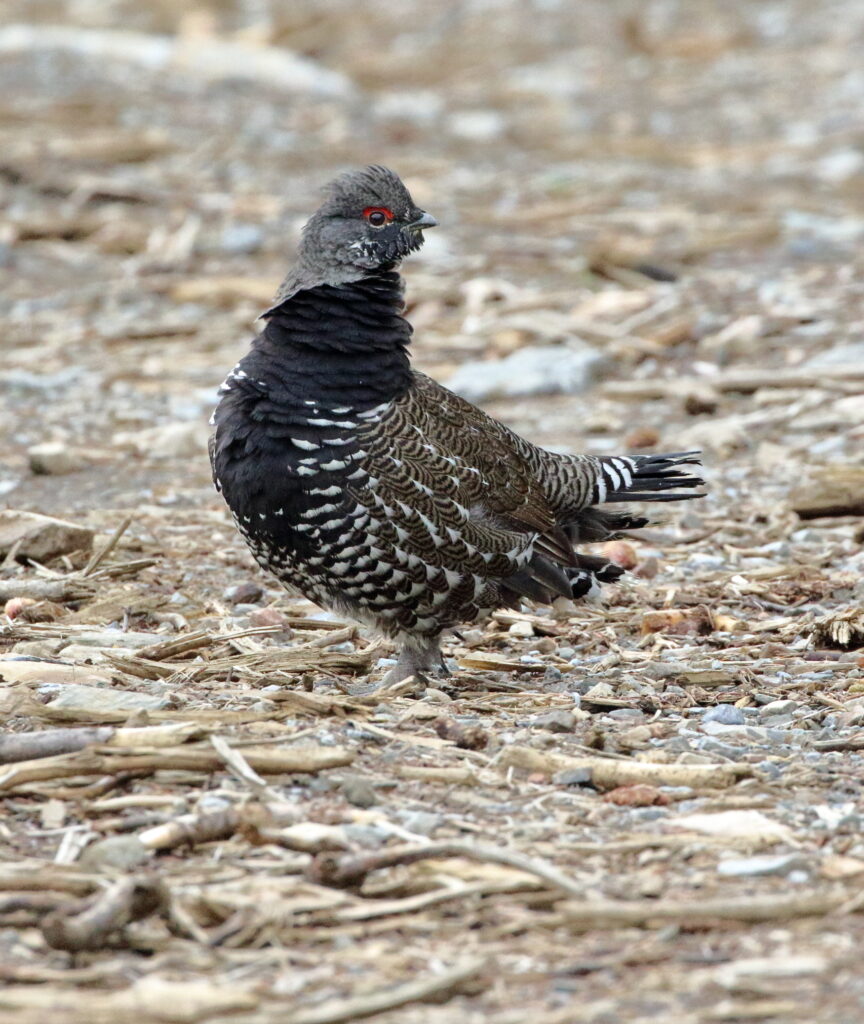
This stunning Spruce Grouse featured greatly in Sneed’s 2023 birding highlights!

Sneed’s 2023 Birding Highlights

Japan: Without a doubt, my biggest highlight of the year was taking my daughter, Tessa, to Japan for three weeks. Together, we created a lifetime of memories in a country we loved even more than we thought we would. As you all discovered with my posts about Tokyo, Kyoto, Kanazawa, and other places, I got in plenty of birding, adding 28 species to my Life List and getting to know more than fifty species of common Japanese birds. (Note that Kanazawa is near the epicenter of this morning’s 7.5 earthquake. We are thinking of all of you over there, and hope everyone is safe!)

One of my favorite Japanese birds, a male Daurian Redstart.

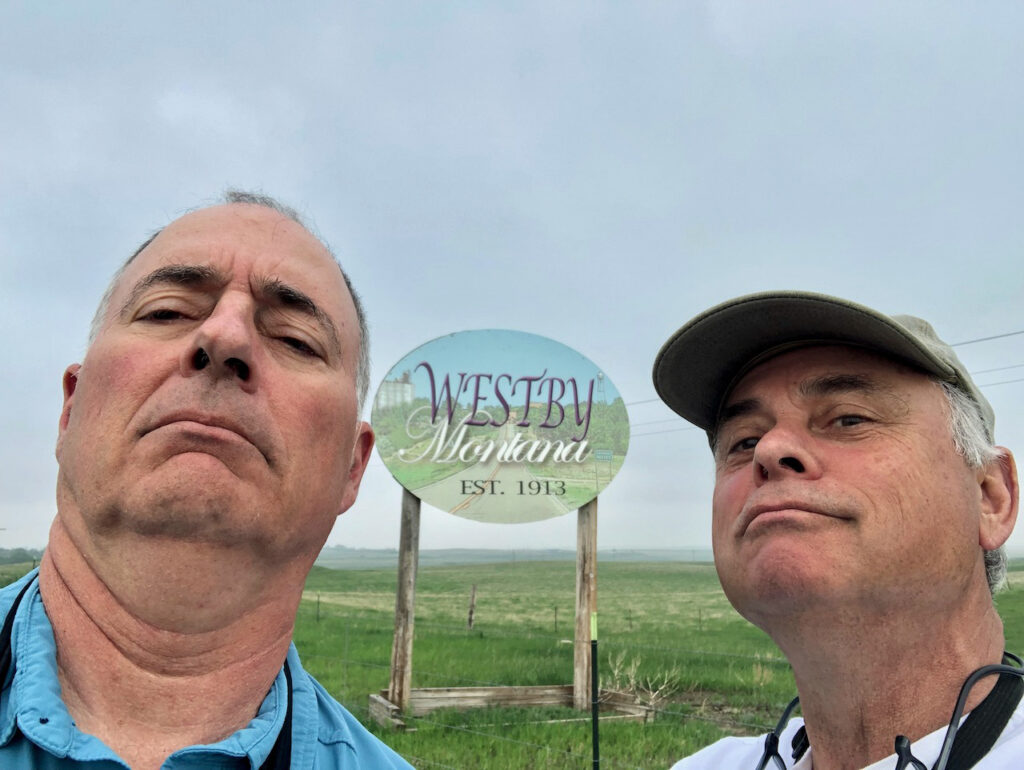
Birding Eastern Montana: Thanks to assignments from Montana Outdoors magazine, I had the opportunity to drive out to Westby with my childhood buddy, Scott Callow. We not only hit hotspots such as Bowdoin NWR, Plentywood, Makoshika SP, and Bear Canyon, we had a wonderful visit with FWP biologist Heather Harris who took us on an up-close-and-personal visit to some of Montana’s healthiest short-grass prairie. There, we got my best looks ever at Sprague’s Pipits, Chestnut-collared Longspurs, and other prairie residents.

Heading to Westby with my friend Scott was not only a great way to see great Montana birds, but a rare chance to catch up with a lifelong friendship!

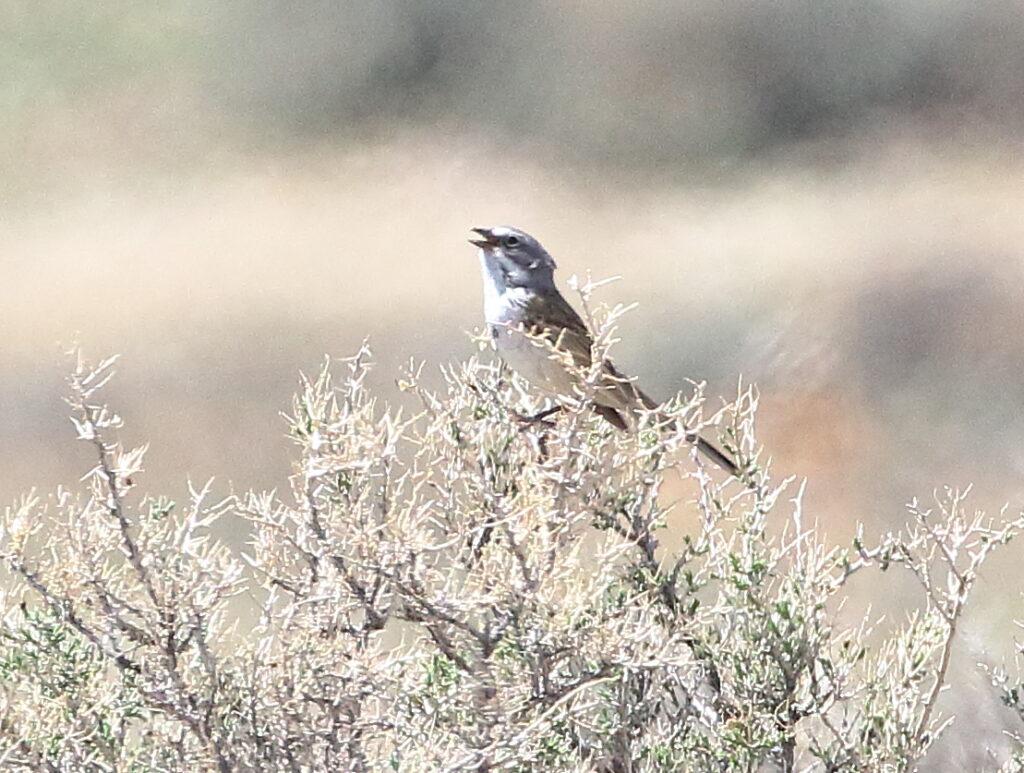
Adding Montana Lifers: While in Westby, Scott and I saw my first Piping Plover in Montana, but during the rest of the year—and with the help of other Montana birders—I also added three species to my all-time worldwide Life List: Sagebrush Sparrow (Bear Canyon), American Golden-plover (Mission Valley), and Spruce Grouse (Mission Mountains).

This Sagebrush Sparrow was probably my favorite new ABA Lifer of 2023–and proves that great things can come in small packages!

In addition to the above highlights, Braden and I got to bird together several times, including a breakneck trip to Glacier NP with our buddy, Nick Ramsey. I also had the pleasure of meeting a lot of other Montana birders at Wings Across the Big Sky and the meeting of Flathead Audubon. At the beginning of 2023, I had entertained visions of breaking my Montana Big Year record with my work trips to eastern Montana—but didn’t. I came close, however, racking up 253 species, including my last two: Short-eared Owl and Northern Shrike on Braden’s and my last big Montana outing. And now . . .

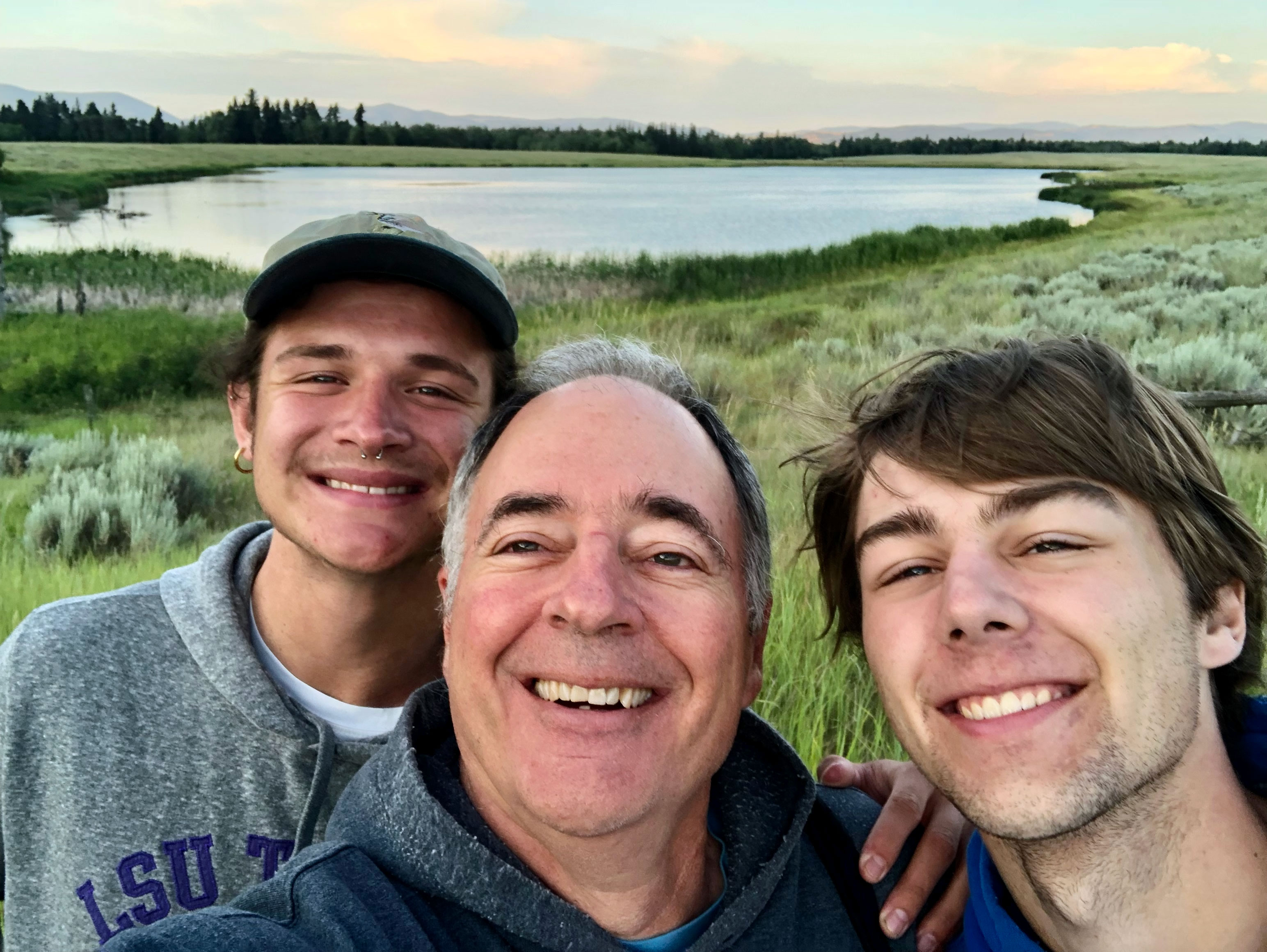
Despite Braden and Nick’s busy lives getting educated and building their birder resumés, we all managed to squeeze in a quick 3-day trip to Freezeout Lake and Glacier National Park last summer.

Braden’s 2023 Birding Highlights

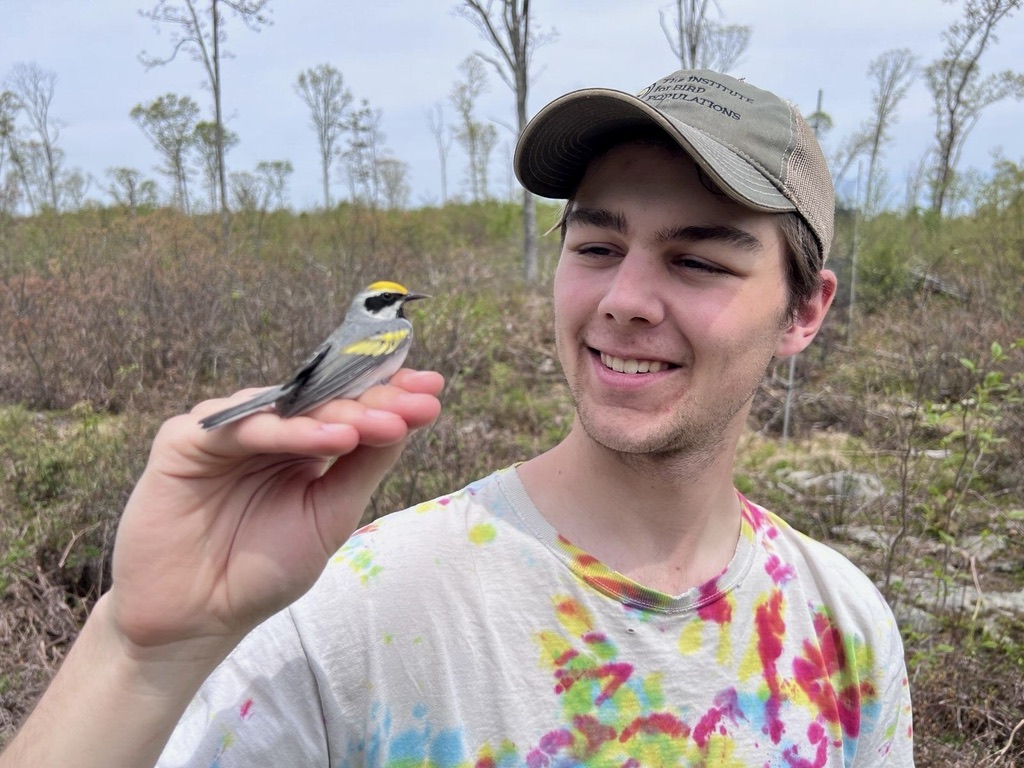
Eastern Songbirds: A long-time goal of mine has been to learn the eastern songbirds, specifically the eastern wood-warblers, by ear. This summer, thanks to my job doing point counts in the woods of northeastern Pennsylvania, I succeeded at that goal, solidifying nearly two dozen warbler songs in my mental repertoire, including those of Magnolia, Canada, Mourning and Golden-winged Warblers. Beyond that, I got to spend all of May and June, and some of July, romping around the forests of the Appalachians, learning about the ecology of all of these species. I fell in love with Golden-winged Warblers, with their specialized habitat needs and endearing personalities, and came to know not only the species of birds in these forests, but also the trees the birds were using. Highlighted by a trip to Cape May and a trip to the Adirondacks, my summer in Pennsylvania may have taught me more about the natural world than any summer I’ve lived through yet!

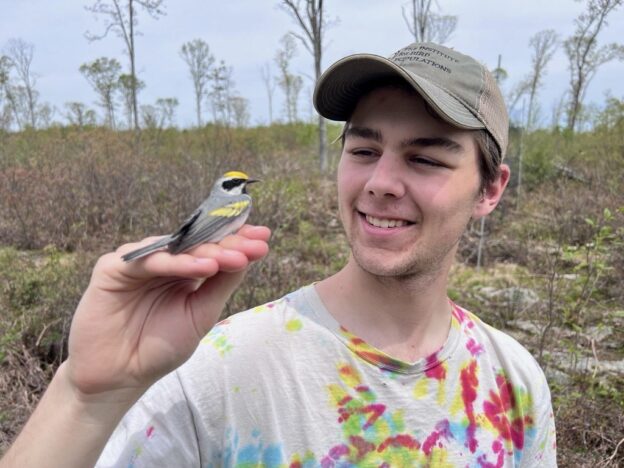
Getting to know Eastern warblers—including Golden-winged Warblers—fulfilled a long-held ambition of mine.

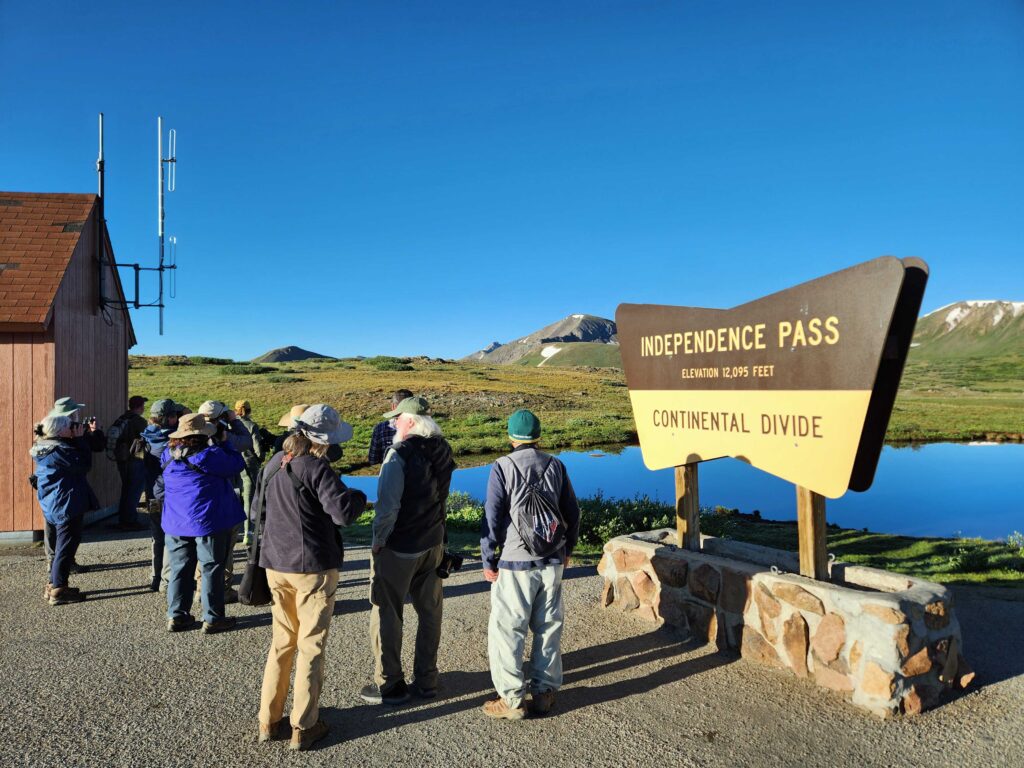
Western Field Ornithologists Conference: In July, I said goodbye to my co-workers and the woods of Pennsylvania and flew across the country to Denver, Colorado, where I was picked up by one of the members of the board of Western Field Ornithologists (WFO). There started my week-long, high-energy stay in the alpine zone of Colorado, where I proceeded to not only see hordes of birds (including two lifers, Virginia’s Warbler and Brown-capped Rosy-finch) as well as meet a variety of people of all ages, who had converged at the WFO annual conference thanks to their passion for birds. During this conference, I got to hang out with a squadron of young birders from California and meet people like David Tonnessen, a native Coloradan guide, Nathan Pieplow, one of North America’s leading experts on bird sound, Ted Floyd, the editor of Birding magazine, Chris Wood, one of the founders of eBird, and Jesse Barry, one of the lead developers for the Merlin app. It was a whirlwind week, during which I bushwhacked through alpine tundra in search of White-tailed Ptarmigan and Dusky Grouse (only the latter of which we saw), scoped distant prairie potholes for shorebirds, and trekked through spruce-fir forest in the dark of night in an attempt for Boreal Owl. I’ll be sure to attend more of these conferences, whenever I am able to!

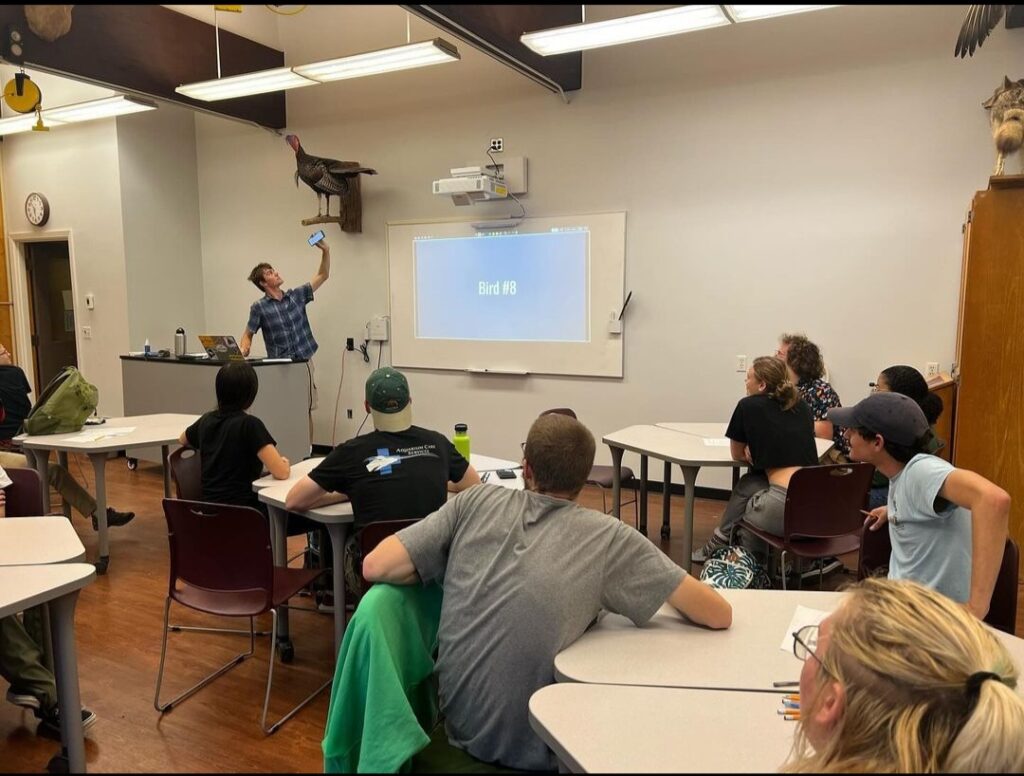
Starting the UMaine Birding Club: Last semester, several people told me that if the University of Maine had a Birding Club, they would join. This year, after a few MORE people told me that, I just decided to buckle down and start one. Our first meeting, which took place on September 14th, was a raging success, with more than thirty people filling the classroom I’d reserved to hear me give my elevator pitch for the club. After a ten-minute talk, we headed out across campus in search of fall migrants, which we found in the form of a Ruby-throated Hummingbird and several Cape May Warblers. The rest is history. I put on twelve meetings this year, and led twelve outings as well. I made sure that our meetings were diverse, with some days featuring guest lectures about bird jobs or indoor bird scavenger hunts and others pitting club members against each other in Bird Jeopardy. My personal favorite was a thirty-minute talk I gave on everything wrong with the state birds, and we finished out the year last Thursday with a movie night featuring The Big Year. Our outings, highlighted by one trip to Sebasticook Lake and another to the coast, tallied ninety total species, including Sandhill Cranes and an American Goshawk, which both became “Bird of the Day” on their respective trips. Overall, starting a Birding Club was one of the most meaningful things I’ve ever done and I can’t wait to jump back into it next fall—after I’ve returned from studying abroad in Costa Rica!

Quizzing the UMaine Birding Club on bird vocalizations!

So that’s a wrap, people. Braden and I want to thank you for tuning in and sharing your enthusiasm with us, and we hope that 2024 brings you a rewarding year of seeing, learning about, and protecting the animals we all love.

Festival Report: Wings Across the Big Sky 2023

In my last post, I mentioned being on my way to Montana Audubon’s 2023 Wings Across the Big Sky festival in Great Falls. After birding Freezeout Lake and Choteau, I could feel my excitement grow. Not only would I get to meet a lot of other birders at the festival, I had been invited to lead two field trips to one of my favorite Montana places to bird: Benton Lake National Wildlife Refuge. Last year, I’d had one of my best birding days ever at Benton Lake, and a couple months later, Braden and I had followed that up with perhaps our best Montana shorebird day ever. What would this wonderful spot hold for us this time?

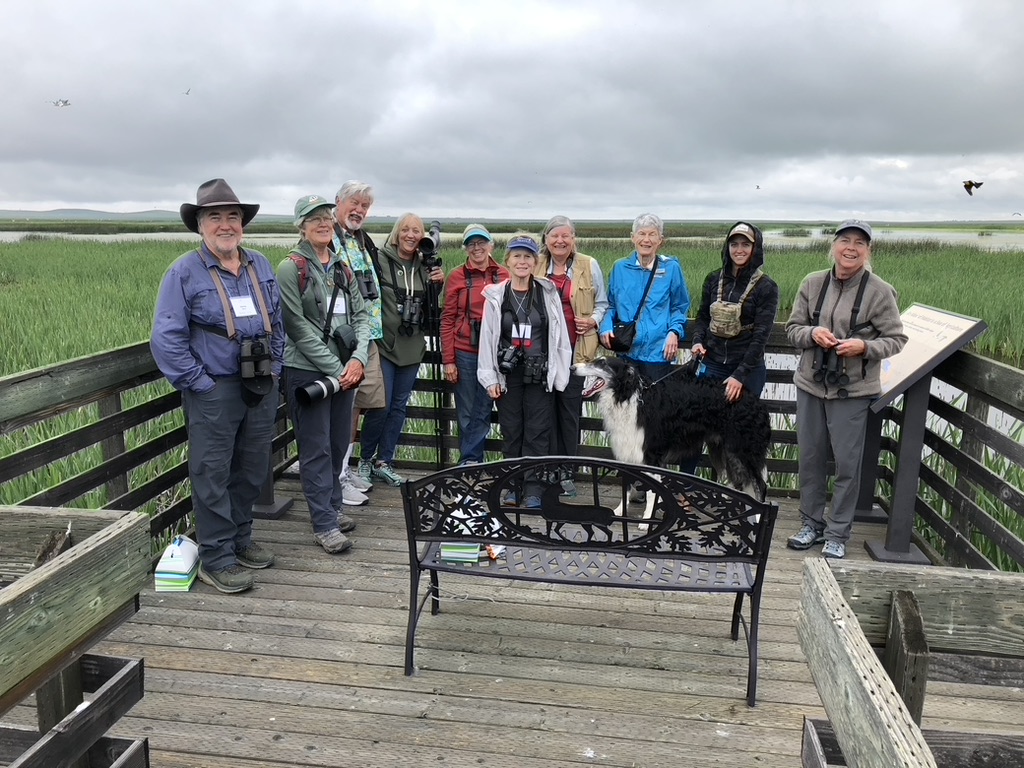
The sharp eyes of our intrepid Saturday Benton Lake field crew let no bird escape our detection!

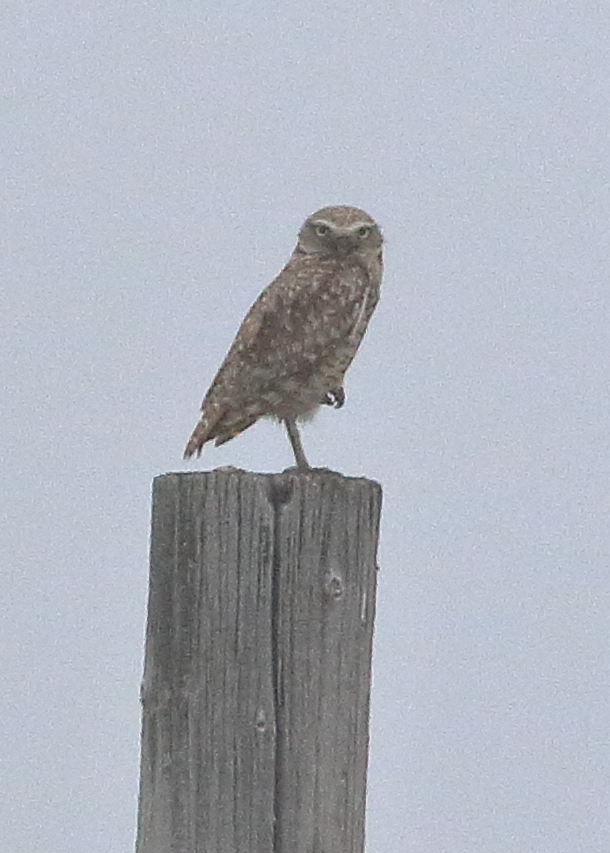
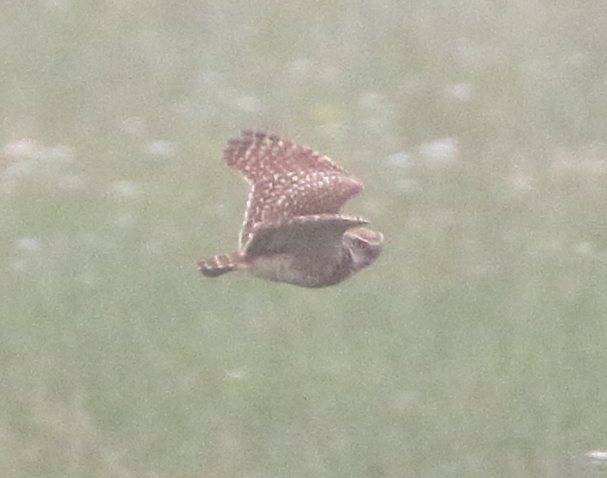
Saturday, our trip got off to a good start when one of the participants told me about a Burrowing Owl right off the road leading up to the refuge. Driving my intrepid minivan, we turned right onto a muddy track—only to drive right under the owl without seeing it! Fortunately, the two cars behind us were more observant, and we all got great looks at this rarely seen animal before heading to the refuge. Turns out, we would glimpse another BUOW at the refuge itself—but it would be only one of many stars for the day.

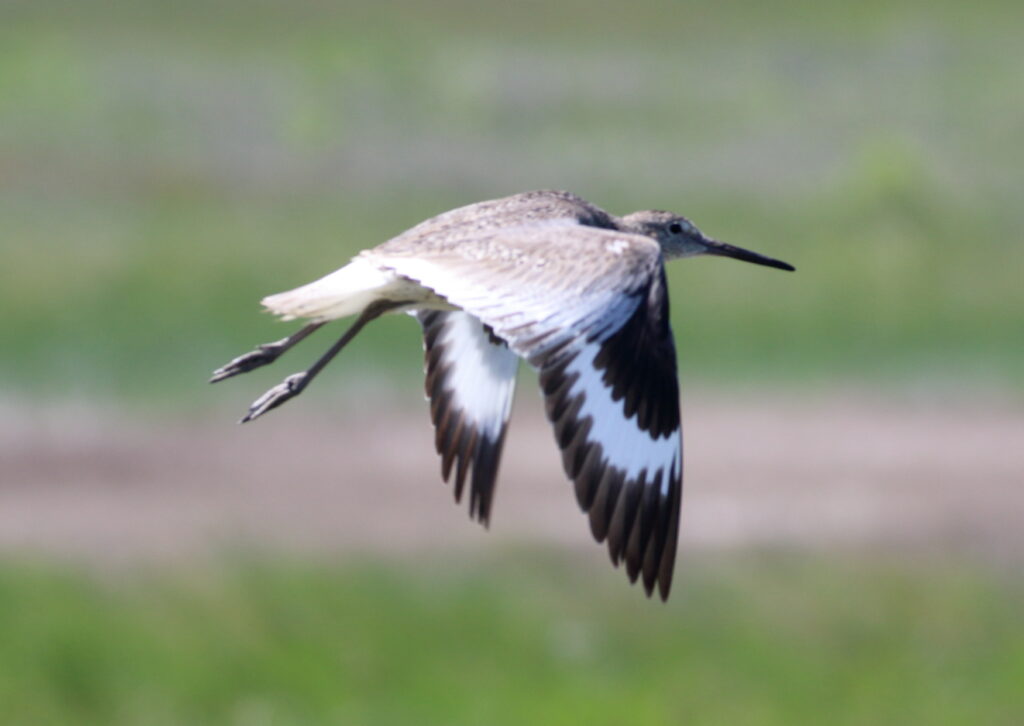
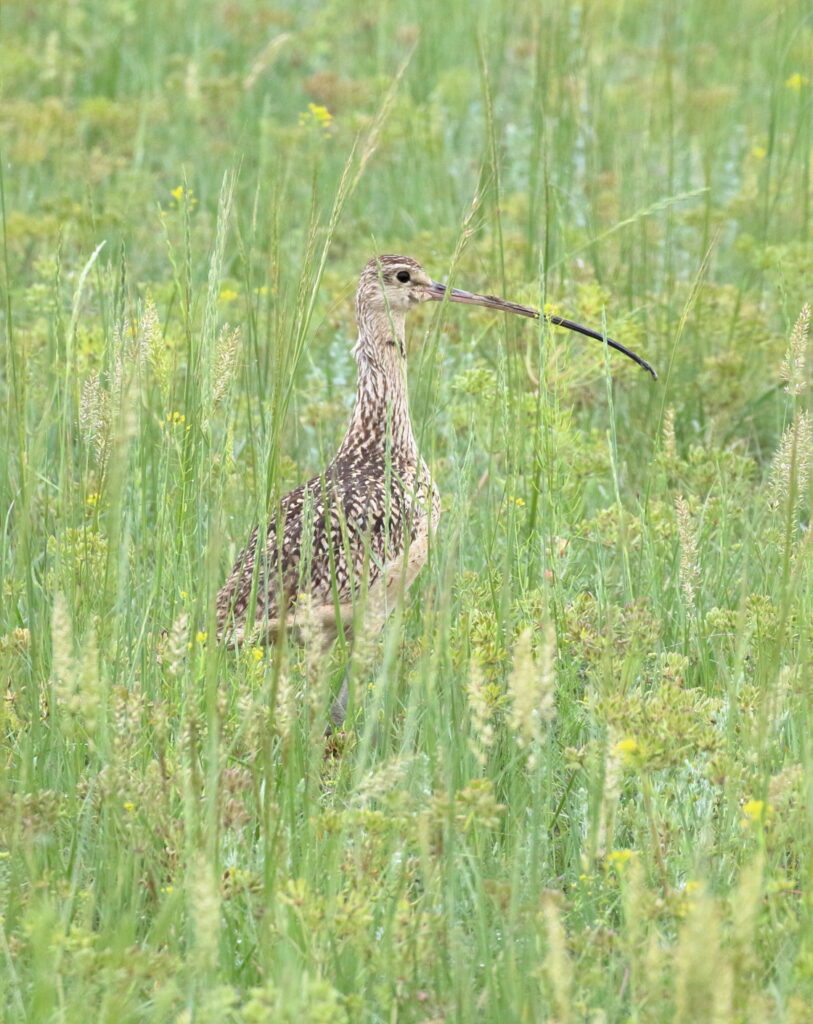
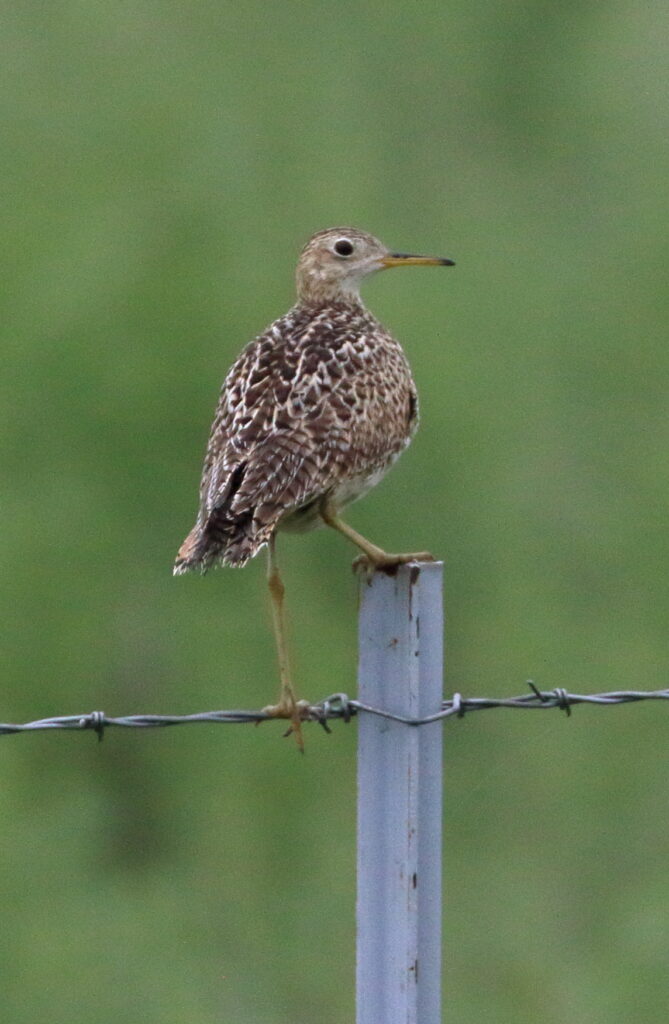
Birding Benton Lake NWR entails two distinct phases: a grasslands phase and a wetlands phase, and today, neither one disappointed. Driving through grasslands on our way to the start of the main loop, we were rewarded with multiple looks at Willets, Marbled Godwits, Long-billed Curlews, and Upland Sandpipers. The Willets and curlews especially put on a show for us, circling around the visitor’s center parking lot, uttering their looping, haunting calls. Thanks to recent rains, the vegetation in the prairie sections seemed especially tall and that probably suppressed one of our main targets, the Chestnut-collared Longspurs, but other birds turned out in force, especially Horned Larks and Savannah Sparrows. When we’d almost reached the turn for the wetlands section, I spotted several large-bodied birds flying low across the horizon—Sharp-tailed Grouse!

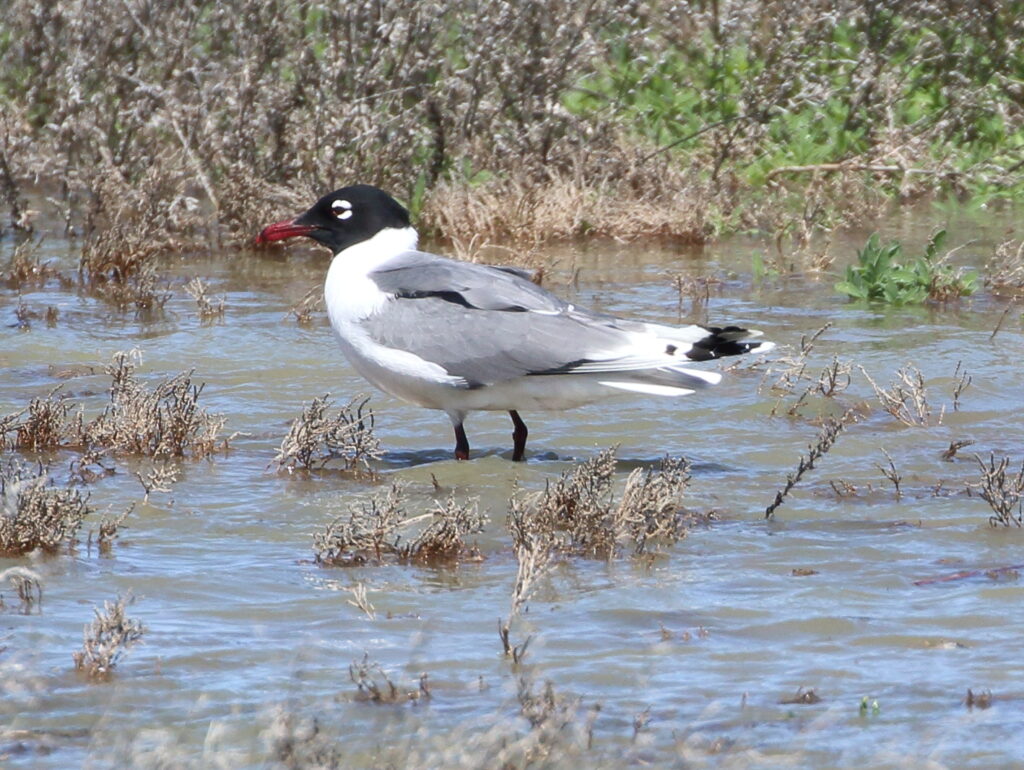
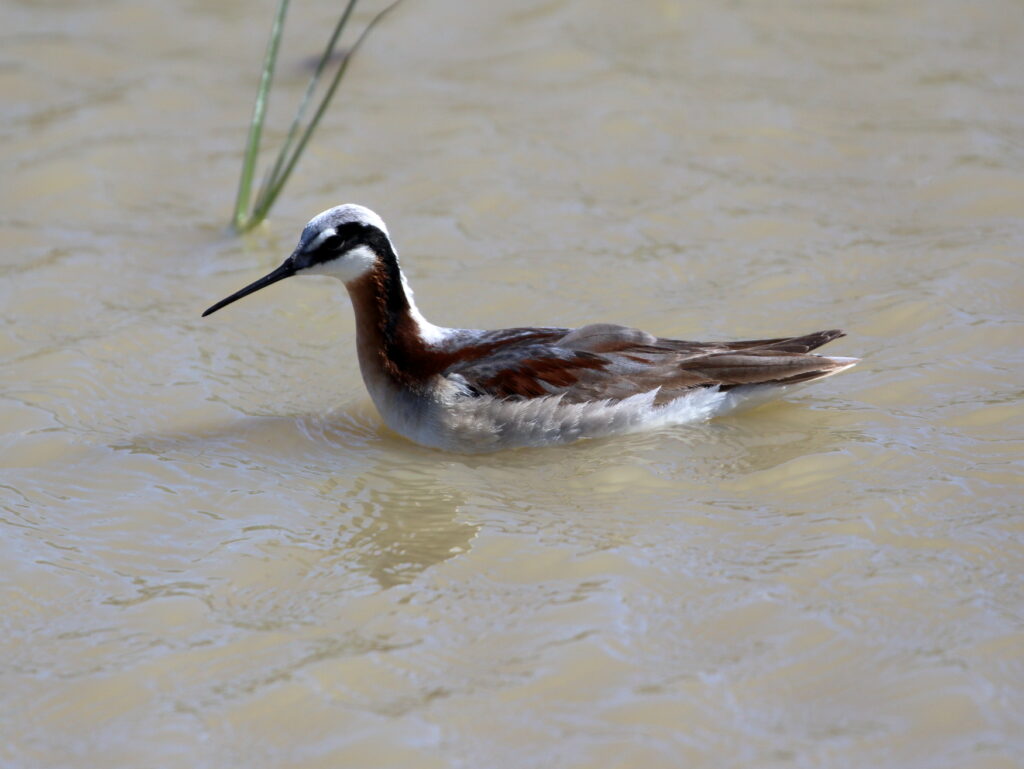
With more water in them, the wetlands ponds sported a different mix of birds than last year. We counted 13 species of ducks, more than twice what I saw last year, but none in huge numbers. Wilson’s Phalaropes were present, but in smaller numbers than last year. While I’d counted 220 American Avocets and 20 Black-necked Stilts last year, today we saw neither species. Fortunately, the Franklin’s Gull colony appeared healthy and intact with at least 1,000 birds, as did the smaller number of White-faced Ibises. I worried when we didn’t see our dependable Black-crowned Night Heron colony—until one of our intrepid crew spotted one when we walked out to the end of the boardwalk during our early lunch break.

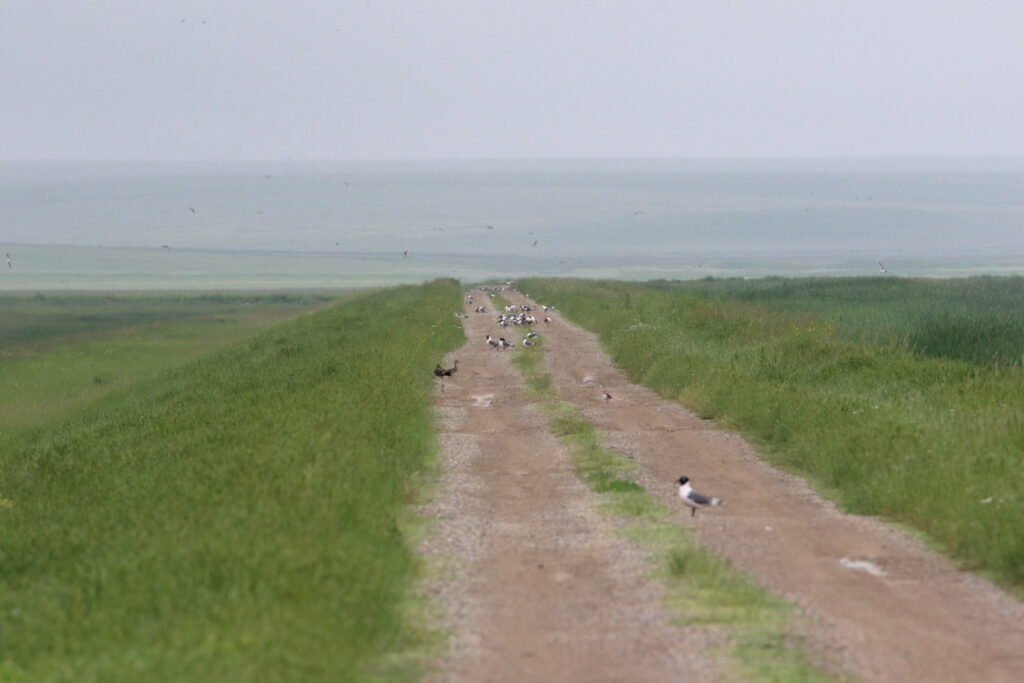
Franklin’s Gulls dominate a whole section of Benton Lake—including, at times, laying claim to the roadway.

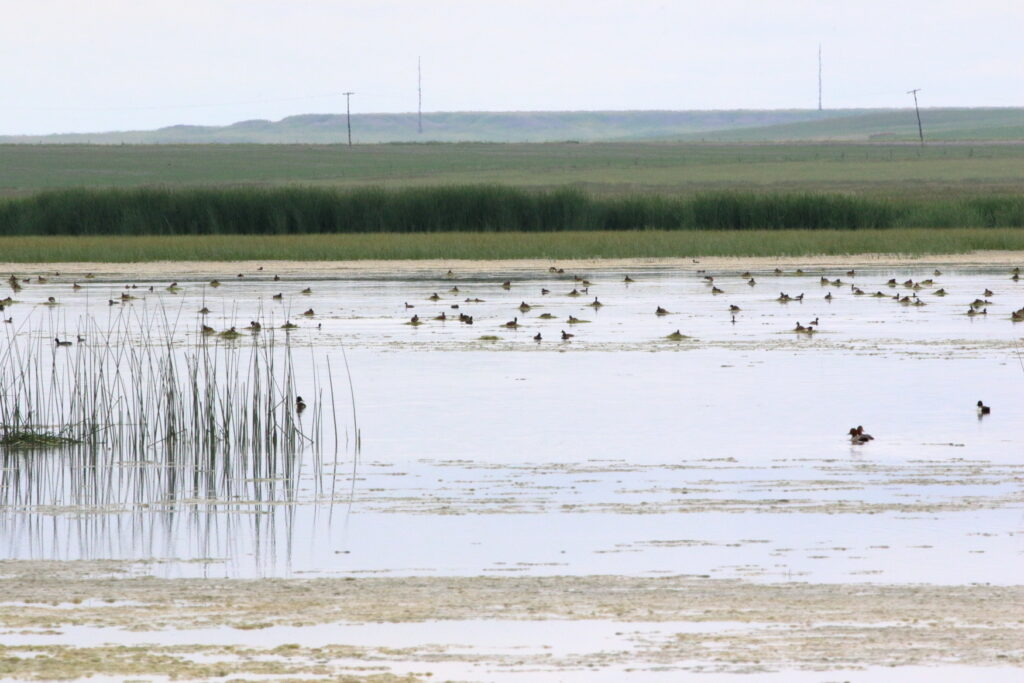
Undoubtedly, one of the stars of the day were the Eared Grebes, who had constructed hundreds of raised nests in the “upper” pond. In fact, our little caravan stopped to break out our spotting scopes and admire this incredible sight for at least ten or fifteen minutes. On our way out, we passed the tree where Braden and I had enjoyed nesting Swainson’s Hawks multiple times over the years. Sure enough, a SWHA parent sat dutifully on a branch watching us as we slowly lumbered by.

It was a great treat to again visit the refuge the following day and I wondered how these two visits would compare. The verdict? Pretty similar. On Sunday we missed the Sharp-tailed Grouse—but again saw the Burrowing Owl, placidly sitting in the middle of the road. We missed the pair of Black Terns we’d seen the day before—but saw far more Forster’s Terns, and finally spotted a lone Black-necked Stilt along with a single Sandhill Crane.

From a distance, I assumed all of these dark spots out on the water were ducks. Our crew was delighted to discover that most of them were Eared Grebes sitting on nests!

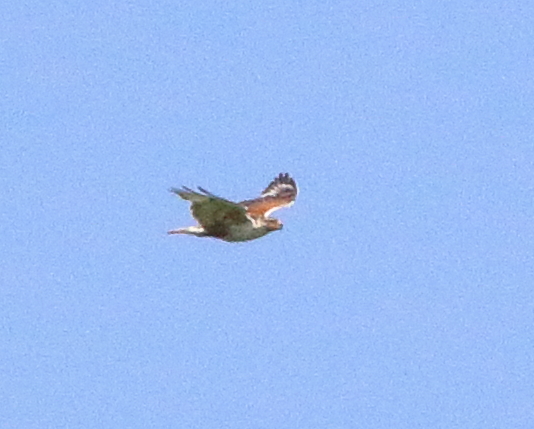
We wrapped up Sunday’s visit by pulling over at a section of the road with shorter grass, and sure enough, soon spotted a couple of Chestnut-collared Longspurs, doing flight displays above their territories. But my favorite sighting came a few moments later, when we all turned our binoculars on a buteo hawk circling high overhead. The bird had unusual coloring, and we debated what it could be. Swainson’s? Red-tailed? An uncommon Broad-winged Hawk? Finally, my co-pilot for the day, Kevin Cox, called the correct ID: Ferruginous Hawk! I was thrilled. I usually see a FEHA in Montana every year, but it’s not a guarantee—and to see it out in such a glorious spot, and on such a glorious day, and in the company of so many people who appreciated it, well, that perfectly crowned a very memorable festival.

Click here for Saturday’s eBird checklist.

This Ferruginous Hawk was the perfect bird to cap off a wonderful festival weekend!

Note: The 2024 Wings Across the Big Sky festival will be held in Helena, Montana, which I’ve always considered to be the best home base for birding in Montana. No matter where you live, I hope you’ll plan on attending, either the first or second weekend in June. You won’t regret it!

Celebrating Hummingbirds and More in Texas

Believe it or not, I just returned from my first actual birding festival in two years—and it was worth the wait! I was invited to speak at the 33rd annual HummerBird Celebration in Rockport-Fulton, Texas last year when, for covid—not corvid—reasons, organizers were forced to cancel the event. Even as I flew down this year, however, I had little idea what the celebration would be like. I was in for a treat.

One advantage of having mainly one kind of hummingbird in a region is that it greatly simplifies the almost impossible task of distinguishing female Ruby-throated from female Black-chinned hummingbirds!

The festival is organized by dedicated staff and volunteers at the Rockport-Fulton Chamber of Commerce and the event, as its name suggests, celebrates hummingbirds. “Wait a minute,” some of you may be asking, “aren’t there only three or four species of hummingbirds in eastern Texas in the fall?” Correct. But the event doesn’t focus only on diversity. It celebrates raw numbers, mainly of one species: Ruby-throated Hummingbirds. The entire community joins in, and one of the coolest things about HummerBird is the self-guided tour of houses full of feeders and backyard habitats where participants are encouraged to feast their eyes on a plethora of Ruby-throateds. The festival, though, offers much more.

Our hayride around Fennessey Ranch was definitely one of the highlights of my time at HummerBird!

One of my duties as a speaker was to co-lead a four-hour field trip of 40 birders out to Fennessey Ranch, a working ranch that also focuses on conservation and research. After struggling a bit to find the place, we split into two groups and began “hay rides” around the property, looking for as many birds as we could find. Coming from Montana, I discovered that almost every species was a Year Bird for me, but Braden has coached me well over the years, and together with my co-leader, ranch naturalist Sally Crofutt, we identified almost everything we heard and saw. They included some real surprises, including my Lifer Broad-winged Hawk, migrating Anhingas (I didn’t even realize they migrated!), and my find of the day—only my second-ever Blue Grosbeak.

Green Jay was our Fennessey group’s Most Wanted Bird, and this fellow obligingly complied with our wishes!

But the celebration offered much, much more, including:

  • other field trips to Welder Wildlife Refuge and boat trips up to Aransas NWR
  • a fabulous Hummer Mall packed with all kinds of bird-related vendors and demonstrations
  • a host of interesting speakers
  • great birding all along the area’s waterfront
One great thing about HummerBird is that terrific birding surrounded us. I found this cooperative Crested Caracara—along with numerous other species—along the shore just down from my hotel.

Speaking of speakers, I spoke to two enthusiastic audiences about Braden’s and my 2016 Big Year and other adventures, and before one of my talks I had the pleasure of listening to Dawn Hewitt, editor of Bird Watcher’s Digest. She gave wonderful hints on learning bird calls—something I would use almost immediately. I was surprised how well-attended the entire celebration turned out to be, and I headed back north feeling full of positive bird vibes as I prepared to spend a couple of days birding High Island and the Bolivar Peninsula—the subject of my next post(s)!

Make 2020 a Year of Saving Birds!

Welcome to all of our new subscribers—and thank you for your interest! Please note that Braden and I are about to embark on a once-in-a-lifetime trip to the Middle East, so won’t be posting for a few weeks. When we do, we should have some amazing stories to share!

Season’s Greetings Fellow Birders! Between school exams, swim meets, book deadlines, and the general craziness of life, Braden and I haven’t been out birding a lot in the last few months, but we wanted to wish all of you Happy Holidays and a dawning new year of birding. With your patience, we’d also like to reflect a bit on the past year, the future, and what we can all do to help the animals that we love.

Getting to know Montana birds better—including this fabulous Harlequin Duck on McDonald Creek in Glacier National Park—has been one of the major 2019 achievements for Braden and me.

It was another amazing year of birding for Team Collard. Without intending to, we smashed our Montana Big Year records by at least a dozen birds each, with Sneed logging 222 species in the state (15 more species than in 2017) and Braden recording 225 species—12 more than in 2017. We also broke our combined Big Year record, though we’re too lazy to figure out the total (about 340 species together). This year, Braden tallied 44 new Life Birds while I added 21.

But while statistics are fun and motivating, for us they really aren’t what birding is about. Birding brings so many benefits to our lives, it’s hard to list them all, but top of the list are a chance to get outside, explore new places, see new species, learn about our remarkable planet, educate others about birding, and most of all, spend time together. This year, our favorite experiences included:

Perhaps our most rewarding 2020 activity? Leading birding trips for a new generation of young—and “almost young”—birders!

1) Participating in the San Diego Bird Festival

2) Getting to know Montana birds better

3) Leading birding trips for school groups and others

That last one brings up an important point. Those of us who love birds owe it to the planet to do as much as we can to protect them. That includes educating other people about the importance of birds and what’s happening to them worldwide. Don’t short-sell yourself. If you’ve ever been birding at all, you have important knowledge to share. Most people know almost nothing about birds, so even teaching a friend how to identify a House Sparrow or an American Goldfinch could be the beginning of a long and rewarding journey.

We were thrilled this fall to observe and help participate in long-term studies of bird migrations through western Montana using banding and flight call studies. Here, a Townsend’s Warbler (I think) gets unceremoniously dunked head-first into a weighing canister. This does nothing to harm the bird, but gives scientists at MPG Ranch and the University of Montana’s Bird Ecology Lab important data for monitoring and protecting songbirds.

We especially want to encourage everyone to give as much money—yes, cold hard CASH—as you can to organizations that are helping birds. Because of this year’s higher standard tax deduction, charitable donations have plummeted, and that has hurt a lot of nonprofit groups—especially in an era when they need support more than ever. Keep in mind, too, that if you donate to National Audubon, that doesn’t necessarily do much to support your state and local Audubon chapters. You have to give to all three. Here are some of Braden’s and my favorite groups that we give to:

National Audubon Society, and State and local Audubon chapters

The Cornell Lab of Ornithology

Owl Research Institute

BirdLife International

American Bird Conservancy

Please check out these groups and GIVE UNTIL IT HURTS. We thank you, and appreciate all you do to share your love of birds and, even more, to make sure that the next generation enjoys a bird-rich planet.

This Western Screech Owl says: “Instead of buying friends and family more junk this holiday season, why not give them a LASTING gift with a donation to the Owl Research Institute and other bird conservation organizations?”