Tag Archives: Montana

The Best Prairie Day Ever: Benton Lake NWR

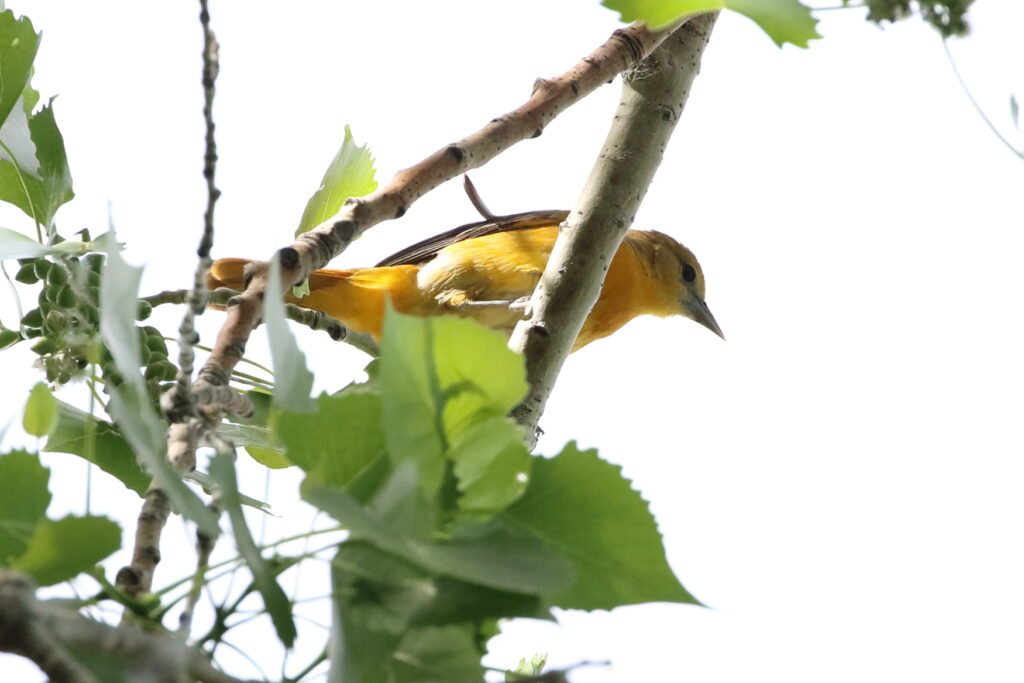
After speaking at the inaugural Billings Kid Lit Festival (see Billing’s Riverfront Park: Montana’s Premier Songbird Hotspot?), I awoke at 4:30 the next morning and hit the road by 5:15. My plan was to book it to Bowdoin National Wildlife Refuge and start driving around the lake by 8:30. The problem? I kept passing ponds with birds in them—and I, of course, had to stop to find out what they were! My efforts were rewarded with a variety of ducks, Wilson’s Phalaropes, American White Pelicans, Sandhill Cranes and more, but delayed my arrival at Bowdoin until 9:30. Then, even greater disaster struck: I ran into way more birds than I expected at the Bowdoin visitor’s center—including both male and female Baltimore Orioles!

Bowdoin NWR lies at the eastern edge of the Baltimore Oriole’s range, but Braden and I have seen them often enough that it seems certain they breed there. Oh, and seeing both the male and this female offers an added clue!

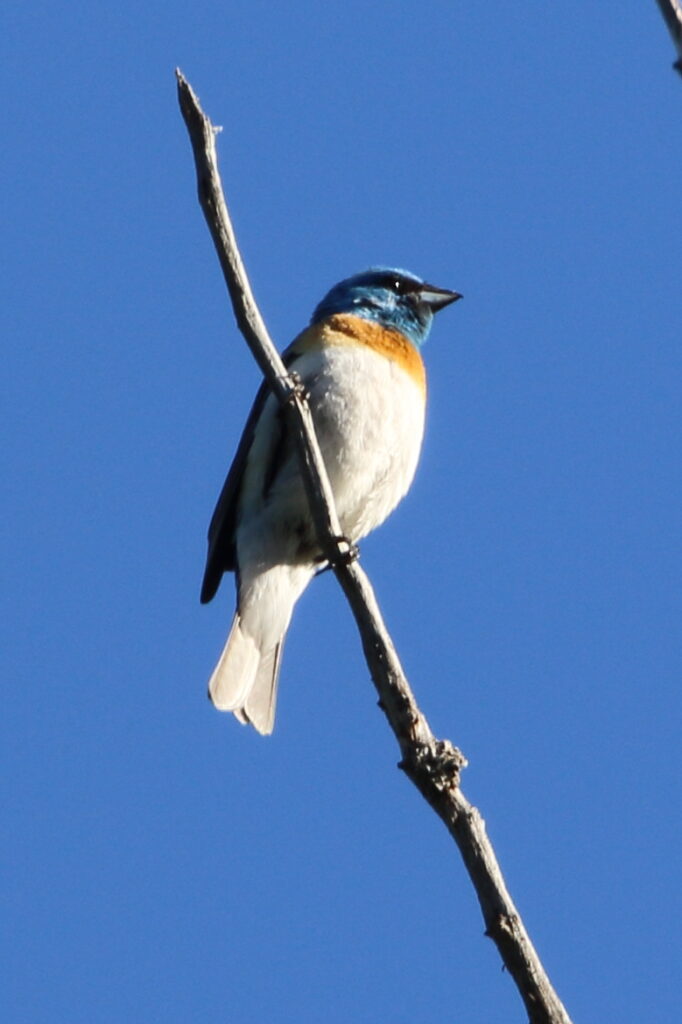
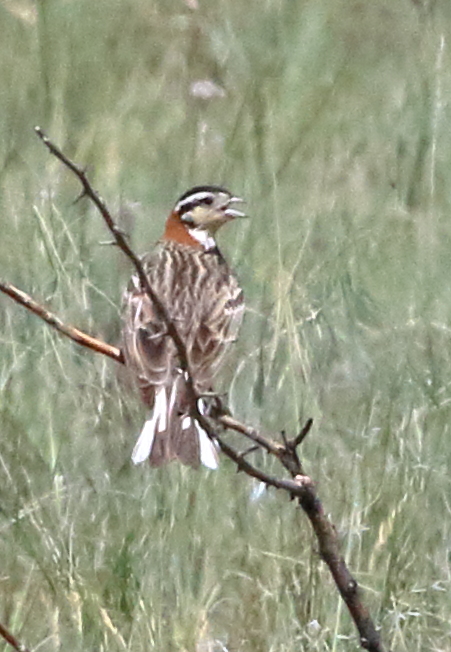
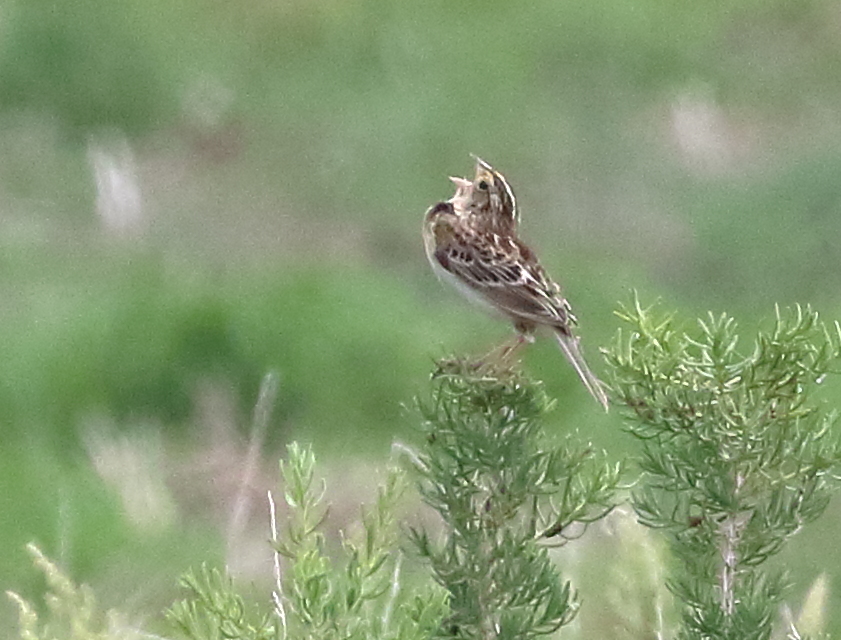
Finally entering the first five-mile stretch of the loop, I was shocked by how much of the lake had been sucked dry by eastern Montana’s multi-year drought. This really was a disaster and I wondered if I would even find any place conducive to water birds. Meanwhile, I encountered great grassland birds including Long-billed Curlews, Loggerhead Shrike, Chestnut-collared Longspurs, Lark Buntings, and Grasshopper, Vesper, Clay-colored, and Savannah Sparrows. Finally, near the end of the lake, I found water but at pathetically low levels. A much-vaunted Cassin’s Sparrow (discovered by Joshua Covill, I believe) had been observed repeatedly at about Mile 7 of the loop and I ran into Robin Wolcott and her husband who had driven over from Big Fork to see it. While we stood there, Robin did hear the sparrow, but with my crummy ears I couldn’t be sure so didn’t count it. I also had many miles to drive so I kept on truckin’, driving the three hours to Great Falls.

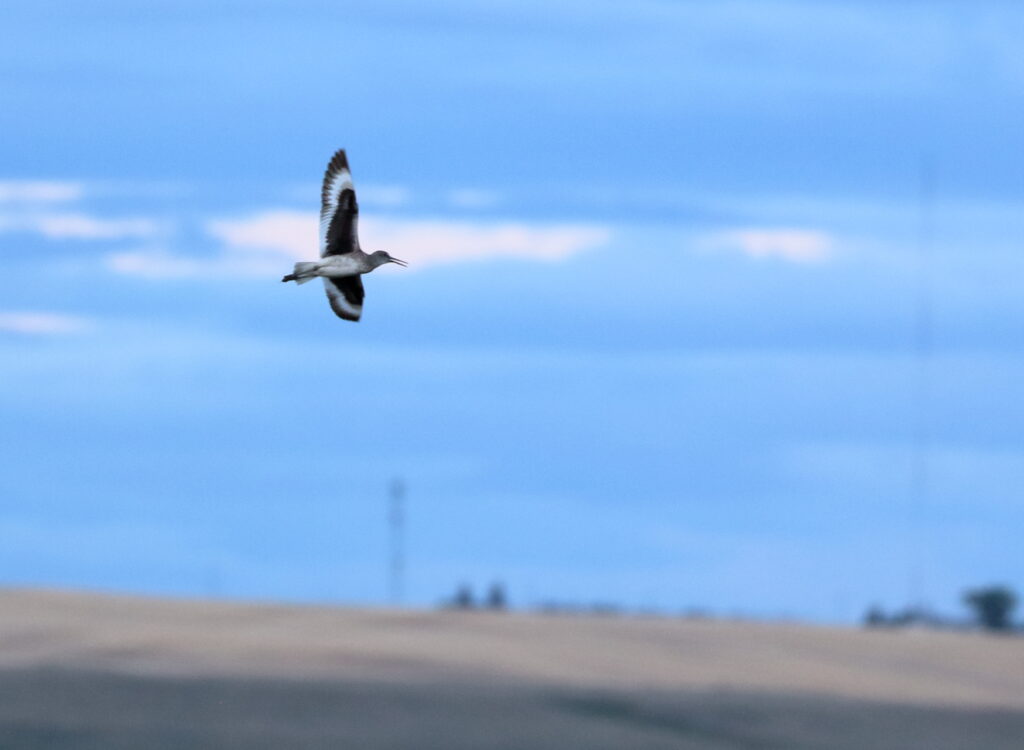
The next morning I again woke early, loaded up the car and arrived at Benton Lake NWR as dawn filtered over the prairie. After the dry conditions at Bowdoin, I fretted about Benton Lake—but my worries were hijacked by what may have been the most astonishing grassland birding experience I’ve ever had. It began with a sighting of a Long-billed Curlew in flight, always a welcome bird. Then, I saw other large shorebirds and stopped to behold the incredible courtship displays of Willets, flying madly around emitting their haunting, looping calls over the prairie. Other curlews joined in and a Marbled Godwit briefly gave chase to a Willet. Meanwhile, meadowlarks sang and a pack of coyotes unleashed their insane yelping cacophony across the landscape—all in the dawn light.

Most birders take Willets for granted, but watching and listening to them display over the prairie where they breed will forever make them a favorite bird ‘o mine.

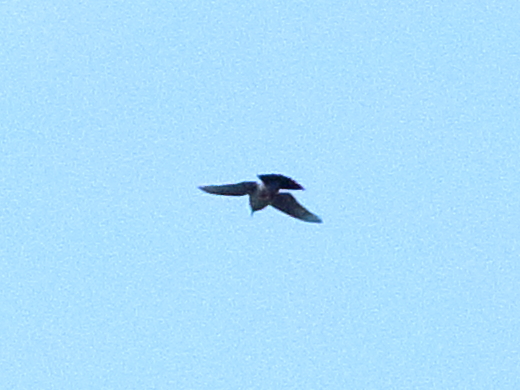
Suddenly, I spotted a small bird rising high into the sky in an obviously courtship display. “No way,” I excitedly muttered, struggling to focus my camera on the small black dot. My thought? That it could be one of the prairie’s most magical creatures, a Sprague’s Pipit! Alas, Nick Ramsey studied my photos later and suggested it was actually a Horned Lark, and after further study, I agree. Still, it was no less incredible—especially because I didn’t even know that Horned Larks make such displays!

This “Sprague’s Pipit” got me uber-excited, but I learned later that it was almost surely a Horned Lark performing a similar high-altitude display. Thank you, Nick Ramsey, for setting me straight!

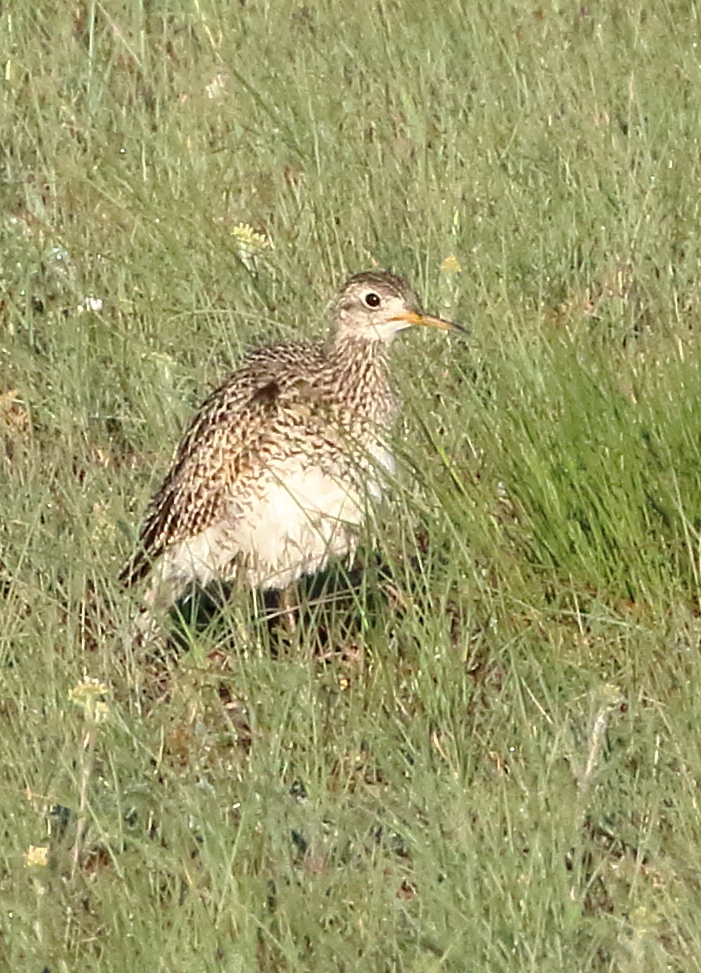
Passing the visitor center, I thought that I would finally make my way to the lake and start looking for water birds. Guess again. As soon as I turned right, down the dirt road, I stopped to look at juvenile Horned Larks and saw more Willets and curlews. Then, I spotted one of my top target birds: Upland Sandpipers! I had barely had a chance to look at them, when I saw another top target bird—a Short-eared Owl! As I was snapping some blurry photos of the owl, eight Sharp-tailed Grouse flew low across the road 100 meters in front of me and zoomed like cruise missiles across the prairie—something Braden and I had never seen at Benton Lake. But the best was yet to come . . .

Upland Sandpipers are one of our favorite grassland species—and they undertake one of Earth’s most incredible migrations, traveling from our prairies to southern South America in a matter of weeks each year!

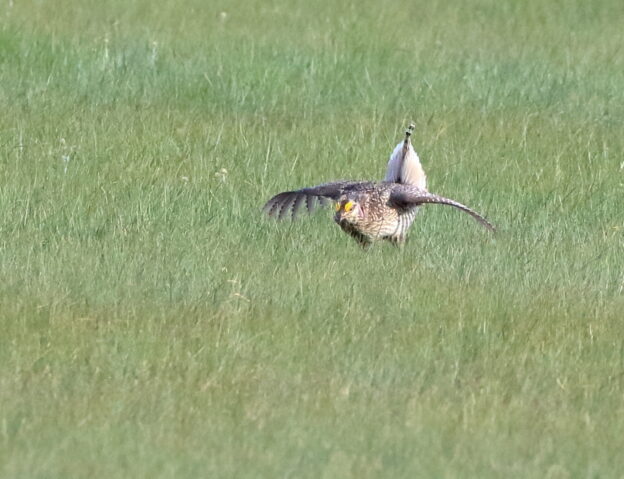
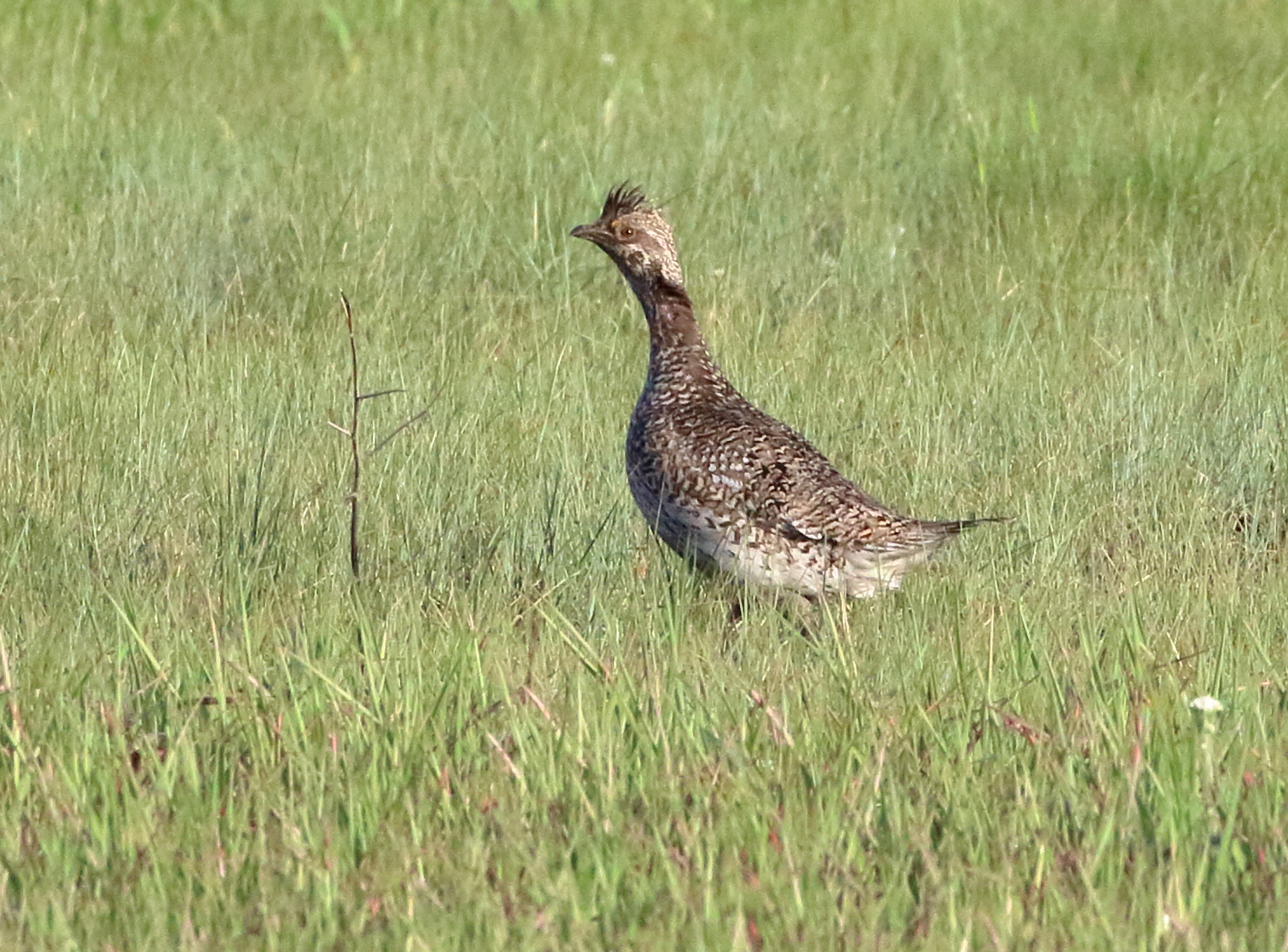
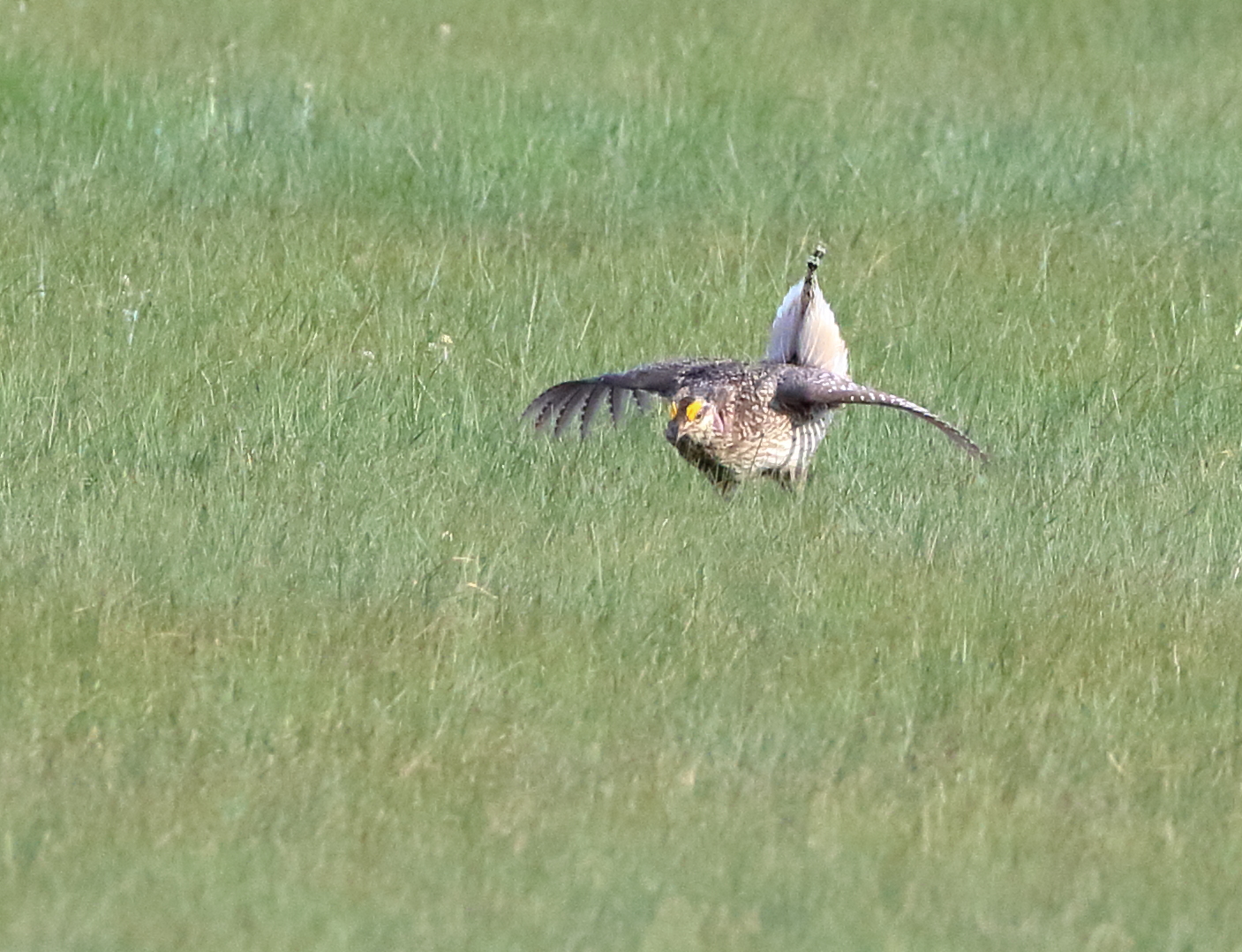
As I was watching the Short-eared Owl, I noticed a white spot perhaps a quarter-mile away. At first I thought it was some man-made structure, but then it moved. I drove closer and raised my binoculars to see a sight I had never in my life observed—a male Sharp-tailed Grouse in full “impress mode” trying to woo a nearby female! Fumbling for my camera, I was so excited that my hands actually shook, and I watched this chase-and-pursue courtship for the next ten minutes. Like so many birds recently, a displaying male grouse was something I never thought I would see, and yet here it was when I was least expecting it!

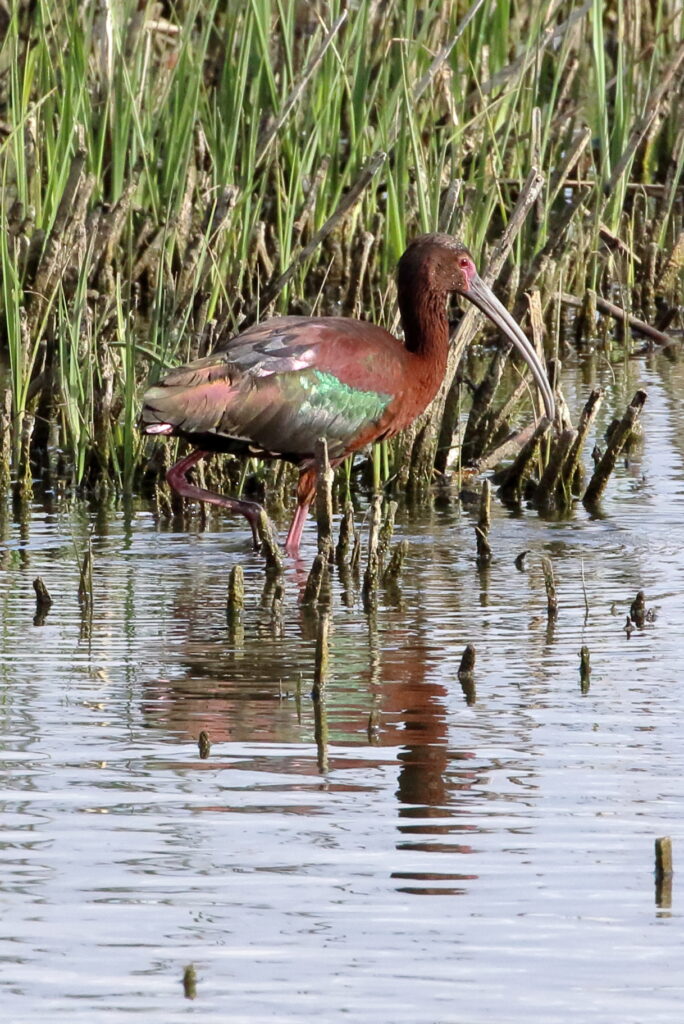
My heart still racing, I finally moved on, and was relieved to see water filling the two main ponds—along with thousands of avocets, ducks, Eared Grebes, Yellow-headed Blackbirds, phalaropes, Forster’s Terns, Franklin’s Gulls, White-faced Ibises and just about everything else I had hoped to see. Water levels looked good to me, but refuge manager Bob Johnson later told me that they struggled to keep the ponds filled. They had the water rights, he said, but it cost so much—think hundreds of thousands of dollars—to pump the water up to the refuge that they had run out of money. That makes it more imperative than ever to support increased funding for our refuges and other wild lands by calling or emailing U.S. Senator Daines and our other representatives.

It’s hard not to love ibises, and I was delighted to see at least nine White-faced during my circumnavigation of Benton Lake.

I had planned to continue on to Freezeout Lake, but after four breathless hours at Benton, I wasn’t sure my sensory systems could handle it. As I said, it was my most incredible grassland birding day ever, and certainly my best at Benton Lake, not just for the species I saw, but for the intimate observations of their natural behaviors as they repeated their ancient life cycles. What’s more, I didn’t see a soul the entire time I was on the driving loop. It gave me a real, reverent feel for what the prairies must have been like before we plowed, grazed, and harnessed the vast majority of them. My wish is that we continue to protect Benton Lake and other vital refuges—and that all of you reading this get to visit there on a summer sunrise of your own.  

My Benton Lake eBird list Oh, and my species count for the trip totaled 110!

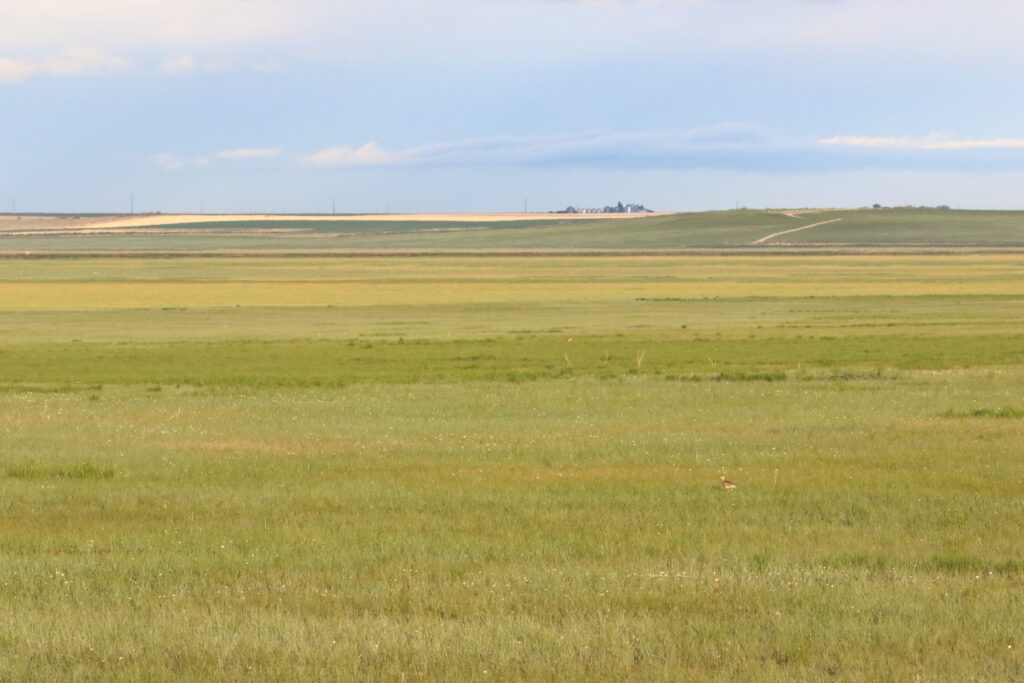
The only thing better than experiencing the beauty of the prairie is to do it in the company of an Upland Sandpiper and Long-billed Curlew. Can you find them?

Billings’ Riverfront Park: Montana’s Premier Songbird Hotspot?

Thanks to your enthusiasm FatherSonBirding has garnered more than 1,000 views for the month of June—our best viewership ever! In fact, it’s been very gratifying to watch more and more people get involved in birding, and Braden and I want to let you know how much we appreciate all of you, whether you are a beginning birder or advanced, whether you work to protect birds or simply cultivate an appreciation for them. Whatever you do, keep it up and we will keep sharing our own experiences. As always, feel free to share these posts and encourage others to subscribe. Sneed & Braden

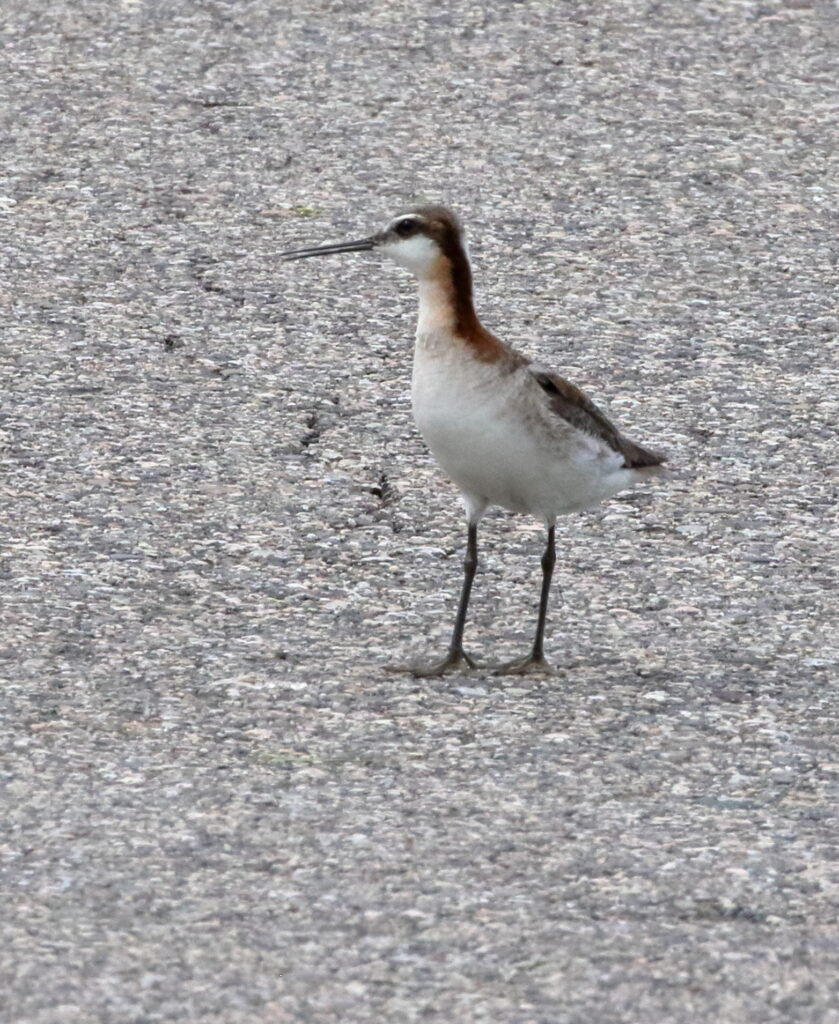
I have to admit that without Braden, birding isn’t quite as much fun. I also don’t see as many birds without his better skills and ears. Still, sacrifices must be made and I continue to seek out birding opportunities wherever and whenever they present themselves. Just such an opportunity arose a couple of weeks ago when I traveled to Billings to be the closing speaker for their first annual Kid Lit Festival. “A-ha,” I thought. “This sounds like a birding opportunity!” So instead of one night, I scheduled the trip for three—with an ambitious birding schedule in the mix. Just for fun, I set a goal of seeing 100 species for the trip, a number I hoped to easily surpass. Friday morning, June 10th, I set out toward Billings, making several stops along the way, and arrived at the trip’s first real birding destination, Shiloh Conservation Area, mid-afternoon. Though it has been engineered by humans, I’ve always loved Shiloh and have seen many interesting birds there from dowitchers to my Lifer Swamp Sparrow. Today, the surprises included a female Bullock’s Oriole, male Western Tanager, and a Wilson’ Phalarope that didn’t seem to know quite what she was doing there!

This lone, befuddled Wilson’s Phalarope at Shiloh seemed to be wondering where all the other phalaropes had gone!

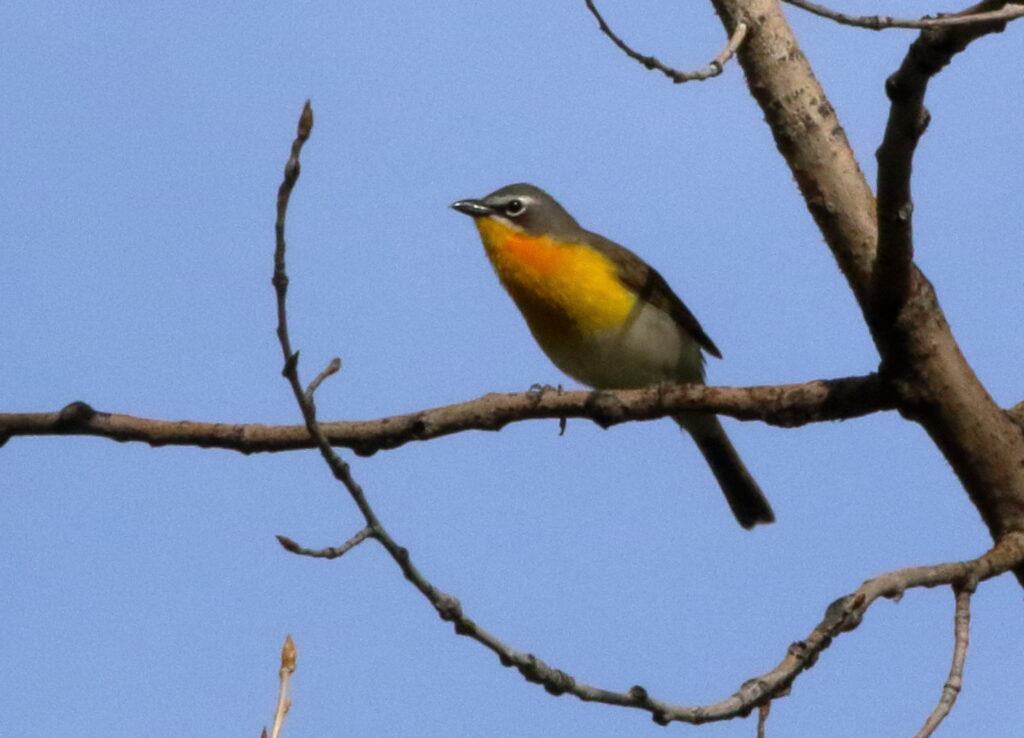
I was even more excited to get up early the next morning and visit Billings’ Riverfront Park, a place Braden and I had birded only once before, but that had netted a rich harvest of songbirds including our first state Ovenbirds and Plumbeous Vireos. I wondered Could it possibly be as good this time? As soon as I climbed out of the car, I got my first indication when I saw my first of 26 Yellow Warblers and 6 American Redstarts, and heard multiple Common Yellowthroats and Yellow-breasted Chats.

With their weird calls and stunning good looks, Yellow-breasted Chats are always a delight to observe—even if they are no longer warblers!

That’s not to say that the birding was easy. With the thick riparian canopy, the situation mostly called for ear-birding and with my lousy ears, my skills were put to the test. Nonetheless, using Merlin’s Sound ID to help alert me to what to look for and to help confirm calls that I thought I recognized, I slowly assembled a picture of the birds around me. Thankfully, most of the birds also put in an appearance for visual confirmation, but I’m still sure that I grossly underreported the numbers around me and probably missed one or two species as well.

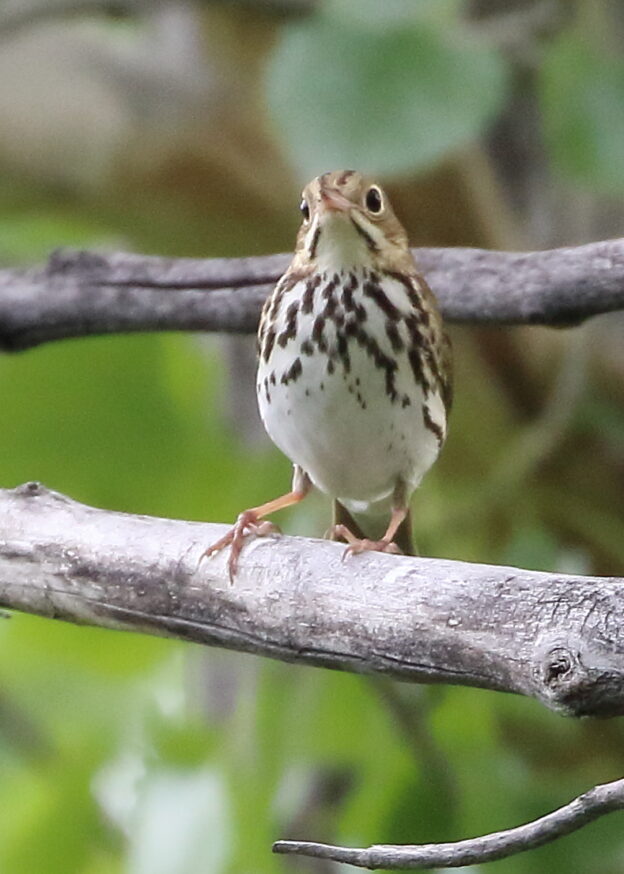
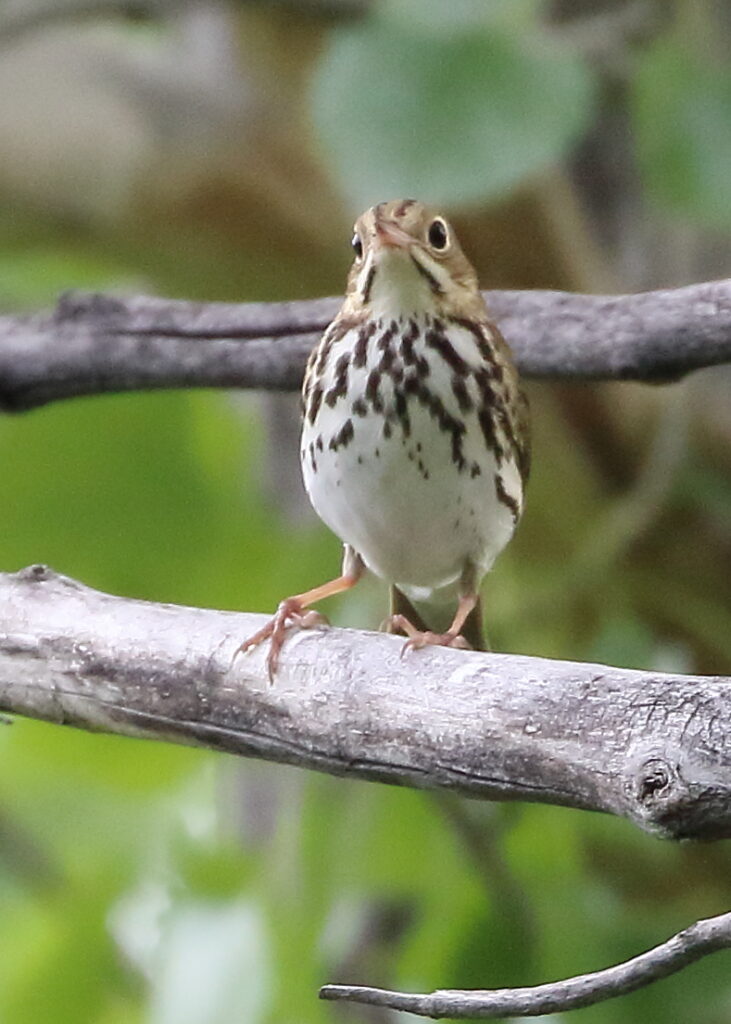
That didn’t keep me from fully appreciating the diversity and abundance of songbirds, however. I felt especially thrilled to see so many warblers, with large numbers of Yellow Warblers, American Redstarts, Ovenbirds, and Common Yellowthroats.

On our previous visit to Riverfront Park, Braden and I had gotten only poor, brief glimpses of Ovenbirds, but today multiple Ovenbirds not only sang but popped out for an appearance.

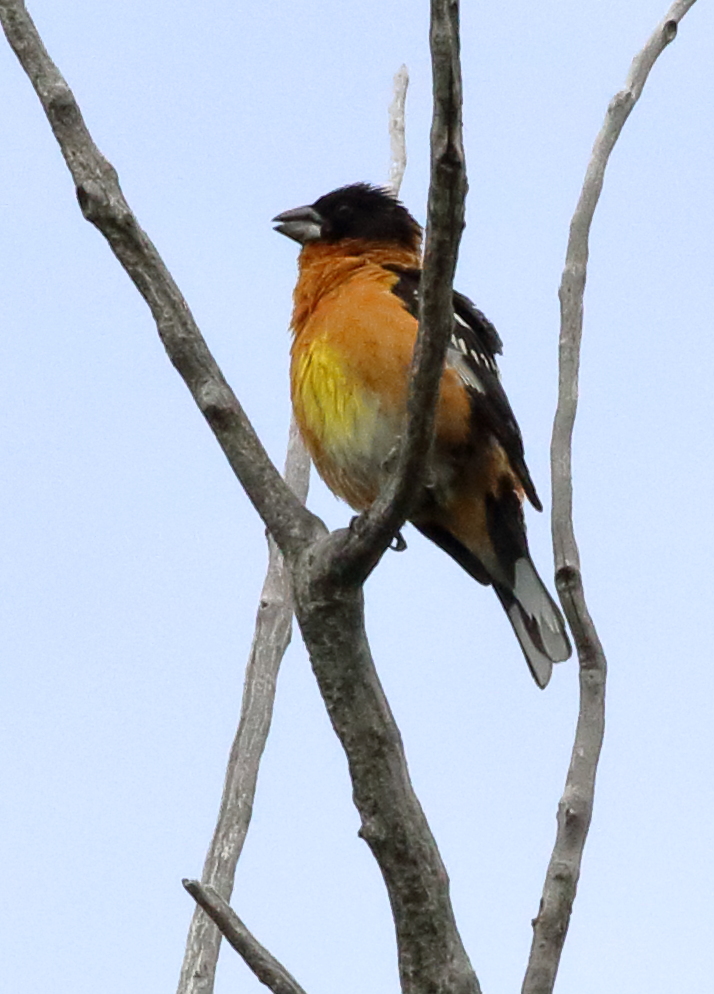
Merlin also picked up huge numbers of Warbling and Red-eyed Vireos—the latter a lot easier for me to recognize by ear than the former—and eventually I saw both species. I had hoped for Plumbeous Vireo as well, but struck out on that one. I also saw only one Black-headed Grosbeak, though I’m sure many more were around. All in all, I found 34 species and came away thinking that Riverfront just might be the best spring riparian birding hotspot in the state, and I vowed to return every year if possible. Even better, I still had two full days of birding ahead of me as the next day I planned to drive to Bowdoin NWR and then to Great Falls for a visit to Benton Lake.

My Riverfront Park List

I was surprised to see only one Black-headed Grosbeak at Riverfront, but at least this one posed nicely—if from a great distance.

Our First Guest Post: “Rare Rail Round-ups” by Nick Ramsey!

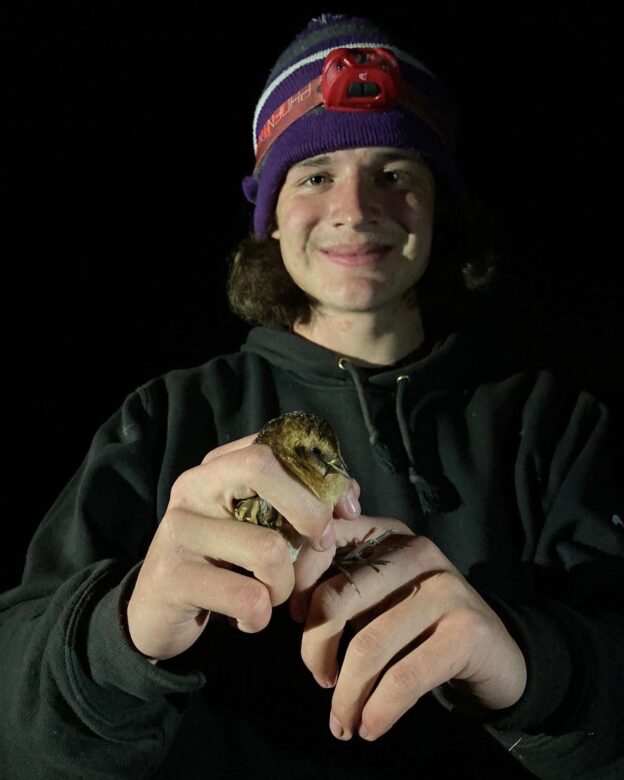
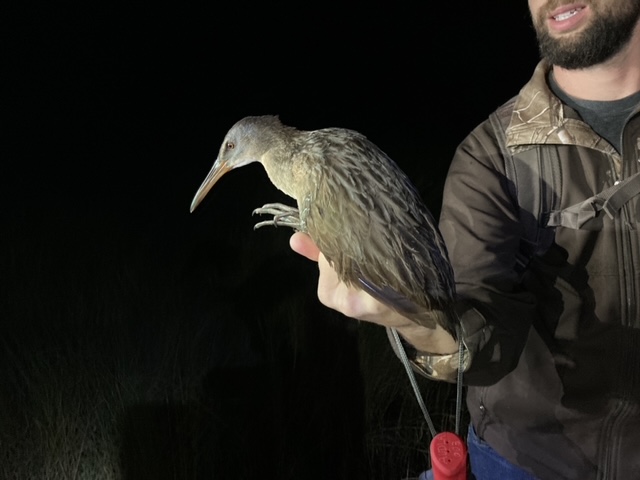
This week we are thrilled to offer a post by our good friend and Montana Native Son, Nick Ramsey. Helping to lead a new wave of outstanding young birders dispersing throughout the country, Nick was there at the beginning as Braden and I took our first tentative steps into serious birding. The list of “firsts” he showed us would take up a whole blog by itself, but includes our first Black Terns, Northern Saw-whet Owl, and perhaps most memorable, Sprague’s Pipit. Currently, Nick is a sophomore at Louisiana State University majoring in Natural Resource Management and Ecology with an emphasis on Wildlife Ecology. We hope this is the first of many blogs he will write for FatherSonBirding. (Nick shown here holding a Yellow Rail.)

Our Special Guest Contributor Nick Ramsey holding a Yellow Rail captured for banding.

Yellow Rails are one of the most sought-after, most elusive species for birders in North America. Usually, they are near impossible to see. Most people that have them on their lists have gone in the evening to tall upland marshes in their northern breeding range, just to hear a soft song akin to pebbles getting hit together. Finding one in the winter is nearly impossible – right?

Not quite. I’ve serendipitously encountered Yellow Rails twice. Once, in eastern Montana with Braden and Sneed, we were looking at our lifer Nelson’s Sparrows at Bowdoin National Wildlife Refuge, one of their westernmost breeding sites in the state. The habitat looked great for Yellow Rails, and it was on the back of my mind. While I was taking photos of the sparrows, Braden asked for us to be quiet. Soon, I heard what he was hearing – the clicking of a distant Yellow Rail! And in broad daylight, no less! A lifer for all of us, and quite a rarity for the state of Montana, although there were historical records from the area. We were never able to see the bird, which is just part of the experience with Yellow Rails. 

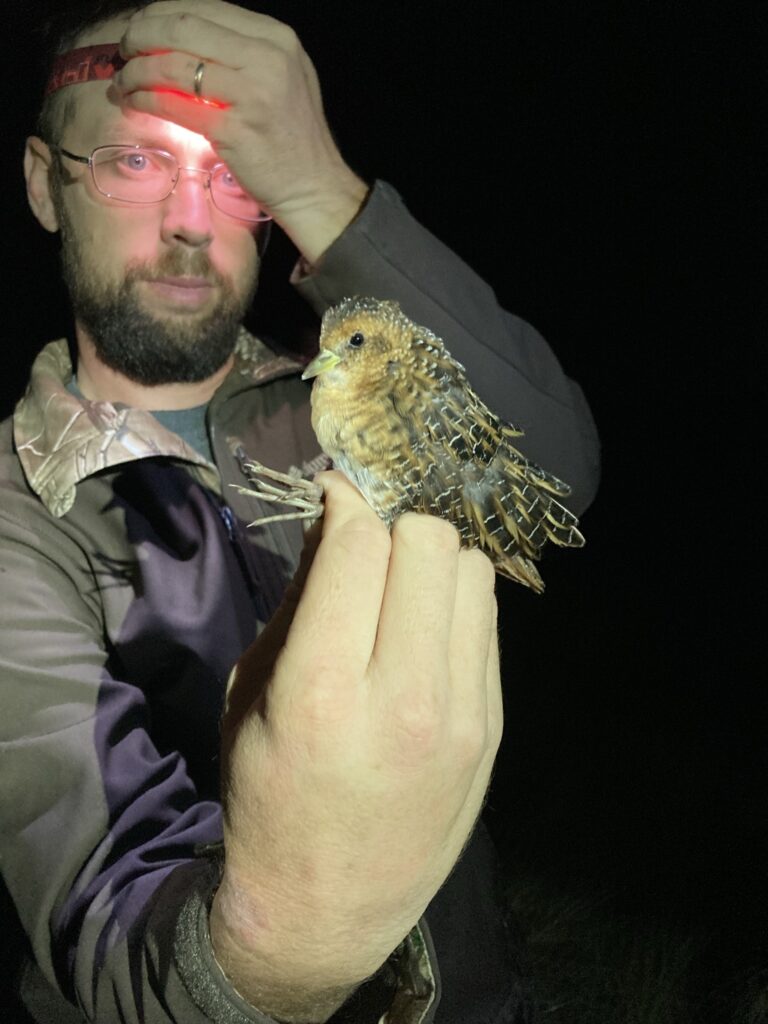
Audubon Marshbird Biologist Jonathon Lueck holding a secretive Yellow Rail—a bird Nick, Braden, and Sneed first encountered at Bowdoin National Wildlife Refuge.

The second time, I was stomping around an old helipad at St. Mark’s National WIldlife Refuge in the Florida Panhandle. The tall, wet grass was home to a wintering LeConte’s Sparrow and potentially Henslow’s Sparrows. As I worked the grasses, hoping to flush one of these seldom-seen sparrows, a bird jumped up. It wasn’t much bigger than the sparrows I was searching for, but its legs were dangling beneath it. And – it had white secondaries!! It was a Yellow Rail! It landed only about 15 feet from me, but despite another hour of searching I was unable to flush it again. I was hooked – these shy rails had quickly become one of my favorite birds.

In Louisiana there is an active effort to survey populations of Yellow Rails, in conjunction with work on endangered Black Rails and other secretive marsh species. We are also home to the Yellow Rails and Rice Festival, where people from all over flock to Louisiana’s rice fields as combines flush rails during the rice harvest. Researchers use this opportunity to band rails and monitor Yellow Rail populations. As with most conservation efforts, they operate on a tight budget, so they love volunteers. They especially love college students, because when we trip in a marsh or a rice field after chasing a rail, we bounce. The older subset of birders that volunteer is not quite as bouncy. 

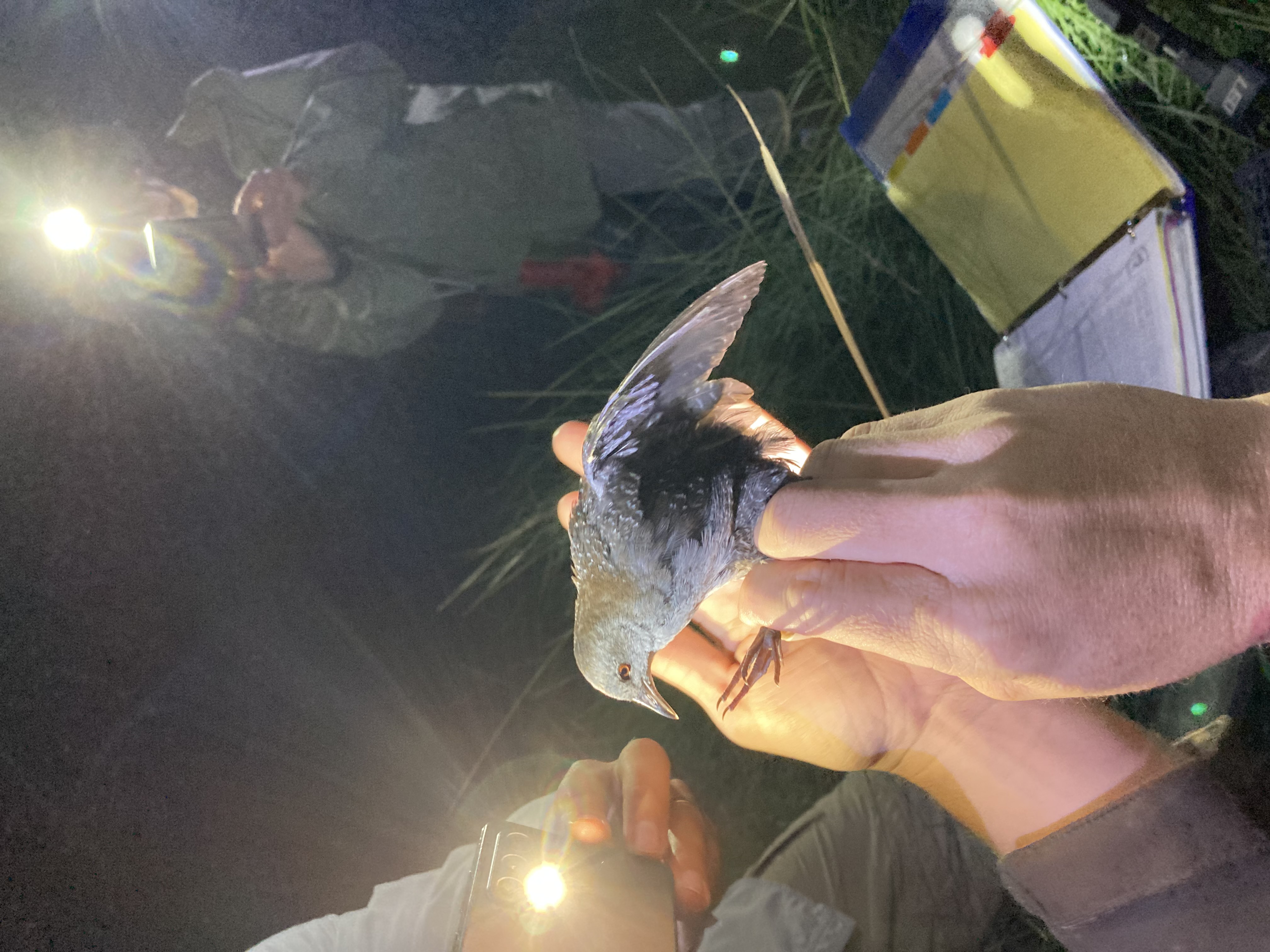
Jonathon Lueck holding a prized Black Rail.

On three occasions this winter, I’ve been able to volunteer on rail surveys, targeting Black, Yellow, and other rails. The primary method for these surveys is the “rail drag.” Four to eight people drag a rope about 50 feet long through prime rail habitat – wetter for Clapper, King, and Virginia Rails, dryer high marsh for Black and Yellow Rails. The line is fixed with a few gallon jugs full of cat toys spread out evenly. These serve two purposes. First, they weigh the line down, assuring no rails just hide in the grass while the line passes over them, and second, they make a ton of noise, frightening the rails into flight. These drags are conducted at night, and everyone carries a net and a flashlight. Once a rail is spotted, the lights temporarily freeze the bird and we gallop through the marsh to go catch it! This is my favorite part. 

Jonathon Lueck with a Clapper Rail in hand.

The first time this winter that I volunteered we were lucky to catch Black, Clapper, Yellow, and Virginia Rails on the Cameron Coast of southwest Louisiana. I personally netted a clapper, and chased after lots of other birds. We also netted a couple of Sedge Wrens, abundant in the drier marshes we dragged. Several weeks later, I was able to get back out to the Cameron coast with my friends Kraig and Ravynn, who’d never birded outside of Baton Rouge. After a fruitful day birding near the coast with 100 species, including my stater White-tailed Kite and over thirty lifers for my friends, we set out to go catch some rails. We met Audubon Delta’s marsh bird biologist, Jonathan Lueck, as well as a couple other volunteers, at the site. Jonathan is a character – he had a skinned-out otter and a skinned-out raccoon in the bed of his truck amongst the rail netting supplies. He found them on the side of the highway and was using the fur to make gloves, hats, and other products as a side hustle (ornithology is fun, but it doesn’t pay very well.) Jonathan passed out the nets and lights, and we got started! The first two transects didn’t yield anything, but there was another site just down the road that needed to be surveyed as well. On the way back to the car, I flushed a Clapper Rail! Kraig ran ahead and caught it. It was his first time seeing one, and getting to hold it made it that much cooler. After processing the bird, we went to the next site. This one was a lot more productive, yielding two Yellow Rails! We also flushed several of the larger species, but weren’t able to catch them. Kraig was the man of the hour, catching a Yellow Rail and a Clapper (as well as spotting many of our best birds earlier in the day, like Limpkin and American Bittern.) After a great night, we made the three hour drive back to Baton Rouge, capping off 22 hours straight of birding and travel. 

I’ve been very lucky to get involved with a ton of fun research here, and the Yellow Rail banding might be my favorite. Every time we catch one we widen the window into the natural history of these adorable little birds. 

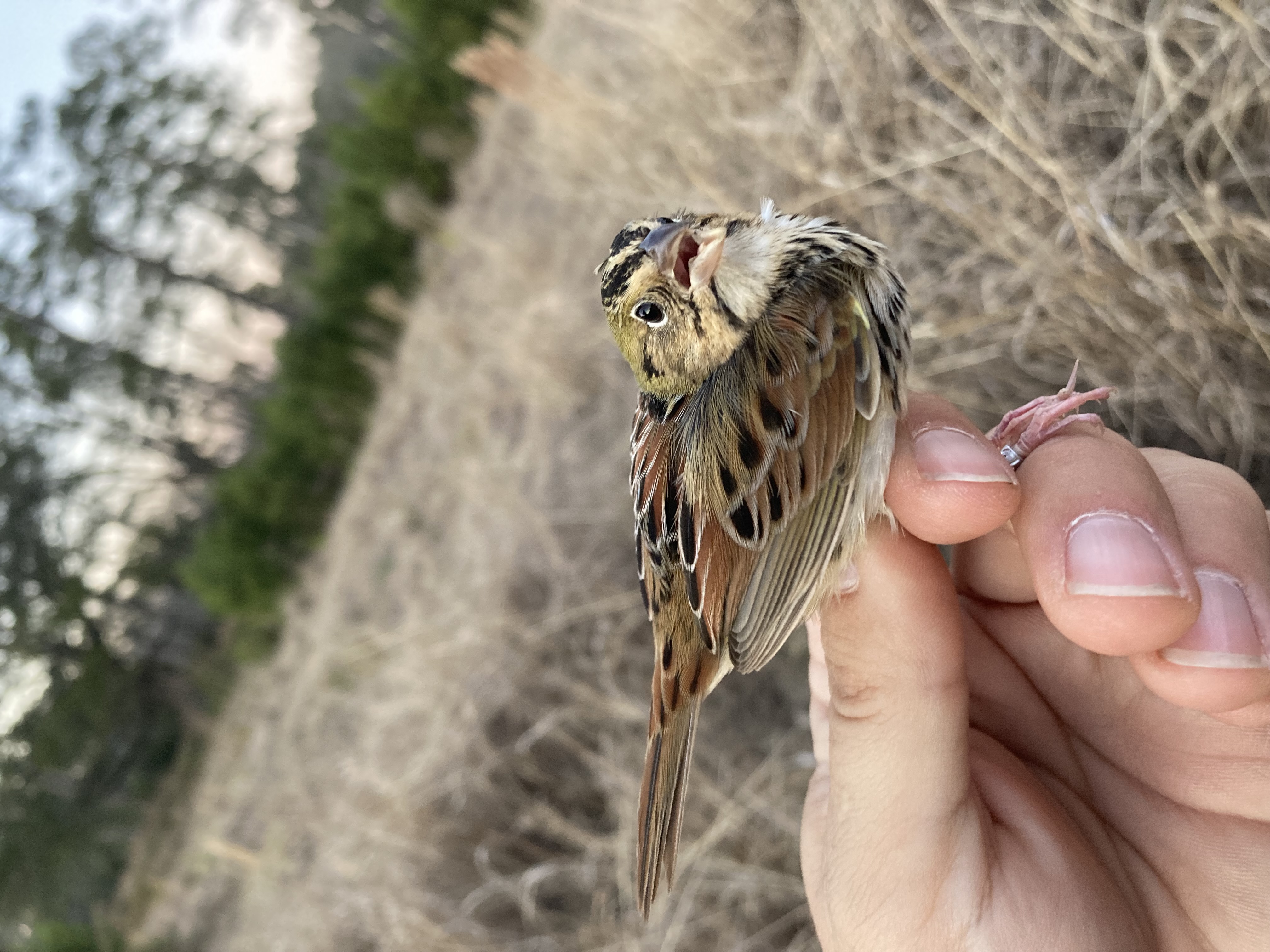
Rail-hunting can lead to some great bonus birds such as this Henslow’s Sparrow with new bird band.

All photos copyrighted, courtesy of Nick Ramsey.

Battling the February Birding Blahs

In a recent Redpolling poll, voters overwhelmingly chose February as the worst month for birding (except for a few cheeky Floridians who lorded it over the rest of us). But is February really that bad? In Montana, after all, you can go find some wonderful winter residents such as Rough-legged Hawks, Northern Shrikes, and Snow Buntings. On the other hand, by February you’ve usually seen those already so where does that leave you?

February is a great month to catch up on bird-related reading. For my review on this and other excellent titles, Follow @sneedcollard on Instagram.

For me personally, February is a time to get a lot of actual WORK done such as writing birding articles, banging out new children’s books, writing letters to the editor and my senators about bird conservation, and reading bird books. That doesn’t mean, however, that I’m not curious about which birds are around—while remaining optimistic that I’ll find some surprises if I go out. On a morning dog walk recently, for example, a Northern Goshawk flew right over me and Lola! This last Sunday morning, Lola and I again headed out wondering if we might see any other surprises.

Just to prove that in birding you never know—even in February—a Northern Goshawk flew right over me and my dog Lola only a couple of weeks ago! It was the first I’d ever seen on my own.

We decided to do a loop I only rarely traverse anymore, through a private neighborhood that COULD be great bird habitat but has instead been landscaped with acres of lawn and over-pruned trees. Still, even before we got to that neighborhood, I noticed that our resident birds have shifted into courtship mode. On Valentine’s Day I heard the first two-note song of a chickadee for the year and also the first throaty warble of an advertising Northern Flicker. This morning, I heard both of those—plus an amazing number of Song Sparrows also advertising. I haven’t kept track of “first spring calls” before, but I wondered if they are on a trend toward “springing out” earlier and earlier every year?

After not hearing a Song Sparrow call for many weeks, I was gratified to hear four of them singing in different locations on our recent Sunday morning walk!

In the private neighborhood itself, we heard some distant wild turkeys, a Red Crossbill, and an unknown high-pitched cacophony. My hearing is so sucky anymore I couldn’t tell who was making this chattering, but whipped out Merlin’s Sound ID, which ID’ed them as Pine Siskins. But where were they? I walked forward a bit, turned around and there they were—more than forty of them in a tree! Okay, so it wasn’t a Northern Pygmy-Owl, but I was still happy. Lola and I had headed out expecting maybe 6 or 8 species and ended up with sixteen! Just goes to show you that, even in the February Blahs, birds are around and ready to teach us new things.

A flock of 40 Pine Siskins proved a delightful highlight of our unlikely February neighborhood walk.

A New Year’s Triple-Shot of Owls

Still on the fence about subscribing? Kick off the New Year right and go for it. We won’t share your info or use it for any nefarious purposes. We promise! Just fill out the box down and to the right.

You PhD students of FatherSonBirding may recall that our debut post related to our very first Snowy Owl sighting on March 9, 2018, almost four years and 100+ posts ago. Today’s post marks a return to our roots—sort of.

After a successful birding trip to Oregon to close out 2021, Braden and I decided to kick off 2022 with a modest New Year’s Day tour of Ninepipe National Wildlife Refuge in the vain hope that we might see a Short-eared Owl, a species that totally eluded us last year and is one of our favorite birds. As we headed north in our trusty minivan, however, a crooked nail of a thought kept scratching at my brain. Finally, as we approached St. Ignatius I glanced at Braden and said, “You know, people eBirded the Snowy Owl again yesterday, and this might be our last chance to see it together before you head back to college. What do you think?”

“I’m in,” he answered, “but let’s hit Duck Road first.”

I exhaled, relieved. Even though it would mean an extra two hours of driving, now we were committed. We quickly hit Duck Road at Ninepipe looking for Short-eareds, and of course got skunked, though we did get a great look at a hunting Prairie Falcon and flushed a Great Horned Owl that had taken up residence in a small tree. Then, we high-tailed it toward Kalispell, stopping only for an unsuccessful attempt to find a Lifer Glaucous Gull at Somers Bay.

This Great-horned has apparently taken up residence in a new tree. Don’t be surprised to see it your next time on Duck Road. (Water tower of Charlo in the background—don’t you love telephoto lenses?)

Turning left onto Farm Road in Kalispell—er, Somers to be exact—dark clouds of failure haunted me. After all, we had scoured this neighborhood for four hours in 2021 without so much as a glimpse of a Snowy Owl (see our post “Payin’ Raptor Dues, Reapin’ Raptor Rewards”) and as we crept slowly forward, it felt like history would repeat itself as we passed one owl-less roof and field after another . We turned left on Manning Road and continued driving, stopping a couple of times to scan every house in sight. “I’ve got Collared Doves,” Braden said, just as I focused in on a fuzzy white lump on a roof.

“Got it,” I said. Braden said, “Good,” thinking I was referring to the Collared Doves. “No, I mean the owl,” I clarified. And indeed, only ten minutes after beginning our search, there it was—no more than a quarter mile from where we’d seen our first Snowy in 2018! As beautiful as Snowy Owls are, they don’t usually do a whole lot, but we enjoyed staring at it for ten minutes and taking lousy photos. We thanked the owl and then, with a whole afternoon suddenly freed up, began birding our way back home.

Okay, not the best photo, but give me a break already. The Snowy was far away!

We hit numerous spots on our way south, picking up one Year Bird after another. One of the great things about birding on New Year’s is that it resets the birding calendar, making every new bird a Year Bird! In fact, perhaps because of our low expectations, we saw almost everything we could wish for: Common Redpolls, American Tree Sparrow, half a dozen ducks, and an unlikely Double-crested Cormorant. As we once again approached Ninepipe, we had plenty of daylight for a second go at Short-eared Owls. We again bombed on Duck Road so made our way around the fringes of the refuge, ending up on Ninepipe Lane. Suddenly, a large bird leaped into the air.

I’ve never been able to take sharp in-flight photos, but I just love this image as this Short-eared Owl looks and listens for prey.

“Short-eared!” Braden shouted. Yes! We got a beautiful look at the amazing creature as it flew a couple of circuits around us and then dove on a hapless mammal in a snowy field. Even more amazing, in the next mile we saw four more Short-eareds! They all perched at a fair distance, but we didn’t mind. In fact, we were glad that we wouldn’t be disturbing them by driving close. Not surprisingly, the SEOWs swooped in for Bird of the Day honors, but we had more birding pleasures in store—including Cedar and Bohemian Waxwings, a Great Blue Heron and kingfisher, a Northern Shrike, and right in our own neighborhood, our last bird of the day, Wild Turkey. It was an awesome way to kick off 2022, and with 46 species under our belts, by far our best Montana New Year’s Day birding experience ever—one we will treasure as Braden prepares to return to college in Maine.

Success—for us and the owl!