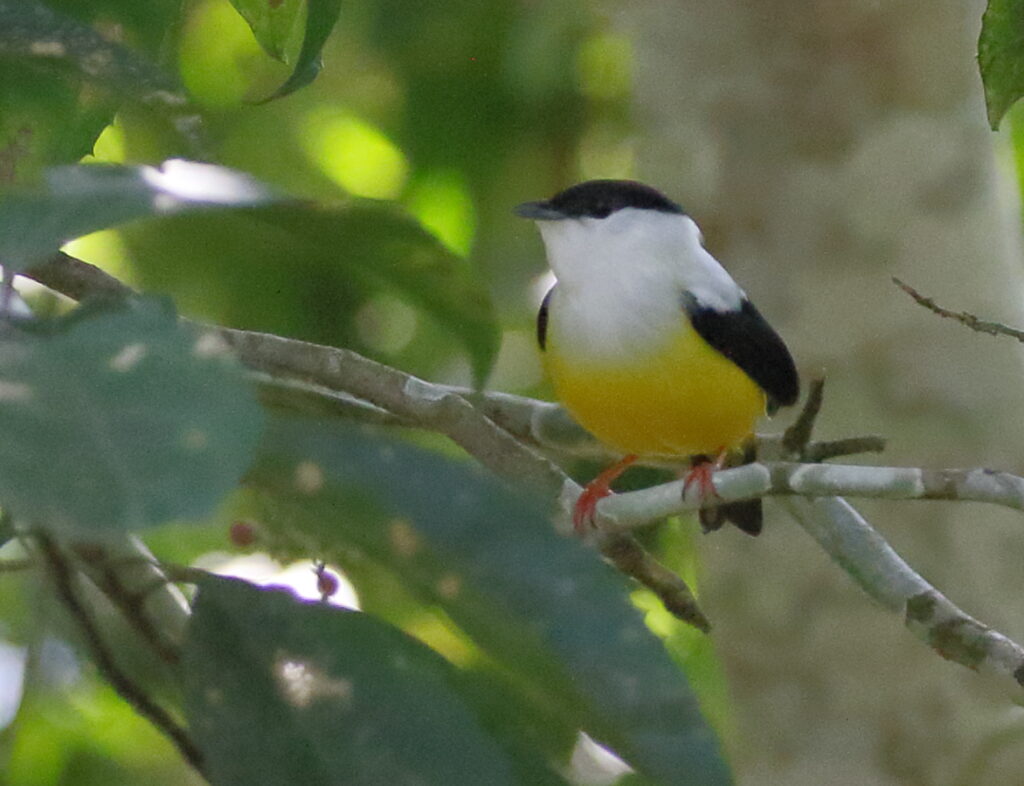
Category Archives: Flycatchers

Vortex Razor HD 10X42s: Holiday Optics Upgrade (FSB Equipment Review)

All photos and text on FatherSonBirding.com are strictly protected under copyright law. To request permission for use, contact Sneed at sbcollardiii@gmail.com. We encourage you to share these posts, but you DO NOT have permission to use these posts to train Artificial Intelligence models or make other use of them without our okay.

One of the highlights of my 2025 has been the opportunity to field test various bird-related equipment, especially binoculars and scopes from Vortex. In fact, our review of the Vortex Triumph HD 10X42 binoculars nabbed top spot among our most popular posts for the year, narrowly beating out our review of the Nikon Monarch HGs. And speaking of the Monarch HGs, this week I am pleased to offer my thoughts on binoculars that run in the same $1,000 price range as the HGs—the Vortex Razor HD 10X42s.
The Vortex Razor HD series of binoculars offers both superior optics and terrific build—and yet is still within reach of many (indeed, most?) serious birders.

The Vortex Razor HD series is not to be confused with the Vortex Razor UHD series—Vortex’s absolute top-of-the-line binoculars that come with price tags to boot. Maybe I’ll get a chance to review one of the UHDs sometime, but for now I am focusing on binoculars that a larger swath of typical birders can enjoy and afford—and the Razor HDs fit right in with that theme.

I’ve been using the Razor HDs for the past several months—a clue to how much I like them. Perhaps the best way to analyze them is to compare them to Vortex’s next step down, the Viper HDs, which we reviewed in this post.

Me with my buddy Scott—and my Razor HDs—during our recent outing to Bodega Head in California.

Right off the bat, I have to say that both the Vipers and Razors offer exceptional clarity and light transmission—to the point that I would be hard-pressed to place one above the other in a blind “binocular tasting” test. I have used both models in all kinds of situations, including dark and overcast conditions, and been thrilled with the images reaching my eyes. According to the Vortex website and my Vortex rep, however, the Razor HDs use a superior, tougher coating that provides better clarity and sharpness, and tougher protection so that the lenses are less likely to scratch.

Vortex has also gone to the trouble of using higher density glass for the Razors, as well as matching the lenses for better color matching at all wavelengths. Notably, in the Razors more of the image remains in focus at a range of 1,000 yards than is true of the Vipers. These things probably won’t be obvious to most users, but will, I predict, show up more in extreme conditions and as your own birding skills progress.

Where the differences between the Razors and Vipers really become obvious is in the build of each model. Both feel comfortable and solid to hold, but the Razor HD tubes are crafted from magnesium rather than from polymer—an upgrade you expect to find in all higher end binoculars.

Even more impressive, the central focusing knob has much better action than you find on the less expensive models. One of my few complaints about the Viper HDs was the relative stiffness of the focusing knob, and how far you have to turn it to bring an image into focus. Vortex solves both of these problems with the Razor HDs. A single revolution of the knob takes you from a ten-foot focus to a distance of a mile or more! I can’t emphasize how awesome this is when you’re out in the field and have to switch from looking at a Lincoln’s Sparrow in front of you to a mystery raptor cruising a distant skyline. Not only that, the action is so smooth on the Razors that fine adjustments are accomplished with ease.

The smooth and functional central focusing knob is one of the features that really stands out on the Razor HDs.

Other specs on the Razors are very similar to what is found on the Vipers. The Razor HDs have a slightly wider field of view (6.9 degrees compared to 6.5 degrees) and are also .3” longer. Both weigh just under 25 ounces, light enough for most people to haul them around all day—especially if you use the Glasspak™ harness system that comes with most Vortex binoculars.

Both also have eye relief tubes, but the Viper’s are a bit longer—17 mm versus 16.5 mm on the Razors.

As you’d expect, the Razor HDs are waterproof, fogproof, and shockproof. Like the Vipers, the Razors also have locking diopter rings—the mechanism that corrects the central focusing knob for people whose vision is different in each eye.

The Vortex Razor HD series of binoculars is an excellent choice for those looking to step up the quality of their field optics—and not break the bank.

But what about price?” you are undoubtedly asking—and since I’ve been comparing the Vipers with the Razors, you’re probably wondering if paying more is worth it. While the Vipers can be purchased for under $500, the Razors take a hefty jump up to about $1,000 at the time of this writing. Oh, what to do?

Let me begin by saying that if you are used to cheaper, crummy binoculars, you’ll be delighted by either one of these models. Both are covered by the amazing Vortex lifetime, no-questions-asked warranty along with excellent customer service. If the Razors simply aren’t in your budget, the Vipers are a very nice investment in your birding activities and will last you as long as you can still bird.

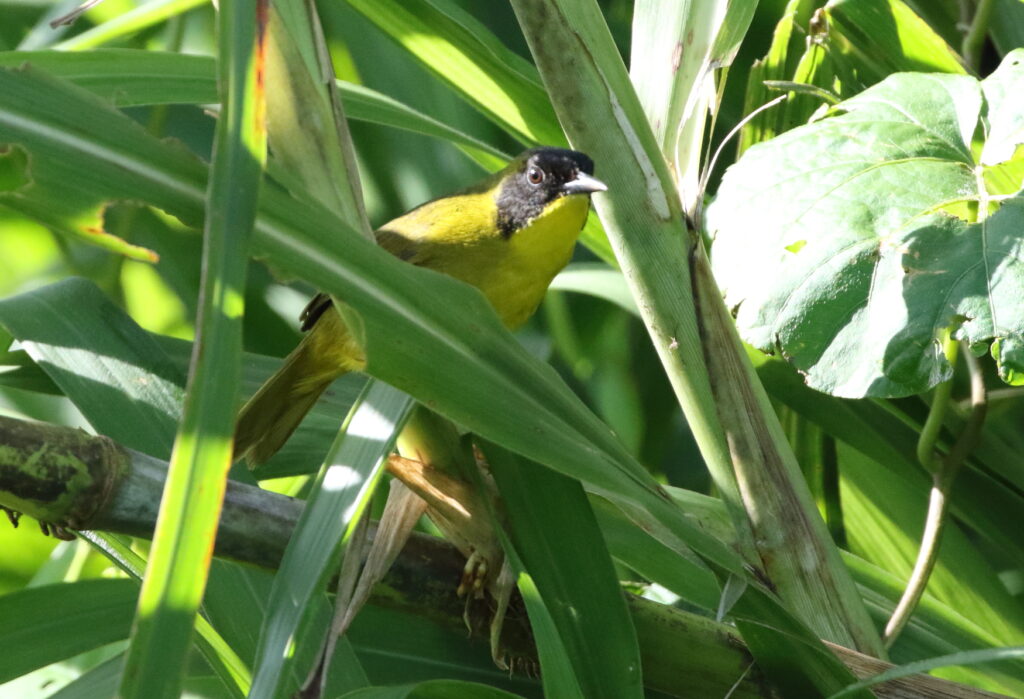
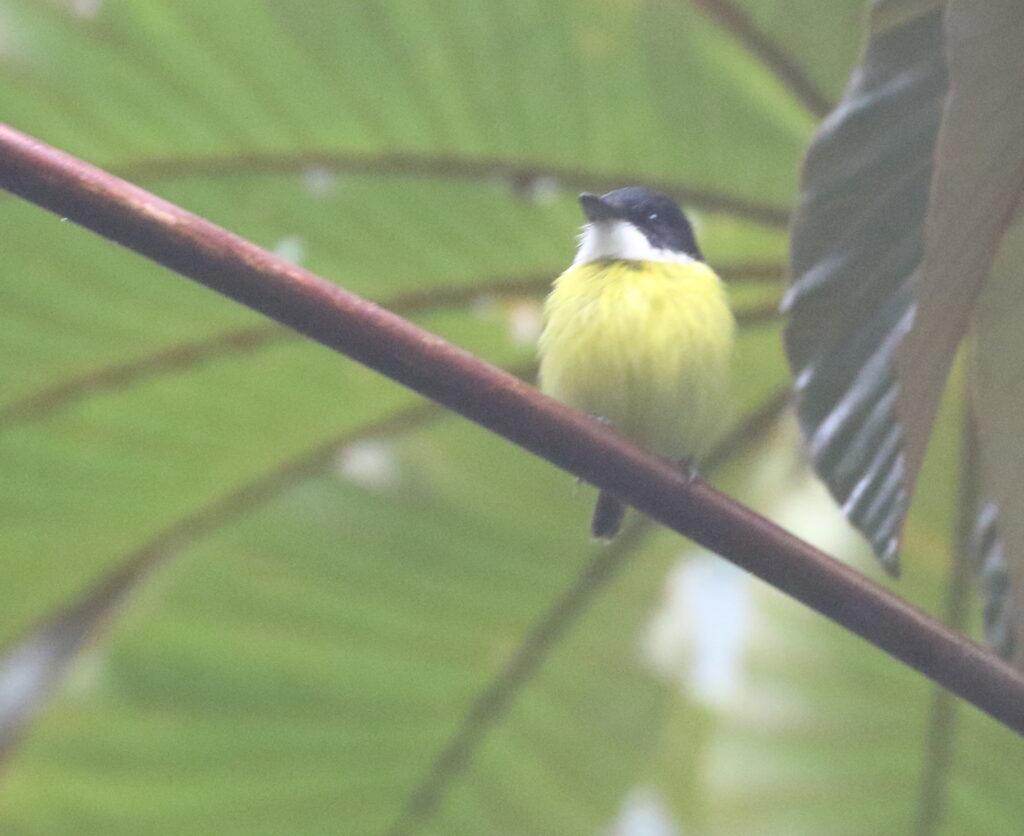
If, however, you’ve just sold some NVIDIA stock or have just benefited from recent changes to the tax code, I would definitely encourage you to opt for the Razors. Even if you’re not wealthy, but want to make sure you get the most pleasure out of your future birding, the Razors make a solid one-time investment that will last a lifetime. $500 extra sounds like a lot—and it is to most of us—but if you’re serious about birding, you will most likely forget about the price difference the first time you focus in on a Common Tody-Flycatcher in the mountains of Colombia, or perhaps even an Evening Grosbeak in the backyard.

So there you have it—and with Christmas coming up to boot. What a coincidence! Or . . . was it?

For more information on the Vortex Razor HDs including where to buy them, click here!

Seeing your first Common Tody-Flycatcher in the mountains of Colombia will likely make you forget any higher price you paid for your Vortex Razor HDs.

Gray Flycatcher Science

One of our goals at FatherSonBirding is to encourage support of scientists and nonprofits working to protect our planet’s many imperiled bird species. We hope that you will consider sending a donation to Montana Bird Advocacy, whose work is featured in today’s blog. You can do this by clicking here. It will be money well spent!

Late July often ushers in the birding doldrums. Having finished courtship and breeding, most birds get super quiet. They often disperse from their breeding territories, too, making them more difficult—or at least unpredictable—to find. But this year I was in luck: I had a writing assignment that would guarantee I see at least a few very cool birds.

My best look yet at a stunning Ferruginous Hawk proved a delightful bonus to my day near Bannack.

You may recall my unsuccessful June trip down to Beaverhead County (see post In Search of the Green-tailed Towhee) to visit with biologist Jeff Marks, founder of the nonprofit scientific research group Montana Bird Advocacy.  There, Jeff and colleague Paul Hendricks are performing a long-term study on one of Montana’s little-known birds, the Gray Flycatcher. When I visited, Paul wasn’t there, but I also got to meet biologist and research assistant Nate Kohler, who has been playing a pivotal role in the study.

The word “gulch” conjured up a much more verdant image to my mind, but as you can see it takes some pretty special adaptations to survive in this rugged country.

Although my June trip allowed me to see many wonderful birds and interview Jeff and Nate, my intention to see the Gray Flycatchers got squashed by a freak winter storm. Worse, the storm wiped out a whole crop of nestling Gray Flycatchers. The good news? The adults had laid second clutches of eggs, and the babies were getting ready to fledge as I again headed down there the last week of July. This time, the weather would be ideal for seeing them.

Jeff and I headed out at 8:00 a.m. and made our way up Bannack Bench Road, which borders the study area. This was the third season of the study, and its purpose is to figure out some of the basic biology of a bird that scientists know very little about. To do that, Jeff, Paul, and Nate have been banding adult flycatchers with color bands that allow field identification and observation of individual birds.  The birds have been a challenge to catch, but the biologists have managed to band about a dozen each year—and with fascinating results. I won’t reveal too much about those results here since I’m also writing an article for Montana Outdoors magazine that will be out next year. However, I will tell you that seeing where these birds nest and what they are doing was a thrill.

Biologist Jeff Marks takes notes on a Gray Flycatcher nest in his Beaverhead County study area.

When Jeff first told me they were working in a place called Sheep Corral Gulch, I imagined sagebrush plants bordering some kind of verdant riparian zone, perhaps lined with aspens or junipers. Imagine my surprise to see nothing but sagebrush in every direction! Gray Flycatchers breed throughout the Great Basin, but one of the fascinating things about them is that they choose different habitats in different places. In other states, they nest in juniper, pinyon pine, and even ponderosa pine, but in this part of Montana the birds breed almost exclusively in sagebrush plants along dry washes. One thing that these places share in common is that they have open ground for foraging.

Color-banded adults allow Jeff and the Montana Bird Advocacy team to make detailed observations about mating and behavior of these little-known birds.

In Beaverhead County, though, not just any sagebrush will do. The birds nest only in taller plants four to eight feet high—plants that can mainly be found growing in the (usually) dry main stream channels of gulches. This year, Jeff and his colleagues located about a dozen nests, one to two hundred meters apart, and as Jeff and I began hiking, it wasn’t long before we spotted an adult bird up ahead. Using GPS coordinates, it took only minutes for Jeff to locate the bird’s nest—a nest with babies!

“They will fledge any day now,” Jeff told me, “and it looks like both parents are feeding them.” Having two involved parents gives the nestlings a huge survival advantage, and as we watched, we saw a parent deliver a juicy grasshopper to its ravenous chicks.

Most of the Gray Flycatcher nests were bursting with babies itching to head out on their own—after a few more meals from Mom and Dad!

For the next three hours, I followed Jeff as we visited one nest after another, and most were jam-packed with two or three babies champing at the bit to head out on their own. We, of course, made sure to stay well back so as not to spook them out of the nests before they were ready.

An unbanded adult Gray Flycatcher keeps watch on us as we move through its territory: “Move on. Nothing to see here, folks.”

I thought we would see a lot of other birds as we hiked, but especially this time of year, the birds stayed out of sight. We saw a couple of Brewer’s and Vesper sparrows, and a single Sage Thrasher and Northern Harrier. What a contrast from a month earlier when I spotted Sage Thrashers and Brewer’s Sparrows almost everywhere I looked! Nonetheless, I couldn’t have been more thrilled to get these up-close-and-personal looks at one of Montana’s most uncommon species.

Sage Thrashers were noticeably more elusive than only a month earlier, but this one did pose nicely on a fencepost along Bannack Bench Road.

You may be wondering just where Gray Flycatchers can be found in Montana. That itself is a fascinating story, because they apparently arrived in our state only recently. The first official record occurred in 1999, and Jeff believes that the birds may only have reached the Treasure State as part of an expansion northward from the Great Basin that occurred in the 1970s. Their Montana strongholds are in Beaverhead and Carbon counties (see post Bear Canyon—Montana’s “Tropical Birding” Paradise), but it takes careful observation and listening to distinguish the birds from almost identical-looking Dusky Flycatchers. The fact that the birds are so restricted here in Montana, though, points out how important it is that we protect our fragile sagebrush communities. It also underscores the great value of the work that Montana Bird Advocacy is conducting, because only by understanding the biology of the Gray Flycatcher and other sagebrush species can we know how to protect them.

Please consider supporting the ongoing work of MBA by clicking here and making a donation. The flycatchers will thank you—as will generations of future birders!

While getting ready for the next day at the study site, MBA’s rental cabin offered an idyllic view of pastureland, complete with deer, coyotes, and gobs of Common Nighthawks. Donate to Montana Bird Advocacy by clicking on this picture.

Swift-ecta!

In an earlier post, we may have let slip that both Braden and I are on a tear for our 2025 global species lists (see our post In Search of the Green-tailed Towhee). That’s due to a variety of factors. Braden not only drove across the country from Maine to Montana this past spring (see last post), he embarked on intense birding trips to Oaxaca, Mexico (see post Birding in Oaxaca, Mexico) and Costa Rica. As for me, I received delightful last-minute invitations to Colombia (post Antpittas and Tody-Flycatchers), thanks to FSB contributor Roger Kohn, and to Texas, where I spoke about my book Birding for Boomers. The upshot of all this is that Braden has seen almost 800 species of birds this year, while I am within twenty birds of breaking my all-time record of 527.

The thing is, twenty birds in Montana in late July is more challenging than it sounds. Birds common in May or June become increasingly difficult to detect and find, so if you don’t have them by August you may not get them at all. That means you’ll have to rely on migrants—which are notoriously unpredictable—or winter arrivals that you probably got earlier in the year. As a result, I’ve recently been focused on picking up the remaining common birds that I so far haven’t seen. Top on my list? Say’s Phoebe.

Last year, I saw a Say’s Phoebe near the base of Missoula’s Pattee Canyon. Alas, that one eluded me this year, forcing me to search farther afield!

Say’s Phoebes are cool little flycatchers that love to nest on human-made structures such as barns, covered porches, and utility buildings. While not rare, they seem to be pretty picky about their accommodations, and we run into them only infrequently in Montana. As I write this, for example, only four sightings have been reported in Missoula County in the past month. While scouring eBird, though, I did note regular sightings up at Kerr Dam below Flathead Lake. Braden and I had discussed doing a birding day trip, so two Tuesdays ago we set out early, Say’s Phoebes our Number One goal.

Before leaving Missoula, Braden asked if we could stop at Greenough Park. He had been pursuing a birding challenge with friends back East to see how many species they could find every day for seven days in a row. “I want to pick up Lazuli Bunting and Swainson’s Thrush,” he told me. This search happened to lead to the first delightful surprise of the day. As we were walking up a dirt trail, we approached a cottonwood tree where Braden had found a Western Screech Owl two days before. Today, he suddenly exclaimed, “Oh my god! It’s a baby!” Sure enough, a WSOW baby sat only a yard from its parent about twenty feet up the tree. Here, our day had just begun and already it had been a wonderful outing!

This adorable little guy was the first baby Western Screech-Owl Braden and I had ever seen!

Still, we had a lot of ground to cover. After a fortifying meal at our favorite French restaurant, McDaniels (in honor of Rogére), we headed up to Ninepipe NWR. We didn’t have any major agenda there except perhaps to snag some shorebirds. For July, it was an unusually cool, overcast day and we joked that we might see some Black Swifts. For those unfamiliar with Black Swifts, they are one of the most elusive and rare birds in the US. They nest mainly behind waterfalls and, especially with climate change, are highly vulnerable throughout their range. In Montana, I had never seen one outside of Glacier National Park, and it was pie-in-the-sky logic to even hope we might see one here out in the valley.

Braden poring through intermolt ducks at Ninepipe.

Anyway, we stopped at one Ninepipe pullout just off Hwy 93. The ducks were in their almost-impossible-to-identify intermolt plumages, but we still saw a nice variety of them plus Trumpeter Swans, American White Pelicans, Double-crested Cormorants, and Great Blue Herons. “Where are the Black Swifts?” I pressed Braden, but he shrugged off my flippant remark.

Though we hadn’t seen any Black Swifts, the low cloud cover at least admitted the possibility that they would venture down into the valleys from their mountain waterfall hideaways.

The phoebes on our minds, we didn’t want to spend too much time at Ninepipe, but decided to stop at one more pullout and, again, found the usual suspects. We both searched the skies for Black Swifts just in case, but didn’t see any. “I have to go to the bathroom,” Braden said, and I kept looking around for various birds. As soon as Braden emerged from the outhouse, however, he shouted, “Black Swifts!” Huh? My eyes darted back toward the low clouds, and there they were—four unmistakable dark shapes scything through the air!

Black Swifts were a stunning find on a day for which we had almost no expectations.

Though I’d seen Black Swifts before, this was my first time really getting to study them, and I noticed both similarities and differences between other swifts. Like other swifts, BLSWs have distinctive almost sickle-like shapes when they fly. With a wingspan of eighteen inches, however, they are significantly larger than Montana’s other swifts, and this shows in their flight. While Vaux’s Swifts zip around with almost mechanically stiff rapid wingbeats, Black Swift wings bend more noticeably. They still look like advanced jet fighters as they zoom through the sky, but with more flexible bodies. Braden also pointed out that Black Swifts show noticeable forks in their tails compared to Vaux’s Swifts, which look like their tails have been chopped off with a cleaver.

Swifts can usually be distinguished from swallows by their stiff-winged, scythe-like silhouette. Note the prominent fork in the tail of this BLSW that distinguishes it from Vaux’s Swifts—though White-throated Swifts can also show a fork.

We watched these rare beauties for a full five minutes before they drifted away across the lake and I even managed some cool photos. After they had gone, Braden and I just looked at each other. “Black Swifts,” he said, and we gave each other a hug.

Swifts always remind me of fighter jets—captured here doing an F-35 impersonation.

Remarkably, it was still only 8:30 and we had a ton of birding ahead of us. Our next stop was the roadside rest stop just south of Ronan where we picked up lone Semipalmated, Spotted, and Solitary Sandpipers, along with a pair of Long-billed Dowitchers, all undoubtedly in migration. After that, we headed to Pablo NWR in hopes of some interesting water birds. We struck out on those—but were amazed to see more than 300 Bank Swallows resting on the dirt road. “They must be migrating, too,” Braden marveled, and I agreed. In fact, it has been a very lucky swallow year for both of us with, for example, great looks at large numbers of migrating Tree Swallows and Cliff Swallows. This was the first time we’d ever seen Bank Swallows in such numbers, though. From there, it was on to our primary destination: Kerr Dam.

Braden had never been to Kerr Dam before, and I’d just gone to the overlook, but the entire site reminded me of a throwback to gentler, more civic times, when people shared more of a vision for the common good. From the overlook, we looked down on the dam itself with the Flathead River backing up into Flathead Lake beyond. Below the dam, dramatic, highly eroded cliffs framed a dramatic canyon full of promising riparian habitat.

Braden and I both wondered what secrets the dramatic cliffs below Kerr Dam might be hiding!

From the overlook, we watched Ospreys and Braden said, “Look, there are some Violet-green Swallows. White-throated Swifts should be here, too.” Not two minutes later, he spotted a pair flying overhead, their sickle-shaped wings and white breasts clearly visible against the blue sky. “Uh-oh,” I said. “That means that we might have to go for the Swift Trifecta and find some Vaux’s Swifts.” Braden sighed in agreement. Darn those swifts!

But we had not forgotten our main target, Say’s Phoebes. “I’m guessing they are down there at the power station below the dam,” I said. “You up for going down there?”

“Sure.”

Squinting into the sun at the overlook to Kerr Dam, the Flathead River running south below the dam in the distance.

Winding our way down to the power station, we were greeted by a cluster of neatly-kept houses and a fenced-in area full of transformers and other “power stuff.” All of this was surrounded by an open, pleasant park-like setting that reminded me of my days working on the Pitt River dam network in northern California just after college. We decided to get out and walk around and immediately started seeing and hearing Western Wood-Pewees, American Goldfinches, robins, Eastern Kingbirds, and other songbirds. We hadn’t walked ten minutes when suddenly, some kind of flycatcher darted out in front of us to snag an insect.

“Say’s Phoebe!” I exulted, and Braden gave me a high five. There weren’t just one, but two, working the area around the fenced-in transformer area. “This is perfect for them,” I said. “Lots of insects and plenty of structures to nest on.” Alas, they didn’t care for our attentions and kept flying away as we approached, but they and the Black Swifts brought my global year total to 509 species—just nineteen shy of breaking my record of 527. Braden already had the phoebe for the year, but the Black Swifts took his global 2025 total to an astonishing 776 species! BUT . . .

This elusive Say’s Phoebe finally cooperated with me for 2025!

There was still that little matter of a swift trifecta on our minds. After a cultural stop at Richwines Burgerville in Polson, we made our way slowly back to Missoula. Nowhere did we see the third Western Montana swift, Vaux’s Swift. “Let’s go to Caras Park,” Braden suggested as we reached Missoula. “I see them there pretty regularly.”

We parked near the iconic metal salmon sculpture and walked out onto the grass below the Higgin’s Street Bridge. The sun was out by now and things were warming up. Cliff Swallows flew to and from their mud nests on the side of the bridge, but I didn’t expect to see any swifts. “There’s one!” Braden suddenly shouted. Sure enough, several birds with fast, mechanical wingbeats darted back and forth after insects above the Cliff Swallows. It was a final satisfying sighting on a totally surprising, remarkable July day in Montana.

Our Day’s Trip Report: https://ebird.org/tripreport/396651?welcome=true

The small size and “chopped off” tails of Vaux’s Swifts are solid ID features to distinguish them from both Black and White-throated Swifts. These wonderful little birds completed our Western Montana “Swift-ecta” and wrapped up one of our best birding days ever.

In Search of the Green-tailed Towhee

Please support our efforts at FatherSonBirding by buying a *New* copy of Birding for Boomers or one of Sneed’s other books shown to the right—and by donating to Montana Bird Advocacy, a wonderful grassroots scientific organization doing novel and unique research on Montana birds.

Confession: Despite the title of this blog, the the main purpose of last weekend was not to find Green-tailed Towhees; it was to learn about a wonderful study of Gray Flycatchers with biologists Jeff Marks and Nate Kohler. However, as I set out Saturday morning, defiant of the grim weather forecast for the next day, I did have a secondary mission in mind—to find and visit with some of the birds in the arid southwest corner of the state. Over the years, these sagebrush areas, from Bear Canyon (see Bear Canyon—Montana’s “Tropical Birding” Paradise) all the way west to Beaverhead County, had become some of my favorite parts of Montana. I credit that partly to my own childhood living in the dry chaparral country of southern California, but I also just love the ecosystems and birds in this part of Montana. I’d have trouble calling myself a real birder if I didn’t get down there at least once each year.

Since you’re pressing me on the issue, I also had a third objective for this trip—to move closer to breaking my all-time one-year species record. The record belonged to 2017, when our family traveled to Ecuador and Peru and I recorded a total of 527 species for the year. This year, thanks to last-minute invitations to Colombia (see THIS POST) and Texas (see THAT POST) I unexpectedly found myself at 498 species—perilously close to setting a new record. That task loomed more difficult than it might appear since once spring migration has passed and breeding season gets underway, it becomes much more difficult to find new species. Still, a trip to the southwest part of Montana promised to nudge me closer to this new goal, and my first target was one of the state’s coolest birds: Green-tailed Towhee.

On Braden’s advice, my first real birding stops of the trip were along the Jefferson River before Lewis & Clark Caverns.

Green-tailed Towhees winter in the American Southwest and Mexico, but generally breed in the the Great Basin region of the West, including southern Montana. Though the birds are not strictly rare, I could count the number of times I had ever seen one, and I felt eager for another GTTO encounter. To find this bizarre, poorly understood beauty, I hit I-90 at dawn and steered toward Lewis and Clark Caverns, two-and-a-half hours to the east. To entertain me along the way, I had checked out an audio version of Eat, Pray, Love, a book that invites all kinds of snarky comments but, I found, actually proved moderately amusing. On Braden’s advice, I pulled over alongside the road leading to the caverns and was rewarded with a wonderful assortment of river and cliff birds including Rock Wren, Lazuli Buntings, and White-throated Swifts. Once inside Lewis and Clark Caverns State Park itself, I focused on finding Green-tailed Towhees.

I struck out. I spent a good hour and a half checking along the road, up around the main parking area, and in the campground. Merlin’s Sound ID picked up a putative GTTO song at one point, but I neither heard nor saw a trace of the bird.

I have to admit that this made me feel like a total failure. I mean, here was my first target bird of the trip, and one that shouldn’t be that hard to find, and I totally “whiffed” on it, as Braden might say. I didn’t plunge into despair exactly, but it definitely put a damper on my mood as I began questioning just what I thought I was doing out here pretending to be a birder! Well, I thought, maybe I’ll have better luck at my next destination.

Which happened to be Birch Creek Road north of Dillon in Beaverhead County. Several years before, Braden and I had found our lifer Thick-billed (formerly McCown’s) Longspur on this road, and once again, the road delivered. I’d driven only a mile before I saw a suspicious dark shape on a fence. I actually didn’t think it was a Thick-billed, but my binoculars revealed otherwise. “Yay!” I exclaimed, feeling the weight of my earlier “whiff” lifting slightly. A few minutes later, I was examining another TBLO when I noticed a large shape sitting in a field about one hundred yards away. “Clearly a hawk,” I thought, “but what kind?” The answer: the best kind, at least for my goals for the trip—a ferruginous hawk. This was another bird I needed for the year and one that isn’t always easy to find in the state.

Digging out the peanut butter sandwich I’d made earlier, I tooled down I-15 for my next destination, Clark Canyon Reservoir. Braden and I had only ever birded here once before, and as near as I recall, we hadn’t found much, so I kept my expectations low. I stopped at one overlook and was surprised to see a Common Loon on the water below, along with a Double-crested Cormorant and a couple of Ring-billed Gulls. Violet-green swallows swirled around me and, as always, they brought a smile.

Snaking around the reservoir, I approached a sign for Horse Prairie Campground and spontaneously swerved left onto a dirt access road. The reason? Tall, healthy-looking sagebrush! Hm, this just might have one of my other target birds for the day. Almost immediately, I saw a really cool bird that had not been on my target list—a Common Nighthawk peacefully chillin’ on the split-rail fence. The bird barely blinked as I fired away with my camera through the car window from only thirty feet away.

The first of three Common Nighthawks I spotted chilling on the wooden fence leading down to Horse Prairie Campground.

Creeping slowly forward, I heard a song I didn’t recognize—which was no great surprise in itself, but I did have a guess of what it was. Sound ID confirmed it: Brewer’s Sparrow! This bird loves healthy sagebrush and makes up for the world’s dullest plumage with a vigorous song that bewitches any birdwatcher who hears it. A few moments later, one even sat still long enough for a decent photo. Check. Another target bird—but not the one I expected to find here!

One of Montana’s drabbest birds, the Brewer’s Sparrow has an enchanting song.

I kept driving slowly toward the campground and spotted a medium-sized, slender bird up ahead. Wishfully, I thought it might be a Say’s Phoebe—another bird I happened to need for my year list—but it flew off before I got close. As I pulled into the campground, though, two brownish birds were chasing each other around. I assumed they were robins, but when one landed on a “Day Use Only” sign, I realized with a start that it was exactly the bird I had hoped to find here—a Sage Thrasher!

Sage Thrashers are so flighty that seeing one on a sign was about the last thing I expected!

Braden and I have never met a thrasher we didn’t like, but Sage Thrashers hold a special place in our birding hearts. For one, they’re the world’s smallest thrashers—which is why I mistook them for robins or phoebes. For another, they are charismatic songsters and often are the most common bird you see in sage country. As I sat in the car, in fact, I counted three more Sage Thrashers around me. Whoo-Hoo!

One of our favorite Montana birds, Sage Thrashers seemed to be everywhere I looked this afternoon.

Later, on the road where I was to meet up with Jeff Marks and Nate Kohler, I encountered seven more Sage Thrashers! It was a veritable thrasher party—by far the best experience I had ever had with these good-looking birds.

Unfortunately, the next morning, heavy rain and spitting snow kept me from seeing Gray Flycatchers with Jeff and Nate. More on that in another post. Almost as bad, I began the drive home without a Green-tailed Towhee under my belt and no expectations of seeing one. But bless Nate Kohler’s heart. He told me about a canyon I should check out on the way home. It was still raining when I got there, but I drove slowly and stopped frequently, listening and watching. Lazuli Buntings chattered everywhere and I saw a good variety of birds—but no towhee. Finally, I put on my raincoat, got out of the car and played a Green-tailed Towhee song. Almost immediately, a small shape darted up out of the sagebrush—the bird I was looking for! Not only that, it held still long enough for a photo—but the story hadn’t quite finished.

I worked hard for this Green-tailed Towhee—only to find that it wasn’t a year bird after all!

Once I got home and posted all of my checklists for the trip, I was surprised that eBird hadn’t added GTTO to my year list. What’s going on? I thought, and did a quick search to see if I had somehow seen one down in Texas and forgotten about it. Nope. What I did forget was the rare vagrant GTTO I had seen in Victoria, BC during Amy’s and my January trip (see Birding Victoria, BC)! So this one was not a year bird after all, but still a lot of fun to see. Meanwhile, my year list swelled to 503 species thanks to the Thick-billed Longspur, Ferruginous Hawk, Brewer’s Sparrow, Sage Thrasher, and a Prairie Falcon I had spotted the afternoon before. Not exactly the trip I expected, but one I already cherished.

Hi-Line Report: Bad Weather Can Bring Good Birds

Want to support FatherSonBirding? It’s easy! Simply pick up a copy of Birding for Boomers by clicking here—or by ordering it from your local independent bookstore! We thank you!

Most serious Montana birders try to make it up to the Hi-Line every year. If you’ve never heard of the Hi-Line, it is the northern region of the state that basically follows Highway 2 from East Glacier National Park all the way to the North Dakota Border. It’s an area full of rolling hills, badlands, farms and ranches—and a whole lotta birds. For Braden and me, the region is best represented by the Bowdoin National Wildlife Refuge, a sprawling 15,551-acre refuge near Malta that encompasses a rich variety of wet and dry habitats. We don’t make it up to Bowdoin every year, but this year I was fortunate enough to get invited to visit a school in nearby Chinook. Even better, I timed the visit for spring migration and breeding. I booked an Airbnb in Malta and drove up two days early to give me a full day at Bowdoin. The bad news? The forecast called for rain.

Indeed, when I arrived at the refuge at 6:00 a.m., rain pelted the car, propelled by a cold wind. Geez, I thought. I’m not going to see anything today. It was so cold and wet that I skipped my usual stop at the visitor center and instead headed straight out onto the first, five-mile section of the fifteen-mile loop around the lake. I noted that water levels, although not great, were better than I’d seen them two years before, but the first five-mile section was a time to focus not on water birds, but on denizens of the grass. Normally, in fact, Braden and I spend the most time in this section, stopping frequently to listen for Grasshopper Sparrows, Baird’s Sparrows, Chestnut-collared Longspurs, and other grassland favorites (see our post “Great Grassland Birding”). Today, that proved impossible. Every time I opened the window, wind and rain cascaded in and made it almost impossible to hear calls beyond the heavy-metal songs of Western Meadowlarks.

Steady rain and wind limited my ability to find grassland birds!

Mercifully, a few species took pity on me. Right off the bat, I espied one of our favorite birds, a Bobolink—the only one I would see the entire trip. Then, I spotted a drenched Grasshopper Sparrow perched on a small bush—the lone GRSP I would see that day. Lark Buntings also put in an appearance, along with Horned Larks and Savannah Sparrows. I also was pleased to see shorebirds, but on this section of the drive, they were far away. At one point, I leaped out to set up the scope I was testing out (see our next post), but immediately got drenched and was unable to ID much except for Wilson’s Phalaropes, American Avocets, and a Willet.

Lark Buntings were the most cooperative grassland birds I managed to see on this cold, wet, windy day. Thank you, Lark Buntings!

As I kept driving, however, conditions steadily improved and I got better looks at shorebirds. The phalaropes were especially impressive and I estimated at least a thousand out on the water and working the shore. The vast majority were Wilson’s, but with patience, I found a group of four Red-necked Phalaropes—most clearly identified by their smaller size, overall darker appearance, and distinct light lines running down their dark backs. Ducks were not super abundant, but plentiful and I counted at least ten species, including my first-of-the-year Canvasbacks!

Twice, I drove down to some boat ramps and, despite the rain, nabbed a good “harvest” of shorebirds. I found about half a dozen Semipalmated Sandpipers and one Western Sandpiper. The real surprises, which I confirmed later with Braden’s help, were a Baird’s Sandpiper and a White-rumped Sandpiper! The latter was especially difficult to figure out because it didn’t readily show the diagnostic, thin lines of spots extending from the neck down to below the wings, but the overall appearance and body size fit. I was thrilled to find these birds as we’d never found them at Bowdoin before. Then again, we’d never birded Bowdoin this early in the season, so they were all part of my continuing Montana birding education.

Both this Baird’s (left) and several Semipalmated Sandpipers (right) proved early season surprises on this cold, rainy Bowdoin day. The larger size, long wing tips extending beyond the tail, and “medallion” appearance on the wings help distinguish Baird’s from the smaller peeps.

As I was leaving the second boat ramp, I noticed a Marbled Godwit in the parking area. Godwits, like Willets and Long-billed Curlews, are shorebirds and grassland birds. They nest in grasslands, usually near water, so seeing one here didn’t surprise me. I was about to drive off when the godwit suddenly launched itself. As I watched, it flew a hundred yards or so to the shore—and landed next to two birds I had especially hoped to see: Black-bellied Plovers! Loyal FSB readers will note that I’ve written about these fine birds a lot in the past couple of years (see, for instance, this post), and so it was with special pleasure I observed them now—and in their best black-bellied breeding plumage. Thank you, Mr. Godwit, for pointing them out!

This helpful Marbled Godwit (right) made a special effort to point out two Black-bellied Plovers that I had so woefully overlooked!

By the time I made it back to the visitor center, my stomach rumbled and, though the rain had slackened, the cold and wind remained. I debated whether I should even get out of the car to explore around the small pond there, but I knew that Braden would never forgive me if I didn’t. Marshaling my determination, I walked over to the start of the little path that circumscribes the pond. Almost immediately, a curious face popped up from behind a bush thirty feet away. “Whoa!” I whispered. At first, I thought it was a weasel, but it was much larger than the three or four weasels I’d observed in the past. Stoat? Ferret? I asked myself. Could it possibly be a mink? I’d never seen a mink and didn’t know if they even lived in Montana, but it seemed to fit the profile. Later, iNaturalist experts helped me confirm that that’s what it was. After looking at me for several moments, the long, bizarre-looking creature loped across the road and disappeared into the brush. The birds, however, were not to be outdone by a mere mammal!

Seeing my lifer American Mink was about the last thing on my mind as I braved Bowdoin’s visitor center area for one last birding effort!

As I began poking around the beginning of the trail, I saw shapes flitting about in the bushes. A brownish bird streaked by me giving off Swainson’s Thrush vibes, but I didn’t see it well enough to definitely identify it. Minutes later, a reddish-backed bird landed on a nearby branch below me—a Veery! Then I got a good look at another Swainson’s Thrush, this time confirming the ID. In the branches above it, an adorable little Least Flycatcher watched me, but none of these would be the stars of the show.

Empidonax flycatchers are notoriously difficult to identify by sight, but this bird’s “cute” appearance—and the fact that no other empids should have been anywhere in the area—helped clinch the ID.

Even through the wind, I could hear both Yellow Warblers and Common Yellowthroats around me, even if I couldn’t get clear looks at any of them. Then, a small songbird landed in a tree about thirty feet away. I got my binoculars up in time to recognize a species I had longed to see—a Blackpoll Warbler! Like the Swainson’s and Veery, the warbler was clearly in migration, on its way to northern breeding grounds in Canada and Alaska. Braden and I had found them three times before in Montana, but always females. Not only did a gorgeous, breeding plumage male now stare back at me, it was the first Blackpoll I had ever found on my own!

As you can tell, the day proved tough for photography all-around, but I managed to get fuzzy ID photos of my Bird of the Trip, Blackpoll Warbler!

You won’t be surprised to hear that the Blackpoll Warbler immediately secured Bird of the Trip honors. Even more, it cemented the notion that just because conditions are bad for birders, they can still be great for birds. In fact, storms often cause birds to hunker in place for a day or two—perhaps the reason I found some of the especially cool birds I found today. I plan to remind myself of that the next time I’m debating whether to venture out into the pelting wind and rain.