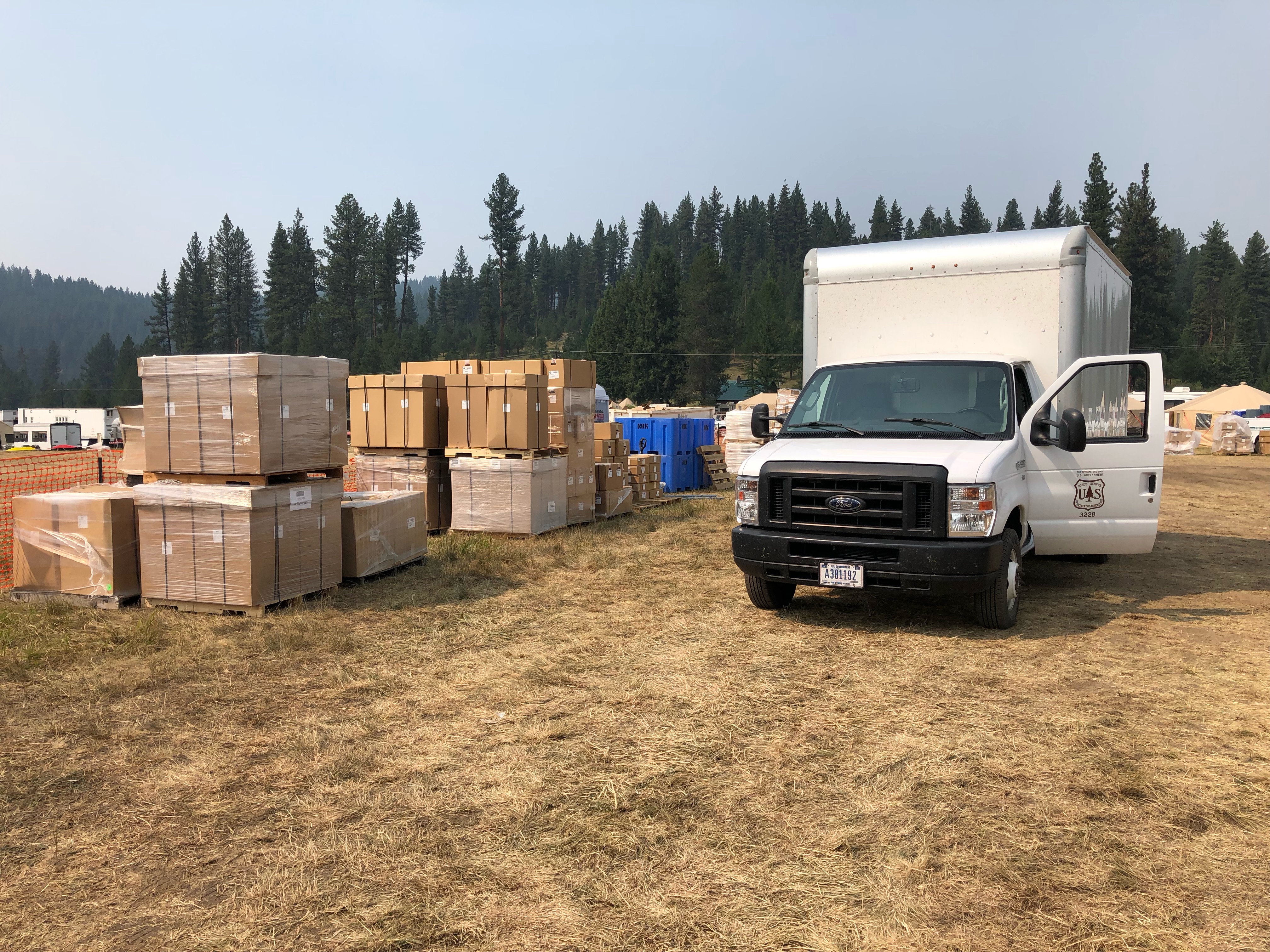
Having missed out on Braden’s epic Glacier birding day because of, you won’t believe this, a job, I have struggled for ways to console myself. Fortunately, birding opportunities are dove-tailing nicely with my new temporary career: delivering fire-fighting equipment by truck to various fire camps around Montana and Idaho. As you’ve probably noticed, it is shaping up to be an unprecedented fire season with record, early heat and little rain in sight. Just another reason that we need to make climate change our number one priority as a species (see Saving Birds. It’s Time.).
On the personal front, however, this radical summer has provided me with an interesting, useful part-time job driving for the Forest Service, and I have to say, I’ve been impressed with their entire operation. As I began my job, though, I asked myself, “How many birds could I see just driving around Montana and Idaho through the fire season?” I decided to set a goal of 100 species for myself—a number that seemed optimistic for this time of year, especially since I would have few opportunities to venture off roads into wildlife refuges and other birding hotspots. Below is my interim report, but first I should lay out the ground rules that I have set for myself, and they are simple: every bird can be counted from the moment I leave for work until I get back. I can’t count birds at my house or on my street, but everything else is game. So how goes the quest?
Who knew I’d be drivin’ truck at my age, but as in most of my life, trying new things has led to new birding—and writing—opportunities!
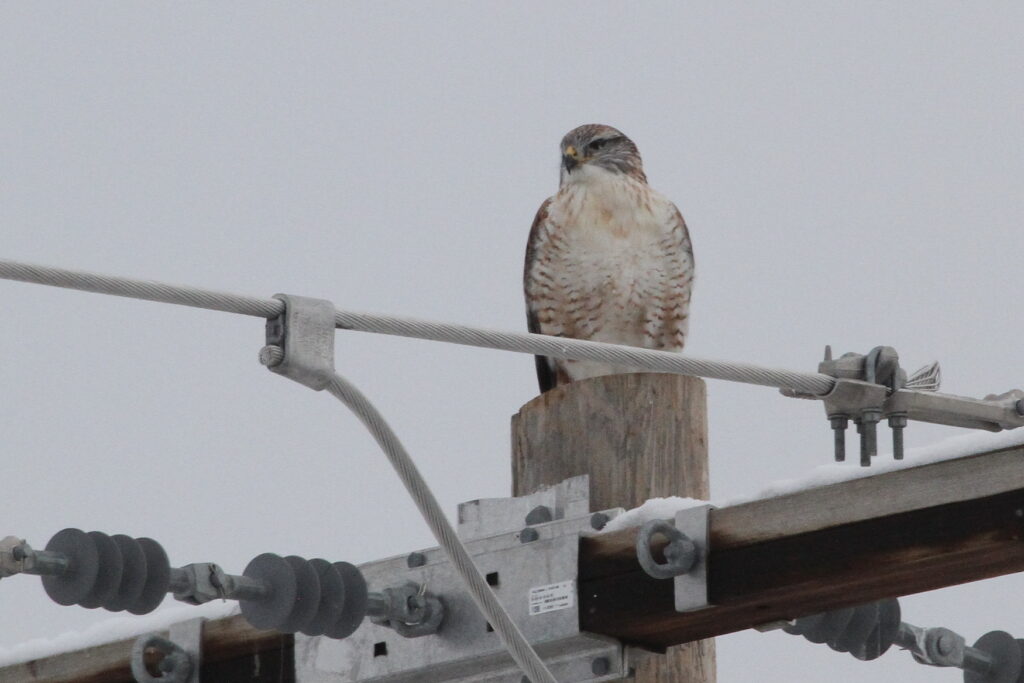
Well, so far I have driven approximately 3,000 miles and seen 59 species of birds, or about one new species every 51 miles—far more than I expected at this point. Let’s start with raptors. These are birds I expected to do well with because, duh, they are big and easy to see, and they sit on telephone poles. Strangely, I have seen only one Bald Eagle since I began and no Goldens, but have been delighted with Red-tailed Hawks, Swainson’s Hawks, Northern Harriers, Osprey, and a Prairie Falcon. My best raptor? A Ferruginous Hawk that I passed three separate times on my way to Ennis before I could positively ID it at 70 mph!
I had to drive by it three separate days before I could ID a Ferruginous Hawk near Ennis (actual bird not shown), but it was a major score in my “birding by truck” goals to find one of these.
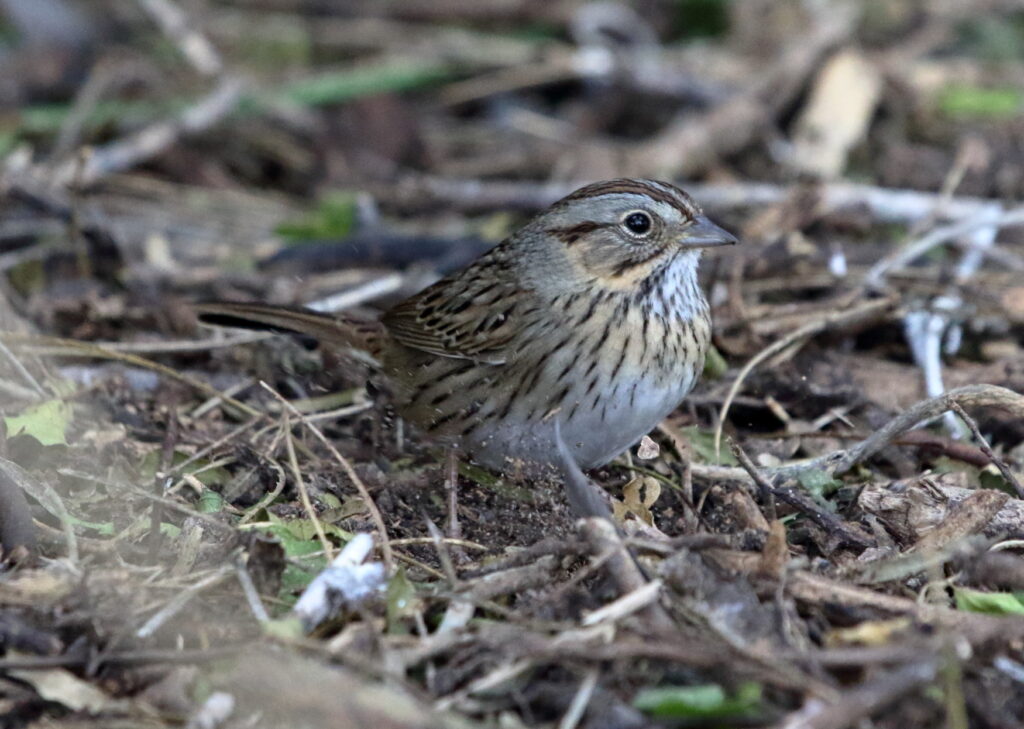
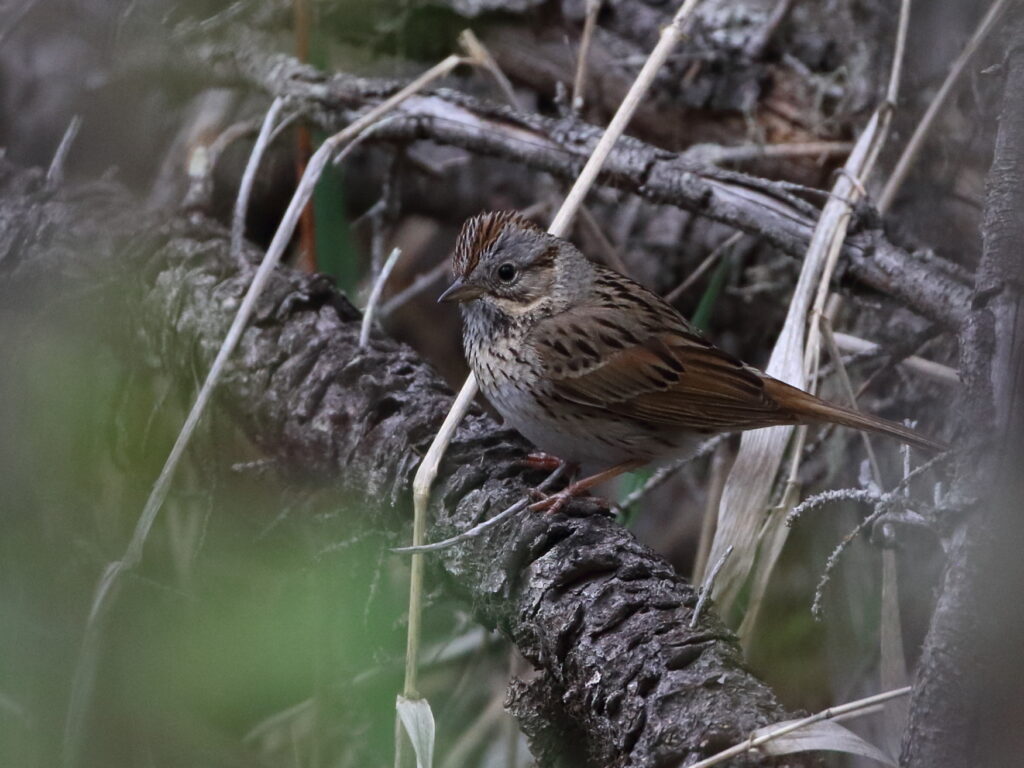
Songbirds promised to be the most difficult category because they are almost impossible to ID at high speed—and often at low speed! Still, I’ve lucked out with birds such as American Redstart and Evening Grosbeak around the ranger station in Seeley Lake, and good looks at Western Tanagers, catbirds, and other species along river roads. While my truck was being emptied down at the Goose Fire south of Ennis, I walked over to “pish” (make a fake bird sound, not doing, well, you know) some bushes and was flabbergasted to see a Lincoln’s Sparrow pop up in front of me—maybe my favorite “truck bird” so far.
Without a doubt my favorite sparrow, Lincoln’s Sparrow made my “birding by truck” list in surprising fashion while I was delivering a load to the Goose Fire crew south of Ennis.(Again, actual bird not shown—it’s hard to get bird photos while working another job!)
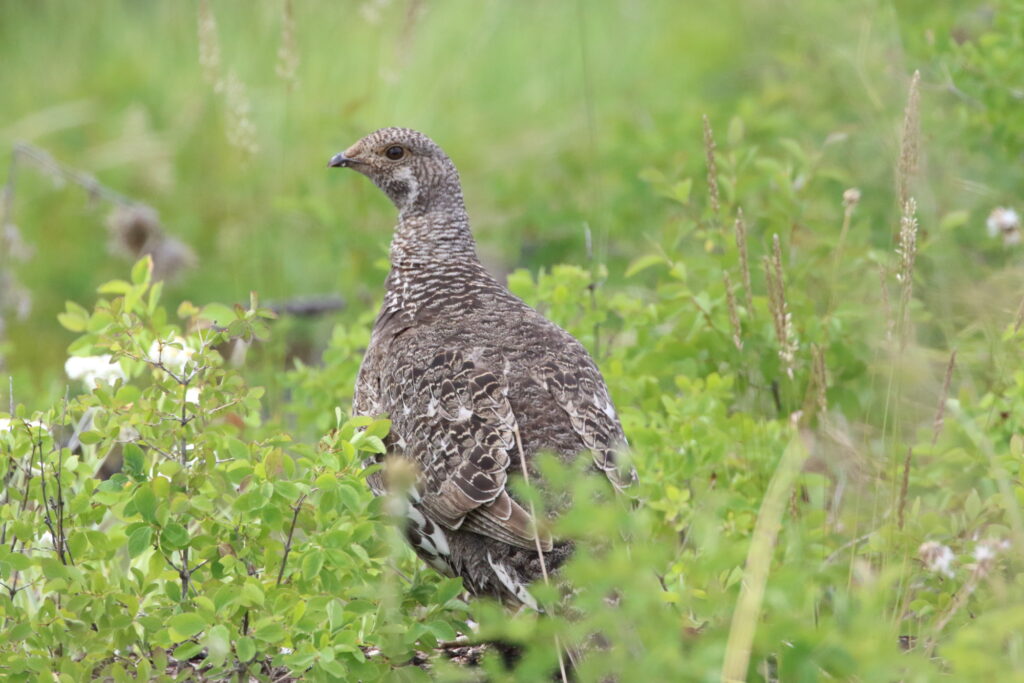
On my way back from the Dixie Fire camp in Idaho, I found myself at dusk crossing over Lolo Pass and needed a break, so I pulled into the visitor’s center to see if I could hear a Flammulated Owl. No luck, but White-crowned Sparrows and Swainson’s Thrushes called in the twilight, and suddenly I heard a deep sub-woofer sound. “My god,” I thought. “That’s a Ruffed Grouse!” It wasn’t. Later, after consulting with Braden, I realized I’d heard, appropriately for twilight, a Dusky Grouse. I hadn’t even known they made a similar deep-bass call. It pays to have a well-educated son!
Hearing a Dusky Grouse at, well, dusk at Lolo Pass taught me an important new bird call—and made an unlikely addition to my “truck list.”
The question remains: will I make it to 100? It’s going to take some doing, and I especially need to get into some large groups of waterfowl or migrating shorebirds or songbirds, but I remain hopefully optimistic. Stay tuned for the next installment! And yes, I would sacrifice my goal for a good, soaking rain!
My dad walked back to the car, frowning. “Well, unfortunately it looks like we’re gonna have to go birding somewhere else today.”
I sighed, frustrated. We’d been trying to bird Swiftcurrent, in east Glacier National Park, for years, and we’d still never gotten a normal birding session there. Most years it had been closed, like it was today, because of COVID-19 or construction. The year we had gotten to bird, it had been pouring down rain, and while we scored an incredible experience with a pair of Harlequin Ducks in Lake Swiftcurrent, those were basically the only birds was saw. Now, not birding Swiftcurrent drastically decreased our chances at Boreal Chickadee, a bird we’d been wanting to find for as long as I could remember.
Reviewing our options, we could just immediately head south and hope to bird Two Medicine, and possibly arrive in West Glacier earlier than expected to look for Black Swift and Harlequin Duck. I wanted to go somewhere new, however, so we headed north towards the closed Canadian border crossing. Hopefully we could find some cool habitat, possibly with Boreal Chickadees, though that species had rarely been reported from that area of the park. Along with it being a cool bird, the main reason my dad and I wanted the chickadee so badly is because in terms of Montana lifers we’d been completely skunked during the rest of our trip, missing American Golden-Plover, Broad-winged Hawk, Magnolia Warbler and more. We’d gotten cool birds, like Sprague’s Pipit, but none of them had been new species for us.
As we learned in Glacier National Park this summer, birding the road less traveled almost always leads to great surprises.
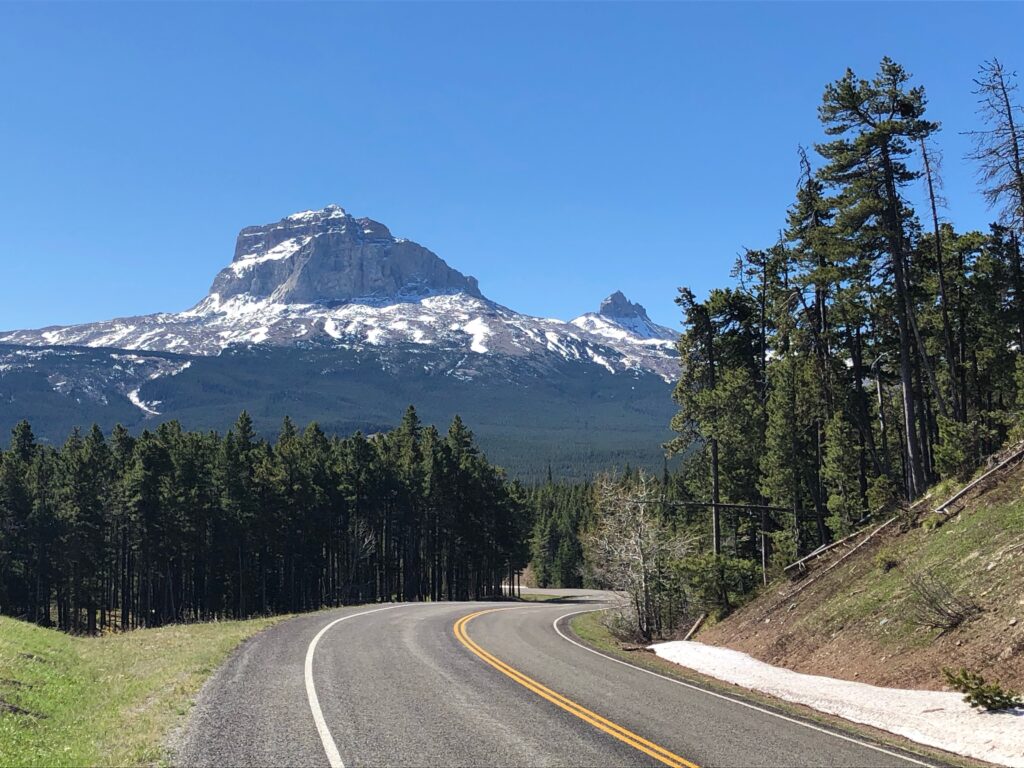
After taking a short loop through the most desolate plains we’d seen yet in Montana, we turned towards Glacier’s mountains again. As we drove, the habitat shifted, first to stunted aspen forest and then tall, dense spruce-fir forest. It was a habitat I’d never seen in the state, if at all: the southernmost reaches of the vast boreal forest that stretched across Canada. As we crossed back into the national park, my dad spotted what was probably a robin, but we pulled over anyway—I was excited to see what birds were singing from this new habitat.
A Northern Waterthrush echoed from the side of the car as we got out, and several Brown-headed Cowbirds whistled from the tops of trees. Every single bird was a surprise to us, since we really had no idea what to expect. And despite the fact that we hadn’t truly entered the mountains yet, my dad’s altitude app told us that we were at more than 5000 feet!
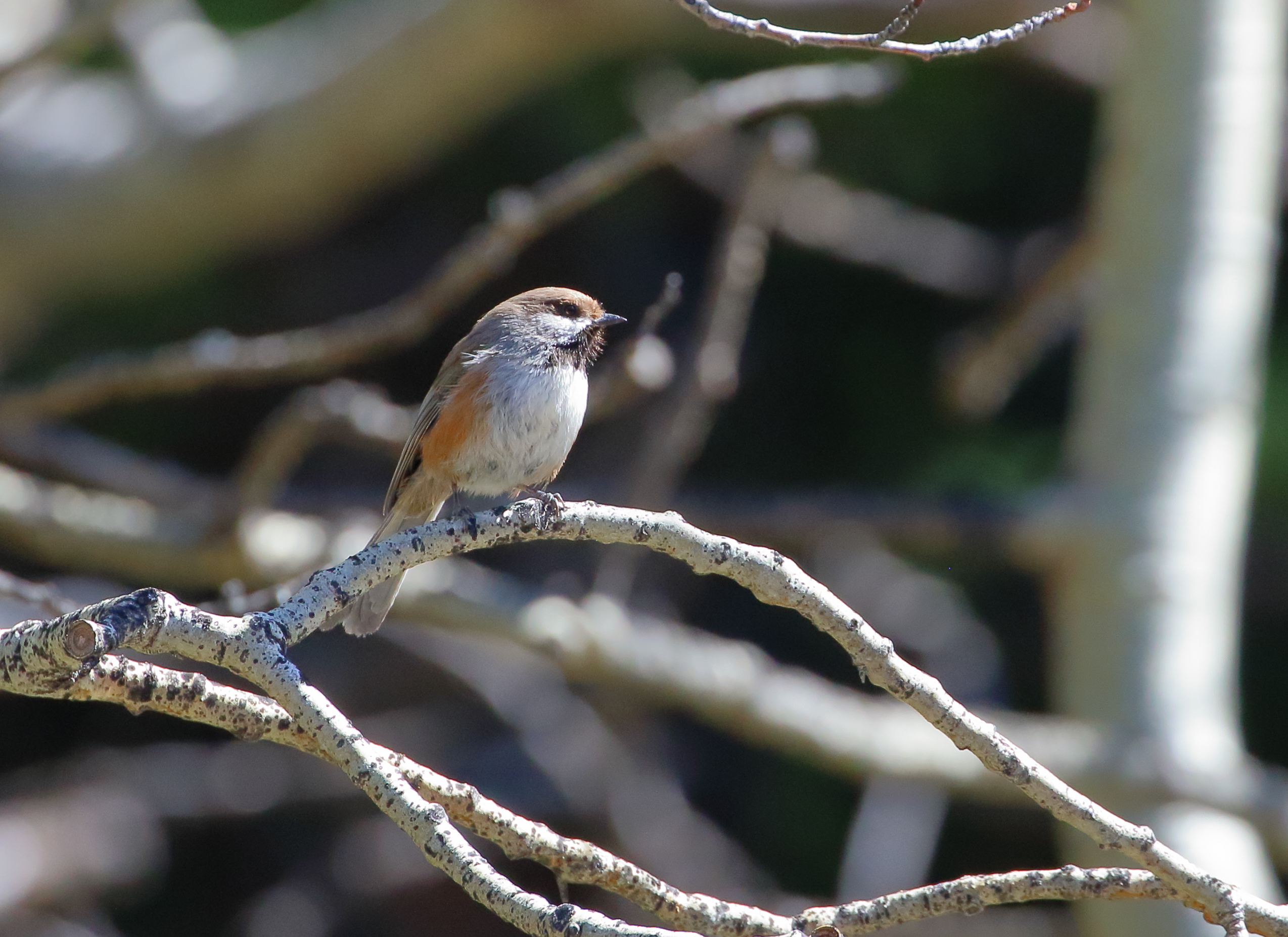
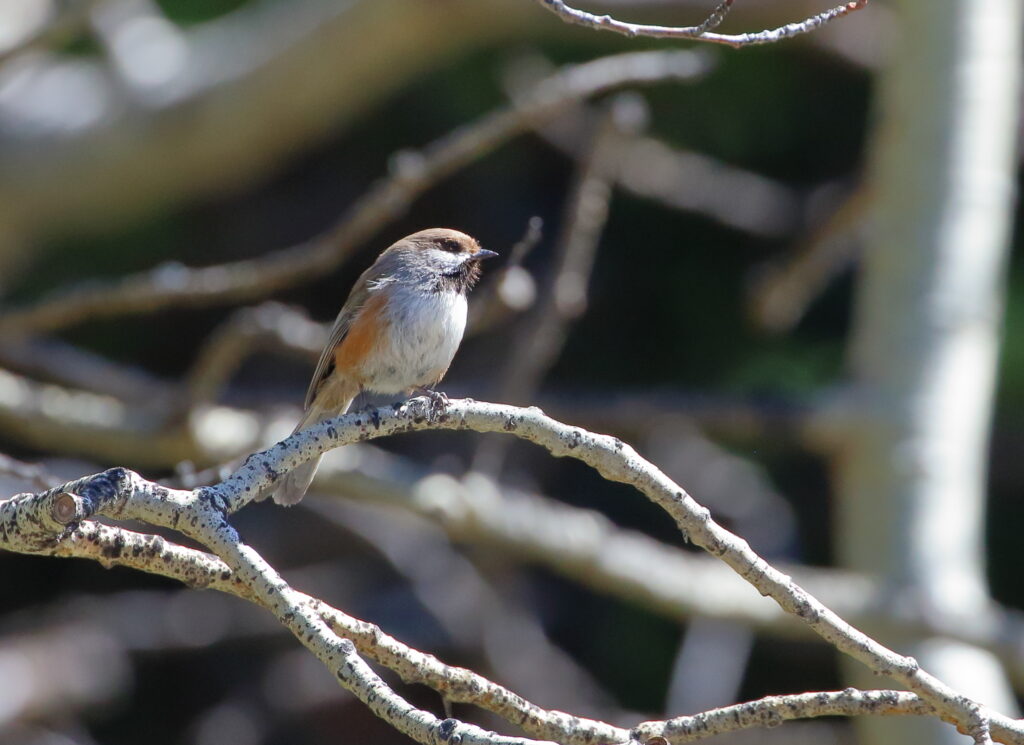
Suddenly my dad turned around. “I just heard a chickadee.” I spotted something flit to the top of a tall spruce about fifty feet away, and raised my binoculars. While it was still too far to tell what kind, I was definitely staring at a chickadee, so I grabbed my camera from the car and hurried over to where there appeared to be a pair of them. Once we drew closer, I raised my binoculars, registering salmon flanks and a brown cap.
Finding not one, but half a dozen Boreal Chickadees in a place we never expected not only checked off a long-held goal, but laid the crucial foundation for the QUACH!
It was one of if not the first time I’d ever said the F-word in front of my dad! It was like my brain had exploded, I’m not sure whether from the fact that the birds were Boreal Chickadees or from the fact that we’d managed to find a new Montana species at last on this trip. The chickadees bounced around the spruces for a while, then disappeared.
After recovering from the shock, my dad and I hugged and got back in the car, intent on seeing what else we could find along this paved-yet-empty road. Starting at the closed Canadian border crossing, we drove south doing five-minute point counts along the road like we’d done searching for Sprague’s Pipit the day before.
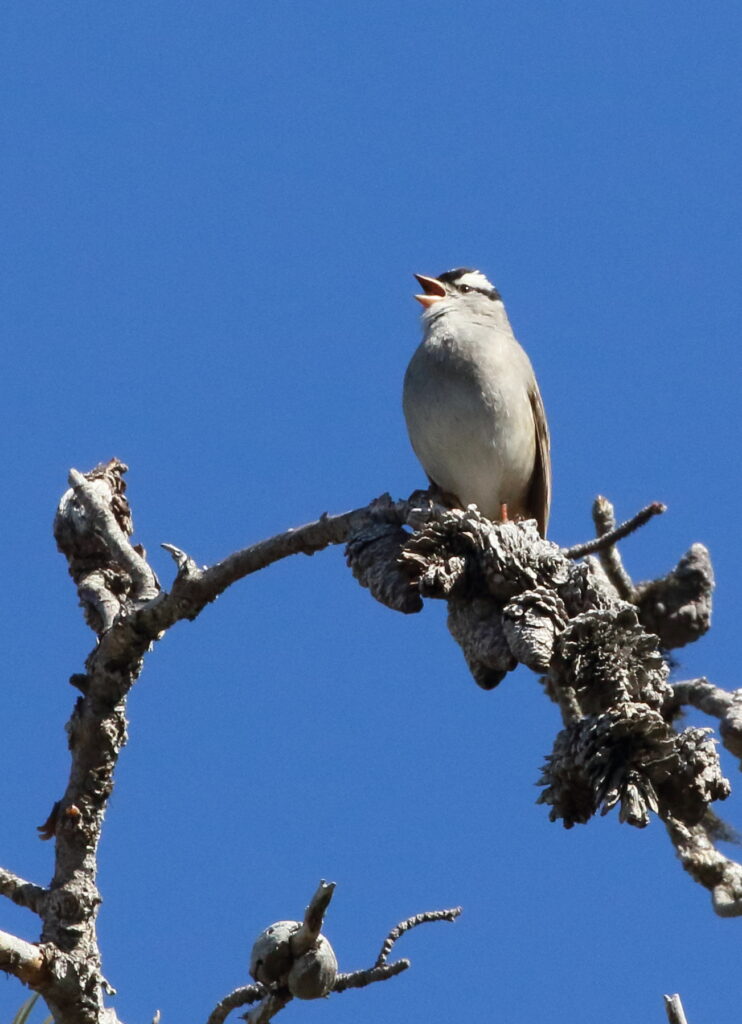
Seeing a White-crowned Sparrow on its alpine breeding grounds gave us new appreciation for this relatively common species.
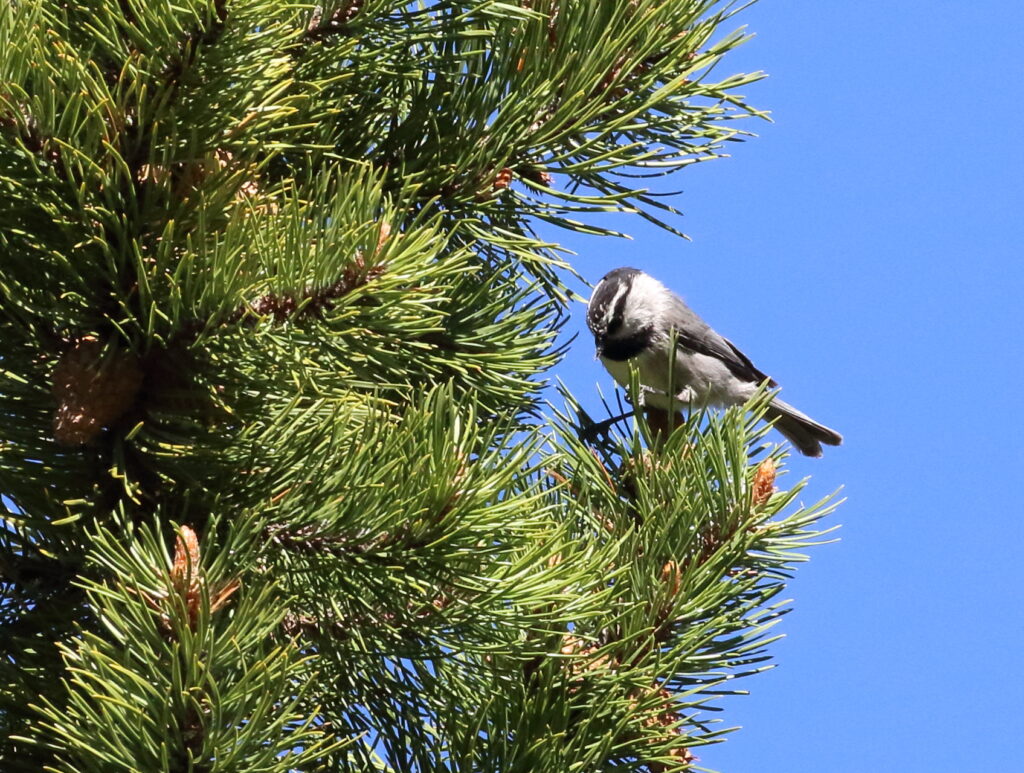
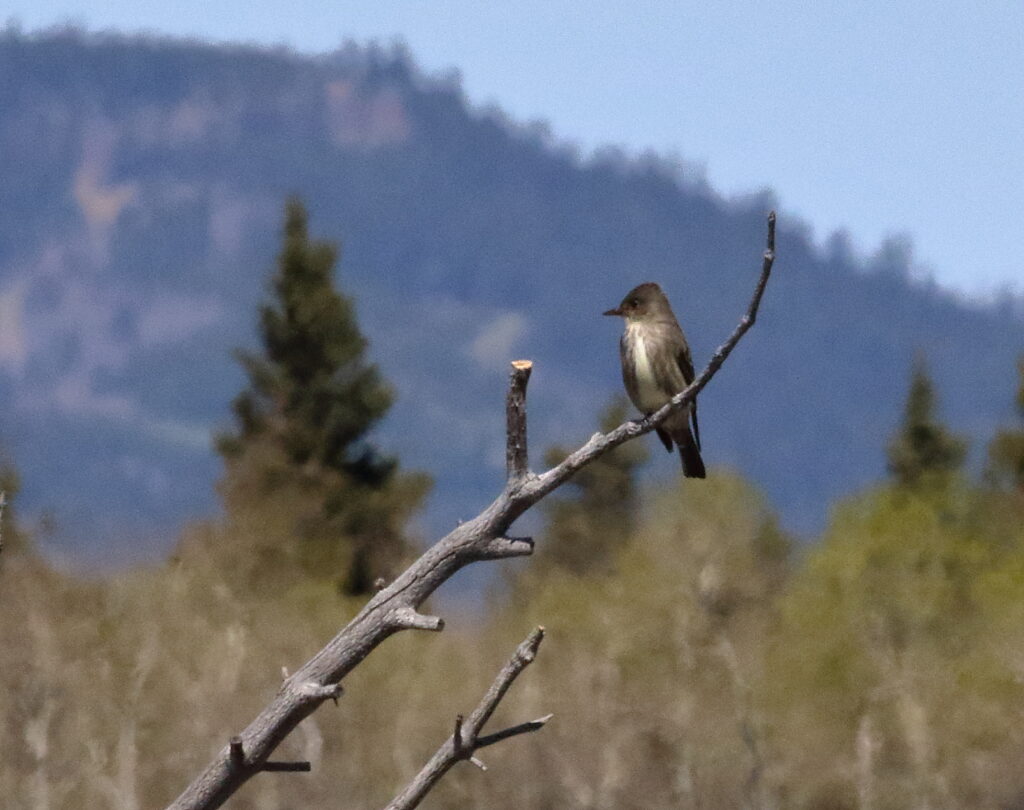
The most common sparrows were White-crowned Sparrows belting confusing songs from every level of the trees, and while Yellow and Yellow-rumped Warblers were present, they were at least equalled in number by Wilson’s Warblers and Northern Waterthrushes, neither of which were common in Missoula. Amazingly, we picked up Boreal Chickadee at two more points, getting much better looks and photos of three more pairs. They were one of the more common species here, too, and were by far the most common chickadee, though we also picked up a lone Mountain and a possible Black-capped, the latter from a lower altitude aspen area. Canada Jay was the most common corvid, though we also saw a single Steller’s. Another treat were two boisterous Olive-sided Flycatchers, well-known boreal forest breeders, calling and posing for us.
In the wetter areas we found Fox and Lincoln’s Sparrows, Tree Swallows and Warbling Vireos. Red-breasted Nuthatches, Ruby-crowned Kinglets, Pine Siskins and Chipping Sparrows greeted us at most stops. We also got a Varied Thrush, which was a surprise as we were probably about two miles from the easternmost limit of its breeding range.
What? A Mountain Chickadee near a Boreal Chickadee? What was this songbird madness???
I’d recently read a book about the lack of birds in the boreal forest, and while there definitely was lower diversity than say, the wet second-growth of West Glacier, it was not as if there weren’t any birds. At most stops we picked up at least three or four species singing or calling.
After drinking our fill of the boreal forest and saying goodbye to the chickadees, we headed south along the eastern edge of Glacier National Park. We stopped at a good-looking, alder-filled riparian area for lunch, picking up new species for the day like Black-headed Grosbeak, Lazuli Bunting and our first-of-year MacGillivray’s Warbler, then got onto Highway 2 again, back in familiar territory.
When we reached West Glacier, though, we discovered something tragic—you had to have a permit to enter the park, a new rule they’d employed to counter the insane surges of tourists they’d had the past few years! Thankfully, we could enter without a permit after 5 p.m., but still it was sad that the days of entering Glacier easily may be over.
Since we know them mostly from burn areas, this Olive-sided Flycatcher at a roadside pullout proved a special delight!
We parked by the old park entrance to wait until five o’ clock, and while my dad took a nap I wandered around the healthy mountain-riparian forest along the milk-blue Middle Fork of the Flathead River. As I hiked, I suddenly heard more chickadees calling, and in a dense patch of Lodgepole Pine I found them: Chestnut-backed Chickadees!
Earlier in the day, after seeing the Boreal Chickadees, I’d mentioned to my dad: “Just you wait. We’ll somehow manage to see three of the four chickadee species and have trouble finding a Black-capped.” Black-capped, of course, is well-known for being not only the most common chickadee in Montana but also one of the most common birds here, period.
Suddenly, my fear had come true: I’d seen the three most difficult chickadees in one day, but had not yet seen a Black-capped (while again, we’d possibly heard one up by the Canadian border, it had not been a positive identification so we hadn’t counted it). I rushed back to the car to wake my dad.
“Let’s go find some cottonwoods. I need to see a Black-capped Chickadee.”
As we drove around West Glacier (the town; the park hadn’t opened yet), I rolled down my windows, straining to hear any piece of a chickadee call. We pulled into a fishing access parking lot surrounded by cottonwoods and began walking, though the birds were fairly quiet. Four in the afternoon was about as bad a time as you could go birding, yet here we were, trying to find one that we saw in our backyard every single day. I promised to myself that if we found a Black-capped, I would memorize its scientific name, Poecile Atricapillus.
After admiring a gorgeous male Rufous Hummingbird that posed for us, I heard a chickadee call from behind me. Then, a sharp-looking Black-capped flew towards us, landing mere inches from us on a branch! I’d done it! I restrained myself from hugging the chickadee and instead gave my dad a high-five in celebration of the Quad-Chickadee Day I’d had—or, as my dad officially christened it, “the Quach.”
Note: “Quach” is a registered trademark of FatherSonBirding, legally protected throughout the solar system. Anyone using it will be subject to massive fines and stern looks. Not really.But you heard it here first!
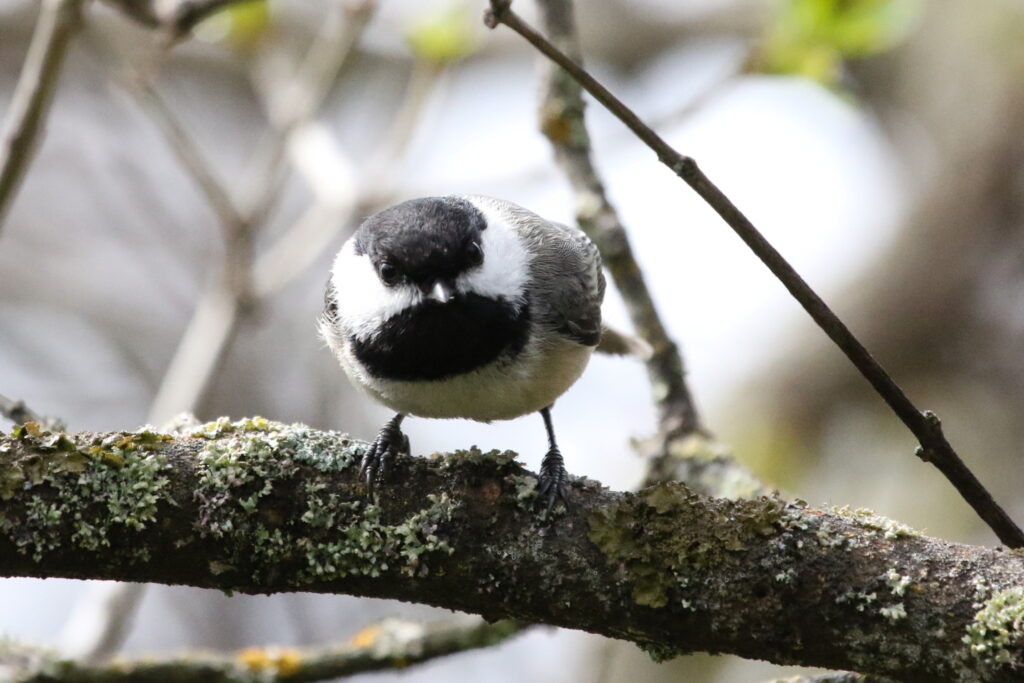
Who would have thunk a common Black-capped Chickadee would prove the key to Braden’s epic QUACH? Only the wily chickadee, of course!
“eBird really needs to add a checklist for mammals!” I tell Braden for the 58th time. What has prompted my sudden outburst? A marmot scurrying off the road in front of us. The truth is that the past seven years of birding have led us to an amazing number of mammal sightings in Montana and beyond—mammals we wouldn’t otherwise have seen if not for birding. Sure, we’ve observed the usual pronghorn, elk, deer, and bison by the hundreds, but it’s those smaller, cooler mammals that I most remember.
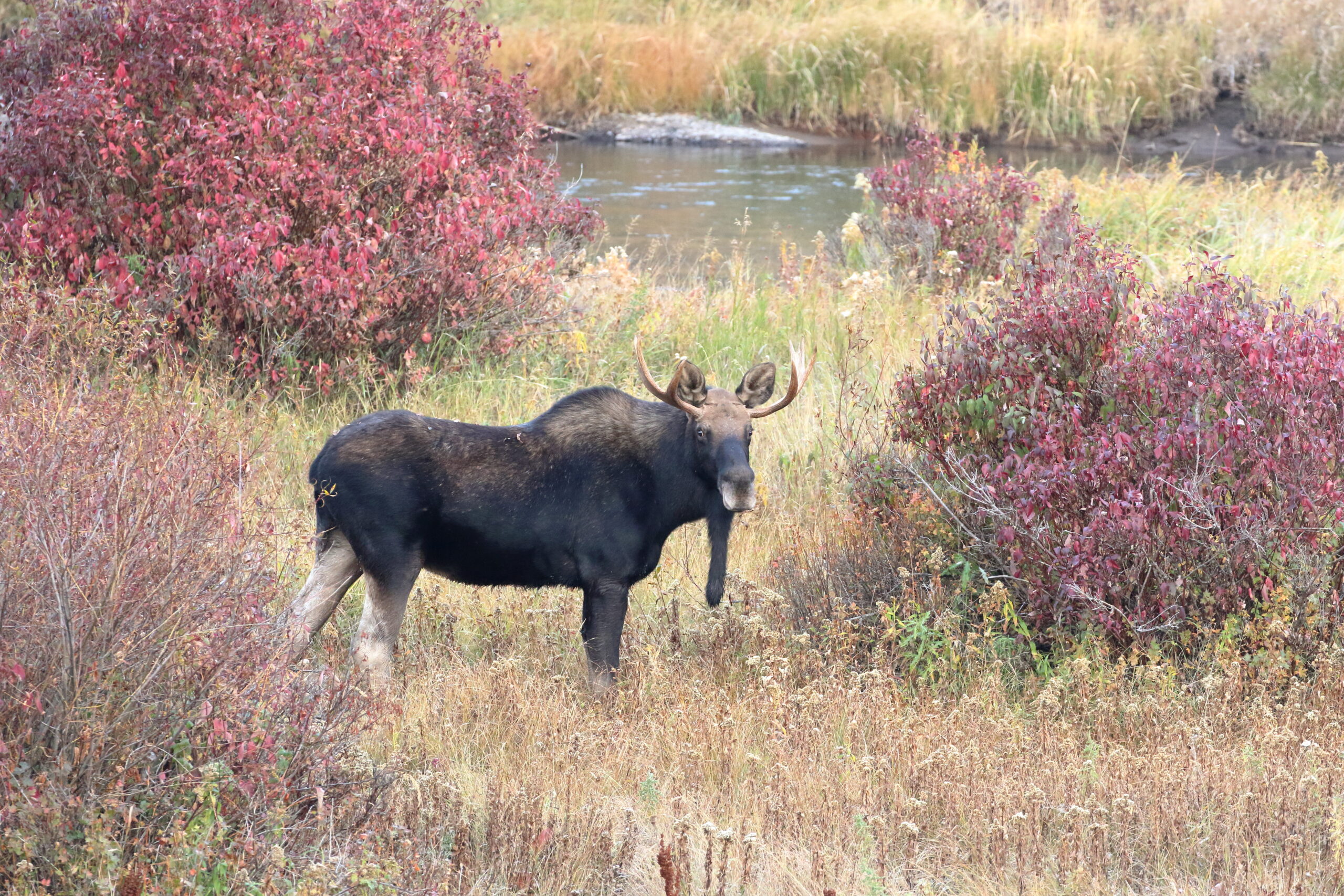
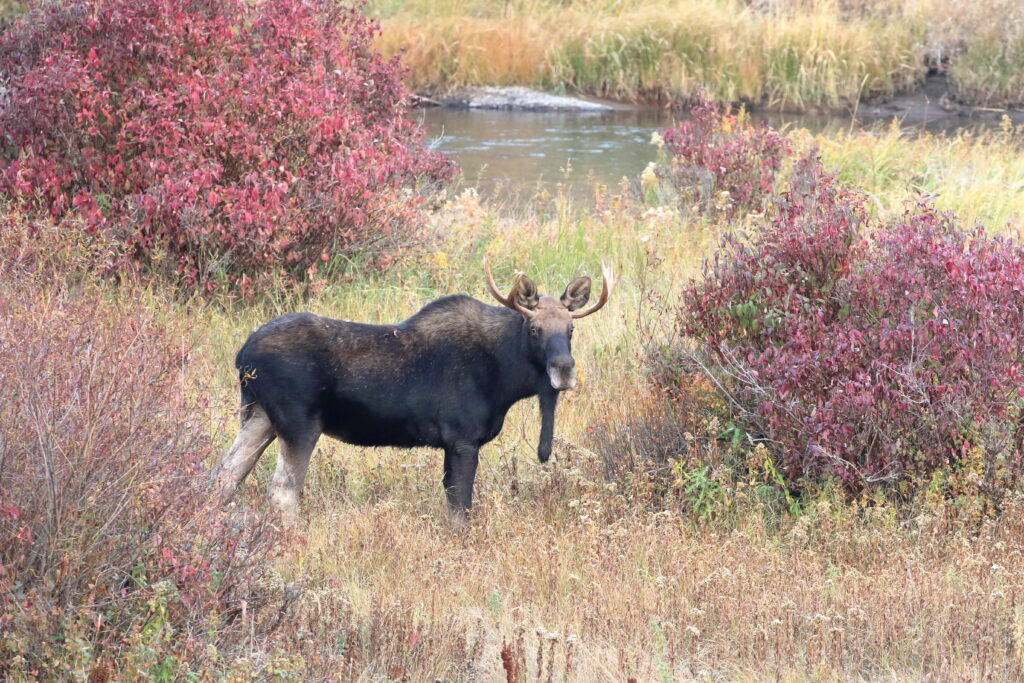
Actually, there are two moosii (plural for moose) here—the other behind that bush on the right.
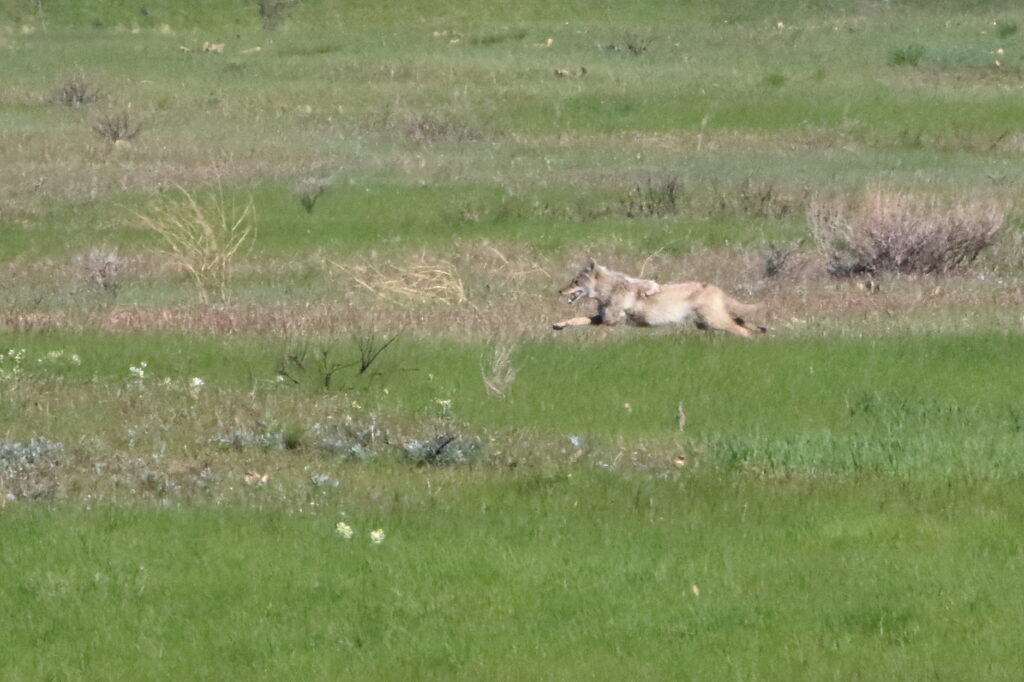
Let’s start with moose. Okay, they’re not smaller, but they are way cool—so cool that we remember every single moose location we’ve encountered, from the burn area around Lincoln to the meandering creek near Philipsburg. Coyotes rank similarly high in the mammal standings, whether they be trotting around one of our favorite birding hotspots, the Gravel Quarry, or galloping hell-bent-for-leather across the grasslands of Bowdoin National Wildlife Reserve like the one we saw last week.
Is there a roadrunner somewhere around here???
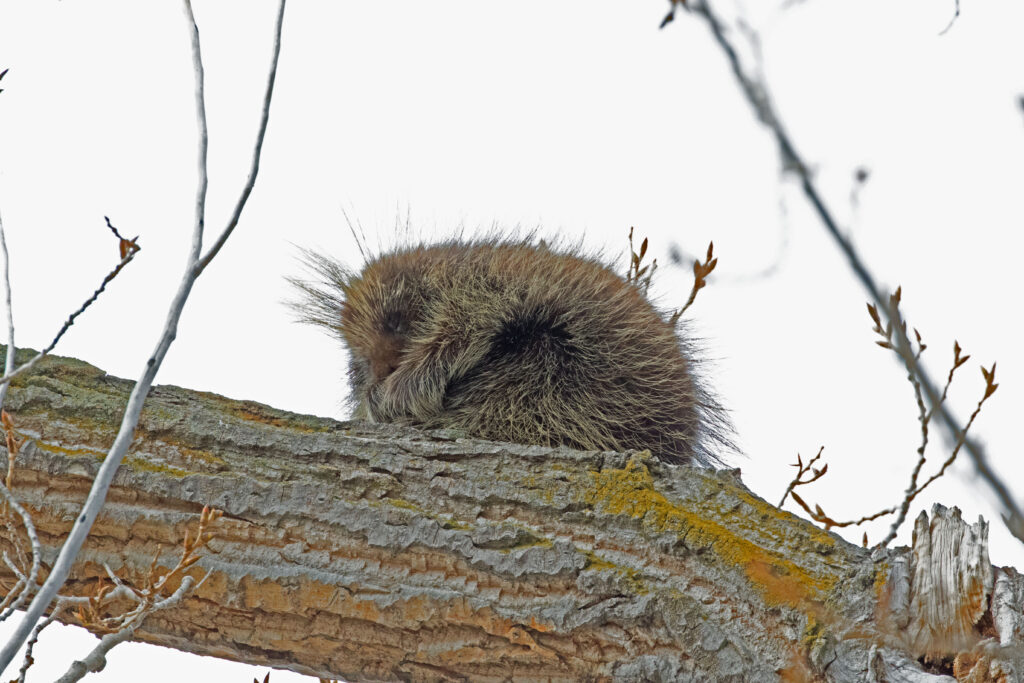
Some mammals, though, deserve special honors. For years, I’d been griping about never seeing a live porcupine—a fact that astounded me given how many dead ones I’d spotted over the decades. Shortly after covid hit, however, Braden and I were driving into the Lee Metcalf NWR when I noticed a suspicious shape balled up on a bare branch right above the road. “No, it isn’t. It couldn’t be . . . “ I gasped. It was. A live porcupine. Finally!
At last we meet, Mr. Porcupine!
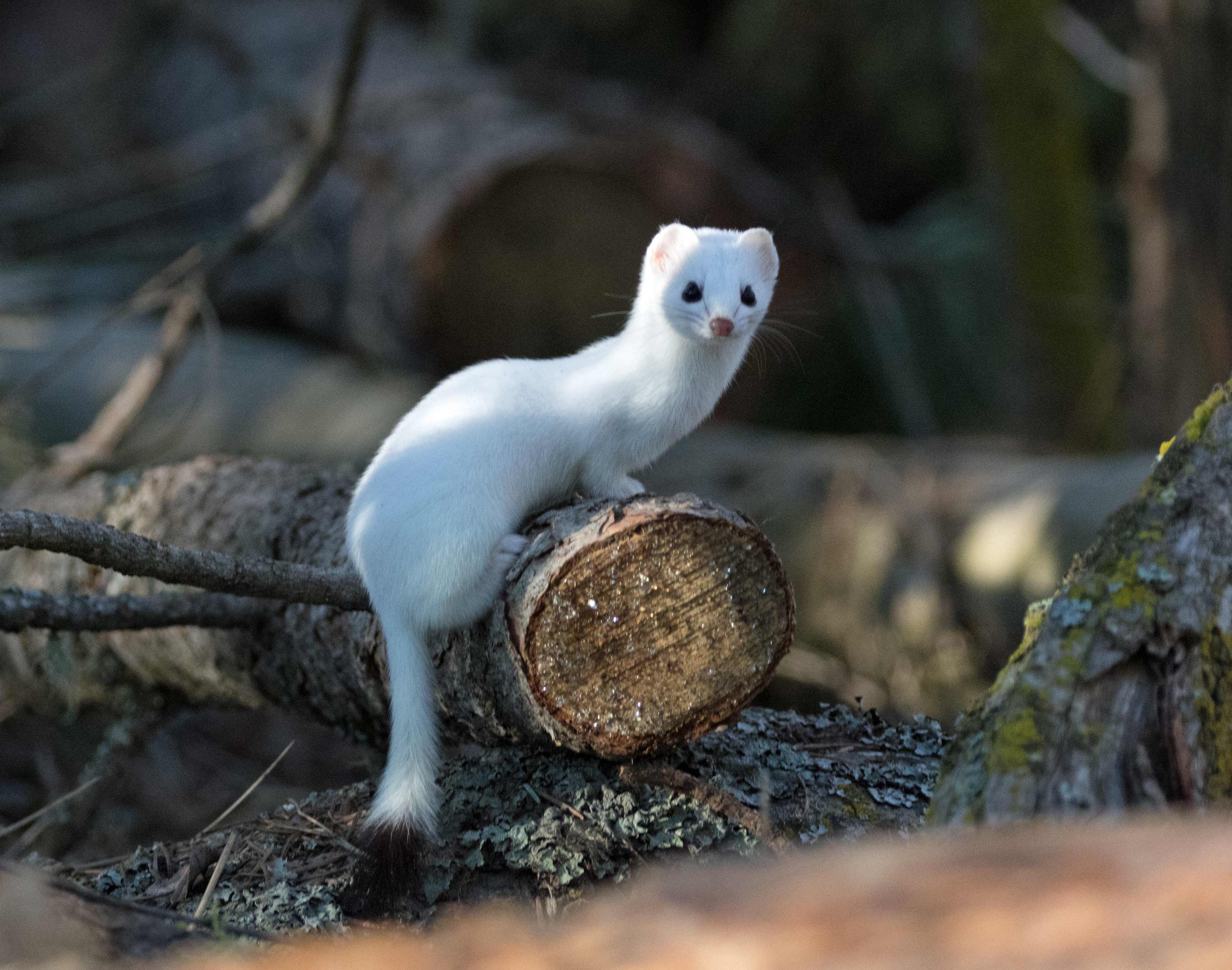
A few weeks later, I was hiking up a trail about a mile from our house looking for a Three-toed Woodpecker that Braden had found. Suddenly, a long white shape climbed up onto a rock not twenty feet from me. I stared and it stared back—though not with its mouth open like mine. It was a short-tailed weasel, by far the best look I’d ever seen! And as a bonus (and disadvantage for the weasel), it wore its mismatched winter coat against the snowless ground, demonstrating up-close-and-personal the threats animals face from global warming.
Mr. Weasel, find some snow. Quick!
Our mammal list also includes numerous red foxes, bighorn sheep, beavers, hares, otters, mountain goats, bats, muskrats, whales, dolphins, monkeys, raccoons, black and grizzly bears, seals, prairie dogs—even a bobcat in Aransas NWR and our first-ever javelinas down in Texas. And that’s not even mentioning the beluga whales, polar bears, and walrus Braden has seen on nature trips with his grandparents. I admit that we still have never glimpsed a wolf, lynx, wolverine, or thylacine—but we hope to.
Which goes back to my original point: Can’t eBird add a basic mammal checklist, at least for the ABA area? In no time, they’d be collecting millions of invaluable data points for scientists and conservationists. Plus, it would be a lot of fun. I know. I know. Some of you are saying, “Use iNaturalist!” I hear you—but I’m never going to. One app is plenty for my curmudgeonly brain. So what say you Cornell? Are you game—and not just Big Game? I and millions of other birders are waiting!
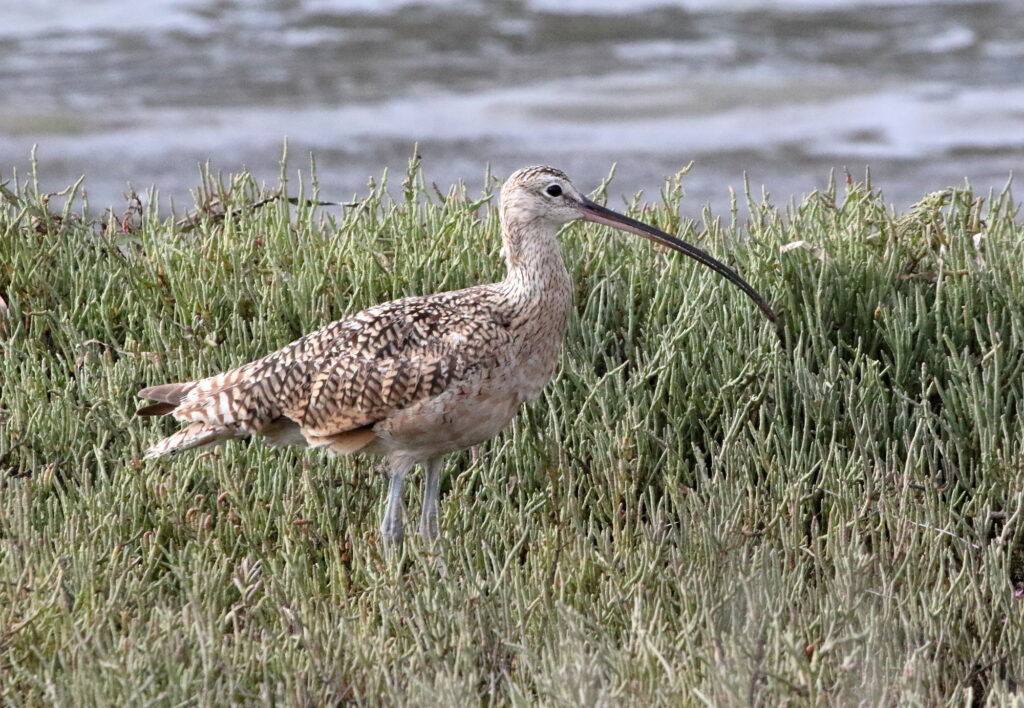
The burbling call of a Long-billed Curlew echoed across the dry fields as my dad and I stepped out of the minivan to listen. We stood on a dirt road about 20 miles west of Malta, craning our necks as we squinted at the sky, searching for a tiny dot that might be a Sprague’s Pipit. The unnamed road ran smack-dab through the middle of some of Montana’s best pipit habitat, and after missing several other prairie and marsh specialists at Bowdoin that morning (including Baird’s and Nelson’s Sparrows and Sedge Wren), we had come here for one last-ditch effort.
Even for us, it’s hard to get our head around the fact that Long-billed Curlews we’ve seen in, say, Morro Bay, California (above) fly to the grasslands of Montana to breed. We’ll take ’em, though!
Unfortunately, we had limited pipit experience to draw on. We’d only seen one before, in a thunderstorm on a road-turned-to-gumbo last July. Nick Ramsey had spotted that bird as we had frantically knocked mud off our car wheels, so we’d never even found the species by ourselves—making locating one now seem like a long shot. Thankfully, few clouds loomed on the horizon, meaning we probably wouldn’t have to deal with another thunderstorm.
Our search tactic involved conducting five-minute point counts every half mile, getting out of the car and listening for the birds. This was how most pipits had been detected on this road in the first place, and thanks to the science project I’d worked on last summer, I knew roughly how long to stay at each place before designating it “pipitless” and moving on.
The first couple of points produced good birds, but nothing of exceptional interest. Vesper and Grasshopper Sparrows sang from the tufts of grass along the fence, and a few acrobatic Franklin’s Gulls spun in the sky above us. At places with more dense shrubbery the dry, buzzy trills of Clay-colored Sparrows joined the grassland chorus.
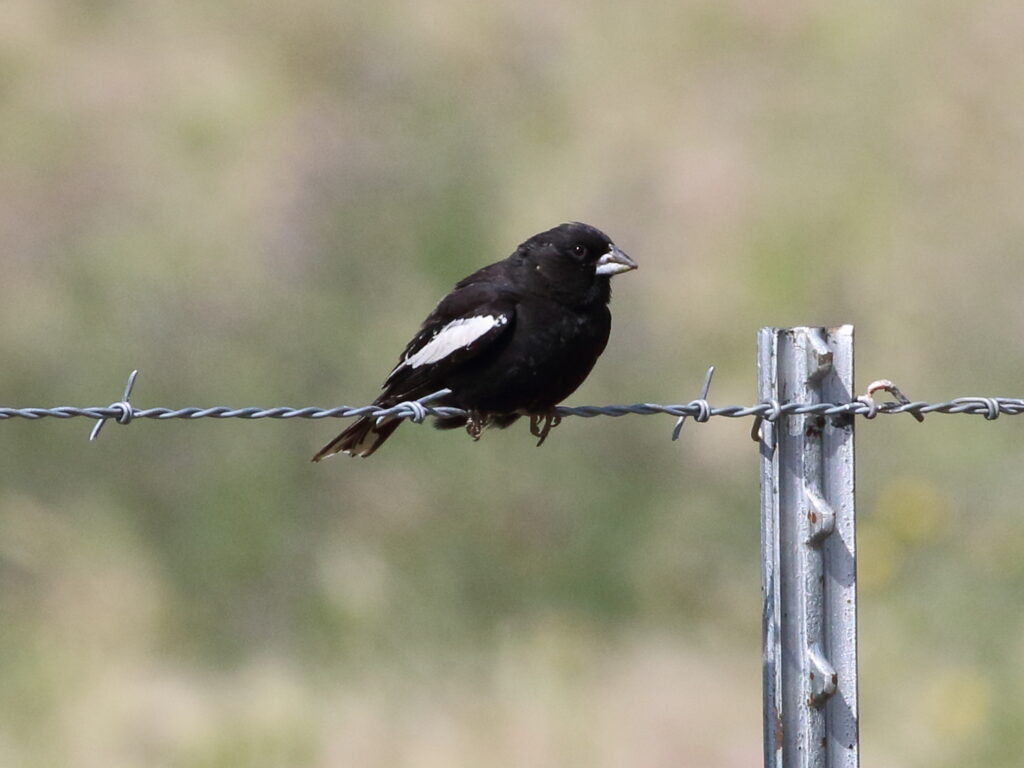
Our “Road More Pipit” also boasted the greatest numbers of Lark Buntings we’ve ever seen!
Then the scenery changed. Rather than parking next to fenced-off rangeland, the habitat on the left side of the road turned into a more natural-looking swath of native shortgrass prairie. As I got out of the car, I swore that I heard what eBird describes as the sound of “a cascading waterfall of tiny pebbles.” I’d been continuously playing the song as we’d driven between points to instill it in my head, so I couldn’t tell if what I’d heard was just my own brain playing back the song of a Sprague’s Pipit or not. Then, I heard it faintly again. As my dad grabbed his camera from the car, I set off into the prairie after the sound, flushing a pair of Ring-necked Pheasant from a bush. I climbed several ridges, watching my footsteps for rattlesnakes, until it sounded like the bird flew right above me. I looked up, and suddenly saw it—a tiny speck hovering in the blue space between the clouds, singing away.
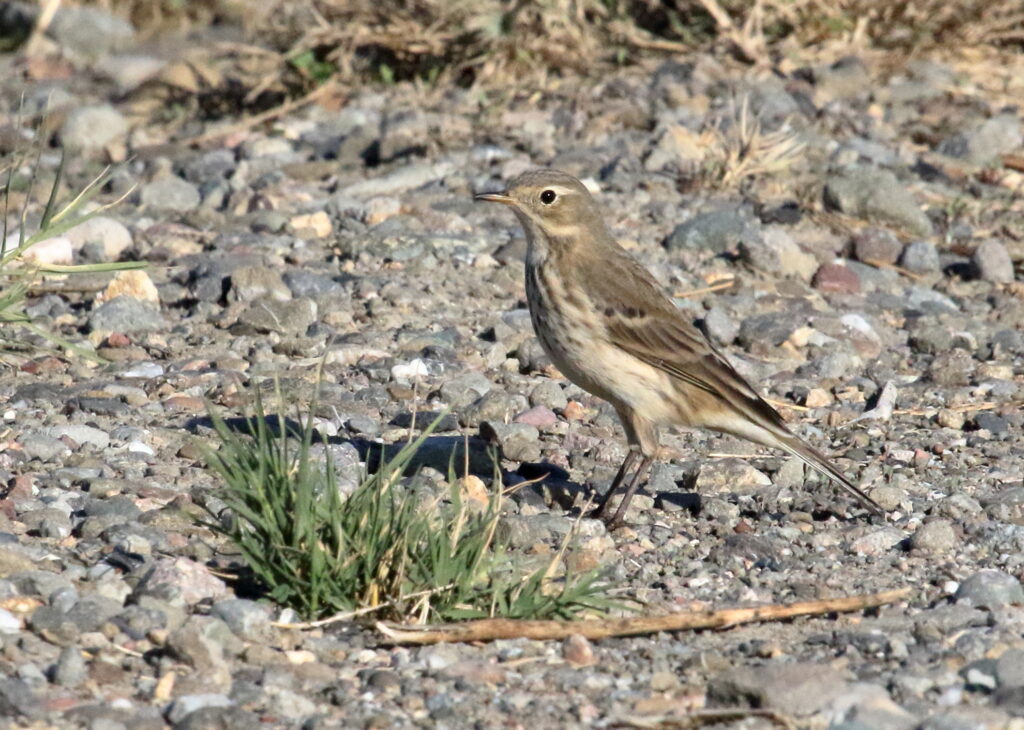
Here’s a Sprague’s Pipit—Not! If we were to show you a photo of one, it would look like a tiny dot in the sky. This American Pipit, though, looks almost identical to its much rarer cousin, so we ask that you pretend.
After showing it to my dad we just stood there watching what would have been the most incredibly boring part of birding for many people—but not for us. The pipit never descended, and instead slowly drifted further and further away until it was out of sight. We’d found a Sprague’s Pipit on our own! Of course, we knew that they were in the area, but locating an individual bird was still no small task!
The pipit was just the beginning of the prairie species we spotted on that road. As we kept driving, we began to pass large numbers of displaying Lark Buntings, which flew up about five feet before floating down, compared to the pipit’s display hundreds of feet above the earth. We passed a cattle grate, flushing a quintuplet of Sharp-tailed Grouse, several of which posed on the side of the road for us. Some of the Lark Buntings flashed white rumps, revealing themselves to be Bobolinks instead, which had a very similar display to the buntings, and in a very short-cut grain field I spotted three Chestnut-collared Longspurs. We’d ticked off most of Montana’s prairie birds on just this one road! Thrilled and relieved by our success, we got back on Highway 2 headed west, ready for the birds of Glacier National Park.
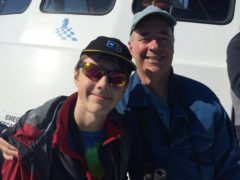
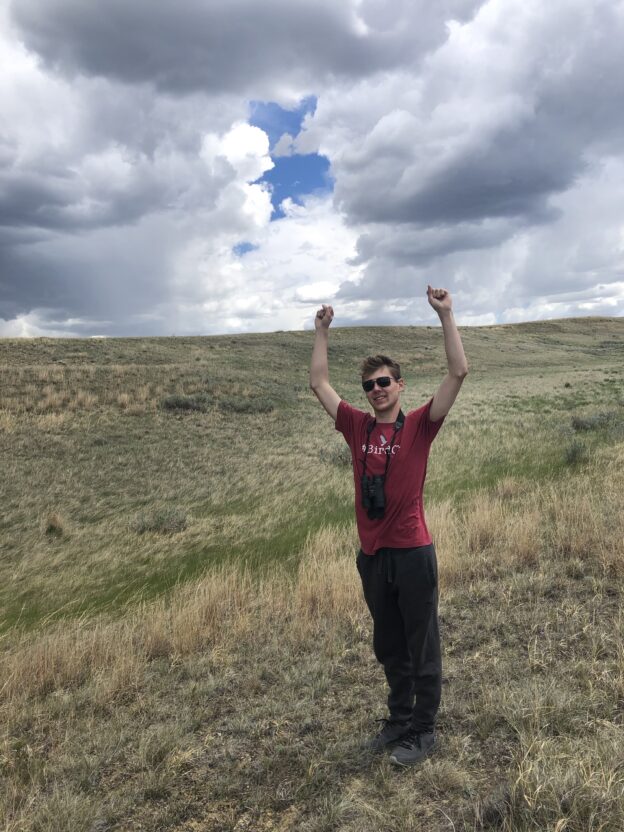
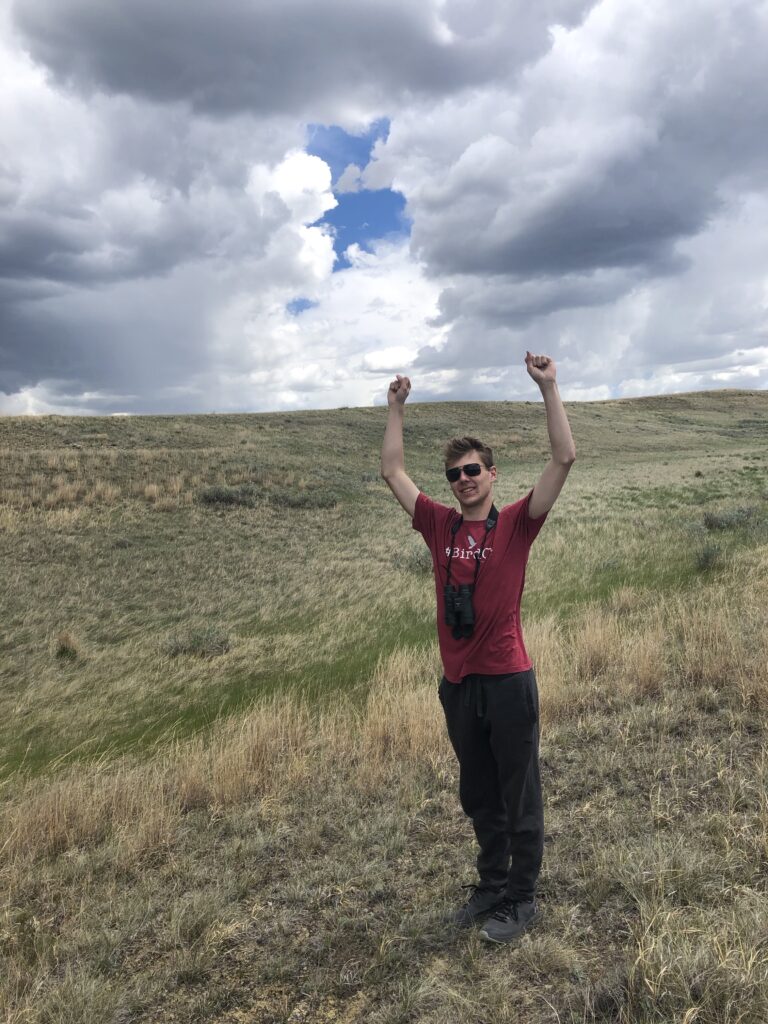
There’s no better reason to celebrate than finding your very own Sprague’s Pipit—though maybe graduating high school comes close!
During our Birding Therapy Week posts, FatherSonBirding achieved the milestone of receiving our ten thousandth view! To celebrate, we’d first like to thank all of you who have been following our adventures and other stories about our favorite non-human animals (including our dog, Lola,). We know that everyone has an avalanche of blogs, news, posts—and yes, even books and magazines—competing for reading attention, and we greatly appreciate each and every one of you. It also, though, seems like a good time to reflect and re-evaluate.
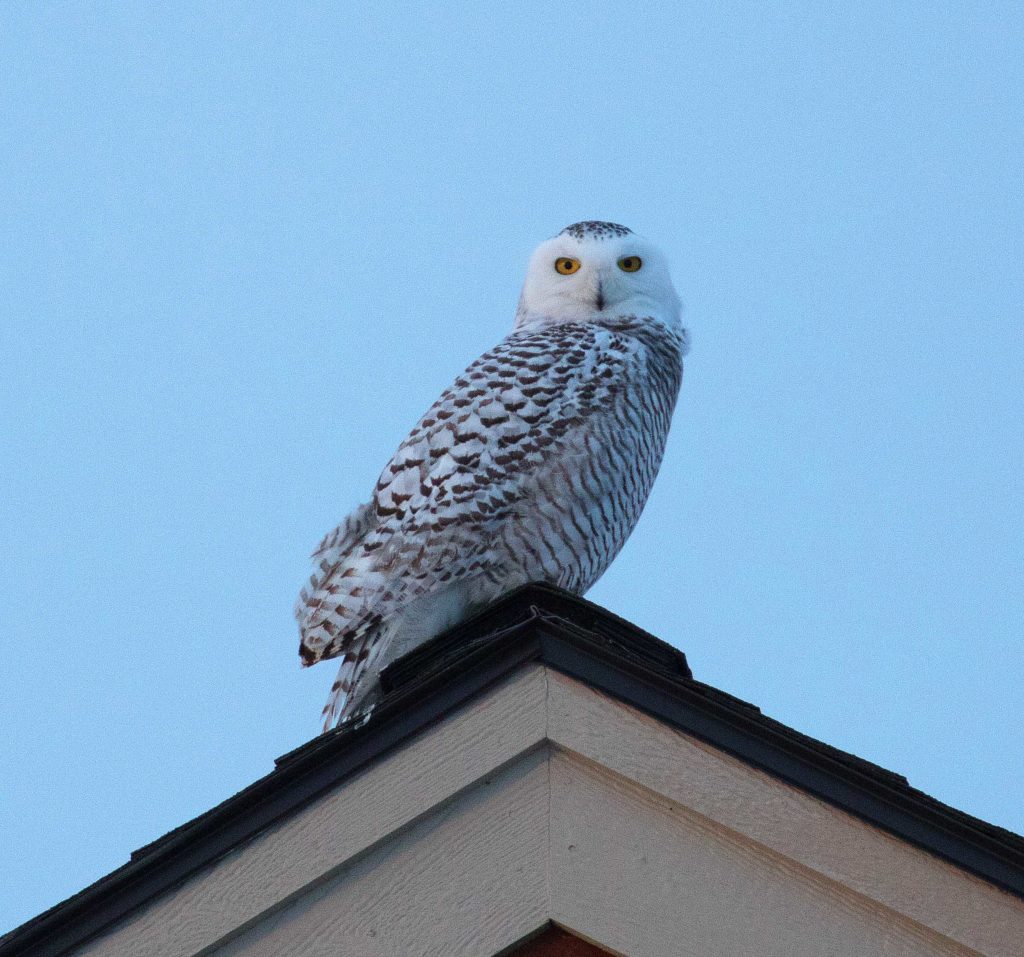
Our Lifer Snowy Owl—from our very first blog post on March 13, 2018
It seems hard to believe, but we launched FatherSonBirding more than three years ago with our post A Quest for Snowy Owls. Since that time, we’ve posted 81 times, and garnered 65 subscribers (there were actually more, but we lost several dozen while getting hacked by suspected Russian provocateurs). On average, about a hundred people read each post. Which is all good, but like a certain ex-president’s approval ratings, our numbers don’t really budge much. On top of that, Braden will be heading off to the University of Maine soon to begin his college career, highlighting the bittersweet fact that we will not have nearly as many birding adventures together as we’ve enjoyed the past few years.
That said, we could shift the focus of the blog from our birding exploits to bird conservation, bird education, or something else. In fact, if you are reading this, we ask that you send us your thoughts on where we might take this forum going forward—including just chugging along as we are, posting occasionally about something that strikes our fancy. Honestly, I (Sneed) have so many mixed feelings about social media that we will probably never do what it takes to build a huge following. I mean, we probably should have launched a blog about watching MineCraft videos or breaking plates over our heads or cooking Julia Childs’ recipes, but we didn’t. Still, we have enjoyed sharing with you and would love it if you’d take time to send us your honest thoughts about what might come next.
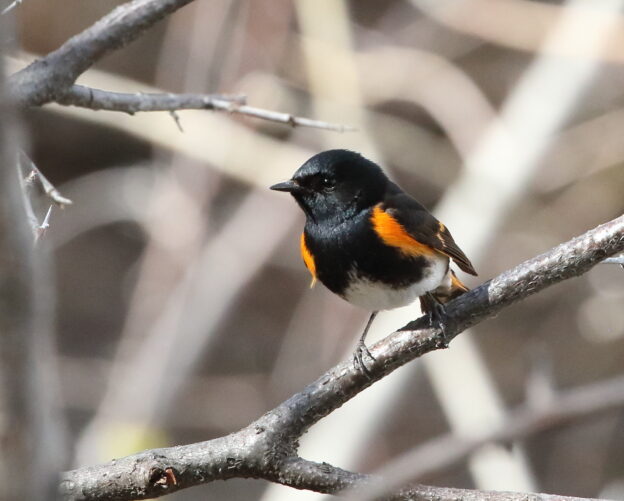
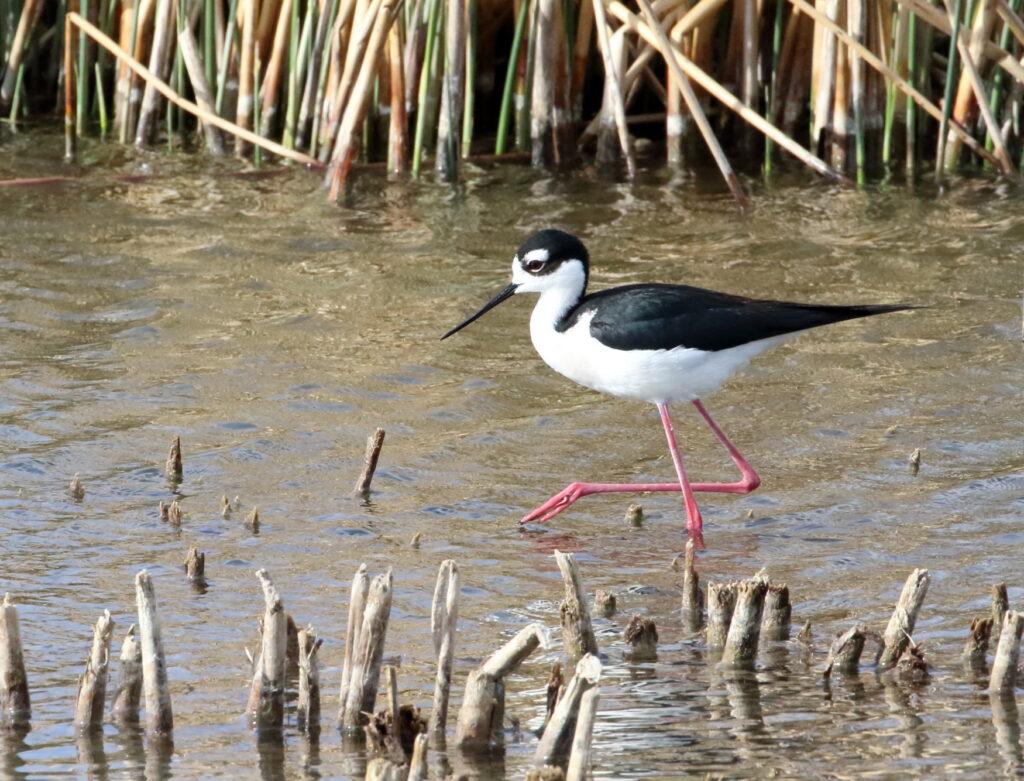
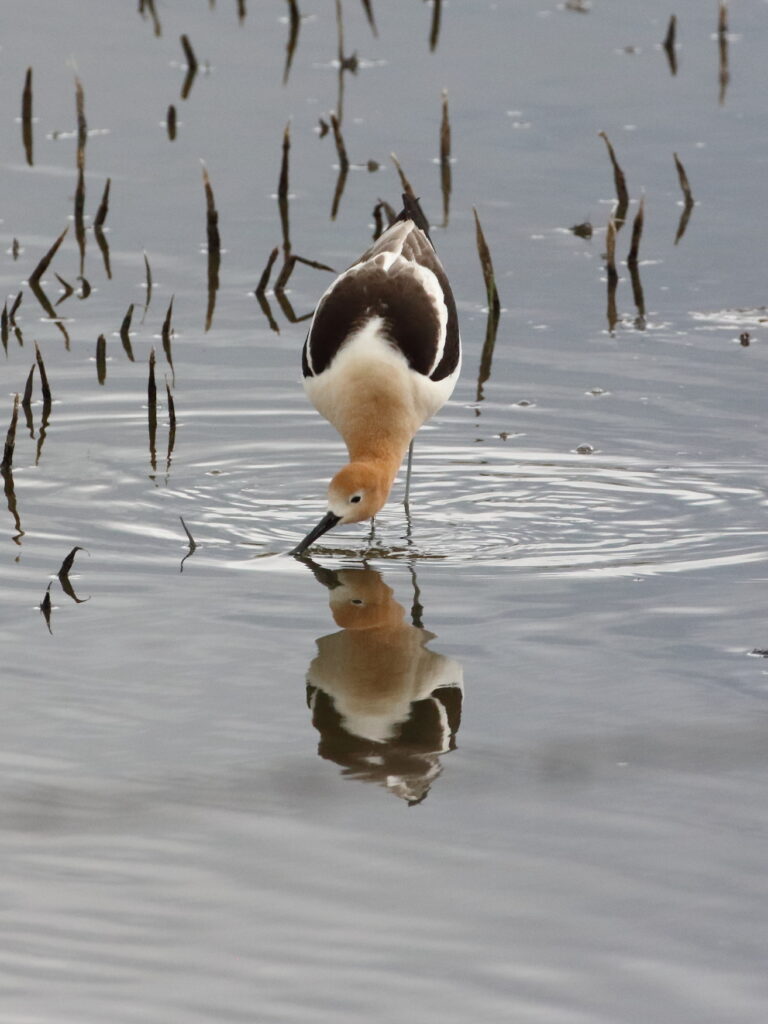
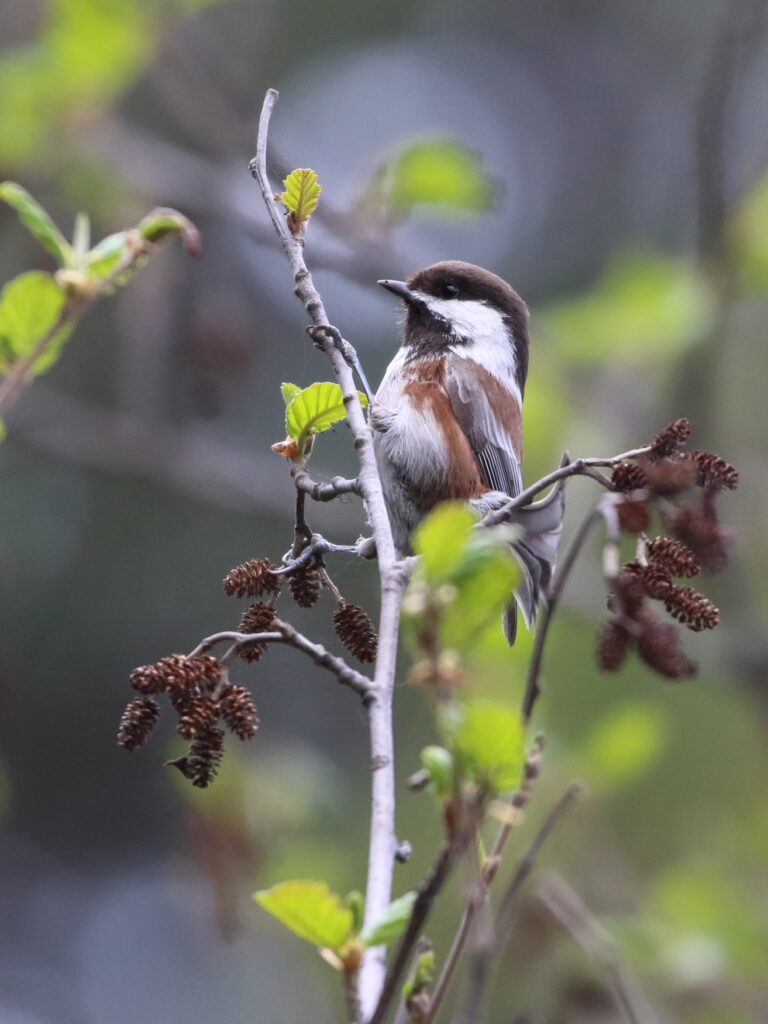
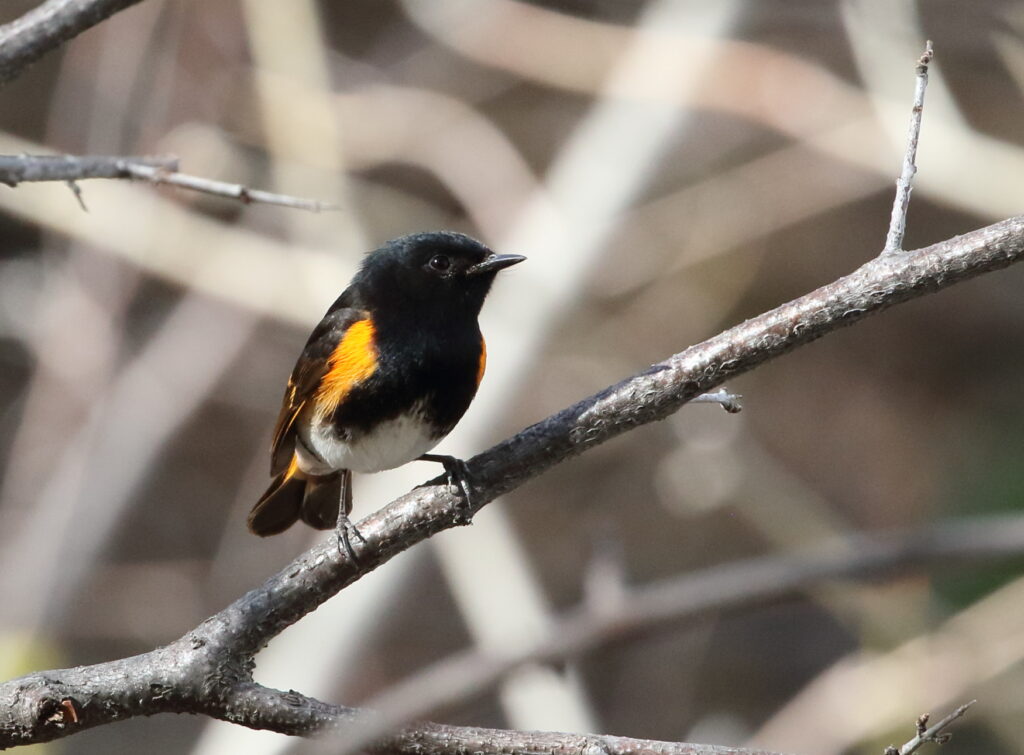
Just a few of the birds we saw during our Montana Big Day on May 18, 2021. Clockwise from upper left: Black-necked Stilt, American Avocet, Chestnut-backed Chickadee, American Redstart, Lincoln’s Sparrow.
As you ponder those, we’d like to leave you with some photos from our best Montana Big Day ever last week, during which we drove 500 miles and found 114 species—the first time we’d ever seen more than 100 different birds in a day in Montana. Ironically, our Bird of the Day was one that we didn’t even see—an American Bittern that we heard calling in the Swan River National Wildlife Refuge! We’d gone looking for AMBIs at least seven or eight times the past two seasons, so it was a real thrill to finally hear one. We hope that you all are having great birding adventures this spring, whether it’s watching your backyard feeder or planning your own Big Day, Big Week, or Big Life!