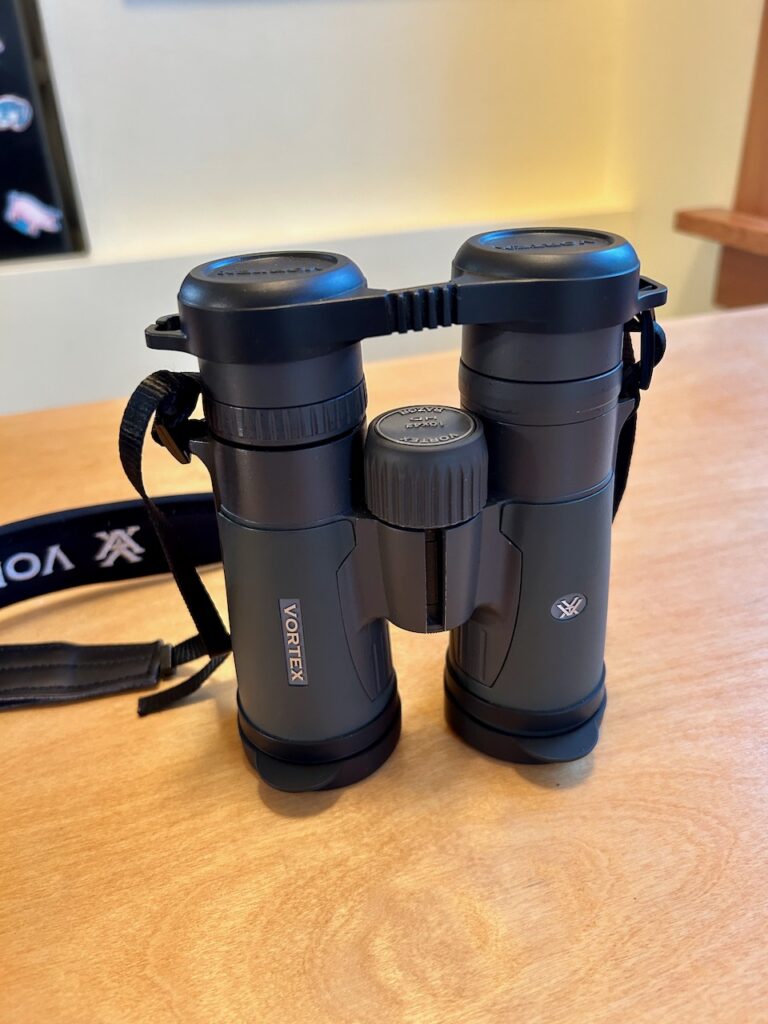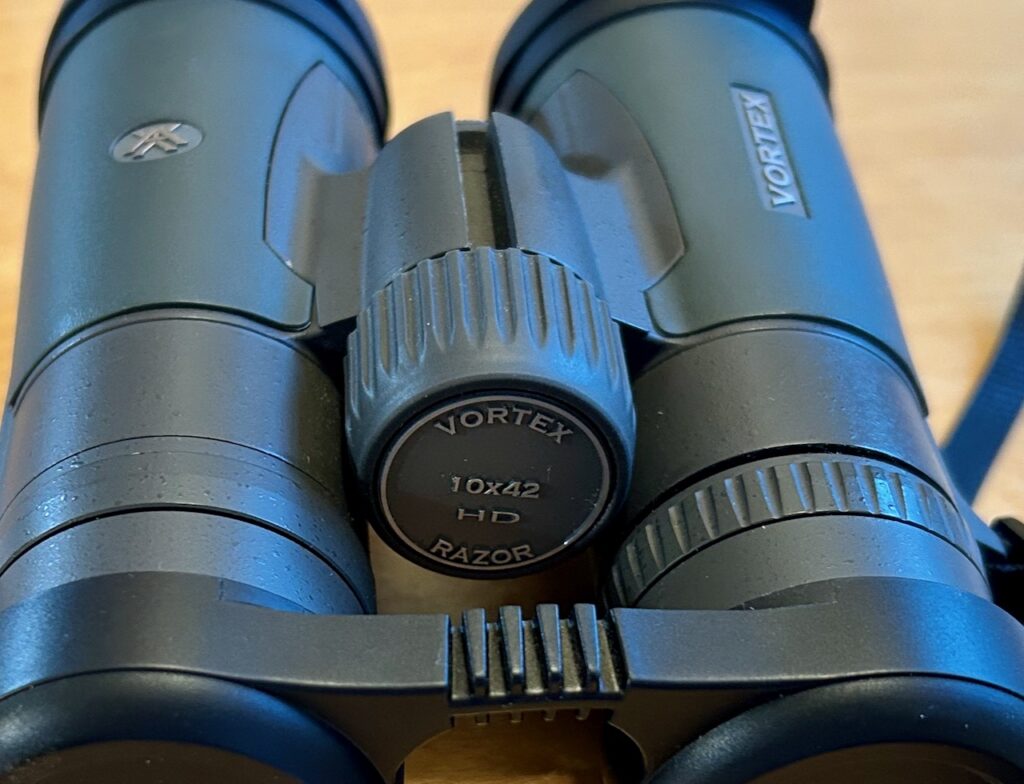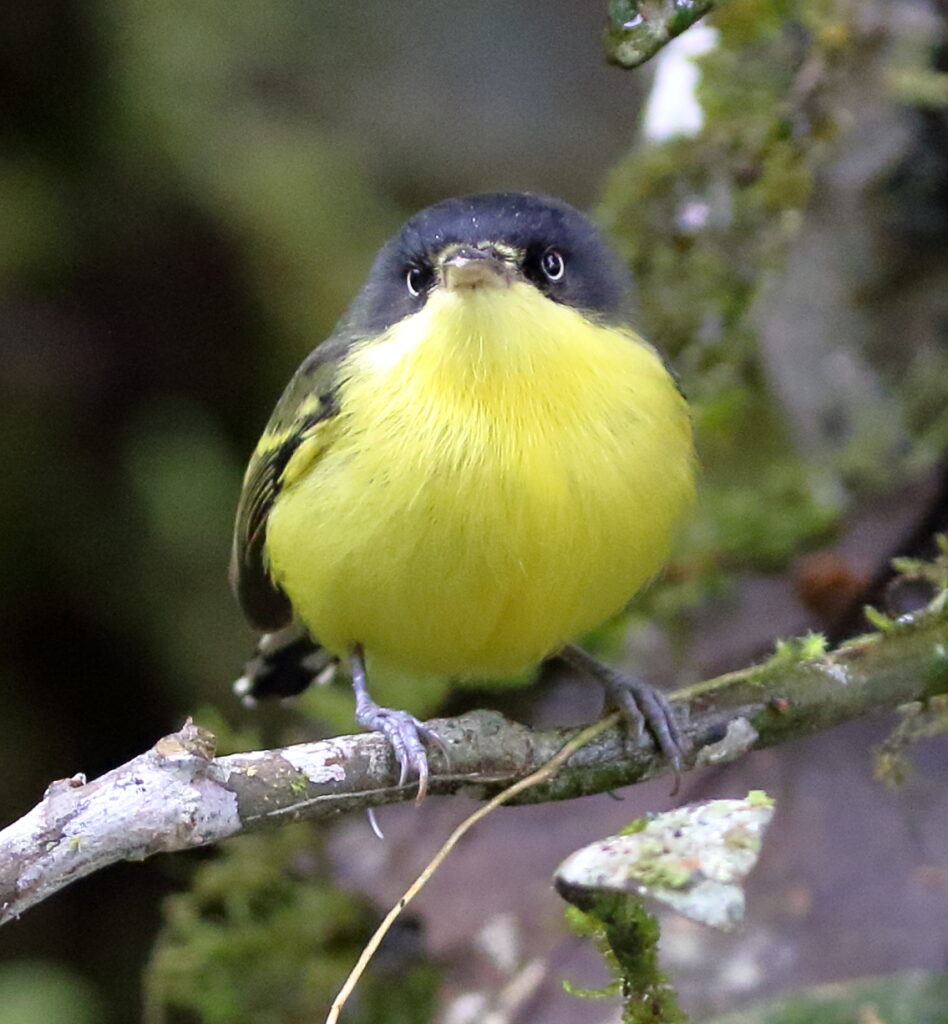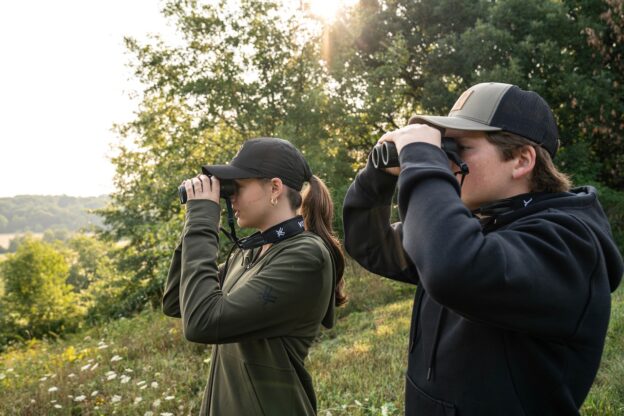
Category Archives: Binoculars

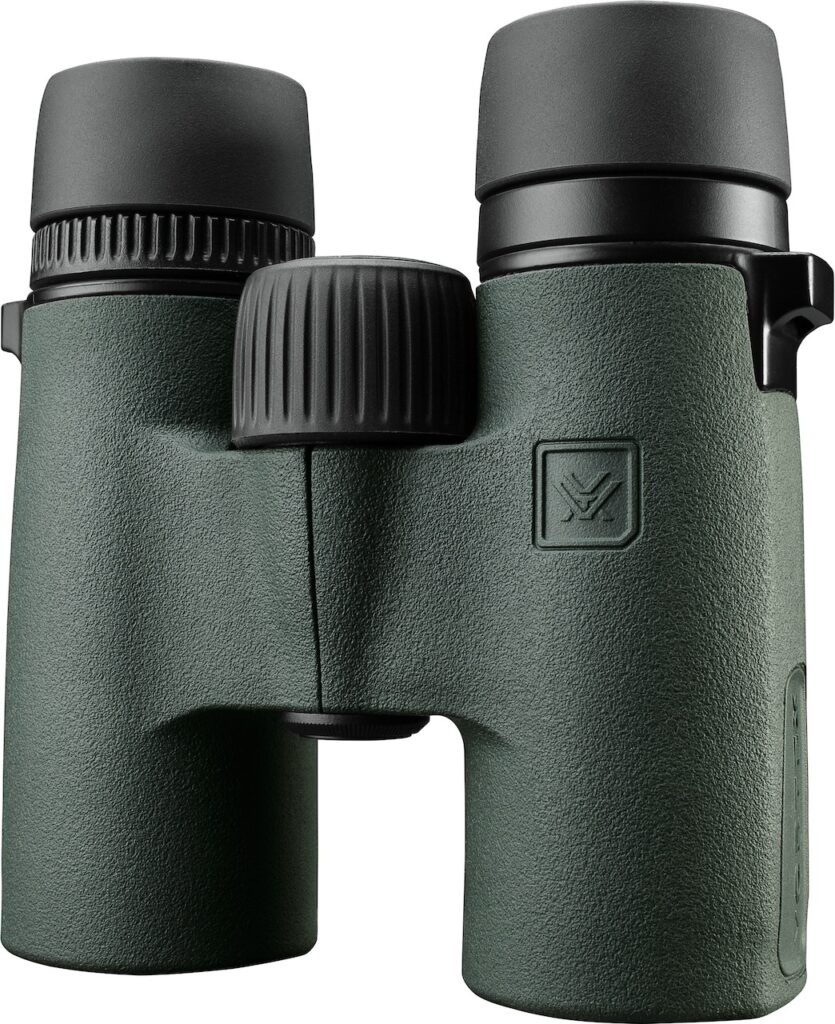
Vortex Bantam HD 6.5X32s: Binocs for Kids and Travelers (FSB Equipment Review)

Thank you for checking out our reviews! Braden and I write this blog to share our love of birding and provide useful information for our fellow birders. We do not receive any payment for any of our posts, but if you’d like to support our work, please consider buying one or more *new copies* of Sneed’s award-winning books such as Birding for Boomers or Warblers & Woodpeckers: A Father-Son Big Year of Birding. We appreciate your support and hope that you keep enjoying the world’s greatest activity!

Recently, my brother joined us to celebrate our youngest child’s graduation from high school. We had some extra time, so naturally we went to look for birds, an activity he has steadily been getting more interested in. He didn’t bring binoculars, so I loaned him a pair of Vortex Bantam HDs I have been testing out. The problem? When he departed, he didn’t want to give them back!

Although created and marketed for kids, the Bantam HD has terrific selling points for adults as well. But let’s start with the kids. Quite a few companies have been selling binoculars for kids lately, and that’s a no-brainer. As more and more adults get into birding, they naturally encourage their children to enjoy the activity, too. But most adult binoculars are too heavy and sometimes too complicated to use for the average kid, so it makes sense to seek out optics specifically designed for young people.

The Bantam HDs are lightweight, easy to use, and offer excellent light transmission and sharpness.

Unfortunately, many “kid binoculars” look and feel cheap—and often break almost immediately. Others come with high price tags (think $500 or more). I don’t know about you, but as a parent I can think of better places to put those extra few hundred bucks—at least until your child has shown an unquenchable passion for birds. And that’s where the Bantam’s first big selling point comes in: it can be purchased for only about $70.

More important, Bantams feel like real binoculars in your hands. They have sturdy construction, a comfortable grip, long eye-relief tubes for those with glasses, and a diopter ring to accommodate different vision between eyes. Oh, and did I mention they are waterproof, fogproof, and shockproof? Beyond all this, the clarity of the image they present is impressive. I hate to say this, but I found the focal sharpness to be better than the more expensive Triumphs we reviewed earlier in the year (see our review).

Though marketed for kids, the Bantams are an excellent choice for travelers as well.

The Bantam HDs do come with some trade-offs. While the optics are excellent, the rating 6.5X32 means that the magnification (6.5 power) is not as great as you find on most adult binoculars (including the Triumphs mentioned above). Also, minimum focal distance is a fairly lengthy 12 feet. This won’t be an issue for most users, but could come into play when looking at butterflies or other insects—or just screwing around, which of course most kids are wont to do when having a cool new toy in their hands. However, the Bantam HD’s light weight and ease-of-use more than compensate for these disadvantages.

Oh yeah, the weight, you may be thinking. I haven’t mentioned that yet, but here it is: these binoculars weigh a mere 14.4 ounces—less than a pound. In other words, they are light enough for almost all kids to carry them around for hours without complaint. And that means that they also are mighty attractive to adults as well.

On several recent birding trips that I led, I let adults use my pair of Bantams. The coordinator from our local natural history center immediately ordered half a dozen pairs!

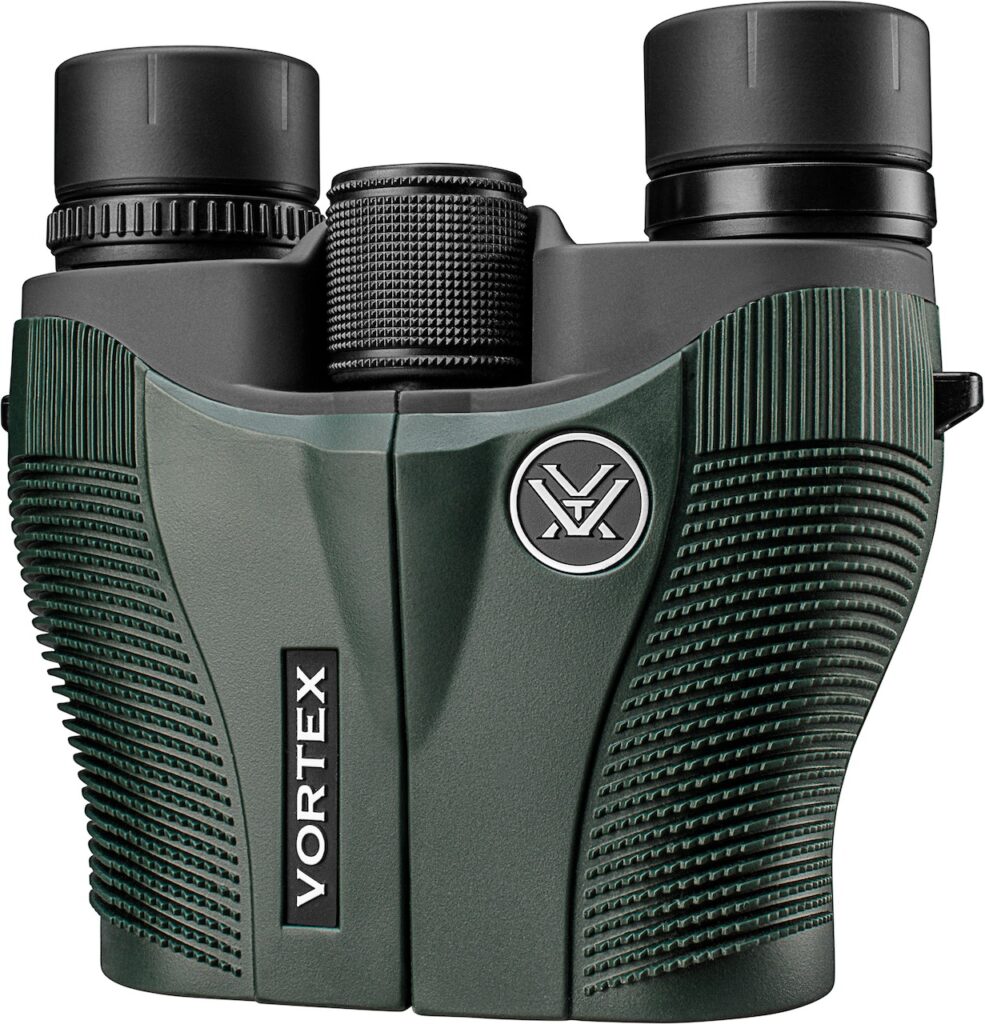
In fact, almost everything about the Bantam HDs screams TRAVEL BINOCULARS! Even if you’re not going on a dedicated birding trip, all birders understand that it is essential to take along a pair of binoculars on every adventure. But on a casual trip a regular pair of binocs, with its awkward size and weighing a couple of pounds, can make a person hesitate to stuff it into a carry-on. Years before trying out the Bantams, I bought myself a pair of Vortex Vanquish 8X26s for backpacking, travel, and to keep in our trusty minivan for “emergency birding.” They worked just fine for this—but despite their greater magnification and slightly lighter weight, I like the Bantams better. Why?

For travel, I found the Bantams to be a better choice than the more expensive Vortex Vanquish 8X26 (pictured here)—despite the greater magnification of the latter.

* The Bantam’s optics are just as good, if not better.

* Because the Bantam uses a roof prism system instead of a Porro (side-by-side) prism arrangement, I find the Bantams more comfortable to hold. According to Vortex, they also are more durable. (See this article for a comparison of roof versus Porro prism binoculars.)

* The Bantams are actually cheaper to buy.

You can probably tell that I’m unusually enthusiastic about the Bantams, and their low price makes them an almost risk-free investment—especially given that, like all Vortex products, they come with an unbelievably generous lifetime warranty. Whether you’ve got a promising young naturalist in your life or need a pair of handy travel birding binoculars, you won’t be sorry you checked these out.

Oh, and you might be wondering, Did my brother ever give my Bantams back before he left? The answer is yes—but he looked so forlorn about it I immediately ordered him his own pair!

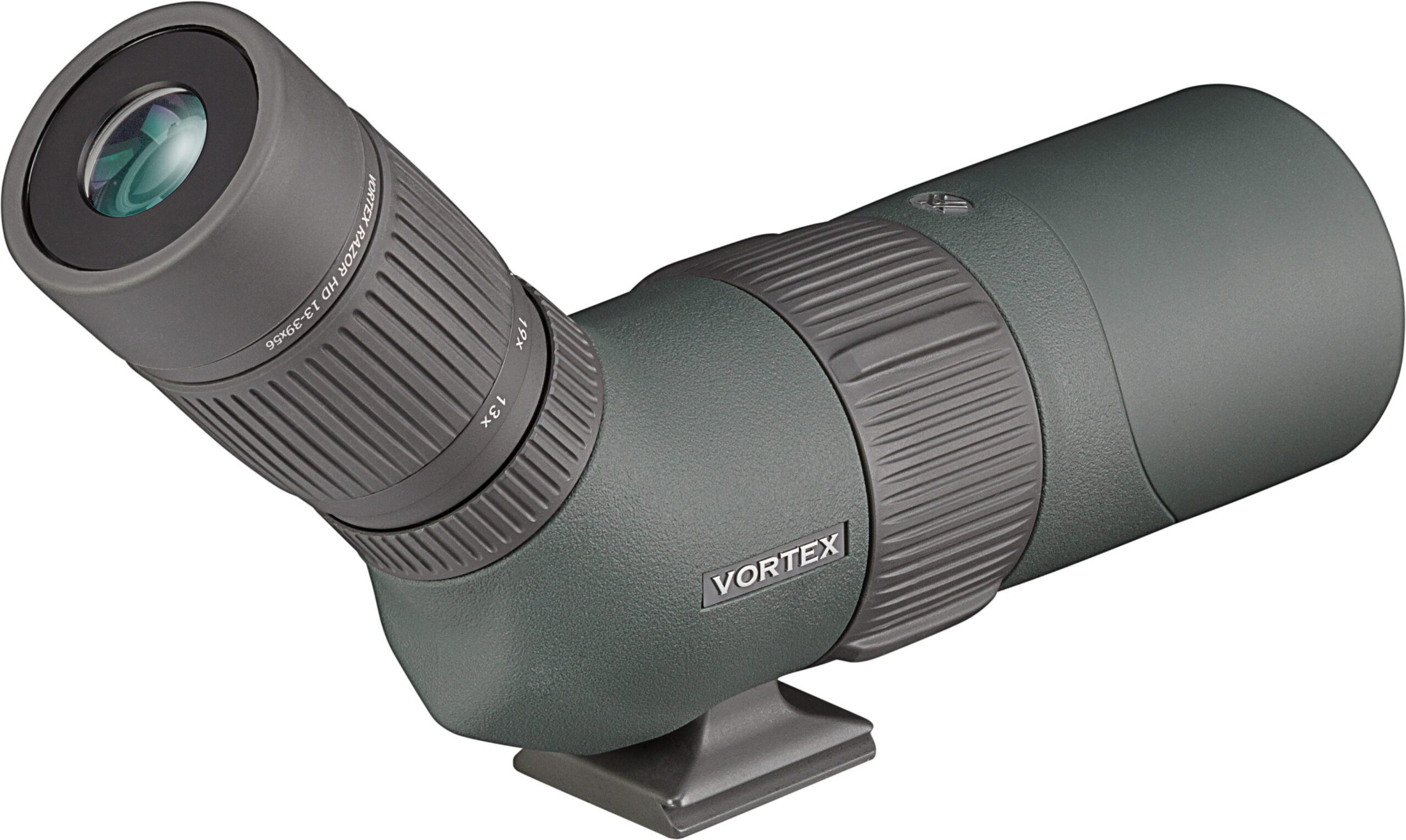
Vortex Razor HD 13-39X56 spotting scope with Mountain Pass tripod: A Perfect Travel Combo? (Equipment Review)

When it comes to equipment, birders tend to follow similar progressions. With binoculars, for instance, most of us start by borrowing any binoculars at hand. From there, we buy our own binoculars, focusing more on the sale price than the quality. Then, one day, we happen to look through a friend’s really good binoculars and it’s like “Whoa! I’ve got to save up for these!” If you’re at that point, check out our two recent reviews of binoculars that we highly recommend:

Birders, though, also go through a progression with spotting scopes, from not thinking we need one at all to wanting to get the best possible scope we can afford. But birders who travel a lot also progress to another step: getting a scope that is easy to travel with. Which is where I currently find myself. After going through the typical birder “evo-scopo-lution,” Braden and I bought ourselves a Viper HD 20-60X85 a couple of years ago. I can’t sing the praises of this scope highly enough. I like it so much that I lugged it with me on recent trips to California (see our post “Chasing Migrants”) and Canada (see our post “Birding Victoria, BC”). The problem? It’s not exactly travel-friendly. At eighteen inches (45 cm) long and weighing in at five pounds (2.3 kg), just the scope alone demands some tough packing decisions. Add in five pounds for a sturdy tripod, and just like that, you’ve increased your travel calculations by an awkward ten-plus pounds!

I was discussing this dilemma with a Vortex dealer account manager recently and I asked him, “Hey, do you have any good travel scope/tripod combos I can try out?” Three days later I received a Vortex Razor HD 13-39X56 scope with a Vortex Mountain Pass tripod. Even better, I was just about to head out on a trip to central Montana where I would be able to put it through its paces (see our last post, “Hi-Line Report”). But before I critique this dynamic duo, let me give you some basic stats:

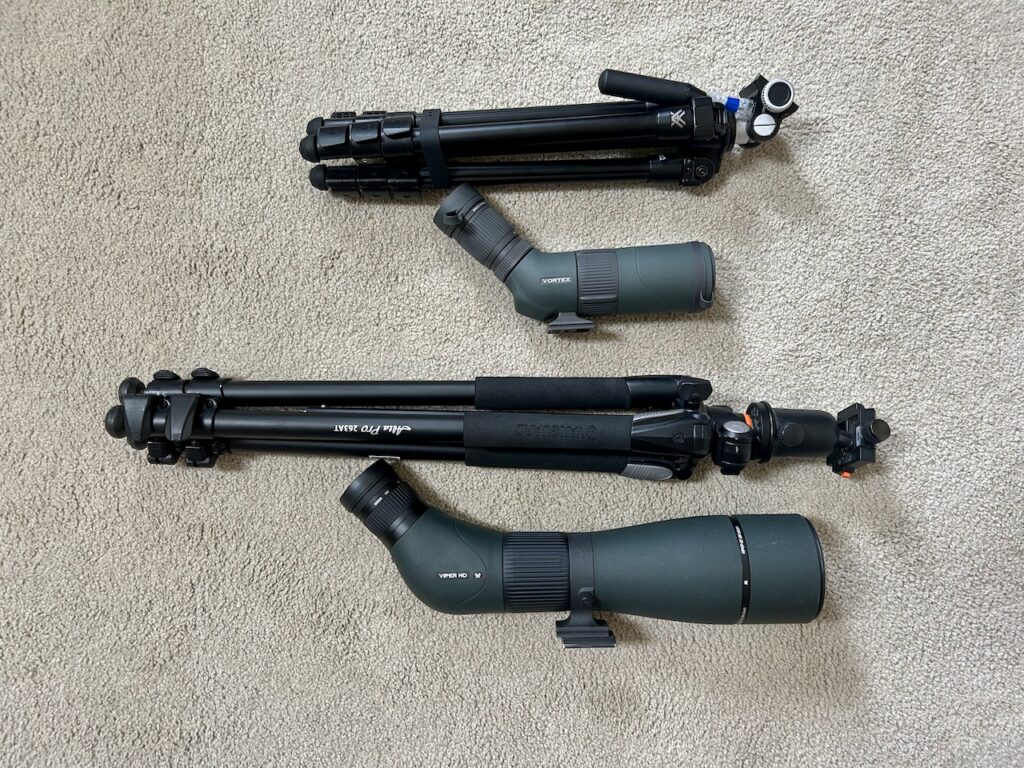
* Fully assembled, the Razor HD 13-39X56 scope measures only 10.5 inches long—short enough to fit into almost any backpack. When the eyepiece is removed, it shrinks to an incredible 8 inches!

* The Razor HD 13-39X56 weighs only 1 lb. 14 oz—less than one of those silly two-pound weights many of us buy for rehab exercises.

* The Mountain Pass tripod measures just over 21 inches—also short enough to slip into many backpacks—and weighs almost exactly 3 pounds.

One glance shows the dramatic difference between packing my usual scope/tripod combo (bottom) and the Vortex Razor HD 13-39X56 scope with Mountain Pass tripod (top).

In other words, the entire combo comes in at an almost feather-light 5 pounds—less than half of what I am used to lugging around. This alone gave me a huge crush on it! But (suspense building), how did it perform? I had the chance to use the scope in both optimal and stormy conditions, so let me take those one at a time.

Optimal Conditions: Basically, I could not be more pleased with the Razor HD 13-39X56/Mountain Pass combo in great conditions. For its size and weight, the scope’s optics are terrific, giving sharp, clear images at distances of at least a couple of hundred yards. In fact, under the vast majority of conditions, interference from heat waves and similar air turbulence will distort the image before the scope’s distance precision is exceeded. Birds and other animals look like they are almost right in front of you in all their crisp, colorful glory. What’s more, I took the combo out on a two-mile jaunt at a local birding hotspot and hardly paid it any attention as I strolled along with it resting over my shoulder. This is in sharp contrast to my other, heavier scope/tripod combo, which Braden and I have to frequently trade carrying as it digs into our shoulders.

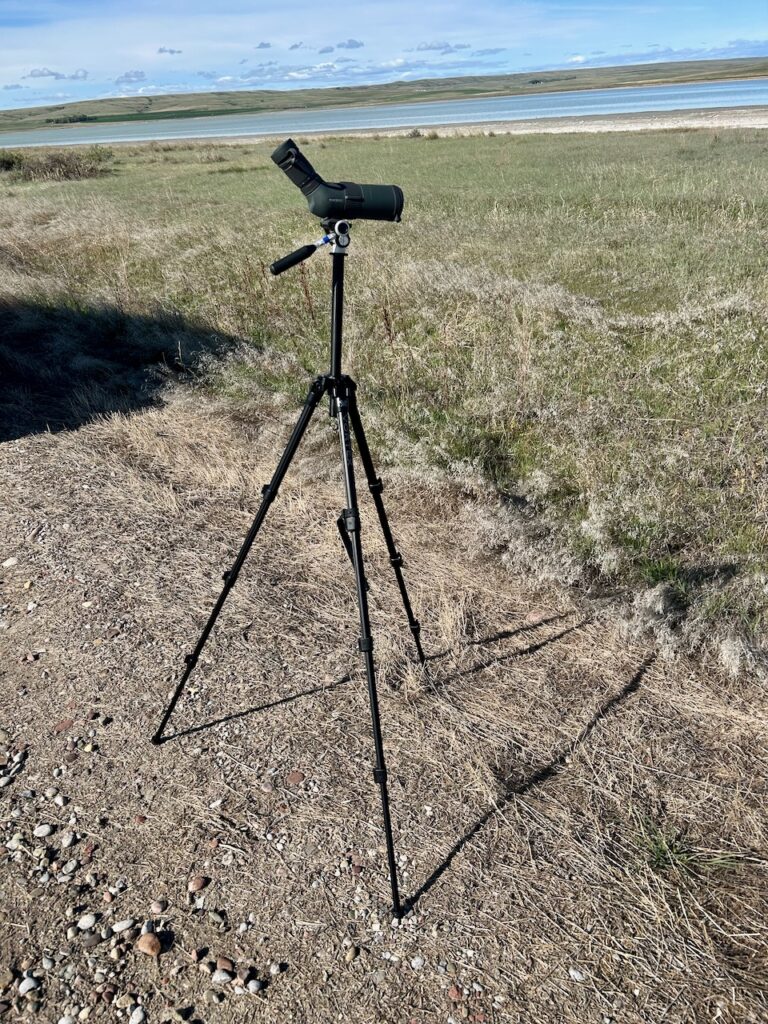
I did not try this myself, but the scope is light and convenient enough to easily mount on a window, say, at Freezeout Lake or Bowdoin? (Special window mount required.)

Stormy Conditions: During my recent trip to Bowdoin National Wildlife Refuge, I unfortunately encountered very gusty conditions. As you might imagine, using the scope/tripod combo proved more challenging. The optics, of course, stayed the same, but the combo’s light weight began to be a factor. I had to hold down the tripod with one hand to reduce shake enough to get on distant ducks and other birds—but this is a problem even with my heavier scope/tripod combo and every other combo that I have used in windy weather. To help compensate for this, the Mountain Pass tripod comes with a hook from which you can hang a stabilizing weight, but that means you have to bring this along with you (or use a boot, young child, or other handy hangable weight). I did not try this myself, but I’d guess that even with the weight, gusty conditions will pose a challenge. That’s no criticism of the combo—just a fact of birding life.

In calm conditions, the Razor HD 13-39X56 and Mountain Pass tripod perform like a dream, as I learned on a recent trip to Freezeout Lake near Great Falls. Because they are lighter, wind produces more shake, just as it does for all but the heaviest scope/tripod combinations.

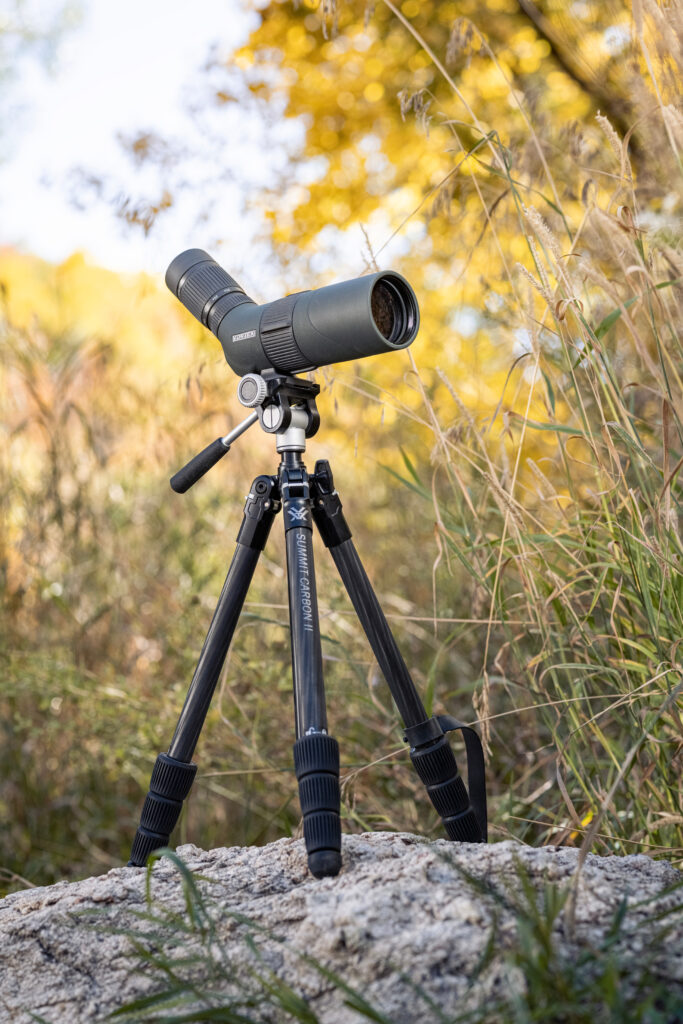
To help matters, you don’t have to use the lightweight Mountain Pass tripod. The Razor HD 13-39X56 is so good that you might make it your only scope purchase, and if you do, you might consider buying a heavier tripod that will deliver better performance in rough conditions.

As this photo clearly shows, beefier carbon-fiber tripods are available for the Vortex Razor HD 13-39X56. Check out the Vortexoptics.com for details.

However, the point of this article is lightweight travel, and I have to say that the Razor HD 13-39X56/Mountain Pass combo strikes a wonderful balance between weight, magnification, and quality. An added advantage to this combo is that because Vortex makes both products, you won’t need an additional mounting plate to affix the scope to the tripod. Mounting plates generally are a pain in the rump, always coming loose at inopportune moments, so for me this is a significant advantage.

You are probably asking yourself, “Does the Vortex Razor HD 13-39X56 scope have enough magnification for distant birds?” With a maximum magnification of 39, the answer is that it certainly has less than what I have on my 60X85 scope. That said, I did not feel very limited by this. Again, in my experiences atmospheric disturbances are usually more likely to limit your observations than the power of this scope.

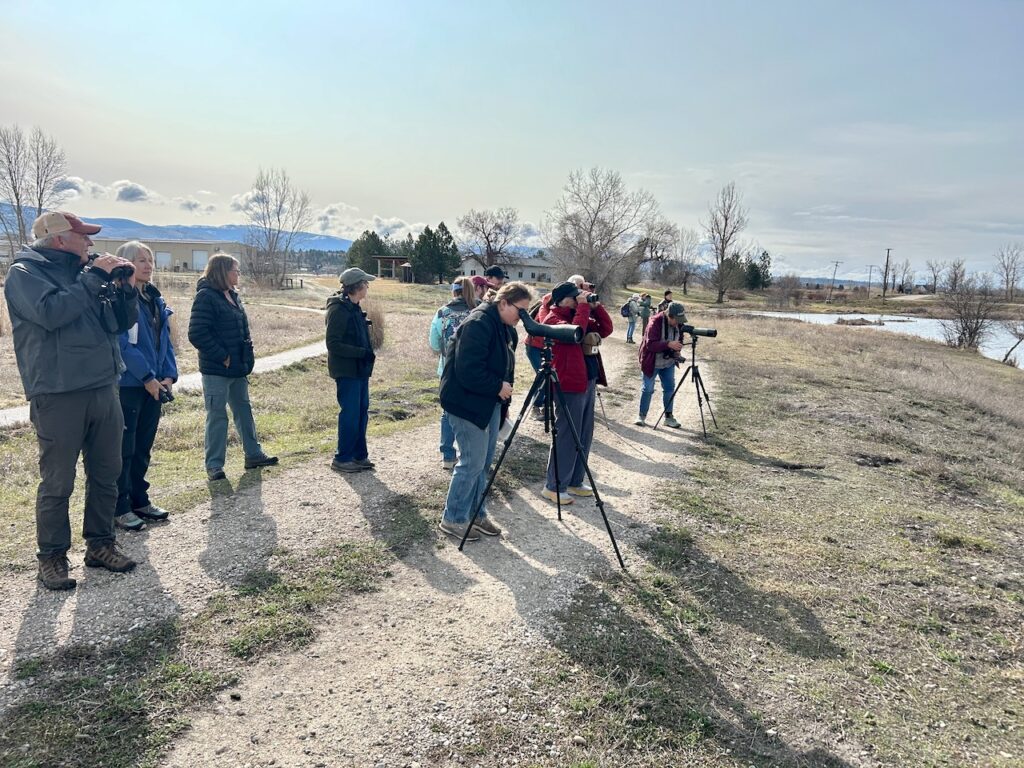
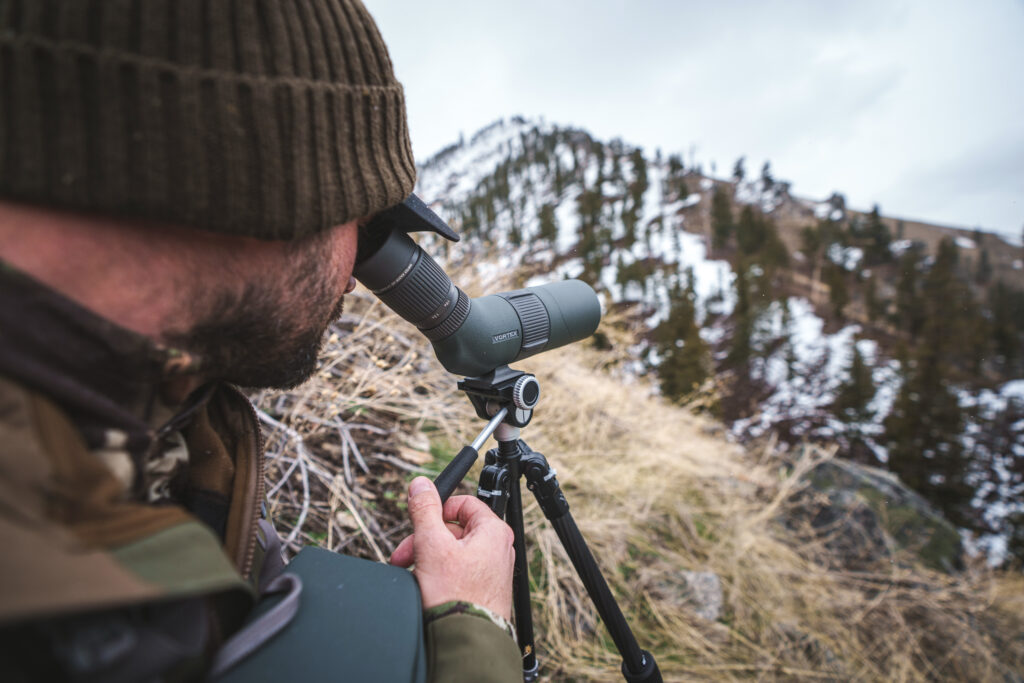
This guy is obviously using his scope to check out a Northern Goshawk for his life list. Er, or maybe he’s looking at an elk. Either way, the Vortex Razor HD 13-39X56 delivers enough oomph (magnification and clarity) to serve as your primary birding scope in most situations.

More about the tripod: I should point out that before receiving the Mountain Pass tripod, I was a strict adherent to “ball head” tripod heads, ones that allow you to quickly tilt and rotate the scope in any direction with a single control knob. The Mountain Pass head, though, comes with a “pan and tilt” head, but unlike some other pan and tilt heads I’ve used, both the pan and tilt also are controlled by a single knob. This makes the whole thing almost as easy to use as a ball head. To lock down the swivel of the head, you just hand-tighten the knob further. I suspect that this may wear out or get stripped over time, but as I’ve mentioned in other posts, Vortex’s lifetime warranty has you covered.

Like many other tripods, the Mountain Pass features four-part, telescoping legs that allow it to adjust to almost any height (though folks over 6-feet tall may want a taller tripod). The tripod legs also have levers that allow them to splay extremely wide for observing, say, a grouse lek at eye level.

Pricing: I have been so taken with this scope that I’ve neglected to mention the price. Although listed considerably higher, the Vortex Razor HD 13-39X56 scope can currently be purchased for right around $1000 while the tripod runs about $150. These are not insignificant sums, but are a great value for the quality you get—as anyone who has used cheaper scopes and tripods will quickly learn.

Bottom line: I love the Vortex Razor HD 13-39X56/Mountain Pass combo and am deeply upset that I have to return it to Vortex. Who are they to ask for their equipment back, anyway? I suspect, however, that I will be purchasing this combo in the future and am already looking forward to using it on a host of future travel birding adventures.

The Vortex Razor HD 13-39X56 delivers a high-quality, reasonably-priced product that is both outstanding for travelers, and powerful enough for most everyday birding situations.

Target Birds and a Shocking Surprise in the Texas Hill Country (Texas 2025 Part 3)

After spending two glorious birding days along the east Texas & Louisiana coasts (see “Peveto Woods, Louisiana: Spring Migration Hotspot.”), I returned to San Antonio for my four minutes—yes, you read that right—four minutes of work to promote my book Birding for Boomers. While there, I reprised my now-sort-of-famous birding route along San Antonio’s Riverwalk (see our post “Birding San Antonio’s Riverwalk—Are You Nuts?”). Once again, I found birds—but not enough to write another blog about it. As soon as I finished my speaking gig, though, I headed west into the Texas hill country. Why? To try to find two birds Braden and I had talked about our entire birding careers.

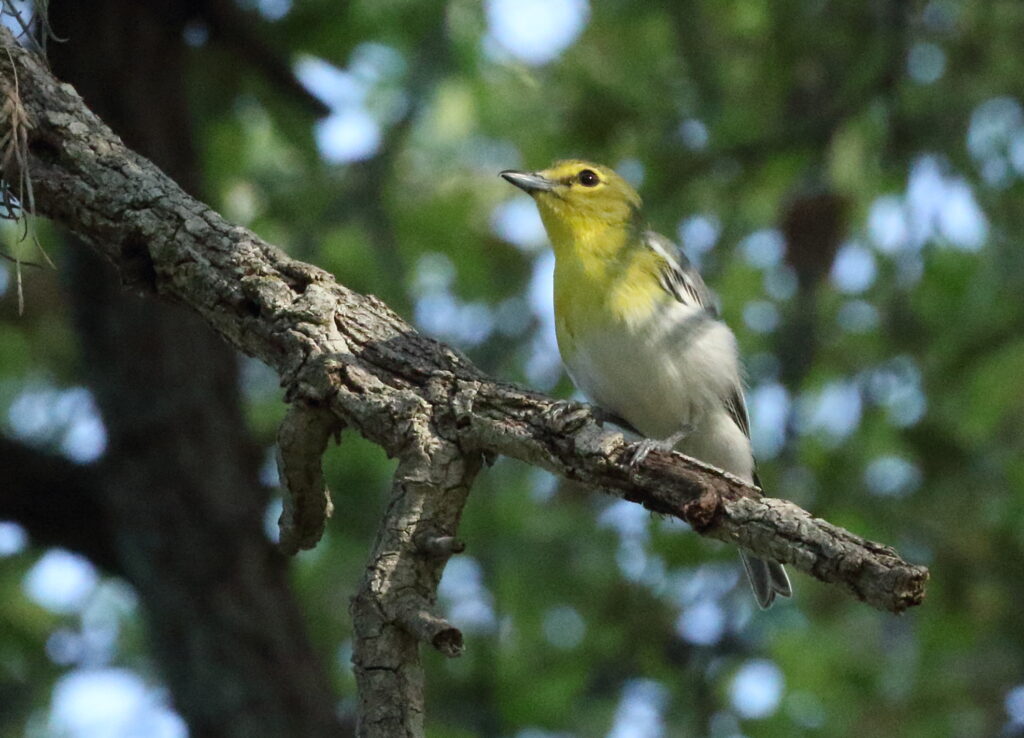
Leaving San Antonio, I drove two hours to the hot, fairly flat town of Uvalde and booked myself into a Hampton Inn. That afternoon, I picked up a few nice birds in the town’s Memorial Park including another Yellow-throated Vireo and my first—and only—Green Jay of the trip. I also grabbed an excellent Tex-Mex meal at El Herradero de Jalisco restaurant. The next morning, I hit the road before dawn.

One bonus to birding is that we birders invariably get to see spectacular sunrises and sunsets. As I headed north, I witnessed an unforgettable sizzling orange sunrise on one side of the car while an equally spectacular orange full moon set in the west. It boded well for what would be arguably the most important—and most demanding—birding day of my trip: my quest to find Black-capped Vireos and Golden-cheeked Warblers.

Anyone who has been birding for more than a couple of years has probably heard of these two Texas specialties. Of the near-threatened Black-capped Vireo, Braden simply says, “It’s the best vireo.” Quite a statement considering how cool other vireos are! The bird winters in Mexico, and its primary breeding range lies in central Texas—though it technically extends from far northern Mexico to southern Kansas. The endangered Golden-cheeked Warbler winters in Central America and far southern Mexico, but breeds exclusively in central Texas.

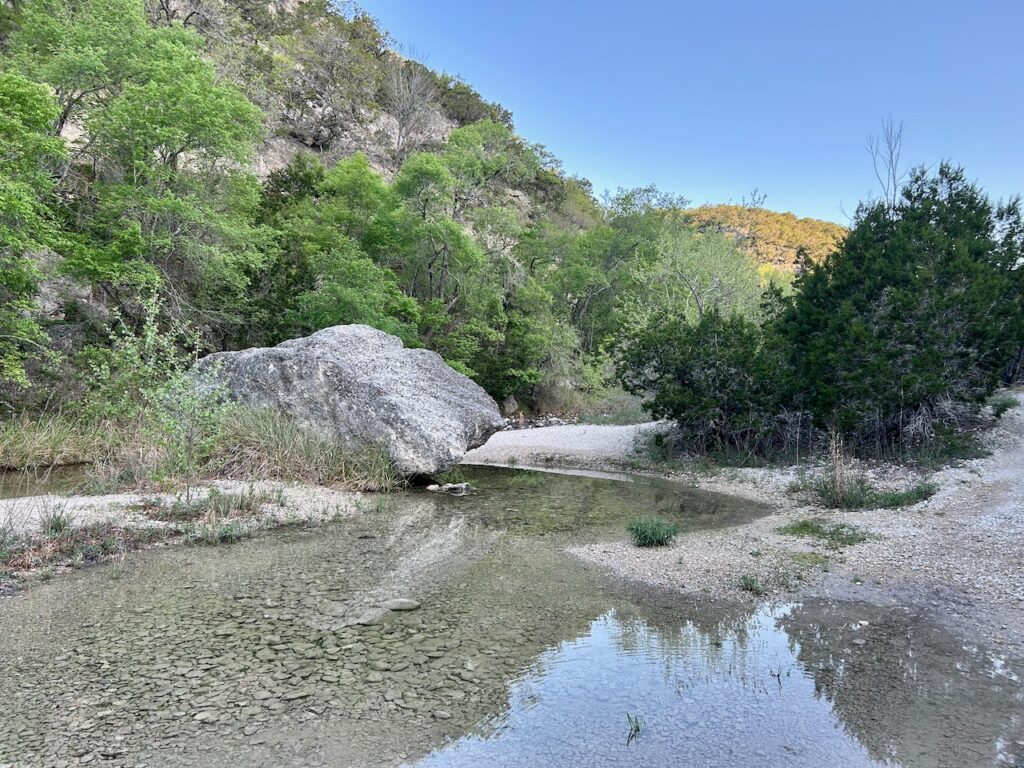
According to eBird lists, Lost Maples State Natural Area is one of the most reliable places to find both Black-capped Vireos and Golden-cheeked Warblers.

As usual, I felt a bit skeptical of my ability to find these birds. Call it psychological protection against failure. Nonetheless, I did have a plan. After scouring eBird hotspots, bar charts, and birding lists before the trip, I settled on Lost Maples State Natural Area as the most reliable location to find both species. Indeed, when I pulled into the parking lot, I met a couple who had staked out a bush where they had seen a Black-capped Vireo the previous day. “We saw Golden-cheeked Warblers in that tree about fifteen minutes ago,” the woman added, motioning to a nearby oak tree. I briefly pondered waiting around for either species, but the canyon before me beckoned and I reasoned I could hang around the parking lot later if need be.

I immediately loved Lost Maples, especially since its habitat reminded me of the chaparral and oak woodland I’d grown up with in Southern California.

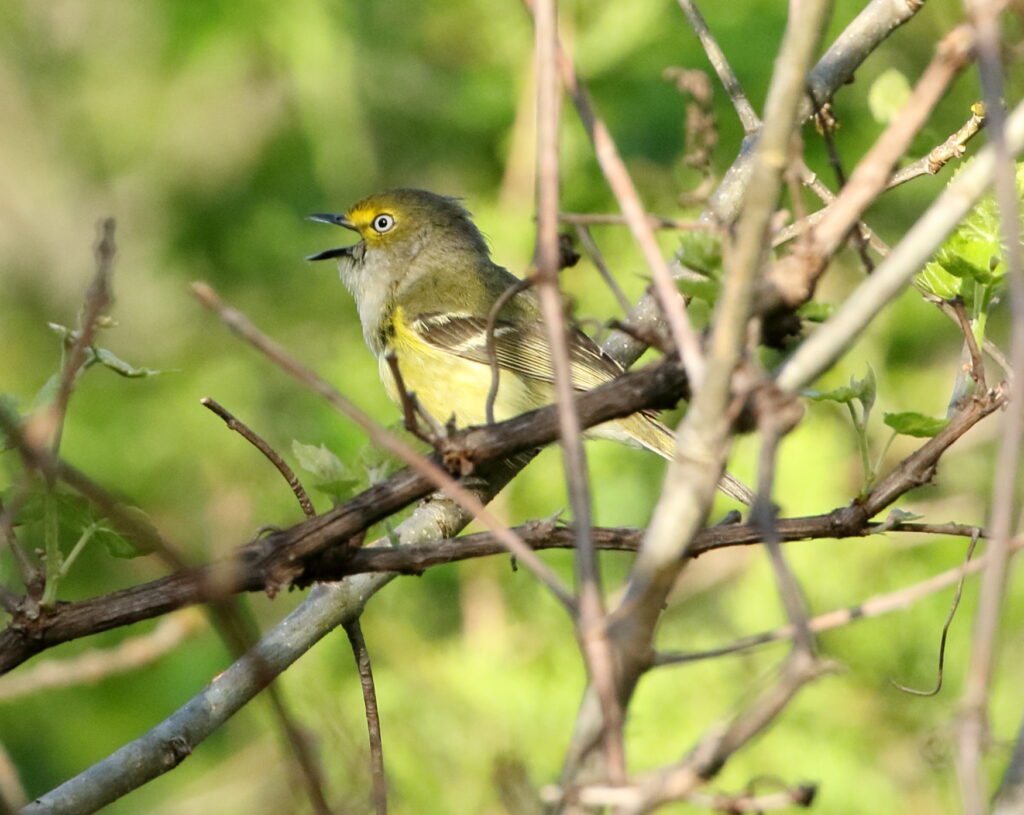
I headed up the park’s East Trail and immediately felt at home in the scenic canyon’s xeric landscape full of oaks, junipers, mesquite, and other classic Western vegetation. I also realized that I had tackled some tough birding! Birdsong rang out all around me, but I got few glimpses of actual birds. Thank god for Merlin’s Sound ID, which I ran multiple times to get an idea of what might be around me: an impressive list that included Canyon and Carolina Wrens, Olive Sparrows, Yellow-breasted Chats, and at least four (other) kinds of vireos. Finally, however, “Black-capped Vireo” popped up on Sound ID and I stopped to seriously scour the nearby vegetation. Over the next five minutes, I got a brief glimpse of a Blue-headed Vireo and good looks at a White-eyed Vireo.

I had to work hard for actual bird sightings at Lost Maples, but managed a great look at a White-eyed Vireo—one of five vireos on my checklist for the day.

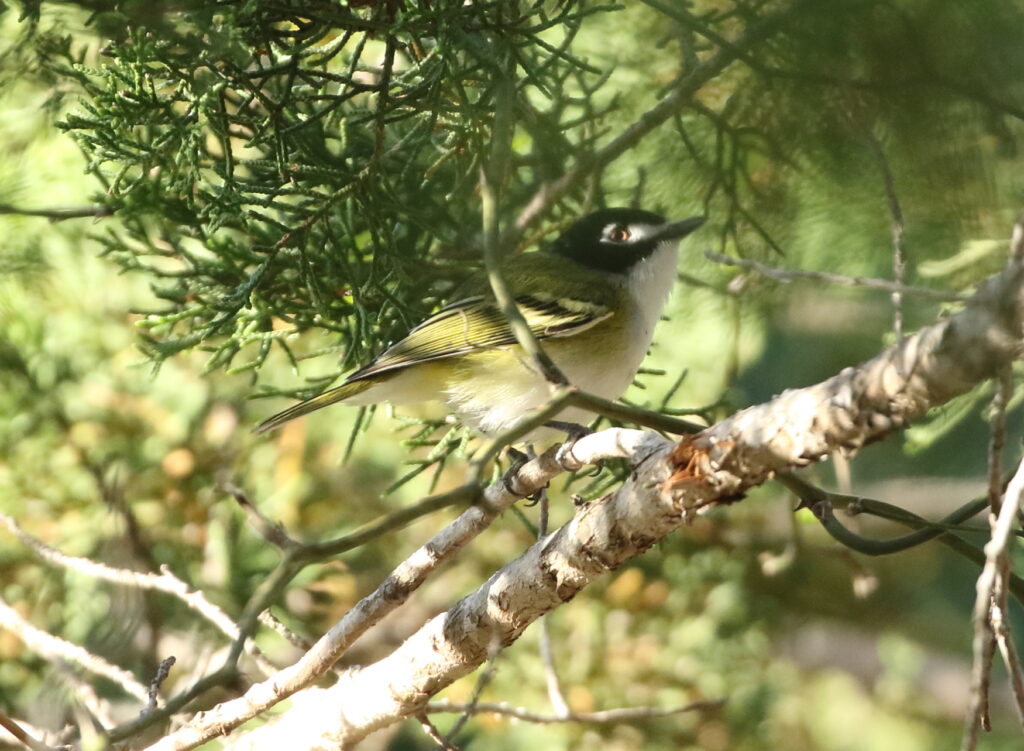
Finally, I saw the distinctive black head and white spectacles of the bird I most hoped to see: a Black-capped Vireo! Soon, I saw another. The birds definitely did not want to strike a pose and I followed them as they flitted almost frantically from bush to tree and tree to bush. I finally managed a couple of ID photos, and then just tried to relax and observe them. It was a good moment, and I felt glad I hadn’t just waited around the parking lot hoping for one to appear.

I was so glad that I hadn’t waited around the parking lot to find my Lifer Black-capped Vireos!

That left the Golden-cheeked Warbler. Sound ID had picked it up a couple of times as I hiked the canyon, but it wasn’t until I was back in the park next to my car that I began to figure out the bird’s song. With my imperfect hearing, it sounded like a high-pitched buzzing trill—a lot like an insect, but distinct from any other bird calls around me. Soon, I found myself standing for five minutes directly in front of an oak tree as a Golden-cheeked sang repeatedly.

I never saw it.

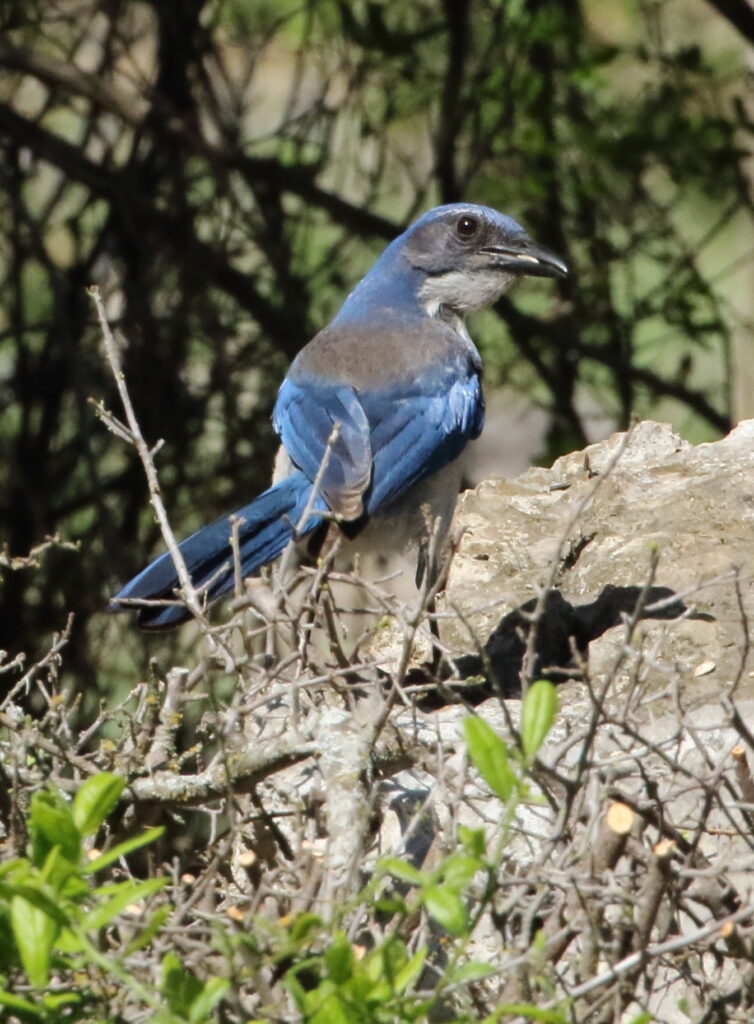
This frustrating experience repeated itself several times. I eventually added the bird to my eBird list (“Heard only”), but I was not a happy camper and I thought I might remove it later. As shy as they were, the Black-capped Vireos had been publicity hogs compared to the Golden-cheekeds! Knowing when I was beaten, I headed off to some bird feeders set up in the park about a mile away. There, I tried to console myself with leisurely views of Woodhouse’s Scrub-Jays and Scott’s Orioles. I also told the bird hostess about my lack of success actually seeing a Golden-cheeked Warbler. “Any suggestions?” I asked.

While pondering my next moves, I spent a pleasant half-hour watching Woodhouse’s Scrub-Jays and Scott’s Orioles at the Lost Maples bird feeders.

“Well,” she said, “I’d head up the East-West Trail right here until you come to the ponds about a mile on. Just keep scanning the trees as you walk.”

By now, the heat had built into the low 80s. Another hike did not sit high on my priority list, but darn it, I hadn’t come all the way to the Texas hill country for nothing! Slinging my camera and new Vortex Viper 8X42s over my shoulders I resolutely started marching.

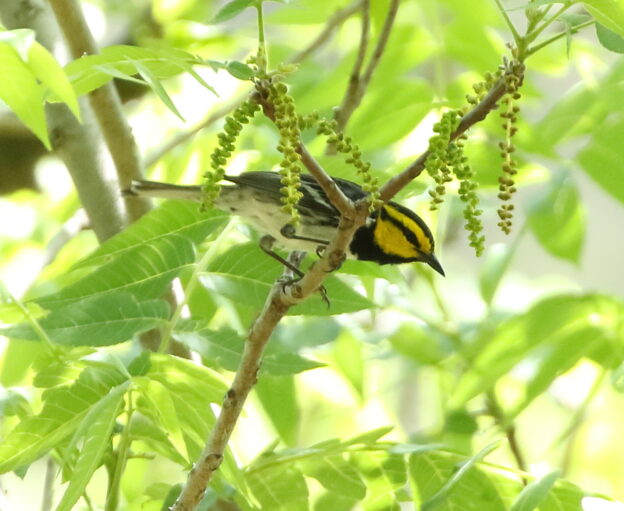
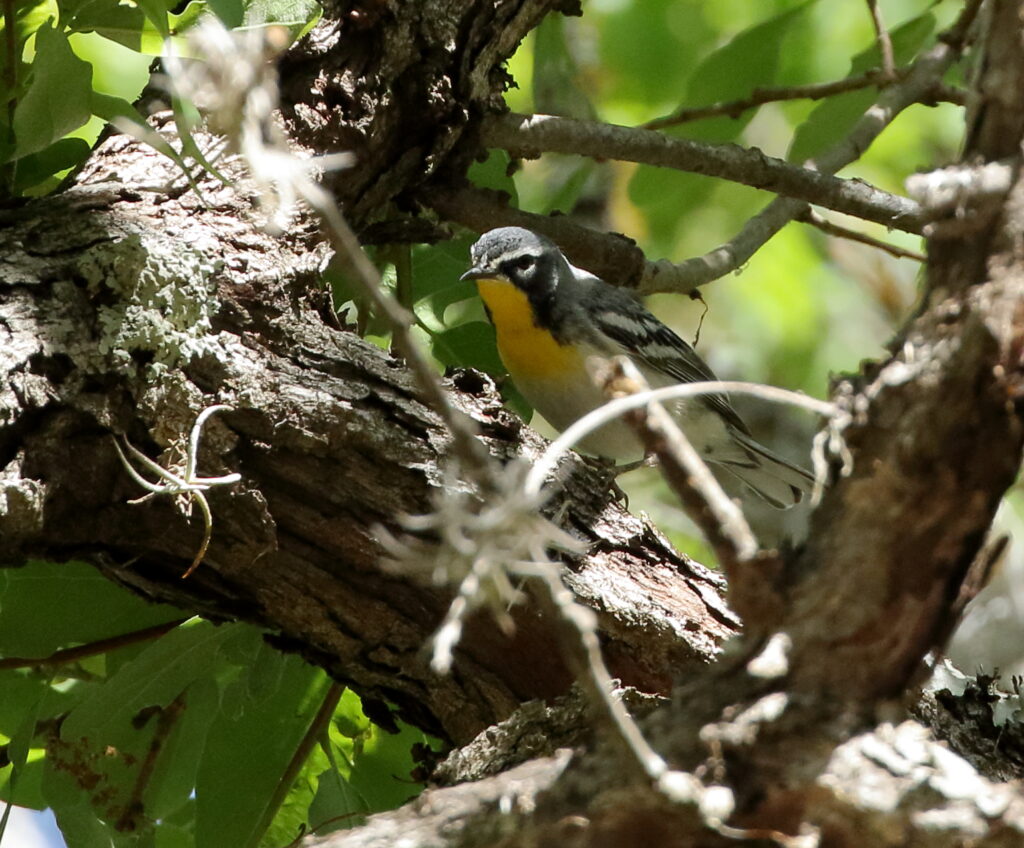
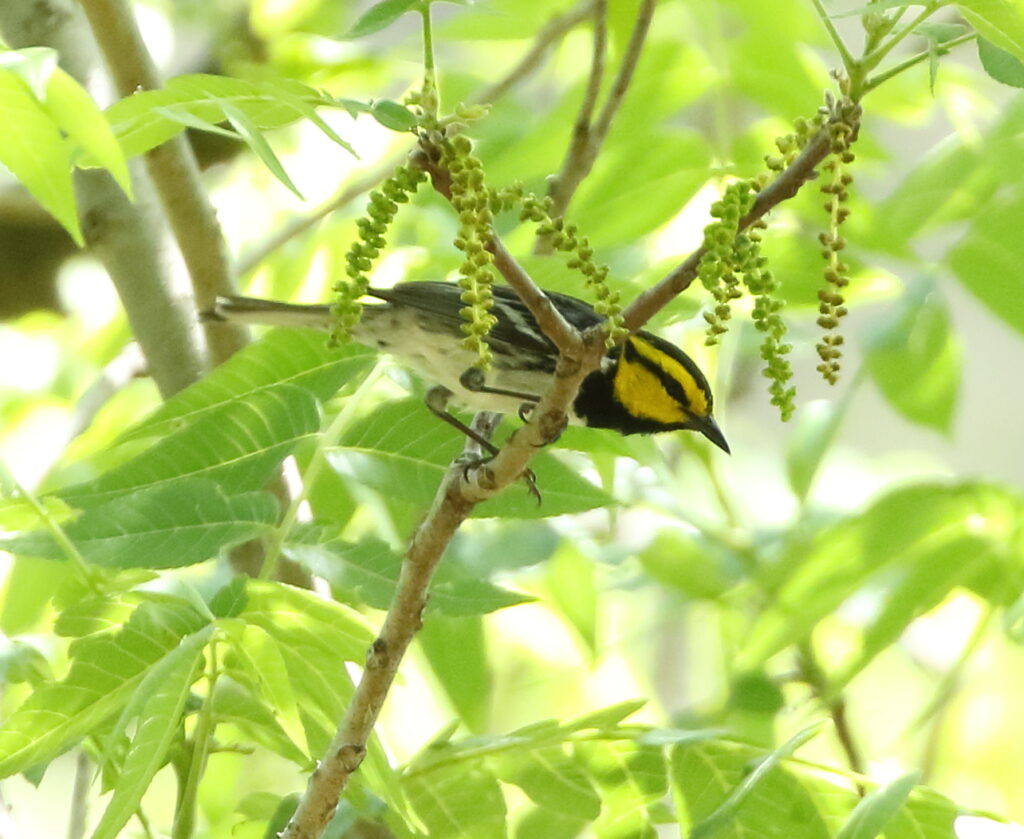
Fortunately, a number of beautiful oak trees provided shade to parts of the trail. I kept stopping frequently and soon enough began hearing more Golden-cheeked Warblers. Again, they absolutely refused to be seen, even when I seemed to be standing right in front of them! As I was scouring one oak tree, though, I detected movement and a flash of yellow. My excitement rose . . . but something didn’t look quite right. Finally, I got my binoculars on the bird and I realized what it was. This wasn’t a Golden-cheeked Warbler. For me, it was even better: my lifer Yellow-throated Warbler!

My Bird of the Day wasn’t actually the Black-capped Vireos or Golden-cheeked Warblers I’d set out to find. It ended up being my Lifer Yellow-throated Warbler—a complete surprise!

I couldn’t have been more thrilled. On other trips, I had hoped to see one of these birds multiple times without success, but today, it hadn’t even been on my radar! The bird was every bit as beautiful as a Golden-cheeked, and a quick look at the Merlin app confirmed that I was indeed within its breeding range—but just barely. According to Cornell’s Birds of the World, it has a relatively small, disjunct breeding range in central Texas separate from its more extensive breeding range across the Southeast. While fortunately not endangered or threatened, this bird had assumed an almost mythical status in my mind and to see it now . . . well, it felt exhilarating.

I felt both grateful and relieved to finally see a single Golden-cheeked after multiple GCWAs had taunted me all day!

Long story short: I finally spotted a single Golden-cheeked Warbler after spending almost an hour standing in front of trees where one or another GCWA sat singing and taunting me. While I had hoped to add just the Black-capped Vireo and Golden-cheeked Warbler to my life list during my entire Texas week, I had now seen an amazing seven lifers. Even better, having tracked down the BCVI and GCWA, I now had the entire next day to pursue one more. Check out the next post for details!

Shopping for a great new pair of binoculars that are reasonably priced? Be sure to check out our recent (unpaid!) review of Vortex Viper HDs by clicking here!

Vortex Viper HD Binoculars (Equipment Review, and/or Texas 2025 Part 2-½)

Thank you for checking out our reviews! Braden and I write this blog to share our love of birding and provide useful information for our fellow birders. We do not receive any payment for any of our posts, but if you’d like to support our work, please consider buying one or more *new copies* of Sneed’s award-winning books such as Birding for Boomers or Warblers & Woodpeckers: A Father-Son Big Year of Birding. We appreciate your support and hope that you keep enjoying the world’s greatest activity!

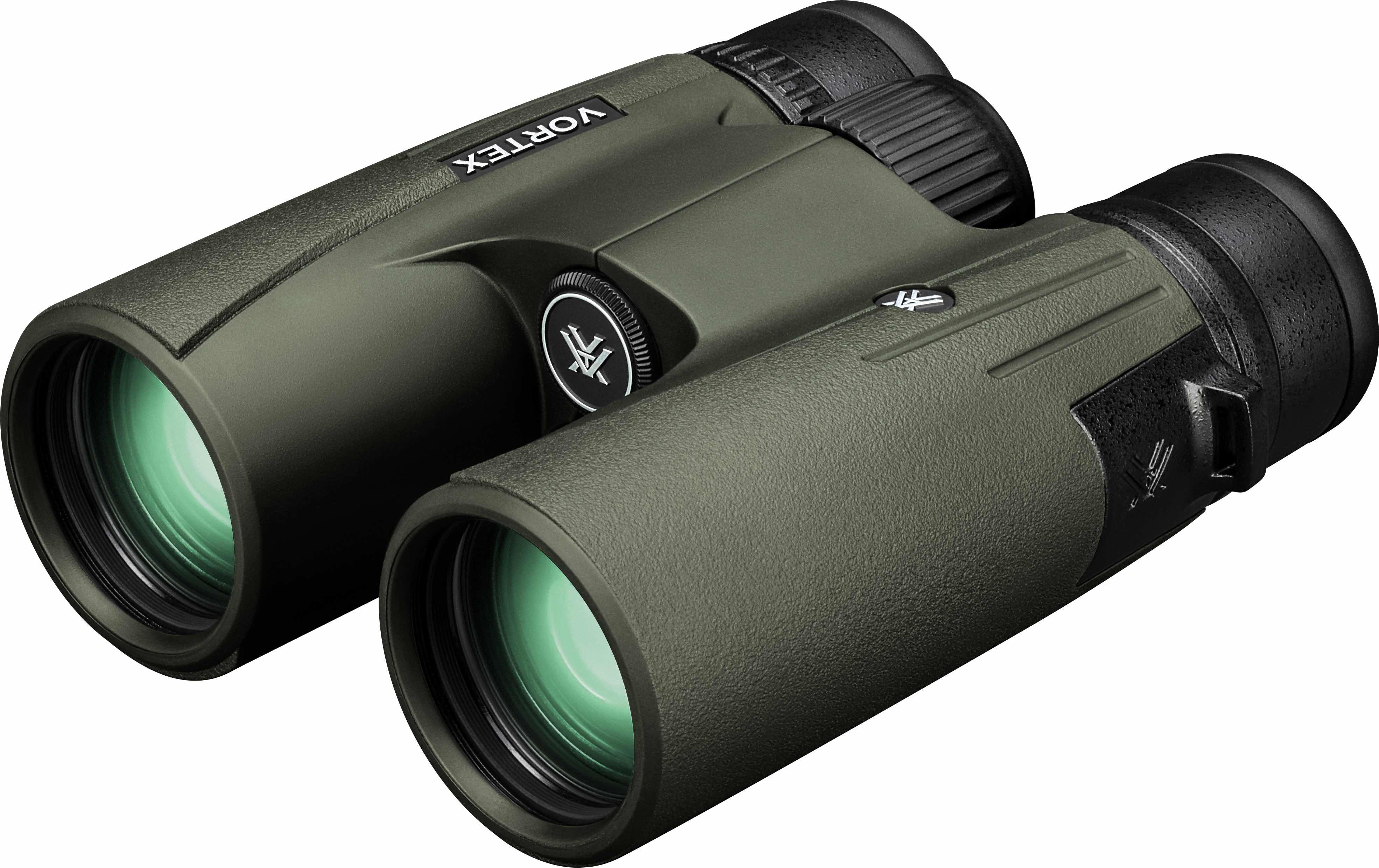
I hope that you’ve enjoyed our last two posts about my recent Texas birding adventures. Never fear, more Texas posts are coming! Today, however, we’d like to offer up another in our popular new series of equipment reviews. Why? Because my Texas trip gave me a wonderful opportunity to field test a pair of Viper HD 8X42 binoculars from Vortex.

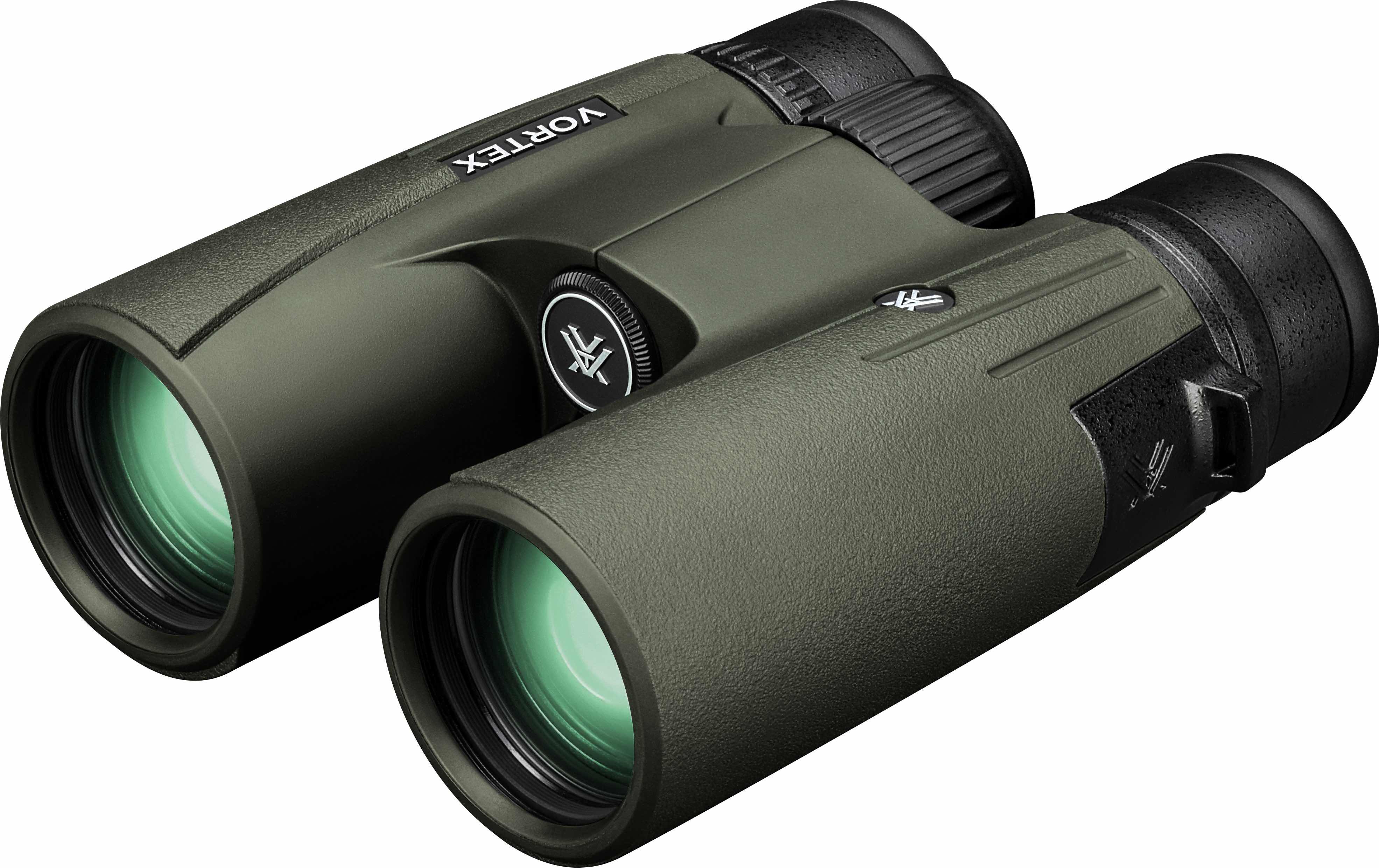
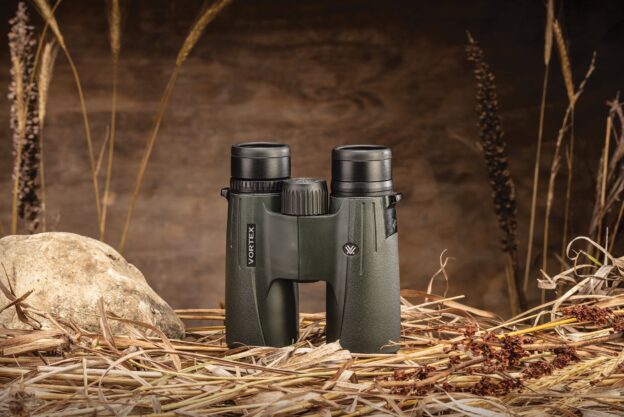
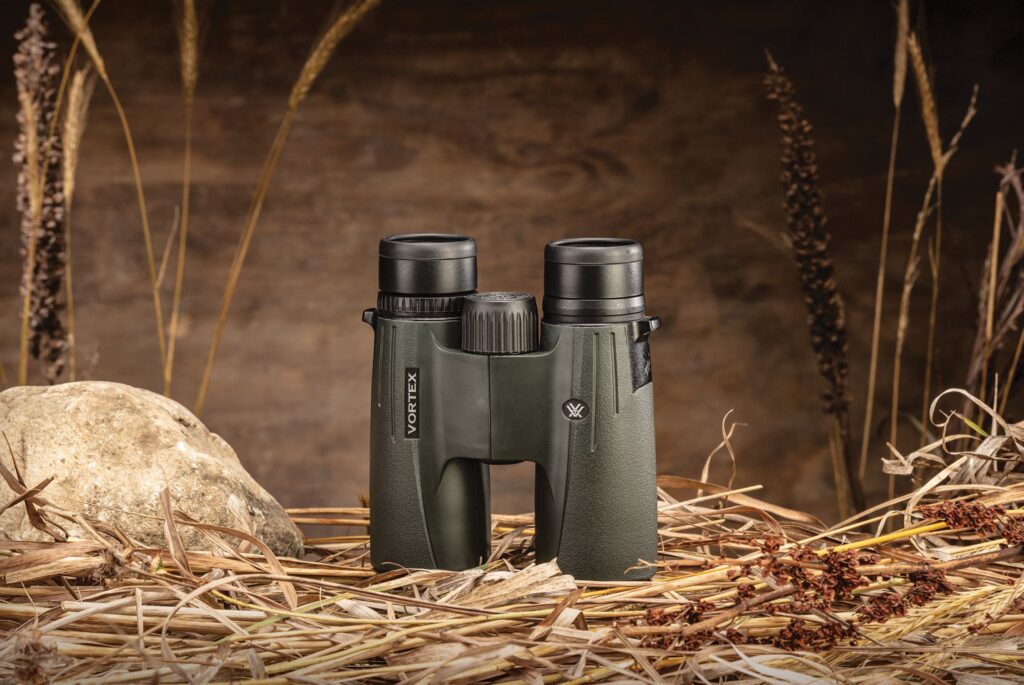
Vortex Viper HDs offer great quality at a reasonable price.

If you’re out in the field a lot, you’ll see many birders using the Viper HDs, and for excellent reasons. In hand, the binoculars are sturdy and comfortable to hold, yet lightweight enough to carry around all day without discomfort. Like all Vortex optics, they come with an incredible no-questions-asked, fully transferable, lifetime warranty—something almost priceless for the peace of mind it offers. But the question remains: how do they perform in the field?

Backlit conditions—especially on water—are one of the true tests of binocular clarity and light transmission. The Viper HDs performed extremely well under these conditions.

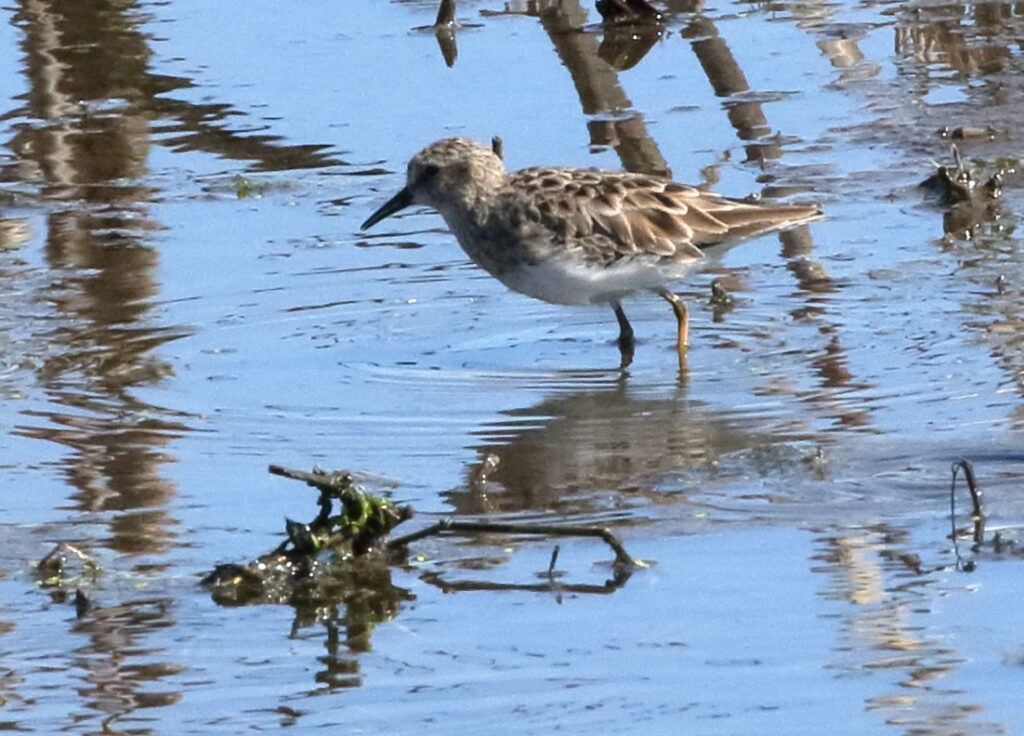
My Texas trip allowed me to test the Vipers in a variety of birding situations. In my last post, I shared my thrilling visit to the Anahuac National Wildlife Refuge (now renamed to the Jocelyn Nungaray NWR), and almost immediately, I was confronted with the daunting task of observing shorebirds and waterfowl under extreme backlit conditions. Anyone who has experienced this knows how difficult it is to discern details of birds when bright glare turns the birds into shadowy figures, and I immediately thought, “Oh man, I don’t know if I’ll even be able to start identifying some of these critters.” To my surprise, the Viper HDs cut right through the glare. One small backlit shorebird particularly caught my attention, and I was sure I wouldn’t be able to see enough details to ID it. Focusing in with the Vipers, the bird’s features just popped—including its yellow legs, which allowed me to identify it as a Least Sandpiper.

The Viper HD’s excellent light transmission allowed me to ID this Least Sandpiper and other shorebirds under badly backlit conditions.

A couple of days later, I arrived at an exciting new (to me) location called Lafitte’s Cove on Galveston Island. This cool little nature reserve sits in the middle of an upscale housing development and features ponds, walking paths, and wooded areas. My main goal was to try to find migrating warblers and, thanks to the advice of some local birders, I staked out a drip in the wooded area that provides fresh drinking water for birds. Soon, I saw two shapes flitting around in deep shadow behind the drip. One leaped out into the sunlight—a Tennessee Warbler. The other bird proved much more cagy. Even as it stayed in the shadows, though, the Vipers gave me the sharp, full-color details that allowed me to confirm that it was a Nashville Warbler—a real surprise since I had never seen one before in the eastern US!

Lafitte’s Cove on Galveston Island was a wonderful addition to my list of spring migration birding hotspots—and helped me test the Viper HDs under dark, shady conditions.

As always, prospective buyers will ask, “Are the Vipers worth what they cost?” On the Vortex website, the 8X42s and 10X42s list for $719.99 and $729.99 respectively—not an inconsiderable sum. However, in “real life” the binoculars can be purchased for under $500, putting them in range of a doable investment for many birders who are ready to get serious, but can’t or don’t want to shell out thousands of dollars. Even for $500, though, you expect binoculars to be durable and weather-resistant, and the Vipers deliver on that count. Other great features include:

* a diopter ring that allows independent focus adjustment for each eye

* long (18 mm), rubberized eye-relief tubes designed to press eyeglasses against them without damage

* a close (six-foot) minimum focal distance

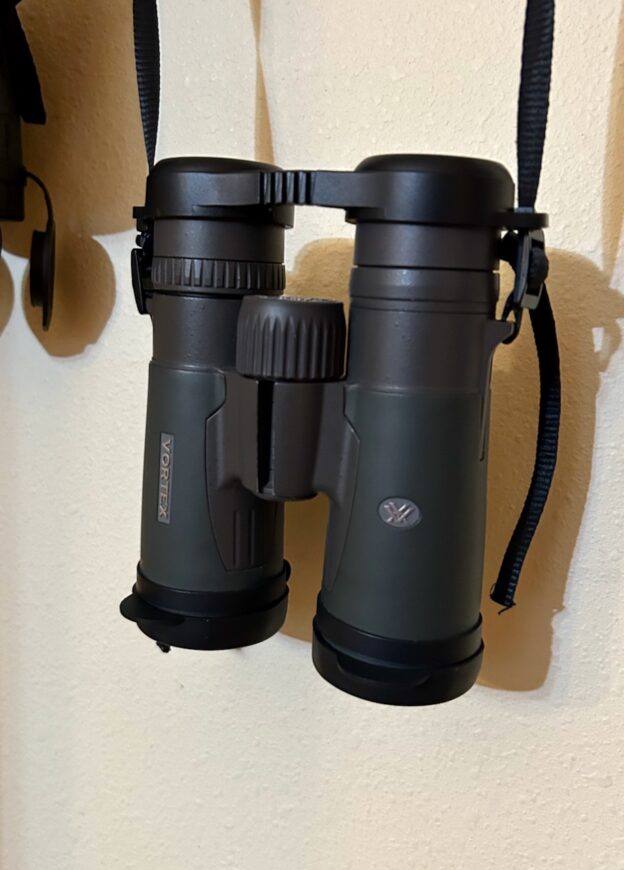
A comfortable grip and long, comfortable eye-relief tubes are just two great selling points for the Viper HDs.

As I have tried various brands and models of binoculars, though, for me it has become mainly about clarity. In other words, how well do the binoculars transmit light and how sharp is the image they deliver? As noted above, the Vipers deliver excellent performance in this regard. During my week in Texas, I never found a situation in which I had difficulty picking out colors and other details. That’s because, for the extra price investment, Vipers offer two advantages over many cheaper binoculars:

* extra low-dispersion glass that reduces chromatic aberrations and improves light transmission, even under difficult conditions such as those I experienced above

* high-quality coatings on both the glass and internal prisms which improve light transmission, creating a sharper, clearer image.

I have not yet found the perfect binoculars—if they indeed exist—and one thing I wasn’t crazy about is that I had to turn the focus knob quite a bit to bring the Vipers into focus between near and far situations. Presumably, this allows users to obtain a more precise focus on an object, but I found it wasted a bit of time and effort. This is a personal preference, however, and I’m guessing that most users will be just fine with this.

A final note: frequent FSB contributor Roger Kohn and his wife both happen to use Vortex Vipers. “We are very happy with them,” he says. “Really good quality glass, clear images. Feels good in the hands.”

Conclusion: the Vortex Viper HDs are an outstanding pair of binoculars for those ready to make a mid-range investment into the world’s greatest hobby. Sturdy construction, a light weight, and excellent light transmission make them suitable for almost every situation, and will provide years of satisfaction to the vast majority of birders.

Vortex Vipers

Post Update: After posting this review, I traveled to Maine for our son’s graduation (see post “Graduation Birding Bonanza in Maine”), and I took along a pair of Vortex Viper HD 8X42 binoculars. This was my first chance to use them in rainy conditions and I have to say, they performed incredibly well. While my companions’ bins were fogging up, the Viper HDs stayed clear as a bell during our two-hour drizzly session. I also had a chance to use the Vipers in “almost night” conditions to view the American Woodcock mentioned above. Again, I was impressed with the amount of light they transmitted, allowing me to easily follow the bird’s silhouette in flight. Back at our Airbnb, I let Braden look at a distant loon on the lake and he said, “Wow, those are good binoculars!” I suspect I’ll be using these a lot more!

The author received no financial compensation for this review, but binocular images and sample binoculars are provided courtesy of Vortex.

Vortex Triumph 10X42 Binoculars: Entry Level Excellence

Thank you for checking out our reviews! Braden and I write this blog to share our love of birding and provide useful information for our fellow birders. We do not receive any payment for any of our posts, but if you’d like to support our work, please consider buying one or more *new copies* of Sneed’s award-winning books such as Birding for Boomers or Warblers & Woodpeckers: A Father-Son Big Year of Birding. We appreciate your support and hope that you keep enjoying the world’s greatest activity!

We seem to be living in a golden age of birding. Not only have legions of new people discovered the joys of watching, identifying, and protecting birds, the marketplace is awash in incredible equipment to observe, photograph, and record birds. A few weeks ago, we reviewed Nikon’s terrific top-of-the-line Monarch HG binoculars. Today, we shift to an excellent entry-level pair, the Vortex 10X42 Triumph HDs.

Braden and I have both had great experiences with Vortex binoculars and spotting scopes—but have never field-tested their lower-priced equipment. In fact, I generally have shied away from encouraging people to invest in lower-priced binoculars, figuring they would break or wear out, or just wouldn’t deliver an adequate image. To challenge this assumption, I contacted Vortex to see if they would send me both some of their lower-end and mid-level binoculars to try out. I’ll review all of these in coming months, but was first drawn to test the Triumph HDs, which can be purchased for about the cost of a modest meal out for a family of four.

Vortex Triumph HDs offer excellent value for most beginning birders and, like other Vortex products, come with a lifetime no-questions-asked warranty.

It’s true that many binoculars you might buy for under $100 are poorly made. I’ve had several fall apart on me. My first impression out of the box for the Vortex Triumph HDs, though, was “Wow. These seem pretty hefty and sturdy.” Raising them to my eyes, I beheld a clarity and sharpness that seemed totally acceptable for well-lit birding conditions. Their size and slightly rough, slip-resistant rubberized coating felt very comfortable and “friendly” in my hands.

Like many other good pairs of binoculars, the Triumphs have other essential and convenient features for a birder. These include:

* solid eye relief tubes (eye cups) that twist out and can click into two different positions.

* adjustable diopter ring to allow a different focus for the left and right binocular tubes (essential for people whose vision differs in each eye)

* tripod adapter socket

* o-ring sealed and nitrogen-purged to be water- and fog-resistant

* shock-proof

I have to mention two other things about this and all of Vortex’s other products. One is an amazing lifetime warranty. No matter what happens to your binoculars or how, Vortex will repair or replace them, no questions asked, no receipt required. I don’t even know how they can afford to do this, but it’s an amazing benefit in this day and age when so many things break almost as soon as you breathe on them.

The other thing I just have to compliment them on is that their object lens protector flaps actually stay in when you pop them in place! This might seem trivial to some, but it means that it is a simple task to keep your binoculars protected, even in the worst conditions. Good job, Vortex!

And here’s the best news: although the Triumph HDs list at $149.99, these binoculars are available for around a hundred bucks.

One compromise with the Triumph HDs is a relatively long minimum focal length, which isn’t a problem for most birding situations but could make you “lose” a wren or tapaculo in close conditions. (Image courtesy of Vortex Optics.)

Of course, nothing is perfect and there are a couple of things you should consider before purchasing a pair. Many binoculars focus in as close as 6 or 8 feet, but the minimum focal distance for the Triumph HDs is 16 feet. For hunters and most birders that’s not a problem, but it can come into play when checking out wrens, warblers, tapaculos, and other small, secretive birds. It also pretty much rules out the Triumphs for watching butterflies.

Secondly, while Vortex products are excellent for birders, the company (at least recently) seems to gear its products more toward hunters. The binoculars come with a fairly elaborate combo harness/pouch system called Glasspak™. This is designed for you to carry a pouch on your chest from which you can just pull out the binoculars and quickly slip them back into place. This would work well if you are out birding nonstop all day or hunting elk, but it’s a bit cumbersome for many birders who are whipping their binoculars on and off repeatedly. The binos also come with a traditional strap, so if the Glasspak™ system doesn’t suit you, you may want to use the strap—or order a third-party attachment system that you’ve already used and are happy with.

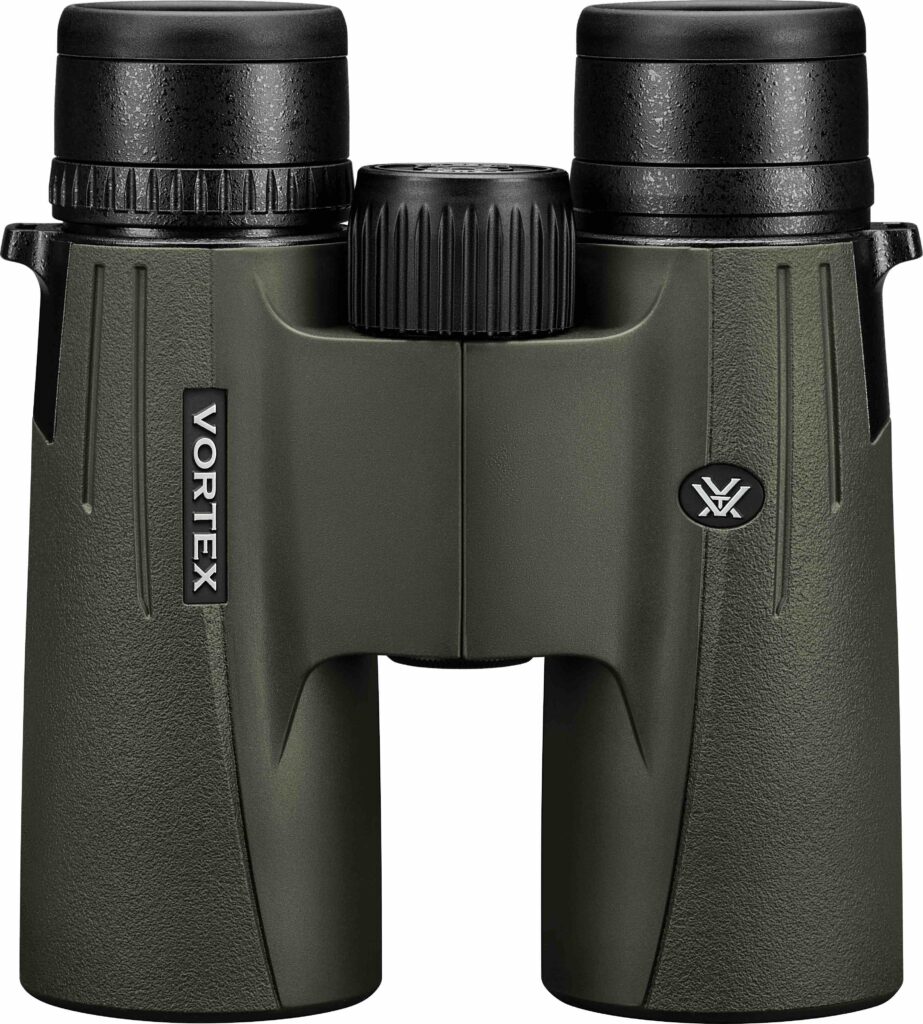
Unlike many of Vortex’s other models, the Triumph HDs come only in a 10X42 option—which happens to be my favorite size anyway, but may rule them out if you prefer the wider field views of 8X42s. (Image courtesy of Vortex Optics.)

This, of course, inspires some advice to all binocular producers: why not build in larger loops directly onto the binocular bodies? This would allow users to quickly clip on a variety of shoulder straps, neck straps, and harnesses without having to go through a tortured attachment method of threading various straps through this and that. It seems like a no-brainer, and there is great irony that many companies make absolutely beautiful optical products—but don’t go the extra inch to create a fast, simple, convenient set up. This is not an issue specific to Vortex. It seems to be common to a lot of companies, but whichever ones fix it will earn big bonus points!

The Triumph HDs come with a Glasspak™ harness system. While great for hunters and some birders, the system is a bit too complicated for most birding situations. Fortunately, the binoculars also come with a simple strap for those who prefer it.

So let’s get to the nitty gritty: should you buy the Vortex Triumph HDs? I will unreservedly tell you that you won’t regret it if you do. For their price, they are a terrific pair of binoculars for a beginning birder that will last years and years. I have enjoyed using them on several recent outings and also let a friend check them out, and we both agreed they were solid and worked very well.

That said, if you can shell out just a bit more money, you might consider the Vortex Diamondback HD 10X42s. These list at $329.99, but can be bought for much less. At the time of this writing, I saw one place selling them for $124.95! Closer to $200 seems more typical, but either way, they are a deal. If you can stretch for this, you will be rewarded by better lens and prism coatings that are hardier and deliver more light to your eyes, especially in low-light conditions. They also have a cozy 5-foot minimum focal range. According to Vortex, they are the most widely-used binoculars in North America. Either of these models can be purchased directly from Vortex and a wide variety of other stores and online outlets.

So there you have it. We hope you find this and our other product reviews useful. We will keep ‘em coming!

Overall Rating (on a scale of cool birds): Song Sparrow (excellent) 

Products reviewed in this post were provided by Vortex.