If you’re enjoying FatherSonBirding, why not take the leap and subscribe by filling out the box below and to the right? We will never share your information. Also, a reminder that all content on FSB is fully protected under copyright law. Please share this post—but don’t use it for other purposes without permission.
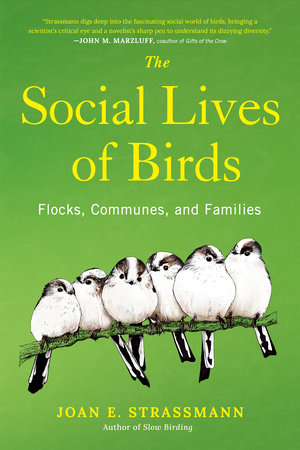
With single-digit temperatures in Montana this week, it is still very much book reading season, a time when all birders can—and should—beef up our birding resumés by tapping into the vast wealth of research and experience of the global birding and scientific communities. This past week, I delved into a topic that intrigues most birders by picking up Joan E. Strassmann’s The Social Lives of Birds: Flocks, Communes, and Families (Tarcher, 2025).
Joan Strassmann’s The Social Lives of Birds is packed with delightful revelations for beginning and experienced birders alike. (Click on the cover for ordering info.)
A well-regarded professor and scientist, Strassmann has created a comprehensive resource that introduces readers to almost every aspect of bird society. She begins by answering the simple question “Are Birds Social?” (You can probably guess the answer to that!) Then, chapter by chapter, she explores topics that fascinate beginning birders as much as they do veteran scientists. These include flocking behavior, mixed-species flocks, the predilection of many birds to roost and/or nest in colonies, the pros and cons of nesting and/or roosting together, lekking behavior, and more.
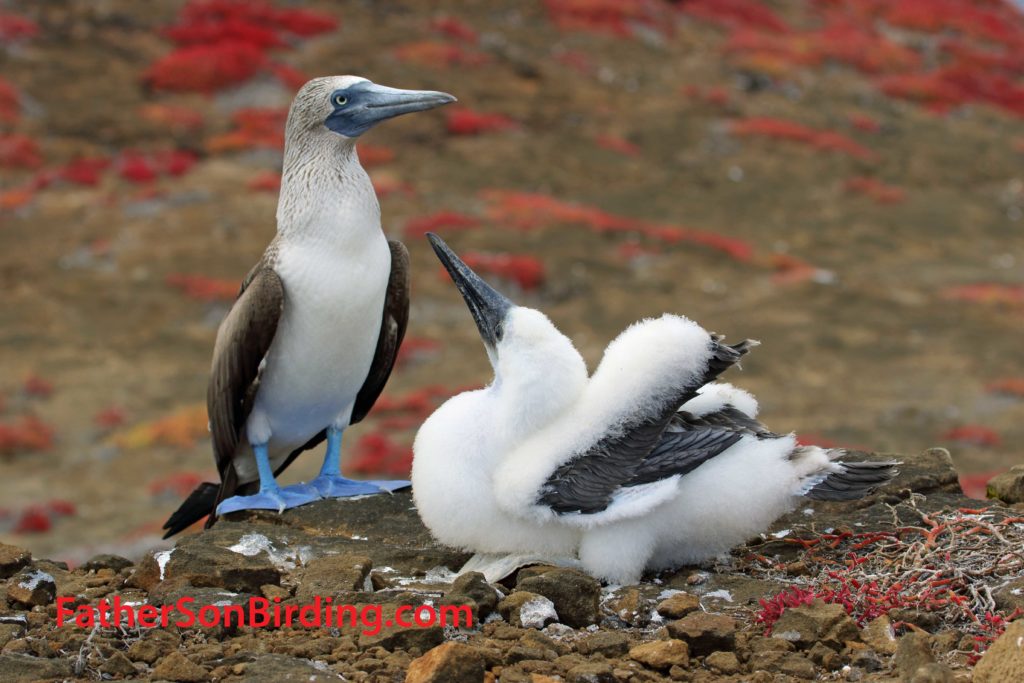
The author devotes an entire chapter to the fascinating and intriguing world of seabird colonies, such as those of one of the world’s most popular birds, the Blue-footed Booby.
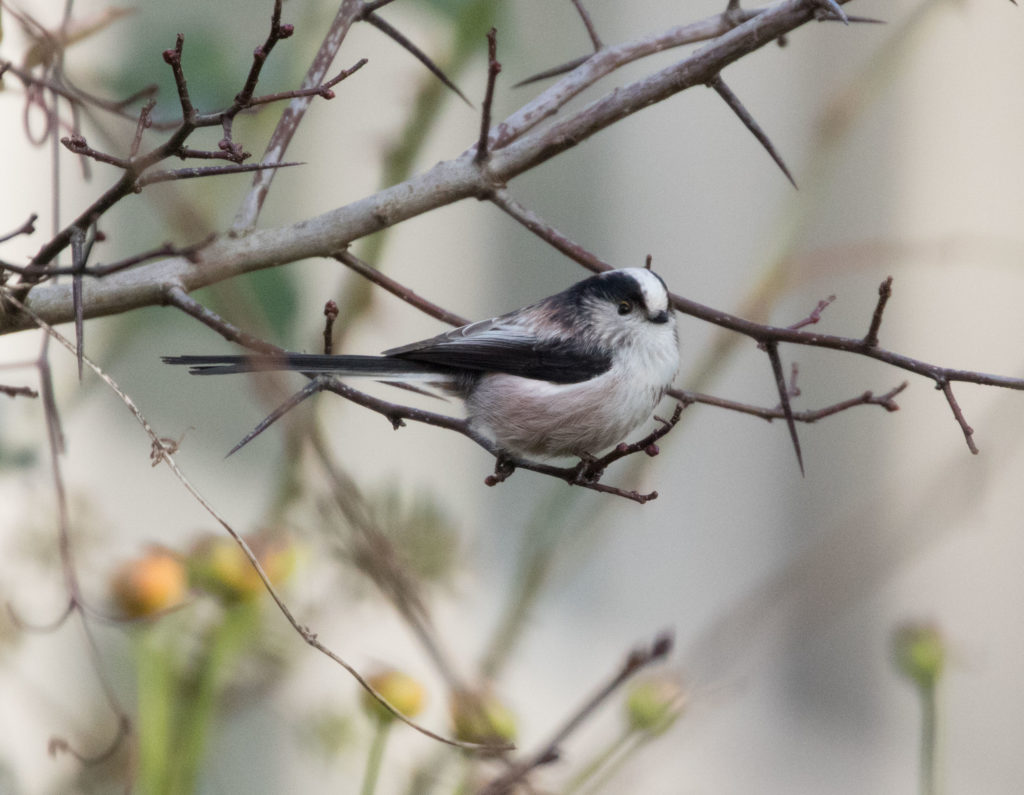
I learned something fascinating with each chapter. For instance, I was first drawn to the book because the cover showed a line of six Long-tailed Tits packed tightly together on a branch. I had had the pleasure of observing these birds in the Netherlands (see our post Layover Birding in Amsterdam), Japan (see our post Birding Japan: Kyoto), and Spain (see our post Birding Barcelona, Part 1: The Urban Core), but had no idea that they lived and foraged in stable flocks that are often built around a main breeding pair and its offspring. In her book, Strassmann recounts a study that showed that on chilly nights, the tits nestle tightly together to stay warm, and that often it is the lowest birds on the “tit totem pole” that have to endure the chillier end positions. This is no trivial matter since the birds lose about 9 percent of their total body mass in a single, chilly night.
After observing Long-tailed Tits in Europe and Asia, I was fascinated to learn more details of their highly social behavior in The Social Lives of Birds.
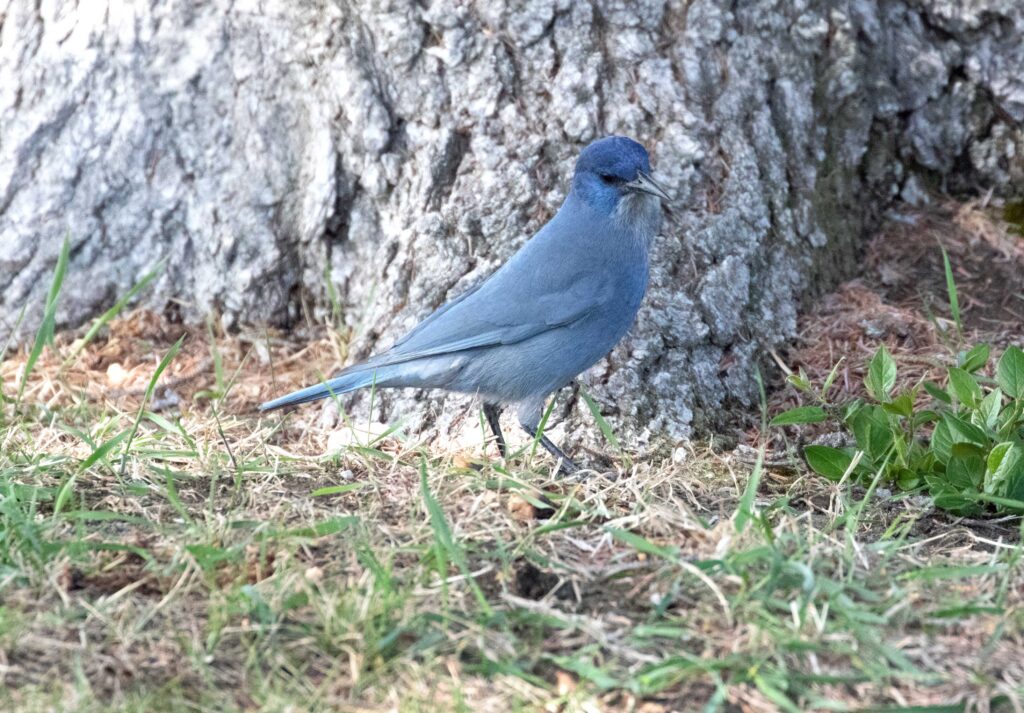
Similar revelations emerge with every chapter, examining birds from a wide variety of terrestrial and aquatic habitats. My favorite chapter was the last, “Supersocial Groups: Birds That Are Always Together.” That’s probably because it featured one of my favorite birds, the Acorn Woodpecker (see our post College Search Birding in California), and three other species I was fascinated to learn more about: White-winged Choughs, Sociable Weavers, and a bird Braden and I are always delighted to see, Pinyon Jays. Regarding the latter, Braden and I have seen Pinyon Jays only a handful of times here in Montana, and I had wondered why they aren’t more common. Strassmann explains that the birds need extremely large territories to guarantee a dependable food supply. Unfortunately, their main food source, the pinyon pine, has suffered extreme losses from clearing for agriculture and other reasons. Warmer temperatures driven by climate change have also impacted the production of pinyon pine seeds, leading to large-scale die-offs of these beautiful, dynamic, gregarious birds.
Strassmann devotes much of the final chapter on one of Braden’s and my favorite birds, Pinyon Jays, shown here in a cemetery in Helena, Montana.
The Social Lives of Birds struggles a bit over whether it wants to be a comprehensive resource or an engaging narrative in the vein of the recently reviewed The Great Aukor A World on the Wing. The author mentions her personal connections to many of the topics, but I found these more distracting than engaging. Still, that will not prevent readers from enjoying the book and harvesting a wealth of information—knowledge that will help you look at birds with greater understanding and appreciation each time you head out to bird.
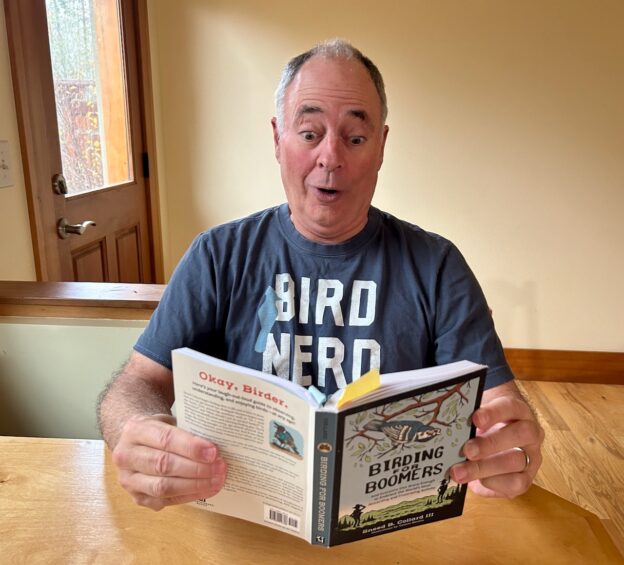
If you’re like me, you never read quite as many books as you’d like. This year, though, I was very fortunate to read and review some outstanding bird-related titles that you’re going to want to consider for your holiday buying. Most—but not all—of these were published in 2025 or late 2024. I’ve also included a few books that aren’t solely about birds—but give great insights into how to protect them. Of course, you will want to begin your shopping with eight or ten copies of my book Birding for Boomers—And Everyone Else Brave Enough to Embrace the World’s Most Rewarding and Frustrating Activity. This popular gift book has received half a dozen awards and even made a couple of bestseller’s lists. Once you’ve placed that order, however, you’ll want to check out the titles below. Please note: we receive no compensation for any of these recommendations (other than a free review copy or two), so the thoughts are all our own. Enjoy!
Purely Enjoyable Bird Storytelling
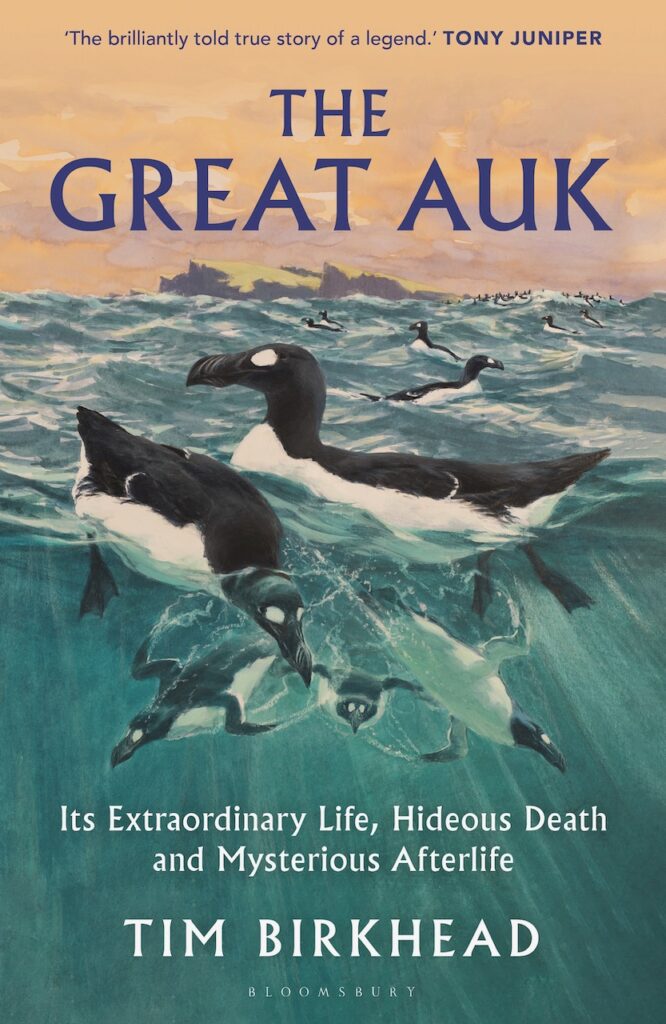
Let’s start with the “most fun” category of reading—great storytelling that just happens to be about birds. In the past, I’ve recommended such titles as Christopher Skaife’s The Ravenmaster, Joshua Hammer’s The Falcon Thief, and Tim Gallagher’s classic, Imperial Dreams. My favorite title from this year’s reading is Tim Birkhead’s The Great Auk: Its Extraordinary Life, Hideous Death and Mysterious Afterlife. This wonderful, often whimsical tale focuses on an extinct species most of us have heard of, but know little about. Birkhead gets totally into Bird Nerd mode by both explaining the biology and history of the Great Auk, and tracing some of the antics of egg collectors who were totally obsessed with obtaining Great Auk eggs. You’ll love this! See our full review here.
The Great Auk by Tim Birkhead (Bloomsbury, 2025)
Also on the short list for this category is Bruce M. Beehler’s Flight of the Godwit, a must-read for anyone interested in the remarkable lives of shorebirds—and who isn’t? Through the tales of his own peregrinations, Beehler follows the migrations of many of North America’s most charismatic shorebirds, telling us all kinds of cool things that I certainly never knew before. See our full review here.
Birding Memoirs
My top pick for this category is Christian Cooper’s 2023 book, Better Living Through Birding: Notes from a Black Man in the Natural World. I admit that I put off reading this book for a couple of years after it came out. It’s sheer popularity made me insanely jealous as an author, but once I picked it up, I was captivated. Cooper’s down-to-earth honesty about his life and passion for birds sucked me right in, both with its engaging storytelling and how it broadened my perspective on birding in our culture.
My second pick for this category is Richard L. Hutto’s new book, A Beautifully Burned Forest: Learning to Celebrate Severe Forest Fire. This book is half memoir and half science book and I enjoyed both parts equally. Perhaps as a fellow Southern Californian, I especially related to Hutto’s boyhood experiences exploring the chaparral ecosystem, but I also appreciated Hutto’s impassioned plea to bring common sense to fire management, especially when it comes to protecting burned forests from the ravages of so-called “salvage” logging. See our full review here.
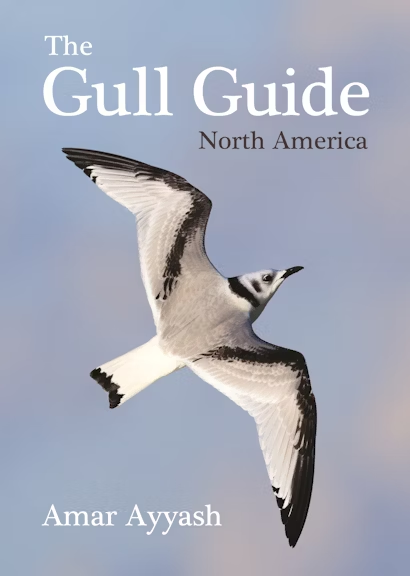
Advanced Bird Nerds will definitely want to add Amar Ayyash’s The Gull Guide: North America to their holiday shopping lists this year. Like most birders, I have been—and remain—incredibly intimidated by gulls. Sure, I recognize the adult plumages of many species, but when you start getting into hybrid gulls and first-, second-, and third-year plumage variations, my brain and confidence begin to melt. The Gull Guide does not solve this problem, but it does accomplish two important things. First, it gives great insight into gulls for the casual birder. Second, it offers myriad minute details for those who are bound and determined to become experts on everything gull. Both of these things are accomplished with an extensive, remarkable collection of photos that serve to educate and guide. See our full review here.
A less technical book that may be more to the taste of the casual birder is The Shorebirds of North America: A Natural History and Photographic Celebration by Pete Dunne and Kevin T. Karlson. This beautiful book strikes a nice balance between detail and readability. A lot, but not all, of the information is fairly general, but the photos are wonderful and if you’re a shorb fan, you will enjoy it. See our full review here.
Three More for the Planet
I’d be remiss if I didn’t mention three more titles that made a big impact on me this year. The first is Sea of Grass: The Conquest, Ruin, and Redemption of Nature on the American Prairie by Dave Hage and Josephine Marcotty. I thought I knew all about the tragic history of the destruction of America’s grasslands. I did not. This highly readable book provides astonishing insights into how we lost most of our grasslands—and why that destruction continues today. Grassland birds are our most imperiled group of birds, losing at least forty percent of their collective populations in just the last fifty years. If you care about these animals and want to know what we can do to slow their precipitous demise, please read this one!
Similarly, Jordan Thomas’s When It All Burns: Fighting Fire in a Transformed World, gives us an inside look at the often counterproductive politics and decision-making behind today’s “fire fighting industrial complex.” With riveting storytelling and astonishing revelations, this is a perfect companion to Hutto’s A Beautifully Burned Forest.
And if you’re wrestling with how to keep from being overwhelmed in today’s world, where we are confronted by one environmental threat after another, I highly recommend the late Thich Nhat Hanh’s Zen and the Art of Saving the Planet. I read a few pages of this every morning and I gotta say that it helps keep me sane in our complicated, highly imperiled world. Not only does it raise serious questions about how we all live, it provides approaches and encouragement for how each of us can truly make a difference.
Don’t miss our holiday guides to birding equipment and, in our next post, charitable giving!
A happy by-product of our second child going to school in California is that Amy and I have the perfect excuse to go visit the Golden State. Not that I would everdo any birding during a family trip, but you know, it’s hard not to see some great birds when you just happen to stop at a wildlife refuge or stumble into a local park that happens to be a bright red eBird hotspot!
I was especially excited to head to California a couple of weeks ago because, as previously reported, I was perilously close to breaking my all-time single year species record of 527 birds. In fact, when Amy and I landed in Sacramento and headed up to Chico, I needed only one bird to hit 528 species for the year. What would my “go ahead bird” be? (And yes, that is an homage to the upcoming World Series, which happens to feature a team named after birds!)
Visiting our youngest in California has given me a great opportunity to see friends and get in some bonus birding!
When we arrived, I quickly finagled a couple of birding opportunities, but saw only species I had seen on our last trip to California in August: California Scrub-Jays, Acorn Woodpeckers, Yellow-rumped Warblers and the like. My biggest discovery was a White-winged Dove at the Panera’s near the hotel! It was a rare bird so far north in California’s Central Valley, but not unheard of. Still, I felt proud to have spotted the distinct white stripe across each wing as it flew—undoubtedly hoping to score one of Panera’s kitchen sink cookies!
The next morning, I headed out to the home of a close childhood friend who just happens to live outside of Chico in an agricultural area. I had almost reached her place, when I noticed birds feeding on a coyote carcass on the side of the road. I saw Turkey Vultures and ravens. Then, I saw something that got my heart racing: magpies!
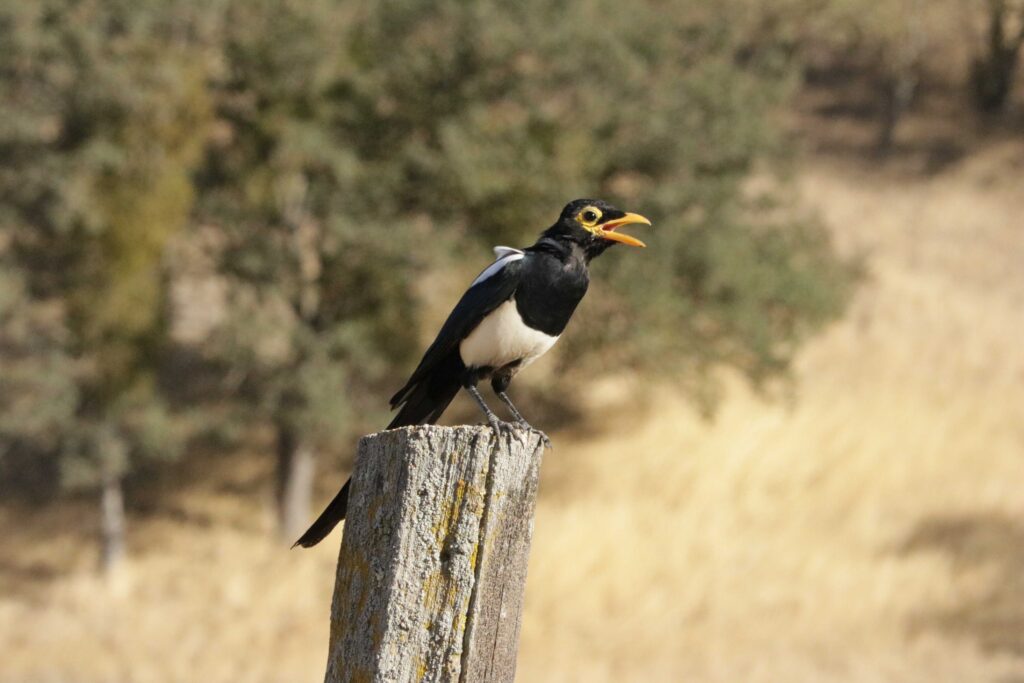
My All-Time Best Year Record Breaker: Yellow-Billed Magpie! Whoo-Hoo!(Photo from earlier trip.)
Not just any magpies. I knew that the Black-billed Magpies we had back home in Montana were unlikely in this part of California. No, these were Yellow-billed Magpies—a bird I had failed to see on our last trip in August! Ka-ching! My record shattered like falling glass! And with a California endemic species no less! Personally, I couldn’t have been happier. YBMAs are some of my favorite birds, and hold an interesting history, too:
“This species was named by John James Audubon in 1837 (as Corvus nutallii, corrected the following year to nuttalli) in honor of the ornithologist Thomas Nuttall, who collected the first specimen near Santa Barbara, California. Nuttall was a prodigious botanical collector and ornithologist who authored a Manual of the Ornithology of the United States and of Canada.” —Birds of the World database by Cornell Lab of Ornithology (accessed Oct. 19, 2025)
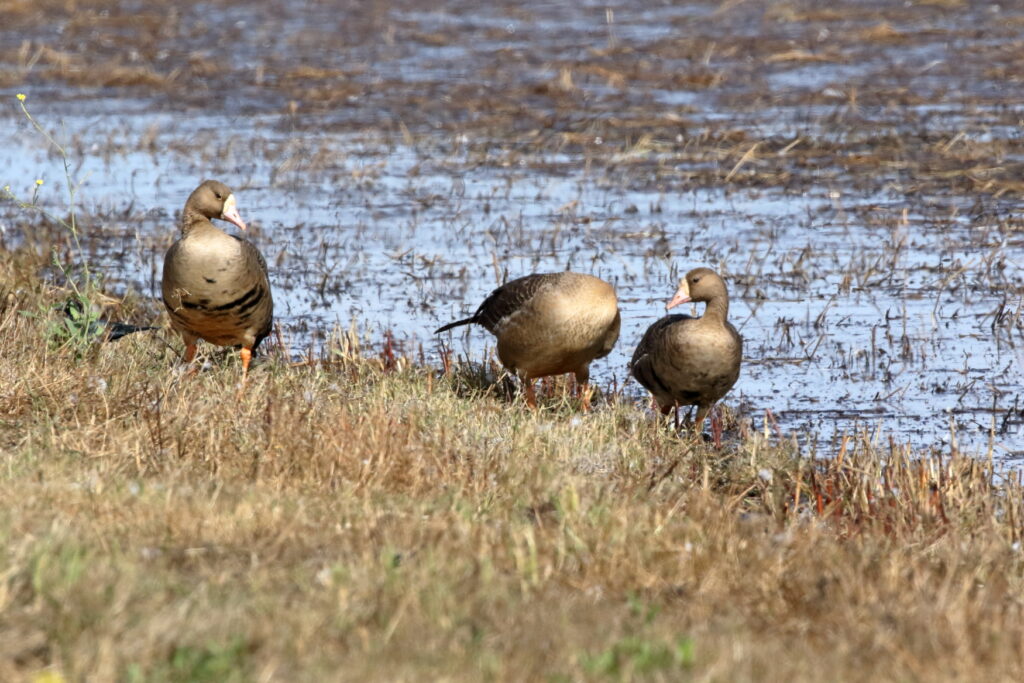
Later that day, I picked up an “insurance bird” at the Llano Seco refuge just southwest of Chico, where Amy and I delighted in Sandhill Cranes, Black-necked Stilts, and my 529th bird of the year, Greater White-fronted Goose.
Greater White-fronted Goose was a great “insurance bird” for my record-breaking year—just in case the Birding Powers That Be decided to lump a couple of species together or I found a mistake in my earlier checklists!
But my fall California birding adventures had just begun!
After a few wonderful days with our child, Amy flew home from Sacramento, and my high school buddy Scott (see Scott’s Guest Post about the Morro Bay Bird Festival), picked me up for an additional four days of exploration. As I’ve mentioned, my emphasis lately has not been so much chasing target species, but exploring places I’ve never before birded, and Scott indulged me to the hilt. After he collected me in Sacramento we explored the Sacramento River delta, hitting Cosumnes River Preserve, where we got a little shorebird action—and a LOT more Sandhill Cranes and Greater White-fronted Geese. On the following days, we hit a huge variety of habitats as we hiked through oak woodlands, explored the large abandoned—and very birdy—grounds of the Sonoma Developmental Center, and scoured rocky shores and intertidal areas in American Canyon, Golden Gate National Recreational Area, Bolinas, and Bodega Bay. I loved every location and, not surprisingly, my “insurance bird” list grew.
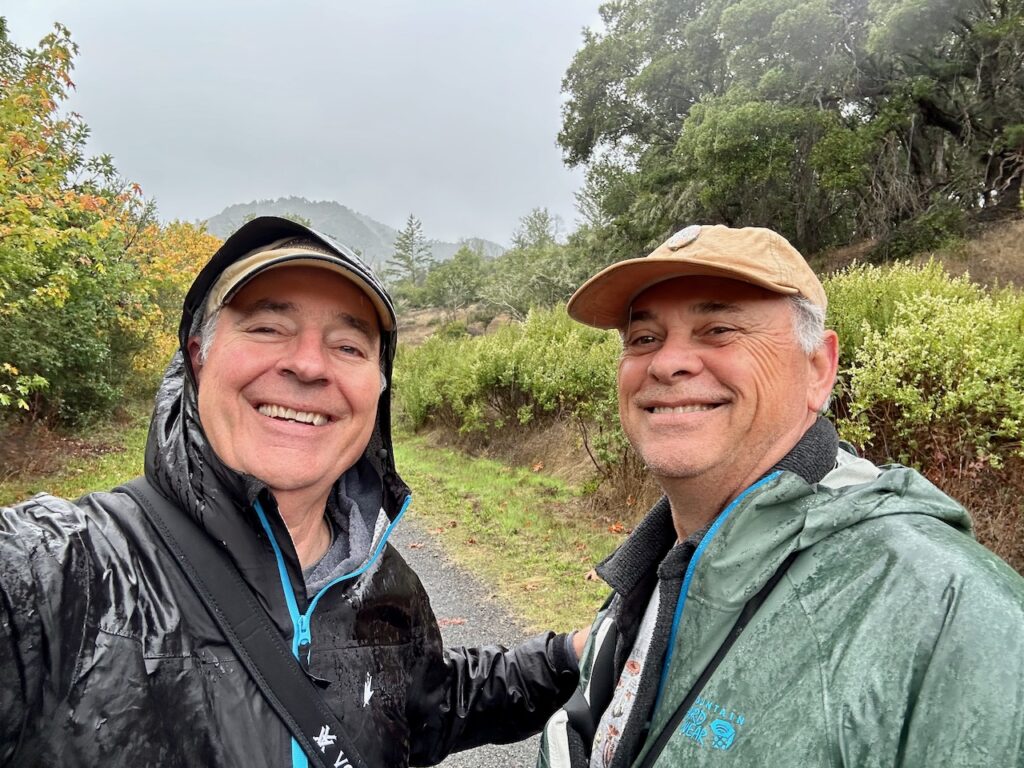
Scott and I enjoyed a wet hike through Sugarloaf Ridge State Park in Sonoma County and fortunately, the rain did not dissuade the birds as we sighted a host of classic oak woodland species including Oak Titmouse, Golden-crowned Sparrow, and Nuttall’s Woodpecker.
I picked up Mute Swan in American Canyon as Scott and I gleefully observed thousands of shorebirds including Western and Least Sandpipers, Long-billed Dowitchers, Marbled Godwits, and Black-bellied Plovers. That afternoon, we saw my FOY (First Of Year) White-tailed Kites at a place called Buchli Station Road.
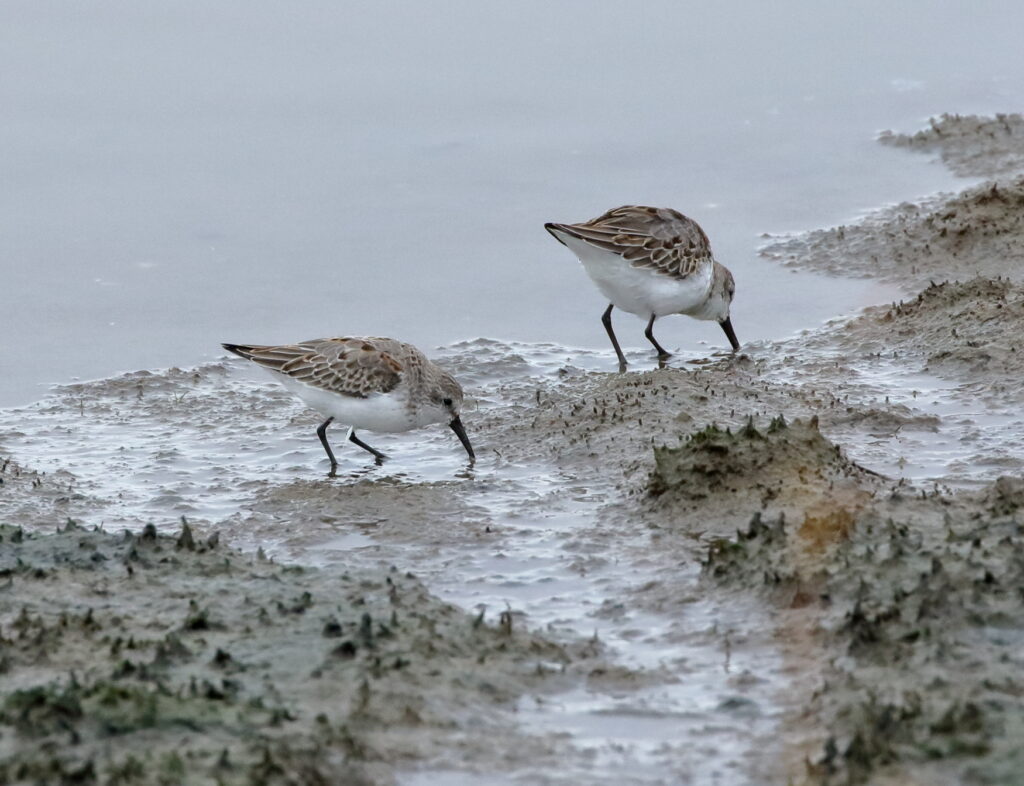
Our adventures gave us plenty of time to learn more about peeps as we picked out the subtle details of Least and these Western Sandpipers. Note the rufous shoulder patch (not always present), black legs, and longer, curving bill that distinguishes these Westerns from Least’s.
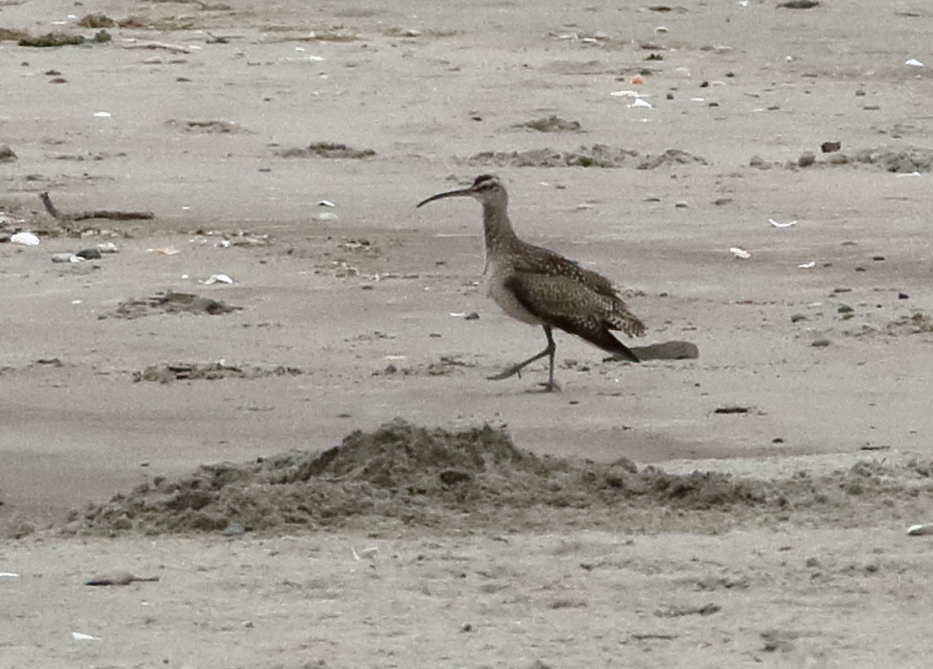
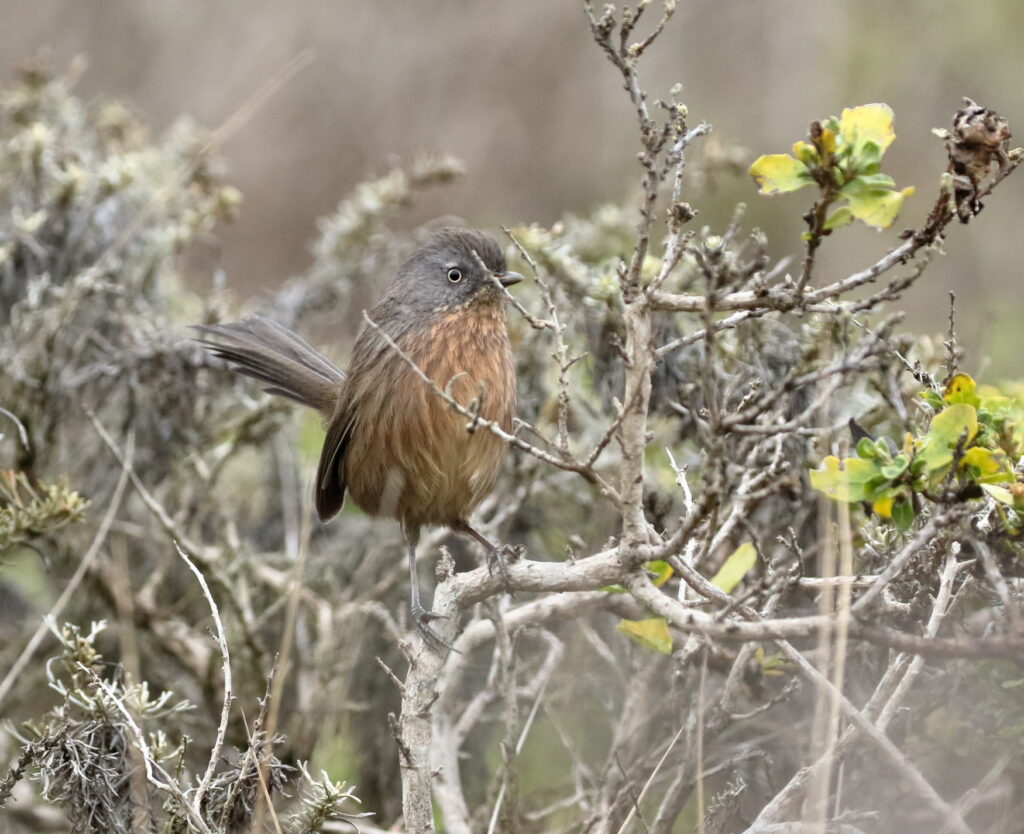
Our favorite—and most productive—day happened October 15th. With a visit to Rodeo Lagoon, we found one of my favorite California birds, Wrentits, along with Western Gulls, which I had somehow managed not to see the entire year! At the nearby Bolinas Lagoon, we also observed hundreds of Elegant Terns and my trip MVB (Most Valuable Bird), a Whimbrel.
This Whimbrel at Bolinas Lagoon nabbed Bird of the Trip honors as it was the first WHIM I’d seen in more than six years.
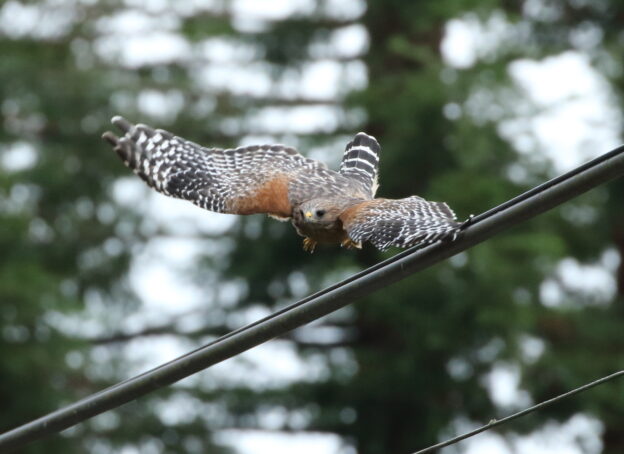
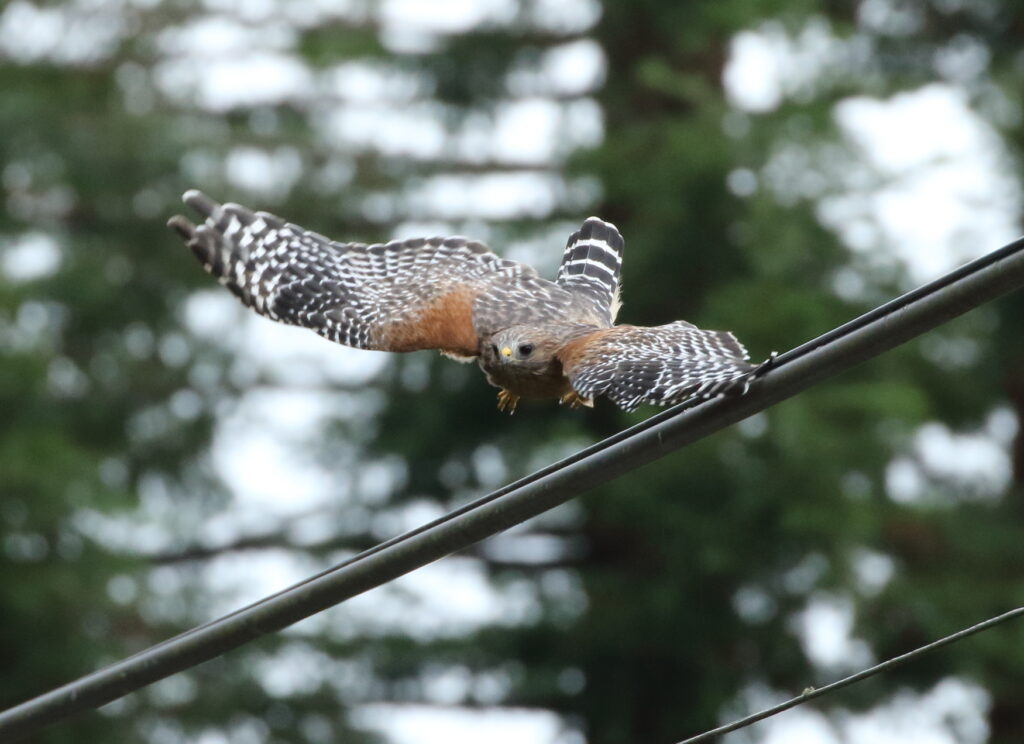
Another bird I had somehow failed to see all year was Red-shouldered Hawk, but as we made our way north toward Point Reyes, Scott suddenly shouted, “Red-shouldered!” We pulled over to look at this handsome creature perched on a power line and even got to see it nab some kind of morsel from roadside weeds. The funny part? We saw four more Red-shouldered Hawks on our drive back to Scott’s house in Glen Ellen! I call that a Grand Slam!
I don’t know that I’ve ever appreciated Red-shouldered Hawks more than I did this one—especially when it launched after some prey!
One thing that made the trip so fun was eating lots of great food and kicking back to watch the MLB playoffs with Scott each evening. I hadn’t seriously watched baseball since Amy and I were still childless more than twenty years before, and it was wonderful to lean back, relax, and watch grown adults try to hit balls with sticks. Goooo Ohtani!
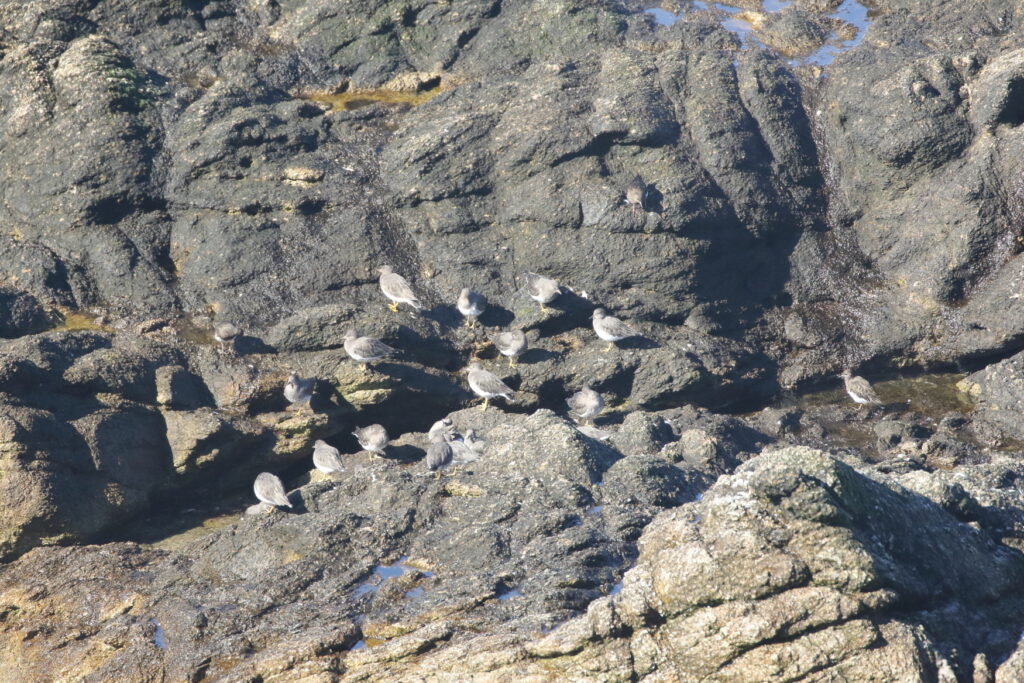
For our final day of birding, Scott drove me to Bodega Bay, one of my favorite places in California. While studying at Cal I had taken an ichthyology course here one summer, and now that I was a birder, the place held even more charm. On the rocks below Bodega Head, Scott and I were astonished to see a group of sixteen Surfbirds—far more than I had ever seen in one place! We also got great looks at both Brandt’s and Pelagic Cormorants, and spotted a Pigeon Guillemot in the far distance.
Since Braden and I saw our first Surfbird from a distance during our first pelagic cruise in Monterey in 2016, these birds have held a special place in our hearts. Never, though, have I seen so many in one place! (Can you also find the lone Black Turnstone in this photo?)
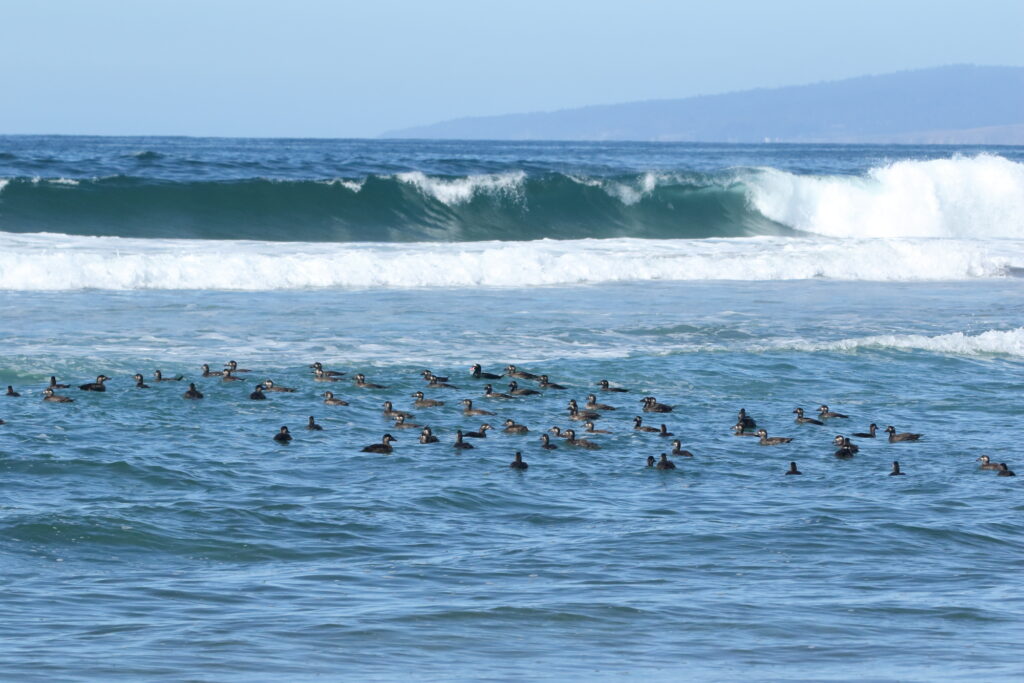
After a lunch of fish tacos, we headed up to the beaches north of Bodega Bay and were treated to a second Whimbrel sighting and more than 120 Surf Scoters casually ducking the breakers offshore. It was a wonderful way to wrap up the trip, and I am grateful to Scott both for being such a great host and for his patience when I was experiencing a blood sugar meltdown at Bodega Head. Of course, you may be wondering where my year list stands now, and I’m happy to report that I am now at 537 species. Will there be any more? I don’t know, but 550 seems awfully tempting, so stay tuned!
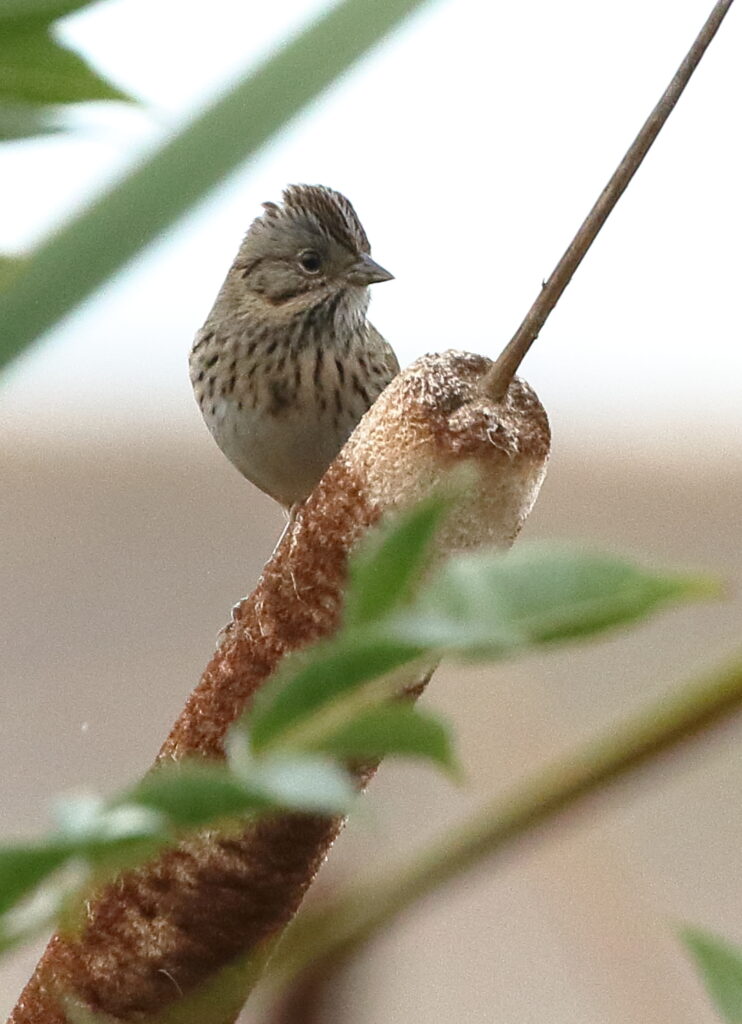
Update: Just before posting this, I picked up bird #538 for the year, Lapland Longspur, in some fields northwest of Billings!
Can one ever get tired of Surf Scoters? I don’t THINK so!
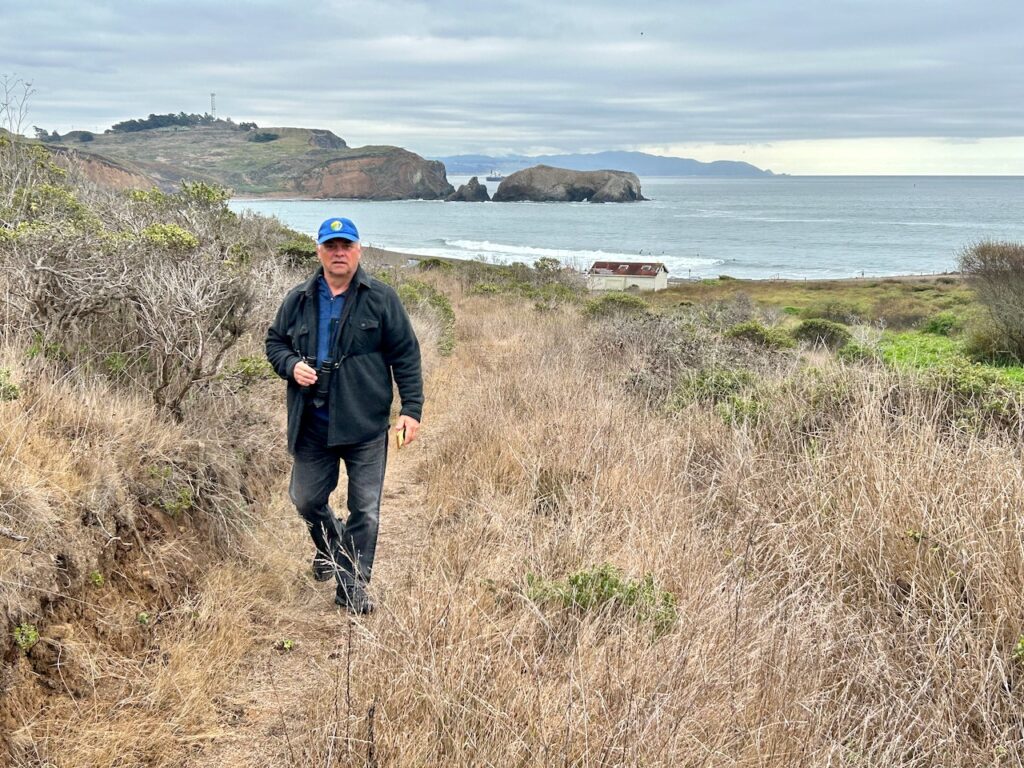
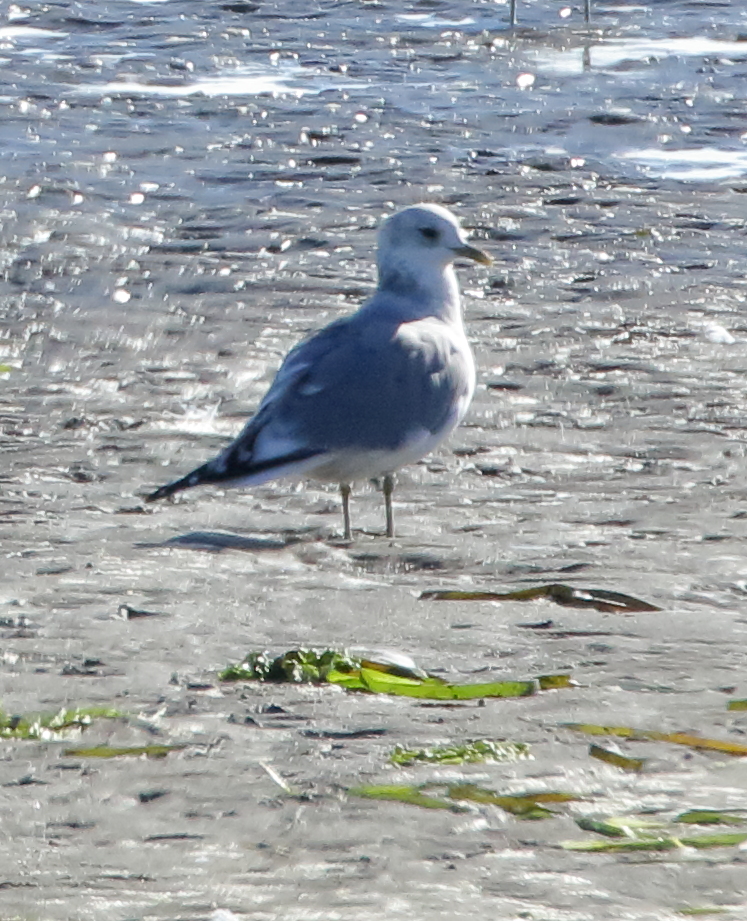
Just for fun, can you name the birds and places above? Answers in the nest—I mean next—post!
The state of Maine can be simplified to four things: lobster, moose, blueberries, and puffins (with Dunkin Donuts as a runner-up). During the four years I’d spent going to school in the state, I’d eaten lobster rolls, visited blueberry bogs, and tried my hardest to find a moose, a quest that would continue later this week. Through no fault of my own, I had never even tried to see a puffin and the reason was simple—my school year did not overlap with the Atlantic Puffin school year. This year, however, was different. I was actually still in the state of Maine as puffins were arriving at their breeding colonies, and was not going to miss my last chance to see these iconic seabirds. So, on May 14th, I boarded a large boat in Bar Harbor and took my seat in the cabin, binoculars and camera ready.
Unlike previous boat rides I’d taken to see birds, this cruise was relaxed and family-friendly. About two hundred people crowded the deck, many of whom were just as interested in the Bald Eagles and American Herring Gulls circling above the harbor as the prospect of seeing any alcids (Alcidae is the family of birds that includes puffins, murres, auks, and guillemots). Over the intercom, a very knowledgeable guide spouted off a non-stop stream of facts about the islands, lighthouses, and wildlife of the area as we headed for Egg Rock, a sparse strip of land just barely visible to tourists standing onshore in Bar Harbor. With the coastline of Acadia National Park to our right, we slowed as we approached the island.
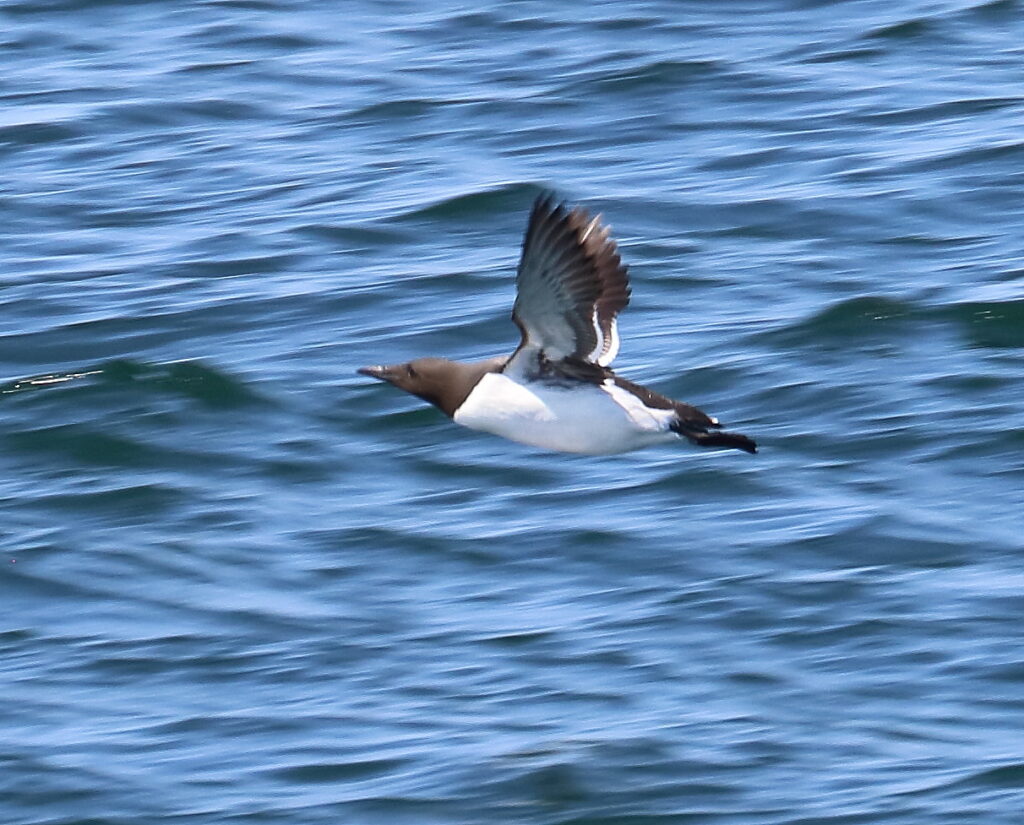
This Common Murre was the only one I saw the whole boat ride. While this species hasn’t yet started nesting at Petit Manan, the ornithologists are hopeful that they will soon!
Egg Rock did not have a puffin colony—it was too close to shore for that. What it did have were colonies of several other species of seabirds. Gulls dominated the island, mostly Herring with scattered numbers of Great Black-backed Gulls mixed in, their charcoal backs sticking out amongst the sea of gray. Cormorants patrolled the southern side of the island, standing tall like gargoyles on the rocks. And in the waters lapping up against the side of the island I saw my first alcids—Black Guillemots! Although guillemots, which are black with white wing patches in the summer and white with black wing patches in the winter, are in the same bird family as Atlantic Puffins, they are far easier to see in Maine. Not only do they breed right on the coast during the warm months, they also stay for the winter—something that the puffins do not do. That’s one of the reasons why I’d never seen puffins here during my time at the University of Maine: From August to April, these birds stay as far from shore as possible, floating around somewhere in the North Atlantic.
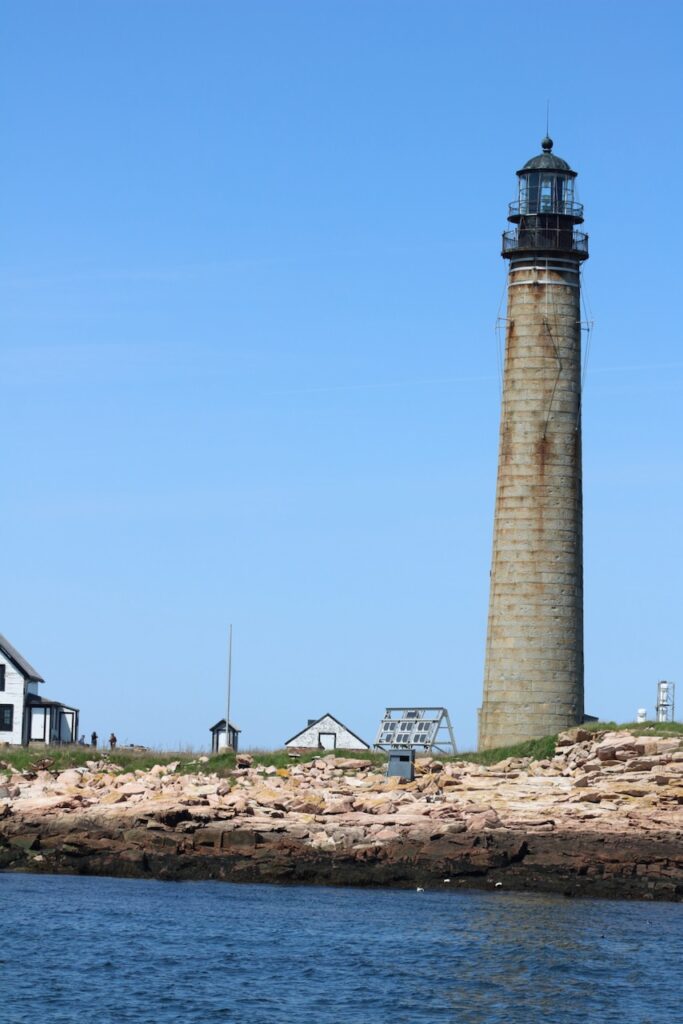
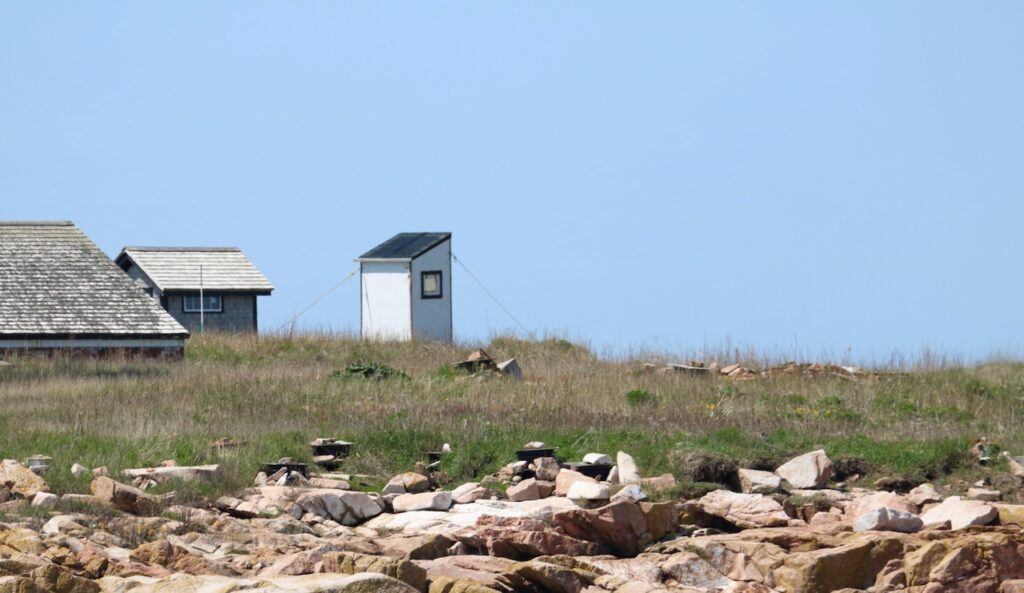
After circling Egg Rock to look at the seabird colonies, as well as the dozens of Harbor and Gray Seals lounging on the rocks, the boat picked up speed and headed out to sea. While we never lost sight of the coastline, it grew hazier and hazier until eventually, a new island appeared on the horizon: Petit Manan. The first thing I noticed about Petit Manan were the buildings. Many islands off the coast of Maine had lighthouses, built during centuries past to help steer ships into harbors. As recently as the late 1900s, lighthouse keepers and their families lived on the islands and maintained the lighthouses, although by now many of the keepers had left, likely because boats had better forms of navigation at their disposal. The houses they left behind had been taken over by people working a very different type of job.
The Lighthouse on Petit Manan Island.
Both Egg Rock and Petit Manan are part of a large reserve known as Maine Coastal Islands National Wildlife Refuge. Every summer, dozens of wildlife technicians head out to these islands to spend weeks and months working with the birds that live there. On some islands, like Petit Manan, this work includes Atlantic Puffins, but it also includes monitoring and conservation of other species like Common, Arctic, and Roseate Terns, Common Murres, Black Guillemots, Razorbills, Common Eiders, and Leach’s Storm-petrels. Several of my peers at the University of Maine worked for Maine Coastal Islands and would be heading out to their assigned locations within the next few weeks.
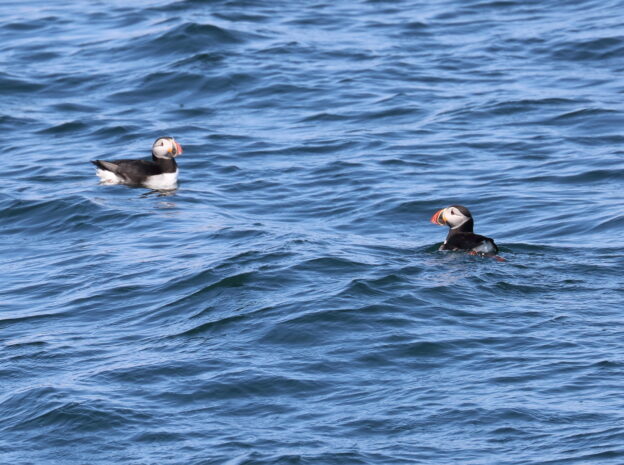
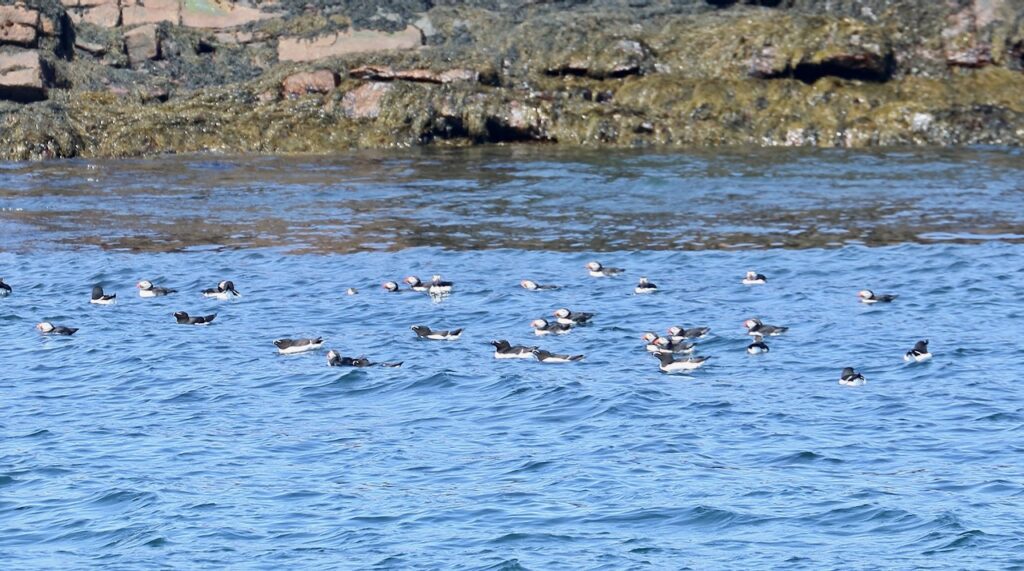
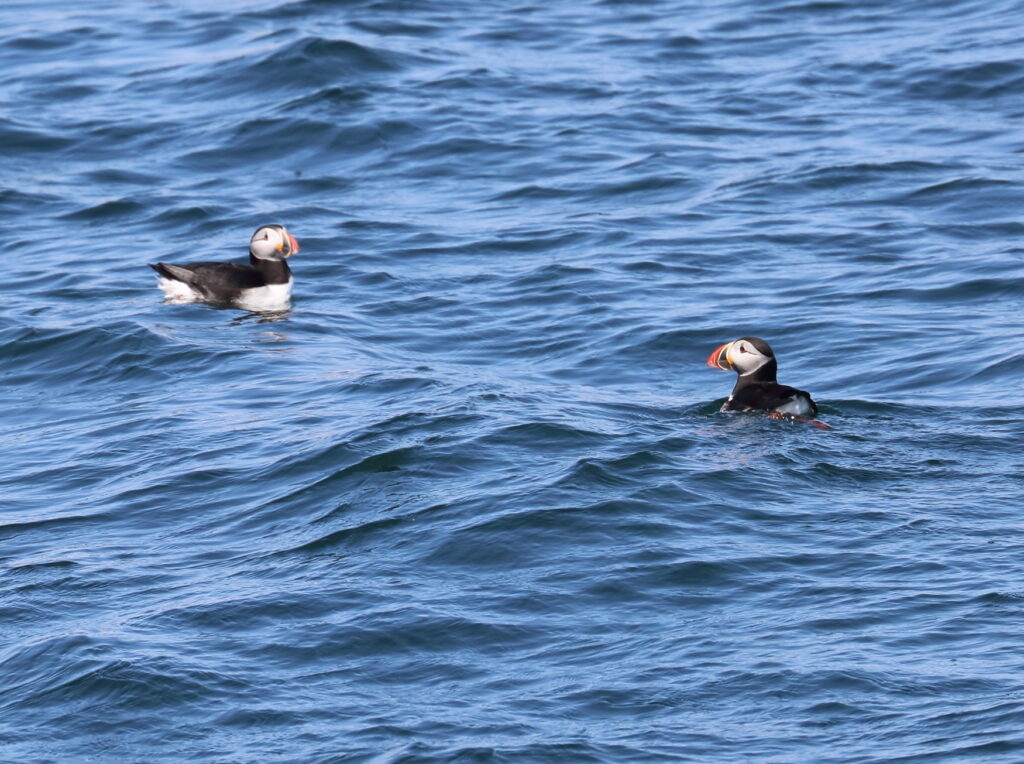
I began to make out large rafts of birds next to the island as our boat approached, and was delighted to spot football-sized alcids with rainbow bills taking off in front of us. I raised my binoculars and smiled—these were the first Atlantic Puffins I’d seen in seven years, since 2018 when I’d been lucky enough to visit Iceland with my grandparents (see my post “All About Alcids”). The birds lounged in the water close to the rocks, and our guide told us that many of them had likely just returned for the summer from their mysterious marine wintering grounds. I counted ninety or so during our half hour stay at Petit Manan.
A raft of Atlantic Puffins and Razorbills!
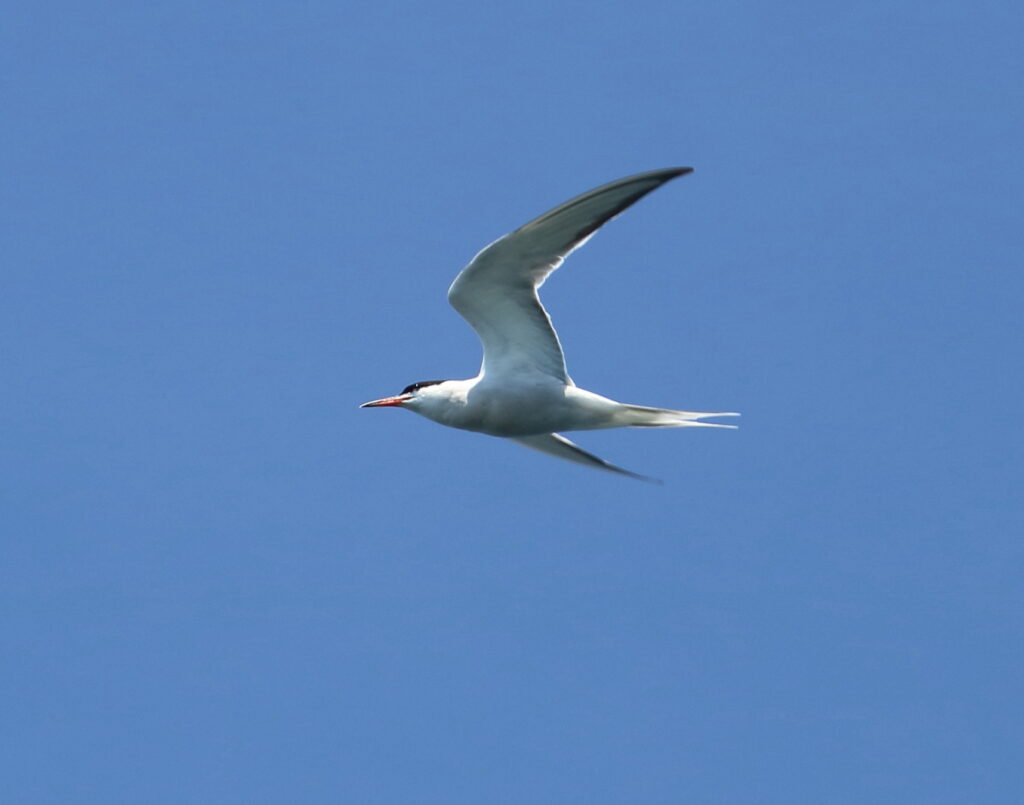
The puffins weren’t alone. Black Guillemots were here, too, as were a couple dozen Razorbills, another gorgeous black-and-white alcid named after the unique shape and decoration of its beak. I spotted a single Common Murre amongst their ranks, my fourth alcid of the day and a species that had not yet attempted to nest at Petit Manan—but scientists were optimistic! A dozen or so Common Terns circled the island loftily, letting out loud “kyeeeer” calls to notify everyone who was really in charge here. In a few weeks, the numbers of terns would swell into the hundreds, and include Arctic as well as Common. Terns were the aggressive defenders of islands, and would dive-bomb anything they perceived as a threat, including people. I remembered one walk in Iceland when we were asked to hold a tall, wooden stick so the Arctic Terns there would target that instead of our heads!
These birds are the reason that so many alcids nest at Petit Manan. The huge tern colony on this and other islands provide safety for the puffins from predators like gulls and Peregrine Falcons that might otherwise raid their nests. Of course, the biologists working for Maine Coastal Islands NWR were also there to aid these species and chase predators off the island. It hadn’t always been that way, unfortunately.
Common Terns nest in huge, aggressive colonies along the Maine coast!
A hundred years ago, feathered hats were all the rage in cities across the east coast of North America. The demand for white feathers meant that large numbers of terns, gulls, and egrets were harvested—to the extent that these species declined dramatically across much of the country. With no terns to protect them, puffins nesting in Maine were faced with higher predation, but not just from other birds. Rampant collection of eggs and puffin meat also plagued many of Maine’s islands, leading to a dramatic decrease in this species down to just two tiny colonies. Sadly, it was looking like the Atlantic Puffin would join the ranks of the Great Auk and Labrador Duck in Maine’s list of extinct birds.
Thankfully, ornithologists and bird-lovers alike noticed how much environmental damage was being caused by these practices and stepped in. Groups like Audubon formed and began lobbying for the protection of birds, eventually leading to the passing of the Migratory Bird Treaty Act of 1918. And in 1973, Audubon launched Project Puffin. Scientists were sent out to islands equipped with broadcasting equipment and decoys, as well as a small number of puffin chicks donated from colonies in Canada. Step one was the rearing of chicks on islands that had previously been occupied by puffin colonies; step two meant attracting terns back to the islands. Finally, with their defenders back in place, Atlantic Puffins began returning to many of the islands they’d previously been extirpated from. They now occupy six colonies in Maine.
Today, Atlantic Puffins are doing well, but are still being monitored very carefully. Puffins feed on fish that thrive in deep, cold water. That’s why the species only nests on the outermost islands in Maine. Our guide told us, “Puffins would lay their eggs in the ocean if they could.” Unfortunately, the Gulf of Maine is warming faster than any other body of water in the world, and this means that puffins are having to travel farther and farther out to sea to obtain their prey items of choice. During particularly warm years, puffins have switched their selected prey entirely to other species. Many of these other species of fish, which are brought back to their chicks on Petit Manan and other islands, differ in their size and the toughness of their skin. Often puffin chicks cannot eat them, and will starve even when food is sitting right there.
The man-made burrows where puffins nest on Petit Manan!
The good news is that there are many, many people keeping an eye on these birds, doing their best to keep their numbers high. Last year was an especially good year for the species, so optimism is in the air. I felt cautiously hopeful for the future of this species as the Bar Harbor Puffin Tour headed back to shore, content with the pictures and new memories I’d experienced with this iconic Maine species.