Welcome to all of our new subscribers! If you haven’t subscribed yet, please fill out the box down in the right-hand column. The timing’s good as we’re about to unleash a flock of new posts!
Happy 2020 Fellow Birders! It’s been a while since our last post but that doesn’t mean we’ve been idle. In fact, we just arrived back in the country after a month-long adventure to the Middle East—something which will occupy at least our next four or five posts. Before we get to the Levant, however, we want to share some birds on the way—in, you guessed it, Amsterdam!
Birding Amsterdam’s Vondelpark was the perfect way to kick off our Middle East adventure!
Our flights were set up so that we got an eight-hour layover
in the Netherlands, and you can bet we took advantage of it. As soon as our
plane landed, we raced through immigration and customs, caught a train to
Amsterdam’s Central Station and then a trolley out to what looked like our best
birding opportunity, Vondelpark. As we entered the enormous urban landscape,
clouds and chilly temperatures greeted us, but no rain, so we were in birding
business. As fast as you can say “Common Wood-Pigeon”, our Life Lists exploded.
Rose-ringed Parakeets? In Amsterdam? Hard to believe, but yes–in abundance!
Braden and I had done our due diligence by studying eBird lists for Amsterdam prior to the trip, but we were still blown away by how many of the birds actually appeared in front of us. They included the European versions of some of America’s common birds—Eurasian Moorhen, Eurasian Coot, Gray Heron, and Eurasian Magpie—but soon we also saw the more specialized residents. The first was a big surprise: European Greenfinch. These were followed by Eurasian Blackbirds, Eurasian Jackdaws, Eurasian Jays, Carrion Crows, and a prized trio of tits: Great, Blue, and Long-tailed.
Tits are basically the Euro versions of our chickadees—and every bit as cute, as these Blue and Long-tailed Tits demonstrate!
But you know me. At the top of my “To See” list was the Great Spotted Woodpecker, the only possible woodpecker in the vicinity. After an hour, we still hadn’t seen one when Braden suddenly swiveled and pointed. “Woodpecker!” Unfortunately, the bird was high-tailing it away from us, but we saw it land in a tree at the far side of the park. “After it!” I shouted and we raced across the park. The lighting was terrible, but the bird stayed just long enough for some decent looks. BOO-YAH!
This Great Cormorant was a real surprise in Vondelpark.
Our birding expedition wrapped up with a look at a Eurasian Wren, a Redwing, and some great quality time with European Robins—both Braden’s and my “Bird of the Day.” Then it was off to get warm and take a quick tour of the Van Gogh Museum. No offense to the great artist, but it seemed oddly anticlimactic after the living art we’d seen in the park.
Some great hang time made the European Robin our Bird of the Day. Look for them in movies filmed in Europe!
Welcome to all of our new subscribers—and thank you for your interest! Please note that Braden and I are about to embark on a once-in-a-lifetime trip to the Middle East, so won’t be posting for a few weeks. When we do, we should have some amazing stories to share!
Season’s Greetings Fellow Birders! Between school exams,
swim meets, book deadlines, and the general craziness of life, Braden and I
haven’t been out birding a lot in the last few months, but we wanted to wish
all of you Happy Holidays and a dawning new year of birding. With your
patience, we’d also like to reflect a bit on the past year, the future, and
what we can all do to help the animals that we love.
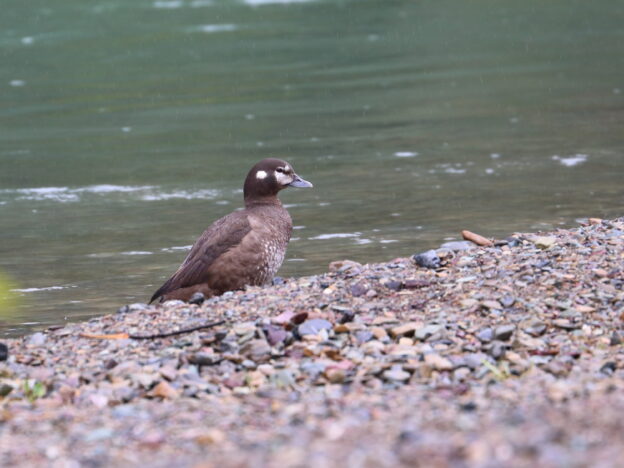
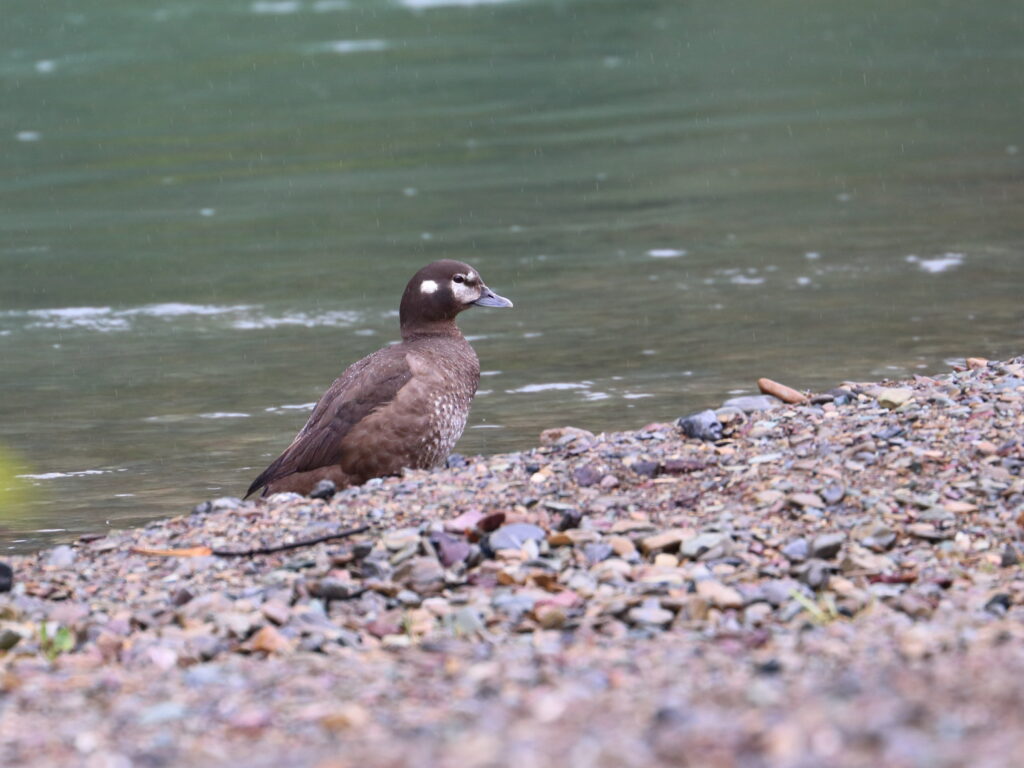
Getting to know Montana birds better—including this fabulous Harlequin Duck on McDonald Creek in Glacier National Park—has been one of the major 2019 achievements for Braden and me.
It was another amazing year of birding for Team Collard.
Without intending to, we smashed our Montana Big Year records by at least a
dozen birds each, with Sneed logging 222 species in the state (15 more species
than in 2017) and Braden recording 225 species—12 more than in 2017. We also
broke our combined Big Year record, though we’re too lazy to figure out the
total (about 340 species together). This year, Braden tallied 44 new Life Birds
while I added 21.
But while statistics are fun and motivating, for us they really aren’t what birding is about. Birding brings so many benefits to our lives, it’s hard to list them all, but top of the list are a chance to get outside, explore new places, see new species, learn about our remarkable planet, educate others about birding, and most of all, spend time together. This year, our favorite experiences included:
Perhaps our most rewarding 2020 activity? Leading birding trips for a new generation of young—and “almost young”—birders!
3) Leading birding trips for school groups and others
That last one brings up an important point. Those of us who
love birds owe it to the planet to do as much as we can to protect them. That
includes educating other people about the importance of birds and what’s
happening to them worldwide. Don’t short-sell yourself. If you’ve ever been
birding at all, you have important knowledge to share. Most people know almost
nothing about birds, so even teaching a friend how to identify a House Sparrow or
an American Goldfinch could be the beginning of a long and rewarding journey.
We were thrilled this fall to observe and help participate in long-term studies of bird migrations through western Montana using banding and flight call studies. Here, a Townsend’s Warbler (I think) gets unceremoniously dunked head-first into a weighing canister. This does nothing to harm the bird, but gives scientists at MPG Ranch and the University of Montana’s Bird Ecology Lab important data for monitoring and protecting songbirds.
We especially want to encourage everyone to give as much money—yes, cold hard CASH—as you can to organizations that are helping birds. Because of this year’s higher standard tax deduction, charitable donations have plummeted, and that has hurt a lot of nonprofit groups—especially in an era when they need support more than ever. Keep in mind, too, that if you donate to National Audubon, that doesn’t necessarily do much to support your state and local Audubon chapters. You have to give to all three. Here are some of Braden’s and my favorite groups that we give to:
Please check out these groups and GIVE UNTIL IT HURTS. We thank you, and appreciate all you do to share your love of birds and, even more, to make sure that the next generation enjoys a bird-rich planet.
This Western Screech Owl says: “Instead of buying friends and family more junk this holiday season, why not give them a LASTING gift with a donation to the Owl Research Institute and other bird conservation organizations?”
Do you love birds and birding as much as we do? Do you want to help educate others about the amazing world of birds? Well, please share this site with other birders, wanna-be birders, and educators—AND follow our adventures by subscribing to FatherSonBirding.com using the box on the right below.
Just returned from a fun speaking road trip, where I got to share Braden’s and my birding adventures with fellow birders at Coeur d’Alene Audubon, the Puget Sound Bird Fest, Edmonds Bookshop, and Eagle Harbor Book Co. Thank you for the great turnouts, everyone! I, of course, also hoped to get in some good birding on the trip, but weather—or perhaps bad birding karma—conspired against me. The one bright spot? Gulls!
This Mew Gull at The Nature Conservancy’s Foulweather Bluff Preserve was a real surprise—and the first Mew Gull Braden or I had seen on the ground.
I don’t know about you, but I find gulls vexing. I do not even try to ID immature gulls, but the adults also offer enough variation to render me apoplectic. My first birding stop was Potholes State Park, about thirty miles south of Moses Lake, Washington. I arrived at a crummy time of day, but enjoyed seeing dozens of migrating Yellow-rumped Warblers and few White-crowned Sparrows. Looking out at the reservoir, however, I noticed a black-headed gull in the distance. I tramped toward it, figuring it had to be a Bonaparte’s or Franklin’s Gull. I mean this far inland what else could it be? The problem was the bird’s weird bill, which should have been either red or black. Instead, this bill was black with a yellow tip. “Geez,” I thought. “Maybe it’s turning red.” I called Braden to ask his opinion, but he was stuck in class back in Missoula, so I snapped a few photos and moved on.
What the . . . ? A gull with a black head and half-yellow bill was about the last thing I expected to see in the interior of Washington State. I guessed it was a weird Bonaparte’s Gull—and I was wrong. Read below for the shocking conclusion!
The next day in Seattle, my friends Steve and Carol and I took the ferry to Kingston and drove to Point No Point lighthouse, which had shown a lot of great water bird activity in the past few days. Alas, except for a few Rhinocerous Auklets, very little moved on the beach or offshore so I again turned my attention to gulls. I saw what looked like a Glaucous-winged Gull except that its tail was too dark, so I decided it must be a Herring Gull, as its wings were too light for a Western. Later, however, I ran into a couple of different birders who told me that Puget Sound was awash in hybrid gulls, mostly Glaucous-winged x Herring Gull or Glaucous-winged x Western. I had heard of hybrid gulls before, but didn’t realize they were so abundant and decided the one I had looked at must be a Glaucous-winged x Herring.
“Well-behaved” gulls that follow ID rules are difficult enough to identify. Unfortunately, many gulls make birders’ lives more difficult by hybridizing! Is this a Glaucous-winged x Herring Gull hybrid or a Glaucous-winged x Western Gull hybrid? The lighter wings and tail push me toward the former, but if you disagree, please weigh in!
A couple of mornings later, at the Puget Sound Birding Fest
in Edmonds, my dismal birding luck continued—except for the gulls! Along the waterfront,
I found 400 Heermann’s Gulls—probably Braden’s and my favorite gulls. I also
found my first definite California Gull of the trip and settled in to give the
hybrids more study. In a later post, I will try to explain the mental flow-chart
I use for gulls, but suffice to say, it was a most enjoyable morning spent
sharpening my gull skills and knowledge.
Heermann’s Gulls are not only some of the most beautiful gulls, they are among the easiest to identify. Can you tell why Braden and I love them so much?
The best discovery awaited me when I returned to Montana, however, and was showing Braden my gull photos. We found that I had taken a photo of a Mew Gull (which I had assumed was a juvenile of another species). Then, I showed him my “mystery” black-headed gull from Potholes State Park. “You saw that?” he exclaimed. “Well, yeah. Do you know what it is?” “Yeah,” he answered, and pulled up photos of a gull that had never even been on my radar—a Sabine’s Gull! This gull breeds in the Arctic tundra and migrates offshore of the Pacific coast. According to Sibley, “migrants rarely appear on inland ponds, lakes or rivers,” and yet here I’d seen one 200 miles from the coast!
Lesson Number 1: Once again, that birds don’t read the guide books. Lesson #2: That I still have a LOT to learn about gulls—but am making progress!
Braden celebrates our “Half-Century” post with a lively recount of our two-week backpacking adventure in New Mexico. Why not celebrate with us by subscribing using the box on the right below? As always, feel free to share this with other birders, bloggers, Scouts—anyone you wish!
My dad and I recently got back from a two-week backpacking adventure on the Philmont Scout Ranch, a 220-square-mile swath of wilderness in northern New Mexico. The ranch is the largest of the Boy Scouts of America’s High Adventure Bases, and is jam-packed full of wildlife, history, culture and breathtaking experiences. Our trek, which we did with twelve other scouts and adults from our troop in Missoula, covered 74 miles. During this time, we hiked through canyons, and summited mountains, including the Ranch’s highest peak, Mount Baldy, at 12,441 ft. We also were exposed to and learned a wide variety of new skills at staffed camps we visited, including how to pack and unpack a burro, how to build a railroad, how to blacksmith, how to lasso, how to shoot Old West-style guns and black powder rifles and more.
Braden with our trusty Burro, “Nigel”—named because, when necessary, he could turn it up to “11”! We were lucky to have Nigel’s company for two days of our trek.
The trek also exposed us to a wide variety of diverse habitats. We travelled through Ponderosa Pine savannah and forest, valley riparian, desert scrub, spruce-fir forest, alpine meadow, aspen forest, subalpine forest and alpine tundra. We saw many different species of animals throughout our journey, including Monarch and other kinds of butterflies, pronghorn, mule deer, a rattlesnake, bats, and a praying mantis, not to mention evidence of elk. And then, of course, were the birds.
Because we didn’t haul our five-pound cameras with us, this was by far our best bird photo from the trip. Flamingoes in New Mexico? Who knew?
My dad and I together tallied a total of 84 species throughout the trip, including the birds we spotted in the desert on the drive from Albuquerque to the Ranch. The most common species we saw were Spotted Towhee, Cordilleran Flycatcher, Western Wood-Pewee and Common Nighthawk, which we saw almost every day. These four birds had adapted to almost every habitat on the ranch, especially the Cordilleran Flycatcher, which we tallied everywhere, from lowland riparian to subalpine forest, missing it only in the Ranch’s Base Camp. Other common birds included Pine Siskin, Red Crossbill, Rufous and Broad-tailed Hummingbird, Western Bluebird, American Robin, Pygmy and White-breasted Nuthatch, Mountain Chickadee, Chipping Sparrow, Black-headed Grosbeak and Western Tanager. What was especially interesting was the abundance of Black-headed Grosbeaks in most of the habitats we visited; while they seem to be much more riparian-based in Montana, we saw them in scrub, second-growth, aspen and spruce-fir forest.
We were surprised to commonly encounter White-breasted and Pygmy Nuthatches—but rarely Red-breasted—on our twelve-day trek.
Lesser Goldfinches were also quite common, though were much more exclusive to riparian areas. The subspecies here was different from the west coast—they had more solidly black backs, though still kept the same green necks. The main subspecies of Dark-eyed Junco at Philmont was also interesting, it being the Gray-headed rather than the Oregon we were used to. These juncos were slate gray with red backs and dark spectacles. More common Montana birds like Red-breasted Nuthatch, and both kinglets only occurred at very high altitudes.
Braden’s keen eyes and ears allowed us to pick up Clark’s Nutcrackers and most of Philmont’s other resident corvid species, though good looks were hard to come by!
While at Philmont we spotted six of the seven reported corvids (Steller’s Jay, Common Raven, Clark’s Nutcracker, Pinyon Jay, Gray Jay, Woodhouse’s Scrub-Jay), missing only the rare desert-specific Chihuahuan Raven. We also managed to get three lifers during the trip, those being the beautiful pine-loving Grace’s Warbler, the by-ear-only Common Poorwill and the previously mentioned Woodhouse’s Scrub-Jay. Other highlights include a family of Dusky Grouse, a small flock of Band-tailed Pigeons, a nesting pair of Williamson’s Sapsuckers and the hordes of migrating hummingbirds attacking the feeders at Base Camp, where we saw four species including with Black-chinned and Calliope. Overall, it was a great trip!
The (non-birding) highlight of the trip was our group’s ascent of 12,400-foot Mount Baldy on our second-to-last day of hiking. Braden and Sneed are third and fourth from the left. We thought we might catch some Andean Condors up there, but no such luck!
If you are enjoying these posts, please share them with friends, family, and other birders. Also, be sure to subscribe by filling out the form down in the right-hand column. Hoo-Hoo!
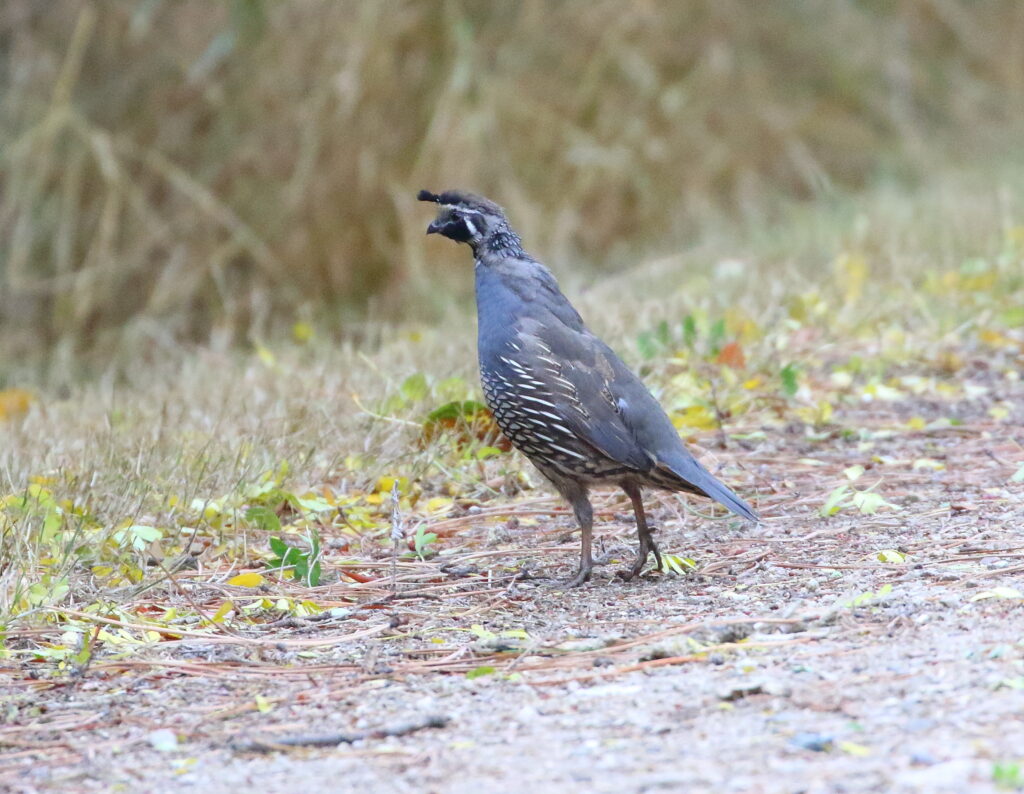
On Wednesday, July 10, both my dad and my Montana year lists stood at 203, mere inches from our previous all-time records. Two days before, we’d had an awesome all-day birding session, nabbing five year birds (Bobolink, Dusky Grouse, White-throated Swift, California Quail for my dad and Black-chinned Hummingbird for me). Now, a couple of days later, I had gone to swim practice and was surfing the recent Montana eBird reports when suddenly, I spotted something. A Virginia’s Warbler had been seen in Lewis and Clark Caverns State Park! Upon further investigation, I discovered that not one but two Black-throated Gray Warblers had been seen in the same spot. Up a nearby canyon an Indigo Bunting was hanging out! I talked to my dad, and we couldn’t take it anymore. The rarities coupled with other year bird possibilities pushed us to the brink.
Bolstered by this Dusky Grouse and four other year birds we’d seen on Monday, July 8, we decided to make an all-out push to break our Montana Big Year records.
The next evening—Thursday—we hit the road for a Super 8 in Butte and the next morning were up at dawn, heading for the caverns. I had a pretty good idea of where the rare birds were (or so I thought), so we started off on a mildly steep trail from the campsite, encouraged by neon Bullock’s Orioles swooping around us. In our haste, however, we had forgotten our bug spray, and about two miles in, the mosquitoes attacked, forcing us back to the campsite.
Slightly disheartened, we
moved on to our next stop: Milligan Canyon Road. A male Indigo Bunting had
taken up residence here among the usual Lazuli Buntings, and we expected him to
stick out like an indigo wildebeest in a pack of green lions. As we continued
up the road, though, seeing all lions and no wildebeest, we began to grow disappointed.
At the actual entrance to the canyon, though, my dad pulled off the road and
whipped out his binos.
“I’ve got him!”
While common in the middle and eastern U.S., this Indigo Bunting was probably the rarest Montana bird we’d ever seen.
We leapt out of the mini-van
like it was about to explode and ran across the road, and sure enough, there he
was. The wildebeest was singing his tiny heart out, as if nothing was weird
about the fact that he was in Montana rather than North Carolina. My dad and I
celebrated our first successful rarity chase in Montana with a high-five.
After a quick search up the canyon for Yellow-breasted Chats and Green-tailed Towhees (we found a Golden Eagle instead), we made our way towards Three Forks. We pulled onto the dusty Bench Road and spotted harriers and Swainson’s Hawks, bringing back memories of our first-ever eastern Montana trip two years before when we’d found curlews and Burrowing Owls with Nick Ramsey on this road. Soon, we saw our main quarry: a tiny owl picturesquely perched on a fence post ahead of us. We pulled up alongside it, and flushed another!
We love it when birds pose only a few feet from us. This Burrowing Owl was really trying to score a permanent modeling contract, or at least a spot on “Project Owlway.”
The owls gave us great pics, and after a half hour we turned tail and headed back to Lewis and Clark Caverns. Why? It turned out I had picked the wrong trail for the rarities! We gave it another shot, this time driving to the top of the state park. Sprawled in front of us were beautiful juniper and pine-covered hills, and we started off on another short trail after being interrogated by the park officials (“We aren’t going to sneak into the caverns, we’re looking for birds!”). A few hundred yards up the path, a new sound rattled across the landscape, different from the regular sounds of the Spotted Towhees. I peered down the slope, and saw a bird with the strangest color combination—green, gray and orange. Green-tailed Towhee! We pished it up the slope and got awesome looks. This wasn’t just a year bird; we’d never seen it before!
We tried one more trail before giving up all hope on the two warblers, then steered towards Helena. After a brief rest at yet another Super 8—this one far more depressing than the first—we visited a Helena cemetery, where my dad had gotten Pinyon Jays earlier in the year. I was skeptical, but sure enough, eight blue-and-gray corvids crossed the road in front of us, hopping onto a few tombstones and then loudly flying off. Another lifer for me!
Chipping Sparrow? No! Green-tailed Towhee, a long sought-after Lifer for Team Collard!
We had dinner at MacKenzie River Pizza, then hung out there reading and watching the men’s Wimbledon semifinal since our next and final stop wouldn’t produce what we were looking for until later. Flammulated Owls, one of the most secretive in North America, had been regularly reported in a nearby location known as Grizzly Gulch (ironically, there were no grizzlies there), and we arrived at the coordinates at about 9:00 p.m. Almost immediately we heard a low, single hoot in the trees. No way! Who knew owls could be this easy? We tried to make our way towards the sound, but gave up and opted to let the owls come to us. Making our way farther down the road, we picked up winnowing snipes and Willow Flycatchers, and tried in vain to find a Common Poorwill flycatching in the road. We never did see the owl, but were fine with that! My dad had surpassed his all-time Montana record, and now we have 210 and 211 species respectively in Montana this year. Can I break my old record of 213? Stay tuned to find out!