Tag Archives: Sparrows

Quarrying Species: Birding Therapy Day Six

Enjoy these posts? Please share and subscribe using the box down below and on the right.

Saturday, Day 6 of my Birding Therapy Week, I arrived at Fort Missoula at 7:45 a.m. with my daughter for the first of her two soccer games that day. While she warmed up with her team, I took Lola back over to the gravel quarry hoping to catch some magical morning birding. I didn’t have to wait long to kick off a great session. Even before leaving the soccer fields parking lot, my first Barn Swallow of the year flew past me, and once I reached my first stop at the northward quarry pond, I found myself struggling to keep up with all of the species I saw and heard. On the ponds themselves, I ID’ed eight species of ducks, Canada Geese, a Horned Grebe, and a Common Loon—perhaps the same one I’d seen two days before.
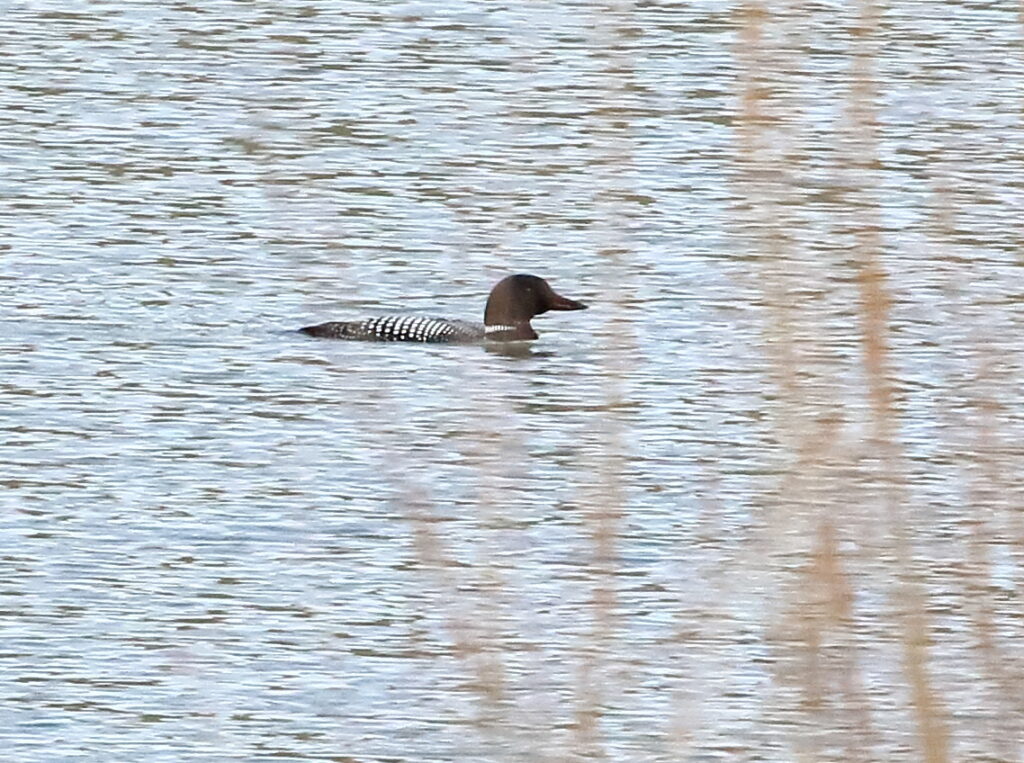
I had to play hide-and-seek with this loon even to get this poor shot, but I didn’t mind. Was just thrilled it stopped by the quarry on its way to its breeding grounds.

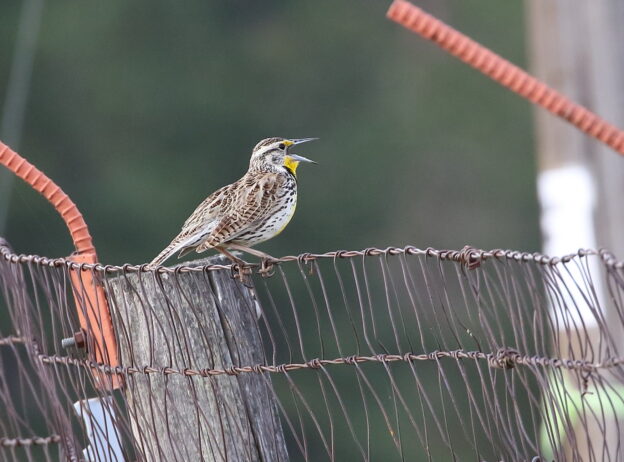
As I walked along the fence line, a sparrow popped up with a bold face pattern and pale “moustache”—the year’s first Vesper’s Sparrow! Nearby landed a Savannah Sparrow while a Western Meadowlark serenaded us. At the cliff edge above the river, Northern Roughed-Winged and Tree Swallows swarmed while a Red-tailed Hawk, Osprey, and Great Blue Heron sauntered by.
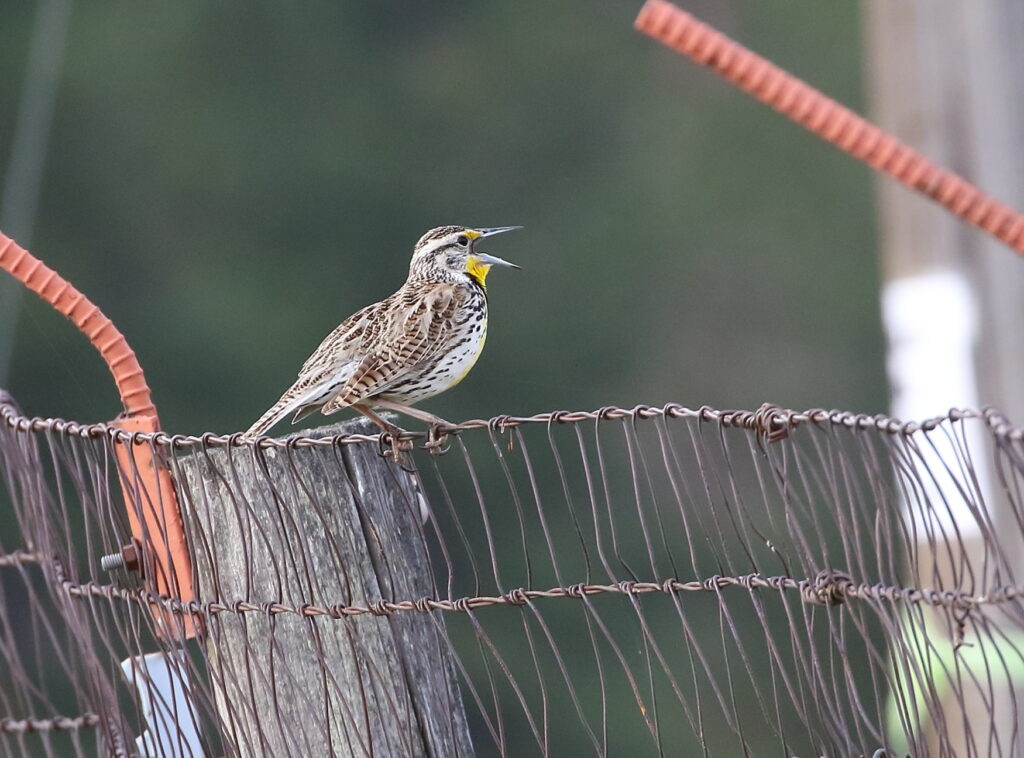
Meadowlarks always make me pause to ooh and ah, especially when they perch and sing in full view!

The hits kept on coming: two Red-naped Sapsuckers, a pair of Wood Ducks flushing from beside the river, a Yellow-rumped Warbler. As before, I made a special effort to find unusual sparrows. In one of our favorite spots, I located a couple of White-crowneds and then I saw something that really got my heart thumping: a bold bird with a peaked crown and distinct gray and brown facial lines. Even more exciting, I thought I detected a bit of yellow on the sides of the breasts—sure signs of a Lincoln’s Sparrow. Unfortunately, the bird was facing away from me and I was just moving in for a better look when two good-natured women walked up behind me and loudly shouted “Good morning!” I turned around and smiled, putting my finger to my lips, but it was too late. The sparrow fled.

Sigh.

Still, it was an amazing morning, with 36 species and delightful experiences. Even better, my daughter’s team won her soccer game. I’ll get you next time, Mr. Lincoln.

Here is my complete checklist: https://ebird.org/checklist/S86803129
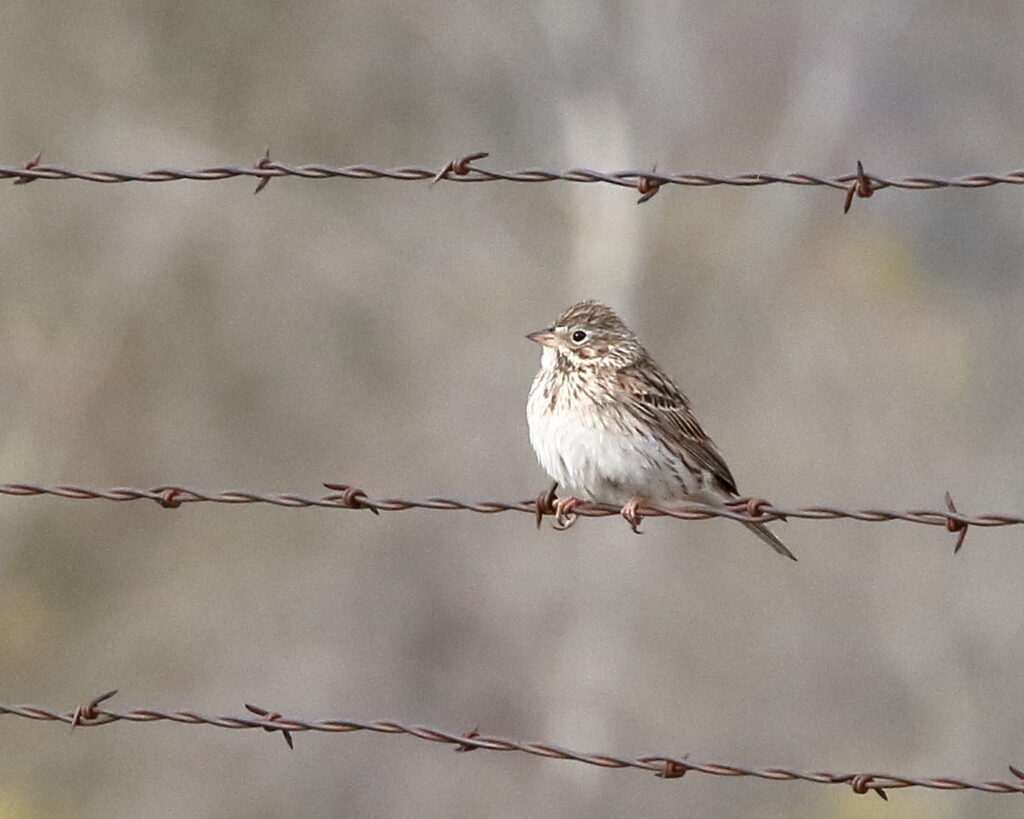
I missed the Lincoln’s Sparrow, but was delighted to find my first Vesper’s Sparrow of the year. Braden got his first in a different location the very same day! Note that Vesper’s Sparrows are identified by their bold facial pattern including white eye ring and white “handlebar moustache” curving down and back from its bill. When they fly, look for the white outer tail feathers. Many also show an upside down “heart” on their breasts—though this one is “heartless.” Poor thing.

Five Year Birds: Birding Therapy Day Four

Thank you for sharing this post. To subscribe, please fill out the info in the box down and to the right.

I especially looked forward to Day 4 of Birding Therapy Week because I would get to take a hike with one of my favorite Missoula people, Paul Queneau. As fellow Assistant Scoutmasters, Paul and I have shared a number of adventures including helping lead Scouts for week-long trips down the Missouri River and to Glacier National Park. Paul is an outstanding photographer, writer, and naturalist, so we always have a lot to share when we get together.

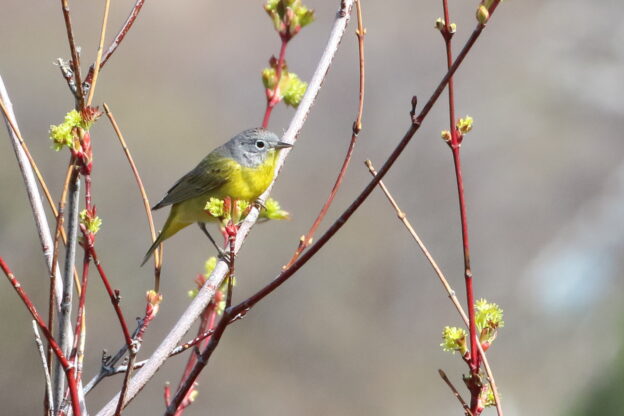
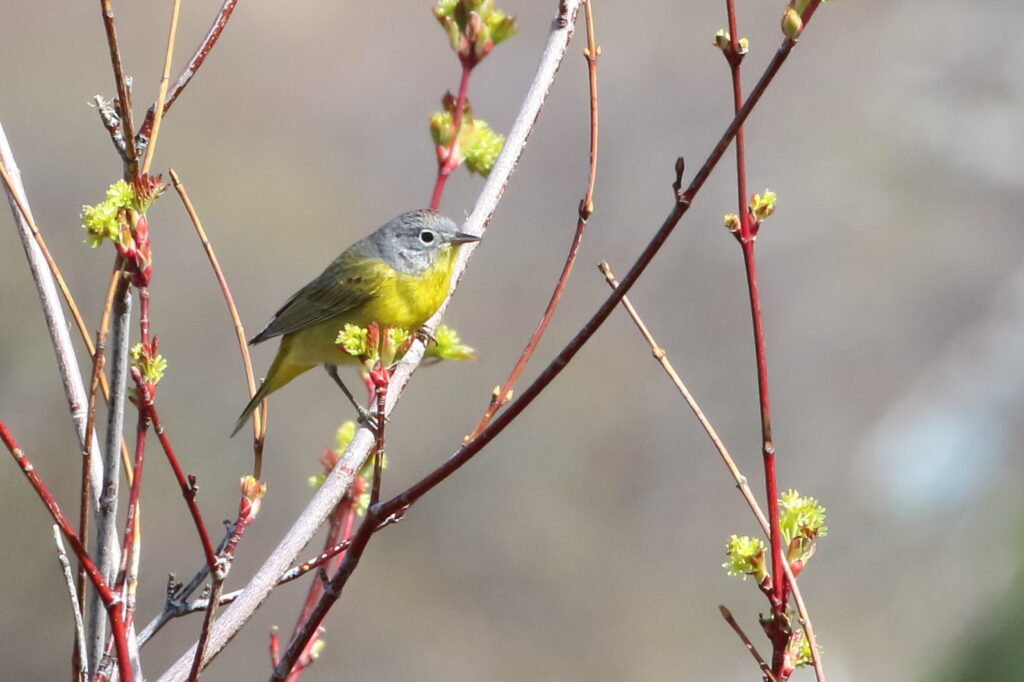
Though one of the last Montana warblers we learned, Nashvilles have quickly become one of Braden’s and my favorites.

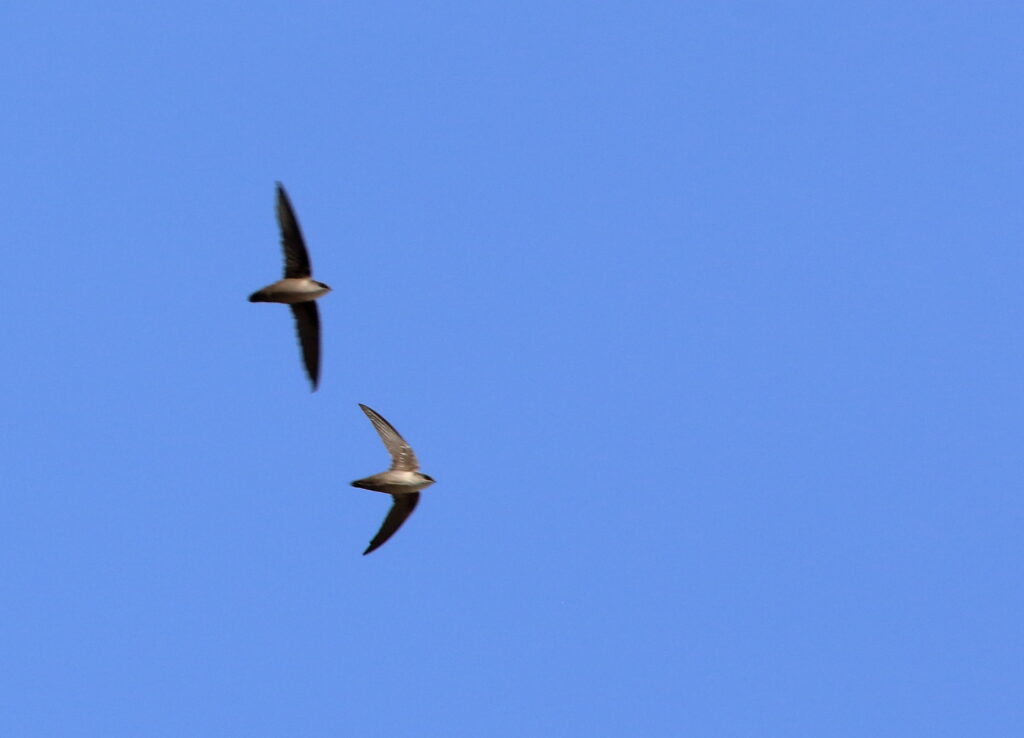
Before meeting up with Paul Thursday morning, however, I wanted to make a quick stop at the base of Mount Jumbo because Braden had spotted his first Nashville Warbler of the year there the day before. The shining sun bode well as I hiked up a short little trail to a brushy area that often holds an assortment of great spring songbirds. In no time, I heard the calls of a Spotted Towhee and a Western Meadowlark. I also detected a song that I thought might be the Nashville and . . . it was! Nashville Warblers are one of my favorite spring Montana birds and this little guy just put a huge smile on my face. As a bonus, I scored two more Year Birds I didn’t expect: Calliope Hummingbird and Vaux’s Swift!

It’s a swallow . . . It’s a starling . . . No, it’s a Vaux’s Swift! Though easy to mistake for swallows, swifts have more rapid, stiffer wing beats and, to my mind, a more classic scythe or boomerang flying profile. As you can tell, I have never managed a good flight photo of one!

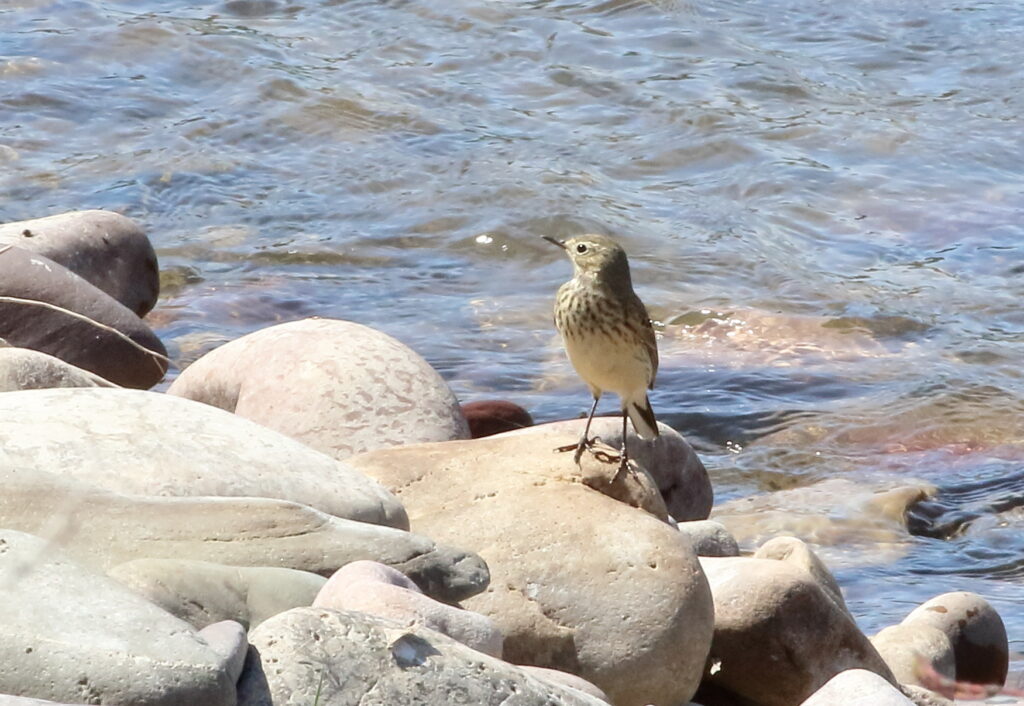
Flush with three Year Birds, I picked up Paul and he directed me to a new trail I’d never been on out near the Canyon River Golf Club in East Missoula. Though more of a mammal man, Paul has been staking out the site to photograph hummingbirds and Spotted Sandpipers. We headed down along the river hearing multiple Spotted Towhees and Song Sparrows, but didn’t see any Spotted Sandpipers. Then, a bird flew in and landed right next to the water. I assumed it was a sandpiper, but focusing in I found myself staring at an American Pipit—a total surprise for this time of year and location, at least for me. American Pipits breed in alpine and Arctic habitats, and can be found at lower elevations/latitudes during migration, but Braden and I had never seen them along a river like this. Best of all, it was another Year Bird pour moi—and not the last.

Though American Pipits are reported around Missoula this time of year, the appearance of this one right on the Clark Fork River was a delightful surprise.

As Paul and I kept walking, pleasantly chatting about birds, writing, photography, and more, we saw a sparrow fly into a bush. We’d been hearing a lot of Song Sparrows singing and thought it might be one. Closer inspection revealed yellow above the eye—a sure giveaway for Savannah Sparrow, and Year Bird Number 5 for the day! All too soon, we had to turn around so we could get back to work, but it was an exhilarating morning, and I knew I would return to this spot again and again—hopefully with both Paul and Braden.

Soccer Ball Birding: Birding Therapy Week Day Three

Thank you for sharing this post!

Day 3 of Birding Week Therapy proved an easy task thanks to my daughter’s regular Wednesday night soccer practice out at Fort Missoula—a location that happens to sit next to what may be Missoula’s best birding location, affectionately known as “the gravel quarry.” Over the past years, Braden and I have birded the quarry dozens of times and counted about 130 different species there, including a number of rarities such as Long-tailed Duck, Pacific Loon, and Eurasian Wigeon that swing by during spring and fall migrations. This time of year, I was especially keen on finding some cool sparrows, which can also drop in for a week or two at a time. I would have preferred a morning visit, but birders can’t always be choosers, so after dropping my daughter off, our dog Lola and I set off to see what we could find.

The late-season Merlin was a real treat, especially watching it in action hunting another bird!

Few ducks graced the pond and they were too far away to ID without a scope, so we hurried on to the river to look for sparrows. Alas, the action proved pretty slow, but as I was peering into one of my favorite sparrow spots, two larger birds dived into a patch of tansy. One flew off again before I could ID it, but the other extricated itself and perched on a nearby tree. Its behavior led me to believe it was a Sharp-tailed Hawk, but on closer inspection I saw that it was a Merlin! And quite late in the year for the location! I took my time studying it since I often have difficulty identifying these in the field.

Cooper’s Hawks are common at the quarry, but I wondered if this was a resident or just passing through.

Minutes later I saw another raptor circling and just assumed it was the Merlin, but no, it proved to be a Cooper’s Hawk! Braden later reminded me that raptor migration was in full swing so both sightings made sense, along with the lone Turkey Vulture I saw in the distance.

I never tire of watching Sandhill Cranes and it seems we’ve been finding them at this location more consistently the past couple of years.

Soon, I heard weird guttural calls that I have come to love—Sandhill Cranes. Three of them caught the gorgeous evening light and I am guessing they breed nearby since they’ve become a common sight out there. Alas, songbirds proved scarce but on our way back to the car, Lola and I finally dissected a White-crowned Sparrow from some brush. I’d had bigger days at the quarry—and better photos, too—but also much worse days. I knew, though, that I’d be returning for Day 6 of Birding Therapy Week—and in the morning!   

Pocatello or Bust

Enjoy these posts? Please share with others and subscribe by filling out the boxes down in the right-hand sidebar.

In our last post, I gave the background story of my newest book, Waiting for a Warbler. The irony is that even as I posted it, Braden and I, like many of you, were impatiently waiting for warblers and other spring migrants to show up—so much so that we jumped the gun and leaped into our intrepid minivan for a 1,000-mile road trip. The trip’s main impetus was to hear Boreal Owls after dusk at Lost Trail Pass on the Montana/Idaho border, and things started well as we picked up an uncommon Eurasian Wigeon near Lee Metcalf NWR on the way down. Alas, despite spending two hours hitting the ski area parking lot and various locations along highway 43, we heard not a single bird—this, despite our friend Nick hearing FIVE Boreal Owls several years ago. Disappointed, but not shocked, we proceeded to Wisdom to spend the night at the comfortable Pioneer Mountain Lodge.

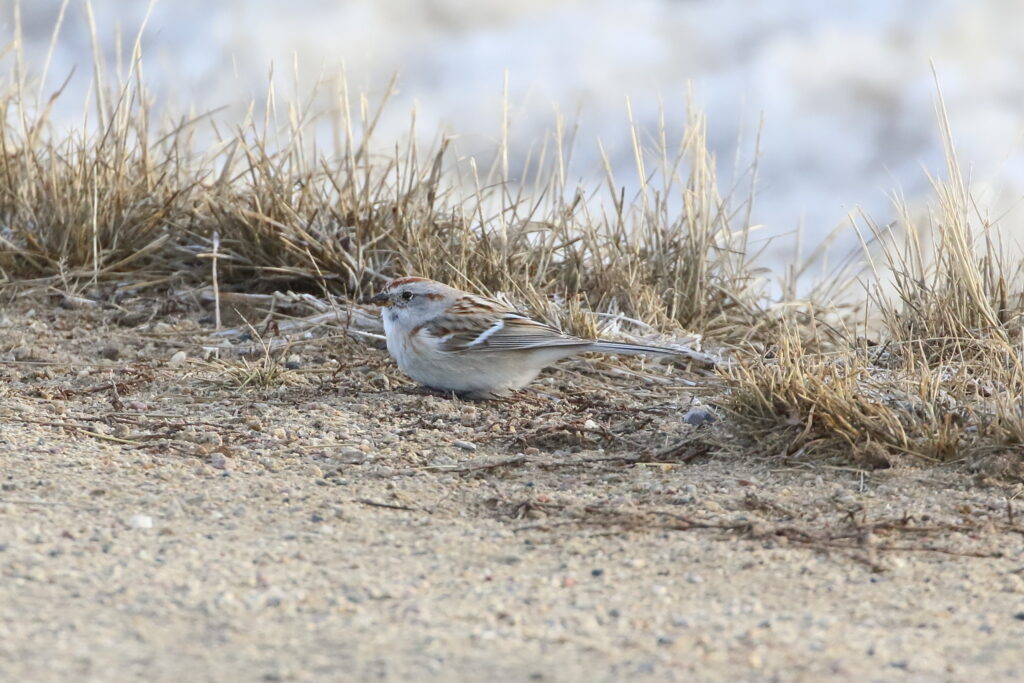
Totally unexpected, this was perhaps our closest look ever at one of our favorite winter birds, American Tree Sparrows, right alongside the road in Wisdom, MT.

Before heading south the next morning, we decided to do a quick tour of Wisdom and were fortunate to spot American Tree Sparrows and a Northern Shrike. Along the highway, our luck continued with great raptor looks, including a ginormous Great Horned Owl sitting on a mile marker next to the road! At the ghost town of Bannack, however, we struck out on Sagebrush Sparrows and Sage Thrashers (still too early) and, after “dipping” on Chukars in Dillon as well, decided to head to Idaho for our first interstate birding in months.

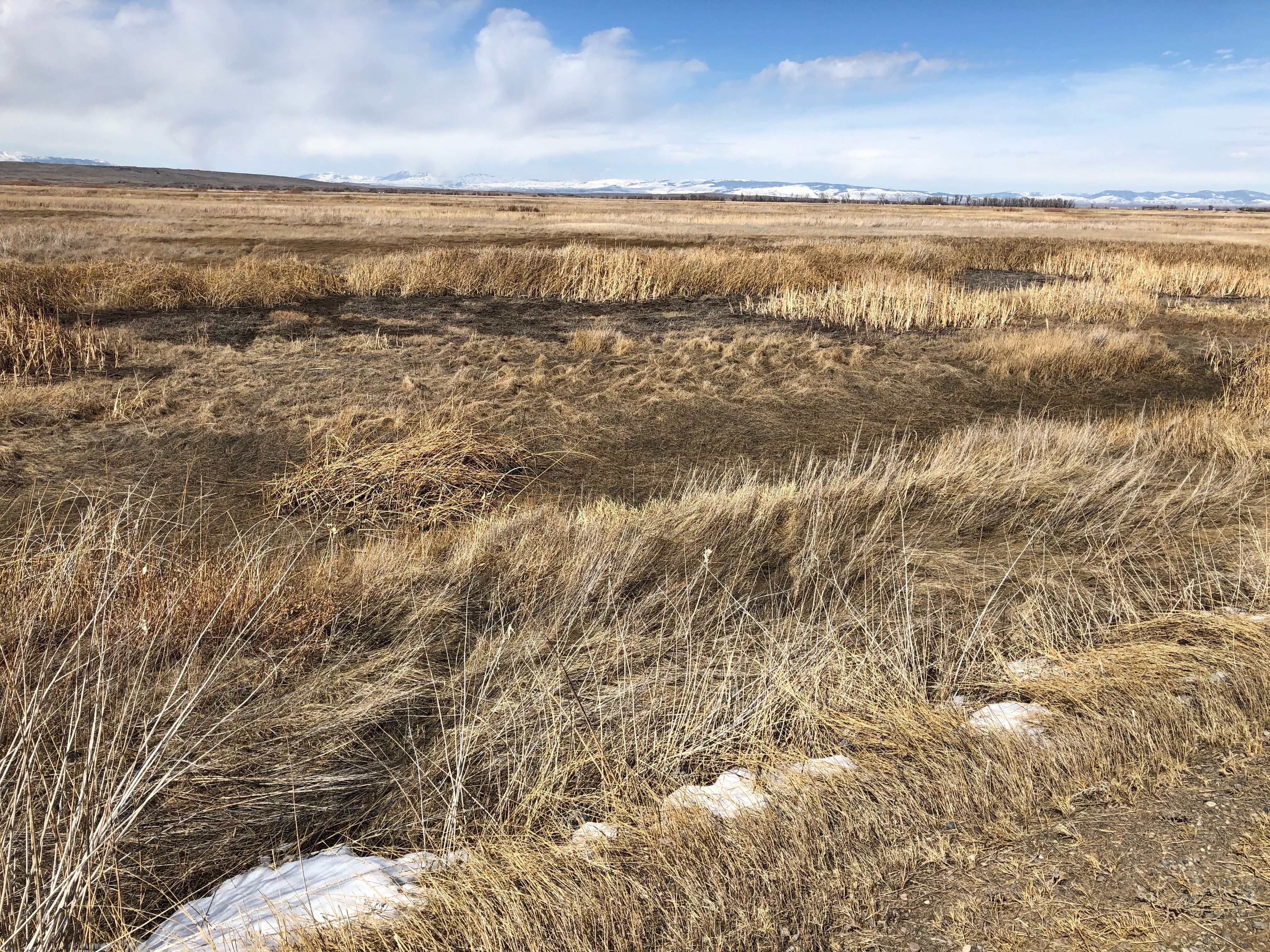
We were especially excited to visit Camas National Wildlife Refuge, but when we arrived, instead of ponds overflowing with waterfowl, we found depressing drying mud with a few determined Canada Geese and Mallards wondering what the heck was going on. We wondered, too, and a little research pointed both to a dry year and, more crucially, a lowered water table caused by over-pumping of groundwater by agricultural interests. This is a situation faced by more and more places in the West and national wildlife refuges seem to be particularly at risk as their budgets for new wells, staff, and infrastructure haven’t nearly kept up with their needs (see the Audubon article “Overwhelmed and Understaffed, Our National Wildlife Refuges Need Help”).

The kind of depressing scenes we found at Camas National Wildlife Refuge are playing out all over the West as human demand for water robs wildlife of essential habitat and resources.

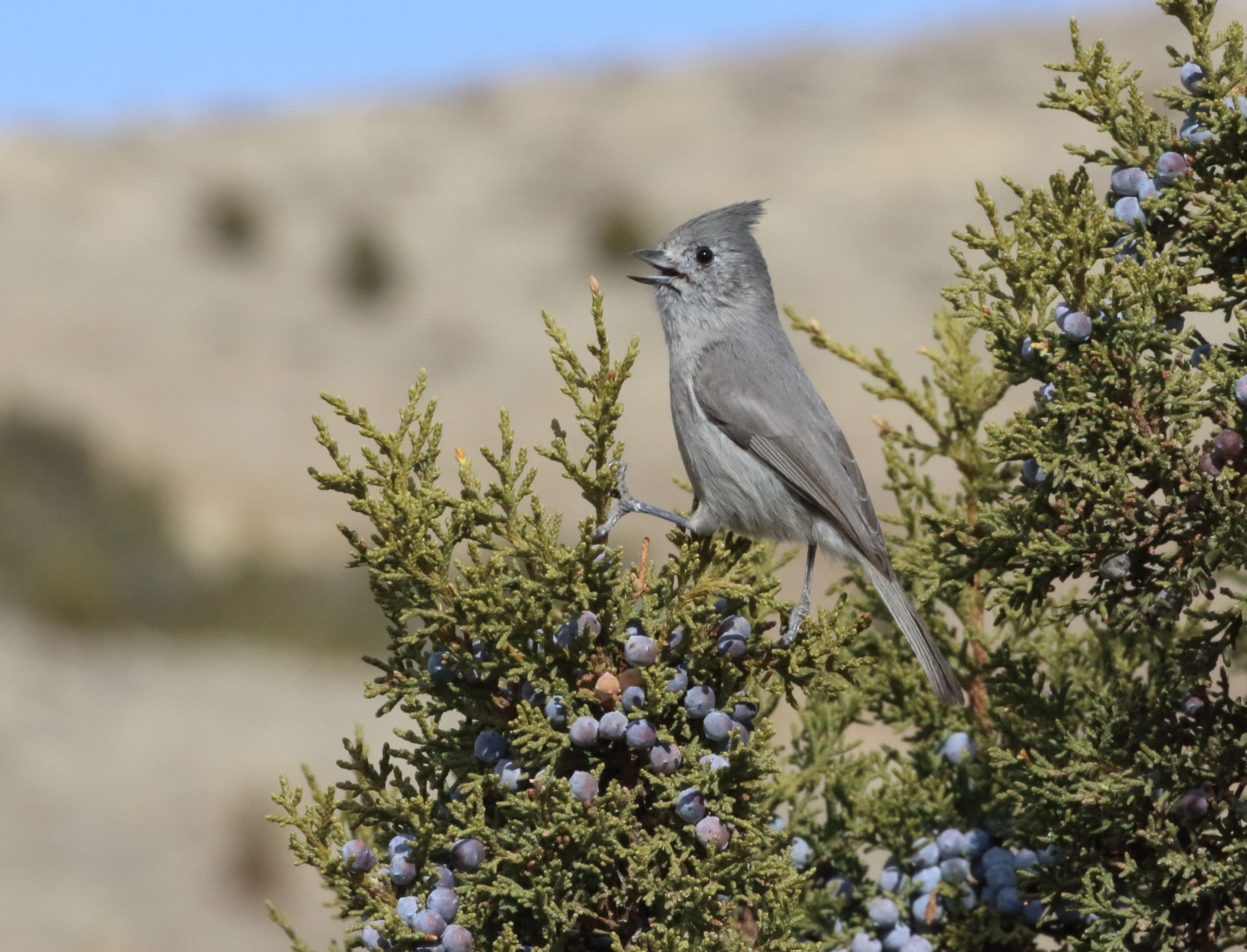
Determined to redeem our day, we pushed on to Pocatello, where we had a delightful hike through juniper forest and saw our Lifer Juniper Titmice. In fact, these wonderful little birds may have ended up being the highlight of our trip as we got to watch them sing, bicker at each other, feed on berries, and generally make the most of life.

Both Braden and I fell in love with Juniper Titmice, described by eBird as “Possibly the plainest bird in North America.”

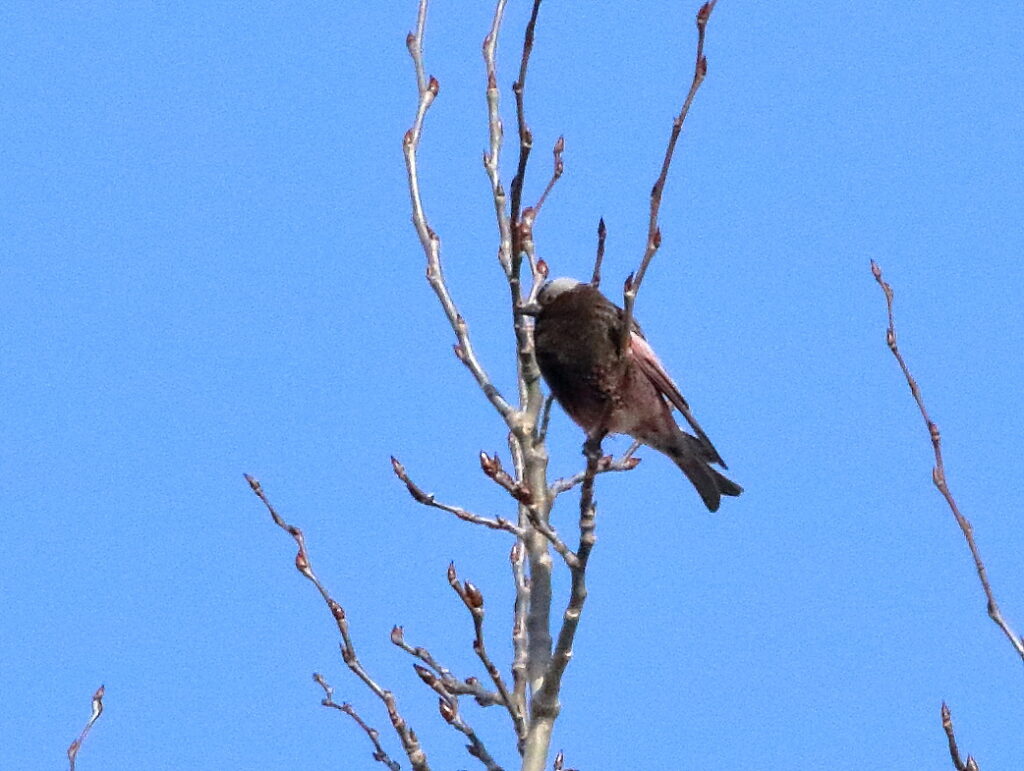
The next morning we decided to heed Supertramp’s advice and take the long way home through Craters of the Moon National Monument (closed) and Sun Valley. We had a special interest in Sun Valley because another Lifer, Black Rosy-Finch, had been reported there, and as we drove up a long canyon road we wondered if we would again be disappointed as this was the year’s fourth attempt to find this elusive bird. We arrived and . . . no birds. We hung out for several minutes, though, and suddenly heard finchy chirps above us. The rosy-finches! And not just Black, but Gray-crowned, too. It was particularly gratifying to find these gorgeous little passerines both because we’d looked for them many times and because this might well be Braden’s last chance to see them before he heads east for college this summer. The rosy-finches and titmice made the scenic drive home through the Sawtooths especially enjoyable—and a surprise find of a Ruffed Grouse along the highway extra sweet.

Hard to find at best, Black Rosy-Finches are some of North America’s most beautiful passerines. They nest at high altitudes and, not surprisingly, are some of America’s least-studied birds.

Stumbling After Sparrows

Sparrows. A simple word that can elicit groans from the most experienced birder. Even after six years of dedicated birding, I feel like I am just beginning to grasp most sparrow identification, let alone sparrow behavior and song. With Braden’s help, I can now figure out most of Western Montana’s species, but put me in any new environment and I’m like a birding babe with a binkie.

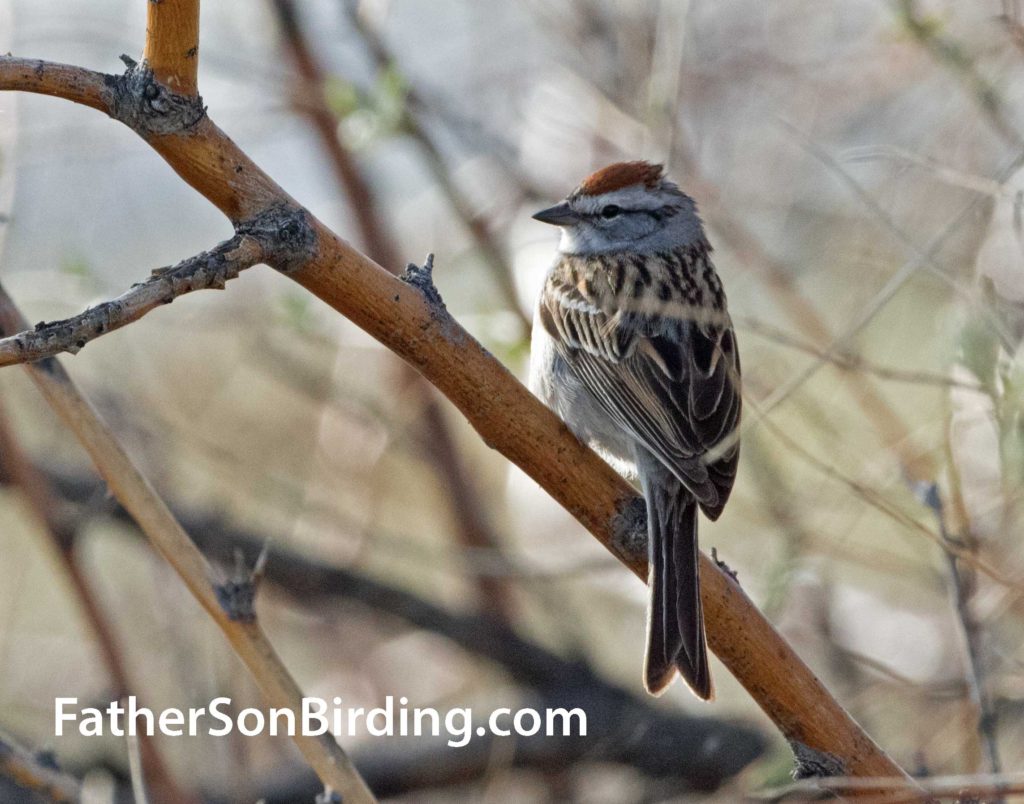
It’s always great to see Chipping Sparrows back in Montana—even if they add to the sparrow confusion this time of year!

Earlier this week, I had the pleasure of speaking at the Helena public library, followed by a lively Last Chance Audubon meeting nearby. The next morning, I decided to sneak in some birding before heading back to Missoula. I first chose a local site affectionately called the “K-mart Wetlands.” This was my first time at the ponds during spring migration, and my pulse raced as I heard the haunting call of a Sora from the cattails. That was followed by my FOY (First of Year) Common Yellowthroat and a flock of more than twenty Yellow-rumped Warblers.

I was fortunate to run into a Helena birder name Jeffrey Olsson who said, “I heard a Clay-colored Sparrow down at the end there.” Though Braden had done his best to educate me about this bird, I drew a mental blank. “What does it sound like?” I asked Jeff. He repeated a buzzy sound for me. “Great. Thanks,” I said and headed off down a fenceline in pursuit. Amazingly, I heard the distinctive call, but didn’t catch sight of the bird.

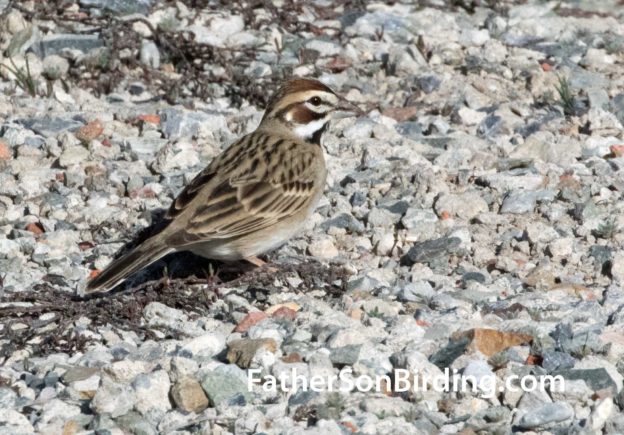
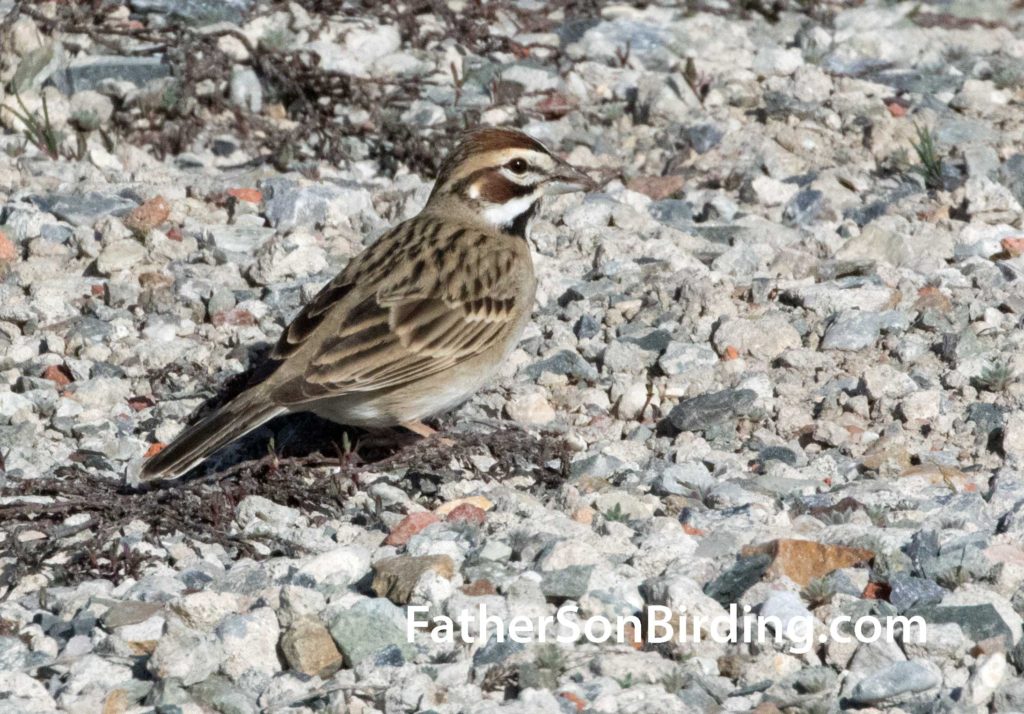
No question, Lark Sparrows are some of the most stunning sparrows of all. This was only my third sighting in Montana.

I did run into a large number of Chipping Sparrows along with a single White-crowned. After completing a loop of the end pond, I looked out into a gravel patch and spotted a lone bird foraging for seeds. “Clay-colored?” I asked myself, quickly raising my camera. It wasn’t. Instead, it was something just as exciting—a lone Lark Sparrow. After seeing one with Braden and Nick Ramsey only a couple of weeks earlier, the Lark got my pulse racing, especially after I managed some good photos. Alas, I still didn’t glimpse a Clay-colored—or so I thought.

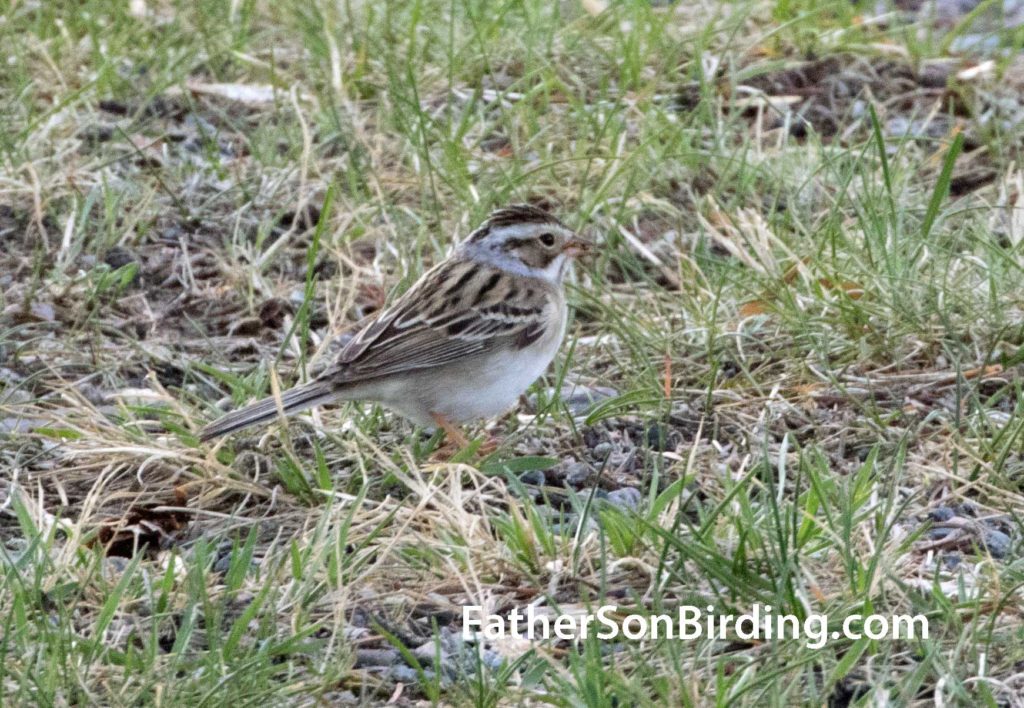
While taking photos of the Chipping Sparrows, I noticed some with duller brown head stripes instead of the usual bright red. I assumed these duller sparrows were females, but they also seemed suspicious. Later, back at home, Braden confirmed something I’d been pondering. The “female” Chipping Sparrows were actually Clay-coloreds! Once again, it was the struggle over identifications that inched my knowledge forward. While it’s a certainty I’ll misidentify many other sparrows in the future, each time I run into these interesting little birds, my brain connections grow. Which, of course, is what makes birding an endless adventure.

Sparrow On!

No, not a female Chipping Sparrow after all. One of several Clay-coloreds I watched at the K-mart ponds—without realizing it!