Category Archives: Warblers

San Antonio Botanic Garden: Messier is Betterer

To Subscribe to FatherSonBirding—and nothing else—please fill in your email address in the box down in the column to your right. Thanks!

As I recounted last week, I had the recent good fortune to speak at the TCTELA conference in San Antonio. Additional good fortune? My flight home didn’t leave until Monday evening, leaving an entire day to bird. My initial plan was to visit the Mitchell Lake Audubon Center, but naturally the center is closed on Mondays, so I instead opted for the San Antonio Botanical Garden.

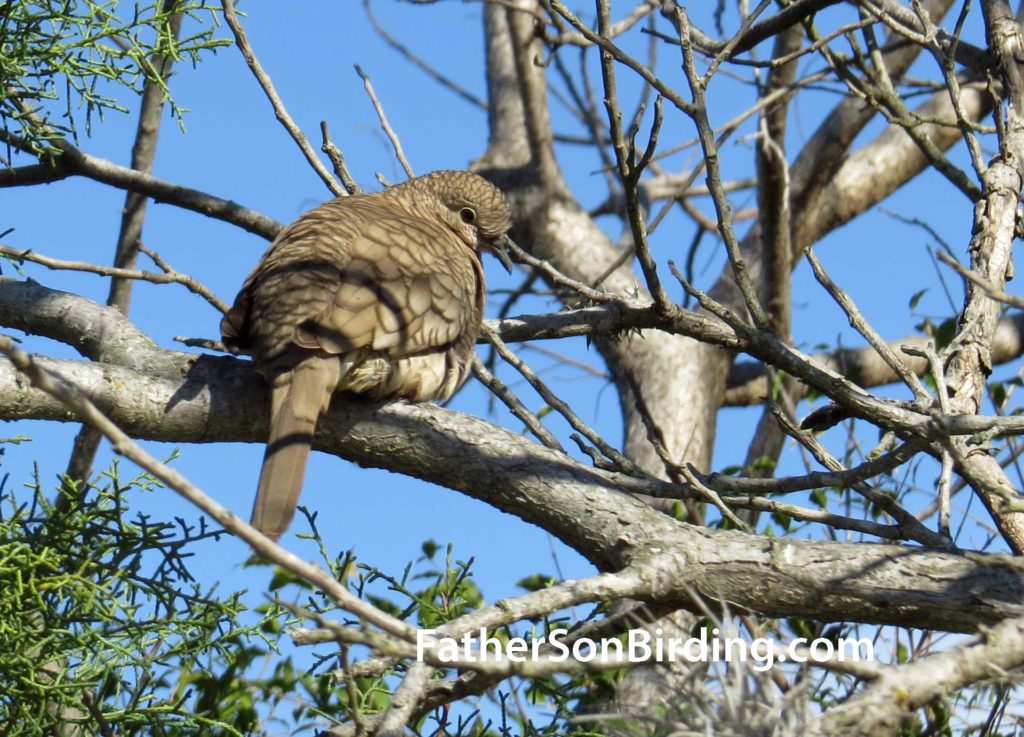
Hard to get tired of Inca Doves, especially when they never come close to Montana!

Taking my very first Uber ride (worked like a charm), I arrived almost at opening time and proceeded to feel my way through the garden’s 38 acres. The birds were active and I immediately found Northern Mockingbirds, American Goldfinches, Northern Cardinals, and the especially raucous Blue Jays among other common species. My main targets of the day were Ladder-backed and Golden-fronted Woodpeckers, as they’d both shown up on recent eBird checklists, but neither those nor other extraordinary species showed themselves. . . that is, until I wandered into a small, unkempt part of the grounds near the back.

I was delighted to find this guy trying to stay undercover in the Garden’s “messier” reaches!

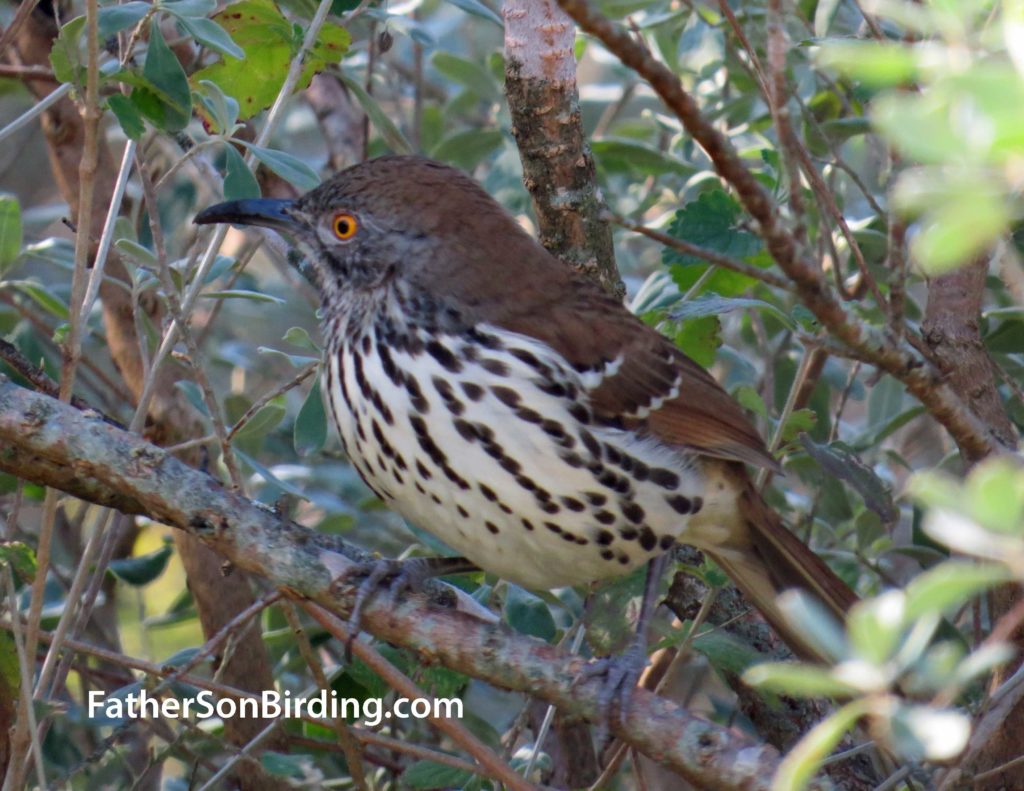
With my hearing aids in, I detected the regular contact chip of what I guessed was some kind of warbler and, sure enough, I soon spotted a Yellow-rumped. I also saw another tiny bird dive into a bush, but failed to get a good look. “Just stand for a minute and be patient,” I told myself. Sure enough, the mystery bird flew into a closer bush and, even better, I got my binocs focused on it. I didn’t recognize the markings at first, except that I knew it was not a warbler. Then, I saw the distinct pale eye of a White-eyed Vireo. Whoo-hoo! And if that wasn’t enough, moments later, I spotted the furtive brown figure of a Long-billed Thrasher! Now, we were gettin’ somewhere!

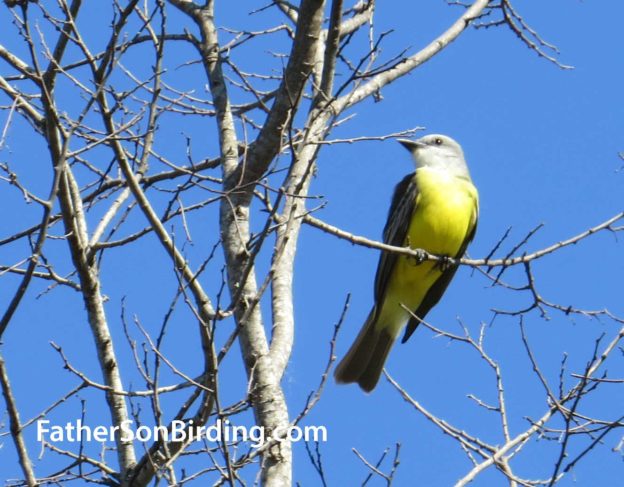
Exploring more, I discovered Inca Doves, Red-shouldered Hawks, and Black Vultures, but after a lunch break, bird activity took a nosedive along with my birding enthusiasm. Before summoning another Uber, however, I decided to return to the same unkempt spot as before. Jackpot! There, I picked up more Yellow-rumpeds, an Orange-crowned Warbler, and a Blue-gray Gnatcatcher. But who was making those annoying cheeps, sometimes punctuated by a loud rising and falling call”? I followed the sounds for more than ten minutes. Finally, I spotted a gray bird with brownish wings and a vivid mustard breast on a branch.

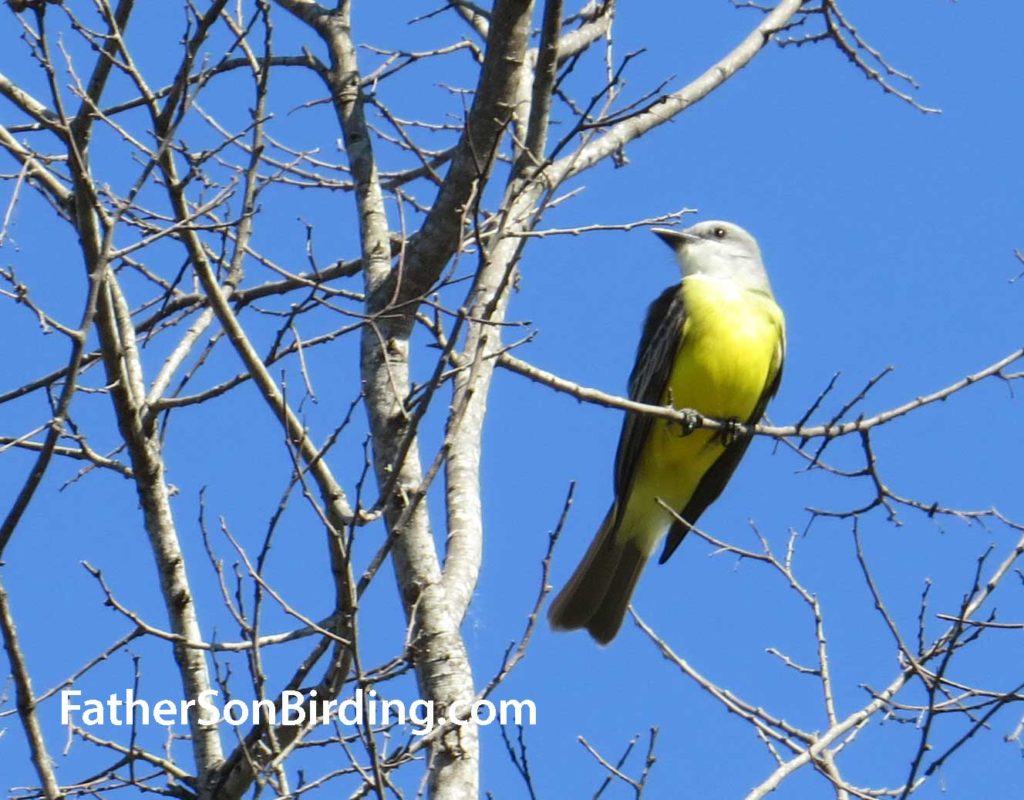
The distinctive call of “Beer!” finally led me to this stunning Couch’s Kingbird.

Right away, I knew it was a king bird, but which kind? A quick look at the eBird checklist pointed to Couch’s Kingbird, which I confirmed by listening to its “Beer!” call on my phone.

I left the garden without my coveted woodpeckers, but feeling pretty good about the birds I’d been able to find. The day also reinforced a lesson for botanical gardens and yards alike: for birds, messier is betterer!

Winter Birding at Brazos

It was Saturday, November 17 and I have to admit I was feeling a bit down on myself. Before my work trip to Houston, Braden had set a goal for me of 100 species, something I thought I could easily achieve. My visits to Anahuac and Bolivar Flats, however, had left me only at 75 confirmed species—well short of my goal. With only one free half-day left of my trip, I searched the eBird hotspot map and asked myself, “Where could I score big and still get back to my last book signing on time?” My eyes landed on Brazos Bend State Park.

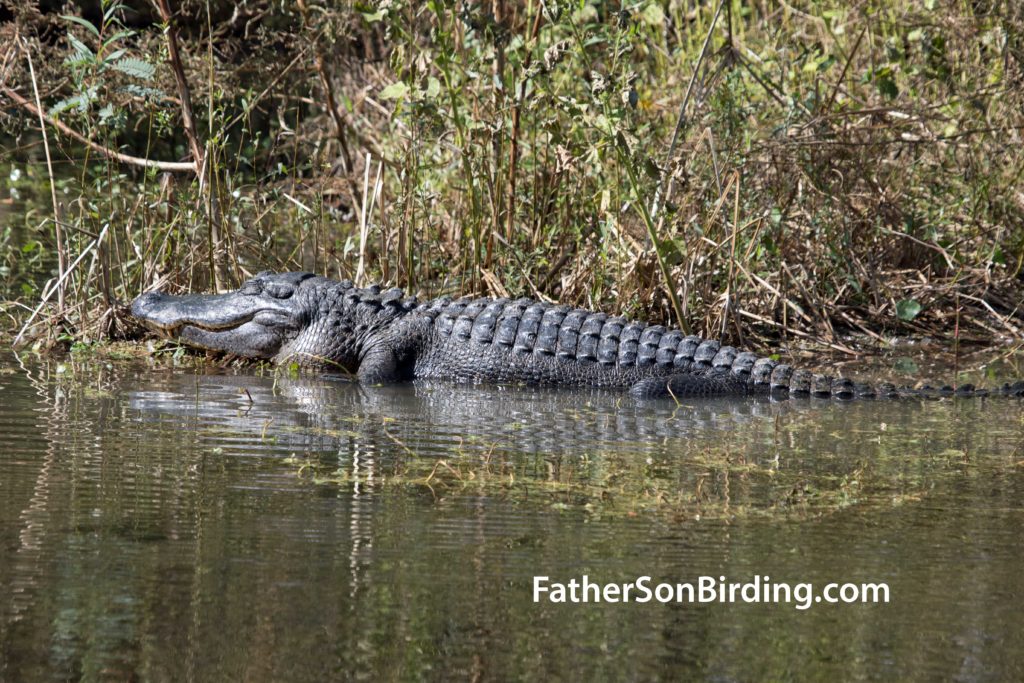
Alligators seem to be the main attractions at Brazos Bend, but the birds are far more interesting!

The official motto of Brazos State Park is “Come for the gators, stay for the birds.” Okay, I’m making that up—but it should be the motto because the birds are far more interesting. On the recommendation of the park attendant, I kicked off my visit with a counterclockwise circumambulation of 40 Acre Lake. The lake surface held far fewer species than I had predicted: coots, Common Gallinules, Pied-billed Grebes, and only two duck species—Blue-winged Teal and Black-bellied Whistling Ducks. Herons, Anhingas, Cormorants, and other water birds abounded, however, and as I walked, I started picking up some prized forest birds as well.

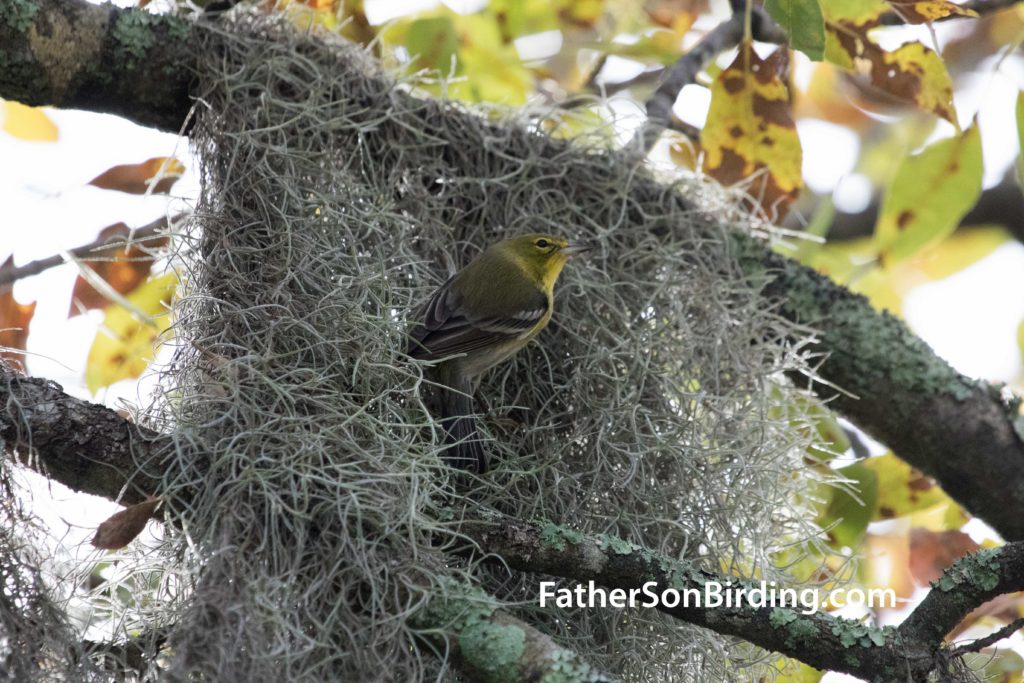
I first saw a Pine Warbler on Braden’s and my Texas trip in January, so seeing one again was like seeing an old friend.

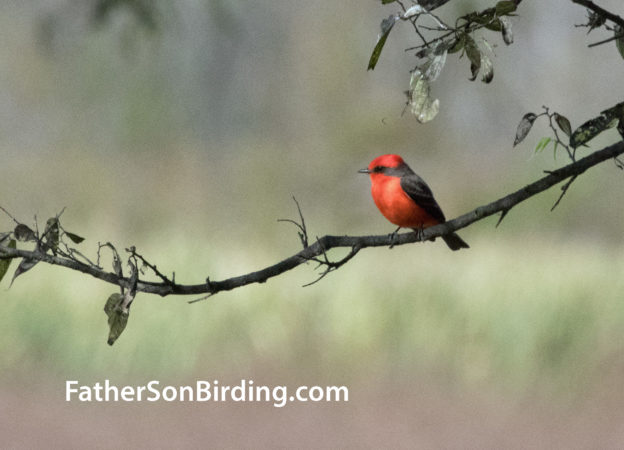
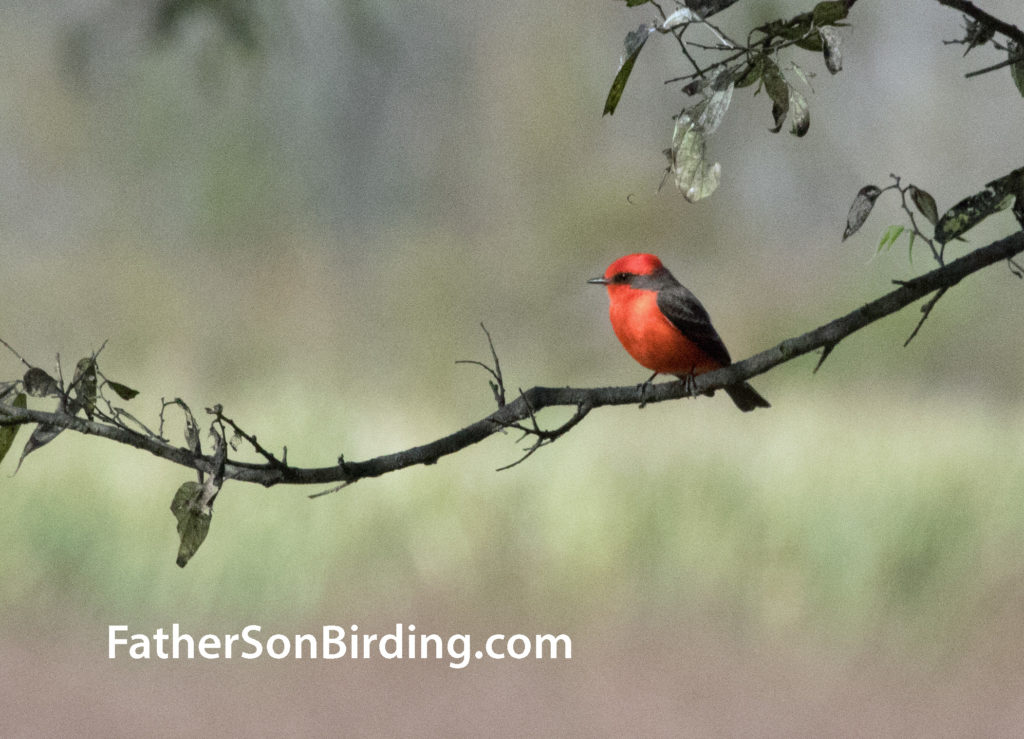
Before my trip, I had hoped to see all three wintering warblers in the area: Yellow-rumped, Pine, and Orange-crowned but had only spotted the Yellow-rumped earlier. Within fifteen minutes, though, I happened upon a great mixed flock where I picked up my missing two warblers—and Golden-crowned Kinglets to boot! A little while later, I saw a pair of Vermillion Flycatchers—my first ever in Texas. It was a good start, but I wanted more!

Vermillion Flycatchers were a real surprise at Brazos, but I guess they shouldn’t have been.

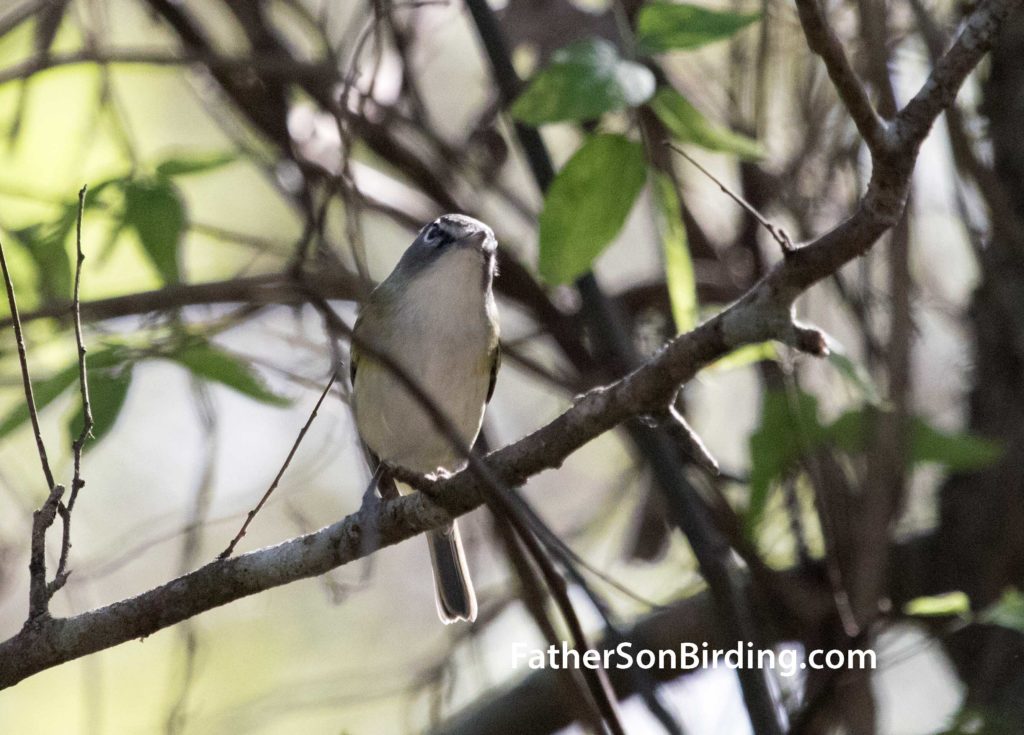
Driving to Elm Lake, I decided to bushwack through some promising forest across from the parking lot. I could hear a variety of birds there, but needed to see them for the IDs. The birds made me work for them! First, I found the noisiest birds—a pair of Carolina Wrens. Then, I happened to see a Blue-gray Gnatcatcher. I could see something else, but dang it, the bird just kept flitting out of my vision. I thrashed through the brush until I finally managed a decent ID shot with my camera. Slather me in BBQ sauce! It was a Lifer: Blue-headed Vireo! I was elated, and minutes later I scored a Year Bird, Yellow-bellied Sapsucker!

I was tickled to ID this Blue-headed Vireo myself. I didn’t even realize it was a Lifer until Braden later pointed it out to me! Number 778!

Afterward, I hiked the two miles around Elm Lake, but except for some impressive gators, it was fairly unproductive. I didn’t mind. I was thrilled with my “birdservations” for the day. Which I’m sure is leaving you all wondering: did I reach my 100-bird goal? Alas, no. Five species short. But I had discovered a wonderful new birding location, a place I was sure to return.

The Land of 10,000 Birds—and Deep-fried Snickers Bars

This year my daughter Tessa and I decided that for our daddy-daughter trip we should take Amtrak to the Land of 10,000 lakes. You got it. Minnesota! Our primary purpose was to visit my brother, his wife, and their two-year-old son, but we also timed our visit for an event I’d always wanted to see: the Minnesota State Fair.

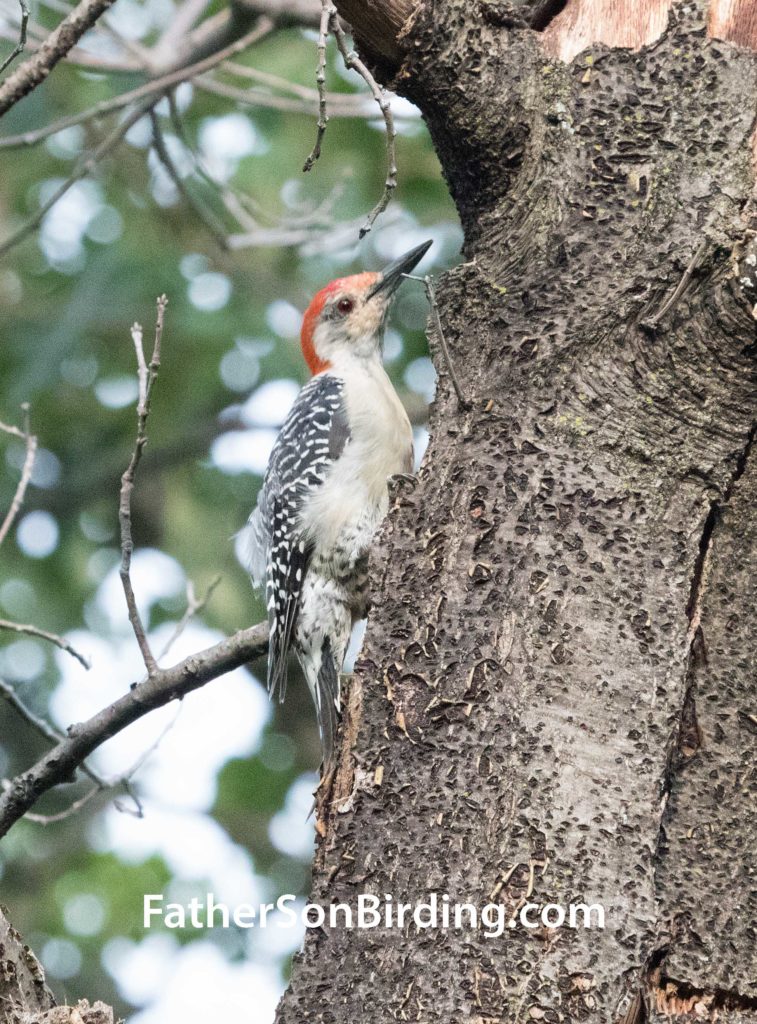
For us Westerners, Red-bellied Woodpeckers are always a treat and I was glad to see a few during my week in Minnesota. (Photo by Sneed B. Collard III)

I must be clear: this was not a birding trip, but as always, birding opportunities presented themselves and I came prepared. Especially since it was fall migration, I arrived in Minneapolis hoping to see a slew of warblers and other songbirds not easily found in Montana. My first morning there, while Tessa slept in, I stole my brother’s car and headed to a promising eBird hotspot, Westwood Hills Nature Center. I arrived optimistically, a feeling that blossomed when I encountered a group of birders who reported that they’d just seen more than half a dozen warbler species including Chestnut-sided, Black-and-White, Bay-breasted and American Redstart. Unfortunately, as soon as I arrived, the warblers vanished. Argh! I did find a Northern Waterthrush skulking in an overgrown pond and managed a Lifer, Philadelphia Vireo, but departed asking myself what could have been.

Sharks, not birds, were the highlight of the Minnesota State Fair!

Still, we had the fair to look forward to, and despite an incredible thunderstorm, made the most of it. We devoured the most delicious cheese curds ever, along with an entire bucket of cookies. My daughter also won a giant four-ton stuffed shark that we would have to drag back home on the train. And that deep-fried Snickers? Well, I wish I hadn’t done that.

My birding adventures weren’t over, however. My brother and his family happened to live only two blocks from the Mississippi River and on a whim I headed over there early the next morning. There, I ran into yet another terrific group of birders. Again, all the best birds deserted as soon as I arrived. “What the heck is going on?” I grumbled.

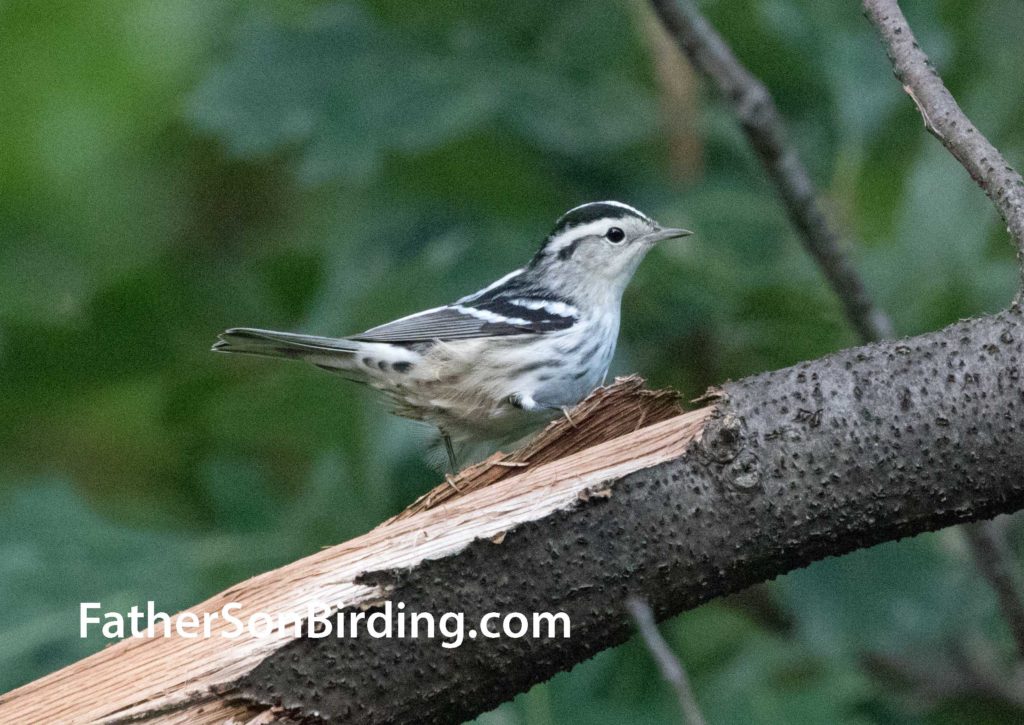
This was only my third time seeing diminutive, but spectacular, Black-and-White Warblers, and they alone satisfied my bird cravings for the trip. (Photo by Sneed B. Collard III)

Undeterred, I returned to the same spot the next morning, and this time my birding stars aligned. Right away, I found a flock of chickadees and settled in to watch them. Soon, I made a thrilling discovery: a Black-and-White Warbler gleaning insects in an oak tree! Downy and Red-bellied Woodpeckers arrived along with Ruby-throated Hummingbirds, and Red-eyed and Yellow-throated Vireos. Even better, I saw three more warbler species: American Redstart, Nashville, and Wilson’s. As I was leaving, I also happened to take a photo of a weird-looking sparrow, but didn’t think much of it. That night, I boarded the train, happy both with our daddy-daughter experiences and my birding observations.

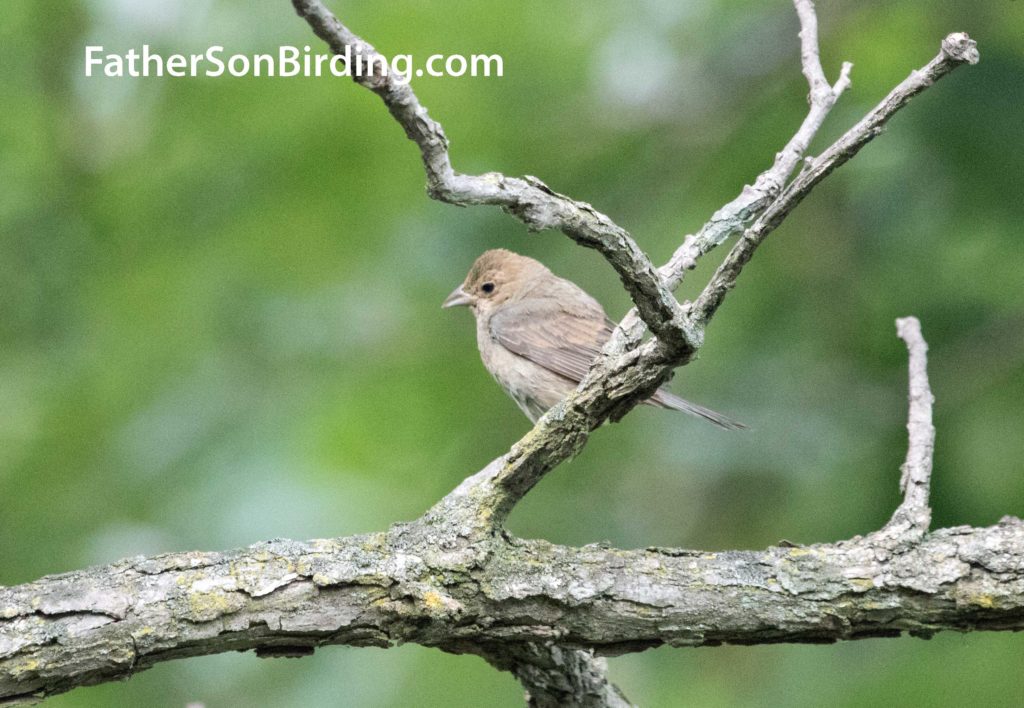
And guess what? When I got home, I showed Braden that weird-looking sparrow.

“Daddy,” he said. “That’s an Indigo Bunting!”

Uff-da! Minnesota, we’ll be back!

This surprise, drab Indigo Bunting provided an exclamation mark to my Minnesota birding outings. (Photo by Sneed B. Collard III)