Category Archives: Travel

Birding Costa Rica—Beginning at the Airport

Some of our most popular posts have focused on exotic travel destinations, and today we kick off our latest series on one of North American birders’ most popular choices: Costa Rica. Braden and I just returned from an exhilarating, intense, nine-day birding adventure to the land of Pura Vida, and over the next couple of months I’ll be posting blogs on our most memorable birding experiences interspersed with our usual entertaining “paella” of reviews, domestic birding, and other fascinating topics. Again, we do not receive compensation for our blogging efforts, so if you wish to support our work, please purchase a few new copies of Birding for Boomers, Warblers & Woodpeckers, First-Time Japan, or any of Sneed’s other books. If you already have copies, why not pick up some for your friends? With that, let’s dive into Costa Rica at—where else—the airport!

Braden and I arrived at Juan Santamaría International Airport at 10 p.m.—just time enough to get to the rental car office before it closed. After collecting our vehicle, we drove to a nearby Airbnb so we could get a fresh start in the morning. Having spent a lot of time in Costa Rica the past couple of years, Braden had organized our entire birding itinerary and even picked this first place to stay—not only because it was convenient to the airport, but because it happened to have a terrific, little-known birding spot just down the street.
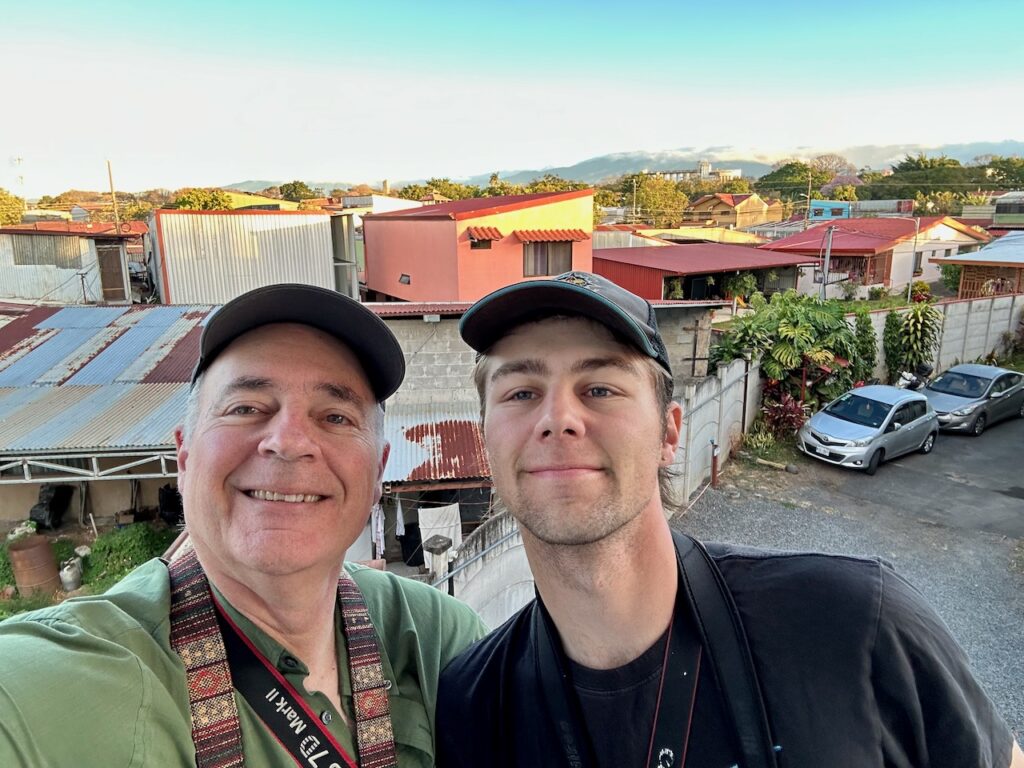
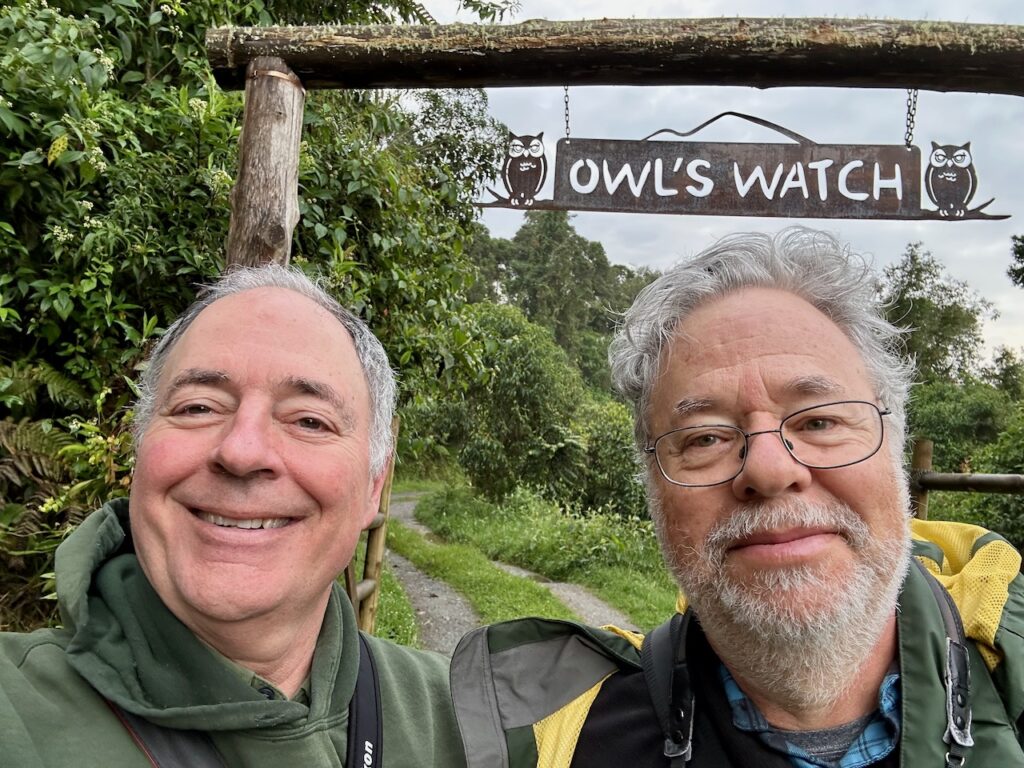
Braden and I from the porch of our Airbnb in Alejuela—practically under the flight path for San Jose’s international airport, and loaded with birds!

Braden and I are big fans of birding near airports, and have often found hidden avian treasures where you’d least expect them. Just last spring, on my final morning in Texas, I had a remarkable birding session in the vacant lot behind my hotel next to the airport in San Antonio, Texas. And during his spring Costa Rica trip last year, Braden had discovered a special little place only two blocks from our Airbnb. This year, as soon as dawn crept over Alejuela (where San Jose’s airport is actually located), he and I grabbed our binoculars and cameras and headed out.

Our destination was a large city park with the even larger name of Caminito Magico de la Tranquilidad. Being unfamiliar with the rather poor-looking neighborhood, I admit that I felt a bit nervous about our safety, but my concerns quickly vanished. At the park, people were jogging, biking, doing exercises, visiting over coffee, and walking around as in any park anywhere. The park covered several hectares, mostly devoted to playing fields, but a lot of trees threaded the fields and lined the park’s perimeter, and Braden led the way in guiding us on a full circuit.
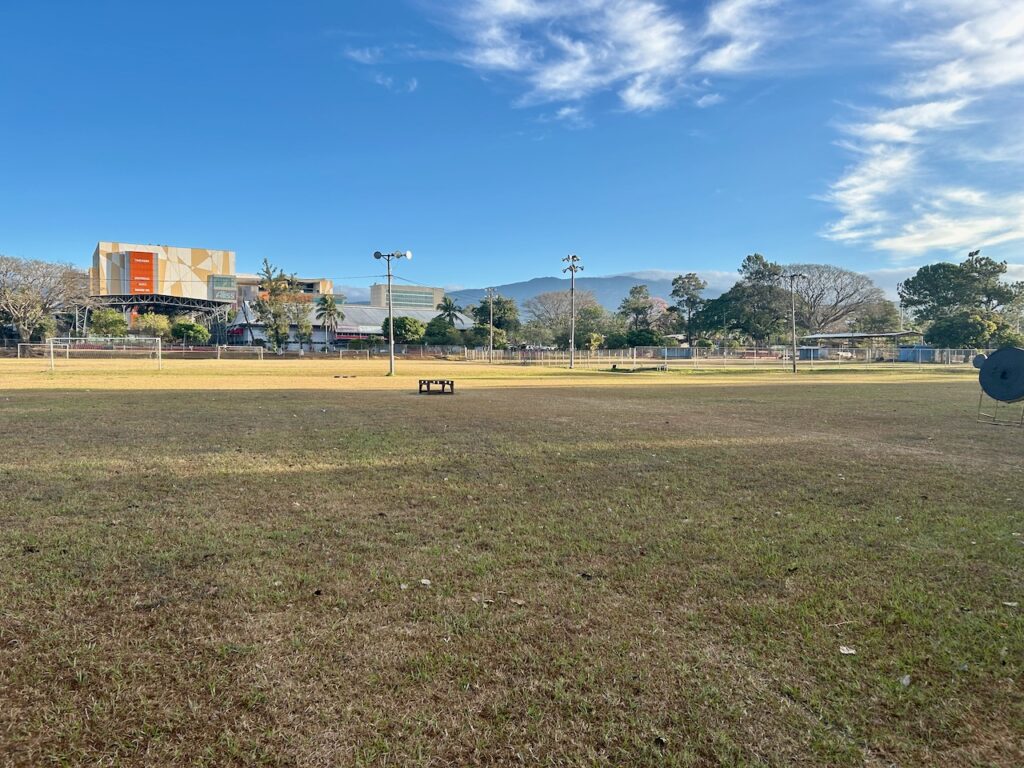
Even at dawn, Caminito Magico de la Tranquilidad park was bustling with people—and birds! Note the giant mall rising in the background—a good place to escape the heat and grab a bite, though a much better little soda (cafe) sits only a block from the park entrance.

I had spent two months in Costa Rica in 1994, but tragically, that was before I took an interest in birds. Since Braden and I started birding a dozen years ago, I had been fortunate to bird in Latin America several times—most recently in Colombia con mi amigo, Roger—but it was fair to say that I was a novice at Costa Rican birds. I had been studying, however, and to my delight Caminito Magico park presented a perfect warm up for the week ahead.

Entering the park, a Squirrel Cuckoo immediately flew across a soccer field in front of us. Braden identified Orange-chinned and Crimson-fronted Parakeets loudly squawking overhead, and I was thrilled to see my first ever Hoffman’s Woodpecker land in a nearby tree.
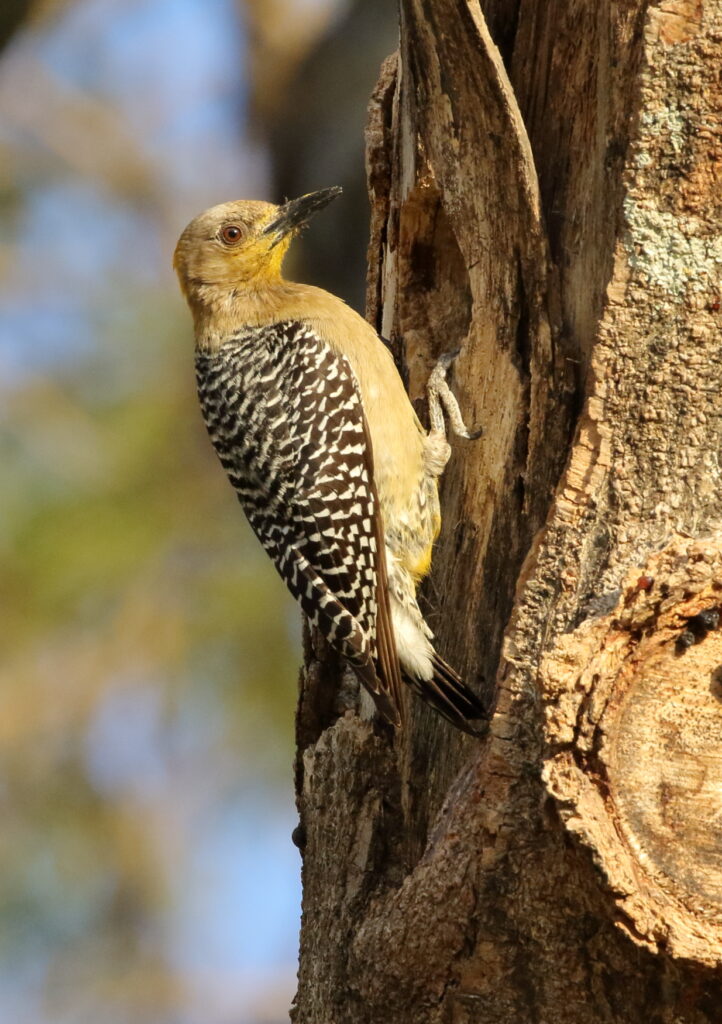
My very first Hoffman’s Woodpecker put me in an ebullient mood as we kicked off our first Costa Rican birding session!

The park was filled with many of the more common birds any visiting birder will quickly get acquainted with. These included five kinds of pigeons and doves, Tropical Kingbirds, Great Kiskadees, Great-tailed Grackles, and Costa Rica’s national bird, Clay-colored Thrushes. Blue-gray Tanagers flew between trees while Blue-and-White Swallows darted for insects overhead.
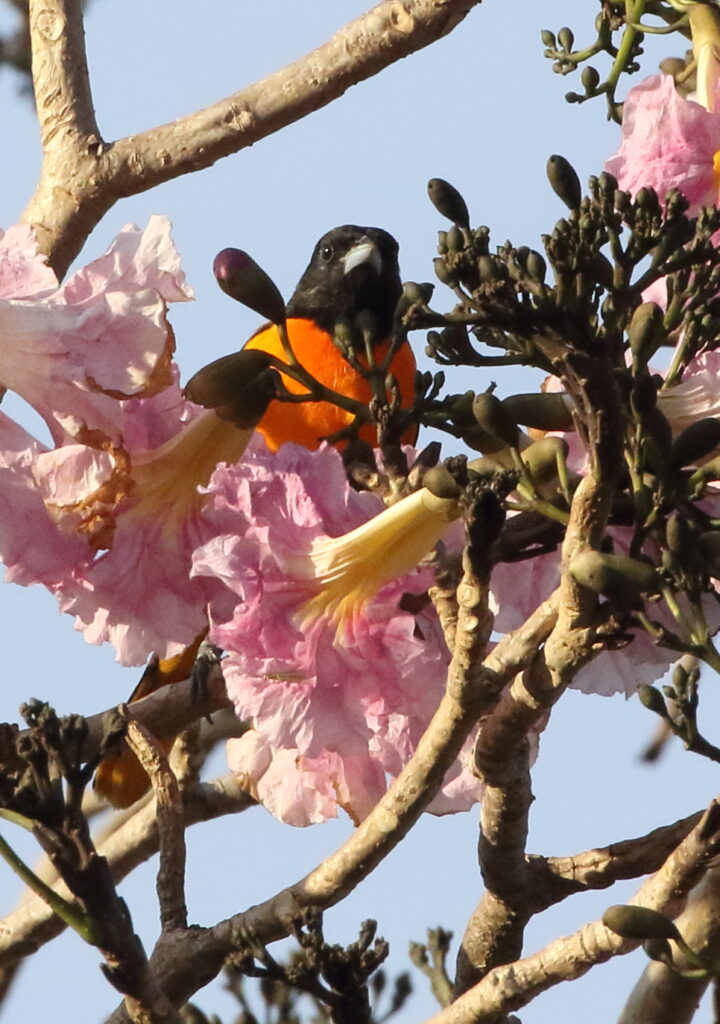
Baltimore Orioles are common throughout Costa Rica—and never fail to raise a smile for a visiting Norteamericano birder!

As we reached the far perimeter, I was delighted to find that a creek skirted about half of the park’s boundary. Trees grew thickly here, and following the pleasant path, the birds got even more interesting. Braden began pointing out Chestnut-capped, Northern Yellow, and Tennessee Warblers while I focused in on a stunning male Baltimore Oriole in a flowering tree. Braden also detected several kinds of wrens: Southern House Wren, Rufous-and-White Wren, Cabanis’s Wren, and the beautiful bruisers of the bunch, Rufous-backed Wrens.
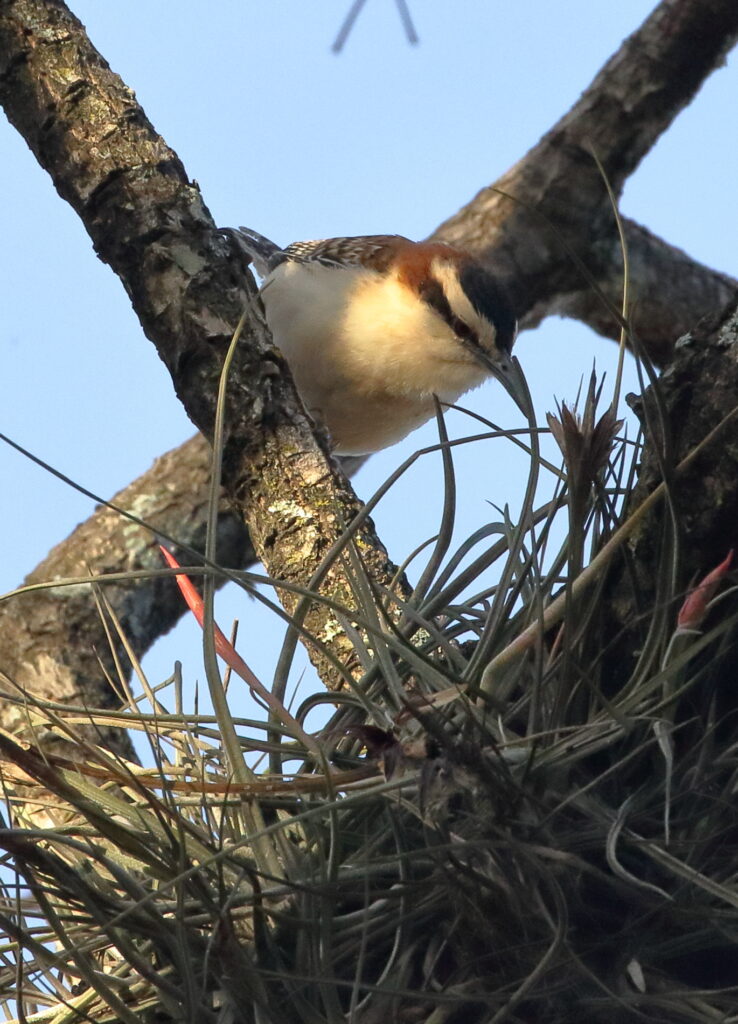
This would be the only location on our trip where we would see the “giant” Rufous-backed Wren—another reason to bird the San Jose area before heading into Costa Rica’s hinterland.

This being in the heart of Costa Rica’s largest city, I gotta tell you that I had no expectations for the creek itself, especially because it was strewn with an assortment of trash. The birds apparently didn’t care and almost immediately, Braden pointed out one of the birds I had most wanted to see on the trip—Bare-throated Tiger-Heron! I was thrilled, but hardly had time to appreciate it as we spotted a quail-sized coot-like bird skulking the banks—a Gray-cowled Wood-Rail!
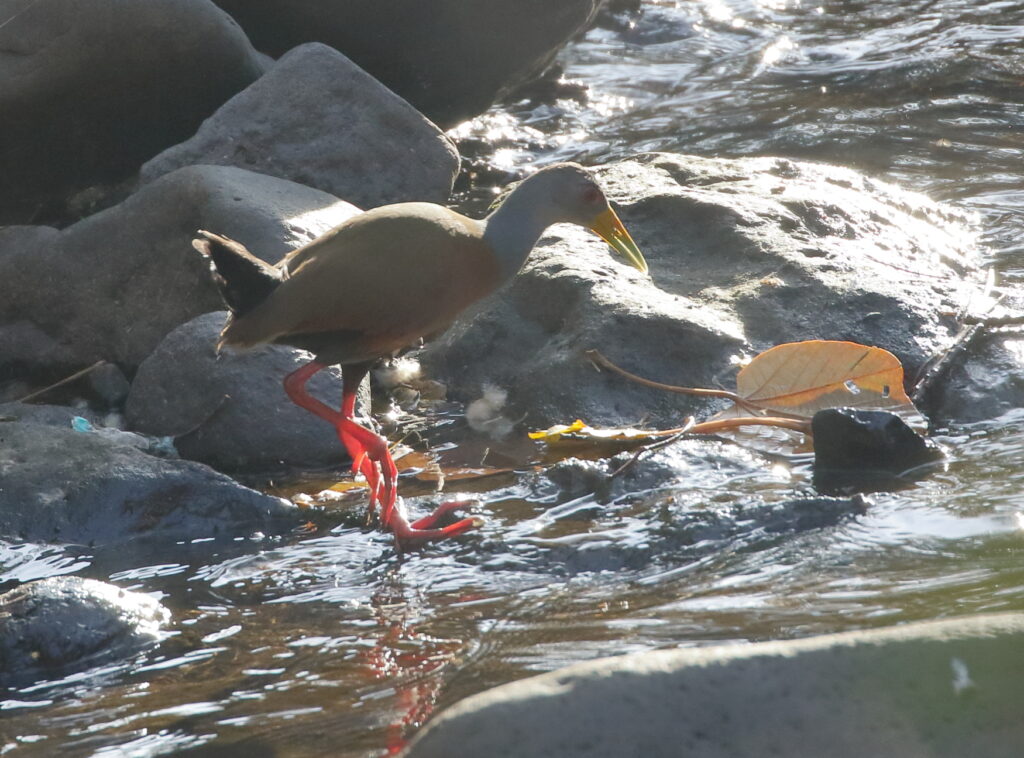
For me, seeing a Bare-throated Tiger-Heron and Gray-cowled Wood-Rail (above) were stunning surprises in the heart of Costa Rica’s largest city!

Soon after, Braden pointed out a Northern Waterthrush while I spotted a Green Heron along the opposite bank. This, of course, is one of the magical things about birding the neotropics: how in the midst of all of these amazing new tropical birds, we find many species that are totally familiar to us in North America. It begs the definition of just what a neotropical bird is since in reality, many species we Norteamericanos consider “our birds” are just visiting us for a short time, and can more rightly be considered tropical species. Maybe that’s how this park got the name “Magico”?
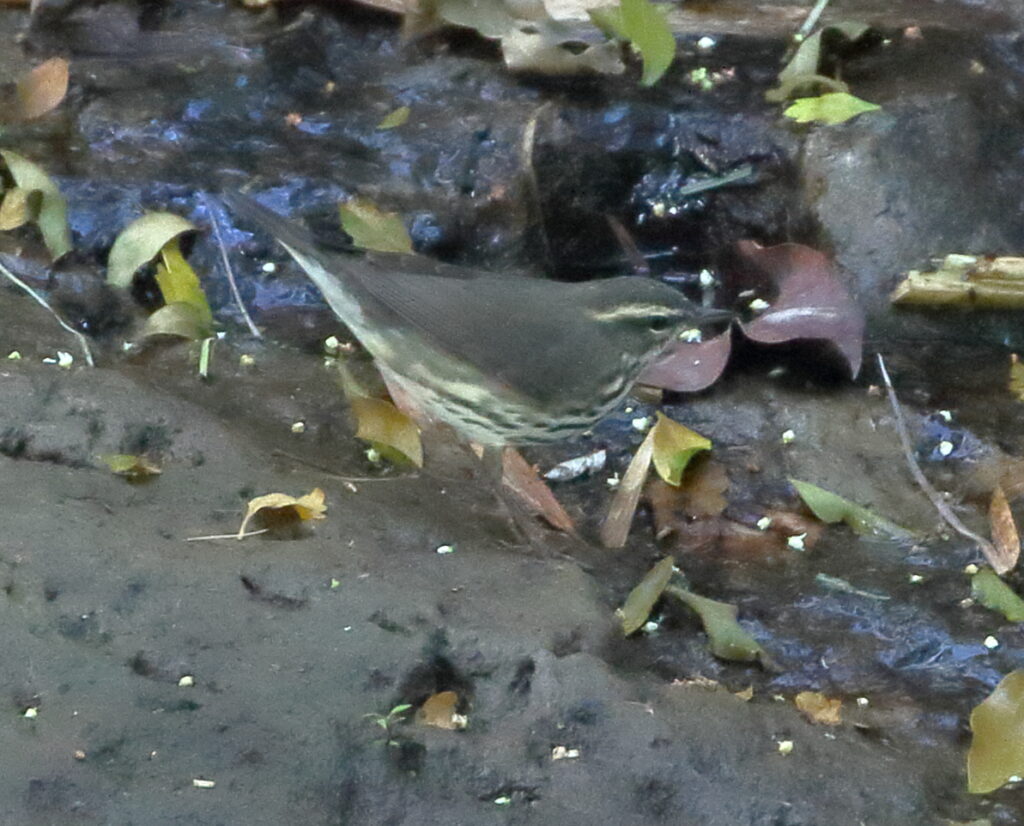
Seeing “North American” warblers such as this Northern Waterthrush in the tropics makes you rethink what we consider “our” birds.

Our delightful discoveries were far from over. At the far corner of the park, we met an amateur naturalist who visited this spot almost daily to monitor wildlife, and he generously shared that only minutes before, he had seen one of the San Jose Valley’s most intriguing endemics. We hurried down the trail and only fifty meters later saw them: Cabanis’s Ground-Sparrows.
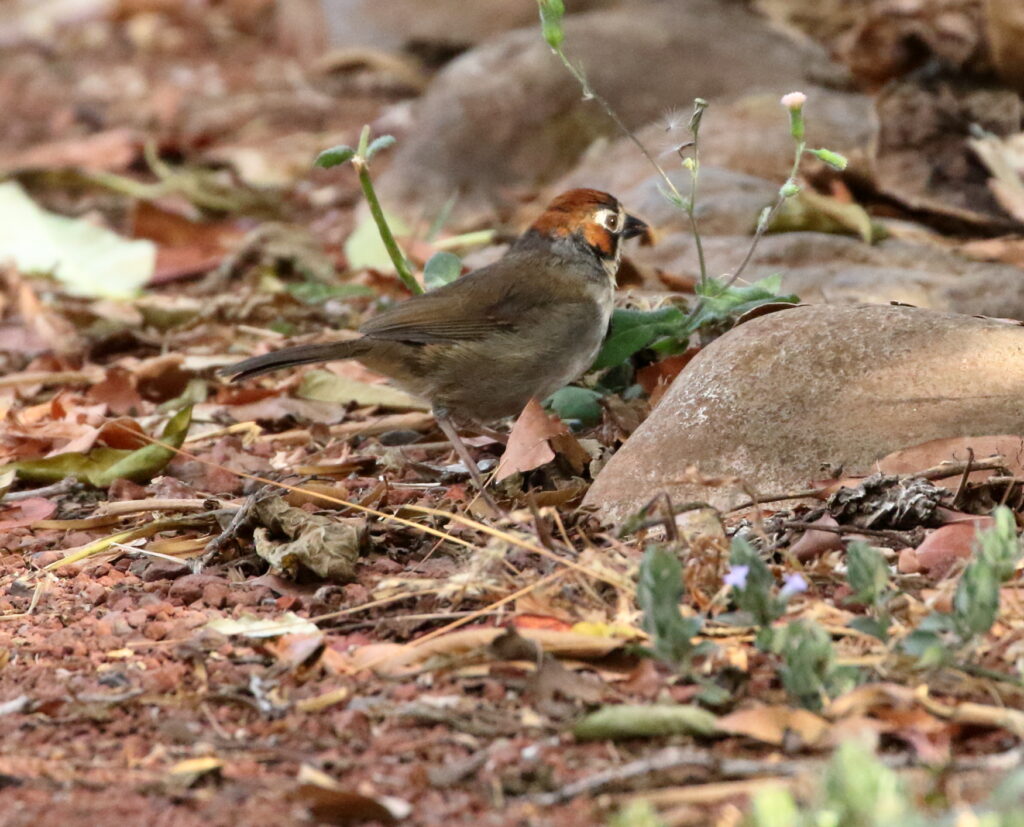
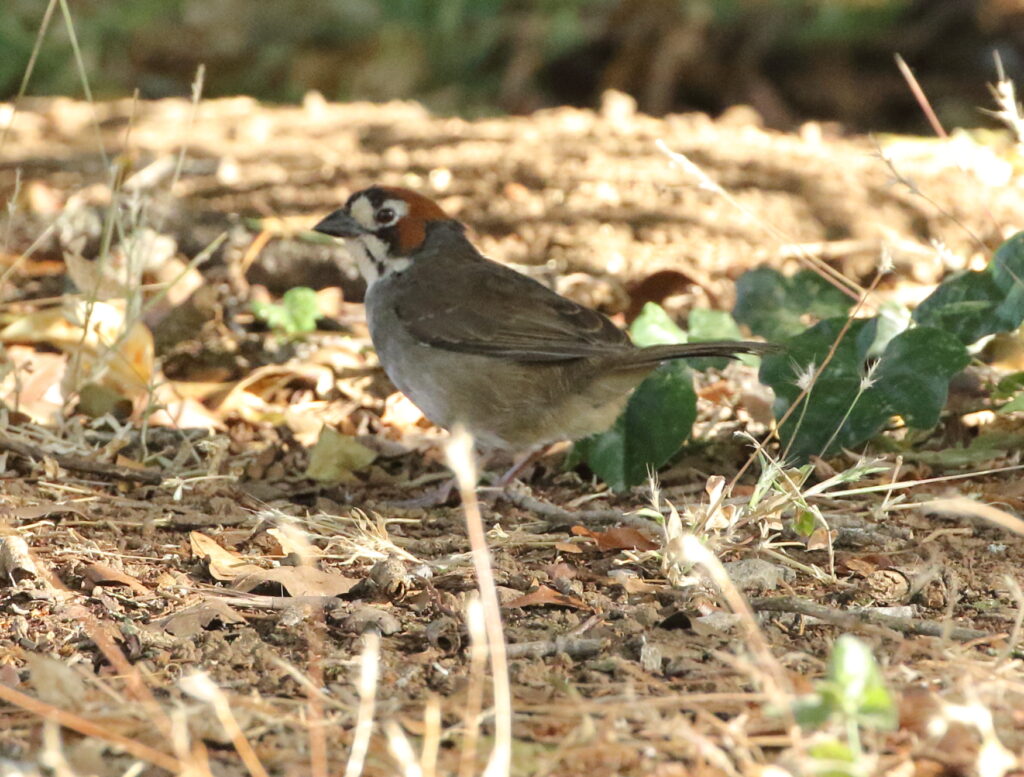
These are birds that Braden especially wanted to show me—but didn’t think he could. These handsome little guys live only in central Costa Rica, specifically in the valley occupied by San Jose. While not rare, they often tend to be pretty shy, making them challenging to see. They prefer scrubby, disturbed places like forest edges, coffee plantations, and apparently, city parks with lots of places to hide. Braden and I both began clicking off photos, but mostly we enjoyed watching them, one of dozens of unexpected surprises we would encounter over the next nine days.

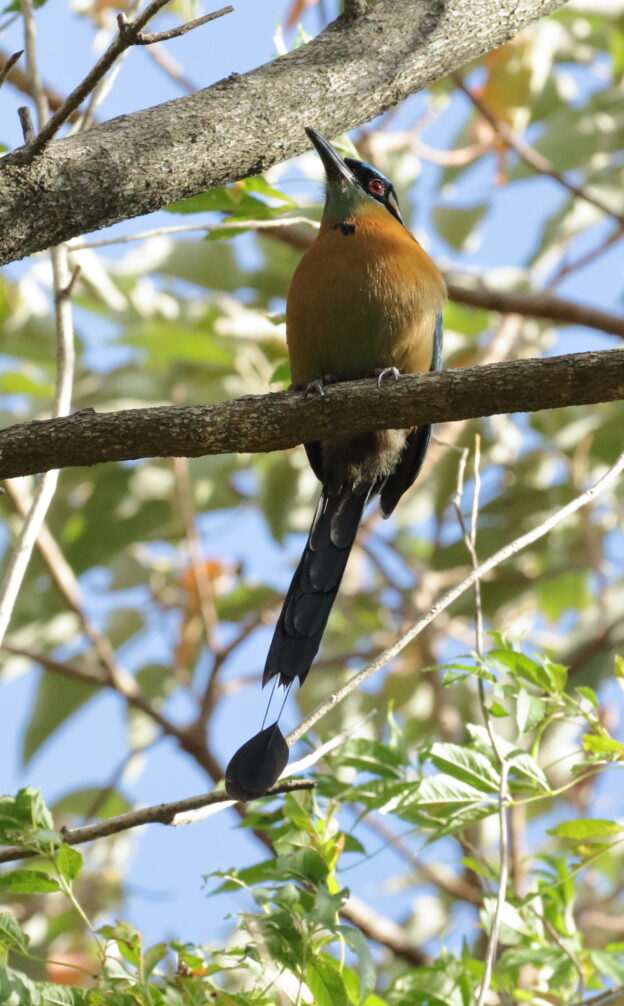
As we were winding down our visit with the Cabanis’s Ground-Sparrows, I saw a larger bird swoop past us and land on a nearby branch. “Braden,” I hissed. “Look!” It was a final gift from this amazing city park: a Lesson’s Motmot! Not only that, it struck an incredible, leisurely pose. Motmots, of course, are some of Latin America’s most distinctive tropical birds and always high on a visitor’s to-see list. I was no exception, and felt enormously grateful to see one in our very first hour or two of Costa Rica birding.
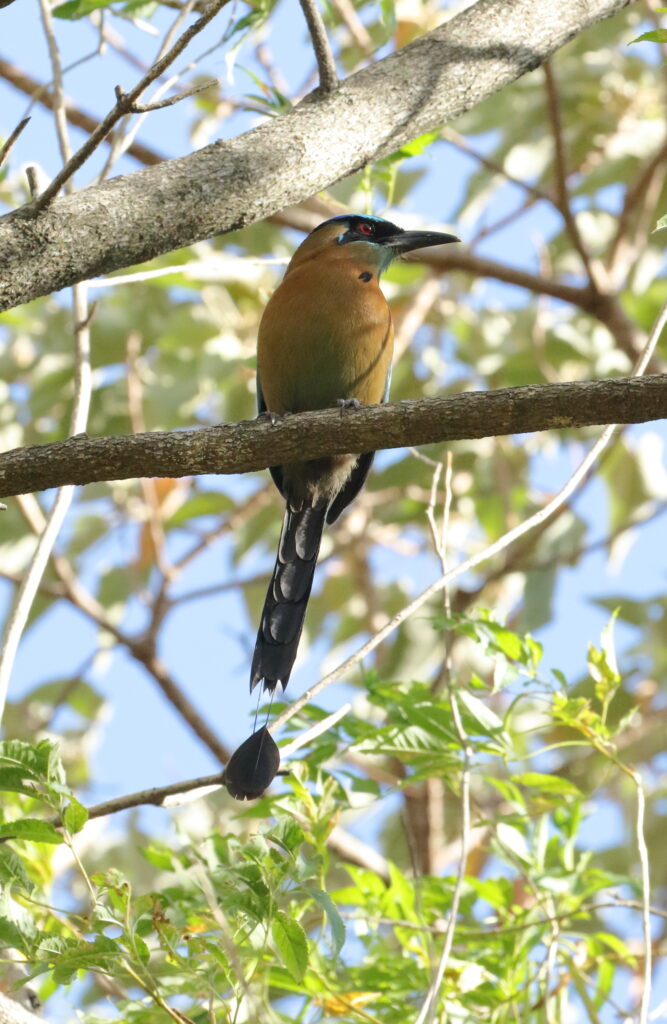
Seeing a Lesson’s Motmot in our first birding session left no doubt that we were birding somewhere far different from Montana!

We finished our list with 47 species—almost as many birds as I’d seen in Montana in the first seven weeks of 2026! It was an awesome kick-start to our expedition, and we celebrated by grabbing our first Tico breakfast of rice, beans, eggs, and fruit at a little family diner only a few meters from the park entrance. We couldn’t predict how many highs and lows the next nine days would hold for us, but we were grateful and happy for such a promising start!

Caminito Magico de la Tranquilidad checklist: https://ebird.org/checklist/S302412338

Braden has a passionate fondness for Costa Rican food, and after our first birding session we wasted no time in getting him a traditional Tico breakfast just a block from the park entrance!

The NOCS Field Tube 10X32 Monocular (FSB Equipment Review)

I’m excited this week to offer our very first equipment review of a Nocs Provisions product: The Field Tube 10X32 monocular. This is the very first monocular that I’ve ever used, and I was so excited that I tore it out of the packaging and immediately set about field testing it. Before I offer my thoughts, however, I want to say a bit about Nocs.

Everything about this smaller optics company compels me to like them. For one, they take pains to send their products in sustainable packaging—a definite plus for a birder wanting to protect birds and our environment. They are a 1% for the Planet member and a Climate Neutral certified brand. To quote their PR info, “At its core, the company believes that the more we observe and understand how intricate and delicate our planet’s ecosystems are, the more motivated we are to protect them.”

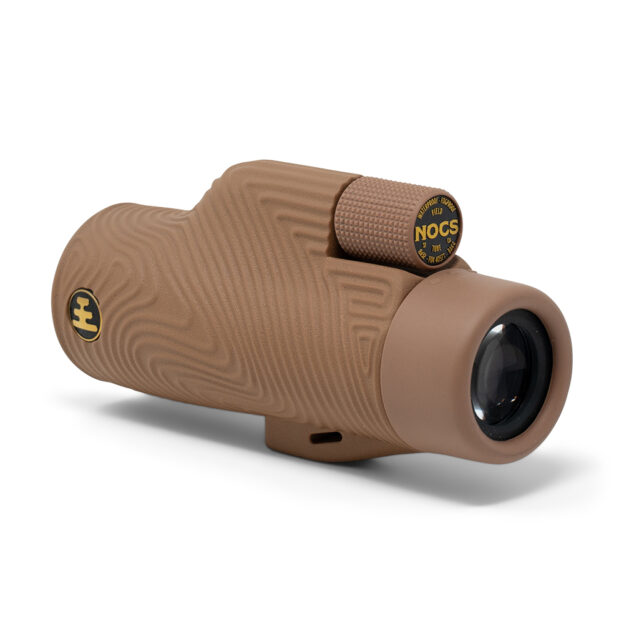
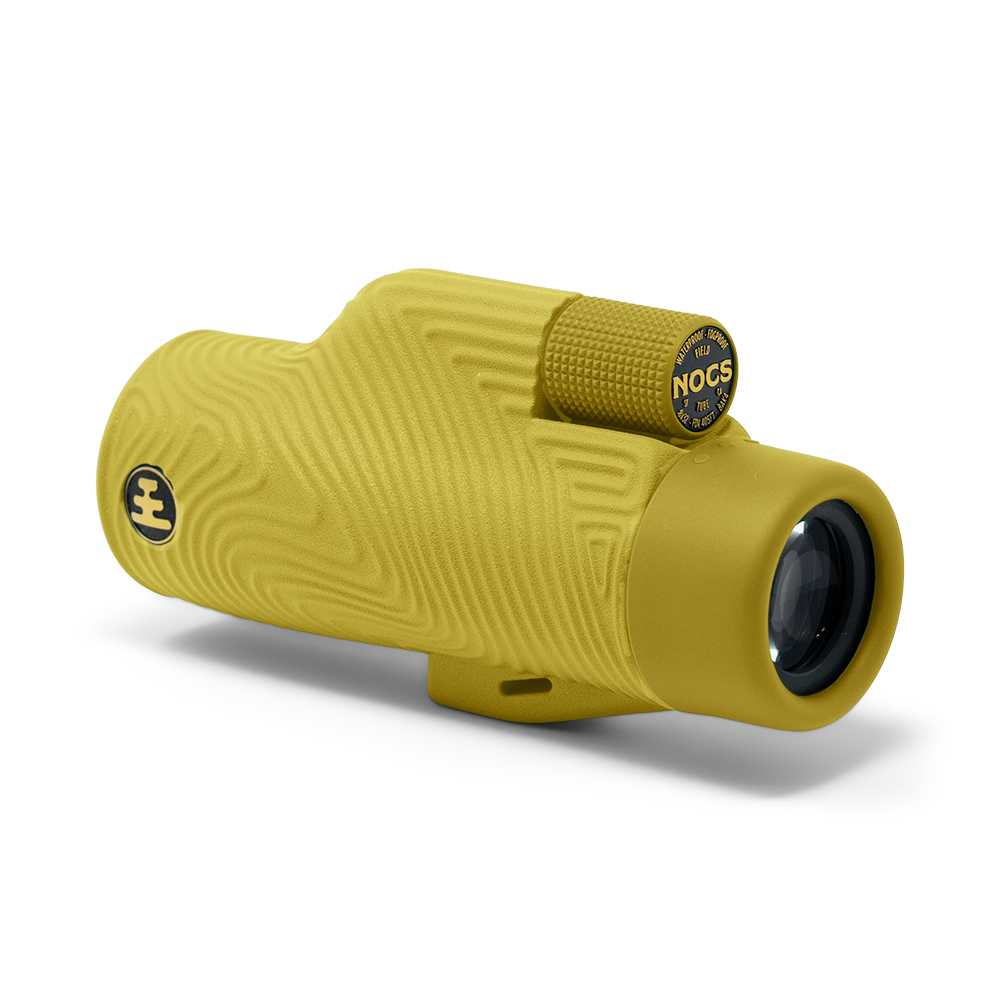
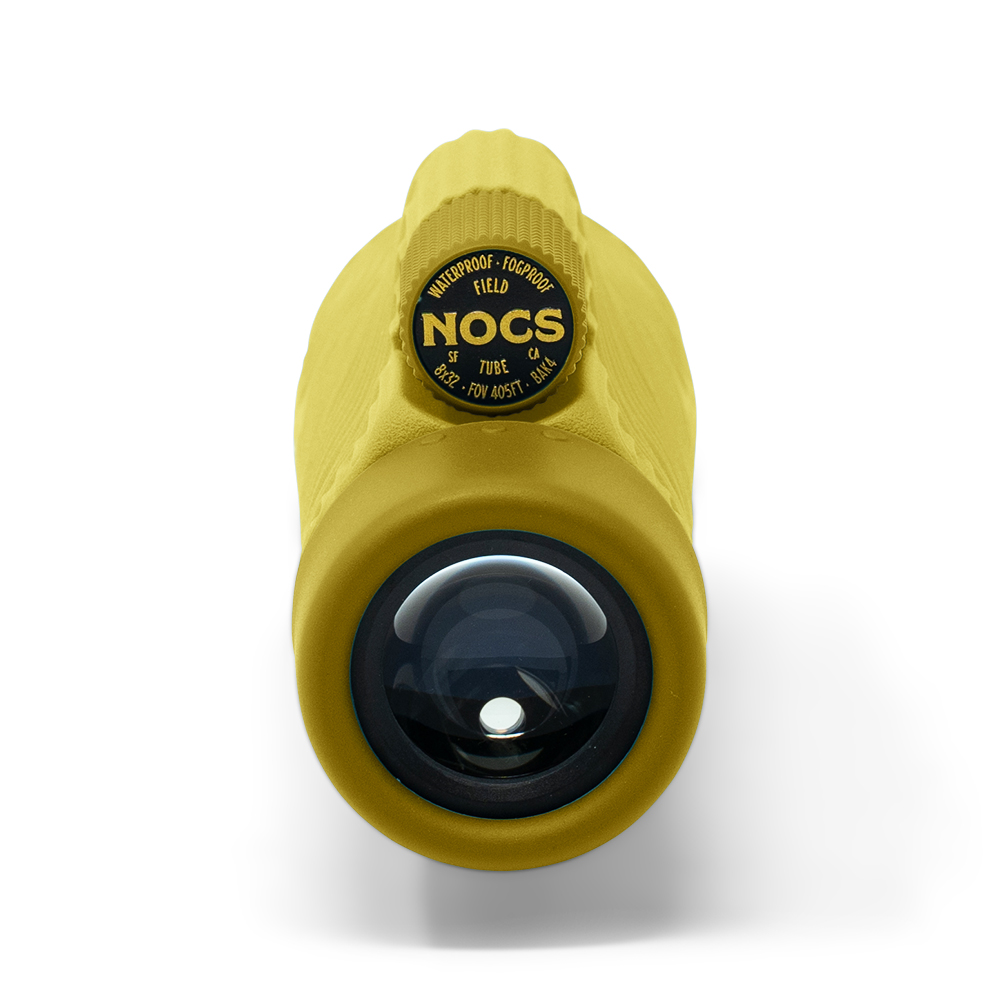
The 8X32 Field Tube shown in Banana Slug (Yellow). This version also comes in Corsican (Blue), Coral (Red), and Desolation (Black). The 10X32s I tested are offered in Ponderosa (Green), Paydirt (Brown), and Oxblood (Maroon). Order by clicking here or on the image above.

Nocs, though, also offers products with super cool designs. The rubber “wave grip” coating of the Field Tube not only offers a great gripping surface, it looks way bitchin’ compared to the standard black exteriors offered by most other manufacturers. Not only that, Nocs products are offered in different colors. Need a pair of binoculars to match your powder blue tux for the Birding Academy Awards? Perhaps something to blend in with your Ferrari while visiting Tuscany? Nocs has got you covered.

But let’s get to the main point, the Field Tube 10X32 monocular itself. First let me say that for birders, this is a “next item” purchase. It’s not intended to replace your binoculars. Rather, it is designed for situations where a slim profile and super light weight are of premium concerns. With a length of only five inches and weight of half a pound—or about a third of traditional binoculars—the Field Tube easily fits into a front pocket and can barely be felt hanging around your neck. This makes it perfect for backpacking, travel, and paddle-boarding. But I can envision other ideal scenarios for this equipment, too. For instance, imagine . . .

The Field Tube is so small and light that you can take it virtually anywhere without noticing it. We call this BIRD PREPARED!

You are in an expensive Tokyo restaurant trying to close a deal with a major Japanese tech company. Suddenly, an Azure-winged Magpie lands in a tree outside the window. You do not want to offend the company president sitting across from you, but . . . as soon as he gets up to use the restroom, you whip out the Field Tube from your front pocket for a delightful look at this long-hoped-for life bird. Or . . .

You’re waiting for your perfect big wave set at Mavericks near Half Moon Bay and an intriguing small black bird lands in the water. Unfortunately, it is too far away to ID with the naked eye. BUT, you just happen to have your Nocs Field Tube stuffed inside the neck of your neoprene wetsuit and, focusing in on the bird, you discover it is a Long-billed Murrelet, just flying in from Siberia! Not only is it a life bird, it allows you to break the ABA Big Year record for surfers, earning you glory, fat promotional contracts, and a sponsorship to bird and surf the world!

You can see where I’m going with this, and I’m sure you can come up with other equally realistic scenarios where you’ll want this item close by.

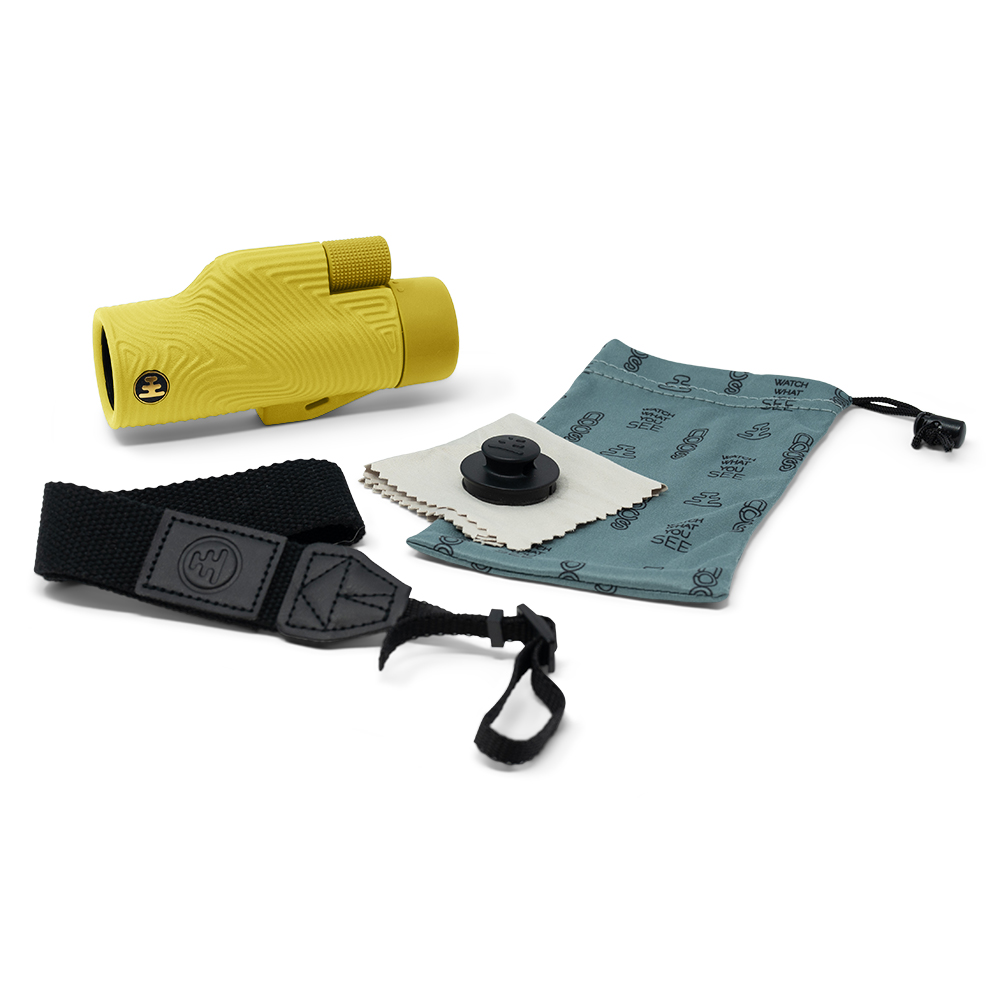
The Field Tube comes with a handy wrist strap, soft protective carrying bag, and lens cloth—all packed in 100% sustainable recyclable packaging.

A couple of things I especially like about Nocs products is that they come with solid rubber stoppers that snugly pop in over the objective lenses. It’s amazing how even high-end manufacturers have not solved the problem of keeping the objective lens covers firmly in place. I also really like the strap systems for Nocs products. In fact, when you order, I recommend purchasing the woven strap versions as they are more comfortable and, again, look cool.

But back to the Field Tube, it features a fairly close (9-10 feet) minimum focal length and is waterproof down to three feet deep for up to thirty minutes, making it perfect for birders, butterfly watchers, and surfers. As you would expect, Nocs uses fully coated lenses and prisms, and has a lifetime warranty. I found light transmission quite good in these despite the relatively small 32 mm objective lens.

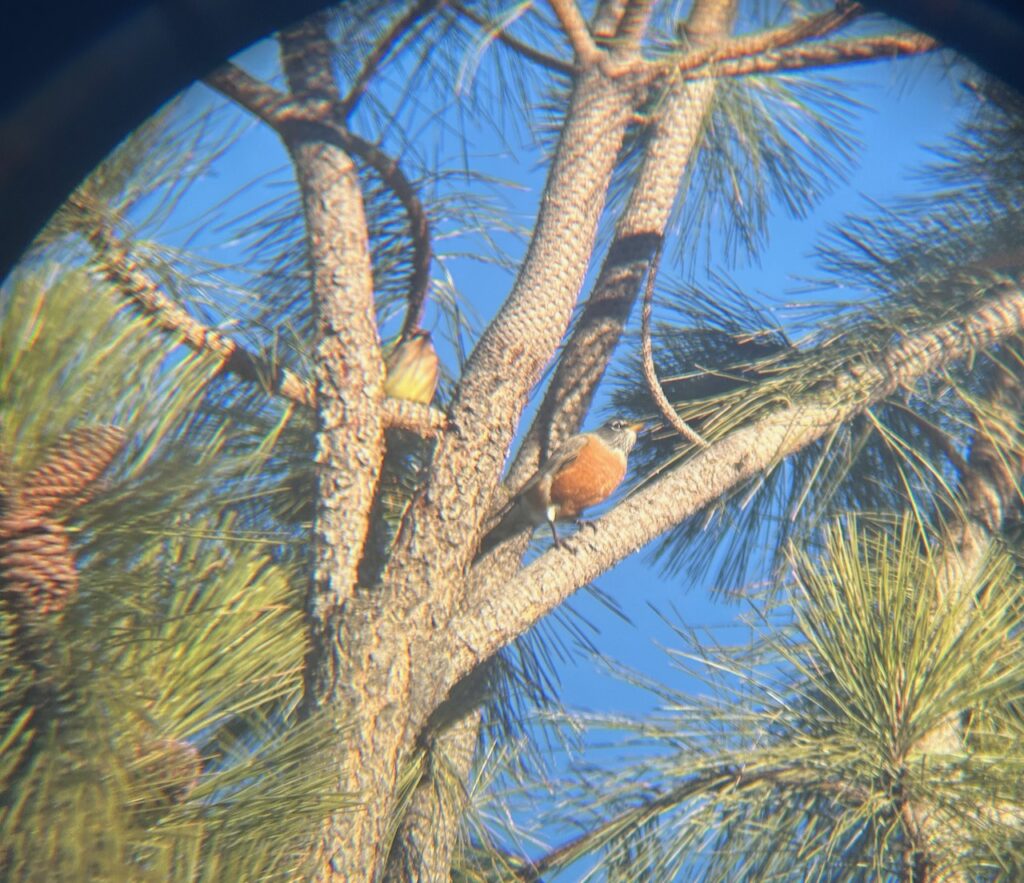
Just for fun, I decided to see if I could get a digiscope photo through my Field Tube. Not bad for my first effort, if I do say so myself. I mean, you can easily see both the Harpy Eagle and Imperial Woodpecker in the photo, right?

At a price of $129.95, you wouldn’t expect perfection from the Field Tube, and I did notice a couple of things that could use improvement. While the focus is quite sharp at close and medium ranges, it gets a bit softer at distance. I’d also like to see fewer turns of the knob required to bring the focus from close to far distance. However, most people will find these minor issues acceptable trade-offs for the incredibly small profile and convenience the Field Tube offers.

Nocs has recently unveiled a monocular upgrade called the Zero Tube which is even smaller and lighter than the Field Tube, and uses a different focusing mechanism. Hopefully, I’ll get to test that one in the future. Next up, though, will be my review of the Nocs Pro Issue 10X42 binoculars, which I am taking to Costa Rica on my trip with Braden next week. My initial impressions of the Pro Issues are extremely positive and I look forward to giving them a full tropical workout. Stay tuned!

Birding 2025: It’s a Wrap

As always, we encourage you to share and link to this post. We absolutely do not give permission to use it to train AI models or for other purposes without permission. Happy New Year, Everyone!

As 2025 rapidly winds up, Braden and I want to thank you for your continuing interest in FatherSonBirding and all that you do for birds. We can’t believe that it’s been almost EIGHT YEARS since we published our very first post, A Quest for Snowy Owls! We certainly wouldn’t have kept at it without your interest and support.

We’re thrilled to report that 2025 has been FSB’s biggest year yet. We published a record 49 posts this year, including our 250th post, “Binoculars and Scopes for the Happy Holiday Birder”. Speaking of that, we also launched FSB equipment reviews—articles we do NOT get paid for, but which have attracted a ton of viewer interest.

FSB received a record 20,000 views in 2025, greatly helped by our equipment and travel reviews!

And speaking of viewers, our site attracted 20,000 views this year, shattering last year’s record of 14,000—with the caveat that about a thousand of those views were likely from AI bots stealing our content without permission (Grrrr…). Still, the vast majority of those extra visitors were legitimate—and from an astounding variety of places. More than 15,000 viewers from 104 countries visited our site this year! Huge gracias, arigatos, mercis, and many more thank yous to our international visitors!

By now, we can hear you pleading, “But please, Sneed and Braden, tell us your Top 5 most popular posts!” Astoundingly, four of our five top posts were equipment review posts:

1) Vortex Triumph 10X42 Binoculars: Entry Level Excellence with 1,425 views. (View post here!)

2) Nikon Monarch HG Binoculars: FSB’s First Equipment Review with 950 views (View post here!)

3) Vortex Razor HD 13-39X56 spotting scope with Mountain Pass tripod: A Perfect Travel Combo? With 580 views (View post here!)

4) Birding Barcelona, Part 1: The Urban Core with 510 views (View post here!)

5) Vortex Viper HD Binoculars (Equipment Review, and/or Texas 2025 Part 2-½) with 480 views (View post here!)

Our 2024 blog about birding downtown Barcelona snuck into the Top 5 for 2025—with several of our Japan and Costa Rica posts close behind!

The numbers reveal some clear trends: with rare exceptions, our most popular posts have been our equipment reviews and reports from travel destinations. Our posts from Japan, Spain, Colombia, Mexico, and Costa Rica have been especially popular—as have posts about very birdy domestic locales such as Texas and San Diego. Our book reviews also have done well, but a decline in America’s literacy rate is clearly evident, as our statistics reveal that many more viewers are interested in buying gear than in reading books.

On a personal level, Braden and I are grateful for the many wonderful birding experiences we got to share, both together and separately. Braden was fortunate to visit both Mexico and Costa Rica in 2025 as well as take an epic cross-continent trip from Maine to Montana following his graduation from the University of Maine. He also birded the heck out of Arizona while on his way to his current job in California, where he’s racking up all kinds of new birding experiences.

As for Sneed, I kicked off the year with a trip to Victoria, Canada, thanks to my wife, Amy—and, honestly, the year never seemed to slow down. As soon as we returned, my buddy Roger Kohn invited me on an epic last-minute trip to Colombia. There followed journeys to Texas, Maine, eastern Montana, California (twice!), and most recently, Georgia and Oregon. Most of the latter were not planned as birding trips, but you won’t be surprised to learn that we saw a ton ‘o birds along the way.

You also won’t be surprised to learn that, quite unintentionally, Braden and I shattered most of our own birding records. Braden finished out his birding year with a remarkable 867 species while I smashed my own previous record with 551 species!

One of the low points for the year was having to say goodbye to our wonderful “birding dog” Lola. She left us far too soon and we still miss her terribly. (See this post.)

Besides finding birds, Lola proved adept at finding marine mammals such as this whale. We miss you Lola!

Moving forward, we hope to continue to publish a wide variety of posts for your reading pleasure, including those about everyday birding experiences that are at the heart of a birder’s joy and wonder. Just a few adventures that we have lined up for 2026 include trips to Costa Rica and Germany, along with visits to birding festivals in Colorado, Arizona, and Montana. Meanwhile, it is our sincerest wish that the next year brings you all good things, including many incredible birding experiences and a brighter outlook for birders, birds, and the planet we all share.

For some ideas about how to help birds this coming year, please visit our last post, Giving Back to Birds—with Great Breaking News! As always, if you would like to help support FatherSonBirding, consider buying new copies of some of Sneed’s books by clicking on the book jackets to the right.

Books for the Happy Holiday Birder (FSB Shopping Guide, Part 2)

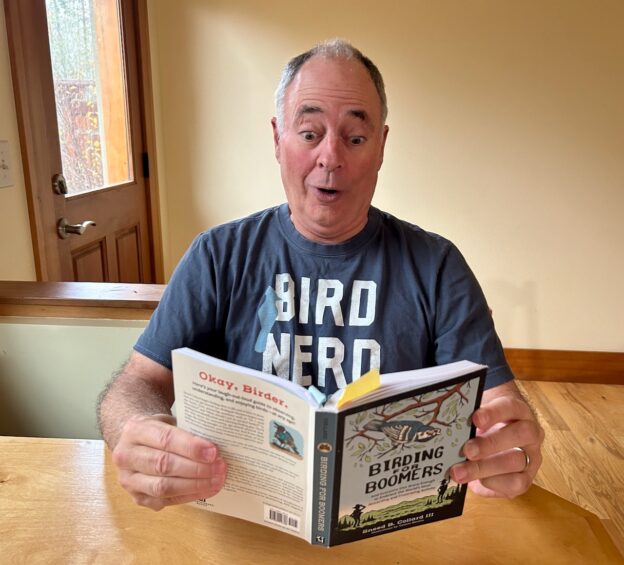
If you’re like me, you never read quite as many books as you’d like. This year, though, I was very fortunate to read and review some outstanding bird-related titles that you’re going to want to consider for your holiday buying. Most—but not all—of these were published in 2025 or late 2024. I’ve also included a few books that aren’t solely about birds—but give great insights into how to protect them. Of course, you will want to begin your shopping with eight or ten copies of my book Birding for Boomers—And Everyone Else Brave Enough to Embrace the World’s Most Rewarding and Frustrating Activity. This popular gift book has received half a dozen awards and even made a couple of bestseller’s lists. Once you’ve placed that order, however, you’ll want to check out the titles below. Please note: we receive no compensation for any of these recommendations (other than a free review copy or two), so the thoughts are all our own. Enjoy!

Purely Enjoyable Bird Storytelling

Let’s start with the “most fun” category of reading—great storytelling that just happens to be about birds. In the past, I’ve recommended such titles as Christopher Skaife’s The Ravenmaster, Joshua Hammer’s The Falcon Thief, and Tim Gallagher’s classic, Imperial Dreams. My favorite title from this year’s reading is Tim Birkhead’s The Great Auk: Its Extraordinary Life, Hideous Death and Mysterious Afterlife. This wonderful, often whimsical tale focuses on an extinct species most of us have heard of, but know little about. Birkhead gets totally into Bird Nerd mode by both explaining the biology and history of the Great Auk, and tracing some of the antics of egg collectors who were totally obsessed with obtaining Great Auk eggs. You’ll love this! See our full review here.

The Great Auk by Tim Birkhead (Bloomsbury, 2025)

Also on the short list for this category is Bruce M. Beehler’s Flight of the Godwit, a must-read for anyone interested in the remarkable lives of shorebirds—and who isn’t? Through the tales of his own peregrinations, Beehler follows the migrations of many of North America’s most charismatic shorebirds, telling us all kinds of cool things that I certainly never knew before. See our full review here.

Birding Memoirs

My top pick for this category is Christian Cooper’s 2023 book, Better Living Through Birding: Notes from a Black Man in the Natural World. I admit that I put off reading this book for a couple of years after it came out. It’s sheer popularity made me insanely jealous as an author, but once I picked it up, I was captivated. Cooper’s down-to-earth honesty about his life and passion for birds sucked me right in, both with its engaging storytelling and how it broadened my perspective on birding in our culture.

My second pick for this category is Richard L. Hutto’s new book, A Beautifully Burned Forest: Learning to Celebrate Severe Forest Fire. This book is half memoir and half science book and I enjoyed both parts equally. Perhaps as a fellow Southern Californian, I especially related to Hutto’s boyhood experiences exploring the chaparral ecosystem, but I also appreciated Hutto’s impassioned plea to bring common sense to fire management, especially when it comes to protecting burned forests from the ravages of so-called “salvage” logging. See our full review here.

Oh, and if you’re wanting to learn all about Braden’s and my early years of birding, don’t miss my classic first adult book, Warblers and Woodpeckers: A Father-Son Big Year of Birding!

In-Depth Group Guides

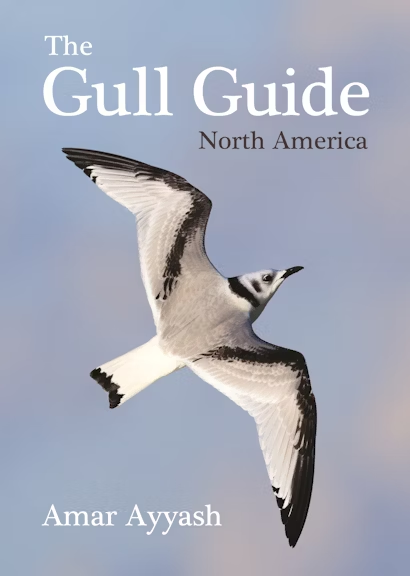
Advanced Bird Nerds will definitely want to add Amar Ayyash’s The Gull Guide: North America to their holiday shopping lists this year. Like most birders, I have been—and remain—incredibly intimidated by gulls. Sure, I recognize the adult plumages of many species, but when you start getting into hybrid gulls and first-, second-, and third-year plumage variations, my brain and confidence begin to melt. The Gull Guide does not solve this problem, but it does accomplish two important things. First, it gives great insight into gulls for the casual birder. Second, it offers myriad minute details for those who are bound and determined to become experts on everything gull. Both of these things are accomplished with an extensive, remarkable collection of photos that serve to educate and guide. See our full review here.

A less technical book that may be more to the taste of the casual birder is The Shorebirds of North America: A Natural History and Photographic Celebration by Pete Dunne and Kevin T. Karlson. This beautiful book strikes a nice balance between detail and readability. A lot, but not all, of the information is fairly general, but the photos are wonderful and if you’re a shorb fan, you will enjoy it. See our full review here.

Three More for the Planet

I’d be remiss if I didn’t mention three more titles that made a big impact on me this year. The first is Sea of Grass: The Conquest, Ruin, and Redemption of Nature on the American Prairie by Dave Hage and Josephine Marcotty. I thought I knew all about the tragic history of the destruction of America’s grasslands. I did not. This highly readable book provides astonishing insights into how we lost most of our grasslands—and why that destruction continues today. Grassland birds are our most imperiled group of birds, losing at least forty percent of their collective populations in just the last fifty years. If you care about these animals and want to know what we can do to slow their precipitous demise, please read this one!

Similarly, Jordan Thomas’s When It All Burns: Fighting Fire in a Transformed World, gives us an inside look at the often counterproductive politics and decision-making behind today’s “fire fighting industrial complex.” With riveting storytelling and astonishing revelations, this is a perfect companion to Hutto’s A Beautifully Burned Forest.

And if you’re wrestling with how to keep from being overwhelmed in today’s world, where we are confronted by one environmental threat after another, I highly recommend the late Thich Nhat Hanh’s Zen and the Art of Saving the Planet. I read a few pages of this every morning and I gotta say that it helps keep me sane in our complicated, highly imperiled world. Not only does it raise serious questions about how we all live, it provides approaches and encouragement for how each of us can truly make a difference.

Don’t miss our holiday guides to birding equipment and, in our next post, charitable giving!

World Series Birds in the Golden State

A happy by-product of our second child going to school in California is that Amy and I have the perfect excuse to go visit the Golden State. Not that I would ever do any birding during a family trip, but you know, it’s hard not to see some great birds when you just happen to stop at a wildlife refuge or stumble into a local park that happens to be a bright red eBird hotspot!

I was especially excited to head to California a couple of weeks ago because, as previously reported, I was perilously close to breaking my all-time single year species record of 527 birds. In fact, when Amy and I landed in Sacramento and headed up to Chico, I needed only one bird to hit 528 species for the year. What would my “go ahead bird” be? (And yes, that is an homage to the upcoming World Series, which happens to feature a team named after birds!)

Visiting our youngest in California has given me a great opportunity to see friends and get in some bonus birding!

When we arrived, I quickly finagled a couple of birding opportunities, but saw only species I had seen on our last trip to California in August: California Scrub-Jays, Acorn Woodpeckers, Yellow-rumped Warblers and the like. My biggest discovery was a White-winged Dove at the Panera’s near the hotel! It was a rare bird so far north in California’s Central Valley, but not unheard of. Still, I felt proud to have spotted the distinct white stripe across each wing as it flew—undoubtedly hoping to score one of Panera’s kitchen sink cookies!

The next morning, I headed out to the home of a close childhood friend who just happens to live outside of Chico in an agricultural area. I had almost reached her place, when I noticed birds feeding on a coyote carcass on the side of the road. I saw Turkey Vultures and ravens. Then, I saw something that got my heart racing: magpies!

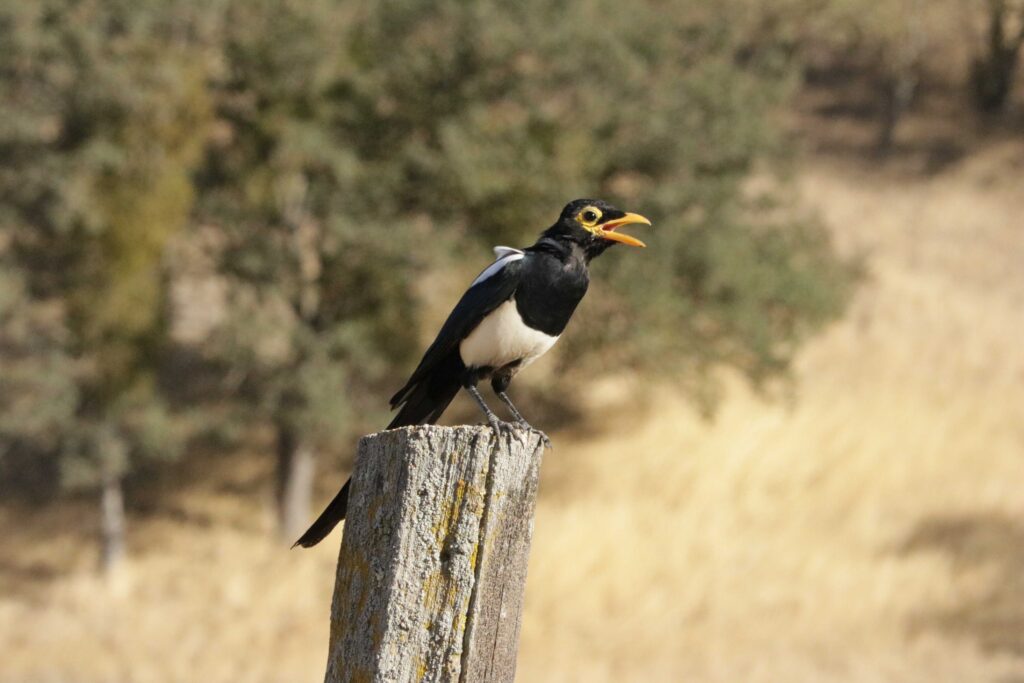
My All-Time Best Year Record Breaker: Yellow-Billed Magpie! Whoo-Hoo! (Photo from earlier trip.)

Not just any magpies. I knew that the Black-billed Magpies we had back home in Montana were unlikely in this part of California. No, these were Yellow-billed Magpies—a bird I had failed to see on our last trip in August! Ka-ching! My record shattered like falling glass! And with a California endemic species no less! Personally, I couldn’t have been happier. YBMAs are some of my favorite birds, and hold an interesting history, too:

“This species was named by John James Audubon in 1837 (as Corvus nutallii, corrected the following year to nuttalli) in honor of the ornithologist Thomas Nuttall, who collected the first specimen near Santa Barbara, California. Nuttall was a prodigious botanical collector and ornithologist who authored a Manual of the Ornithology of the United States and of Canada.”Birds of the World database by Cornell Lab of Ornithology (accessed Oct. 19, 2025)

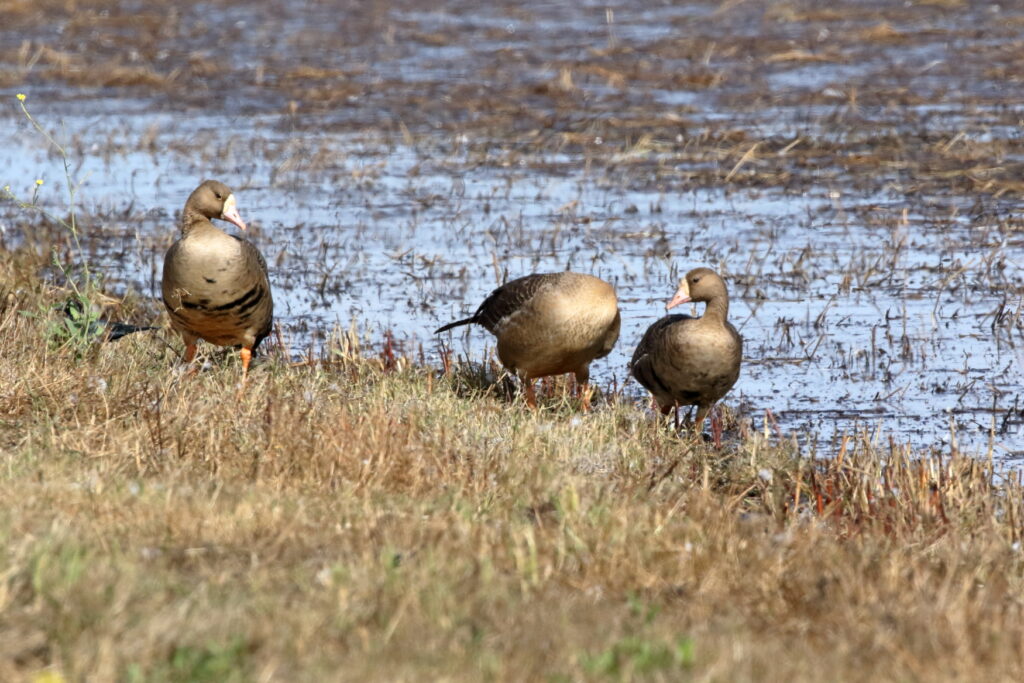
Later that day, I picked up an “insurance bird” at the Llano Seco refuge just southwest of Chico, where Amy and I delighted in Sandhill Cranes, Black-necked Stilts, and my 529th bird of the year, Greater White-fronted Goose.

Greater White-fronted Goose was a great “insurance bird” for my record-breaking year—just in case the Birding Powers That Be decided to lump a couple of species together or I found a mistake in my earlier checklists!

But my fall California birding adventures had just begun!

After a few wonderful days with our child, Amy flew home from Sacramento, and my high school buddy Scott (see Scott’s Guest Post about the Morro Bay Bird Festival), picked me up for an additional four days of exploration. As I’ve mentioned, my emphasis lately has not been so much chasing target species, but exploring places I’ve never before birded, and Scott indulged me to the hilt. After he collected me in Sacramento we explored the Sacramento River delta, hitting Cosumnes River Preserve, where we got a little shorebird action—and a LOT more Sandhill Cranes and Greater White-fronted Geese. On the following days, we hit a huge variety of habitats as we hiked through oak woodlands, explored the large abandoned—and very birdy—grounds of the Sonoma Developmental Center, and scoured rocky shores and intertidal areas in American Canyon, Golden Gate National Recreational Area, Bolinas, and Bodega Bay. I loved every location and, not surprisingly, my “insurance bird” list grew.

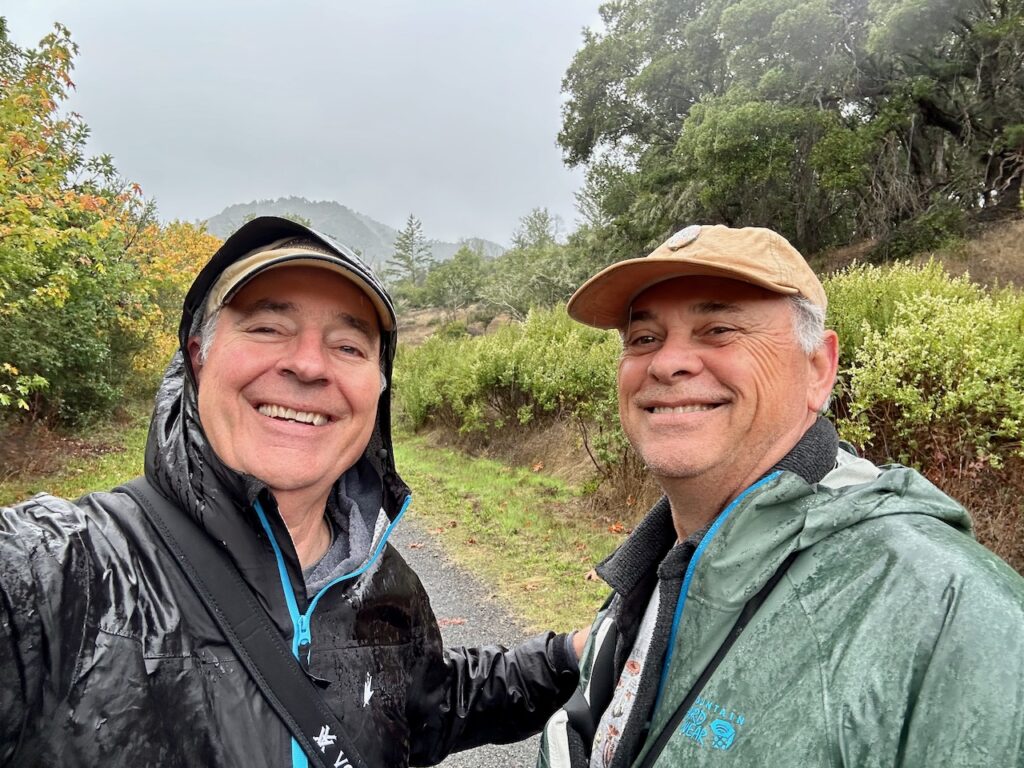
Scott and I enjoyed a wet hike through Sugarloaf Ridge State Park in Sonoma County and fortunately, the rain did not dissuade the birds as we sighted a host of classic oak woodland species including Oak Titmouse, Golden-crowned Sparrow, and Nuttall’s Woodpecker.

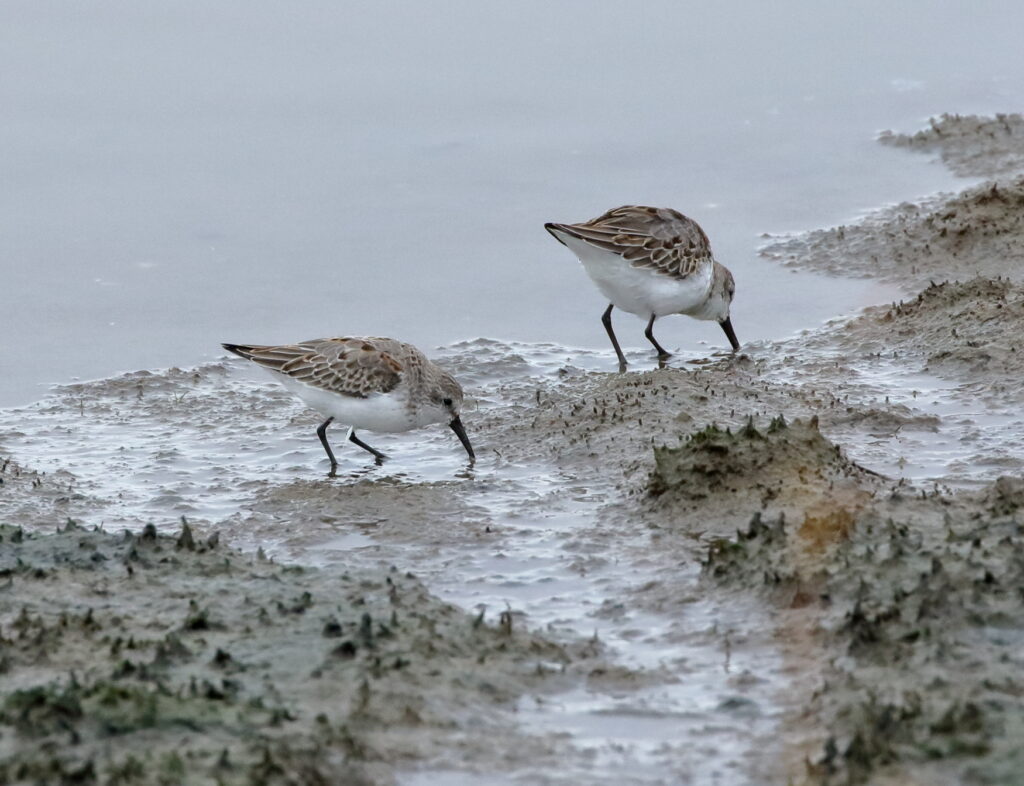
I picked up Mute Swan in American Canyon as Scott and I gleefully observed thousands of shorebirds including Western and Least Sandpipers, Long-billed Dowitchers, Marbled Godwits, and Black-bellied Plovers. That afternoon, we saw my FOY (First Of Year) White-tailed Kites at a place called Buchli Station Road.

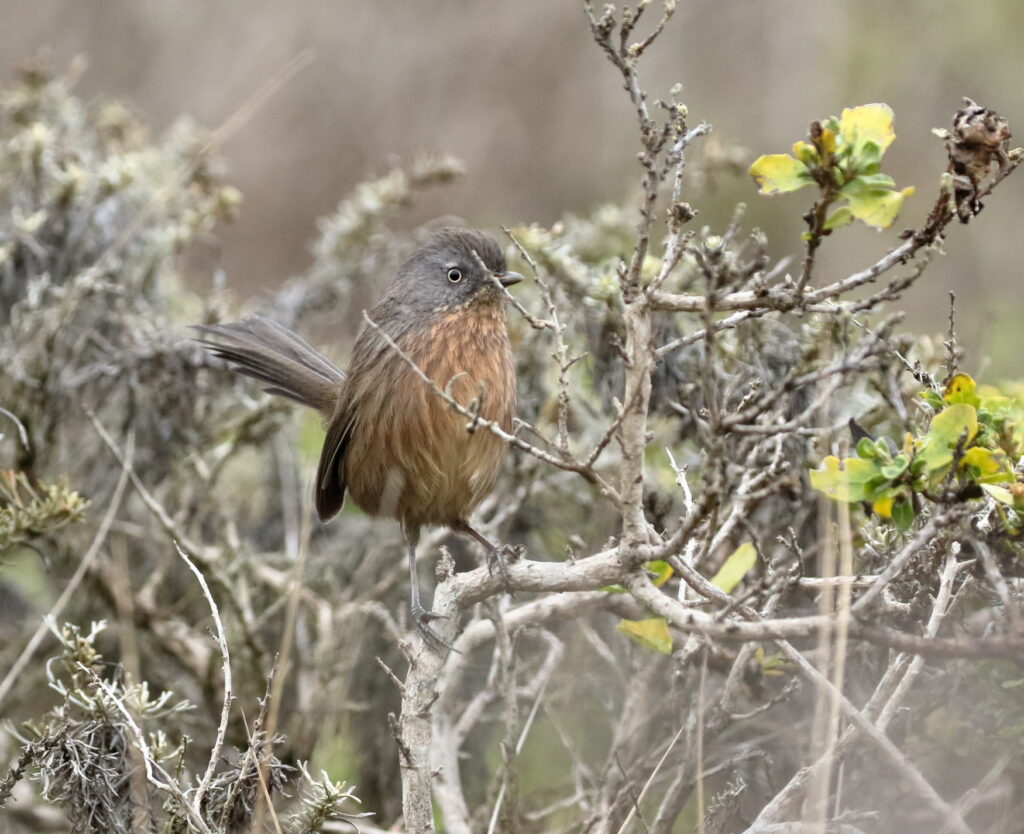
Our adventures gave us plenty of time to learn more about peeps as we picked out the subtle details of Least and these Western Sandpipers. Note the rufous shoulder patch (not always present), black legs, and longer, curving bill that distinguishes these Westerns from Least’s.

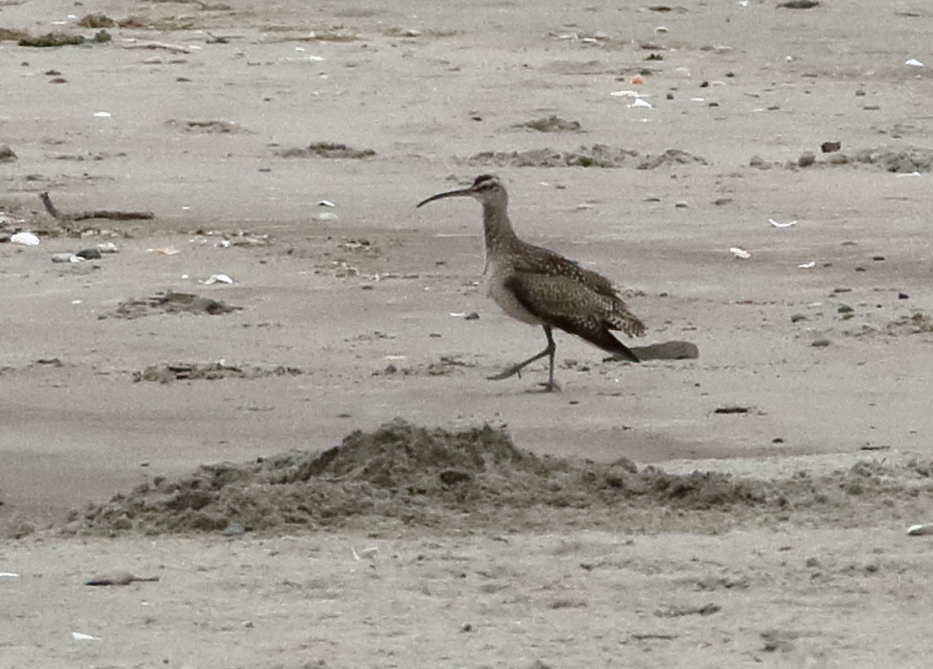
Our favorite—and most productive—day happened October 15th. With a visit to Rodeo Lagoon, we found one of my favorite California birds, Wrentits, along with Western Gulls, which I had somehow managed not to see the entire year! At the nearby Bolinas Lagoon, we also observed hundreds of Elegant Terns and my trip MVB (Most Valuable Bird), a Whimbrel.

This Whimbrel at Bolinas Lagoon nabbed Bird of the Trip honors as it was the first WHIM I’d seen in more than six years.

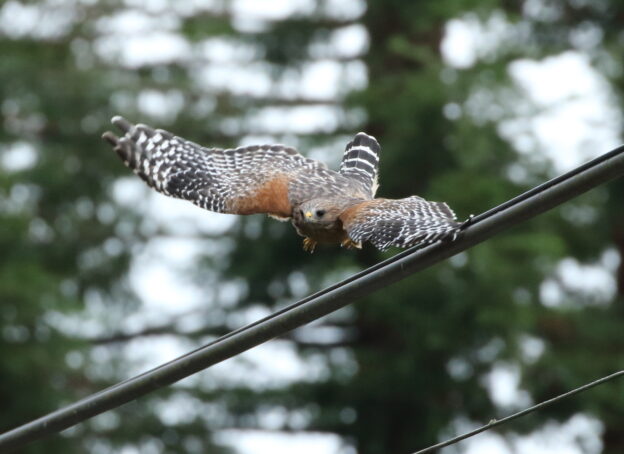
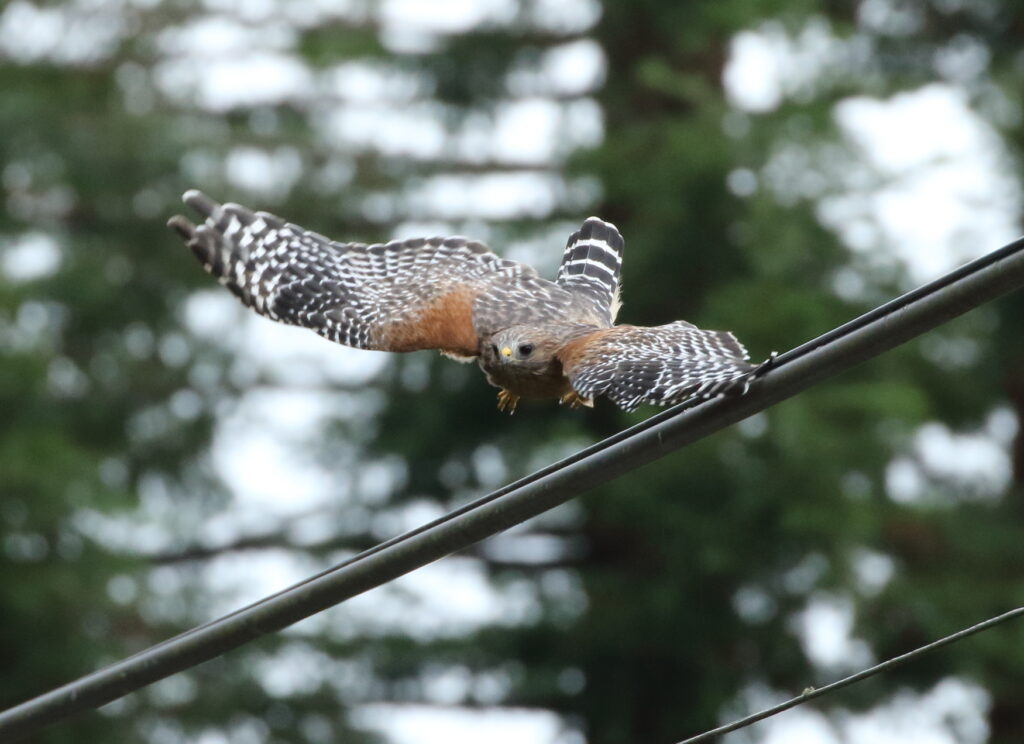
Another bird I had somehow failed to see all year was Red-shouldered Hawk, but as we made our way north toward Point Reyes, Scott suddenly shouted, “Red-shouldered!” We pulled over to look at this handsome creature perched on a power line and even got to see it nab some kind of morsel from roadside weeds. The funny part? We saw four more Red-shouldered Hawks on our drive back to Scott’s house in Glen Ellen! I call that a Grand Slam!

I don’t know that I’ve ever appreciated Red-shouldered Hawks more than I did this one—especially when it launched after some prey!

One thing that made the trip so fun was eating lots of great food and kicking back to watch the MLB playoffs with Scott each evening. I hadn’t seriously watched baseball since Amy and I were still childless more than twenty years before, and it was wonderful to lean back, relax, and watch grown adults try to hit balls with sticks. Goooo Ohtani!

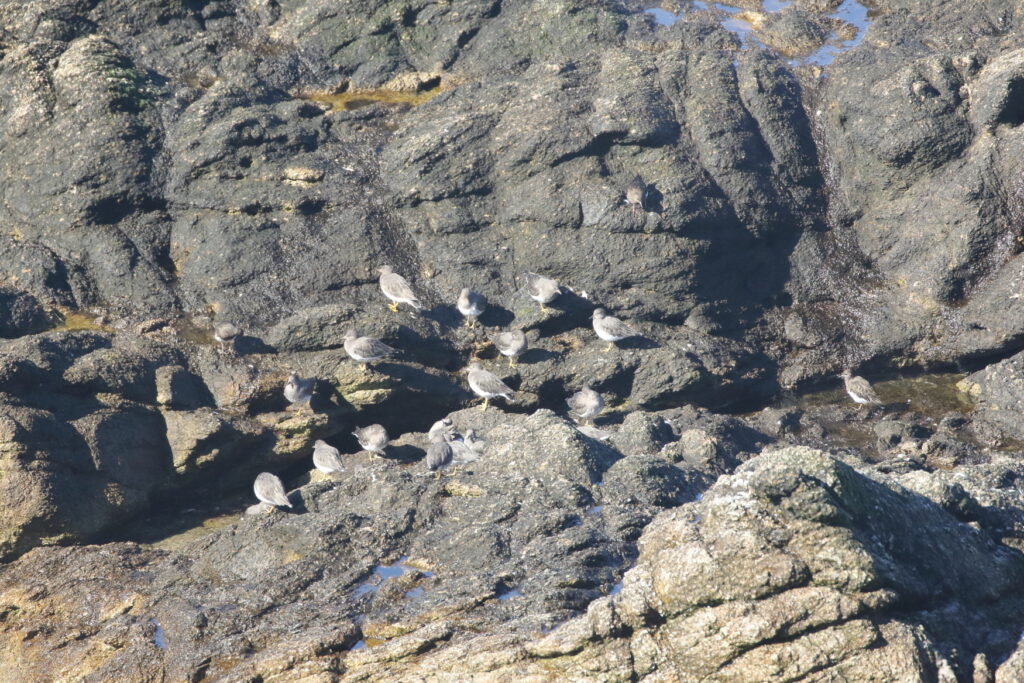
For our final day of birding, Scott drove me to Bodega Bay, one of my favorite places in California. While studying at Cal I had taken an ichthyology course here one summer, and now that I was a birder, the place held even more charm. On the rocks below Bodega Head, Scott and I were astonished to see a group of sixteen Surfbirds—far more than I had ever seen in one place! We also got great looks at both Brandt’s and Pelagic Cormorants, and spotted a Pigeon Guillemot in the far distance.

Since Braden and I saw our first Surfbird from a distance during our first pelagic cruise in Monterey in 2016, these birds have held a special place in our hearts. Never, though, have I seen so many in one place! (Can you also find the lone Black Turnstone in this photo?)

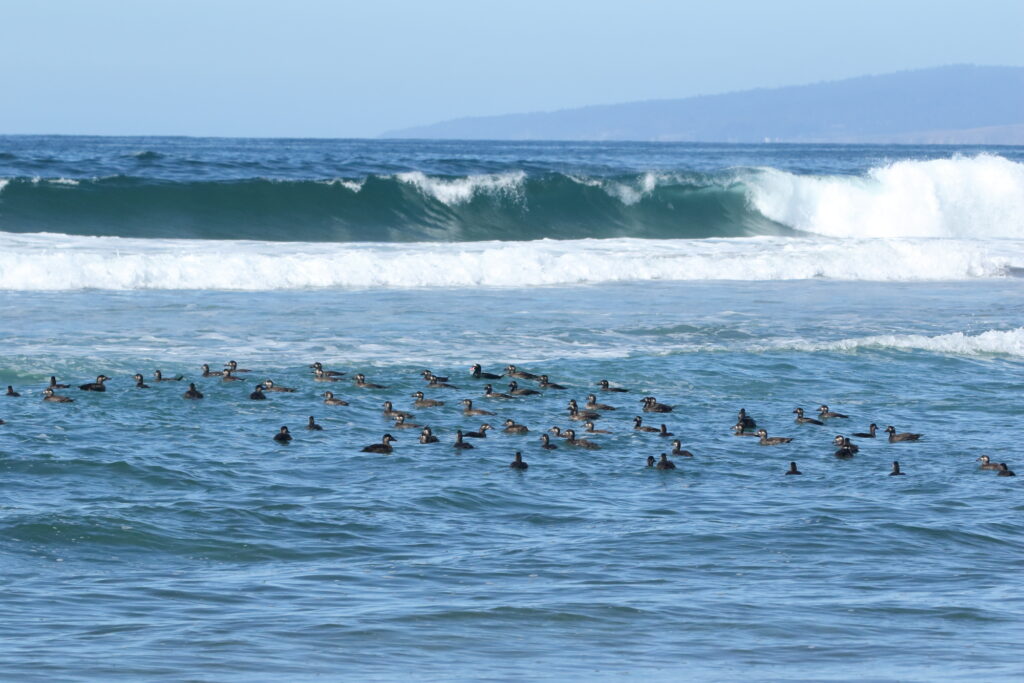
After a lunch of fish tacos, we headed up to the beaches north of Bodega Bay and were treated to a second Whimbrel sighting and more than 120 Surf Scoters casually ducking the breakers offshore. It was a wonderful way to wrap up the trip, and I am grateful to Scott both for being such a great host and for his patience when I was experiencing a blood sugar meltdown at Bodega Head. Of course, you may be wondering where my year list stands now, and I’m happy to report that I am now at 537 species. Will there be any more? I don’t know, but 550 seems awfully tempting, so stay tuned!

Update: Just before posting this, I picked up bird #538 for the year, Lapland Longspur, in some fields northwest of Billings!

Can one ever get tired of Surf Scoters? I don’t THINK so!

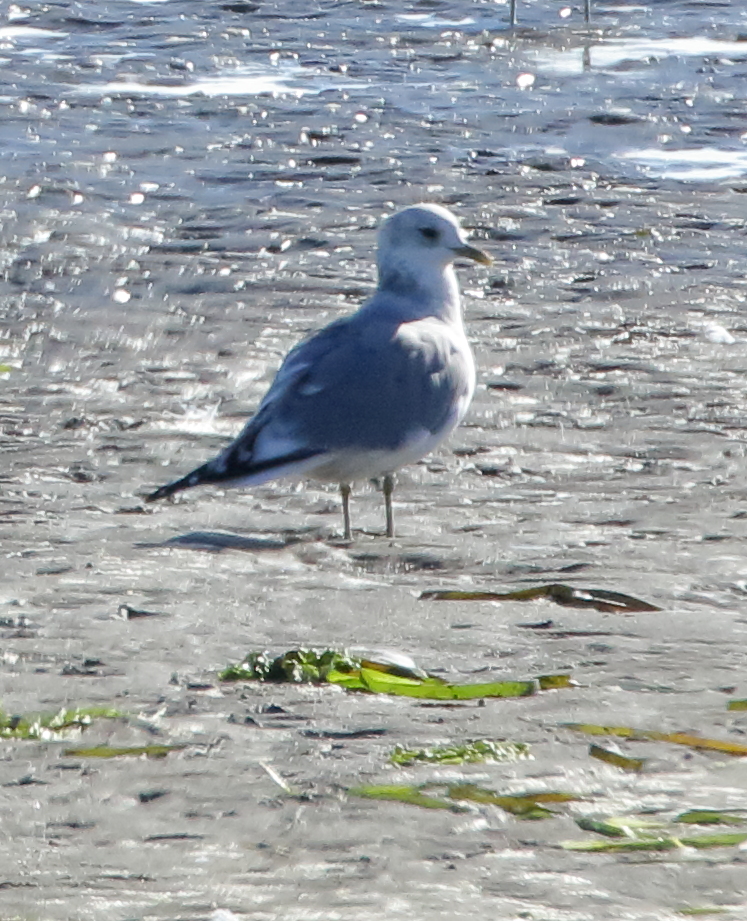
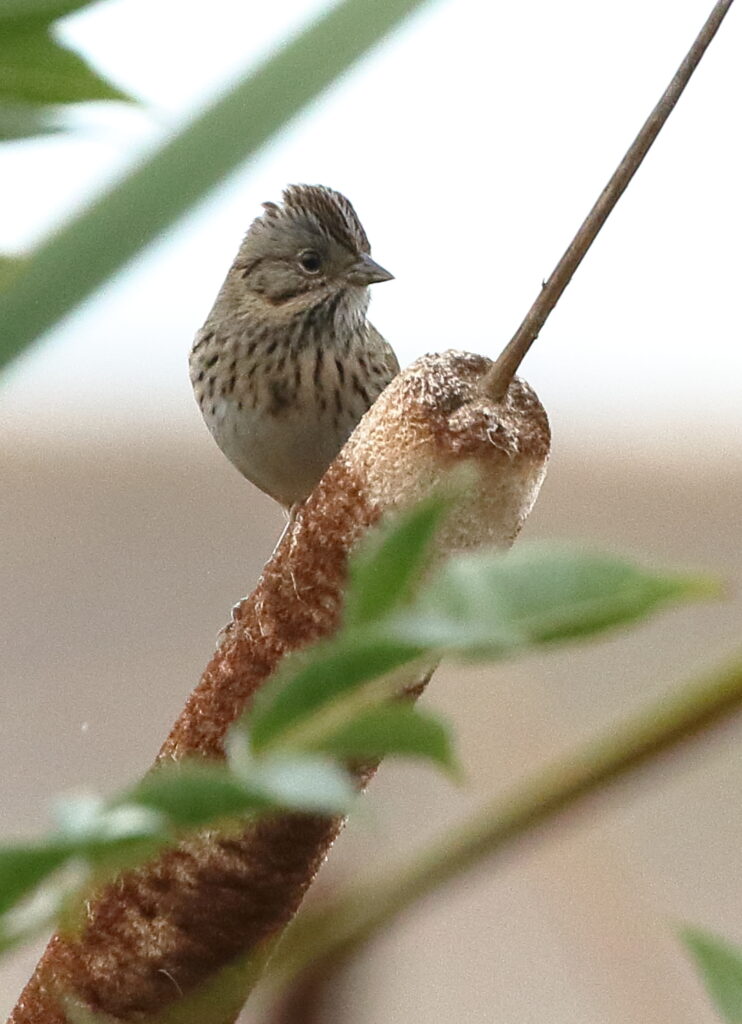
Just for fun, can you name the birds and places above? Answers in the nest—I mean next—post!