Category Archives: Montana

The Backyard Jungle

Braden is currently in Iceland, where he is birding with mom and grandparents—and will undoubtedly write some great upcoming posts about that—so I thought this would be a great time to talk about backyard bird habitat.

When we moved into our neighborhood in 2006, we faced a daunting task: transforming our property from a biological desert that had been scraped clean by bulldozers into something that not only looked nice, but provided habitat for native animals and plants. It hasn’t been easy. Aside from the usual tasks of battling weeds and keeping plants alive, we’ve faced a ravenous army of deer that consistently ignore signs that read “Deer-Resistant Plants.” Finally, after twelve years, however, we are enjoying a yard that truly resembles the habitat we set out to create.

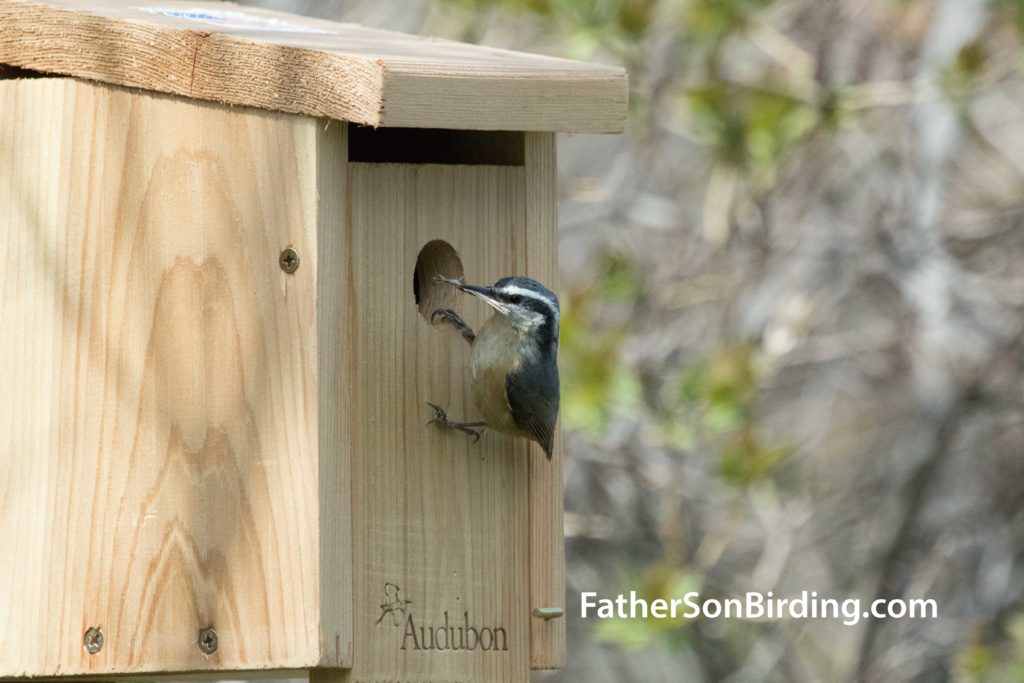
A pair of Red-breasted Nuthatches took immediate advantage of this new bird condo in our messy yard this year. Audubon, I will expect my product placement check soon. (Photo by Sneed B. Collard III)

Food has certainly been a key to our success. Through luck and persistence, we’ve managed to establish a wide variety of plants that provide berries, nectar, seeds, and insects to multiple bird species. Oh yeah, and a backyard sunflower seed feeder doesn’t hurt!

One thing I underestimated when we began is the importance of structure. Sure, we planted trees, some of which have reached twenty feet or more, but we also have an array of buffalo berry, maple sumac, ocean spray, golden currant, and mountain mahogany that have proved extremely “bird popular” for their cover as much as for their food. We’ve also been helped by a row of lilacs along the back fence that were already here when we moved in and serve as a vital launch pad for birds wanting a turn at the feeder.

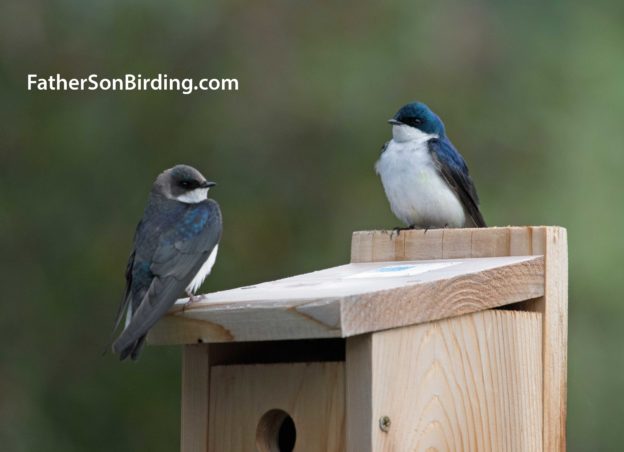
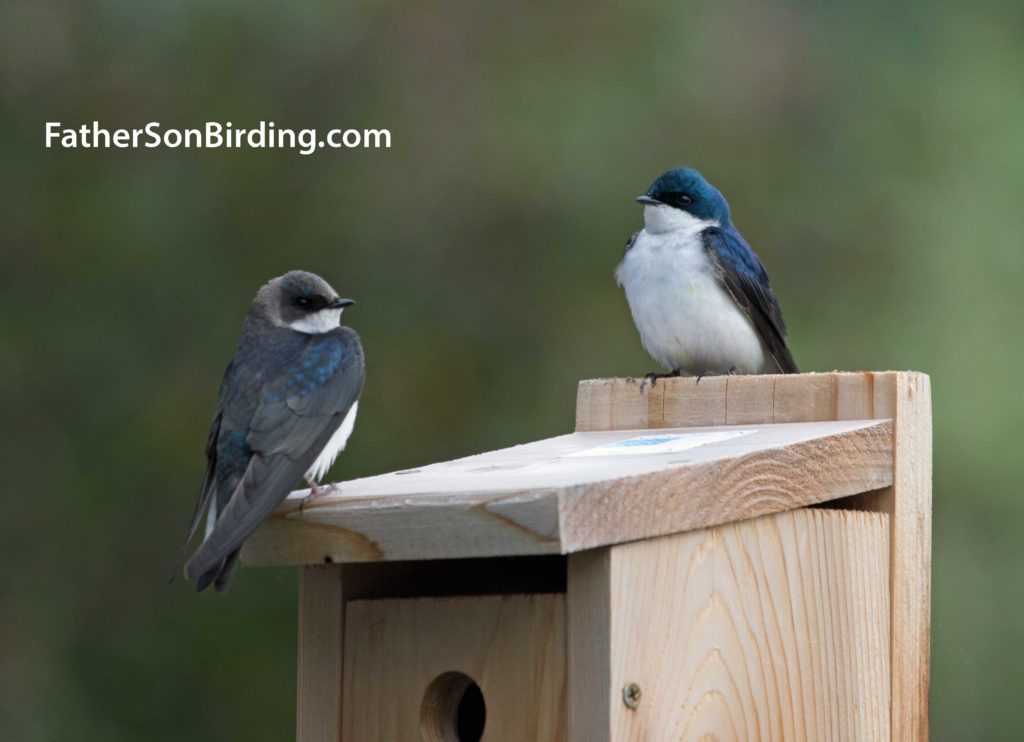
Female to Male Tree Swallow at our front birdhouse: “Hm, honey, I like the neighborhood, but the front door is a little small.” (Photo by Sneed B. Collard III)

One final thing we did just this year is put in two chickadee houses. Within days, one had been staked out by Black-capped Chickadees and the other by Red-breasted Nuthatches. For further fun, Violet-green Swallows nest under our eaves while a surprise robin pair has raised a family in a bordering fir tree. We believe that a Song Sparrow pair has also successfully raised chicks, but we’re not sure where!

The end result is that this year has seen an explosion of birds around our house—more than forty species to date, shattering our previous record. The most common residents have been the nesting birds, Evening Grosbeaks, Cassin’s Finches, Song Sparrows, Cedar Waxwings, Pygmy Nuthatches, Flickers, and yes, those pesky House Finches and House Sparrows. We’ve also made sightings of Pileated and Hairy Woodpeckers (thanks to the ponderosa pines behind the house), Common Nighthawks, American Goldfinches, Western Wood Pewees, and Rufous Hummingbirds.

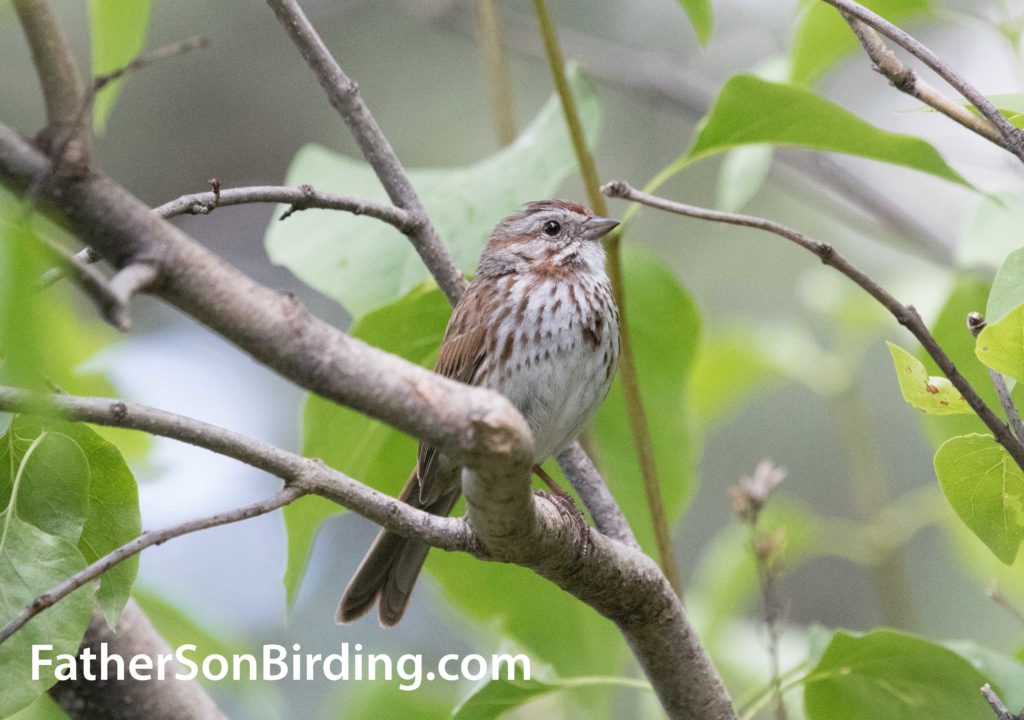
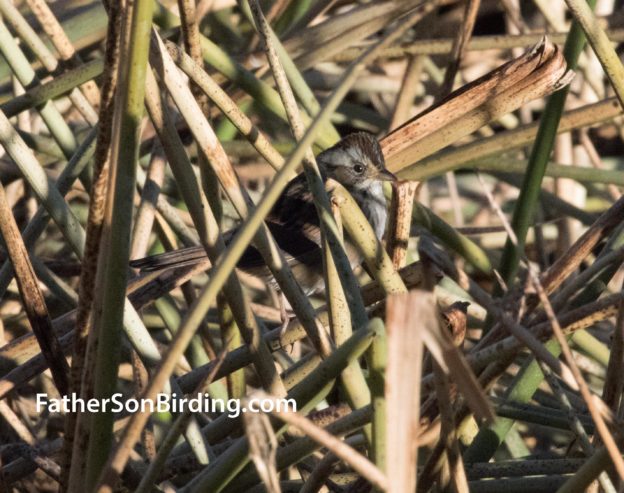
One of this year’s delights has been the daily appearance of our first, apparently resident, Song Sparrows. (Photo by Sneed B. Collard III)

Sadly, few of our neighbors have followed our example in creating habitat, most sticking with pointless lawns and non-native shrubbery that is virtually useless to native animals. I like to hope, though, that our “messy” yard of diverse and unruly plants inspires at least the occasional passerby to boldly go where traditional landscape companies fear to tread. After all, those of us lucky enough to own a home with a yard have a responsibility to give back to the plants and animals that our extravagant human “nests” have displaced.

Listers Anonymous Mid-Year Crisis Meeting

To Subscribe to FatherSonBirding, please fill out your name and email in the appropriate boxes in the right-hand column. Thanks and please share this post!

Minutes from Listers Anonymous Meeting 7/1/18

Us: Hello.

Group: Hello!

Us: Our names are Sneed and Braden and we are Listers. It’s been exactly four hours and twelve minutes since we last posted on eBird.

Group: Amen!

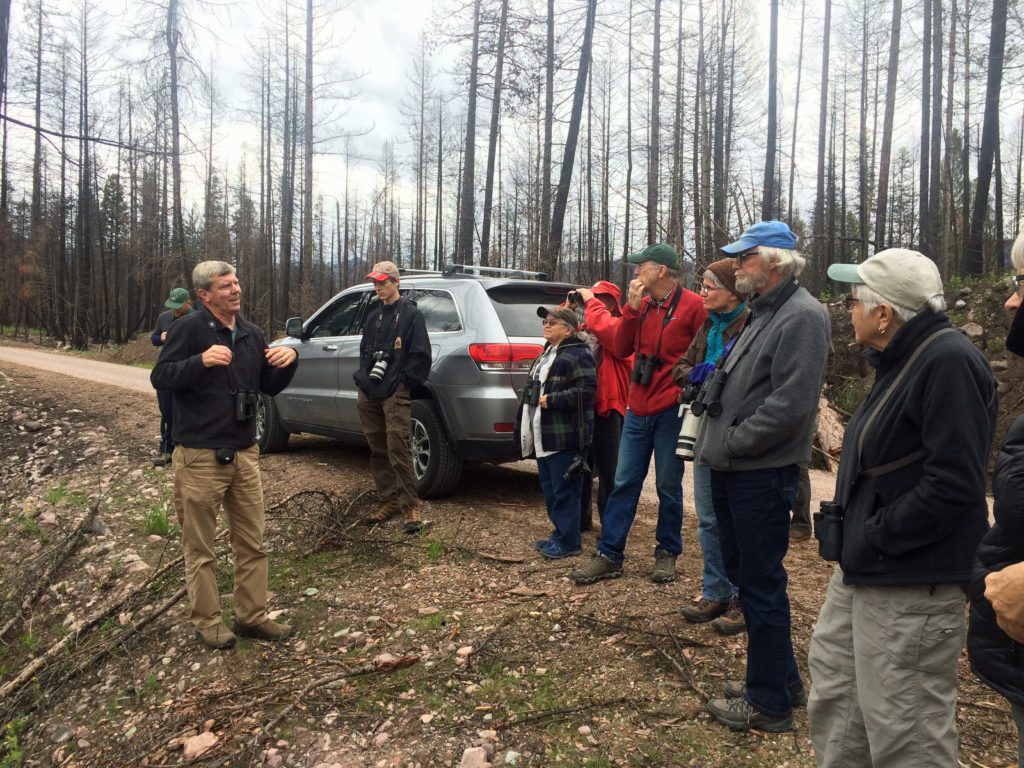
Biologist Dick Hutto leads Listers Anonymous meeting with birders from Helena in the Rice Ridge Burn. (Photo by Sneed B. Collard III)

Us: I mean, we’re not just Listers. We love to watch birds and photograph them and write about them, but…

Moderator: Go on. We’re all friends here.

Us: Thanks. Yeah, but we’re also Listers. We like to keep track of how many birds we’ve seen in a given year, month, day—not to mention how many in every county and state and, well, you get the idea.

Woman with binocular strap scars on her shoulders: Oh, I know. Been there, Honey.

Us: The thing is, we’re really having a crisis right now.

Moderator: Go on.

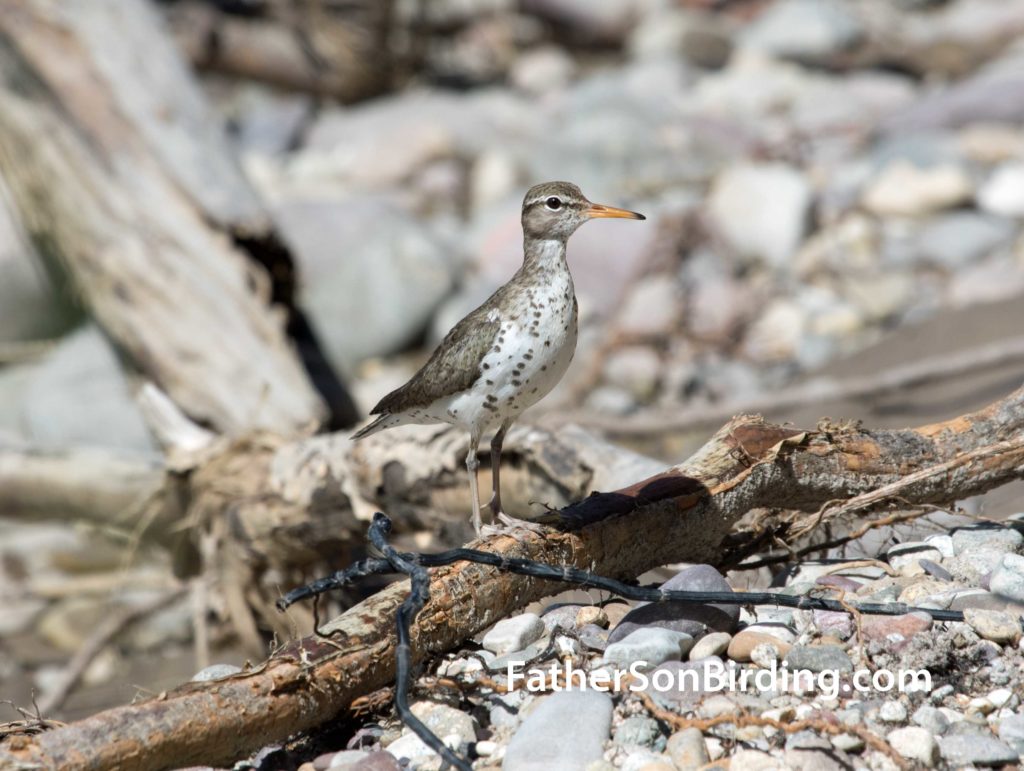
Lister’s Dilemma: Great species, such as this Spotted Sandpiper, still abound, but NEW species are getting hard to find. (Photo by Sneed B. Collard III)

Us: Well, you see, last year we did a Montana Big Year. I recorded 207 species while Braden got 213. This year, I’m up to 196 while Braden has 204.

Man wearing birding vest, shaking his head: Have mercy. You are in trouble.

Us: We knew you’d understand. I mean most people, they don’t get it. They say, “200 species! Why that’s great! The year’s only half done and you’ve almost beat your old record already!”

Group: Lord, forgive them!

Us: Yeah, right? What they don’t realize is that the prime birding months are GONE! Sure, we need only ten or so species to break last year’s record, but seriously, it’s July! It’ll be a miracle if we can find that many in Montana the rest of the year.

Group: By the name of Sibley and Audubon, we feel your pain!

Us: What’s even worse, we aren’t even going to make it out to Far Eastern Montana this summer. No Upland Sandpipers. No Greater Sage Grouse. No Long-billed Curlews.

Woman with an arm tattoo “Big Year or Bust”: Children, you are in a fix!

Us: We know, but what can we do?

Moderator, polishing the lenses of his binoculars: Sneed and Braden, it’s one of the heaviest burdens for a Lister to bear. But you’ve got to fight it.

Group: Amen.

Moderator: You just can’t take “No” for an answer.

Group: Amen!

Moderator: You’ve got to keep getting out there, even when there’s less hope of finding a Year Bird than of getting a Democrat elected to Congress!

Group: AMEN, BROTHERS AND SISTERS!

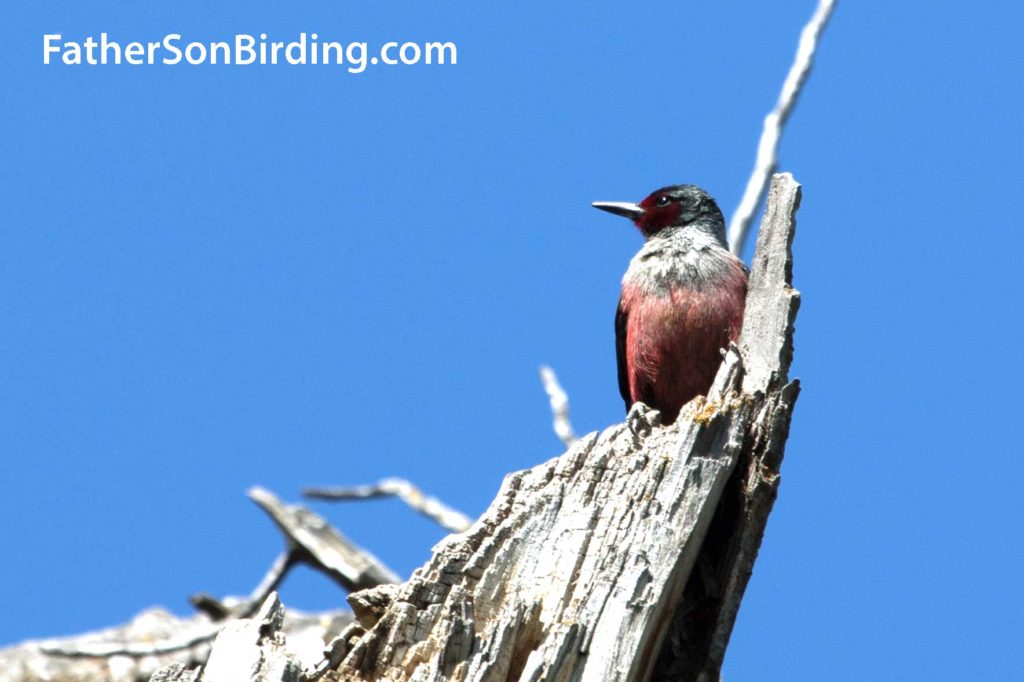
For us, it seems like a record year for Lewis’s Woodpecker sightings, but would it be too much to ask to see a Black-backed? (Photo by Sneed B. Collard III)

Moderator: You can’t give up. Every day and every night, you’ve got to sling your optics around your necks and follow every lead, examine every perch. And even in your darkest days, when not a new sparrow is spotted within a hundred miles of you, remember, we’re all in this together. Take strength from that, brothers.

Us: We will. Thank you. Uh, by the way, is anyone up for some birding?

(Sounds of trampling feet as the Listers stampede out of the building.)

Fire In The Hole!


To Subscribe to FatherSonBirding, please fill out your (brief) information in the appropriate box in the column to the right. Thanks!

Braden here.

At 6:30 on Sunday, June 17th, retired UM Professor Dick Hutto picked up my dad and me to go birding. In the passenger seat of Dick’s car was Dick’s former graduate student Hugh Powell, who was in Missoula to write an article for the Cornell Lab of Ornithology. Our mission was simple: see a Black-backed Woodpecker.

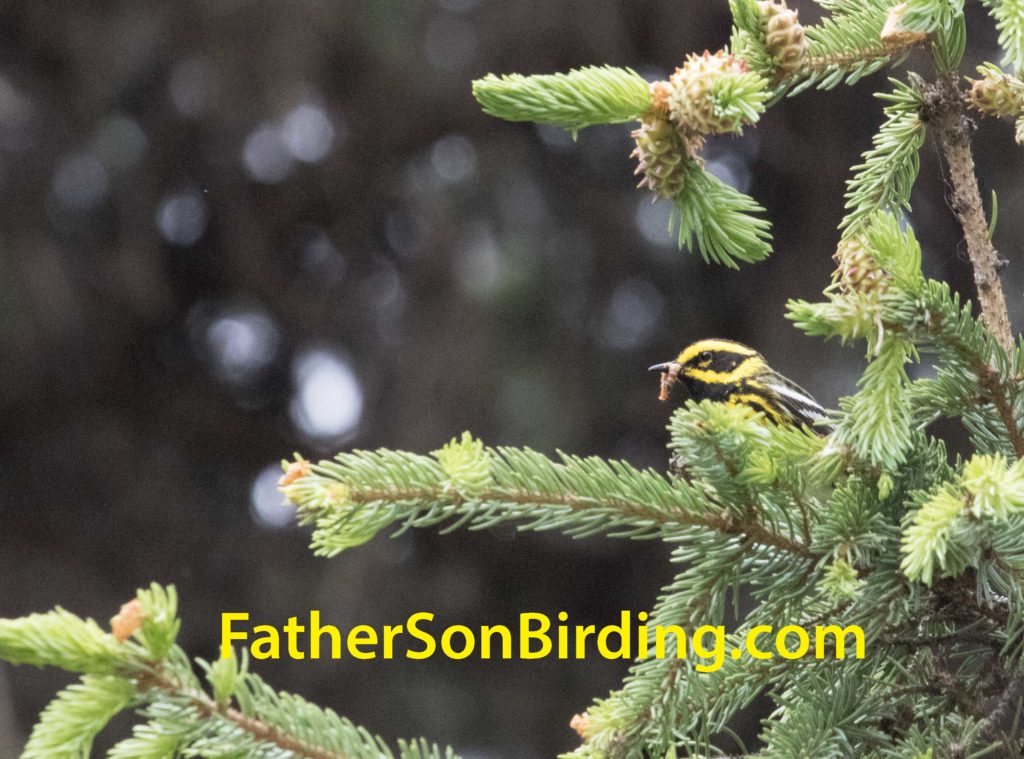
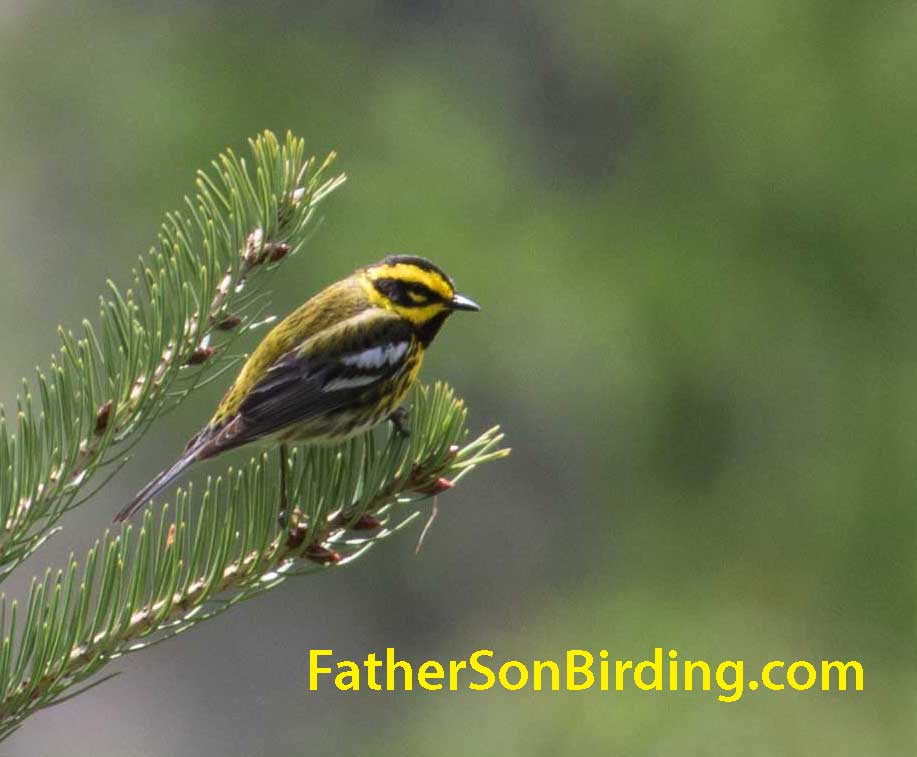
Townsend’s Warbler. (Photo by Sneed B. Collard III)

We were headed to an area known as the Rice Ridge Fire (after a quick coffee stop), to the northeast of Missoula. The first time we had heard about this trip was at Montana Audubon’s Wings Across the Big Sky Bird Festival. A birder from Helena told us that Dick (who had an abundance of bird knowledge, specifically about birds that liked fire) was leading a field trip up to the burn and mentioned we might want to come along. My dad, who knew Dick well, jumped at the chance and asked Dick if we could get a ride up with him. Well, here we were.

At Seeley Lake, a large tourist area as well as great birding stop, we met the rest of the group, all birders of different experience levels from Helena. Knowing that this area was good for American Redstarts and Northern Waterthrushes, my dad and I persuaded the group to look around Seeley before hitting the burn. We quickly saw and heard 15 species, including the uncommon Willow Flycatcher, identified by its characteristic call, Fitz-bew.

We slowly made our way up Rice Ridge Road, stopping regularly to look for our goal, the Black-backed. The burn area had not been logged, thankfully, and every time we stopped Dick emphasized that it should not be logged, either—why not just cut trees near town instead? Burn areas have some of the highest levels of biodiversity in the country! (For more information on this, check out my dad’s book, Fire Birds: Valuing Natural Wildfires and Burned Forests.)

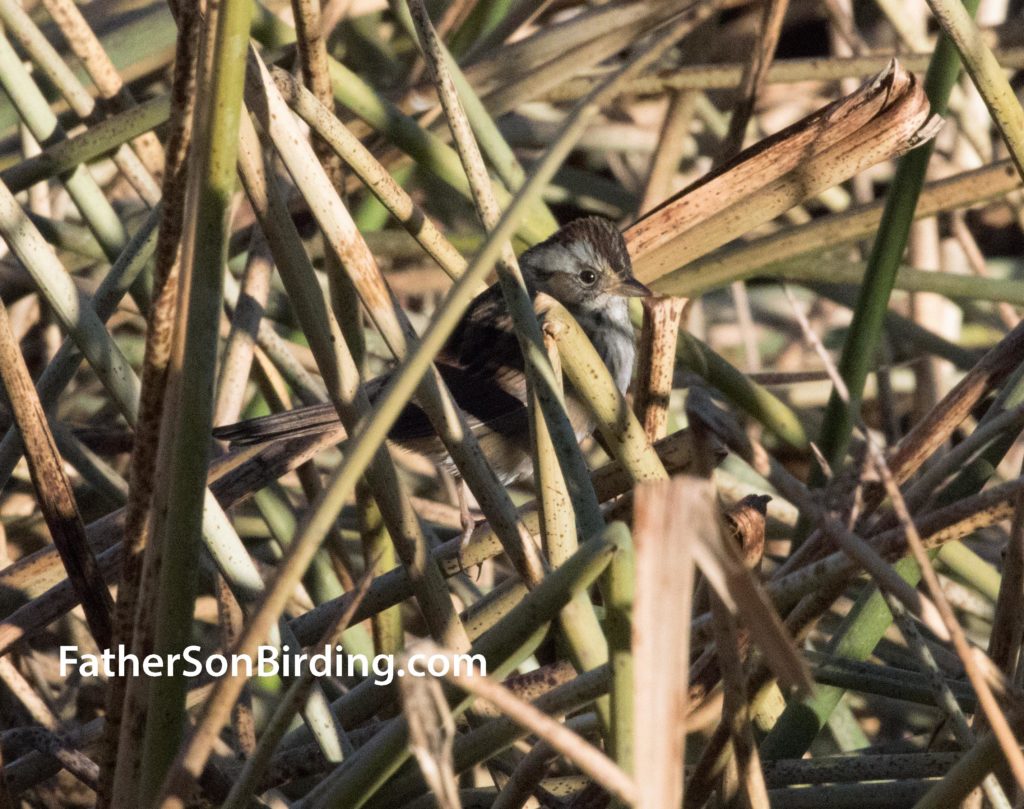
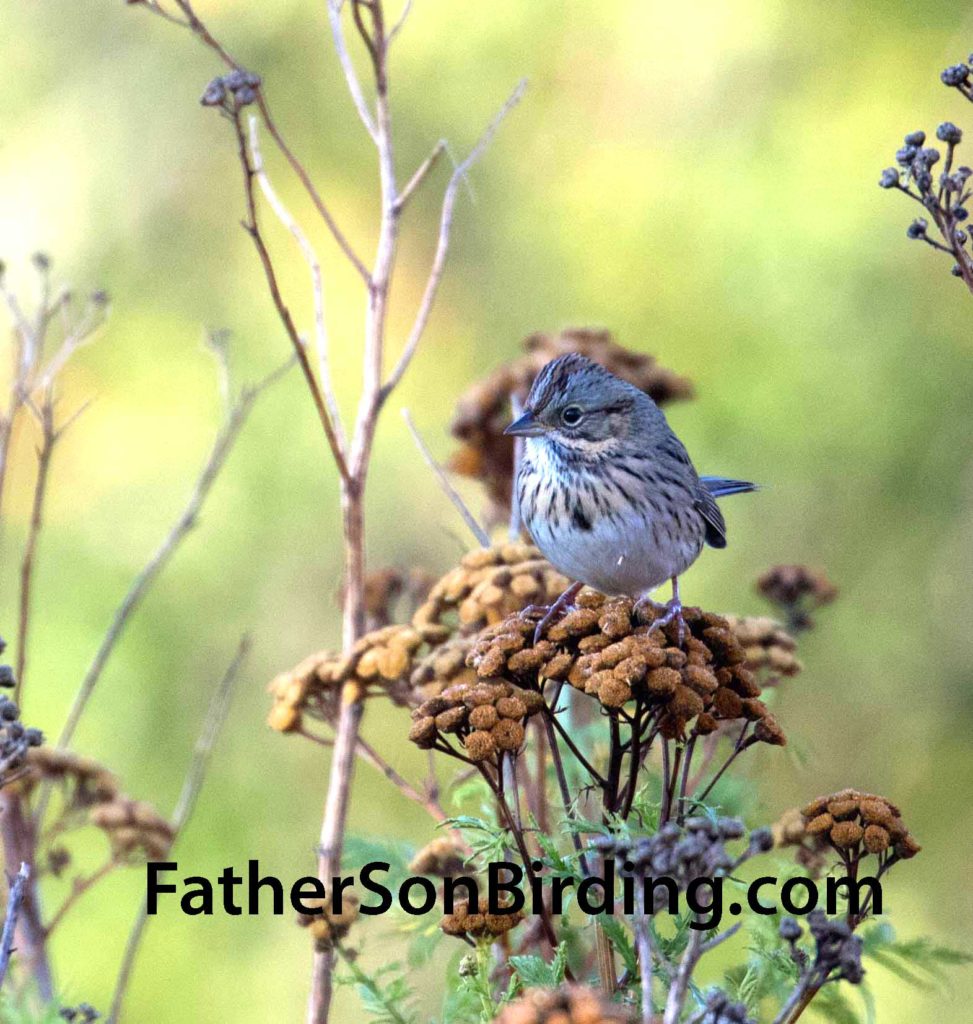
Lincoln’s Sparrows are known for nesting in higher altitude wet areas. (Photo by Braden Collard)

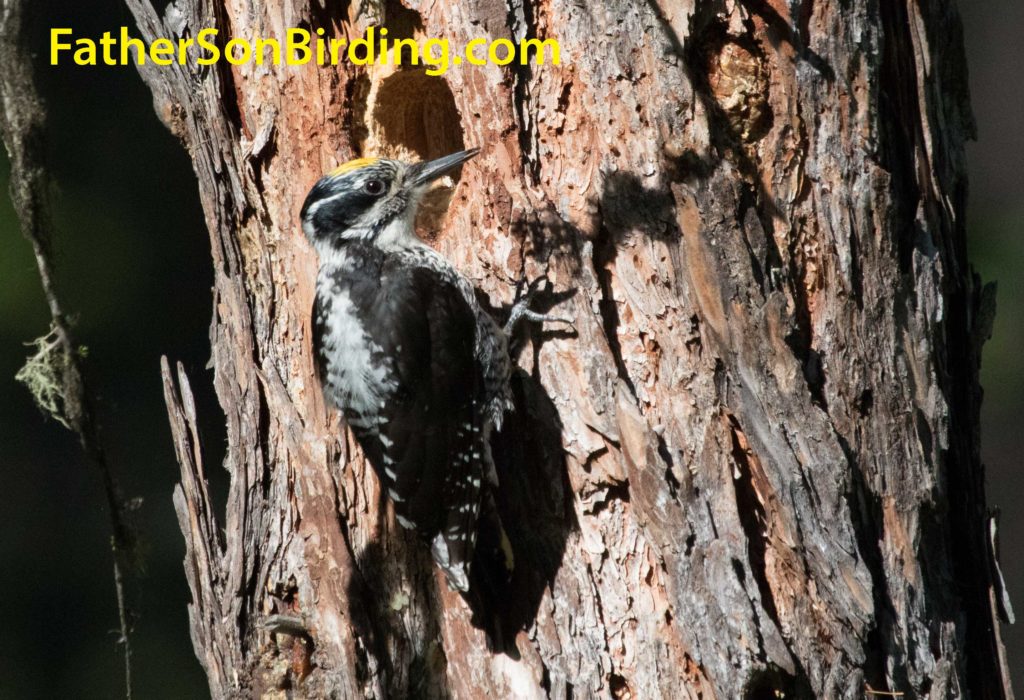
No Black-backeds showed, but the birds did not disappoint—MacGillavry’s Warblers and Lincoln’s Sparrows skulked in the low brush, Bluebirds danced across the black trunks, and woodpeckers of many species drummed and called. On that one stretch of road we observed four species—Northern Flicker, Hairy Woodpecker, Williamson’s Sapsucker, and (new for the year) at least three American Three-toed Woodpeckers, the Black-backed’s slightly less burn-dependent cousin.

In one spot, sort of a mix of burn and old-growth with a creek running through it, we were amazed with the number of species. A dipper, nesting under the bridge. Great looks at a Townsend’s Warbler. Large numbers of Western Tanagers and robins, both burn-preferring species. Sharon Dewart-Hansen, a Helena woman who was first in the state for the year, pointed out a new call for us—the Whip Three Beers of the Olive-sided Flycatcher.

Dick was slightly disappointed at the low number of woodpeckers, saying they would reach their peak two or three years from now, but everyone else was ecstatic. It had been a great trip, Black-backed or not.

The number of American Three-toed Woodpeckers that are in burns is double that of those not in burns. (Photo by Sneed B. Collard III)

The Big Weekend, Version 3.0, Part One

Townsend’s Warbler, Glacier National Park.


Braden present.

Ever since 2016, the year we did our Big Year, my dad and I have had a tradition of going all out on Memorial Day weekend. That year, with our friend Nick Ramsey guiding us, we raced from Lee Metcalf Widlife Refuge south of Missoula to the Seeley-Swan Valley close to Glacier National Park, picking up a variety of great birds: Black-backed Woodpecker, Ruffed Grouse, American Redstart (not as common for us as for you Easterners), and one of my favorite birds: Common Yellowthroat. The following year, we again focused on our area and racked up 56 species in 3 hours, including a stunning pair of Red-naped Sapsuckers.

This year, when I first heard that I had to go up to go to a Boy Scout camp called Grizzly Base on Memorial Day weekend, I was disappointed. As we grew closer to the date, though, I began realizing two things: Grizzly Base itself could be good birding, and we were only there for a day and a half, leaving almost three more days to bird. For the latter idea, I was thinking we could get up to Glacier National Park; it was pretty close and convenient to where we would be staying. Fortunately, we did even better than that.

The camp was really fun. I learned a lot of things, and got to know the people and place I would be working with this summer. Grizzly Base’s birds were nothing to look down upon either as we spotted more than twenty species including a Bufflehead nest, Townsend’s Solitaires, a Pileated Woodpecker, a Western Tanager and a pair of Wood Ducks.

Early Saturday afternoon, though, my dad and I packed up and set out to bird in earnest.

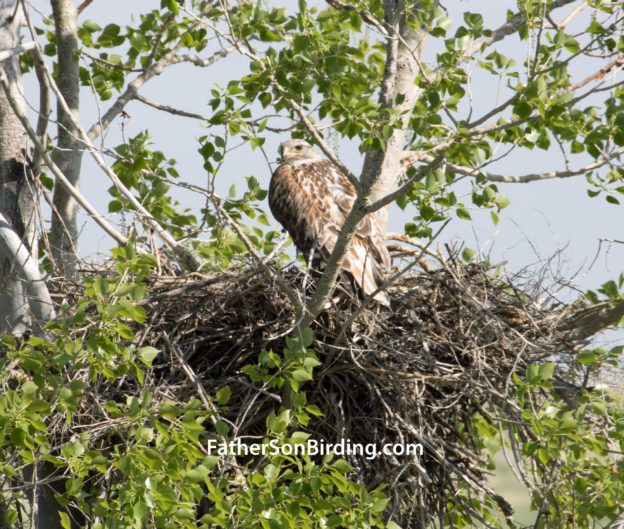
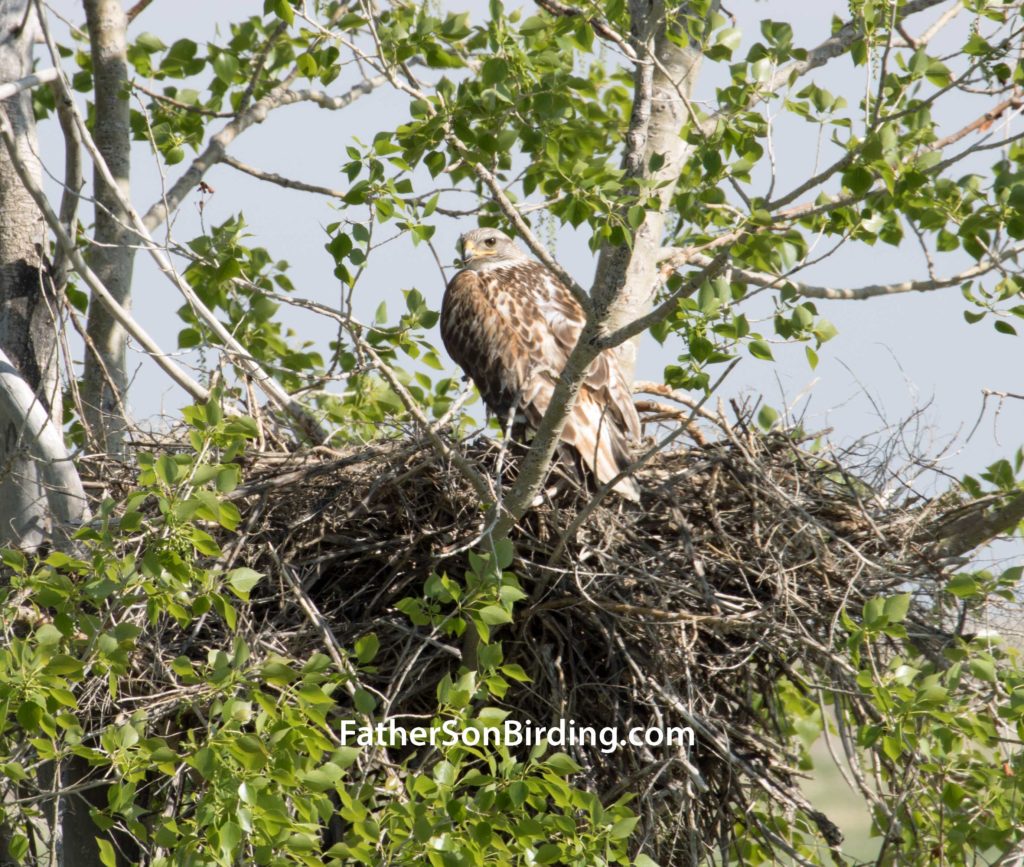
We followed Highway 2 around the southern border of Glacier National Park. We stopped at a spot for my dad to take a nap, and I was surprised to see and hear several Townsend’s Warblers, along with lots of Yellow-rumpeds and a pair of Rufous Hummingbirds. As we crossed the continental divide, things got drier. First, it was just drier forest; soon we were on the dry northern part of Montana known as the High Line, prairie pothole country. We stopped to photograph a Ferruginous Hawk nest right off the road, and spotted American Avocets, Wilson’s Phalaropes and dozens of ducks in the small ponds we passed.

Ferruginous Hawks are a generally a rare sighting–so finding a nest was amazing!

We also made a list of goal year birds. The three we had just seen were on there, along with as many small birds as possible: Lark Sparrow, Lark Bunting, Clay-colored Sparrow, Brewer’s Sparrow, Chestnut-collared Longspur, Grasshopper Sparrow, Baird’s Sparrow, Sprague’s Pipit. Baltimore Oriole topped our list, as it was on my Top Ten ABA Life needs list, and several had been reported around Malta the last couple days.

As we reached Havre, a large-ish city about halfway through Montana, the long drive was starting to get to us. Not helping was the fact that the road signs kept displaying Malta as at least 80 miles away, and we weren’t sure if we could make it. My dad kept driving, determined as ever.

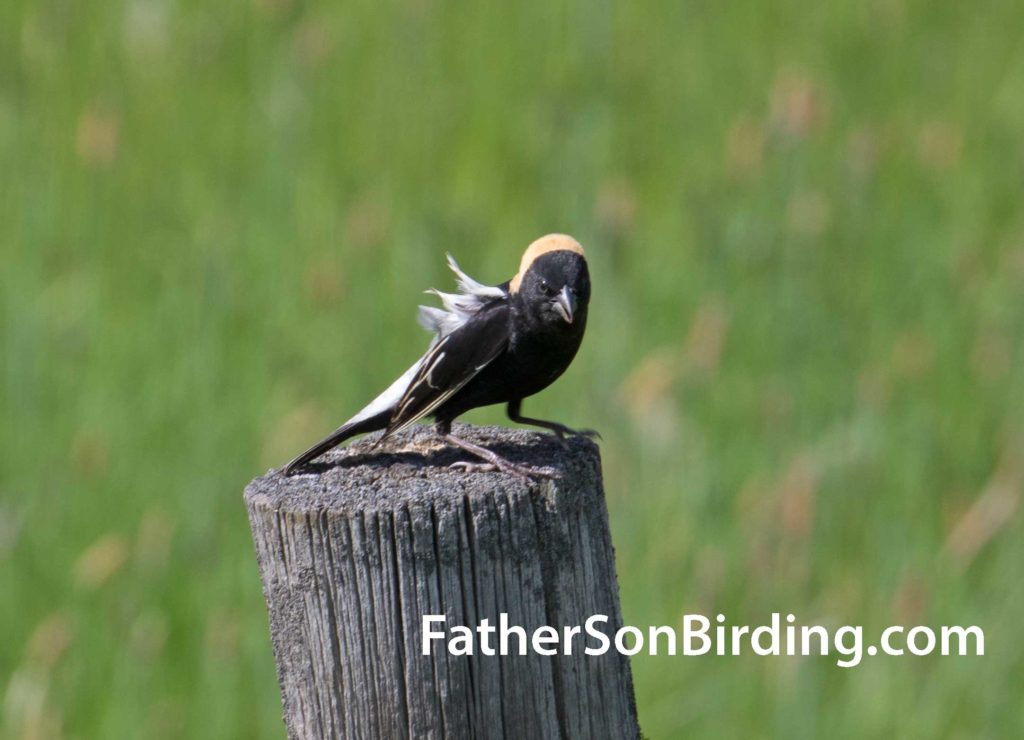
As we headed east from Havre, the ranches that had been lining the road transformed into crop farms instead; particularly irrigated fields. Red-winged Blackbirds lined the fences and gates, and I casually glanced at every one to verify its identity. Once, as we passed another one, the bird turned away from highway. The back of its head was a large patch of cream, and its back was a brilliant pattern of white.

“Bobolink!! Turn around!!” I shouted as we screamed by.

“What?! Do we have to?”

“Yes!” So we did. That Bobolink, a rare sighting for us, got us to Malta, where our intensive birding would begin.

As more prairie has been converted to farmland, Bobolinks have switched their habitat from tallgrass prairie to irrigated fields.


Irruption!

This year, there are more Evening Grosbeaks than ever at our feeder–but still nowhere near the amount we saw our first year of birding. (photo by Braden Collard)

Braden here.

During our first year of serious birding, my dad and I thought Evening Grosbeaks were common. Every day in fall, if you just walked the block from our house to Rattlesnake School, you would be amazed at the numbers of these boisterous finches gathered there. There were hundreds, maybe even a thousand of them in their drab fall plumage, tearing apart any pinecone unlucky enough to be spotted.

Two years later, during our first major Big Year (which you can read about in my dad’s fall book Warblers and Woodpeckers: A Father-Son Big Year of Birding), we saw only two individuals: a pair we briefly glimpsed up Pattee Canyon while staking out an American Three-toed Woodpecker nest.

How is it possible that we saw tons one year and only 2 another year? Irruption.

Red Crossbills are another boreal finch that has irruption cycles. (photo by Sneed B. Collard III)

When I say irruption, I’m not talking about a misspelled version of the thing happening in Hawaii right now. An irruption is a mass migration of birds (in this case) to a different area, generally south. Finches are the main type of group that has irruption cycles, but many birds that winter in the U.S. and southern Canada, such as Snowy Owls, Rough-legged Hawks, Bohemian Waxwings and Northern Shrikes also irrupt. Irruption almost always results in large numbers of birds appearing in areas where they normally aren’t, however it isn’t historically unusual.

One of the main reasons for irruptions is food supply. For example, when there aren’t enough rodents to go around up north in winter, Snowy Owls will generally move south into Northern U.S. states. Sometimes, if the shortage is extreme enough, the northern birds will extend their ranges past their usual limits and end up in places that are unheard of. During a major Snowy Owl irruption year, for instance, Snowies were found as far as Texas and Hawaii.

Irruptions can occur due to food abundances, too. The year before we experienced the Evening Grosbeak overload probably had pairs producing higher amounts of young than usual. The next year, the young had nowhere to go, since all of the territories up north were filled, so they moved south into Missoula.

While not as big of an irruption year as before, this year’s Evening Grosbeaks are costing us plenty in bird seed! (photo by Sneed B. Collard III)

This year and last year haven’t quite met that first year’s standards yet, but it has seen crazy irruptions for tons of finches. Last winter kicked off with large numbers of grosbeaks and Pine Siskins, while this year Common Redpolls, Cassin’s Finches and (yet again) more grosbeaks are stealing the stage. Who knows what will show up next?