After our amazing encounter with Vaux’s Swifts and shorebirds (see our last post), Scott and I had another productive session the next morning at the Ellis Creek water recycling facility and Tubbs Island, both in Sonoma County. As an added bonus, we got to bird with two of Scott’s pals, Steve and Sean. Steve and Scott began birding about the same time and were still in the beginning phases of their birding careers, but Sean grew up birding and taught us all some cool ID features. Most important, he confirmed that the peeps Scott and I saw the day before were indeed Least Sandpipers. With his help, we were also able to identify a couple of sneaky Western Sandpipers that were comingling with the approximately 400 Least Sandpipers in front of us. As much as we enjoyed these sessions, what Scott, Steve, and I looked forward to the next day even more. That’s when we planned to bird legendary Abbotts Lagoon.
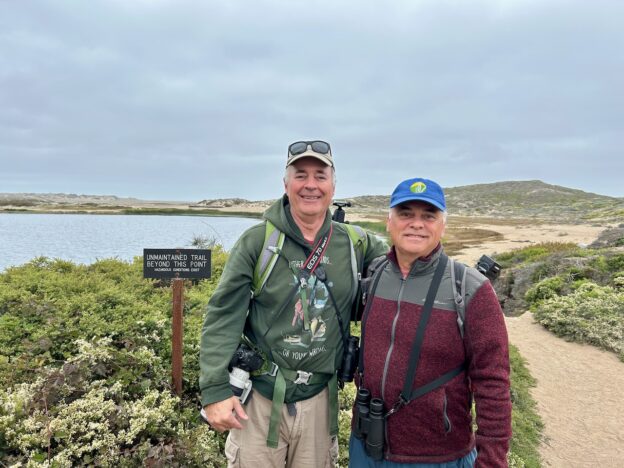
(L to R) Sean, Steve, and Scott investigating the wilds of the Ellis Water recyling plant!
Abbotts Lagoon sits within Point Reyes National Seashore, and none of us had ever before birded it. However, Braden and our occasional guest contributor, Roger Kohn, had both been there and given it high marks. As we crested the mountains at Point Reyes and drove down toward the coast, I didn’t know what we would find, but held my hopes high.
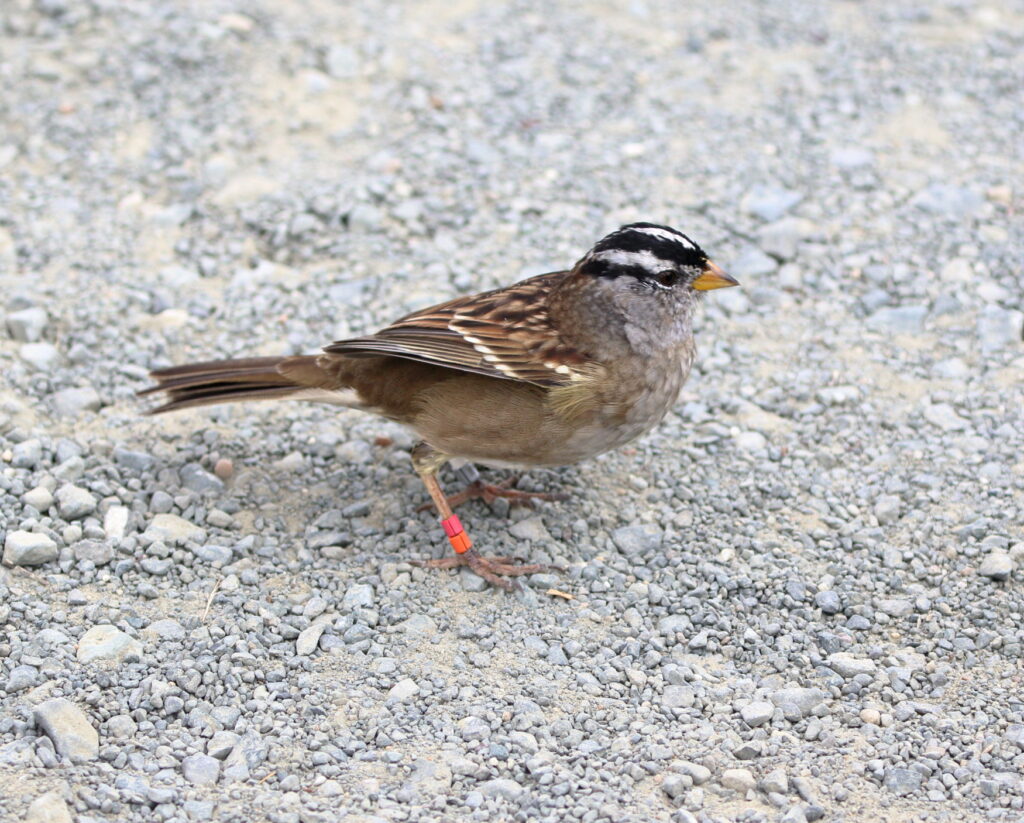
Reaching the beginning of the lagoon requires a mile or so hike through remarkable dwarf-like vegetation that reminded me of steppe or tundra, probably because fog enshrouded the lands around us. I hadn’t realized we would have to hoof it so far, but I was grateful because we got great looks at many California residents: California Quail, California Scrub-Jays, White-crowned Sparrows, and most exciting, Wrentits. One of these, in fact, popped up no more than fifteen feet from us—unusual for a generally secretive bird. Nontheless, it was the lagoon and beach beyond that propelled us forward and when we reached the lagoon we found . . .
Though a bit of a hike, the mile-long walk to the lagoon offered a nice variety of songbirds and raptors, including this banded White-crowned Sparrow.
Nothing.
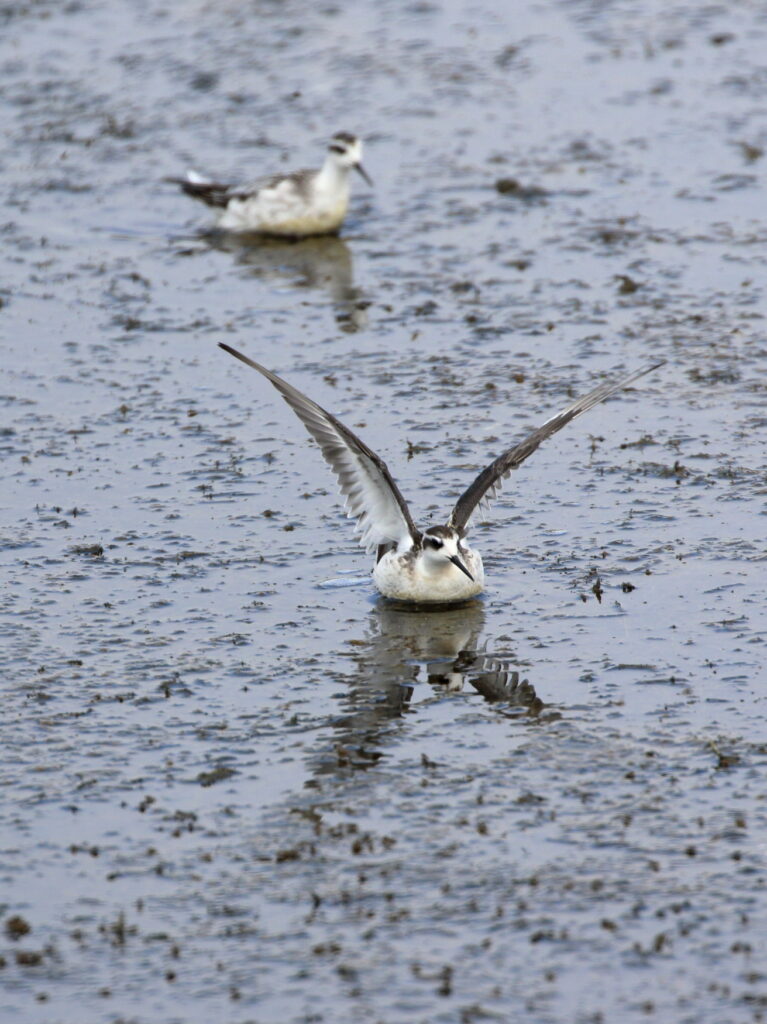
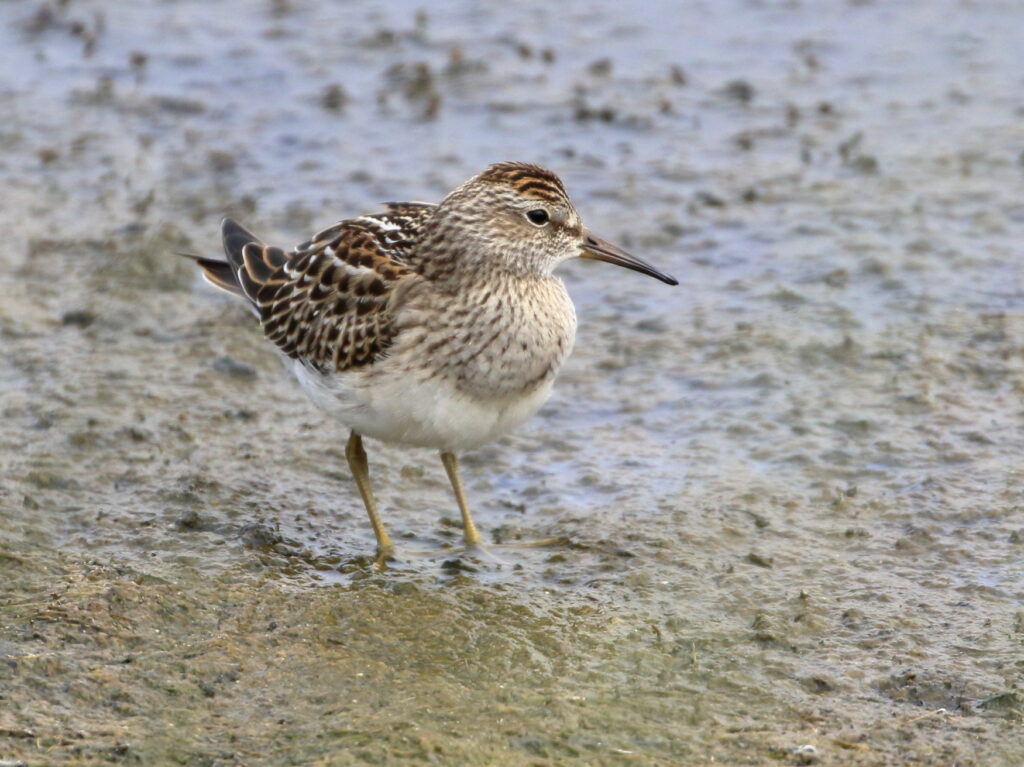
Well, almost. Instead of vast rafts of shorebirds ripping up the mud, only a couple of wading birds and American White Pelicans could be made out as far as the eye could see. Darn, I thought to myself. But if there’s an, ahem, cardinal rule to birding it is this: You Never Know. So we plowed ahead, following the harder beach sand, and soon came to a little bend where we got great close-ups of three Red-necked Phalaropes and a Pectoral Sandpiper—a bird I recognized only from my hours studying them in Montana. This bird, in fact, was quite interesting because PESAs show up only in small numbers on the West Coast, and generally only in fall. A lifer for Scott and Steve!
These Red-necked Phalaropes and a lone Pectoral Sandpiper were the highlights of our walk around the lagoon to the beach.Pectoral Sandpiper.
Continuing toward the ocean, we spotted two Black-bellied Plovers and a flight of shorebirds in the distance, but it wasn’t until we reached the ocean that we got some real action.
I was just as excited by pelagic bird possibilities as I was by shorebirds, and once on the beach I immediately set up the spotting scope we’d lugged the two miles out there. Like shorbs, I rarely have a chance to observe pelagic birds, and I felt determined to make the most of this rare opportunity. Right away, I saw a number of dark shapes out on the water—shapes that appeared and disappeared on the four-foot swell. Oh man, I thought to myself, I’m never going to be able to figure out what those are. In such situations, I have learned to relax and just hang in there, and that’s what I did now.
From studying before the trip, I came up with several likely possibilities of species that could be out there. These included Common Murres, Pigeon Guillemots, various storm-petrels, and Sooty Shearwaters. In fact, as we arrived, I noticed at least eight medium-sized dark birds swooping low over the water. When they turned, I spotted light patches under the wings. First victory: Sooty Shearwaters.
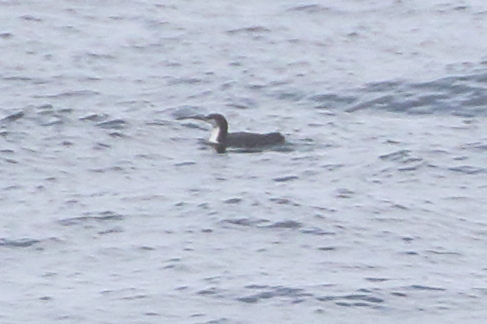
Then, I saw a larger bird floating a couple of hundred yards offshore. The shape shouted “Loon” and I thought, “Hm, that looks like it has a silvery sheen on its head.” Victory #2: Pacific Loon!
Identifying pelagic birds at great distance can take great patience and not a little skill, but in time, many species reveal themselves. The keys to this Pacific Loon? A silvery sheen on its head, a thinner bill than found on Common Loons, and a thin black “chin strap” or collar around the neck.
After that, it got harder, but I did manage to ID some distant Common Murres by the white around the face and neck, thinner “up-pointed” bills, and longer body lengths. A seabird expert undoubtedly would have found additional species, but as a seabird novice, I felt satisfied. Humorously, as I was looking through the scope, I suddenly saw a whale’s tail emerge behind several of the birds. Did I look up? Of course not! Who has time for pesky mammals when there are ocean birds to be seen!
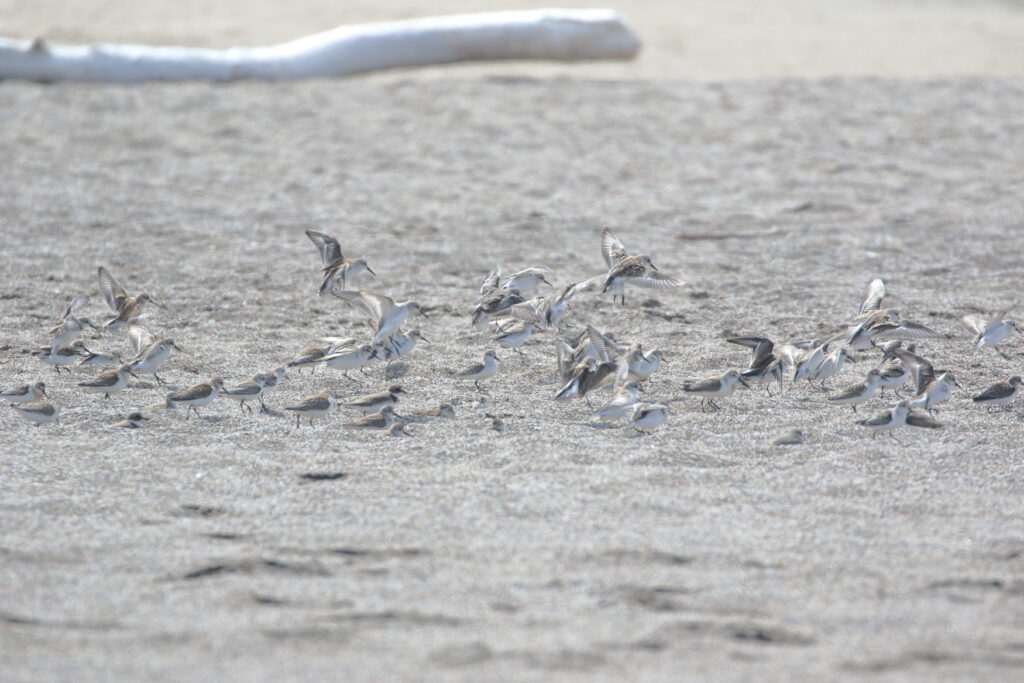
But let us not ignore the beach itself. As Scott, Steve, and I enjoyed the waves and emerging sun, the shorebirds decided to put on a show. On one side of us, a flock of at least 150 Least Sandpipers landed only a hundred yards away. On the other side, a couple of hundred Western Sandpipers settled down. Talk about your perfect conditions for comparison! In fact, this was my first chance ever to get good, leisurely looks at Westerns and I took full advantage of it.
The beach at Abbotts Lagoon offered by far my best opportunity ever to study Western Sandpipers. Note (if you can) the overall pale appearance and the reddish “shoulder blades” typical of juveniles this time of year.WESAs also tend to have longer, more curved bills than other peeps.
You remember that Sesame Street song “One of these things is not like the other?” Studying the Least Sandpipers, I spotted a much paler bird with a thick black bill and black legs. Another peep: Sanderling!
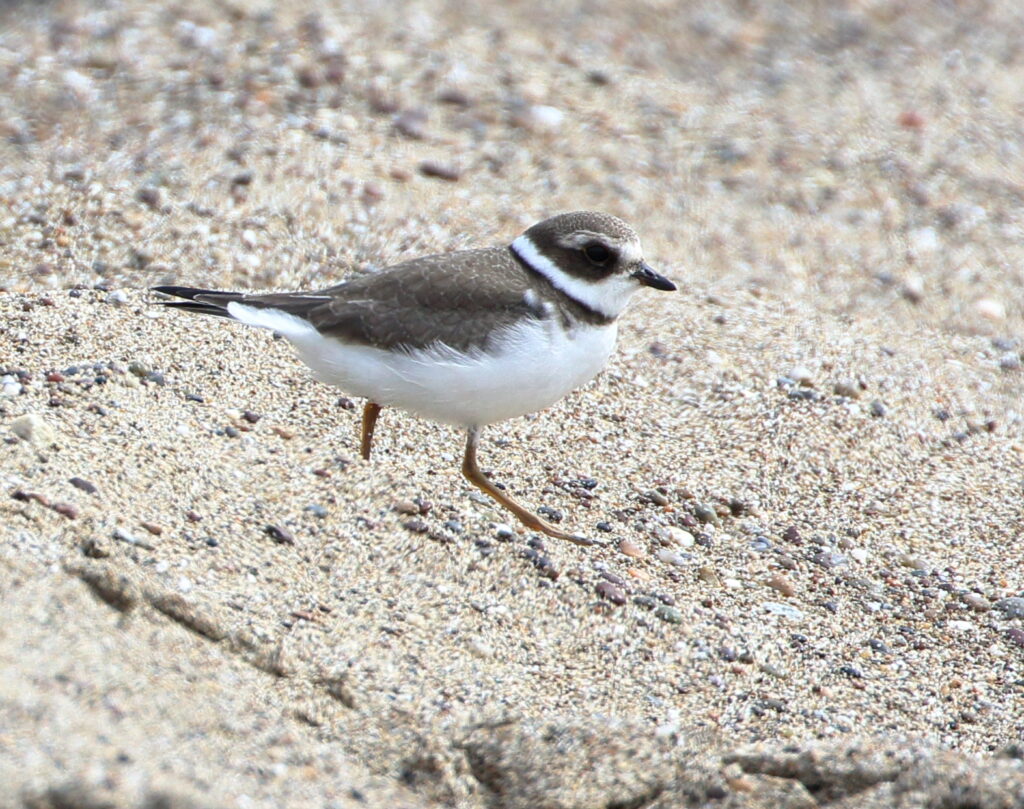
Meanwhile, among the Western Sandpipers, I espied smaller birds with shorter bills and dark collars around their necks—Semipalmated Plovers!
I was especially tickled to find half a dozen Semipalmated Plovers among the Western Sandpipers. Go plovers!
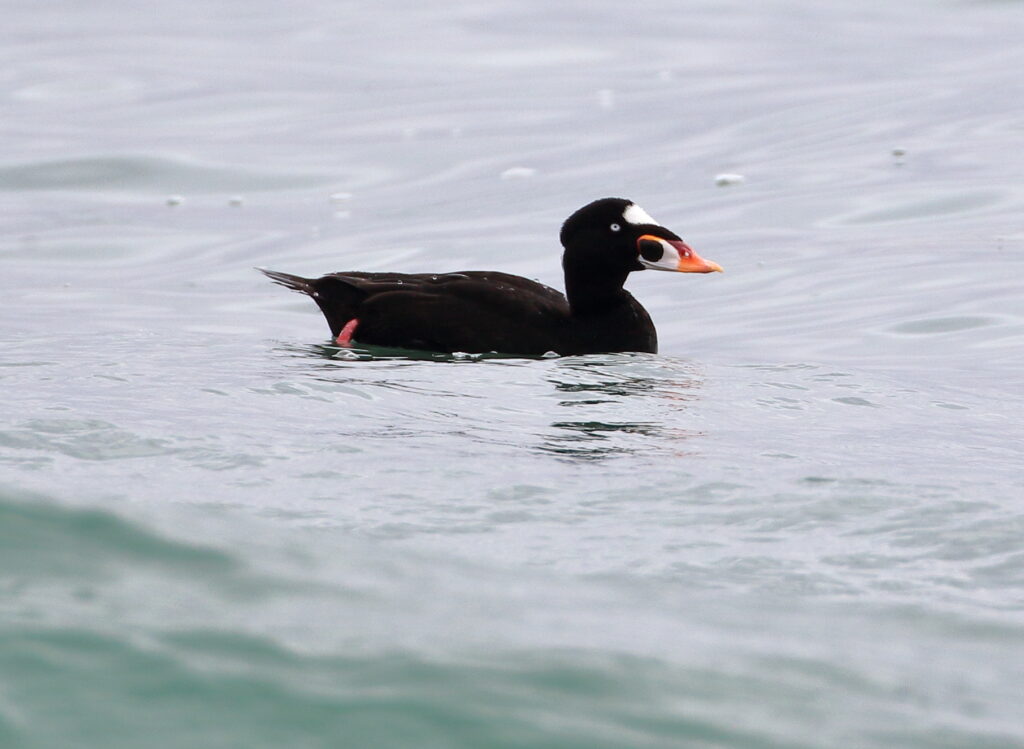
To add to the show, a Peregrine Falcon landed on the sand behind us, and on the way back we saw several other raptors including a White-tailed Kite. After Abbotts, we got a delicious lunch at Inverness Park Market, and then headed to Limantour Beach for great looks at Surf Scoters. All in all, it was an awesome day chasing migrants, featuring good birds, good food, and best of all, great company.
In case you missed our last post, be sure to check out my new book, Birding for Boomers. It’s a great gift for anyone you know of any age or background who might be interested in getting into birds. It’s also a great way to support our efforts here at FatherSonBirding!Why not order one or two copies—or even a dozen—right now?
I’ve had little time to catch up on our birding adventures this time of year. With new books to promote, house guests to entertain, seeing Braden off to his senior year at UMaine, and more, life has been a juggling act through August and September. I did manage two lovely trips to Freezeout Lake in August, one with my occasional birding buddy Steve Flood, the other with Braden right before he headed East. In mid-September, I also rewarded myself with a personal trip to the Bay Area to visit friends and relatives—and, of course, see as many birds as possible. Like the recent trips to Freezeout, my primary objective was to find and study as many migrating shorebirds as possible.
Despite birding for more than a decade, I still feel like a beginner when it comes to shorebirds. My recent trips to Freezeout were “study sessions” more than birding excursions, and I was grateful that Baird’s Sandpipers, Red-necked Phalaropes, Semipalmated Sandpipers and other species offered hours of observation and ID practice on each trip. I hoped for similar sessions in California. After I spent a few days with relatives in Oakland and reconnected with the delightful birds of oak woodlands, my friend Scott (see Eastern Odyssey 24: Return to Westby) whisked me off to the North Bay, where serious birding adventures commenced.
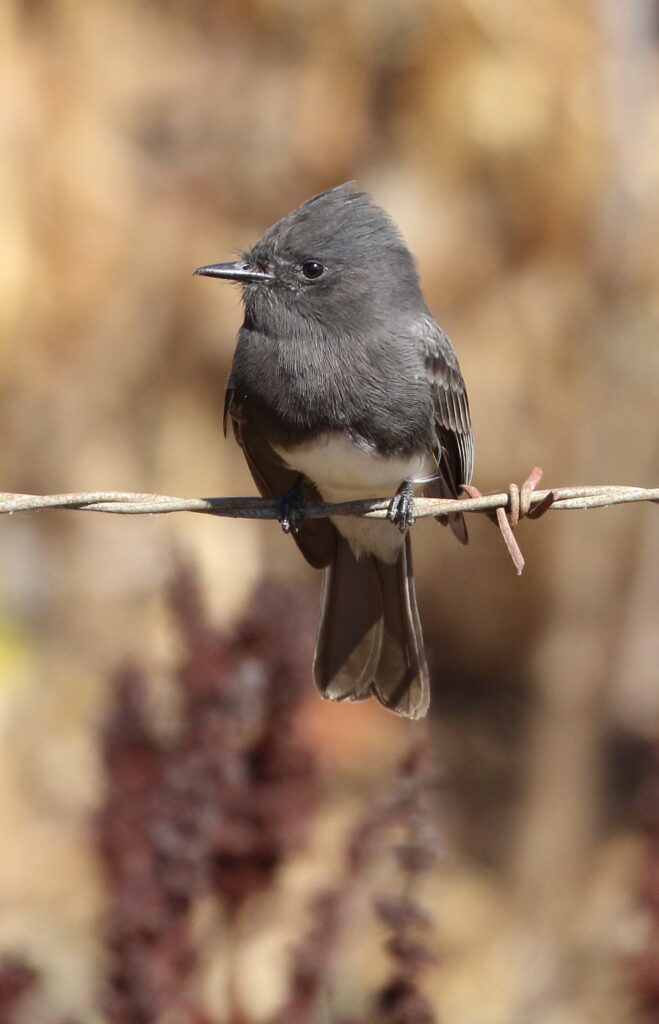
Before heading across the Richmond Bridge, we gave McLaughlin Eastshore State Park in Berkeley a try, but our timing was off as high tide covered the mudflats. Next, we visited the Las Gallinas Valley Sanitary District in Marin County. I enjoyed that, but again, we saw nothing spectacular. I was surprised to spot a lone Vaux’s Swift—a lifer for Scott—and eight or nine Black Phoebes put on a show, but it was a slow start to meeting our birding ambitions. Fortunately, things would pick up—dramatically.
Though they didn’t perch at the top of our target list for the day, Black Phoebes charmed us at the Las Gallinas water treatment ponds in Marin County.
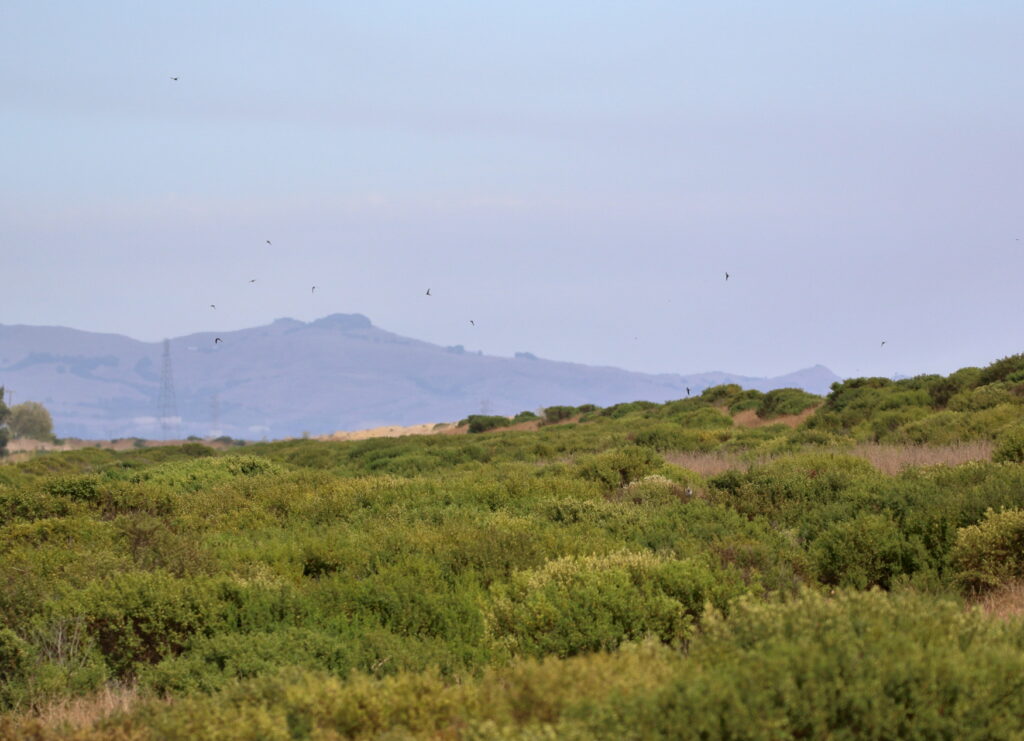
After Las Gallinas (“The Hens”), Scott drove us to Reclamation Road in the San Pablo Bay National Wildlife Refuge, where we hoped—finally—for some shorebird action. Our first surprise wasn’t shorebirds, however. As soon as we got out of the car, I spotted four tiny shapes frantically flying west. “Hey, there’s more Vaux’s Swifts.” I really hadn’t expected to see these, but it did make sense. I knew they’d departed Montana in the past few weeks and that they followed the West Coast down to their wintering grounds in Mexico and Central America. Our four birds were merely a prelude, however. As Scott and I walked out toward the shore, we saw half a dozen more swifts. Then a dozen. Then, as we looked east, we witnessed a veritable river of Vaux’s Swifts flying toward us.
This photo doesn’t begin to capture the remarkable river of migrating Vaux’s Swifts that passed over our heads.Yes, those “dots” are the swifts! Swifts are a species of concern because of the loss of old growth forests and other natural roosting sites. Ironically, saving old brick chimneys should be a priority for those interested in protecting these birds.
“This is amazing,” Scott said as the birds stiff-winged it over our heads. “Have you ever seen anything like this?”
I shook my head. The most VASWs I’d ever seen at one time was perhaps a couple of dozen. Now, hundreds streamed past us—probably thousands! We learned from a passerby that they were most likely heading to the chimney of an old brick-making plant, a well-known roosting place for them. Scott and I were suitably awed by the sight. It was enough to make the whole day worthwhile, whether or not we ended up seeing shorebirds.
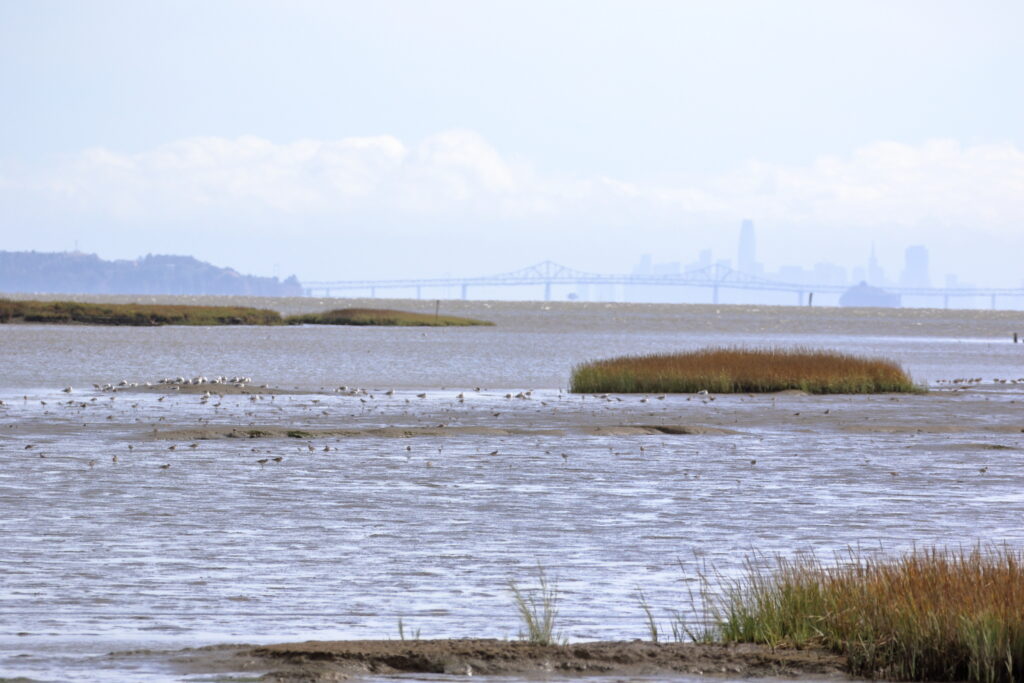
Nonetheless, as we walked out to the bay I was gladdened to see shallow mudflats and hundreds of dots scattered over them. “Shorebirds!” I rejoiced.
With San Francisco in the distance, you couldn’t ask for a more dramatic setting to study shorebirds! Many of those specks in the foreground are Least Sandpipers—though you’ll see a lot of other species mixed in!
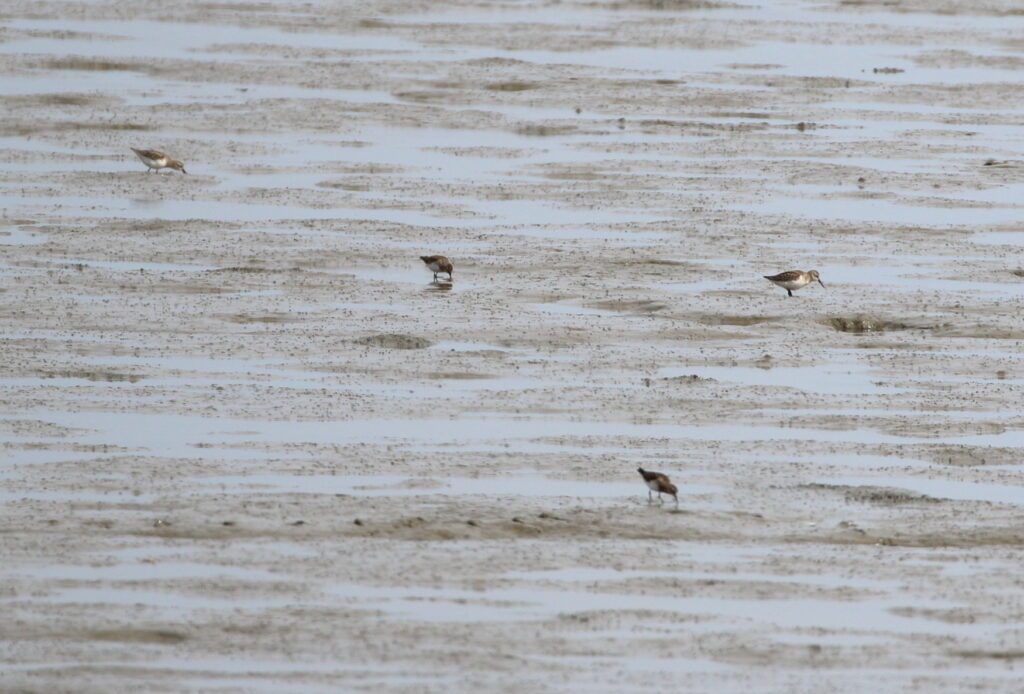
As we drew closer, I set up the spotting scope, and quickly zoomed in on a dozen-plus Long-billed Curlews, at least fifty Willets, and what would turn out to be a couple of hundred Marbled Godwits. These were easily-enough identified. Not so the hundreds of small sandpipers, or “peeps,” that peppered the scene in front of us. Birders generally include four species under the “peep” category: Sanderlings, Western Sandpipers, Semipalmated Sandpipers, and Least Sandpipers. Since it was the nonbreeding season, Sanderlings should have given off a distinctive whitish vibe by now, so I ruled them out, but what of the other three? The problem with peeps is that their coloration, size, bill shape and bill length overlap to a frustrating degree, and I just didn’t have enough experience with these to make a call. Least Sandpipers can be easy to pinpoint if you can see their leg color—yellow compared to black for Westerns and “Semipalms”—but when they were feeding in the mud, determining leg color often proved impossible.
As I often do in such situations, I called Braden. I described what I was seeing and said, “I am guessing that they are Semipalmated Sandpipers, but I just don’t know.”
“Well,” he informed me, “the good news is that if there are large numbers of them, they aren’t Semis because Semipalmated Sandpipers don’t move through the West Coast.”
With Braden’s help, I narrowed down these far-away “peeps” to either Least or Western Sandpipers. Confirmation would have to wait until later, however.
Doh! This surprised me because we do see them in Montana. I never realized, though, that our Montana birds were on the western edge of their migration pathway from their northern breeding grounds to their wintering grounds in the coastal tropics.
“If I had to guess,” Braden continued, “I’d say you’re looking at Least Sandpipers. You said that they’re darker brown and Westerns give off a grayer color.”
Still, even through the scope, the birds were too far away for me to be sure, so I recorded “peep sp.” in my eBird checklist—at least for now.
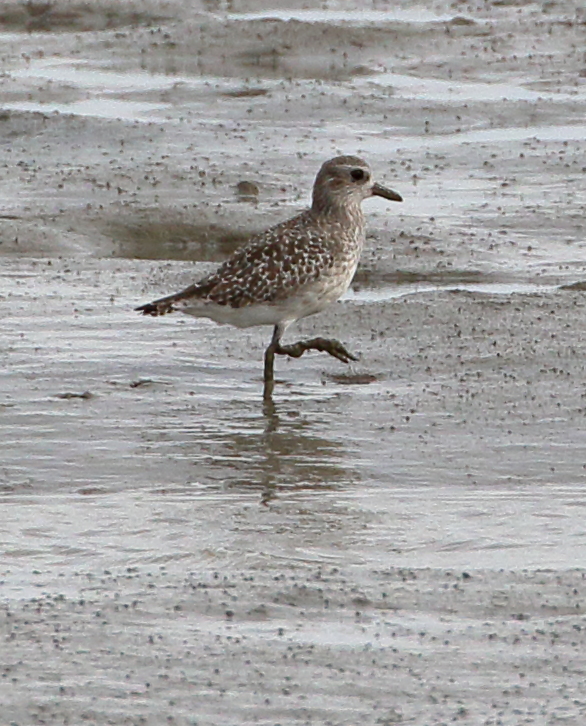
One species, however, excited me more than all the others. Almost as soon as we reached the mudflats, I spotted birds that I had especially hoped to see: Black-bellied Plovers. Black-bellied Plovers are one of the world’s largest plovers, and they have the widest distribution. Like many shorebirds, they breed mainly in the arctic regions, but in winter they disperse to coastal areas of every continent sans Antarctica.
At San Pablo Bay NWR, I was especially excited to see Black-bellied Plovers mixed in with Long-billed Curlews, peeps, Marbled Godwits, and other shorebirds.
Braden and I had only ever seen Black-bellied Plovers about twenty times—and only four times as they migrated through Montana. The birds are known to flock up in winter, but even in places such as California and Texas, we generally only saw a few at a time. Now, as I trained my scope out over the mudflats, I began picking out more and more of these birds. At first, their light color and larger size made them look kind of like gulls, but their more erect posture and stubbier dark bill gave them away. One bird they can easily be confused with are American Golden Plovers, which look almost identical except for their smaller bill, head, and overall size. Some AGPLs also show flecks of gold color even in winter, but today, I saw no AGPL suspects and counted sixty Black-bellied Plovers in front of me.
“I don’t think I’ve ever seen this many before!” I effused to Scott. “This is really amazing.”
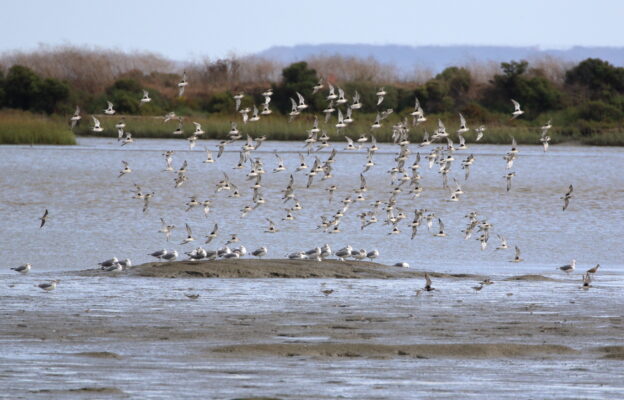
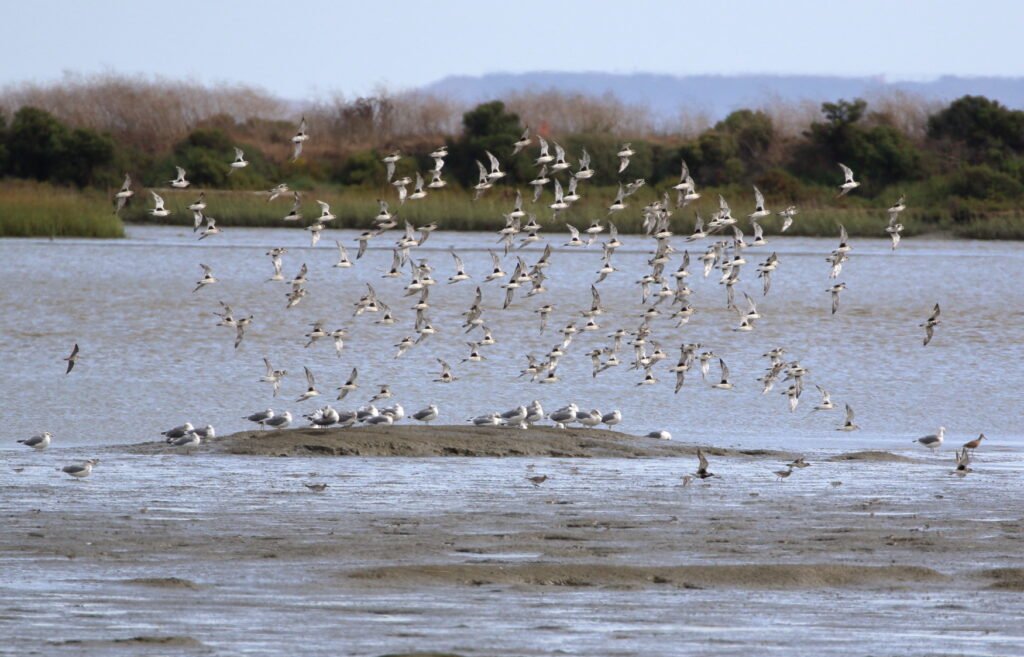
What I didn’t realize is that I vastly undercounted. I took a couple of photos of shorebirds in flight and later, going over the images, I made a startling discovery. One of the flying flocks consisted of at least 140 Black-bellied Plovers! How could I tell they were BBPLs instead of other shorebirds? In this case, it happened to be easy. Black-bellied Plovers are the only shorebirds to show distinct black armpits under their wings!
When I took this photo, I didn’t realize these birds were Black-bellied Plovers—easily the largest flock I have ever seen. The black armpits make IDing this species particularly easy in flight.
It was a great way to end the day for both me and Scott and we celebrated with a fabulous Mexican food dinner with Scott’s wife Ginny and step-daughter Hayley. I went to bed happy—but eagerly looked forward to more migrating bird opportunities ahead.
If you’ve been following FatherSonBirding for any length of time, you know two things about us: we love to travel and we love to bird. Sometimes we plan dedicated birding trips, but whenever possible, we like to go easy on our carbon footprints and fold birding into travel that we were going to do anyway. In the past year, for instance, I’ve been able to bird in Japan and Spain while taking family vacation trips I’d been planning for years. Often, I get to bird while taking business trips to, say, Texas or Missouri. Right now, Braden is birding his butt off while doing a semester of study abroad in Costa Rica. As the parent of two young people, another potential “double-dipping” birding opportunity arose when my children began thinking about college. After all, it’s a good idea to visit a college you might want to attend, right? Unfortunately, covid kai-boshed that possibility with Braden—though we did get to bird in New England when I took him back east to start his college career at the University of Maine. With my second child, Tessa, I’ve been more fortunate. Last week she and I took a lightning trip out to California to visit a couple of potential schools she is considering. Even better, we went to places I’d never gotten to bird.
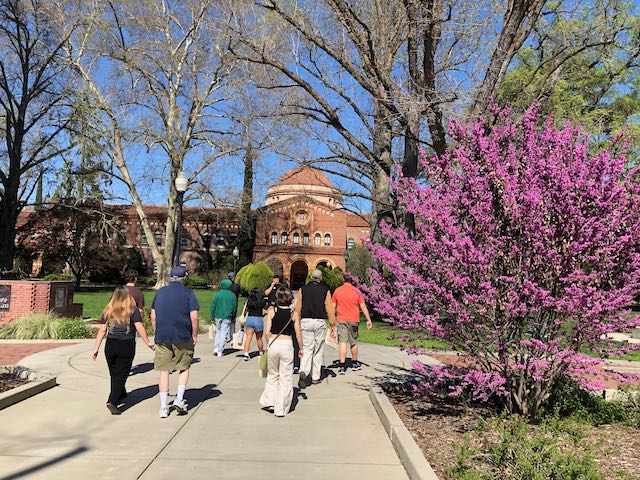
Cal State Chico put on a show for us in its best spring colors. Not surprisingly, I saw some great birds there, too, including Red-shouldered Hawks, California Scrub-Jays, and Acorn Woodpeckers—right on campus!
After rising at 3:30 a.m., Tessa and I landed in Sacramento at the outrageously convenient hour of 9:00 a.m. It was a glorious, sunny California morning and we made a beeline to U.C. Davis, where I’d spent my own freshman year before transferring to U.C. Berkeley to finish out my college years. Davis had changed a lot, but I still managed to find my way around—though I did drive our rental car down a dedicated bike path, much to the consternation of dozens of student bicyclists trying to get to class! After a quick tour around campus, we found a parking spot downtown and decided to have lunch at Crepeville and while waiting in line, I finally had a chance to start looking around for birds. One of the huge regrets of my life is that I’d left California before I’d become a birder because, with the possible exceptions of Texas and Alaska, there is no better state in the union to bird. To wit, within yards of Crepeville, I spotted Yellow-rumped Warblers, a Black Phoebe, and a Western Bluebird—right in downtown Davis! But my college search birding had just begun!
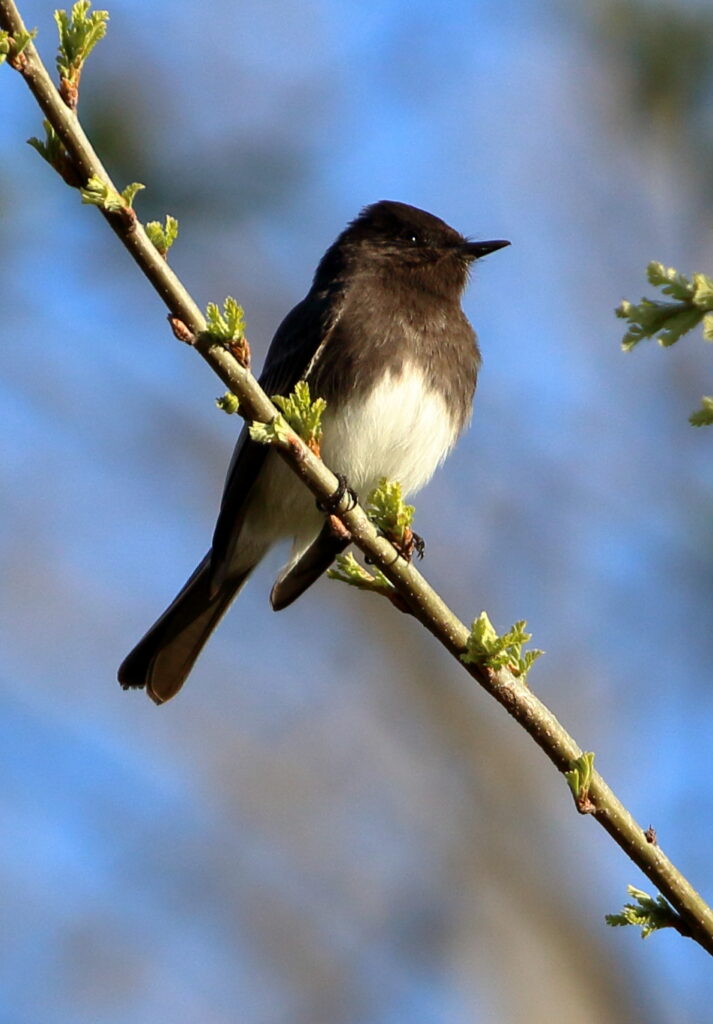
Just the name phoebe can’t help but melt a birder’s heart, but these Black Phoebes truly are handsome birds.
After a quick tour of Davis we headed north to our primary college destination, Cal State Chico, which boasts a musical theatre program of particular interest to Tessa. We arrived in Chico pretty pooped from our already extensive exertions and checked into our hotel for a rest. The prospect of some deeper California birding, however, did not let me tarry long, and after twenty minutes I left Tessa to recharge while I headed to the dubiously named Hooker Oak Park.
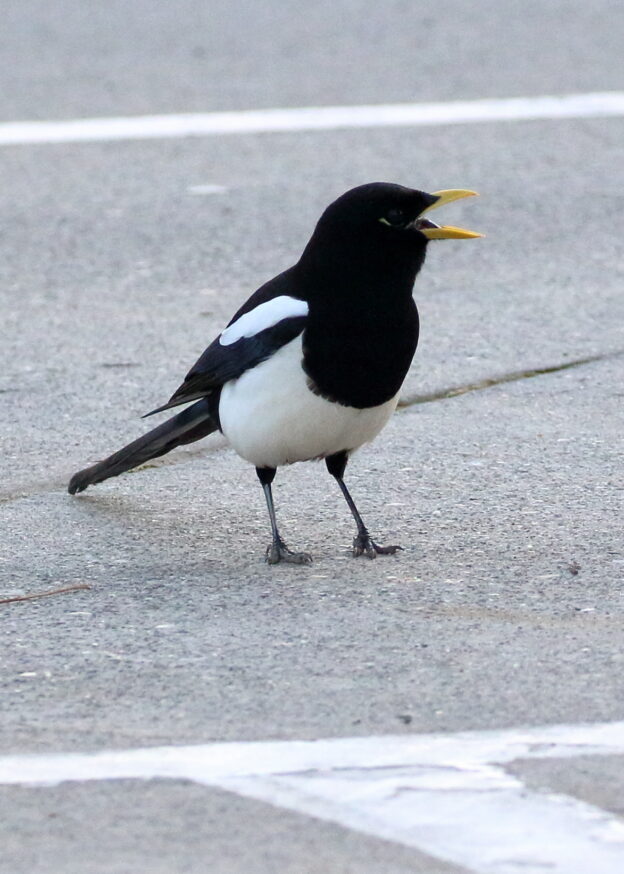
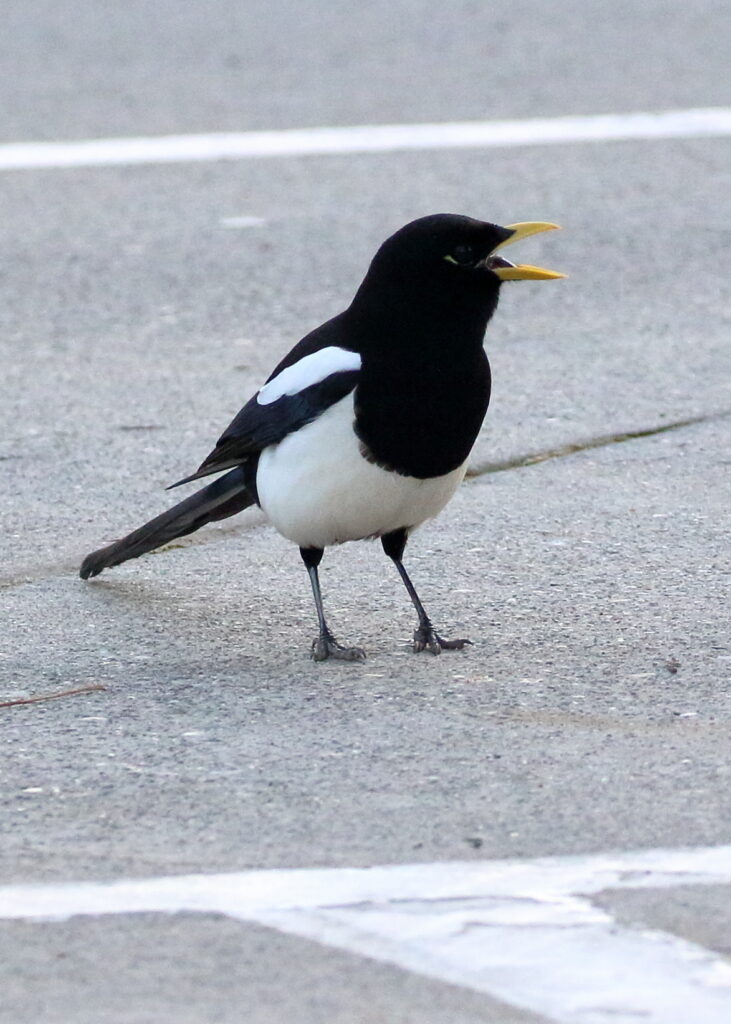
Any trip to California is a chance to see some of California’s specialty birds—including Yellow-billed Magpies, which only live in selected areas of central California. On Braden’s instruction, one morning I got up early to drive to Durham High School, and sure enough, found me a pair!
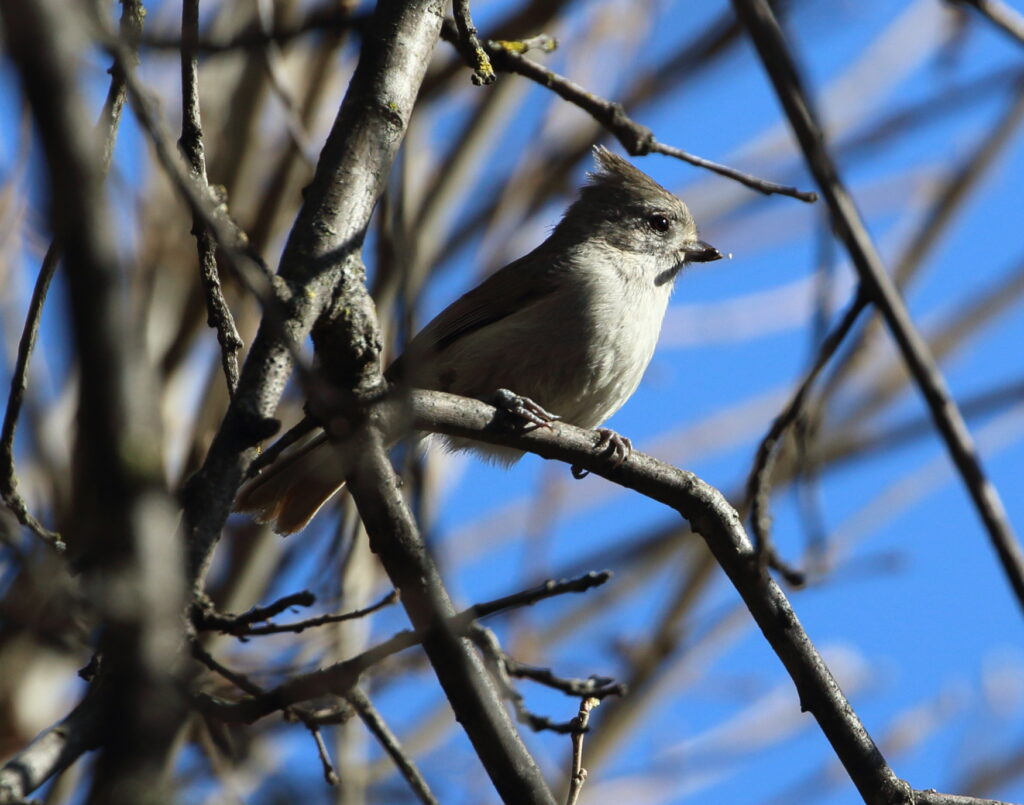
To be honest, the park looked a little over-developed and ragged, and I wondered whether I should move to some healthier-looking oak groves just down the road. Then I reminded myself that this was California and birds were likely to be anywhere. Almost immediately, this was confirmed when I sighted one of the targets of my trip, an Oak Titmouse singing in a sycamore tree.
What can I say? Oak Titmice are just plain adorable.
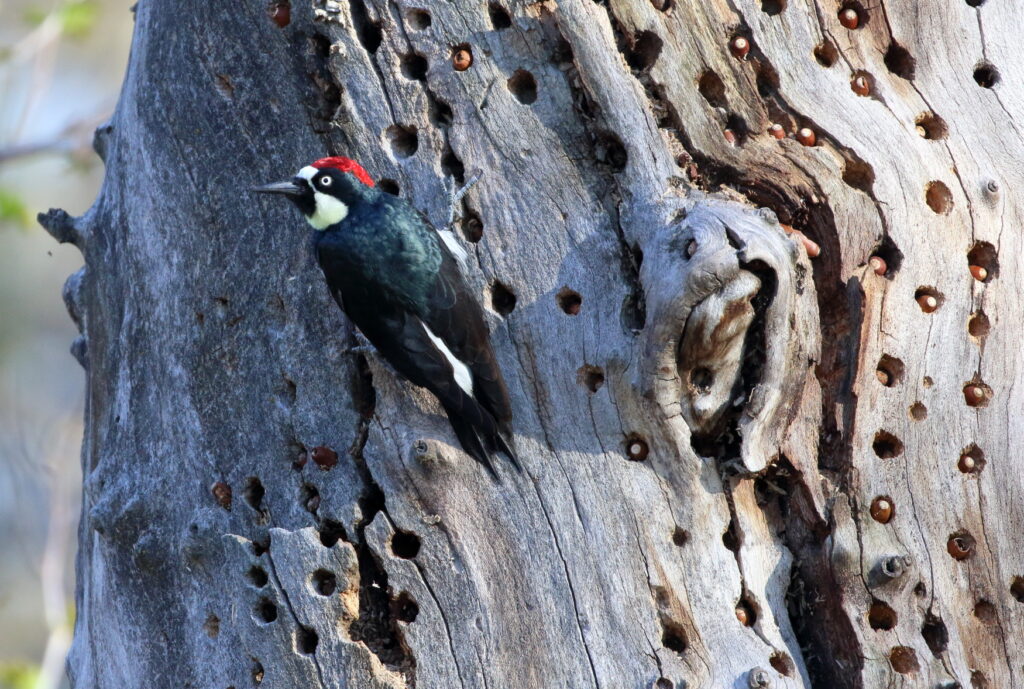
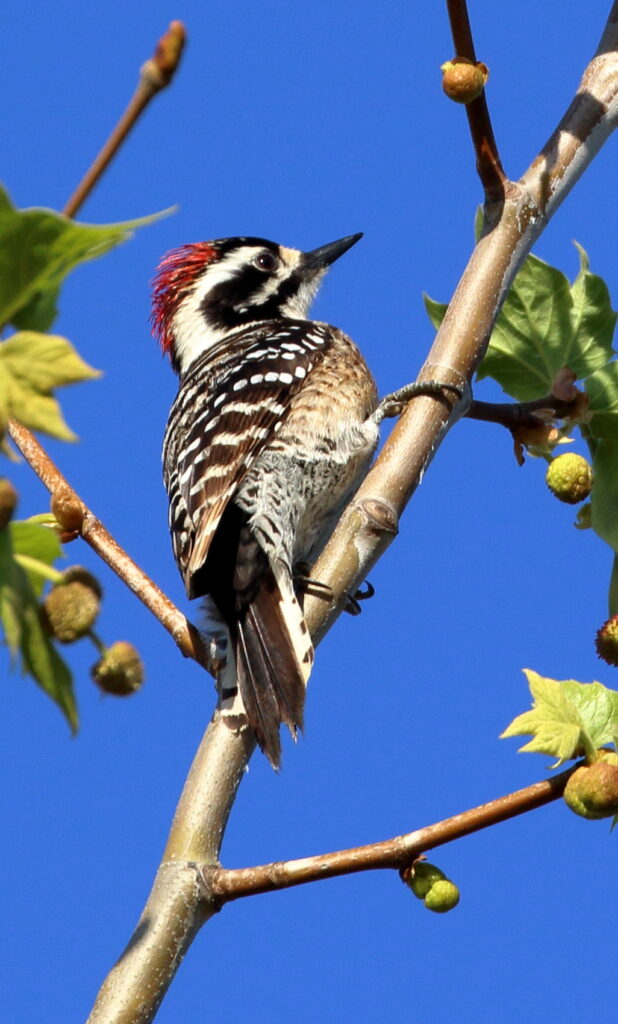
I set out to explore further and birds popped out from left and right—including most of the birds I had hoped to see. I got super excited to see an Acorn Woodpecker—only to discover that they were everywhere in this park. Not long after, I encountered a Nuttall’s Woodpecker, the other woodpecker at the top of my list.
You can’t beat an Acorn Woodpecker on one of its acorn storage trees! With their black masks, these cooperative birds look like banditos, and the way they aggressively mob other species, they apparently can act that way, too.
Exploring further, I encountered California and Spotted Towhees, Golden and White-crowned Sparrows, and White-breasted Nuthatches.
With my lousy hearing and dearth of knowledge about California bird calls, Merlin’s Sound ID feature proved especially useful and helped me find several species, including California Quail. My biggest surprise of the outing were two Hermit Thrushes, which hadn’t been on my radar at all but do winter in the Central Valley.
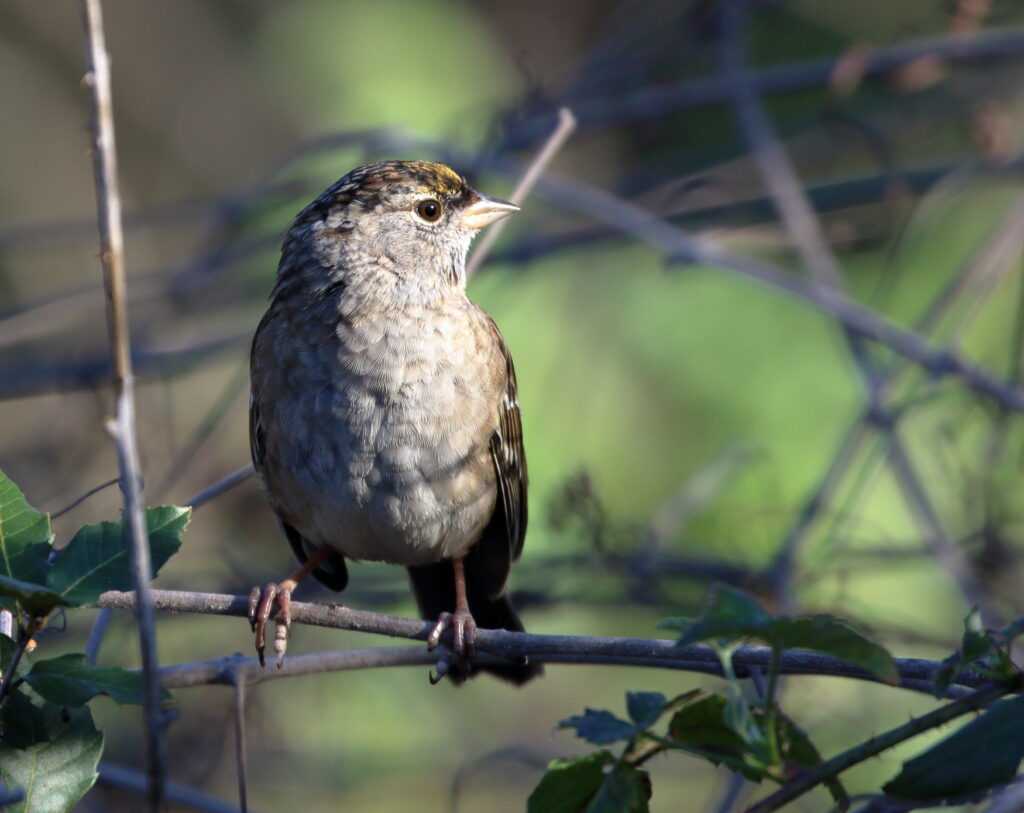
Love Golden-crowned Sparrows!
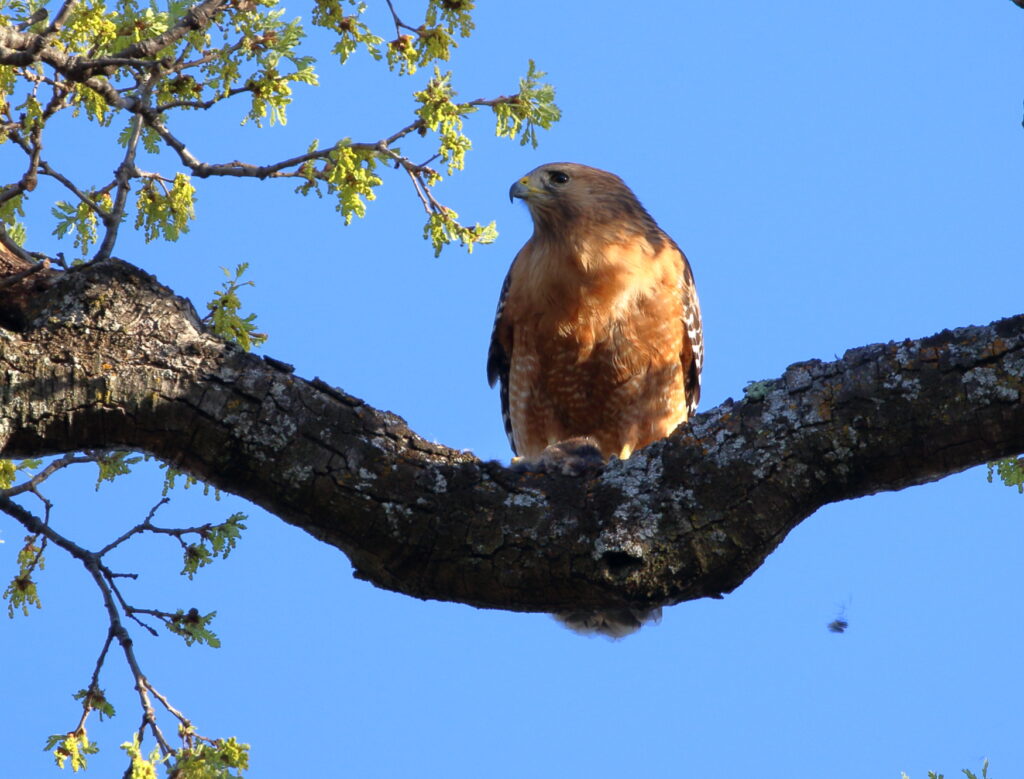
One disappointment was that I didn’t hear or see any Red-shouldered Hawks, a particularly abundant species in California. As I was about to climb back into my rental car, however, I heard a familiar “Kee-a, kee-a, kee-a, kee-a!” and spotted a large reddish bird flying straight toward me. As it passed overhead and landed on a branch, I saw that it held a tasty mammalian morsel in its talons. Almost immediately, another Red-shouldered Hawk plowed in and displaced the first one, stealing its meal. I grinned. Not only did I get to see a RSHA, I got to see hawk behavior, too!
This Red-shouldered Hawk drove another RSHA off its prey, which it now holds firmly in its grasp.
The next two days, Tessa and I visited with some of my most cherished friends, who had happened to move to Chico decades before, and, oh yeah, we took a great tour of the Chico campus. The campus, I gotta say, mightily impressed both Tessa and me. Chico is part of the WUE college exchange program, meaning that if any of you Montana parents are also contemplating schools, you can get big discounts on out-of-state tuition. But back to the birds, I continued to see awesome birds everywhere we went. I did want to get in a visit to another bona fide natural area, though, so the day of our campus tours, I woke early and drove out to Bidwell-Sacramento River State Park, about fifteen minutes out of town.
In the parking lot of Bidwell-Sacramento River State Park, I got my best looks ever at another California specialty, Nuttall’s Woodpecker.
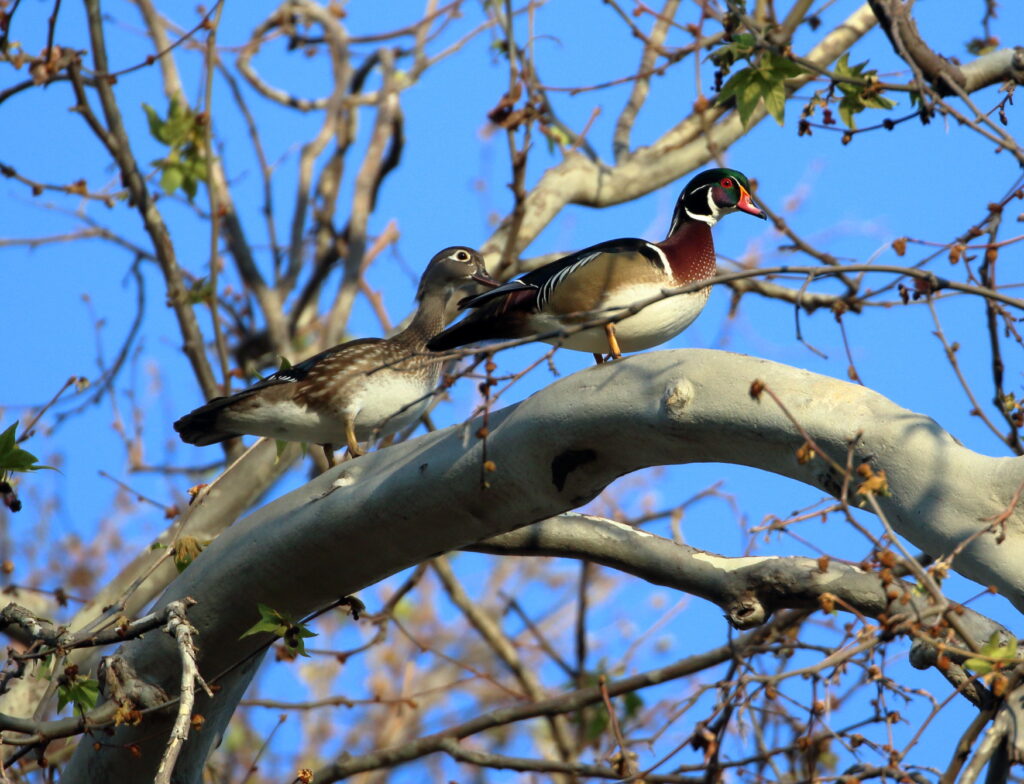
I arrived before dawn—actually a bit early for the birds—but a group of 55 Wild Turkeys greeted me, so I went ahead and set off on dew-soaked trails paralleling the river. I had set a goal of 50 bird species for this California trip and began the day at about 45—but quickly blew past that. Almost immediately, I saw Wood Ducks hanging out in the trees and spotted two pairs of kingfishers bickering over the river. As the day warmed, more species kept appearing: a Great Egret and Great Blue Herons, tons of flickers and Tree Swallows, Ruby-crowned Kinglets and White-breasted Nuthatches, a pair of Turkey Vultures trying to get their engines started.
It’s easy to forget that Wood Ducks nest in trees—something I was quickly reminded of at Bidwell-Sacramento River State Park!
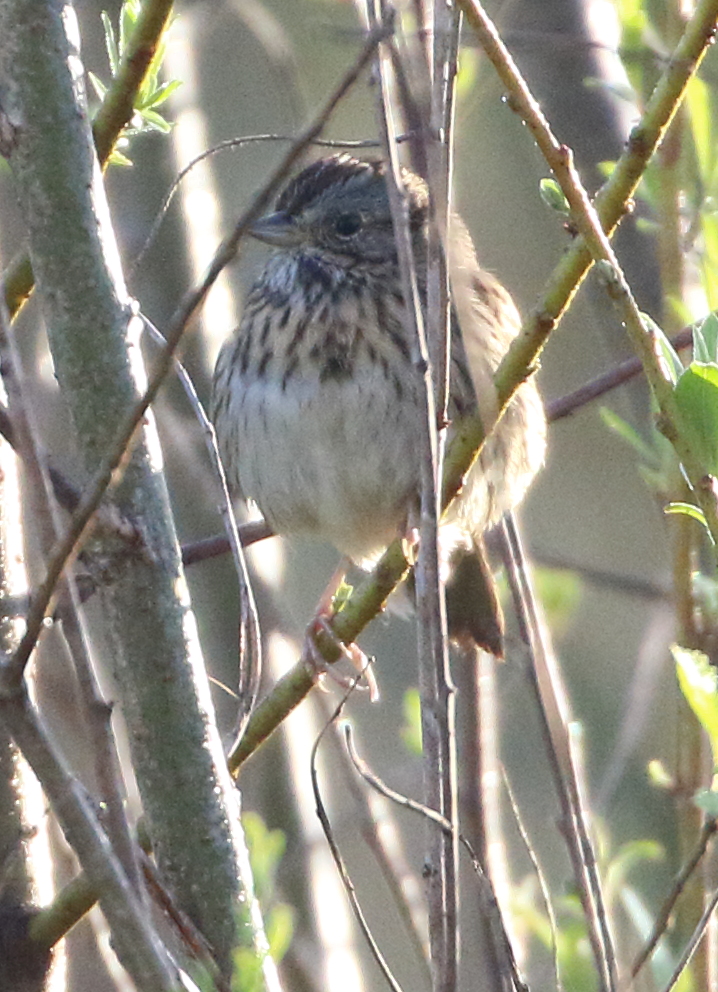
After an hour, I began making my way back to the parking lot and spotted a group of Dark-eyed Juncos and White-crowned Sparrows ahead. Then, I saw something that really got me going: a small, brownish bird with short, vertical lines at the top of its breast and a yellowish wash. Lincoln’s Sparrow! And not one, but two of them! I managed only lousy photos, but was thrilled to see one of Braden’s and my favorite Montana birds hanging out in its winter habitat—and just before migration. Is it possible I will see these exact same birds in Montana in a few short weeks???
Yay! Lincoln’s Sparrow—in its winter habitat. This, btw, was one of only two species I added to my California life list, which now stands at 226 species.The other was Common Merganser.
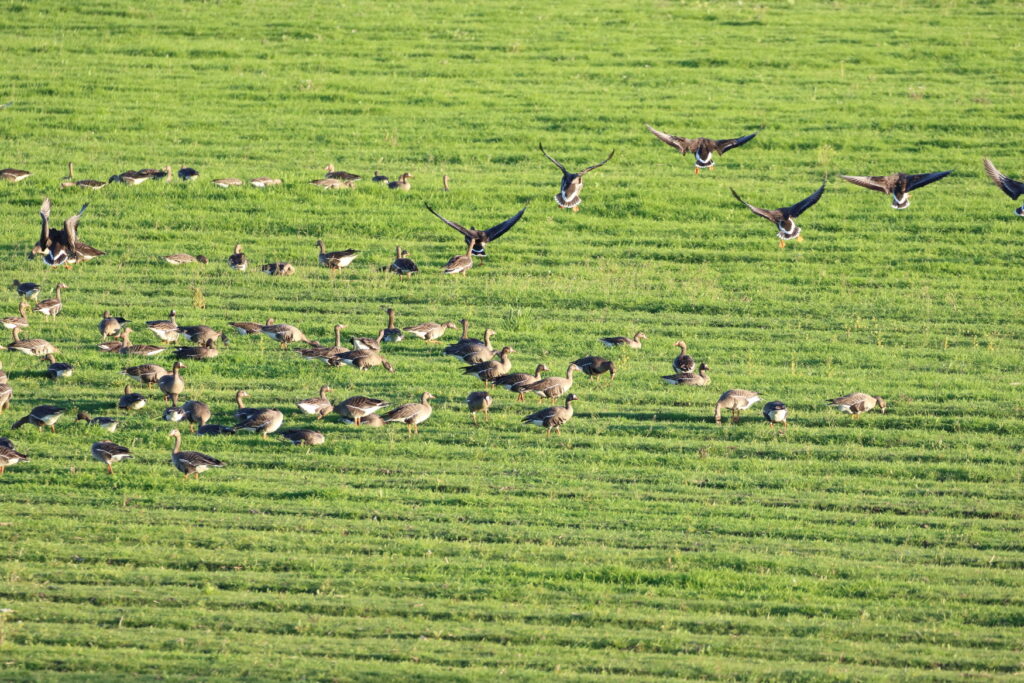
That evening, after our tour and our drive back to Sacramento, I rallied myself for one more birding mission. After checking into our hotel in Woodland, I drove about five miles to where I-5 crosses the Sacramento River. I got off on some small side roads and began scouring fields and places with standing water. I found a few Northern Shovelers and a trio of Black-necked Stilts, but not what I was looking for. Then, I parked and began walking on a path that led back toward the interstate. Almost immediately, I saw a group of about 200 geese in a verdant field. I raised my binoculars and grinned. Yes! Greater White-fronted Geese! The last species I had really hoped to see on the trip. I stood and watched them for about ten minutes, as other geese flew over, circled around, and joined the throng. It was a perfect ending for what turned out to be a perfect college—and birding—trip.
A tradition Braden and I have formed over the years is to make top birds lists after any big trip or, as this year, for our entire year of birding. This probably stems from the many hours I listened to Casey Kasem counting down the American Top 40 every weekend as a youth. Our own “Top 40” lists have diverged a bit since Braden is now on the East Coast for most of the year—but this year we still managed to have a lot of birding adventures together, and so have a lot of common birds on our list. It’s funny, though, how some birds we might have been super excited about when we first saw them often drift lower on the list. I suppose it’s like being super excited about Barry Manilow when you first heard him—and then realizing you could be listening to the likes of the Rolling Stones, Neil Young, and John Lee Hooker. Anyway, we thought you might enjoy our Top 10 birds of 2022—and hope you might share some of your own!
# 10
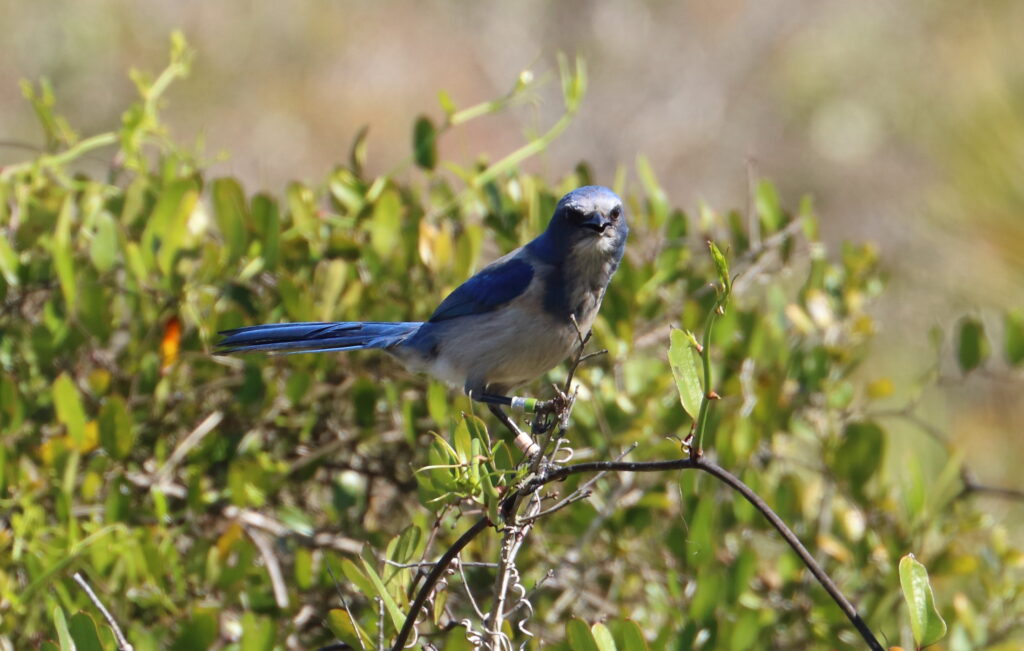
Coming in at Number 10 for Braden was the Florida Scrub-Jay, which is remarkably vulnerable in Florida, but Braden got to see with his birding buddy Nick Ramsey on their epic Spring Break Florida adventure. Read about it here. Sneed’s #10 was an unlikely Cape May Warbler—his Lifer—that he spotted in front of the house of his good friends Mollie and Craig Bloomsmith in Atlanta this fall.
Florida Scrub-Jays are the only bird species entirely restricted to Florida.
#9
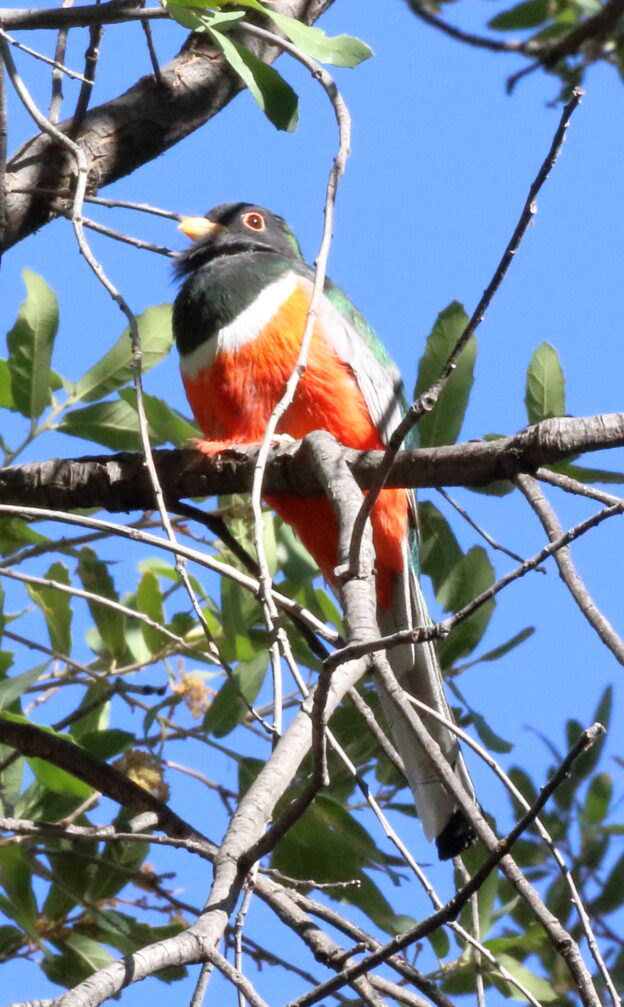
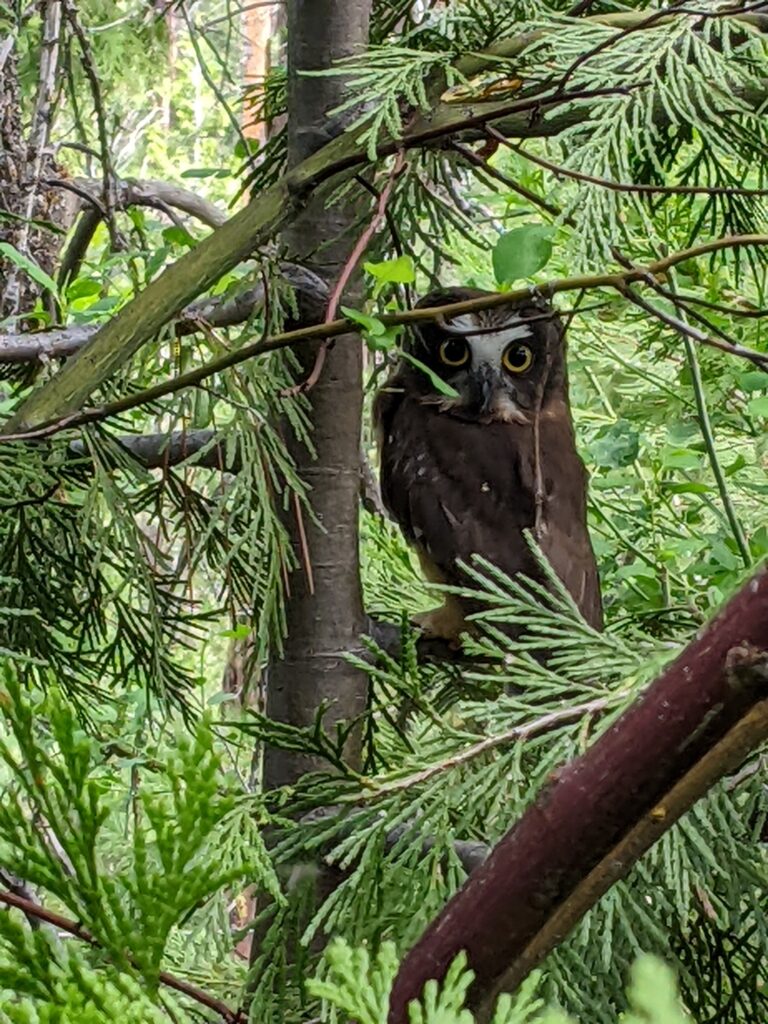
Braden had excellent adventures with Northern Saw-whet Owls while out in California, running into some adorable juveniles while thrashing through the woods during his job with the Institute for Bird Populations. Elegant Trogon finished #9 on Sneed’s list—an exotic bird if there ever was one! And yet, both Braden and Sneed wondered why this bird didn’t finish higher on either of their lists. Probably just too much on the beaten birding path. (Photo at top of the blog.)
Non-stop birding for his job throughout the summer led Braden to a remarkable encounter with these juvenile Northern Saw-whet Owls.
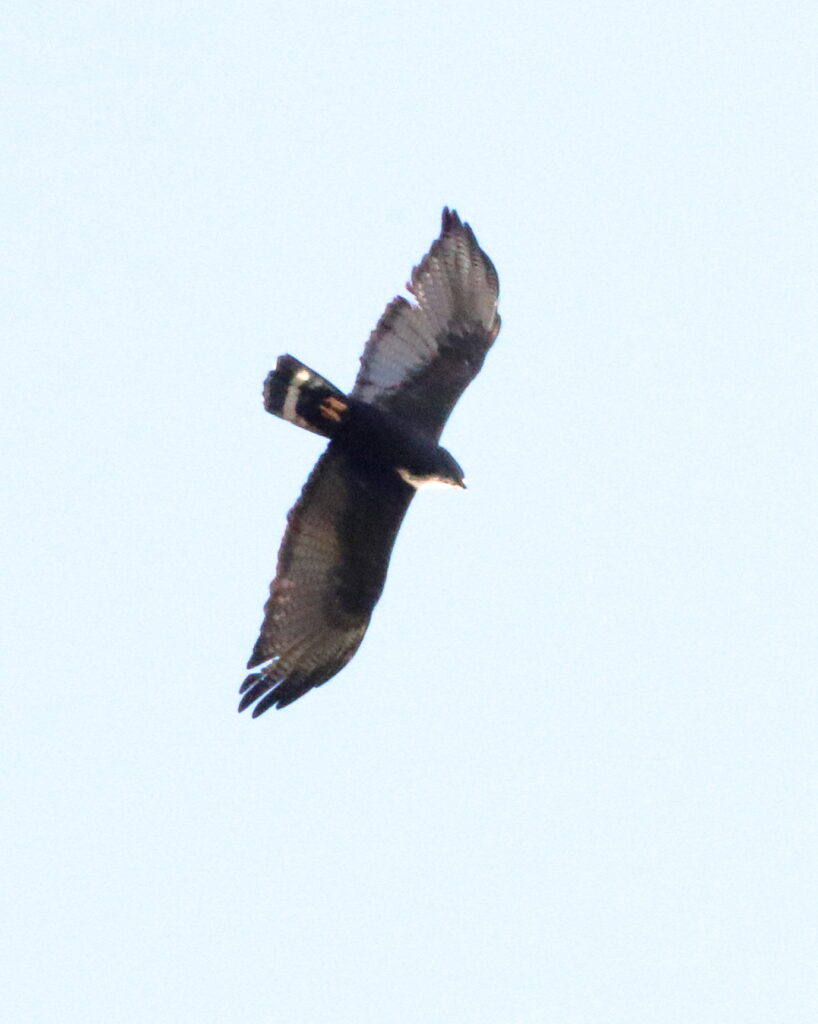
Zone-tailed Hawks are well-known mimics of Turkey Vultures and often hang out with them—which is where we spotted this one at Madera Canyon, Arizona; only our second ZTHA ever.
#7
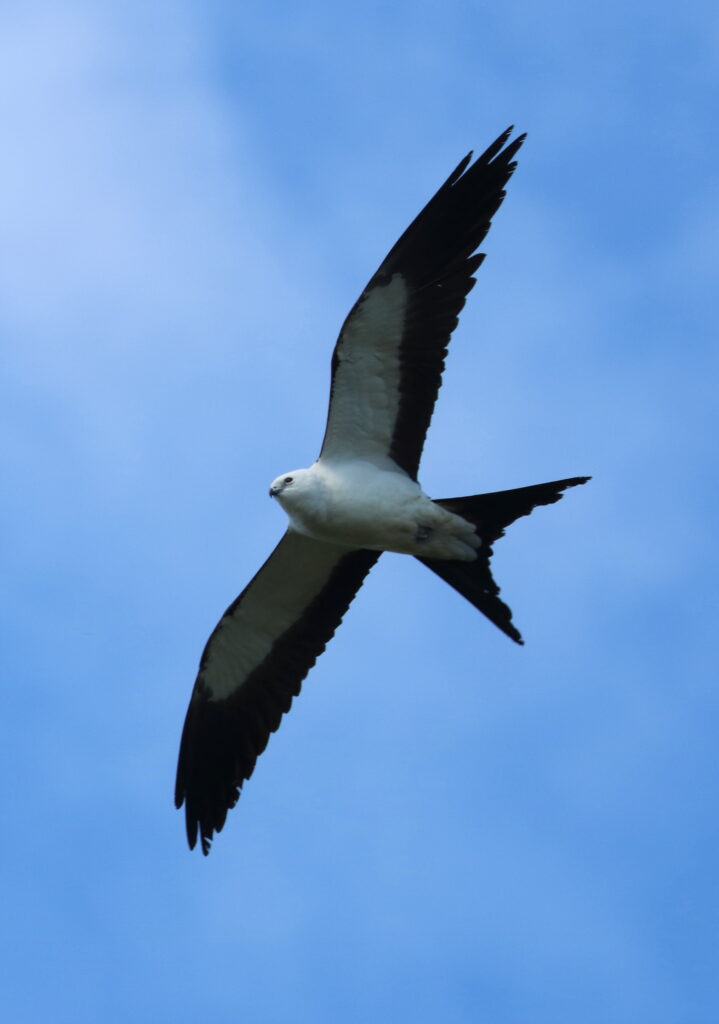
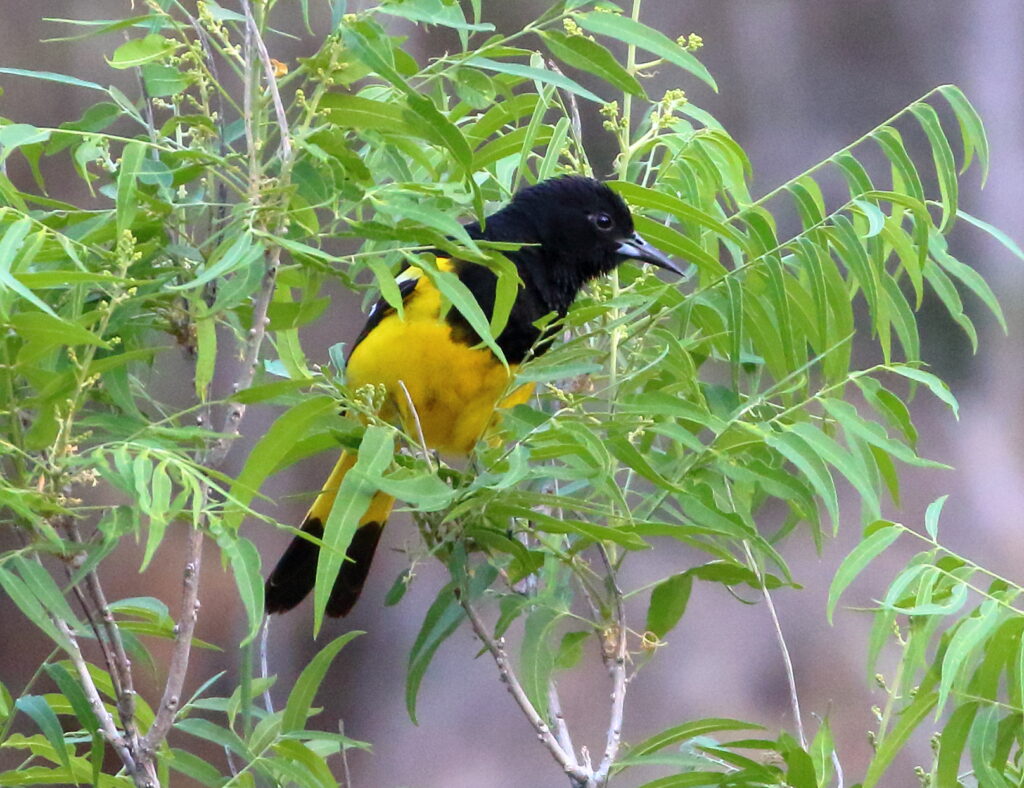
Ah, who doesn’t love a Swallow-tailed Kite—especially one that swoops right over your head? Braden obviously DOES, as yet another bird from his Florida trip snagged a Top Ten spot. Sneed, meanwhile, went with the shockingly beautiful Scott’s Oriole for Lucky Number 7. He and Braden both fell in love with these birds, and were lucky enough to see them several times on their Arizona adventures. In fact . . .
Braden never tired of seeing Swallow-tailed Kites on his and Nick’s epic Florida adventure.
#6
Scott’s Oriole grabbed Braden’s Number 6 while Sneed went with Sulphur-bellied Flycatcher, also in Arizona, in a case that he couldn’t quite explain. “There was just something mysterious and intriguing about that bird,” he was quoted as telling a New York Times reporter.
Though relatively widespread in the Southwest, Scott’s Oriole is a bird Braden and I wondered if we’d ever really get to see—or even if it really existed. It does!
#5
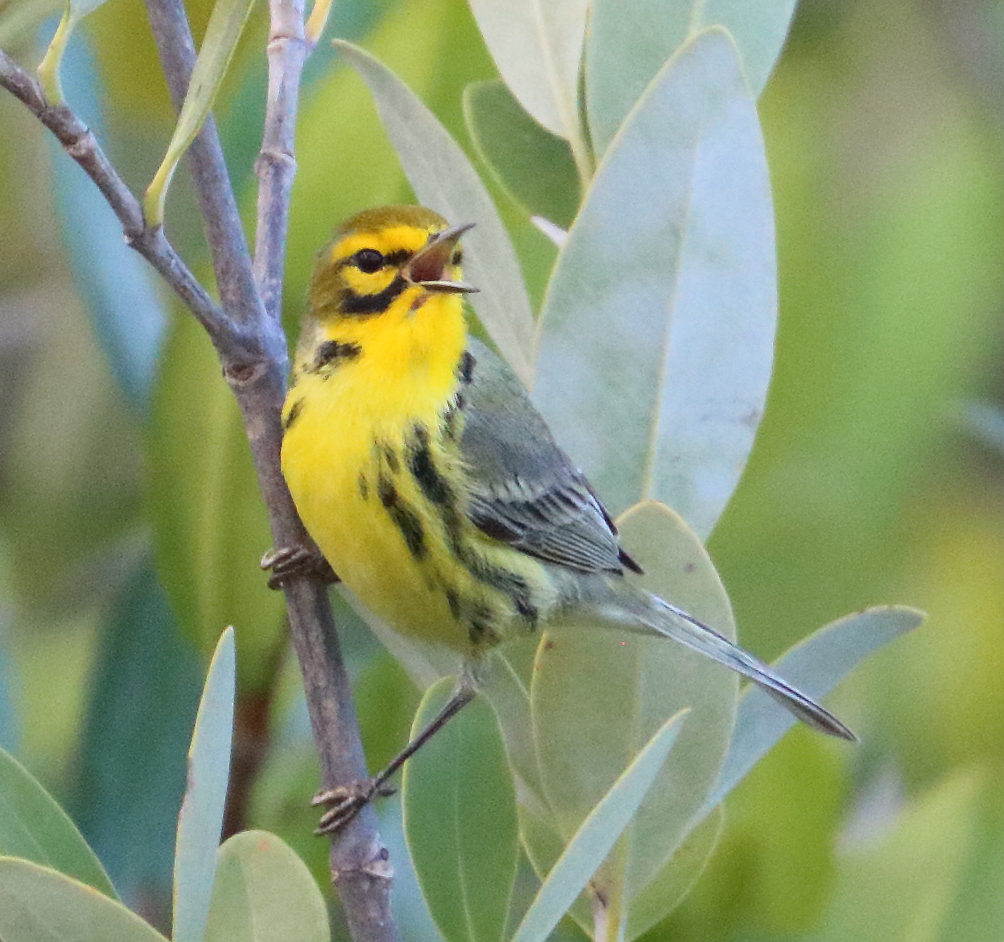
Unfortunately, the same New York Times reporter caught Sneed cheating for Number 5, as he listed THREE birds tied for #5: Mexican Whip-poor-will, Whiskered Screech-Owl, and Elf Owl. “How can you possibly justify this?” demanded the reporter. “Well, I only ever heard these three birds, but we listened to them on a magical night in Portal, walking down a darkened road. It’s just a night that Braden and I won’t ever forget.” Meanwhile Braden went with his many amazing experiences with Prairie Warblers this year for his #5 spot, seeing them throughout Florida, including the Everglades, in Maine, and during the Collard Family’s epic New York City trip in May.
It blew Braden’s mind to learn that Prairie Warblers breed in the mangroves of Florida.
#4
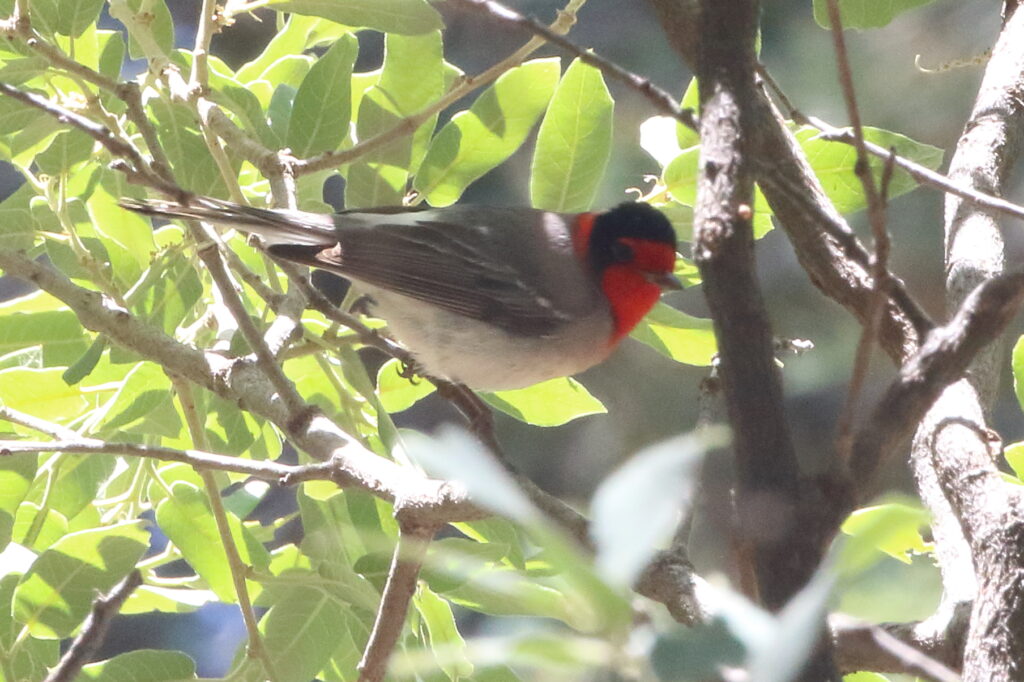
The night walk in Portal also left a big impression on Braden, giving him his Number 4 in the form of Mexican Whip-poor-will. Sneed, meanwhile, went with Red-faced Warbler, spotted just a few miles and a couple thousand feet away—the first, and still only, RFWA the father-son duo has ever seen.
Another fairly common Southwest bird that had eluded us until this trip, the Red-faced Warbler immediately captured our hearts. This is still the only we have ever seen.
#3
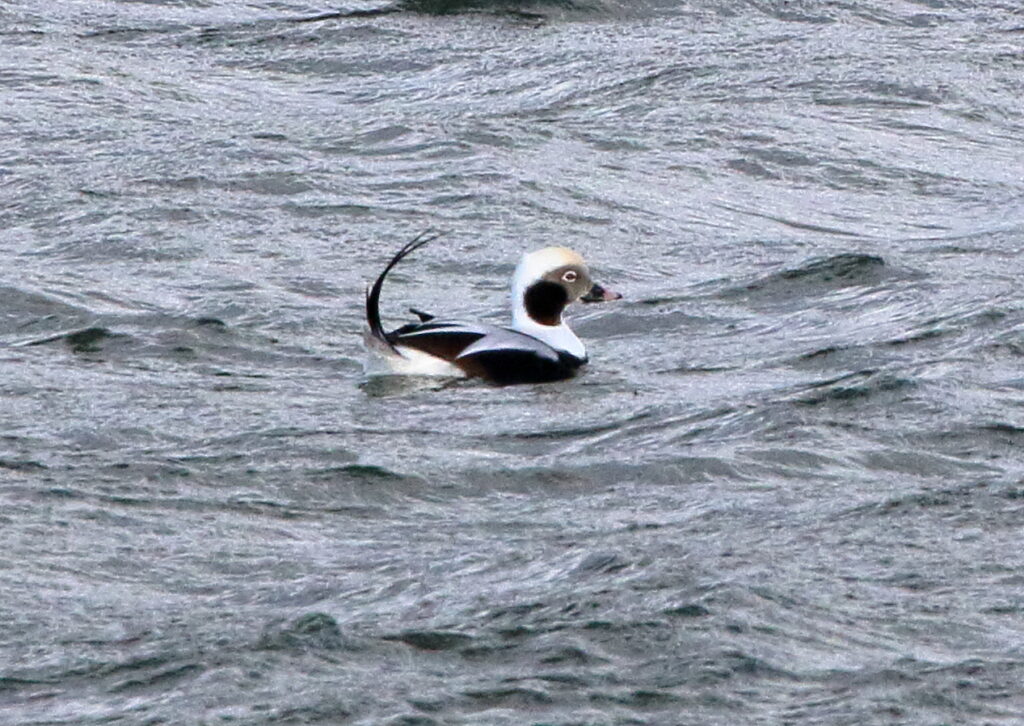
Number 3 is getting into some Serious Birds, and Braden selected Spotted Owl for his. Not only did Sneed and Braden both see them for the first time in the Chiricahuas, Braden got to see the California subspecies several times during his summer job. Sneed went with his recently self-found Long-tailed Duck—the first male he had ever seen—and one he discovered pretty much in his backyard near Missoula.
When you find a bird by yourself, it naturally ranks higher in a Year List. Such was the case with this male Long-tailed Duck Sneed found near Frenchtown last fall.
#2
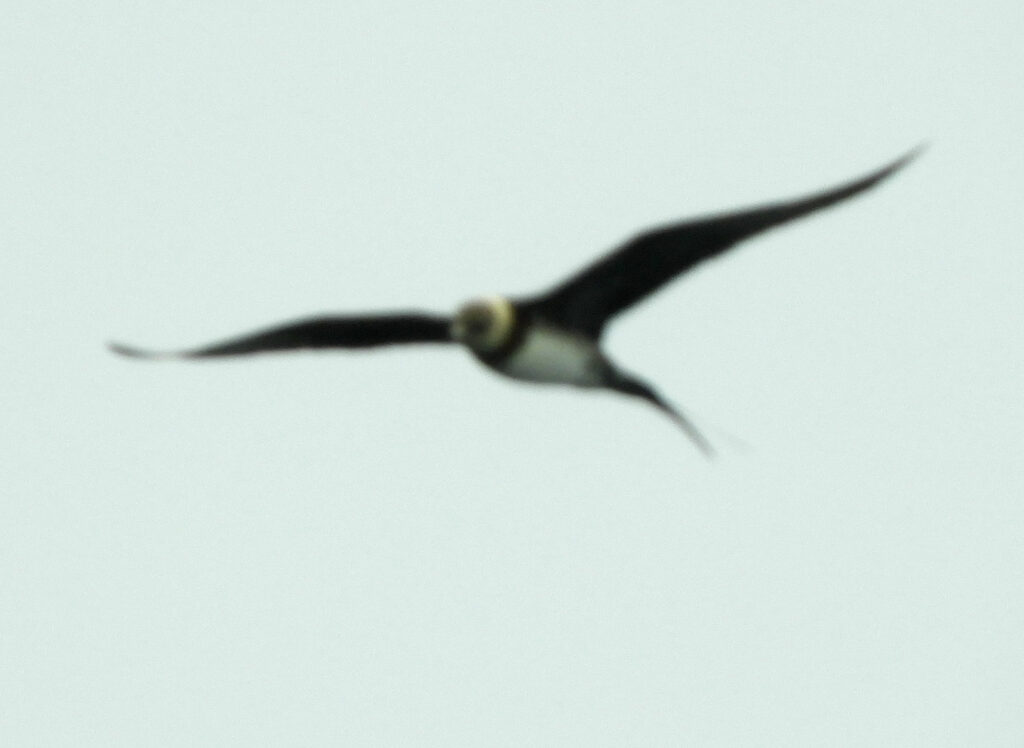
Braden paid for his Number 2 bird, Long-tailed Jaeger (a second cousin to former lead singer for the Rolling Stones) with repeated upchucking over the side of the boat during his summer pelagic boat trip out of Half Moon Bay. After cavorting with a bunch of Sabine’s Gulls, however, this bird took flight and then passed only ten feet above Braden’s head. He celebrated by once again barfing into the sea. Sneed opted for White-tailed Ptarmigan, just one of the coolest birds on the planet, seen during his and Braden’s stunning hike up to Piegan Pass in Glacier National Park in August.
Blurry photo notwithstanding (or puking as was the case), this Long-tailed Jaeger flew into Braden’s #2 spot for the year.
Drum Roll . . . And their Number 1s are . . .
#1
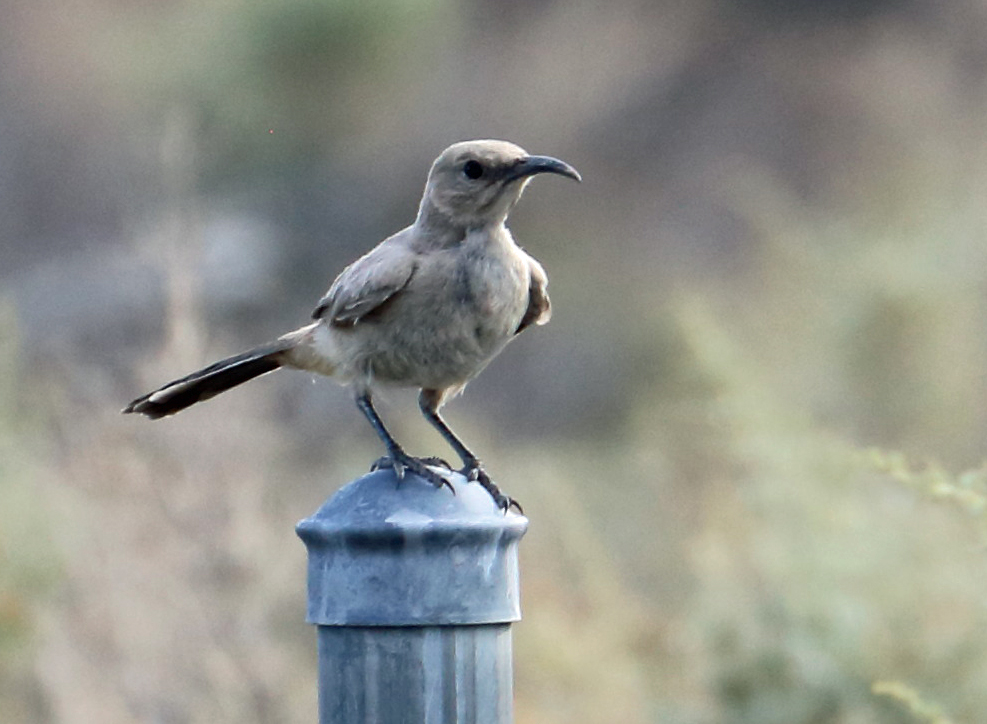
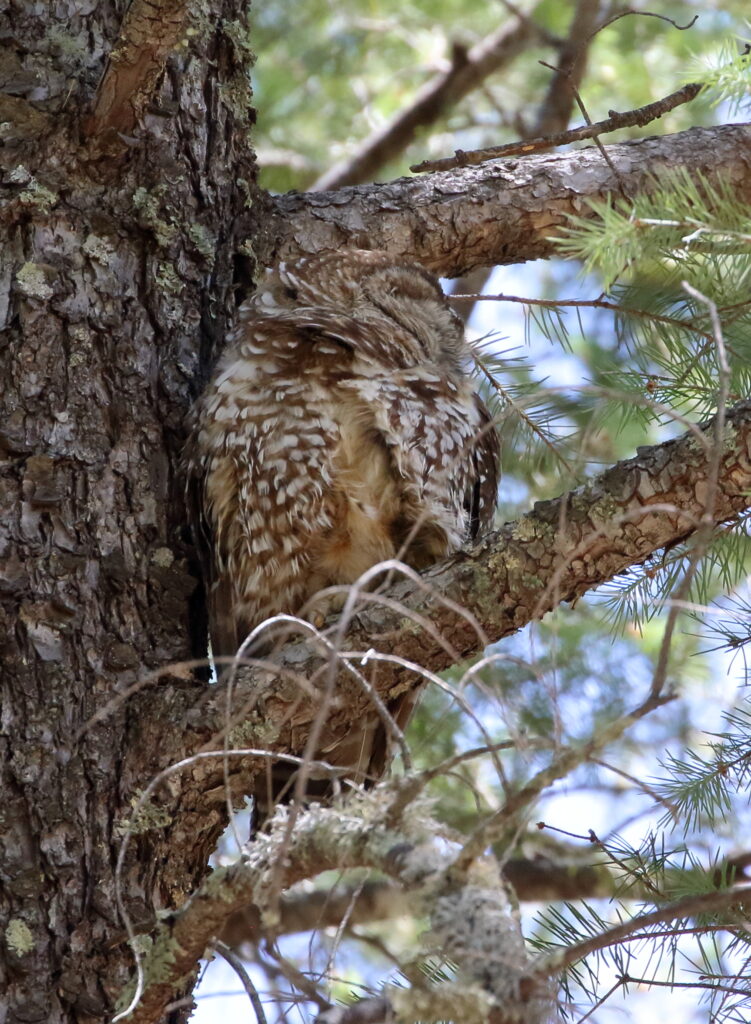
The adventure and thrill of seeking out and finally finding a LeConte’s Thrasher on the east side of the Sierras stayed with Braden strongly enough to make it his Number 1 Bird of 2022! Remarkably, Spotted Owl, which had been only #4 on Sneed’s Arizona Trip list mounted an epic comeback to grab his Number 1 spot!
Braden’s #1 for 2022: LeConte’s Thrasher!Sneed’s #1 for 2022: Spotted Owl
Thanks for tuning in as we’ve relived our top birds. Be sure to click on the links to get the full accounts, and may 2023 generate a memorable list for you, too!
After almost two months in the Sierras, Braden and his co-worker San Darmstadt headed to the coast for a much-anticipated chance to go on a pelagic birding cruise out of Half Moon Bay—familiar territory for his dad (yours truly) during his college years at Cal. While Braden had suffered from seasickness on previous pelagic cruises, he hoped that today would be different—especially because he was within three species of reaching the coveted 1,000 mark for his Life List. Would he make it? Would he lose his lunch—and breakfast? Read on to find out—and, as always, please feel free to share this post.
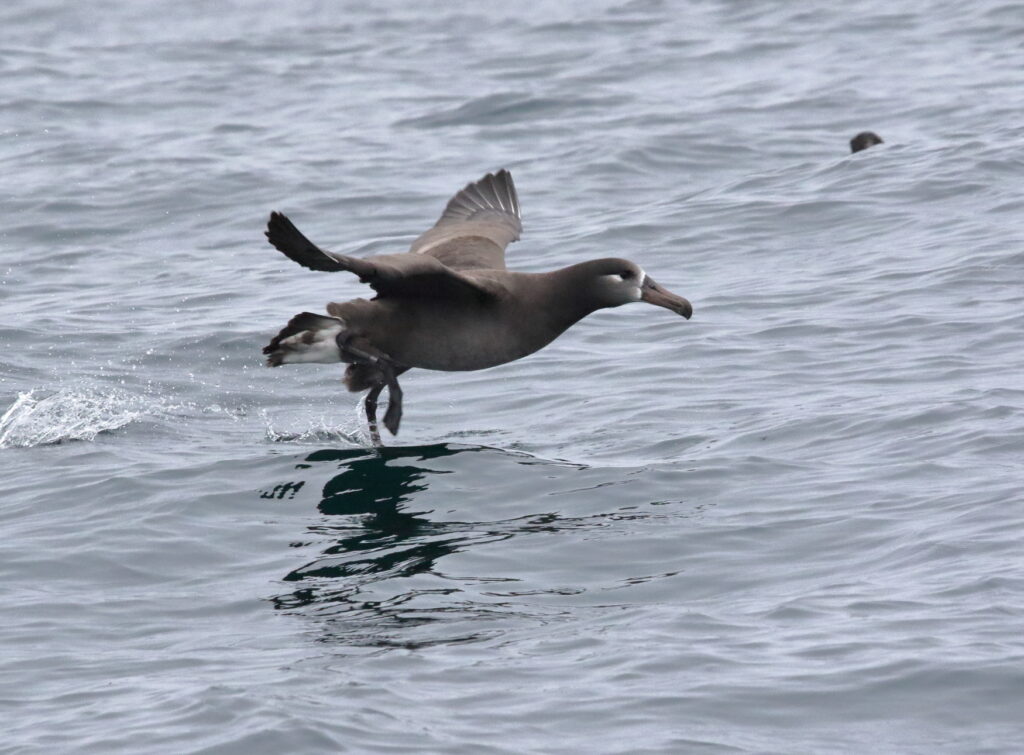
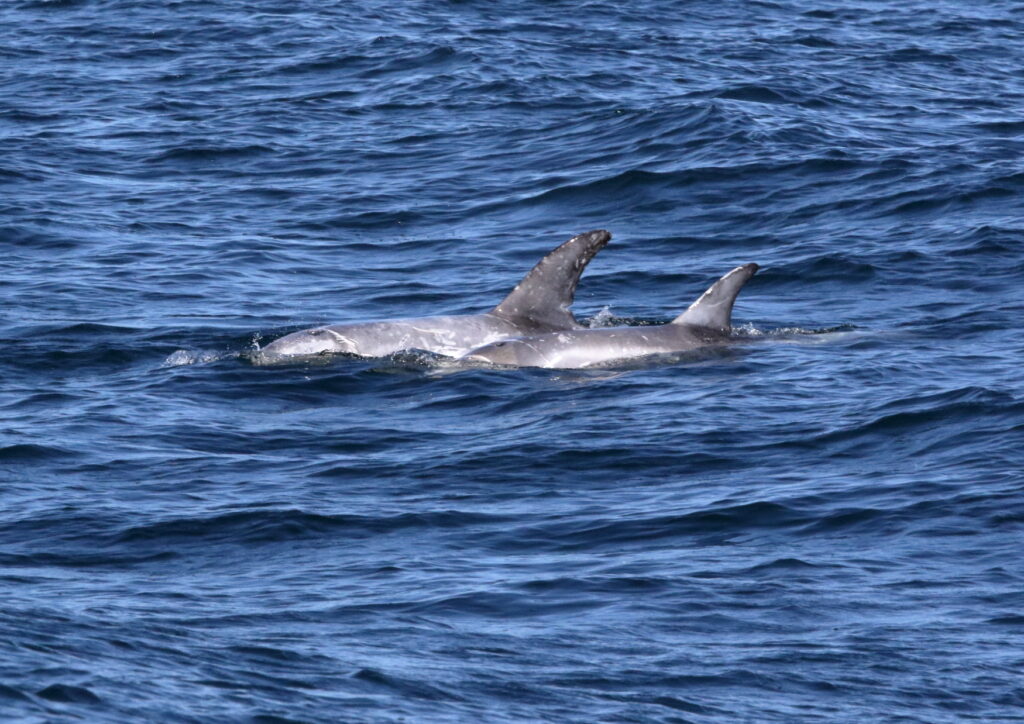
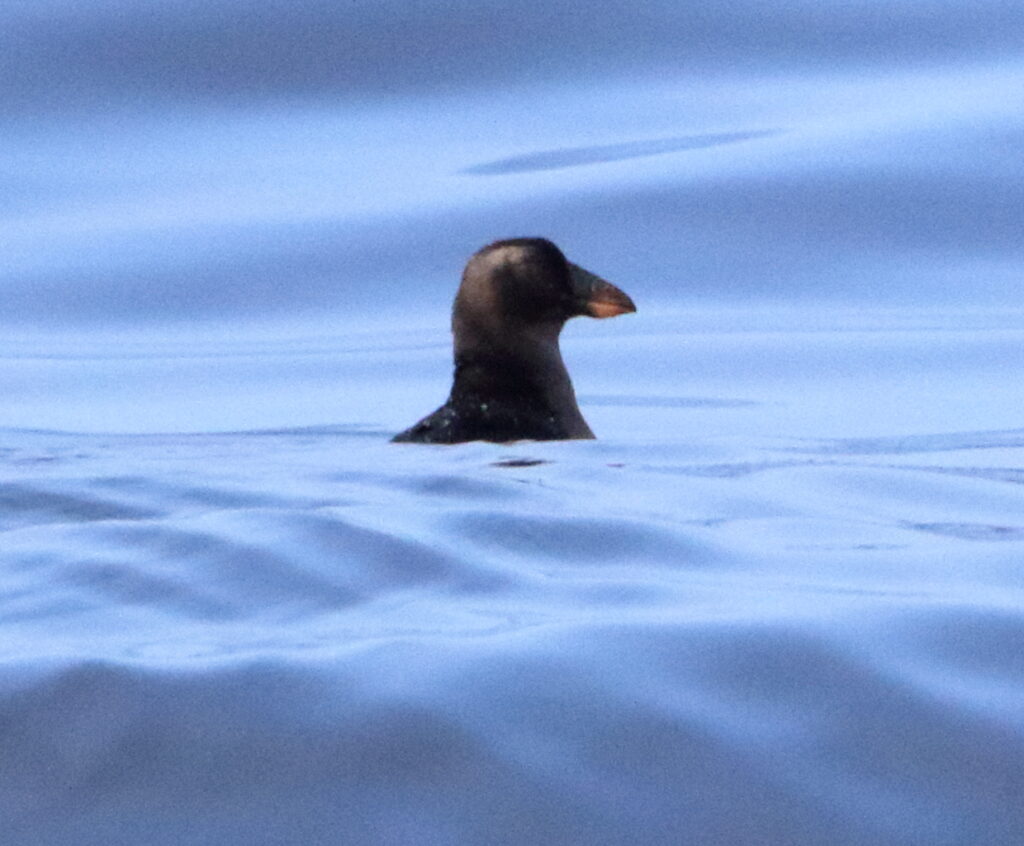
Photography note: as you will read below, Braden was not able to take photos of this trip, so I (Sneed) have taken the liberty of including photos from our first pelagic trip, out of Monterey with Debi Shearwater, during our Big Year of 2016. Photos of the actual Half Moon Bay cruise graciously provided by Sam Darmstadt! (Photo captions by Sneed.)
As far as I could count, I had taken not one, not two, but at least five precautions to counteract seasickness. As our boat, the Captain Pete, pulled out of Pillar Point Harbor, I stood on the ship’s port side, staring at the foggy seaside communities of Half Moon Bay, confident that this would be the time I finally avoided turning green out on the ocean. I could not have been more horribly wrong.
The leader of the Institute for Bird Populations Spotted Owl crew, Ramiro Aragon, had told us about this Half Moon Bay pelagic trip back in early June, and Sam Darmstadt and I had quickly signed up. That had given us close to two months of growing anticipation for the trip, and both of us were thrilled as we stepped aboard the boat at seven in the morning, backpacks loaded with saltines and minds filled with possible lifers we could see. I had taken a “Less Drowsy” Dramamine tablet half an hour earlier, and wore two acupressure bands on my wrists that supposedly helped to prevent motion sickness. The night before, I’d gone to bed early rather than socializing so that I would feel well-rested for the ten-hour pelagic the next morning. I even left my camera in the cabin, swearing to only use my binoculars if absolutely necessary as I grasped the railing with one hand and tucked the other in my pocket for warmth.
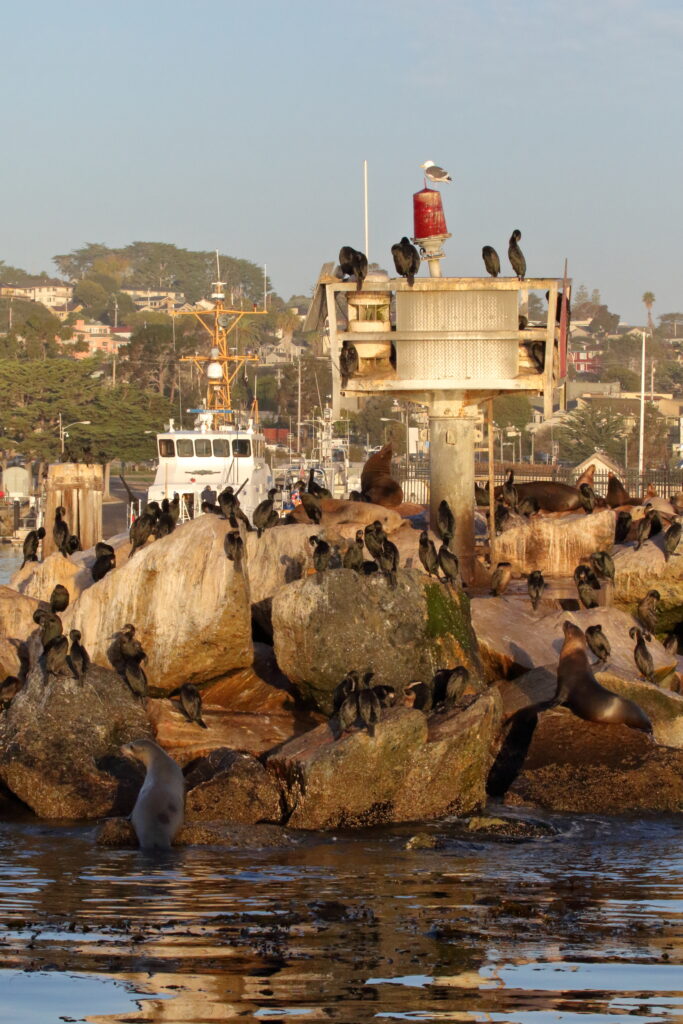
The birds began rolling in as soon as the boat cleared the harbor. Thousands of pelicans and cormorants roosted on the breakers, waiting for the heavy fog to lift. Alvaro Jamarillo, one of the United States’ best birders and a leading expert on all water-related birds (especially gulls), called out a Wandering Tattler feeding just above the water line on some of the rocks, providing everyone onboard with stellar looks at this species that I’ve only seen twice before. Behind Debi Shearwater’s famous pelagic boat tours that ended a few years prior, Alvaro’s Adventures were the most famous West Coast pelagic tours, in part thanks to Alvaro’s skill and experience, along with the rarities he’d encountered over the years. In 2014, this exact trip out of Half Moon Bay had run into the first ABA record of Salvin’s Albatross!
Hearts flutter with anticipation whenever a pelagic birding cruise leaves the harbor. Unfortunately, for those prone to seasickness, it will soon be a different part of the anatomy that flutters . . . and lurches and heaves!
Besides taking measures against seasickness, I’d compiled a slideshow to identify many of the species that were possible on this trip, and spent a good few hours staring at jaeger plumages, identification of winter alcids, and tubenose flight styles. I had a good idea of which birds were likely or possible on this trip, and had several targets in mind. Two of those were the birds I’d missed on the trip my dad and I had taken out of Monterey Bay six years earlier, Buller’s Shearwater and Ashy Storm-petrel. I’d been in the cabin, trying not to throw up, as these birds had flown by the boat. I intended for a different story this time.
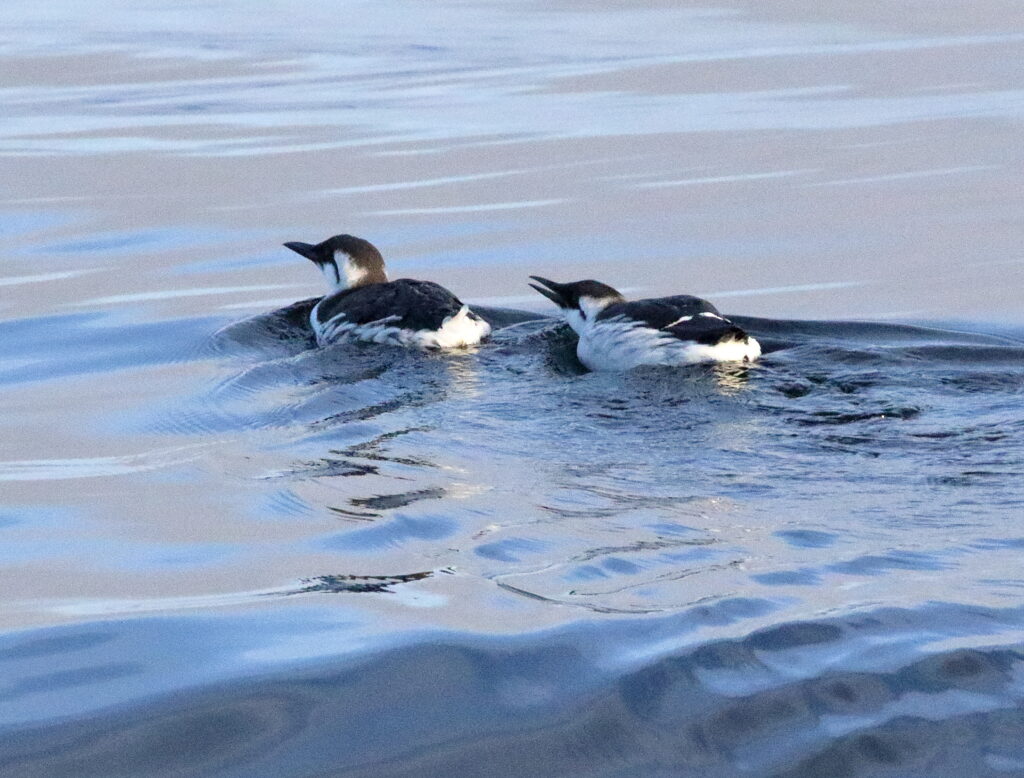
Leaving the harbor, Alvaro called out a lifer almost immediately: Marbled Murrelet. I quickly saw smaller, browner alcids sitting in pairs between the groups of Common Murres, and allowed myself a few looks in my binoculars at these birds with such interesting ecology. Marbled Murrelet is a bird that has been on my dad’s and my minds for some time now, in part because, despite being seabirds, they breed dozens of miles inland in old growth forests. I learned later that in this area, while land was still in view, we had the highest count of this species ever recorded on any of Alvaro’s pelagic trips!
Even though they are some of the most common birds on pelagic trips, Common Murres are also some of the most remarkable. Before the chicks can even fly, the male parents goad them into leaping off of their cliff-face birthplaces into the sea, and raise them on the ocean surface. I’m thinking I should have tried that with Braden!
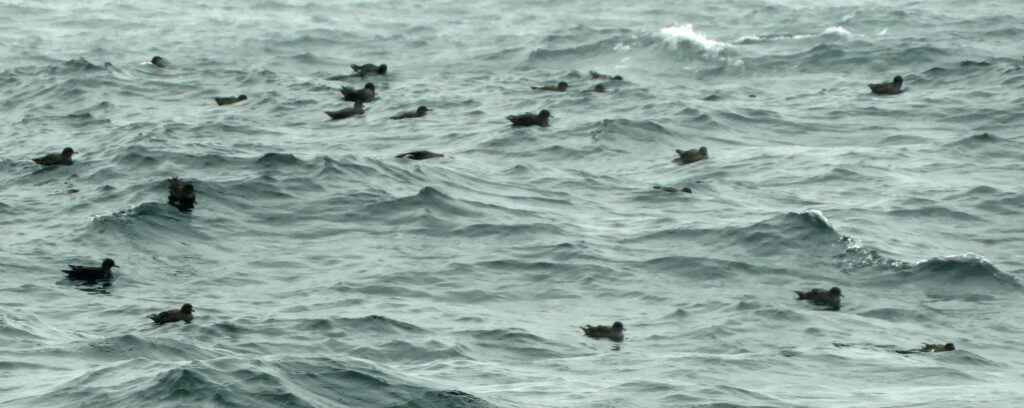
We began to move north and away from shore, and the water began to grow choppy. As I waited for birds to begin appearing, I talked with a friendly British birder standing next to me, and learned about all of the rare birds he’d been seeing in Britain in the last few years, including an American Robin that thousands of birders had gone to look for. The fog did not show any signs of disappearing, but we soon began to see birds streaking by in the distance: our first Sooty Shearwaters of the trip. Soon, we were amongst them, and by the end of the trip we had tallied thousands of the species. Pink-footed Shearwaters began to join them in low numbers, and I glimpsed a Northern Fulmar sitting in the water, a bird that I’d never seen in the United States.
Braden and Sam were delighted to see thousands of Sooty Shearwaters streak through the fog and alight on the ocean. (Photo courtesy of Sam Darmstadt)
Alas, the seas were not cooperating with my stomach. I later spoke to a birder who had been on upwards of twenty pelagic trips out of California who told me that he had never been on seas this rough. The wave heights reached seven or more feet at some points, and I stood there with my eyes on the horizon, refusing to glance at any birds that flew by. Please, I prayed, No seasickness today. It’s dampened enough of my pelagics already.
It was wishful thinking. After about an hour and a half of holding out, I made my way to the back of the boat and released my breakfast. This began a day of the most physical pain I have ever been in while birding. I had to visit the back of the boat eight times, in-between lying flat on my back on a seat in the cabin. I felt frustrated. I’d tried so hard, and done everything right, yet still, I was almost the only person on the boat stricken with seasickness and by far the worst case. And what’s more, I missed birds because of it.
As I lay in the cabin, trying to ignore the dizziness in my head, I heard one of the spotters out on the deck call out “Buller’s Shearwater!” I jumped up and rushed outside, but couldn’t spot the bird as it flew away from us. I could barely stand up, and had no intention of standing out there if the bird wasn’t there. There will be others, I thought, but there weren’t. It was the only Buller’s spotted on the whole trip, and as I learned later, the rarest bird seen that day. Sigh. I had really wanted to see that bird, a tubenose with such a detailed, beautiful wing pattern, yet something beyond my control had taken it from me for a second time. Adding to my frustration, I had no idea when I would be able to take another pelagic out of coastal California, but it would surely be years.
But as I lay in bed, I had to remind myself that a birding trip is not just defined by what birds you miss. Circumstance, not skill, had been the reason I’d missed the bird, and I’d see another one someday. And the birds (and other wildlife) I had seen had made the trip very worth it.
I missed one other lifer due to seasickness, one that was considerably less impressive than Buller’s Shearwater: Cassin’s Auklet, what I still believe to be not only the most lackluster alcid but one of the more boring birds in the United States. When several were called out, I sat up from my bench in the cabin and looked through the window in vain, straining to see a shape, but with no luck. However, when Ashy Storm-Petrel was announced over the intercom, I did the same thing, with success. I briefly spotted several dark, swallow-like birds flapping over the open ocean before collapsing back onto my seat. I lay there thinking, well, the looks weren’t great, but at least I saw the bird. And then it hit me. Marbled Murrelet had been my life bird #998. Ashy Storm-Petrel was #999. I’d just missed the Buller’s, but could not miss the next lifer that was called out, no matter how much physical pain it caused me.
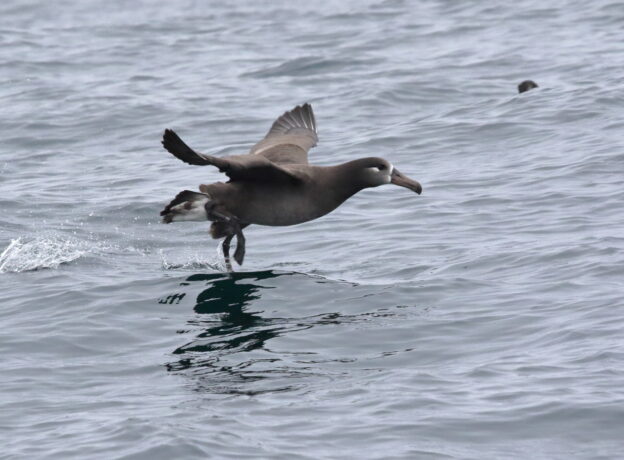
The next bird called out was not a lifer, but it was a bird I hadn’t seen in six years and one I had been looking forward to seeing again. “Black-footed Albatross at nine o clock, flying towards the boat!”. I lifted myself up to stare out the window, and sure enough, there it was. A huge, dark seabird with a light-colored face cruised by at close range, causing me to smile as I fell back into my seat.
Black-footed Albatrosses are a special treat for any birder, and often give great looks, as Braden and I found on our 2016 Monterey pelagic cruise.
And then it happened. “There’s a flock of Sabine’s Gulls at nine o clock, and a Long-tailed Jaeger’s chasing them!” I again leapt out of my seat, stomach doing flips, and grabbed my binoculars from the table before stumbling out onto the deck. “Where is the jaeger?” I said, half-asleep (the “Less Drowsy” Dramamine had not been what it claimed to be). “There, behind the gulls!”
I stared out at a large flock of Sooty Shearwaters floating in the water. There were no gulls here. And then, the water dipped, revealing twenty-or-so Sabine’s Gulls in full breeding plumage, something I’d never seen before. I spent very little time admiring them, however—I was about to throw up again and I needed to get on this lifer. Then I saw it: a cream-colored bird with a dark cap and brown wings sitting in the water, its two long tail streamers waving in the wind. The whole flock suddenly flushed, scattering everywhere. The shearwaters went away from the boat, while the gulls flew off towards the front. The jaeger, however, decided to fly right over us. I stared up in astonishment as this beautifully-patterned, rare seabird floated right overhead, giving me the best views I’d ever had of any of the three jaeger species. It even had its tail feathers completely intact, making the identification much easier than anything I’d prepared for! Then, in celebration of my 1000th world life bird, I emptied the contents of my stomach over the back of the boat.
Braden could not have asked for a better 1,000th Life Bird than this cooperative Long-tailed Jaeger! (Photo courtesy Sam Darmstadt)
I forced myself to get up and peer through the cabin window for one more animal: Killer Whales. When they were called out, I ignored the thoughts in my head about how I’d seen them before in Iceland and should try to sleep instead, again peering out the foggy window. Sure enough, a young male Orca surfaced right next to the boat, showing off its white eye-spot and gray, saddle-like patch located behind its fin. That was all I could do before laying back down. The cetaceans then proceeded to put on a show for the rest of the boat, and turned out to be significantly rarer than anything else we saw that day, having only been seen on trips like this a handful of times. Other mammals that I got glimpses of were Humpback Whale, California Sea Lion and Harbor Seal.
Pelagic birding cruises might just as well be called pelagic cetacean cruises as, more often than not, various whales and dolphins put in an appearance—to wit, these Risso’s Dolphins from our 2016 trip.
Once we were about an hour from shore, on our way back, I got up and walked back out on the deck, feeling significantly better after sleeping for a few hours. Both the sky and the ocean had cleared up, and I stared at the Sooty Shearwaters that flew by, hoping another Buller’s would make an appearance. Besides those two lifers, I’d missed two other species: a Tufted Puffin that had flown by while I was in the bathroom, and several Pomarine Jaegers. As we drew closer to shore, however, I noticed a strange-looking gull flying in front of the boat. I raised my binoculars, and shouted out an identification before my brain could even decide if that identification was right or not. “Pomarine Jaeger!”
The Loch Ness Seabird??? No, a Tufted Puffin peaking over a wave!
Sure enough, all of the experts agreed—it was a clean-looking light morph jaeger with a dark breast band and a barrel-chested look. Despite the fact that the spotters had been calling out jaegers all day, I’d never spotted and identified one by myself, and a feeling of pride washed over me as everyone else got on the bird. This bird also helped me knock down my list of missed species to only three.
I basically kissed the ground once we got back to shore. Me and Sam’s birding for the day was not yet done, but that will have to make another blog. Despite the fact that my entire body was sore, and I was frustrated about missing one of the birds I’d most wanted to see, I had also had a great time. Getting great looks at Pomarine and Long-tailed Jaeger alone had made the trip worth it, besides all of the year birds and other lifers I’d seen. I’d gotten to one thousand species—roughly one-tenth of all of the bird species on the planet, and well on my way to seeing the other nine thousand. I was also firmly hooked on seabirds. One of the first things I said to my dad when he called me the next morning was this, “If I had to go through everything I went through all over again today, it would be worth it. I would get back on that boat.”