
Need a good book to read? Birding for Boomers recently racked up its fifth award of the year and has been a hit at indie bookstores throughout the West. Why not help support our efforts at FatherSonBirding by picking up a new copy of “Boomers” or one of Sneed’s other books? Just click on one of the images to the right.
After a slow start, August saw the Collard family shift into hyperdrive as Braden drove to Southern California to take a job as a nature guide and camp counselor, and Amy and I saddled up the minivan to drive Tessa to her freshman year of college at Cal State Chico. Braden left a few days early so that he could bird the summer heat of Arizona before arriving at his job. It seemed like a (heat) rash thing to do, but his efforts paid off as he saw 201 species and scored 9, count ‘em, NINE Lifers! These included Montezuma and Scaled Quail, Lucifer Hummingbird, Buff-breasted Flycatcher, Gray Vireo, Cassia Crossbill, and Rufous-winged, Botteri’s, and Cassin’s Sparrow. Just listing the above stats, in fact, makes me hesitant to bring up my own relatively modest birding luck driving to California—but let’s back up a second.

As mentioned in previous posts, both of us Collards are having record-breaking years. Braden’s World Species total for 2025 sits at an astonishing 833 species, thanks not only to trips to Mexico and Costa Rica, but his cross-country drives to Montana from Maine and his recent journey to California via Arizona. As for moi, when last I reported (see our post “Swift-ecta!”), I needed twenty birds to break my all-time one-year World Species total of 527. The thing is, twenty species this late in the year was looking a bit dicey. While it might be possible to pick up twenty more species here in Montana, I was counting on the drive to California to put a major dent in that number. Nonetheless, I birded hard before our departure and by the time we hit the road, my year total had crept upward to 512, leaving only sixteen species to break my record.
Normally, I would have thought, “Piece of cake,” especially since I hadn’t visited any West Coast states so far in 2025. But not so fast. Remember that little winter trip Amy planned for us last January (see post “Birding Victoria, BC”)? Well, believe it or not, in Victoria I had already nabbed Bushtits, Anna’s Hummingbirds, and Chestnut-backed Chickadees, removing three potential gimmes from the California trip. Even my Colombia trip with Roger (see post “Antpittas and Tody-Flycatchers”) had allowed me to pick up Acorn Woodpecker and Lesser Goldfinch, removing those bird potentials as well.
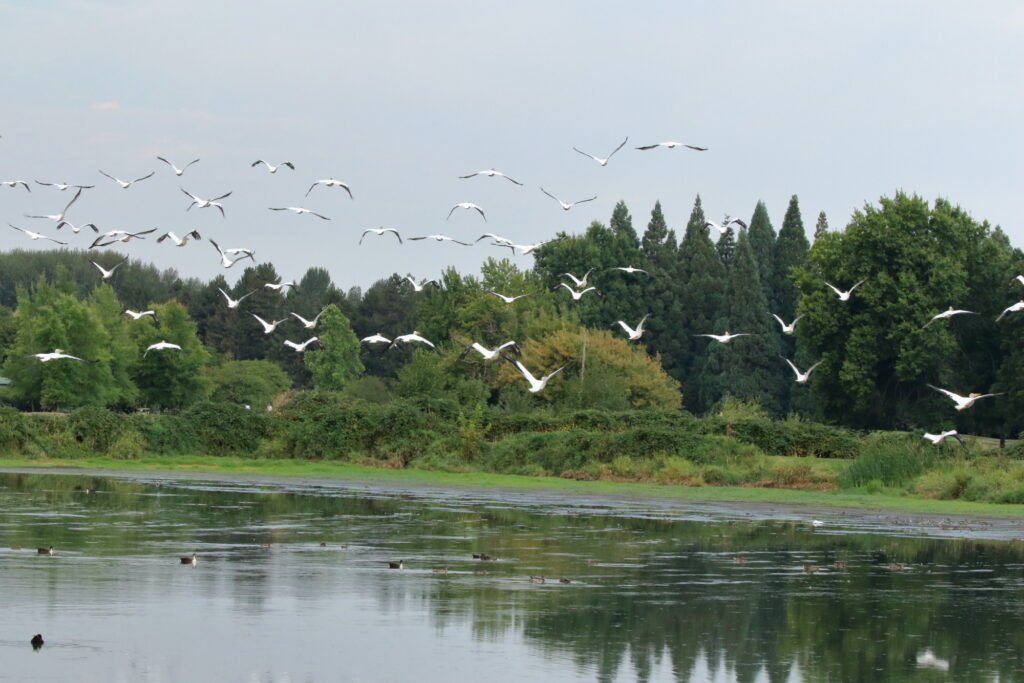
Nonetheless, I remained cautiously optimistic as Amy, Tessa, and I hit I-90 for our first stop of the trip, Portland, Oregon. We would spend only two nights there, but I wasted no time, getting up early the first morning to hit Broughton Beach along the Columbia River. My goal was to find cool shorebirds, and I did find both Least and Western Sandpipers—but no Year Birds. While there, though, I met a very nice birder named Ted who told me about another cool spot, Force Lake, and I decided to head over there. I was rewarded by Long-billed Dowitchers and Red-necked Phalaropes—but again, no Year Birds. In fact, the only Year Birds I nabbed in Portland were California Scrub-Jay in the backyard of my in-laws and Black Phoebe at another new spot I visited, Whitaker Ponds Nature Park. As we rolled out of Portland, I hoped that the rest of the trip would prove more productive.
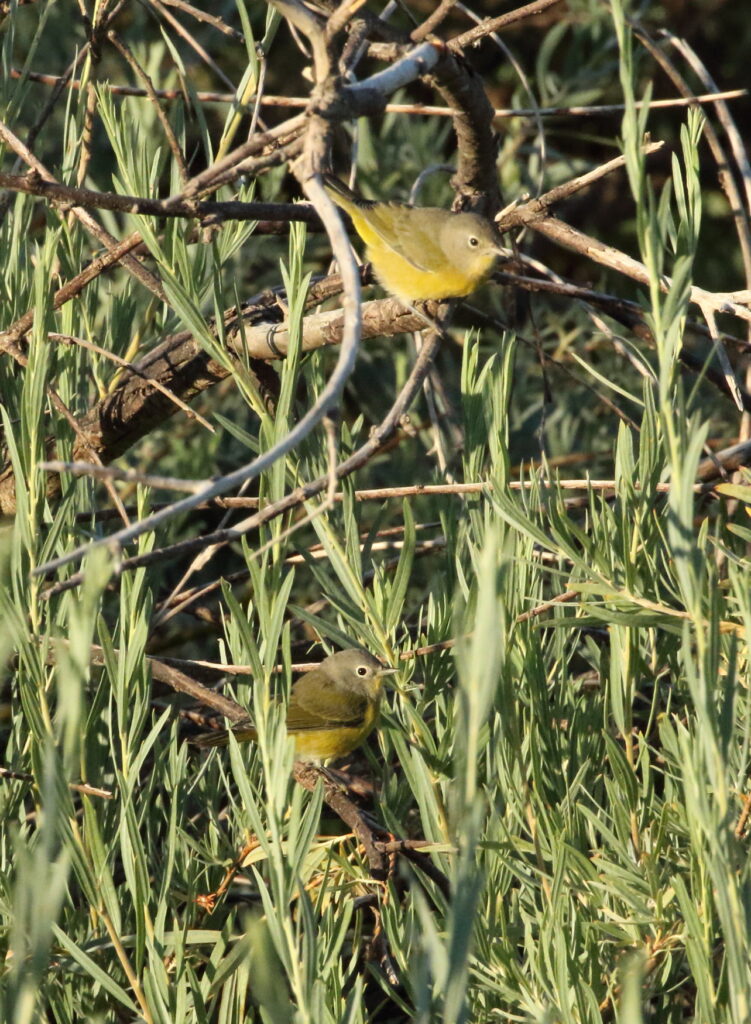
Our next stop was Ashland, Oregon, where Amy had bought us tickets for the Shakespeare play The Merry Wives of Windsor and the musical Into the Woods. Both were excellent productions, but I felt so sleepy I barely made it through them without crashing to floor. Our first morning there, though, I hit another new birding spot, Emigrant Lake (South Shore). Here, I managed to nab three more Year Birds: Oak Titmouse, Bewick’s Wren, and California Towhee. My biggest surprise were a pair of Nashville Warblers. In fact, it’s been a great year for learning about these birds as I saw them migrating through Texas last April and now, making the return migration through California. (Though I must point out that this species has an unusual “bifurcated” distribution so the birds in Texas and California probably came from separate, distinct populations.)
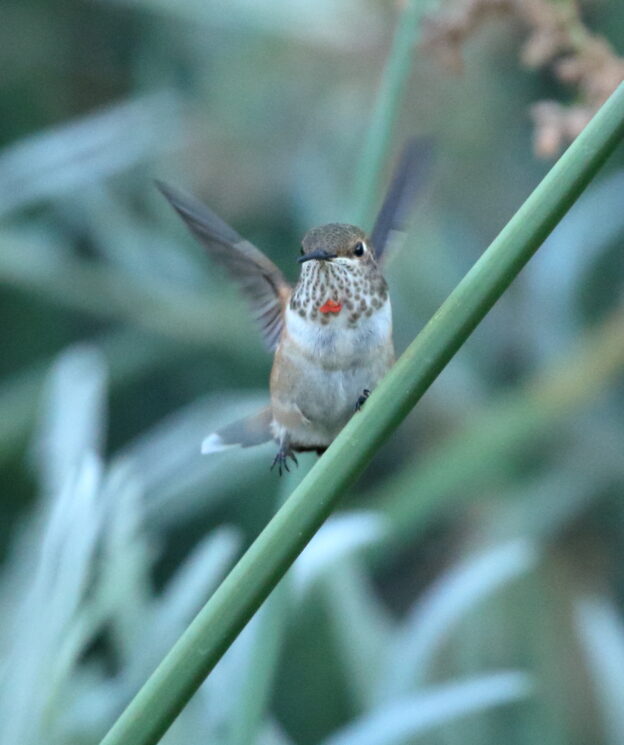
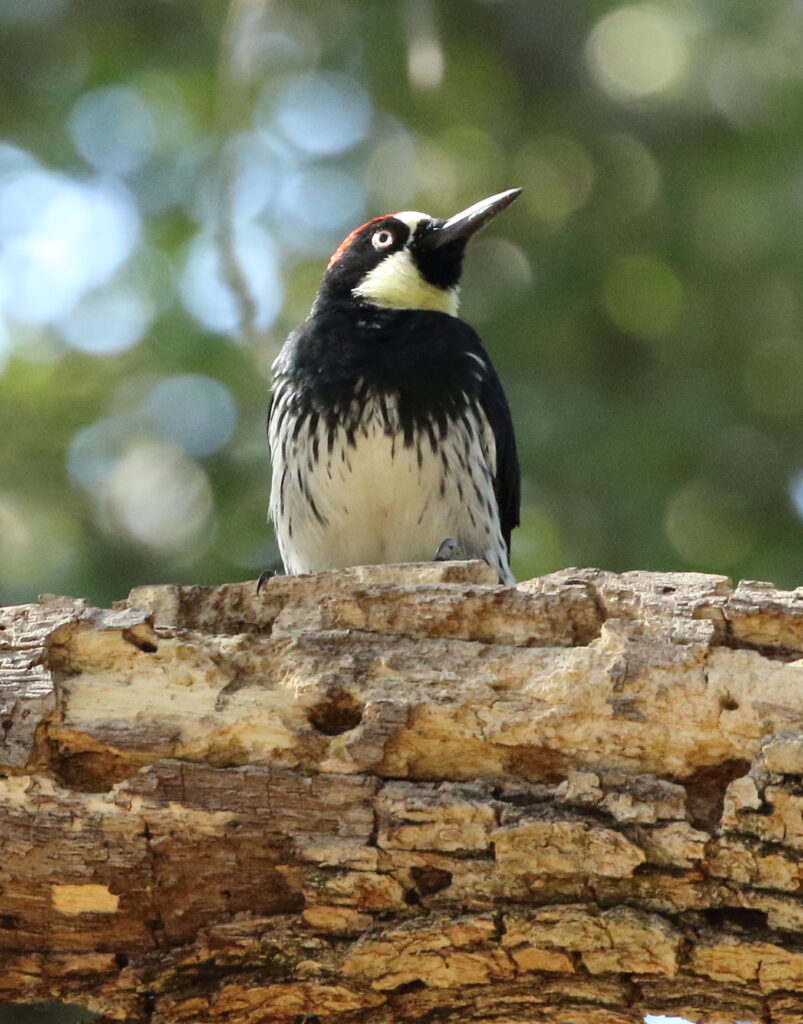
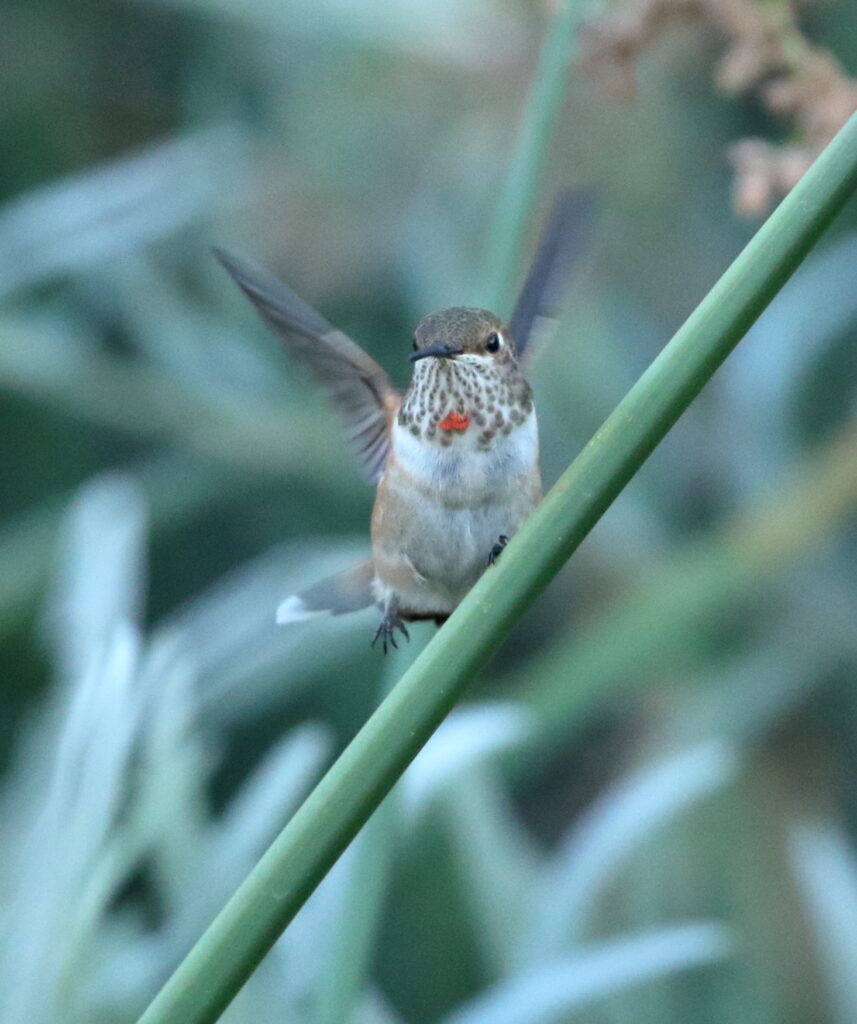
Chico greeted us with 104-degree temperatures, less than ideal for birding. Our major goal here, of course, was to get Tessa settled into university housing, but you know me. My first morning, I was up at dawn to explore Hooker Oak Park, a great city park I’d discovered when first bringing Tessa to check out Chico (see post “College Search Birding in California”) in 2024. This morning, the park did not disappoint. One of my favorite birds, Acorn Woodpeckers, were flying everywhere and I had a wonderful encounter with Anna’s and Rufous Hummingbirds, who put on a real show for me in a dry riverbed. As far as Year Birds go, however, my only score was a bird that happened to earn Bird of the Trip honors.
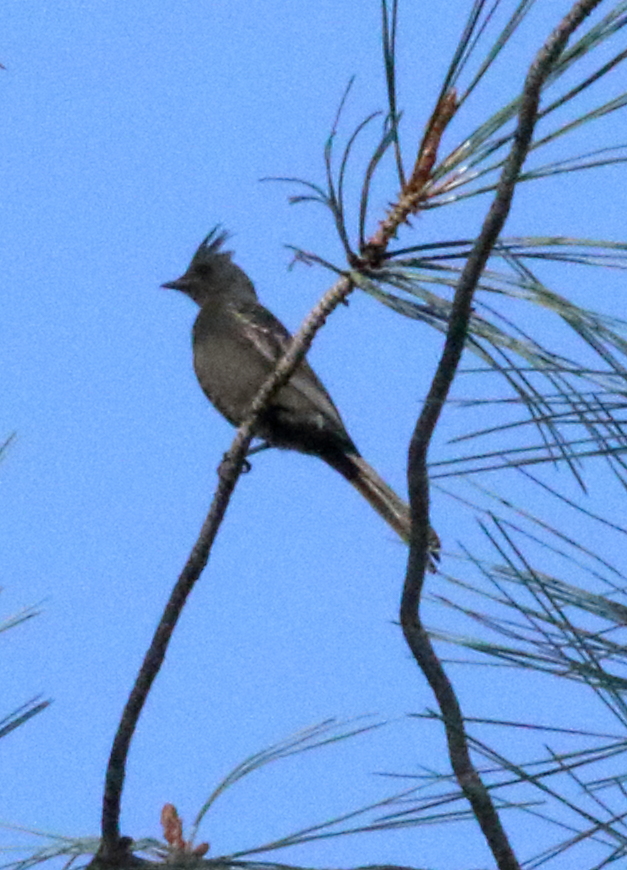
As I was leaving the hummingbirds and walking back down the dry wash, I glanced up at a medium-sized black bird landing high in the top of a pine tree. The bird showed a distinctive, tall peak on its head like it had styled its feathers with pomade, and at first I thought, “Is that a Stellar’s Jay?” Though I knew STJAs were common in the adjacent mountains, it didn’t seem likely that they’d be here on California’s Central Valley floor. However, as I stared at the bird—and three others that joined it—a wave of delight crept over me. I was looking at Phainopeplas!
At first I didn’t believe it. While I knew that Phainopeplas lived in Southern California, I’d only ever seen the birds in Arizona and here in Chico they seemed wonderfully out of place. Quickly calling up Merlin on my phone, however, the range map showed a tiny, seasonal finger stretching up the Central Valley—and stopping almost exactly where I was standing!
These, of course, are the moments a birder lives for—amazing surprises in new places—and the encounter put a bounce in my step as I returned to the hotel for a day of getting Tessa ready for college. Alas, the PHAIs were the last Year Bird I managed to find on the trip. I returned to Montana at 520 species for my Year List. Since then, I’ve managed to add Clark’s Grebe to my list, but that still falls seven short of breaking my record.
Will I make it? Do I have any surprise opportunities up my sleeve to put me over the top? And what of Braden? Could he reach that magical 1,000 number for the year? Well, you know the answer: you’ll just have to keep reading to find out!
What a great update of Collard faces, places nnd fun. Keep ’em coming. B A
Thanks, Bill! Send me some news when you have a chance 🙂
Fun report. You can do it, man! Btw, how do you always know so easily whether a particular species is a year bird or not? I guess you must be constantly checking your 2025 species list?
Actually, eBird keeps track of your species for the year–and the order you got them. Funny story: on this last trip, California Quail showed up as a Year Bird, which is funny because I know I already saw them in Montana. Since they are introduced here, though, perhaps they didn’t count it–or maybe I forgot to post the list with them earlier. Will have to check on that!