Category Archives: Parrots

Braden’s Costa Rica Report #2: Of Stingrays and Macaws

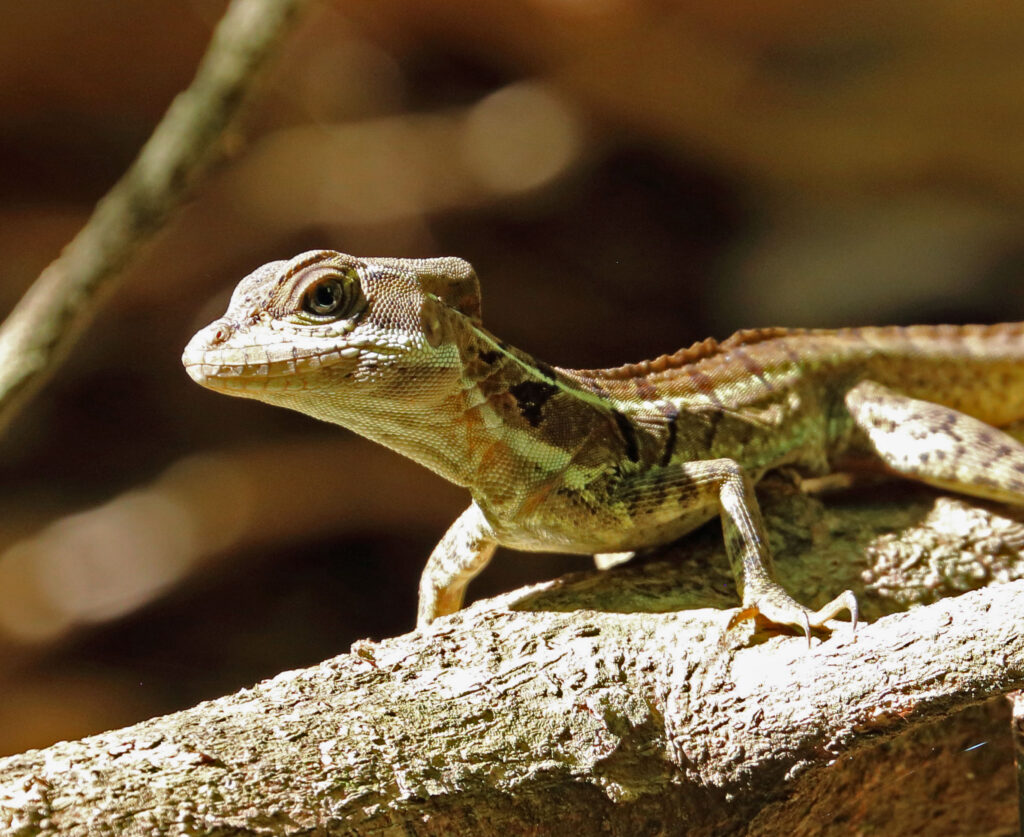
I stood on the wooden platform a hundred feet above the forest floor, staring down the long metal cable leading off into the foliage. The ziplining guide unhooked the carabiner on my belt from one line and attached it to another, then banged on the cable with a wooden bat—a signal to whoever was on the other end that I was ready to go. A colorful iguana watched from a nearby tree as I leaned back, grabbed the cable with my leather gloves, and jumped into the air. Humid, tropical wind hit me as I zipped past epiphyte-covered trees, and I heard the calls of parrots flying over. Thirty seconds later, I landed on the next platform, where the guide unclipped my carabiner and clipped it to another cable for another thrilling ride. An hour and fourteen platforms later, I touched down on the ground and joined the rest of the USAC students in gushing about how awesome ziplining had been—just the beginning to an exhilarating, chaotic weekend on the Pacific coast of Costa Rica.
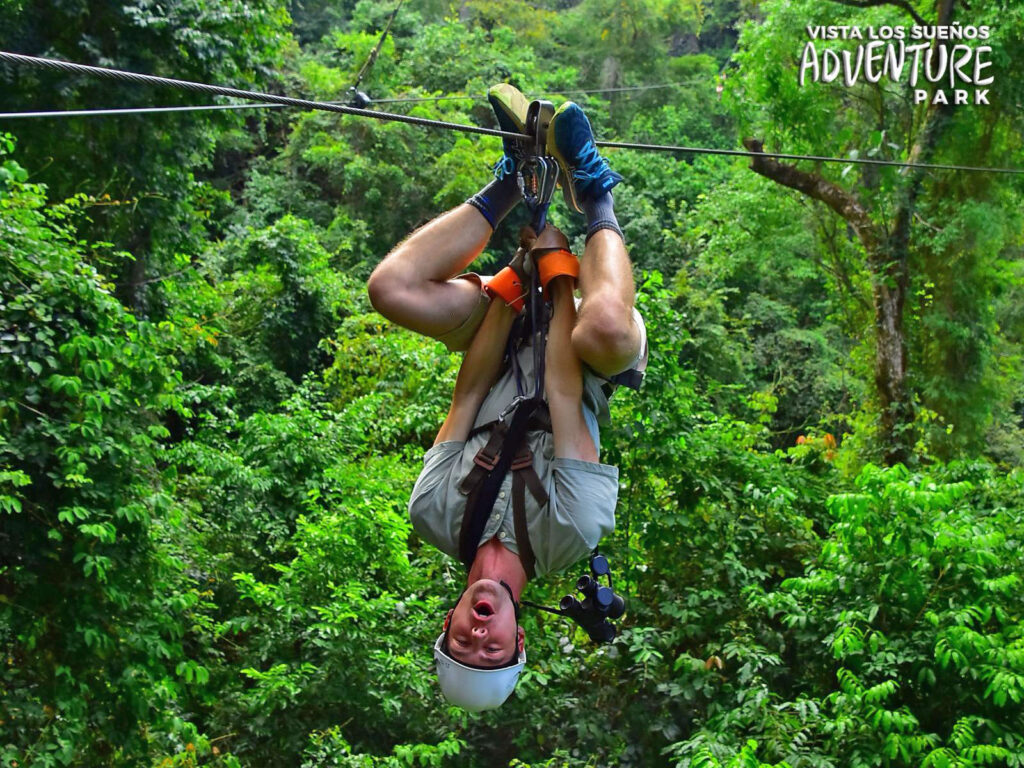
I’m going to get the, ahem, hang of this eventually!

After lunch, our program directors took us to the coastal tourist town of Jaco. Some people split off to take a paid surfing lesson, but I opted to stay on the main beach and enjoy the waves. As my friends and I waded into the warm, salty water, we discovered that we were not alone. As we swam in the surf, something soft and slimy suddenly collided with my leg. 

“Ack!” I cried, jumping backwards. Everyone around me stared. “What?”

A pair of fins appeared in the water to our left. Sharks! my mind shouted, but a sudden rolling wave gave us a glance at their true identities—stingrays! And the Pacific Cownose Rays (according to our limited research on Google) were not strong swimmers. Every time a more powerful wave rolled in, it carried the animals straight into us. Thankfully, none of the human—stingray collisions ended in harm to either party, but feeling a large, slimy animal run into me was not something I got used to.
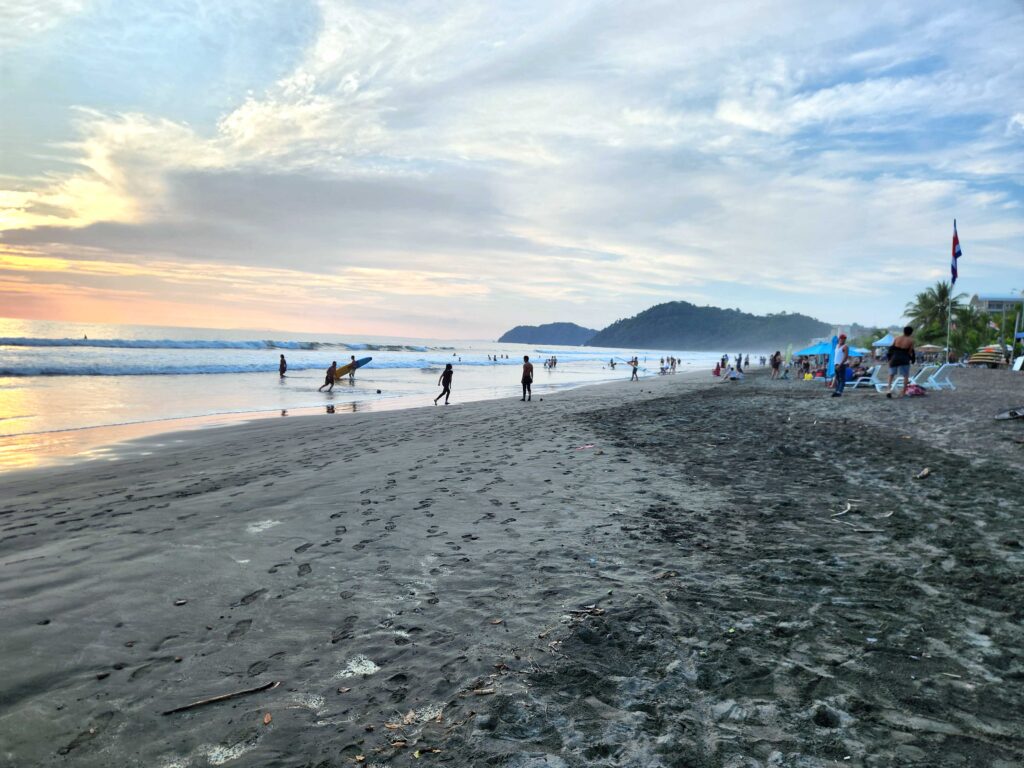
The beach at Jaco—a favorite for tourists and stingrays!

We retired from the beach to the hostel where we would be staying for the night, a mere hundred meters from the ocean. As the sun set, however, our activities continued. At around 5, two of my friends and I went on a probably ill-advised walk through the town of Jaco in search of owls. We ended up on a long dirt road leading towards the jungle. Before we got there, brooding clouds materialized above us, and a downpour soaked our clothes. We didn’t see any owls (or at least not well), but we did spot a few other night birds, including Lesser Nighthawks and Common Pauraques. Upon our soggy return to Jaco, we stopped briefly on a bridge crossing a small stream in town. There, in the dark, moonlit water, stood a tall, powerful-looking heron, staring straight down into the current. We watched from the bridge as the Bare-throated Tiger-Heron crept closer and closer to its desired target. After five minutes of holding our breaths, the heron plunged its neck into water, pulling out a fish and swallowing it whole!

That night, our entire cohort of students went out for drinks in downtown Jaco (the legal drinking age in Costa Rica is 18). Some of us grew restless sitting in the bars, however, and made our way back to the beach to watch the ocean pound relentlessly into the dark sand. Near our hostel, a river mouth emptied into the ocean, running in all directions to create a maze of shallow streams and sandbars. And there, under the moon, we spotted more herons, fishing in the dark. Another tiger-heron strutted on the shore. Two Yellow-crowned Night-herons fought over a frog dinner. But the coolest animal we saw was a bird straight out of a horror movie—the uncommon and elusive Boat-billed Heron (I didn’t take a picture because it was so dark but you should definitely look this thing up). There on the sand it stood, with large, dark, soulless eyes complementing its wild, black hairdo. Its bill looked more like a shovel than a boat, and we watched as it rushed into the water, chasing after a fish.
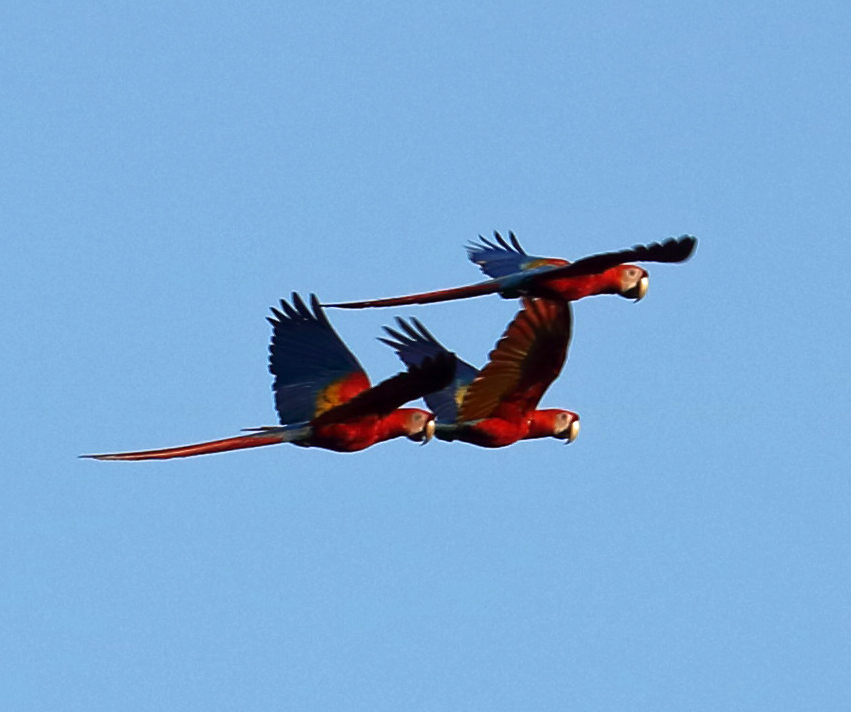
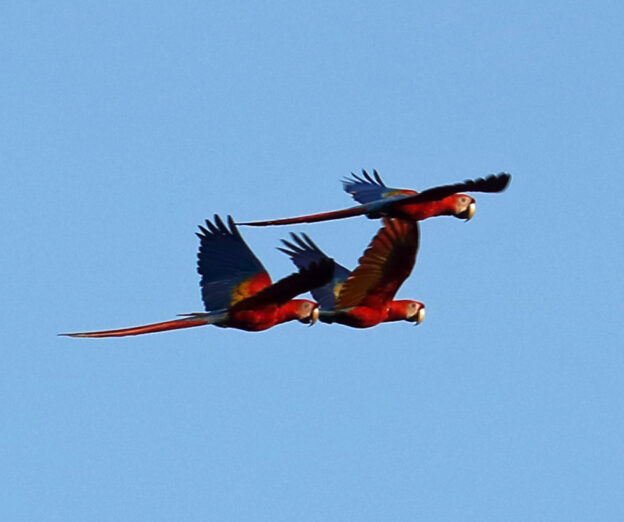
Scarlet Macaws in flight.

The next morning, Kiley, Leah and I caught an Uber to Playa Hermosa (“Beautiful Beach”—one of several Playa Hermosas scattered around the country) south of Jaco. Silvery streaks of sand ran across the less-touristed coastline, but the biggest prize had little to do with the ocean. Planted along the edge of the sand stood large trees of many species, including palms and almonds. Feeding on those almonds were giant, long-tailed Scarlet Macaws! The macaws flew over us in groups of two to four, calling abrasively and flashing the streaks of blue and yellow that decorated their otherwise crimson bodies. At one point, one landed no more than ten feet away, and we watched and filmed it in awe. Scarlet Macaws are a threatened species because of the illegal pet trade and habitat loss, but their story in Costa Rica is one of success. After declining significantly in the 1900s, Scarlet Macaws are increasing in numbers on both the Pacific and Caribbean coasts of the country, thanks to conservation work. They are now once again a common sight in much of Costa Rica.
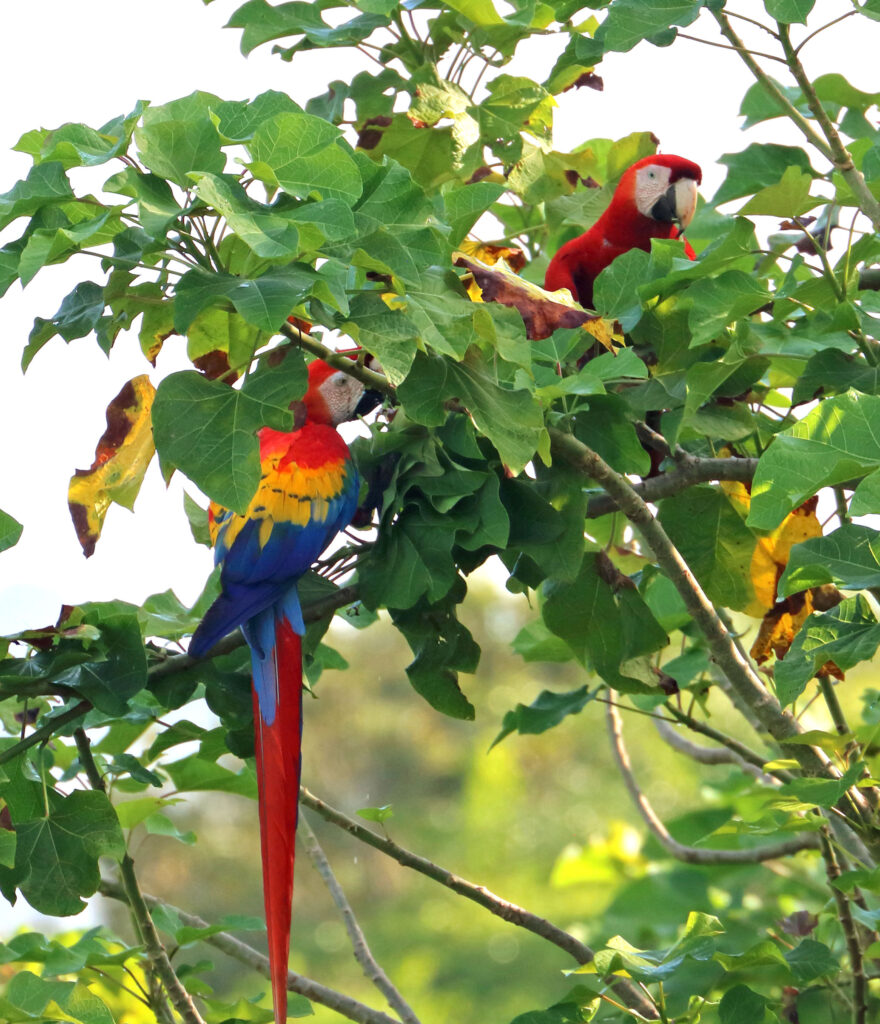
Scarlet Macaws feeding in trees along the beach. Their beaks are especially designed to crush the largest, hardest nuts!

The next morning, our last of the weekend, eight of us caught an early-morning bus north to Carara National Park, one of the last tracts of pristine Pacific lowland rainforest in the country. Once we bought our tickets and entered the park (if you go, make SURE to buy tickets online in advance—it was a hassle doing it there), we followed a trail deep into the forest, marveling at the height and circumference of the smooth-barked trees rising before us. Many of the trees had thick buttresses stretching out from their bases. Here, the deeper soils held little nutrients, so tree roots stretched out rather than down. Leaf-cutter ant trails crossed the trail every couple hundred meters, and we thanked a guide who pointed out a White-lined Bat roosting on the side of a tree.
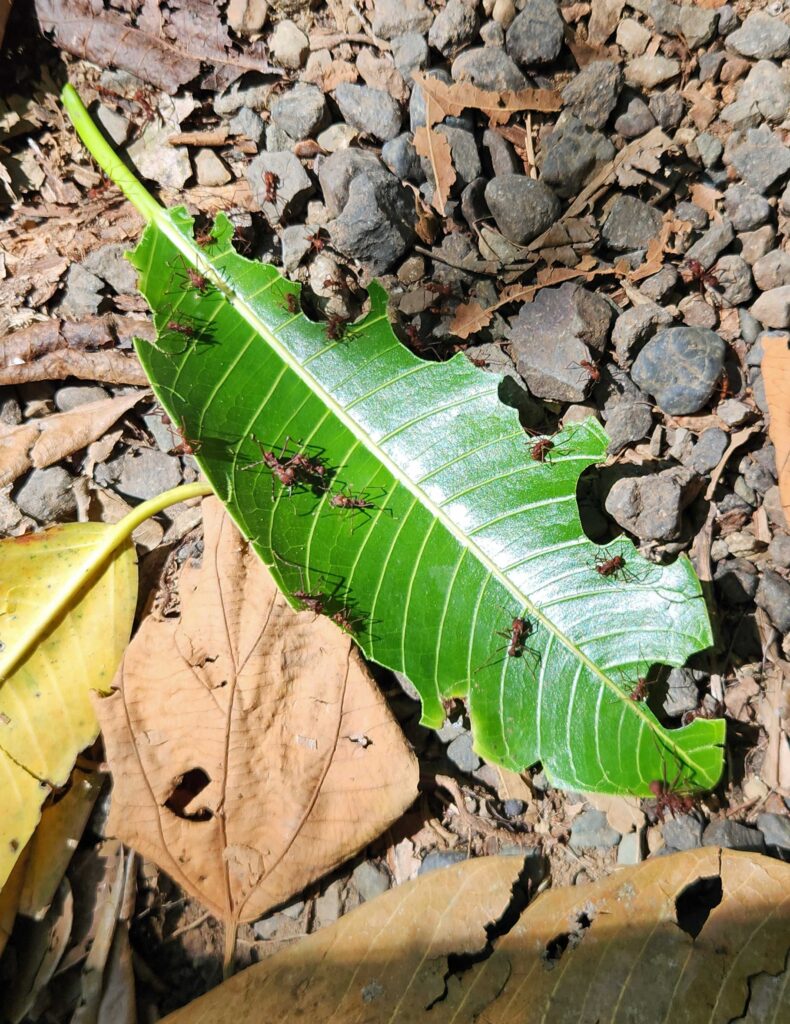
One of several troops of leaf-cutter ants we enjoyed watching.

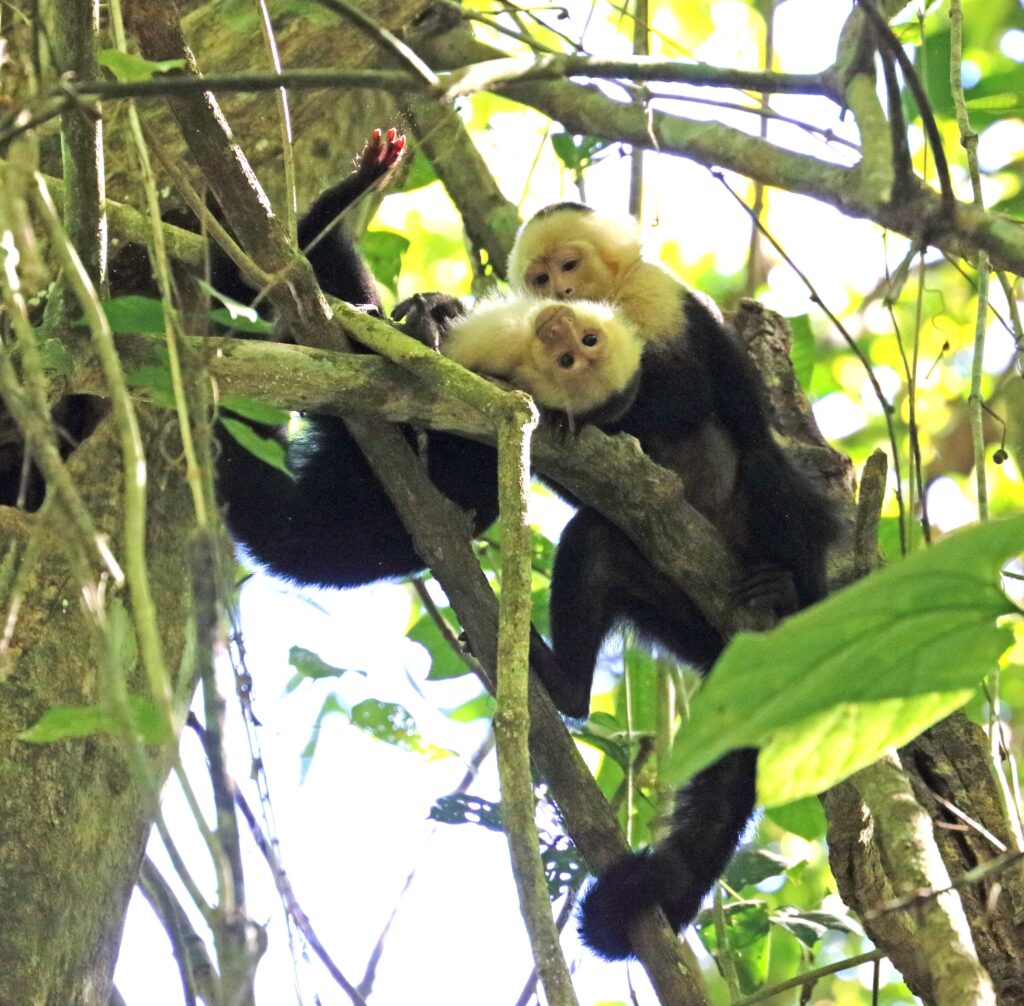
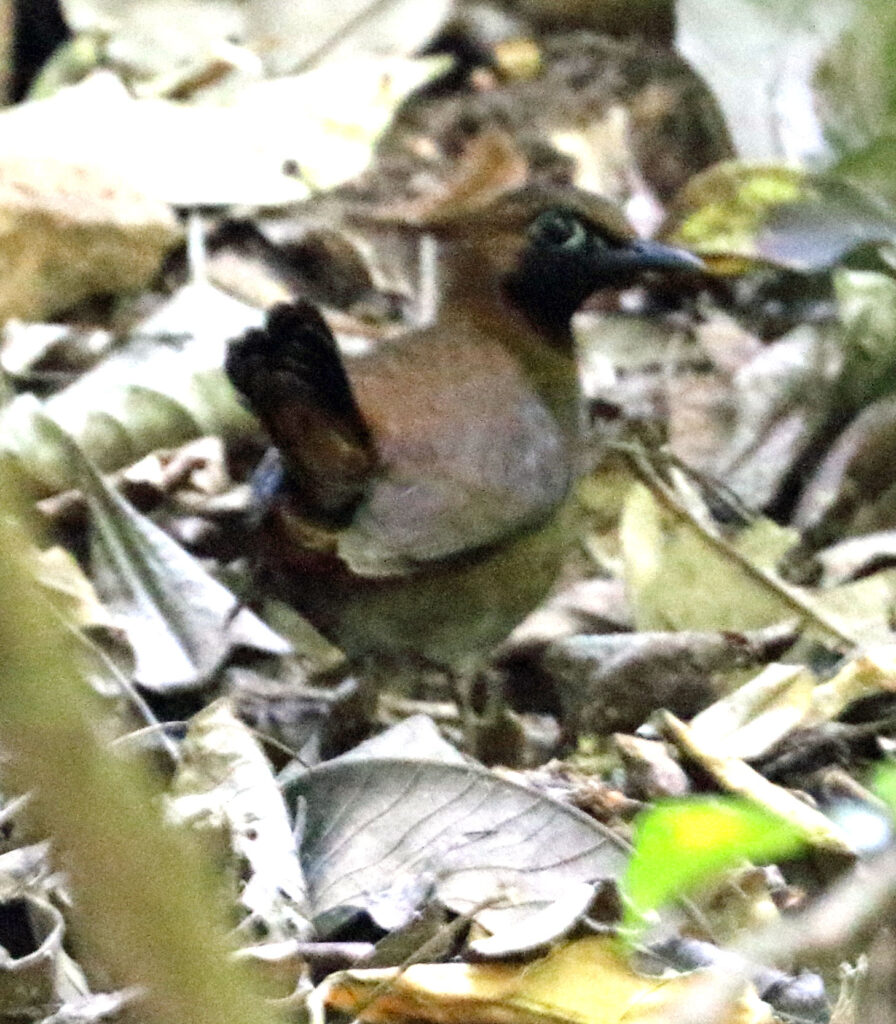
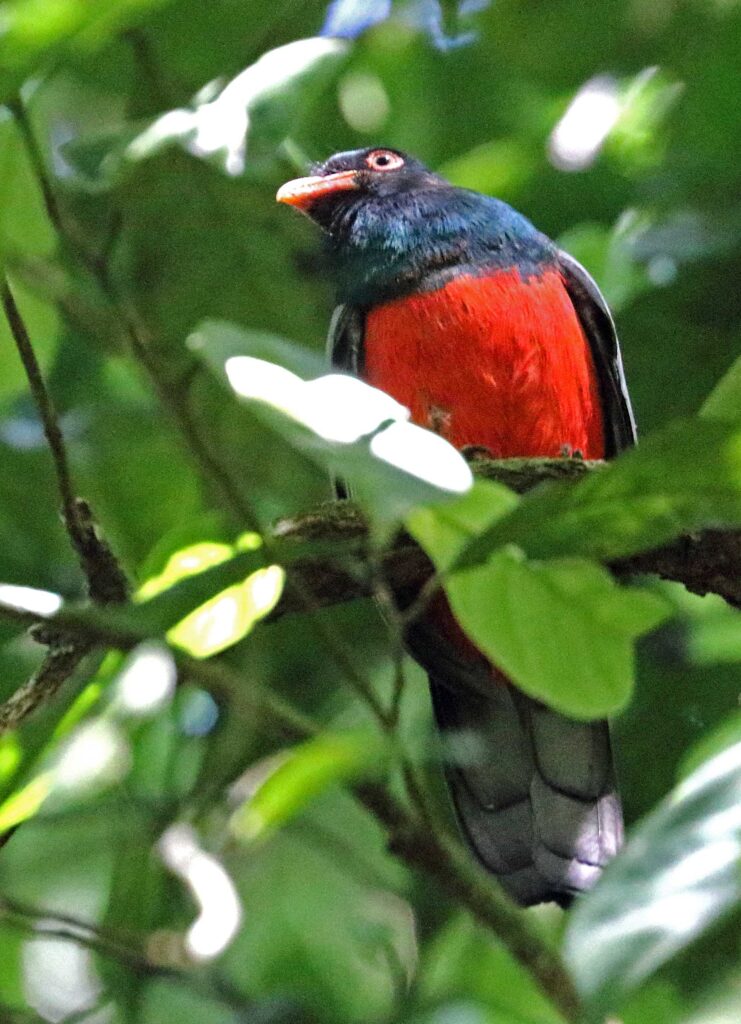
Loafing on a log laid across a bubbling river we spotted not one but two Brown Basilisks or Jesus Christ Lizards, that special reptile with the ability to run on water. White-faced Capuchins stared down at us from trees as they picked through each other’s fur, and we startled a White-nosed Coati from the trail, where it had been quietly gobbling down ants. We got great views of Slaty-tailed Trogons—big, red-bellied birds that look kind of like frogs—and a Yellow-throated Toucan that flew in as we watched yet more Scarlet Macaws. My personal bird of the day was a Black-faced Antthrush, a small, quiet songbird poking through the leaf litter about fifty meters away from the trail. This lowland rainforest (which was the final of the three prominent forest types in the country for me to visit) held many species from the tropical dry forest, too, as Carara National Park sits near the zone where the two habitats blend together. To see true, pure lowland tropical rainforest, however, we’ll have to visit the Osa Peninsula or Manuel Antonio National Park, quite a bit farther south.
Stay tuned!
Arizona 2022, Part 1: Braden’s Big Year or Bust

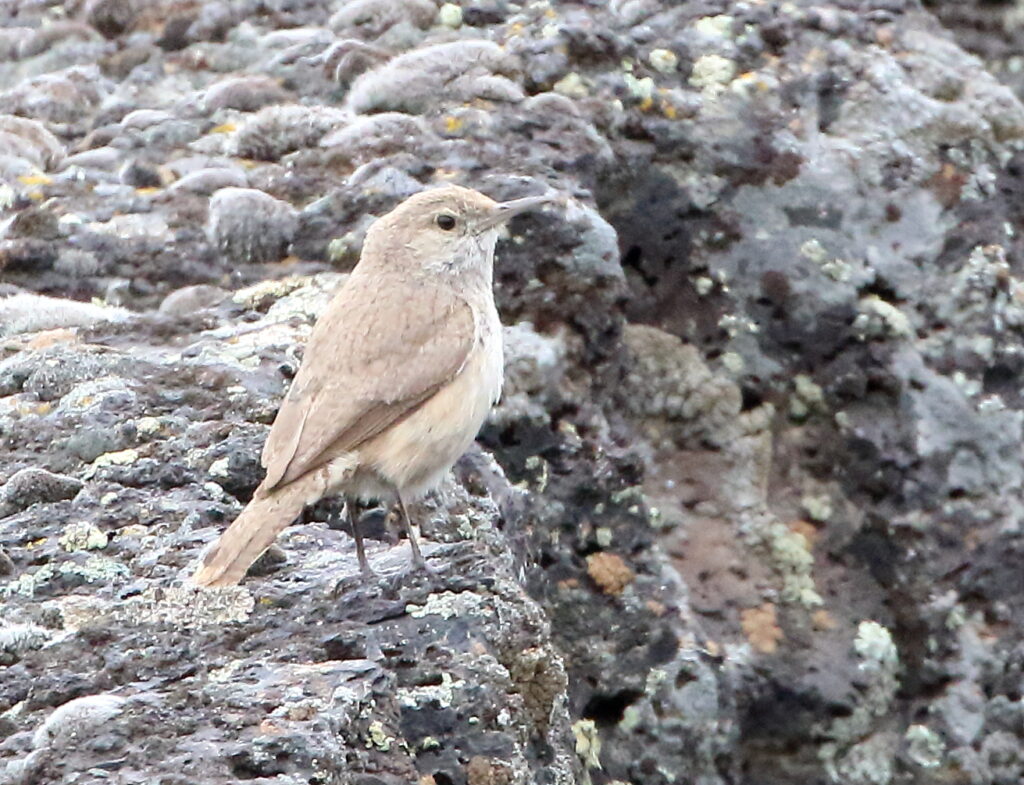
It’s been a while since we posted, and that’s no accident. When Braden landed a field job monitoring Northern Goshawks in California’s Sierras for the summer, I impulsively offered to drive him there—via Arizona and Southern California. We had wanted to return to Arizona since falling in love with the state during our Big Year in 2016. The fact that Braden was out to smash his own Big Year record with a goal of 400 species made the argument even stronger, especially after he and Nick Ramsey had ransacked the state of Florida only weeks before, followed by our amazing time birding New York City. So on May 22, rashly ignoring the price of gasoline, Braden and I made a beeline down Interstate 15, pulling over to pick up Thick-billed Longspurs near Dillon, Sage Thrashers and Rock Wrens in southern Idaho, and Burrowing Owls and phalaropes at Antelope Island near Salt Lake City. After a short, peaceful night in Kanab and a stop to ogle the rapidly disappearing Lake Powell, we rolled into Phoenix for our first major Arizona stop of the trip: Prospector Park, east of Phoenix.

We found Rock Wrens at a delightful I-15 rest area of lava called Hell’s Half Acre in southern Idaho. Don’t pass it up!

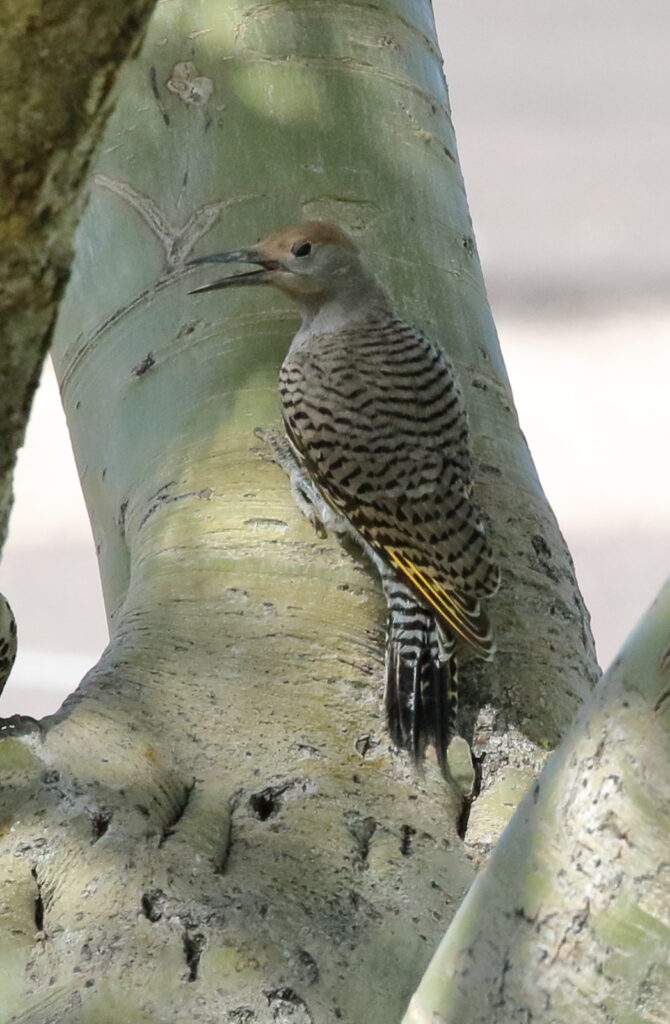
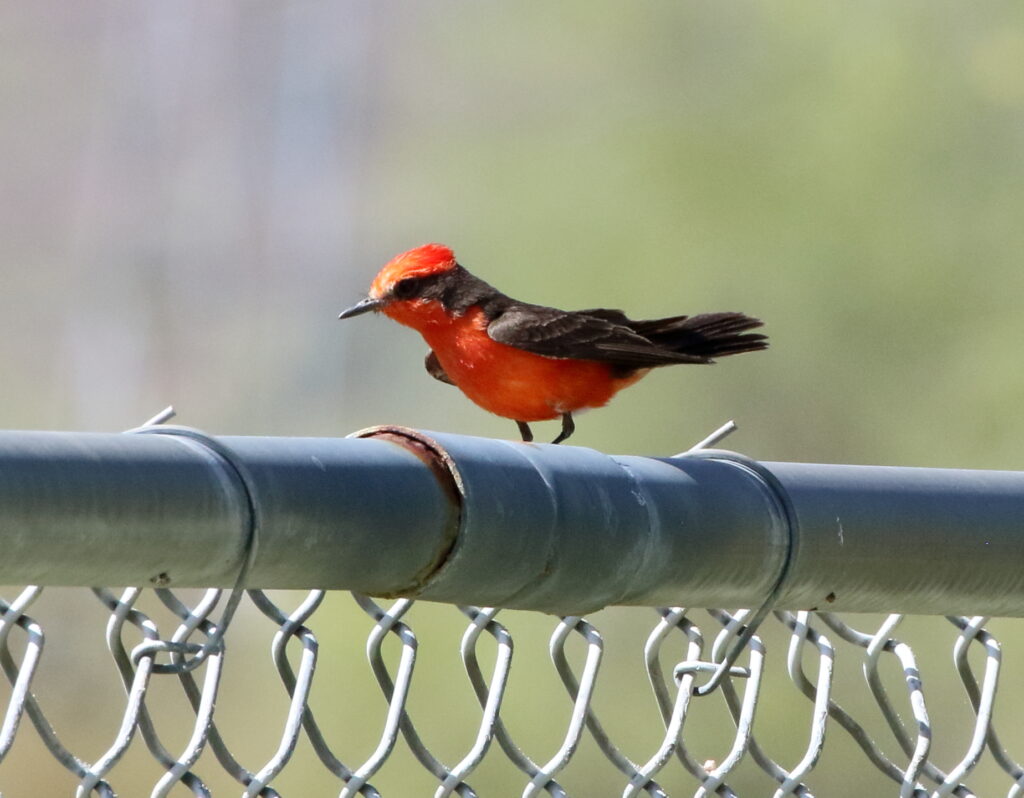
As usual, Braden ferreted out our hotspots for the trip and Prospector Park blew away all expectations. An unlikely-looking suburban park with playing fields and lots of lawn, we tumbled out of the car and began racking up Life Birds before we could utter “Holy Bird, Batman!” As soon as he raised his binoculars to his eyes, Braden called out “Abert’s Towhee!” Five minutes later, “Gilded Flicker”—the last ABA woodpecker I needed for my Life List. This was not to mention the gobs of Year Birds Braden needed to advance toward his magic 400 number. In fact, one of the great things about Arizona is that for Montanans, almost every bird we see is likely to be a Year Bird. Verdin, Ladder-backed and Gila Woodpeckers, Vermillion Flycatcher, Lucy’s Warbler, Gambel’s Quail, Curved-billed Thrasher—and another Lifer, Bendire’s Thrasher. For a birder, Arizona truly is a pot ‘o gold.

Gilded Flicker was a species I had needed for several years to complete my ABA woodpecker list. Okay, I admit it—not the most exciting critter, but we both enjoyed seeing it nonetheless.

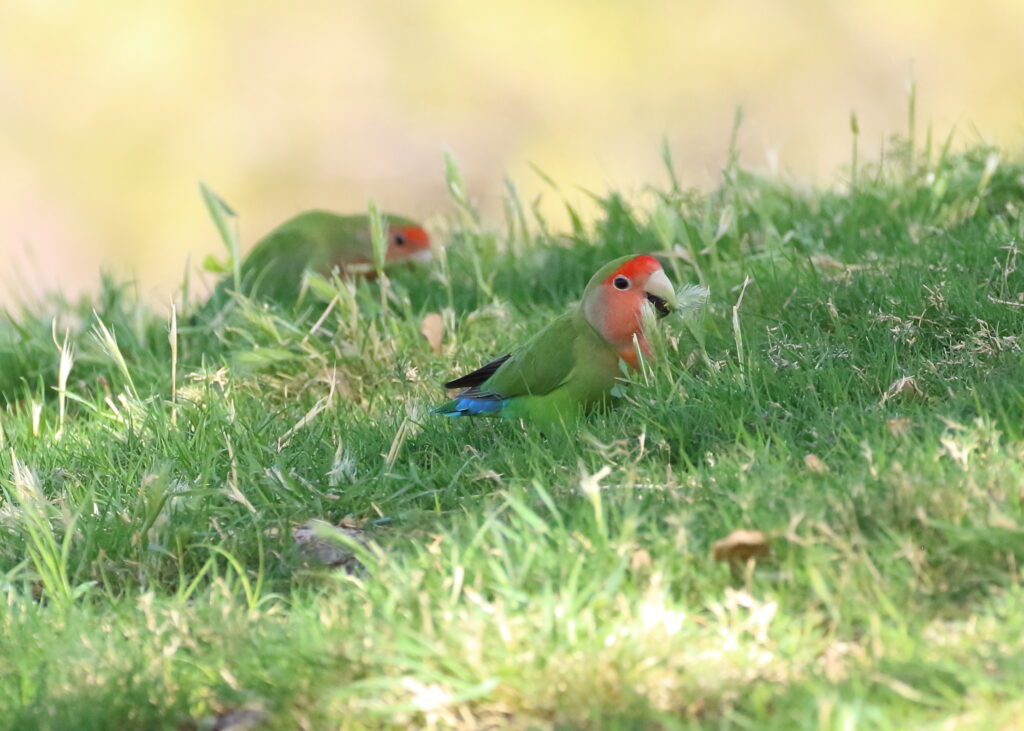
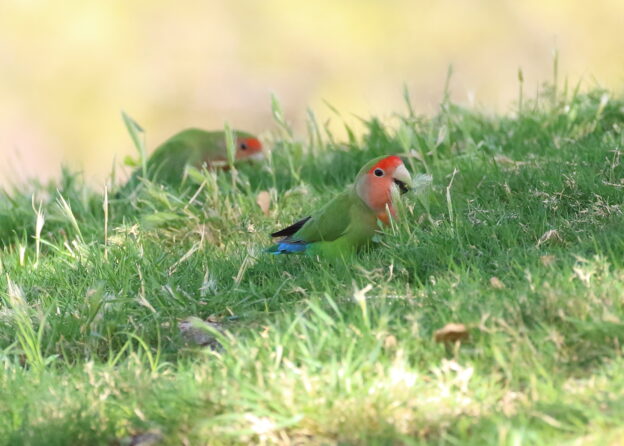
Not for the first time, one of our most fun finds turned out not to be a native species, but an exotic. We were completing our circuit around the park when we noticed a group of (I think) Mennonite birders staring at something in the grass. We couldn’t tell what they were until green shapes flew over to another patch of grass. “Rosy-faced Lovebirds!” Braden called with delight. It was a species he had especially hoped to see—and another Lifer for both of us. We spent a satisfying fifteen minutes just watching these little guys as they gathered grass seed heads—presumably to eat, but perhaps also for nesting material.

Introduced parrots such as these Rosy-faced Lovebirds always stir conflicting emotions in Braden and me. I mean, they definitely don’t belong here, but dang it, why do they have to be so darned cute?

But we had miles to go before we slept, so we reluctantly climbed back in the car for that night’s destination, Safford, where we checked into a cheap motel—only to find bed bugs hiding under the mattress. After quickly getting a refund, we headed to a pricier, bed-bug free place down the street (and yes, we checked the mattresses there, too!) for a welcome, but short night’s sleep. Our two-day, 1270-mile drive had already netted us five Life Birds and raised Braden’s Big Year total from 322 to 345 species—and we hadn’t even reached our first real destination. Would we be able to get Braden to 400? Things were looking good, but in birding as in life, nothing is certain . . .

Our Prospector Park List

Epic Florida Adventure, Day 3: Miami, Baby!

Welcome to Episode 3 of Braden’s account of his remarkable Spring Break birding with Nick Ramsey. Part 2, last week, got almost a record number of views, and we have no doubt you’ll love this post every bit as much. I mean, parrots! How can you resist? If you enjoy these posts, please share and subscribe. Thanks for reading!

The heat was already wet and oppressive when I woke around dawn the next morning, after a very minimal amount of sleep. I crawled out of the passenger seat of the car, still groggy, into the gray light of a forest in the process of waking up. Nick was already there, and suggested that we head over to the main parking area for Loxahatchee National Wildlife Refuge, a place famous for its snail-loving birds: more specifically, Limpkins and Snail Kites. We did so, and then began our two-hour tromp around the refuge. 

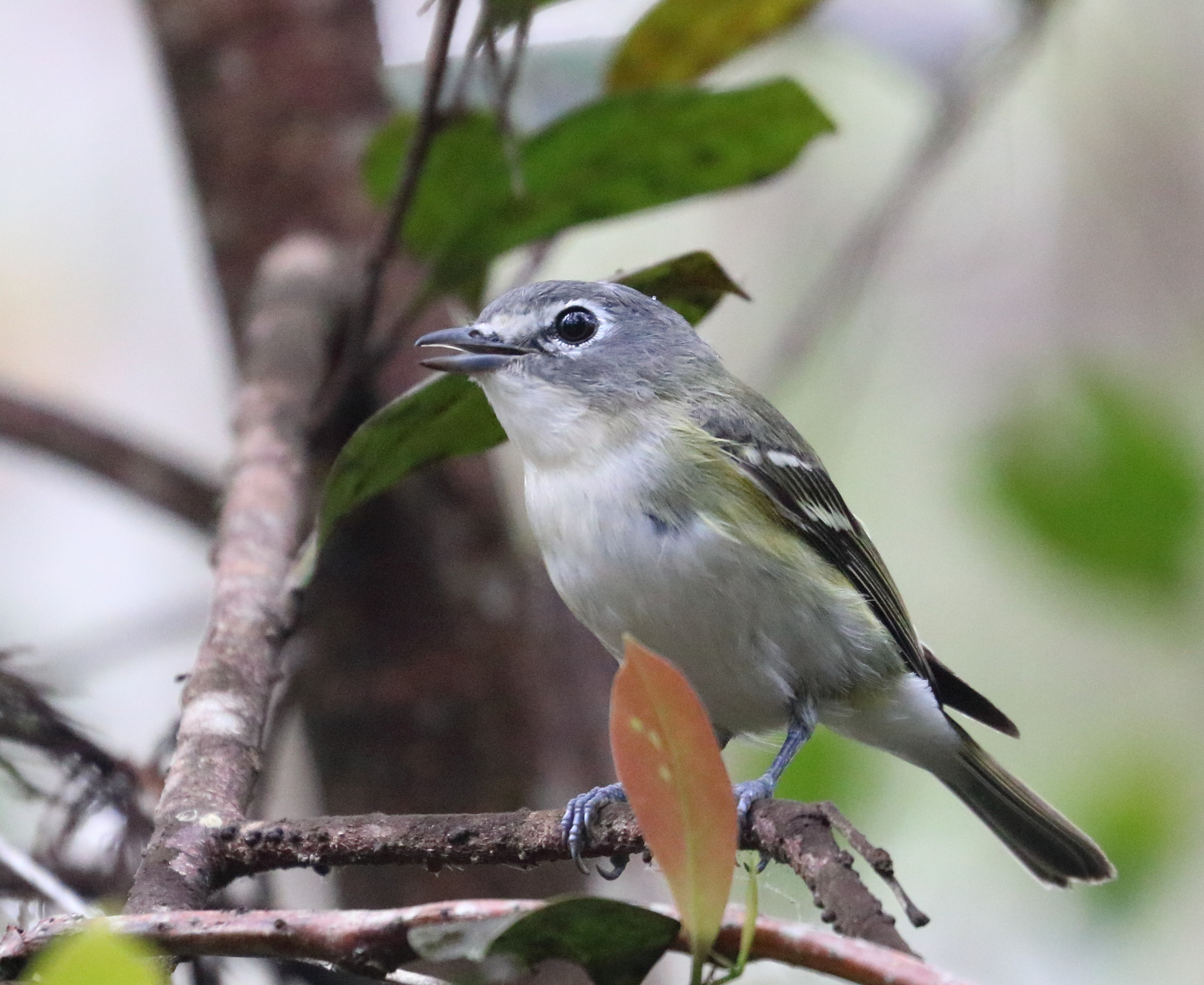
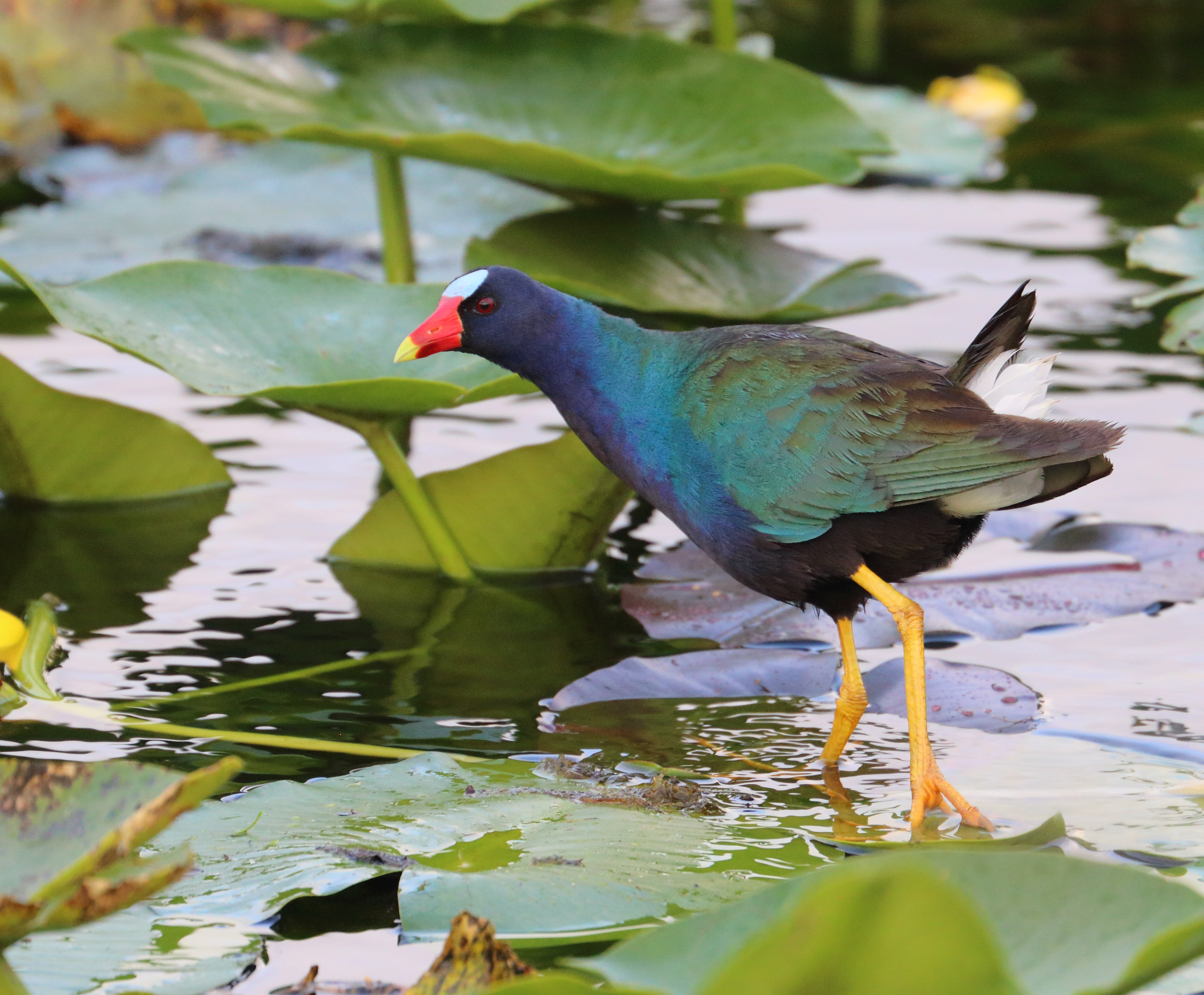
It’s not like there weren’t birds at Loxahatchee. For one, the marshy, reedy areas were filled with Common and Purple Gallinules, both colorful, entertaining water birds that I spent a while photographing. The waders, specifically White Ibises, were around, and kept making flights over us as we scanned the marshes for Limpkin. And in the forested areas, we did manage to draw in a few passerine species, including American Redstarts, a new warbler for the trip, and a very cooperative Blue-headed Vireo.

Blue-headed Vireos are one of several kinds of vireos that wear white “spectacles”.

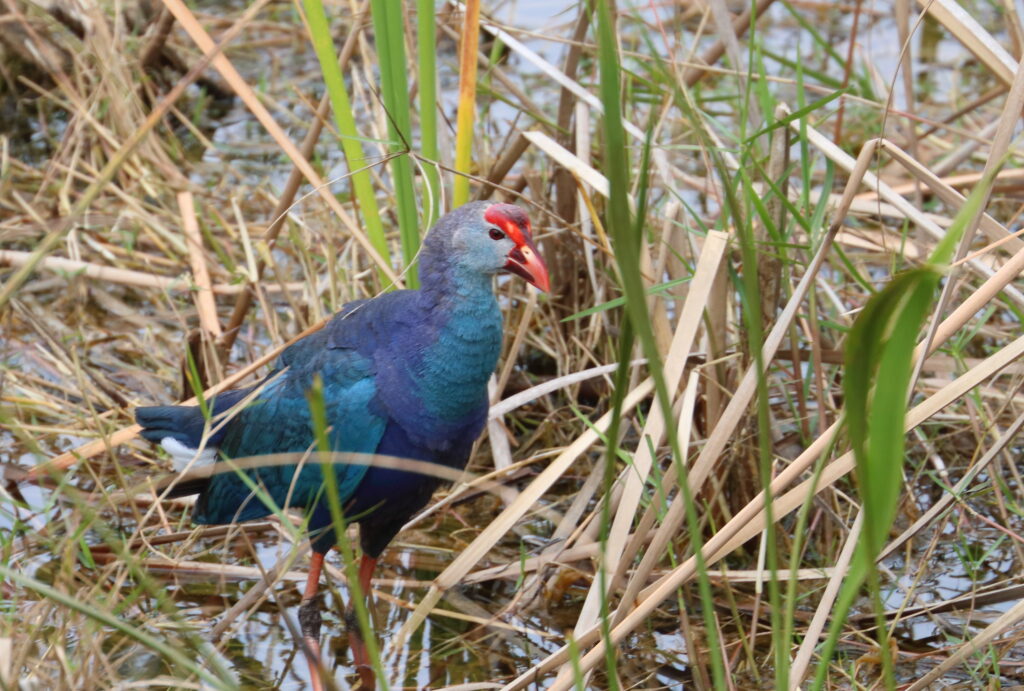
All-in-all, however, the wildlife refuge proved disappointing. We missed Snail Kite and the only Limpkin we saw was a brown blob disappearing into a stand of trees, never to be seen again. The Gray-headed Swamphens (an Old World exotic marshbird) that Nick had spotted here last time weren’t around, and we didn’t find any of the particularly cool wintering warblers that we could have. Ducks, again, were lacking, and the wader numbers aside from the ibises were notably worse than expected. The day (along with the poor sleeping conditions the night before) was not off to a good start.

Gray-headed Swamphens get less attention than parrots, but are also introduced species to South Florida.

In a search for swamphens, Nick and I drove to a small park on the outskirts of Fort Lauderdale called Markham Park next. This park was situated right next to a part of the Everglades (though not the National Park yet) and was known for having most of the Miami exotics that Nick wanted to see on the trip: Spot-breasted Oriole and White-winged and Yellow-chevroned Parakeets. We picked a small portion of the park nearest to the wetlands and hiked towards them, noting butterflies I’d never seen before, including the Zebra Longwing, which belonged to a tropical genus. Eventually we got to the wetlands, finally nabbing one of our targets for the day. Two giant water-chickens, sporting an even crazier range of colors than Purple Gallinules, lounged in the reeds. Gray-headed Swamphens were related to gallinules and native to southern Asia, and thrived in several places in southern Florida. These were one of many exotics we would see as the day progressed.

Unlike the Gray-headed Swamphen, Purple Gallinules are native members of the rail family. They definitely fit in with Florida’s tropical color scheme.

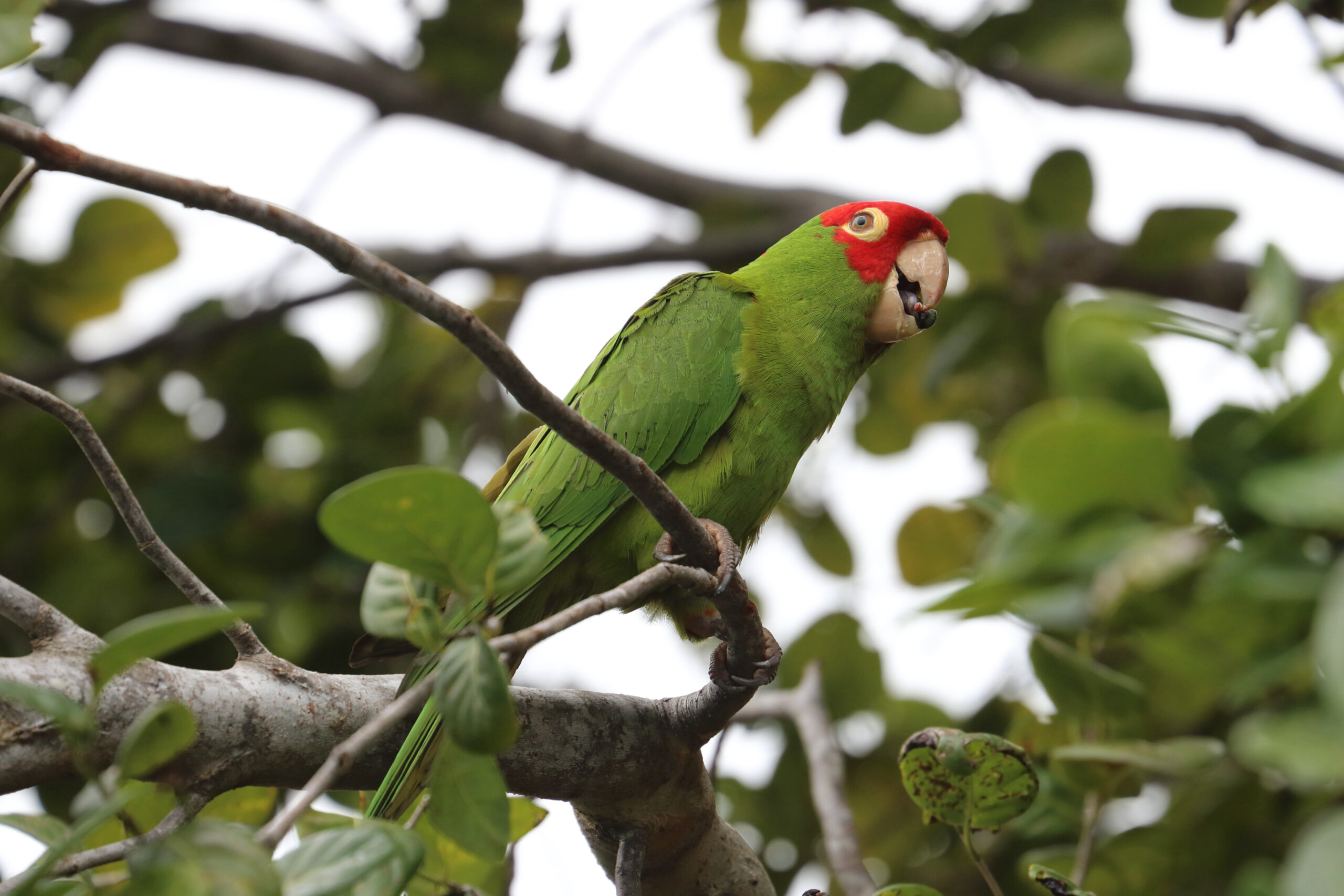
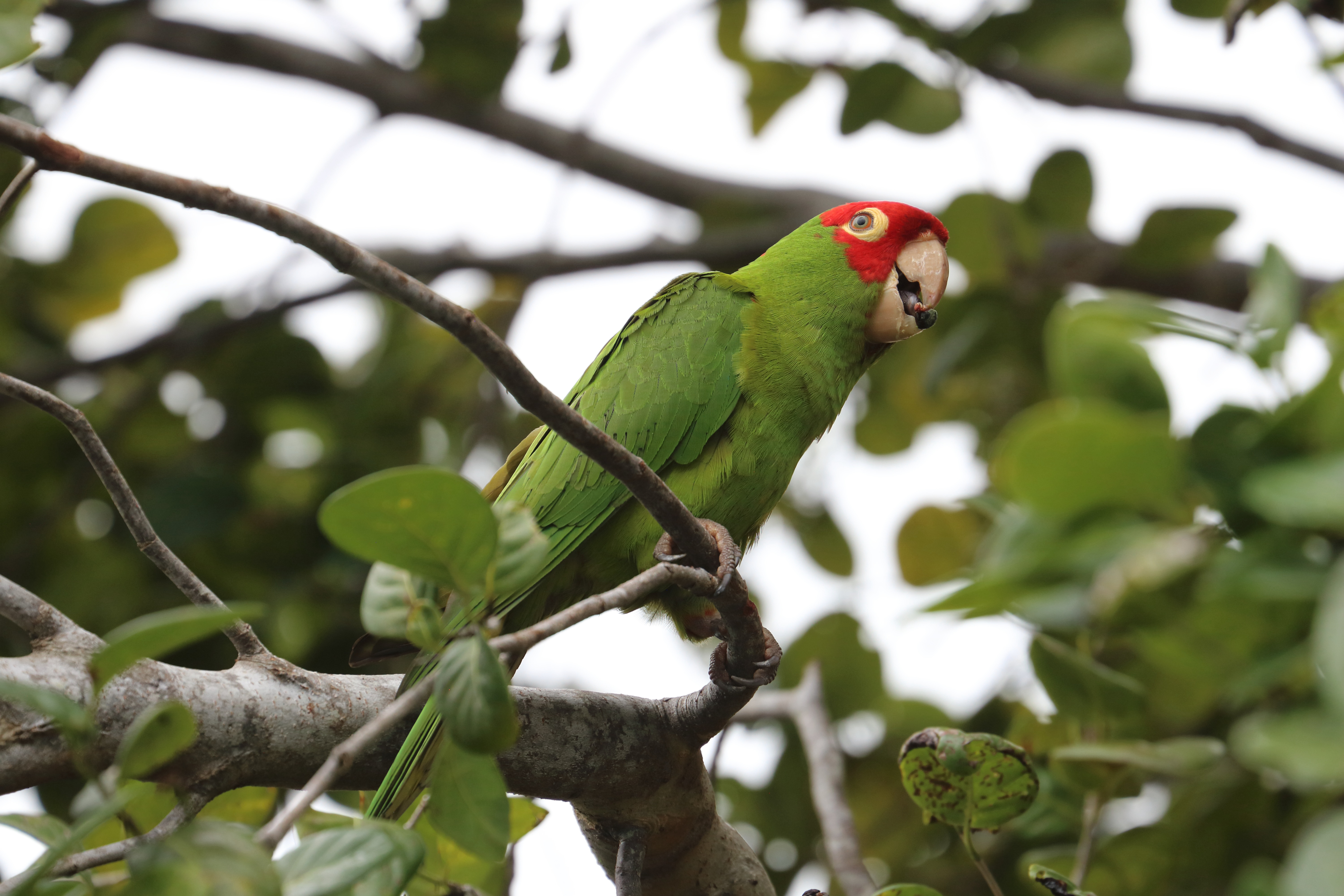
As far as biodiversity is concerned, south Florida is about as crazy as you can get. Along with a remarkable sweep of native and endemic species, including American Crocodile, Snail Kite and Florida Cottonmouth, hundreds if not thousands of species have been introduced to the area. The United States once had two native parrots. The Carolina Parakeet is now extinct, and the Thick-billed Parrot’s population is too small to support natural wanderings across the Mexican border. Now more than fifty parrot species from Latin America and the Old World have been reported within our country’s borders, most of them from Florida. Many are established too—my dad and I had Nanday and Red-masked Parakeets and Red-crowned Parrots on our life lists from Point Mugu State Park, San Diego, and Brownsville. Florida, though, boasted more species than Texas or California, and later in the day we would be looking for some of them.

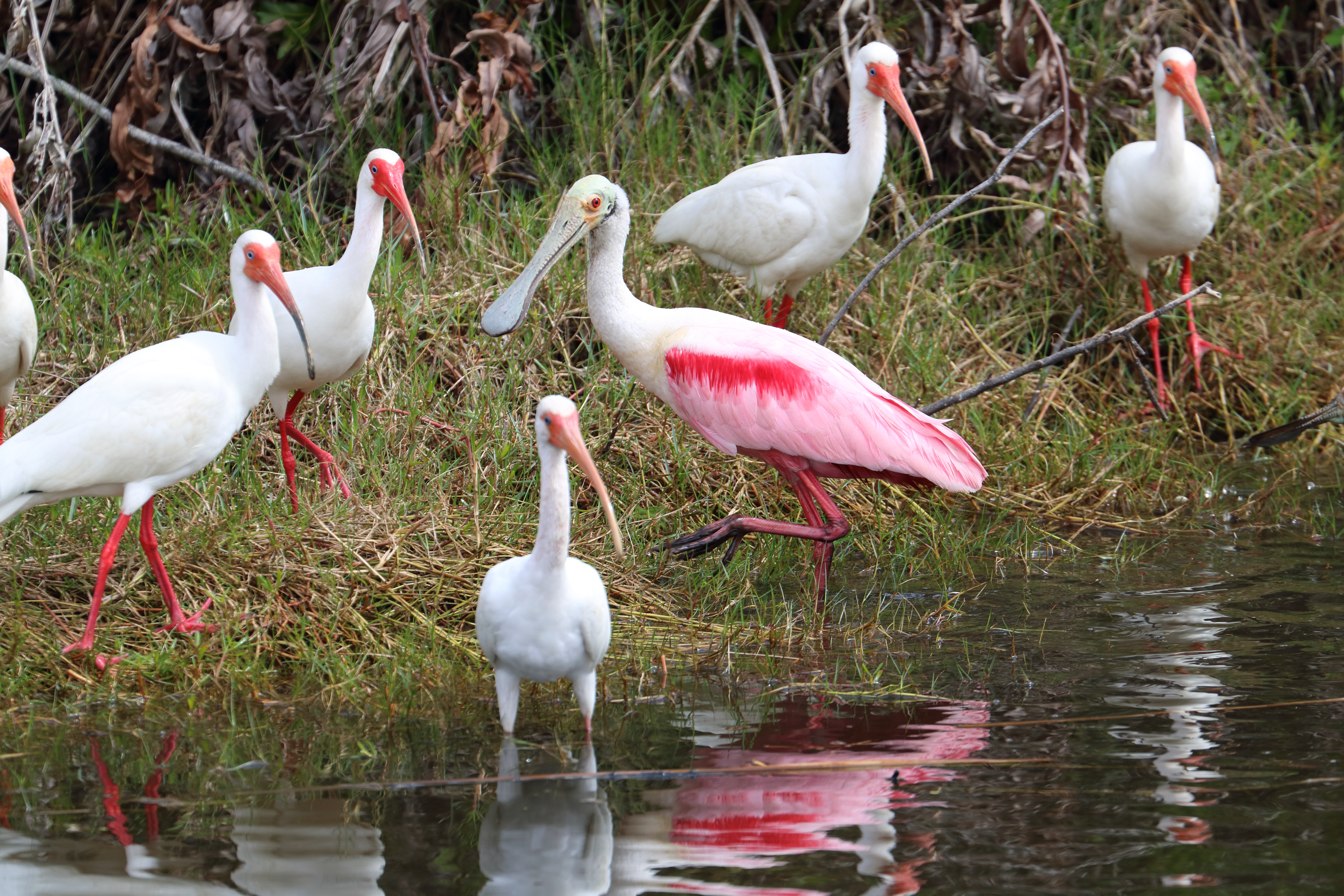
First, though, we were headed to Alligator Alley, a large highway cutting across a portion of the Everglades. As we drove away from the suburbs of Miami, the buildings were replaced by sawgrass wetlands as far as the eye could see. I’d never seen any habitat this expansive and undeveloped, and as we drove into healthier and healthier habitat, waders began to lift out of the marsh on both sides of the car. Black-crowned Night-herons flew high overhead while large flocks of White Ibis dropped into distant marshland. It was incredible—I’d only seen this number of birds in one other place—Freezout Lake, Montana. It was as if the grass was covered in patches of cotton composed of egrets and ibises. Every once in a while, a radiantly-pink spoonbill or large Great Blue Heron joined the fray, trailing behind a flock of Tricolored or Little Blue Herons. As Nick drove, I took as many mental pictures as I could—there was no place like this anywhere else on the planet.

I know I posted a picture of a Roseate Spoonbill with White Ibises last week, but figured you wouldn’t mind!

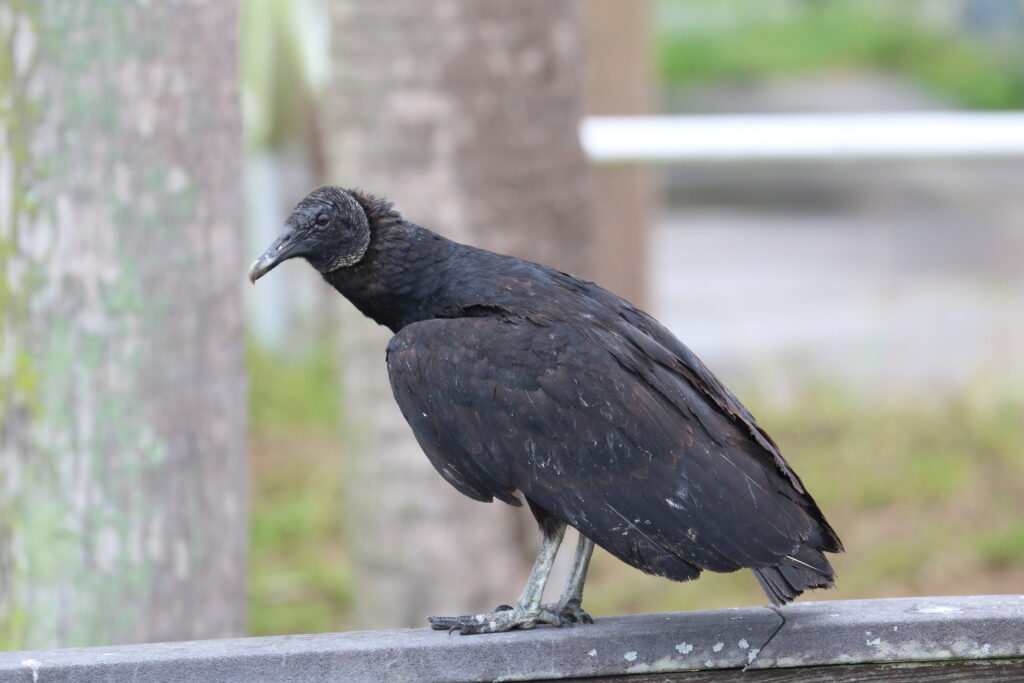
We pulled off the highway towards a small highway rest stop, spooking some lazy Black Vultures. There was an observation tower here, and we hoped to spot some Snail Kites, birds we’d missed at both Loxahatchee and Markham Park. We climbed the tower with Nick’s spotting scope, then got to work scanning the Serengeti of Florida. Right next to us a wide canal provided us with avian entertainment as we looked for the kites. Five Green Herons had taken up residence in the canal, and they began fighting with the other species for prime perching spots overlooking the water. Boat-tailed Grackles, Fish Crows and both Turkey and Black Vultures tussled around us, covering most of the trees and walkways. And from our vantage point, we could see roughly five American Alligators eyeing the birds above them.

Black and Turkey Vultures are always a welcome sight for birders. Not only are they amazing fliers, they usually indicate a pretty healthy habitat.

While we didn’t find any Snail Kites, we did finally get a good look at a Limpkin as it foraged for snails on top of a patch of trash on the other side of the canal. The bird only appeared for a few minutes, and it made me wonder just how many of this species lived in the endless marsh. After checking the other side of the highway and getting poor looks at my lifer Painted Bunting, we drove back into Miami, our minds focusing on exotic species. Iguanas soon dotted the streets, and we got Common Mynas, a songbird introduced from Asia, next to a McDonald’s as we stopped for lunch. Nick pointed out a Peter’s Rock Agama, a funky red-headed lizard native to West Africa, scampering up a palm tree. Then, as we pulled into the Biltmore Hotel parking lot, we immediately heard screeching above us: parakeets.

We piled out of the car just as a large flock touched down in front of us. The flock consisted of both Red-masked and Mitred Parakeets, two very similar species native to South America. Interestingly enough, I’d seen both species before, the former in San Diego and the latter in its native range in Peru. This hotel had more to offer though: it was a roost site for at least half a dozen species. It also happened to be one of the ritziest hotels in Miami, offering rooms between six hundred dollars and two thousand a night, and its towering red walls hosted cavities that parrots liked to roost in. What’s more, it overlooked a large golf course, and Nick and I felt like outsiders as we walked around the courtyard in clothes that hadn’t been washed in several days. This was the kind of place I’d imagined when I’d thought about Florida.

Even though parrots are exotic introductions to Florida, it’s hard not to get excited when a stunning Mitred Parakeet lands in front of you!

While the parakeets were plentiful, we did not find either of our targets: Yellow-chevroned and White-winged Parakeets. Both species, which were substantially smaller than the parakeets, were mostly green, with small markings on the wing that identified them. While Yellow-chevroned was firmly established in the area, White-winged was on the decline, having disappeared from all of South Florida in the last few years. No one understands the cause of this decline was since there appears to be plenty of food (palm nuts) around, and parrot species have coexisted here for decades. Suddenly, though, this species that had been reliable ten years ago was nowhere to be found, mirroring the disappearance of another parrot species from Miami thirty years prior, the Budgerigar. 

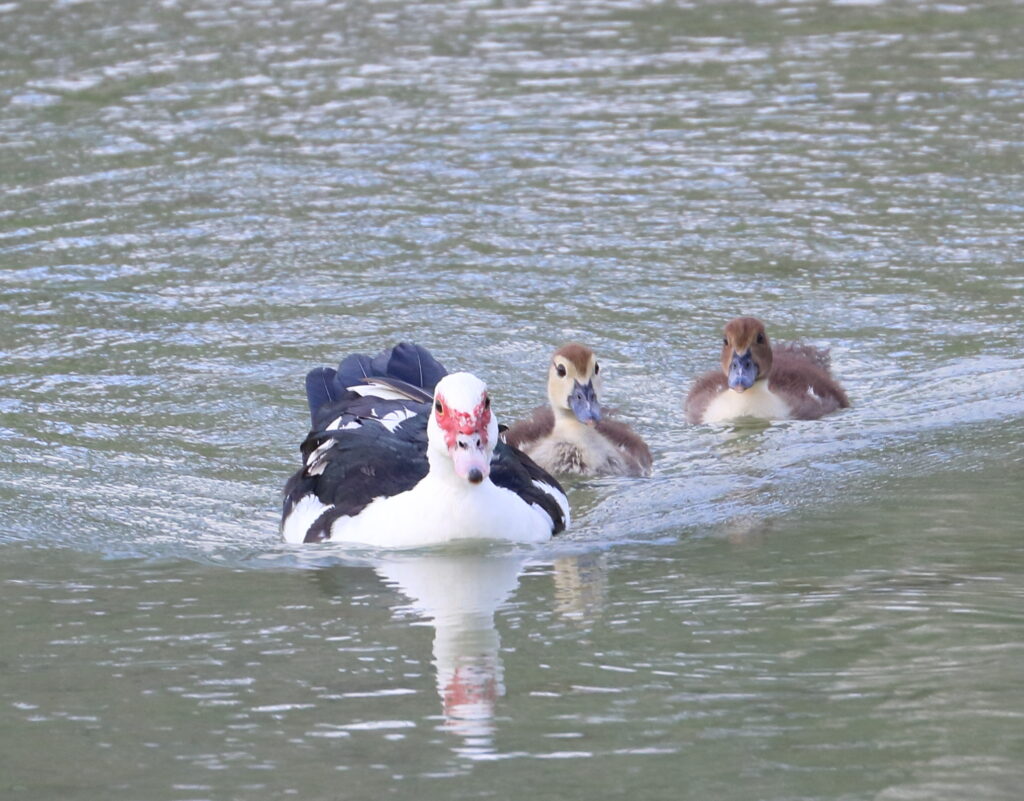
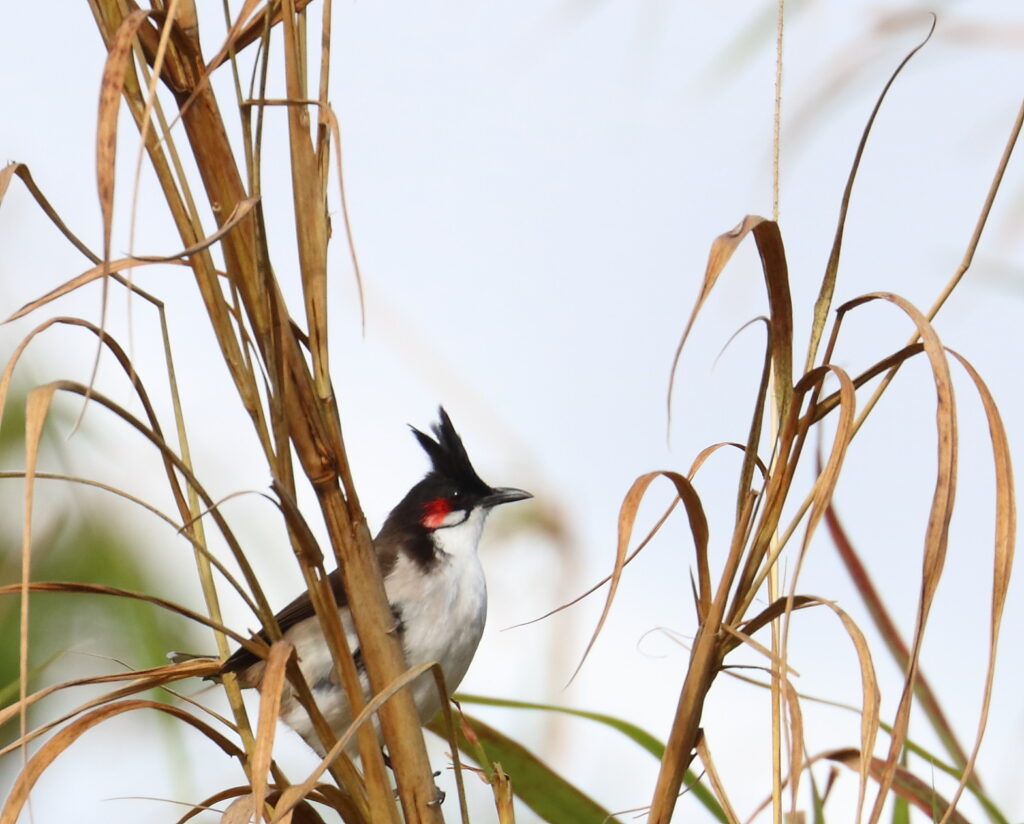
Our next spot was a run-down park called Pine Woods Park, a place Nick picked out for both Red-whiskered Bulbul and Spot-breasted Oriole, species that had been introduced from southern Asia and central America, respectively. Upon walking through the tall cane grass in the park, we immediately found a beautiful, crested bulbul perched up on a stalk, marking Nick’s first (and spoiler alert, only) lifer for the trip! We marveled at it as two other exotic species, Scaly-breasted Munias and Monk Parakeets, called nearby. Next, we headed to the Baptist Hospital in Kendall, a known location for the oriole. We struck out on the species again, but did get to enjoy more time with Red-masked Parakeets clinging to buildings and Egyptian Geese and Muscovy Ducks with babies running around a nearby lawn. We then drove the neighborhoods, trying and failing to find the oriole, and in a last-ditch effort, returned to Pine Woods Park. Walking among the introduced vegetation, we again struck out but did spot a smaller parakeet flying with the Monk Parakeets above us. It landed and Nick called “Yellow-chevroned Parakeet!” It was no White-winged, but it did bring our total parakeet species count for the day up to five, including a few Nandays we’d seen at Loxahatchee earlier!

One of the world’s largest and most bizarre ducks, the introduced Muscovy Duck is one of the oldest domesticated waterfowl species in the world, having been domesticated in South America before the arrival of the Spanish.

Somewhat more content, we headed south towards Everglades National Park, pulling into the parking lot right outside the entrance at around 8 P.M. I’d requested an earlier night tonight, so we set up a tent for me as Nick prepared to go look for snakes in the glades. As he was about to leave, though, we suddenly heard something go “chuck-willow-widow!” from a stand of trees nearby. Nick looked at me excitedly.

“Chuck-wills-widow!”

Originally from Asia, the Red-whiskered Bulbul was yet another exotic target on our lists for South Florida.

This nocturnal species was not a bird I’d imagined getting on the trip, and we high-fived as we heard at least half a dozen calling from around us. Nick then headed off into the National Park for a few more hours as I dozed off to sleep to the sound of the Chucks. The day had turned out all right after all, and tomorrow we would finally reach our main destination for the trip: the Florida Keys.