Category Archives: Ecology

The Birds in the Oaks (Book Review by Scott Callow)

Braden and I head to Costa Rica next week, but before we go I am delighted—yes, delighted—to share the following guest book review by my buddy, Scott Callow. I predict you’ll enjoy his passionate, humorous review as much as the book itself! We challenge you to read it before our next post. And now, heeeeeeeeere’s SCOTT!

Sneed asked me to write a review of The Birds in the Oaks: Secret Voices of the Western Woods by Jack Gedney (HeyDey Press, 2024) before I completed reading it. Consequently, It was impossible for me to finish the last chapter without constant rereading because I became anxious and distracted, wondering how to share all the great things about it. For those of you who only read headlines or first paragraphs of news stories, let me present a few crafted comments that summarize my experiences, being careful not to exaggerate.
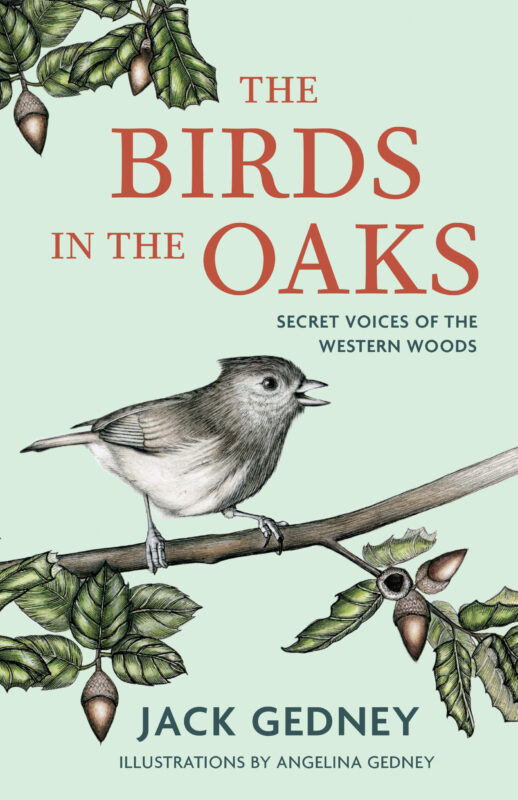
Order Jack Gedney’s The Birds in the Oaks by clicking here or on the above image.

* If you live near oak woodlands, you have no claim to being “interested in birds” if you do not read this book.  

* The Birds in the Oaks is overflowing with interesting ecological details that will keep me rereading chapters, and I expect I will mark the pages with notes like a seeker underlining sections of the Bible on the journey to become a better person.  

* The Birds in the Oaks is a superb example of well-crafted nature writing that mixes extensive and accurate observations with poetic prose, and mixes personal experiences with quotes from historical bird authors.  
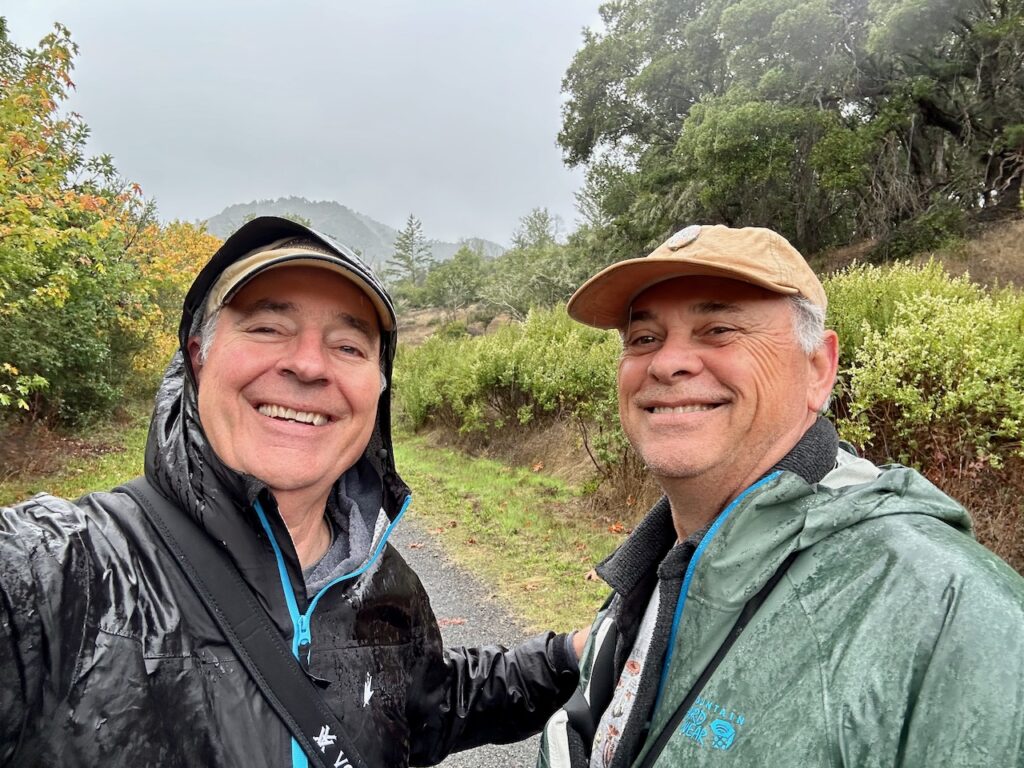
Last fall, I was fortunate enough to accompany Scott to one of his favorite “oaky birdy” locations, Sugarloaf Ridge State Park in Sonoma County, where we saw a great variety of classic oak woodland species including Oak Titmouse, Golden-crowned Sparrow, and Nuttall’s Woodpecker. (See post World Series Birds in the Golden State.)

This book, admittedly, is personal for me. I live within walking distance of California oak woodlands. I volunteer at Sugarloaf Ridge State Park which is dominated by oak woodlands and mentioned in the book. The author’s former Wild Birds Unlimited store lies only 24 miles from me. Most importantly, I know these birds. I have learned so much about each of them from Gedney’s book that they have become even more familiar (emphasis in “family”). I will admit only here, amongst birders, that I sometimes say “Hey, buddy!” when I see my first Oak Titmouse of the day, and “Hey-hey-hey” when I see a White-breasted Nuthatch.  
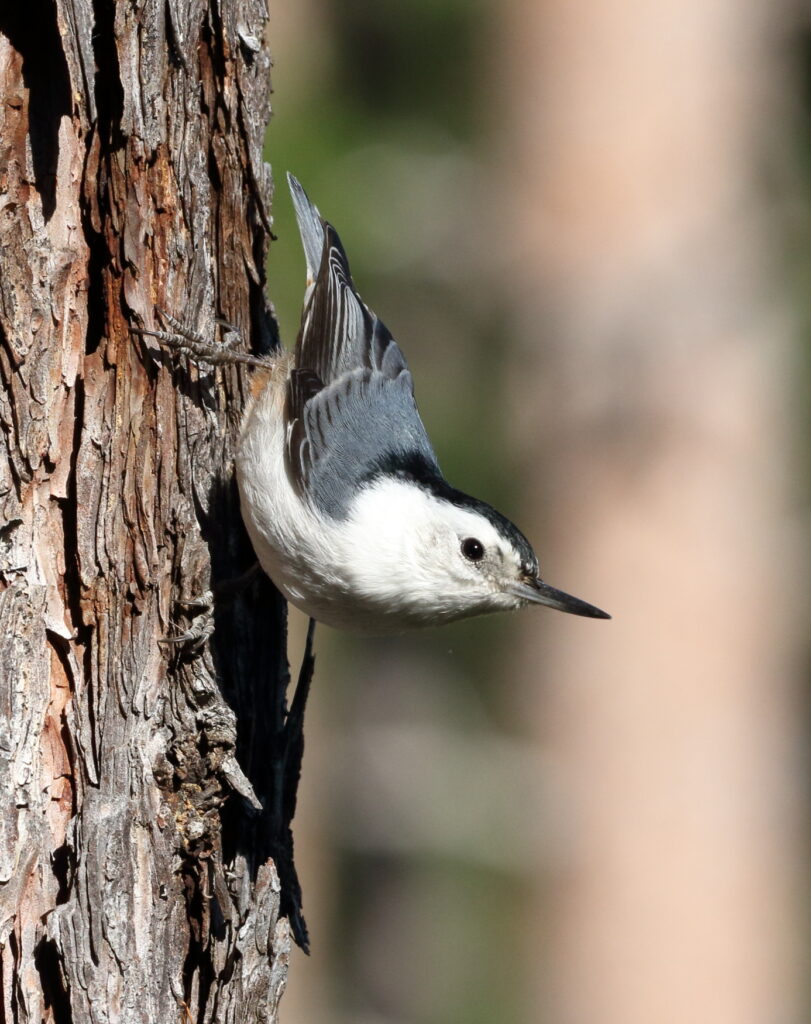
Scott apparently has been known to converse with White-breasted Nuthatches. I can’t blame him as I talk to these guys myself!

Each curiously titled chapter is organized around a species. Each begins with key characteristics. Many chapters start with song and call, which I appreciate since I’m late in life to learning bird sounds. (Thank you Merlin.)  Example:

“I still hear the bird, steadily whit-whiting away as if mocking my inability to follow.” (A Bird at Our Level – Bewick’s Wren) (“whit-whit bew-wick” – record to memory)

As someone who seeks to be entertained by bird behavior and science, I enjoyed how Gedney explains bird ecology.  

“… to learn all the secrets of the woods, one must know … the birds beneath the oaks.” (Discontented Shadows – Spotted Towhee) (Cool we’re on a treasure hunt, I tell myself.)

The ecological details too elaborate to be found in a guide have already enriched my birding.  Even if you don’t regularly see Acorn Woodpeckers, every birder should learn about their unique extended family groups and their cooperative food hoarding strategies. I also believe every birder should wonder how the Bushtit, weighing as light as a nickel, can engineer such an elaborate sock-shaped nest, insulate it, camouflage it, and then use it for such a short nesting cycle, all on a diet of insects too tiny to see, even with the help of binoculars.
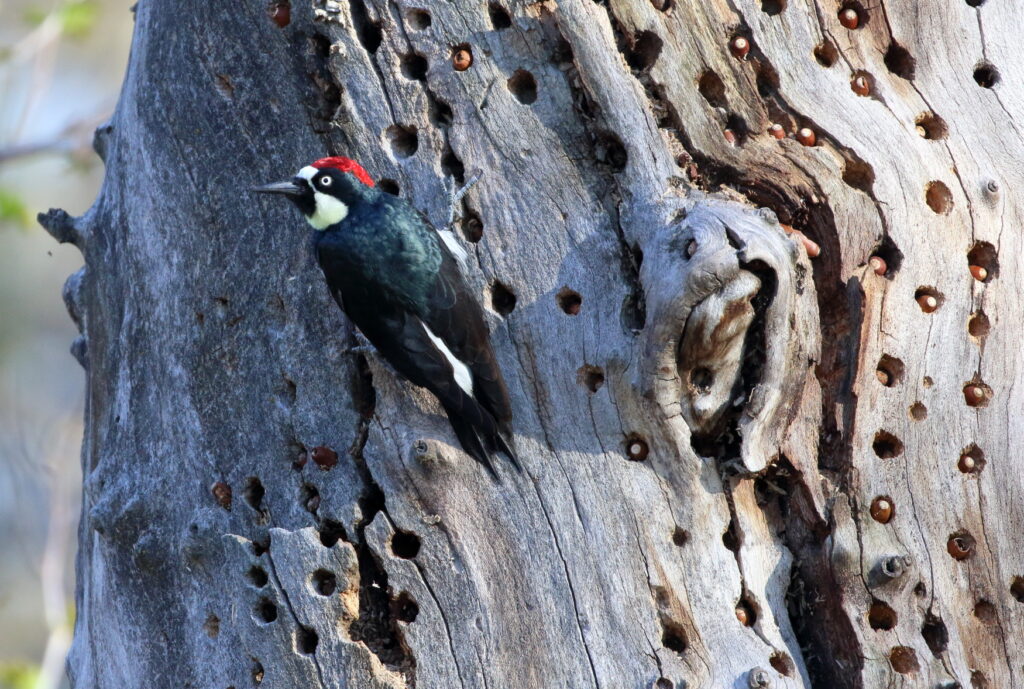
The ultimate oak woodland bird, the Acorn Woodpecker, deservedly attracts abundant attention from birders, both for its stunning good looks and fascinating behavior that features cooperative breeding and storage of thousands of acorns. Isn’t that, ahem, nuts?

But this book is not written by or for the scientist. Gedney is not afraid to add his own appreciation of a bird or personal experiences or poetic descriptions. This at first raised my anthropomorphic alarms since I was trained to reject human sentimentality by my vertebrate bio prof, surprisingly an ornithologist who once said “birds are stupid; their behaviors are mostly determined by genetics; they have small brains.” (These prejudices were spoken decades before contradictory scientific information was shared in The Genius of Birds and several other books on bird intelligence.)  

The Birds in the Oaks is very accessible, humanly so. It is so well written that you just might re-imagine your own feelings about birds and get all warm-like inside. You just might be heard saying “Wow” when learning something new about one of the birds. You might just slow down and spend “an inordinate amount of time” observing a bird in one location. Maybe, maybe not. But I will risk one bold prediction: If you get this book, several times you will imagine walking through the woods with the author himself.  

No oak trees were harmed in the writing and publishing of this review.
The Social Lives of Birds (Book Review)

If you’re enjoying FatherSonBirding, why not take the leap and subscribe by filling out the box below and to the right? We will never share your information. Also, a reminder that all content on FSB is fully protected under copyright law. Please share this post—but don’t use it for other purposes without permission.

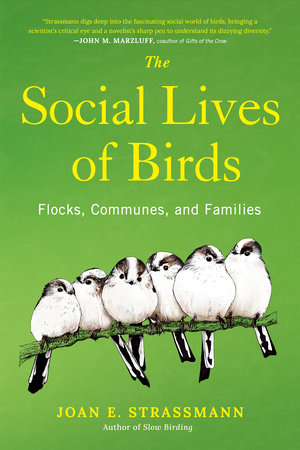
With single-digit temperatures in Montana this week, it is still very much book reading season, a time when all birders can—and should—beef up our birding resumés by tapping into the vast wealth of research and experience of the global birding and scientific communities. This past week, I delved into a topic that intrigues most birders by picking up Joan E. Strassmann’s The Social Lives of Birds: Flocks, Communes, and Families (Tarcher, 2025).

Joan Strassmann’s The Social Lives of Birds is packed with delightful revelations for beginning and experienced birders alike. (Click on the cover for ordering info.)

A well-regarded professor and scientist, Strassmann has created a comprehensive resource that introduces readers to almost every aspect of bird society. She begins by answering the simple question “Are Birds Social?” (You can probably guess the answer to that!) Then, chapter by chapter, she explores topics that fascinate beginning birders as much as they do veteran scientists. These include flocking behavior, mixed-species flocks, the predilection of many birds to roost and/or nest in colonies, the pros and cons of nesting and/or roosting together, lekking behavior, and more.

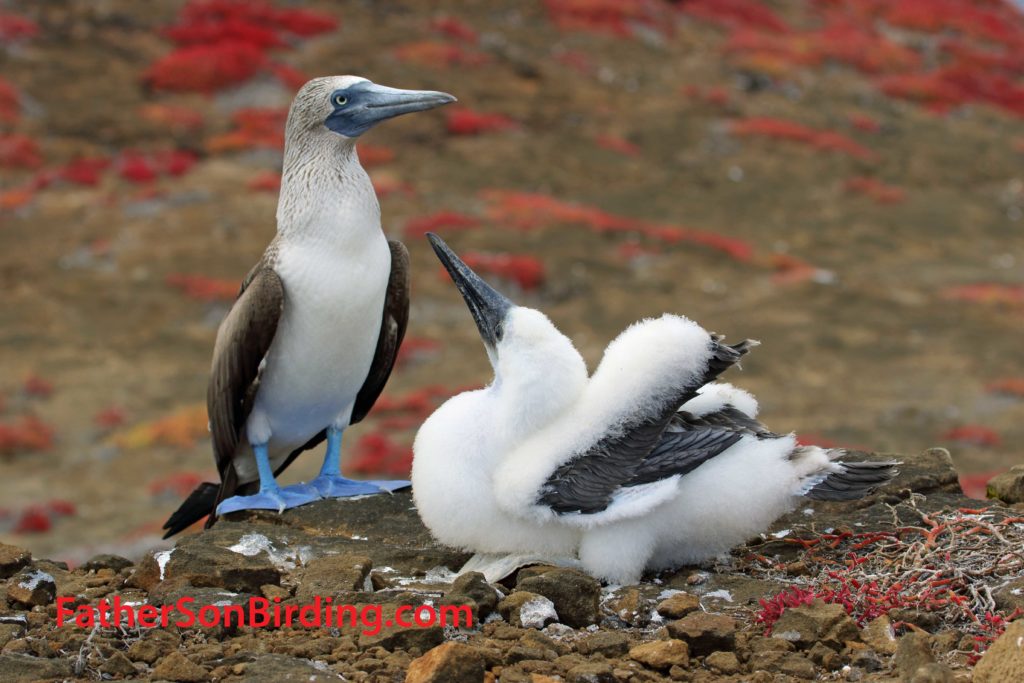
The author devotes an entire chapter to the fascinating and intriguing world of seabird colonies, such as those of one of the world’s most popular birds, the Blue-footed Booby.

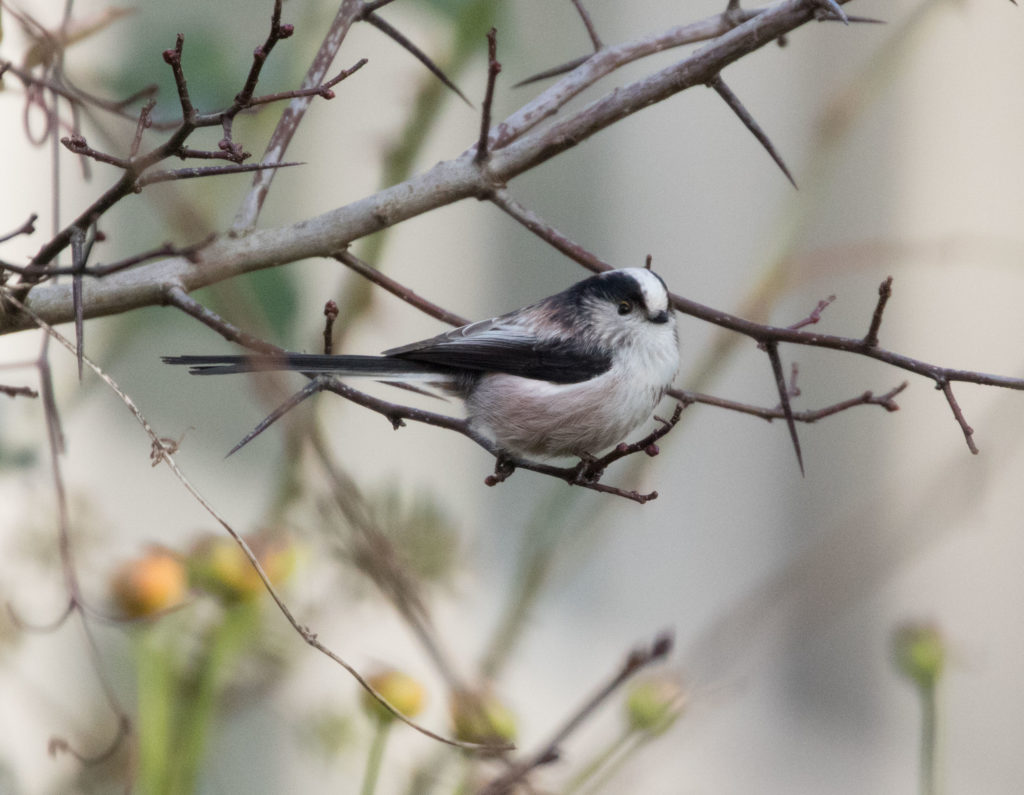
I learned something fascinating with each chapter. For instance, I was first drawn to the book because the cover showed a line of six Long-tailed Tits packed tightly together on a branch. I had had the pleasure of observing these birds in the Netherlands (see our post Layover Birding in Amsterdam), Japan (see our post Birding Japan: Kyoto), and Spain (see our post Birding Barcelona, Part 1: The Urban Core), but had no idea that they lived and foraged in stable flocks that are often built around a main breeding pair and its offspring. In her book, Strassmann recounts a study that showed that on chilly nights, the tits nestle tightly together to stay warm, and that often it is the lowest birds on the “tit totem pole” that have to endure the chillier end positions. This is no trivial matter since the birds lose about 9 percent of their total body mass in a single, chilly night.

After observing Long-tailed Tits in Europe and Asia, I was fascinated to learn more details of their highly social behavior in The Social Lives of Birds.

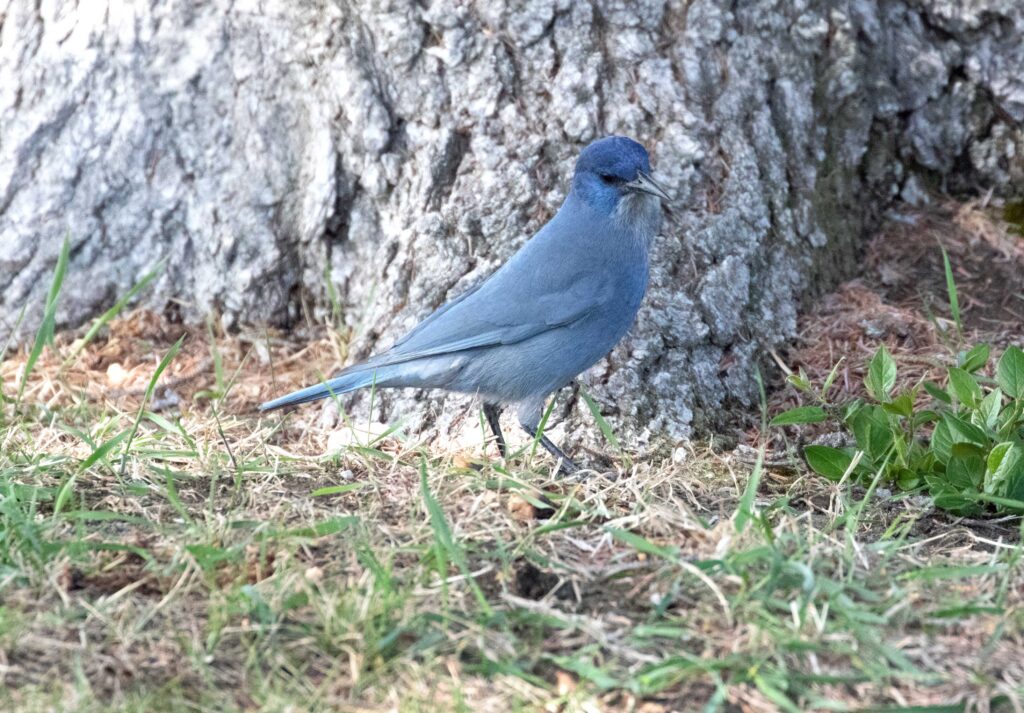
Similar revelations emerge with every chapter, examining birds from a wide variety of terrestrial and aquatic habitats. My favorite chapter was the last, “Supersocial Groups: Birds That Are Always Together.” That’s probably because it featured one of my favorite birds, the Acorn Woodpecker (see our post College Search Birding in California), and three other species I was fascinated to learn more about: White-winged Choughs, Sociable Weavers, and a bird Braden and I are always delighted to see, Pinyon Jays. Regarding the latter, Braden and I have seen Pinyon Jays only a handful of times here in Montana, and I had wondered why they aren’t more common. Strassmann explains that the birds need extremely large territories to guarantee a dependable food supply. Unfortunately, their main food source, the pinyon pine, has suffered extreme losses from clearing for agriculture and other reasons. Warmer temperatures driven by climate change have also impacted the production of pinyon pine seeds, leading to large-scale die-offs of these beautiful, dynamic, gregarious birds.

Strassmann devotes much of the final chapter on one of Braden’s and my favorite birds, Pinyon Jays, shown here in a cemetery in Helena, Montana.

The Social Lives of Birds struggles a bit over whether it wants to be a comprehensive resource or an engaging narrative in the vein of the recently reviewed The Great Auk or A World on the Wing. The author mentions her personal connections to many of the topics, but I found these more distracting than engaging. Still, that will not prevent readers from enjoying the book and harvesting a wealth of information—knowledge that will help you look at birds with greater understanding and appreciation each time you head out to bird.

Review copy provided by the publisher.

Giving Back to Birds—with Great Breaking News! (FSB Holiday Shopping Guide, Part 3)

Holiday Joy! Back in August, we alerted FSB readers to Houston Audubon’s effort to buy a critical piece of land for their globally-important Bolivar Flats refuge. (See this post!) This is a refuge Braden and I have visited and is a vital habitat and staging area for hundreds of thousands of birds annually. When a developer planned to build a housing development smack in the middle of it, Houston Audubon negotiated an option to buy and protect the property. The problem? A $3 million price tag! We were skeptical that it could be done, but guess what? GUESS WHAT??? Thanks to donations by 1,127 donors from 47 states and 8 different countries, Houston Audubon achieved its goal! Donations included a huge check from Roku CEO/Founder Anthony Wood and his wife Susan. (I knew I loved Roku for a reason!) Everyone who donated—and those who didn’t—should be immensely pleased, because this is not only a crucial win for birds, it is a win for all of us. It also is the perfect lead into today’s blog topic—End-of-the-Year giving for birds!

Especially near the end of the year, when tax deadlines are looming, we know that a lot of you are asking yourselves, “What can I do to help birds?” We all know that birds are in big trouble, but it can feel overwhelming to figure out just how to spend our donation dollars most effectively. Today, in order to make your lives a bit easier, we are pleased to present a short list of Braden’s and my favorite groups that are helping birds, and yes, we have donated to every one of them. To find out more, just click on the underlined names below. Then, please, please break out that credit or debit card! We truly are at a global crossroads in the fight to save birds, and we guarantee that every dollar you spend will make you feel just a little bit better. While you’re at it, you might want to join your local Audubon chapter and/or the American Birding Association to help connect you to other birds, share information, and expand the love of birds!

Groups Working Internationally

Cornell Lab of Ornithology—the maker of eBird and Merlin makes huge investments in science and education to raise awareness of birds and promote conservation.

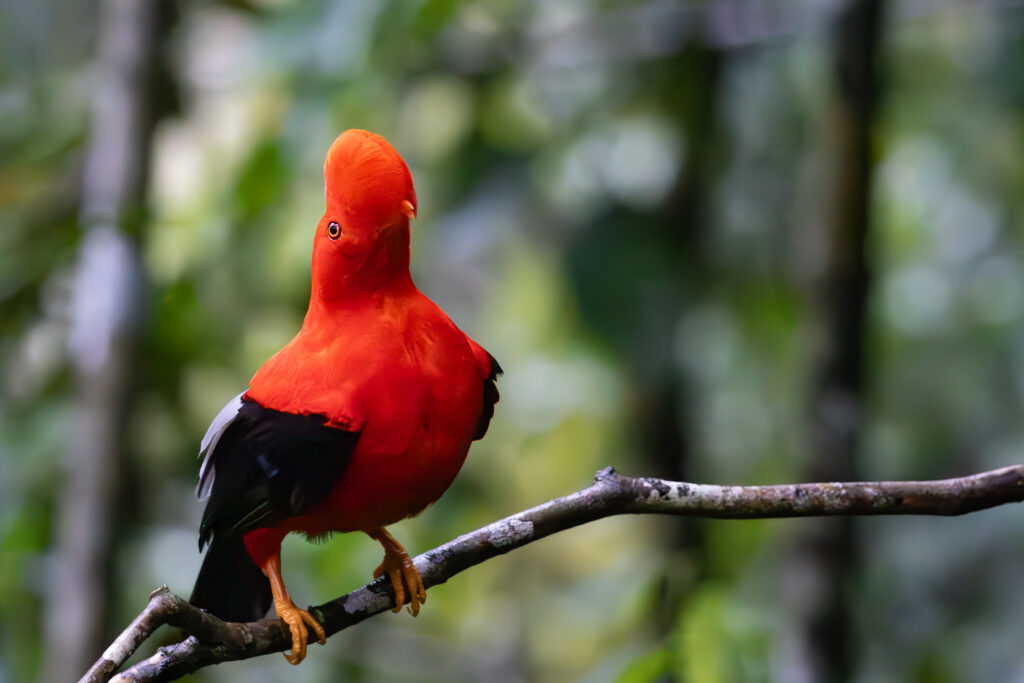
Bird Life International—Braden’s favorite group works on the entire international spectrum of bird threats, and also works with local communities to help protect birds and habitats. (Andean Cock-of-the-rock photo courtesy of Roger Kohn!)

Union of Concerned Scientists—one of Sneed’s favorite groups, we make monthly contributions to this group working to fight rampant disinformation and promote rational, scientific solutions to a host of environmental problems facing us.

Groups Focused Mainly on North America

Audubon—still the biggest name in birding, Audubon promotes bird conservation and education, and works on legislation to protect birds. (Note: the national, state, and local chapters are all independent entities. Donations to national do not trickle down, so consider donating to all three.)

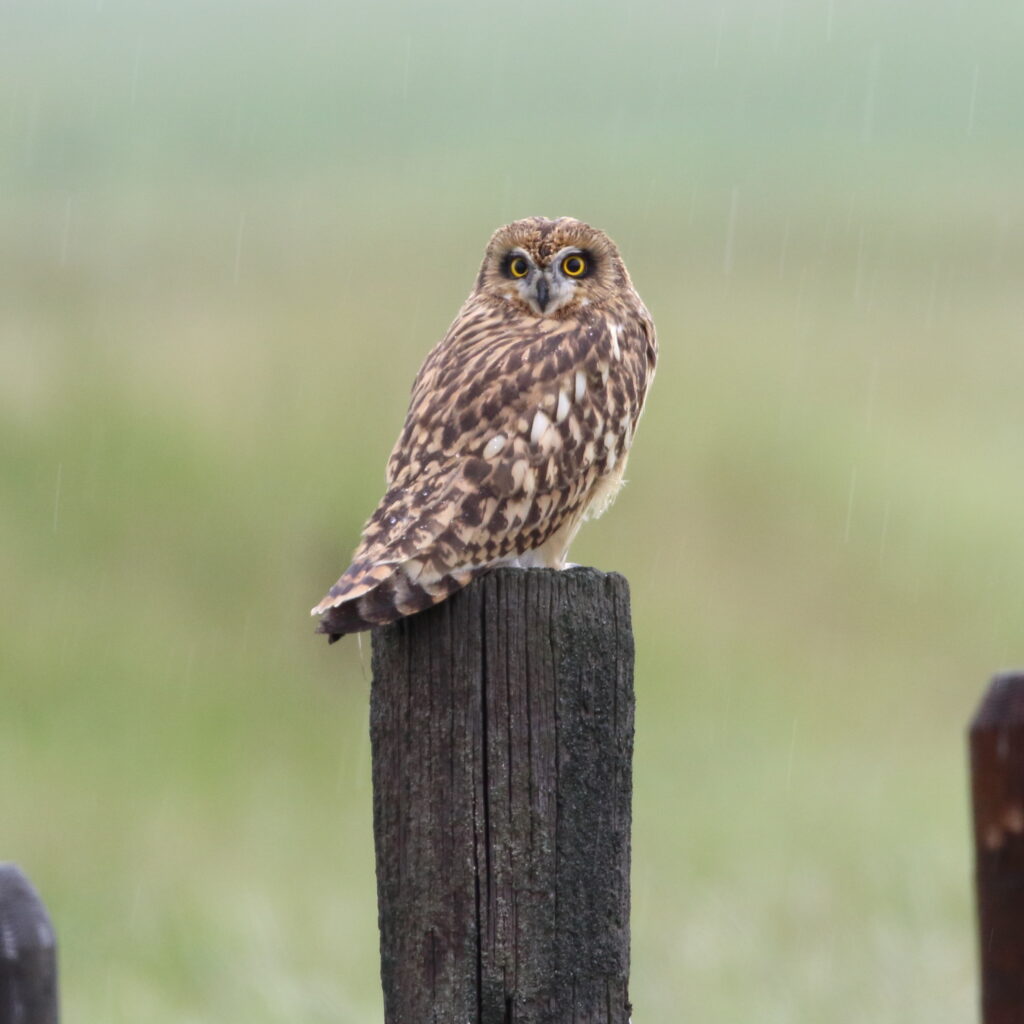
Owl Research Institute—one of the few groups focused on one of the world’s most charismatic groups of birds, ORI has been collecting data on owls for more than thirty years, sharing it with many different entities to shape science and conservation priorities. They especially work to decipher the causes behind the decline of many owl populations—including those of this Short-eared Owl.

American Bird Conservancy—also works on a wide range of bird-related issues including the urgent problem of outdoor cats.

State and Local Groups

Montana Audubon—besides putting on the wonderful Wings Across the Big Sky birding festival every year (and yes, Braden and I plan to be there in 2026!), Montana Audubon works to educate birders, identify the Treasure State’s bird conservation priorities, conduct research on endangered species, and carry out many, many other activities that benefit birds and birders.

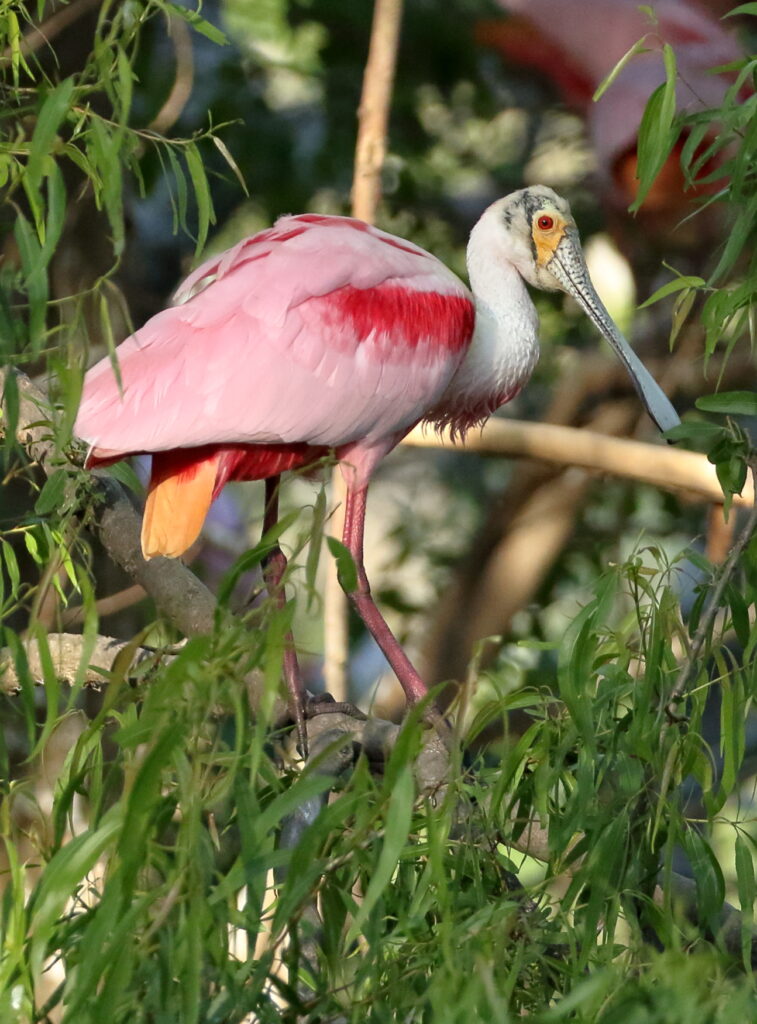
Houston Audubon Society—a regional bird powerhouse, promoting bird education and conservation, and protection of vital habitats, especially for migrating birds. Think High Island from the movie The Big Year! (Roseate Spoonbill shown.)

Bird Conservancy of the Rockies—another regional powerhouse with widespread activities including vital research into wintering grounds of grassland birds in the Southwest and Mexico.

University of Montana Bird Ecology Lab (UMBEL)—conducts important research, monitoring, and outreach activities around the region!

Montana Bird Advocacy—a grassroots research organization started by well-known Montana birding legends Jeff Marks and Paul Hendricks, MBA conducts research on little-known Montana birds such as the Gray Flycatcher. (See our post Gray Flycatcher Science.)

An unbanded adult Gray Flycatcher implores: “Donate Now!”

Books for the Happy Holiday Birder (FSB Shopping Guide, Part 2)

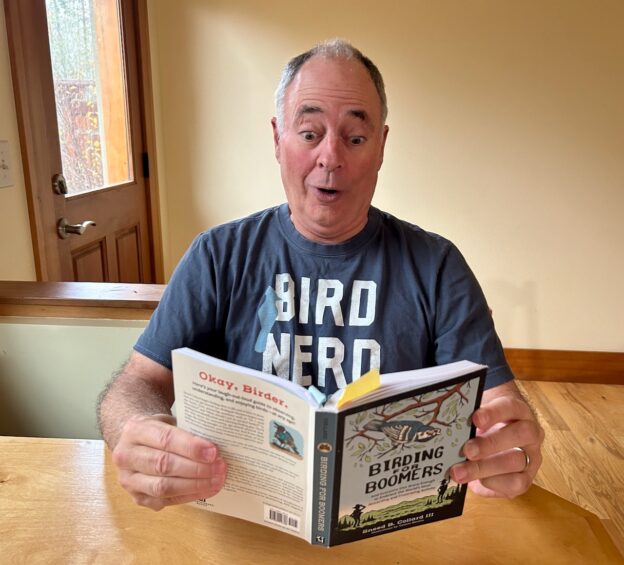
If you’re like me, you never read quite as many books as you’d like. This year, though, I was very fortunate to read and review some outstanding bird-related titles that you’re going to want to consider for your holiday buying. Most—but not all—of these were published in 2025 or late 2024. I’ve also included a few books that aren’t solely about birds—but give great insights into how to protect them. Of course, you will want to begin your shopping with eight or ten copies of my book Birding for Boomers—And Everyone Else Brave Enough to Embrace the World’s Most Rewarding and Frustrating Activity. This popular gift book has received half a dozen awards and even made a couple of bestseller’s lists. Once you’ve placed that order, however, you’ll want to check out the titles below. Please note: we receive no compensation for any of these recommendations (other than a free review copy or two), so the thoughts are all our own. Enjoy!

Purely Enjoyable Bird Storytelling

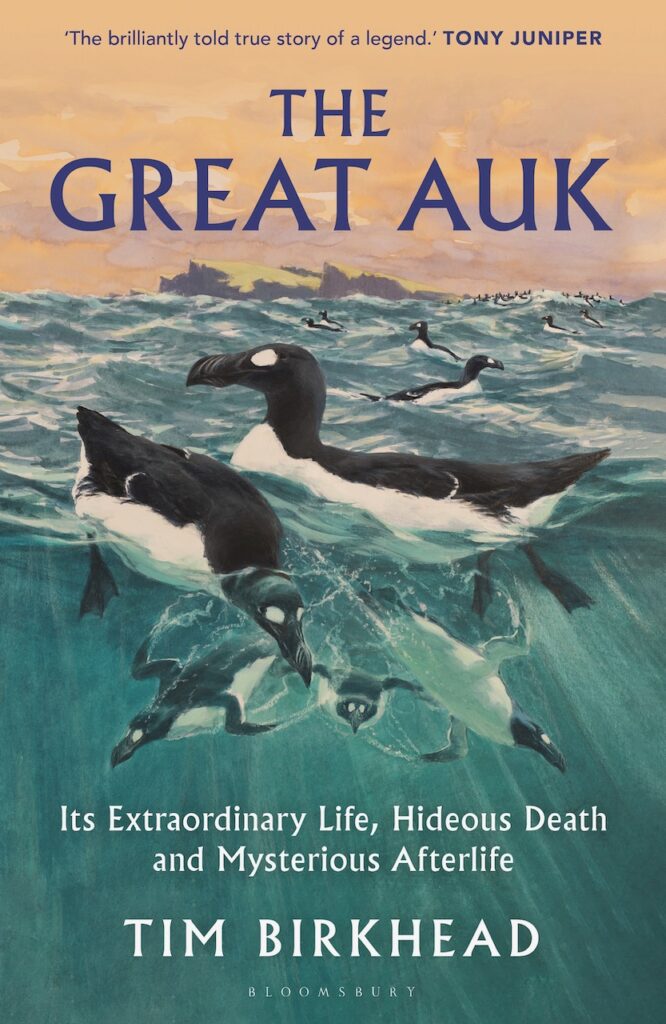
Let’s start with the “most fun” category of reading—great storytelling that just happens to be about birds. In the past, I’ve recommended such titles as Christopher Skaife’s The Ravenmaster, Joshua Hammer’s The Falcon Thief, and Tim Gallagher’s classic, Imperial Dreams. My favorite title from this year’s reading is Tim Birkhead’s The Great Auk: Its Extraordinary Life, Hideous Death and Mysterious Afterlife. This wonderful, often whimsical tale focuses on an extinct species most of us have heard of, but know little about. Birkhead gets totally into Bird Nerd mode by both explaining the biology and history of the Great Auk, and tracing some of the antics of egg collectors who were totally obsessed with obtaining Great Auk eggs. You’ll love this! See our full review here.

The Great Auk by Tim Birkhead (Bloomsbury, 2025)

Also on the short list for this category is Bruce M. Beehler’s Flight of the Godwit, a must-read for anyone interested in the remarkable lives of shorebirds—and who isn’t? Through the tales of his own peregrinations, Beehler follows the migrations of many of North America’s most charismatic shorebirds, telling us all kinds of cool things that I certainly never knew before. See our full review here.

Birding Memoirs

My top pick for this category is Christian Cooper’s 2023 book, Better Living Through Birding: Notes from a Black Man in the Natural World. I admit that I put off reading this book for a couple of years after it came out. It’s sheer popularity made me insanely jealous as an author, but once I picked it up, I was captivated. Cooper’s down-to-earth honesty about his life and passion for birds sucked me right in, both with its engaging storytelling and how it broadened my perspective on birding in our culture.

My second pick for this category is Richard L. Hutto’s new book, A Beautifully Burned Forest: Learning to Celebrate Severe Forest Fire. This book is half memoir and half science book and I enjoyed both parts equally. Perhaps as a fellow Southern Californian, I especially related to Hutto’s boyhood experiences exploring the chaparral ecosystem, but I also appreciated Hutto’s impassioned plea to bring common sense to fire management, especially when it comes to protecting burned forests from the ravages of so-called “salvage” logging. See our full review here.

Oh, and if you’re wanting to learn all about Braden’s and my early years of birding, don’t miss my classic first adult book, Warblers and Woodpeckers: A Father-Son Big Year of Birding!

In-Depth Group Guides

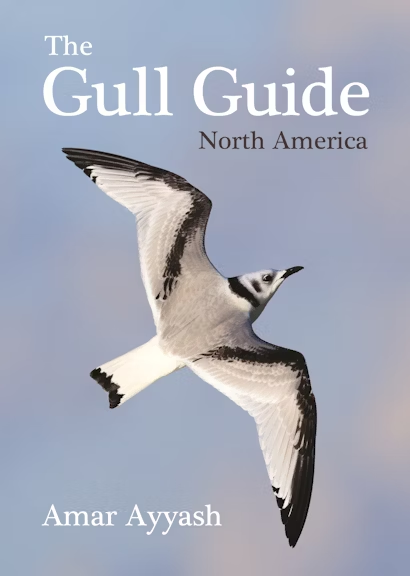
Advanced Bird Nerds will definitely want to add Amar Ayyash’s The Gull Guide: North America to their holiday shopping lists this year. Like most birders, I have been—and remain—incredibly intimidated by gulls. Sure, I recognize the adult plumages of many species, but when you start getting into hybrid gulls and first-, second-, and third-year plumage variations, my brain and confidence begin to melt. The Gull Guide does not solve this problem, but it does accomplish two important things. First, it gives great insight into gulls for the casual birder. Second, it offers myriad minute details for those who are bound and determined to become experts on everything gull. Both of these things are accomplished with an extensive, remarkable collection of photos that serve to educate and guide. See our full review here.

A less technical book that may be more to the taste of the casual birder is The Shorebirds of North America: A Natural History and Photographic Celebration by Pete Dunne and Kevin T. Karlson. This beautiful book strikes a nice balance between detail and readability. A lot, but not all, of the information is fairly general, but the photos are wonderful and if you’re a shorb fan, you will enjoy it. See our full review here.

Three More for the Planet

I’d be remiss if I didn’t mention three more titles that made a big impact on me this year. The first is Sea of Grass: The Conquest, Ruin, and Redemption of Nature on the American Prairie by Dave Hage and Josephine Marcotty. I thought I knew all about the tragic history of the destruction of America’s grasslands. I did not. This highly readable book provides astonishing insights into how we lost most of our grasslands—and why that destruction continues today. Grassland birds are our most imperiled group of birds, losing at least forty percent of their collective populations in just the last fifty years. If you care about these animals and want to know what we can do to slow their precipitous demise, please read this one!

Similarly, Jordan Thomas’s When It All Burns: Fighting Fire in a Transformed World, gives us an inside look at the often counterproductive politics and decision-making behind today’s “fire fighting industrial complex.” With riveting storytelling and astonishing revelations, this is a perfect companion to Hutto’s A Beautifully Burned Forest.

And if you’re wrestling with how to keep from being overwhelmed in today’s world, where we are confronted by one environmental threat after another, I highly recommend the late Thich Nhat Hanh’s Zen and the Art of Saving the Planet. I read a few pages of this every morning and I gotta say that it helps keep me sane in our complicated, highly imperiled world. Not only does it raise serious questions about how we all live, it provides approaches and encouragement for how each of us can truly make a difference.

Don’t miss our holiday guides to birding equipment and, in our next post, charitable giving!

A Beautifully Burned Forest (Book Review)

All photos and text on FatherSonBirding.com are strictly protected under copyright law. To request permission for use, contact Sneed at sbcollardiii@gmail.com. You DO NOT have permission to use these posts to train Artificial Intelligence models or do anything else with them without permission.

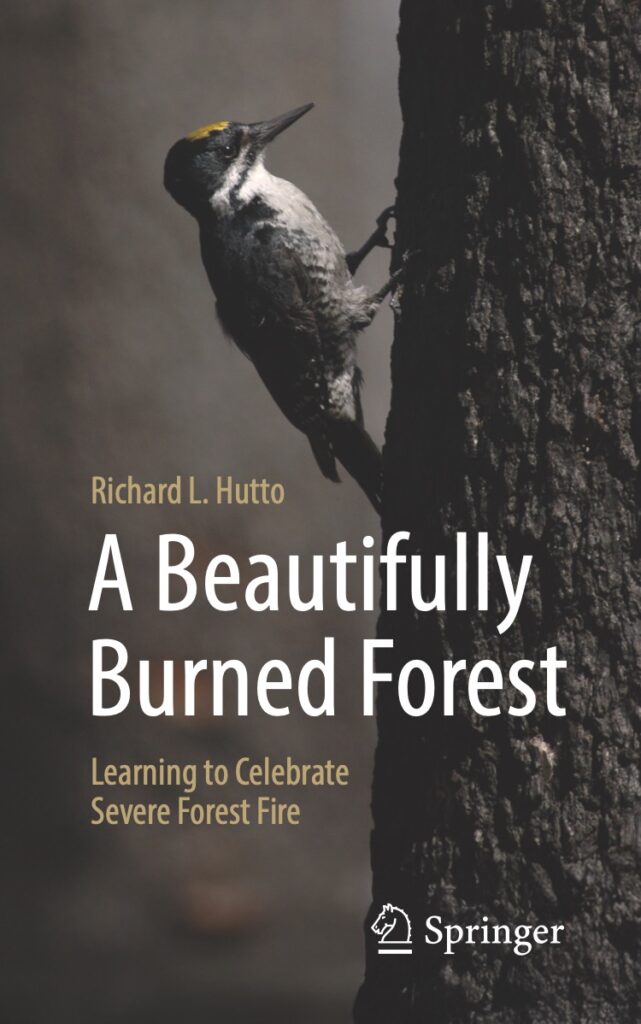
Richard L. Hutto’s new book A Beautifully Burned Forest: Learning to Celebrate Severe Forest Fire (Springer, 2025—click here to order) offers both timely insights into the roles of wildfire in our modern, over-heating world and an engaging memoir of a scientist’s journey. Before I met Hutto—Dick to his friends and colleagues—I had no idea of the vital ecological processes and multitude of species that depend on severe forest fires in the West. Although I had met Dick casually several times through a mutual acquaintance, it wasn’t until I needed someone to teach me about woodpeckers for a proposed children’s book that I reached out to him directly. I asked if he could take me out to show me some woodpeckers and explain a bit about them, and he graciously agreed.

Richard L. Hutto’s A Beautifully Burned Forest is not only a must-read for anyone interested in the health and future of our forests, it makes an, ahem, red-hot Christmas gift idea. Click on the above image to order.

Dick took me to the Blue Mountain burn area just south of Missoula and he did indeed start showing me woodpeckers and telling me about them. What he was really teaching me, I began to realize, is the beauty of a burned forest and how many plants and animals depend on it. I would still eventually write a children’s book about woodpeckers, but first I decided to write Fire Birds: Valuing Natural Wildfires and Burned Forests.

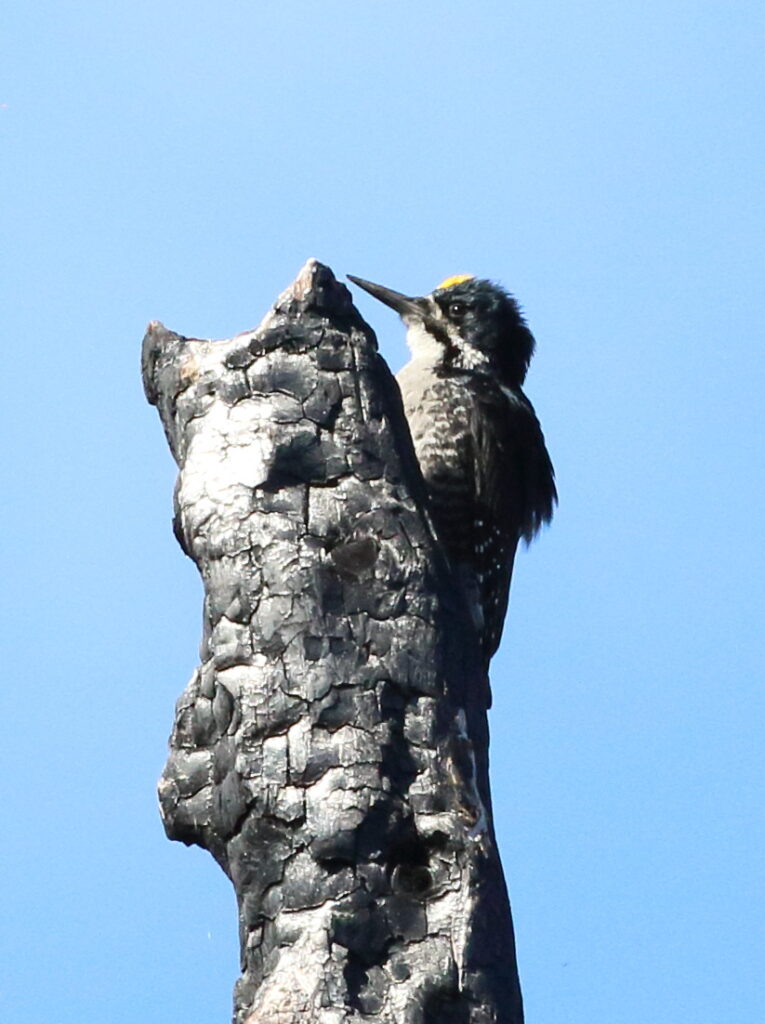
Both of our books focus on Hutto’s groundbreaking research into the many organisms—especially birds—that depend on standing, severely burned forests. The Black-backed Woodpecker is the poster child for burned forests. This bird is highly adapted to blend in with charred tree trunks and excavate wood-boring beetle larvae from the rock-hard wood. In the West, in fact, this bird is found almost exclusively in severely burned forests that have a high density of larger diameter standing trees.

In the West, the Black-backed Woodpecker relies on severely burned forests perhaps more than any other bird species. By excavating holes, these birds and other woodpeckers, also open up the forest for a host of other birds, mammals, and other vertebrates.

Once they move into a fresh burn the Black-backed—along with American Three-toed and Hairy Woodpeckers—open up the forest to many other cavity-nesting birds, mammals, reptiles, and amphibians. They do this by excavating holes in the trees, often many more than they will ever use themselves.

The problem, Hutto points out, is that our society has been conditioned to view all forest fires as bad. As soon as a severe fire roars through an area, the clarion call rings out to somehow “save” the burn by “salvage” logging it. Which trees do loggers take? The best and the biggest—the exact trees that Black-backed Woodpeckers need to hunt and nest in. Hutto also points out that as soon as these large trees are removed, their cones can no longer reseed the forest naturally, necessitating hiring battalions of workers to replant the forest by hand—at taxpayer expense.

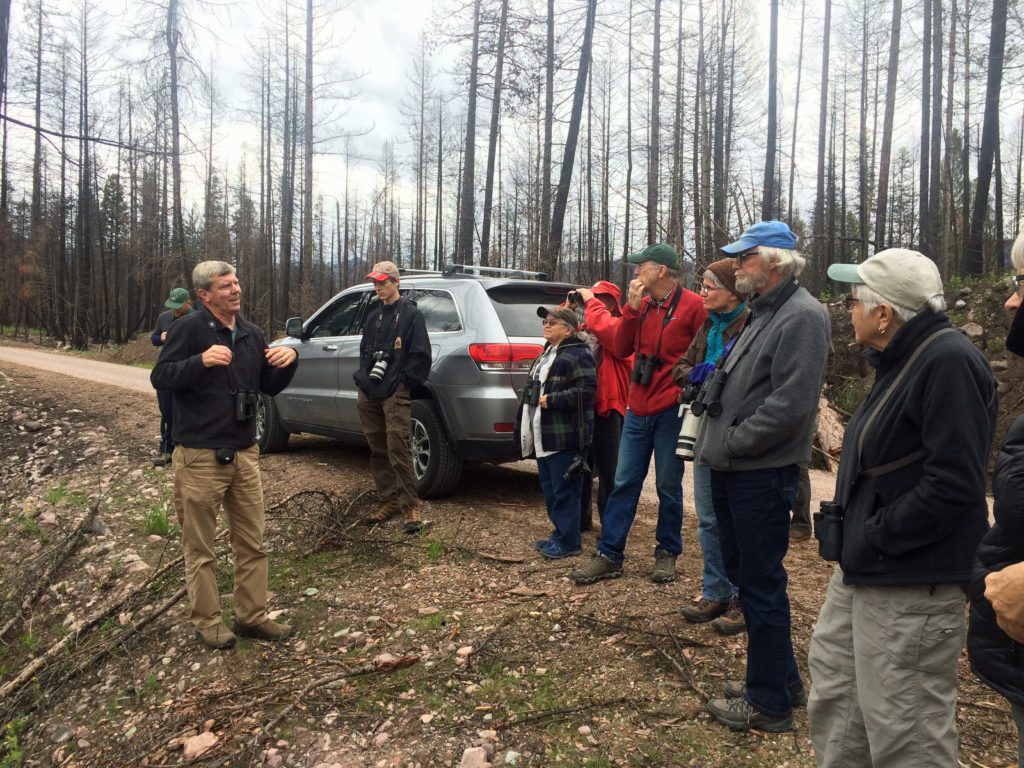
Dick Hutto (left) leads a local birding group through a newly burned forest near Seeley Lake, Montana, explaining the vital ecological role the burned forest plays.

In A Beautifully Burned Forest, Hutto dives deeply into our society’s entire approach to managing forests and fires, tracing the beginnings of fire suppression to the widely spread notion that our forests are somehow “out of whack” and need to be overly managed with thinning and prescribed burns.

Climate change, of course, is a wildcard in the future of forests and wildfires, but Hutto makes a strong plea to focus on solving the underlying problem of reducing greenhouse gas emissions instead of making our forests ecologically less viable through extensive, often poorly planned micromanagement.

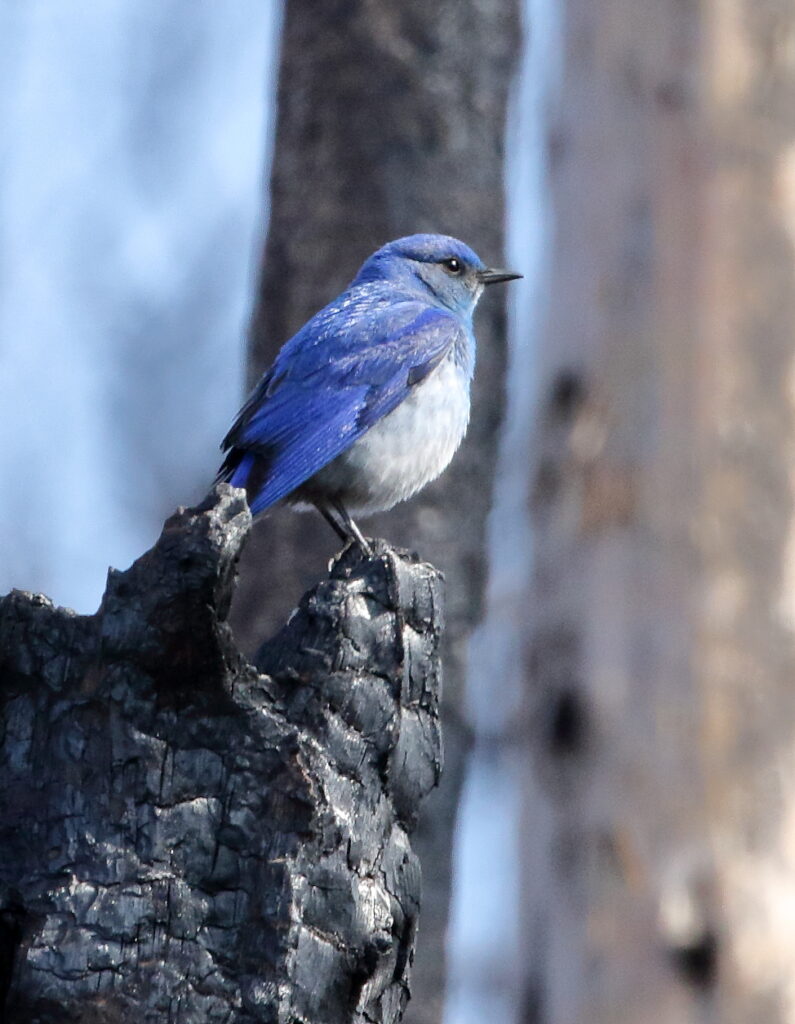
Mountain Bluebirds are just one of dozens of bird species that prefer nesting in burned forests to other habitats. Here they find plenty to eat along with safety from small predators, whose populations are reduced by forest fires.

Anyone with an interest in our forests and wildfires—in other words, every single person living in the American West—should read A Beautifully Burned Forest. It’s a fairly quick read that will change the way you view and understand our spectacularly diverse region. Especially in this day where misinformation rules, Hutto’s book is a valuable step in creating an educated public that insists on smarter management of the lands that sustain us.

Note: If you are interested in Sneed’s children’s book, Fire Birds, supplies are down to a couple of dozen in the warehouse so order soon by clicking here or calling your local indy bookstore. Both Fire Birds and Woodpeckers: Drilling Holes and Bagging Bugs make ideal Christmas presents for grades 3-8 readers.