If it’s one thing we at FatherSonBirding hammer over and over again, it is the 3 Ps: Planning, Persistence, and Preparation.
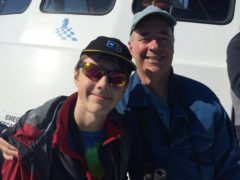
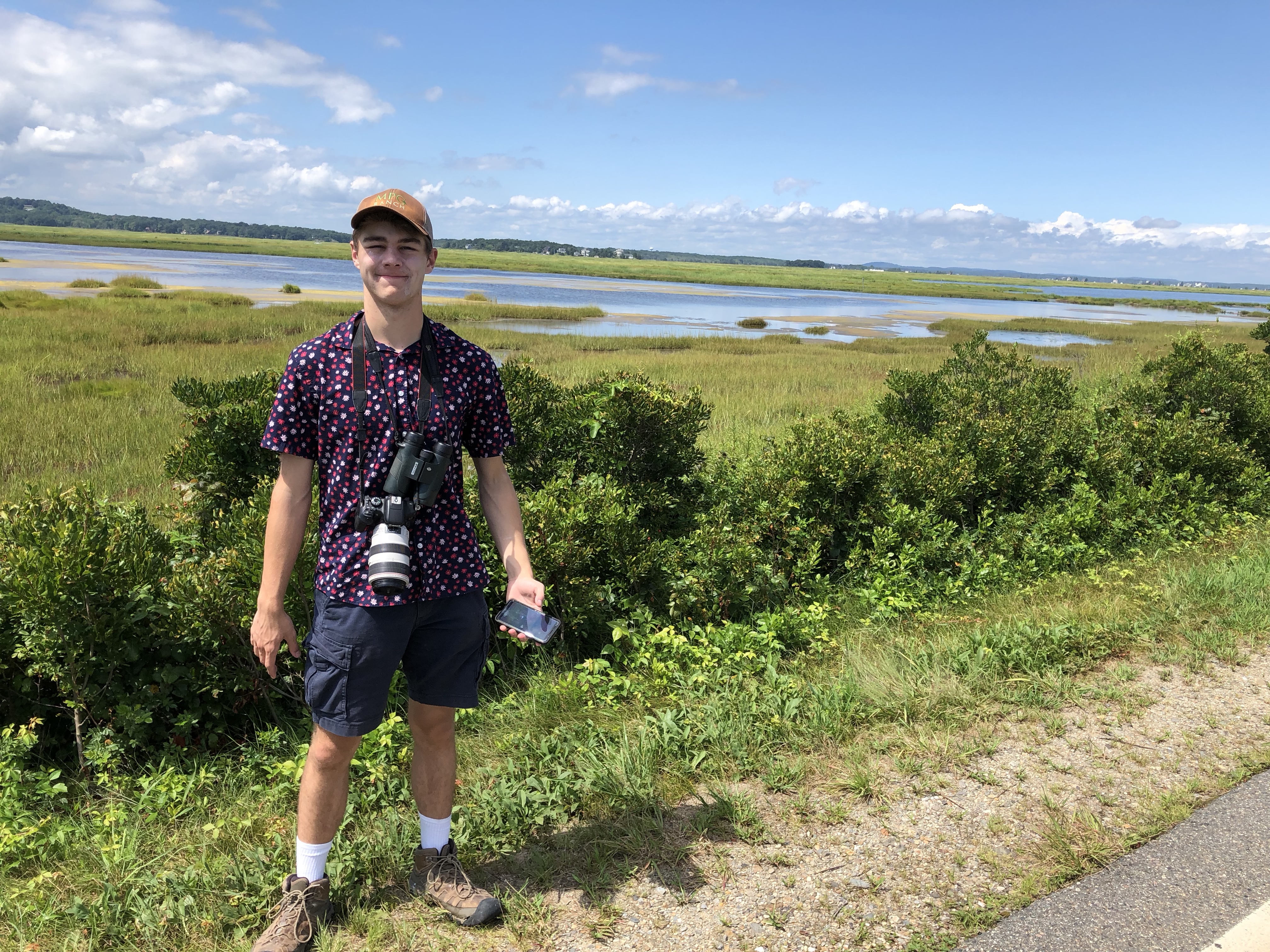
Okay, actually, we have never talked much about this, but it’s a catchy concept, isn’t it? The 3 Ps, in fact, came very much into play recently when, after our rather disappointing birding in Boston, Braden and I headed up the coast to a place Braden had carefully researched (P Number 1) ahead of time: the Parker River National Wildlife Refuge.
One of the gems of the New England coast, Parker River NWR turned out to be our favorite birding spot of our week-long sojourn.
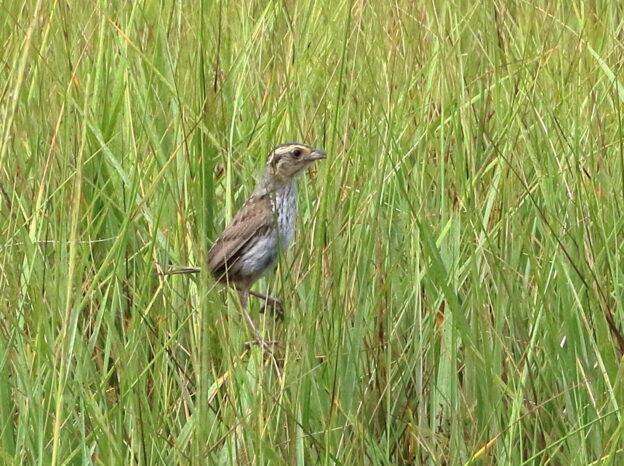
I had actually never heard of Parker River before, but Braden learned about it from some online birding buddies and checked it out to see if it was “visit-worthy”. His verdict? Definitely. Not only might we collect a handful of Life Birds there, the refuge protected one of his top ABA target birds: Saltmarsh Sparrow.
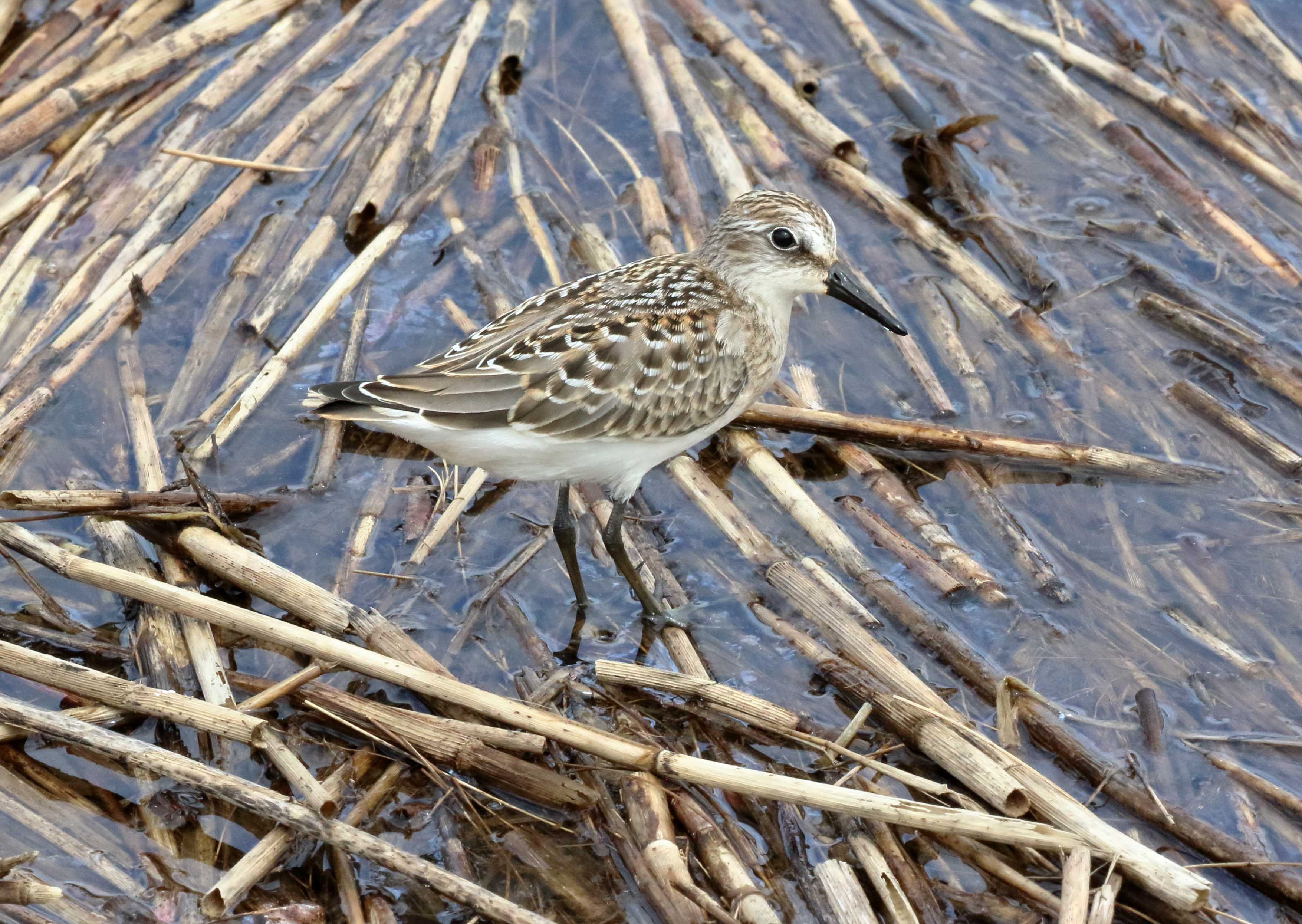
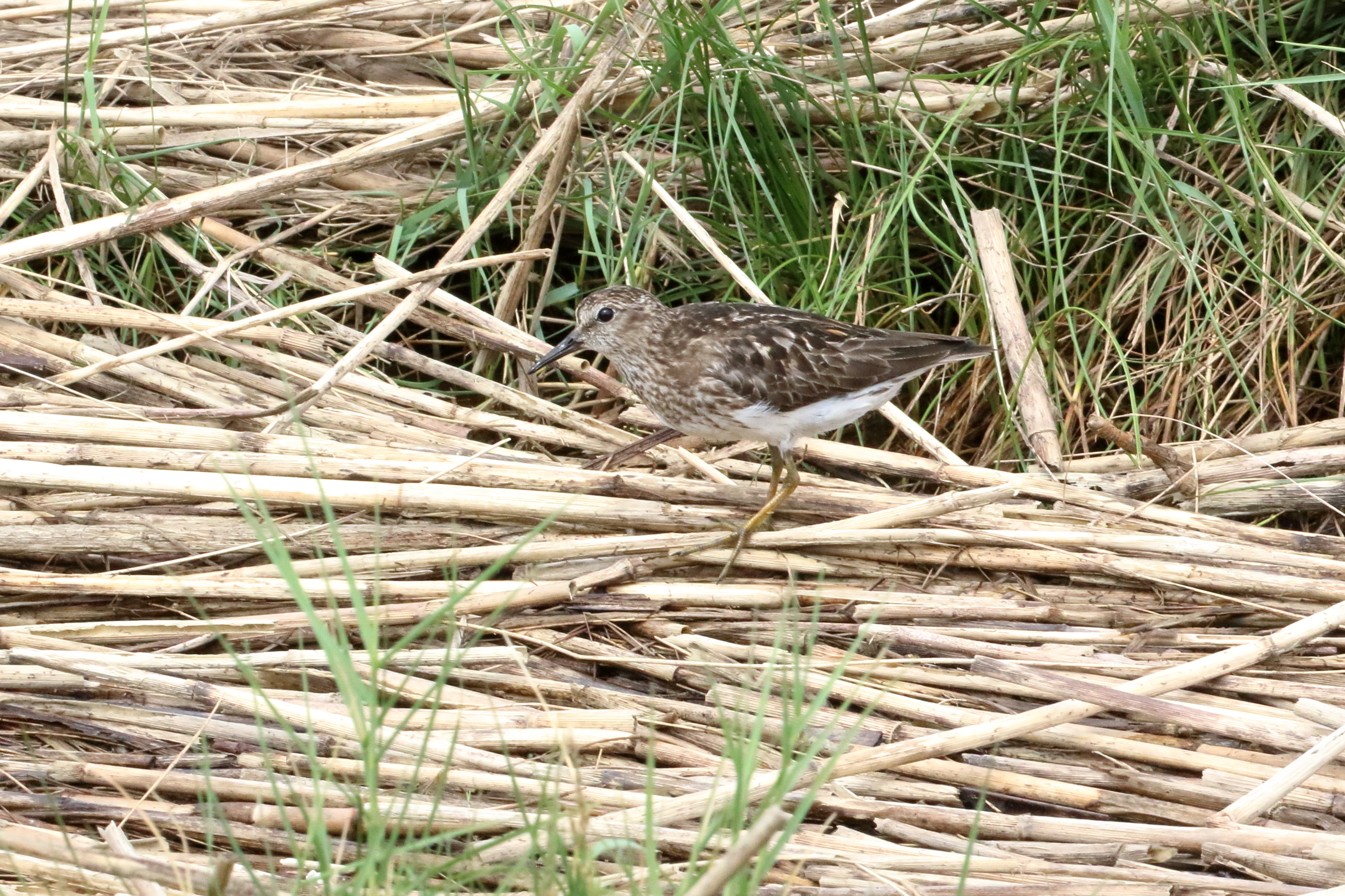
Now, I have to say that when we visit a National Wildlife Refuge, I generally expect a pretty low-key, rarely visited location. Imagine my surprise when we encountered a mini traffic jam waiting to get in. In fact, it became evident that the refuge served not only to protect wildlife, but as a critical outdoor outlet for congested coastal Massachusetts. Our visit started auspiciously with a stop at Lot 1, where we got a quick fly-over of a Baltimore Oriole—the only one we would see on our trip. Crossing the highway, we encountered an even cooler surprise: the closest looks we’d ever had of Semipalmated and Least Sandpipers! This was especially useful after the ID struggles we’d had with birds in eastern Washington only weeks before, and it really helped us examine the unique properties of each.
Having both Semipalmated (left) and Least Sandpipers right in front of us really helped Braden and me visually imprint these hard-to-ID species in our brains. Note especially the darker, browner overall appearance of the Least. Its yellow legs are a giveaway, too—but only when they aren’t covered in mud!
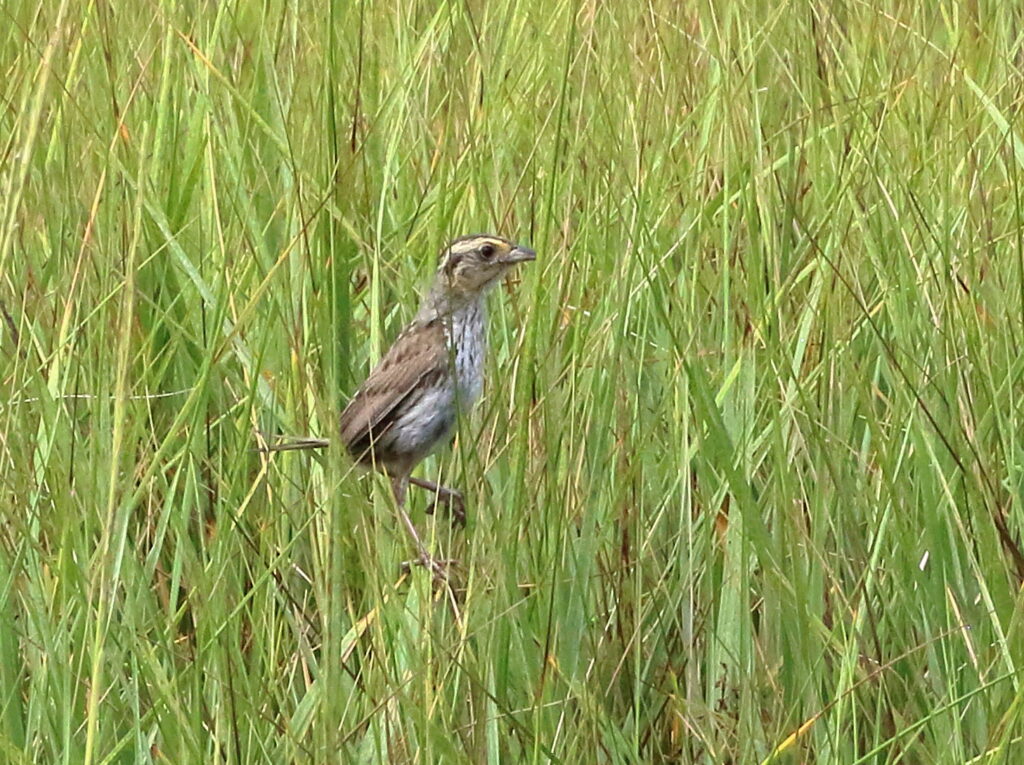
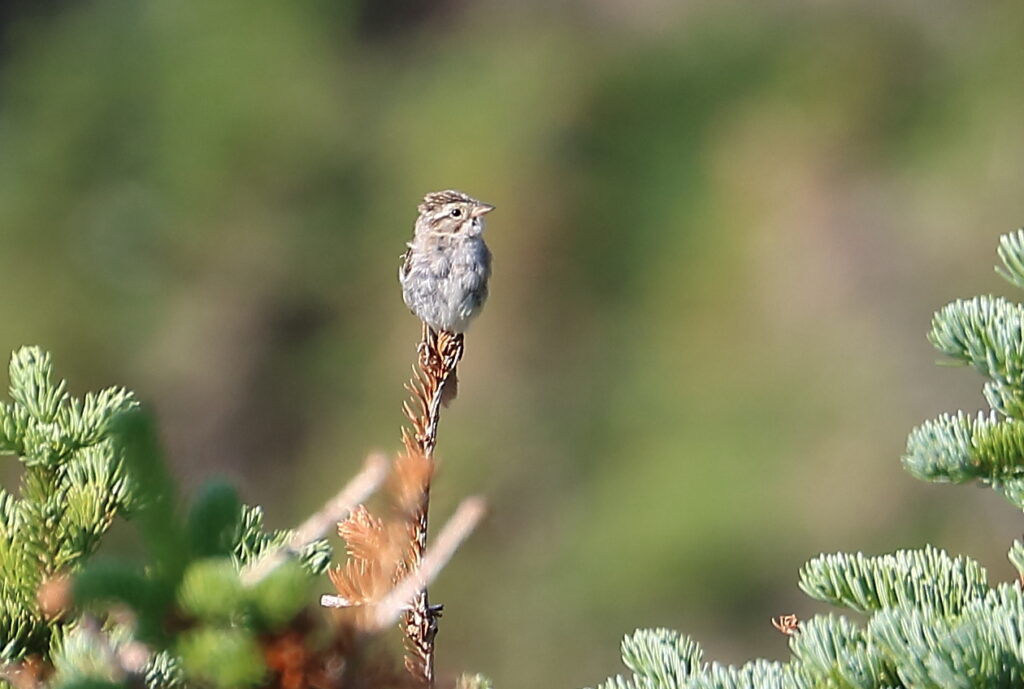
As we moved on, though, Braden felt pessimistic about seeing Saltmarsh Sparrows. He had Planned. He had Prepared himself with knowledge. But Boston had put an “unlucky” vibe in his head. As we made our second stop along the refuge’s main road, however, he suddenly shouted, “I see them!” Indeed, not thirty feet from us, at least four or five fairly nondescript little birds bumbled about in some tall marsh grass, seemingly not knowing what they were doing. “They seem like juveniles,” Braden surmised, and having studied this species quite a bit, he would know.
Saltmarsh Sparrows used to be lumped with Nelson’s Sparrows as one species, the Sharp-tailed Sparrow. As its own species, however, the Saltmarsh Sparrow occupies a narrow range of saltmarsh habitat along the East Coast and, in fact, requires this habitat for nesting. Because of this, it is at extreme risk from higher sea levels caused by climate change, and its population has been steadily declining. This makes protecting places like Parker River NWR even more important—and made us feel especially privileged to have such a close experience with them.
Our amazing experience with Saltmarsh Sparrows proved once again that persistence just may be the most important attribute of a successful birder.
Leaving the Saltmarsh Sparrows, we continued to hit other places in the refuge and were rewarded with a host of Year Birds, and two more Life Birds: Purple Finch and Great Crested Flycatcher—our number one ABA need to that point. Which all demonstrates the third P of birding: Persistence. Sure, luck plays a role, but just getting out there again and again will eventually take luck out of the equation, something we learned for the thousandth time at Parker River.
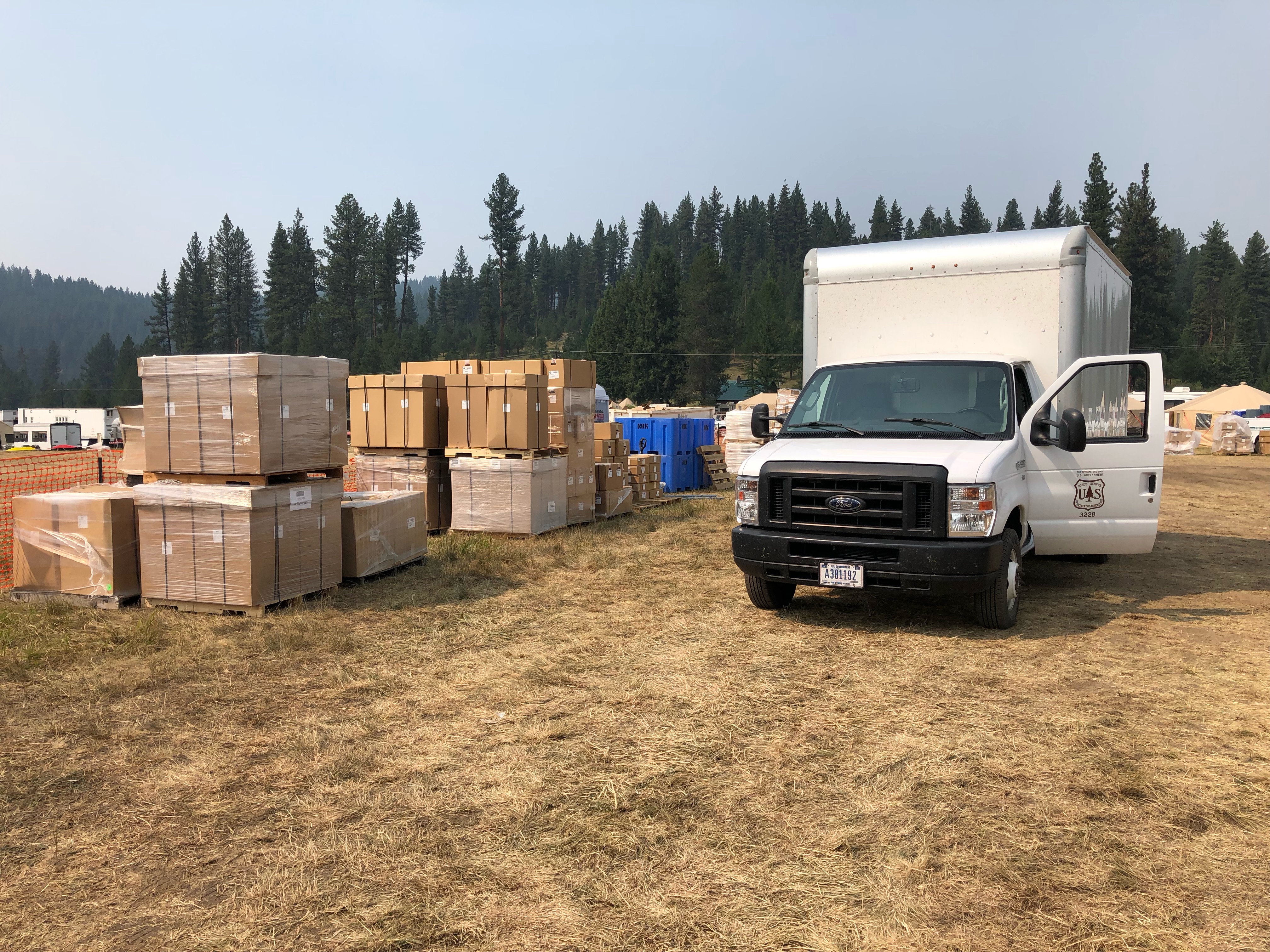
Having missed out on Braden’s epic Glacier birding day because of, you won’t believe this, a job, I have struggled for ways to console myself. Fortunately, birding opportunities are dove-tailing nicely with my new temporary career: delivering fire-fighting equipment by truck to various fire camps around Montana and Idaho. As you’ve probably noticed, it is shaping up to be an unprecedented fire season with record, early heat and little rain in sight. Just another reason that we need to make climate change our number one priority as a species (see Saving Birds. It’s Time.).
On the personal front, however, this radical summer has provided me with an interesting, useful part-time job driving for the Forest Service, and I have to say, I’ve been impressed with their entire operation. As I began my job, though, I asked myself, “How many birds could I see just driving around Montana and Idaho through the fire season?” I decided to set a goal of 100 species for myself—a number that seemed optimistic for this time of year, especially since I would have few opportunities to venture off roads into wildlife refuges and other birding hotspots. Below is my interim report, but first I should lay out the ground rules that I have set for myself, and they are simple: every bird can be counted from the moment I leave for work until I get back. I can’t count birds at my house or on my street, but everything else is game. So how goes the quest?
Who knew I’d be drivin’ truck at my age, but as in most of my life, trying new things has led to new birding—and writing—opportunities!
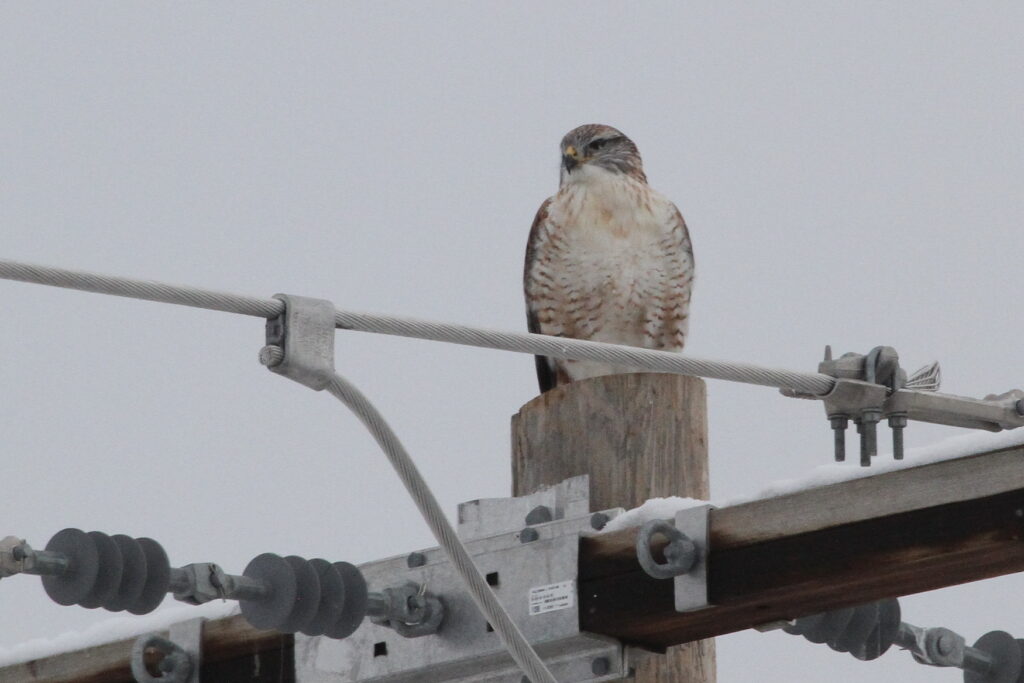
Well, so far I have driven approximately 3,000 miles and seen 59 species of birds, or about one new species every 51 miles—far more than I expected at this point. Let’s start with raptors. These are birds I expected to do well with because, duh, they are big and easy to see, and they sit on telephone poles. Strangely, I have seen only one Bald Eagle since I began and no Goldens, but have been delighted with Red-tailed Hawks, Swainson’s Hawks, Northern Harriers, Osprey, and a Prairie Falcon. My best raptor? A Ferruginous Hawk that I passed three separate times on my way to Ennis before I could positively ID it at 70 mph!
I had to drive by it three separate days before I could ID a Ferruginous Hawk near Ennis (actual bird not shown), but it was a major score in my “birding by truck” goals to find one of these.
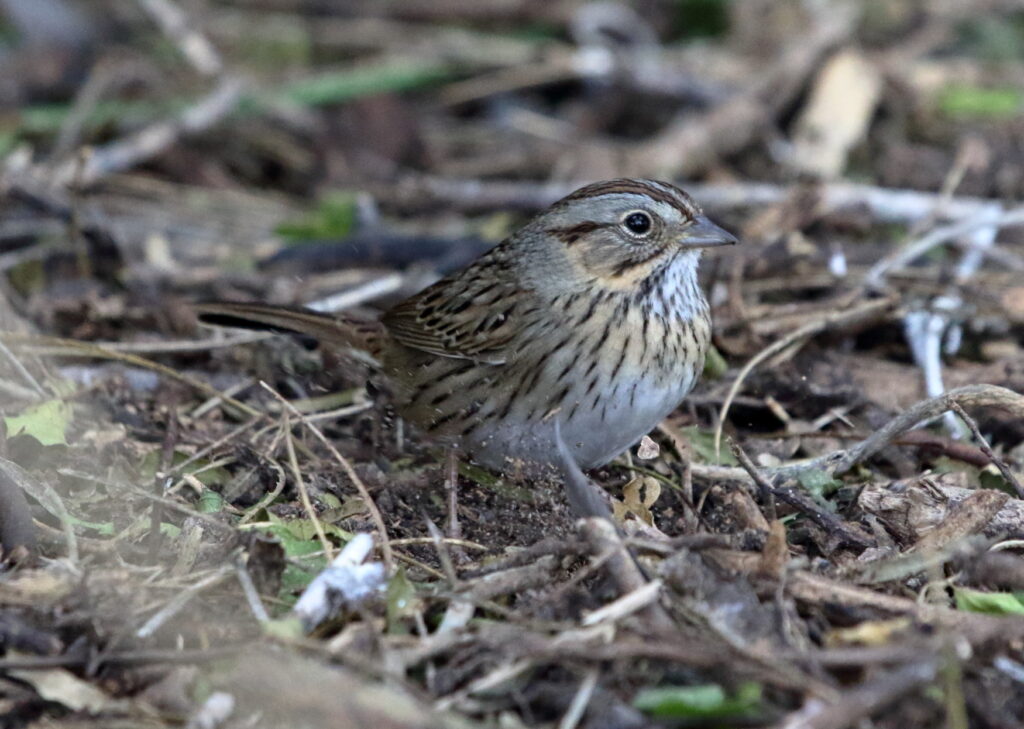
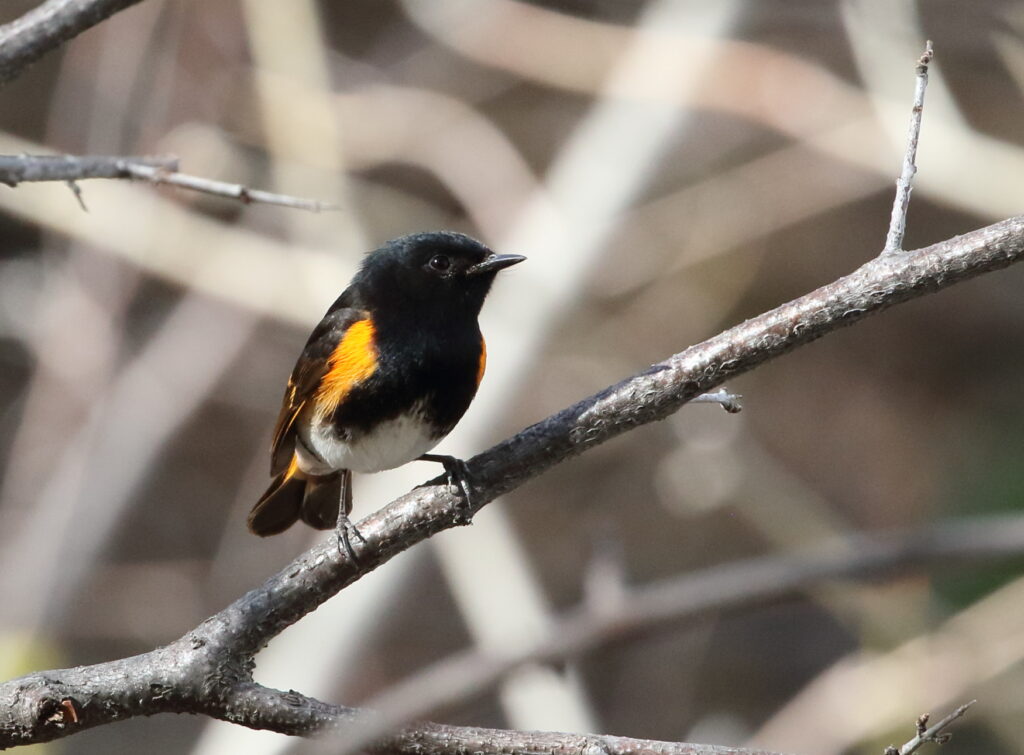
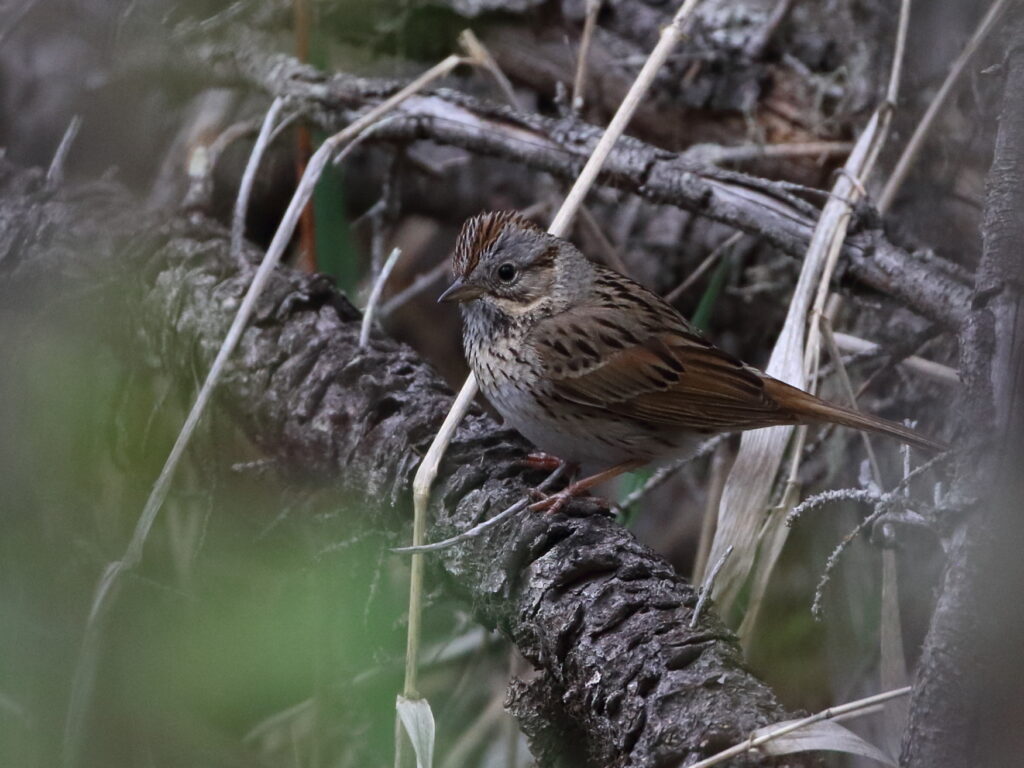
Songbirds promised to be the most difficult category because they are almost impossible to ID at high speed—and often at low speed! Still, I’ve lucked out with birds such as American Redstart and Evening Grosbeak around the ranger station in Seeley Lake, and good looks at Western Tanagers, catbirds, and other species along river roads. While my truck was being emptied down at the Goose Fire south of Ennis, I walked over to “pish” (make a fake bird sound, not doing, well, you know) some bushes and was flabbergasted to see a Lincoln’s Sparrow pop up in front of me—maybe my favorite “truck bird” so far.
Without a doubt my favorite sparrow, Lincoln’s Sparrow made my “birding by truck” list in surprising fashion while I was delivering a load to the Goose Fire crew south of Ennis.(Again, actual bird not shown—it’s hard to get bird photos while working another job!)
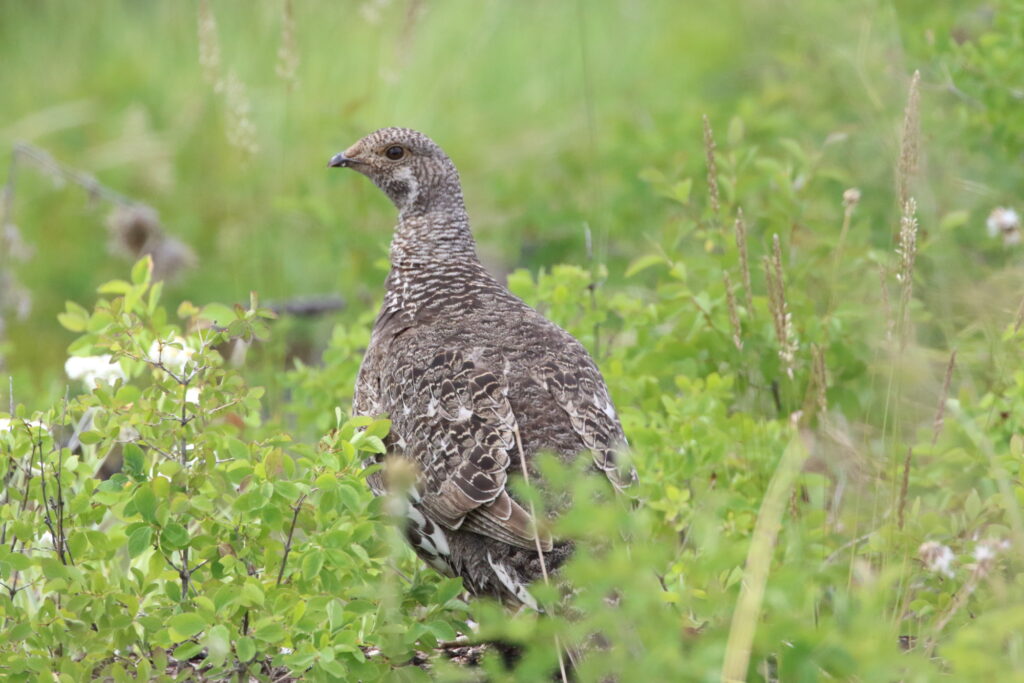
On my way back from the Dixie Fire camp in Idaho, I found myself at dusk crossing over Lolo Pass and needed a break, so I pulled into the visitor’s center to see if I could hear a Flammulated Owl. No luck, but White-crowned Sparrows and Swainson’s Thrushes called in the twilight, and suddenly I heard a deep sub-woofer sound. “My god,” I thought. “That’s a Ruffed Grouse!” It wasn’t. Later, after consulting with Braden, I realized I’d heard, appropriately for twilight, a Dusky Grouse. I hadn’t even known they made a similar deep-bass call. It pays to have a well-educated son!
Hearing a Dusky Grouse at, well, dusk at Lolo Pass taught me an important new bird call—and made an unlikely addition to my “truck list.”
The question remains: will I make it to 100? It’s going to take some doing, and I especially need to get into some large groups of waterfowl or migrating shorebirds or songbirds, but I remain hopefully optimistic. Stay tuned for the next installment! And yes, I would sacrifice my goal for a good, soaking rain!
(by Braden) By the time our posse of eleven reached Logan Pass at 6 in the morning, the parking lot was already full, though that did not hamper the views. Nick Ramsey and I rushed over to the bathrooms, admiring a view we had not experienced for years (despite having been to the lower-altitude parts of Glacier Park every year since 2017) and nabbing Cassin’s Finch and White-crowned Sparrow, then hopped back into Joshua Wade Covill’s car and headed for the Piegan Pass trailhead.
Nick and I had arrived at Josh’s house in Columbia Falls late the night before after a helping of early-summer shorebirds south of Kalispell and were greeted by not only Josh, one of Montana’s birding mammoths, but also by an assortment of the country’s top birders: Tom Forwood Jr., a southern Montana-based birder well-known for the Big Day records he had set across Montana (some of which had been with Josh) and working at Lewis and Clark Caverns State Park; Marky Mutchler, a recent graduate of Louisiana State University who had been the ABA young birder of the year a few years back and whose six-out-of-five star photos decorated every part of eBird’s website; four field techs currently studying nesting birds like Lazuli Buntings and Spotted Towhees on MPG Ranch, and two more birders, who along with Marky, currently spent their time researching grassland birds like Long-billed Curlews and Sprague’s Pipits out on the American Prairie Reserve. Several of the people I had already met through Facebook, while I was excited to meet others for the first time. I knew I was in the presence of greatness the minute I stepped out of the mini-van and onto Josh’s lawn, where I pitched my tent.
We were all here for one reason: to see Glacier National Park and its birds under the guidance of Josh, who knew the park like a Black Swift knows the underside of a waterfall, and who had, in fact, just started a Glacier-based guiding company! While several of us had been here before, others (including many of the field techs) had never seen this part of the country before, and we were prepared to assist in blowing their minds.
We woke up on Saturday morning at 5, getting into the park before the ticket period started, and were up and over Logan Pass by 6. A MacGillivray’s Warbler sang downslope of us as we bug-sprayed up in the Piegan Pass trail parking lot, and then set off into the forest of Engelmann Spruce and Subalpine Fir. Almost immediately Josh halted the group to point out several White-winged Crossbills singing from treetops, their complex trills a new sound for me. This habitat made much more sense than the cemetery in which I’d gotten my lifers earlier in the year.
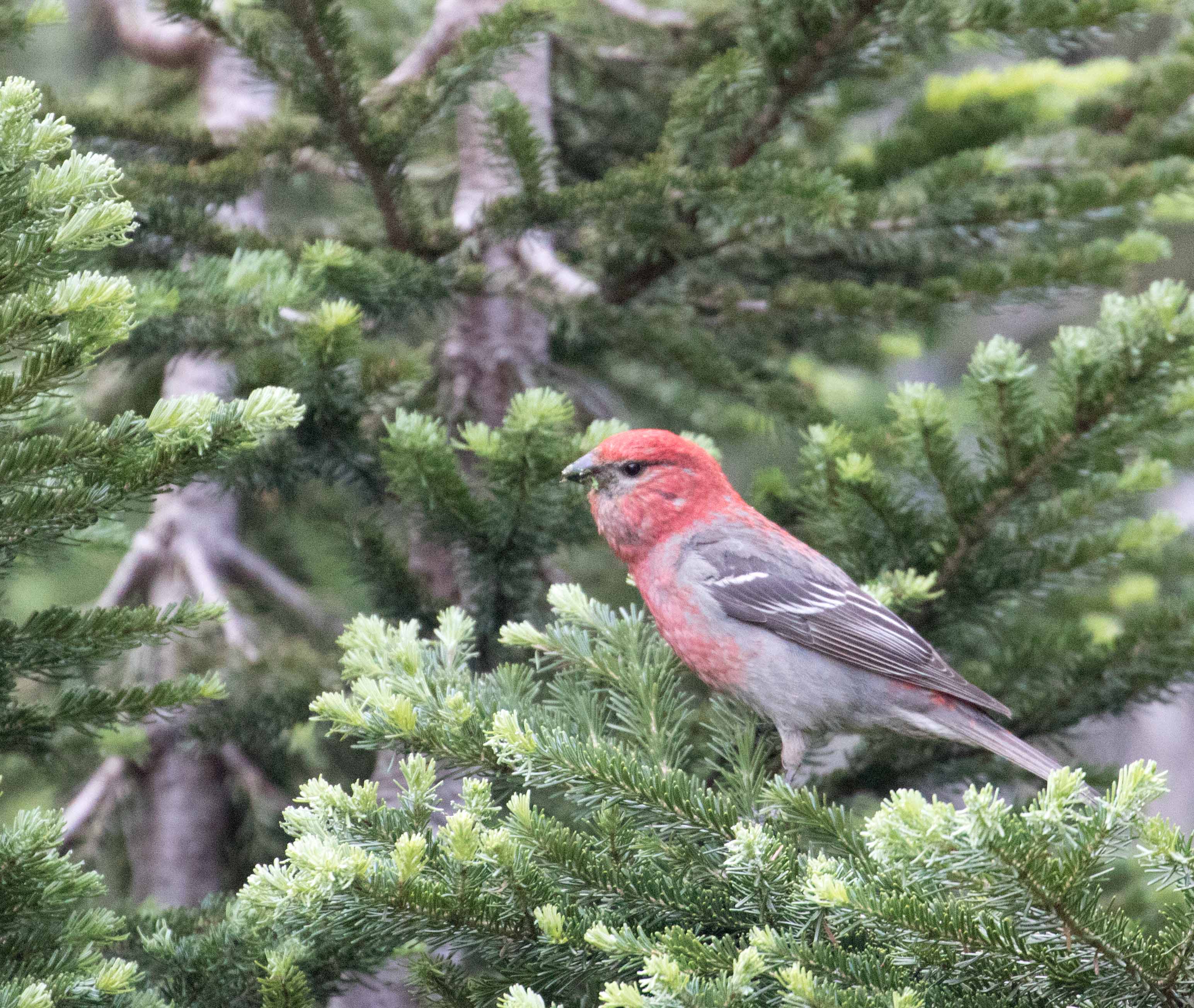
My dad and I usually see Pine Grosbeaks at lower elevations during winter, so it was very special to see them at their breeding altitudes.
In a clearing several miles up the trail Josh called in a Varied Thrush for the photographers of the group (several people including Marky, had brought giant lenses) and a pair of Pine Grosbeaks, not wanting to be left out, had decided to forage in the grass and shrubs at eye-level about ten feet from us.
As we hiked, I learned about the individual research projects that each of the field techs were looking at on the APR, which included Long-billed Curlew migration patterns and parasitism on grassland birds by Brown-headed Cowbirds. We talked about top birding spots everywhere from New Mexico to Missouri and exchanged stories about how everyone had gotten into birds. It was particularly fun visiting with Tom and Josh, as they seemingly had an answer to everything I wondered about along the trail. Tom didn’t just know the birds—he identified every flower and butterfly we came across, and he and Josh pointed out the glaciers and peaks around us as we rose in altitude, many of which they had individually hiked to. They also had a wealth of knowledge of birding Latin America, specifically Costa Rica, something I was incredibly interested in.
After about three miles we rose above the stunted forest marking the end of the subalpine zone and were hiking along scree fields and across lingering snow patches. A Golden Eagle soaring high above welcomed us to the alpine zone as pikas mewed at us from their rocky burrows, and the bird community changed abruptly. Rather than crossbills and grosbeaks, Gray-crowned Rosy-finches filled the finch role up here, and all of us were shocked to encounter a Brewer’s Sparrow belting out a song from a patch of young trees! A rare subspecies of Brewer’s Sparrow, known as the Timberline Sparrow, lived above the tree line in Glacier Park and in mountain ranges farther north, a rather strange change from the normal sagebrush habitat the species used elsewhere in its range. No one in the group had ever seen one before, including Tom and Josh, which meant that everyone had gotten at least one new bird out of the hike!
This surprise Timberline Sparrow (a subspecies of Brewer’s Sparrow) was a Lifer for our entire group!
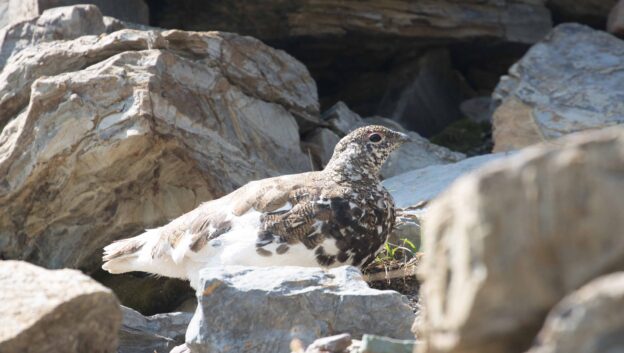
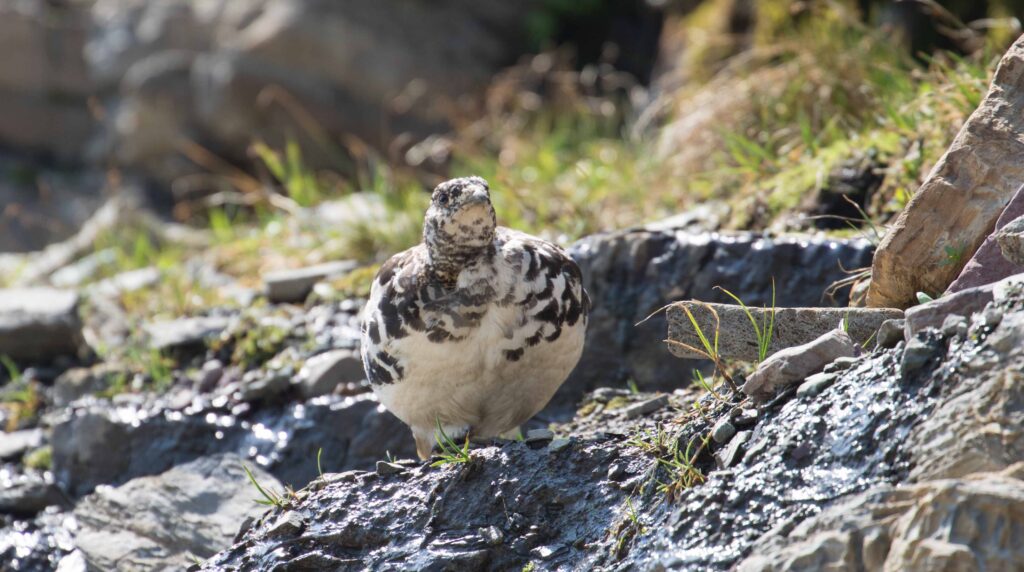
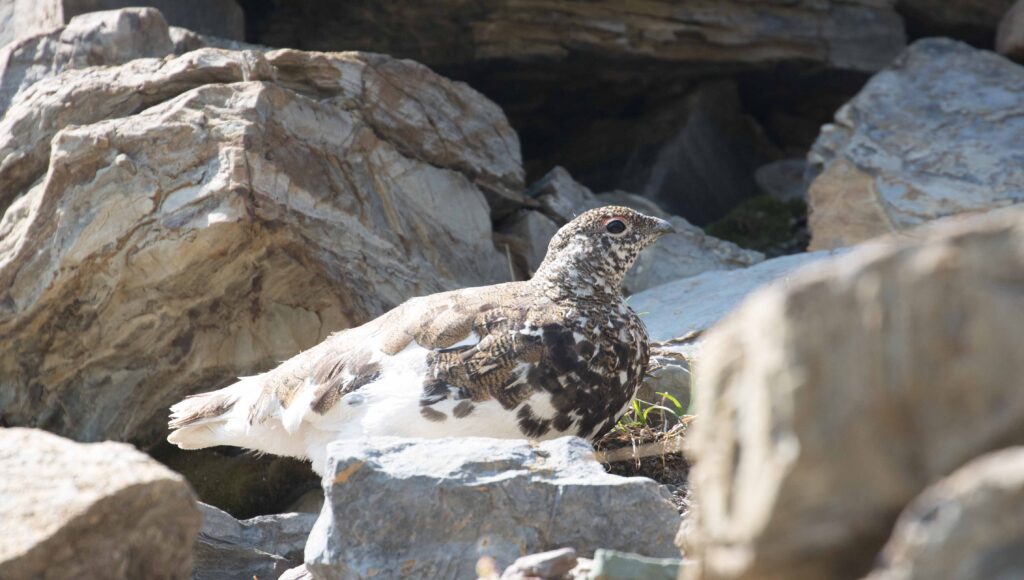
Speaking of new birds, I was here for my Montana life bird #299: White-tailed Ptarmigan. These cryptic, high-altitude game birds only lived in the northwest part of the state, and only in Glacier were they easily-accessible. As we reached Piegan Pass, Josh pointed out a large snowfield. We would be walking around the base of the field after a quick lunch, as it was perfect ptarmigan habitat: it turns out that most alpine habitat was unsuitable for ptarmigan. These picky birds require access to water, shade (i.e. low cliffs) to hide from the sun, and vegetation (i.e. moss) for food. If a site does not have one of these three things, it’s unlikely to contain ptarmigan.
After a lunch full of various mammals from Least Chipmunks to Hoary Marmots trying to steal our food, we set off in a large search line to try to find ptarmigan as an American Pipit displayed in the air high above us, an activity shared with the Sprague’s Pipits my dad and I had found earlier this year. After about fifteen minutes, Skyler Bol, one of the MPG Ranch field techs, yelled, “Got one!”. We all maneuvered across the rocks over to where he stood, and sure enough, there sat a surprisingly small game bird, half-white and half-brown, curiously staring up at us.
It had taken me more than seven years for me to finally see a White-tailed Ptarmigan, but I couldn’t have asked for a better experience—or company—in finding my 299th Montana bird species!
Everyone whipped out their cameras and settled around the fairly unconcerned bird, and soon Skyler spotted another one sitting on a small waterfall nearby! We basked in the ptarmigan glory for at least an hour, then wished the small birds good luck and cold temperatures, and headed back down the trail.
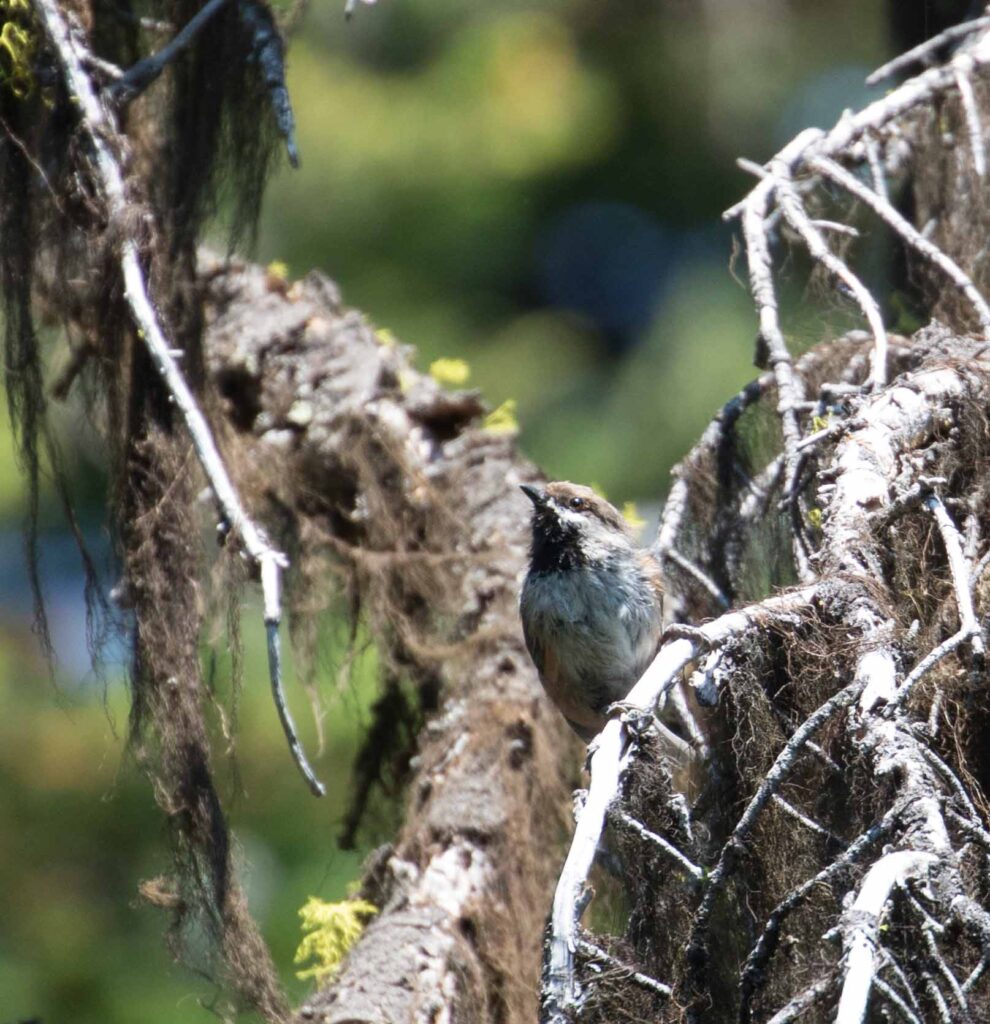
Once we were firmly in the subalpine forest again, we began stopping periodically and playing for Boreal Chickadee. It was great habitat for them, and several members of the group had never seen them before. You might call it “pushing our luck”, but hey, it worked! About two miles from the parking lot after hearing a Mountain Chickadee and several Canada Jays impersonating Yellow-throated Toucans, Josh decided to play for them and a pair of Boreal Chickadees showed up! I had not expected to see them again this year after nabbing my lifer in May and it was great to watch them from a distance as other people took photos of their very first of these boreal birds.
Though our goal was to see White-tailed Ptarmigan, the day facilitated several epic QUACHs as well!
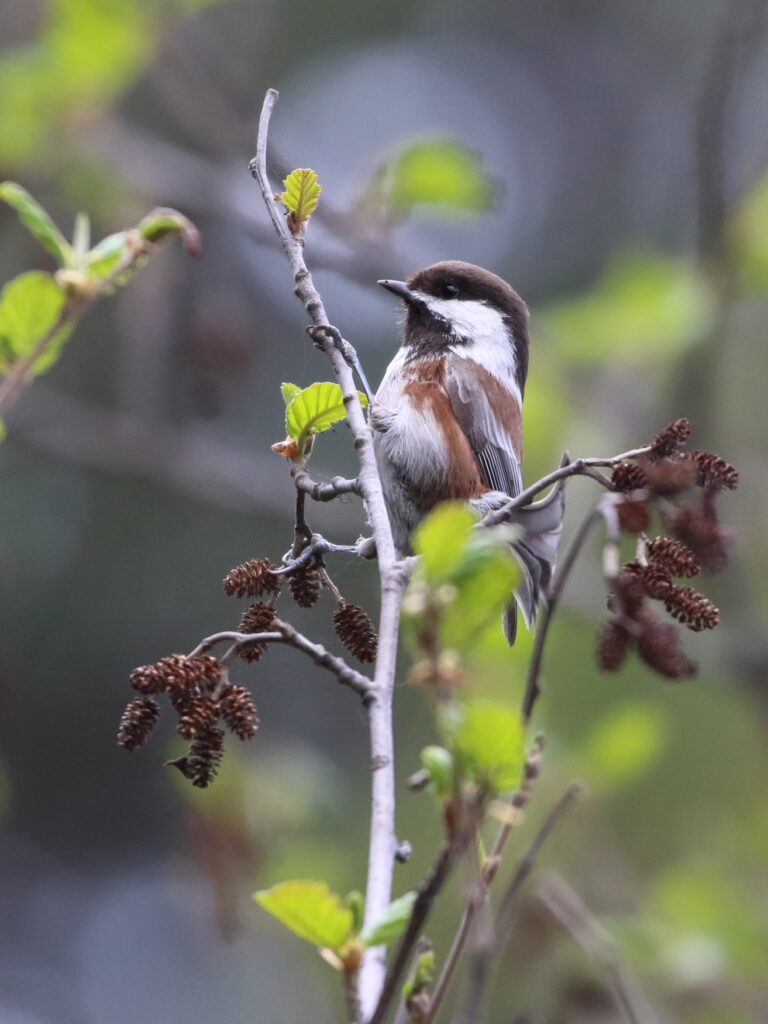
After spying a trio of Golden Eagles again at the parking lot, we headed back to Josh’s house, stopping briefly for a Chestnut-backed Chickadee (there would be several QUACHs completed today) at Avalanche Campground. I had to head home but many of the others stayed another day, and I would soon hear stories of Black Swift, Spruce Grouse and American Three-toed Woodpecker.
As we left the Piegan Pass trailhead, Josh mentioned that he thought it had been his best day of birding in the park, and I would have to agree. And not just because of the great and cooperative birds we saw—because of the people. I had learned so much from everyone as we hiked, and had really gotten to experience what the community I would soon be immersed in would be like. Everyone was so knowledgeable, yet humble and kind, and I was honored to be a part of the first annual “Camp Montana”, even if it was only for a day.
However, seeing the ptarmigan was also a bit sad—who knew how long these alpine birds would be here? With temperatures already breaking record highs within the park, the birds living at the tops of mountains barely had anywhere to go, and snow was disappearing fast. I am very fortunate that I got to experience the birds while they are still here, and hope that somehow, they can adapt to whatever climate change throws at them.
Ptarmigan are a poster bird for how climate change is negatively impacting our planet. As permanent snow fields disappear, habitat for these birds is rapidly shrinking—a call to action to drastically and rapidly reduce the CO2 emissions we as humans produce.
Another problem was posed by seeing the ptarmigan: What will my 300th Montana bird be? Now that I’d nabbed #299, I had no choice but to get to 300, but my options were few and far between, and my days in the state are running out…stay tuned to see what it will be! (I don’t have it yet).
Please share this post. Prairie birds will thank you!
After our Montana Big Year last year, Braden and I opted not to simply chase a high species count this year. In 2021 we decided to a) explore new places b) find some new Life Birds and c) revisit favorite birds we’d spent time with before. When we set off on our five-day central Montana trip last week, however, neither of us realized what a rich grasslands experience we would encounter.
It began with an almost mandatory annual pilgrimage to Benton Lake NWR. We both tend to think of Benton as a place full of ducks, grebes, and other waterfowl—including a dependable pair of Black-crowned Night Herons—and we found these birds in abundance. Immediately upon entering the refuge, however, I hit the brakes for an unexpected surprise: a pocket of four Upland Sandpipers! While not rare, these ungainly-looking dinosaur holdovers always delight us, and to see four together constituted a birding bonanza. What’s more, we found three more UPSAs at Benton, along with the other great grasslands shorebirds Long-billed Curlews, Willets, and a lone Marbled Godwit.
Clockwise from above: Upland Sandpiper, Long-billed Curlew, & Willet
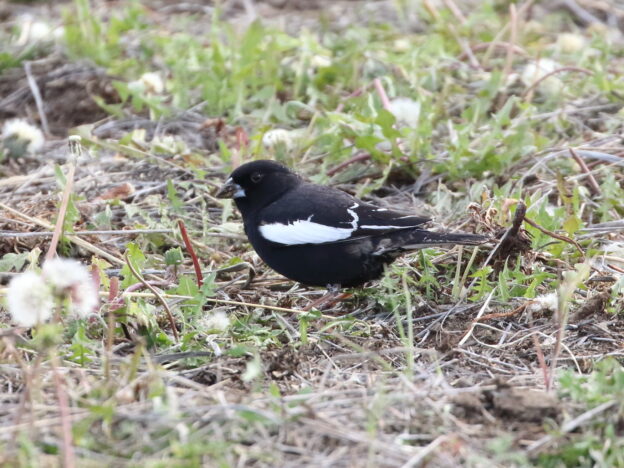
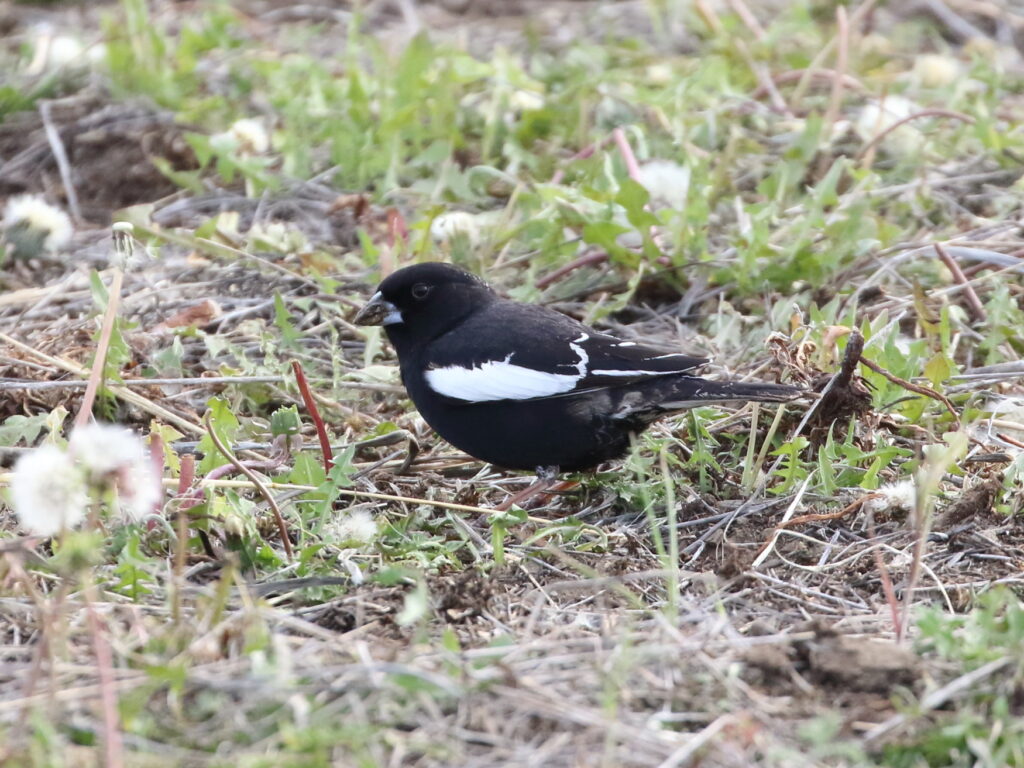
Our day had just begun, however, as we decided to try to find Stilt Sandpipers at a fairly isolated lake north of Grass Range. Again, we found the sandpipers, which were hanging out with at least nine Bald Eagles, but it was the grassland birds along the dirt roads that most impressed us. These included four more Upland Sandpipers, Western Meadowlarks, Eastern & Western Kingbirds, Lark Buntings, and at least four other kinds of sparrows. One of these was a drab bird Braden never expected to see on our trip—Brewer’s Sparrow. Though we were well within its range, we’d never found one in this area, which just shows how much you can discover if you get off the beaten birding path!
With their bold “pied” colors, Lark Buntings are one of our favorite grassland species—but spotty in many areas.
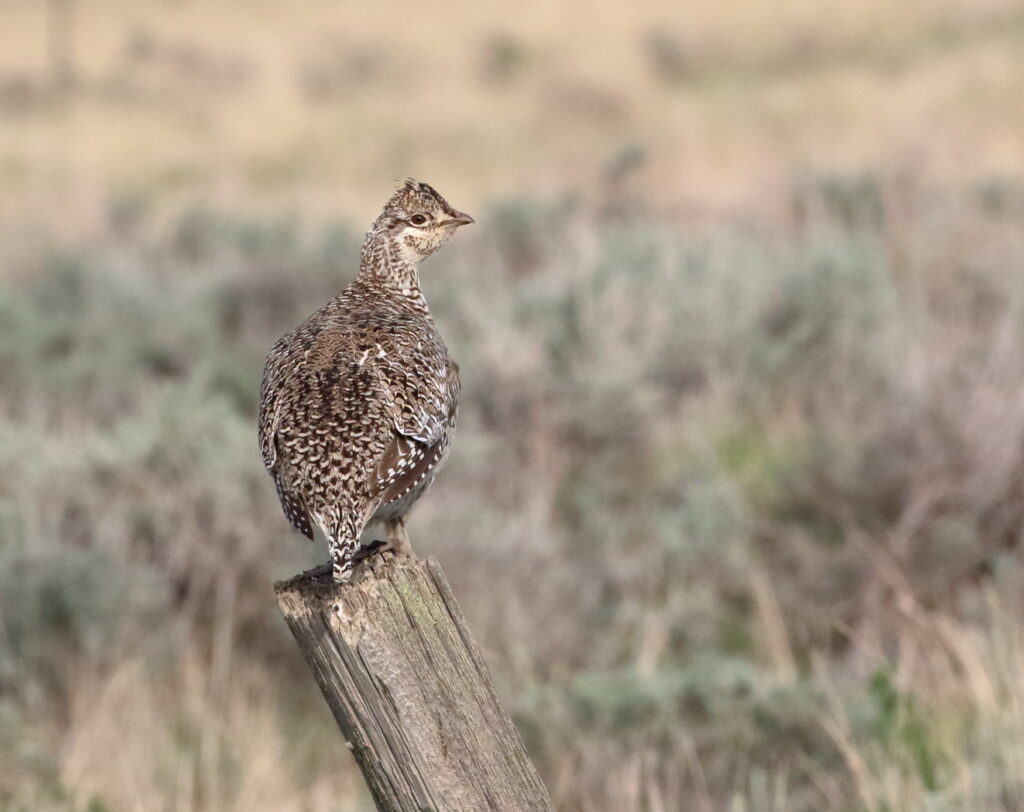
As we were approaching a left turn, I suddenly stopped and whispered “Look ahead.” About twenty yards in front of the car stood a Sharp-tailed Grouse—one of six we found on this particular route. Not only that, it posed beautifully giving us by far our best looks ever at this species. This species helped compensate for our miss on Mountain Plover, an unfortunately uncommon species extirpated from most grasslands by habitat loss or modification, especially the removal of bison and prairie dogs, and the conversion of short-grass prairie to many types of agriculture. Hopefully, we’ll find one next time!
Braden and I never turn down a grouse while birding, and this Sharp-tailed gave us one of our best looks ever.
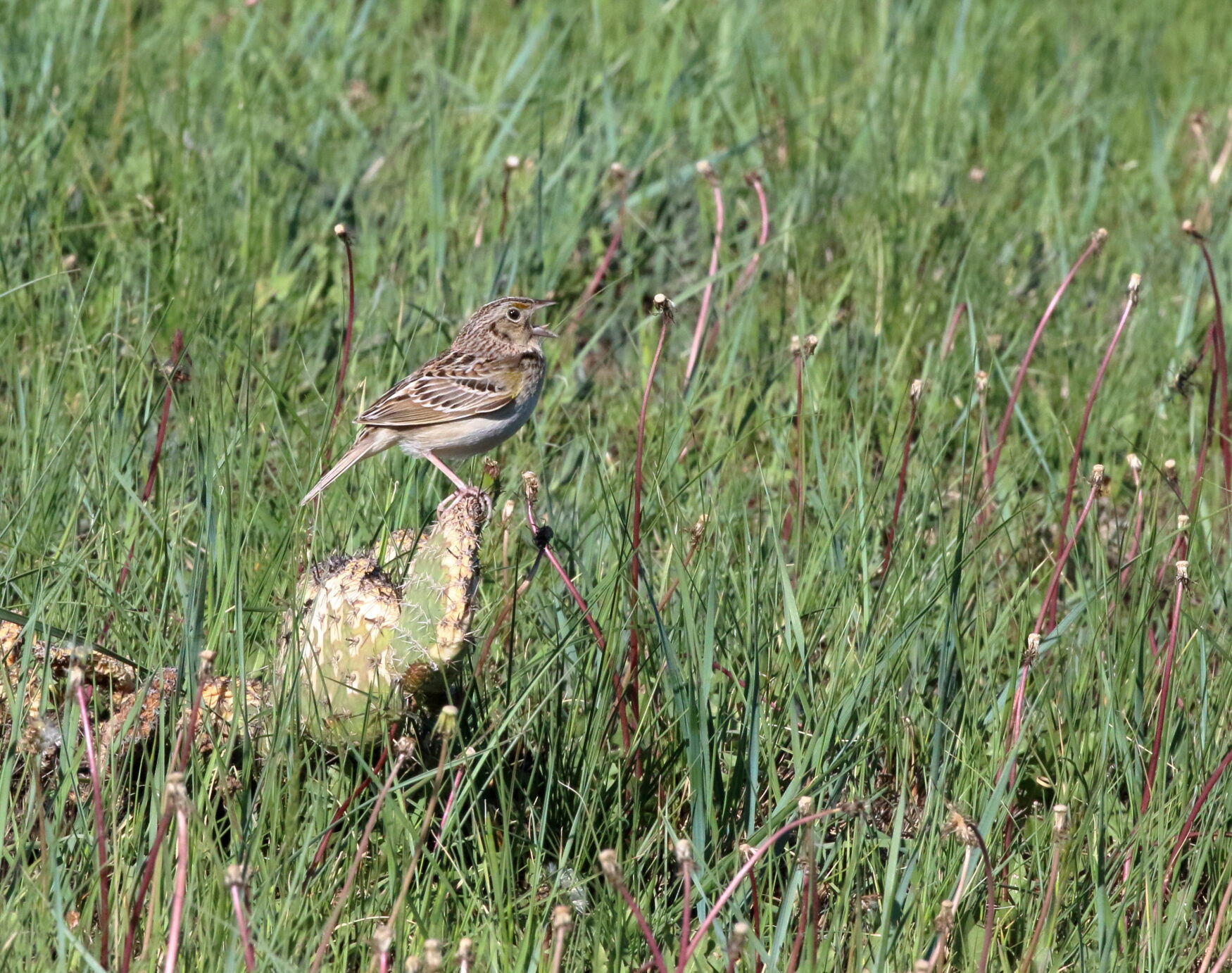
My second favorite grassland bird experience of the trip happened two days later at Bowdoin NWR, when we had a wonderful experience watching a Grasshopper Sparrow singing on top of a stubby cactus. With my crappy ears, I can no longer hear this bird, but this one decided to give me a break by posing in full view where we could watch and photograph it. Which may leave you wondering what our BEST grassland bird experience of the trip might be? I’ll let Braden tell you about that next time!
Beginning birders often dismiss sparrows as LBBs—Little Brown Birds—but close inspection reveals a marvellous diversity of patterns and subtle coloration. Grasshopper Sparrows, for instance, are identified by their yellow faces and single thin brown line extending back from the eye.
During our Birding Therapy Week posts, FatherSonBirding achieved the milestone of receiving our ten thousandth view! To celebrate, we’d first like to thank all of you who have been following our adventures and other stories about our favorite non-human animals (including our dog, Lola,). We know that everyone has an avalanche of blogs, news, posts—and yes, even books and magazines—competing for reading attention, and we greatly appreciate each and every one of you. It also, though, seems like a good time to reflect and re-evaluate.
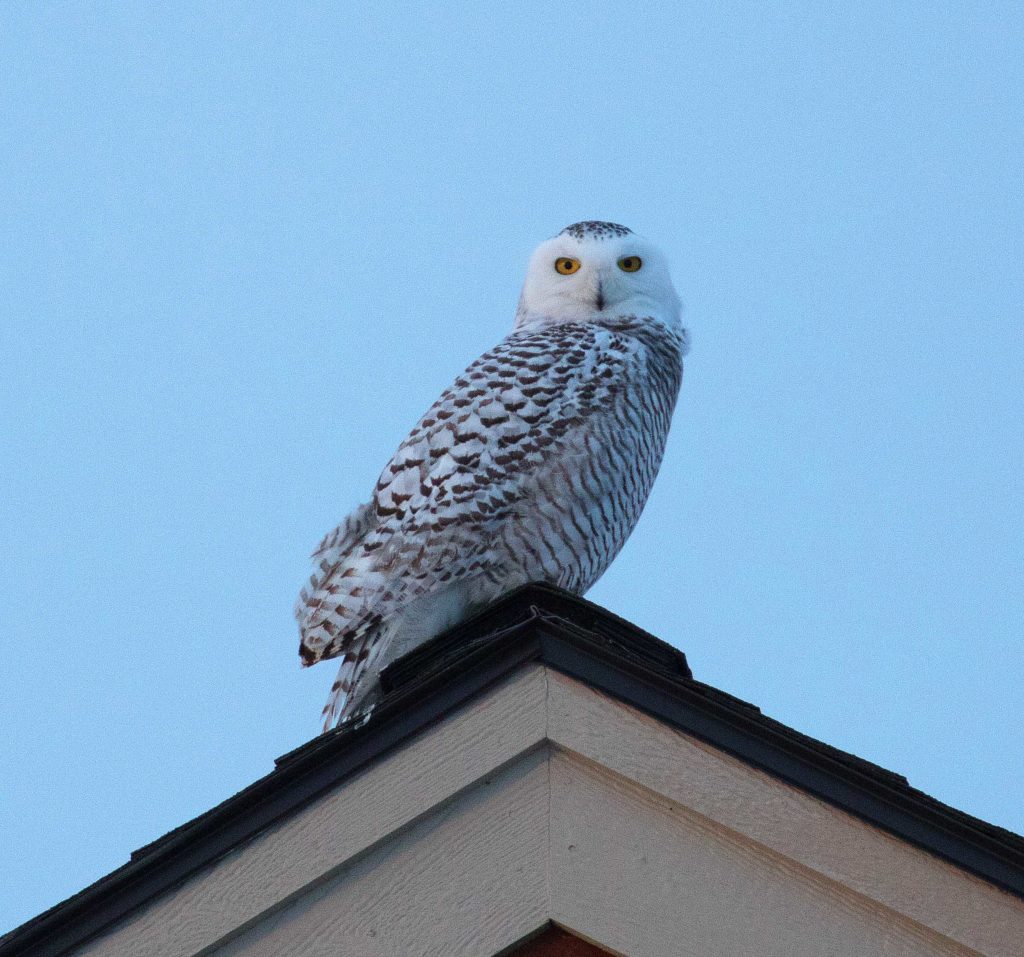
Our Lifer Snowy Owl—from our very first blog post on March 13, 2018
It seems hard to believe, but we launched FatherSonBirding more than three years ago with our post A Quest for Snowy Owls. Since that time, we’ve posted 81 times, and garnered 65 subscribers (there were actually more, but we lost several dozen while getting hacked by suspected Russian provocateurs). On average, about a hundred people read each post. Which is all good, but like a certain ex-president’s approval ratings, our numbers don’t really budge much. On top of that, Braden will be heading off to the University of Maine soon to begin his college career, highlighting the bittersweet fact that we will not have nearly as many birding adventures together as we’ve enjoyed the past few years.
That said, we could shift the focus of the blog from our birding exploits to bird conservation, bird education, or something else. In fact, if you are reading this, we ask that you send us your thoughts on where we might take this forum going forward—including just chugging along as we are, posting occasionally about something that strikes our fancy. Honestly, I (Sneed) have so many mixed feelings about social media that we will probably never do what it takes to build a huge following. I mean, we probably should have launched a blog about watching MineCraft videos or breaking plates over our heads or cooking Julia Childs’ recipes, but we didn’t. Still, we have enjoyed sharing with you and would love it if you’d take time to send us your honest thoughts about what might come next.
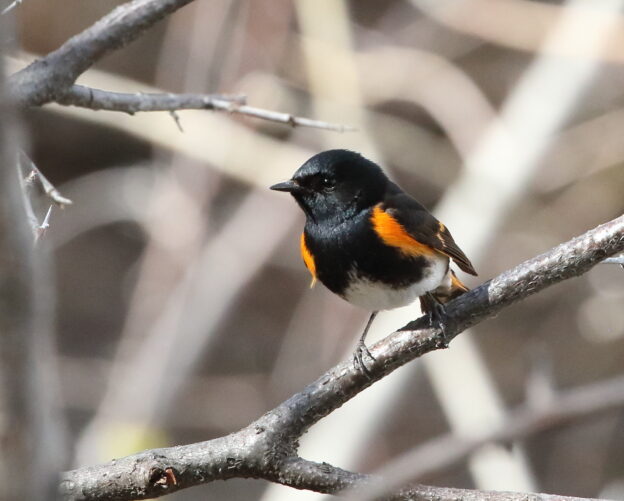
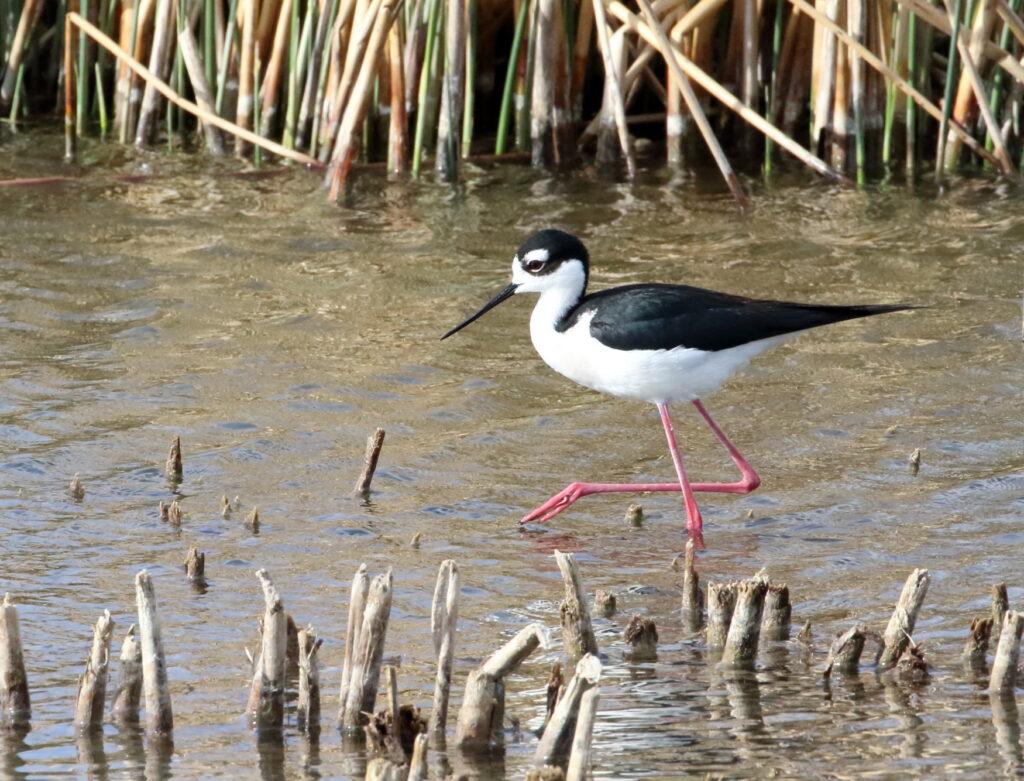
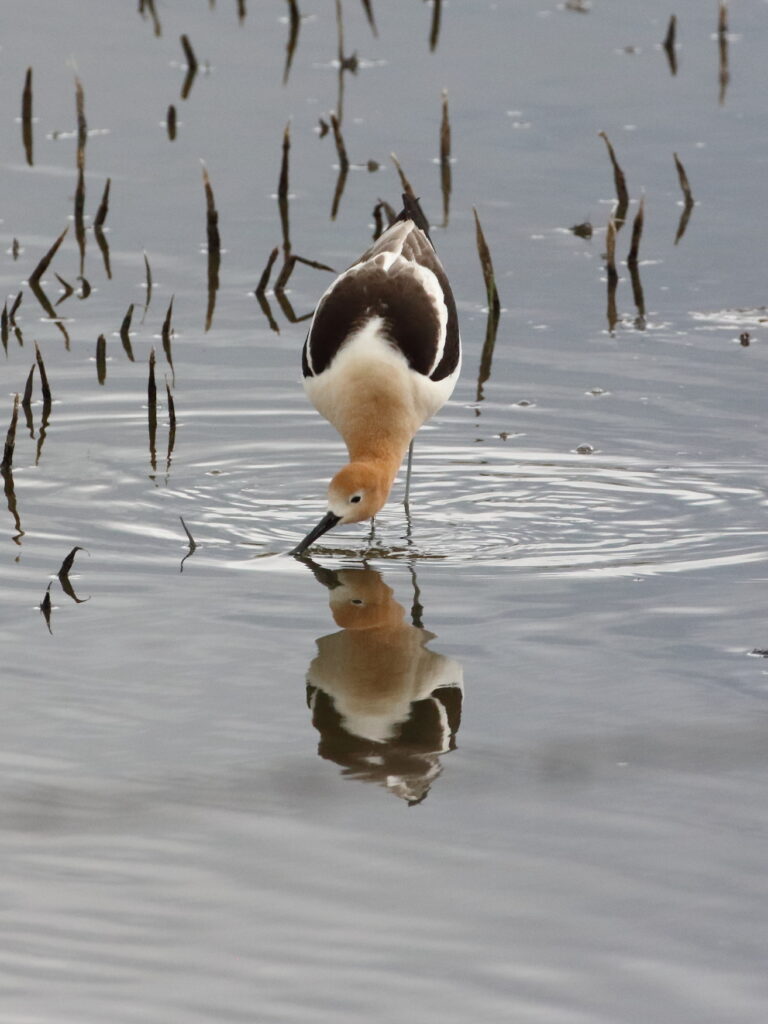
Just a few of the birds we saw during our Montana Big Day on May 18, 2021. Clockwise from upper left: Black-necked Stilt, American Avocet, Chestnut-backed Chickadee, American Redstart, Lincoln’s Sparrow.
As you ponder those, we’d like to leave you with some photos from our best Montana Big Day ever last week, during which we drove 500 miles and found 114 species—the first time we’d ever seen more than 100 different birds in a day in Montana. Ironically, our Bird of the Day was one that we didn’t even see—an American Bittern that we heard calling in the Swan River National Wildlife Refuge! We’d gone looking for AMBIs at least seven or eight times the past two seasons, so it was a real thrill to finally hear one. We hope that you all are having great birding adventures this spring, whether it’s watching your backyard feeder or planning your own Big Day, Big Week, or Big Life!