Tag Archives: mixed-species flocks

The Social Lives of Birds (Book Review)

If you’re enjoying FatherSonBirding, why not take the leap and subscribe by filling out the box below and to the right? We will never share your information. Also, a reminder that all content on FSB is fully protected under copyright law. Please share this post—but don’t use it for other purposes without permission.

With single-digit temperatures in Montana this week, it is still very much book reading season, a time when all birders can—and should—beef up our birding resumés by tapping into the vast wealth of research and experience of the global birding and scientific communities. This past week, I delved into a topic that intrigues most birders by picking up Joan E. Strassmann’s The Social Lives of Birds: Flocks, Communes, and Families (Tarcher, 2025).
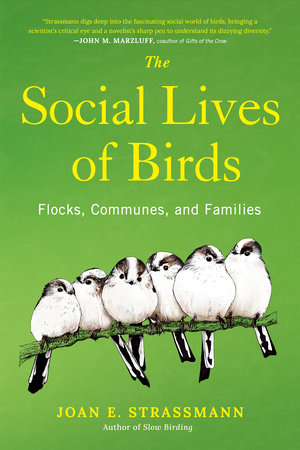
Joan Strassmann’s The Social Lives of Birds is packed with delightful revelations for beginning and experienced birders alike. (Click on the cover for ordering info.)

A well-regarded professor and scientist, Strassmann has created a comprehensive resource that introduces readers to almost every aspect of bird society. She begins by answering the simple question “Are Birds Social?” (You can probably guess the answer to that!) Then, chapter by chapter, she explores topics that fascinate beginning birders as much as they do veteran scientists. These include flocking behavior, mixed-species flocks, the predilection of many birds to roost and/or nest in colonies, the pros and cons of nesting and/or roosting together, lekking behavior, and more.
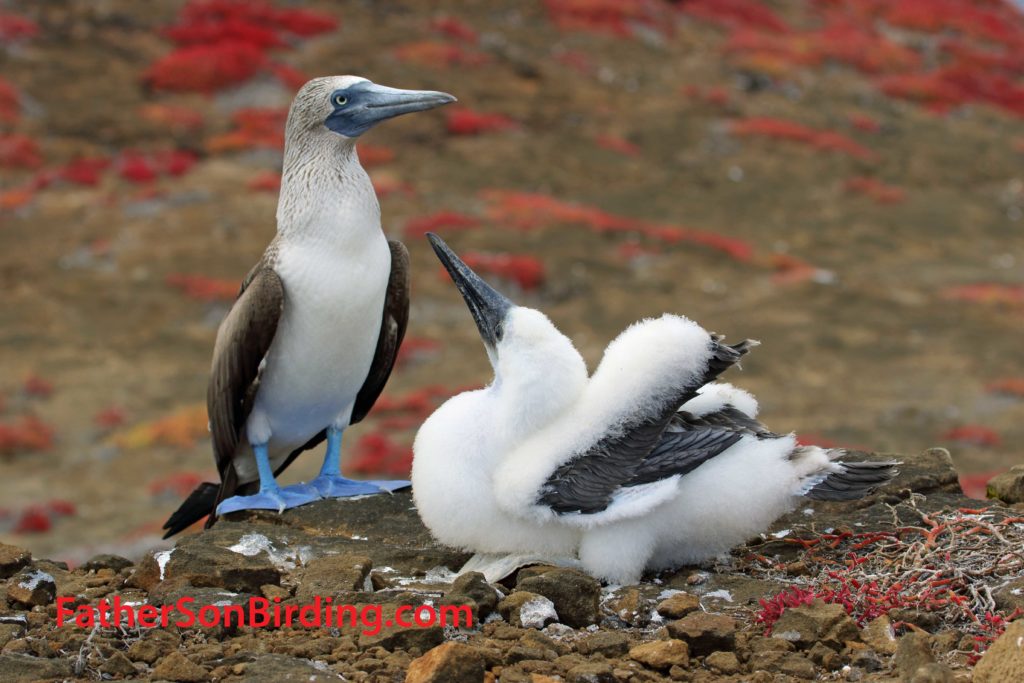
The author devotes an entire chapter to the fascinating and intriguing world of seabird colonies, such as those of one of the world’s most popular birds, the Blue-footed Booby.

I learned something fascinating with each chapter. For instance, I was first drawn to the book because the cover showed a line of six Long-tailed Tits packed tightly together on a branch. I had had the pleasure of observing these birds in the Netherlands (see our post Layover Birding in Amsterdam), Japan (see our post Birding Japan: Kyoto), and Spain (see our post Birding Barcelona, Part 1: The Urban Core), but had no idea that they lived and foraged in stable flocks that are often built around a main breeding pair and its offspring. In her book, Strassmann recounts a study that showed that on chilly nights, the tits nestle tightly together to stay warm, and that often it is the lowest birds on the “tit totem pole” that have to endure the chillier end positions. This is no trivial matter since the birds lose about 9 percent of their total body mass in a single, chilly night.
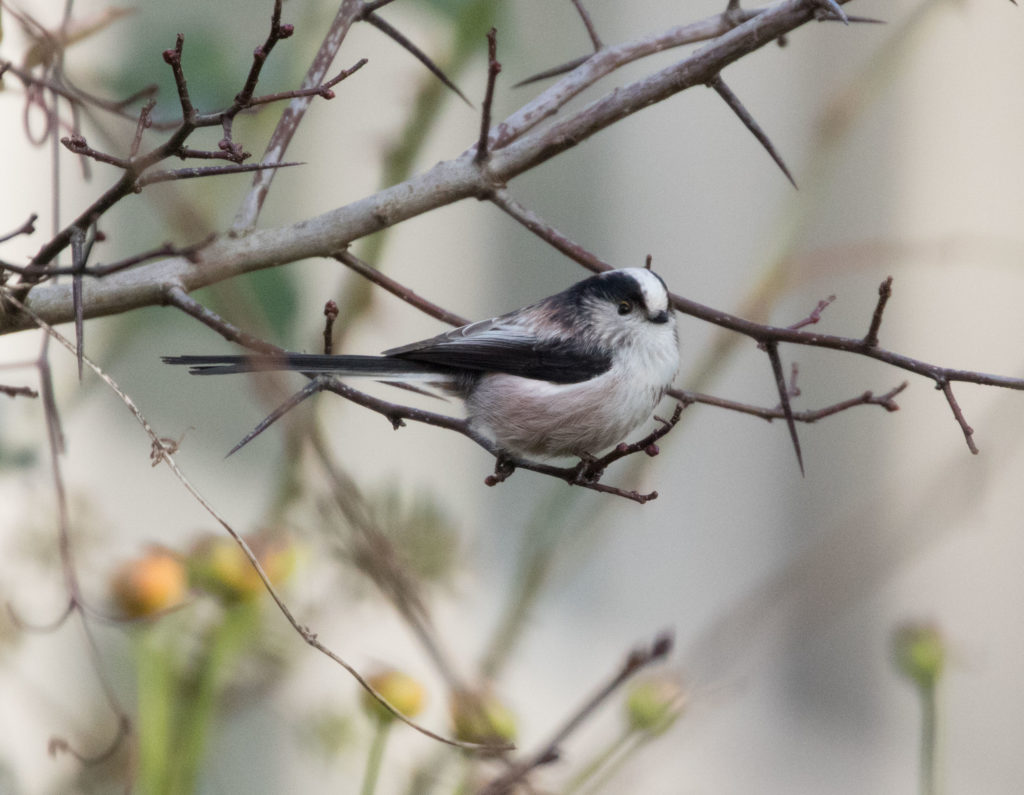
After observing Long-tailed Tits in Europe and Asia, I was fascinated to learn more details of their highly social behavior in The Social Lives of Birds.

Similar revelations emerge with every chapter, examining birds from a wide variety of terrestrial and aquatic habitats. My favorite chapter was the last, “Supersocial Groups: Birds That Are Always Together.” That’s probably because it featured one of my favorite birds, the Acorn Woodpecker (see our post College Search Birding in California), and three other species I was fascinated to learn more about: White-winged Choughs, Sociable Weavers, and a bird Braden and I are always delighted to see, Pinyon Jays. Regarding the latter, Braden and I have seen Pinyon Jays only a handful of times here in Montana, and I had wondered why they aren’t more common. Strassmann explains that the birds need extremely large territories to guarantee a dependable food supply. Unfortunately, their main food source, the pinyon pine, has suffered extreme losses from clearing for agriculture and other reasons. Warmer temperatures driven by climate change have also impacted the production of pinyon pine seeds, leading to large-scale die-offs of these beautiful, dynamic, gregarious birds.
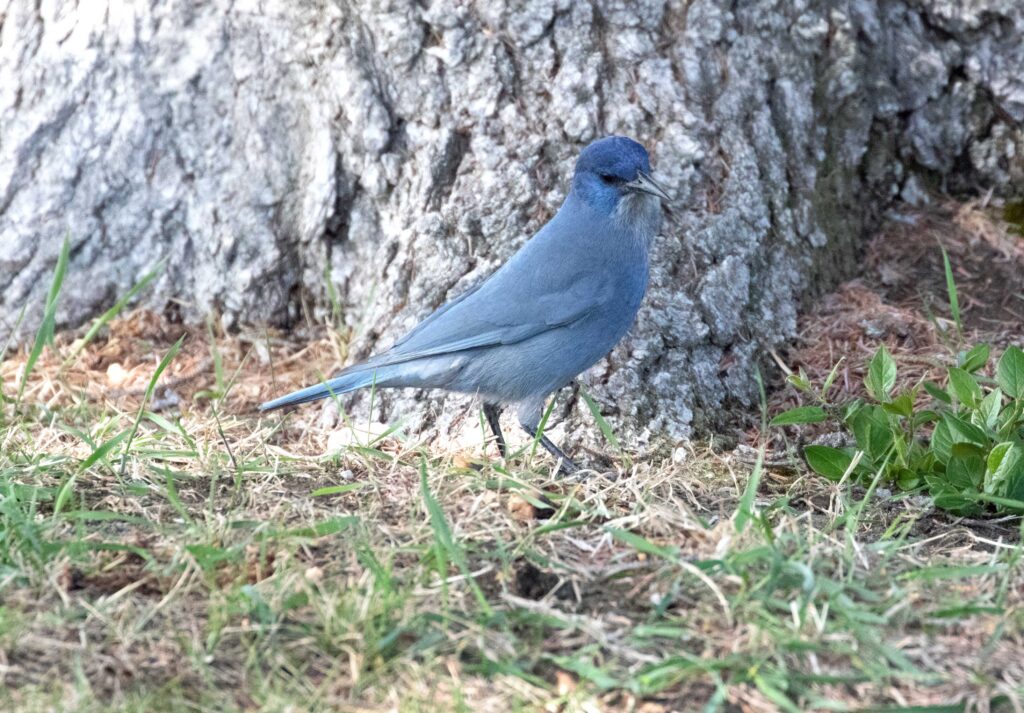
Strassmann devotes much of the final chapter on one of Braden’s and my favorite birds, Pinyon Jays, shown here in a cemetery in Helena, Montana.

The Social Lives of Birds struggles a bit over whether it wants to be a comprehensive resource or an engaging narrative in the vein of the recently reviewed The Great Auk or A World on the Wing. The author mentions her personal connections to many of the topics, but I found these more distracting than engaging. Still, that will not prevent readers from enjoying the book and harvesting a wealth of information—knowledge that will help you look at birds with greater understanding and appreciation each time you head out to bird.

Review copy provided by the publisher.
Best Fall Warbler Flock Ever!

After a couple of slightly disappointing birding outings in a row, Braden and I were feeling a little down, especially because we felt like we’d missed our chances to see some uncommon fall migrants as they make their all-too-brief passages through Montana. Nonetheless, I continued taking my binoculars with me on my morning dog walks just to keep an eye on things and learn more about how fall birds behave. Early last Sunday, I decided to take Lola on one of our Top Secret routes—places we can’t tell you about or we’d have to kill you—and had just started down a street near Pineview Park when I saw activity in weird poplar-type trees up ahead. I unslung my binocs and focused.

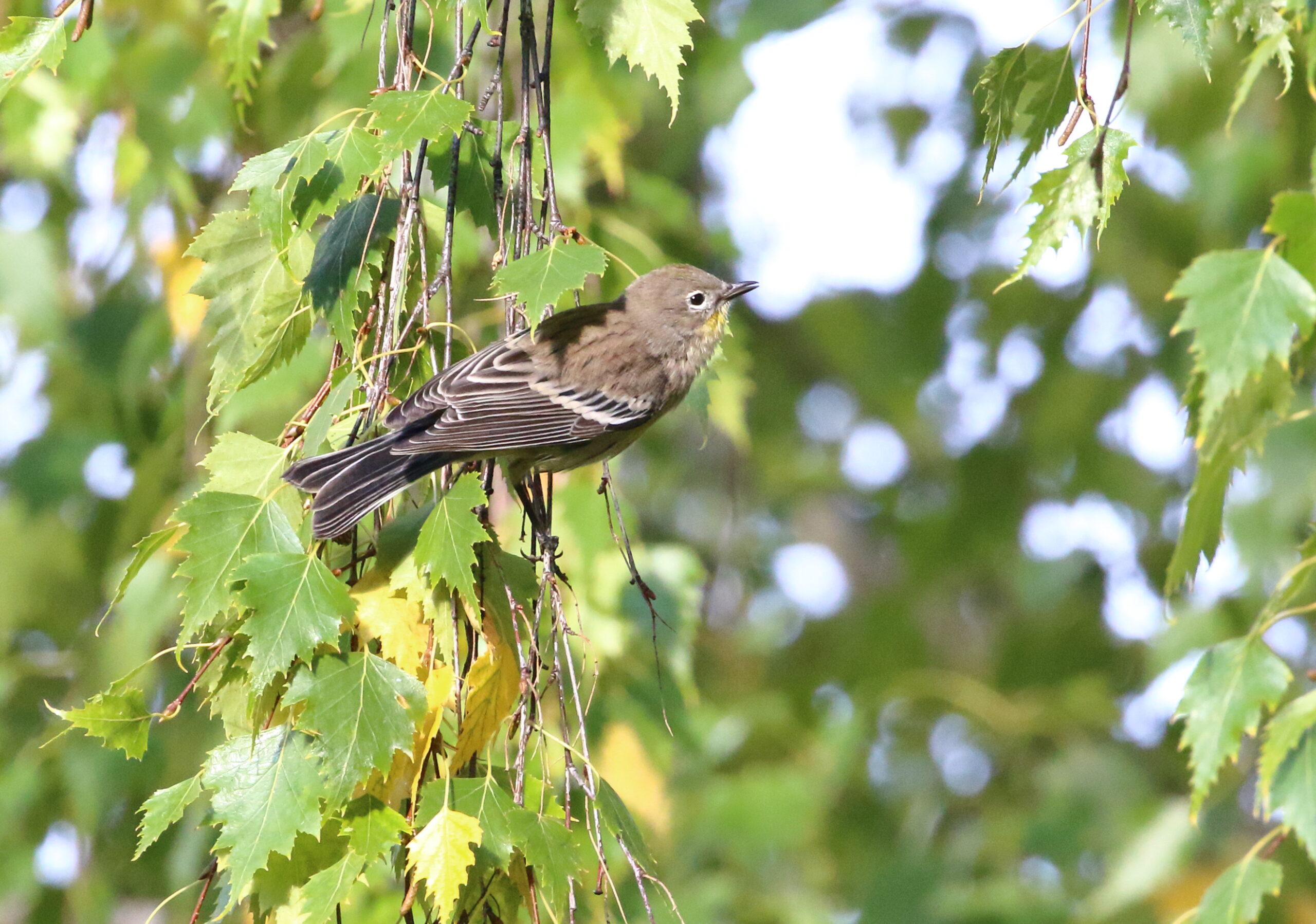
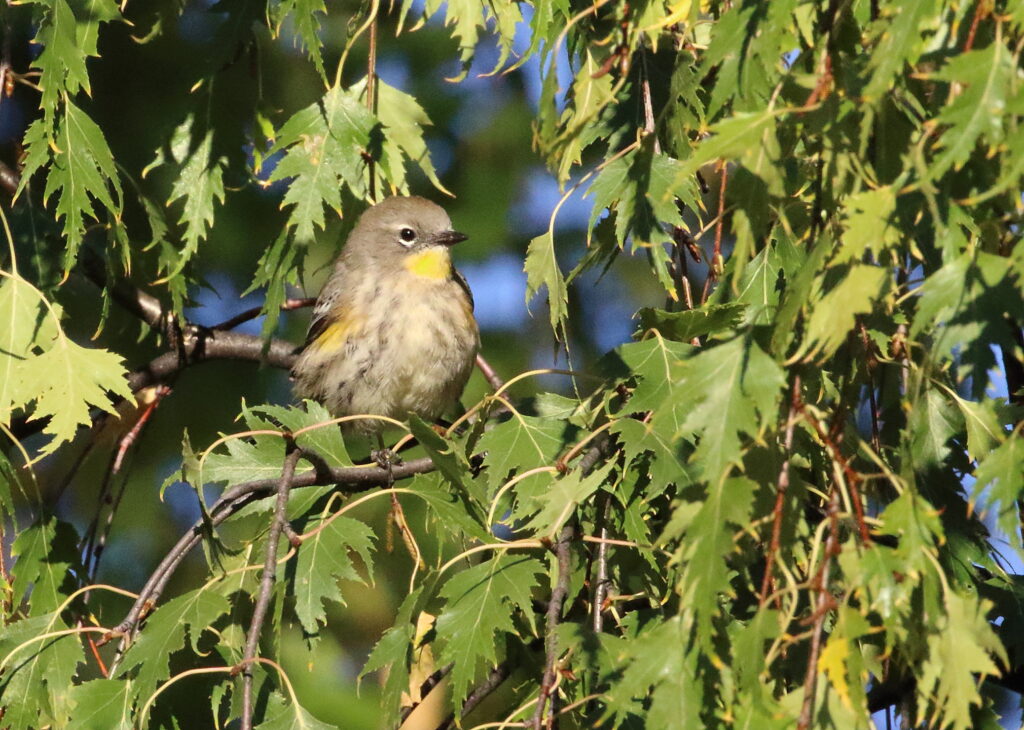
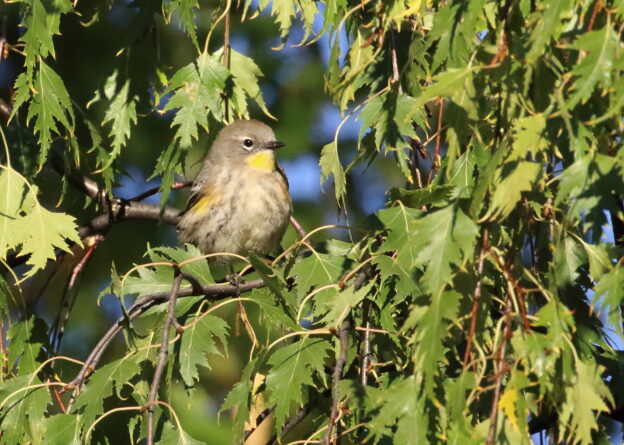
You Californians are probably used to this, but sixty Yellow-rumped Warblers in Montana? Almost unheard of!

I saw about eight or ten little birds, and the first two I identified happened to be Ruby-crowned Kinglets, so I at first assumed they were all kinglets. Rookie mistake. Upon further study, I realized that many of them were Yellow-rumped Warblers (Banding Code: YRWA). What’s more, many more birds filled the surrounding trees. “Hm . . . This could be serious,” I thought and settled in for a better look. For the next twenty minutes, I did my best to identify the frantically-moving targets, finding Red-breasted Nuthatches, Black-capped Chickadees, Evening Grosbeaks—and about twenty Yellow-rumped Warblers. As I was looking at the top of a spruce tree, however, a shocking black-and-yellow face suddenly popped up: a Townsend’s Warbler! By now, TOWAs were supposed to be long gone and when I punched it into eBird, well, the app flagged it as RARE.

Anyone know what this tree is? Whatever it is, it apparently hosted a lot of insects because the birds loved it!

Lola and I hurried home and woke Braden. “You don’t have to come,” I told him, “but there’s an amazing mixed-species flock down by Pineview, including a Townsend’s Warbler.” Five minutes later, cameras and binoculars in hand, we zoomed down there in our ’86 4-Runner. To our relief, the birds hadn’t left, and we spent the next seventy minutes following them. My major goal was for Braden to see the Townsend’s, but together, we soon began making other discoveries. For one thing, there weren’t just twenty YRWAs. There were at least sixty of them, along with at least ten Ruby-crowned Kinglets. It wasn’t long before Braden found a Wilson’s Warbler and we both began detecting an occasional Orange-crowned in the crowd. Thanks to Braden’s ears, we also heard Pine Siskins, Red Crossbills, a Song Sparrow—even a pair of Sandhill Cranes in the distance!

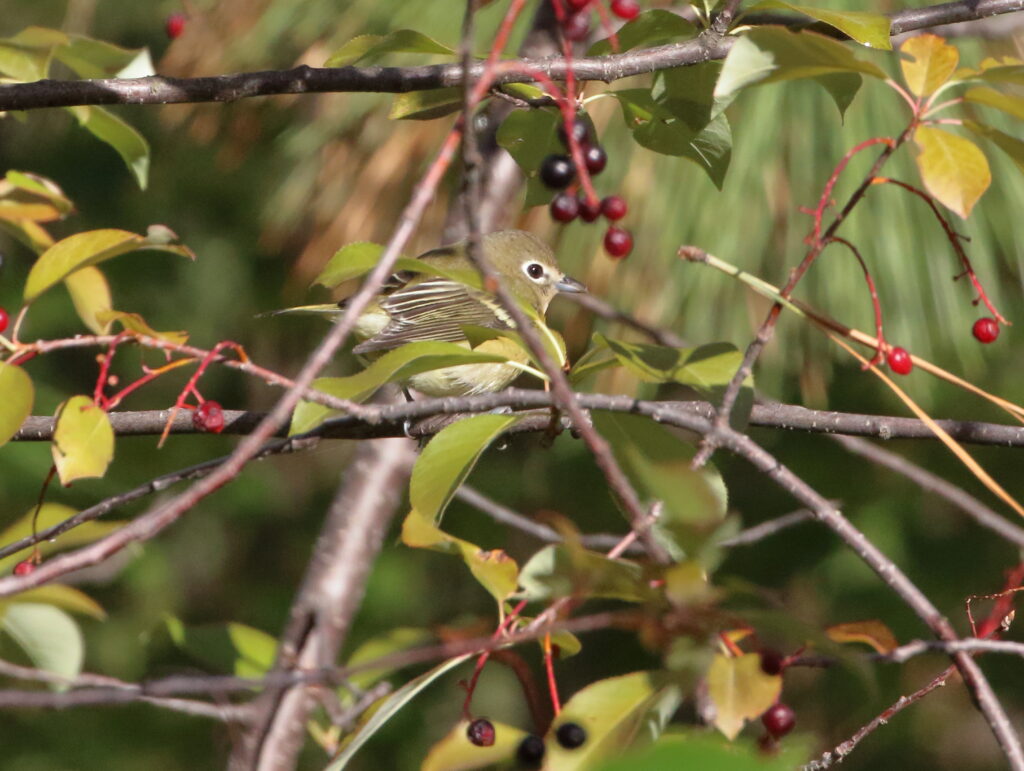
Full Disclosure: I still confuse Cassin’s Vireos with Ruby-crowned Kinglets. The white “spectacles” are the key to IDing the Cassin’s.

Not to be outdone, vireos made an appearance. Braden spotted a pair of one of our favorite songbirds, Cassin’s Vireo, while I saw another surprise bird face, that of a Warbling Vireo—also flagged as RARE for this time of year.

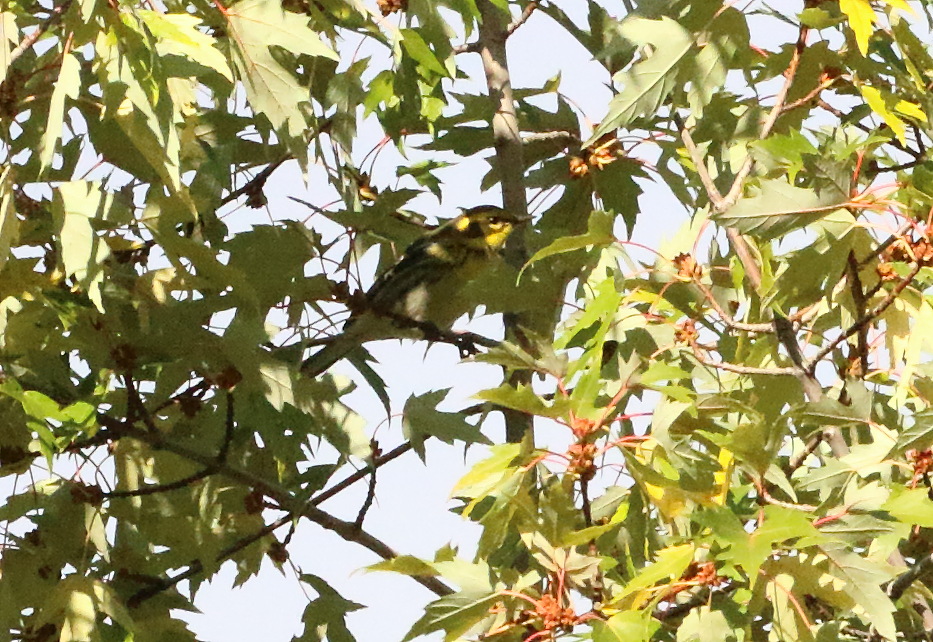
The species kept piling up with Hairy Woodpecker, flickers, and another surprise, Red-naped Sapsucker. But where was that sneaky Townsend’s Warbler? Had I been imagining it? Had it struck out on its own? Finally, after almost an hour, Braden shouted, “I’ve got the Townsend’s!” I hurried over and sure enough, there it was. I even managed a poor, but unmistakable, photo of it. As the flock made its way slowly down Rattlesnake Creek, Braden and I climbed back into the 4-Runner. “Wow,” I said, “I think that’s the best mixed-species flock we’ve ever seen in Montana!” After some thought, Braden agreed. It hadn’t provided us any Year Birds or Lifers, but had been something we would never forget—and almost in our back yard. Birding doesn’t get better than that.

Click here for our complete list: https://ebird.org/checklist/S74123665

Townsend’s Warblers are supposed to be long gone by now, but this one apparently liked traveling with the YRWA herd!