Please share this post—and don’t forget to subscribe 🙂
News Flash: As if to underscore how difficult it is to keep a magazine going these days—and how much bird-related magazines need our help—as soon as I posted this I learned that Bird Watcher’s Digest was sadly forced to close its doors. But see the next paragraph . . .
Summer 2022 Update: I am happy to announce that Bird Watcher’s Digest is back in business! Its passionate staff found new backers for this venerable bird publishing icon. To subscribe, click here—and you might even find an article by yours truly!
Birds aren’t the only things that need our help these days. So do bird and birding magazines! You all probably know about Audubon, and yes, it is first rate. But are you aware of the many other great birding magazines out there? Braden and I have devoured quite a few and thought it might be useful to share our recommendations. At least a couple of these magazines/organizations have seen a big drop in advertising revenue because of covid and the limitations on bird-related travel, so we encourage you to take the plunge and subscribe or join. Not only will you receive great content, you will help support the larger birding community that is so essential to protecting the birds that we love. And no, we are not being compensated by any of these journals—though we would dearly love a free trip to South Georgia and the South Sandwich Islands. Hello? Is anyone listening? O’well. Here goes:
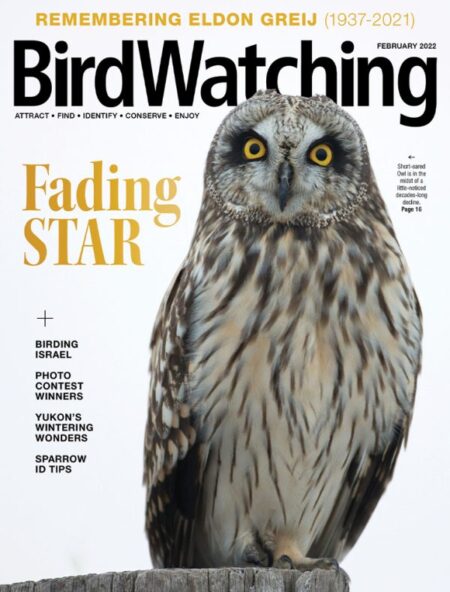
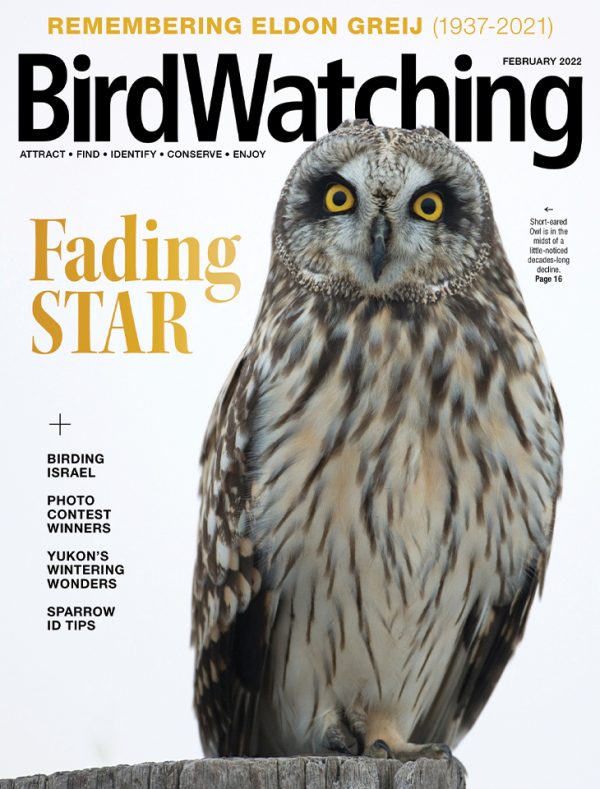
BirdWatching may be my favorite birding magazine—and not just because I write for it. It offers a wonderful variety of news, ID Tips, and science, but also entertaining features on conservation, travel, and photography. It regularly features columns by Laura Erickson, Pete Dunne, Kenn Kaufman, David Allen Sibley and other top birding experts. Subscribe here.
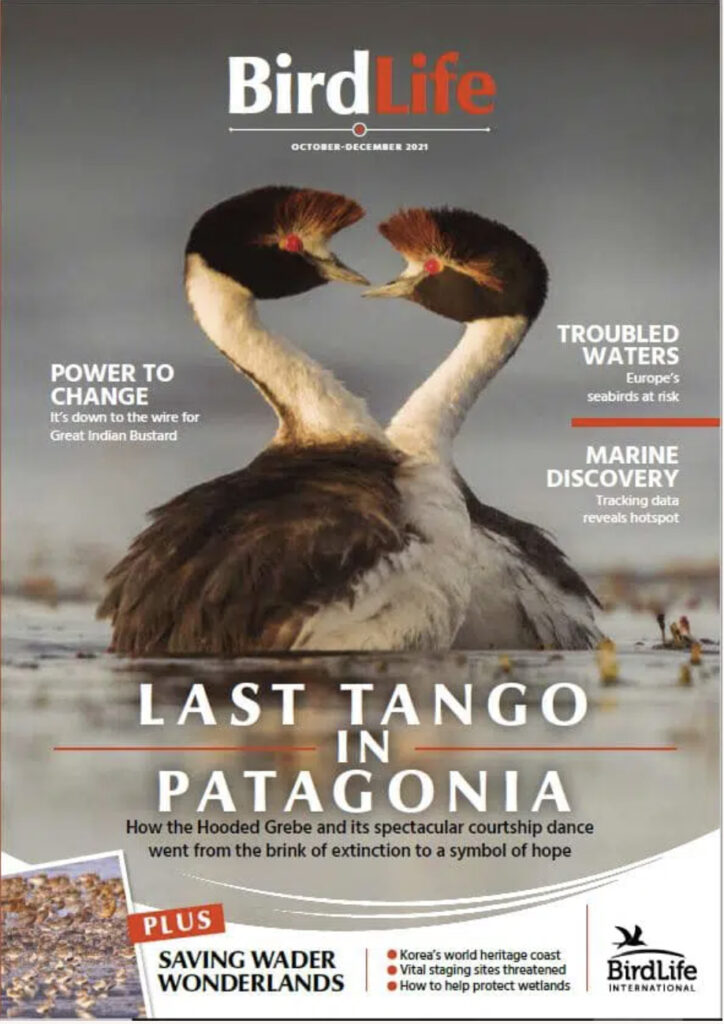
BirdLife is Braden’s favorite magazine because of its focus on bird conservation. This quarterly—which comes with membership to BirdLife International—offers an engaging mix of conservation news, alerts, science, and stories about the group’s many successes. It’s impossible to read this without feeling more engaged and hopeful about what humanity is doing to protect birds. Join here.
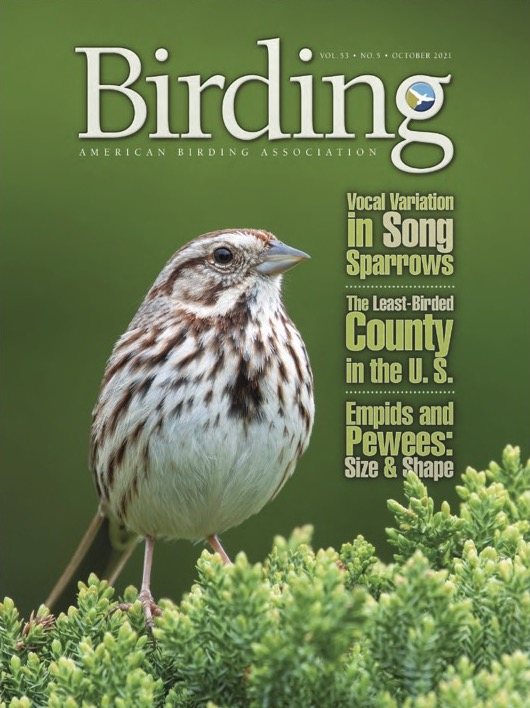
Birding caters to members of the American Birding Association, offering a wonderful mix of articles on birds, birding, travel, science, and conservation. It appeals especially to “listers” but also will interest anyone else with a love of birds. Plus, you will receive other ABA benefits when you join. Join the ABA here.
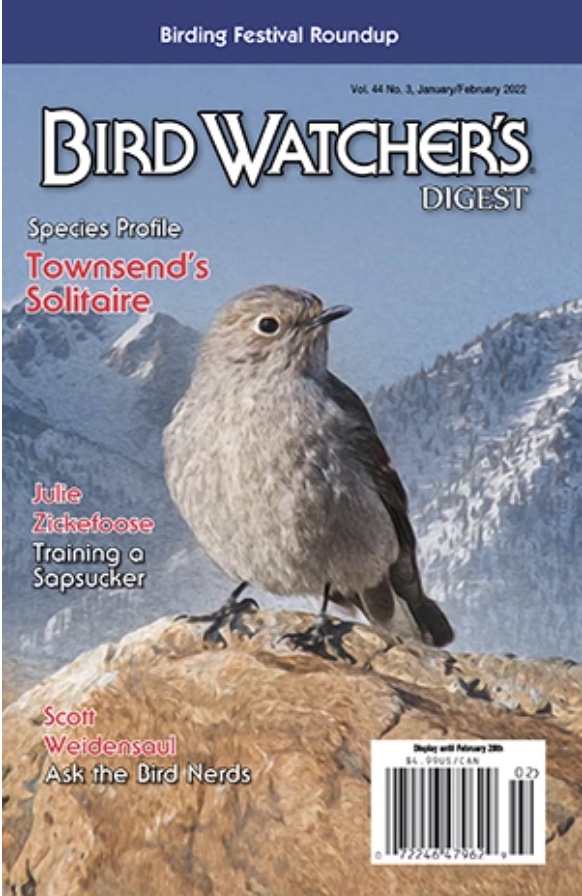
(See note at top of blog!) Bird Watcher’s Digest may be a more familiar name for many of you, and gives off a more informal “Mom and Pop” vibe, but don’t let that fool you. Despite its smaller, “hand-held” trim size, it is loaded with interesting articles, species accounts, ID tips, and other resources that I always find useful. My article “Messier is Betterer” appears in their Jan/Feb electronic version of the magazine. Learn More.
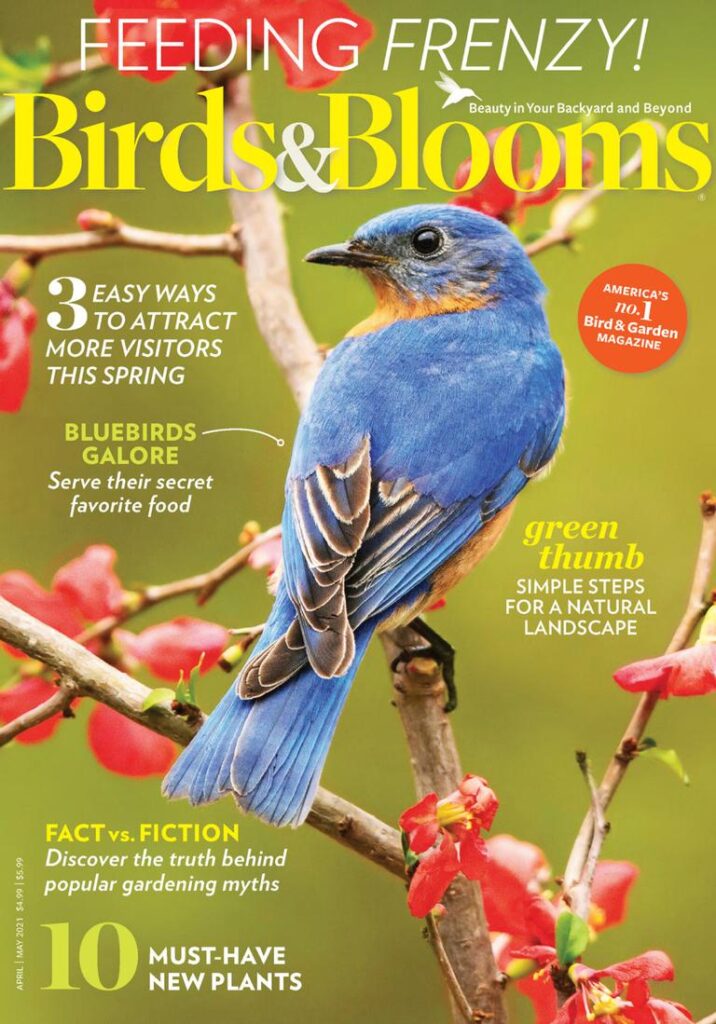
To round out our review, I want to mention Birds & Blooms, a magazine that focuses more on backyard birding and creating gardens that provide birds with the resources they need. It’s definitely given me a greater appreciation of the many plants that benefit birds and butterflies. If only I had more time for yard work! Subscribe here.
Enjoy these posts? Why not subscribe in the box down and to the right?
If you’ve been a loyal fan of FatherSonBirding, you probably know about Braden’s and my 2016 Big Year in which we saw 337 species in the American Birding Association (ABA) region in a calendar year. Since then, we have never set out to topple that record even though, with our vastly improved birding skills and knowledge, it would be a relatively easy thing to do. In fact, a couple of times we have come perilously close without really trying thanks to trips to Texas, California, and in Braden’s case, a band trip to Hawaii. When I received two invitations to Texas for this fall, however, I thought to myself “You know, maybe it’s time to give this a shot.”
Mind you, it was still a long shot. When I left for The Hummerbird Celebration in September I had managed to scrape together only about 260 species in Montana, Idaho, and Washington for the year, and knew I’d have to go BIG that first trip to Texas. I did, scoring about fifty Year Birds—but still left myself more than 20 birds short in perhaps the toughest time of year to bird. “Still,” I thought, “if I can somehow get ten or twelve more species on my second Texas trip, I might get within striking distance.”
I knew I would need help.
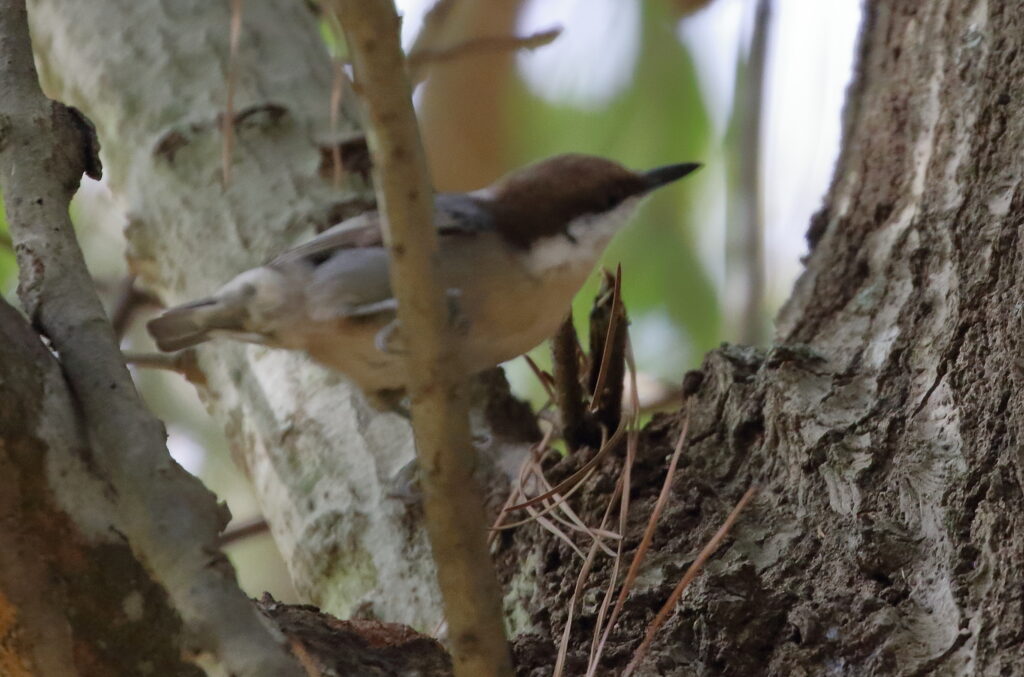
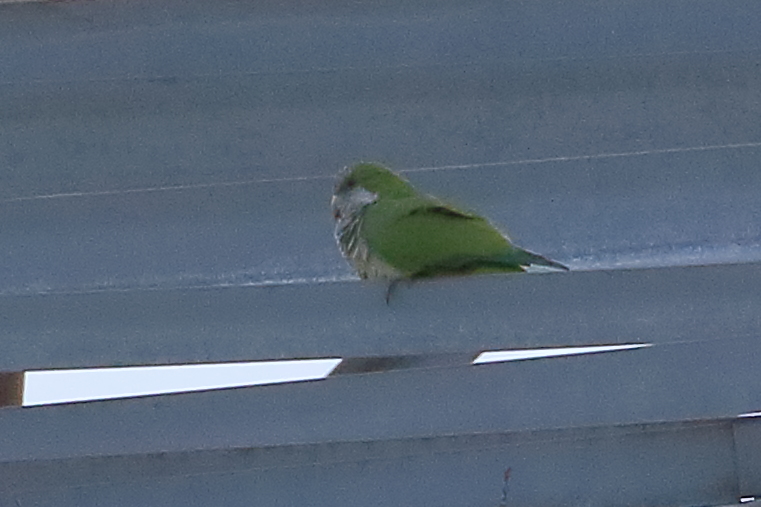
I’ll take a blurry Lifer any day—including this beautiful Brown-headed Nuthatch. By the way, this bird brought my ABA Life List to 498 birds! Only two hours later, I got number 499, Monk Parakeet! What will be 500?
My trip last week unfolded when I was invited to give a keynote address at Houston Audubon’s (HAS) annual Avian Affair fundraising gala (more on that in my next post). As you probably know I love HAS and was honored to accept, but I brazenly asked my hosts if there was a chance anyone could take me birding when I arrived. Before I knew it, a team of expert birders, all HAS board members, had been assembled with the express goal of helping me tackle my Texas “needs” list! In fact, within twenty minutes of my arrival, Bill Matthews picked me up at the airport and whisked me off to our first stop, the W.G. Jones State Forest—home to some of the state’s most accessible Red-cockaded Woodpeckers.
To be honest, I didn’t think we’d find the RCWOs since they can forage over a large area, but I was also hoping for a Life Bird, Brown-headed Nuthatch. As we began walking around the forest, we found no woodpeckers near their roosting trees, so decided to take a longer walk down a trail. Very little stirred, leaving me feeling that maybe we wouldn’t see much—until, that is, we had walked about half a mile. Then, all of a sudden, Eastern Bluebirds were flying everywhere. Other Year Birds soon surrounded us—Carolina Chickadees, a Yellow-bellied Sapsucker, Tufted Titmice, Pine Warblers, and oh joy, Brown-headed Nuthatches!
Though Braden and I had seen Monk Parakeets in Israel before the pandemic, this was my first ABA Monk Parakeet. Bill Matthews mentioned that the severe freeze in Texas earlier in the year had pared down the parakeets’ numbers significantly.
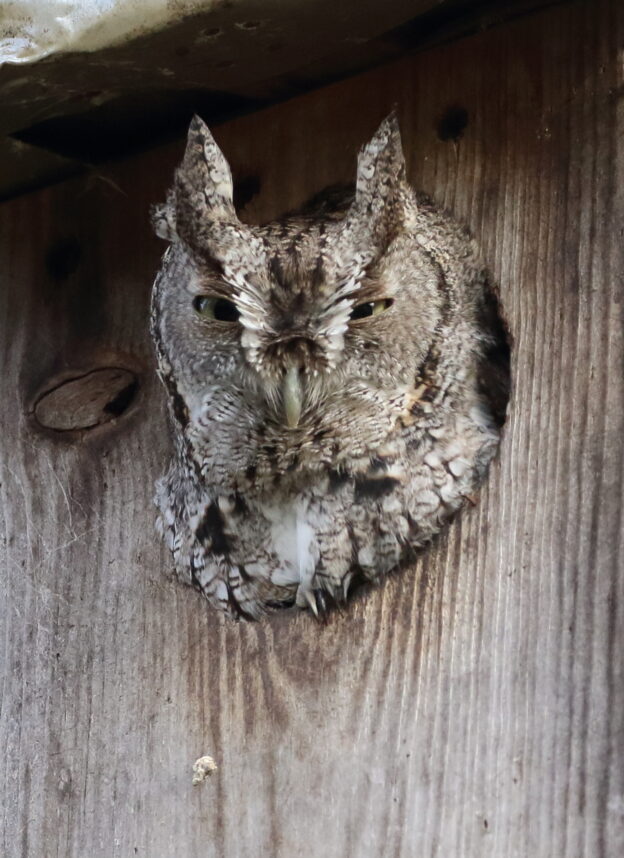
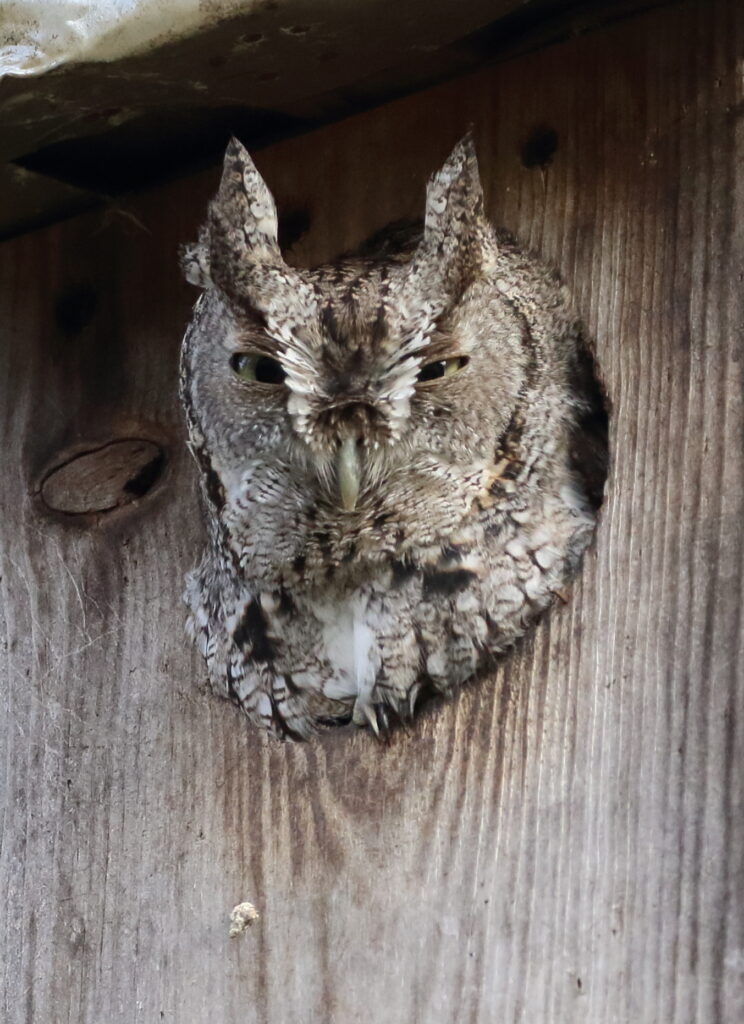
We left without RCWOs, but I was elated with our finds. Bill hadn’t finished with me, though, as we stopped by a roosting Eastern Screech-Owl in a neighborhood nesting box and two Monk Parakeets behind his wife’s studio. By this time, Bill’s fellow board member and well-known bird guide Glenn Olsen joined us, so after the parakeets, we adjourned to Molina’s Cantina for some great Tex-Mex food and to plan our next day’s conquests. Unfortunately, the next day proved a lot tougher than the first, but we still were able to hear a Limpkin—a rare visitor to Texas—at Sheldon Lake, and see some incredibly cool Brown Boobies on a “tower of power” at Baytown Nature Center, accompanied by yet another great birder and HAS board member, Skip Almoney.
World’s Most Cooperative Owl? This Eastern Screech just may take the prize!
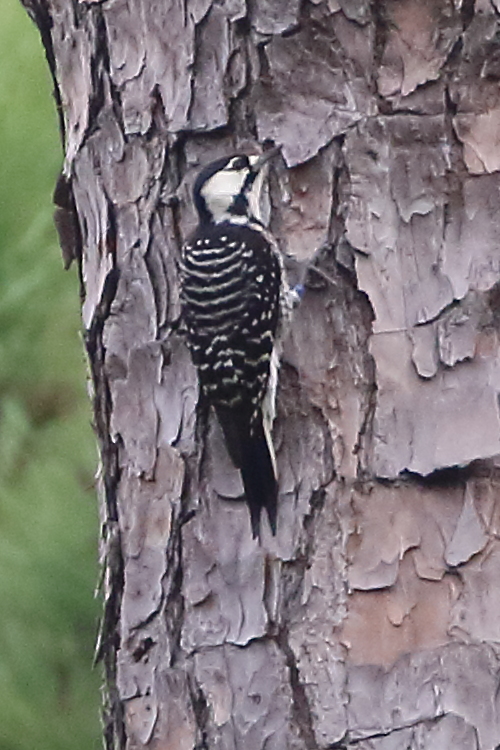
With a total of 8 Year Birds, I was fairly satisfied as I actually did some work the following day, speaking to fifth-graders at Western Academy—and saw Year Bird #9, Scaly-breasted Munias! Glenn Olsen was not satisfied, however, so on my last morning, he picked me up early before my flight and we headed back out to W.G. Jones, meeting up with another great HAS board member, Eric Mayer, out at the site. Again, I didn’t think we’d see the woodpeckers and we didn’t. After an hour, in fact, it was time to head back to the car so Glenn could take me to the airport. As we approached the parking area, though, Glenn shouted, “Woodpecker!” I got my binoculars on a black-and-white bird landing on a pine tree and guess what? Red-cockaded Woodpecker! It was a great way to finish up a great trip, and left me with a flock of wonderful new friends—and only 11 birds to break my record. Will I make it? Good question. While in Texas, I missed four or five migrating rarities in Montana and it appears they have left the state. I will keep up my quest, however, so stay tuned!
I was a doubter, but this Red-cockaded Woodpecker really wanted me to break my Big Year record!
(by Braden) By the time our posse of eleven reached Logan Pass at 6 in the morning, the parking lot was already full, though that did not hamper the views. Nick Ramsey and I rushed over to the bathrooms, admiring a view we had not experienced for years (despite having been to the lower-altitude parts of Glacier Park every year since 2017) and nabbing Cassin’s Finch and White-crowned Sparrow, then hopped back into Joshua Wade Covill’s car and headed for the Piegan Pass trailhead.
Nick and I had arrived at Josh’s house in Columbia Falls late the night before after a helping of early-summer shorebirds south of Kalispell and were greeted by not only Josh, one of Montana’s birding mammoths, but also by an assortment of the country’s top birders: Tom Forwood Jr., a southern Montana-based birder well-known for the Big Day records he had set across Montana (some of which had been with Josh) and working at Lewis and Clark Caverns State Park; Marky Mutchler, a recent graduate of Louisiana State University who had been the ABA young birder of the year a few years back and whose six-out-of-five star photos decorated every part of eBird’s website; four field techs currently studying nesting birds like Lazuli Buntings and Spotted Towhees on MPG Ranch, and two more birders, who along with Marky, currently spent their time researching grassland birds like Long-billed Curlews and Sprague’s Pipits out on the American Prairie Reserve. Several of the people I had already met through Facebook, while I was excited to meet others for the first time. I knew I was in the presence of greatness the minute I stepped out of the mini-van and onto Josh’s lawn, where I pitched my tent.
We were all here for one reason: to see Glacier National Park and its birds under the guidance of Josh, who knew the park like a Black Swift knows the underside of a waterfall, and who had, in fact, just started a Glacier-based guiding company! While several of us had been here before, others (including many of the field techs) had never seen this part of the country before, and we were prepared to assist in blowing their minds.
We woke up on Saturday morning at 5, getting into the park before the ticket period started, and were up and over Logan Pass by 6. A MacGillivray’s Warbler sang downslope of us as we bug-sprayed up in the Piegan Pass trail parking lot, and then set off into the forest of Engelmann Spruce and Subalpine Fir. Almost immediately Josh halted the group to point out several White-winged Crossbills singing from treetops, their complex trills a new sound for me. This habitat made much more sense than the cemetery in which I’d gotten my lifers earlier in the year.
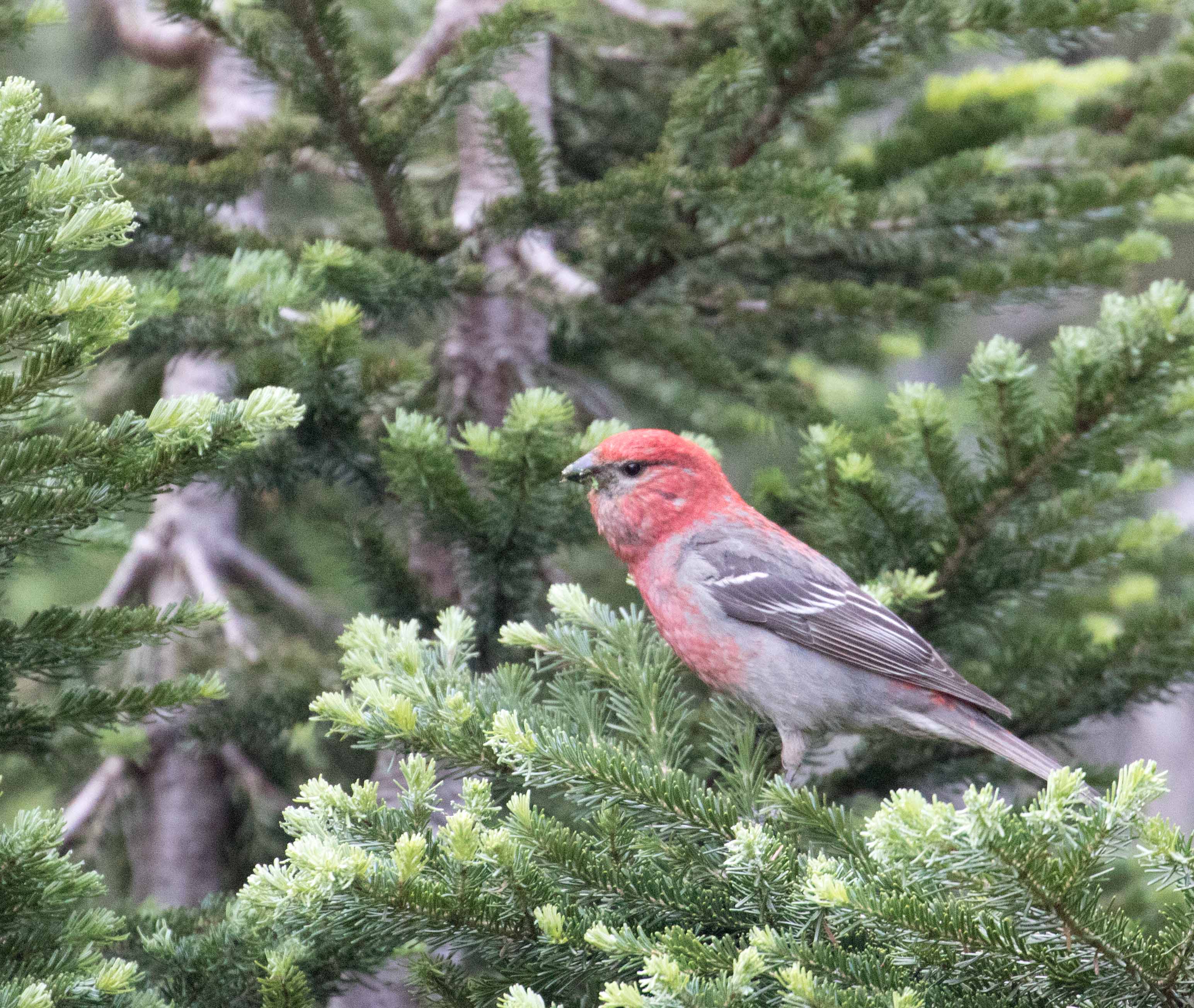
My dad and I usually see Pine Grosbeaks at lower elevations during winter, so it was very special to see them at their breeding altitudes.
In a clearing several miles up the trail Josh called in a Varied Thrush for the photographers of the group (several people including Marky, had brought giant lenses) and a pair of Pine Grosbeaks, not wanting to be left out, had decided to forage in the grass and shrubs at eye-level about ten feet from us.
As we hiked, I learned about the individual research projects that each of the field techs were looking at on the APR, which included Long-billed Curlew migration patterns and parasitism on grassland birds by Brown-headed Cowbirds. We talked about top birding spots everywhere from New Mexico to Missouri and exchanged stories about how everyone had gotten into birds. It was particularly fun visiting with Tom and Josh, as they seemingly had an answer to everything I wondered about along the trail. Tom didn’t just know the birds—he identified every flower and butterfly we came across, and he and Josh pointed out the glaciers and peaks around us as we rose in altitude, many of which they had individually hiked to. They also had a wealth of knowledge of birding Latin America, specifically Costa Rica, something I was incredibly interested in.
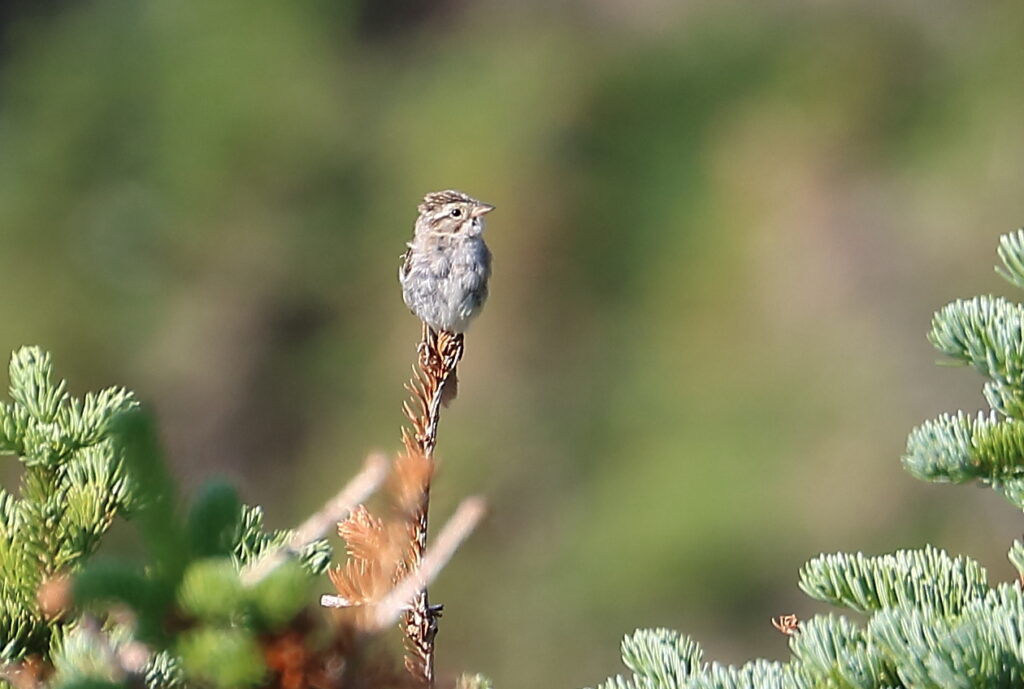
After about three miles we rose above the stunted forest marking the end of the subalpine zone and were hiking along scree fields and across lingering snow patches. A Golden Eagle soaring high above welcomed us to the alpine zone as pikas mewed at us from their rocky burrows, and the bird community changed abruptly. Rather than crossbills and grosbeaks, Gray-crowned Rosy-finches filled the finch role up here, and all of us were shocked to encounter a Brewer’s Sparrow belting out a song from a patch of young trees! A rare subspecies of Brewer’s Sparrow, known as the Timberline Sparrow, lived above the tree line in Glacier Park and in mountain ranges farther north, a rather strange change from the normal sagebrush habitat the species used elsewhere in its range. No one in the group had ever seen one before, including Tom and Josh, which meant that everyone had gotten at least one new bird out of the hike!
This surprise Timberline Sparrow (a subspecies of Brewer’s Sparrow) was a Lifer for our entire group!
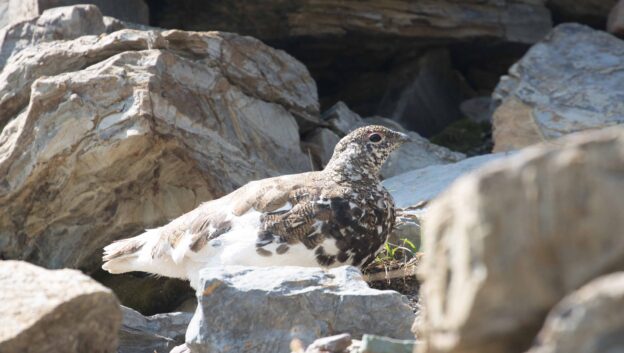
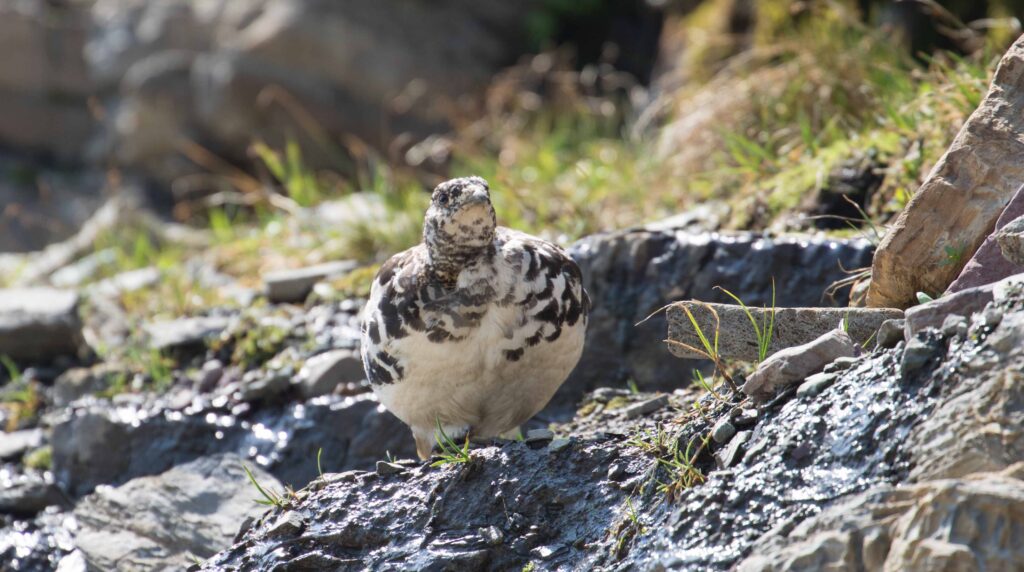
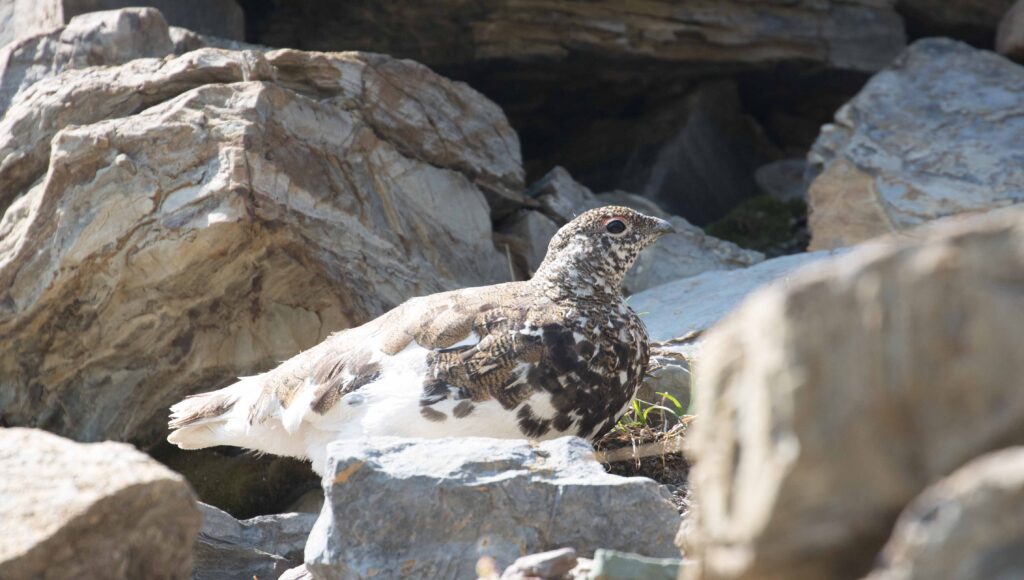
Speaking of new birds, I was here for my Montana life bird #299: White-tailed Ptarmigan. These cryptic, high-altitude game birds only lived in the northwest part of the state, and only in Glacier were they easily-accessible. As we reached Piegan Pass, Josh pointed out a large snowfield. We would be walking around the base of the field after a quick lunch, as it was perfect ptarmigan habitat: it turns out that most alpine habitat was unsuitable for ptarmigan. These picky birds require access to water, shade (i.e. low cliffs) to hide from the sun, and vegetation (i.e. moss) for food. If a site does not have one of these three things, it’s unlikely to contain ptarmigan.
After a lunch full of various mammals from Least Chipmunks to Hoary Marmots trying to steal our food, we set off in a large search line to try to find ptarmigan as an American Pipit displayed in the air high above us, an activity shared with the Sprague’s Pipits my dad and I had found earlier this year. After about fifteen minutes, Skyler Bol, one of the MPG Ranch field techs, yelled, “Got one!”. We all maneuvered across the rocks over to where he stood, and sure enough, there sat a surprisingly small game bird, half-white and half-brown, curiously staring up at us.
It had taken me more than seven years for me to finally see a White-tailed Ptarmigan, but I couldn’t have asked for a better experience—or company—in finding my 299th Montana bird species!
Everyone whipped out their cameras and settled around the fairly unconcerned bird, and soon Skyler spotted another one sitting on a small waterfall nearby! We basked in the ptarmigan glory for at least an hour, then wished the small birds good luck and cold temperatures, and headed back down the trail.
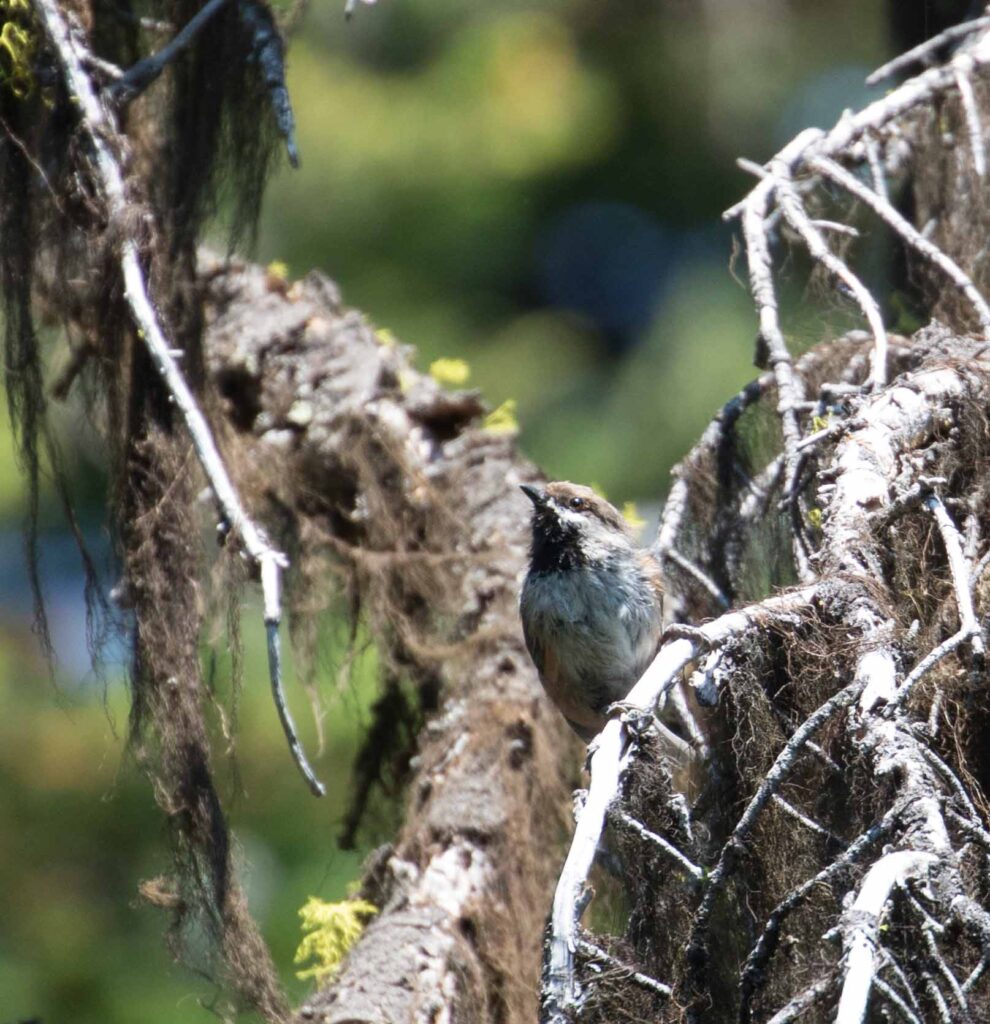
Once we were firmly in the subalpine forest again, we began stopping periodically and playing for Boreal Chickadee. It was great habitat for them, and several members of the group had never seen them before. You might call it “pushing our luck”, but hey, it worked! About two miles from the parking lot after hearing a Mountain Chickadee and several Canada Jays impersonating Yellow-throated Toucans, Josh decided to play for them and a pair of Boreal Chickadees showed up! I had not expected to see them again this year after nabbing my lifer in May and it was great to watch them from a distance as other people took photos of their very first of these boreal birds.
Though our goal was to see White-tailed Ptarmigan, the day facilitated several epic QUACHs as well!
After spying a trio of Golden Eagles again at the parking lot, we headed back to Josh’s house, stopping briefly for a Chestnut-backed Chickadee (there would be several QUACHs completed today) at Avalanche Campground. I had to head home but many of the others stayed another day, and I would soon hear stories of Black Swift, Spruce Grouse and American Three-toed Woodpecker.
As we left the Piegan Pass trailhead, Josh mentioned that he thought it had been his best day of birding in the park, and I would have to agree. And not just because of the great and cooperative birds we saw—because of the people. I had learned so much from everyone as we hiked, and had really gotten to experience what the community I would soon be immersed in would be like. Everyone was so knowledgeable, yet humble and kind, and I was honored to be a part of the first annual “Camp Montana”, even if it was only for a day.
However, seeing the ptarmigan was also a bit sad—who knew how long these alpine birds would be here? With temperatures already breaking record highs within the park, the birds living at the tops of mountains barely had anywhere to go, and snow was disappearing fast. I am very fortunate that I got to experience the birds while they are still here, and hope that somehow, they can adapt to whatever climate change throws at them.
Ptarmigan are a poster bird for how climate change is negatively impacting our planet. As permanent snow fields disappear, habitat for these birds is rapidly shrinking—a call to action to drastically and rapidly reduce the CO2 emissions we as humans produce.
Another problem was posed by seeing the ptarmigan: What will my 300th Montana bird be? Now that I’d nabbed #299, I had no choice but to get to 300, but my options were few and far between, and my days in the state are running out…stay tuned to see what it will be! (I don’t have it yet).
In just the past year, protecting birds has reached a new level of urgency. Please read and share this post with as many people as possible. Thank you!
First off, I want to announce that thanks to all of you, Braden’s last post about the QUACH shattered records for number of views and is already SECOND all-time for our posts, trailing only Birding San Antonio’s River Walk? Are You Nuts? which we posted two-and-a-half years ago! Taylor Swift, can you feel us breathing down your popularity neck?
Probably not. The truth is, FatherSonBirding will never be as popular as Taylor Swift and other celebrities, but birds SHOULD be! As we all know, they provide millions of us a steady source of fun, interest, inspiration, and connection. Unfortunately, we also know that birds are in big trouble, not only from traditional threats such as poaching, invasive species, pesticides, and habitat loss, but from the GIANT SHADOW looming over all of us: climate change. I just read an article about the recent heat wave in the American Southwest and how it might devastate food supplies for millions of migrating birds. This is the very definition of depressing news!
How, as bird-loving, sensitive beings, do we handle what’s happening to birds and other species? It’s not easy—but it is easy to feel overwhelmed and hopeless about the world situation. If we want to save our planet’s incredible biodiversity for our children and grandchildren, however, we have to turn our worry into action. Braden and I have four strategies for doing this that we’d like to share with you.
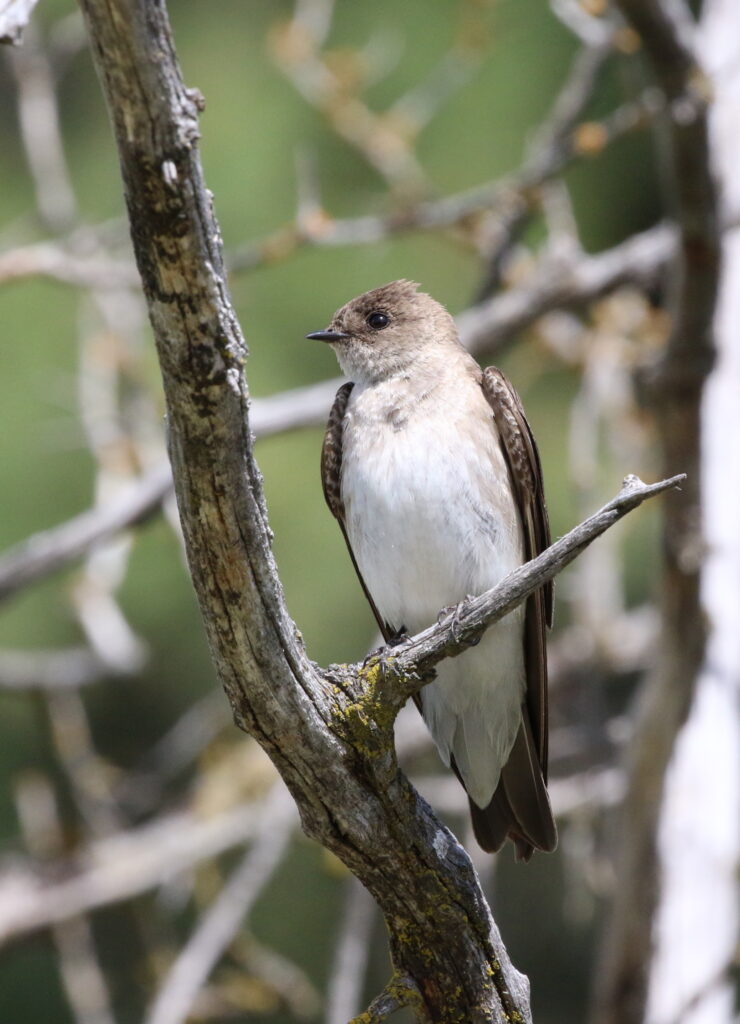
Swallows and other migrating songbirds have been particularly hard-hit in the last year due to climatic chaos that has most likely impacted their food supplies.(Shown: Northern Rough-winged Swallow)
Strategy #1: Education. We don’t know about you, but we feel that education is the key to every problem that needs to be fixed, and birds offer almost unlimited ways to further education. Just taking a friend out birding and showing her what you know helps raise awareness and concern about what’s happening to birds and the importance of protecting and creating habitat. Taking a school class or group of seniors out magnifies that effect—and gives you a chance to correct harmful misinformation out there such as “Climate change is a plot by radicals to harm oil companies” or “Climate change is happening, but is not caused by humans”. If you want to show people just how dramatically our planet is heating up, you can go a step further and share this rock-solid website:NOAA Global Temperature Increase by Year. Our blog, we hope, helps further bird education, too. That doesn’t mean that people will always do the right thing once they have accurate information, but if we leave education up to Fox News or Breitbart, let’s face it, we’re sunk!
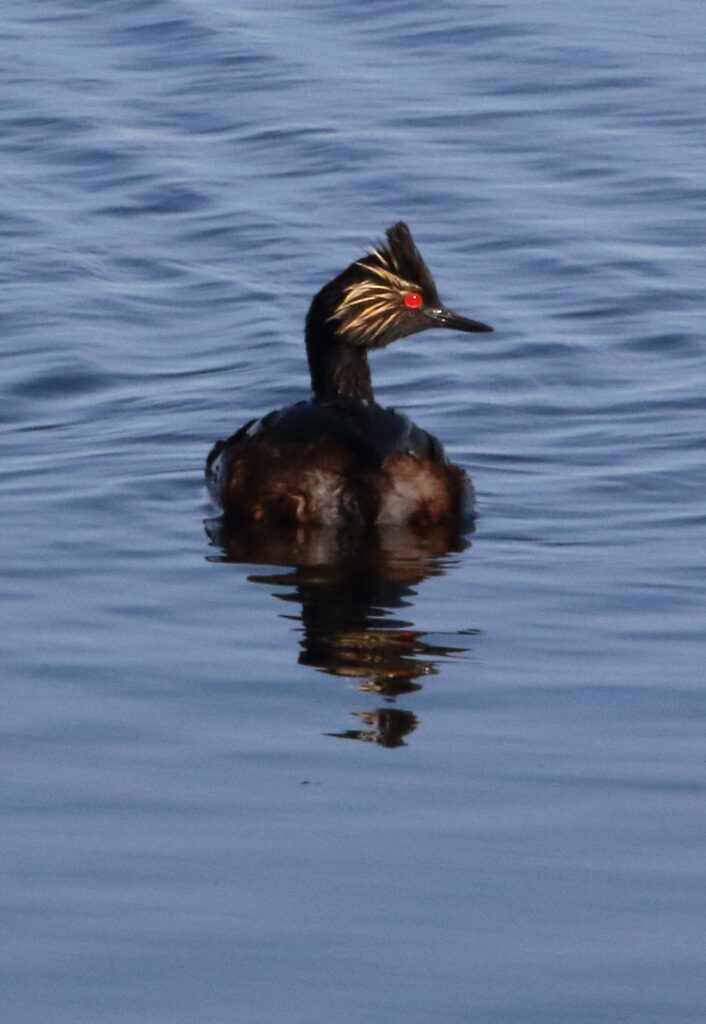
Grebes, ducks, and many other birds depend on “watery” refuges to survive—refuges that are coming under increasing pressure as the American West and other parts of the globe become more arid from climate change. (Shown: Eared Grebe)
Strategy #2: Money. We’re always surprised how reluctant many people are to donate money to groups working for causes they believe in. Sure, some people don’t have funds to spare, but let’s be honest, most birders do. If you find it hard to open your bank account, just ask yourself, “What kind of world will I or my children live in if I don’t help solve climate change, habitat loss, and other problems? What will my money be worth then?” The answer isn’t pretty, and yet for the price of a dinner out, we can all make a significant contribution to a group working for birds. Following is a short list of Braden’s and my favorite groups that are helping birds. Check ’em out, then crack open that wallet!
Cornell Lab of Ornithology—the maker of eBird and Merlin makes huge investments in science and education to raise awareness of birds and promote conservation.
Bird Life International—Braden’s favorite group works on the entire international spectrum of bird threats, and also works with local communities to help protect birds and habitats.
Audubon—still the biggest name in birding, Audubon promotes bird conservation and education, and works on legislation to protect birds. (Note: the national, state, and local chapters are all independent entities. Donations to national don’t trickle down, so consider donating to all three.)
American Bird Conservancy—also works on a wide range of bird-related issues including the urgent problem of outdoor cats.
Houston Audubon Society —a regional bird powerhouse, promoting bird education and conservation, and protection of vital habitats, especially for migrating birds. Think High Island from the movie The Big Year!
Union of Concerned Scientists—one of Sneed’s favorite groups, we make monthly contributions to this group working to fight rampant disinformation and promote rational, scientific solutions to a host of problems facing us.
Strategy #3: Reducing Consumption. As birders, we need to acknowledge that we use the planet’s resources by driving around looking for birds. This makes it especially important that we reduce our consumption of fuel and other resources in other ways. There are myriad ways to do this, from turning out lights to making sure we eat our leftovers to letting our grass grow a bit longer before cutting it. Braden’s and my biggest reason for avoiding fast food restaurants these days isn’t the food quality, it’s the amount of waste they generate. We know many families that have cut down on Christmas gift-buying in favor of donating to worthy causes, and that’s a trend we wholeheartedly endorse. After all, is your uncle really going to miss that singing trout on the wall? The possibilities to reduce our footprint by reducing consumption are almost endless. Please note: the idea of plastic recycling sounds good but is basically wishful thinking. According to the EPA, less than 10% of plastic is recycled. The vast majority of it ends up in landfills, where it will persist for hundreds or thousands of years—hopefully, but not necessarily, before it strangles or gets ingested by a bird. One solution: encourage your stores to carry products packaged in truly recyclable or reusable paper-based, metal, or glass containers and whenever possible, choose appropriately. Of course, always bring your own reusable bags when shopping!
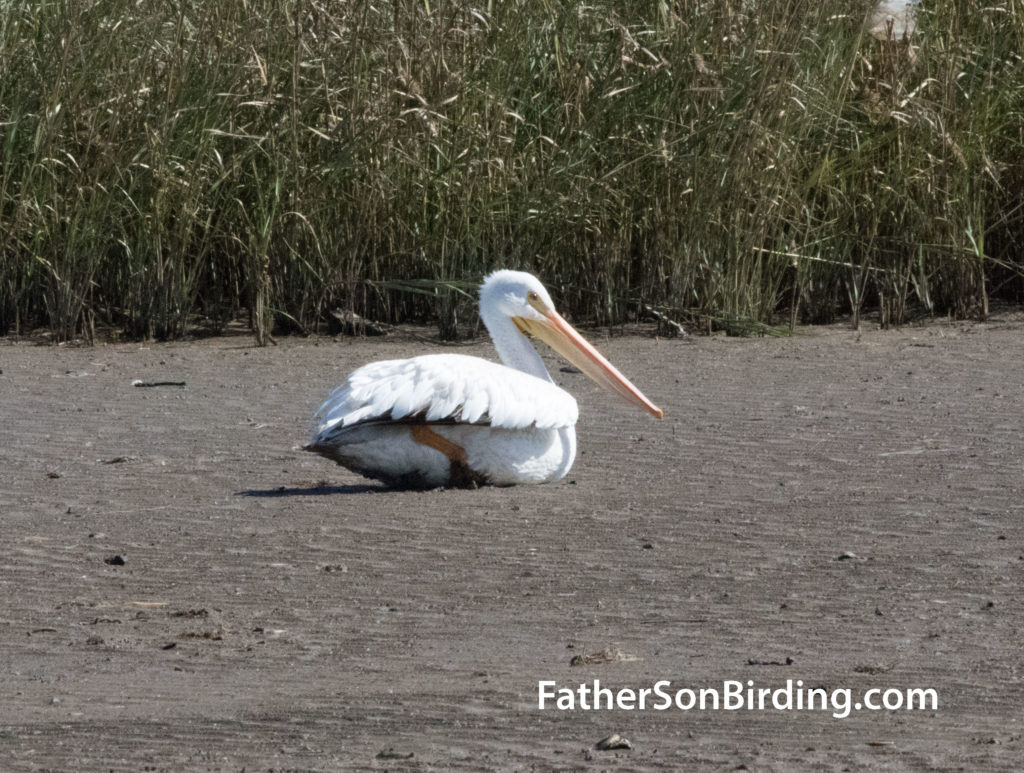
Plastic waste may be killing millions of birds that ingest it. It’s also a major source of mortality for birds who, like this pelican I encountered in Texas, get tangled up in it.
Strategy #4: Let Your Politicians Know! Okay, voting for politicians who support environmental causes is a no-brainer, and let’s face it, that means voting for Democrats these days (check out this scorecard from the League of Conservation Voters). We find this partisanship mystifying since we know that millions of Republicans love birds and two presidents who enacted some of the most important environmental legislation—Teddy Roosevelt and Richard Nixon—were Republicans. (Note there are a very few current Republican officeholders with strong environmental records such as PA’s Brian Fitzpatrick. Again, see the scorecard.) Nevertheless, it’s important to let ALL of your representatives know that you support taking steps to replace carbon-emitting fuels with renewable energy, support mass transit, protect habitats, and do other things that safeguard birds and other wildlife. We write, email, and call our state and US representatives on a regular basis, and also write letters to the editor of our local paper about key issues. Don’t know who your representatives are? No need for embarrassment. Here’s a handy website for looking up your federal reps: Congress.govSimilar sites exist for each state. Just do a search on “find my representative”. Audubon, the Union of Concerned Scientists, and other groups on our list above also do an excellent job keeping us informed about important legislation and issues.
You undoubtedly can think of other strategies for helping birds, from picking up plastic litter to running for office yourself. But here’s a closing thought: by saving birds, we are saving ourselves. Some may disagree, but we feel that if the majority of bird species don’t survive, humans probably won’t either, and really, it’s time to get serious about it. If we can cultivate an attitude among birders that each time we go out birding, we will also do something to help birds, there’s going to be no stopping us. Thanks for taking action.
In saving birds, little actions lead to big results.Thank you for taking the first steps!
Enjoy these posts? Please share with others and subscribe by filling out the boxes down in the right-hand sidebar.
In our last post, I gave the background story of my newest book, Waiting for a Warbler. The irony is that even as I posted it, Braden and I, like many of you, were impatiently waiting for warblers and other spring migrants to show up—so much so that we jumped the gun and leaped into our intrepid minivan for a 1,000-mile road trip. The trip’s main impetus was to hear Boreal Owls after dusk at Lost Trail Pass on the Montana/Idaho border, and things started well as we picked up an uncommon Eurasian Wigeon near Lee Metcalf NWR on the way down. Alas, despite spending two hours hitting the ski area parking lot and various locations along highway 43, we heard not a single bird—this, despite our friend Nick hearing FIVE Boreal Owls several years ago. Disappointed, but not shocked, we proceeded to Wisdom to spend the night at the comfortable Pioneer Mountain Lodge.
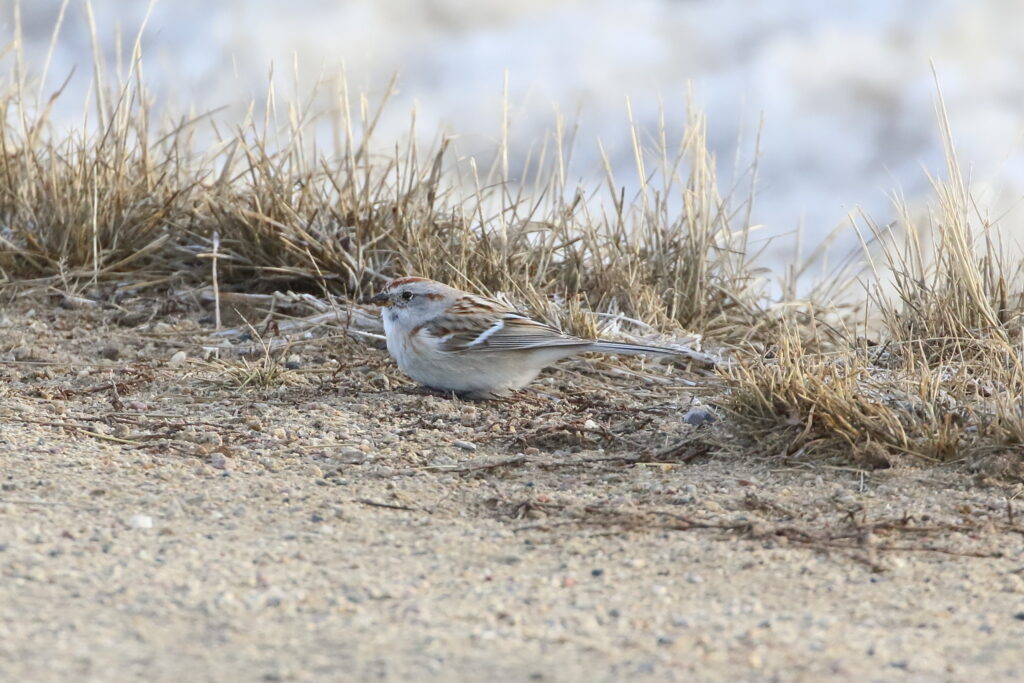
Totally unexpected, this was perhaps our closest look ever at one of our favorite winter birds, American Tree Sparrows, right alongside the road in Wisdom, MT.
Before heading south the next morning, we decided to do a quick tour of Wisdom and were fortunate to spot American Tree Sparrows and a Northern Shrike. Along the highway, our luck continued with great raptor looks, including a ginormous Great Horned Owl sitting on a mile marker next to the road! At the ghost town of Bannack, however, we struck out on Sagebrush Sparrows and Sage Thrashers (still too early) and, after “dipping” on Chukars in Dillon as well, decided to head to Idaho for our first interstate birding in months.
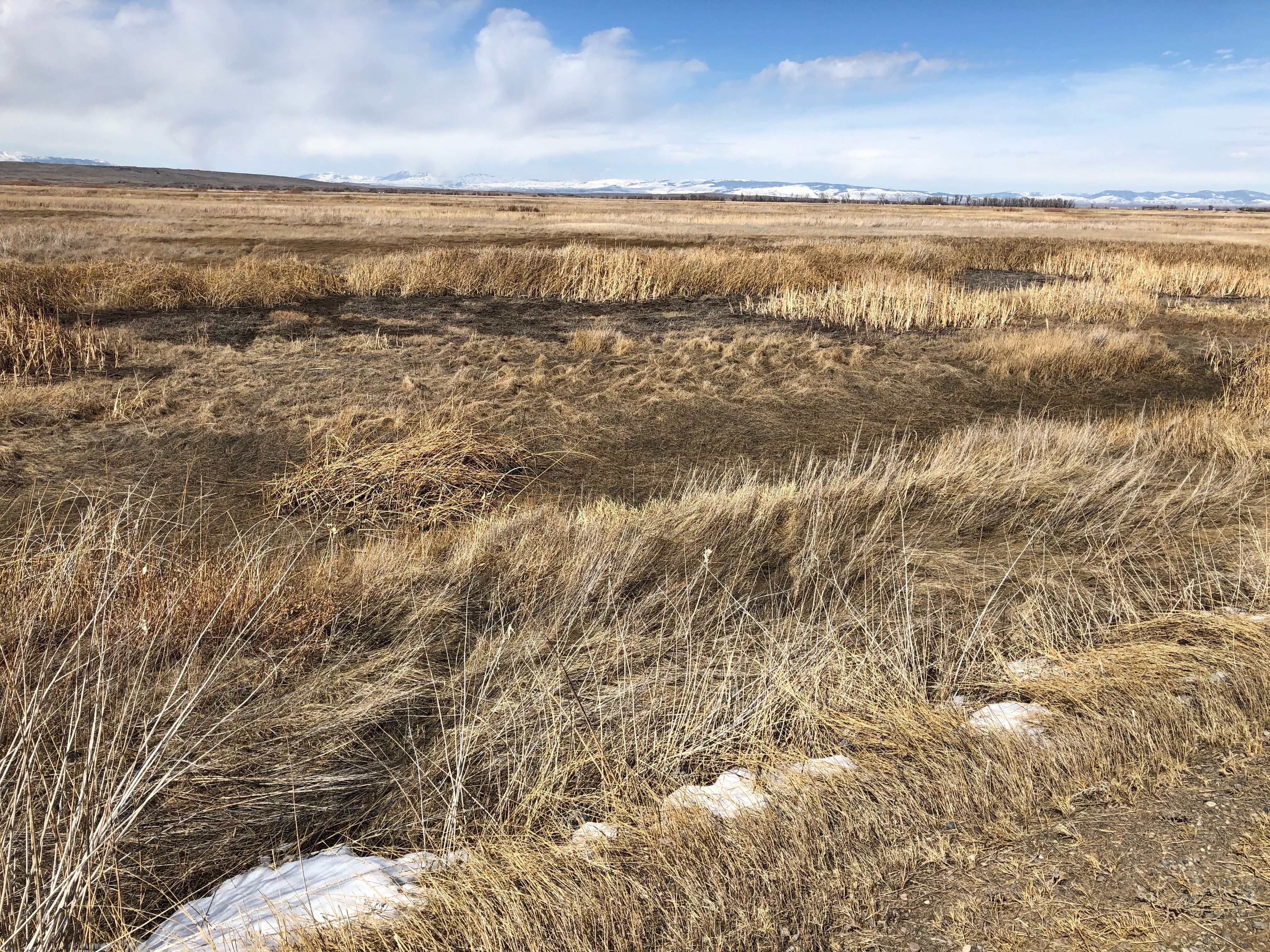
We were especially excited to visit Camas National Wildlife Refuge, but when we arrived, instead of ponds overflowing with waterfowl, we found depressing drying mud with a few determined Canada Geese and Mallards wondering what the heck was going on. We wondered, too, and a little research pointed both to a dry year and, more crucially, a lowered water table caused by over-pumping of groundwater by agricultural interests. This is a situation faced by more and more places in the West and national wildlife refuges seem to be particularly at risk as their budgets for new wells, staff, and infrastructure haven’t nearly kept up with their needs (see the Audubon article “Overwhelmed and Understaffed, Our National Wildlife Refuges Need Help”).
The kind of depressing scenes we found at Camas National Wildlife Refuge are playing out all over the West as human demand for water robs wildlife of essential habitat and resources.
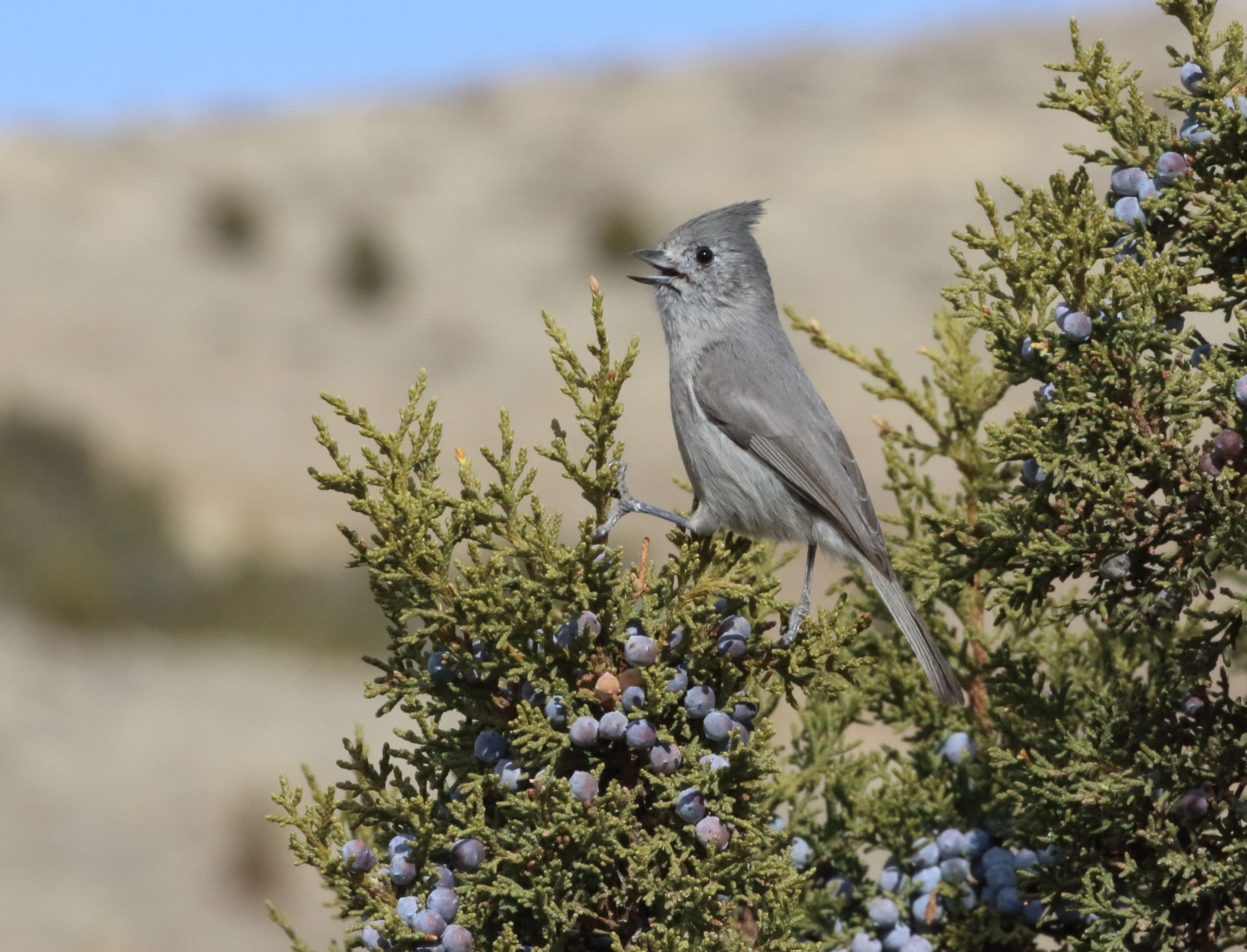
Determined to redeem our day, we pushed on to Pocatello, where we had a delightful hike through juniper forest and saw our Lifer Juniper Titmice. In fact, these wonderful little birds may have ended up being the highlight of our trip as we got to watch them sing, bicker at each other, feed on berries, and generally make the most of life.
Both Braden and I fell in love with Juniper Titmice, described by eBird as “Possibly the plainest bird in North America.”
The next morning we decided to heed Supertramp’s advice and take the long way home through Craters of the Moon National Monument (closed) and Sun Valley. We had a special interest in Sun Valley because another Lifer, Black Rosy-Finch, had been reported there, and as we drove up a long canyon road we wondered if we would again be disappointed as this was the year’s fourth attempt to find this elusive bird. We arrived and . . . no birds. We hung out for several minutes, though, and suddenly heard finchy chirps above us. The rosy-finches! And not just Black, but Gray-crowned, too. It was particularly gratifying to find these gorgeous little passerines both because we’d looked for them many times and because this might well be Braden’s last chance to see them before he heads east for college this summer. The rosy-finches and titmice made the scenic drive home through the Sawtooths especially enjoyable—and a surprise find of a Ruffed Grouse along the highway extra sweet.
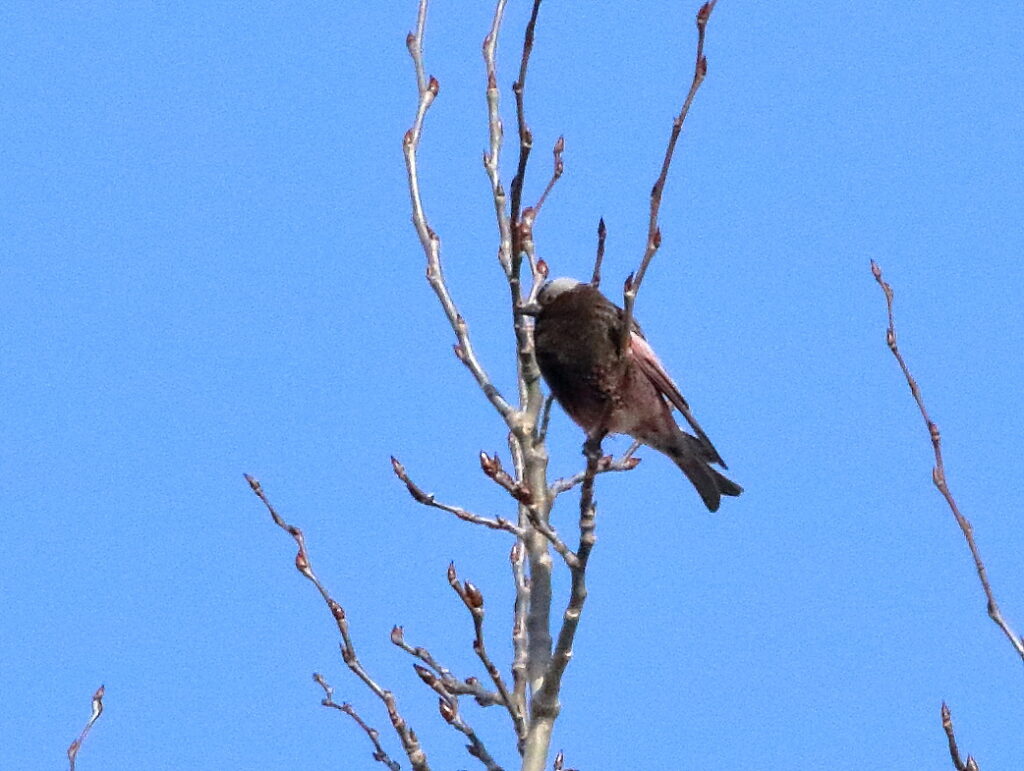
Hard to find at best, Black Rosy-Finches are some of North America’s most beautiful passerines. They nest at high altitudes and, not surprisingly, are some of America’s least-studied birds.