All photos and text on FatherSonBirding.com are strictly protected under copyright law. To request permission for use, contact Sneed at sbcollardiii@gmail.com. You DO NOT have permission to use these posts to train Artificial Intelligence models or do anything else with them without permission.
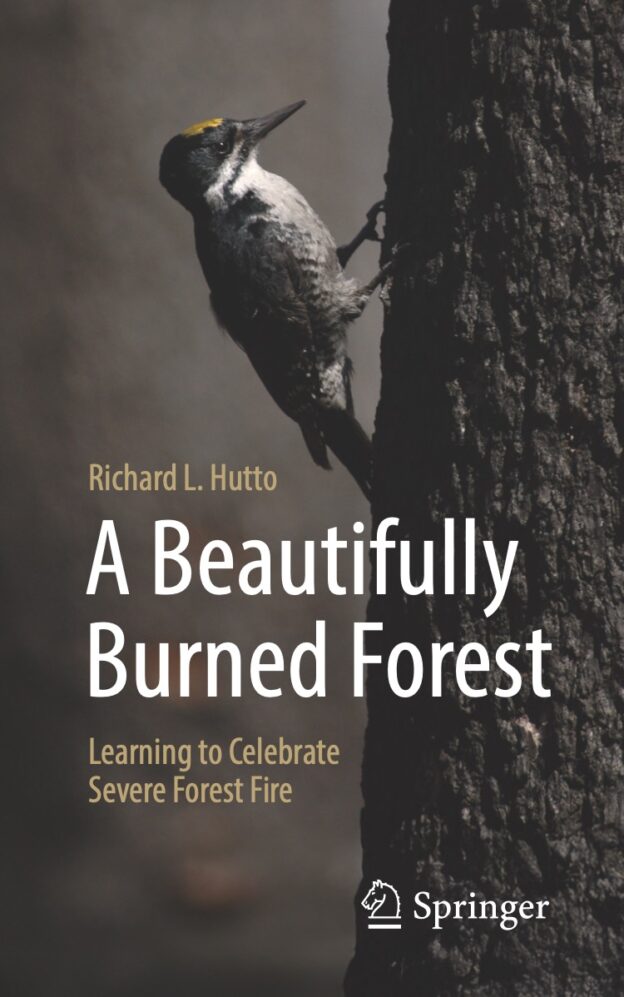
Richard L. Hutto’s new book A Beautifully Burned Forest: Learning to Celebrate Severe Forest Fire(Springer, 2025—click here to order) offers both timely insights into the roles of wildfire in our modern, over-heating world and an engaging memoir of a scientist’s journey. Before I met Hutto—Dick to his friends and colleagues—I had no idea of the vital ecological processes and multitude of species that depend on severe forest fires in the West. Although I had met Dick casually several times through a mutual acquaintance, it wasn’t until I needed someone to teach me about woodpeckers for a proposed children’s book that I reached out to him directly. I asked if he could take me out to show me some woodpeckers and explain a bit about them, and he graciously agreed.
Richard L. Hutto’s A Beautifully Burned Forest is not only a must-read for anyone interested in the health and future of our forests, it makes an, ahem, red-hot Christmas gift idea. Click on the above image to order.
Dick took me to the Blue Mountain burn area just south of Missoula and he did indeed start showing me woodpeckers and telling me about them. What he was really teaching me, I began to realize, is the beauty of a burned forest and how many plants and animals depend on it. I would still eventually write a children’s book about woodpeckers, but first I decided to write Fire Birds: Valuing Natural Wildfires and Burned Forests.
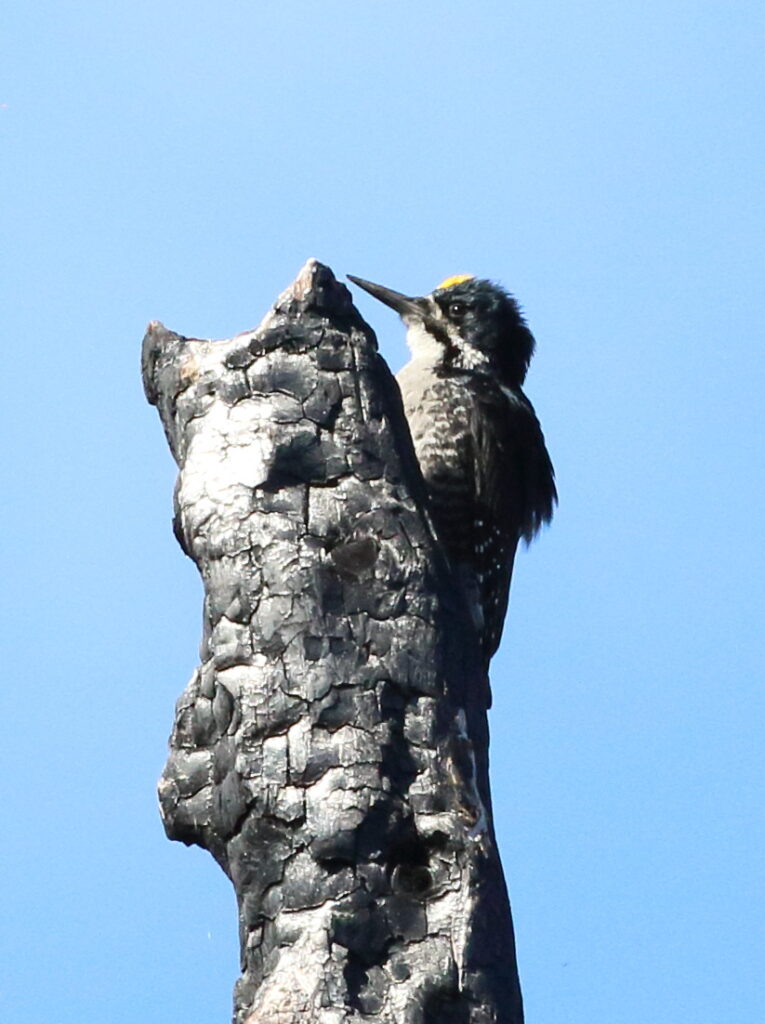
Both of our books focus on Hutto’s groundbreaking research into the many organisms—especially birds—that depend on standing, severely burned forests. The Black-backed Woodpecker is the poster child for burned forests. This bird is highly adapted to blend in with charred tree trunks and excavate wood-boring beetle larvae from the rock-hard wood. In the West, in fact, this bird is found almost exclusively in severely burned forests that have a high density of larger diameter standing trees.
In the West, the Black-backed Woodpecker relies on severely burned forests perhaps more than any other bird species. By excavating holes, these birds and other woodpeckers, also open up the forest for a host of other birds, mammals, and other vertebrates.
Once they move into a fresh burn the Black-backed—along with American Three-toed and Hairy Woodpeckers—open up the forest to many other cavity-nesting birds, mammals, reptiles, and amphibians. They do this by excavating holes in the trees, often many more than they will ever use themselves.
The problem, Hutto points out, is that our society has been conditioned to view all forest fires as bad. As soon as a severe fire roars through an area, the clarion call rings out to somehow “save” the burn by “salvage” logging it. Which trees do loggers take? The best and the biggest—the exact trees that Black-backed Woodpeckers need to hunt and nest in. Hutto also points out that as soon as these large trees are removed, their cones can no longer reseed the forest naturally, necessitating hiring battalions of workers to replant the forest by hand—at taxpayer expense.
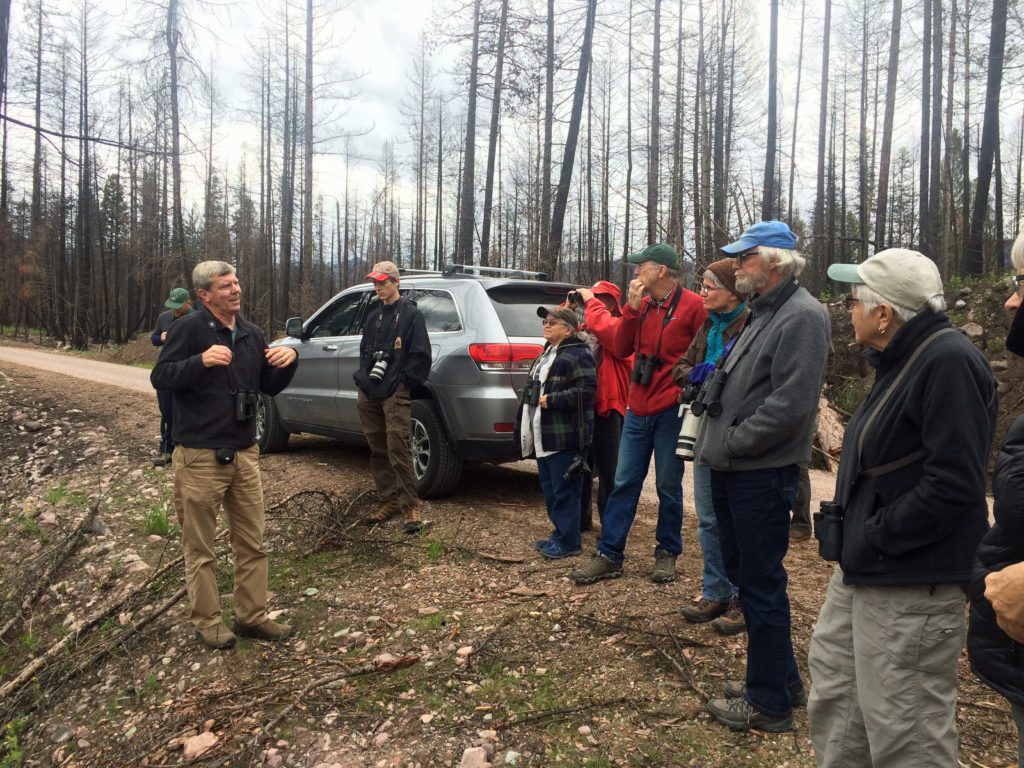
Dick Hutto (left) leads a local birding group through a newly burned forest near Seeley Lake, Montana, explaining the vital ecological role the burned forest plays.
In A Beautifully Burned Forest, Hutto dives deeply into our society’s entire approach to managing forests and fires, tracing the beginnings of fire suppression to the widely spread notion that our forests are somehow “out of whack” and need to be overly managed with thinning and prescribed burns.
Climate change, of course, is a wildcard in the future of forests and wildfires, but Hutto makes a strong plea to focus on solving the underlying problem of reducing greenhouse gas emissions instead of making our forests ecologically less viable through extensive, often poorly planned micromanagement.
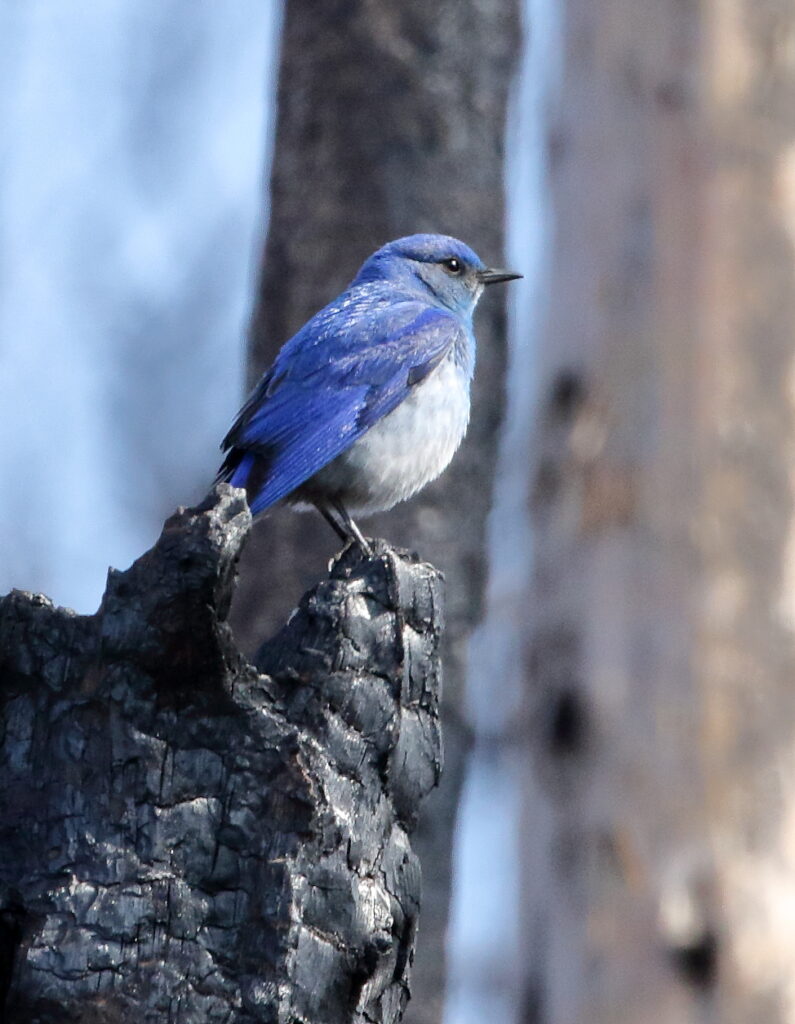
Mountain Bluebirds are just one of dozens of bird species that prefer nesting in burned forests to other habitats. Here they find plenty to eat along with safety from small predators, whose populations are reduced by forest fires.
Anyone with an interest in our forests and wildfires—in other words, every single person living in the American West—should read A Beautifully Burned Forest. It’s a fairly quick read that will change the way you view and understand our spectacularly diverse region. Especially in this day where misinformation rules, Hutto’s book is a valuable step in creating an educated public that insists on smarter management of the lands that sustain us.
Note: If you are interested in Sneed’s children’s book, Fire Birds, supplies are down to a couple of dozen in the warehouse so order soon by clicking here or calling your local indy bookstore. Both Fire Birds and Woodpeckers: Drilling Holes and Bagging Bugs make ideal Christmas presents for grades 3-8 readers.
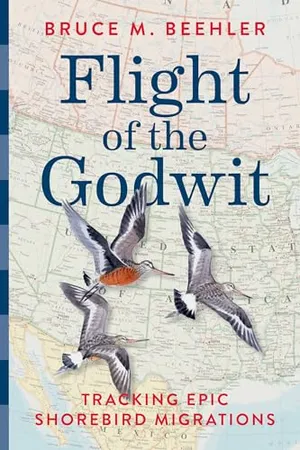
Bruce M. Beehler’s Flight of the Godwit: Tracking Epic Shorebird Migrations (Smithsonian Books, 2025)
Any birder who has aspired to learn about shorebirds will find a welcome companion in Bruce M. Beehler’s new book, Flight of the Godwit: Tracking Epic Shorebird Migrations. Shorebirds, after all, can be considered somewhat mythical, mysterious beings. Not only do many of them make remarkable annual migrations covering tens of thousands of kilometers, quite a few are notoriously difficult to identify. Certainly, Braden and I realized we had entered a more advanced stage of learning when we started to search out and try to identify shorebirds and, in fact, we both often still struggle with figuring out some of the more difficult shorebird species. Yet the more we encounter and learn about these birds, the more we love them—and that same kind of passion radiates from Beehler’s words as he sets out on his own journeys to observe and learn more about these birds.
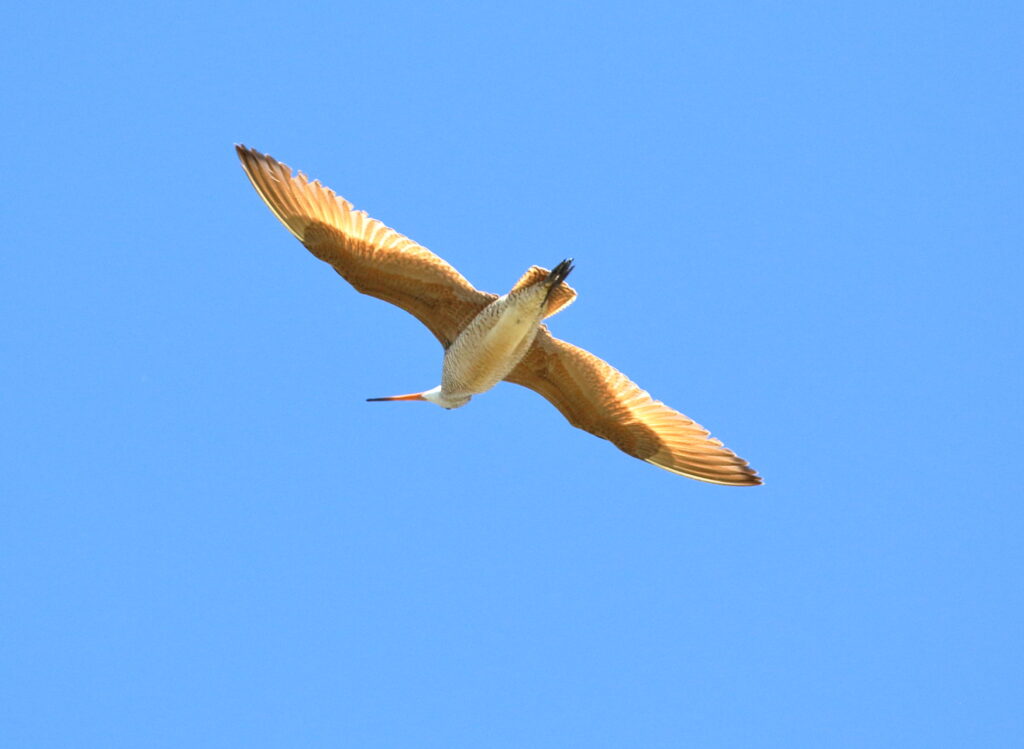
In Montana, we are lucky to host three of the “Magnificent Seven” shorebirds as breeders—including Marbled Godwits, one of the focal birds of Beehler’s new book.
In Flight of the Godwit, Beehler recounts a series of recent adventures across the US and Canada to follow and observe shorebirds as they migrate north, stop over at resting and staging sites, settle on breeding grounds, and then head south again for their long non-breeding seasons. Although Beehler discusses all of our North American shorebirds at some point, he clearly targets what he calls the Magnificent Seven: Hudsonian Godwit, Marbled Godwit, Bar-tailed Godwit, Long-billed Curlew, Whimbrel, Bristle-thighed Curlew, and Upland Sandpiper. As he shares his encounters, he sprinkles in liberal amounts of natural history and personal experiences about these birds to make the book much more than a birder’s travelogue.
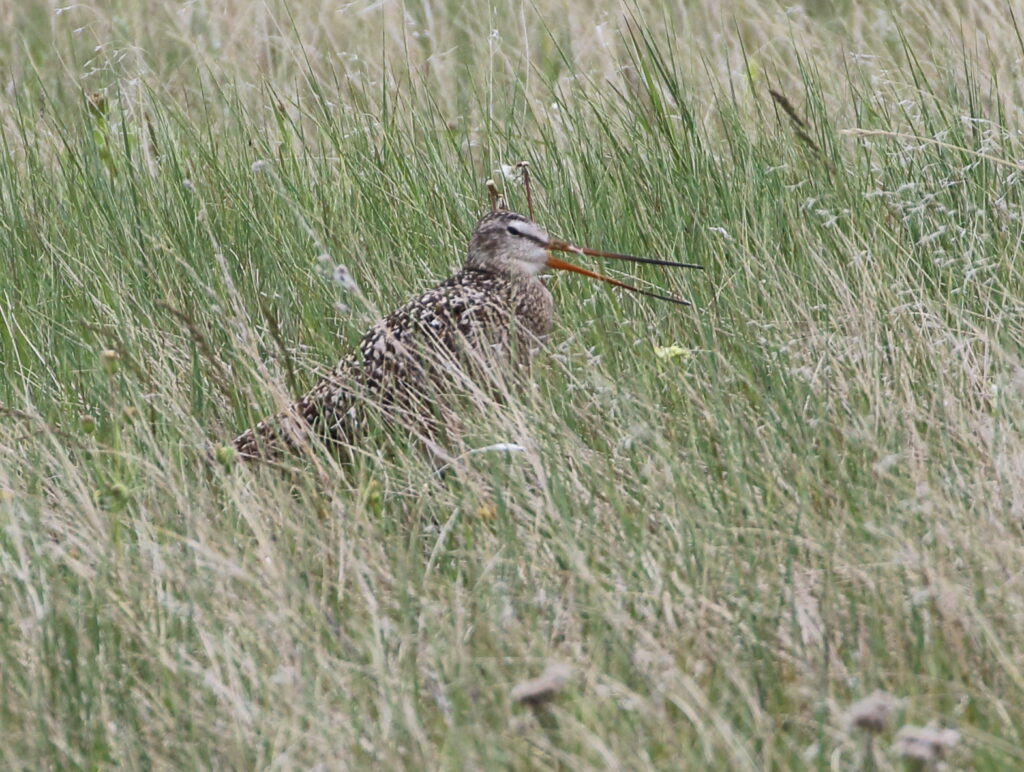
This Marbled Godwit checked us out as we were scoping shorebirds in Westby last summer.
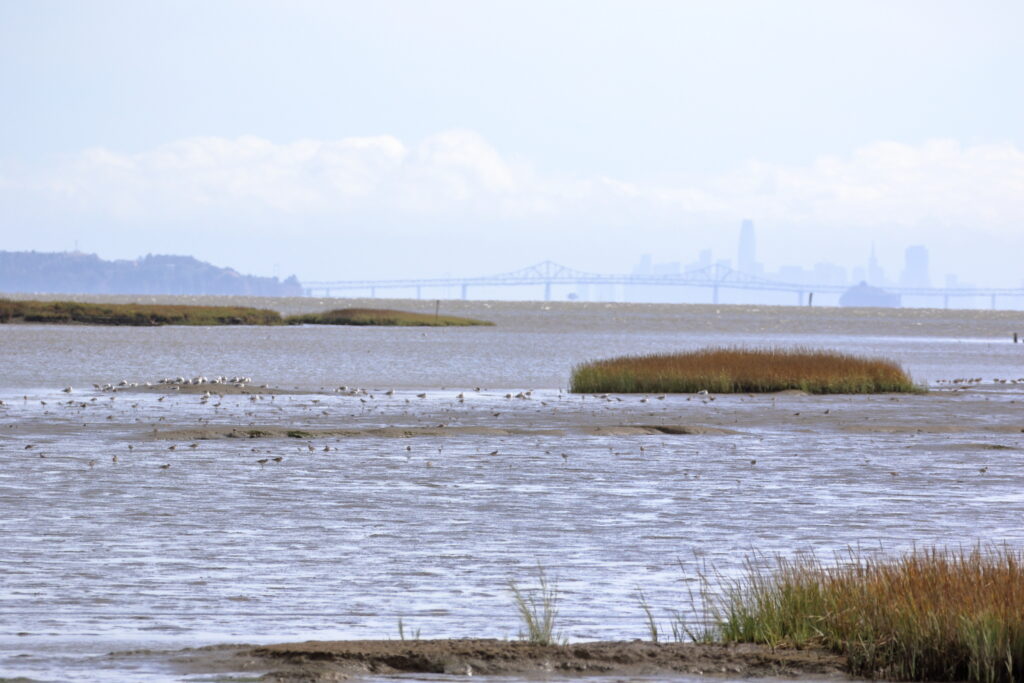
That said, the travelogue aspects of the book are a big part of what fascinated me about this tale. Even after eleven years of birding, my shorebird experiences have been much more limited than I would like. Although my home in Montana is fortunate to host a number of breeding shorebirds—including three of the Magnificent Seven—for most shorebirds, we get only brief glimpses of them as they pass through in spring and fall. Partly because of this, Braden and I have especially sought out shorebirds on our out-of-state travels to Texas, New England, and the West Coast. Sigh. It is never enough.
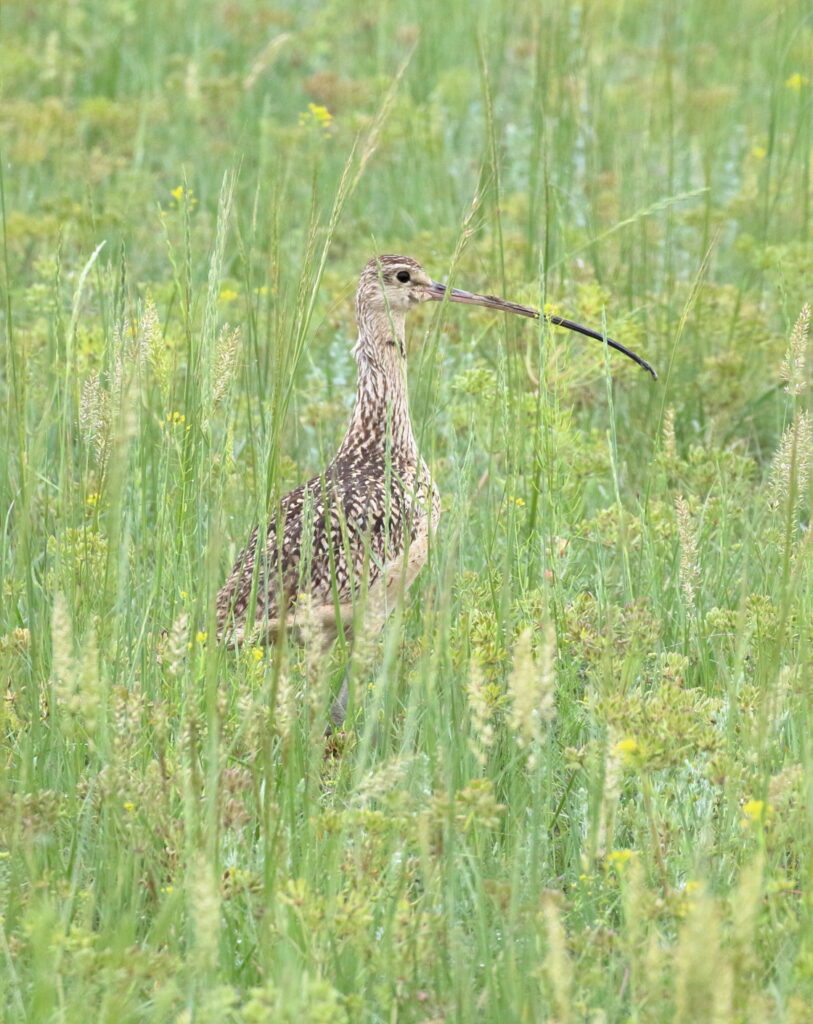
It always surprises new birders that some of our largest shorebirds actually breed in grasslands—including Long-billed Curlews.
As I followed Beehler up through the Midwest during spring migration and around Alaska during breeding season, his experiences filled in giant gaps in my own experience with these remarkable birds. I got a better sense of where the birds stop to refuel and rest, and my vague impressions of their nesting territories and habits were sharpened by Beehler’s actual observations and descriptions. Many times, I found myself nodding my head thinking, Yeah, I know what he’s talking about or Oh, so that’s what they’re doing. All of this felt especially satisfying since there’s a good chance I will never experience many of Beehler’s destinations for myself.
As much time as I try to spend with shorebirds, it is never enough. Flight of the Godwit helped fill in many of the experiences I probably will never have for myself.
Those who will appreciate Flight of the Godwit the most probably are birders who have already spent time observing shorebirds and struggling over their identifications. Those with limited shorebird experience may find themselves getting a bit lost as Beehler throws out bird names that may seem a bit abstract without solid brain images to connect them to. Still, there’s a good chance that even beginning “shorbers” will find that Beehler’s tales of adventure excite them to plunge more deeply into this remarkable set of birds. As for intermediate and advanced birders—especially those who may never get to Alaska or follow spring migration through the Midwest—I highly recommend this intriguing book that is not only a valuable educational document, but a labor of love with which many of us can relate.
You can order Flight of the Godwit from almost any outlet that sells books—but why not visit your local independent bookstore and order it there? Another easy way to do this is through the online website Bookshop.org.
If you are a fan of entertaining tales that blend bird biology, history, and human eccentricity, Tim Birkhead’s new work The Great Auk (Bloomsbury, 2025) will find a welcome place on your night stand. I have to confess that this is the first Birkhead book I have read, but the title suggested a fascinating story about a topic I knew very little about, so right away I requested a review copy from the publisher. My efforts did not disappoint.
The Great Auk by Tim Birkhead (Bloomsbury, 2025)
For me, the first question that needed answering was, “What the heck was a Great Auk?” I had, of course, heard of Great Auks during my twelve years observing, researching, and writing about birds but I hazily lumped them in with the totally unrelated Dodo and elephant birds. Why? Probably because all of these birds had been large and flightless—and all had gone extinct. Other than that, I knew almost nothing about Great Auks.
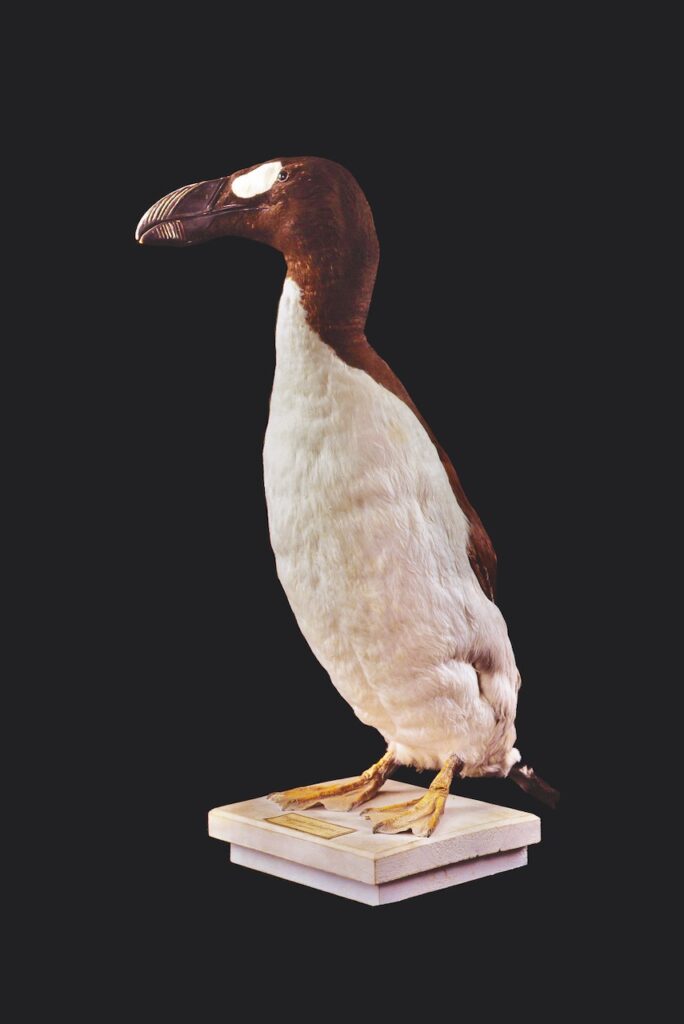
Great Auks were the original penguins, conferred the genus name Pinguinus. The origin of the name penguin is uncertain but may refer to the bird’s white head or white eye patch. In any case, the name was later applied to flightless birds of the Southern Hemisphere, even though they bear no close relationship to the Great Auk. (Photo copyright Errol Fuller)
Upon opening Birkhead’s book it was therefore a great relief to learn, “Oh, yeah. Great Auks are actually auks—seabirds!” I mean, duh, right? Members of the Alcid family, their closest living relatives appear to be Razorbills, something I found delightful since Braden showed me my first Razorbills only last Thanksgiving when our family had the chance to visit Cape Cod (see post Birding Race Point). Birkhead is quick to point out, however, that surprisingly little is known about Great Auk biology, much of it speculation from the relatively scant specimen material that has survived.
Seeing one of the Great Auk’s closest relatives, Razorbills, provided a living link to the tragedy of the Great Auk’s extinction.
Which, of course, brings us to the tragic fact that Great Auks were quickly and efficiently wiped out almost as soon as seafaring Europeans on their way to North America figured out where the birds nested. That happened to be remote islands in the North Atlantic, and in historical times, there probably never were more than a handful of breeding sites for the birds. In early chapters, Birkhead especially focuses on what was clearly the most important site, Funk Island. Here, tens—perhaps hundreds—of thousands of Great Auks gathered every year. Couples would each lay their single, exceedingly large egg and work together to feed the resultant, rapidly-growing chicks from the abundant fish schools nearby.
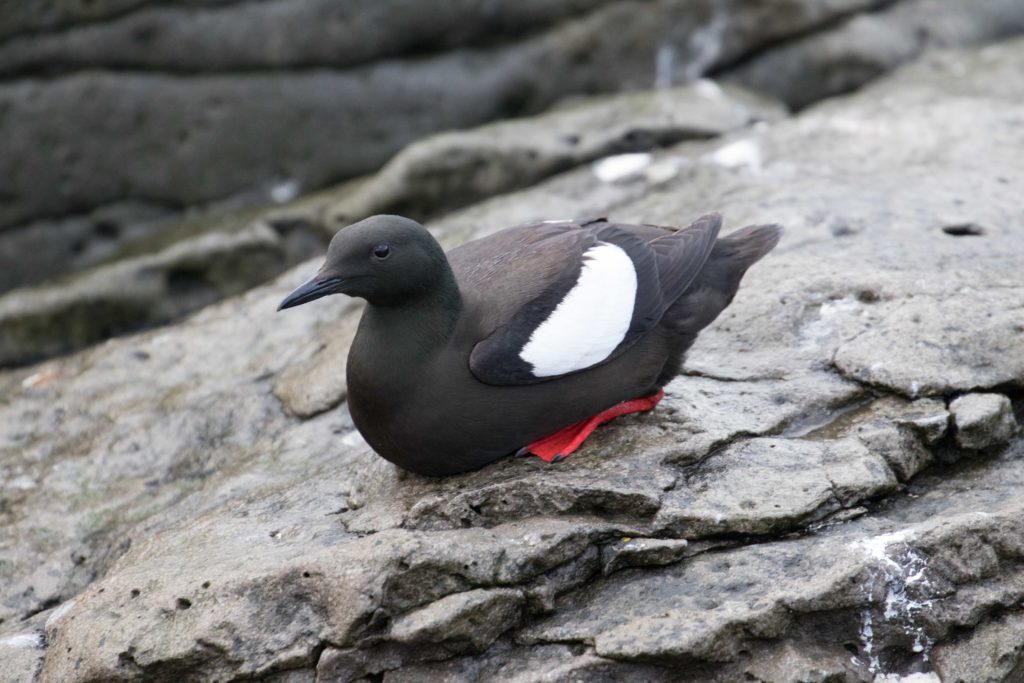
Like Razorbills, puffins, murres, and murrelets, guillemots such as this Black Guillemot are members of the Alcid family, and close relatives of the Great Auk.
When Europeans did discover the auk bounty to be had, the slaughter began. Ships heading to what is now northeast Canada stopped over to feast on the auks and preserve them for food. Later, egg, skin, and feather collectors helped finish them off. Birkhead especially documents the brutal habits of egg collectors. Not wanting to obtain eggs with well-developed embryos inside, the collectors would intentionally crush every egg that they found. Returning a few days later, they could be assured that the embryo inside of any new egg had not yet developed, and its contents could be easily removed through a tiny hole made in the shell. Officially, the last two auks were killed in 1844, though it is likely that a few isolated individuals survived into the following couple of decades.
Birkhead neatly divides The Great Auk into two parts. The first focuses mainly on the history of the bird, its demise, and what can be constructed of its biology from historical accounts, surviving specimens, and extant relatives. Part 2 focuses mainly on some of the more rabid egg and skin collectors, especially Vivian Hewitt, who somehow managed to acquire thirteen Great Auk eggs for his vast collection of approximately half a million bird eggs.
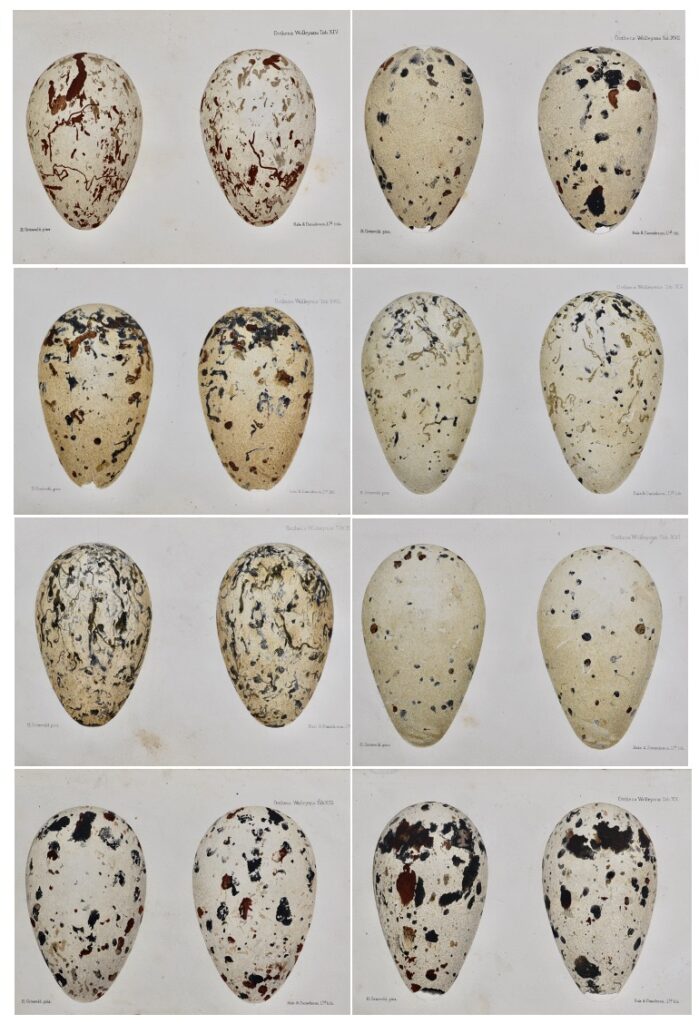
A selection of known surviving Great Auk eggs shows their great variety, which may have helped parents identify them in the crowded breeding colony. This variety also partly explains why they were so attractive to collectors. (Illustration by Henrik Grønvold, 1907)
I have to say that I enjoyed Part 2 just as much as Part 1. Few of us realize this today, but oologist—a term coined for egg collectors that attempted to confer scientific legitimacy upon a practice that we now consider despicable—was all the rage in the early 1900s. It was practiced much as stamp and coin collecting were when I was a kid—and with little thought about the consequences for birds. Collectors routinely not only gathered an egg of a species, but entire clutches of eggs and even hundreds from the same species, searching for variety, fame, and fortune.
As perhaps the wealthiest participant in the field, Hewitt spent a small fortune both obtaining individual eggs and opportunistically snapping up entire collections of other egg collectors when their fortunes turned for the worst. Most prized of Hewitts acquisitions were the eggs and mounted specimens of the Great Auk that he managed to obtain, each of which has a story—and many of which Birkhead traces to fascinating effect. I won’t say more about this fine book, but if you enjoyed Christopher Skaife’s The Ravenmaster and Joshua Hammer’s The Falcon Thief, you are almost guaranteed to love The Great Auk, too. And if you do, why not help prevent the extinction of other bird species by donating to the American Bird Conservancy, the National Audubon Society, or another group working to protect our precious surviving species? Thousands of bird species are in trouble and the need is great.
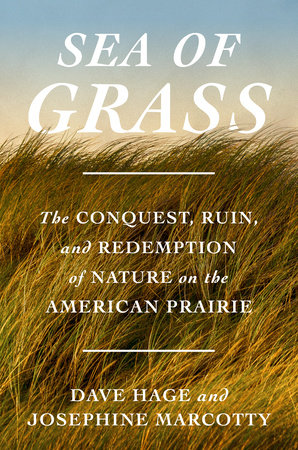
Sea of Grass is required reading for anyone interested in prairie birds and their futures.
In Sea of Grass, authors Dave Hage and Josephine Marcotty have created an impressive work that covers the entire sweep of human understanding and conquest of the American prairie. The authors set the stage by giving us solid background on the richness and diversity of North American grasslands. They recount the geological and climatological conditions that created our great prairies. They give us a glimpse of the remarkable number of species that live both above and below ground, comparing our grasslands favorably to the biodiversity of rainforests and coral reefs. They also explain the incredible amount of carbon that these natural systems sequester.
Grain elevators stand as scenic symbols of the Midwest economy—and of continuing threats to our remaining shortgrass prairie.
What really stands out in the book are the chapters documenting the breathtaking exploitation and destruction of tallgrass prairie, and how technology has managed both to raise agricultural production and create almost unimaginable environmental problems. Even as someone who has followed environmental issues all of my life, I learned an astonishing amount. Have you ever heard of tile drainage? I hadn’t, but it is a drainage system that not only allows farmers to raise abundant crops on otherwise unsuitable land, but mightily contributes to funneling harmful fertilizers and pesticides into rivers, lakes, wells, and other water sources throughout the Midwest. Scientists have established clear links between agricultural practices and the enormous dead zones that occur every year in the Gulf of Mexico. Meanwhile, hundreds of cities such as Des Moines have to spend millions—probably billions—of dollars to try to remove harmful fertilizer residues from drinking water supplies.
The authors explain that while Iowa and other Midwest states have lost virtually all of their original tallgrass prairie to agricultural conversion, the arid nature of the shortgrass prairie traditionally rendered it unsuitable for growing crops. Instead, cattle was king on these lands—including much of the Dakotas, Montana, and Wyoming. Alas, genetic engineering and other technologies have now opened up these fragile, dry lands to farming. I had thought that the great era of prairie conversion had ended, but in the US we are now losing more than one million grassland acres to the plow every year.
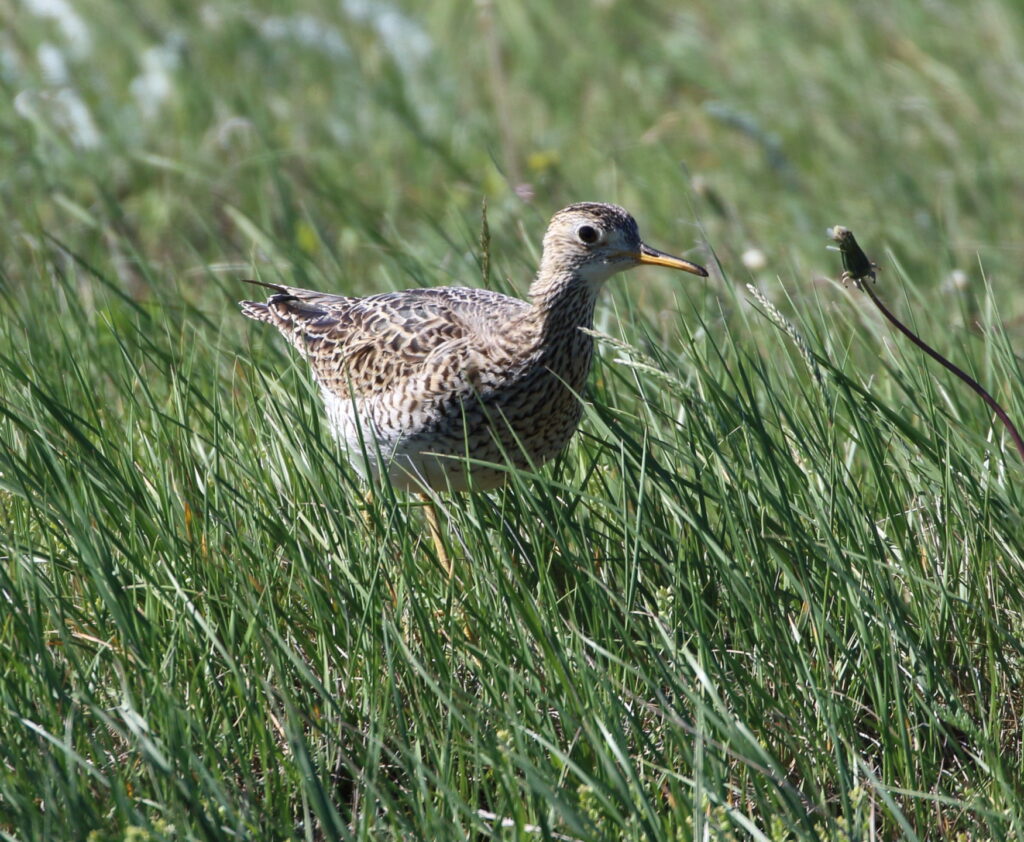
The loss of more than a million acres of shortgrass prairie to farming each year not only threatens grassland birds like this Upland Sandpiper, but an ecosystem with a diversity rivaling that of tropical forests and coral reefs.
For anyone who cares about the incredible diversity found in these grasslands—including its remarkable suite of grassland birds—this is horrible news indeed. It also sheds a positive light on the importance of sustainable cattle ranching and “keeping grass in grass,” as one Montana biologist puts it. What makes the situation especially frustrating is that conversion of grasslands to cropland isn’t primarily driven by demand for food, but by billions of dollars of tax breaks, mandates, and other government subsidies for growing corn to produce ethanol. These subsidies arose from efforts to help America achieve energy independence. Instead, they have helped create a system that continues to destroy natural ecosystems while creating immense quantities of a product that we simply don’t need (see, for instance, this report from Wisconsin). Unfortunately, by driving up corn prices, the ethanol boondoggle has made many corn growers extremely wealthy and politically powerful, almost eliminating the possibility of rolling back this pork barrel waste of taxpayer dollars.
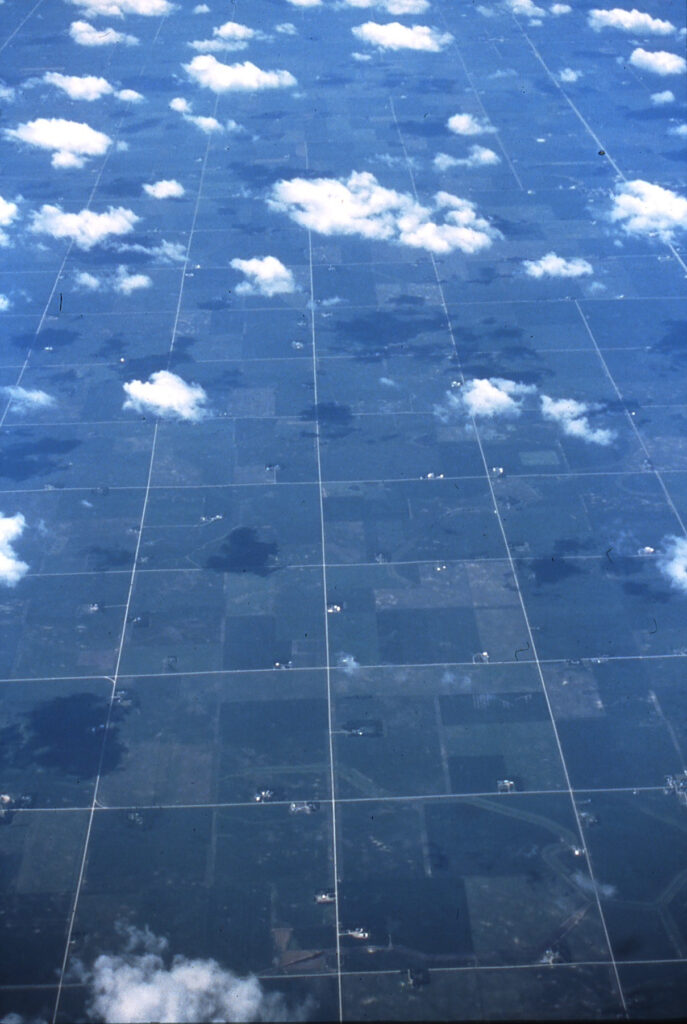
99% of Iowa’s tallgrass prairie was lost to agricultural conversion. Today, wasteful government farm subsidies for ethanol help drive the rapid loss of shortgrass prairie in Montana and other states.
Fortunately, the authors don’t leave us with a totally grim outlook for America’s remaining grasslands. Throughout the book, but especially in the final section, the authors detail a number of small-scale efforts to protect and restore grasslands as well as to reduce the incredible environmental costs of modern-day agricultural methods. In Montana, these range from the creation of American Prairie to the practice of rotational cattle grazing to tribal and ranching successes reintroducing bison back onto the landscape. I don’t want to reveal too much, but I’m confident you’ll find these and other efforts as fascinating and hopeful as I have.
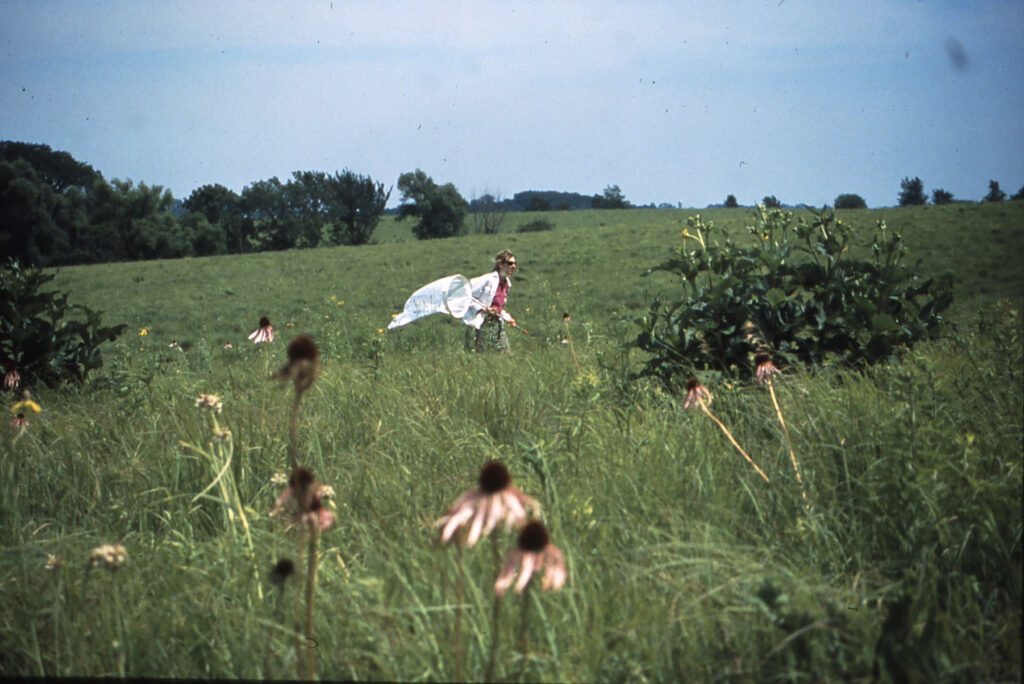
Scientist Diane Debinski searching for rare butterflies at Iowa’s Neal Smith National Wildlife Refuge, one of a handful of projects to restore tallgrass prairie habitat. This project was the subject of my 2005 book, The Prairie Builders.
Although it gives fairly brief coverage to grassland birds, if you care about grassland birds—not to mention bison and grassland ecosystems in general—Sea of Grass is absolutely required reading. Especially if you live in or near the Great Plains, it provides vital insights into the huge economic and cultural forces at work in our region. As a bonus, the authors’ clean, entertaining writing style help make this one of the most worthwhile books you are likely to crack open this year.
Summary: A fascinating crash course on the biological, economic, and cultural history of America’s grasslands and the growing efforts to protect what’s left of these remarkable ecosystems.
I’m excited to be heading off to Texas in a few days, to promote my book Birding for Boomers, but also to squeeze in a few days of birding. Before I go, I want to share an exciting new book that will interest anyone who has ever dreamed about visiting Africa. Braden loved a previous book, Habitats of the World, by two of the co-authors, and this follow-up is also full of fascinating facts and insights. Oh, and in case you missed it, you’ll want to read last week’s outstanding guest post by Roger Kohn, “Cock-of-the-Rock Extravaganza—with Video!”Enjoy!
When I first opened my review copy of Habitats of Africa, I thought, “How on earth did the authors put together such a comprehensive guide to such a vast and ecologically diverse continent?” I next wondered how, as a reader, I might possibly absorb the immense amount of information packed into this handsome volume. The answer to the first question is that all three authors have worked as professional nature guides, with extensive experience in Africa. As for the second? I could only answer that by diving in.
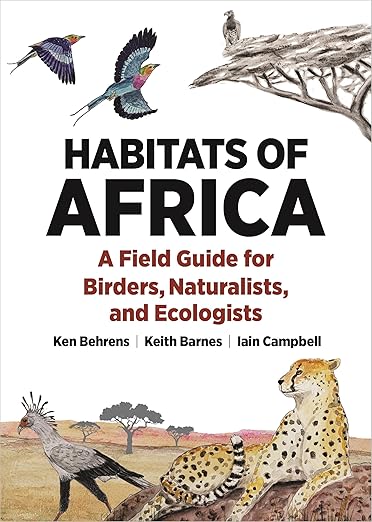
Habitats of Africa: A Field Guide for Birders, Naturalists, and Ecologistsby Ken Behrens, Keith, Barnes, and Iain Campbell (Princeton University Press)
The table of contents reveals that Habitats of Africa covers an astonishing seventy-plus different habitats, and honestly, that alone could be overwhelming to the beginning reader. The TOC, though, also provides good clues for how the book is arranged and is therefore worth a few moments of time.
Habitats are organized under a dozen headings, ranging from “Deserts and Arid Lands” and “Warm Humid Broadleaf Forests” to “Savannas” and “Saline Habitats.” The first habitat I read was the Maghreb fir and cedar forest, one of four habitats listed under the “Conifers” heading. I probably started with this one because I don’t usually think about conifer forests growing in Africa. They do, of course, but their ranges are extremely limited, and I wanted to know more about them.
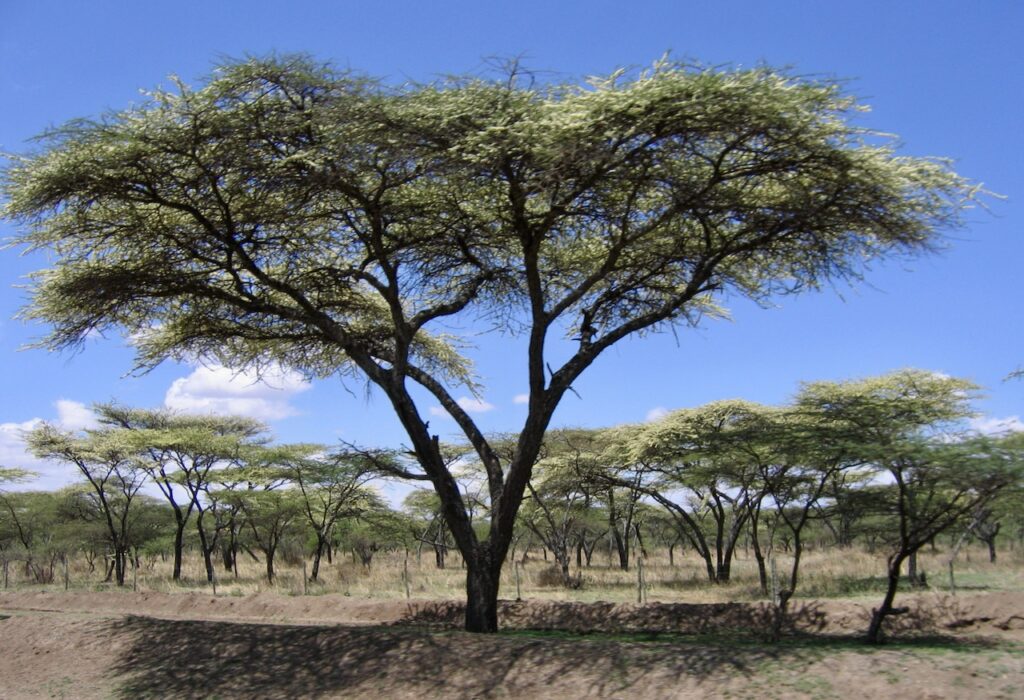
Even those who have never visited Africa easily recognize many of the continent’s distinctive habitats such as this acacia-clad savanna my wife Amy and I observed on our trip to Ethiopia in 2005. This is one of eight distinct kinds of savannas explained in Habitats of Africa.
The listing began with a nice map of where these forests can be found, and then followed with a concise but revealing description of the forest itself. Surprising phrases kept leaping out at me: “Atlas Cedar”, “clusters of oaks”, “winter snowpack”. I mean, where was I, anyway? This sounded more like California than Africa. One of the nice things about the book, however, is that it lists similar forest types found elsewhere in Africa and around the world—including the pinyon-juniper woodland of western North America.
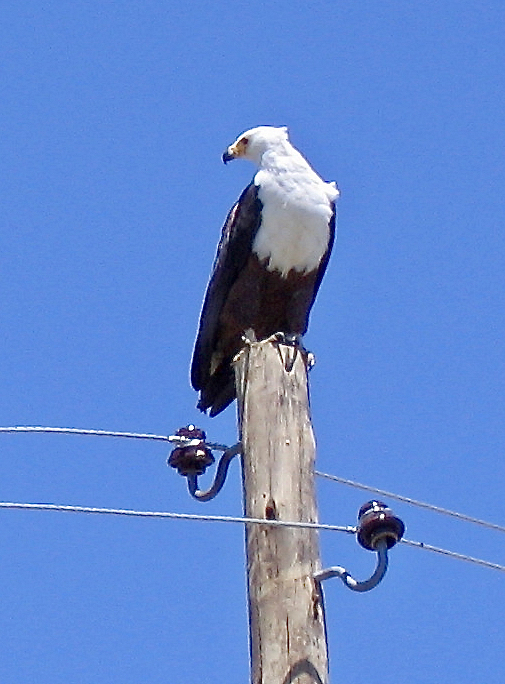
Lamentably, Amy and I visited Africa before I became a birder, but I accidentally managed to take a few bird photos with my point-and-shoot camera, including this magnificent African Fish-Eagle.
After the description, the authors include accounts of a habitat’s conservation status, the particular wildlife that can be found there; and its distribution—including specific places to see it. I found the wildlife sections especially well-done because the authors focused on endemic and other high-interest species while not overloading the reader with information. As a birder, for instance, I discovered that the avifauna of the Maghreb fir and cedar forest shares similarities to what I have observed in the Levant and southern Europe (see posts “Winter Birding in Israel, Part II: Valley of the Cranes” and “Birding Barcelona, Part 1: The Urban Core”)—but that there are also different species such as the Levaillant’s Woodpecker and Atlas Flycatcher.
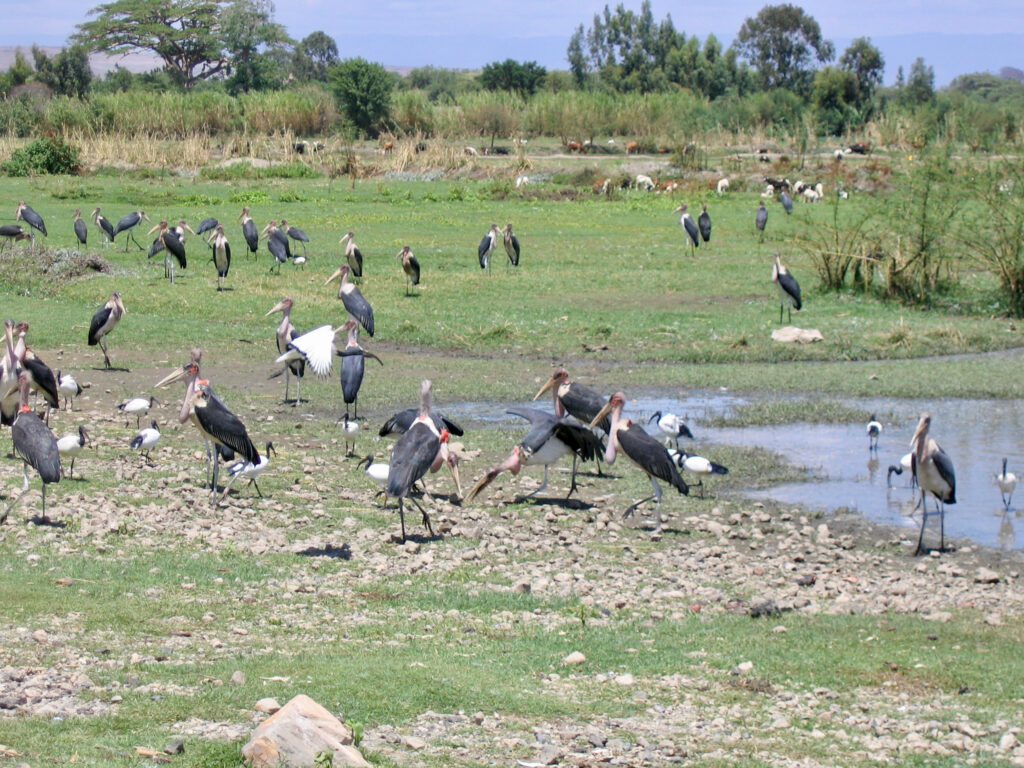
African Sacred Ibis and Marabou Stork attracted to a fish market at a lake south of Addis Ababa, Ethiopia.
There’s no getting around that the conservation status for most of the habitats is alarming. It’s hard to find a habitat in which humans haven’t made a major impact, especially given Africa’s rapidly-growing human population. In fact, the book includes eight habitats under its “Anthropogenic” heading—those with little of their original ecosystems intact. Although depressing on one hand, this conservation information provides a good picture of what is going on in the continent—trends that are distressingly similar to those experienced in many of the world’s other places, including North America. I also found it interesting to read why some habitats appear to be faring better than others. For instance, of southern Africa’s succulent karoo habitat—a habitat I’d never heard of—the authors write, “With limited agricultural potential and not much grass, the land in this biome is not highly sought after for human activity, but there has beeen significant sheep grazing and subsequent erosion.”
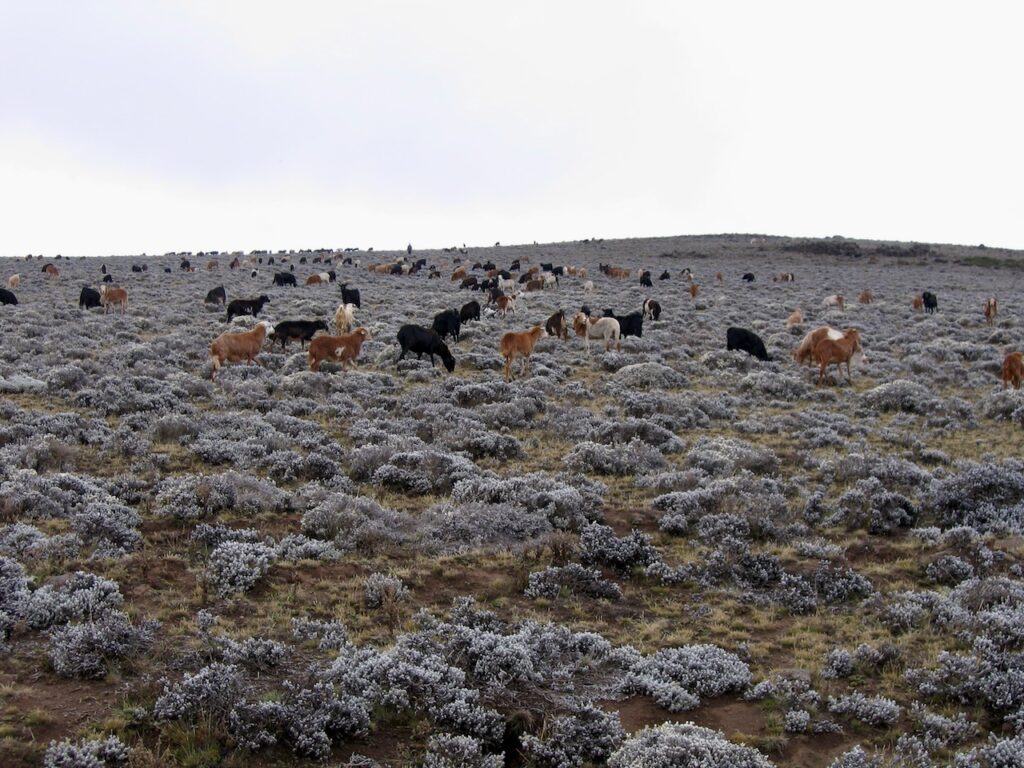
Ethiopia’s burgeoning population and pervasive poverty force livestock owners to illegally graze, even in places such as Bale National Park, one of the last strongholds of the Ethiopian Wolf.
The problem with reading about one habitat, however, is that it immediately made me curious to learn about others. The Maghreb fir and cedar forest discussion, for instance, mentioned that the forest peters out on the southern mountain slopes draining into the Sahara. “But what’s the Sahara really like?” I wondered, so I soon found myself reading up on one of the world’s most inhospitable places, the Saharan reg desert. This is a place that often receives less than one inch of rainfall each year—and where places can go years without seeing a drop. Yet, life persists here. Although much of the large megafauna has been hunted out, fascinating animals such as sand cats and fennec foxes survive, along with an incredible collection of small mammals and reptiles. This is a good place to mention that the book is filled with outstanding photos of the habitats and their various life forms, and in this chapter a photo of Cream-colored Courser caught my eye. Why? Because it looked almost identical to the Mountain Plovers we have in the arid West!
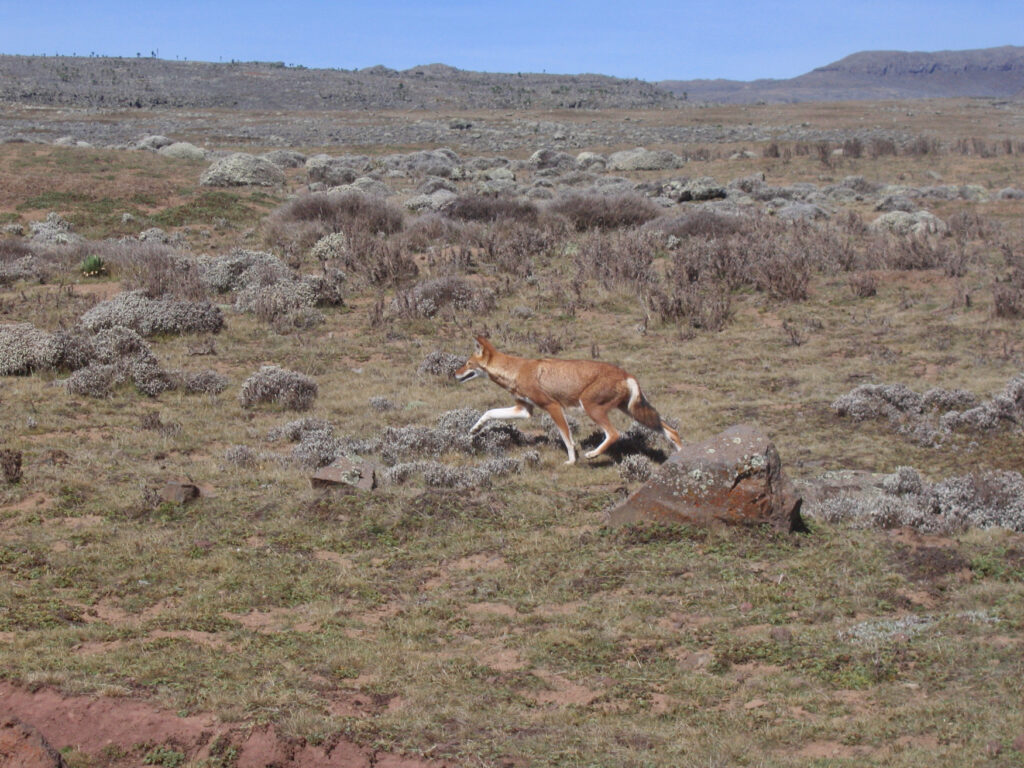
Amy and I were fortunate to see Ethiopian wolves in one of their last strongholds, a high-altitude habitat called afroparamo in Bale National Park.Already by our visit in 2005, grazing in the park (see previous photo) threatened the outlook for the wolves and the giant mole rats that serve as one of their major prey.
That said, one thing the book showed me is that, although similarities can be found between African and other world habitats, many of the ecosystems in Africa are unique—especially if you compare them to North America. And that can have a strange impact on a reader.
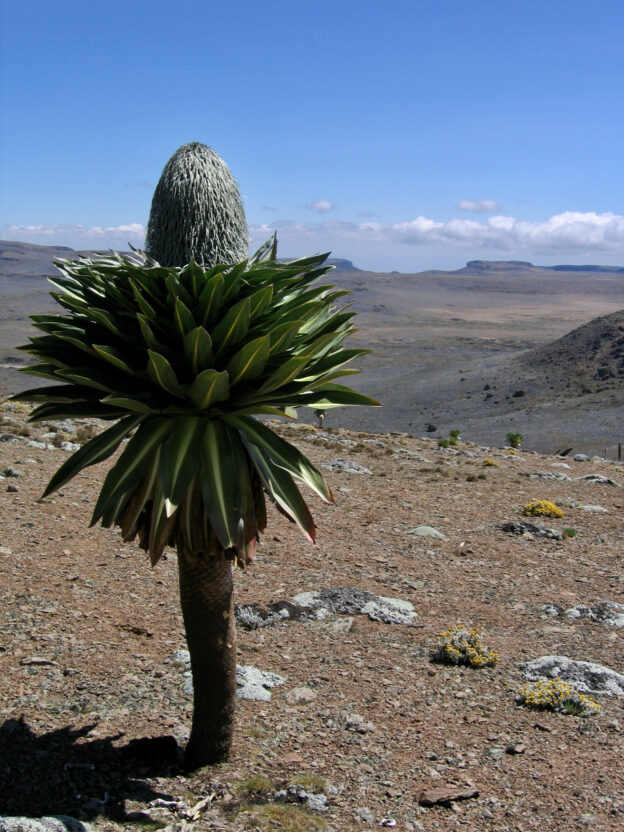
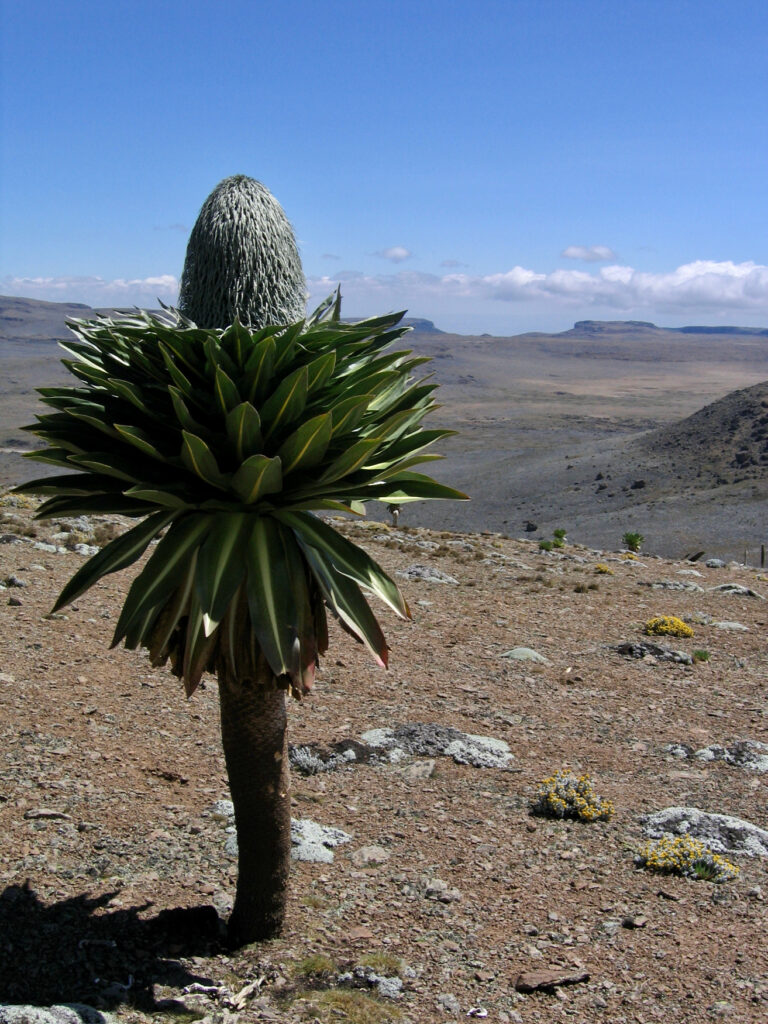
If you have any doubts about the uniqueness of many of Africa’s ecosystems, all you have to do is look at this lobelia tree in Ethiopia’s Bale National Park. The trees reminded me of Joshua trees in the American Southwest, and I can’t help thinking that the two trees might represent a striking case of convergent evolution.
I have only ever been to Africa once, during a school visit to Ethiopia in 2005. What’s more, I thought it unlikely I would ever have a chance to visit again. As I read through Habitats of Africa, however, I kept thinking, “Oh, I want to see that,” and “I want to go there.” It doesn’t mean I will get to, but reading this book may be the next best thing. More than all of the nature documentaries I’ve watched, this volume has given me a plausible idea of the incredible diversity of places and nature that can be seen there. As a birder in particular, it’s also given me a much better idea of the birds that I especially would like to see. It’s a stretch to call the book casual reading, but for anyone interested in nature, or planning their own trip to Africa, it is a well worth your time. If I ever get a chance to return to Africa, you can bet that I’ll be spending even more time with this impressive publication.
Note: Along with the extensive photographs and distribution maps, Habitats of Africa includes a wealth of climate charts, profile sketches, and topical sidebars that enhance the reader’s understanding of each habitat.
One-Sentence Summary: An eye-opening crash course on the nature of perhaps the world’s least understood continent.
Overall Rating (on a scale of cool birds): Rüppell’s Griffon (highest)
You can order Habitats of Africa from your local independent bookstore, or directly from Princeton University Press.Please tell them we sent you!
(Except for the cover image, photos in this post are copyright Sneed B. Collard III. Review copy of Habitats of Africa provided by the publisher.)