Tag Archives: Big Year

Fighting Our Way into Fall Migration!

As always, we appreciate you sharing this post!

Spring migration traditionally sparks furious activity by both birds and birders. If you want to see a ton of species, you’d better hit spring migration—and hit it hard. Fall migration, on the other hand, is often pretty much ignored. At least Braden and I ignored it until the last couple of years. Then we discovered that we’d better get our tail feathers out there in fall if we want to see  some key species—especially shorebirds.

You wouldn’t think that Montana would be a great place for shorebirds. After all, shorebirds like, well, ocean shores, don’t they? Sure, but a surprising number of shorebird species pass through Montana every fall on their way to their wintering grounds. That doesn’t mean that finding them is easy! Especially here in western Montana, finding shorebirds can take persistence and dedication. We began our fall shorebird pursuit last week with a trip up to Ninepipe National Widlife Refuge, about an hour from our house. We were especially hoping to find a Short-billed Dowitcher, a rare Montana visitor that we still needed for our Year List. And guess what? No dowitcher. I did add Least Sandpiper to the year’s tally, and we enjoyed a terrific visit with a perched Peregrine Falcon, but clearly, (more) desperate measures were called for.
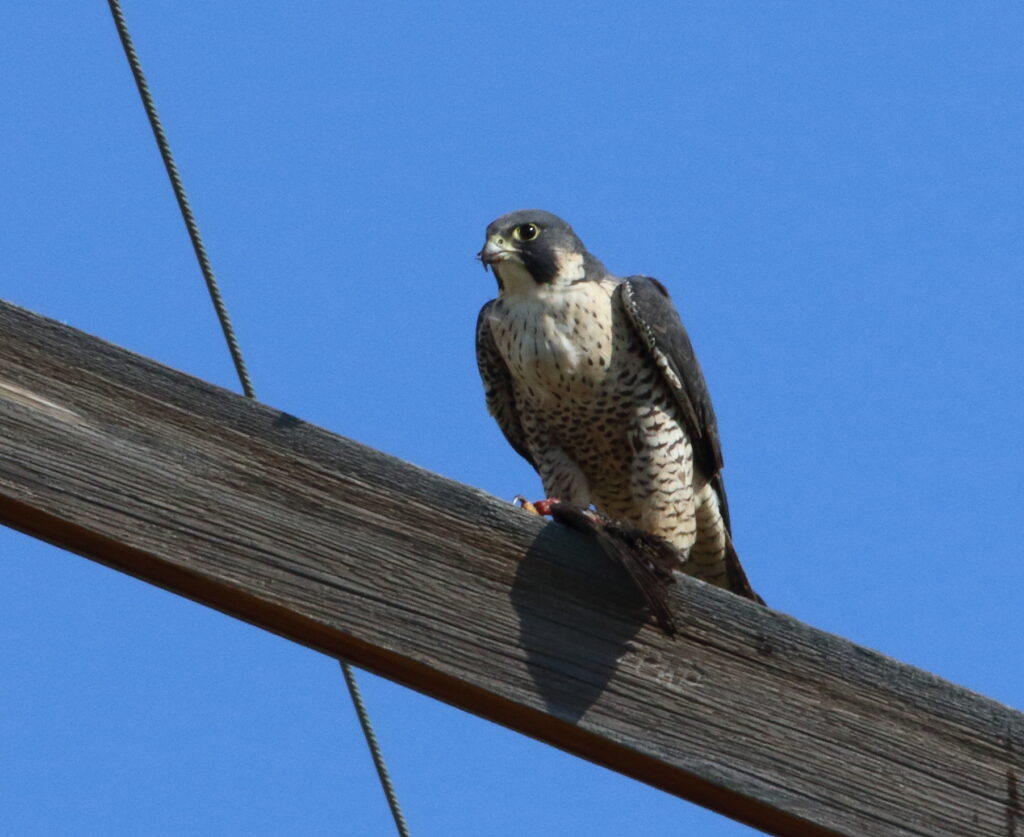
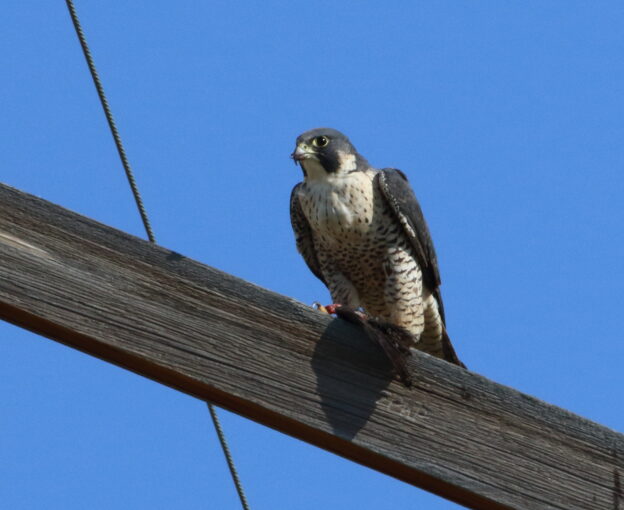
As the Rolling Stones sang, “You can’t always find the birds you want,” but we’ll take a visit with a Peregrin Falcon on any outing!

A few days later, Braden and I left the house at 6 a.m., heading for Helena, where large numbers of shorebirds had been reported during the past week. We made stops at Lake Helena and the Helena Valley regulating reservoir and saw some nice birds, including some pelicans, but . . . no shorebirds.
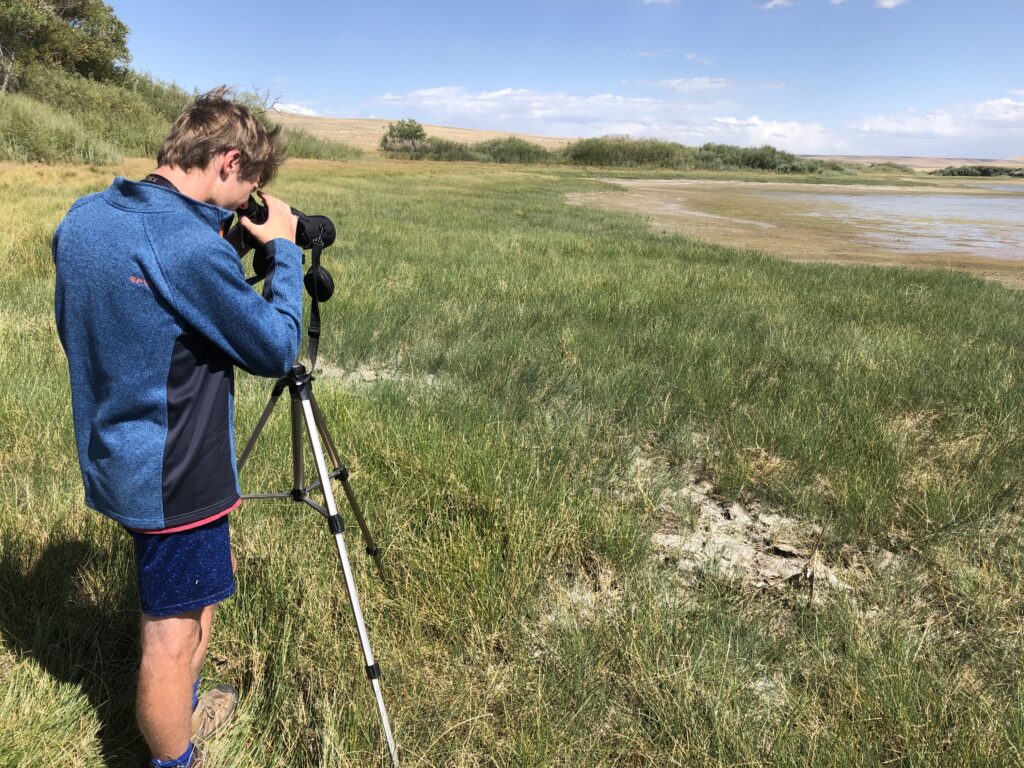
One of the great difficulties of IDing shorebirds is that they are often far, far away, necessitating hours hunched over a spotting scope. Unfortunately, our scope is not the best, either. Swarovski or Zeiss or Leica, are you listening??? We’d be happy to mention your name in the next ten posts for a free scope!

Heading south, we reached the day’s major destination, Canyon Ferry Lake. After spending thirty minutes on a fruitless search of one area, we finally reached the place hundreds of shorebirds had been reported just two days earlier. Thankfully, a few—a very few—still remained. That, however, was only the beginning of our challenge because this time of year, shorebirds are even harder to identify than usual. Mixed in with adults that are losing their breeding plumage are countless juveniles who, frankly, are a real pain in the butt to ID. Fortunately, Braden had been studying like crazy and was able to pick out Baird’s, Semipalmated, and Least Sandpipers—and a Year Bird for both of us, Pectoral Sandpiper. Hooray—but where had all the other shorebirds gone?
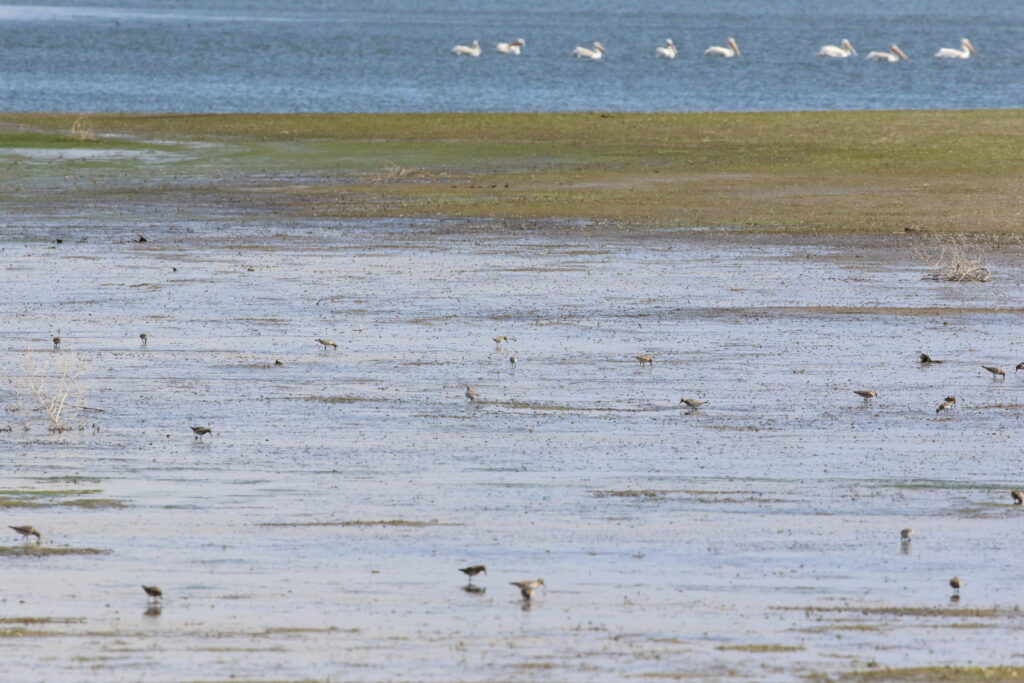
After much searching, we finally located a flock of Baird’s Sandpipers at the Willow Creek Reservoir near Harrison—along with a nice raft of American Pelicans behind them.

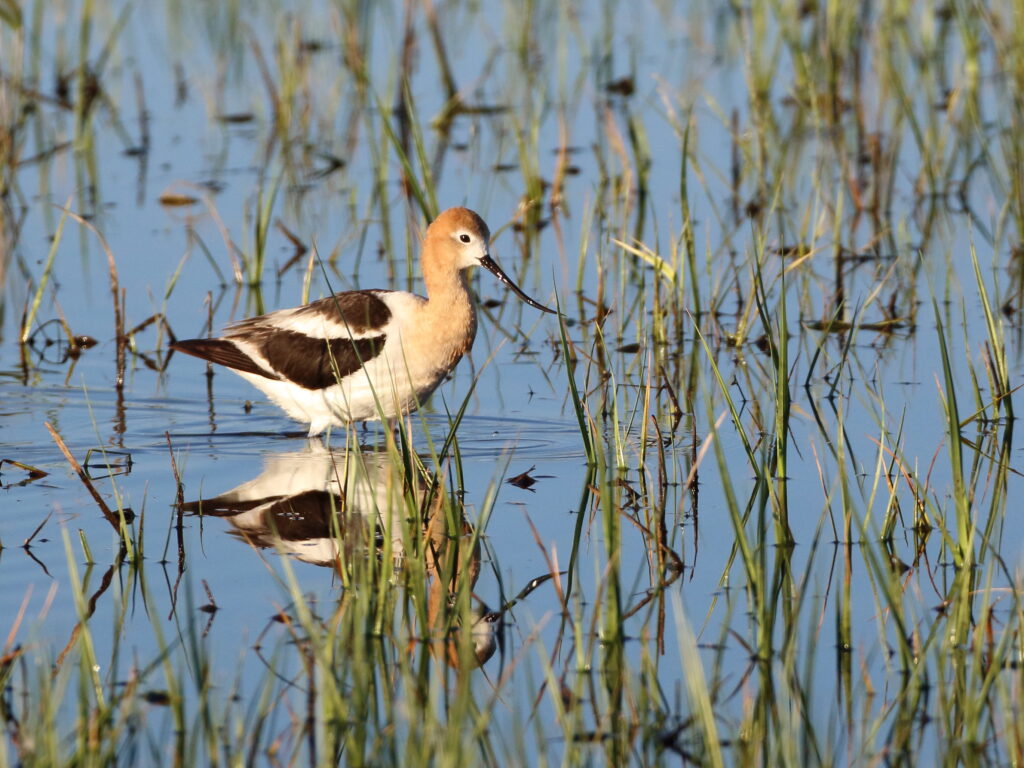
We decided to chase them by driving to a place neither of us had ever birded—Willow Creek Reservoir about thirty minutes south of Three Forks—and there, we found at least some of the missing Baird’s Sandpipers that had been farther north before. In fact, we found a flock of 64 of them, along with a pair of beautiful American Avocets. Even better, hiding among them were two “Semis” and a Western Sandpiper—another Year Bird for us! We drove the long route back to Missoula tired but satisfied. Fall migration doesn’t have the glamour and wow factor of spring, but for the patient, it can reap a beach full of rewards.
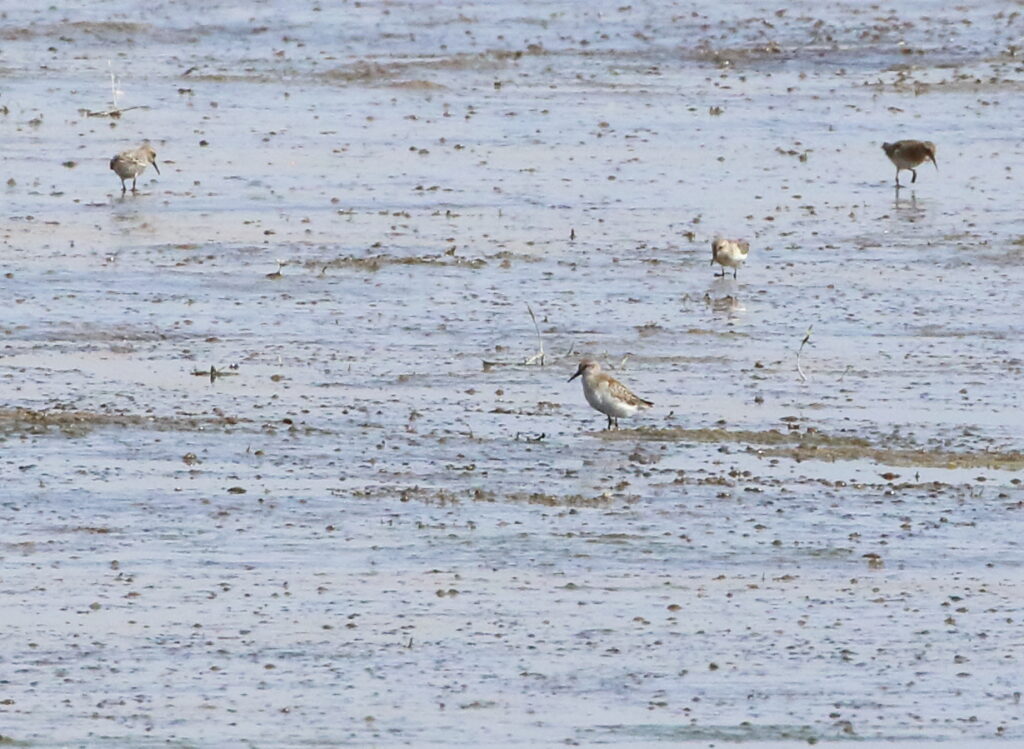
It takes some real sleuthing to discern and ID sandpipers, but Braden found this Western Sandpiper (center) and the Semipalmated Sandpiper (behind it) among a flock of 64 Baird’s Sandpipers (the other two birds)!

250 Montana Birds or Bust!

As always, we encourage you to share this post in the hopes that it might keep education rolling during these difficult, unprecedented times. Thank you!

In our last post, I explained how close Braden and I had come to reaching our goal of 250 Montana species for the year. Braden, in fact, had reached 245 birds while I pulled up the rear with 239. Now, as some of your comments pointed out, 250 species would seem like a slam dunk with six months to go in 2020, but not so. Not only had we exhausted our supply of “easy birds”, but another large birding safari seemed unlikely—until, that is, Braden and his birding buddy Nick Ramsey came up with the idea for a Big Day. The plan? To get up before dawn and drive 500 miles, birding Ninepipe National Wildlife Refuge, the Swan River Valley, Glacier National Park, all the way to Malta, home of Bowdoin NWR. Insane? Yes. Would we do it? Definitely!

None of us knew how many species we might see in a day. Our record for a day in Montana was only in the 80 or so species range, but we’d never attempted anything like this and hoped we might get as many as 150. Alas, the weather gods frowned on us the morning of June 30, with steady drizzling rain. Undaunted, we set off, missing a number of target species here in Missoula and near the National Bison Range. At Ninepipe NWR, however, we hit Short-eared Owl City! Braden and Nick both still needed SEOWs for their Year Lists, but neither of us had ever seen one at Ninepipe until I spotted one about a month ago. This morning, driving Duck Road in the rain, we hadn’t gone a mile before Braden shouted, “There’s an owl!” In the next three miles, we saw NINE MORE! Maybe they should call the refuge Nineowls?

Our first Big Success of our first Big Day was to hit the Short-eared Owl Jackpot at Ninepipe NWR.

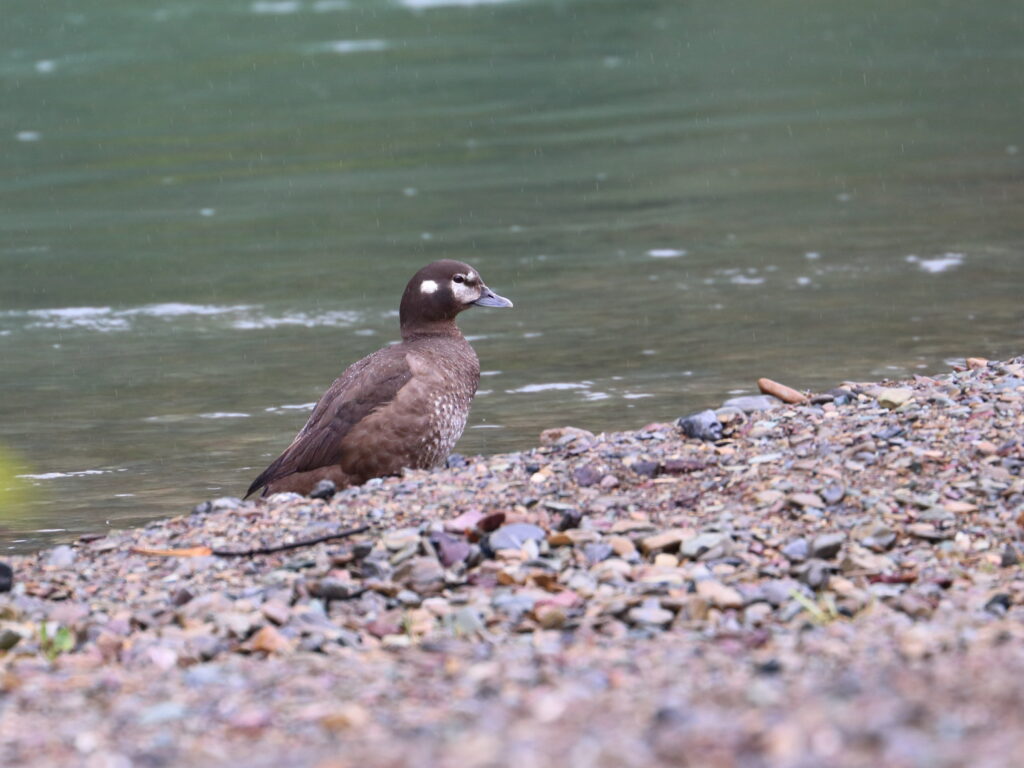
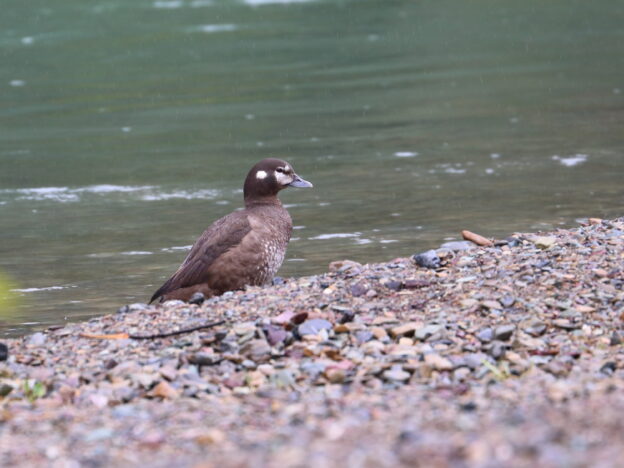
After missing LeConte’s Sparrow at Swan Valley (but seeing lots of Lincoln’s Sparrows), we headed to Glacier, where my top priority of the trip just might be located: Harlequin Duck. With the coronavirus raging, we didn’t know what kind of traffic we might expect, but the poor weather ended up a blessing as we cruised right into the park and made record time to Avalanche Creek. Still, none of us really expected to see a Harlequin Duck as the males had fled and breeding was probably winding down. We walked out onto the beach on the river, though, and sixty seconds later, we all saw a duck flying downstream. It was a female Harlequin! Even better, it landed fifty feet from us! None of us could believe it. After admiring the beautiful creature, we walked around a bit, picking up the eerie calls of Varied Thrushes, but failing to get our pie-in-the-sky target, Black Swifts. Still, our stop a success, we headed back out to West Glacier and began the six-hour drive to Bowdoin, picking up new birds all along the way and ending up with a day’s total of 119 species—a personal Montana record and not bad given the weather.

One of my favorite all-time birds, this Harlequin Duck was just waiting for us as we zoomed into Glacier National Park during our (first) Big Day!

Of course, the problem with doing a Big Day that finishes up in a place like Malta, Montana, is that you have to get back home again! Not surprisingly, we spent two days finding our way home—and not without some adventures that included Braden almost stepping on a rattlesnake, almost getting our minivan permanently mired in mud far from civilization, and getting a rear tire blowout—fortunately, just at an exit in Butte.

On Day 2 of our, ahem, Big Day, we had some of our best experiences with nesting shorebirds—including the spectacular American Avocet at Bowdoin National Wildlife Refuge!

“So did you make your 250 birds?” you may be asking yourselves. Well . . . YES! Braden finished the trip with 255 species for the year while I slipped in there with 251. Which begs another question, “What now?” Well, fortunately birding is fun, interesting, and educational even without keeping track of lists. Every day, in fact, we see cool birds and learn more about them. Will we object if our species counts climb higher in the next six months? No way, but do we need them to? Naw. Birds are great any time and in any season—even if we’ve seen them before.

Six Months and 245 Birds

It continues to be a crazy year for everyone, and we feel deeply for all of those who are being directly or indirectly affected by the coronavirus, either through their physical or mental health, loss of employment, or simply missing their friends and family. It stinks. One bright spot is that many people are rediscovering the simple pleasures of spending time outdoors, and for many, birding is a big part of that. A reminder that Braden and I have posted several bird-related educational videos on my YouTube channel, including a Birding Basics that introduces people how to bird and some common birds to look for. Our friend, ornithologist Dick Hutto, and his wife Sue Reel, have also been posting some great short tip videos for you to look at.

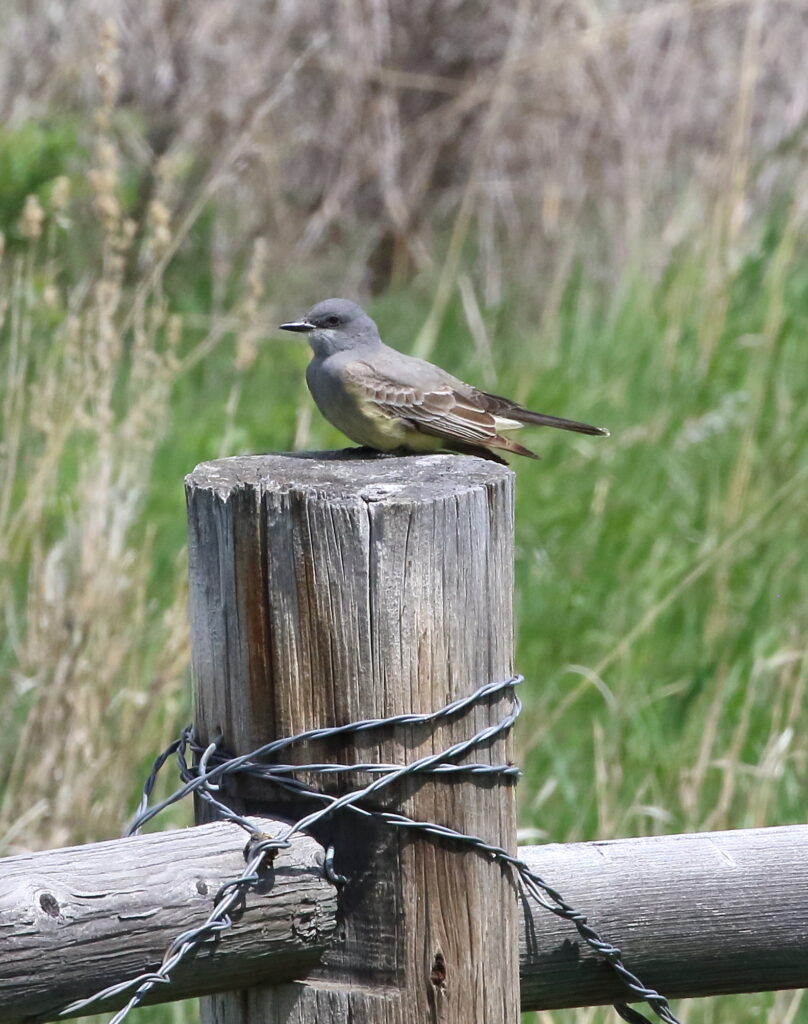
Cassin’s Kingbirds were one of seventy Year Birds we found on our epic Eastern Montana birding safari.

As you can see from our last post, we haven’t been blogging as much—but we have been birding. In fact, once we returned from Israel, we decided to shoot for 250 Montana birds as our goal for the year. We spent an exhilarating week taking an eastern Montana birding safari, during which we saw more than 180 species of birds—including about 70 Year Birds. Braden also has been conducting an independent bird-related science project for his upcoming senior year of high school. So how are we doing?

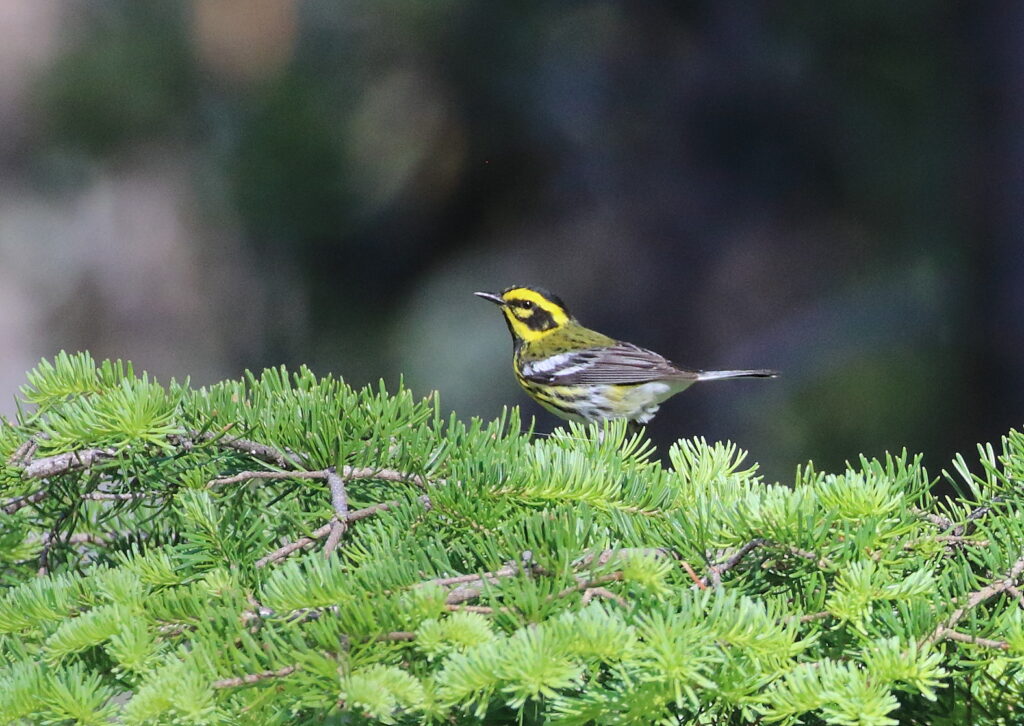
A great thing about climbing a mountain is that it can put you at birds-eye level with spectacular species you usually just see from below. Meet a Townsend’s Warbler!

By the beginning of this week, Braden had seen 243 species of birds while I was pegged at 234. Now for non-birders it might seem like a shoe-in for us to hit 250, but believe it or not, we were (and remain) more than a little anxious about our prospects. For one thing, we have seen virtually every one of the “easy” species there is to see in Montana. For another, birds are “quieting down” now that they are in the process of, or have already finished, nesting, making them more difficult to find. In other words, every new Montana Year Bird we get from now on will take significant effort, luck, or both. Undaunted, we woke early Wednesday morning to investigate a new birding location for us just west of the town of Lolo. A logging road led up into the high country from there, and even more intriguing, it passed through a two-year-old burn area where we hoped to see one of our most coveted species, the Black-backed Woodpecker.

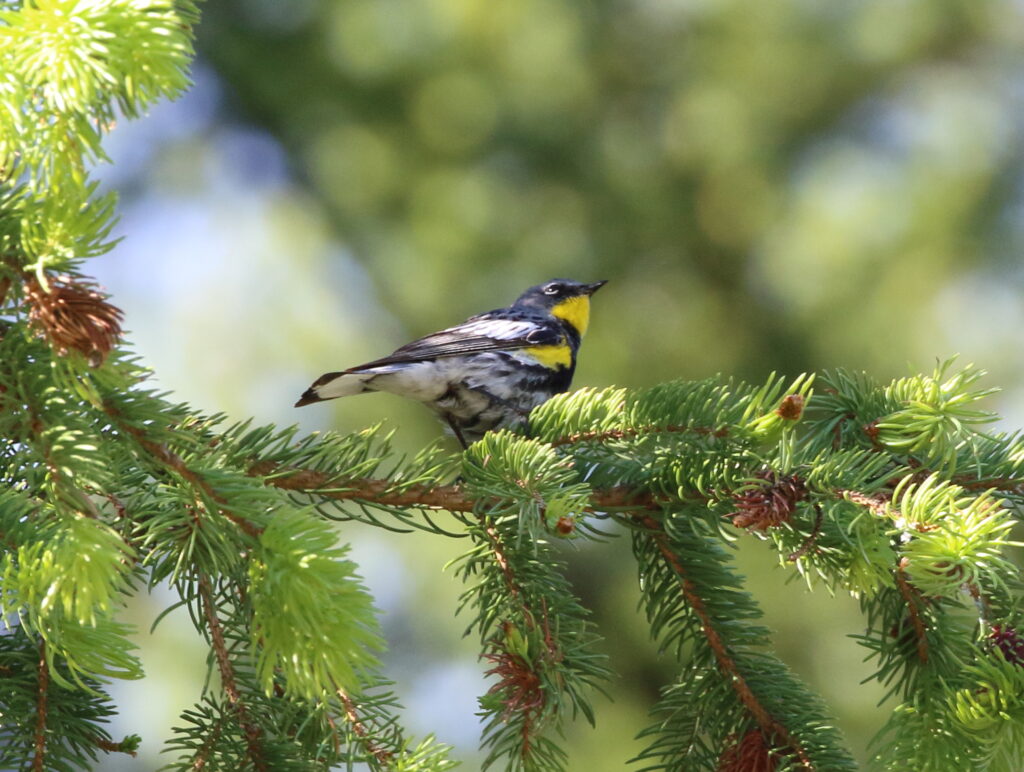
On the day, we located five of the dozen or so common warbler species that breed in Montana, including this stunning Yellow-rumped.

It was a flawless day, and we pulled over a couple of times to listen for birds in green, lusher forest. Thanks to Braden’s sharp ears and ear-birding skills, we immediately picked up a host of species including several kinds of warblers, Swainson’s Thrushes, Warbling Vireos, and a surprise flock of Gray Jays (I refuse to cede this species to Canada!). Driving further, we finally reached a burn area where Braden had seen a Three-toed Woodpecker several days before. The burn had mostly smaller trees and I wasn’t optimistic, but Braden played a Three-toed drumming call and a Hairy Woodpecker immediately responded. Then, a blacker bird swooped in. “Three-toed!” Braden shouted. Ka-ching. A Year Bird for me.

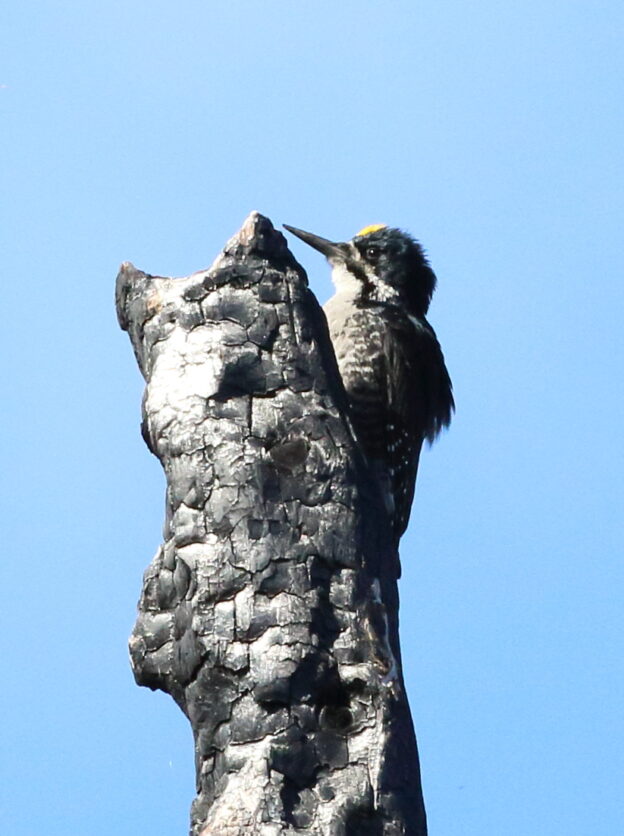
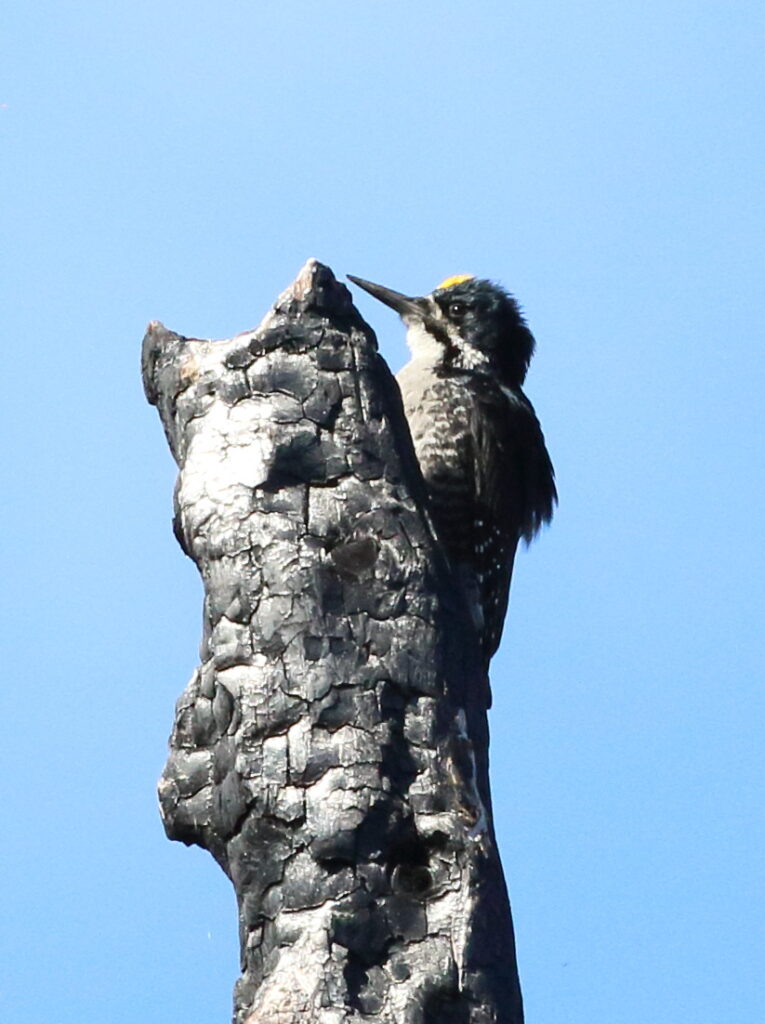
Black-backed Woodpeckers aren’t endangered, but can usually only be found in burned forests 1-5 years old that have NOT been salvage-logged. This one immediately leaped into our Bird of the Year competition!

A mile or so further, we reached an even better burn area with larger-diameter trees. I pulled over and we played a Black-backed drumming call. Within fifteen seconds, a gorgeous female Black-backed arrived to investigate, but that wasn’t all. Another half-mile up the road, we found a yellow-crowned male! “A Black-backed! We found Black-backed Woodpeckers!” Braden exulted several times. They were our first since doing our Big Year in 2016. The day was far from finished, either. Over the next couple of hours, we added Sharp-shinned Hawk to our Year lists, and I added two more that Braden already had: Fox Sparrow and Golden-crowned Kinglet, both of which Braden found me by ear. We also found Wilson’s Warblers on their nesting grounds—our first time doing so near Missoula.

The day brought our totals to 245 and 239 respectively. Will we make it to 250? We’re finally starting to feel better about our prospects, but stay tuned. We still have a lot of birding to go!

For Birders, Every Year is a Big Year

To Subscribe to FatherSonBirding—and nothing else—please fill in your email address in the box down in the column to your right. Thanks!

At 8:00 a.m. we pulled into the parking lot of the now-defunct Uncle Buck’s Bar in Warm Springs, Montana. The mercury read -4 degrees and we’d just braved 100 miles of icy highway to get here, but we couldn’t be more excited. Why? Because in addition to this being our third and final Christmas Bird Count of the season, it was January 1—the date when Year Counts are reset to zero and all birders begin their lives anew.

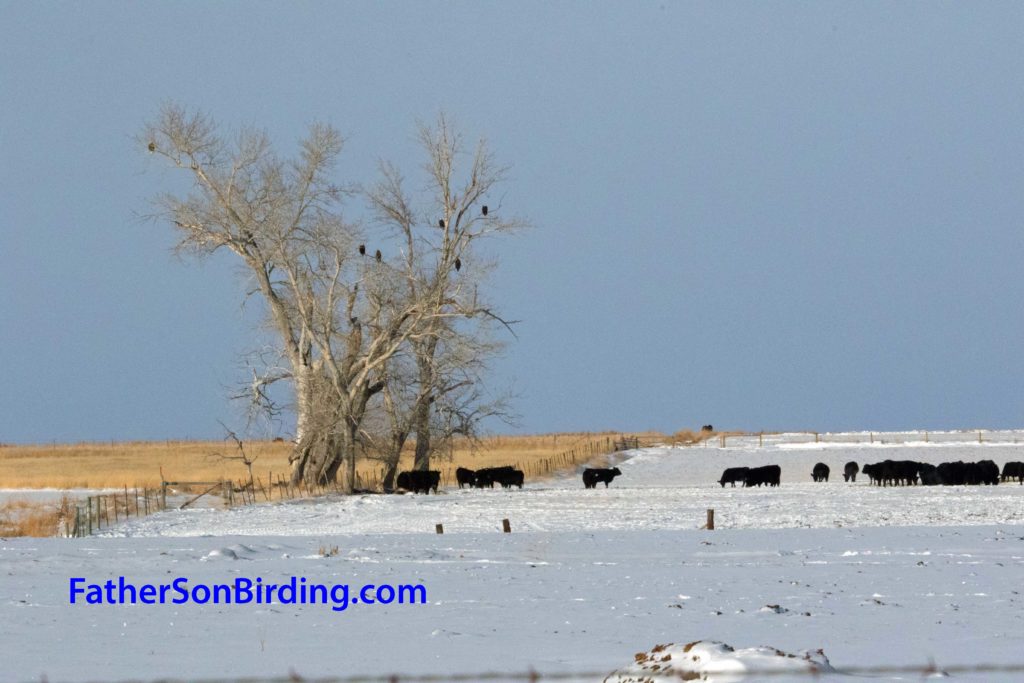
How often do Bald Eagles almost outnumber cows? It’s a scene you won’t find in just any part of the country.

We were not alone in our enthusiasm. In addition to Braden, our birding friend Nick Ramsey, and myself, at least twenty other birders stood around sipping coffee and stomping their feet. We turned out in great part because of Gary Swant, a Montana birding legend who led our Christmas Bird Count in Deer Lodge twelve days earlier. Warm Springs was Gary’s main turf as he did bird counts here for a living, monitoring species in the wake of the vast superfund cleanup conducted around the Butte-Anaconda mining complex. What’s more, today Braden, Nick, and I hit the jackpot. After assigning sectors to other bird counters, Gary turned to us and said, “Why don’t you three ride with me?”

I can’t tell you exactly where Gary drove us or I would have to kill you, but suffice it to say that we had a very special day. We drove around a number of ponds used to settle out and inactivate toxic waste from Silver Bow Creek before it helps form the Clark Fork River. Most of the ponds had frozen over so we weren’t sure what we might see, but right away we scored two terrific birds.

“There’s a Townsend’s Solitaire,” Braden called out.

Gary took a look at the bird, perched above a stream. “I think that might be a Northern Shrike,” he said. Just then, the bird moved its head into a better position and we could all see the shrike’s distinct markings.

Our intrepid CBC leader, Gary Swant, tallies species after an exhilarating Christmas Bird Count.

Not ten minutes later, as we got out of the car for a brief stretch, a large fast raptor flew over.

“Northern Goshawk!” Nick, Braden, and Gary all shouted together.

SCORE! Three days after getting our Lifer Northern Goshawk at Maclay Flats, Braden and I got a great look at a second one—and in a brand new year!

For the next couple of hours, we racked up twenty other great species including Trumpeter Swans, Common and Barrow’s Goldeneyes, Rough-legged Hawks, and even some American Tree Sparrows.

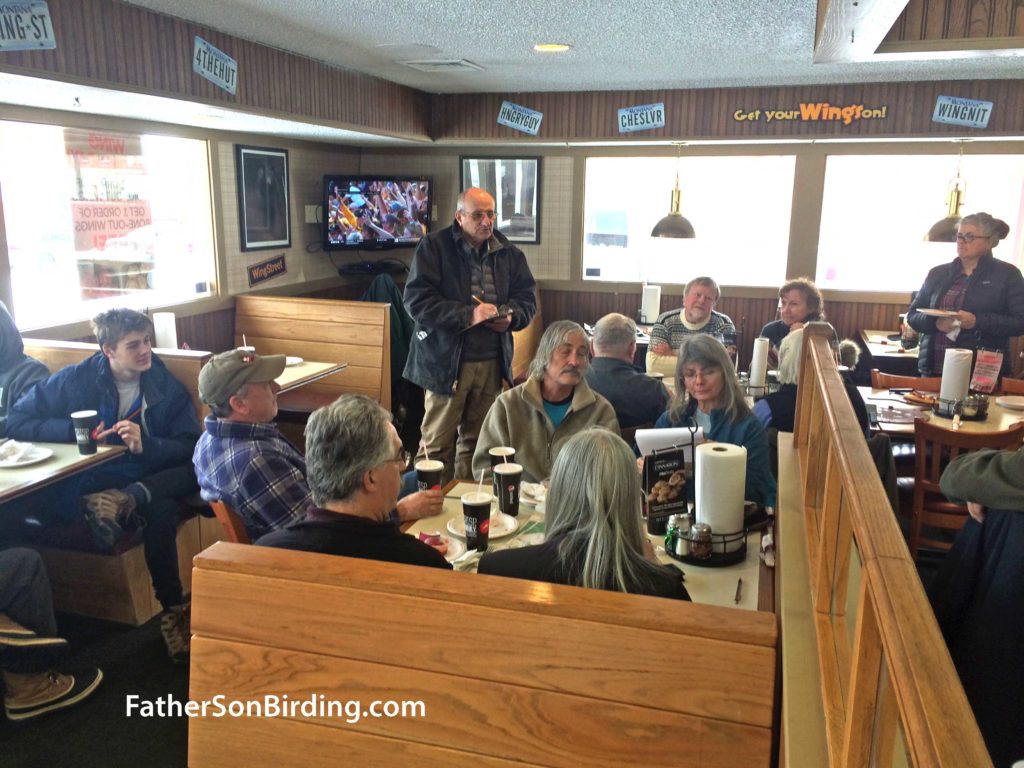
After the count, the groups converged on the Anaconda Pizza Hut for debriefing. Our collective total came to 49 species and 4498 individual birds—not bad for winter in cold, wind-swept Montana. Nick, Braden, Gary, and I had landed 22 species, a great start to our 2019 Year Lists.

But our day was far from over.

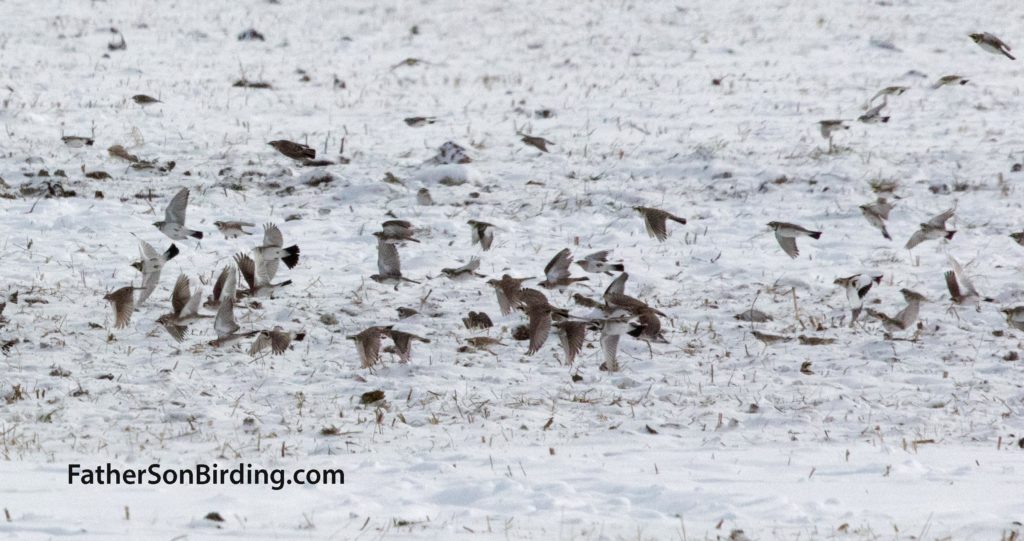
Find the Snow Bunting! Not easy when you’ve got hundreds of Horned Larks to contend with, but there’s one in there!

Following a tip from one of the groups, five carloads of us headed out to a road just north of Warm Springs and we did NOT regret it. Soon, we came upon a flock of at least 600 Horned Larks feeding in a pasture. Our group broke out half a dozen spotting scopes hoping to find two other species among the larks. It wasn’t long before the calls came.

“I’ve got Snow Buntings!”

“I’ve got a Lapland Longspur!”

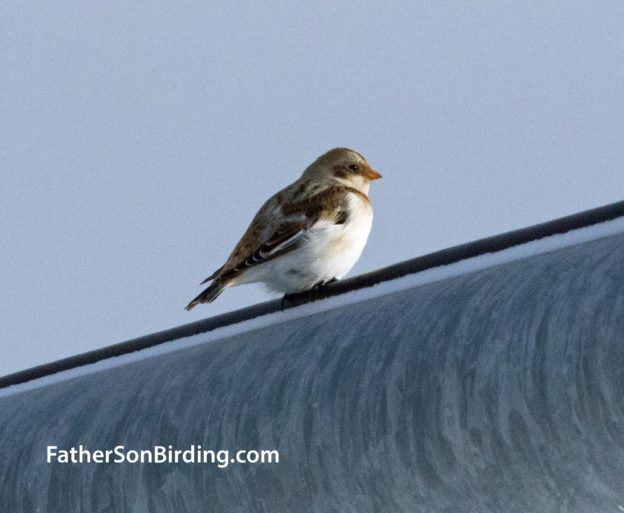
Our pulses raced and didn’t slow until we’d seen the birds ourselves. It took about ten minutes, but finally, I spotted the distinctive birds. Braden and I high-fived each other. Snow Buntings had been dogging us for the past five years and to add them and Lapland Longspurs to our Life Lists on the very same day felt like vindication. And if that wasn’t enough, just then, two Prairie Falcons swooped in to harrass the giant flock. Yet another Year Bird!

We climbed back into the minivan and began the drive back to Missoula feeling both exhausted and exhilarated. We hadn’t set out to do a Big Year in 2019, but we realized something: For birders, every year is a Big Year.

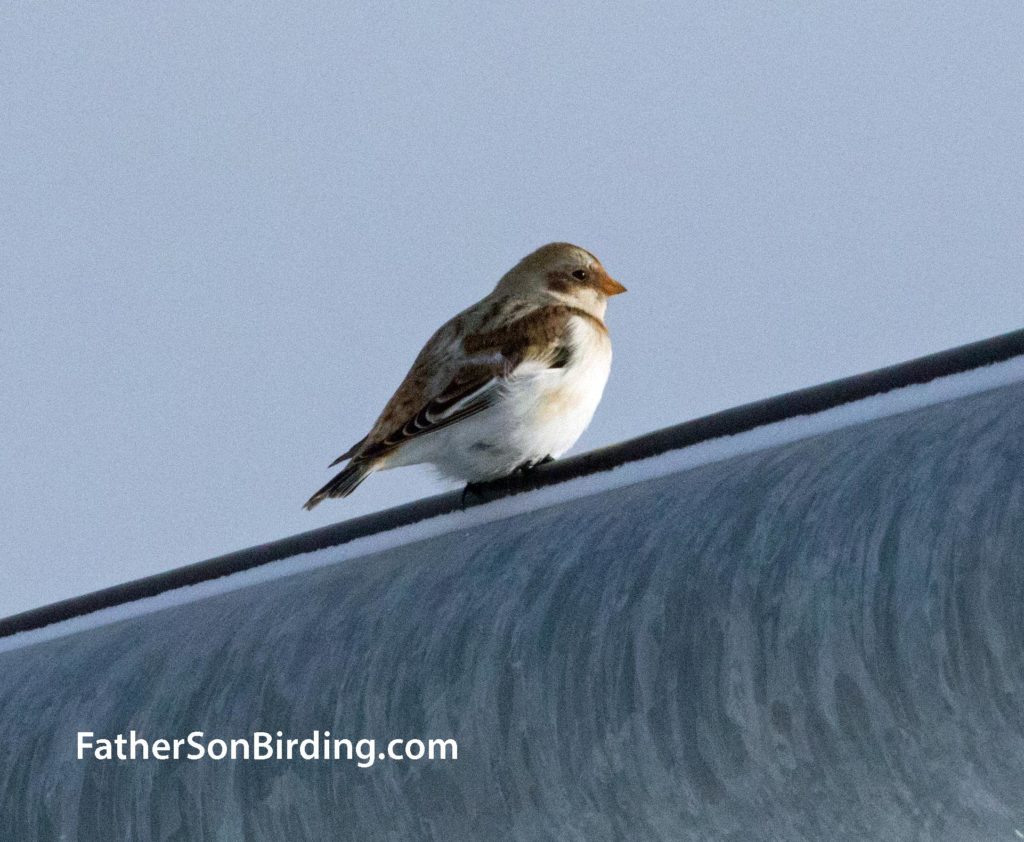
We can’t confirm this, but we believe that the American Birding Association paid this Snow Bunting to perch across the road from us so we could all get an up-close look at one!

Listers Anonymous Mid-Year Crisis Meeting

To Subscribe to FatherSonBirding, please fill out your name and email in the appropriate boxes in the right-hand column. Thanks and please share this post!

Minutes from Listers Anonymous Meeting 7/1/18

Us: Hello.

Group: Hello!

Us: Our names are Sneed and Braden and we are Listers. It’s been exactly four hours and twelve minutes since we last posted on eBird.

Group: Amen!

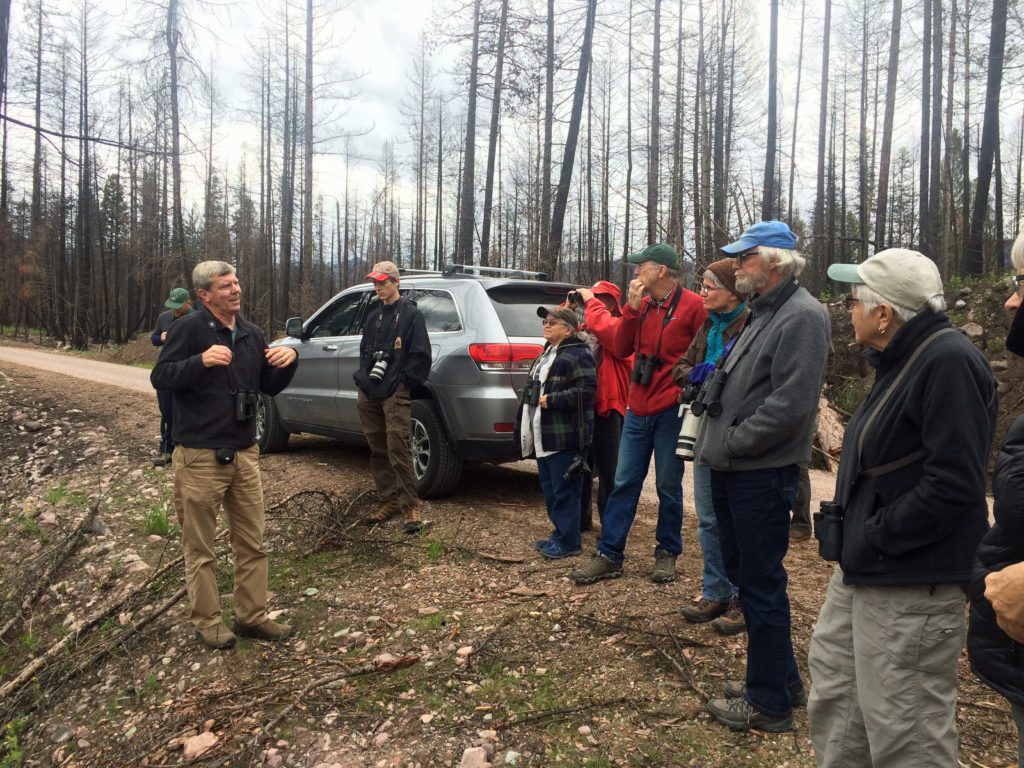
Biologist Dick Hutto leads Listers Anonymous meeting with birders from Helena in the Rice Ridge Burn. (Photo by Sneed B. Collard III)

Us: I mean, we’re not just Listers. We love to watch birds and photograph them and write about them, but…

Moderator: Go on. We’re all friends here.

Us: Thanks. Yeah, but we’re also Listers. We like to keep track of how many birds we’ve seen in a given year, month, day—not to mention how many in every county and state and, well, you get the idea.

Woman with binocular strap scars on her shoulders: Oh, I know. Been there, Honey.

Us: The thing is, we’re really having a crisis right now.

Moderator: Go on.

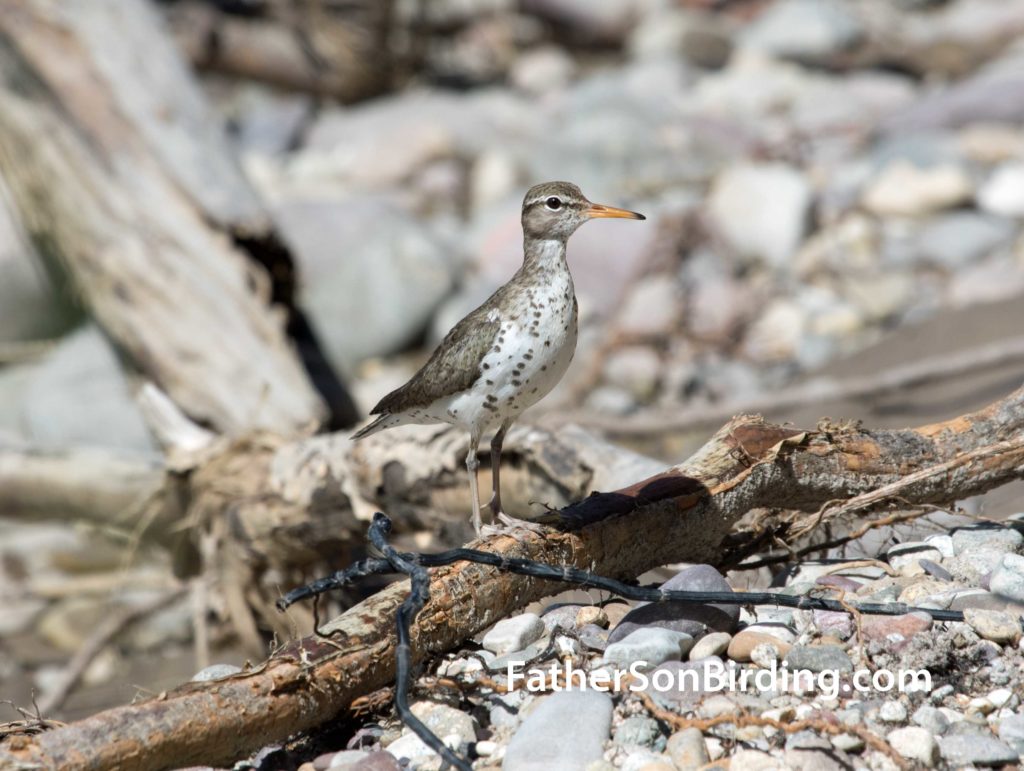
Lister’s Dilemma: Great species, such as this Spotted Sandpiper, still abound, but NEW species are getting hard to find. (Photo by Sneed B. Collard III)

Us: Well, you see, last year we did a Montana Big Year. I recorded 207 species while Braden got 213. This year, I’m up to 196 while Braden has 204.

Man wearing birding vest, shaking his head: Have mercy. You are in trouble.

Us: We knew you’d understand. I mean most people, they don’t get it. They say, “200 species! Why that’s great! The year’s only half done and you’ve almost beat your old record already!”

Group: Lord, forgive them!

Us: Yeah, right? What they don’t realize is that the prime birding months are GONE! Sure, we need only ten or so species to break last year’s record, but seriously, it’s July! It’ll be a miracle if we can find that many in Montana the rest of the year.

Group: By the name of Sibley and Audubon, we feel your pain!

Us: What’s even worse, we aren’t even going to make it out to Far Eastern Montana this summer. No Upland Sandpipers. No Greater Sage Grouse. No Long-billed Curlews.

Woman with an arm tattoo “Big Year or Bust”: Children, you are in a fix!

Us: We know, but what can we do?

Moderator, polishing the lenses of his binoculars: Sneed and Braden, it’s one of the heaviest burdens for a Lister to bear. But you’ve got to fight it.

Group: Amen.

Moderator: You just can’t take “No” for an answer.

Group: Amen!

Moderator: You’ve got to keep getting out there, even when there’s less hope of finding a Year Bird than of getting a Democrat elected to Congress!

Group: AMEN, BROTHERS AND SISTERS!

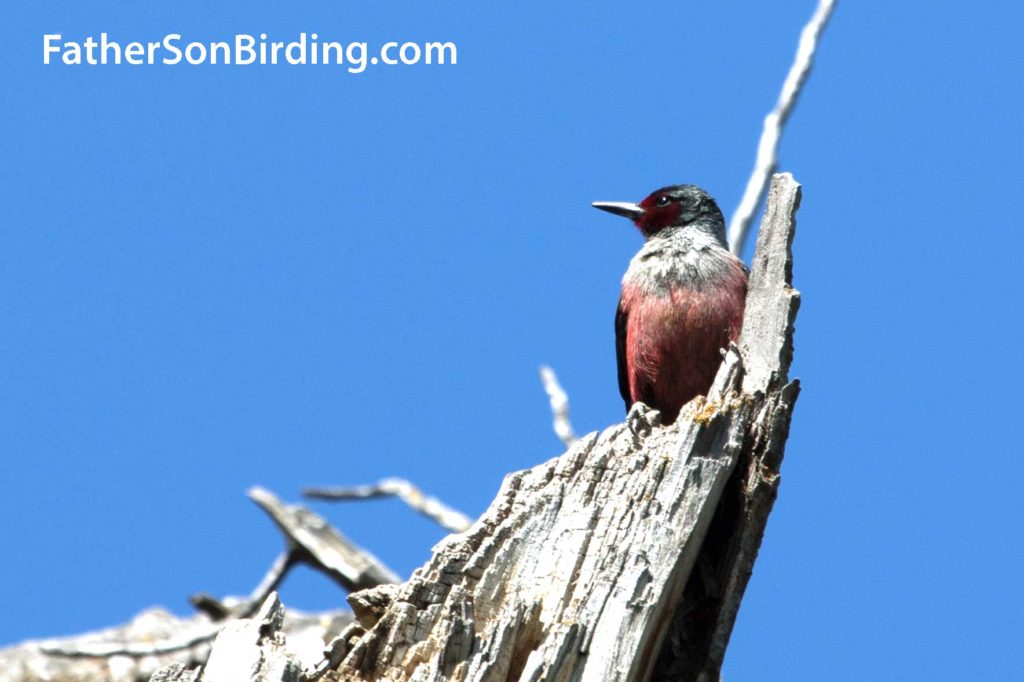
For us, it seems like a record year for Lewis’s Woodpecker sightings, but would it be too much to ask to see a Black-backed? (Photo by Sneed B. Collard III)

Moderator: You can’t give up. Every day and every night, you’ve got to sling your optics around your necks and follow every lead, examine every perch. And even in your darkest days, when not a new sparrow is spotted within a hundred miles of you, remember, we’re all in this together. Take strength from that, brothers.

Us: We will. Thank you. Uh, by the way, is anyone up for some birding?

(Sounds of trampling feet as the Listers stampede out of the building.)