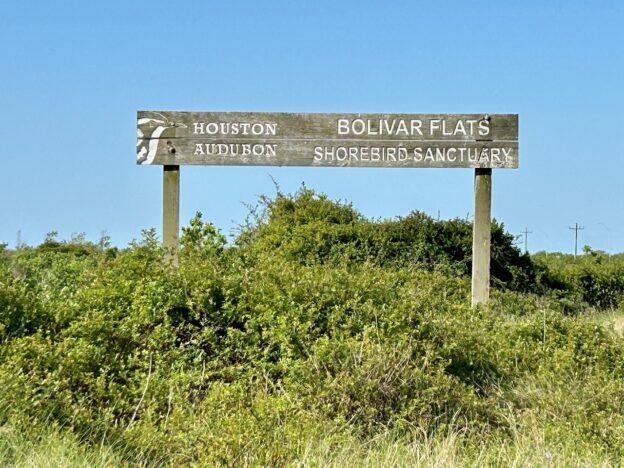
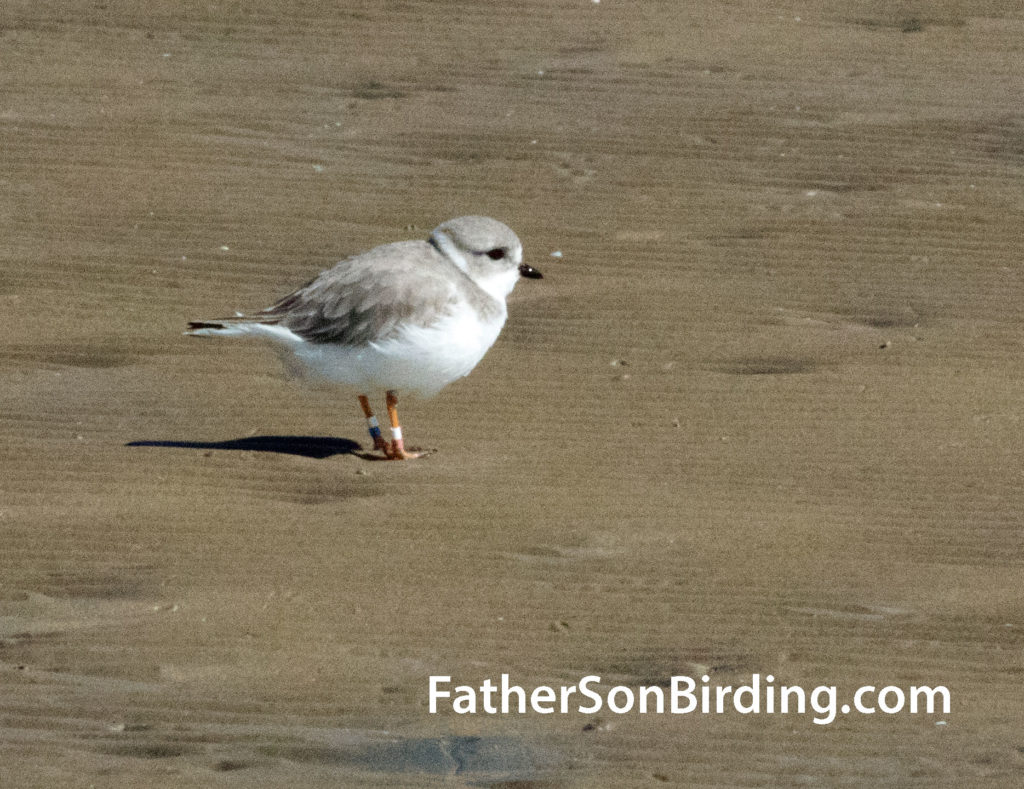
Instead of your regularly-scheduled blog, we today invite FSB readers to join in on an urgent appeal to help protect one of North America’s coolest and most vital bird habitats—the globally important Bolivar Peninsula. Learn more and donate by clicking here—or on the Piping Plover below.
If you’ve followed FatherSonBirding—or read my books Birding for Boomers or Warblers & Woodpeckers: A Father-Son Big Year of Birding—you know that High Island and the Bolivar Peninsula outside of Houston have played pivotal roles in Braden’s and my birding experiences. In these locations, the Houston Audubon Society (HAS) has worked tirelessly to obtain, restore, and protect vital habitat for both migrating and resident birds. On our first visit to High Island and the Bolivar Peninsula in 2016, Braden and I saw an astounding forty-five Life Birds in one day! These included everything from Scarlet Tanagers and Least Terns to Piping, Black-bellied, and Semipalmated Plovers.
Even though I live in Montana, I became an annual supporter of HAS shortly after that visit. Even better, I have been fortunate to visit the area three more times. Every trip has been a highlight of my birding career. Each time, I have seen gobs of amazing songbirds, shorebirds, and waders, and learned a ton about birds. Just check out some of my past posts about visiting the region:
Turkey Day Texas Adventures Part 1: Pursuing Plovers
Going Cuckoo for Fall Warblers in Texas
Unfortunately, during my visits, I also have noticed an inescapable fact: the Bolivar Peninsula is being developed at an astounding rate and the reason is clear: beachfront property. During our first visit there, Braden and I noticed quite a few houses along the 25-mile or so stretch of the peninsula. On each subsequent visit, I was blown away by how many new houses had sprung up since my previous visit! On my most recent trip, this past April, I realized with dismay that the entire peninsula would soon be wall-to-wall housing developments.
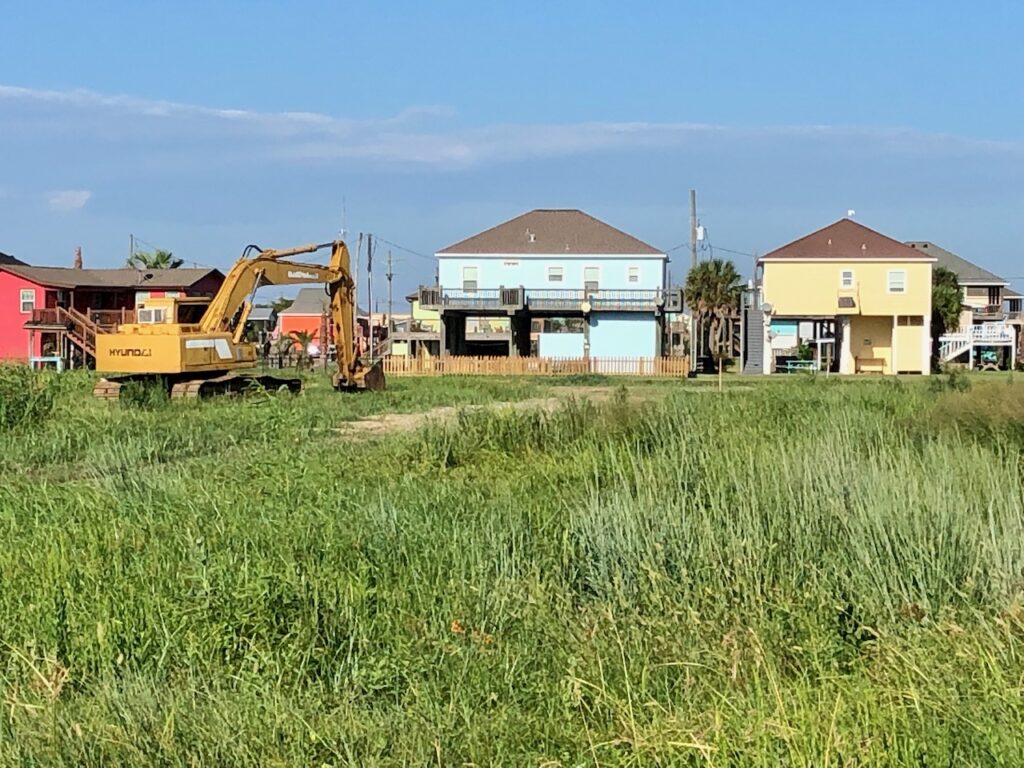
I can’t even begin to explain how poorly-conceived this kind of rampant development is. Never mind that it has gobbled up some of the best remaining Gulf Coast wildlife habitat, it is virtually guaranteed that hurricanes will totally destroy these developments as they have in the past—and with increasing frequency thanks to climate change (see this Hurricane Ike story and this astonishing storm list). In fact, the ability of the peninsula in its natural state to block tidal surges, prevent erosion, and soak up storm water economically outweighs by far the short-term profits from this get-rich-quick development.
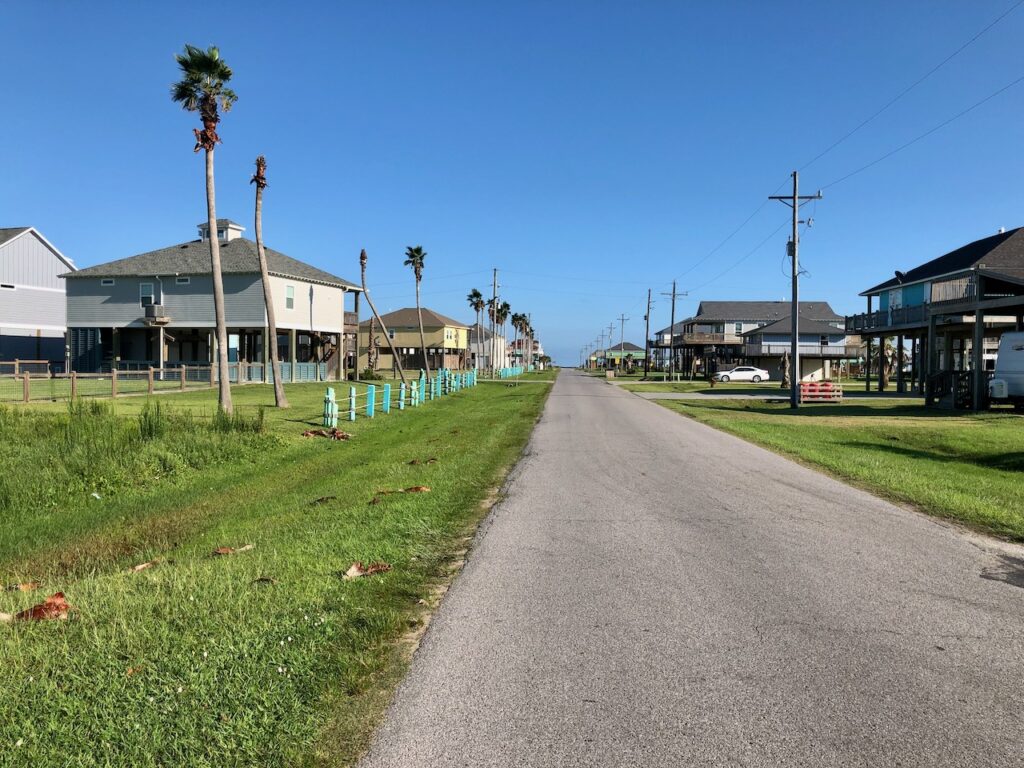
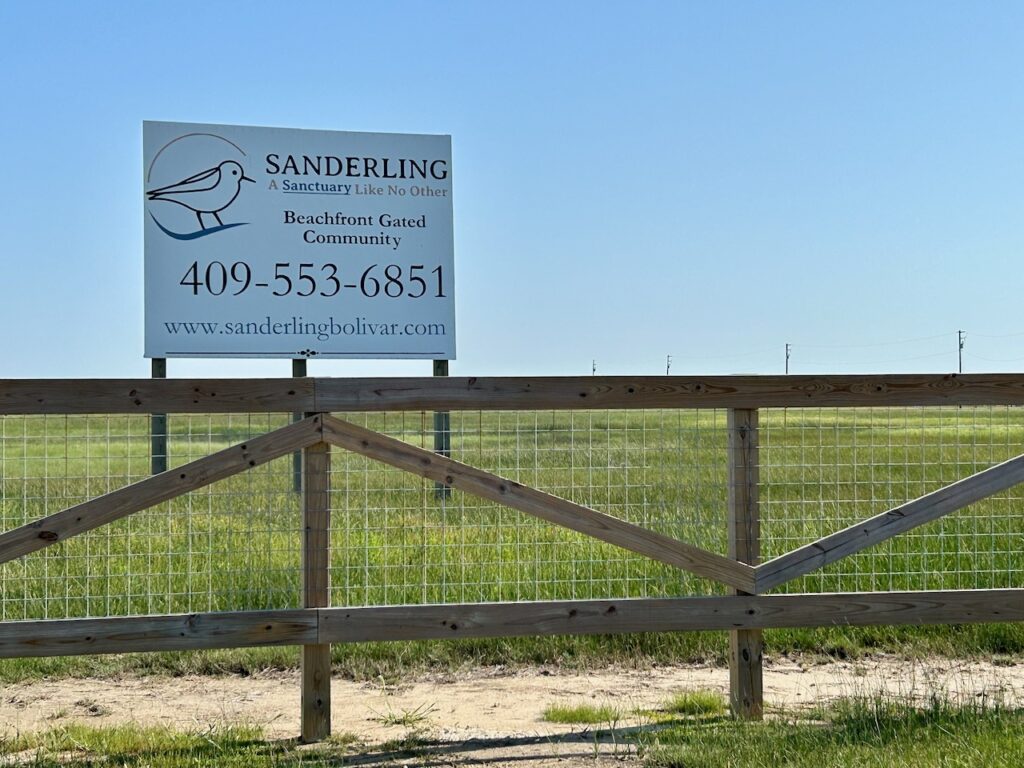
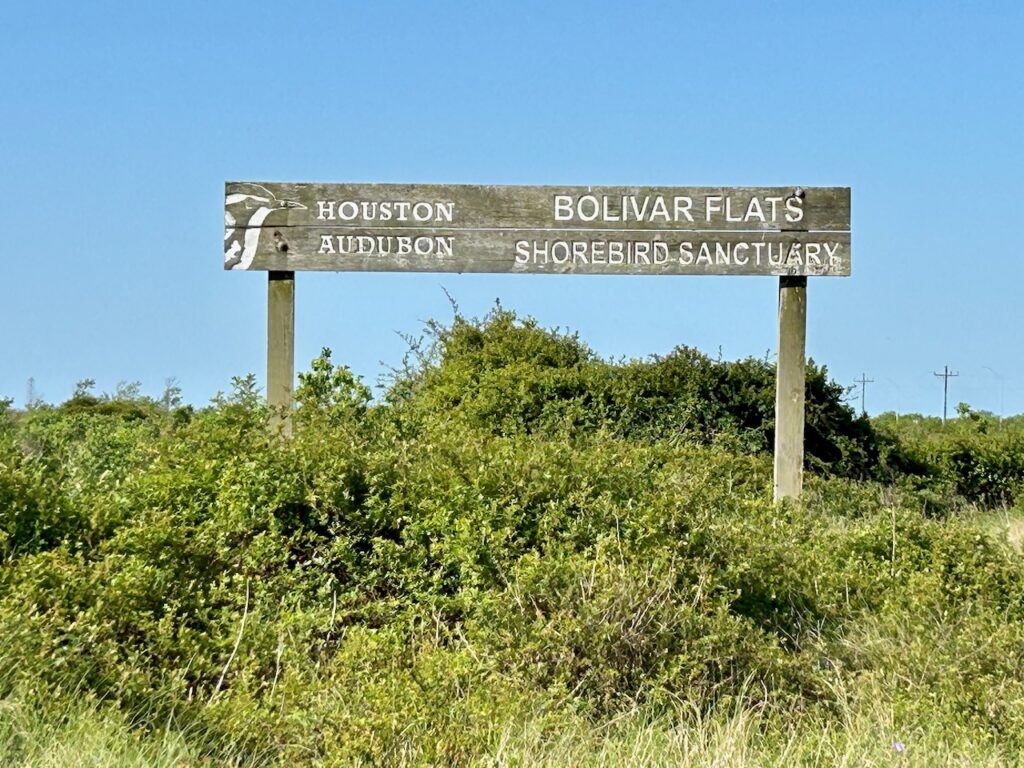
Still, the lure of fast profits is just too much here as it is in many other places. And that’s why I’m writing this post. Right now is one of our last best chances to protect what remains of this globally vital birding habitat. How? Currently, HAS owns and manages more than 3,000 acres of Bolivar Peninsula habitat—natural islands in an expanding sea of development. And yet, right at the entrance to their Bolivar Flats Shorebird Sanctuary, a new development recently cropped up. Ironically dubbed the Sanderling Development, it threatened to wipe out critical habitat and destroy a buffer to the core of the Bolivar refuge. The good news? Through heroic efforts, HAS managed to raise $3 million to buy 25 acres of the land this past July. Now, however, they need another $3 million to complete purchase of the remaining 27 acres of the property. This land is so vital that for the first time in decades, HAS has issued a public appeal for funds—And that’s where we come in!
No matter where we live, securing this last bit of property should be a major priority for birders. Not only does it help provide essential stop-over areas for millions of migrating birds that spread out across the continent, it helps protect critical breeding and wintering habitat. Endangered Piping Plovers, Black Rails, and Red Knots are just three endangered species among hundreds of other species that use this important area.
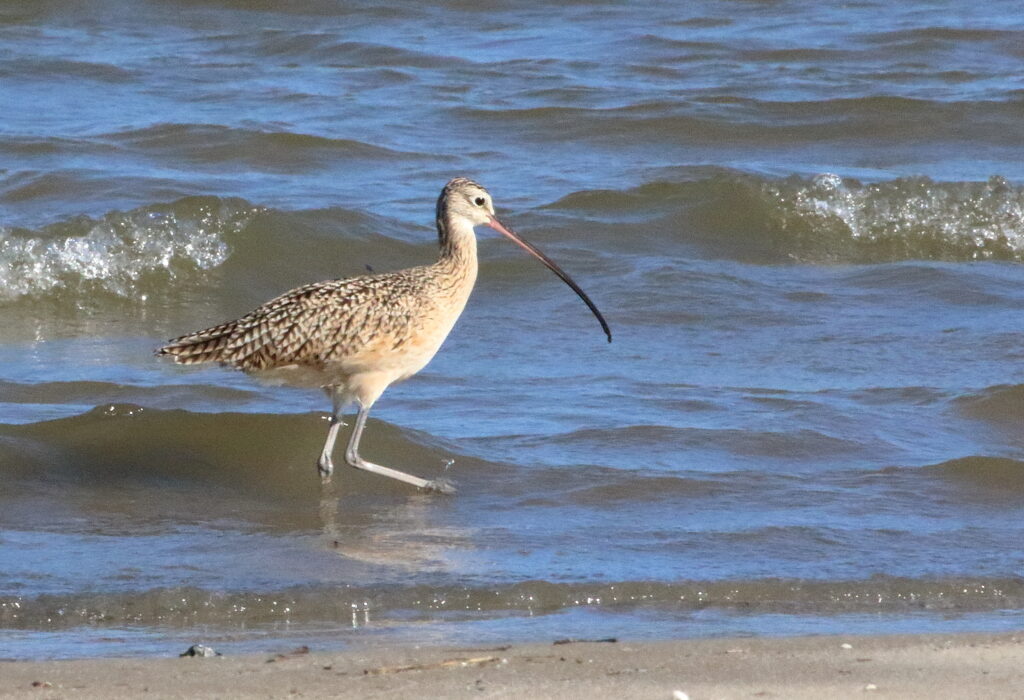
So how about it? Do you have $25 to chip in? $100? $1000? If you do, I can say with confidence that your money will rarely be better spent. Along with donating, why not plan a spring or fall trip down to the area? If you are fortunate enough to be able to do this, I can almost guarantee it will be one of the highlights of your birding experiences. You also will not have the slightest doubt that your investment in this area is one of the best you will ever make. To donate, CLICK HERE NOW!
And with that, I will sign off so I can make a contribution myself!
Good on you for pitching in to help!
This area is definitely on my radar for a birding trip in the next year or two.
THANK YOU, THANK YOU, THANK YOU!!!😭 I practically grew up on the bolivar peninsula. My mom grew up in Gilchrist, which is the town that was wiped away by hurricane Ike. It breaks our hearts to see what is happening to that area.😣😔 I have been SO worried about the birds down there! All of the wildlife. You are amazing for this, sir! THANK YOU again!!
Thank you so much for your kind words. Unfortunately, what’s happening at bolivar is happening in coastal areas everywhere, so we have to celebrate little successes like this one with HAS.