Category Archives: Birding

Chasing Rarities

If you are enjoying these posts, please share them with friends, family, and other birders. Also, be sure to subscribe by filling out the form down in the right-hand column. Hoo-Hoo!

On Wednesday, July 10, both my dad and my Montana year lists stood at 203, mere inches from our previous all-time records. Two days before, we’d had an awesome all-day birding session, nabbing five year birds (Bobolink, Dusky Grouse, White-throated Swift, California Quail for my dad and Black-chinned Hummingbird for me). Now, a couple of days later, I had gone to swim practice and was surfing the recent Montana eBird reports when suddenly, I spotted something. A Virginia’s Warbler had been seen in Lewis and Clark Caverns State Park! Upon further investigation, I discovered that not one but two Black-throated Gray Warblers had been seen in the same spot. Up a nearby canyon an Indigo Bunting was hanging out! I talked to my dad, and we couldn’t take it anymore. The rarities coupled with other year bird possibilities pushed us to the brink.
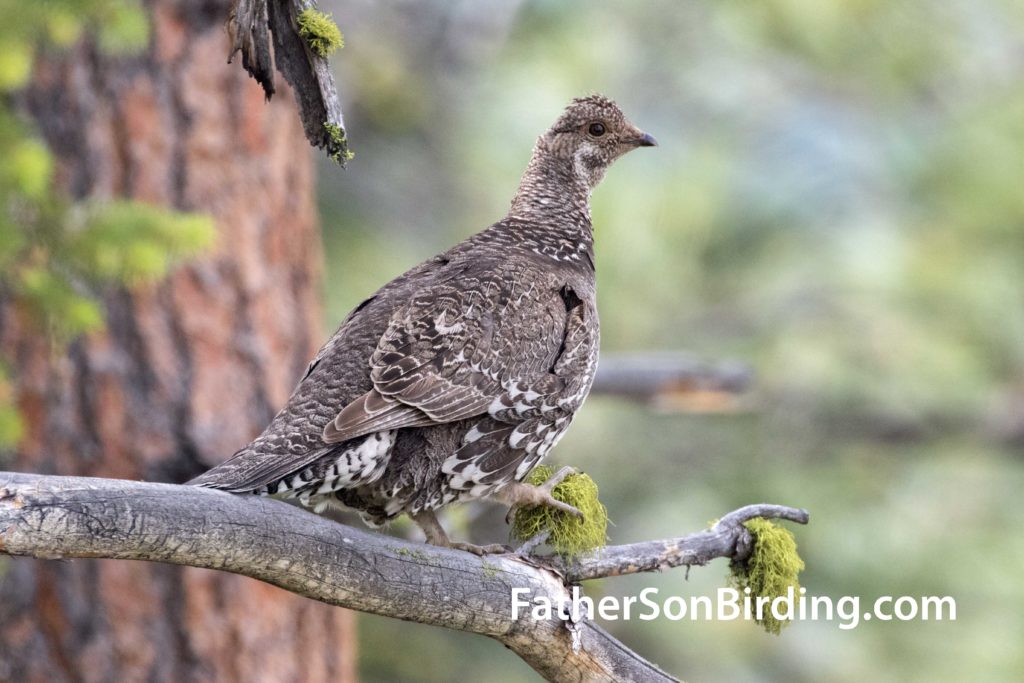
Bolstered by this Dusky Grouse and four other year birds we’d seen on Monday, July 8, we decided to make an all-out push to break our Montana Big Year records.

The next evening—Thursday—we hit the road for a Super 8 in Butte and the next morning were up at dawn, heading for the caverns. I had a pretty good idea of where the rare birds were (or so I thought), so we started off on a mildly steep trail from the campsite, encouraged by neon Bullock’s Orioles swooping around us. In our haste, however, we had forgotten our bug spray, and about two miles in, the mosquitoes attacked, forcing us back to the campsite.

Slightly disheartened, we moved on to our next stop: Milligan Canyon Road. A male Indigo Bunting had taken up residence here among the usual Lazuli Buntings, and we expected him to stick out like an indigo wildebeest in a pack of green lions. As we continued up the road, though, seeing all lions and no wildebeest, we began to grow disappointed. At the actual entrance to the canyon, though, my dad pulled off the road and whipped out his binos.

“I’ve got him!”
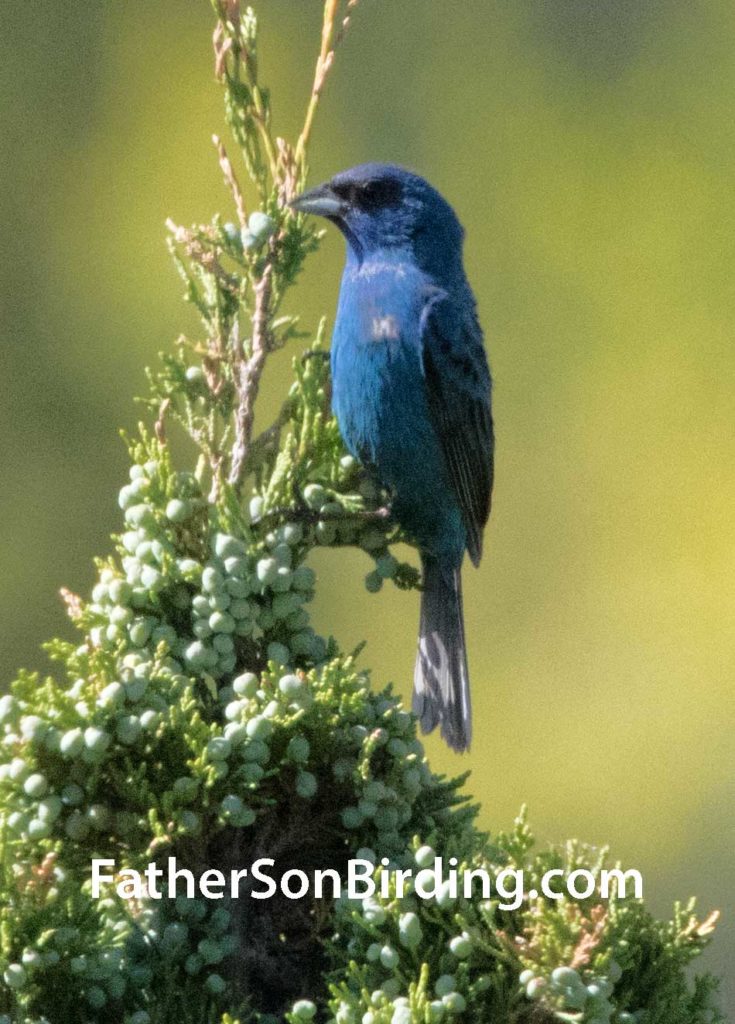
While common in the middle and eastern U.S., this Indigo Bunting was probably the rarest Montana bird we’d ever seen.

We leapt out of the mini-van like it was about to explode and ran across the road, and sure enough, there he was. The wildebeest was singing his tiny heart out, as if nothing was weird about the fact that he was in Montana rather than North Carolina. My dad and I celebrated our first successful rarity chase in Montana with a high-five.

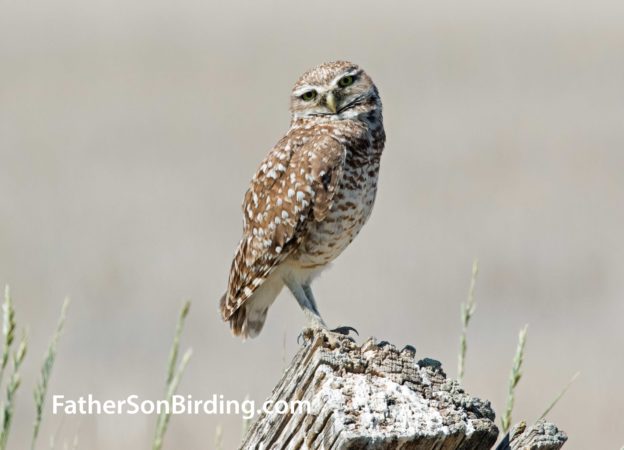
After a quick search up the canyon for Yellow-breasted Chats and Green-tailed Towhees (we found a Golden Eagle instead), we made our way towards Three Forks. We pulled onto the dusty Bench Road and spotted harriers and Swainson’s Hawks, bringing back memories of our first-ever eastern Montana trip two years before when we’d found curlews and Burrowing Owls with Nick Ramsey on this road. Soon, we saw our main quarry: a tiny owl picturesquely perched on a fence post ahead of us. We pulled up alongside it, and flushed another!
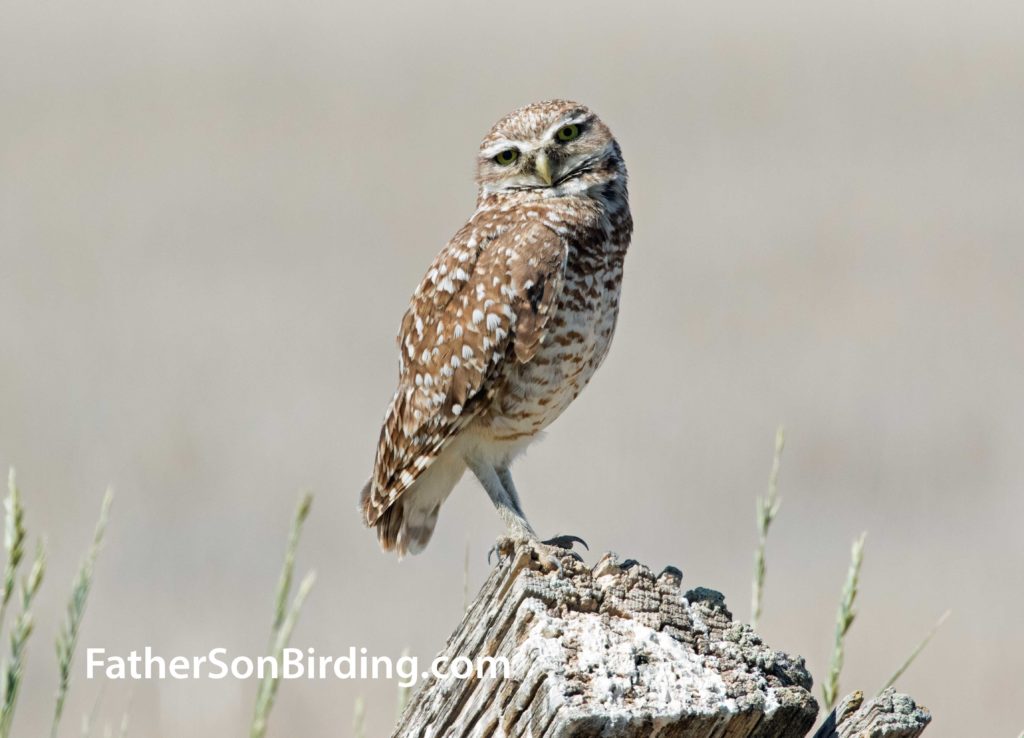
We love it when birds pose only a few feet from us. This Burrowing Owl was really trying to score a permanent modeling contract, or at least a spot on “Project Owlway.”

The owls gave us great pics, and after a half hour we turned tail and headed back to Lewis and Clark Caverns. Why? It turned out I had picked the wrong trail for the rarities! We gave it another shot, this time driving to the top of the state park. Sprawled in front of us were beautiful juniper and pine-covered hills, and we started off on another short trail after being interrogated by the park officials (“We aren’t going to sneak into the caverns, we’re looking for birds!”). A few hundred yards up the path, a new sound rattled across the landscape, different from the regular sounds of the Spotted Towhees. I peered down the slope, and saw a bird with the strangest color combination—green, gray and orange. Green-tailed Towhee! We pished it up the slope and got awesome looks. This wasn’t just a year bird; we’d never seen it before!

We tried one more trail before giving up all hope on the two warblers, then steered towards Helena. After a brief rest at yet another Super 8—this one far more depressing than the first—we visited a Helena cemetery, where my dad had gotten Pinyon Jays earlier in the year. I was skeptical, but sure enough, eight blue-and-gray corvids crossed the road in front of us, hopping onto a few tombstones and then loudly flying off. Another lifer for me!
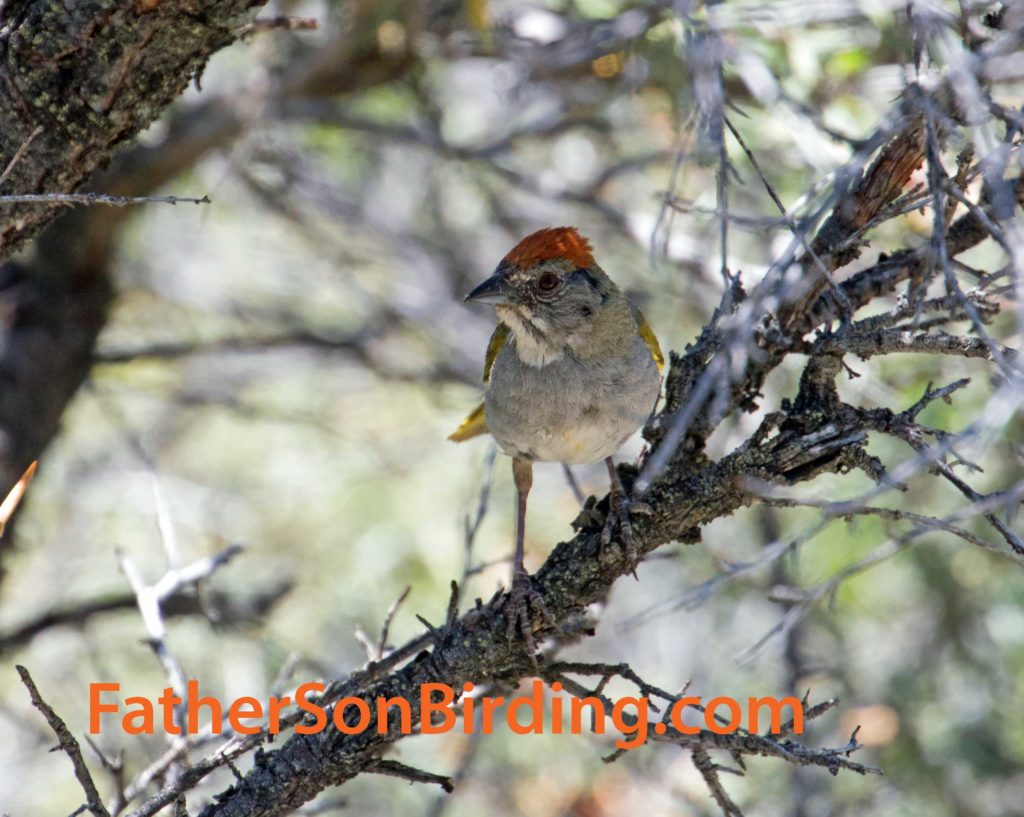
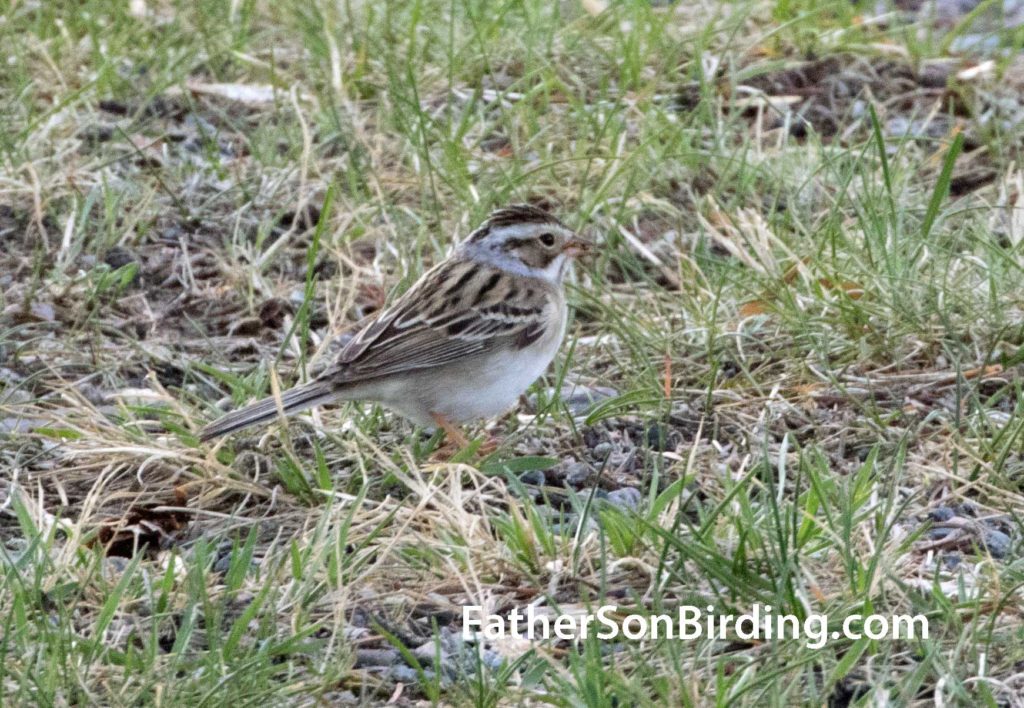
Chipping Sparrow? No! Green-tailed Towhee, a long sought-after Lifer for Team Collard!

We had dinner at MacKenzie River Pizza, then hung out there reading and watching the men’s Wimbledon semifinal since our next and final stop wouldn’t produce what we were looking for until later. Flammulated Owls, one of the most secretive in North America, had been regularly reported in a nearby location known as Grizzly Gulch (ironically, there were no grizzlies there), and we arrived at the coordinates at about 9:00 p.m. Almost immediately we heard a low, single hoot in the trees. No way! Who knew owls could be this easy? We tried to make our way towards the sound, but gave up and opted to let the owls come to us. Making our way farther down the road, we picked up winnowing snipes and Willow Flycatchers, and tried in vain to find a Common Poorwill flycatching in the road. We never did see the owl, but were fine with that! My dad had surpassed his all-time Montana record, and now we have 210 and 211 species respectively in Montana this year. Can I break my old record of 213? Stay tuned to find out!
Hard Birding in Houston

If you enjoy these posts, please share them with friends, family, and other birders. Also, be sure to subscribe by filling out the form down in the right-hand column. Tweet-Tweet!

If you’ve been following this blog at all you know that Braden and I love birding Texas. Not only does the Lone Star State offer a delicious smorgasbord of temperate and tropical bird species, it provides an equally delicious variety of food, from Tex-Mex to BBQ. Little wonder I jumped at the chance to lead a professional development workshop for teachers there last week. I quickly learned, however, that birding in Texas in June is a far cry from birding there almost any other time of year.

I don’t know about you, but I’m getting sick of Houston’s annual “Hundred-Year Floods”, which, among other things, wreak havoc with birding plans!

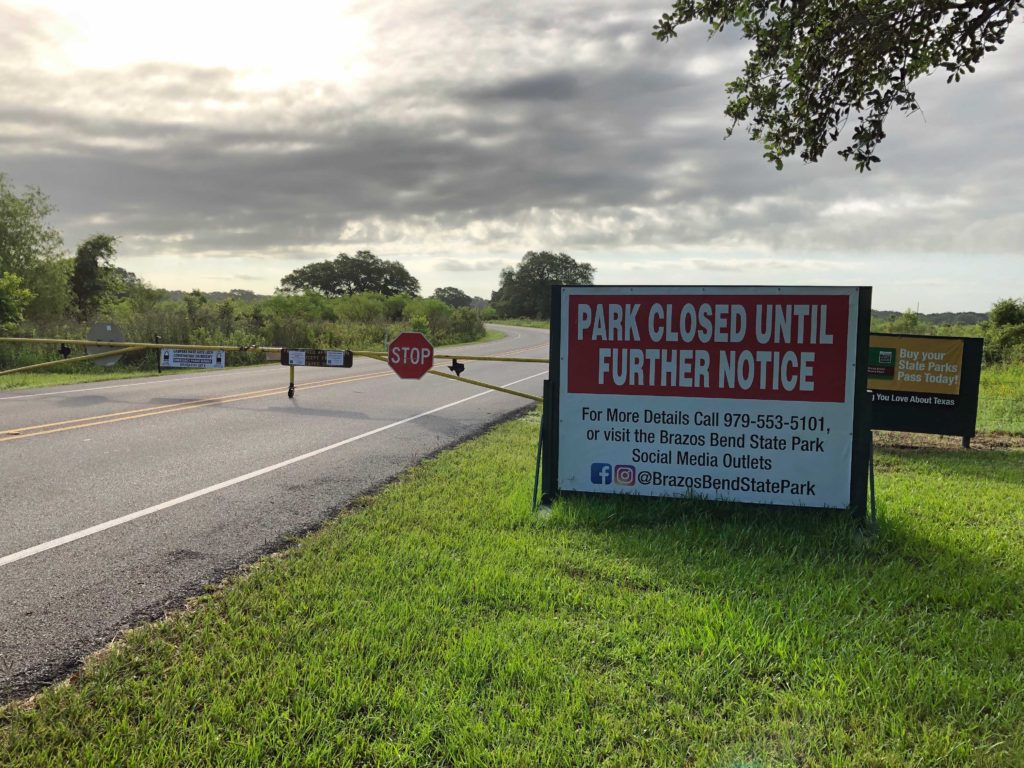
I should have guessed that birding would be tough when my flight down got diverted to San Antonio for four hours because of thunderstorms over Houston, eliminating an entire afternoon of birding I had planned. Nonetheless, I scored some great Tex-Mex food at Gringo’s that night and the workshop the next day went fabulously well. The following morning, I optimistically set off early to check out Brazos Bend State Park, which I raved about in last year’s post Winter Birding at Brazos. Unfortunately, at the entrance I was greeted with a giant sign informing me that the park was closed because of recent flooding.

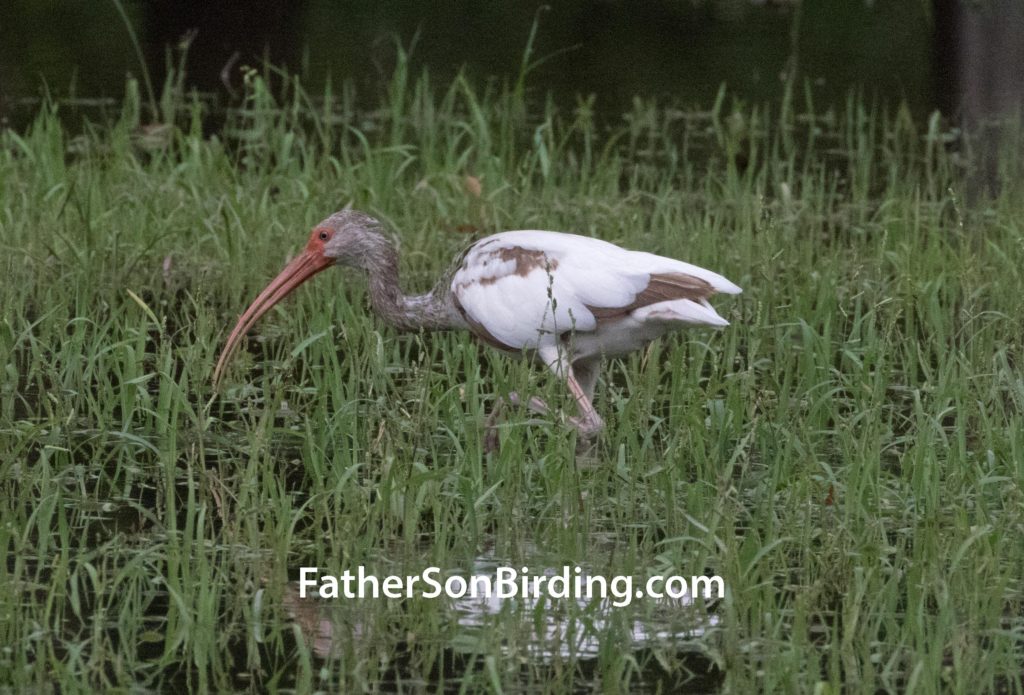
The flooding did afford me some close-up looks at White Ibises, including this juvenile, which was foraging on the flooded lawns of Bear Creek Pioneers Park.

“What?” I exclaimed, outraged. At least the drive there and back proved fruitful as I spotted a Crested Caracara and Scissor-tailed Flycatcher, along with an impressive display of Cliff Swallows at a bridge. Alas, I found more flooding at my next stop, Bear Creek Pioneers Park. I walked around for more than an hour and managed some great looks at White Ibises and a Red-bellied Woodpecker, but by then temperatures were edging past 90 with a heat index above 100. I wiped my brow and muttered, “I’m good for one more spot. Then it’s back to the hotel to watch HBO.”

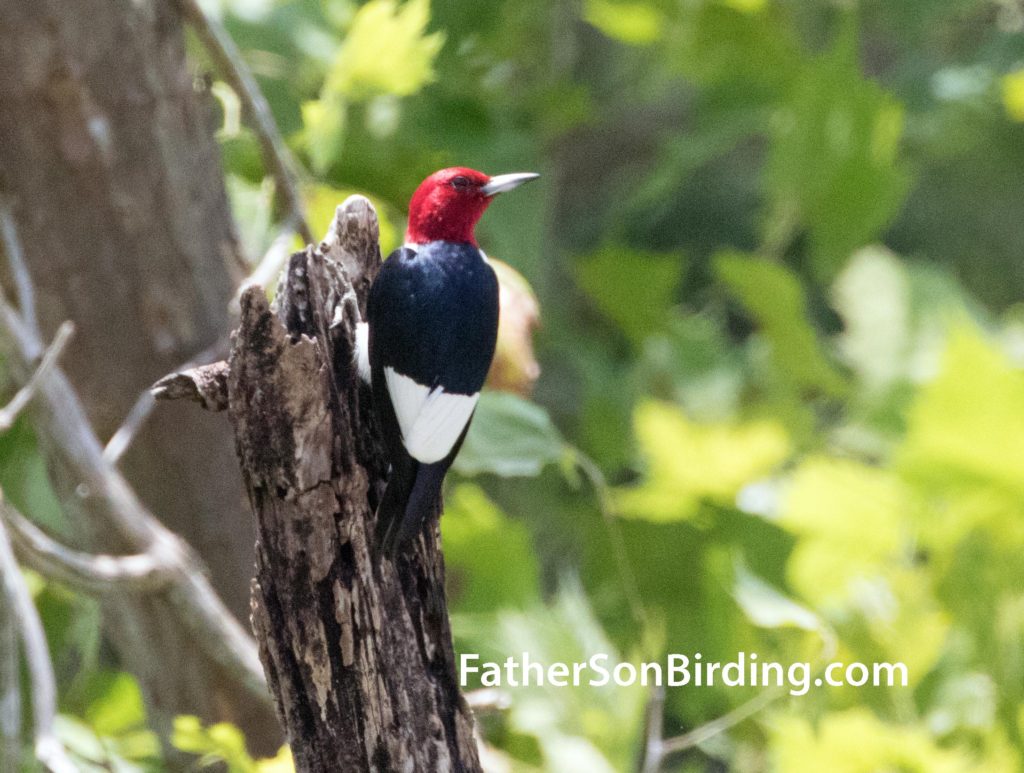
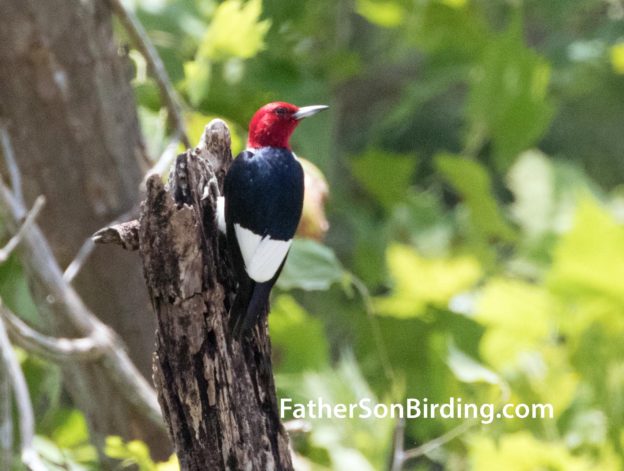
For my last birding gasp, I chose one of Braden’s and my favorite Texas birding spots—Jesse H. Jones Park & Nature Center. I guzzled a pint of water, donned my hat and insect repellent, and set out to see if any birds could actually survive in Houston’s legendary heat and humidity. Not much stirred, but I had a fun encounter with Carolina Wrens and two separate experiences with one of my favorite Texas birds, Red-headed Woodpeckers—including a juvenile that had just fledged. The woodpeckers didn’t entirely make up for the day, but they helped—along with seafood enchiladas and a margarita at Gringo’s!

It’s hard to complain too much about a day that presented not one, but five Red-headed Woodpeckers. A former Team Collard nemesis bird, Braden and I first tallied RHWOs at this same park in 2016!

Before my flight home the next day, I had one more mission—to meet with biologist Donna Work at the W.G. Jones State Forest. The forest is the best place near Houston to learn about and observe endangered Red-cockaded Woodpeckers. Populations of these interesting birds have declined over the decades, mainly due to the destruction or replacement of the longleaf pines that they prefer to nest in. Donna met me just as dawn light reached across the sky and we chatted about all things woodpeckers while hoping to see the birds leave their roosting holes.

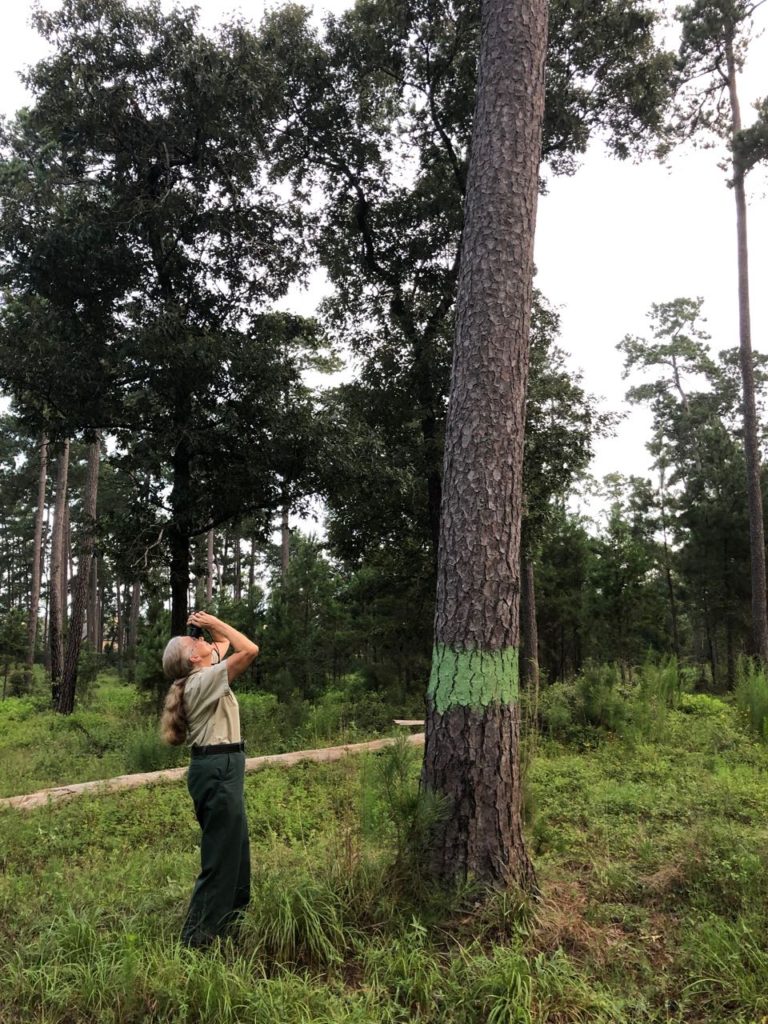
Biologist Donna Work was kind enough to meet me at 5:45 a.m. to observe Red-cockaded Woodpeckers at W.G. Jones State Forest and tell me about their management in a place now surrounded by suburbs. The green paint marks trees the birds use or have recently used for roosting or nesting.

We missed the birds’ exit, but did glimpse them in the trees overhead. Donna explained that the forest hosts about four RCWO family groups and that nesting success varies year to year. This year, the group we were watching had fledged only a single chick. I asked her if the birds would survive without active management. “No,” she replied, explaining that the birds were too isolated from other RCWO populations to avoid getting inbred. To make up for this, forest managers bring in woodpeckers from other areas to breed with the resident birds. The forest itself also requires active management to mimic the natural fire regime that maintains conditions conducive to the woodpeckers. Despite the tough birding, I left Texas with my belly full, and felt glad that so many people are working hard to protect Texas’s avian treasures.

Talkin’ About Teals

If you are enjoying these posts, please share them with friends, family, and other birders. Also, be sure to subscribe by filling out the form down in the right-hand column. Tweet-Tweet!

Braden is off this week so I’m filling in. Just kidding. Birders are never off. Don’t you know that by now? I did want to use this week, however, to talk about an especially cool group of ducks that we observed during our recent Big Weekend. You got it: teals.

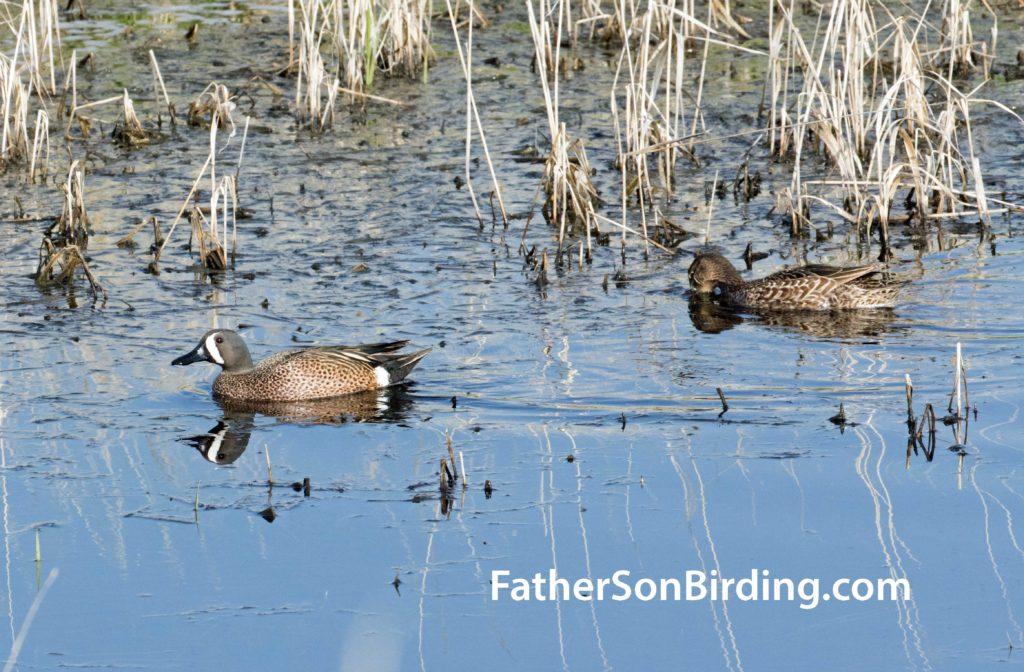
Always a favorite of hunters, Blue-winged Teal have a more subtle beauty than other species.

We left Missoula about noon on the Friday of Memorial Day weekend and I have to admit, the only ducks on our minds were the fabled Harlequin Ducks, which we hoped to glimpse in Glacier National Park—and add to our Year Lists. We did get two spectacular experiences with Harlequins—a breeding pair at Josephine Lake in the Many Glacier area and a lone male on MacDonald Creek the next day. I have to say, though, that the teals matched the Harlequins for beauty, and overpowered them with raw abundance.

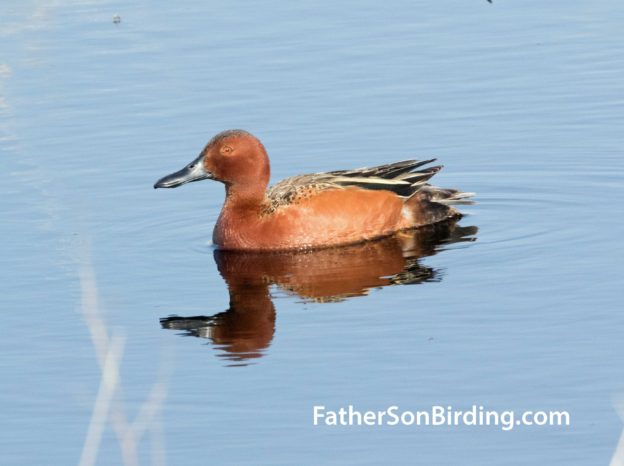
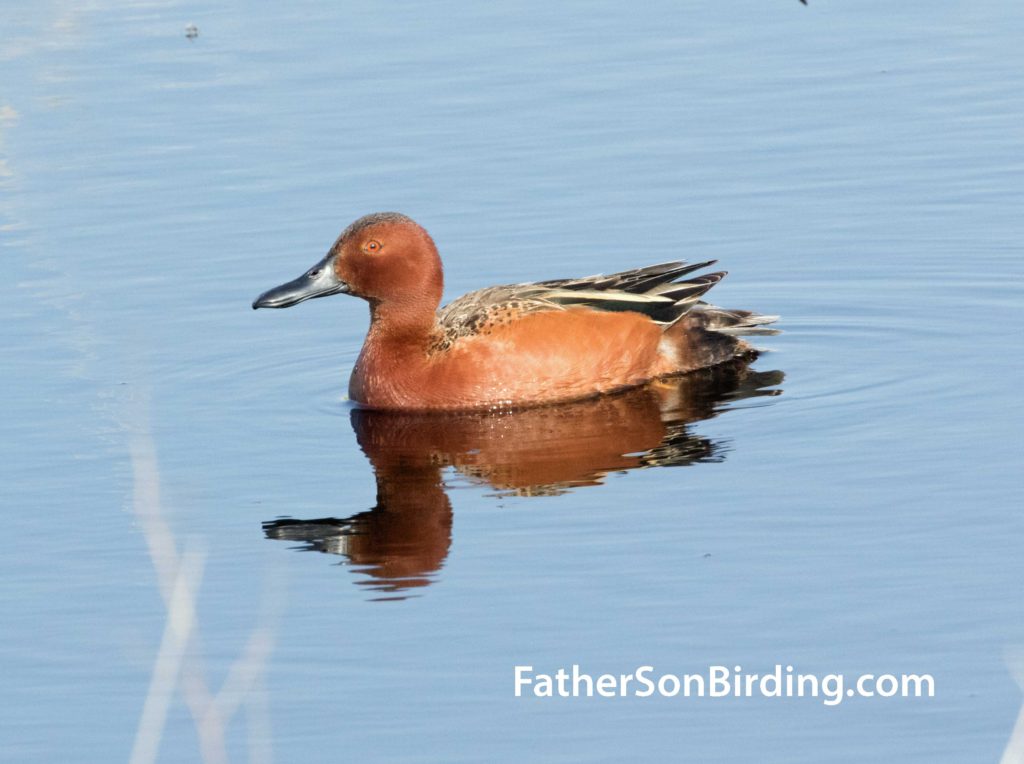
Cinnamon Teals are not only one of the most beautiful ducks, they are one of the most rare. According to Ducks Unlimited, estimates of breeding population are between 100,000 and 300,000.

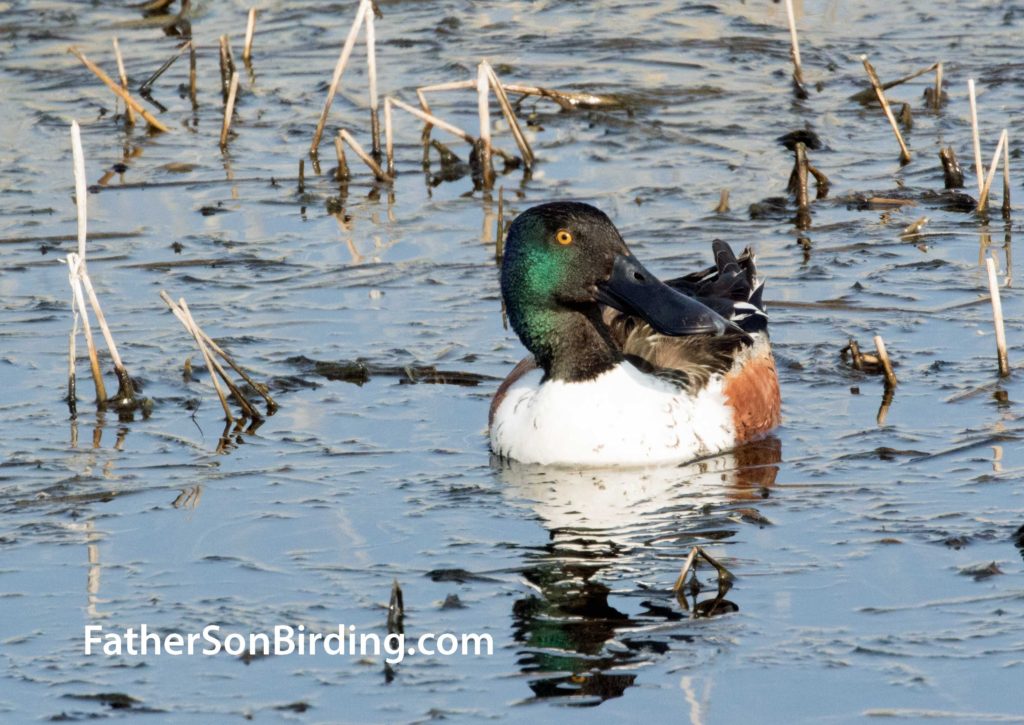
We saw all four species of common teals on our trip: Green-winged, Blue-winged, Cinnamon, and Northern Shoveler—which I didn’t realize was a teal until Braden informed me of the fact. To make matters even more confusing, the last three species are in the genus Spatula while the Green-winged Teal is in the genus Anas with a bunch of other dabbling ducks. Go figure. But full disclosure: I am not a taxonomist, so let’s not get too hung up on that now.

Several things impressed us about these four species—especially the three birds in Spatula—a name that undoubtedly has something to do with the Northern Shovelers impressively wide honker. The first thing, of course, is that these species of ducks are exceptionally beautiful. Stunning, in fact. Just look at the photos of the males. I mean, “Whoa Dude, where’d you get those threads?”

I first fell in love with Northern Shovelers during our 2016 Big Year and grow more impressed with them at every encounter.

Another thing about these ducks is that they all seem to adopt similar lifestyles. We kept finding them together in many of the same places: Browns Lake, Benton National Wildlife Refuge, and even the prairie potholes along the highway. Not surprising since they are all dabbling ducks and prefer to nest in or near shallow bodies of water.

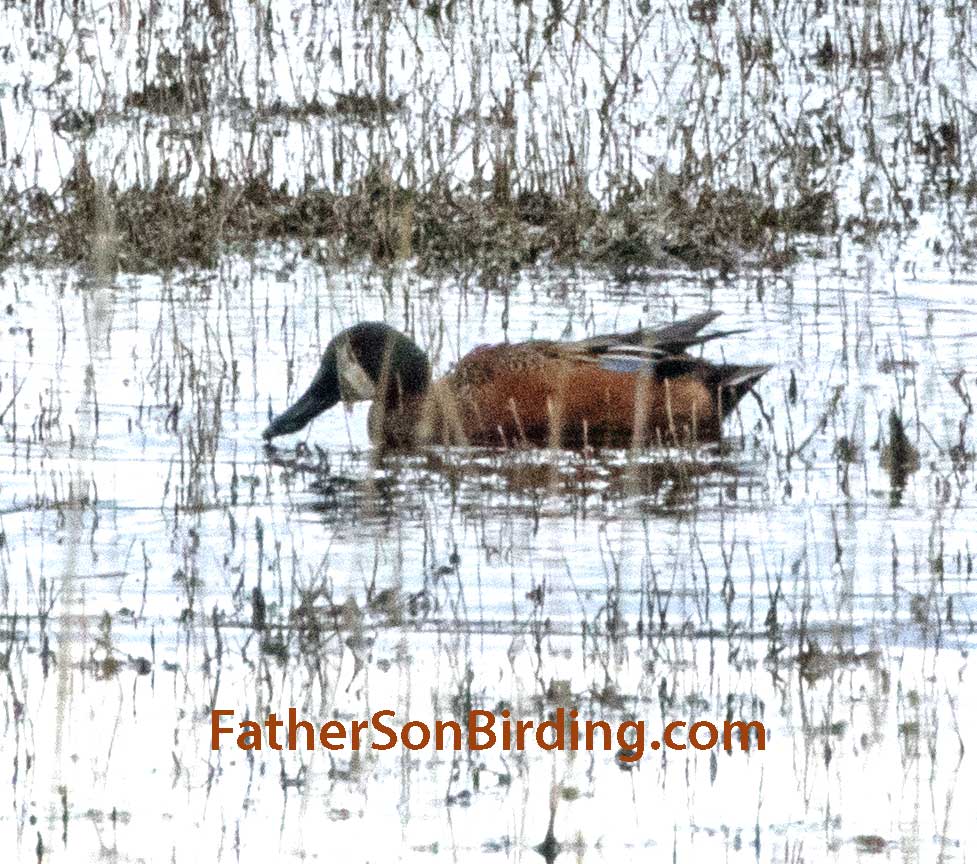
The real kicker for us, though, happened at our very first stop, Browns Lake. Braden was looking at a group of ducks on a small pond and he said, “Doesn’t something look a little odd about that duck?” I studied it and agreed. “I think it’s a Cinnamon—Shoveler Hybrid,” he offered. “What? Really?” I’d heard of hybrids but figured they were exceptionally rare. Then again, this duck didn’t look like anything else we’d seen. I suggested that it looked more like a Blue-winged—Shoveler hybrid because of the white crescent behind the bill. “Other teals also can show that in their juvenile phases,” Braden pointed out. Smart-alec kid.

Shoveler—Blue-winged hybrid? Shoveler—Cinnamon? Send us your thoughts with a comment!

One thing was for certain. This bird had not followed the rule books for sticking to one particular species. Interestingly, another teal hybrid was IDed in a different Montana location by another birder the same week. The lesson? If you keep going out there to look, the birds will keep surprising you.

In Glacier National Park, When It Rains, It Pours—Animals

If you are enjoying these posts, please share them with friends, family, and other birders. Also, be sure to subscribe by filling out the form down in the right-hand column. Tweet-Tweet!

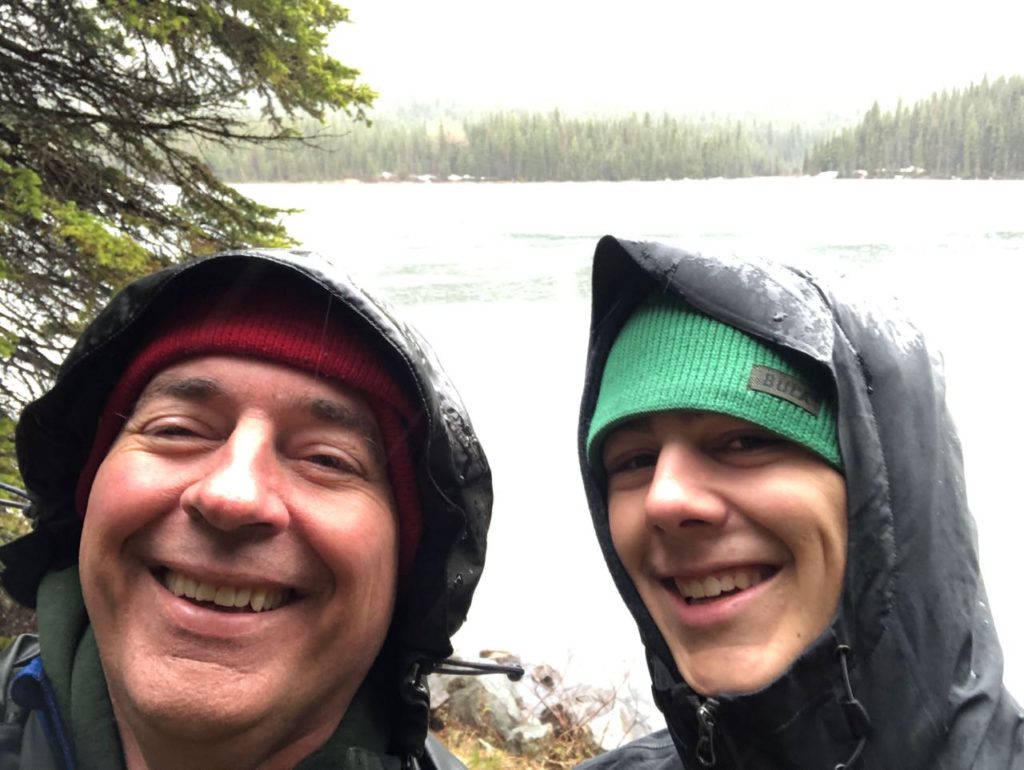
When my dad and I stepped out of our car at Swiftcurrent Lake in Glacier National Park we were welcomed with a barrage of raindrops. Water fell from every imaginable place, and small puddles had formed in the miniature valleys of the parking lot. Thankfully, both of us had our raincoats, but for some reason during the packing stage of the trip we had looked at our rain pants and said, “Nah. We won’t need them.”

As it turns out, we did.

We did not have any other places we planned to bird today, however, so we decided to brave the monsoon and see if any birds were dumb enough to be out in the rain like we were. Swiftcurrent Lake was known for having great birds, including Dusky and Spruce Grouse, Boreal Chickadee, Tennessee Warbler, Varied Thrush and Olive-sided Flycatcher.

A wet day in Glacier National Park is better than a dry day almost anywhere else!

After being greeted by a wet Gray (or Canada) Jay in the parking lot, the first quarter-mile along the lake shore did not yield any living creatures. We listened for the grouse that the park rangers had said were here, but either the rain masked the sounds, or, more likely, the grouse were taking shelter from the storm. At one point we did have an encounter with two thrushes, but they uncooperatively disappeared into the brush, leaving us to wonder at their identities.

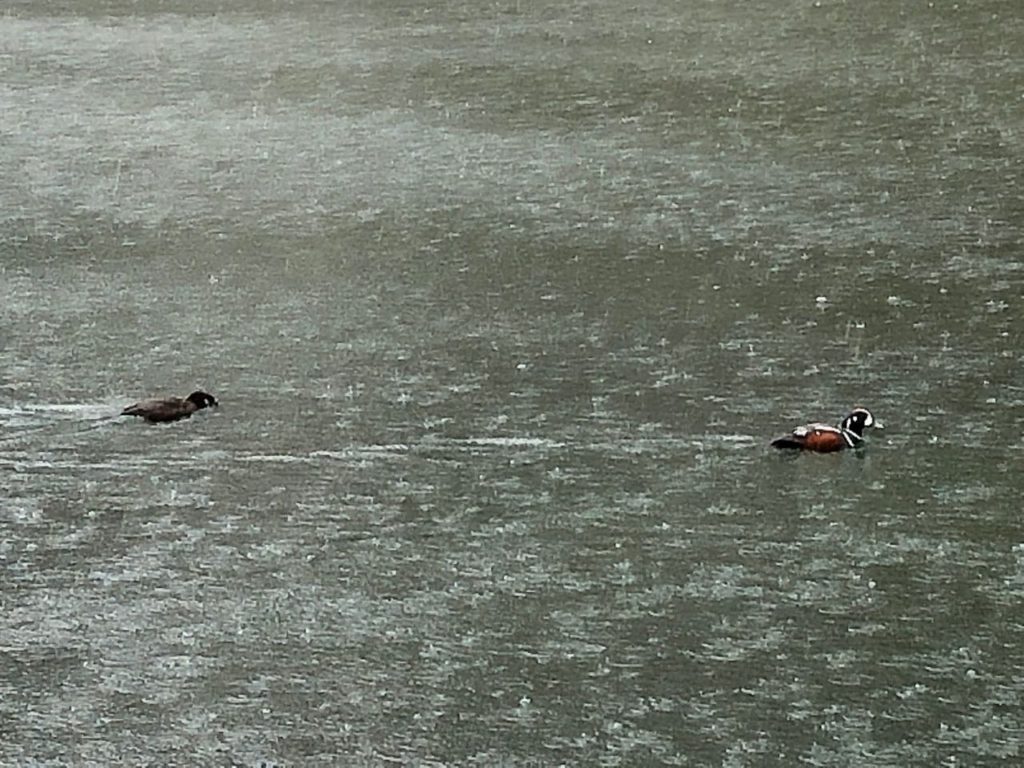
We came to an intersection and turned right to hike over the small glacial moraine to Lake Josephine. There, we walked out onto the dock and scanned the water, looking for any avian action. By the shore off to the left, I thought I saw a splash, so I focused my binoculars on it. After a minute, a slate-gray, blue and cinnamon-colored waterfowl with distinctive white markings popped up—a male Harlequin Duck!

Even with the limits of my dad’s iPhone camera, you can see how magnificent Harlequin Ducks are. Fortunately, we got another view of a Harlequin Duck the next day on MacDonald Creek—with our cameras this time.

We stalked closer to the duck and its mate, marvelling at our luck while at the same cursing ourselves for not bringing our cameras. The two ducks continued to dive, oblivious to the rain and completely fearless of us. Soon, they floated closer, and passed three meters from where we stood, gracing us with their incredible but subtle beauty.

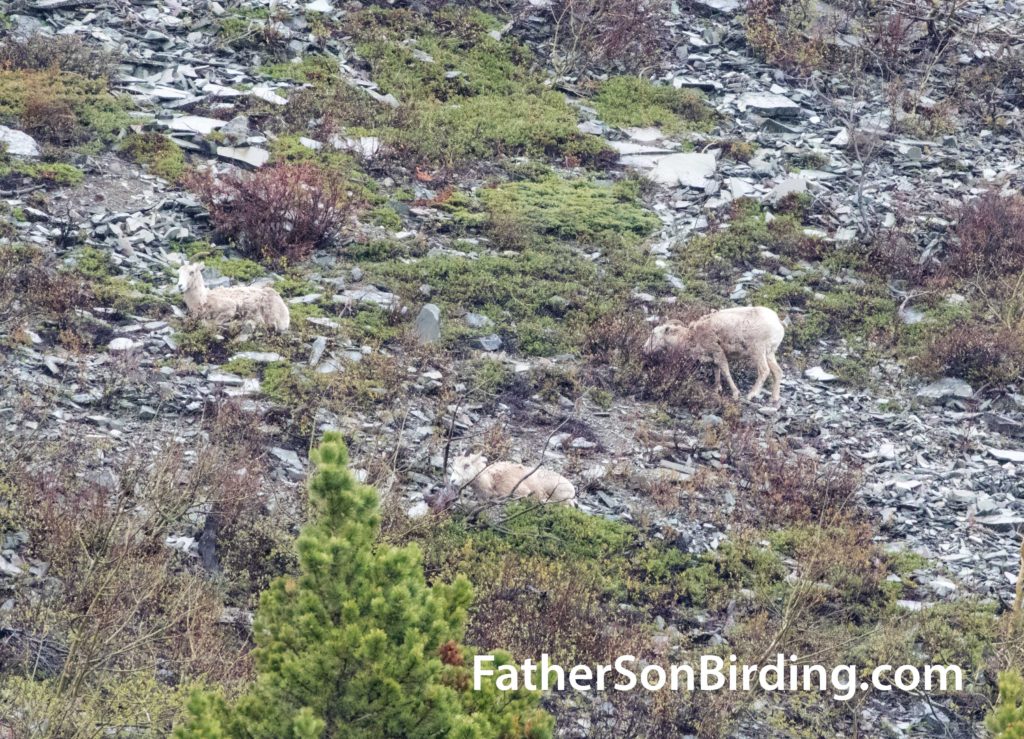
We spent thirty minutes watching the ducks, wet but happy, then decided to book it back to the car. We started the long drive back to East Glacier, but stopped beside Swiftcurrent Lake when we saw people staring up at the mountain beside the road. We raised our binoculars, and sure enough, spotted a herd of at least twenty Bighorn Sheep staring back at us from their rocky vantage points.

“Wait a minute,” said my dad, “There are three more much higher up. Wait, no! Those are Mountain Goats!”

Mountain Goats high on the mountain slopes of the Many Glacier area, Glacier National Park.

We watched them for a second, then continued driving. We had just seen two of the Glacier Park Big Four—the rare, large mammals most commonly seen in the park. The other two were Grizzly Bear and Moose, but I doubted we’d see those.

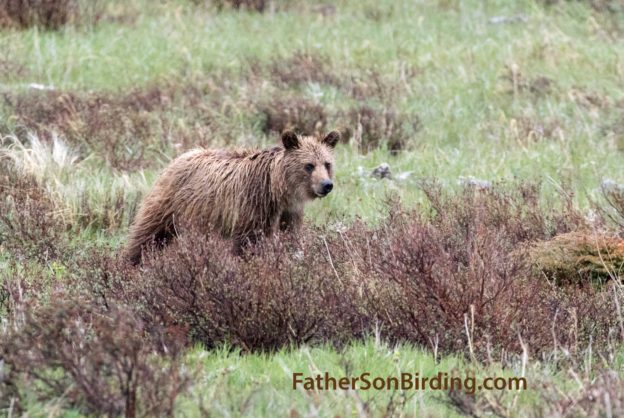
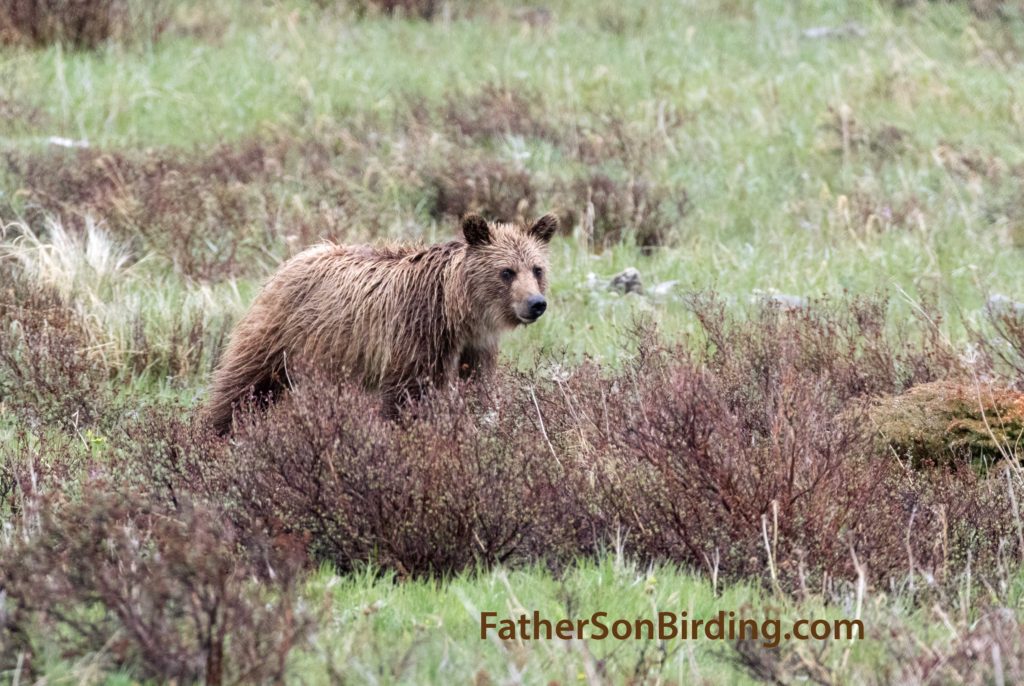
I was wrong. Just a little ways past the goats and sheep, we spotted a pair of stopped pickup trucks, their drivers gazing at the meadow right off the road. Two wet but content-looking Grizzly adolescents dug for roots in the brambles, unafraid of us! Well, you know what they say: When it rains, wildlife pours!

Between the Harlequin Ducks and Grizzly Bears, we had a most memorable day in one of our favorite places.

Stumbling After Sparrows

Sparrows. A simple word that can elicit groans from the most experienced birder. Even after six years of dedicated birding, I feel like I am just beginning to grasp most sparrow identification, let alone sparrow behavior and song. With Braden’s help, I can now figure out most of Western Montana’s species, but put me in any new environment and I’m like a birding babe with a binkie.

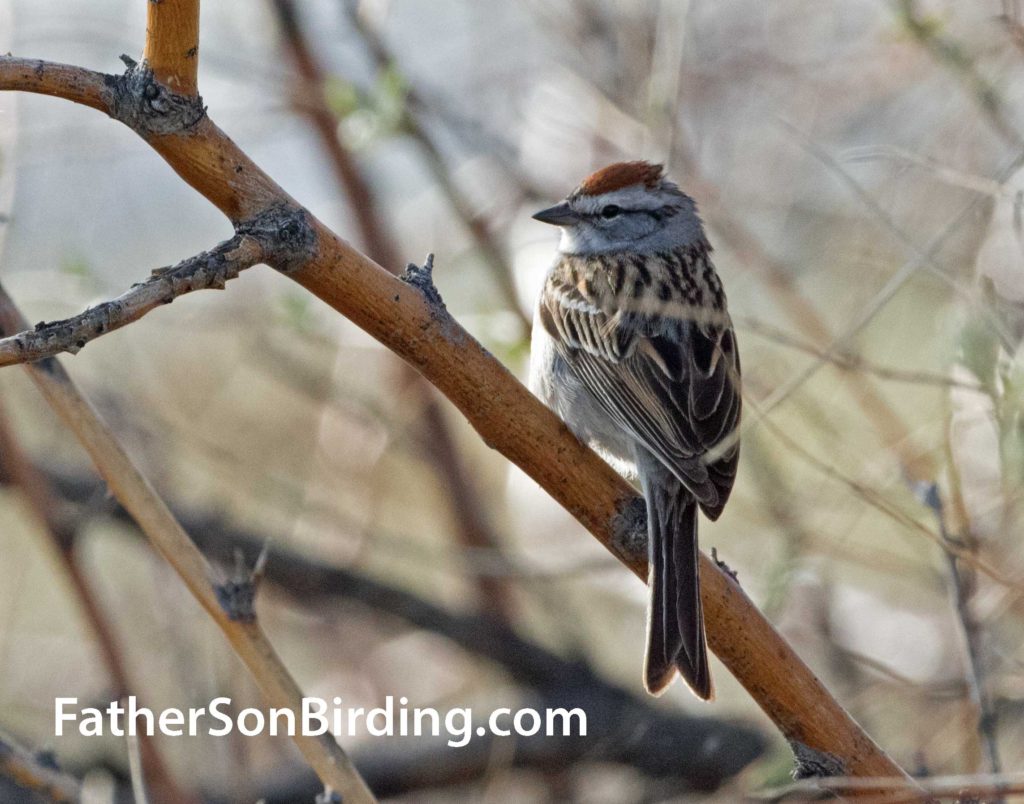
It’s always great to see Chipping Sparrows back in Montana—even if they add to the sparrow confusion this time of year!

Earlier this week, I had the pleasure of speaking at the Helena public library, followed by a lively Last Chance Audubon meeting nearby. The next morning, I decided to sneak in some birding before heading back to Missoula. I first chose a local site affectionately called the “K-mart Wetlands.” This was my first time at the ponds during spring migration, and my pulse raced as I heard the haunting call of a Sora from the cattails. That was followed by my FOY (First of Year) Common Yellowthroat and a flock of more than twenty Yellow-rumped Warblers.

I was fortunate to run into a Helena birder name Jeffrey Olsson who said, “I heard a Clay-colored Sparrow down at the end there.” Though Braden had done his best to educate me about this bird, I drew a mental blank. “What does it sound like?” I asked Jeff. He repeated a buzzy sound for me. “Great. Thanks,” I said and headed off down a fenceline in pursuit. Amazingly, I heard the distinctive call, but didn’t catch sight of the bird.

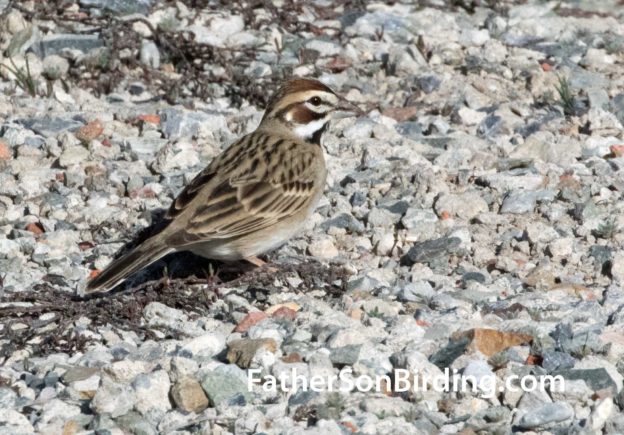
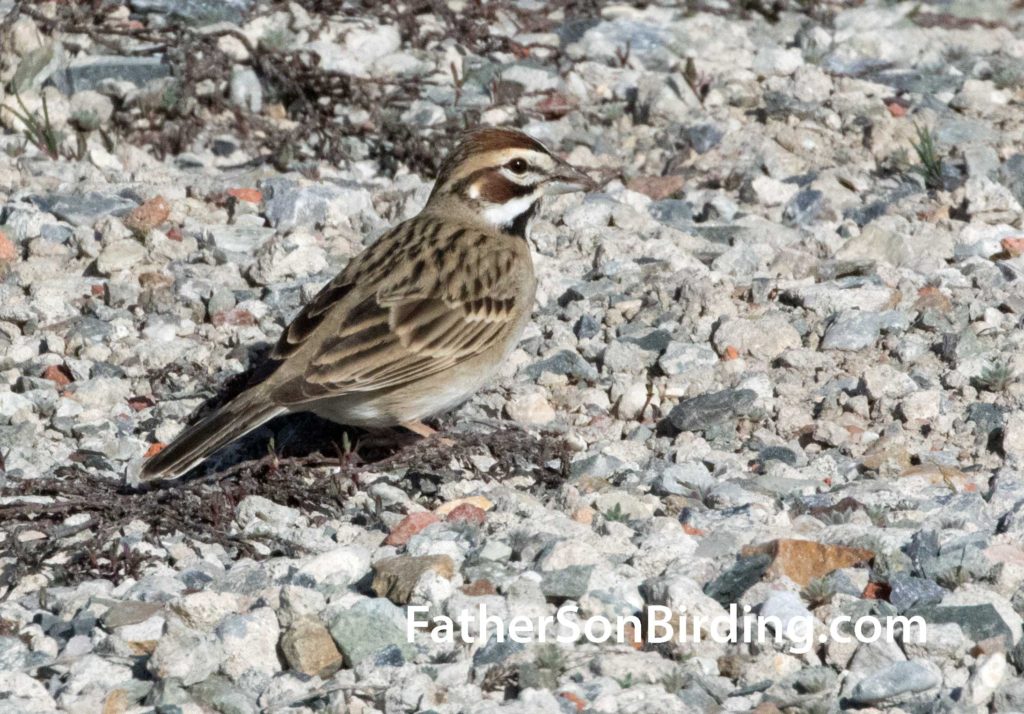
No question, Lark Sparrows are some of the most stunning sparrows of all. This was only my third sighting in Montana.

I did run into a large number of Chipping Sparrows along with a single White-crowned. After completing a loop of the end pond, I looked out into a gravel patch and spotted a lone bird foraging for seeds. “Clay-colored?” I asked myself, quickly raising my camera. It wasn’t. Instead, it was something just as exciting—a lone Lark Sparrow. After seeing one with Braden and Nick Ramsey only a couple of weeks earlier, the Lark got my pulse racing, especially after I managed some good photos. Alas, I still didn’t glimpse a Clay-colored—or so I thought.

While taking photos of the Chipping Sparrows, I noticed some with duller brown head stripes instead of the usual bright red. I assumed these duller sparrows were females, but they also seemed suspicious. Later, back at home, Braden confirmed something I’d been pondering. The “female” Chipping Sparrows were actually Clay-coloreds! Once again, it was the struggle over identifications that inched my knowledge forward. While it’s a certainty I’ll misidentify many other sparrows in the future, each time I run into these interesting little birds, my brain connections grow. Which, of course, is what makes birding an endless adventure.

Sparrow On!

No, not a female Chipping Sparrow after all. One of several Clay-coloreds I watched at the K-mart ponds—without realizing it!