Category Archives: Birding

Nocs Pro Issue 8X42 Waterproof Binoculars (FSB Equipment Review)

If you read our last post, you know that Braden and I recently completed an epic birding adventure to Costa Rica. One thing I didn’t mention is that, besides offering the chance to see an astonishing variety of neotropical birds, the trip gave me the opportunity to field test an exciting new piece of equipment: the Nocs Provisions Pro Issue 8X42 binoculars. And boy, did I put them to the test!

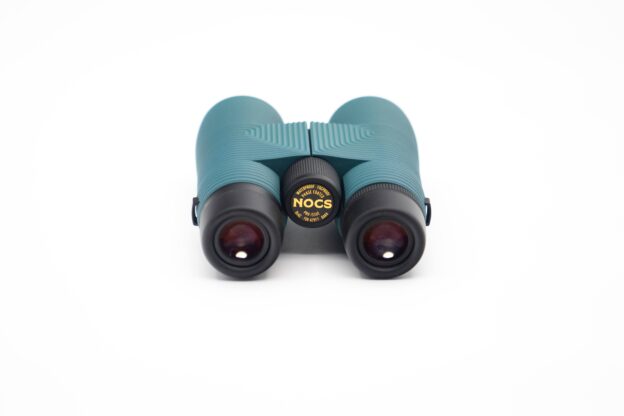
I must confess that I liked the Pro Issues right out of the box. As I explained in my recent review of the company’s Field Tube monocular, Nocs has put real thought into designing equipment that looks and feels different from the vast majority of products out there. The rubberized protective casing of my Pro Issues features a stylish ribbed design that is easy to grip, yet feels very comfortable to hold. Like the Field Tube monocular, these binoculars also have “pop in” caps for the objective lenses that are much more secure than any other design I’ve encountered.

With my review sample of the Pro Issues, Nocs took the trouble to send me one of their woven tapestry neck straps, and if you purchase any Nocs binoculars, I highly recommend picking up one of these, too. Not only does the strap look way cooler than standard bino neck straps, it is more comfortable against the skin—and easier to attach to the binoculars than any other design I’ve seen. As far as the build, these binoculars couldn’t feel more solid. I fortunately didn’t drop them, but felt that if I had—or if I whacked them against a strangler fig tree—they would survive unscathed.
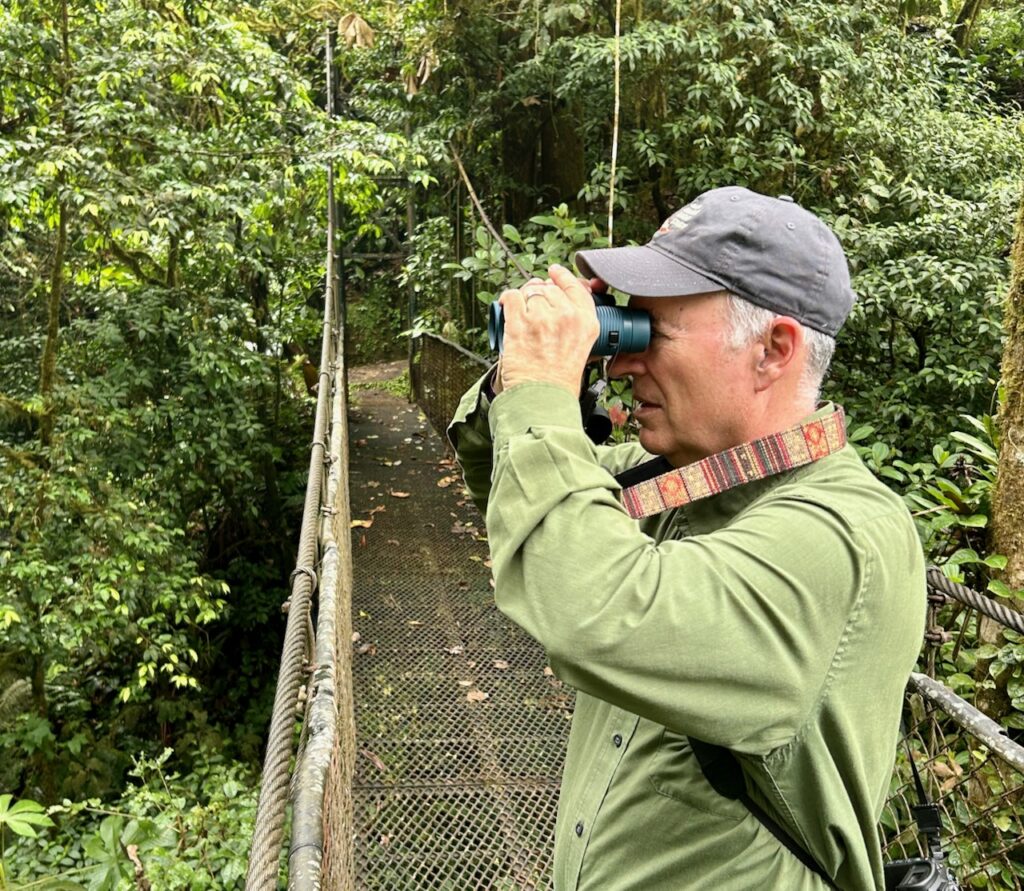
If you purchase Nocs binoculars, I highly recommend buying the woven neck strap, which is both easy to attach and very comfortable around the neck.

When I decided to take the Pro Issues to the tropics, I realized that waterproofing would be important—but I didn’t realize how important! For about half of our trip, Braden and I endured one of the wettest “dry seasons” on record. I mean, we got dumped on—to the point where, several times, we just stood under a tree and tried to will the rain to stop. Not only did the Pro Issues take on this full exposure without allowing water to penetrate the casing, the binoculars didn’t fog up even in the worst conditions.

As you can see, the rain on our trip showed no mercy—but the Pro Issues survived these tough conditions better than either Braden or I!

I should mention that one smart thing Nocs has done with their optics is to recess the objective lenses deep inside the tubes. This means that as they hang from your neck, rain won’t land on or “creep around” to the lenses—avoiding a potential constant hassle. One thing I do hope Nocs incorporates into future products is a “faster” focusing knob, requiring fewer revolutions to go from very close to very far focus. This would make it easier to zoom in on fast-moving birds.
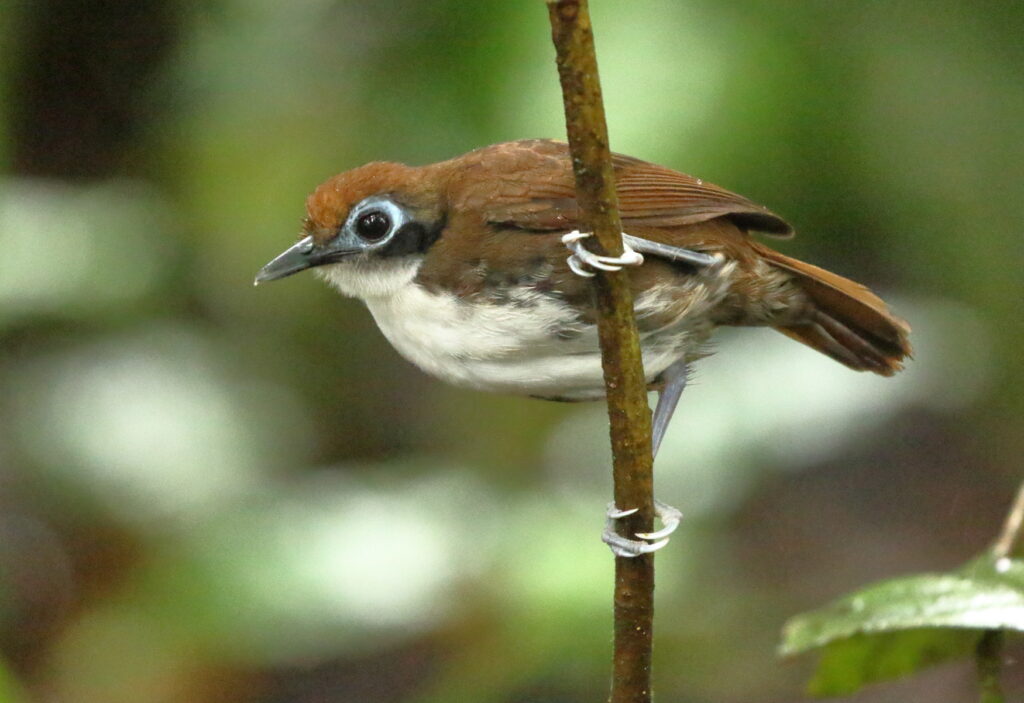
Even in the rainiest conditions, my Pro Issues stayed tightly sealed and did not fog—allowing me to fully enjoy marvelous birds such as this Bicolored Antbird (teaser for our next post!).

Of course none of the above matters without good quality optics, and the Pro Issues definitely hold their own against other equipment in a similar $300 price range. Nocs uses BaK-4 prisms, a higher quality prism that ensures even, full-spectrum light transmission. Like other quality companies, Nocs uses coated, scratch-resistant glass. The result? In bright to medium-low light, I got nice crisp, well-lit, full color looks at birds, even from a good distance. Taking 8X42 instead of 10X42 binoculars proved a good choice for in-close rainforest conditions by giving me a wider field of view and more light, and I rarely missed the extra 2X magnification of 10X42s.

As every birder knows, however, things do get tough in very dark, overcast rainforest understory conditions, challenging the abilities of almost any optics. In my equipment testing, finding binoculars that will “see through” the darkest most abysmal conditions—or the most awful gray backlit situations—requires a price jump up into the $1,000 range, not something most birders can afford. (See, for instance, this review and this one). That said, for $299.95 the Pro Issues offer solid, competitive value while boasting some additional advantages . . .
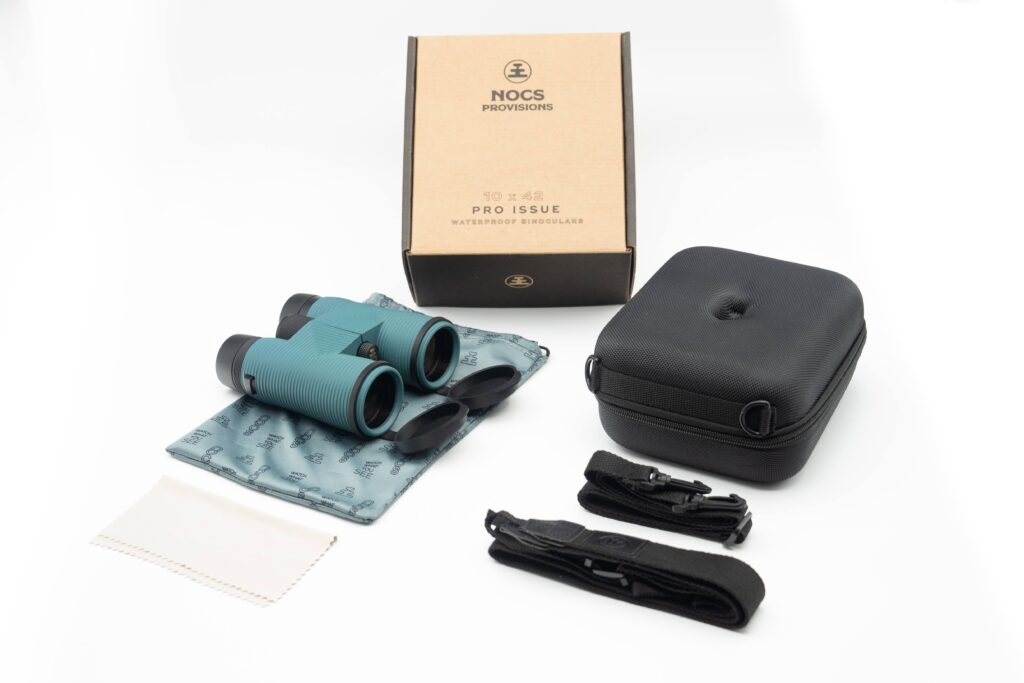
Nocs is committed to operating sustainably and that includes avoiding plastic packaging. Note, I especially like the cloth carrying bags (left, under the binoculars) that come with their equipment. While offering less protection than hardshell cases, the bags are much less bulky, saving precious space when traveling.

In an age when many corporations throw their weight around with little regard to the environment and social justice, Nocs offers a refreshingly positive set of values for the ethically responsible birder. The company is a member of 1% for the Planet, donating 1% of its revenue to supporting environmental organizations. It is also certified as climate neutral and is fully committed to sustainable packaging. In fact, I haven’t found a single piece of plastic packaging on any of the Nocs products I’ve received. The quality of its products also ensures that they will last long into the future, reducing the need for buying—and discarding—cheaply made equipment over and over. If your Nocs product should somehow break or fail, the company offers its “No-Matter-What Lifetime Warranty.”
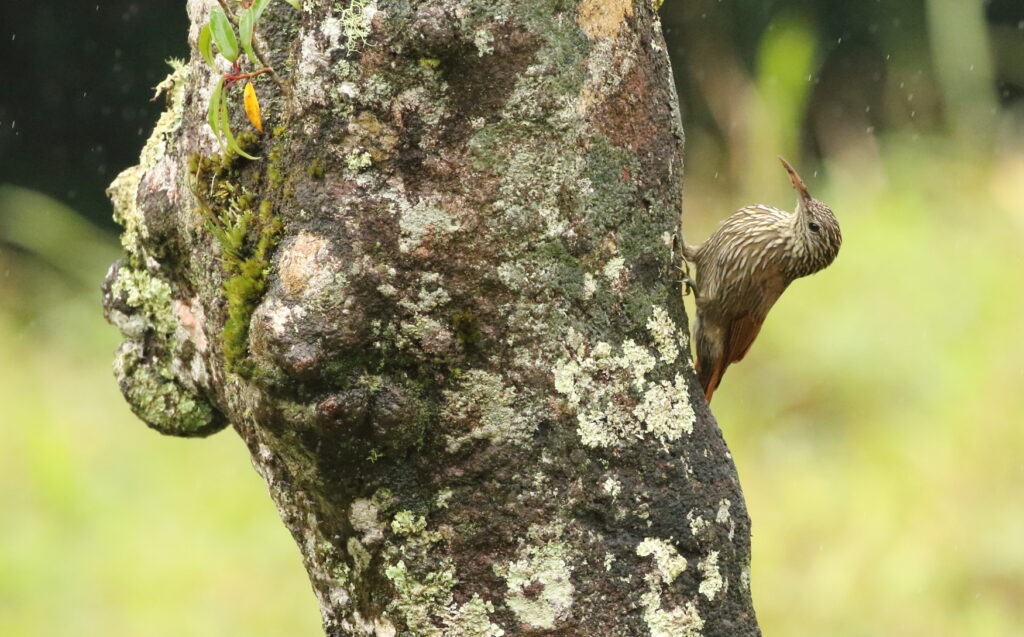
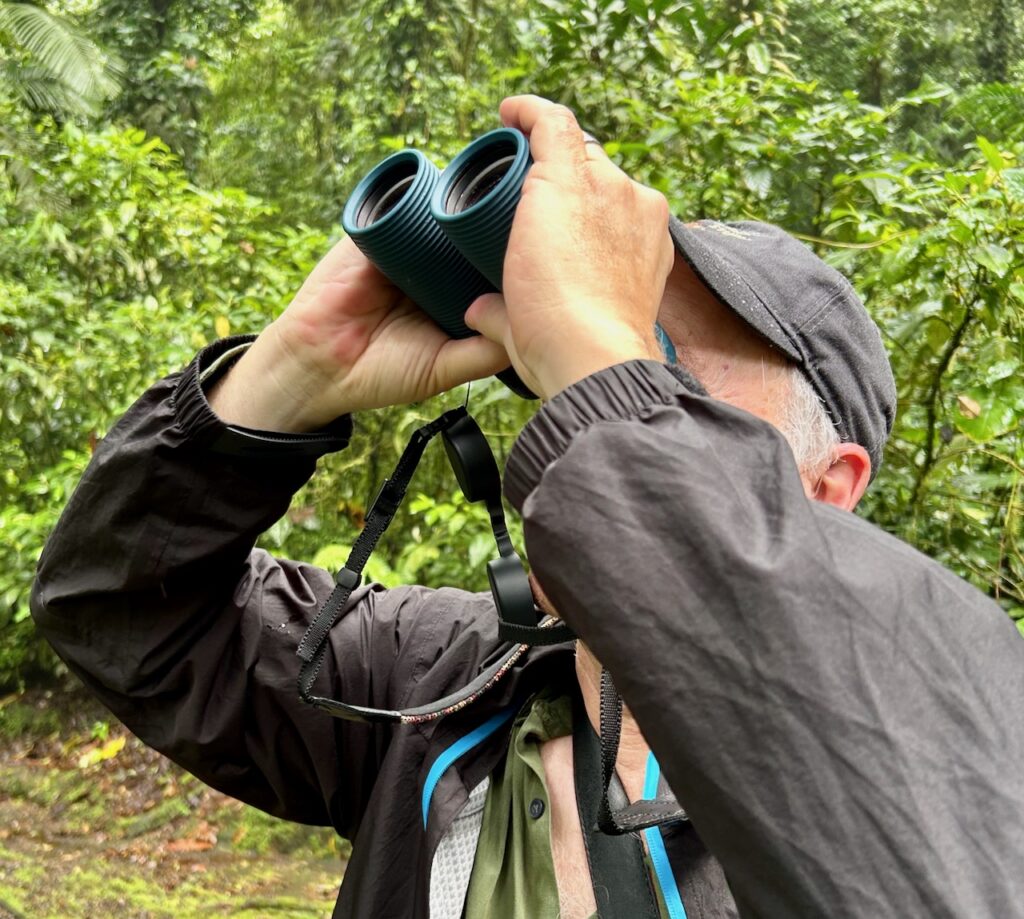
All of this makes me give the Pro Issues a big thumbs up. If you’re still not convinced, I should mention that the 8X42 Pro Issues come in Ponderosa (green), Oxblood Maroon, and Marianas (blue) colors. That will ensure that in addition to having a great set of binoculars to accompany you on your birding adventures, you will be the most stylish birder anywhere in sight!

The author received no financial compensation for this review.
Birding Costa Rica—Beginning at the Airport

Some of our most popular posts have focused on exotic travel destinations, and today we kick off our latest series on one of North American birders’ most popular choices: Costa Rica. Braden and I just returned from an exhilarating, intense, nine-day birding adventure to the land of Pura Vida, and over the next couple of months I’ll be posting blogs on our most memorable birding experiences interspersed with our usual entertaining “paella” of reviews, domestic birding, and other fascinating topics. Again, we do not receive compensation for our blogging efforts, so if you wish to support our work, please purchase a few new copies of Birding for Boomers, Warblers & Woodpeckers, First-Time Japan, or any of Sneed’s other books. If you already have copies, why not pick up some for your friends? With that, let’s dive into Costa Rica at—where else—the airport!

Braden and I arrived at Juan Santamaría International Airport at 10 p.m.—just time enough to get to the rental car office before it closed. After collecting our vehicle, we drove to a nearby Airbnb so we could get a fresh start in the morning. Having spent a lot of time in Costa Rica the past couple of years, Braden had organized our entire birding itinerary and even picked this first place to stay—not only because it was convenient to the airport, but because it happened to have a terrific, little-known birding spot just down the street.

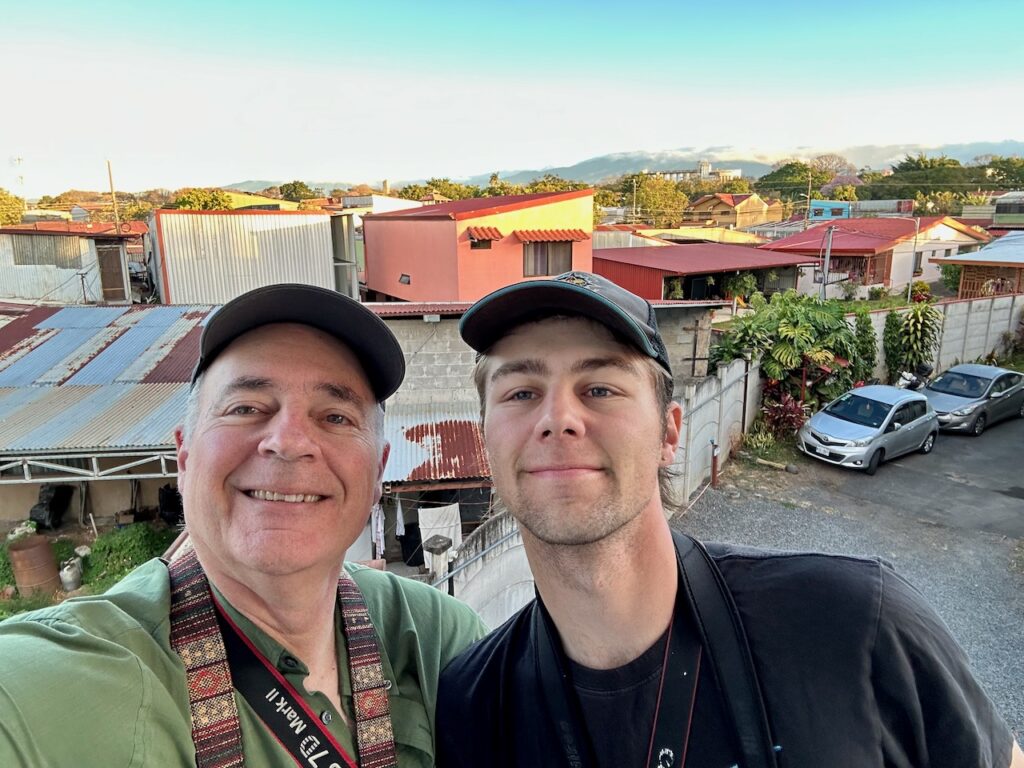
Braden and I from the porch of our Airbnb in Alejuela—practically under the flight path for San Jose’s international airport, and loaded with birds!

Braden and I are big fans of birding near airports, and have often found hidden avian treasures where you’d least expect them. Just last spring, on my final morning in Texas, I had a remarkable birding session in the vacant lot behind my hotel next to the airport in San Antonio, Texas. And during his spring Costa Rica trip last year, Braden had discovered a special little place only two blocks from our Airbnb. This year, as soon as dawn crept over Alejuela (where San Jose’s airport is actually located), he and I grabbed our binoculars and cameras and headed out.

Our destination was a large city park with the even larger name of Caminito Magico de la Tranquilidad. Being unfamiliar with the rather poor-looking neighborhood, I admit that I felt a bit nervous about our safety, but my concerns quickly vanished. At the park, people were jogging, biking, doing exercises, visiting over coffee, and walking around as in any park anywhere. The park covered several hectares, mostly devoted to playing fields, but a lot of trees threaded the fields and lined the park’s perimeter, and Braden led the way in guiding us on a full circuit.

Even at dawn, Caminito Magico de la Tranquilidad park was bustling with people—and birds! Note the giant mall rising in the background—a good place to escape the heat and grab a bite, though a much better little soda (cafe) sits only a block from the park entrance.

I had spent two months in Costa Rica in 1994, but tragically, that was before I took an interest in birds. Since Braden and I started birding a dozen years ago, I had been fortunate to bird in Latin America several times—most recently in Colombia con mi amigo, Roger—but it was fair to say that I was a novice at Costa Rican birds. I had been studying, however, and to my delight Caminito Magico park presented a perfect warm up for the week ahead.

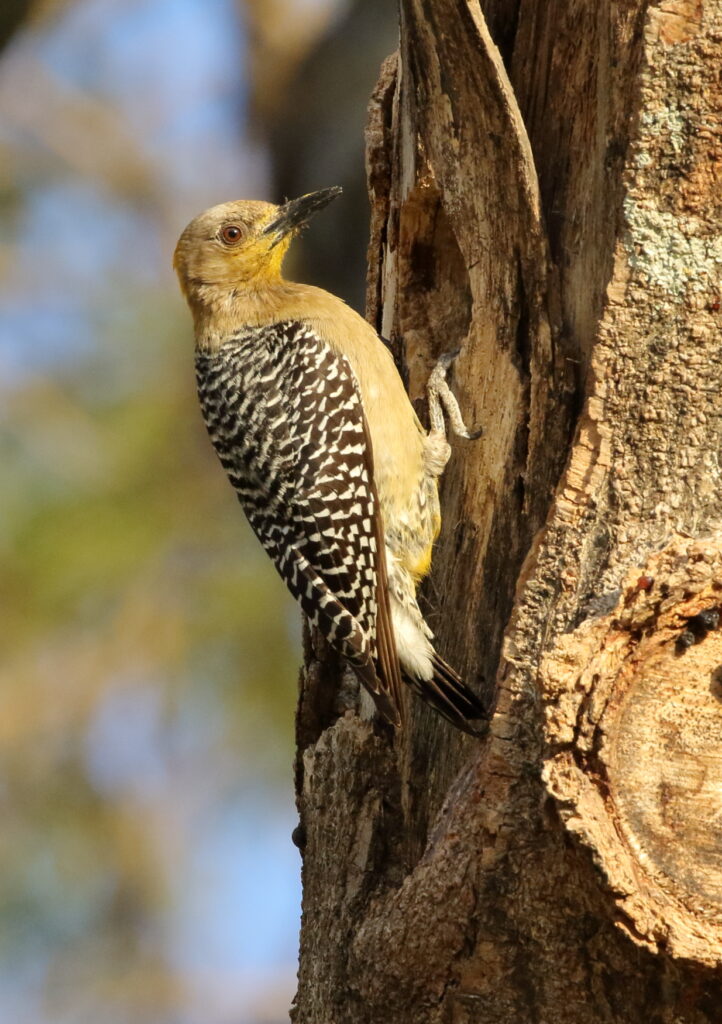
Entering the park, a Squirrel Cuckoo immediately flew across a soccer field in front of us. Braden identified Orange-chinned and Crimson-fronted Parakeets loudly squawking overhead, and I was thrilled to see my first ever Hoffman’s Woodpecker land in a nearby tree.

My very first Hoffman’s Woodpecker put me in an ebullient mood as we kicked off our first Costa Rican birding session!

The park was filled with many of the more common birds any visiting birder will quickly get acquainted with. These included five kinds of pigeons and doves, Tropical Kingbirds, Great Kiskadees, Great-tailed Grackles, and Costa Rica’s national bird, Clay-colored Thrushes. Blue-gray Tanagers flew between trees while Blue-and-White Swallows darted for insects overhead.

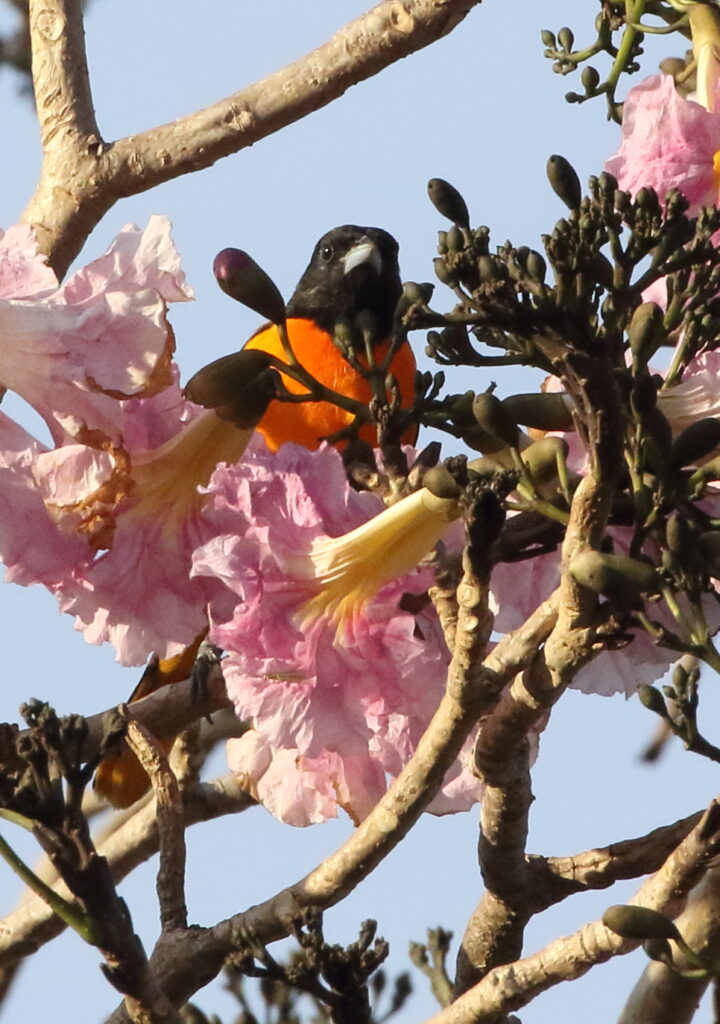
Baltimore Orioles are common throughout Costa Rica—and never fail to raise a smile for a visiting Norteamericano birder!

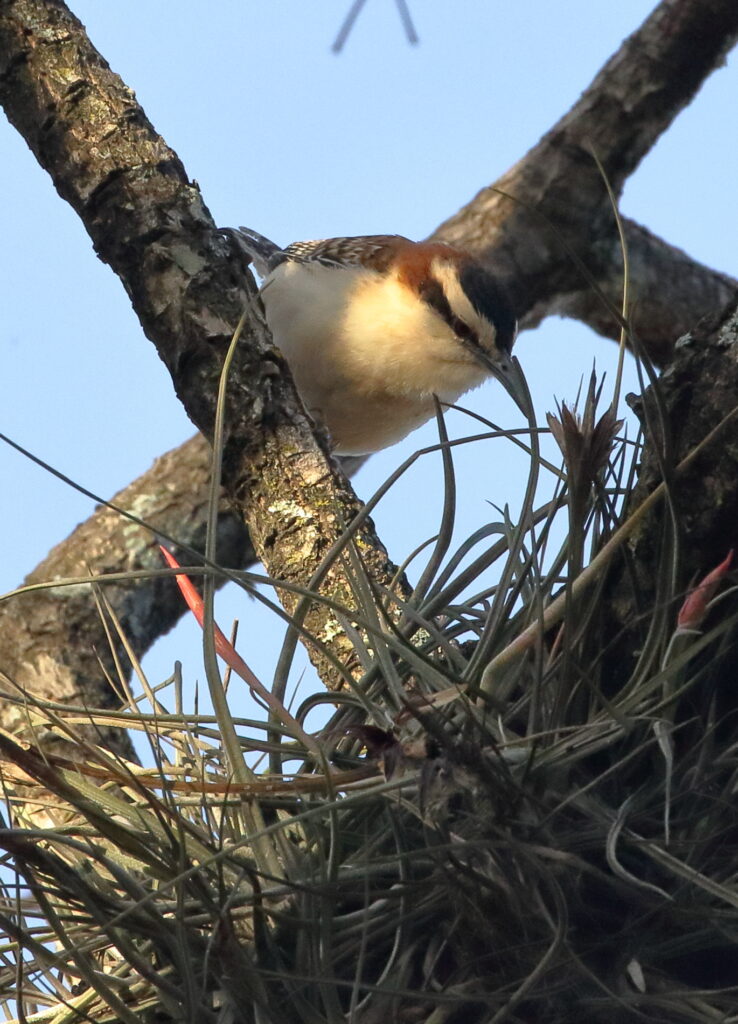
As we reached the far perimeter, I was delighted to find that a creek skirted about half of the park’s boundary. Trees grew thickly here, and following the pleasant path, the birds got even more interesting. Braden began pointing out Chestnut-capped, Northern Yellow, and Tennessee Warblers while I focused in on a stunning male Baltimore Oriole in a flowering tree. Braden also detected several kinds of wrens: Southern House Wren, Rufous-and-White Wren, Cabanis’s Wren, and the beautiful bruisers of the bunch, Rufous-backed Wrens.

This would be the only location on our trip where we would see the “giant” Rufous-backed Wren—another reason to bird the San Jose area before heading into Costa Rica’s hinterland.

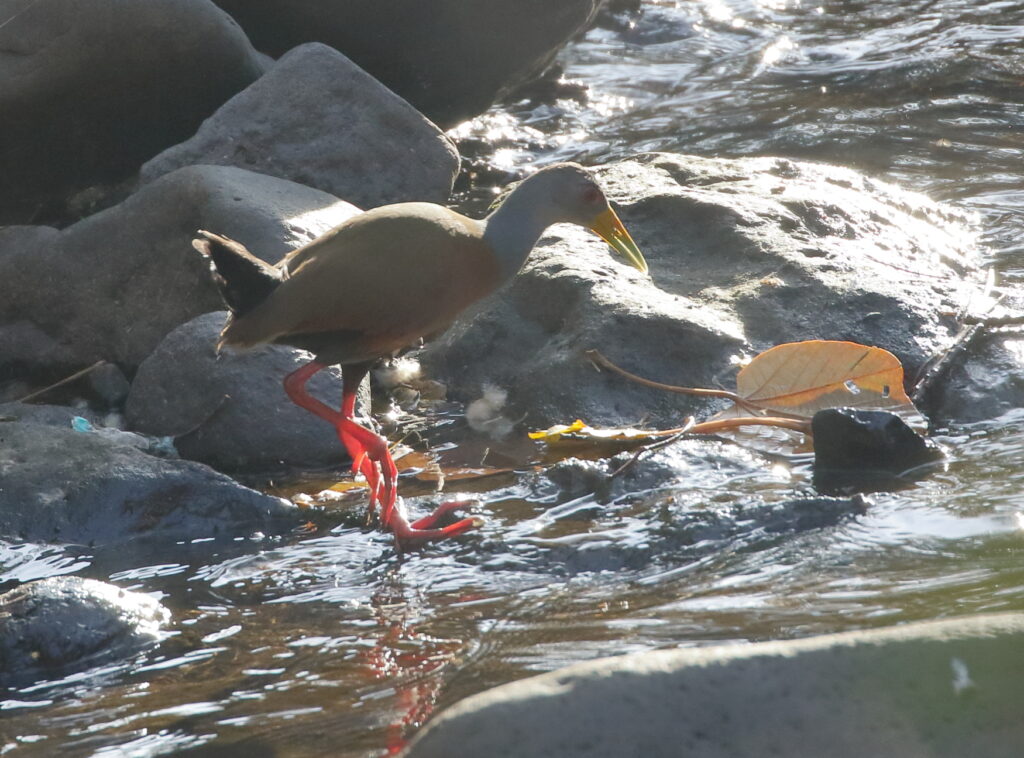
This being in the heart of Costa Rica’s largest city, I gotta tell you that I had no expectations for the creek itself, especially because it was strewn with an assortment of trash. The birds apparently didn’t care and almost immediately, Braden pointed out one of the birds I had most wanted to see on the trip—Bare-throated Tiger-Heron! I was thrilled, but hardly had time to appreciate it as we spotted a quail-sized coot-like bird skulking the banks—a Gray-cowled Wood-Rail!

For me, seeing a Bare-throated Tiger-Heron and Gray-cowled Wood-Rail (above) were stunning surprises in the heart of Costa Rica’s largest city!

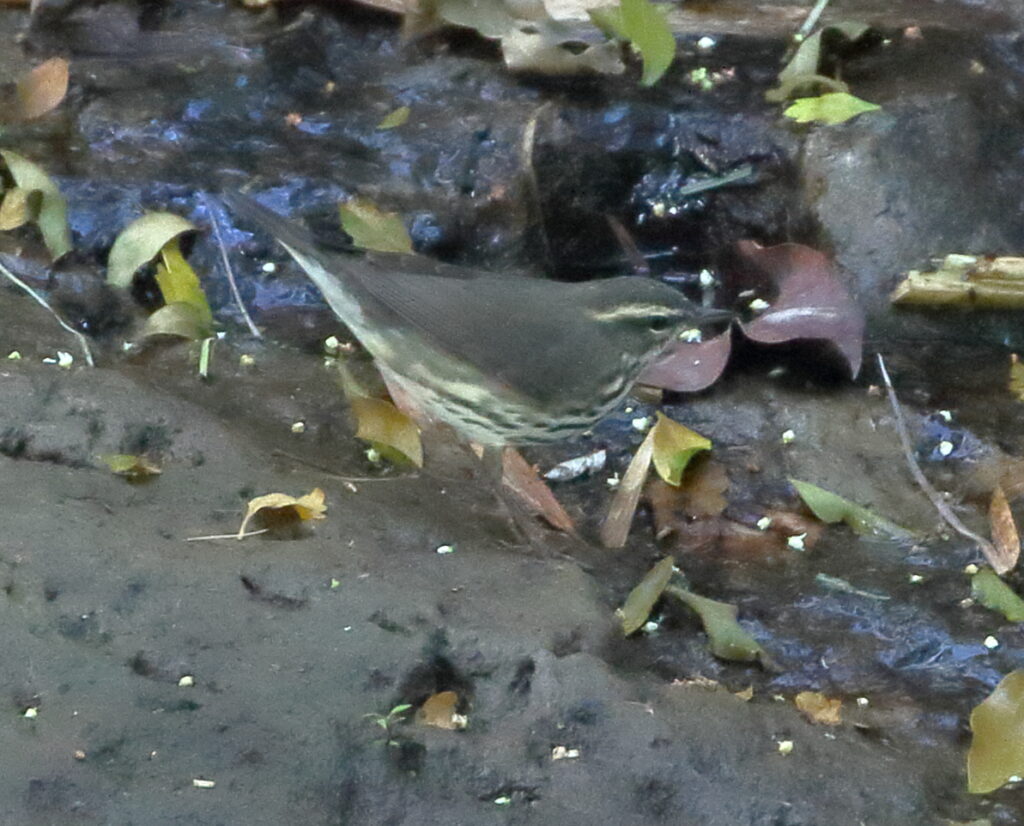
Soon after, Braden pointed out a Northern Waterthrush while I spotted a Green Heron along the opposite bank. This, of course, is one of the magical things about birding the neotropics: how in the midst of all of these amazing new tropical birds, we find many species that are totally familiar to us in North America. It begs the definition of just what a neotropical bird is since in reality, many species we Norteamericanos consider “our birds” are just visiting us for a short time, and can more rightly be considered tropical species. Maybe that’s how this park got the name “Magico”?

Seeing “North American” warblers such as this Northern Waterthrush in the tropics makes you rethink what we consider “our” birds.

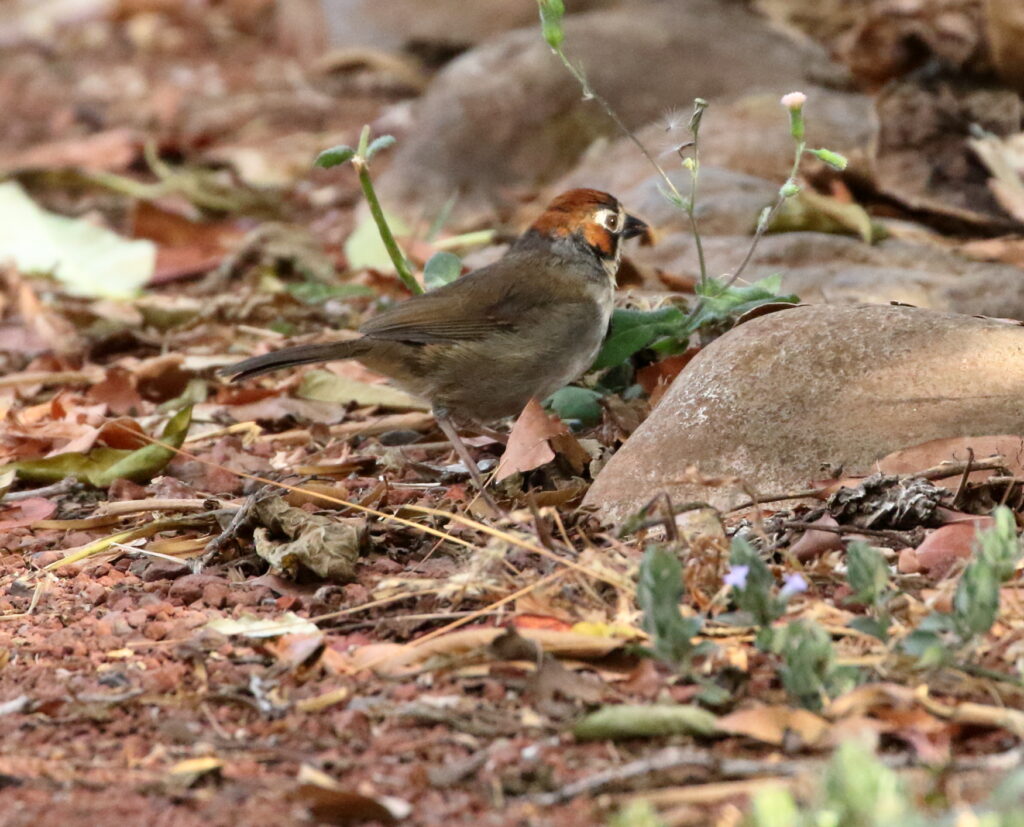
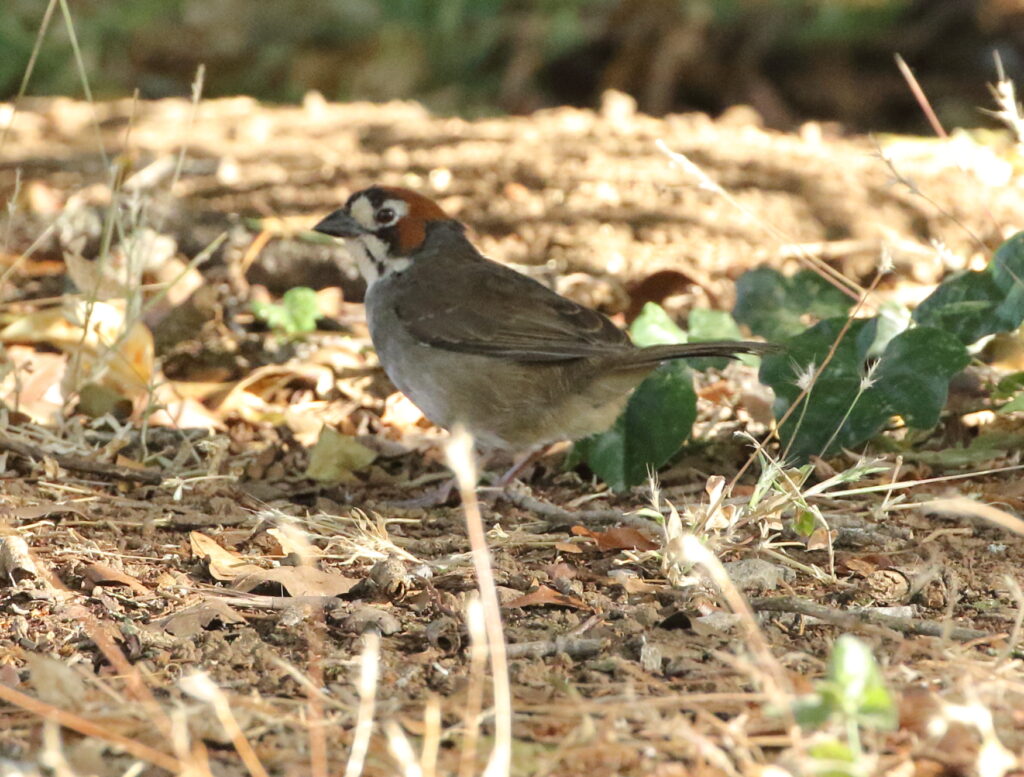
Our delightful discoveries were far from over. At the far corner of the park, we met an amateur naturalist who visited this spot almost daily to monitor wildlife, and he generously shared that only minutes before, he had seen one of the San Jose Valley’s most intriguing endemics. We hurried down the trail and only fifty meters later saw them: Cabanis’s Ground-Sparrows.

These are birds that Braden especially wanted to show me—but didn’t think he could. These handsome little guys live only in central Costa Rica, specifically in the valley occupied by San Jose. While not rare, they often tend to be pretty shy, making them challenging to see. They prefer scrubby, disturbed places like forest edges, coffee plantations, and apparently, city parks with lots of places to hide. Braden and I both began clicking off photos, but mostly we enjoyed watching them, one of dozens of unexpected surprises we would encounter over the next nine days.

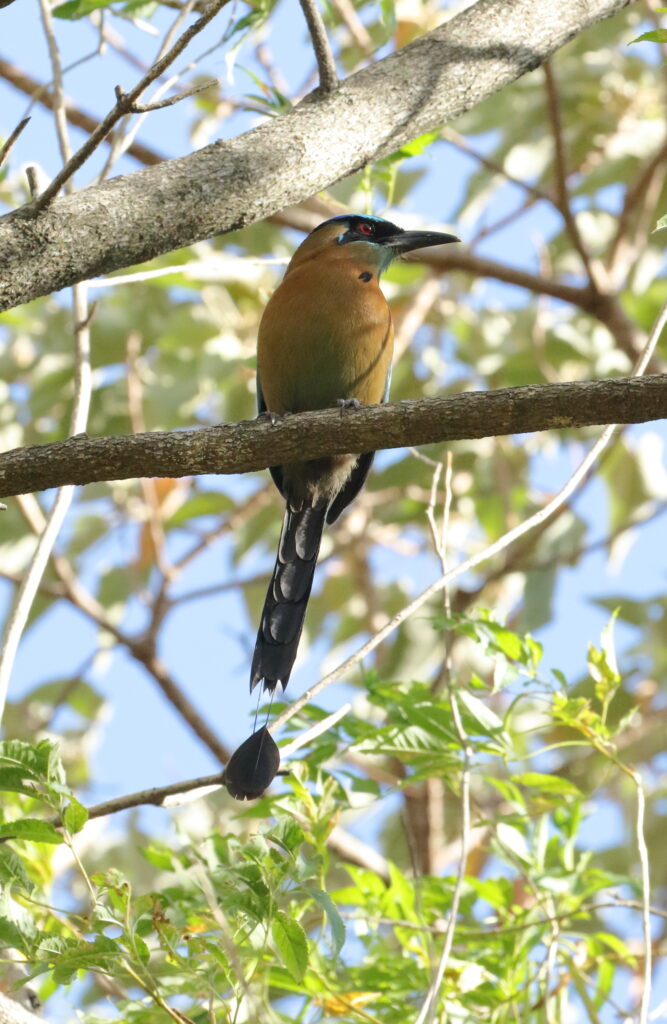
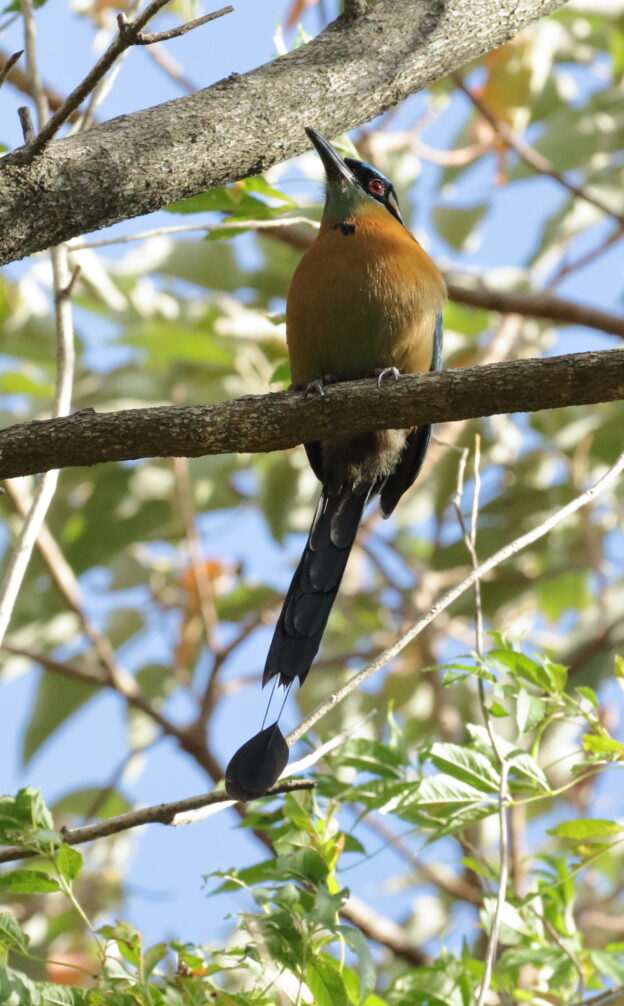
As we were winding down our visit with the Cabanis’s Ground-Sparrows, I saw a larger bird swoop past us and land on a nearby branch. “Braden,” I hissed. “Look!” It was a final gift from this amazing city park: a Lesson’s Motmot! Not only that, it struck an incredible, leisurely pose. Motmots, of course, are some of Latin America’s most distinctive tropical birds and always high on a visitor’s to-see list. I was no exception, and felt enormously grateful to see one in our very first hour or two of Costa Rica birding.

Seeing a Lesson’s Motmot in our first birding session left no doubt that we were birding somewhere far different from Montana!

We finished our list with 47 species—almost as many birds as I’d seen in Montana in the first seven weeks of 2026! It was an awesome kick-start to our expedition, and we celebrated by grabbing our first Tico breakfast of rice, beans, eggs, and fruit at a little family diner only a few meters from the park entrance. We couldn’t predict how many highs and lows the next nine days would hold for us, but we were grateful and happy for such a promising start!

Caminito Magico de la Tranquilidad checklist: https://ebird.org/checklist/S302412338

Braden has a passionate fondness for Costa Rican food, and after our first birding session we wasted no time in getting him a traditional Tico breakfast just a block from the park entrance!

The NOCS Field Tube 10X32 Monocular (FSB Equipment Review)

I’m excited this week to offer our very first equipment review of a Nocs Provisions product: The Field Tube 10X32 monocular. This is the very first monocular that I’ve ever used, and I was so excited that I tore it out of the packaging and immediately set about field testing it. Before I offer my thoughts, however, I want to say a bit about Nocs.

Everything about this smaller optics company compels me to like them. For one, they take pains to send their products in sustainable packaging—a definite plus for a birder wanting to protect birds and our environment. They are a 1% for the Planet member and a Climate Neutral certified brand. To quote their PR info, “At its core, the company believes that the more we observe and understand how intricate and delicate our planet’s ecosystems are, the more motivated we are to protect them.”

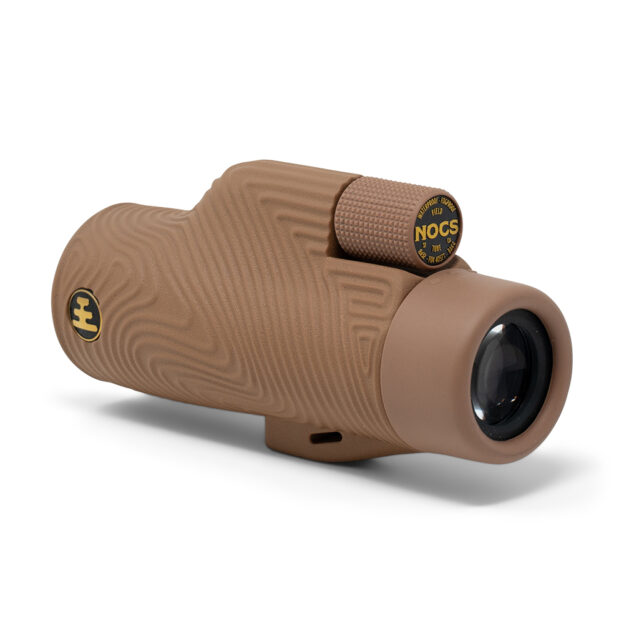
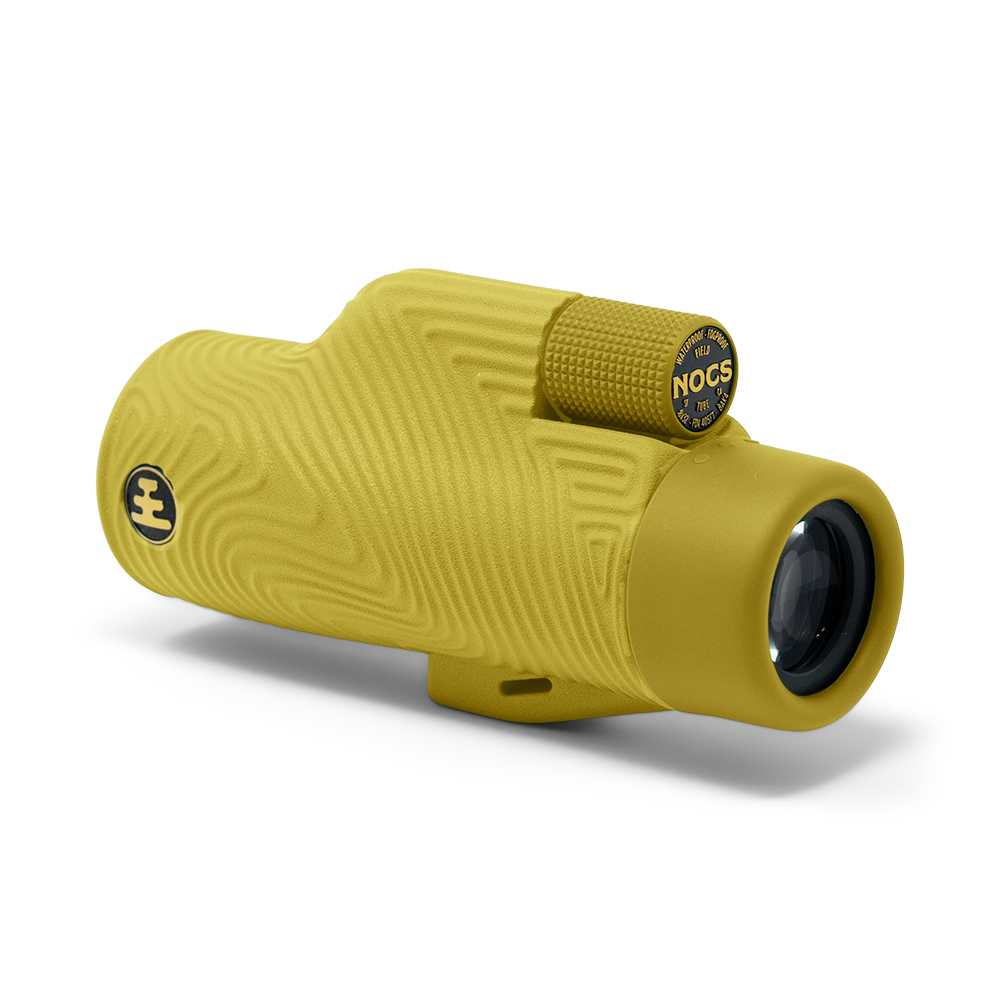
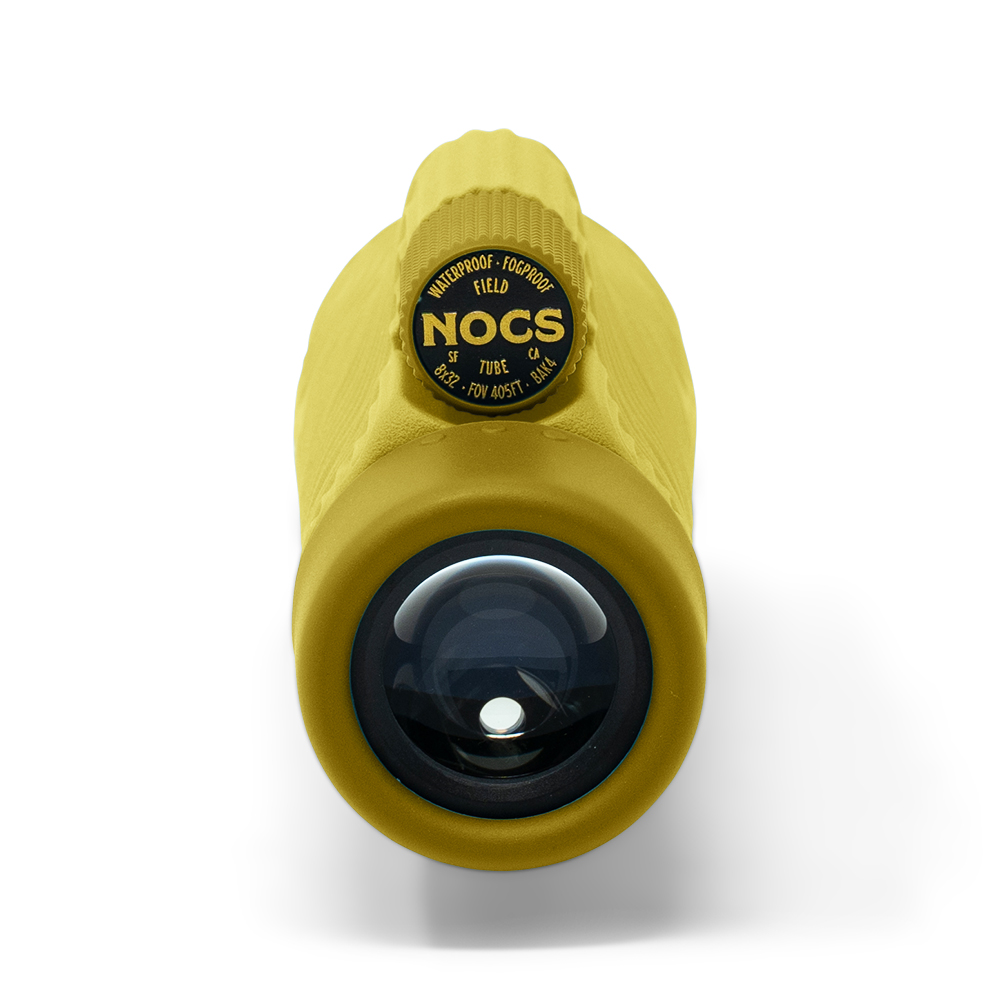
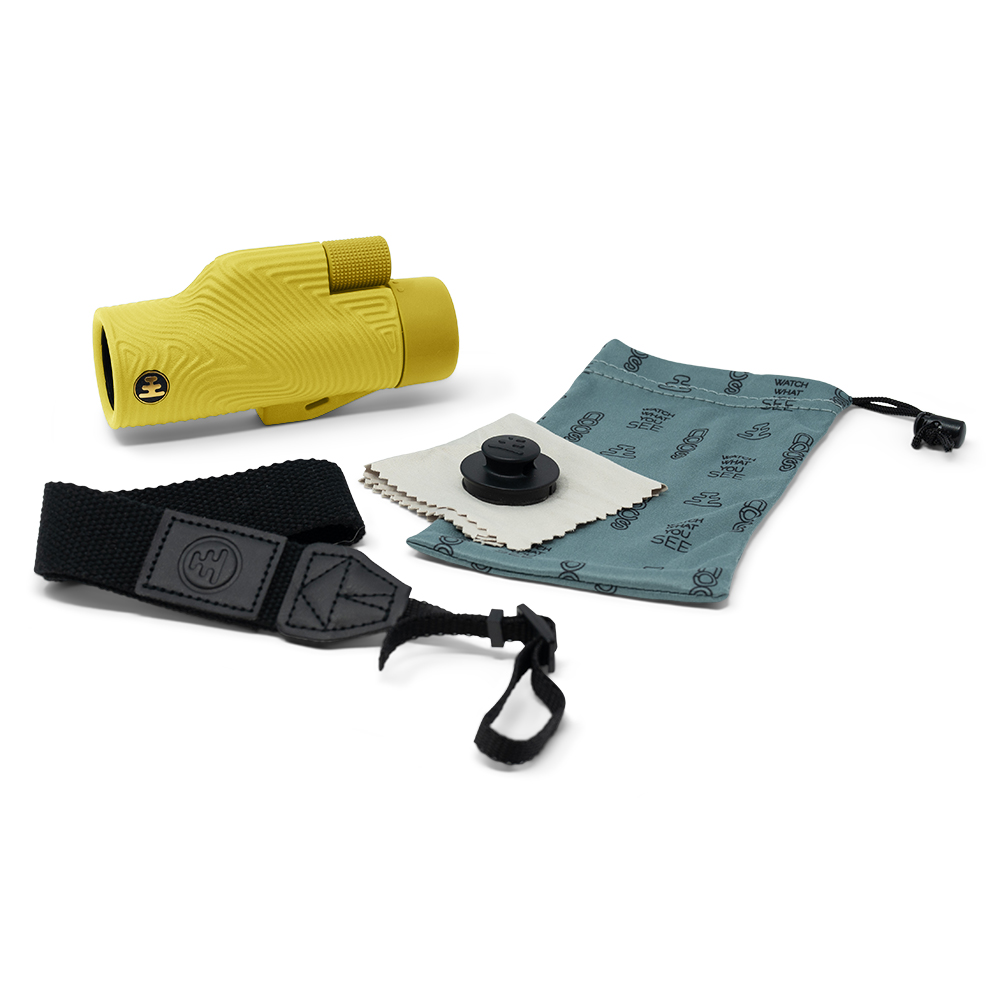
The 8X32 Field Tube shown in Banana Slug (Yellow). This version also comes in Corsican (Blue), Coral (Red), and Desolation (Black). The 10X32s I tested are offered in Ponderosa (Green), Paydirt (Brown), and Oxblood (Maroon). Order by clicking here or on the image above.

Nocs, though, also offers products with super cool designs. The rubber “wave grip” coating of the Field Tube not only offers a great gripping surface, it looks way bitchin’ compared to the standard black exteriors offered by most other manufacturers. Not only that, Nocs products are offered in different colors. Need a pair of binoculars to match your powder blue tux for the Birding Academy Awards? Perhaps something to blend in with your Ferrari while visiting Tuscany? Nocs has got you covered.

But let’s get to the main point, the Field Tube 10X32 monocular itself. First let me say that for birders, this is a “next item” purchase. It’s not intended to replace your binoculars. Rather, it is designed for situations where a slim profile and super light weight are of premium concerns. With a length of only five inches and weight of half a pound—or about a third of traditional binoculars—the Field Tube easily fits into a front pocket and can barely be felt hanging around your neck. This makes it perfect for backpacking, travel, and paddle-boarding. But I can envision other ideal scenarios for this equipment, too. For instance, imagine . . .

The Field Tube is so small and light that you can take it virtually anywhere without noticing it. We call this BIRD PREPARED!

You are in an expensive Tokyo restaurant trying to close a deal with a major Japanese tech company. Suddenly, an Azure-winged Magpie lands in a tree outside the window. You do not want to offend the company president sitting across from you, but . . . as soon as he gets up to use the restroom, you whip out the Field Tube from your front pocket for a delightful look at this long-hoped-for life bird. Or . . .

You’re waiting for your perfect big wave set at Mavericks near Half Moon Bay and an intriguing small black bird lands in the water. Unfortunately, it is too far away to ID with the naked eye. BUT, you just happen to have your Nocs Field Tube stuffed inside the neck of your neoprene wetsuit and, focusing in on the bird, you discover it is a Long-billed Murrelet, just flying in from Siberia! Not only is it a life bird, it allows you to break the ABA Big Year record for surfers, earning you glory, fat promotional contracts, and a sponsorship to bird and surf the world!

You can see where I’m going with this, and I’m sure you can come up with other equally realistic scenarios where you’ll want this item close by.

The Field Tube comes with a handy wrist strap, soft protective carrying bag, and lens cloth—all packed in 100% sustainable recyclable packaging.

A couple of things I especially like about Nocs products is that they come with solid rubber stoppers that snugly pop in over the objective lenses. It’s amazing how even high-end manufacturers have not solved the problem of keeping the objective lens covers firmly in place. I also really like the strap systems for Nocs products. In fact, when you order, I recommend purchasing the woven strap versions as they are more comfortable and, again, look cool.

But back to the Field Tube, it features a fairly close (9-10 feet) minimum focal length and is waterproof down to three feet deep for up to thirty minutes, making it perfect for birders, butterfly watchers, and surfers. As you would expect, Nocs uses fully coated lenses and prisms, and has a lifetime warranty. I found light transmission quite good in these despite the relatively small 32 mm objective lens.

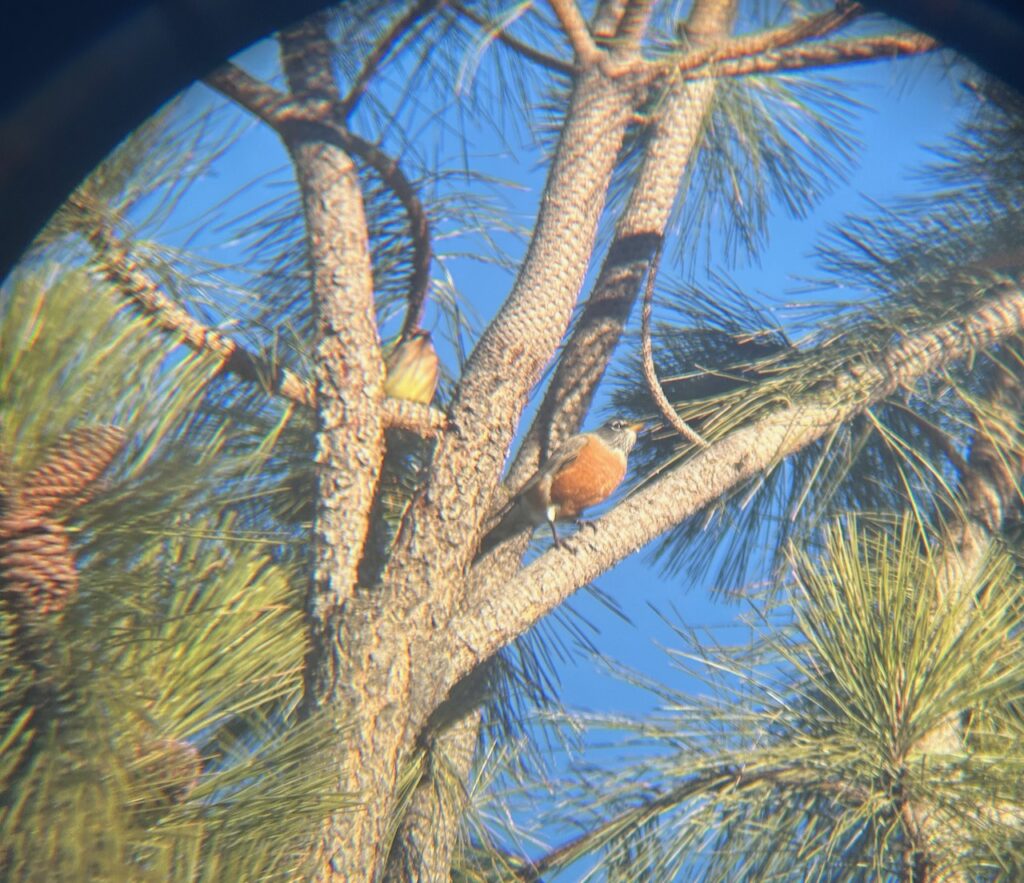
Just for fun, I decided to see if I could get a digiscope photo through my Field Tube. Not bad for my first effort, if I do say so myself. I mean, you can easily see both the Harpy Eagle and Imperial Woodpecker in the photo, right?

At a price of $129.95, you wouldn’t expect perfection from the Field Tube, and I did notice a couple of things that could use improvement. While the focus is quite sharp at close and medium ranges, it gets a bit softer at distance. I’d also like to see fewer turns of the knob required to bring the focus from close to far distance. However, most people will find these minor issues acceptable trade-offs for the incredibly small profile and convenience the Field Tube offers.

Nocs has recently unveiled a monocular upgrade called the Zero Tube which is even smaller and lighter than the Field Tube, and uses a different focusing mechanism. Hopefully, I’ll get to test that one in the future. Next up, though, will be my review of the Nocs Pro Issue 10X42 binoculars, which I am taking to Costa Rica on my trip with Braden next week. My initial impressions of the Pro Issues are extremely positive and I look forward to giving them a full tropical workout. Stay tuned!

The Birds in the Oaks (Book Review by Scott Callow)

Braden and I head to Costa Rica next week, but before we go I am delighted—yes, delighted—to share the following guest book review by my buddy, Scott Callow. I predict you’ll enjoy his passionate, humorous review as much as the book itself! We challenge you to read it before our next post. And now, heeeeeeeeere’s SCOTT!

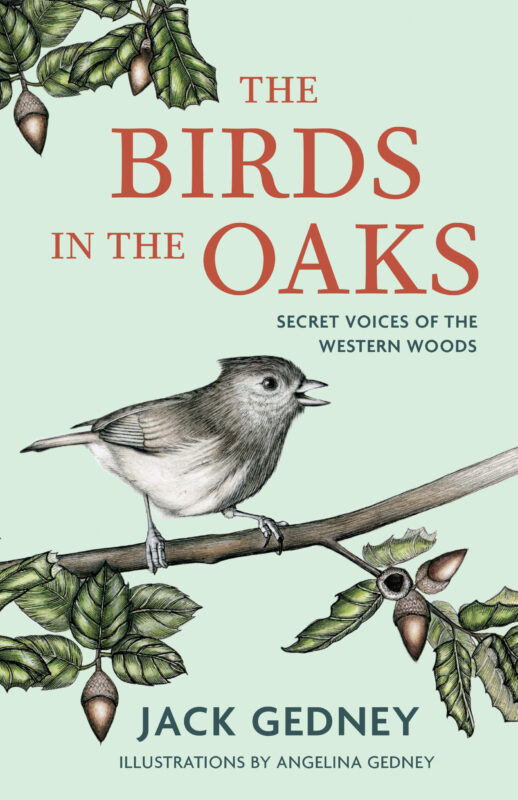
Sneed asked me to write a review of The Birds in the Oaks: Secret Voices of the Western Woods by Jack Gedney (HeyDey Press, 2024) before I completed reading it. Consequently, It was impossible for me to finish the last chapter without constant rereading because I became anxious and distracted, wondering how to share all the great things about it. For those of you who only read headlines or first paragraphs of news stories, let me present a few crafted comments that summarize my experiences, being careful not to exaggerate.

Order Jack Gedney’s The Birds in the Oaks by clicking here or on the above image.

* If you live near oak woodlands, you have no claim to being “interested in birds” if you do not read this book.  

* The Birds in the Oaks is overflowing with interesting ecological details that will keep me rereading chapters, and I expect I will mark the pages with notes like a seeker underlining sections of the Bible on the journey to become a better person.  

* The Birds in the Oaks is a superb example of well-crafted nature writing that mixes extensive and accurate observations with poetic prose, and mixes personal experiences with quotes from historical bird authors.  

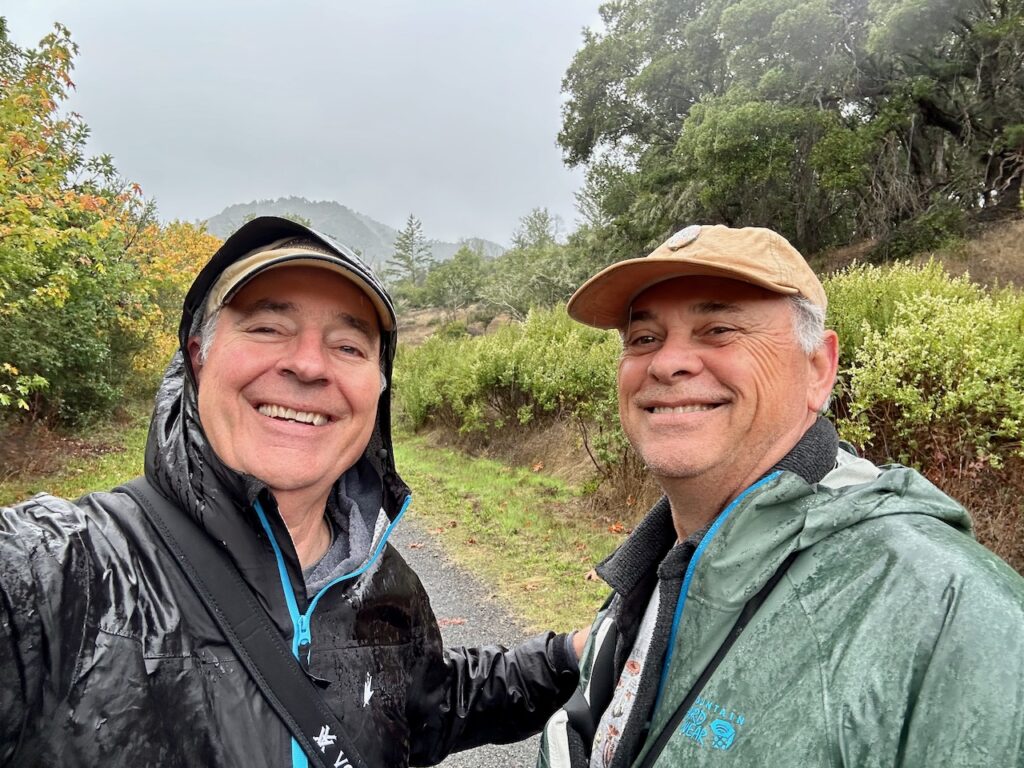
Last fall, I was fortunate enough to accompany Scott to one of his favorite “oaky birdy” locations, Sugarloaf Ridge State Park in Sonoma County, where we saw a great variety of classic oak woodland species including Oak Titmouse, Golden-crowned Sparrow, and Nuttall’s Woodpecker. (See post World Series Birds in the Golden State.)

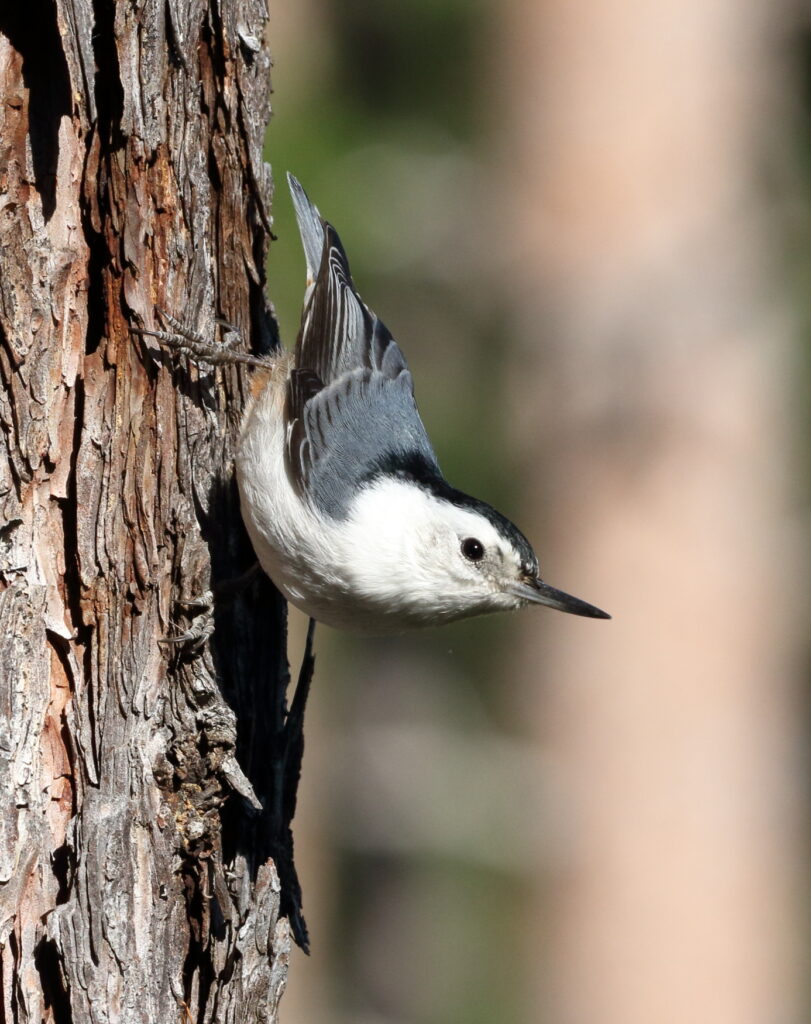
This book, admittedly, is personal for me. I live within walking distance of California oak woodlands. I volunteer at Sugarloaf Ridge State Park which is dominated by oak woodlands and mentioned in the book. The author’s former Wild Birds Unlimited store lies only 24 miles from me. Most importantly, I know these birds. I have learned so much about each of them from Gedney’s book that they have become even more familiar (emphasis in “family”). I will admit only here, amongst birders, that I sometimes say “Hey, buddy!” when I see my first Oak Titmouse of the day, and “Hey-hey-hey” when I see a White-breasted Nuthatch.  

Scott apparently has been known to converse with White-breasted Nuthatches. I can’t blame him as I talk to these guys myself!

Each curiously titled chapter is organized around a species. Each begins with key characteristics. Many chapters start with song and call, which I appreciate since I’m late in life to learning bird sounds. (Thank you Merlin.)  Example:

“I still hear the bird, steadily whit-whiting away as if mocking my inability to follow.” (A Bird at Our Level – Bewick’s Wren) (“whit-whit bew-wick” – record to memory)

As someone who seeks to be entertained by bird behavior and science, I enjoyed how Gedney explains bird ecology.  

“… to learn all the secrets of the woods, one must know … the birds beneath the oaks.” (Discontented Shadows – Spotted Towhee) (Cool we’re on a treasure hunt, I tell myself.)

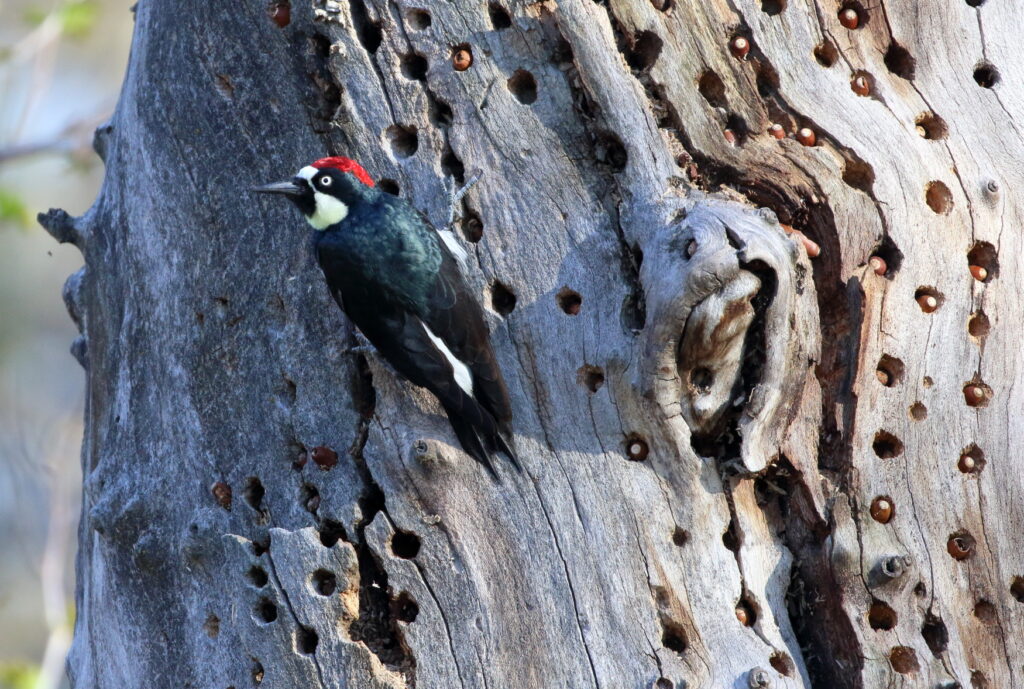
The ecological details too elaborate to be found in a guide have already enriched my birding.  Even if you don’t regularly see Acorn Woodpeckers, every birder should learn about their unique extended family groups and their cooperative food hoarding strategies. I also believe every birder should wonder how the Bushtit, weighing as light as a nickel, can engineer such an elaborate sock-shaped nest, insulate it, camouflage it, and then use it for such a short nesting cycle, all on a diet of insects too tiny to see, even with the help of binoculars.

The ultimate oak woodland bird, the Acorn Woodpecker, deservedly attracts abundant attention from birders, both for its stunning good looks and fascinating behavior that features cooperative breeding and storage of thousands of acorns. Isn’t that, ahem, nuts?

But this book is not written by or for the scientist. Gedney is not afraid to add his own appreciation of a bird or personal experiences or poetic descriptions. This at first raised my anthropomorphic alarms since I was trained to reject human sentimentality by my vertebrate bio prof, surprisingly an ornithologist who once said “birds are stupid; their behaviors are mostly determined by genetics; they have small brains.” (These prejudices were spoken decades before contradictory scientific information was shared in The Genius of Birds and several other books on bird intelligence.)  

The Birds in the Oaks is very accessible, humanly so. It is so well written that you just might re-imagine your own feelings about birds and get all warm-like inside. You just might be heard saying “Wow” when learning something new about one of the birds. You might just slow down and spend “an inordinate amount of time” observing a bird in one location. Maybe, maybe not. But I will risk one bold prediction: If you get this book, several times you will imagine walking through the woods with the author himself.  

No oak trees were harmed in the writing and publishing of this review.

The Social Lives of Birds (Book Review)

If you’re enjoying FatherSonBirding, why not take the leap and subscribe by filling out the box below and to the right? We will never share your information. Also, a reminder that all content on FSB is fully protected under copyright law. Please share this post—but don’t use it for other purposes without permission.

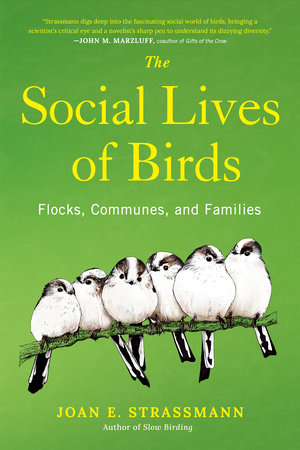
With single-digit temperatures in Montana this week, it is still very much book reading season, a time when all birders can—and should—beef up our birding resumés by tapping into the vast wealth of research and experience of the global birding and scientific communities. This past week, I delved into a topic that intrigues most birders by picking up Joan E. Strassmann’s The Social Lives of Birds: Flocks, Communes, and Families (Tarcher, 2025).

Joan Strassmann’s The Social Lives of Birds is packed with delightful revelations for beginning and experienced birders alike. (Click on the cover for ordering info.)

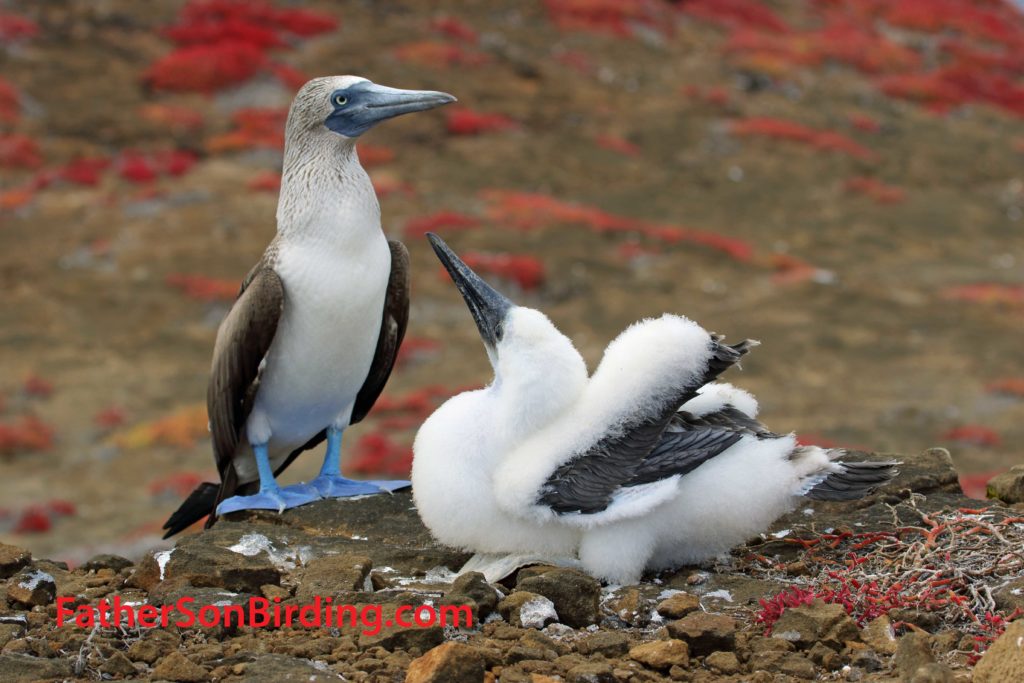
A well-regarded professor and scientist, Strassmann has created a comprehensive resource that introduces readers to almost every aspect of bird society. She begins by answering the simple question “Are Birds Social?” (You can probably guess the answer to that!) Then, chapter by chapter, she explores topics that fascinate beginning birders as much as they do veteran scientists. These include flocking behavior, mixed-species flocks, the predilection of many birds to roost and/or nest in colonies, the pros and cons of nesting and/or roosting together, lekking behavior, and more.

The author devotes an entire chapter to the fascinating and intriguing world of seabird colonies, such as those of one of the world’s most popular birds, the Blue-footed Booby.

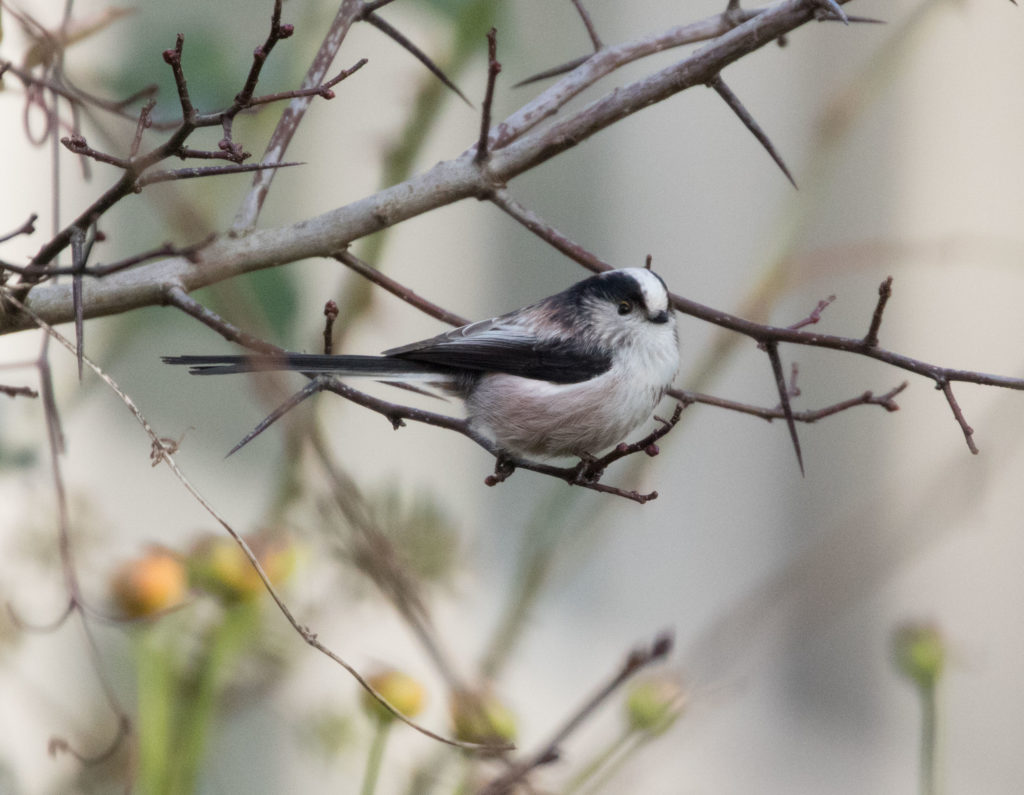
I learned something fascinating with each chapter. For instance, I was first drawn to the book because the cover showed a line of six Long-tailed Tits packed tightly together on a branch. I had had the pleasure of observing these birds in the Netherlands (see our post Layover Birding in Amsterdam), Japan (see our post Birding Japan: Kyoto), and Spain (see our post Birding Barcelona, Part 1: The Urban Core), but had no idea that they lived and foraged in stable flocks that are often built around a main breeding pair and its offspring. In her book, Strassmann recounts a study that showed that on chilly nights, the tits nestle tightly together to stay warm, and that often it is the lowest birds on the “tit totem pole” that have to endure the chillier end positions. This is no trivial matter since the birds lose about 9 percent of their total body mass in a single, chilly night.

After observing Long-tailed Tits in Europe and Asia, I was fascinated to learn more details of their highly social behavior in The Social Lives of Birds.

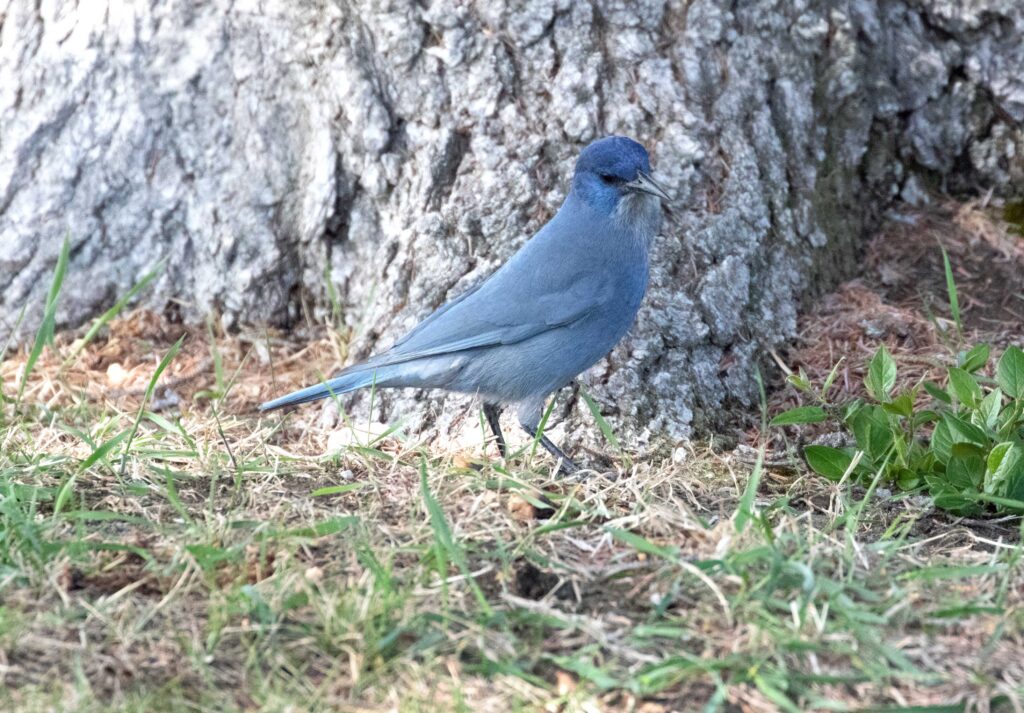
Similar revelations emerge with every chapter, examining birds from a wide variety of terrestrial and aquatic habitats. My favorite chapter was the last, “Supersocial Groups: Birds That Are Always Together.” That’s probably because it featured one of my favorite birds, the Acorn Woodpecker (see our post College Search Birding in California), and three other species I was fascinated to learn more about: White-winged Choughs, Sociable Weavers, and a bird Braden and I are always delighted to see, Pinyon Jays. Regarding the latter, Braden and I have seen Pinyon Jays only a handful of times here in Montana, and I had wondered why they aren’t more common. Strassmann explains that the birds need extremely large territories to guarantee a dependable food supply. Unfortunately, their main food source, the pinyon pine, has suffered extreme losses from clearing for agriculture and other reasons. Warmer temperatures driven by climate change have also impacted the production of pinyon pine seeds, leading to large-scale die-offs of these beautiful, dynamic, gregarious birds.

Strassmann devotes much of the final chapter on one of Braden’s and my favorite birds, Pinyon Jays, shown here in a cemetery in Helena, Montana.

The Social Lives of Birds struggles a bit over whether it wants to be a comprehensive resource or an engaging narrative in the vein of the recently reviewed The Great Auk or A World on the Wing. The author mentions her personal connections to many of the topics, but I found these more distracting than engaging. Still, that will not prevent readers from enjoying the book and harvesting a wealth of information—knowledge that will help you look at birds with greater understanding and appreciation each time you head out to bird.

Review copy provided by the publisher.