Monthly Archives: January 2026

The Social Lives of Birds (Book Review)

If you’re enjoying FatherSonBirding, why not take the leap and subscribe by filling out the box below and to the right? We will never share your information. Also, a reminder that all content on FSB is fully protected under copyright law. Please share this post—but don’t use it for other purposes without permission.

With single-digit temperatures in Montana this week, it is still very much book reading season, a time when all birders can—and should—beef up our birding resumés by tapping into the vast wealth of research and experience of the global birding and scientific communities. This past week, I delved into a topic that intrigues most birders by picking up Joan E. Strassmann’s The Social Lives of Birds: Flocks, Communes, and Families (Tarcher, 2025).
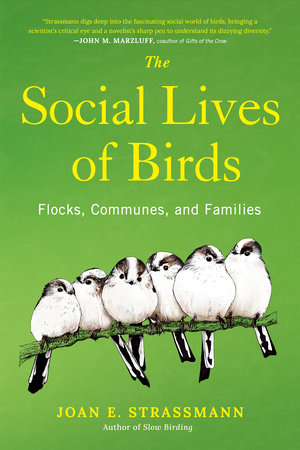
Joan Strassmann’s The Social Lives of Birds is packed with delightful revelations for beginning and experienced birders alike. (Click on the cover for ordering info.)

A well-regarded professor and scientist, Strassmann has created a comprehensive resource that introduces readers to almost every aspect of bird society. She begins by answering the simple question “Are Birds Social?” (You can probably guess the answer to that!) Then, chapter by chapter, she explores topics that fascinate beginning birders as much as they do veteran scientists. These include flocking behavior, mixed-species flocks, the predilection of many birds to roost and/or nest in colonies, the pros and cons of nesting and/or roosting together, lekking behavior, and more.
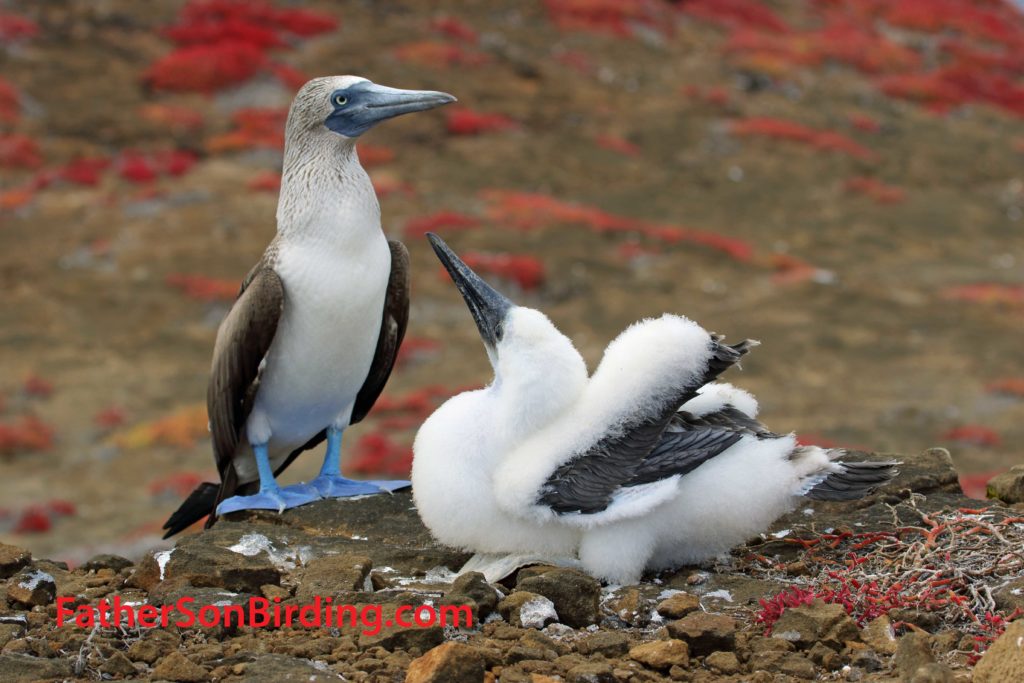
The author devotes an entire chapter to the fascinating and intriguing world of seabird colonies, such as those of one of the world’s most popular birds, the Blue-footed Booby.

I learned something fascinating with each chapter. For instance, I was first drawn to the book because the cover showed a line of six Long-tailed Tits packed tightly together on a branch. I had had the pleasure of observing these birds in the Netherlands (see our post Layover Birding in Amsterdam), Japan (see our post Birding Japan: Kyoto), and Spain (see our post Birding Barcelona, Part 1: The Urban Core), but had no idea that they lived and foraged in stable flocks that are often built around a main breeding pair and its offspring. In her book, Strassmann recounts a study that showed that on chilly nights, the tits nestle tightly together to stay warm, and that often it is the lowest birds on the “tit totem pole” that have to endure the chillier end positions. This is no trivial matter since the birds lose about 9 percent of their total body mass in a single, chilly night.
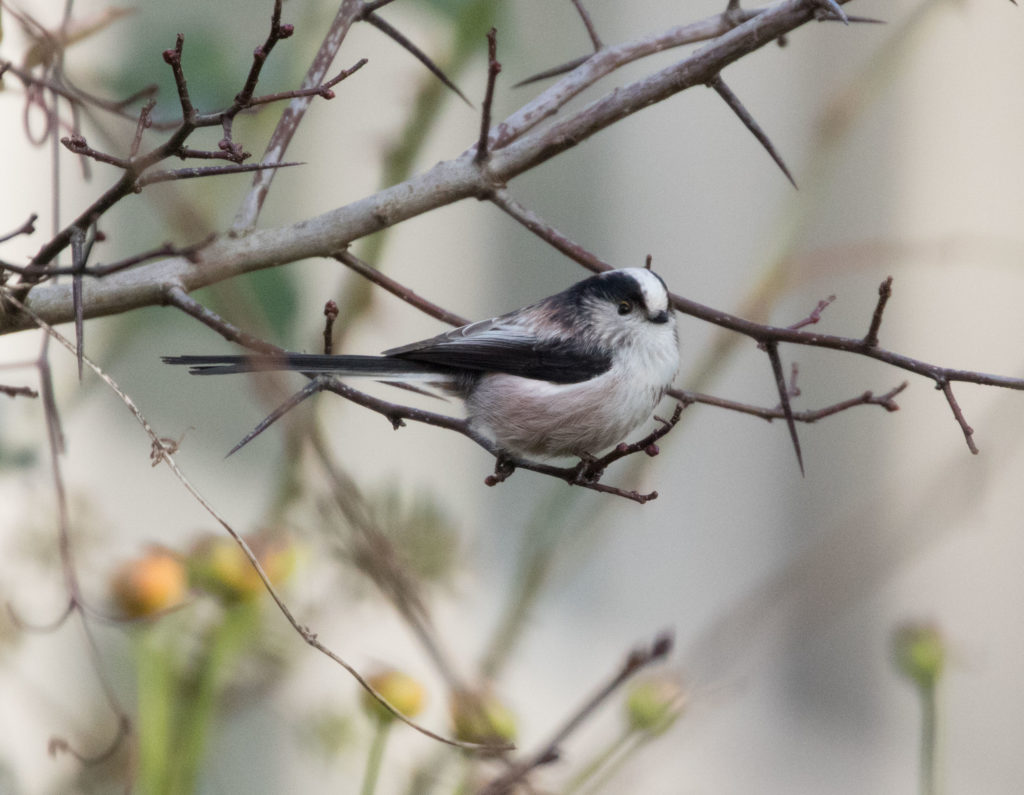
After observing Long-tailed Tits in Europe and Asia, I was fascinated to learn more details of their highly social behavior in The Social Lives of Birds.

Similar revelations emerge with every chapter, examining birds from a wide variety of terrestrial and aquatic habitats. My favorite chapter was the last, “Supersocial Groups: Birds That Are Always Together.” That’s probably because it featured one of my favorite birds, the Acorn Woodpecker (see our post College Search Birding in California), and three other species I was fascinated to learn more about: White-winged Choughs, Sociable Weavers, and a bird Braden and I are always delighted to see, Pinyon Jays. Regarding the latter, Braden and I have seen Pinyon Jays only a handful of times here in Montana, and I had wondered why they aren’t more common. Strassmann explains that the birds need extremely large territories to guarantee a dependable food supply. Unfortunately, their main food source, the pinyon pine, has suffered extreme losses from clearing for agriculture and other reasons. Warmer temperatures driven by climate change have also impacted the production of pinyon pine seeds, leading to large-scale die-offs of these beautiful, dynamic, gregarious birds.
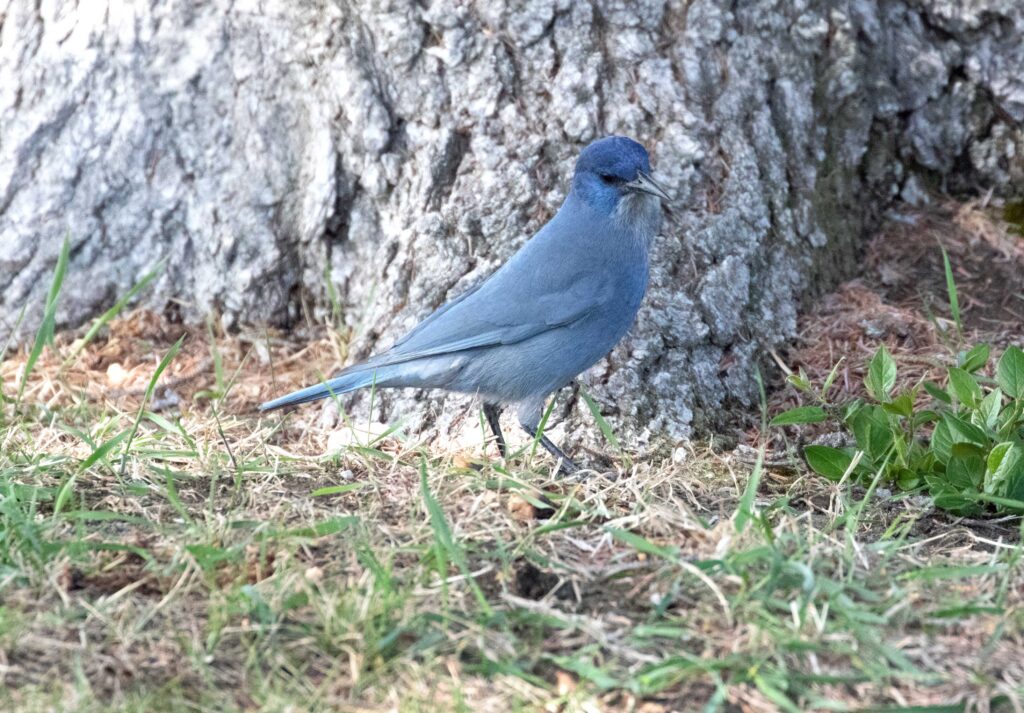
Strassmann devotes much of the final chapter on one of Braden’s and my favorite birds, Pinyon Jays, shown here in a cemetery in Helena, Montana.

The Social Lives of Birds struggles a bit over whether it wants to be a comprehensive resource or an engaging narrative in the vein of the recently reviewed The Great Auk or A World on the Wing. The author mentions her personal connections to many of the topics, but I found these more distracting than engaging. Still, that will not prevent readers from enjoying the book and harvesting a wealth of information—knowledge that will help you look at birds with greater understanding and appreciation each time you head out to bird.

Review copy provided by the publisher.
A World on the Wing (Book Review)

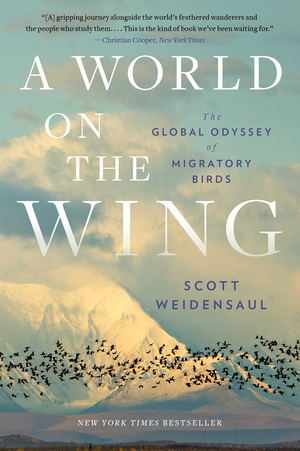
With fewer birds around, winter is an excellent chance to catch up on bird-related reading, both for enjoyment and education. I find this a perfect time to check out both new bird-related titles, and older books that I have somehow overlooked. Speaking of the latter, during the December holiday my father-in-law handed me Scott Weidensaul’s remarkable 2021 release, A World on the Wing: The Global Odyssey of Migratory Birds (W. W. Norton). I’m so glad that he did!

An easy reading style, engaging storytelling, and fascinating information render A WORLD ON THE WING one of a handful of required reading books for birders. (Click on the image for ordering information.)

In A World on the Wing, Weidensaul manages to take an overwhelming body of global information about bird migration and distill it into a series of stories that give the reader a captivating picture of what’s going on out there. The book’s first chapter hooked me immediately with the author’s visit to one of the world’s most vital shorebird stopover sites—and one I knew almost nothing about—the mudflats surrounding the Yellow Sea. These mudflats are nothing less than the linchpin to the East Asian-Australasian Flyway (EAAF), a vast, complicated series of routes used by millions of birds migrating from the Southern Hemisphere to breeding grounds in the far north. According to an online UNESCO article, about ten percent of all migrating birds on the EAAF depend on the Yellow Sea stopover area. They include two of the planet’s rarest shorebirds, the “Spoonie”, or Spoon-billed Sandpiper, with a population estimate of about 500 or fewer, and Nordman’s Greenshank with fewer than 2,000 individuals. Beyond that, the area provides critical support to 400 other bird species, including 45 considered threatened.

This first chapter sets the tone for a global, diverse journey through myriad aspects of bird migration. One chapter focuses on the incredible physiological adaptations of migrating birds, including their abilities to sleep on the wing, reduce or increase the size of internal organs to optimize weight and function, and navigate by taking advantage of quantum physics. Other chapters focus on species or groups of migrating birds across the globe. Some of these birds, such as the Kirtland’s Warbler and Snowy Owl, will be familiar to many readers while others, such as Bar-tailed Godwits and Amur Falcons, are less so. Every chapter, though, is filled not only with revelations, but personal anecdotes and experiences that make the stories come alive.

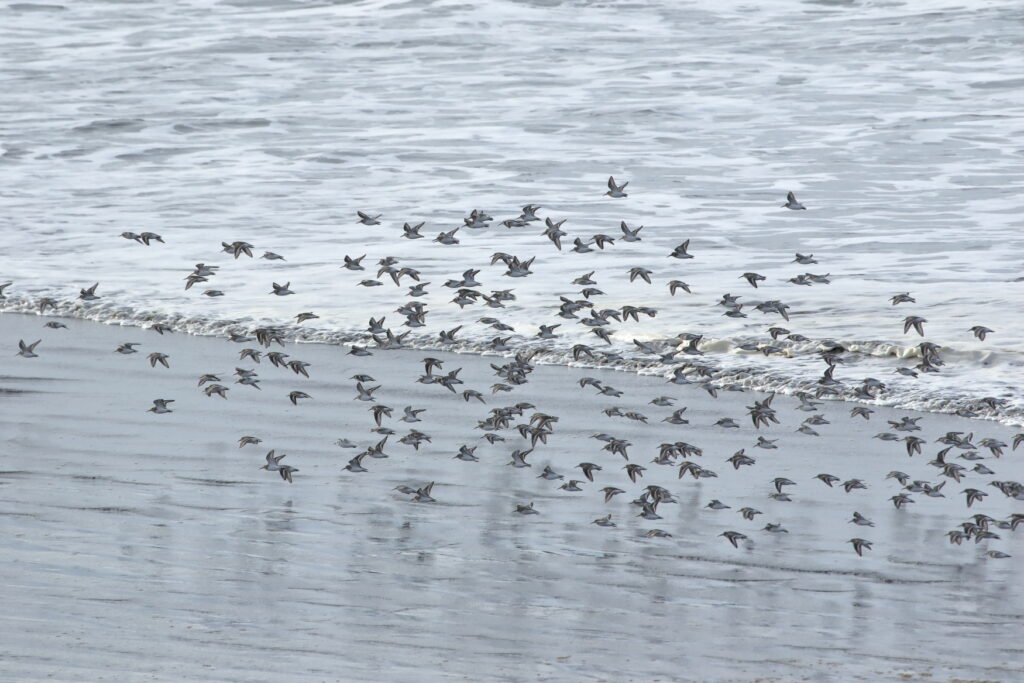
While many key stopover sites have been protected in North America, our own migrating bird numbers continue to plummet. Shorebird species have been especially hard-hit. (Shown here: Dunlins at Fort Stevens State Park, Oregon.)

Taken as a whole, the book serves as an impassioned plea to protect migratory birds and, well, just do things better on this planet. The crucial mudflats of the Yellow Sea, for instance, are critically imperiled by industrial development, pollution, and interruption of sediment flow caused by thousands of dams across China’s rivers. It’s not that the loss of these mudflats would put a dent in bird populations. It could wipe them out. The author quotes one scientist as saying, “There is no more buffer. There is no more ‘somewhere else’ for these migrants.” The threats to migrating birds are multiple and widespread, varying only in their particulars. In some places, pesticides take terrible tolls. In other places, it’s illegal hunting for local culinary specialties. Almost everywhere, habitat loss and climate change loom large.

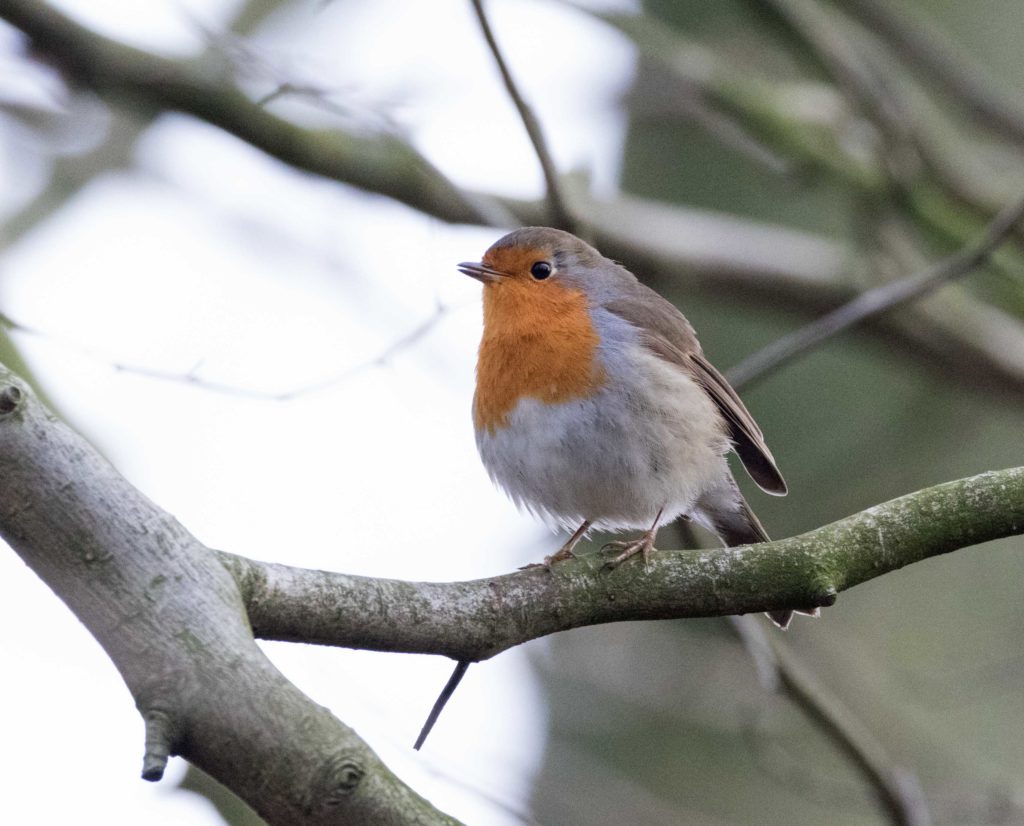
In Cyprus, Italy, France, and other countries, millions of migrating songbirds are needlessly and illegally slaughtered to satisfy traditional and/or eccentric culinary tastes. According to an Audubon article, at least 157 species are caught, including 90 species of conservation concern. (Shown here: European Robin.)

Somehow, the author manages to balance these threats with the overarching wonder of bird migration and leaves the reader feeling hopeful—or at least determined—along with being much better informed. This balance, along with the engaging writing style and storytelling make this one of a handful of bird-related books that I consider required reading for anyone interested in birds and conservation.

Order this book at your local independent bookstore!

FSB’s Third Annual Short-Eared Owl Lousy Photo Shoot!

You knew it was coming. You heard the rumours. You’ve waited patiently, and guess what? Today is the day! Right this second, Braden and I are proud to reveal FSB’s Third Annual Short-Eared Owl Lousy Photo Shoot!

Like many birders, Braden and I try to “bird in” the new year with one or more big days of birding somewhere near our home in Missoula. The past couple of years, we’ve headed to Ninepipe National Wildlife Refuge about an hour north of us, mainly because it’s a reliable place for a variety of birds and is especially good for hawks, falcons, and other raptors. This year, our day was shaped by a couple of fun additional circumstances. One is that our long-time friends Susan Snetsinger and her son (Braden’s pal) Eli Frederickson happily agreed to join us for our birding excursion. The other is that a putative sighting of an Arctic Loon on the north end of Flathead Lake  sent all of us Montana birders into a tizzy. Why? Because an Arctic Loon has never been reported in the state!

For the third year in a row, we decided to head north through the spectacular Mission Valley for our first major birding expedition of the year.

(To view our past two “lousy owl” photo blogs, see our posts Lost in Owls and Plenty of Partridges.)

Unfortunately, on December 30th, yours truly woke up with his first cold in two years and was in no shape to venture out on January 1st. No problem. Everyone agreed to push back our outing to January 3rd and, more important, the Arctic Loon was still being reported! As we set out before dawn, fog and ice covered our route, making driving sketchy, especially with the pre-dawn danger of deer wandering out onto the highway. Braden, though, fearlessly drove us north and as we passed the National Bison Range, a bit of light began seeping in through the fog.

We decided to head to the loon first and that afforded Susan and Eli a once-in-a-lifetime opportunity to join Braden and me at our favorite French breakfast spot, McDaniels, in Ronan. I even convinced the two of them to order my favorite morning birding beverage, a large iced tea, to help power us all through the day.

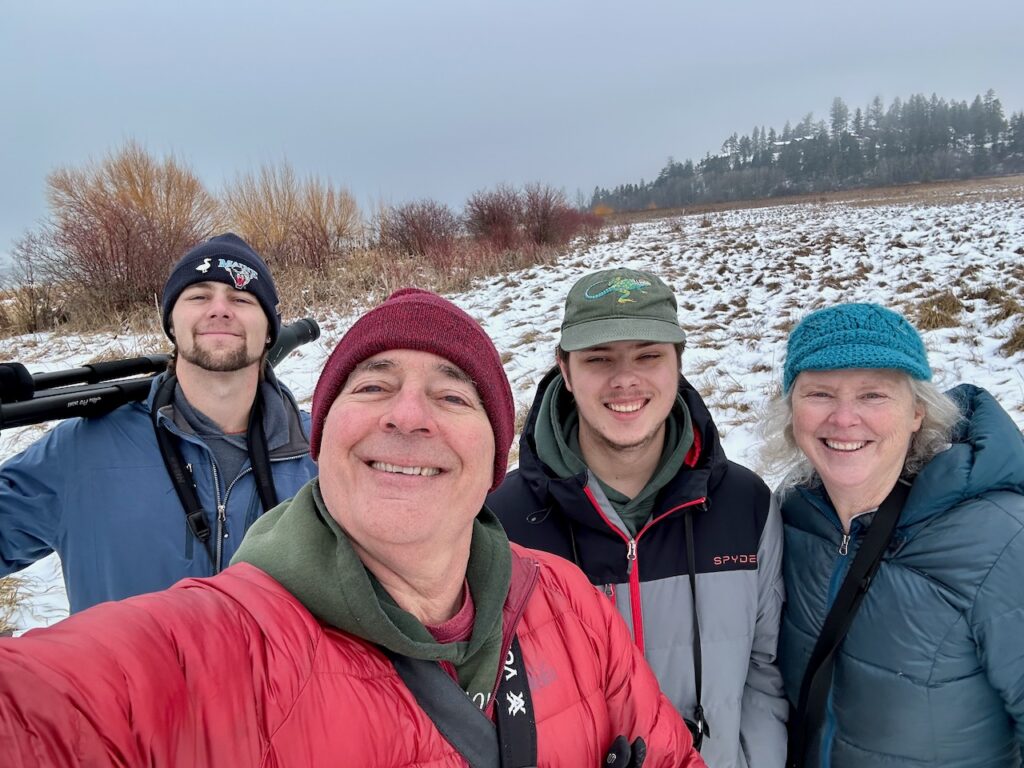
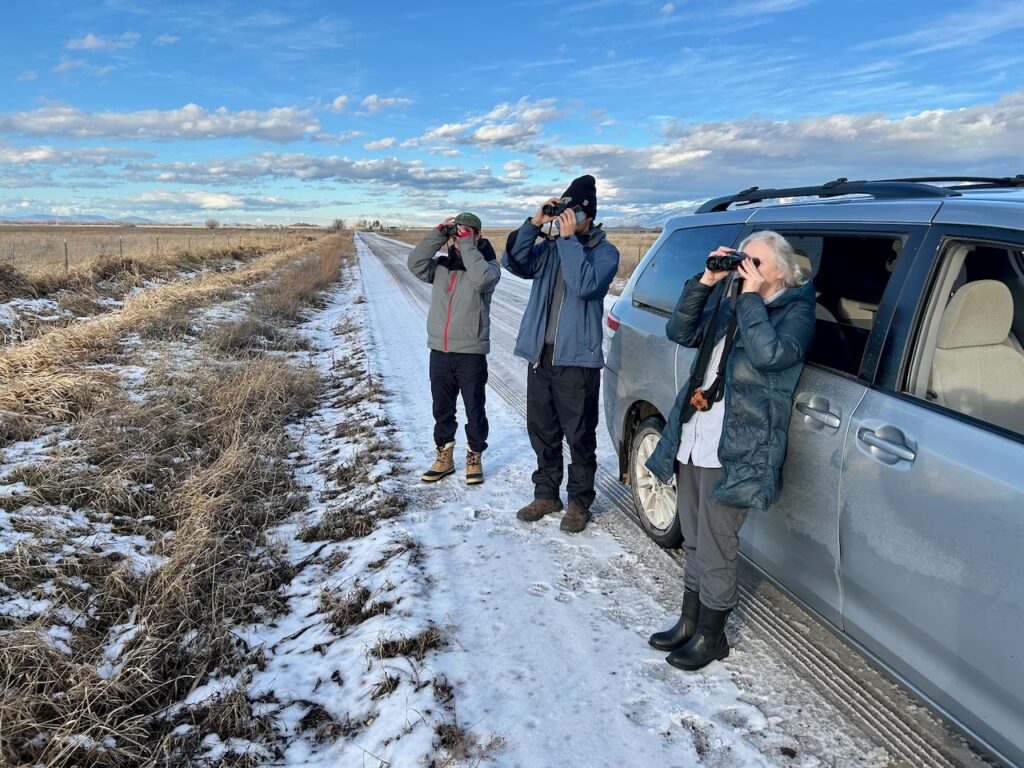
From left to right, Braden, Sneed, Eli, and Susan as we pursued our spirited quest to locate the “Arctic Loon.”

After a fruitless stop to look for Long-eared Owls near Polson, we arrived at our destination of Somers on Flathead Lake just after 11 a.m. Dan Casey, who first reported the Arctic Loon, had kindly noted several viewing possibilities from the lakeshore, and we began visiting these. Right off the bat, we saw some interesting birds. These included Red-necked Grebes, a species we had never found in Montana at this time of year, and a couple of Blue Jays, a species Braden and I totally missed in our home state last year.

We saw no sign of a loon of any kind, so continued to explore the lakeshore. More fun birds popped up, including a variety of ducks, Trumpeter Swans, and one of our favorite winter birds, Northern Shrikes. We also toured the neighborhood where we’d seen our lifer Snowy Owl eight years ago (see our very first post, A Quest for Snowy Owls). None of the owls have been reported this winter, but we thought, “Might as well give it a try.” We eventually left the Kalispell area both owl-less and loon-less, but none of us really minded. We were still seeing birds and even better, enjoying each other’s company.

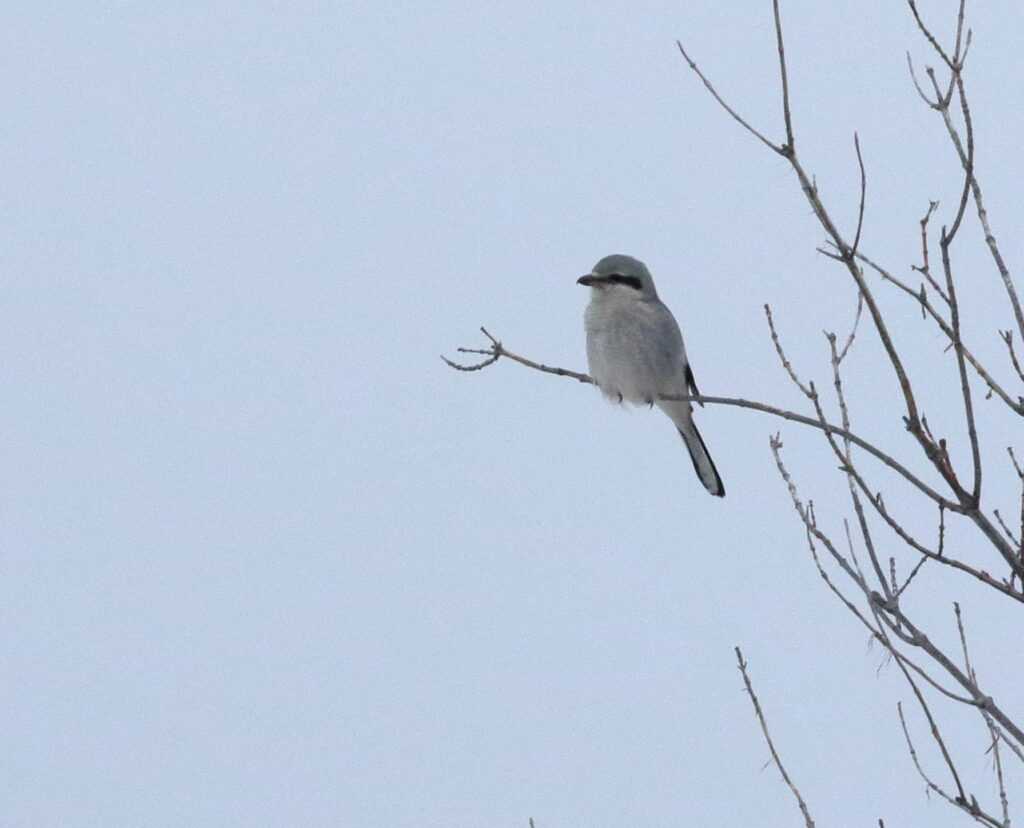
Any day you find a Northern Shrike is a good birding day—and we saw three or four of them during our expedition.

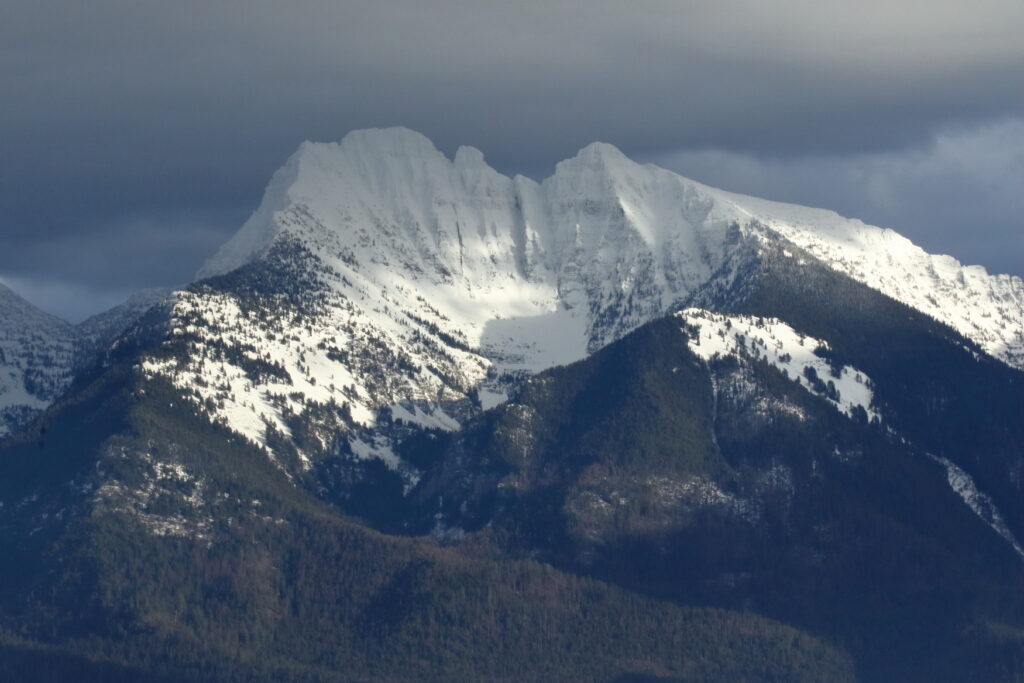
90 minutes later, we were turning down Duck Road at Ninepipe. It was only 3 p.m., but this time of year it felt a lot later. Much of the fog at cleared, but mist still hung off of the spectacular mountains in the distance, giving everything an other-worldly feel. We drove slowly and picked up some expected raptors: Rough-legged and Red-tailed Hawks, Northern Harrier, Bald Eagle, and American Kestrel.  

“Should we go drive by the Short-eared Owl place?” I asked Braden.

“Sure,” he answered and began searching for the location on his phone.

We didn’t get that far.

Heading south on Ninepipe Road, he suddenly shouted, “There’s one!”

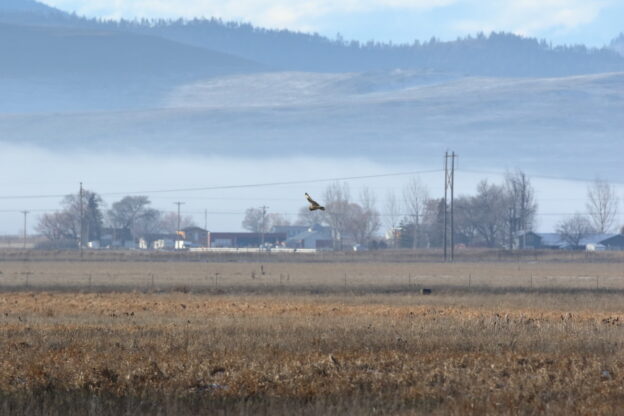
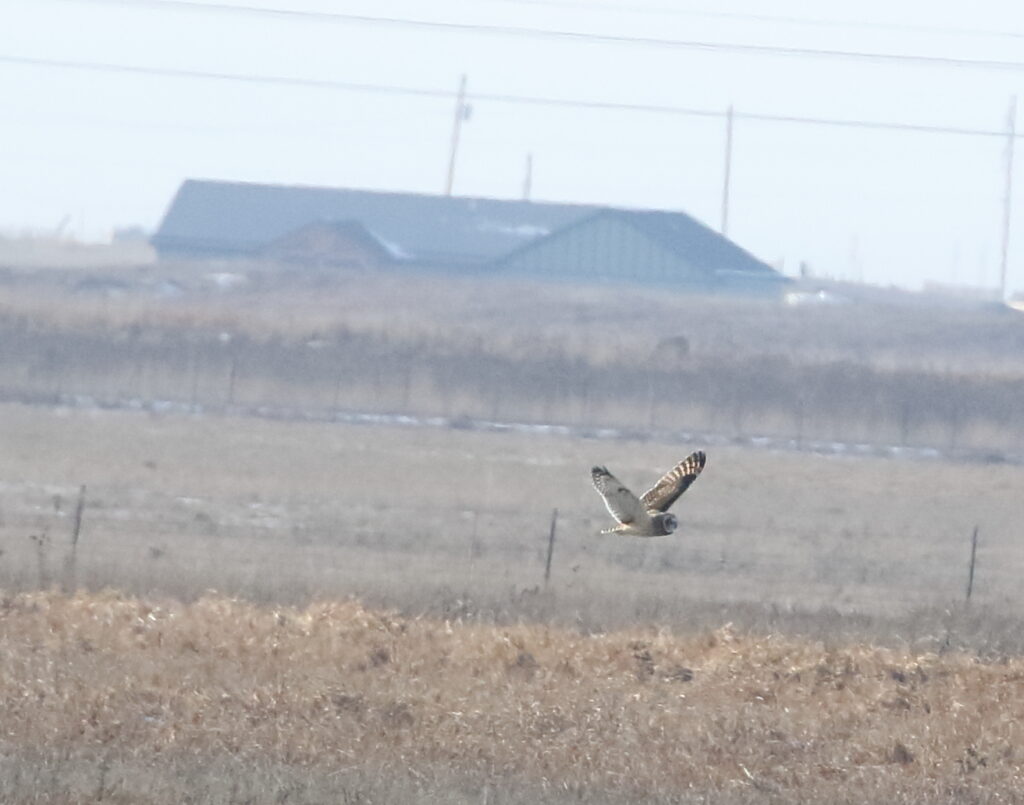
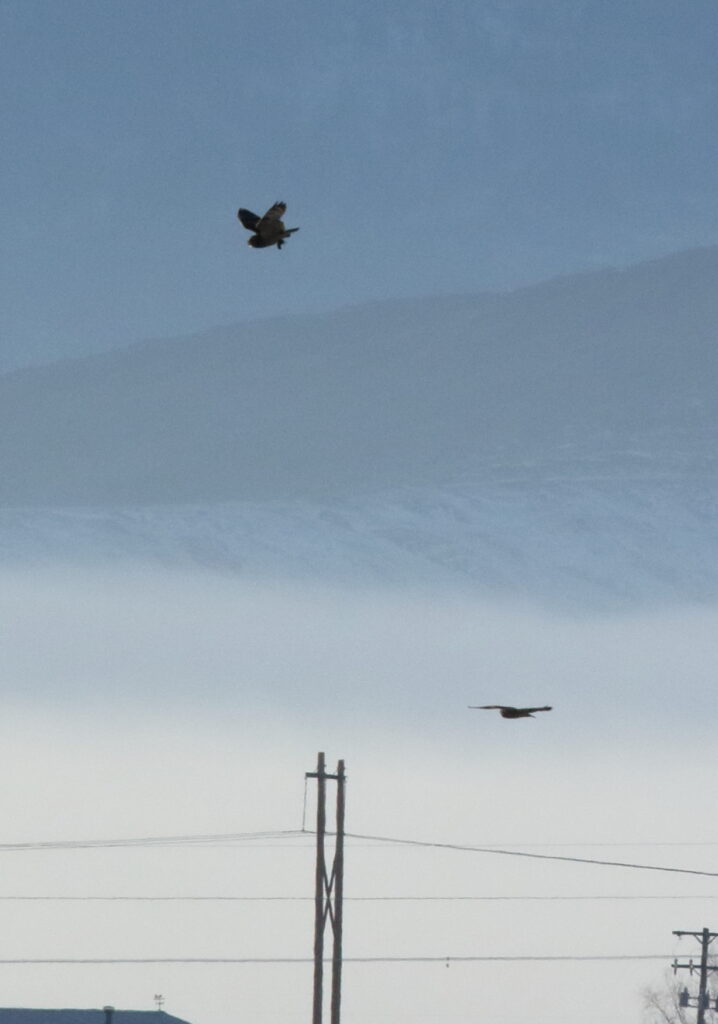
I am especially proud of this lousy Short-eared Owl Shot. See how I tilted the camera to make it appear that the owl is flying downhill? Well, guess what? It wasn’t! I just used my advanced photo skills to make you think that. This is a highly complex and dangerous technique, however, so don’t try it at home!

I immediately pulled over so we could all look and, sure enough, there was one of our favorite creatures flying low over a marsh area in the distance.

We had barely begun to look at it, however, when Eli shouted, “There’s another one!”

“Oh my god,” Braden added, scanning with his binos, “There’s three more way out beyond that!”

If I’d been trying harder, I would have been able to capture up to five SEOWs in one shot–but that might have made the photo TOO good for this blog!

We clambered out of our minivan, and the more we looked, the more Short-eared Owls we saw. These weren’t quick glances, either. Some of the owls appeared to be hunting, dropping quickly into the marsh for a go at a vole. Others looked to be courting, sparring and jousting “good-naturedly” and briefly locking talons before circling around again. A couple of owls spent a few minutes chasing away a Northern Harrier who apparently lacked the firepower to defend her space.

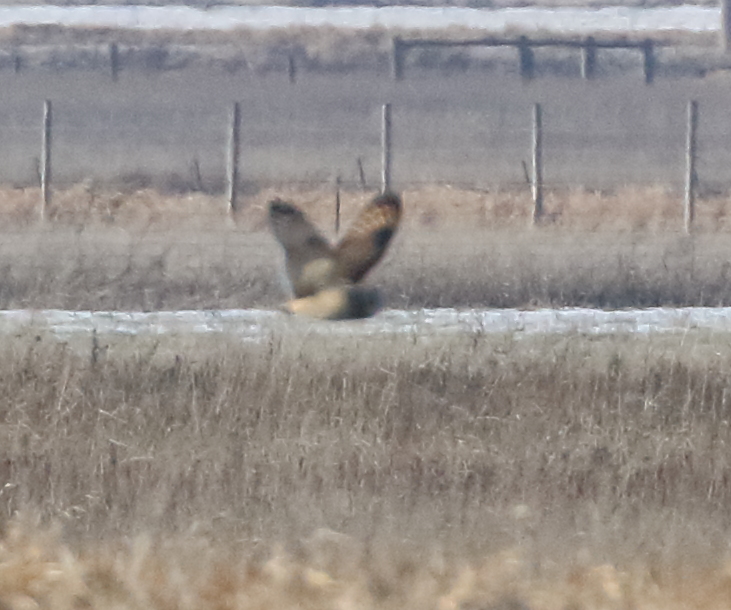
This SEOW did not want its identity revealed, so as you can see I used sophisticated AI processing to blur out its face.

While these weren’t the closest SEOWs we’d ever seen, this was far and away the best Short-eared Owl experience any of us had ever had. Not only were the owls engaging in all kinds of interesting behaviors, we had this winter spectacular all to ourselves.

We encountered nary another birder during our half hour enjoying this “most owl” spectacle!

Oh, and did I mention that I got to take more than a dozen lousy Short-eared Owl photos? That felt particularly gratifying since, after three years, I’ve got a reputation to uphold! We hope you enjoy the gallery and keep tuning in to FatherSonBirding. Even more, we hope you keep having your own magical birding moments.

Happy New Year!

P.S. Oh, it turns out that the Arctic Loon got “downgraded” to a Pacific Loon. C’est la loon!

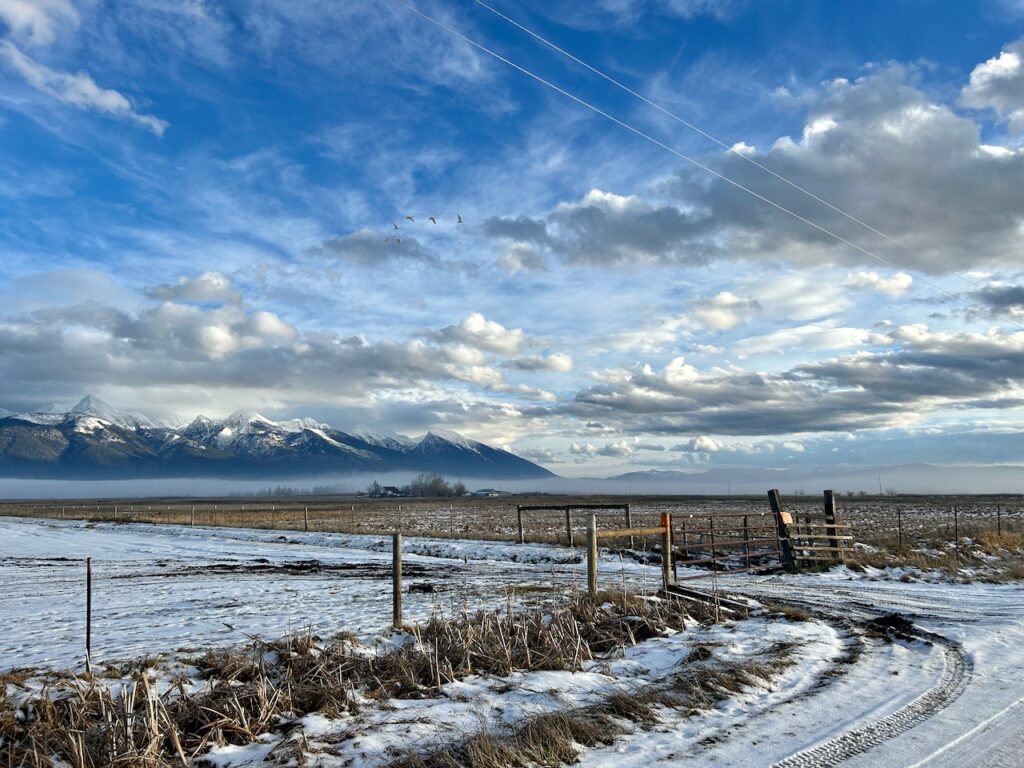
Even without the owls, a winter visit to the Mission Valley is a soulful, satisfying experience. Oh, and can you find Trumpeter Swans in this picture?