
Braden and I head to Costa Rica next week, but before we go I am delighted—yes, delighted—to share the following guest book review by my buddy, Scott Callow. I predict you’ll enjoy his passionate, humorous review as much as the book itself! We challenge you to read it before our next post. And now, heeeeeeeeere’s SCOTT!
Sneed asked me to write a review of The Birds in the Oaks: Secret Voices of the Western Woods by Jack Gedney (HeyDey Press, 2024) before I completed reading it. Consequently, It was impossible for me to finish the last chapter without constant rereading because I became anxious and distracted, wondering how to share all the great things about it. For those of you who only read headlines or first paragraphs of news stories, let me present a few crafted comments that summarize my experiences, being careful not to exaggerate.
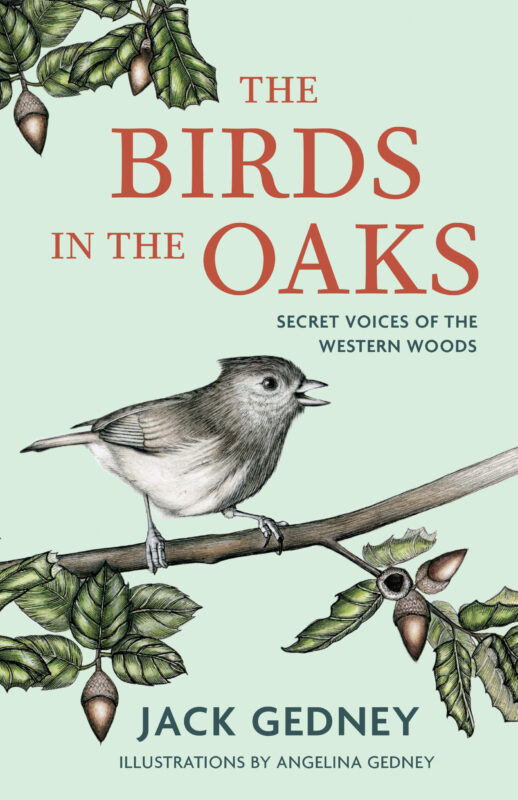
* If you live near oak woodlands, you have no claim to being “interested in birds” if you do not read this book.
* The Birds in the Oaks is overflowing with interesting ecological details that will keep me rereading chapters, and I expect I will mark the pages with notes like a seeker underlining sections of the Bible on the journey to become a better person.
* The Birds in the Oaks is a superb example of well-crafted nature writing that mixes extensive and accurate observations with poetic prose, and mixes personal experiences with quotes from historical bird authors.
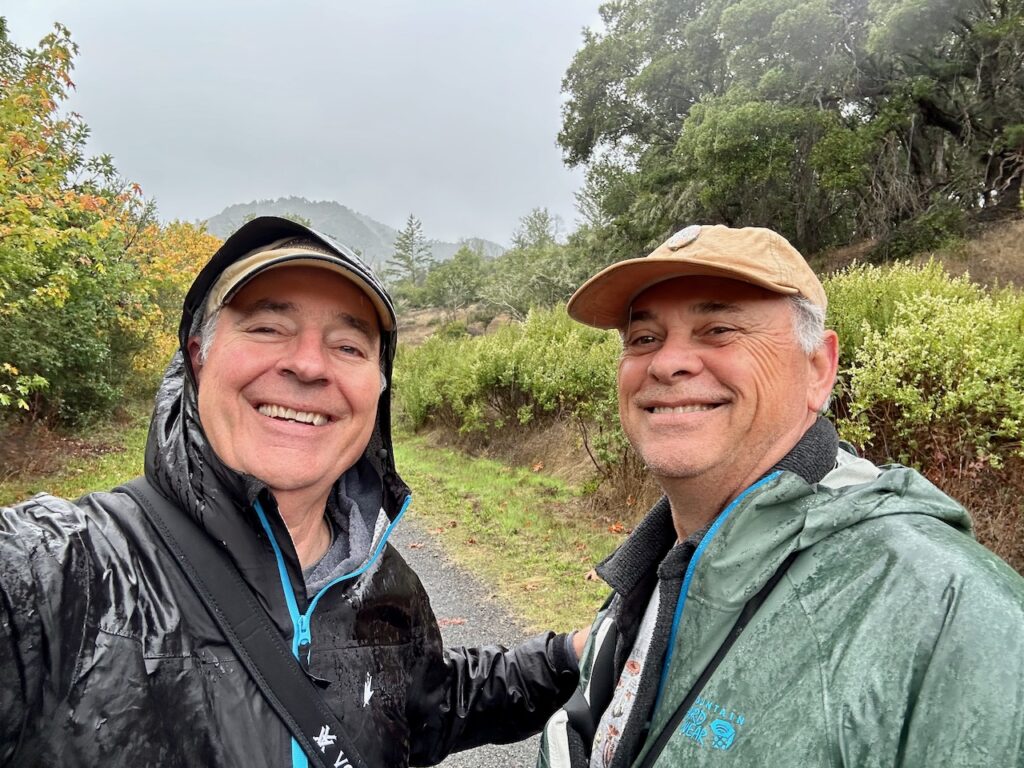
This book, admittedly, is personal for me. I live within walking distance of California oak woodlands. I volunteer at Sugarloaf Ridge State Park which is dominated by oak woodlands and mentioned in the book. The author’s former Wild Birds Unlimited store lies only 24 miles from me. Most importantly, I know these birds. I have learned so much about each of them from Gedney’s book that they have become even more familiar (emphasis in “family”). I will admit only here, amongst birders, that I sometimes say “Hey, buddy!” when I see my first Oak Titmouse of the day, and “Hey-hey-hey” when I see a White-breasted Nuthatch.
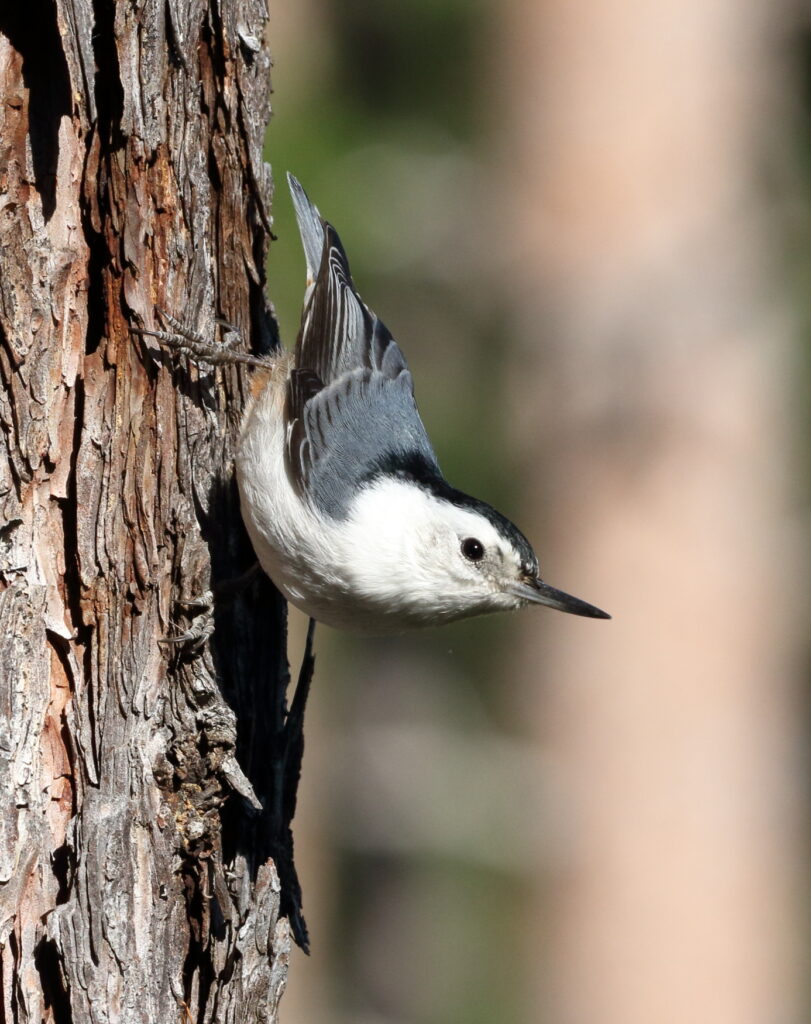
Each curiously titled chapter is organized around a species. Each begins with key characteristics. Many chapters start with song and call, which I appreciate since I’m late in life to learning bird sounds. (Thank you Merlin.) Example:
“I still hear the bird, steadily whit-whiting away as if mocking my inability to follow.” (A Bird at Our Level – Bewick’s Wren) (“whit-whit bew-wick” – record to memory)
As someone who seeks to be entertained by bird behavior and science, I enjoyed how Gedney explains bird ecology.
“… to learn all the secrets of the woods, one must know … the birds beneath the oaks.” (Discontented Shadows – Spotted Towhee) (Cool we’re on a treasure hunt, I tell myself.)
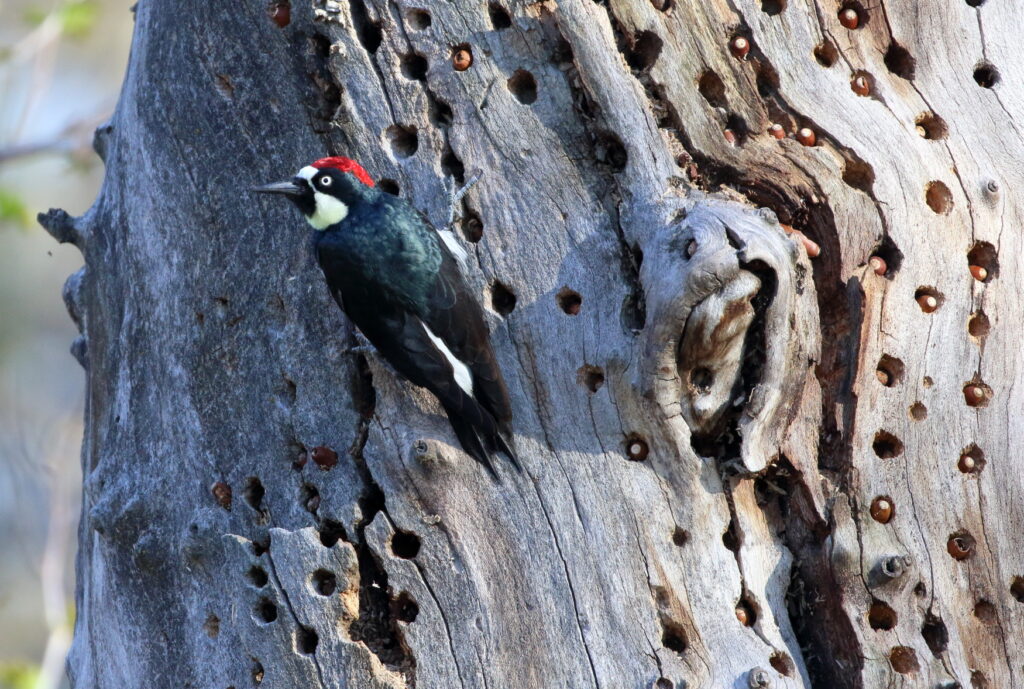
The ecological details too elaborate to be found in a guide have already enriched my birding. Even if you don’t regularly see Acorn Woodpeckers, every birder should learn about their unique extended family groups and their cooperative food hoarding strategies. I also believe every birder should wonder how the Bushtit, weighing as light as a nickel, can engineer such an elaborate sock-shaped nest, insulate it, camouflage it, and then use it for such a short nesting cycle, all on a diet of insects too tiny to see, even with the help of binoculars.
But this book is not written by or for the scientist. Gedney is not afraid to add his own appreciation of a bird or personal experiences or poetic descriptions. This at first raised my anthropomorphic alarms since I was trained to reject human sentimentality by my vertebrate bio prof, surprisingly an ornithologist who once said “birds are stupid; their behaviors are mostly determined by genetics; they have small brains.” (These prejudices were spoken decades before contradictory scientific information was shared in The Genius of Birds and several other books on bird intelligence.)
The Birds in the Oaks is very accessible, humanly so. It is so well written that you just might re-imagine your own feelings about birds and get all warm-like inside. You just might be heard saying “Wow” when learning something new about one of the birds. You might just slow down and spend “an inordinate amount of time” observing a bird in one location. Maybe, maybe not. But I will risk one bold prediction: If you get this book, several times you will imagine walking through the woods with the author himself.
No oak trees were harmed in the writing and publishing of this review.
Looks like a great read, Scott. I have added it to my book wish list.
I will pass on your compliments, Rog!
Birds are sooooo smart. I have trained a handful of them in my lifetime. I also see them purposely flying toward moving cars to get lift.
Whoa! That is way cool. I’ve never seen that before, but have heard of hawks/falcons waiting for cars to stop so they can ambush other birds!