
Tag Archives: Houston Audubon Society

Giving Back to Birds—with Great Breaking News! (FSB Holiday Shopping Guide, Part 3)

Holiday Joy! Back in August, we alerted FSB readers to Houston Audubon’s effort to buy a critical piece of land for their globally-important Bolivar Flats refuge. (See this post!) This is a refuge Braden and I have visited and is a vital habitat and staging area for hundreds of thousands of birds annually. When a developer planned to build a housing development smack in the middle of it, Houston Audubon negotiated an option to buy and protect the property. The problem? A $3 million price tag! We were skeptical that it could be done, but guess what? GUESS WHAT??? Thanks to donations by 1,127 donors from 47 states and 8 different countries, Houston Audubon achieved its goal! Donations included a huge check from Roku CEO/Founder Anthony Wood and his wife Susan. (I knew I loved Roku for a reason!) Everyone who donated—and those who didn’t—should be immensely pleased, because this is not only a crucial win for birds, it is a win for all of us. It also is the perfect lead into today’s blog topic—End-of-the-Year giving for birds!

Especially near the end of the year, when tax deadlines are looming, we know that a lot of you are asking yourselves, “What can I do to help birds?” We all know that birds are in big trouble, but it can feel overwhelming to figure out just how to spend our donation dollars most effectively. Today, in order to make your lives a bit easier, we are pleased to present a short list of Braden’s and my favorite groups that are helping birds, and yes, we have donated to every one of them. To find out more, just click on the underlined names below. Then, please, please break out that credit or debit card! We truly are at a global crossroads in the fight to save birds, and we guarantee that every dollar you spend will make you feel just a little bit better. While you’re at it, you might want to join your local Audubon chapter and/or the American Birding Association to help connect you to other birds, share information, and expand the love of birds!

Groups Working Internationally

Cornell Lab of Ornithology—the maker of eBird and Merlin makes huge investments in science and education to raise awareness of birds and promote conservation.
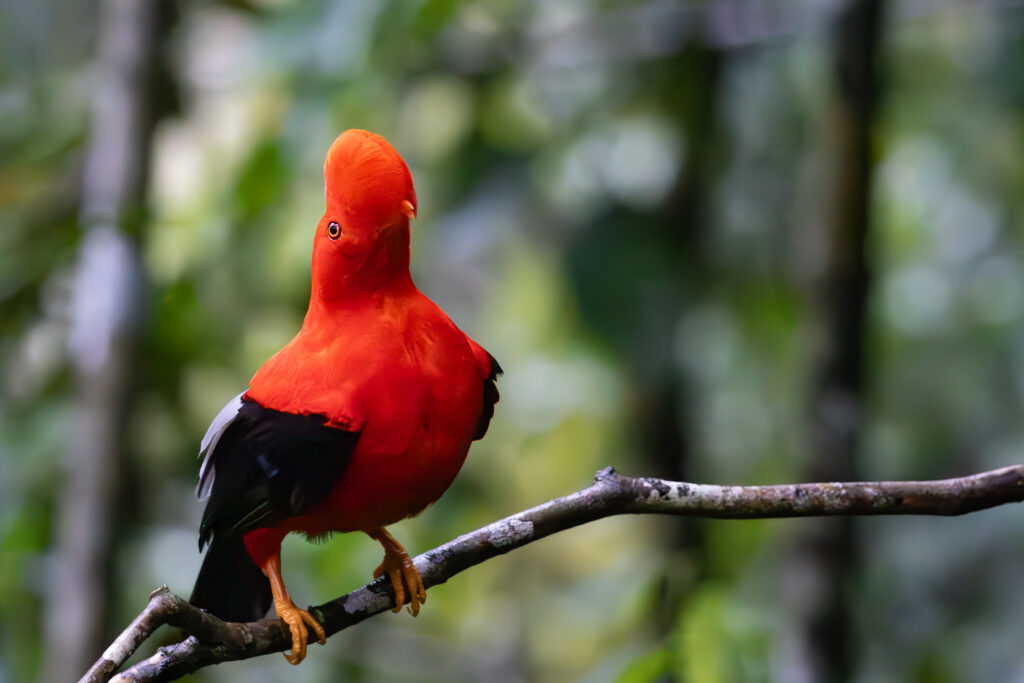
Bird Life International—Braden’s favorite group works on the entire international spectrum of bird threats, and also works with local communities to help protect birds and habitats. (Andean Cock-of-the-rock photo courtesy of Roger Kohn!)

Union of Concerned Scientists—one of Sneed’s favorite groups, we make monthly contributions to this group working to fight rampant disinformation and promote rational, scientific solutions to a host of environmental problems facing us.

Groups Focused Mainly on North America

Audubon—still the biggest name in birding, Audubon promotes bird conservation and education, and works on legislation to protect birds. (Note: the national, state, and local chapters are all independent entities. Donations to national do not trickle down, so consider donating to all three.)

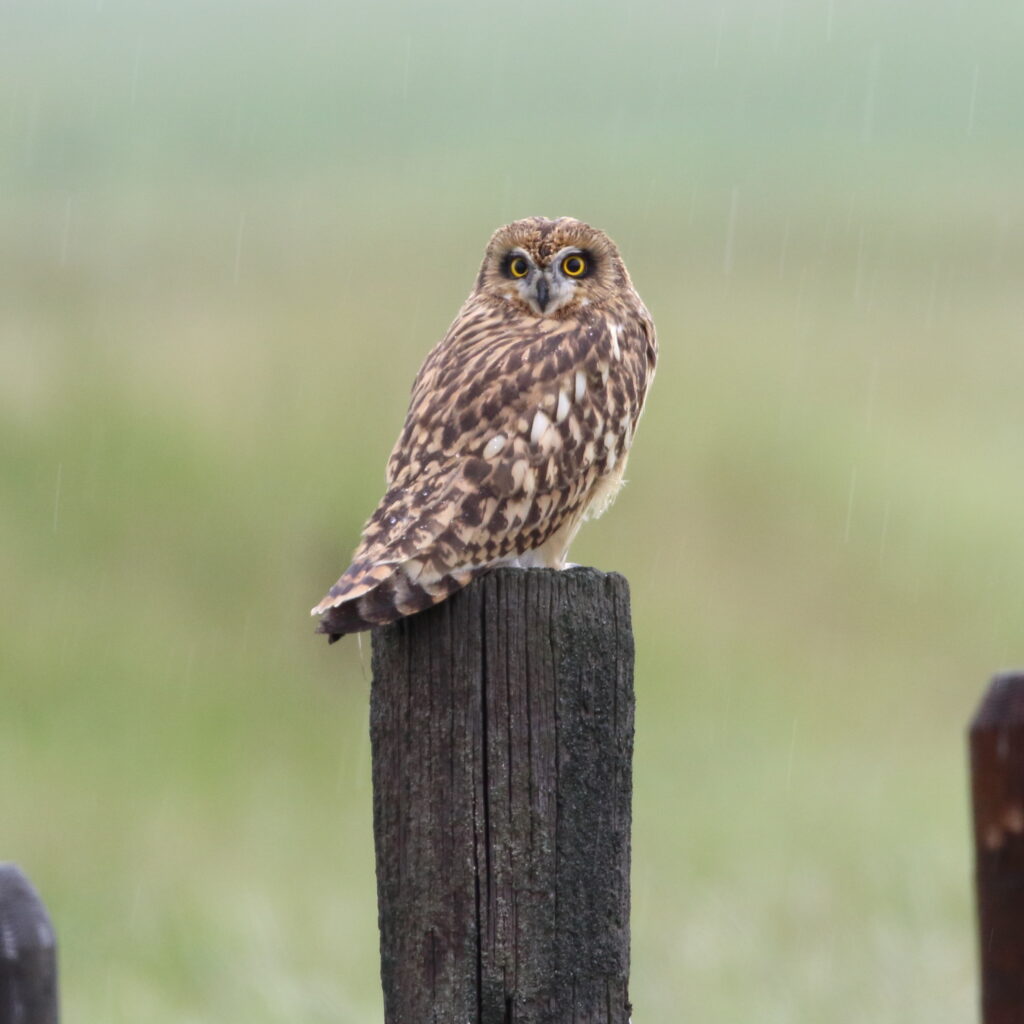
Owl Research Institute—one of the few groups focused on one of the world’s most charismatic groups of birds, ORI has been collecting data on owls for more than thirty years, sharing it with many different entities to shape science and conservation priorities. They especially work to decipher the causes behind the decline of many owl populations—including those of this Short-eared Owl.
American Bird Conservancy—also works on a wide range of bird-related issues including the urgent problem of outdoor cats.

State and Local Groups

Montana Audubon—besides putting on the wonderful Wings Across the Big Sky birding festival every year (and yes, Braden and I plan to be there in 2026!), Montana Audubon works to educate birders, identify the Treasure State’s bird conservation priorities, conduct research on endangered species, and carry out many, many other activities that benefit birds and birders.
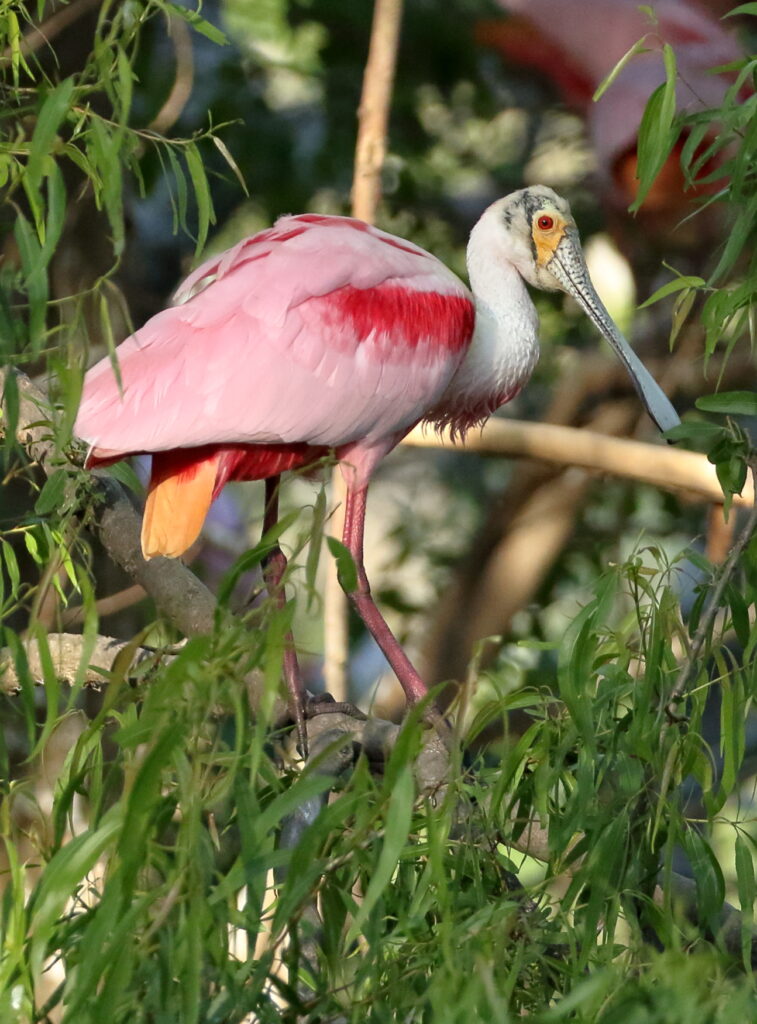
Houston Audubon Society—a regional bird powerhouse, promoting bird education and conservation, and protection of vital habitats, especially for migrating birds. Think High Island from the movie The Big Year! (Roseate Spoonbill shown.)

Bird Conservancy of the Rockies—another regional powerhouse with widespread activities including vital research into wintering grounds of grassland birds in the Southwest and Mexico.

University of Montana Bird Ecology Lab (UMBEL)—conducts important research, monitoring, and outreach activities around the region!

Montana Bird Advocacy—a grassroots research organization started by well-known Montana birding legends Jeff Marks and Paul Hendricks, MBA conducts research on little-known Montana birds such as the Gray Flycatcher. (See our post Gray Flycatcher Science.)

An unbanded adult Gray Flycatcher implores: “Donate Now!”

Protecting Texas’ Globally Important Bolivar Peninsula—We Can Do This Now!

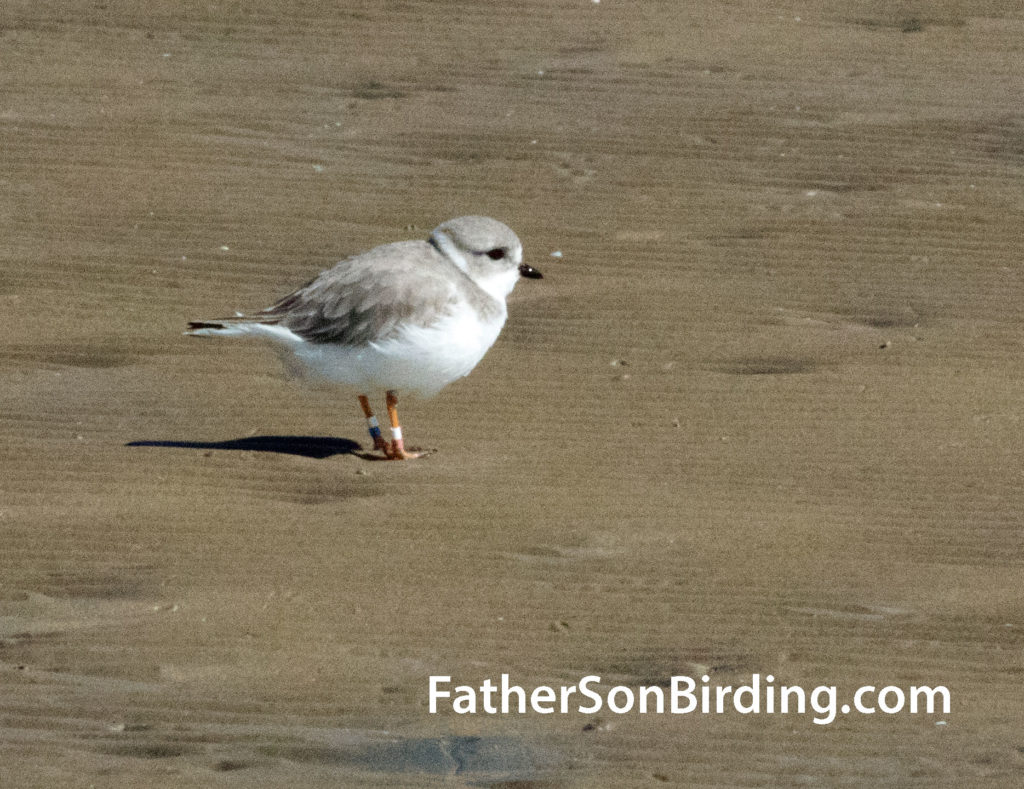
Instead of your regularly-scheduled blog, we today invite FSB readers to join in on an urgent appeal to help protect one of North America’s coolest and most vital bird habitats—the globally important Bolivar Peninsula. Learn more and donate by clicking here—or on the Piping Plover below.

If you’ve followed FatherSonBirding—or read my books Birding for Boomers or Warblers & Woodpeckers: A Father-Son Big Year of Birding—you know that High Island and the Bolivar Peninsula outside of Houston have played pivotal roles in Braden’s and my birding experiences. In these locations, the Houston Audubon Society (HAS) has worked tirelessly to obtain, restore, and protect vital habitat for both migrating and resident birds. On our first visit to High Island and the Bolivar Peninsula in 2016, Braden and I saw an astounding forty-five Life Birds in one day! These included everything from Scarlet Tanagers and Least Terns to Piping, Black-bellied, and Semipalmated Plovers.

Braden and I saw our first-ever Piping Plovers on the Bolivar Peninsula, and I was lucky to see this endangered species again on a subsequent visit.

Even though I live in Montana, I became an annual supporter of HAS shortly after that visit. Even better, I have been fortunate to visit the area three more times. Every trip has been a highlight of my birding career. Each time, I have seen gobs of amazing songbirds, shorebirds, and waders, and learned a ton about birds. Just check out some of my past posts about visiting the region:

Turkey Day Texas Adventures Part 1: Pursuing Plovers

Tangled!

Going Cuckoo for Fall Warblers in Texas

Anahuac Lifer Attack

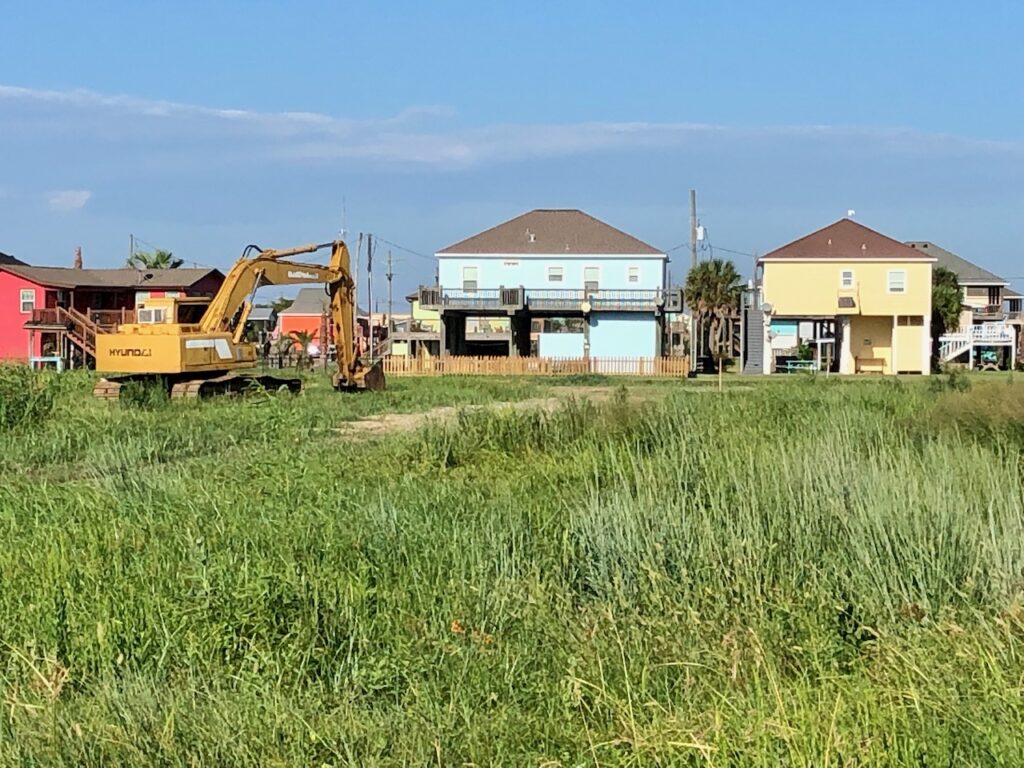
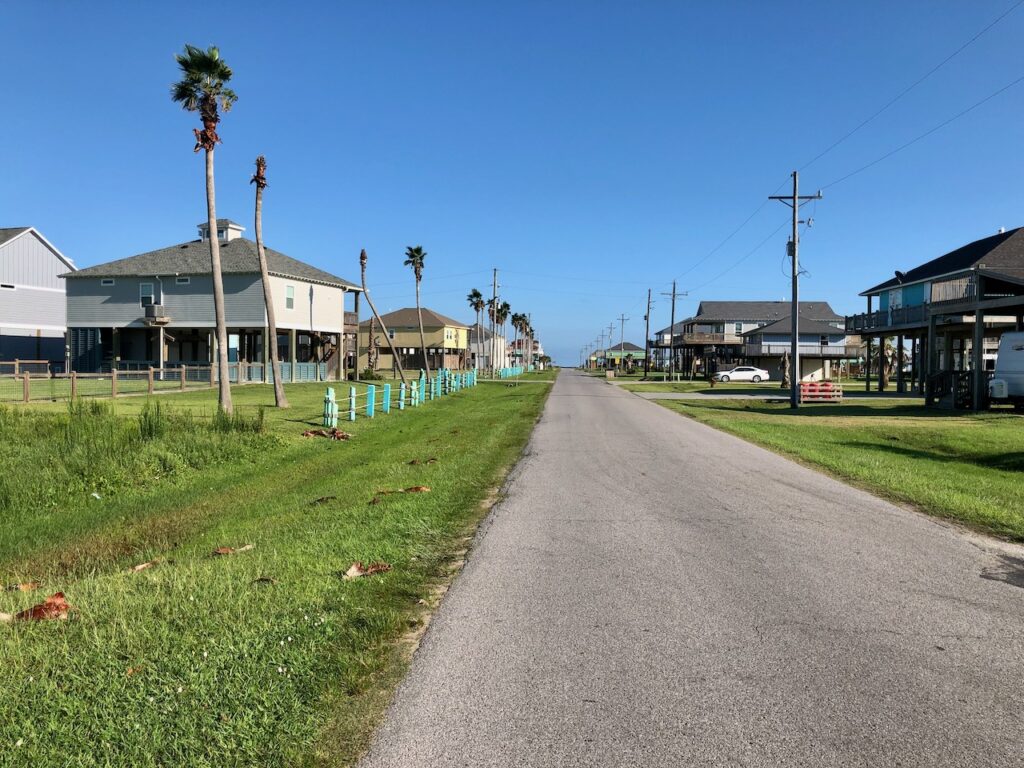
Unfortunately, during my visits, I also have noticed an inescapable fact: the Bolivar Peninsula is being developed at an astounding rate and the reason is clear: beachfront property. During our first visit there, Braden and I noticed quite a few houses along the 25-mile or so stretch of the peninsula. On each subsequent visit, I was blown away by how many new houses had sprung up since my previous visit! On my most recent trip, this past April, I realized with dismay that the entire peninsula would soon be wall-to-wall housing developments.

One of dozens of major housing developments that have sprung up on the Bolivar Peninsula since Braden and I first visited in 2016.

I can’t even begin to explain how poorly-conceived this kind of rampant development is. Never mind that it has gobbled up some of the best remaining Gulf Coast wildlife habitat, it is virtually guaranteed that hurricanes will totally destroy these developments as they have in the past—and with increasing frequency thanks to climate change (see this Hurricane Ike story and this astonishing storm list). In fact, the ability of the peninsula in its natural state to block tidal surges, prevent erosion, and soak up storm water economically outweighs by far the short-term profits from this get-rich-quick development.

Rampant development in coastal areas not only destroys critical habitat, it greatly diminishes the ability of the coast to withstand hurricanes and other major storms. Though I’d love to enjoy a beachfront house like this myself, economically it is a lose-lose situation, both for homeowners and taxpayers, who often get stuck with paying the bills for disaster cleanup and rebuilding.

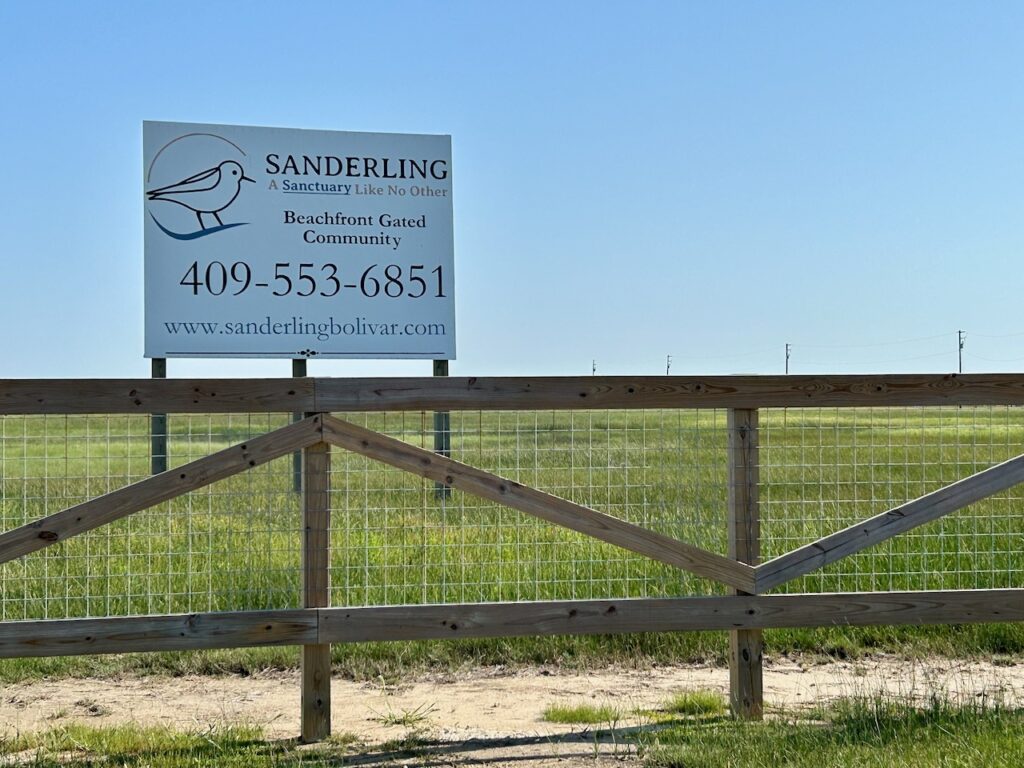
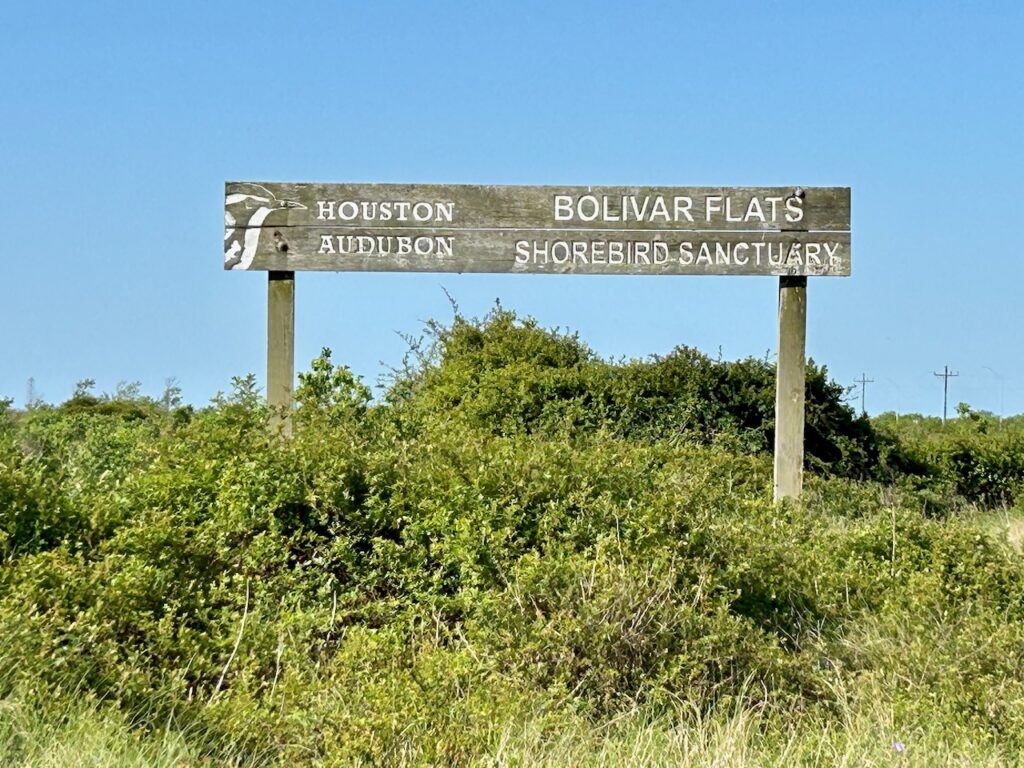
Still, the lure of fast profits is just too much here as it is in many other places. And that’s why I’m writing this post. Right now is one of our last best chances to protect what remains of this globally vital birding habitat. How? Currently, HAS owns and manages more than 3,000 acres of Bolivar Peninsula habitat—natural islands in an expanding sea of development. And yet, right at the entrance to their Bolivar Flats Shorebird Sanctuary, a new development recently cropped up. Ironically dubbed the Sanderling Development, it threatened to wipe out critical habitat and destroy a buffer to the core of the Bolivar refuge. The good news? Through heroic efforts, HAS managed to raise $3 million to buy 25 acres of the land this past July. Now, however, they need another $3 million to complete purchase of the remaining 27 acres of the property. This land is so vital that for the first time in decades, HAS has issued a public appeal for funds—And that’s where we come in!

Just one of many Bolivar housing developments, the proposed Sanderling Development directly threatened the ecological integrity of the Bolivar Flats refuge right across the road. However, HAS still needs to raise $3 million to complete the property’s acquisition. Click on this photo to donate!

No matter where we live, securing this last bit of property should be a major priority for birders. Not only does it help provide essential stop-over areas for millions of migrating birds that spread out across the continent, it helps protect critical breeding and wintering habitat. Endangered Piping Plovers, Black Rails, and Red Knots are just three endangered species among hundreds of other species that use this important area.

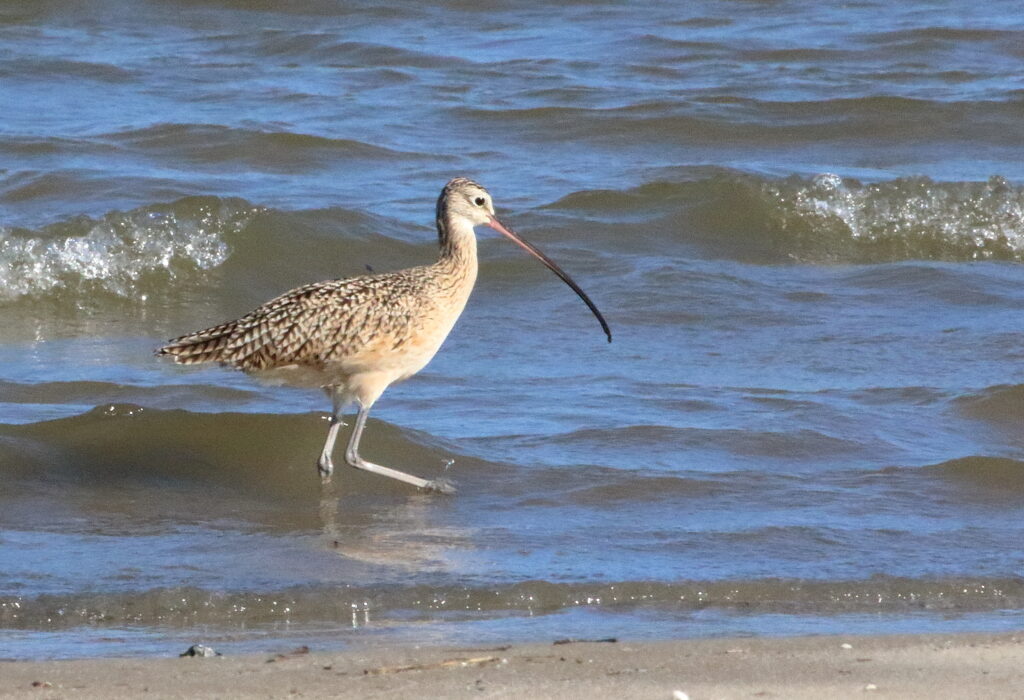
A fall Long-billed Curlew at Bolivar Flats—perhaps just returned from breeding in Montana?

So how about it? Do you have $25 to chip in? $100? $1000? If you do, I can say with confidence that your money will rarely be better spent. Along with donating, why not plan a spring or fall trip down to the area? If you are fortunate enough to be able to do this, I can almost guarantee it will be one of the highlights of your birding experiences. You also will not have the slightest doubt that your investment in this area is one of the best you will ever make. To donate, CLICK HERE NOW!

And with that, I will sign off so I can make a contribution myself!

Houston Audubon’s Bolivar Peninsula’s sanctuaries are not only vital for Texas birds, but for breeding birds throughout North America.

My Accidental Big Year

Enjoy these posts? Why not subscribe in the box down and to the right?

If you’ve been a loyal fan of FatherSonBirding, you probably know about Braden’s and my 2016 Big Year in which we saw 337 species in the American Birding Association (ABA) region in a calendar year. Since then, we have never set out to topple that record even though, with our vastly improved birding skills and knowledge, it would be a relatively easy thing to do. In fact, a couple of times we have come perilously close without really trying thanks to trips to Texas, California, and in Braden’s case, a band trip to Hawaii. When I received two invitations to Texas for this fall, however, I thought to myself “You know, maybe it’s time to give this a shot.”

Mind you, it was still a long shot. When I left for The Hummerbird Celebration in September I had managed to scrape together only about 260 species in Montana, Idaho, and Washington for the year, and knew I’d have to go BIG that first trip to Texas. I did, scoring about fifty Year Birds—but still left myself more than 20 birds short in perhaps the toughest time of year to bird. “Still,” I thought, “if I can somehow get ten or twelve more species on my second Texas trip, I might get within striking distance.”

I knew I would need help.

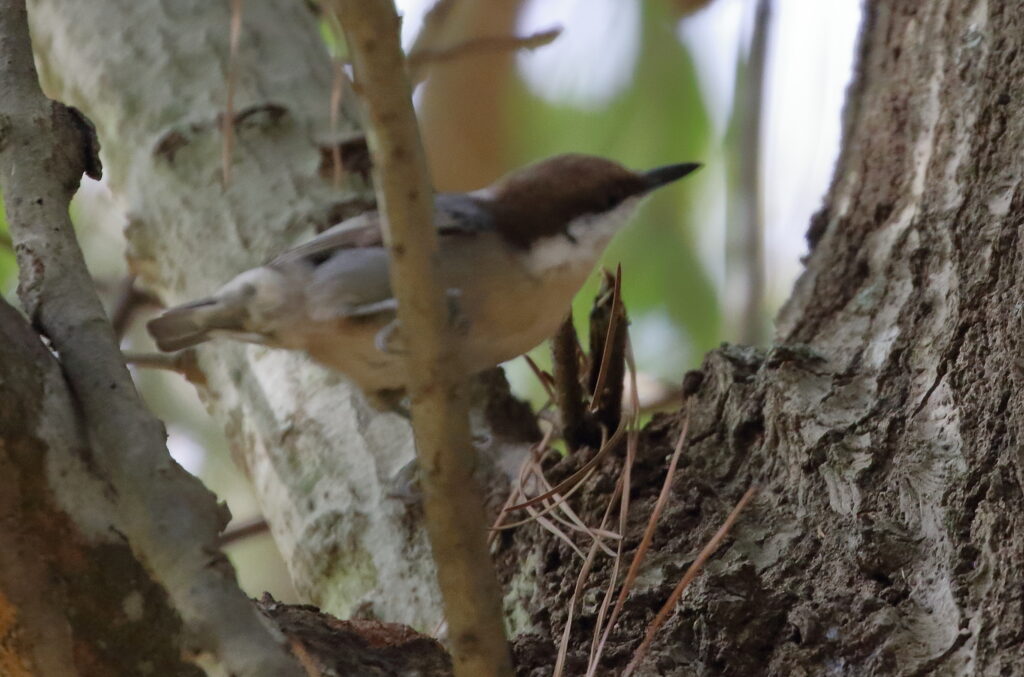
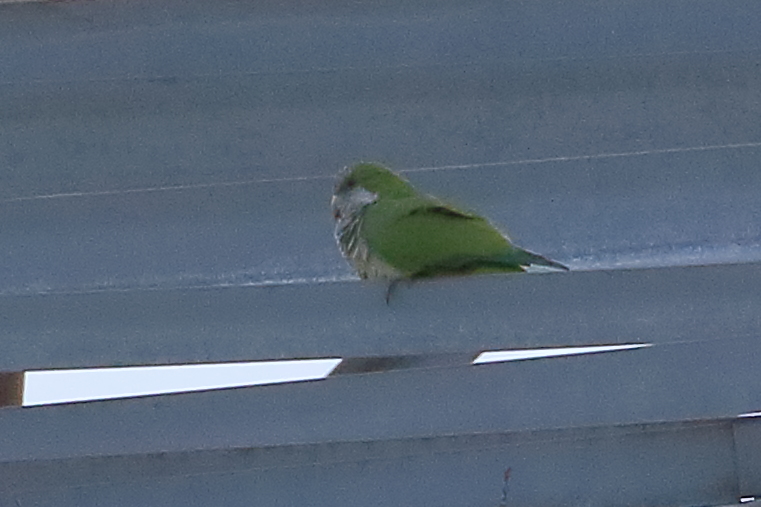
I’ll take a blurry Lifer any day—including this beautiful Brown-headed Nuthatch. By the way, this bird brought my ABA Life List to 498 birds! Only two hours later, I got number 499, Monk Parakeet! What will be 500?

My trip last week unfolded when I was invited to give a keynote address at Houston Audubon’s (HAS) annual Avian Affair fundraising gala (more on that in my next post). As you probably know I love HAS and was honored to accept, but I brazenly asked my hosts if there was a chance anyone could take me birding when I arrived. Before I knew it, a team of expert birders, all HAS board members, had been assembled with the express goal of helping me tackle my Texas “needs” list! In fact, within twenty minutes of my arrival, Bill Matthews picked me up at the airport and whisked me off to our first stop, the W.G. Jones State Forest—home to some of the state’s most accessible Red-cockaded Woodpeckers.

To be honest, I didn’t think we’d find the RCWOs since they can forage over a large area, but I was also hoping for a Life Bird, Brown-headed Nuthatch. As we began walking around the forest, we found no woodpeckers near their roosting trees, so decided to take a longer walk down a trail. Very little stirred, leaving me feeling that maybe we wouldn’t see much—until, that is, we had walked about half a mile. Then, all of a sudden, Eastern Bluebirds were flying everywhere. Other Year Birds soon surrounded us—Carolina Chickadees, a Yellow-bellied Sapsucker, Tufted Titmice, Pine Warblers, and oh joy, Brown-headed Nuthatches!

My W.G. Jones eBird List.

Though Braden and I had seen Monk Parakeets in Israel before the pandemic, this was my first ABA Monk Parakeet. Bill Matthews mentioned that the severe freeze in Texas earlier in the year had pared down the parakeets’ numbers significantly.

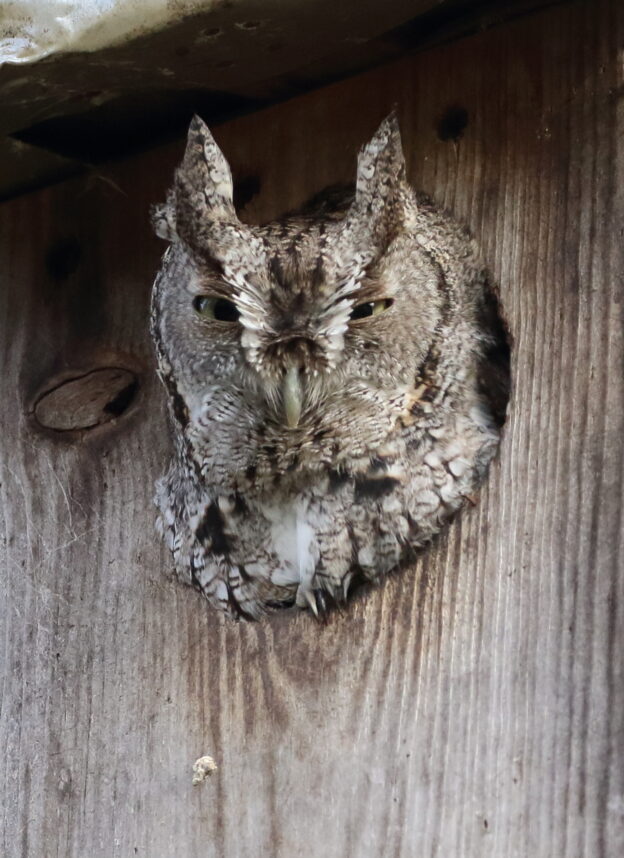
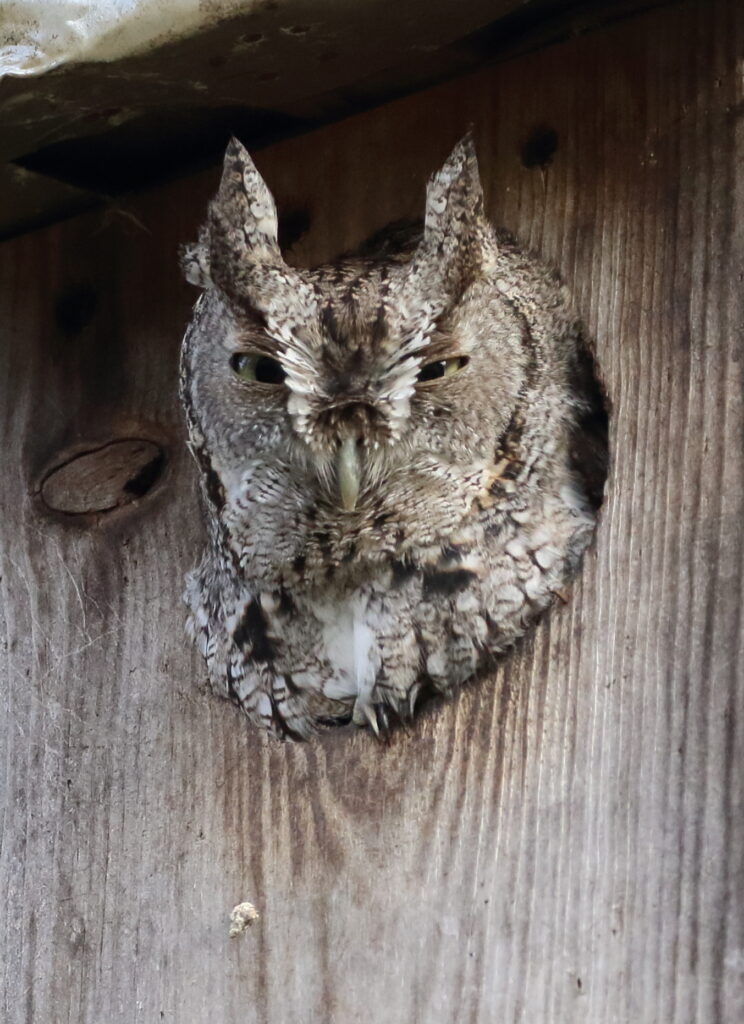
We left without RCWOs, but I was elated with our finds. Bill hadn’t finished with me, though, as we stopped by a roosting Eastern Screech-Owl in a neighborhood nesting box and two Monk Parakeets behind his wife’s studio. By this time, Bill’s fellow board member and well-known bird guide Glenn Olsen joined us, so after the parakeets, we adjourned to Molina’s Cantina for some great Tex-Mex food and to plan our next day’s conquests. Unfortunately, the next day proved a lot tougher than the first, but we still were able to hear a Limpkin—a rare visitor to Texas—at Sheldon Lake, and see some incredibly cool Brown Boobies on a “tower of power” at Baytown Nature Center, accompanied by yet another great birder and HAS board member, Skip Almoney.

World’s Most Cooperative Owl? This Eastern Screech just may take the prize!

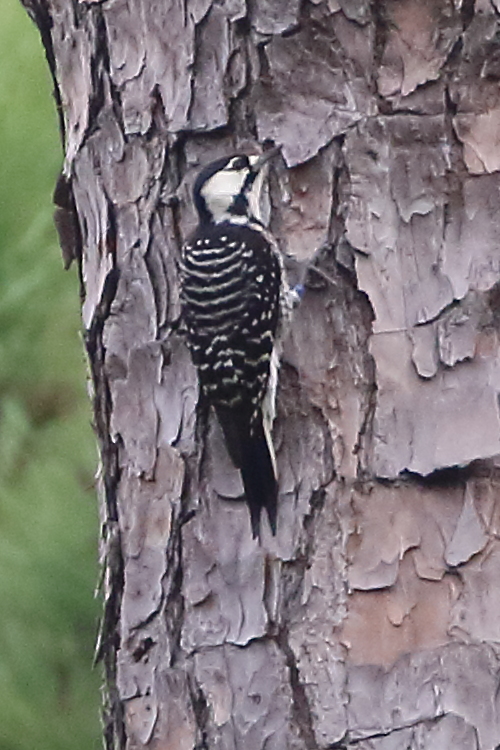
With a total of 8 Year Birds, I was fairly satisfied as I actually did some work the following day, speaking to fifth-graders at Western Academy—and saw Year Bird #9, Scaly-breasted Munias! Glenn Olsen was not satisfied, however, so on my last morning, he picked me up early before my flight and we headed back out to W.G. Jones, meeting up with another great HAS board member, Eric Mayer, out at the site. Again, I didn’t think we’d see the woodpeckers and we didn’t. After an hour, in fact, it was time to head back to the car so Glenn could take me to the airport. As we approached the parking area, though, Glenn shouted, “Woodpecker!” I got my binoculars on a black-and-white bird landing on a pine tree and guess what? Red-cockaded Woodpecker! It was a great way to finish up a great trip, and left me with a flock of wonderful new friends—and only 11 birds to break my record. Will I make it? Good question. While in Texas, I missed four or five migrating rarities in Montana and it appears they have left the state. I will keep up my quest, however, so stay tuned!

I was a doubter, but this Red-cockaded Woodpecker really wanted me to break my Big Year record!