Tag Archives: Ecology

The Birds in the Oaks (Book Review by Scott Callow)

Braden and I head to Costa Rica next week, but before we go I am delighted—yes, delighted—to share the following guest book review by my buddy, Scott Callow. I predict you’ll enjoy his passionate, humorous review as much as the book itself! We challenge you to read it before our next post. And now, heeeeeeeeere’s SCOTT!

Sneed asked me to write a review of The Birds in the Oaks: Secret Voices of the Western Woods by Jack Gedney (HeyDey Press, 2024) before I completed reading it. Consequently, It was impossible for me to finish the last chapter without constant rereading because I became anxious and distracted, wondering how to share all the great things about it. For those of you who only read headlines or first paragraphs of news stories, let me present a few crafted comments that summarize my experiences, being careful not to exaggerate.
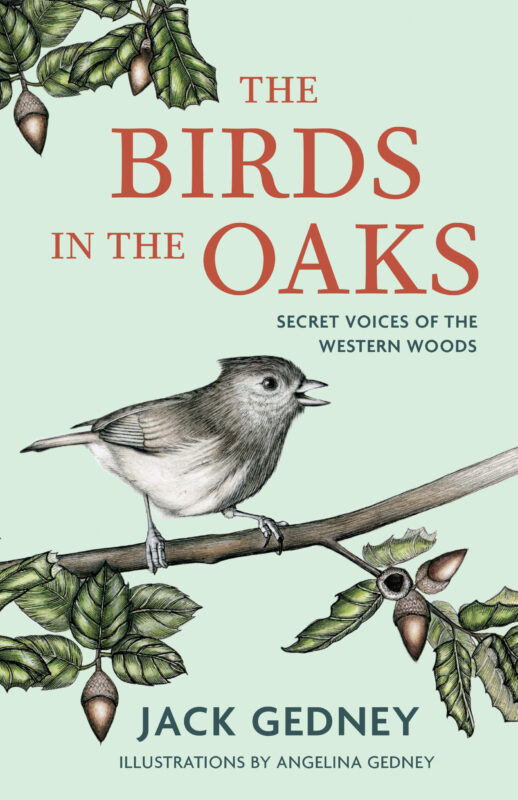
Order Jack Gedney’s The Birds in the Oaks by clicking here or on the above image.

* If you live near oak woodlands, you have no claim to being “interested in birds” if you do not read this book.  

* The Birds in the Oaks is overflowing with interesting ecological details that will keep me rereading chapters, and I expect I will mark the pages with notes like a seeker underlining sections of the Bible on the journey to become a better person.  

* The Birds in the Oaks is a superb example of well-crafted nature writing that mixes extensive and accurate observations with poetic prose, and mixes personal experiences with quotes from historical bird authors.  
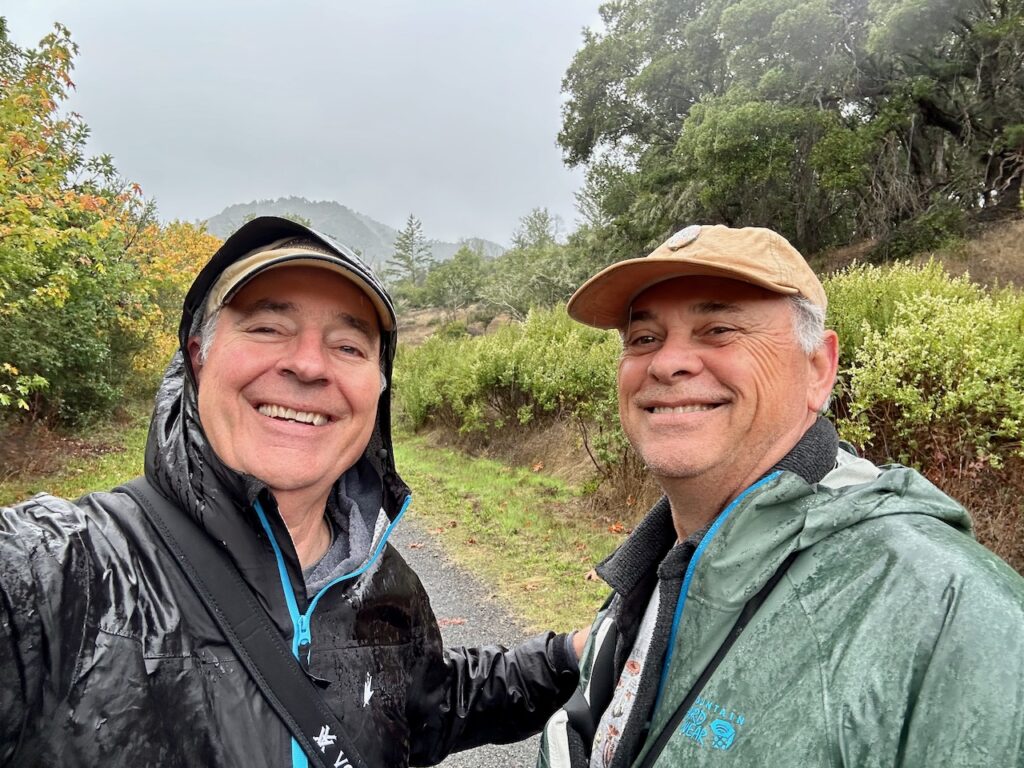
Last fall, I was fortunate enough to accompany Scott to one of his favorite “oaky birdy” locations, Sugarloaf Ridge State Park in Sonoma County, where we saw a great variety of classic oak woodland species including Oak Titmouse, Golden-crowned Sparrow, and Nuttall’s Woodpecker. (See post World Series Birds in the Golden State.)

This book, admittedly, is personal for me. I live within walking distance of California oak woodlands. I volunteer at Sugarloaf Ridge State Park which is dominated by oak woodlands and mentioned in the book. The author’s former Wild Birds Unlimited store lies only 24 miles from me. Most importantly, I know these birds. I have learned so much about each of them from Gedney’s book that they have become even more familiar (emphasis in “family”). I will admit only here, amongst birders, that I sometimes say “Hey, buddy!” when I see my first Oak Titmouse of the day, and “Hey-hey-hey” when I see a White-breasted Nuthatch.  
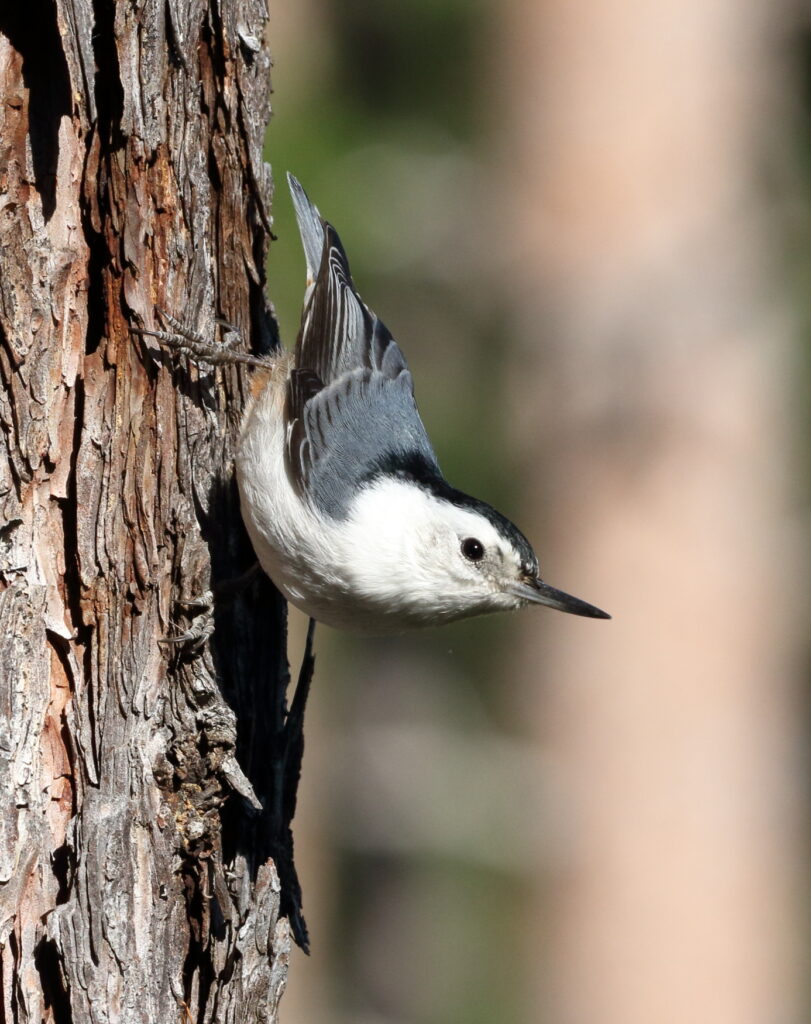
Scott apparently has been known to converse with White-breasted Nuthatches. I can’t blame him as I talk to these guys myself!

Each curiously titled chapter is organized around a species. Each begins with key characteristics. Many chapters start with song and call, which I appreciate since I’m late in life to learning bird sounds. (Thank you Merlin.)  Example:

“I still hear the bird, steadily whit-whiting away as if mocking my inability to follow.” (A Bird at Our Level – Bewick’s Wren) (“whit-whit bew-wick” – record to memory)

As someone who seeks to be entertained by bird behavior and science, I enjoyed how Gedney explains bird ecology.  

“… to learn all the secrets of the woods, one must know … the birds beneath the oaks.” (Discontented Shadows – Spotted Towhee) (Cool we’re on a treasure hunt, I tell myself.)

The ecological details too elaborate to be found in a guide have already enriched my birding.  Even if you don’t regularly see Acorn Woodpeckers, every birder should learn about their unique extended family groups and their cooperative food hoarding strategies. I also believe every birder should wonder how the Bushtit, weighing as light as a nickel, can engineer such an elaborate sock-shaped nest, insulate it, camouflage it, and then use it for such a short nesting cycle, all on a diet of insects too tiny to see, even with the help of binoculars.
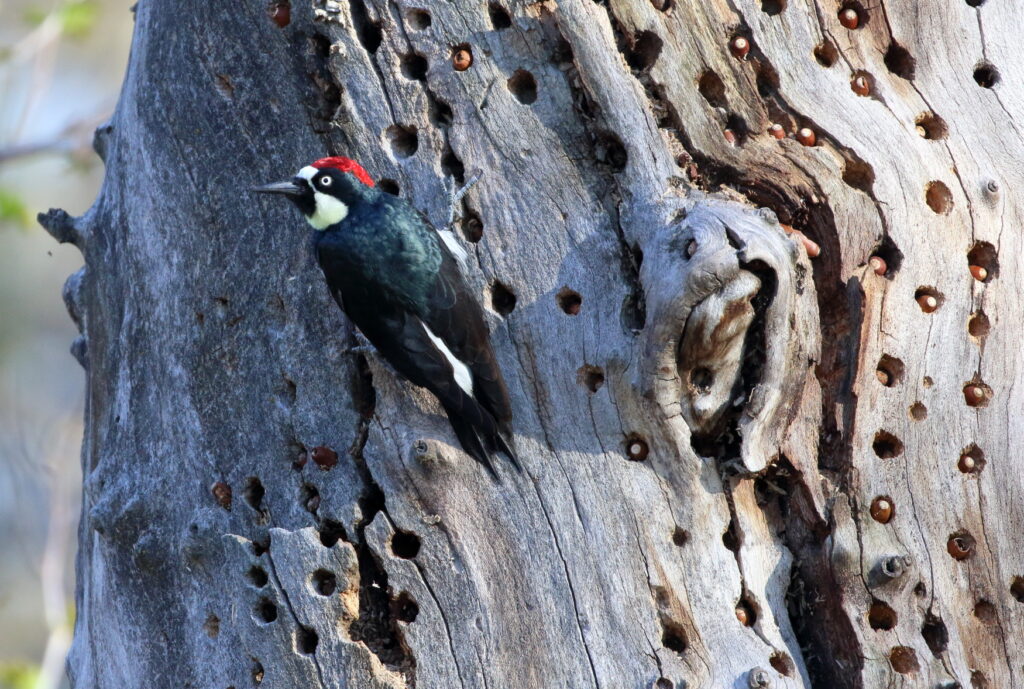
The ultimate oak woodland bird, the Acorn Woodpecker, deservedly attracts abundant attention from birders, both for its stunning good looks and fascinating behavior that features cooperative breeding and storage of thousands of acorns. Isn’t that, ahem, nuts?

But this book is not written by or for the scientist. Gedney is not afraid to add his own appreciation of a bird or personal experiences or poetic descriptions. This at first raised my anthropomorphic alarms since I was trained to reject human sentimentality by my vertebrate bio prof, surprisingly an ornithologist who once said “birds are stupid; their behaviors are mostly determined by genetics; they have small brains.” (These prejudices were spoken decades before contradictory scientific information was shared in The Genius of Birds and several other books on bird intelligence.)  

The Birds in the Oaks is very accessible, humanly so. It is so well written that you just might re-imagine your own feelings about birds and get all warm-like inside. You just might be heard saying “Wow” when learning something new about one of the birds. You might just slow down and spend “an inordinate amount of time” observing a bird in one location. Maybe, maybe not. But I will risk one bold prediction: If you get this book, several times you will imagine walking through the woods with the author himself.  

No oak trees were harmed in the writing and publishing of this review.
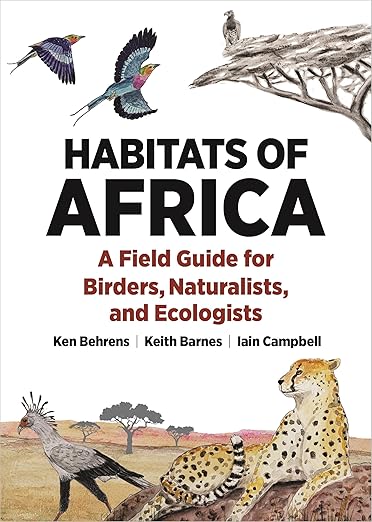
Habitats of Africa: A Field Guide for Birders, Naturalists, and Ecologists (Book Review)

To Order, Click Here: https://press.princeton.edu/books/paperback/9780691244761/habitats-of-africa

I’m excited to be heading off to Texas in a few days, to promote my book Birding for Boomers, but also to squeeze in a few days of birding. Before I go, I want to share an exciting new book that will interest anyone who has ever dreamed about visiting Africa. Braden loved a previous book, Habitats of the World, by two of the co-authors, and this follow-up is also full of fascinating facts and insights. Oh, and in case you missed it, you’ll want to read last week’s outstanding guest post by Roger Kohn, “Cock-of-the-Rock Extravaganza—with Video!” Enjoy!

When I first opened my review copy of Habitats of Africa, I thought, “How on earth did the authors put together such a comprehensive guide to such a vast and ecologically diverse continent?” I next wondered how, as a reader, I might possibly absorb the immense amount of information packed into this handsome volume. The answer to the first question is that all three authors have worked as professional nature guides, with extensive experience in Africa. As for the second? I could only answer that by diving in.

Habitats of Africa: A Field Guide for Birders, Naturalists, and Ecologists by Ken Behrens, Keith, Barnes, and Iain Campbell (Princeton University Press)

The table of contents reveals that Habitats of Africa covers an astonishing seventy-plus different habitats, and honestly, that alone could be overwhelming to the beginning reader. The TOC, though, also provides good clues for how the book is arranged and is therefore worth a few moments of time.

Habitats are organized under a dozen headings, ranging from “Deserts and Arid Lands” and “Warm Humid Broadleaf Forests” to “Savannas” and “Saline Habitats.” The first habitat I read was the Maghreb fir and cedar forest, one of four habitats listed under the “Conifers” heading. I probably started with this one because I don’t usually think about conifer forests growing in Africa. They do, of course, but their ranges are extremely limited, and I wanted to know more about them.

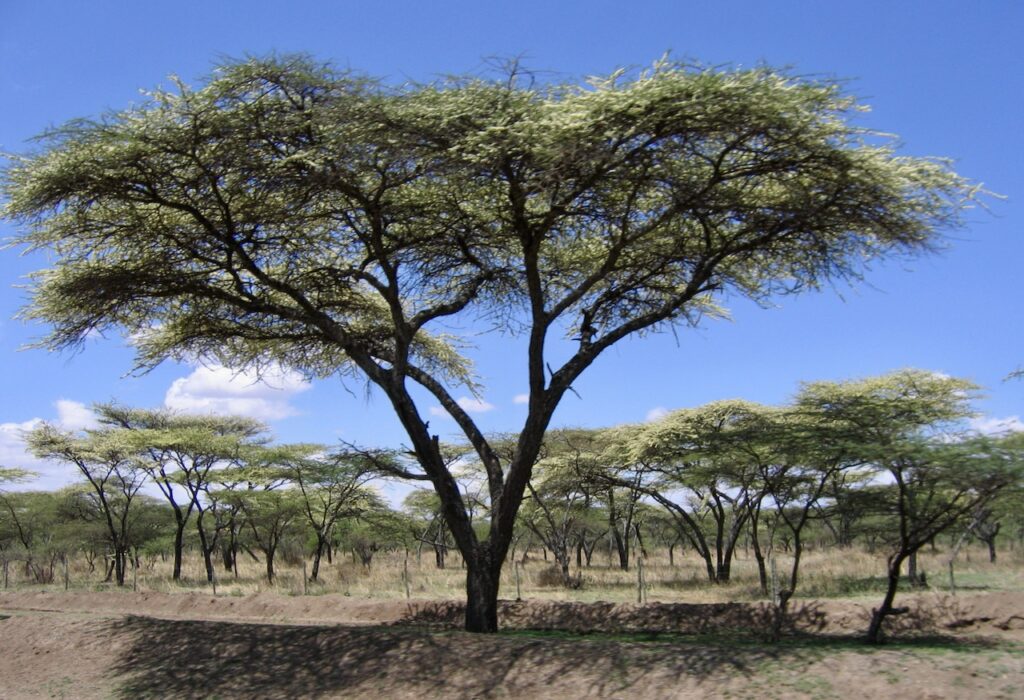
Even those who have never visited Africa easily recognize many of the continent’s distinctive habitats such as this acacia-clad savanna my wife Amy and I observed on our trip to Ethiopia in 2005. This is one of eight distinct kinds of savannas explained in Habitats of Africa.

The listing began with a nice map of where these forests can be found, and then followed with a concise but revealing description of the forest itself. Surprising phrases kept leaping out at me: “Atlas Cedar”, “clusters of oaks”, “winter snowpack”. I mean, where was I, anyway? This sounded more like California than Africa. One of the nice things about the book, however, is that it lists similar forest types found elsewhere in Africa and around the world—including the pinyon-juniper woodland of western North America.

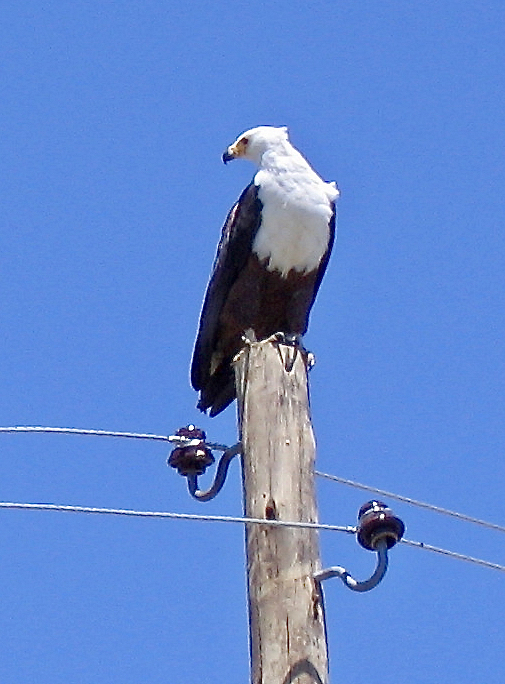
Lamentably, Amy and I visited Africa before I became a birder, but I accidentally managed to take a few bird photos with my point-and-shoot camera, including this magnificent African Fish-Eagle.

After the description, the authors include accounts of a habitat’s conservation status, the particular wildlife that can be found there; and its distribution—including specific places to see it. I found the wildlife sections especially well-done because the authors focused on endemic and other high-interest species while not overloading the reader with information. As a birder, for instance, I discovered that the avifauna of the Maghreb fir and cedar forest shares similarities to what I have observed in the Levant and southern Europe (see posts “Winter Birding in Israel, Part II: Valley of the Cranes” and “Birding Barcelona, Part 1: The Urban Core”)—but that there are also different species such as the Levaillant’s Woodpecker and Atlas Flycatcher.

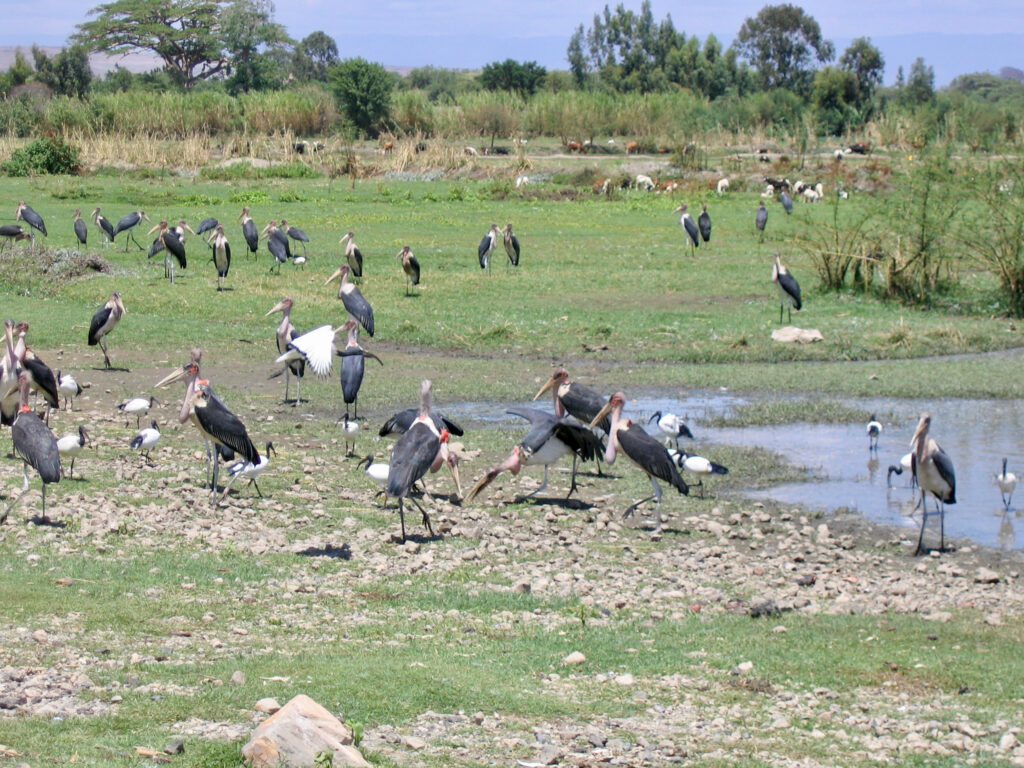
African Sacred Ibis and Marabou Stork attracted to a fish market at a lake south of Addis Ababa, Ethiopia.

There’s no getting around that the conservation status for most of the habitats is alarming. It’s hard to find a habitat in which humans haven’t made a major impact, especially given Africa’s rapidly-growing human population. In fact, the book includes eight habitats under its “Anthropogenic” heading—those with little of their original ecosystems intact. Although depressing on one hand, this conservation information provides a good picture of what is going on in the continent—trends that are distressingly similar to those experienced in many of the world’s other places, including North America. I also found it interesting to read why some habitats appear to be faring better than others. For instance, of southern Africa’s succulent karoo habitat—a habitat I’d never heard of—the authors write, “With limited agricultural potential and not much grass, the land in this biome is not highly sought after for human activity, but there has beeen significant sheep grazing and subsequent erosion.”

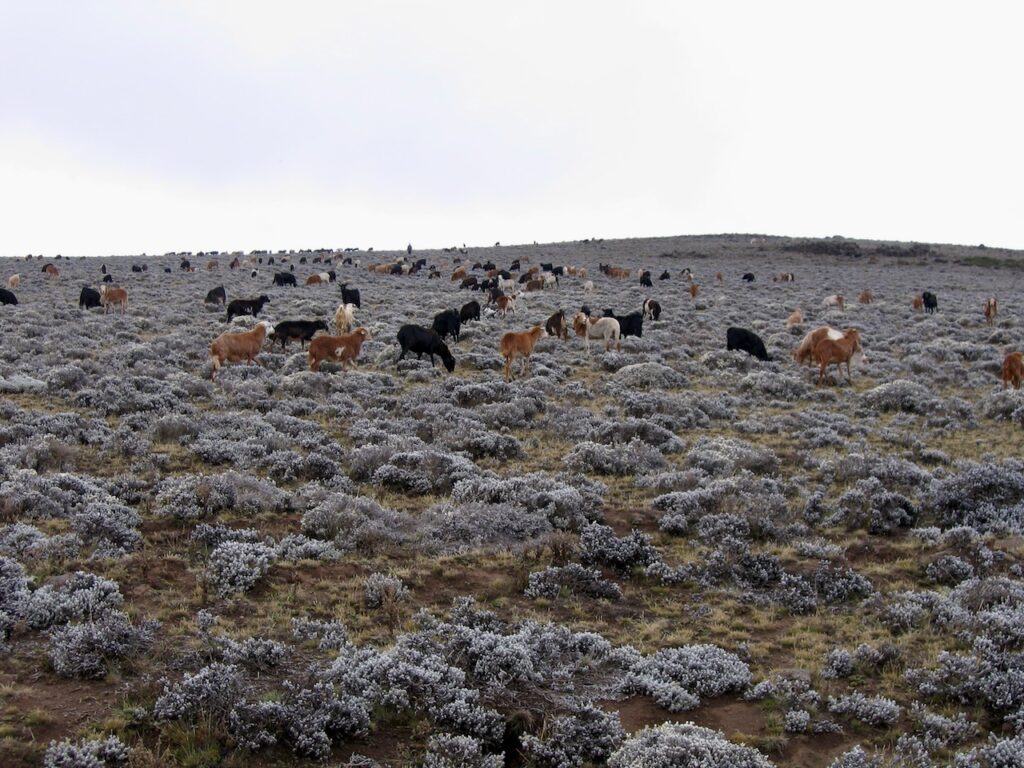
Ethiopia’s burgeoning population and pervasive poverty force livestock owners to illegally graze, even in places such as Bale National Park, one of the last strongholds of the Ethiopian Wolf.

The problem with reading about one habitat, however, is that it immediately made me curious to learn about others. The Maghreb fir and cedar forest discussion, for instance, mentioned that the forest peters out on the southern mountain slopes draining into the Sahara. “But what’s the Sahara really like?” I wondered, so I soon found myself reading up on one of the world’s most inhospitable places, the Saharan reg desert. This is a place that often receives less than one inch of rainfall each year—and where places can go years without seeing a drop. Yet, life persists here. Although much of the large megafauna has been hunted out, fascinating animals such as sand cats and fennec foxes survive, along with an incredible collection of small mammals and reptiles. This is a good place to mention that the book is filled with outstanding photos of the habitats and their various life forms, and in this chapter a photo of Cream-colored Courser caught my eye. Why? Because it looked almost identical to the Mountain Plovers we have in the arid West!

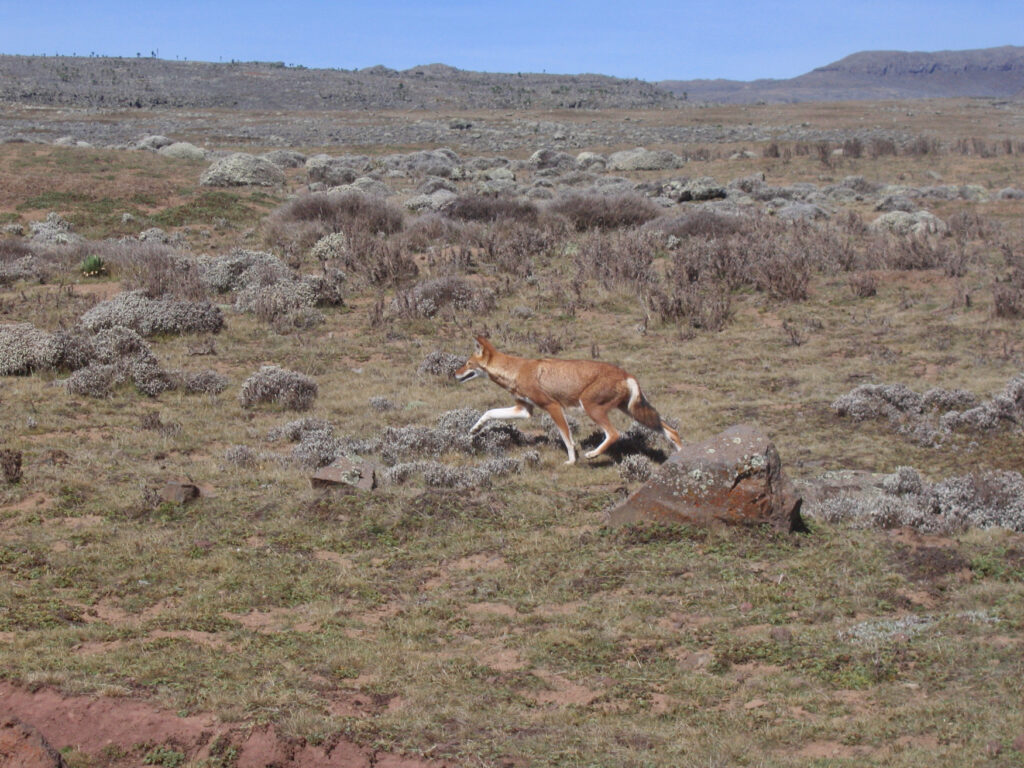
Amy and I were fortunate to see Ethiopian wolves in one of their last strongholds, a high-altitude habitat called afroparamo in Bale National Park. Already by our visit in 2005, grazing in the park (see previous photo) threatened the outlook for the wolves and the giant mole rats that serve as one of their major prey.

That said, one thing the book showed me is that, although similarities can be found between African and other world habitats, many of the ecosystems in Africa are unique—especially if you compare them to North America. And that can have a strange impact on a reader.

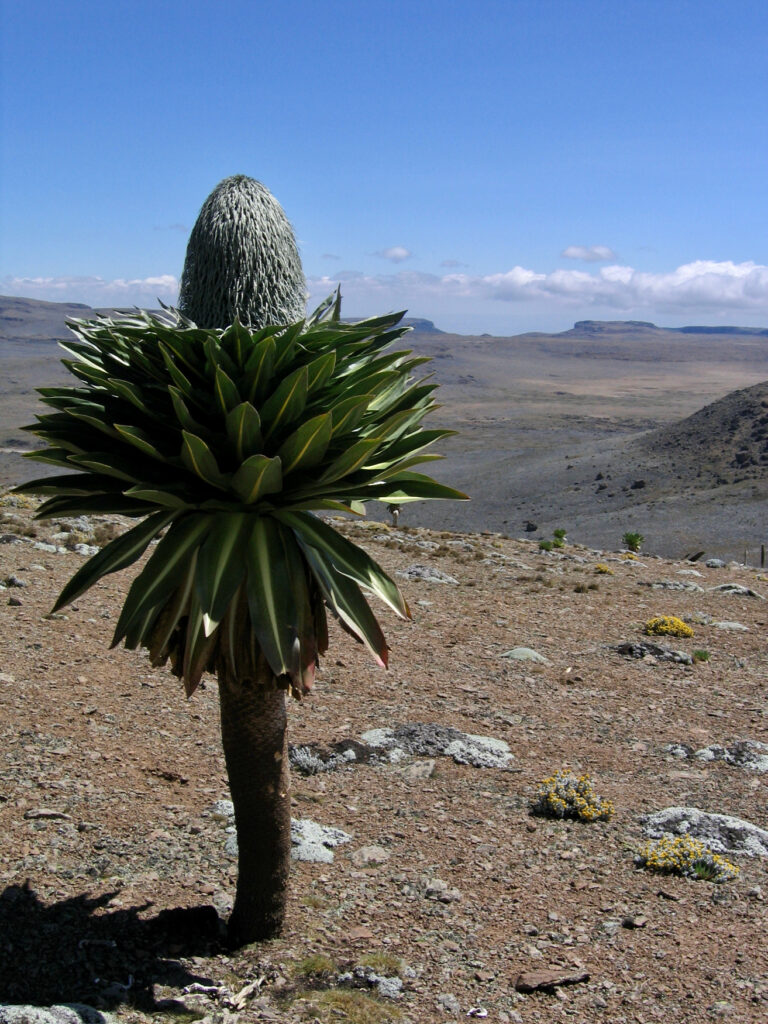
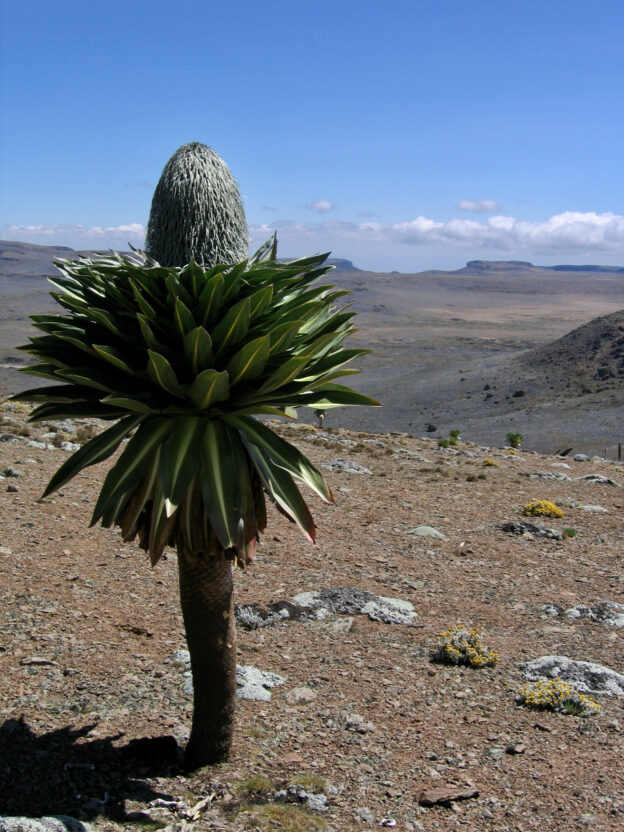
If you have any doubts about the uniqueness of many of Africa’s ecosystems, all you have to do is look at this lobelia tree in Ethiopia’s Bale National Park. The trees reminded me of Joshua trees in the American Southwest, and I can’t help thinking that the two trees might represent a striking case of convergent evolution.

I have only ever been to Africa once, during a school visit to Ethiopia in 2005. What’s more, I thought it unlikely I would ever have a chance to visit again. As I read through Habitats of Africa, however, I kept thinking, “Oh, I want to see that,” and “I want to go there.” It doesn’t mean I will get to, but reading this book may be the next best thing. More than all of the nature documentaries I’ve watched, this volume has given me a plausible idea of the incredible diversity of places and nature that can be seen there. As a birder in particular, it’s also given me a much better idea of the birds that I especially would like to see. It’s a stretch to call the book casual reading, but for anyone interested in nature, or planning their own trip to Africa, it is a well worth your time. If I ever get a chance to return to Africa, you can bet that I’ll be spending even more time with this impressive publication.

Note: Along with the extensive photographs and distribution maps, Habitats of Africa includes a wealth of climate charts, profile sketches, and topical sidebars that enhance the reader’s understanding of each habitat.

One-Sentence Summary: An eye-opening crash course on the nature of perhaps the world’s least understood continent.

Overall Rating (on a scale of cool birds): Rüppell’s Griffon (highest)

You can order Habitats of Africa from your local independent bookstore, or directly from Princeton University Press. Please tell them we sent you!

(Except for the cover image, photos in this post are copyright Sneed B. Collard III. Review copy of Habitats of Africa provided by the publisher.)