

One of our goals at FatherSonBirding is to encourage support of scientists and nonprofits working to protect our planet’s many imperiled bird species. We hope that you will consider sending a donation to Montana Bird Advocacy, whose work is featured in today’s blog. You can do this by clicking here. It will be money well spent!
Late July often ushers in the birding doldrums. Having finished courtship and breeding, most birds get super quiet. They often disperse from their breeding territories, too, making them more difficult—or at least unpredictable—to find. But this year I was in luck: I had a writing assignment that would guarantee I see at least a few very cool birds.
You may recall my unsuccessful June trip down to Beaverhead County (see post In Search of the Green-tailed Towhee) to visit with biologist Jeff Marks, founder of the nonprofit scientific research group Montana Bird Advocacy. There, Jeff and colleague Paul Hendricks are performing a long-term study on one of Montana’s little-known birds, the Gray Flycatcher. When I visited, Paul wasn’t there, but I also got to meet biologist and research assistant Nate Kohler, who has been playing a pivotal role in the study.
Although my June trip allowed me to see many wonderful birds and interview Jeff and Nate, my intention to see the Gray Flycatchers got squashed by a freak winter storm. Worse, the storm wiped out a whole crop of nestling Gray Flycatchers. The good news? The adults had laid second clutches of eggs, and the babies were getting ready to fledge as I again headed down there the last week of July. This time, the weather would be ideal for seeing them.
Jeff and I headed out at 8:00 a.m. and made our way up Bannack Bench Road, which borders the study area. This was the third season of the study, and its purpose is to figure out some of the basic biology of a bird that scientists know very little about. To do that, Jeff, Paul, and Nate have been banding adult flycatchers with color bands that allow field identification and observation of individual birds. The birds have been a challenge to catch, but the biologists have managed to band about a dozen each year—and with fascinating results. I won’t reveal too much about those results here since I’m also writing an article for Montana Outdoors magazine that will be out next year. However, I will tell you that seeing where these birds nest and what they are doing was a thrill.
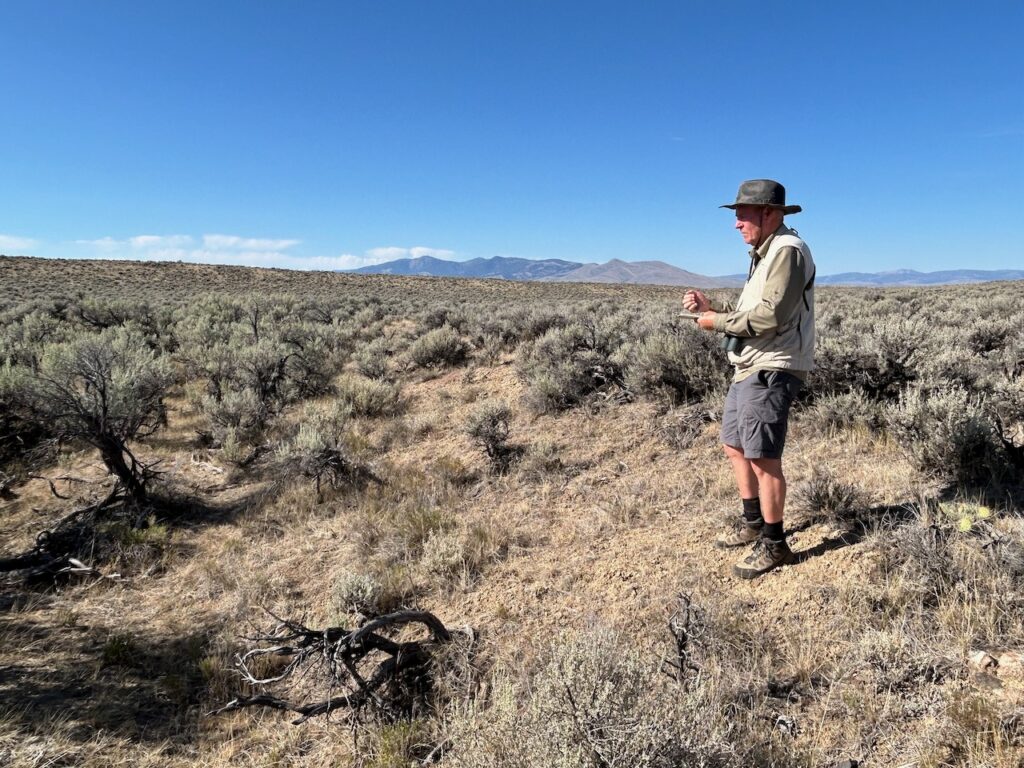
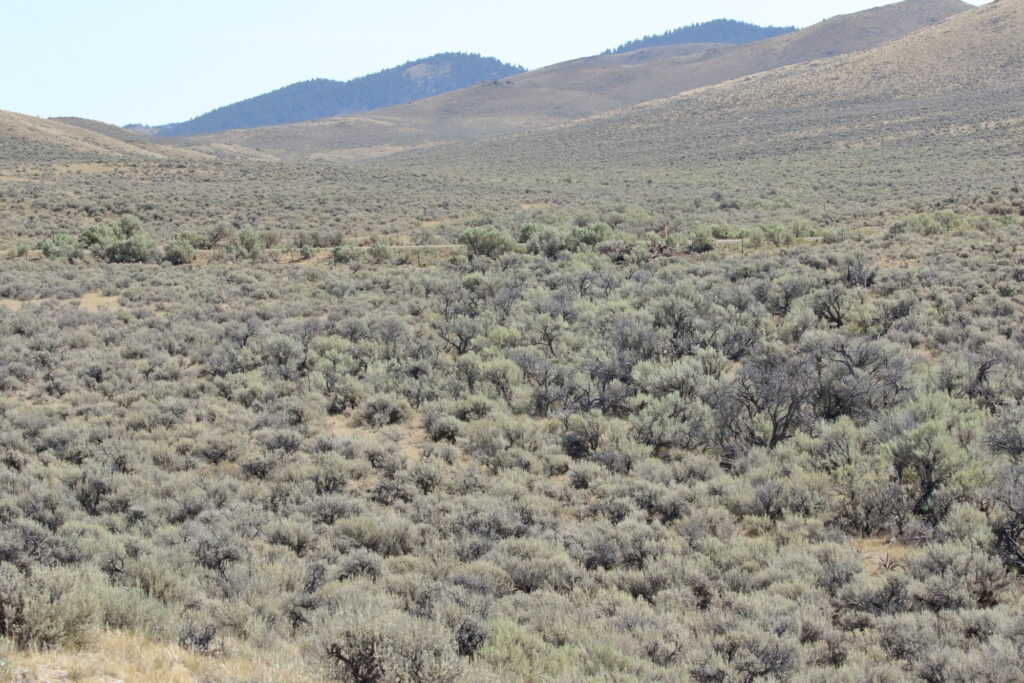
When Jeff first told me they were working in a place called Sheep Corral Gulch, I imagined sagebrush plants bordering some kind of verdant riparian zone, perhaps lined with aspens or junipers. Imagine my surprise to see nothing but sagebrush in every direction! Gray Flycatchers breed throughout the Great Basin, but one of the fascinating things about them is that they choose different habitats in different places. In other states, they nest in juniper, pinyon pine, and even ponderosa pine, but in this part of Montana the birds breed almost exclusively in sagebrush plants along dry washes. One thing that these places share in common is that they have open ground for foraging.

In Beaverhead County, though, not just any sagebrush will do. The birds nest only in taller plants four to eight feet high—plants that can mainly be found growing in the (usually) dry main stream channels of gulches. This year, Jeff and his colleagues located about a dozen nests, one to two hundred meters apart, and as Jeff and I began hiking, it wasn’t long before we spotted an adult bird up ahead. Using GPS coordinates, it took only minutes for Jeff to locate the bird’s nest—a nest with babies!
“They will fledge any day now,” Jeff told me, “and it looks like both parents are feeding them.” Having two involved parents gives the nestlings a huge survival advantage, and as we watched, we saw a parent deliver a juicy grasshopper to its ravenous chicks.
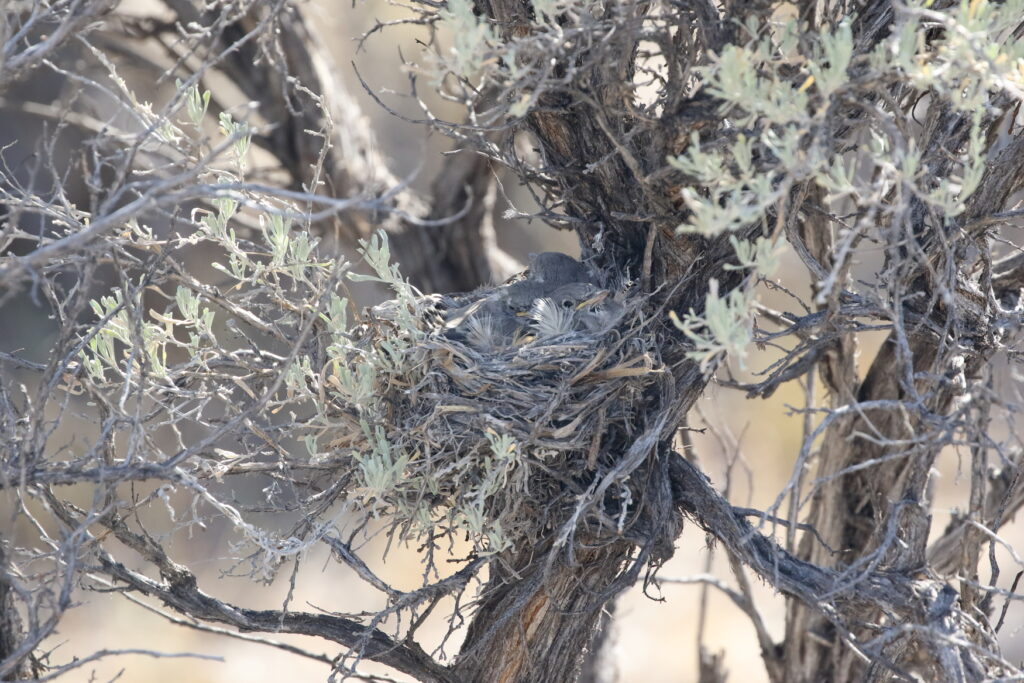
For the next three hours, I followed Jeff as we visited one nest after another, and most were jam-packed with two or three babies champing at the bit to head out on their own. We, of course, made sure to stay well back so as not to spook them out of the nests before they were ready.

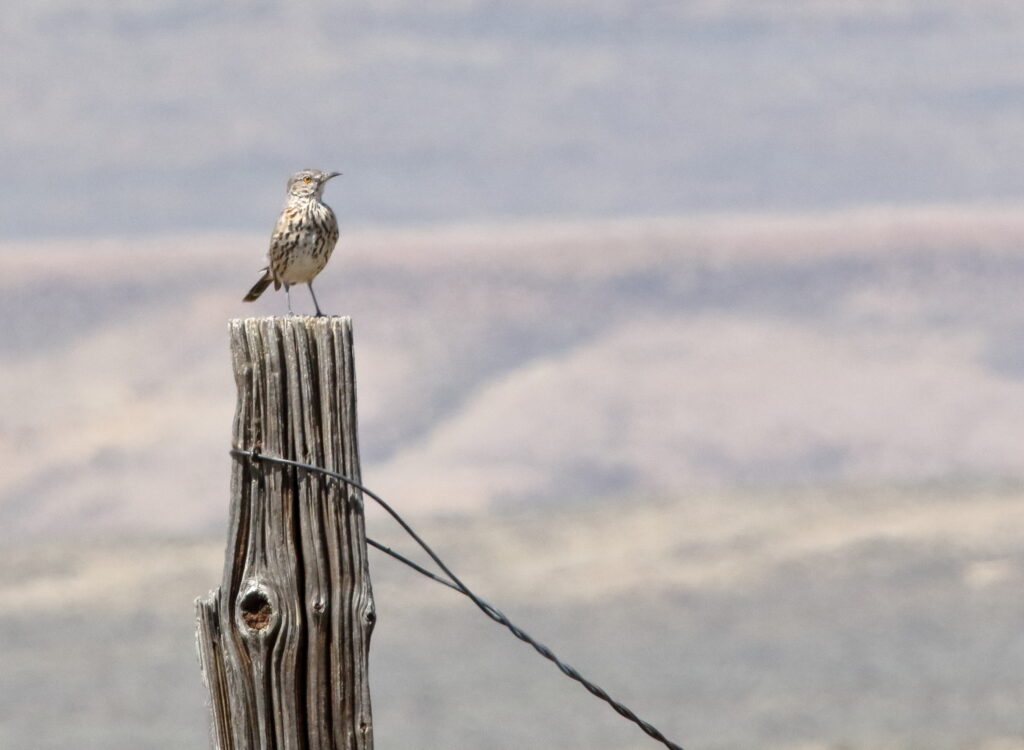
I thought we would see a lot of other birds as we hiked, but especially this time of year, the birds stayed out of sight. We saw a couple of Brewer’s and Vesper sparrows, and a single Sage Thrasher and Northern Harrier. What a contrast from a month earlier when I spotted Sage Thrashers and Brewer’s Sparrows almost everywhere I looked! Nonetheless, I couldn’t have been more thrilled to get these up-close-and-personal looks at one of Montana’s most uncommon species.
You may be wondering just where Gray Flycatchers can be found in Montana. That itself is a fascinating story, because they apparently arrived in our state only recently. The first official record occurred in 1999, and Jeff believes that the birds may only have reached the Treasure State as part of an expansion northward from the Great Basin that occurred in the 1970s. Their Montana strongholds are in Beaverhead and Carbon counties (see post Bear Canyon—Montana’s “Tropical Birding” Paradise), but it takes careful observation and listening to distinguish the birds from almost identical-looking Dusky Flycatchers. The fact that the birds are so restricted here in Montana, though, points out how important it is that we protect our fragile sagebrush communities. It also underscores the great value of the work that Montana Bird Advocacy is conducting, because only by understanding the biology of the Gray Flycatcher and other sagebrush species can we know how to protect them.
Please consider supporting the ongoing work of MBA by clicking here and making a donation. The flycatchers will thank you—as will generations of future birders!
I love these “bird with a biologist” posts! The fact that the flycatchers nest in different habitats in different places is very interesting. As is the fact that this species only arrived in MT in around 1999. Great stuff, Sneed!
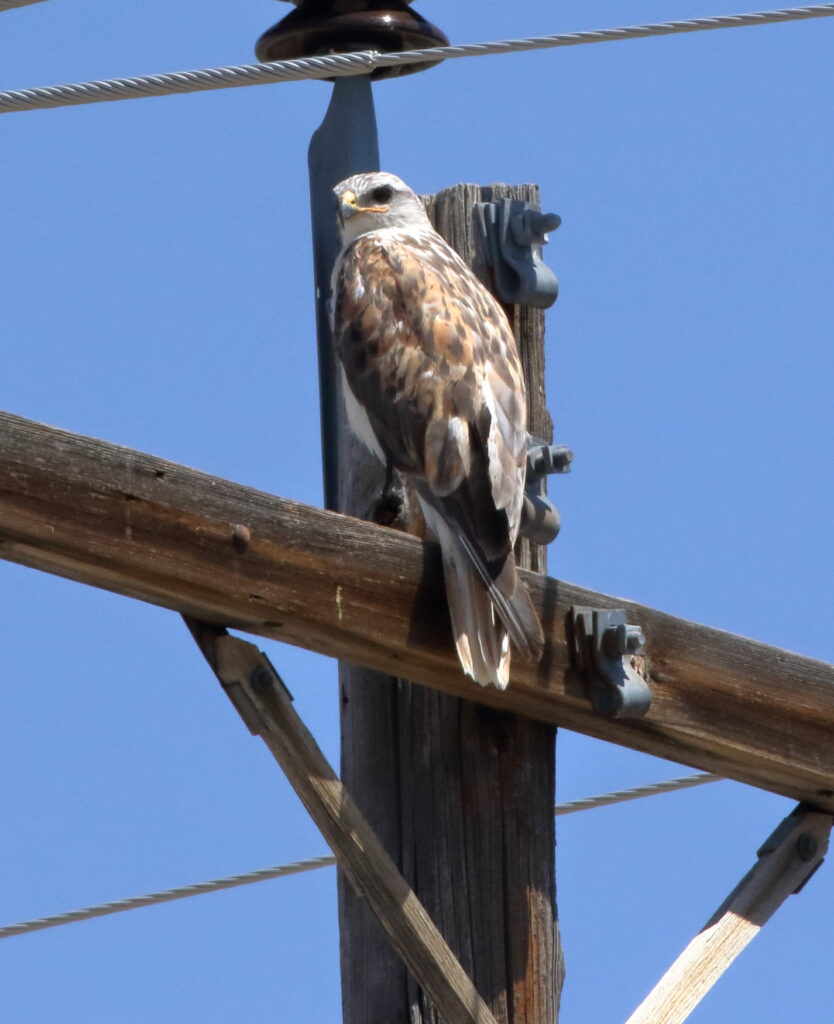
Also loved the photos of the nest with the ravenous soon-to-fledge babies, and the Ferruginous Hawk.
Thanks so much, Roger. It really was a lot of fun to see these birds in such an intimate setting. Really gives one a better appreciation of the complicated and remarkable lives the birds—and scientists—lead!