Category Archives: Thrushes

Crossbill Sunday: the Final Day of Birding Therapy Week

Thank you for following our Birding Therapy Week posts. Please share and don’t forget to subscribe to receive future posts!

To wrap up Birding Therapy Week, I leaped onto my bike Sunday morning and pedaled to a spot I’d been sorely neglecting this year: the Missoula Cemetery. One thing that got me through the first year of the pandemic was cycling out there on a regular basis just to see what was flitting around. I’d ended 2020 with a total of 50 species, firmly cementing my position of Cemetery King, and seeing many surprising birds as a result. Braden and I had ventured out there once this winter and been rewarded with a flock of Common Redpolls, but I needed to get out there again before the trees fully leafed out, making it difficult to spot passerines.

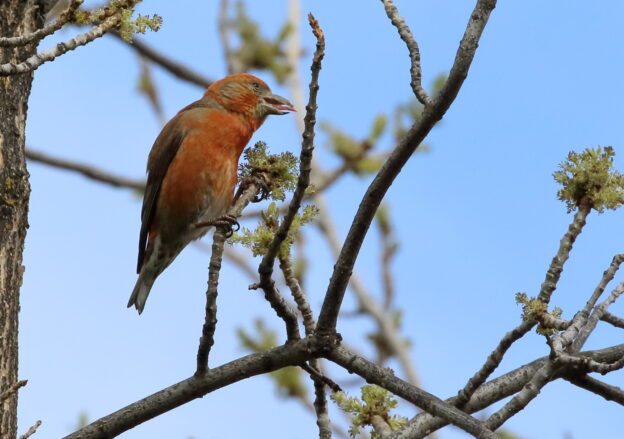
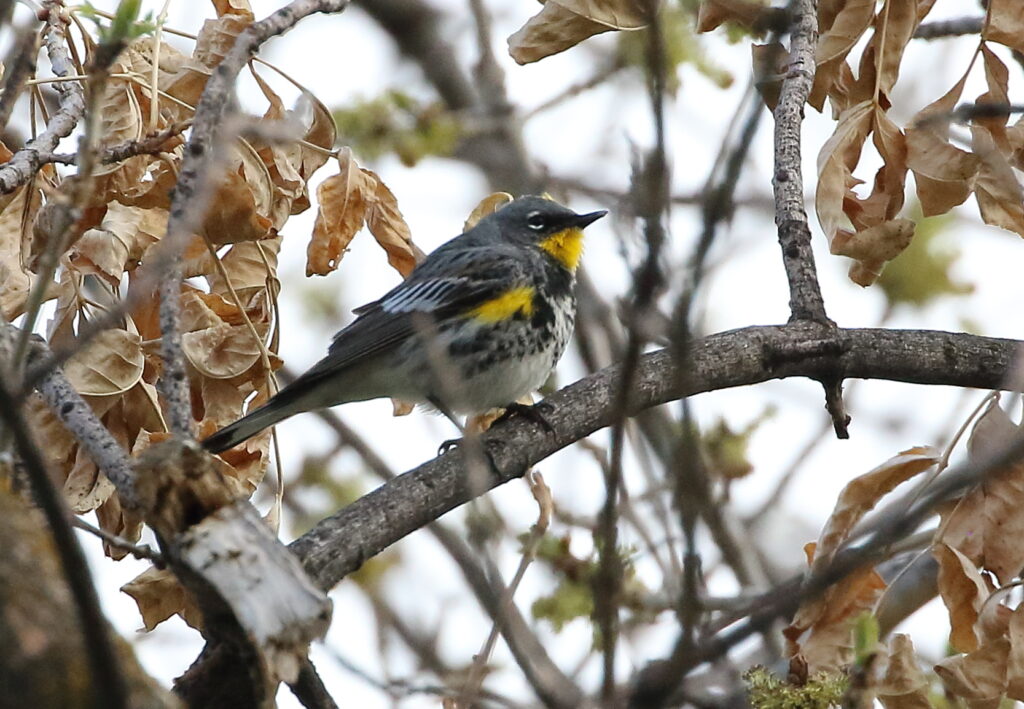
As usual, I parked near the entrance to put in my hearing aids, grab a drink of water, and stretch out before beginning my tour. As I tried to loosen my hamstrings, however, I was already hearing some interesting sounds. “Hm . . . maybe Pine Siskins?” That’s when I looked up to see a flock of 20+ Red Crossbills! Not only was this a new sight for the cemetery, just that morning we’d seen our first ever crossbills at our backyard feeder. In fact, this was shaping up to be our best crossbill year yet, and I spent a solid 15 minutes enjoying the cemetery flock, which also contained liberal doses of Pine Siskins and a Yellow-rumped Warbler.
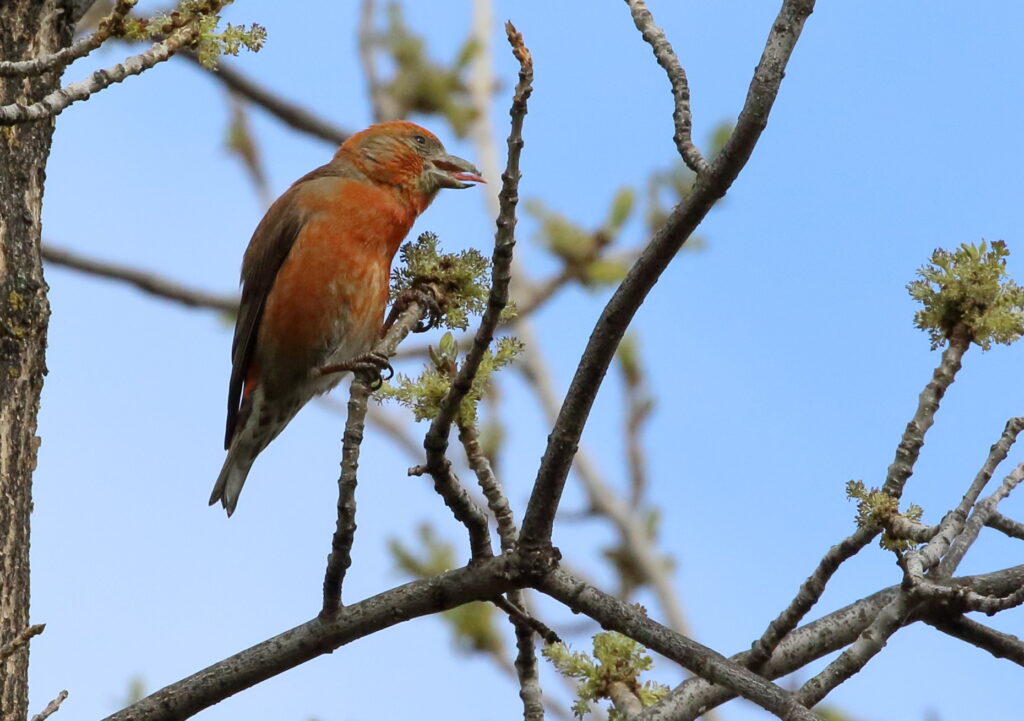
The wonky bills of Red Crossbills have evolved to pry open cone scales, allowing the birds’ long tongues to extract the hidden seeds.

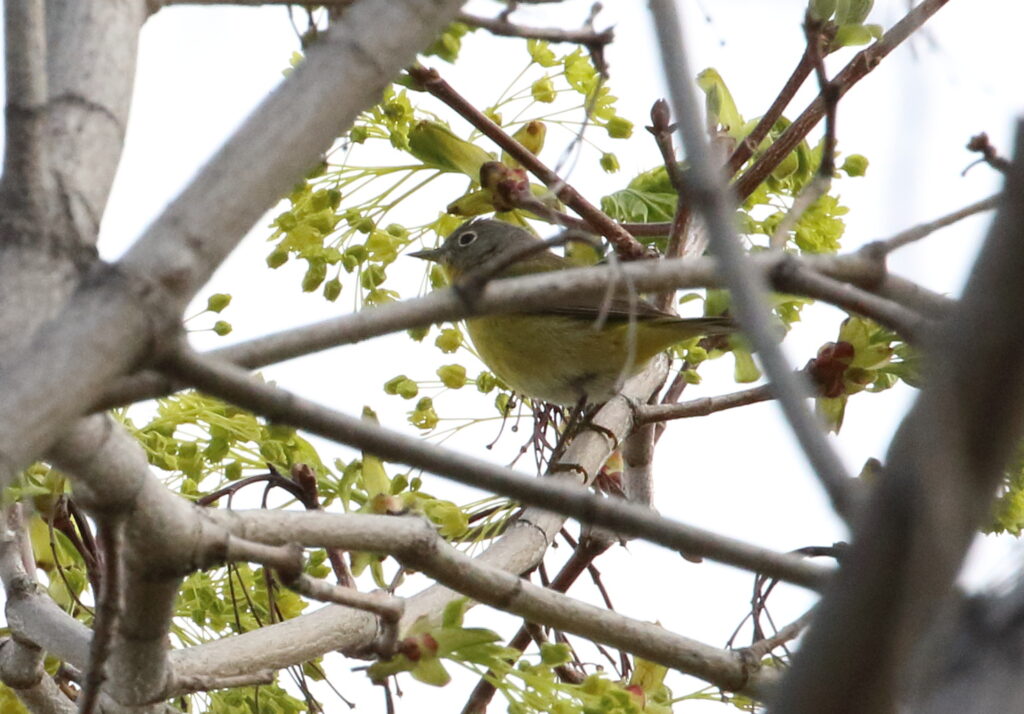
Setting off through the tombstones on my bicycle, I wasn’t sure what else I’d find, but encountered other common cemetery birds such as robins, ravens, and flickers, but it was a weird morning, a bit cool and breezy and I began to lose hope that I’d see the unusual passerines I really craved. Turning on to the last access road, however, I stopped to investigate a couple of little birds that turned out to be House Finches. But among them, I spotted a flash of yellow—a Nashville Warbler!  
Alas, I failed to find any sparrows in the spot I’d seen both Song and White-throated Sparrows before, but I did get my Year Brewer’s Blackbird and a new “location bird”—Turkey Vulture—while racking up a total of 17 species. All of which left me satisfied—but not really.

One thing Braden and I have noticed during the past seven years of birding is how much better many of our public open spaces could be for birds, insects, and other wildlife. The Missoula Cemetery is a great example. I mean, it potentially has everything: lots of land, trees, even a fountain, and the dedicated staff obviously works hard to keep it looking nice. Unfortunately, the place is groomed to death—literally. Dead limbs and trees that could provide insect food for birds are meticulously removed. Messy brush—the stuff many songbirds love—is absolutely not tolerated. I could smell some kind of chemical—weed killer, I’m guessing—emanating from the lawns. Even the fountain where birds could drink is blue from some kind of bleach or detergent in it.
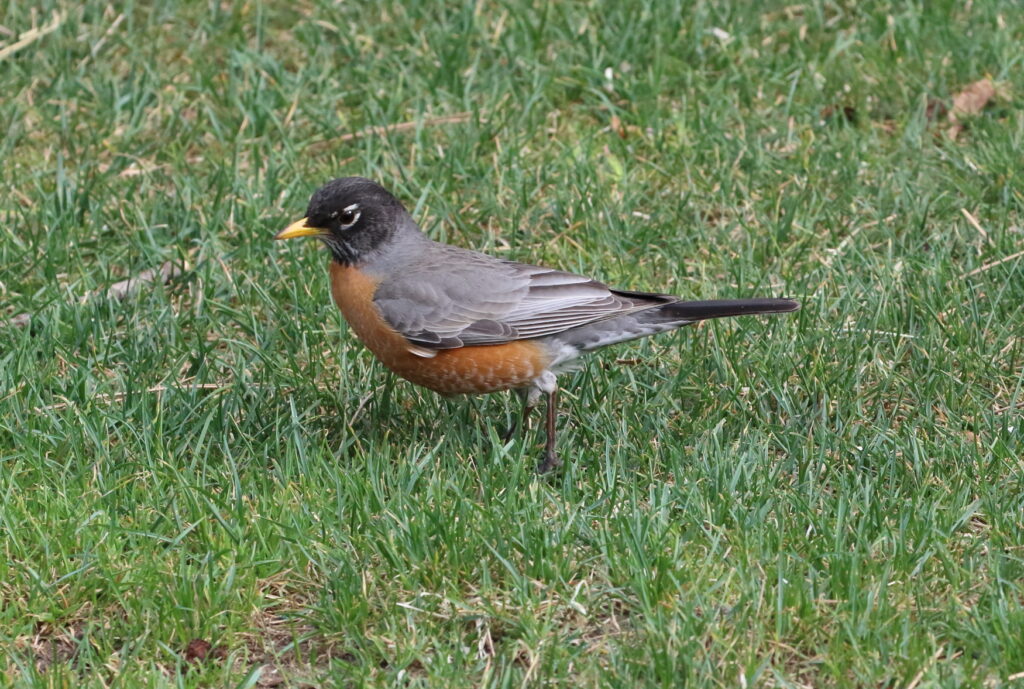
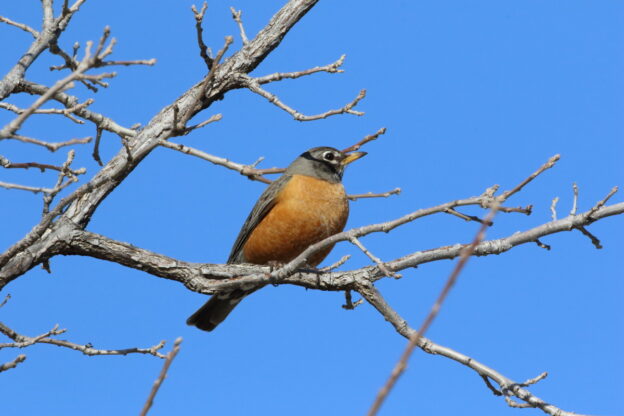
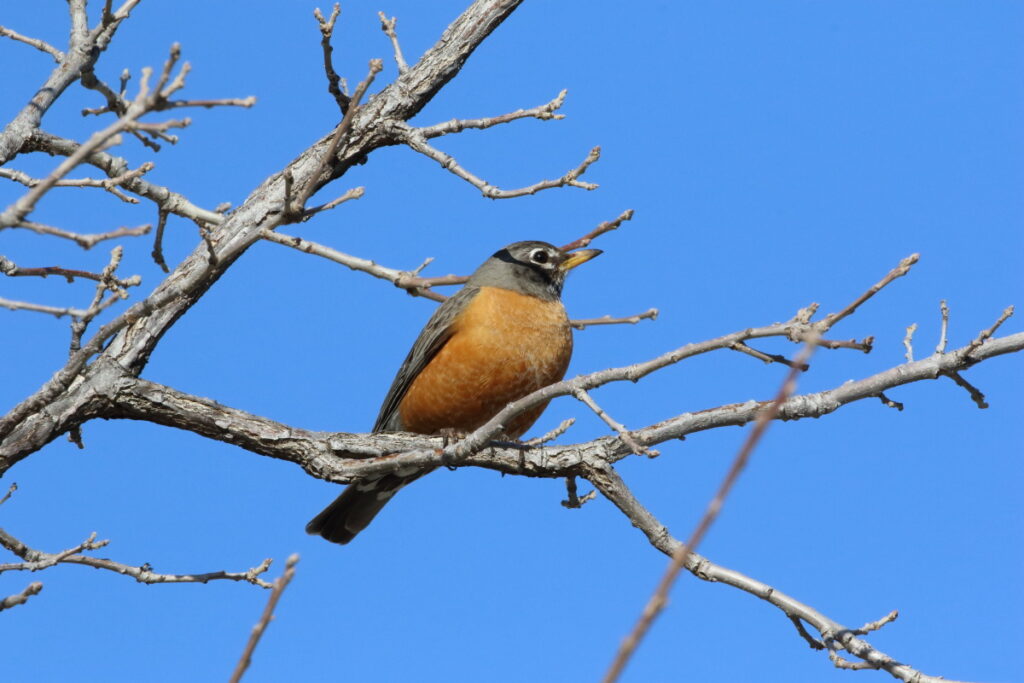
American Robins seem to thrive in almost any urban environment, but many more sensitive species need more habitat—and fewer herbicides & pesticides—than many parks and other open spaces provide.

Sadly, this is a situation that repeats itself over and over across America. Our vision of what is nice, neat, and orderly actually represents an extremely unhealthy environment, one that is undoubtedly harmful to wildlife and perhaps humans as well. No one really is to blame. It’s in our nature to want to make things neat and orderly. However as our knowledge has improved, this is something we as citizens can change. As I wrapped up Birding Therapy Week, I promised myself that I would redouble my efforts both to educate others and perhaps change some of our outdated thinking about both our personal and public open spaces.
A Week of Birding Therapy: Day One

I know it’s hard to believe but even underpaid writers living in Montana can get to feeling down sometimes. Covid certainly has not helped the situation since it and the gut-wrenching economic and societal upheavals it has triggered make the future look blurry at best. In this kind of situation, however, birders have a distinct advantage over non-birders. Why? Because we can immediately step outside for a dose of birding therapy. Last weekend, in fact, I decided I needed not one day, but a week of birding to try to set things right. I began with a return to a place that in many ways inspired my and Braden’s journey into birding: the Blue Mountain Nature Trail just south of Missoula.

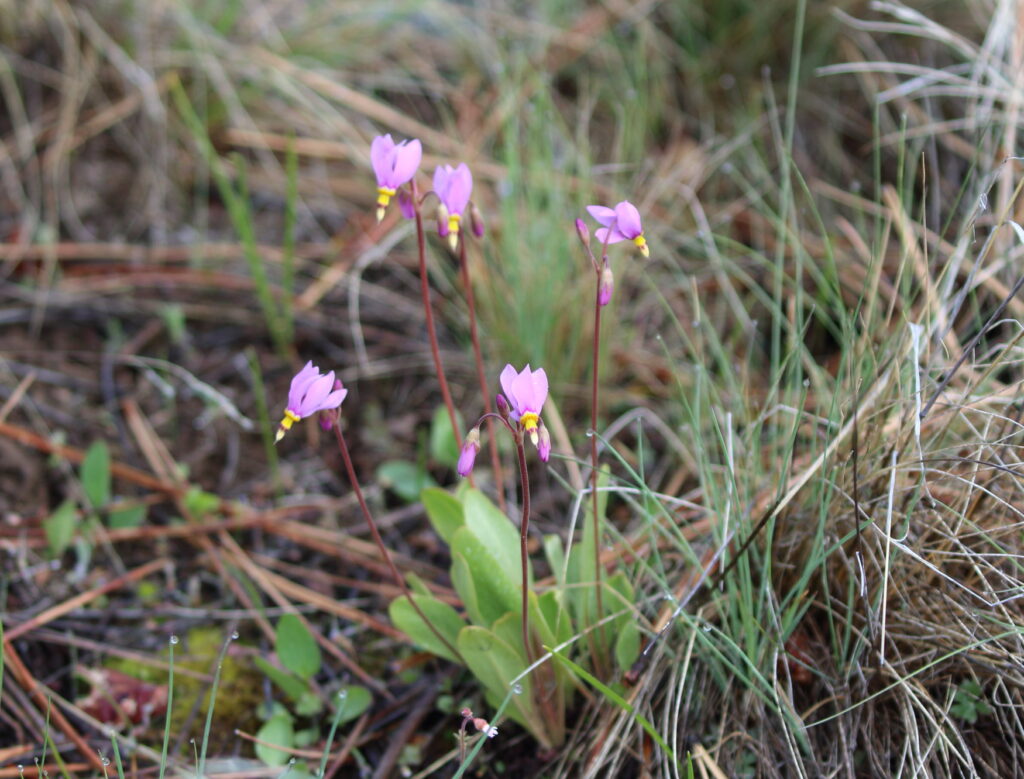
It’s always a good day when you see shooting stars in the wild. We tried planting them in our garden when we moved in 15 years ago and the deer loved them. Only one highly-protected plant survives!

The nature trail takes hikers through a twenty-year-old burn that in years past has been a birders’ paradise with plenty of snags for woodpeckers and a lush resurgence of native plant growth on the newly-sunlit forest floor. The trail, in fact, is where UM biologist Dick Hutto—an expert on the value of burns to birds—took me when I began researching my book Fire Birds: Valuing Natural Wildfires and Burned Forests. At the time, Black-backed Woodpeckers still lived there, but I wondered what it would be like some eight years later. I was not disappointed.

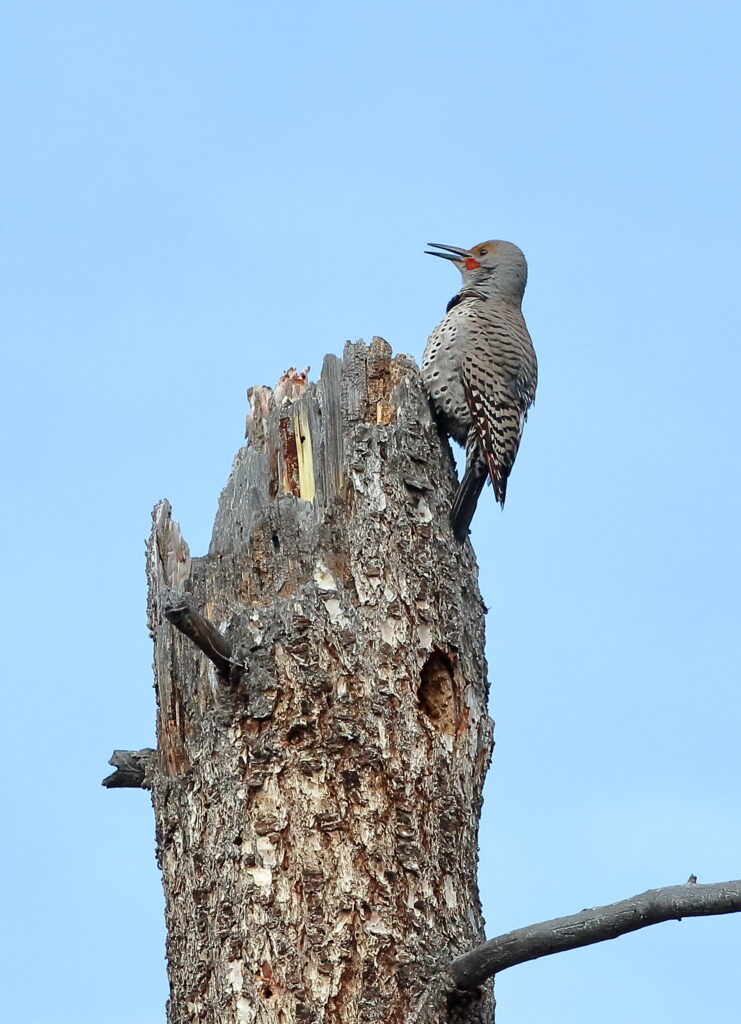
Though the Black-backed Woodpeckers have long departed for blacker pastures, Northern Flickers still take full advantage of the burned forest twenty years after the blaze.

Though I arrived a week or two early for the crush of cavity nesters about to descend on the forest, seeing my first shooting stars and Pasque flowers of the year immediately cheered me up. And the birds, while not abundant, were of the highest quality. On my way up I saw a pair of Townsend’s Solitaires, and heard Cassin’s Finches and my year’s first Williamson’s Sapsucker, which I IDed both by its higher, forest-edge location and its almost halting, hesitant drum pattern. Moving on, I spent time with a Hairy Woodpecker and Northern Flicker, and at the forested saddle where I usually turn around, spotted my year’s first Cooper’s Hawk flying furtively and low to the ground.

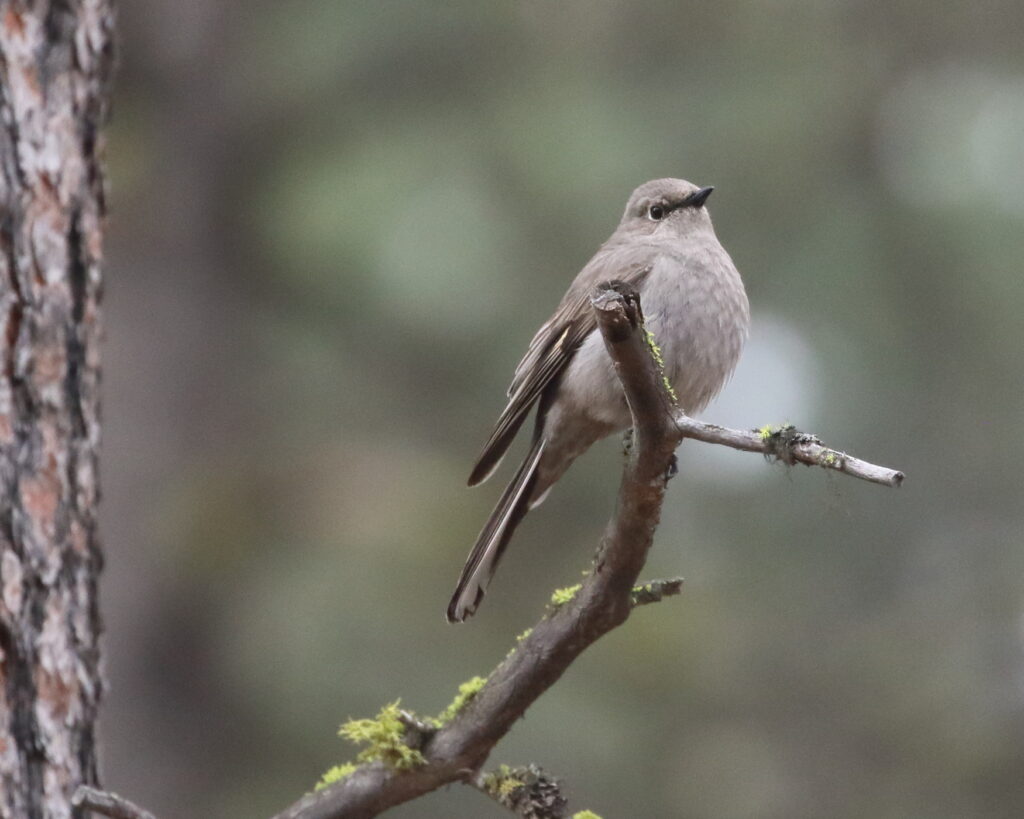
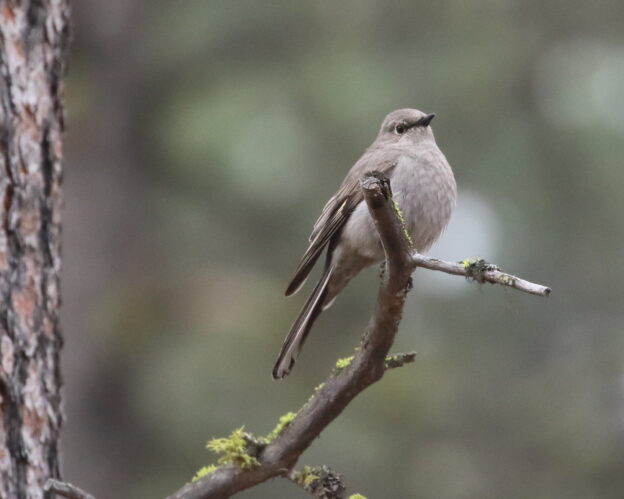
Townsend’s Solitaires are hands-down one of our favorite Montana passerines and nest in the root balls of fallen trees. This makes them perfect burn birds.

I had hoped to hear an Orange-crowned Warbler, but alas, was probably a bit too early for those. Back near the road, however, I was rewarded by Red Crossbills and the year’s first look at a dazzling male Yellow-rumped Warbler. Satisfied with my thirteen species, I continued on to the car, planning my next day’s trip to the Missoula Cemetery to see what I could find. Unbeknownst to me, fate was about to deal Braden and me a radically different birding destination for Tuesday . . .

Presume Not the Common Robin

This time of year we observe a remarkable influx of American Robins in western Montana. True, the birds are year-round residents in small numbers through much of the state, but by April, instead of spotting the occasional bird, Braden and I begin counting them by the dozens. As much as I love this “thrush flush”, I have to admit it has led to some close calls in bird IDs this past week.

This time of year, it’s easy to assume that every medium-sized bird is a robin—but BIRDERS BEWARE!

Every morning I grab my binoculars when I head out to take our dog Lola for her morning tramp around our neighborhood. We follow a mile-long route around a school, down to a park, and then back up home, skirting the edges of houses, woods, and Rattlesnake Creek. Over the years, Braden and I have compiled a healthy bird list for the route, but I have to say that it rarely yields any real surprises. As a result, I become lulled into a sense of complacency about what I am looking at.

To wit, with all the robins around lately, I have naturally assumed I am looking at Turdus migratorius when I see medium-sized, nondescript birds perched in a distant tree. On my Wednesday dog walk, I again made those assumptions. I mean, there were a ton of robins about and I identified many by sight and sound. When I saw fifteen birds sitting in another tree, I thought, “More robins.” Fortunately, something made me pause—perhaps my inner birder conscience or a feather that didn’t look quite right. Ignoring Lola’s piercing eyes, which pleaded for me to throw the ball again, I raised my binoculars and found . . .

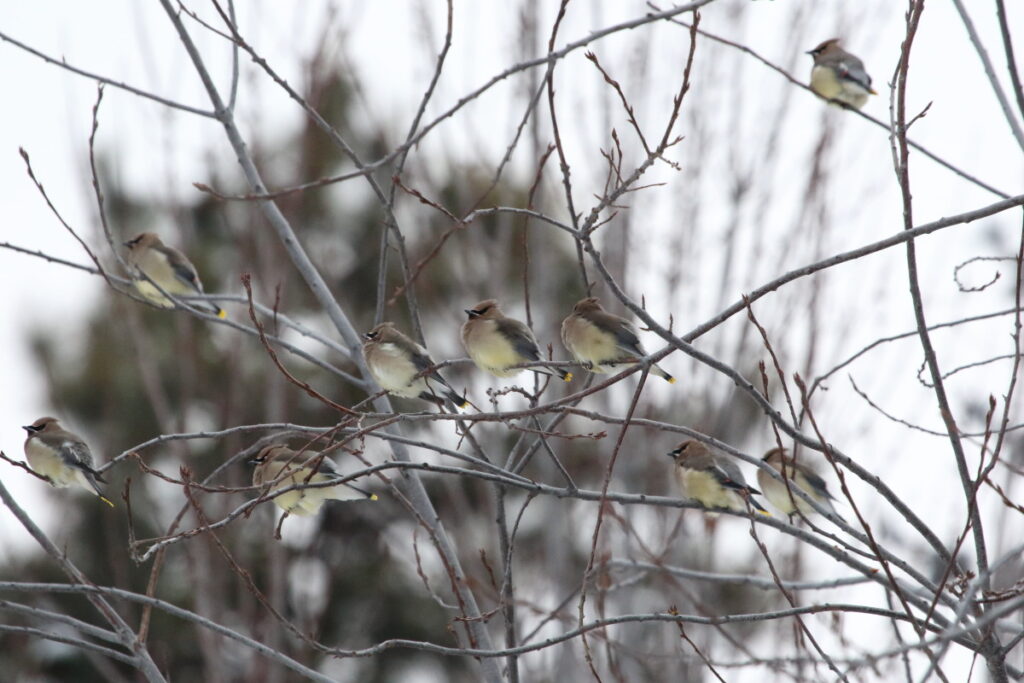
This photo sheds light—or shadow—on how easy it is to mistake other groups of birds for American Robins.

Cedar Waxwings! “Huh,” I thought. “That’s cool.” Waxwings weren’t earth-shattering, but I didn’t expect to see such a group this time of year. I threw the ball for Lola and continued walking, and a hundred yards later saw another group of birds in a tree. “More robins,” I thought, then remembered the waxwings and again raised my binoculars to find . . .

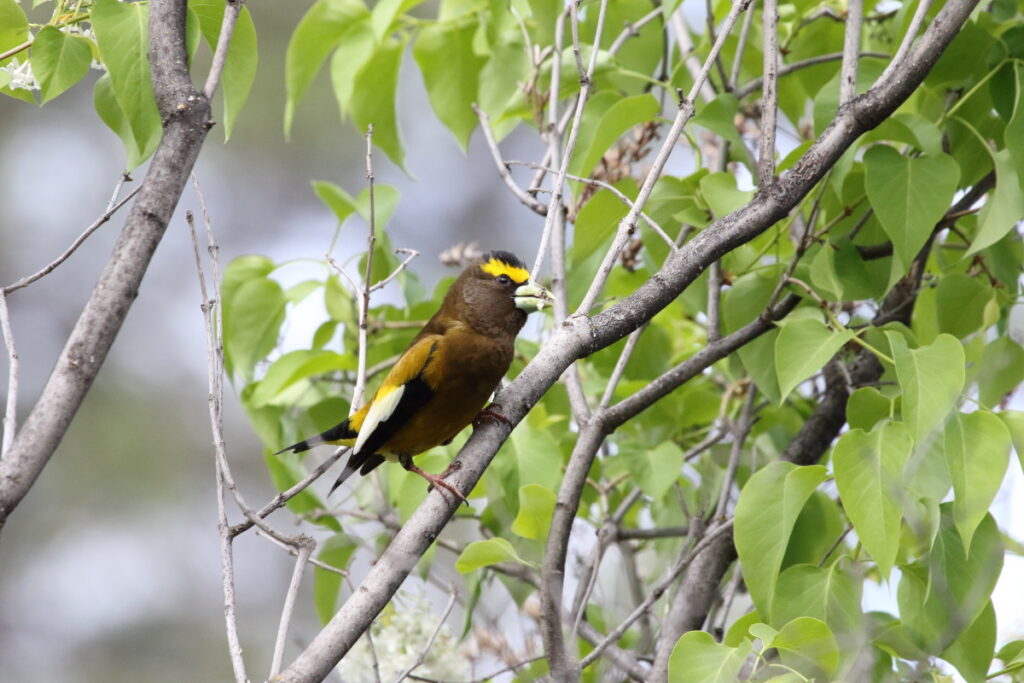
Evening Grosbeaks! Even better, it was my first good look at them for the year! Those two back-to-back sightings taught me a valuable birding lesson: never assume what you’re looking at just because certain birds are more common or you’ve seen them before. I hope it’s a lesson that will serve you well this spring—not that there’s anything wrong with robins.  

Up close, an Evening Grosbeak’s markings are distinctive, but even from medium range, light and shadow can obscure an accurate ID!