Category Archives: Birding

Montana Christmas Bird Count #1: Owlservations

To Subscribe to FatherSonBirding—and nothing else—please fill in your email address in the box down in the column to your right. Thanks!

At 9 a.m. on December 15th, my dad and I sat in his truck in the parking lot of DeSmet School. It was the morning of our first Christmas Bird Count of the year, and we were wondering if we had the place and time right. My dad pointed to a blue Prius driving towards us.

“Those look like birders.”

“Yeah, right.” I said as they turned and drove past us.
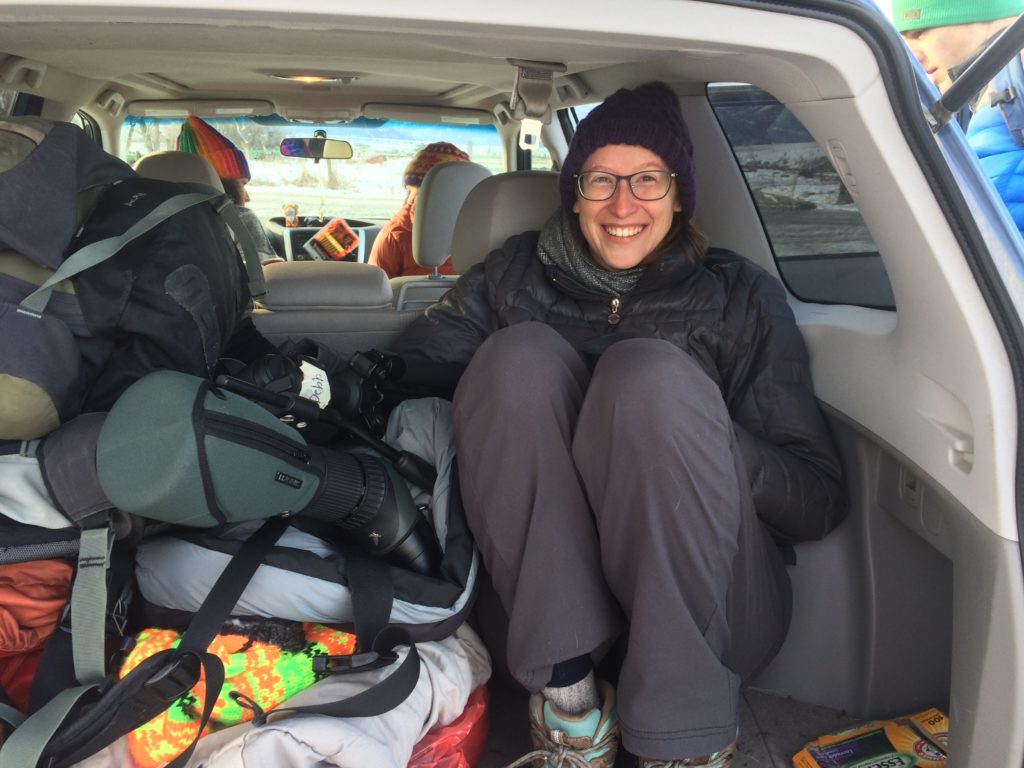
How many birders can fit into a Subaru? Turns out, the answer is six!

A minute later, though, the Prius reappeared and pulled into our parking lot—I guess they were birders! In a few minutes, four more cars pulled up, and we all got out and introduced ourselves. The leader of the count, Debbie Leick, whose name my dad and I recognized from eBird, was a cheerful and optimistic woman. We quickly divided into two groups—the harder but possibly more rewarding forest group, and the slightly easier lower Butler and LaValle Creek group. My dad and I joined the latter, along with Debbie and three excited women from Northwestern Montana: Madeline, Laura, and Heidi. Only Madeline was an experienced birder, but they all showed true birding spirit!

We took a quick check for birds around the school, then drove to the bottom of the canyon and parked our cars at a barn, where we picked up magpies, ravens, Red-tailed Hawk, Bald Eagle, pigeons and a Song Sparrow. We then shuttled up to the top of our route and hopped two fences and a creek, before slowly making our way back down the canyon.
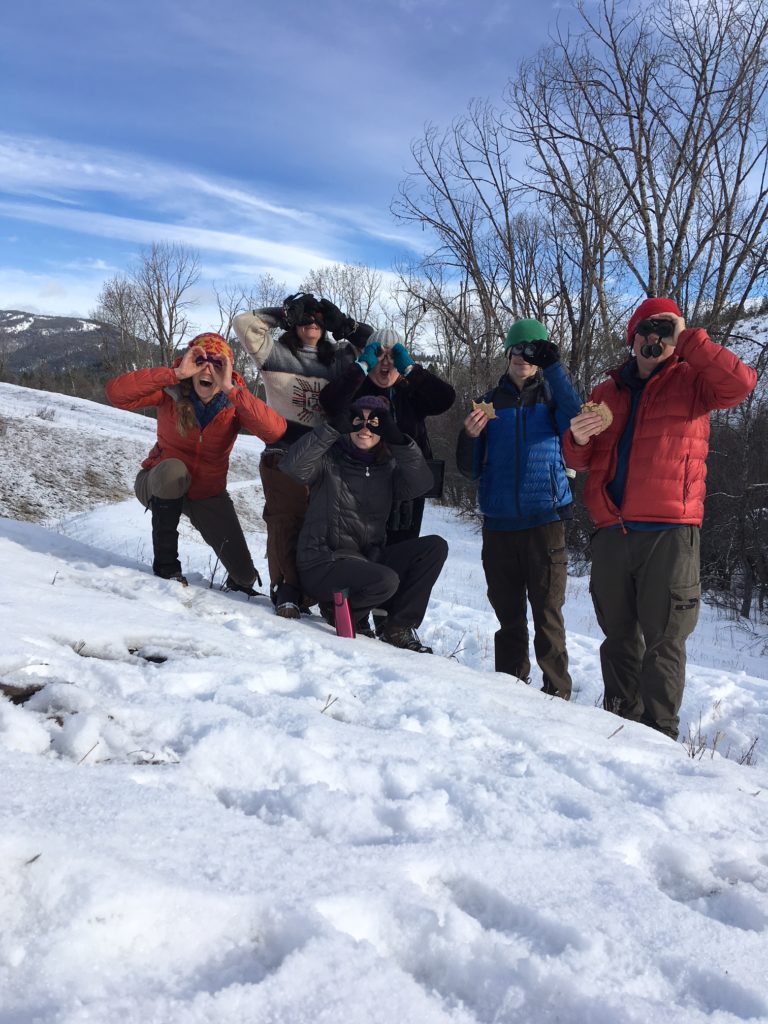
The Christmas Bird Count just seems to bring out the birder in everyone! (Photo by Madeline Finley).

The walk, though cold, was fun. It took about two hours to get to the bottom, and birds were sparse. We were in great company, though, and everyone was enthusiastic—maybe too enthusiastic. One woman forgot we were birding a few times and just randomly burst into song or started yelling with unprompted glee. My dad designated himself as our owl-finder—we had done this area four years ago on our very first CBC, and been lucky enough to spot a Western Screech-Owl wintering in an old woodpecker hole in the cottonwood draw. Unfortunately, during our whole walk today we did not see a single owl.

We did see some great birds, however. I spotted a large flock of winter-plumaged American Goldfinches that seemed to follow us, and we added Black-capped Chickadees, Townsend’s Solitaires, and a White-breasted Nuthatch to the tally. We also picked up House Finch and Red-breasted Nuthatch at feeders near the end of the route. Once we got back to the barn, my dad called out a group of eight Gray Partridges flying by!

We said goodbye to the other women, then took one last short drive with Debbie up Butler Creek Road. On the way up we tallied a few Wild Turkeys, hawks, magpies and flickers, but nothing to write home about. On the way down, though, I glimpsed a round shape perched high in a deciduous tree next to a house.
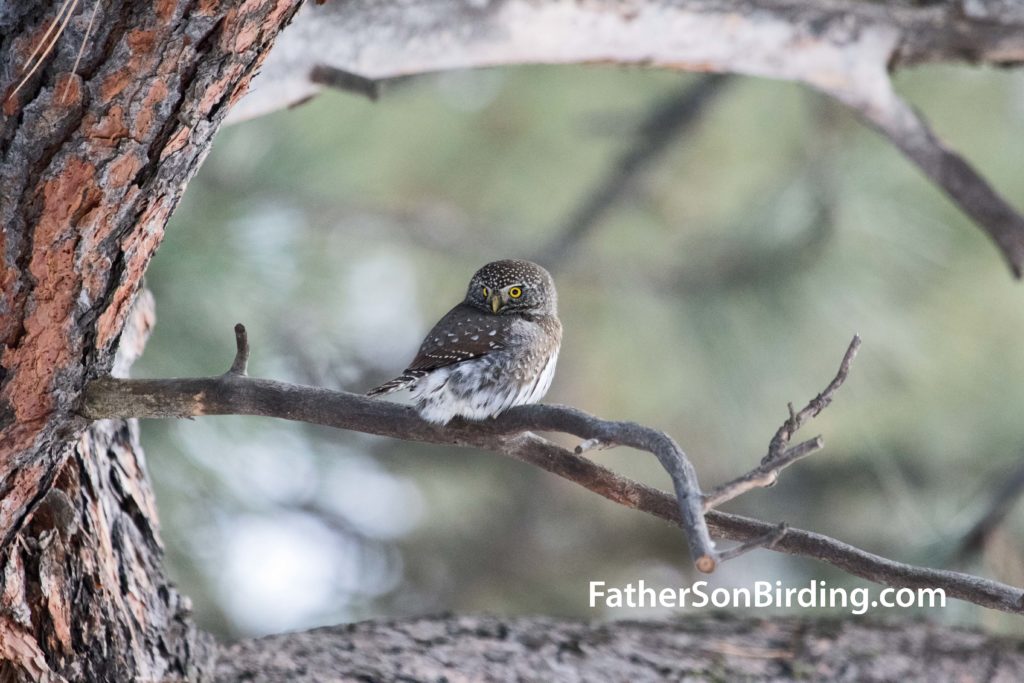
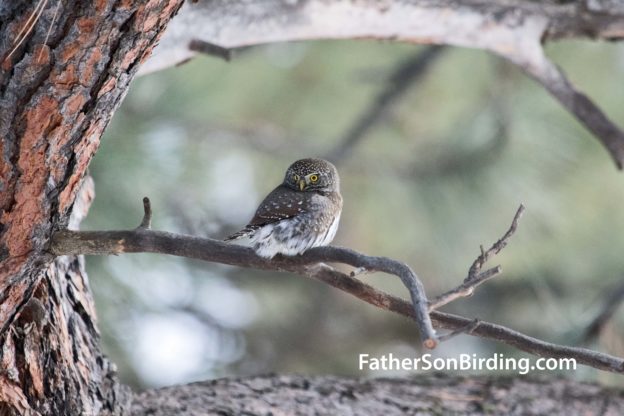
No matter how much you want to see them, owls are always an unexpected delight. This guy was only Braden’s and my third NOPO ever!

“Stop!” I said. The bird looked like a fat Northern Shrike, which would be a great addition to our list.

When I raised my binoculars, though, I was greeted with black false eye-spots.

“Northern Pygmy-Owl!” I yelled.

“What!?” was the reaction from the front of the car.

Suddenly, the bird flew—into a convenient tree right next to our car!

Just like the last time we’d birded here, we ended our CBC with a great, tiny owl!
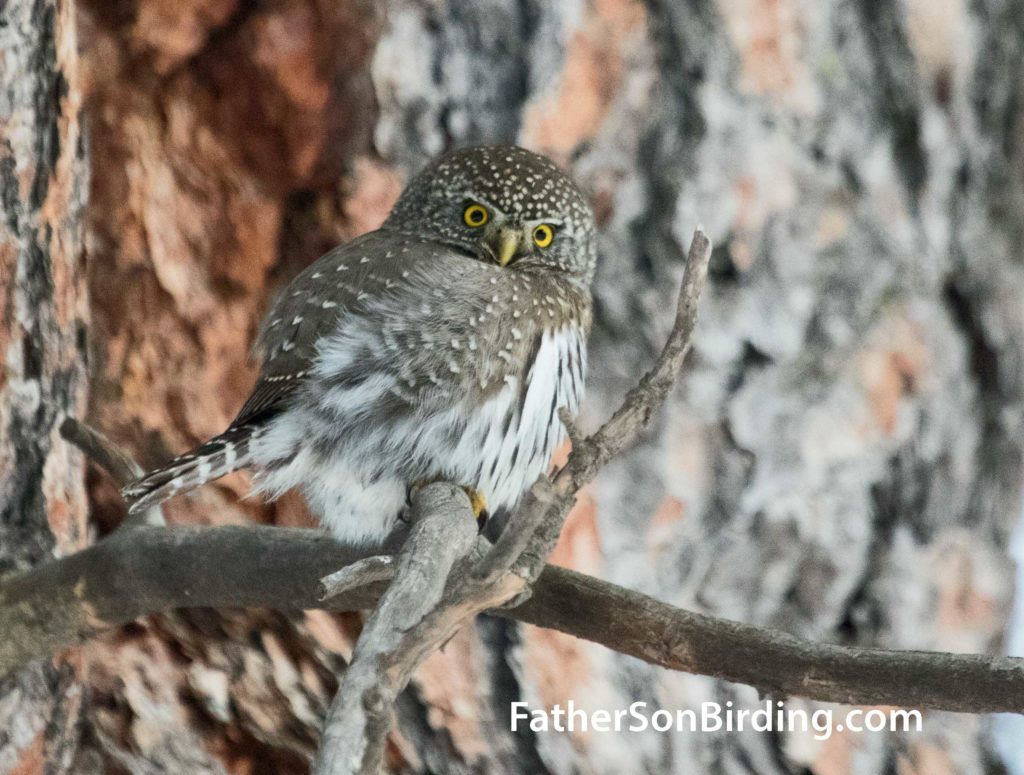
One great thing about owls is that they are generally more tolerant of human observers than many other species.

Winter Birding at Brazos

It was Saturday, November 17 and I have to admit I was feeling a bit down on myself. Before my work trip to Houston, Braden had set a goal for me of 100 species, something I thought I could easily achieve. My visits to Anahuac and Bolivar Flats, however, had left me only at 75 confirmed species—well short of my goal. With only one free half-day left of my trip, I searched the eBird hotspot map and asked myself, “Where could I score big and still get back to my last book signing on time?” My eyes landed on Brazos Bend State Park.

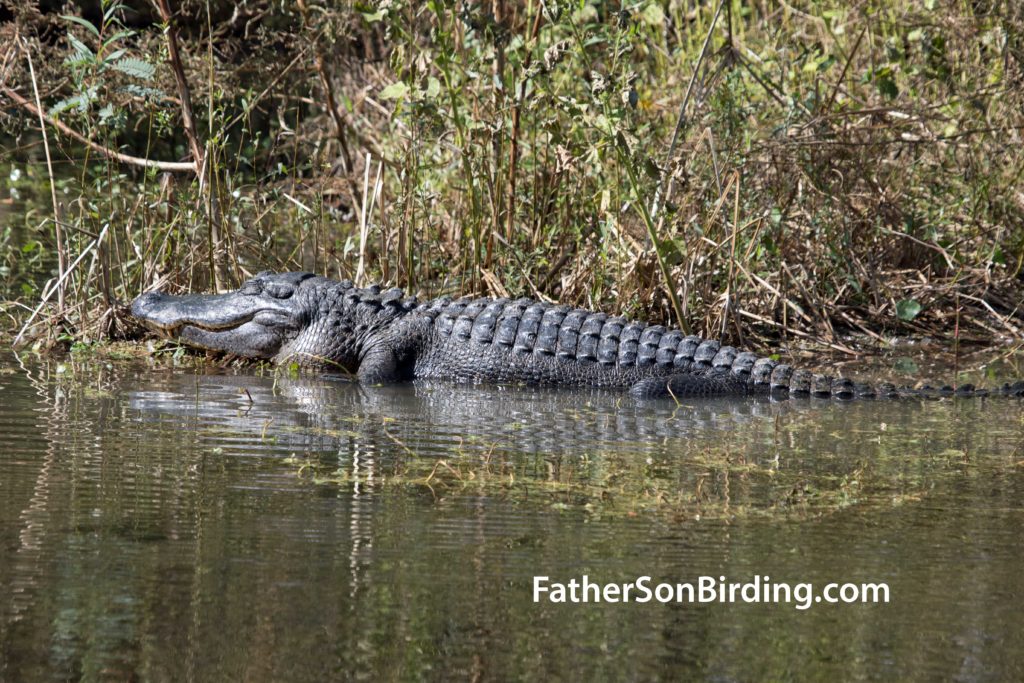
Alligators seem to be the main attractions at Brazos Bend, but the birds are far more interesting!

The official motto of Brazos State Park is “Come for the gators, stay for the birds.” Okay, I’m making that up—but it should be the motto because the birds are far more interesting. On the recommendation of the park attendant, I kicked off my visit with a counterclockwise circumambulation of 40 Acre Lake. The lake surface held far fewer species than I had predicted: coots, Common Gallinules, Pied-billed Grebes, and only two duck species—Blue-winged Teal and Black-bellied Whistling Ducks. Herons, Anhingas, Cormorants, and other water birds abounded, however, and as I walked, I started picking up some prized forest birds as well.

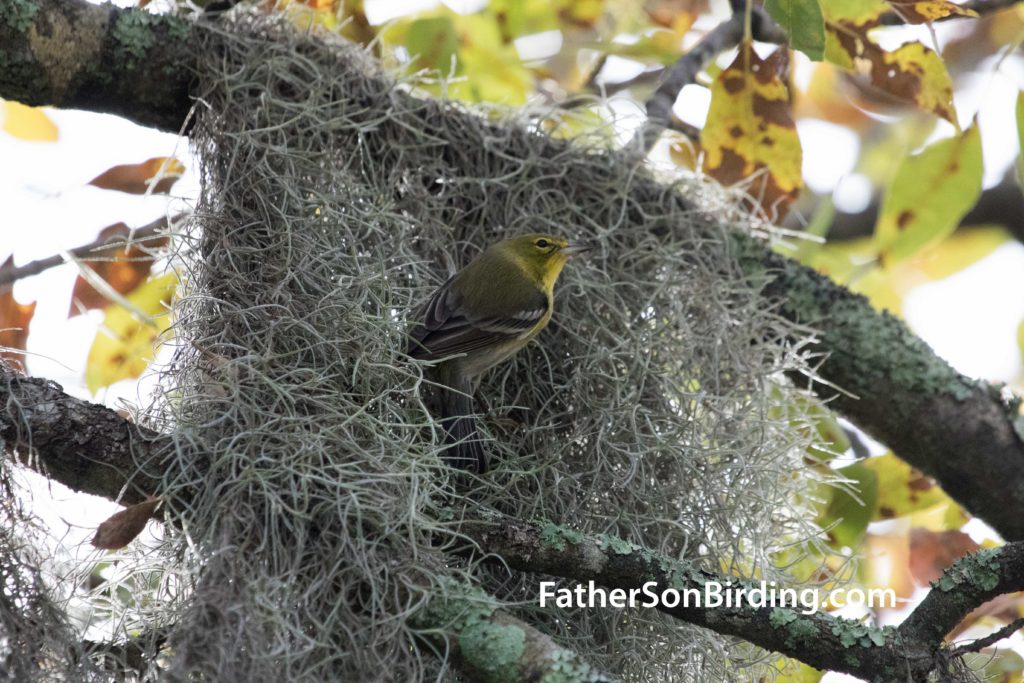
I first saw a Pine Warbler on Braden’s and my Texas trip in January, so seeing one again was like seeing an old friend.

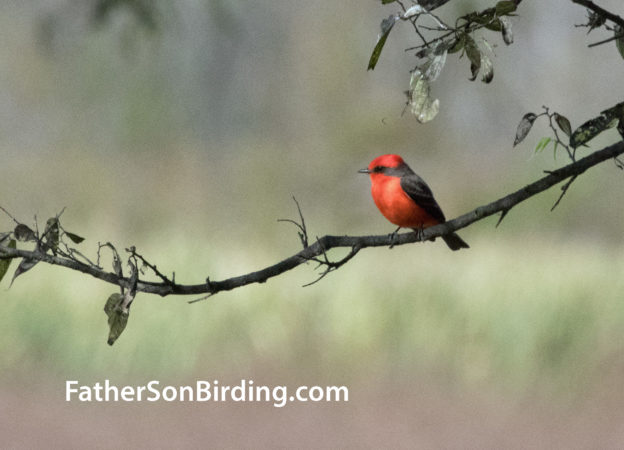
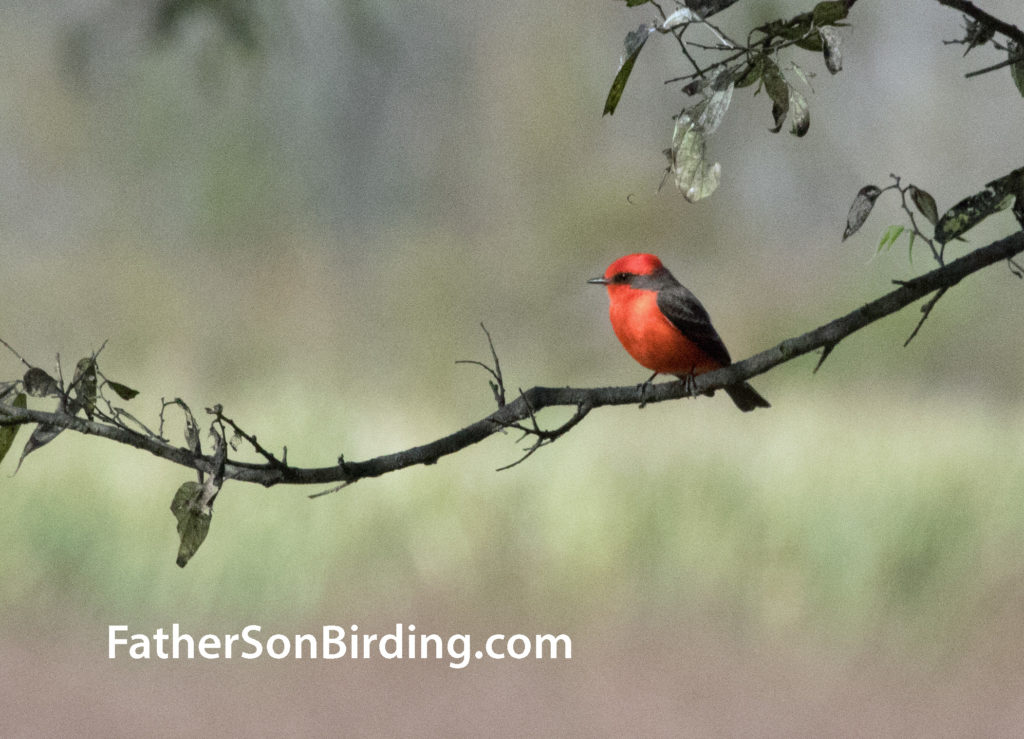
Before my trip, I had hoped to see all three wintering warblers in the area: Yellow-rumped, Pine, and Orange-crowned but had only spotted the Yellow-rumped earlier. Within fifteen minutes, though, I happened upon a great mixed flock where I picked up my missing two warblers—and Golden-crowned Kinglets to boot! A little while later, I saw a pair of Vermillion Flycatchers—my first ever in Texas. It was a good start, but I wanted more!

Vermillion Flycatchers were a real surprise at Brazos, but I guess they shouldn’t have been.

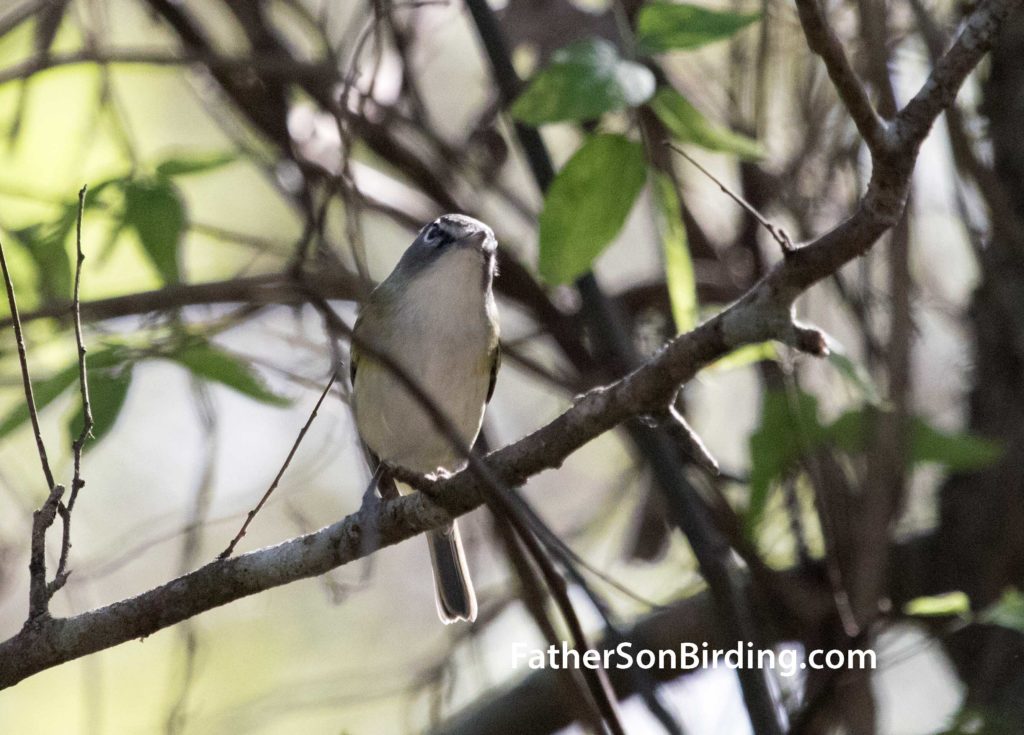
Driving to Elm Lake, I decided to bushwack through some promising forest across from the parking lot. I could hear a variety of birds there, but needed to see them for the IDs. The birds made me work for them! First, I found the noisiest birds—a pair of Carolina Wrens. Then, I happened to see a Blue-gray Gnatcatcher. I could see something else, but dang it, the bird just kept flitting out of my vision. I thrashed through the brush until I finally managed a decent ID shot with my camera. Slather me in BBQ sauce! It was a Lifer: Blue-headed Vireo! I was elated, and minutes later I scored a Year Bird, Yellow-bellied Sapsucker!

I was tickled to ID this Blue-headed Vireo myself. I didn’t even realize it was a Lifer until Braden later pointed it out to me! Number 778!

Afterward, I hiked the two miles around Elm Lake, but except for some impressive gators, it was fairly unproductive. I didn’t mind. I was thrilled with my “birdservations” for the day. Which I’m sure is leaving you all wondering: did I reach my 100-bird goal? Alas, no. Five species short. But I had discovered a wonderful new birding location, a place I was sure to return.

Tangled!

To subscribe to our posts—and nothing else—please scroll down to the appropriate boxes in the column to the right.

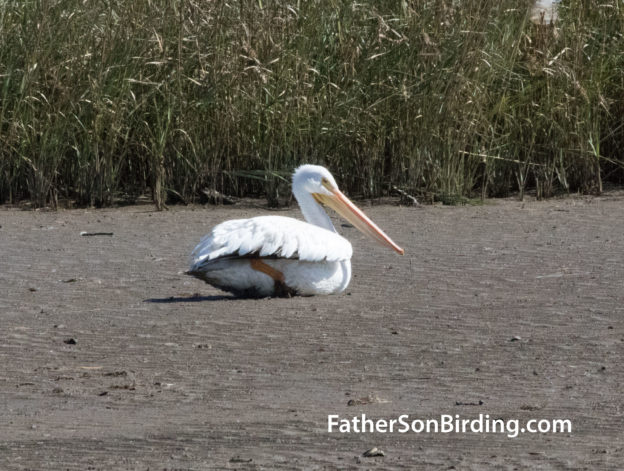
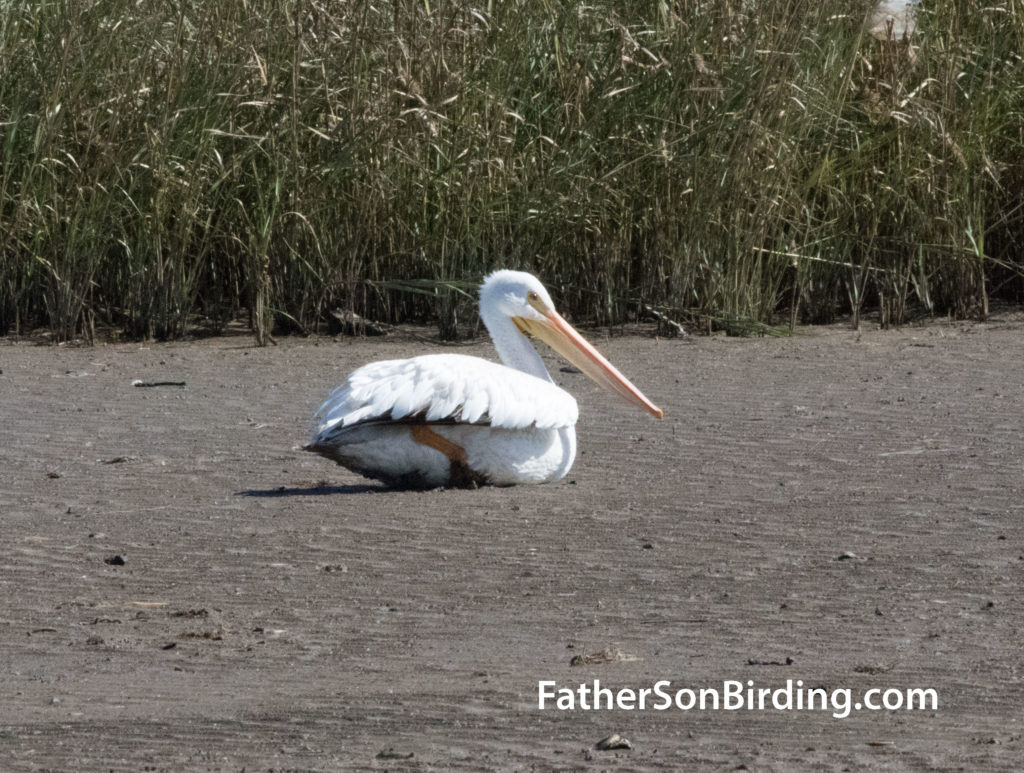
My last post dealt with my recent experiences observing plovers on Texas’s Bolivar Peninsula, but that same afternoon began a more poignant adventure. Continuing walking west along the beach of the Houston Audubon Society’s Bolivar Flats Shorebird Sanctuary, I approached the shipping channel into Galveston Bay. As I followed the curve of the shore to my right, I spotted an unlikely sight: a lone White Pelican sitting in the mud.

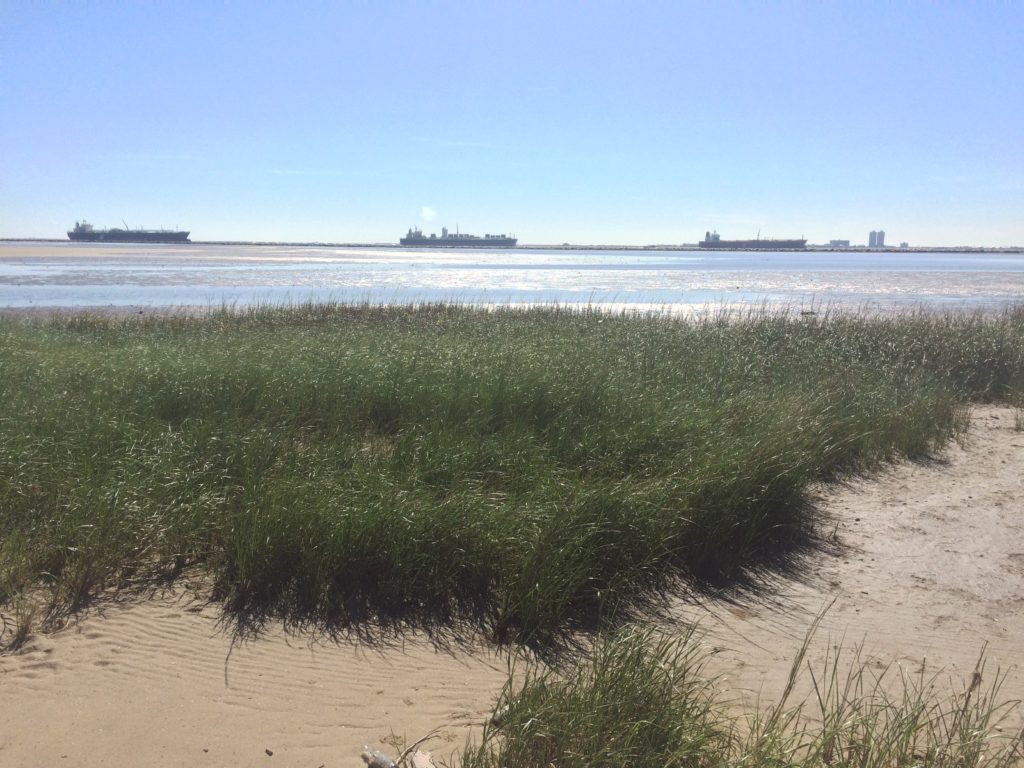
Bolivar Flats, one of Texas’s most important seabird sanctuaries, sits adjacent the busy shipping channel into Galveston Bay.

“Hm, that’s strange,” I thought. “I almost never see White Pelicans sitting alone—or in such vulnerable positions.”

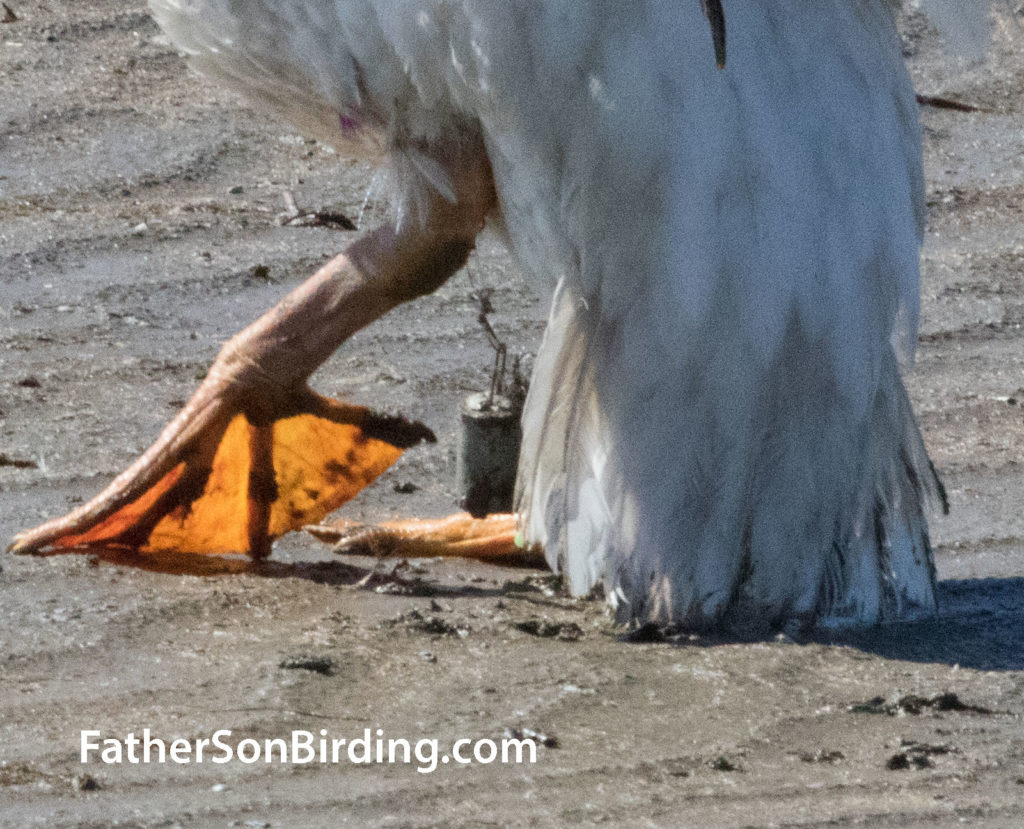
As I drew closer, however, the pelican raised itself to its feet and I saw the problem: its legs were tangled in fishing line.

I was suspicious when I approached this White Pelican just sitting alone on the mud.

My heart sank as I debated what to do. Thanks to TSA security restrictions, I didn’t have a pocket knife on me, not to mention anything to throw over the bird’s head to calm it down. Also, pelicans are BIG. “That thing could seriously injure me if I did the wrong thing,” I thought. Feeling helpless and sad, I finished my walk and returned to the car.

Back at my hotel in Houston, however, I decided to see if there was any help available. Earlier, I had met three young employees of the Houston Audubon Society who lived at High Island. I called HAS and left a detailed message about the pelican’s predicament and location and asked if the High Island crew might go out there to free it.

To my astonishment, I got a prompt email from HAS Development Director Meredith Segal, who told me she had relayed my message to their Coastal Sanctuary Manager, Pete Deichmann, who would try to locate the bird. Having done all I could do, I crossed my fingers and went to bed.

The next day, as I stayed busy with speaking and book signing duties, I received another amazing message from Meredith. It read:

“I wanted to update you on the white pelican saga!  Pete, our Conservation Specialist found the pelican and cut off the fishing line.  He said there were three hooks stuck in her and she wasn’t able to fly.  When he cut the line off of her, she was a bit stunned and didn’t take off.  He will check on her again later to see if she is still there or if she was able to take off.  She at least has a chance now because of you!”

“Unfortunately, we see it all too often,” HAS’s Pete Deichmann told me after freeing the pelican of fishing line and hooks. “Shorebirds and wading birds are particularly susceptible, not only because of the considerable amount of time spent in or near the water, but also the time spent on the ground walking and foraging it is easy to become entangled by a bird’s nest of fishing line.”

Part of me reacted with relief. My—or, precisely, Houston Audubon’s—efforts had at least freed the bird of its nylon shackles. On the other hand, I also knew that it was entirely possible that the pelican might still die. It simply may have been bound for too long and become too weak to resume hunting and feeding itself.

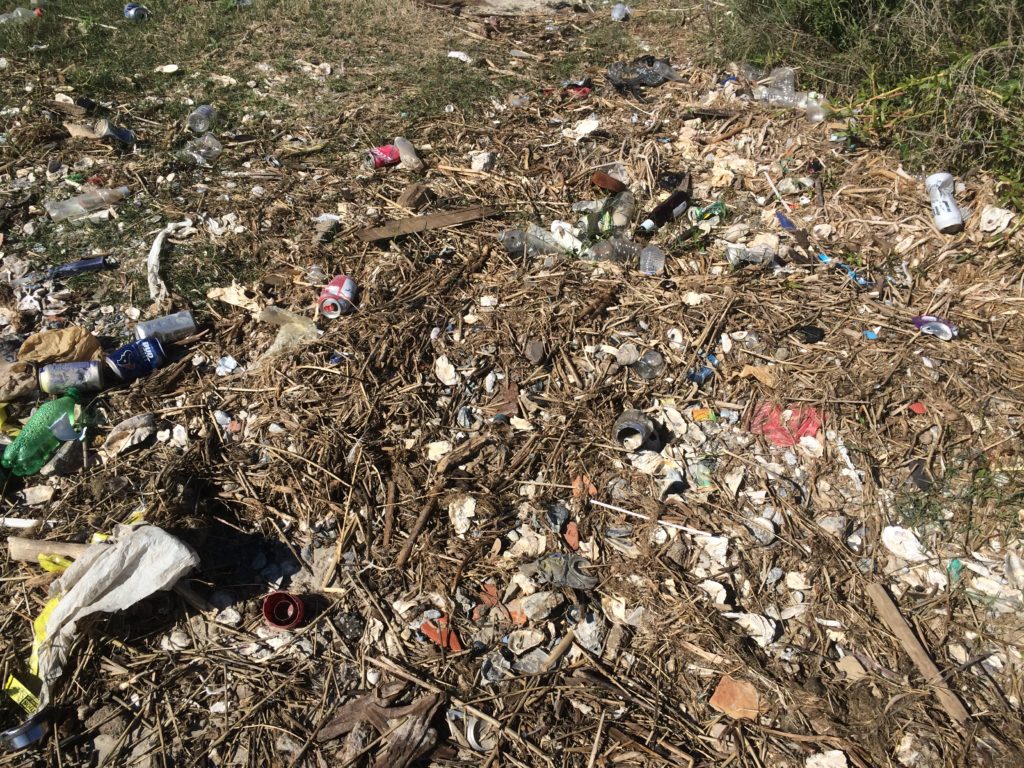
The episode personalized our planet’s plastic problems. Fishing line is just a small—but important—part of a global pollution crisis for birds and other wildlife. We have flooded the oceans with plastic of all kinds. Even if it doesn’t entangle seabirds, they consume it—often with deadly consequences. To learn more, please check out websites such as that of the Plastic Pollution Coalition. Just as important, take action by supporting groups such as Houston Audubon that are on the front lines of dealing with and raising awareness about this critical issue. I also urge anyone reading this to reduce their use of plastic bags, straws, fishing line, etc… We will not be able to recycle our way out of this crisis, but by reducing our consumption of plastics, we might make headway.

Please share this post 🙂

According to a recent PBS broadcast, humans have created more than 9 billion metric tons of plastic to date. In the U.S., we recycle less than 10% of what we make. The rest ends up in landfills—or beaches such as here on the Bolivar Peninsula. 

Turkey Day Texas Adventures Part 1: Pursuing Plovers

Join Braden and me at our last book signing of the year at The Well-Read Moose in Coeur d’Alene, Idaho this Friday, November 23 at 6 p.m. Also be sure to share this post and subscribe to our blog in the box down on the column to the right. Happy Thanksgiving!

I just returned from speaking on an author panel at the annual convention of the National Council of Teachers of English in Houston, Texas. It was a terrific event, but I confess that I looked forward to Texas birding possibilities even more!

As soon as I picked up my rental car, I headed toward Winnie, Texas, racing the sun so that I could have an hour or so at Anahuac National Wildlife Refuge before bedding down for the night. I arrived a little later than desired, mainly because of a couple of irresistible caracaras and a Scissor-tailed Flycatcher that almost literally flagged me down. Still, I managed thirty minutes driving the Shoveler Pond Loop. I needed at least an hour but managed fun looks at White and White-faced Ibises, Common Gallinules, a Black-bellied Whistling Duck, and a surprise Common Yellowthroat.

Semipalmated Plovers greeted me at Rollover Pass on the Bolivar Peninsula.

The next morning, after a stop at Rollover Pass, I headed to the Houston Audubon Society refuge at the tip of the Bolivar Peninsula. Before the trip, Braden had been drilling me on plovers, and his work paid off. Plovers are well-known for their ability to distract potential predators by faking wing injuries or sitting on “false nests.” Except for the ubiquitous Killdeer, however, they were a group I’d never knuckled down and studied before and I hoped to see all of the Big Five on my list: Black-bellied, Snowy, Wilson’s, Piping, and Semipalmated. At Rollover Pass, I’d found a number of Semipalmated, so that left me only four more at the Bolivar sanctuary.

Unfortunately, the long beach of the sanctuary seemed bereft of the numbers of shorebirds I had hoped for and I struggled to ID many of the birds in their winter plumages. I patiently began picking away at them, though. “That’s a Willet. I know that one. Those are Sanderlings. Hm…is that a Dunlin? I’ll have to ask Braden about that one later.”

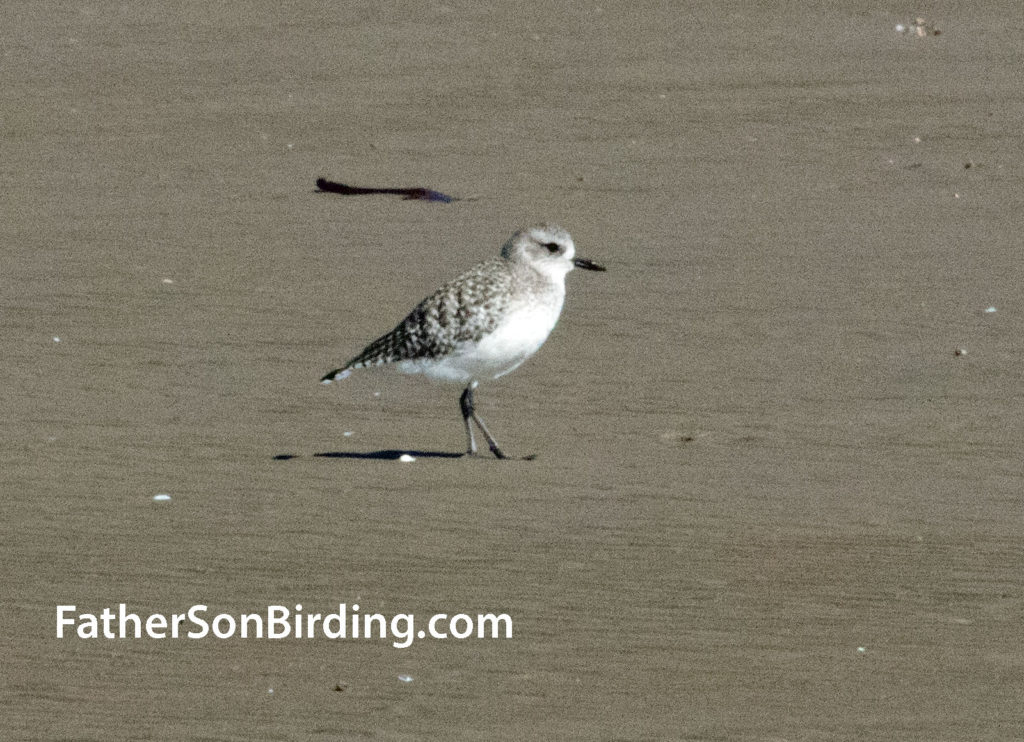
Winter-plumage Black-bellied Plovers were one of several shorebirds I at first couldn’t identify. Once I got them, though, I got ’em!

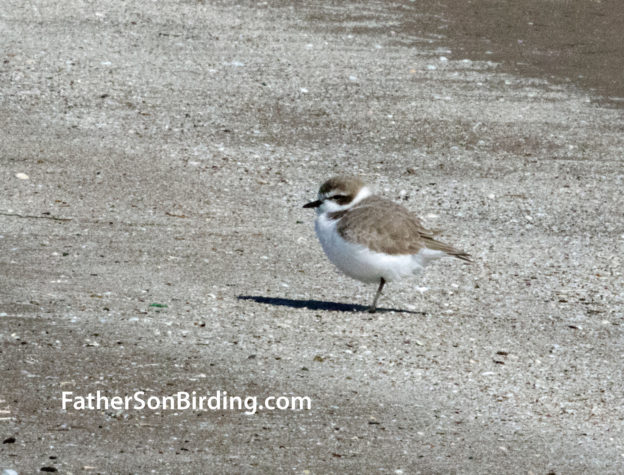
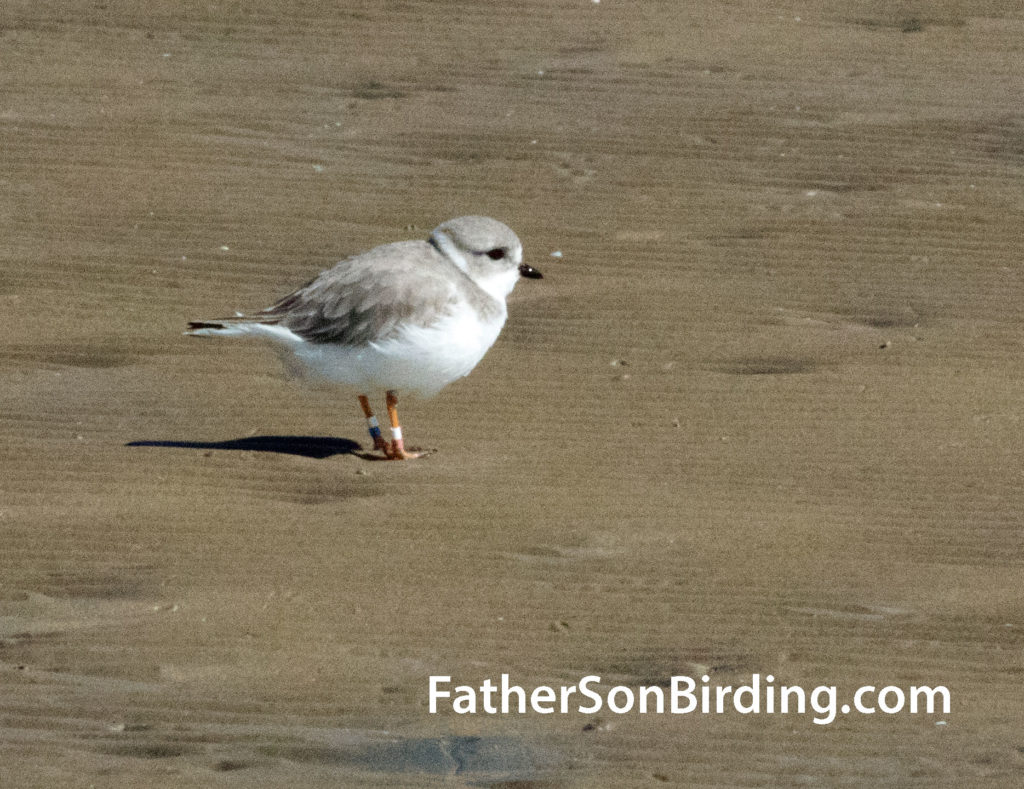
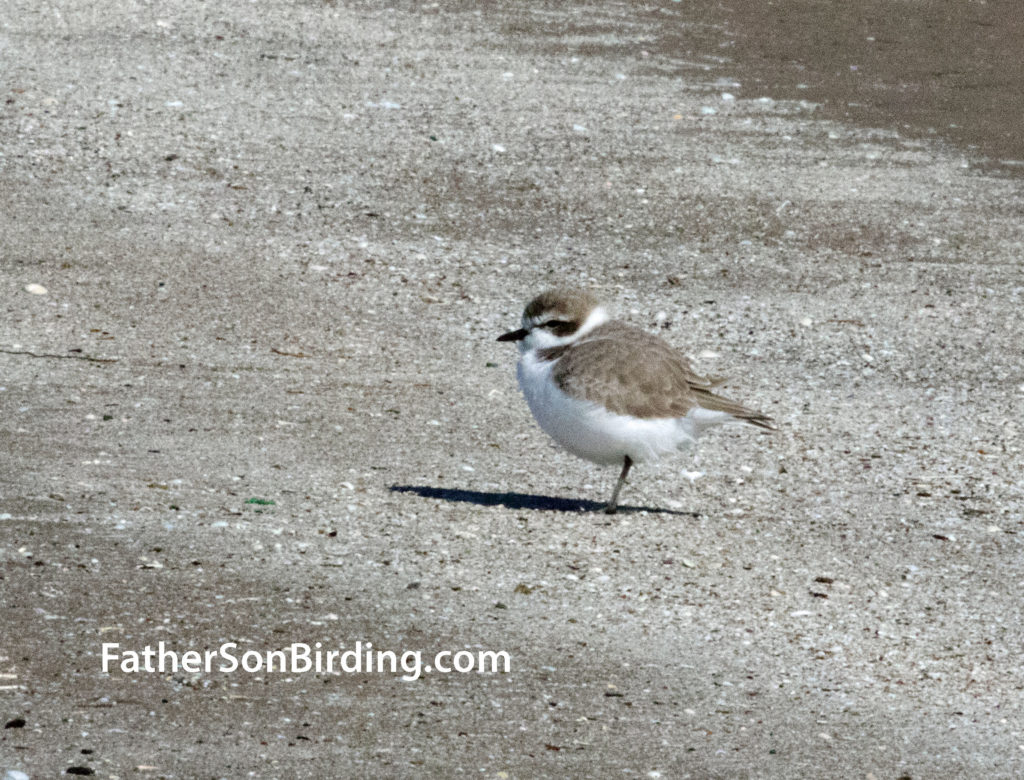
Then . . . jackpot. Suddenly, I was seeing plovers in all directions. The problem? Identifying them! The two kinds around me looked very similar. Both were tiny and had broken breastbands. Individuals of both also had leg bands. Still, one kind was definitely darker than the other and they had distinctly different-colored legs. When I showed my photos to Braden, he affirmed my thoughts: I had seen both Snowy and Piping Plovers. As a bonus, I saw numerous Black-bellied Plovers, too!

I didn’t realize until after my visit that Piping Plovers are an endangered species, with only an estimated 8000 individuals according to BirdLife International.

Four out of five plovers? I’d take it—especially because Piping and Snowy Plovers are both endangered species due to their preference for the same beach habitats that humans enjoy. These little, cool birds definitely made up for the shortage of gulls, whimbrels, jaegers, and other birds I’d also hoped to test myself against.

Even better, my Thanksgiving Texas birding adventures had just begun . . .

This Snowy Plover surprised me as I’d only seen them on the West Coast before. Note the darker facial markings and differently-colored legs than the Piping Plover in the previous photo.

Owl Opportunity

See Sneed read from his book Woodpeckers and Warblers at River Oaks Books in Houston, November 17 at 3 p.m. and at The Well-Read Moose in Coeur d’Alene (Idaho) on November 23 at 6 p.m.

On Thursday, November 8th, my friend Eli and I were in the middle of a heated game of “Cup of Bluff” when my phone began going off. I saw that it was Nick and answered it.

“What’s going on?”

“Shh!” He was whispering.

“What?”

“I am at the Gravel Quarry standing, like, ten feet from a Saw-whet right now! Get your dad and get down here!”

He hung up and texted me his exact location. I raced upstairs and into my dad’s dark bedroom, abruptly waking him up from a nap. I told him the news. He yawned, and said, “Well, get your stuff! Let’s go!”

We rolled out of the house 10 minutes later, when Eli started his piano lesson with my mom. Nick was waiting for us at the Quarry, and as we pondered which routes would get us there the fastest, he sent us constant updates. According to him, it seemed like every bird at the Quarry was trying to make us miss the owl:

“A shrike just flew in and scared the owl, but it’s still in the same bush.”

“A mob of chickadees is trying to attack it! No!”

“Don’t let the Merlin distract you on the way in—go straight to the owl.”
This last thing was going to be particularly hard, as my dad still did not have Merlin for the year. Fortunately (and a little unfortunately), when we finally arrived, the Merlin was nowhere to be seen. We tiptoed down the hill into the forest section, and spotted Nick and his mom staring at a tree.

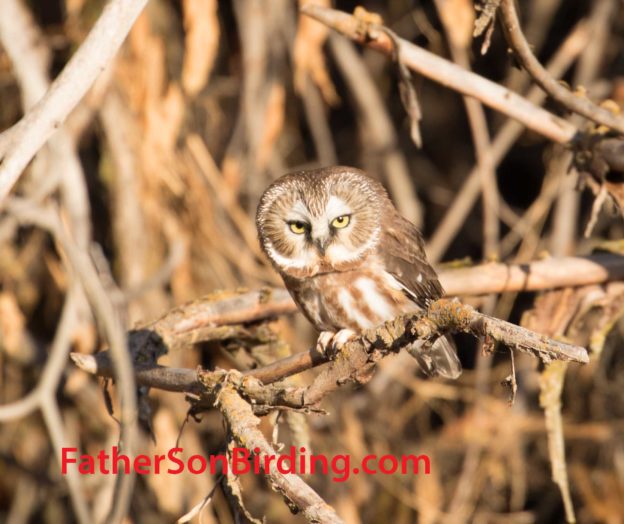
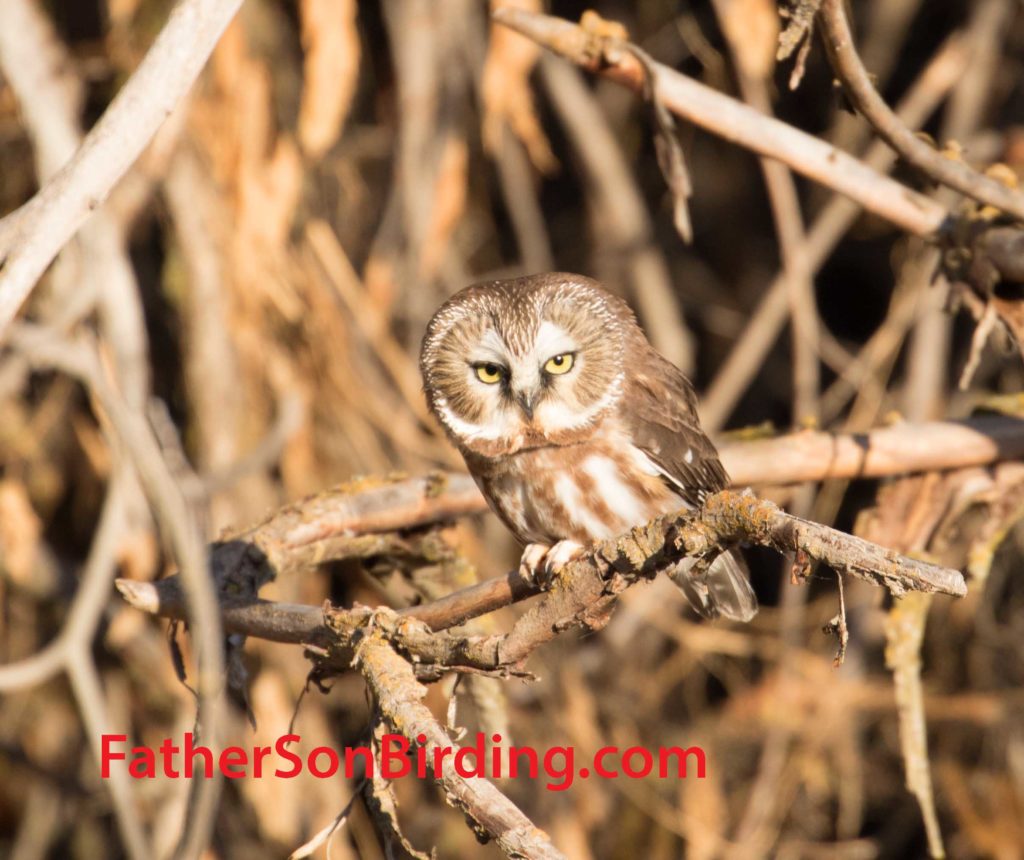
Though bored-looking, this Saw-whet was actually one of the most active owls we’ve ever seen!

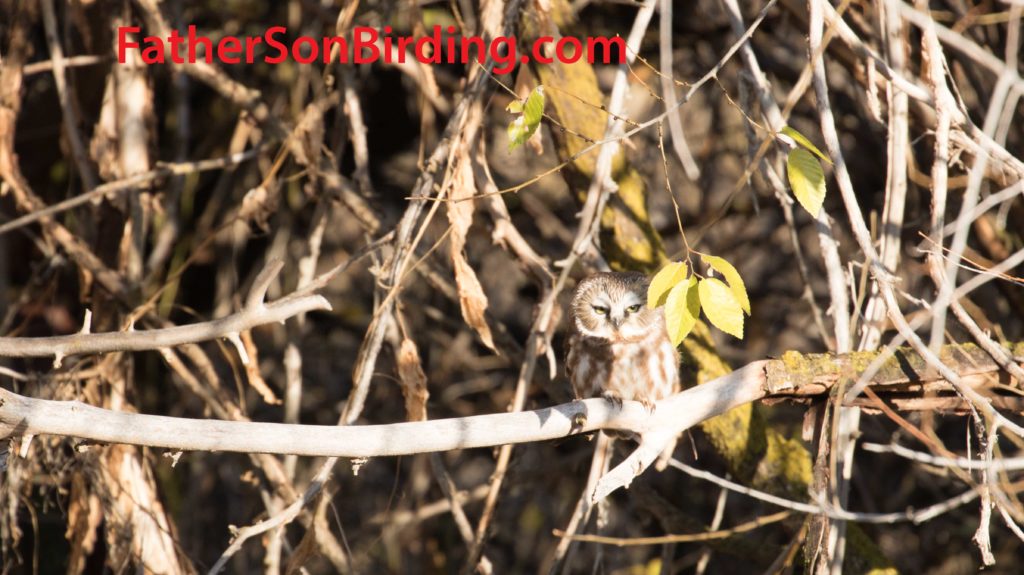
“Look,” he said pointing straight into the tangle of branches, “See that puffball? That’s the bird.”

We looked right through and saw what Nick was calling the Northern Saw-whet Owl. It was looking away from us, but we could still sort of identify it. The view disappointed us, though, and my dad went around back of the tree to attempt some photos.

After about five minutes, the owl suddenly cocked its head and flew closer to my dad. We quietly joined him, and saw that the owl was now wide awake and perched in full sunlight.

“This is what he was doing when I first saw him,” whispered Nick.

“Look, there must be a mouse under there,” I said.

The Saw-whet’s eyes was intently following the rustle of leaves beneath him. Suddenly, he dove and retreated back to his previous spot within the bush. He hadn’t gotten the mouse, though, and eventually came back out into full view, his warm brown streaks and adorable golden eyes highlighted by the light of the sunset.

After about a half hour of photographing and staring at this new lifer, we left him alone.

The Gravel Quarry had scored again.

Northern Saw-whet Owl–another nemesis ticked off, and another great experience!