
Some of our most popular posts have focused on exotic travel destinations, and today we kick off our latest series on one of North American birders’ most popular choices: Costa Rica. Braden and I just returned from an exhilarating, intense, nine-day birding adventure to the land of Pura Vida, and over the next couple of months I’ll be posting blogs on our most memorable birding experiences interspersed with our usual entertaining “paella” of reviews, domestic birding, and other fascinating topics. Again, we do not receive compensation for our blogging efforts, so if you wish to support our work, please purchase a few new copies of Birding for Boomers, Warblers & Woodpeckers, First-Time Japan, or any of Sneed’s other books. If you already have copies, why not pick up some for your friends? With that, let’s dive into Costa Rica at—where else—the airport!
Braden and I arrived at Juan Santamaría International Airport at 10 p.m.—just time enough to get to the rental car office before it closed. After collecting our vehicle, we drove to a nearby Airbnb so we could get a fresh start in the morning. Having spent a lot of time in Costa Rica the past couple of years, Braden had organized our entire birding itinerary and even picked this first place to stay—not only because it was convenient to the airport, but because it happened to have a terrific, little-known birding spot just down the street.
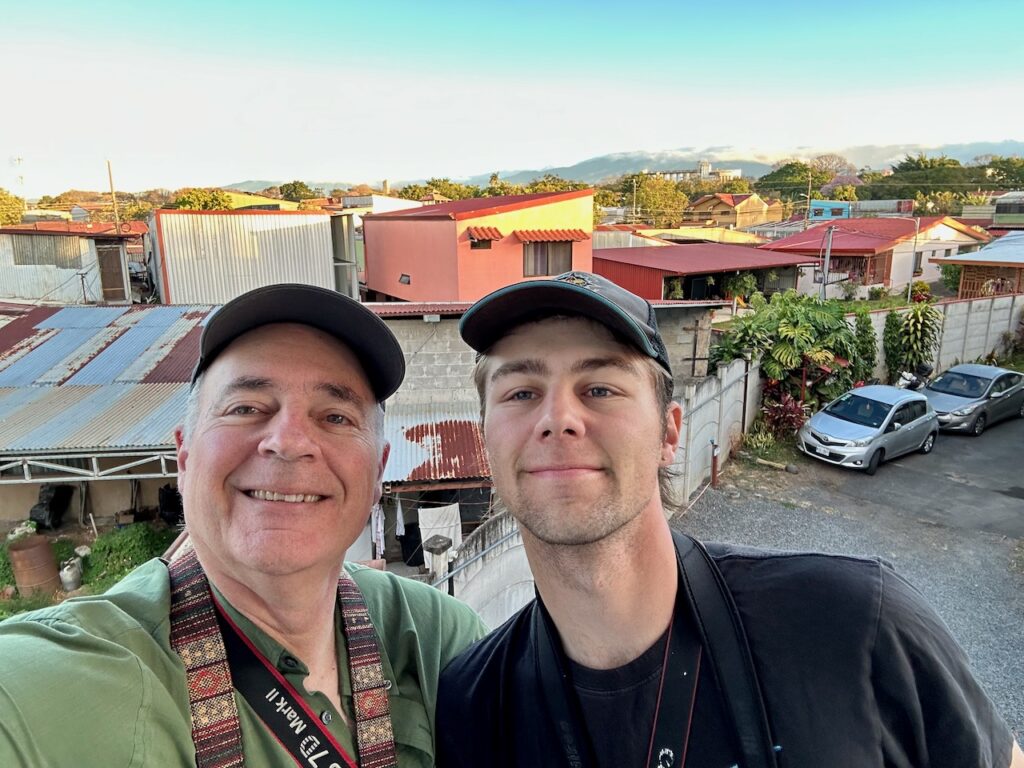
Braden and I are big fans of birding near airports, and have often found hidden avian treasures where you’d least expect them. Just last spring, on my final morning in Texas, I had a remarkable birding session in the vacant lot behind my hotel next to the airport in San Antonio, Texas. And during his spring Costa Rica trip last year, Braden had discovered a special little place only two blocks from our Airbnb. This year, as soon as dawn crept over Alejuela (where San Jose’s airport is actually located), he and I grabbed our binoculars and cameras and headed out.
Our destination was a large city park with the even larger name of Caminito Magico de la Tranquilidad. Being unfamiliar with the rather poor-looking neighborhood, I admit that I felt a bit nervous about our safety, but my concerns quickly vanished. At the park, people were jogging, biking, doing exercises, visiting over coffee, and walking around as in any park anywhere. The park covered several hectares, mostly devoted to playing fields, but a lot of trees threaded the fields and lined the park’s perimeter, and Braden led the way in guiding us on a full circuit.
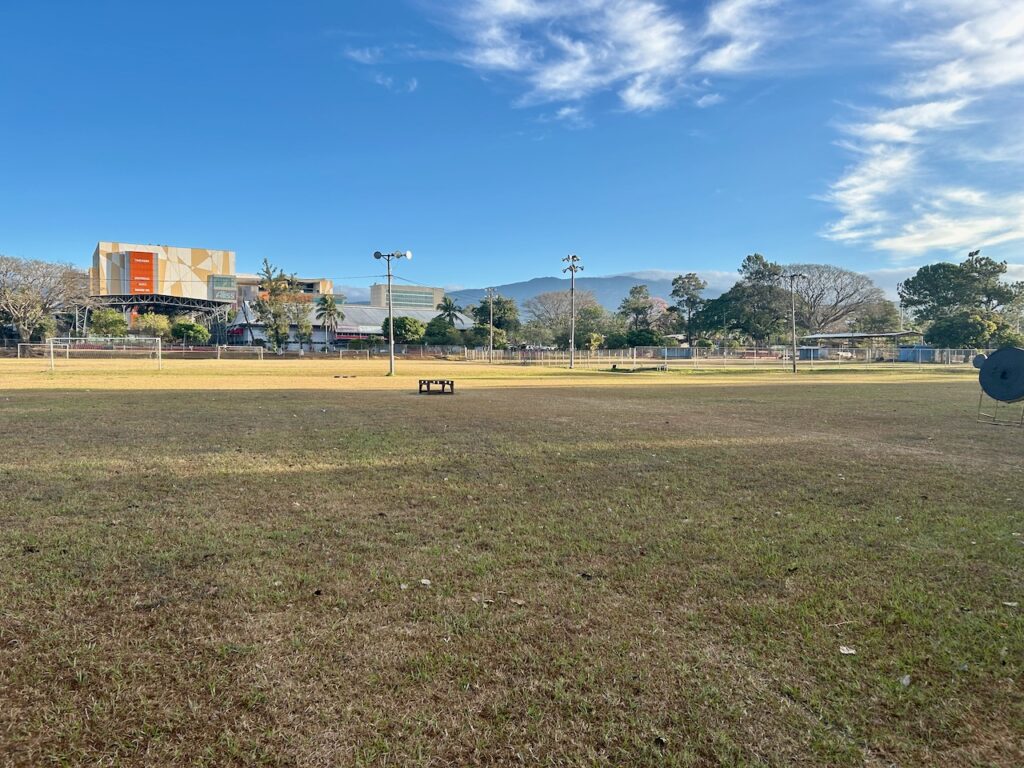
I had spent two months in Costa Rica in 1994, but tragically, that was before I took an interest in birds. Since Braden and I started birding a dozen years ago, I had been fortunate to bird in Latin America several times—most recently in Colombia con mi amigo, Roger—but it was fair to say that I was a novice at Costa Rican birds. I had been studying, however, and to my delight Caminito Magico park presented a perfect warm up for the week ahead.
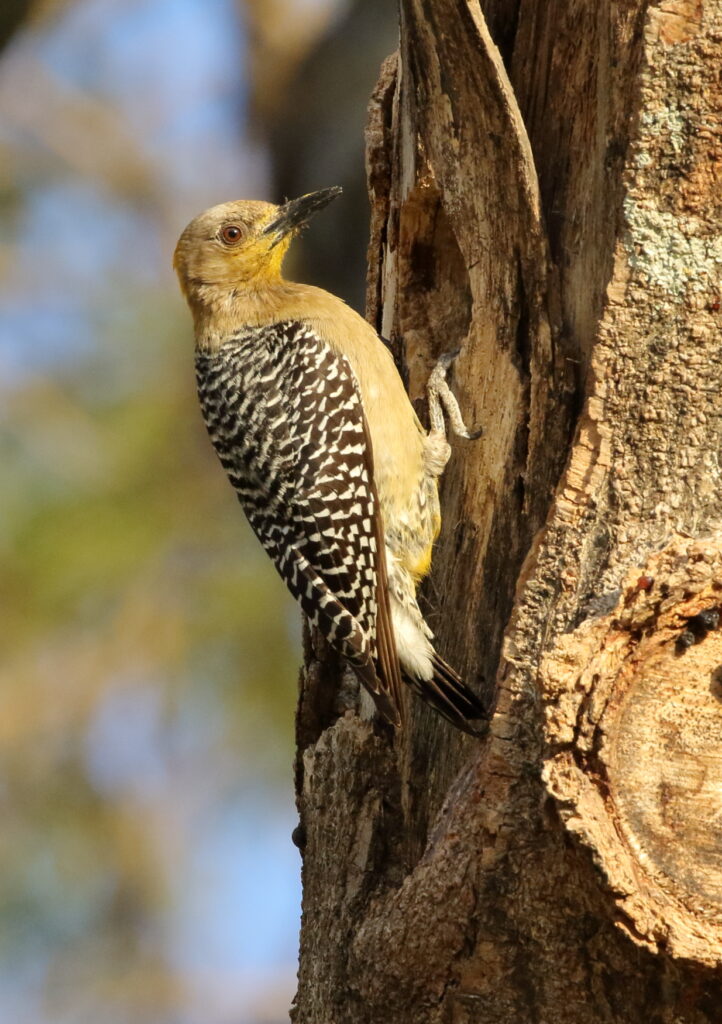
Entering the park, a Squirrel Cuckoo immediately flew across a soccer field in front of us. Braden identified Orange-chinned and Crimson-fronted Parakeets loudly squawking overhead, and I was thrilled to see my first ever Hoffman’s Woodpecker land in a nearby tree.
The park was filled with many of the more common birds any visiting birder will quickly get acquainted with. These included five kinds of pigeons and doves, Tropical Kingbirds, Great Kiskadees, Great-tailed Grackles, and Costa Rica’s national bird, Clay-colored Thrushes. Blue-gray Tanagers flew between trees while Blue-and-White Swallows darted for insects overhead.
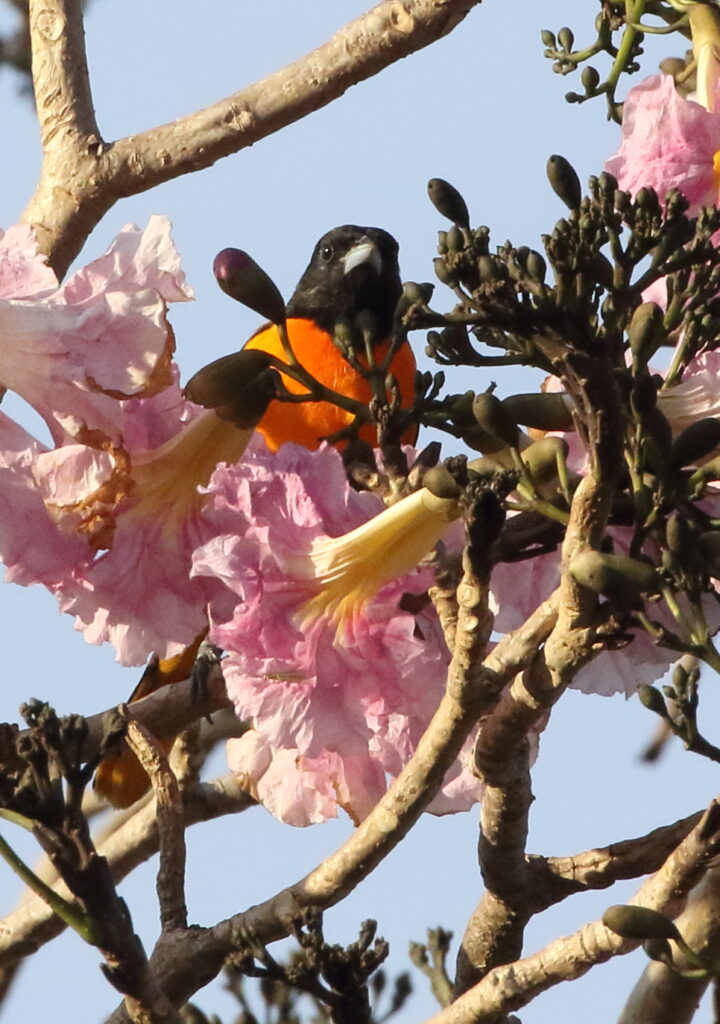
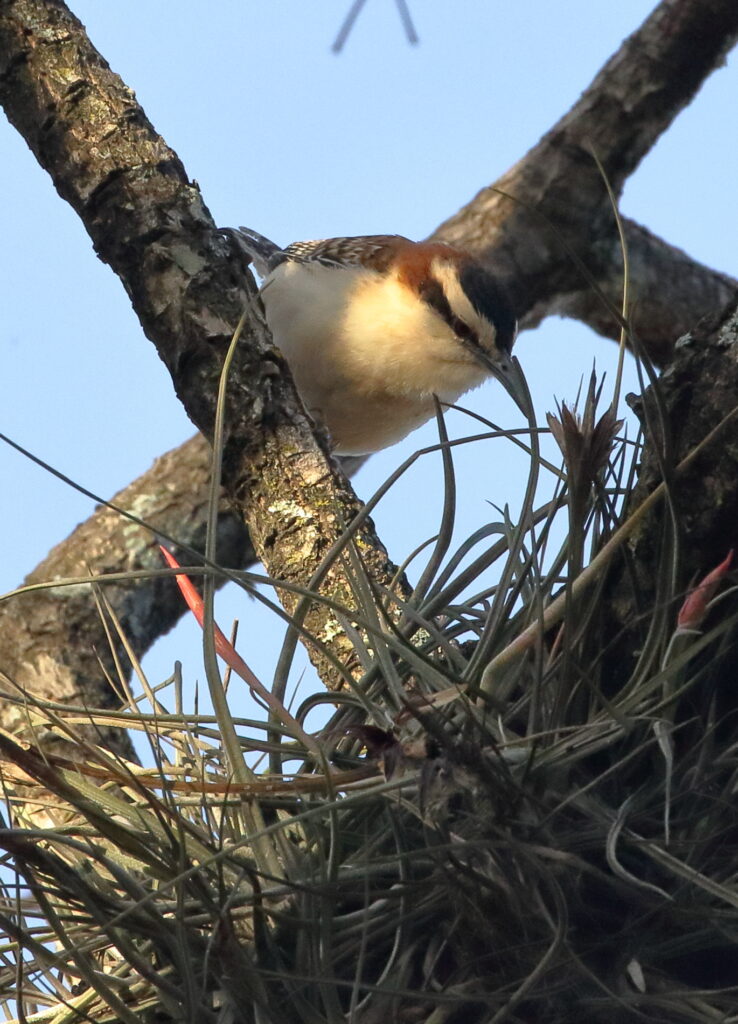
As we reached the far perimeter, I was delighted to find that a creek skirted about half of the park’s boundary. Trees grew thickly here, and following the pleasant path, the birds got even more interesting. Braden began pointing out Chestnut-capped, Northern Yellow, and Tennessee Warblers while I focused in on a stunning male Baltimore Oriole in a flowering tree. Braden also detected several kinds of wrens: Southern House Wren, Rufous-and-White Wren, Cabanis’s Wren, and the beautiful bruisers of the bunch, Rufous-backed Wrens.
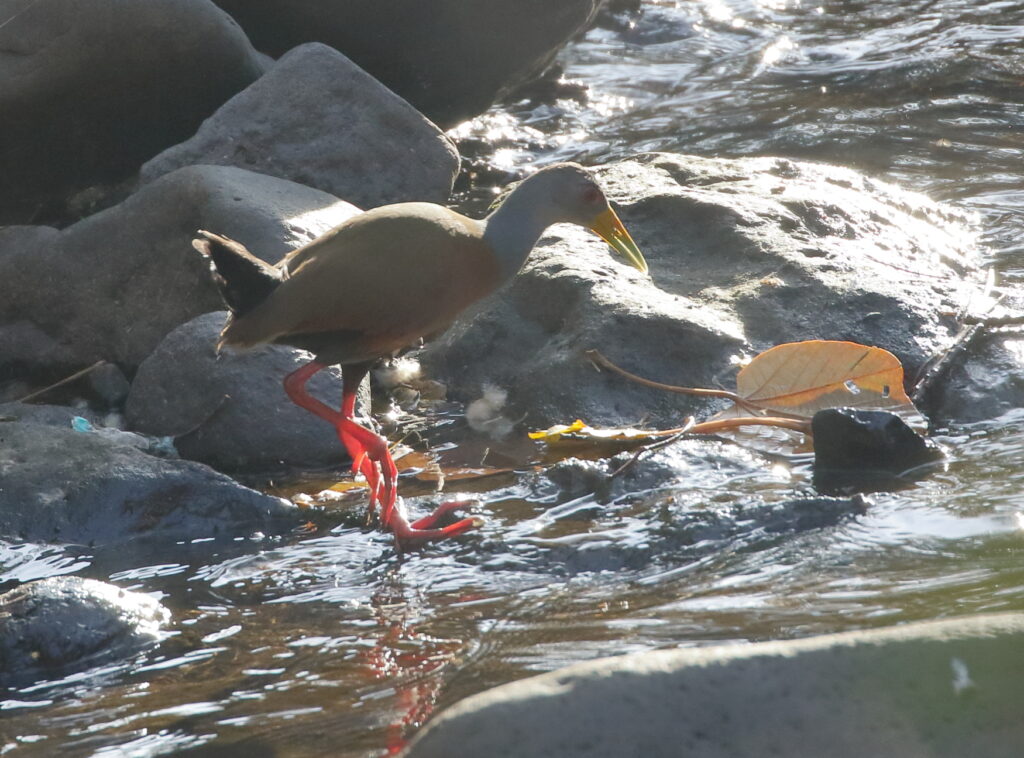
This being in the heart of Costa Rica’s largest city, I gotta tell you that I had no expectations for the creek itself, especially because it was strewn with an assortment of trash. The birds apparently didn’t care and almost immediately, Braden pointed out one of the birds I had most wanted to see on the trip—Bare-throated Tiger-Heron! I was thrilled, but hardly had time to appreciate it as we spotted a quail-sized coot-like bird skulking the banks—a Gray-cowled Wood-Rail!
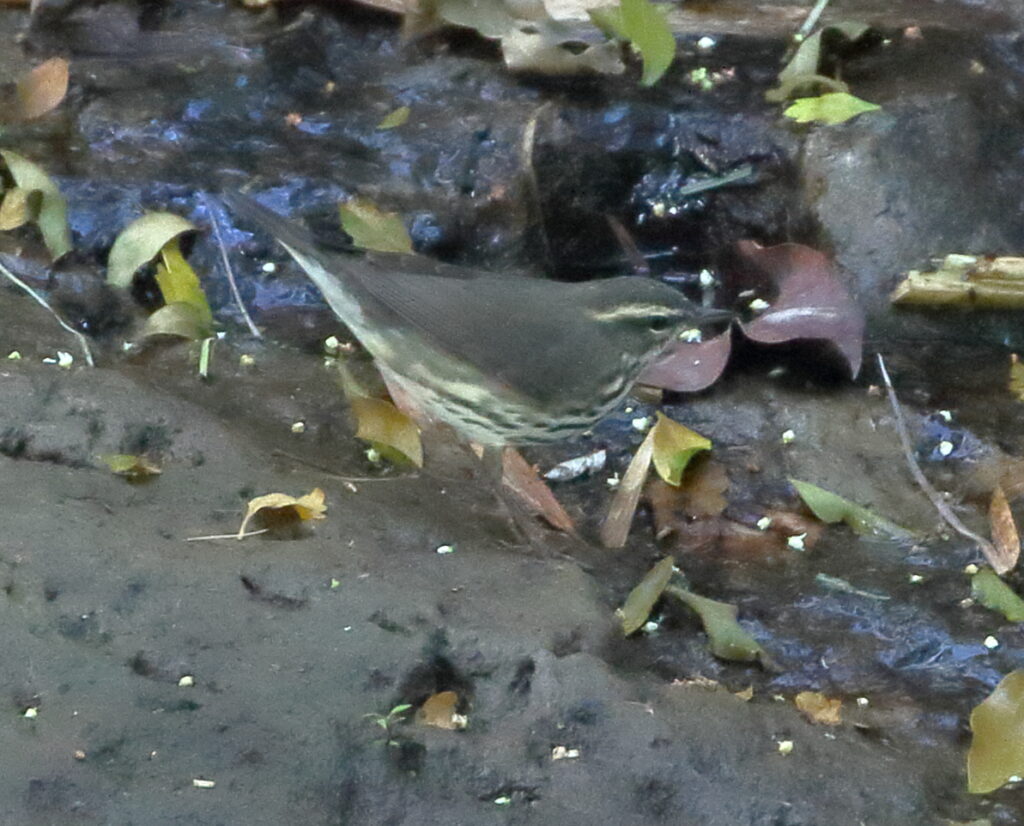
Soon after, Braden pointed out a Northern Waterthrush while I spotted a Green Heron along the opposite bank. This, of course, is one of the magical things about birding the neotropics: how in the midst of all of these amazing new tropical birds, we find many species that are totally familiar to us in North America. It begs the definition of just what a neotropical bird is since in reality, many species we Norteamericanos consider “our birds” are just visiting us for a short time, and can more rightly be considered tropical species. Maybe that’s how this park got the name “Magico”?
Our delightful discoveries were far from over. At the far corner of the park, we met an amateur naturalist who visited this spot almost daily to monitor wildlife, and he generously shared that only minutes before, he had seen one of the San Jose Valley’s most intriguing endemics. We hurried down the trail and only fifty meters later saw them: Cabanis’s Ground-Sparrows.
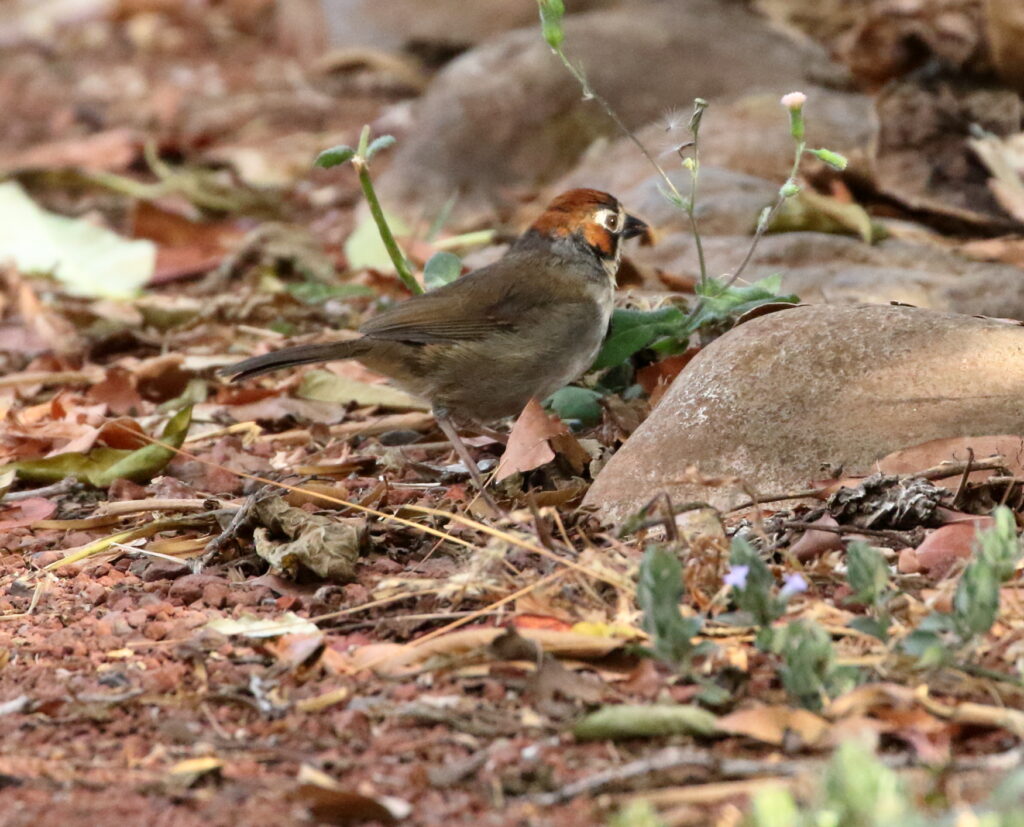
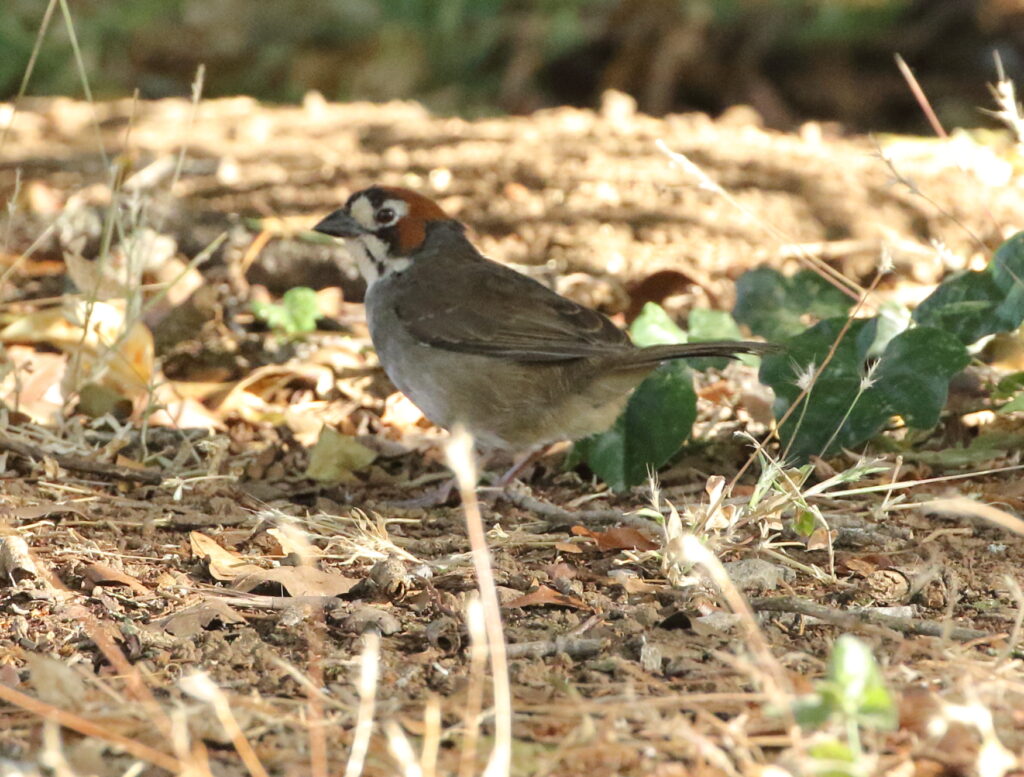
These are birds that Braden especially wanted to show me—but didn’t think he could. These handsome little guys live only in central Costa Rica, specifically in the valley occupied by San Jose. While not rare, they often tend to be pretty shy, making them challenging to see. They prefer scrubby, disturbed places like forest edges, coffee plantations, and apparently, city parks with lots of places to hide. Braden and I both began clicking off photos, but mostly we enjoyed watching them, one of dozens of unexpected surprises we would encounter over the next nine days.
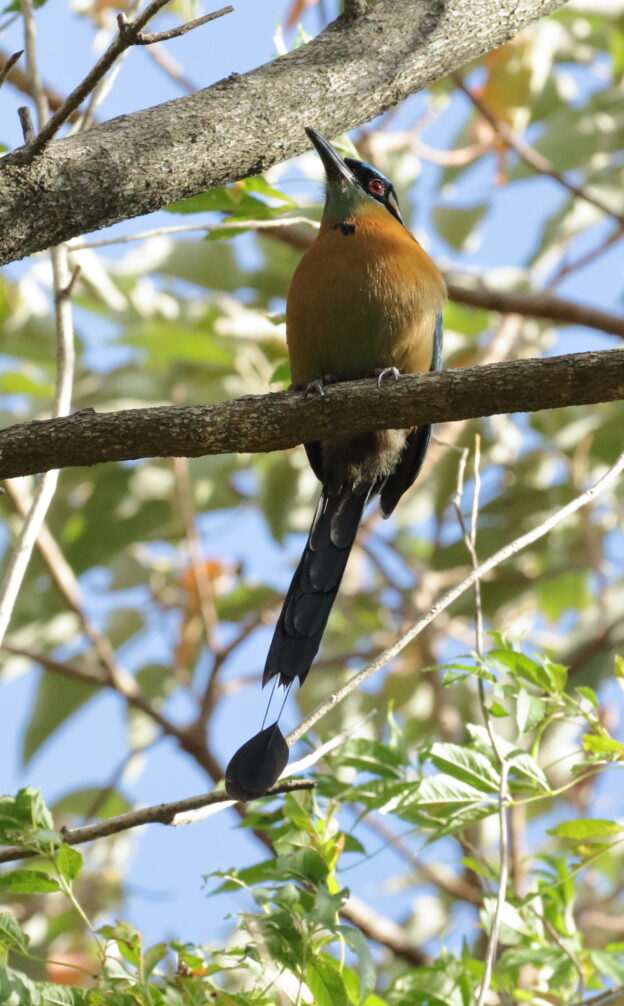
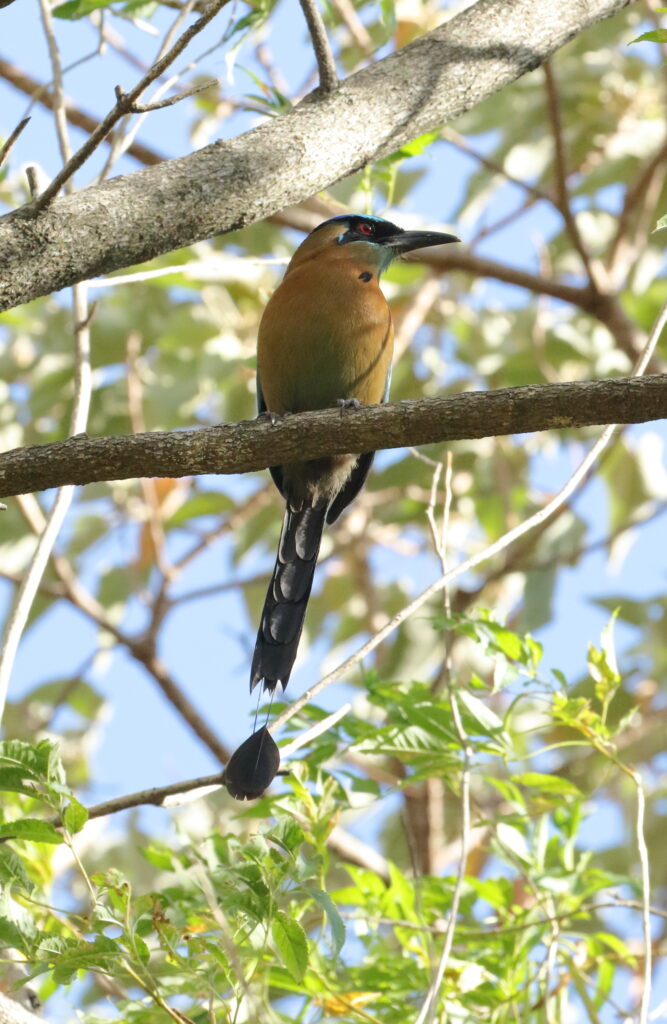
As we were winding down our visit with the Cabanis’s Ground-Sparrows, I saw a larger bird swoop past us and land on a nearby branch. “Braden,” I hissed. “Look!” It was a final gift from this amazing city park: a Lesson’s Motmot! Not only that, it struck an incredible, leisurely pose. Motmots, of course, are some of Latin America’s most distinctive tropical birds and always high on a visitor’s to-see list. I was no exception, and felt enormously grateful to see one in our very first hour or two of Costa Rica birding.
We finished our list with 47 species—almost as many birds as I’d seen in Montana in the first seven weeks of 2026! It was an awesome kick-start to our expedition, and we celebrated by grabbing our first Tico breakfast of rice, beans, eggs, and fruit at a little family diner only a few meters from the park entrance. We couldn’t predict how many highs and lows the next nine days would hold for us, but we were grateful and happy for such a promising start!
Caminito Magico de la Tranquilidad checklist: https://ebird.org/checklist/S302412338

A 6:22 birding start time after a long day of travel. You guys don’t mess around!
Amazing to have that variety of birds in the city in the shadow of the airport. What a birdy treasure Costa Rica is!
Love that Motmot!
Well, when you’re down there, you just can’t help it. I don’t think there was a day I slept past 5, even if it was dumping rain outside! I also loved the Motmot and was so tickled one showed itself on our very first session–kind of like our trip to Colombia, eh?
It wasn’t even our first session. It was in the fading light of evening on the way to our first lodge. Memorable!