
All photos and text on FatherSonBirding.com are strictly protected under copyright law. To request permission for use, contact Sneed at sbcollardiii@gmail.com. You DO NOT have permission to use these posts to train Artificial Intelligence models or do anything else with them without permission.
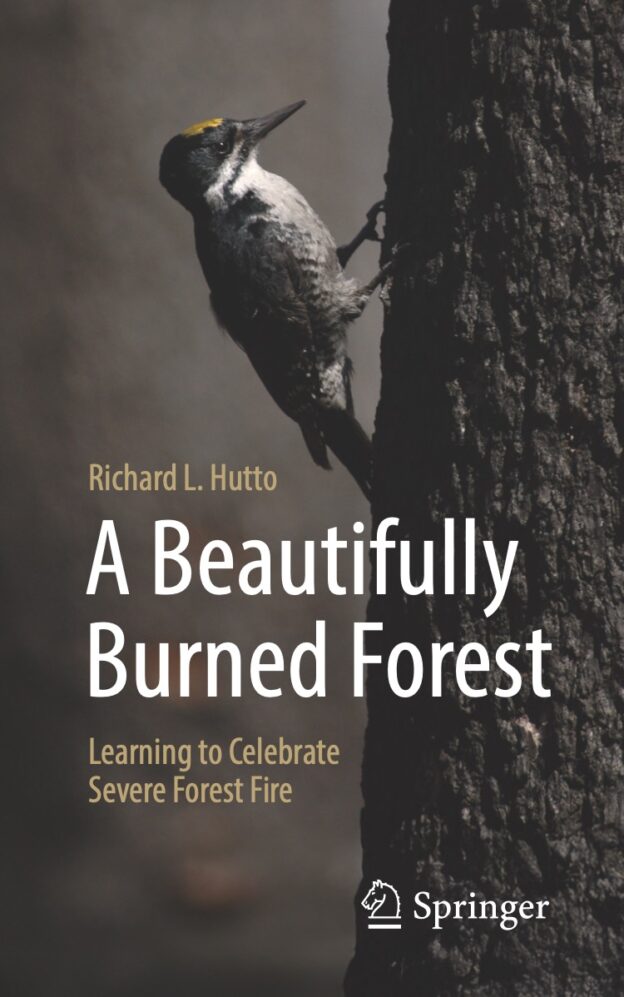
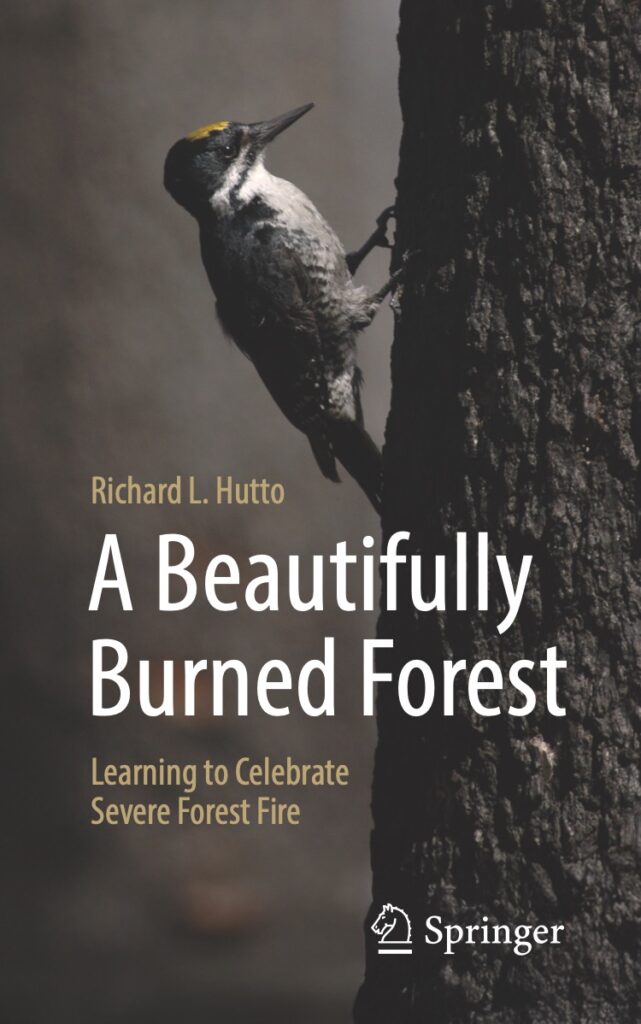
Richard L. Hutto’s new book A Beautifully Burned Forest: Learning to Celebrate Severe Forest Fire (Springer, 2025—click here to order) offers both timely insights into the roles of wildfire in our modern, over-heating world and an engaging memoir of a scientist’s journey. Before I met Hutto—Dick to his friends and colleagues—I had no idea of the vital ecological processes and multitude of species that depend on severe forest fires in the West. Although I had met Dick casually several times through a mutual acquaintance, it wasn’t until I needed someone to teach me about woodpeckers for a proposed children’s book that I reached out to him directly. I asked if he could take me out to show me some woodpeckers and explain a bit about them, and he graciously agreed.
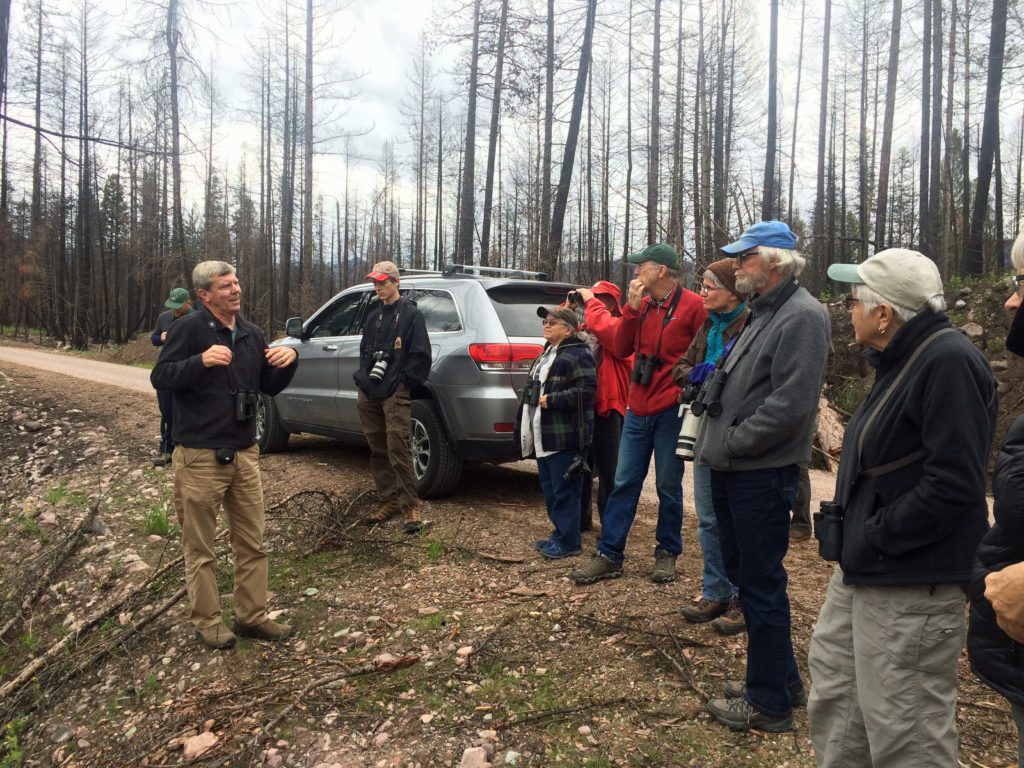
Dick took me to the Blue Mountain burn area just south of Missoula and he did indeed start showing me woodpeckers and telling me about them. What he was really teaching me, I began to realize, is the beauty of a burned forest and how many plants and animals depend on it. I would still eventually write a children’s book about woodpeckers, but first I decided to write Fire Birds: Valuing Natural Wildfires and Burned Forests.
Both of our books focus on Hutto’s groundbreaking research into the many organisms—especially birds—that depend on standing, severely burned forests. The Black-backed Woodpecker is the poster child for burned forests. This bird is highly adapted to blend in with charred tree trunks and excavate wood-boring beetle larvae from the rock-hard wood. In the West, in fact, this bird is found almost exclusively in severely burned forests that have a high density of larger diameter standing trees.
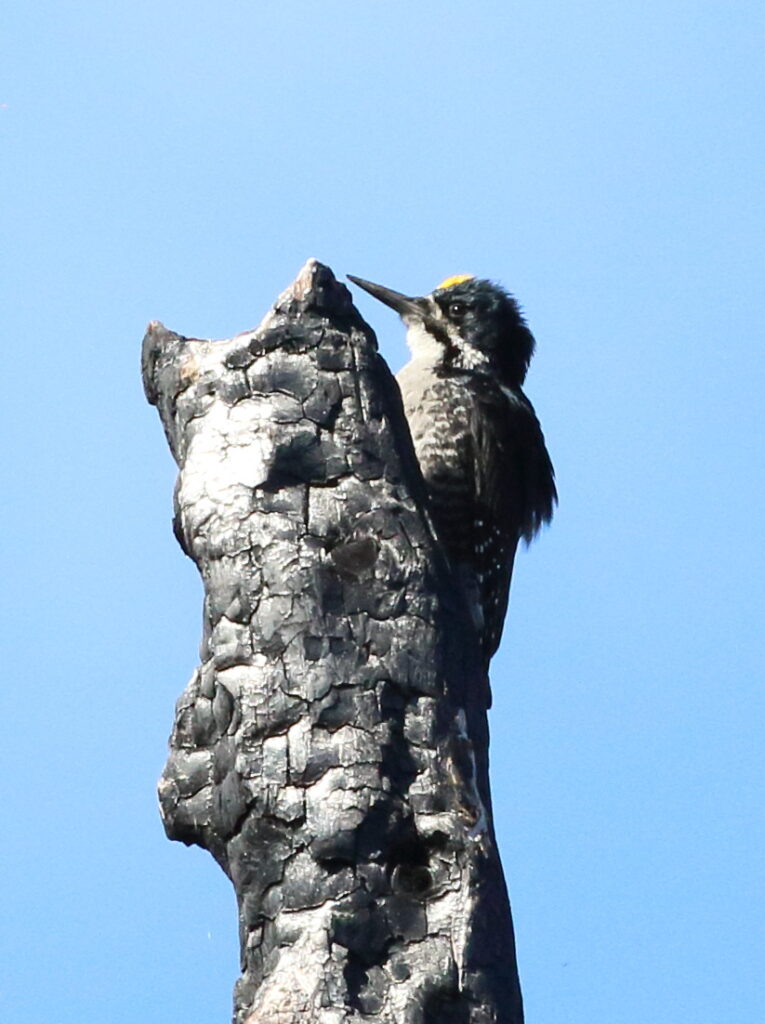
Once they move into a fresh burn the Black-backed—along with American Three-toed and Hairy Woodpeckers—open up the forest to many other cavity-nesting birds, mammals, reptiles, and amphibians. They do this by excavating holes in the trees, often many more than they will ever use themselves.
The problem, Hutto points out, is that our society has been conditioned to view all forest fires as bad. As soon as a severe fire roars through an area, the clarion call rings out to somehow “save” the burn by “salvage” logging it. Which trees do loggers take? The best and the biggest—the exact trees that Black-backed Woodpeckers need to hunt and nest in. Hutto also points out that as soon as these large trees are removed, their cones can no longer reseed the forest naturally, necessitating hiring battalions of workers to replant the forest by hand—at taxpayer expense.
In A Beautifully Burned Forest, Hutto dives deeply into our society’s entire approach to managing forests and fires, tracing the beginnings of fire suppression to the widely spread notion that our forests are somehow “out of whack” and need to be overly managed with thinning and prescribed burns.
Climate change, of course, is a wildcard in the future of forests and wildfires, but Hutto makes a strong plea to focus on solving the underlying problem of reducing greenhouse gas emissions instead of making our forests ecologically less viable through extensive, often poorly planned micromanagement.
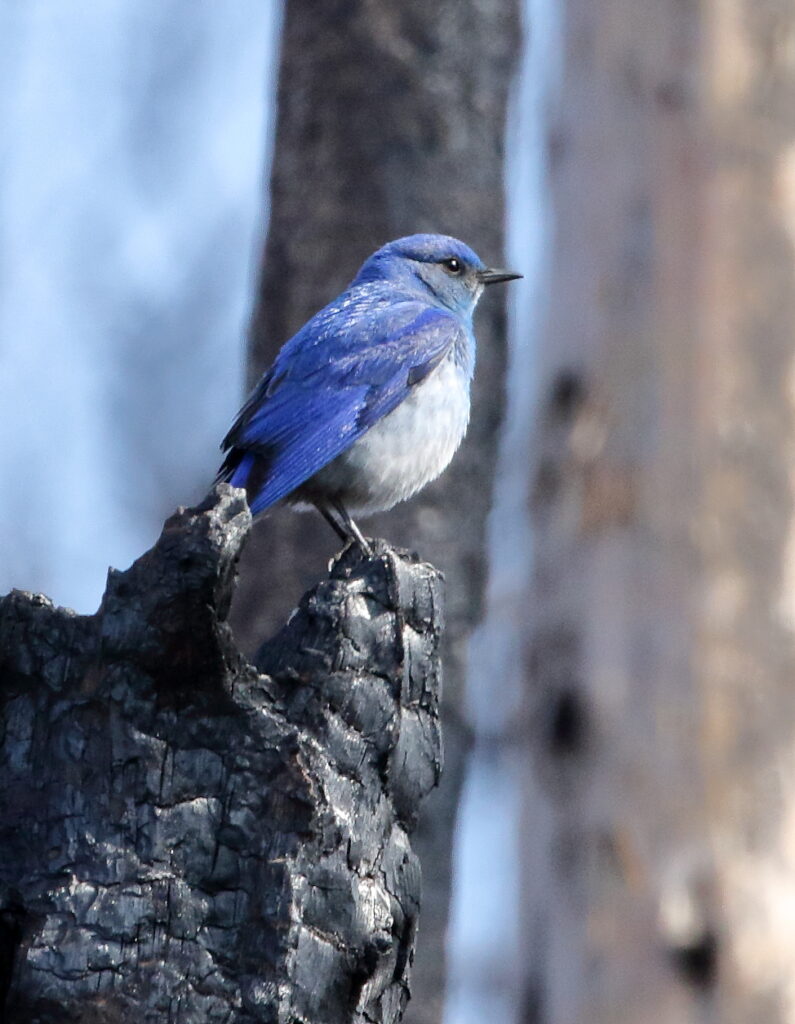
Anyone with an interest in our forests and wildfires—in other words, every single person living in the American West—should read A Beautifully Burned Forest. It’s a fairly quick read that will change the way you view and understand our spectacularly diverse region. Especially in this day where misinformation rules, Hutto’s book is a valuable step in creating an educated public that insists on smarter management of the lands that sustain us.
Note: If you are interested in Sneed’s children’s book, Fire Birds, supplies are down to a couple of dozen in the warehouse so order soon by clicking here or calling your local indy bookstore. Both Fire Birds and Woodpeckers: Drilling Holes and Bagging Bugs make ideal Christmas presents for grades 3-8 readers.