Monthly Archives: February 2026

The NOCS Field Tube 10X32 Monocular (FSB Equipment Review)

I’m excited this week to offer our very first equipment review of a Nocs Provisions product: The Field Tube 10X32 monocular. This is the very first monocular that I’ve ever used, and I was so excited that I tore it out of the packaging and immediately set about field testing it. Before I offer my thoughts, however, I want to say a bit about Nocs.

Everything about this smaller optics company compels me to like them. For one, they take pains to send their products in sustainable packaging—a definite plus for a birder wanting to protect birds and our environment. They are a 1% for the Planet member and a Climate Neutral certified brand. To quote their PR info, “At its core, the company believes that the more we observe and understand how intricate and delicate our planet’s ecosystems are, the more motivated we are to protect them.”
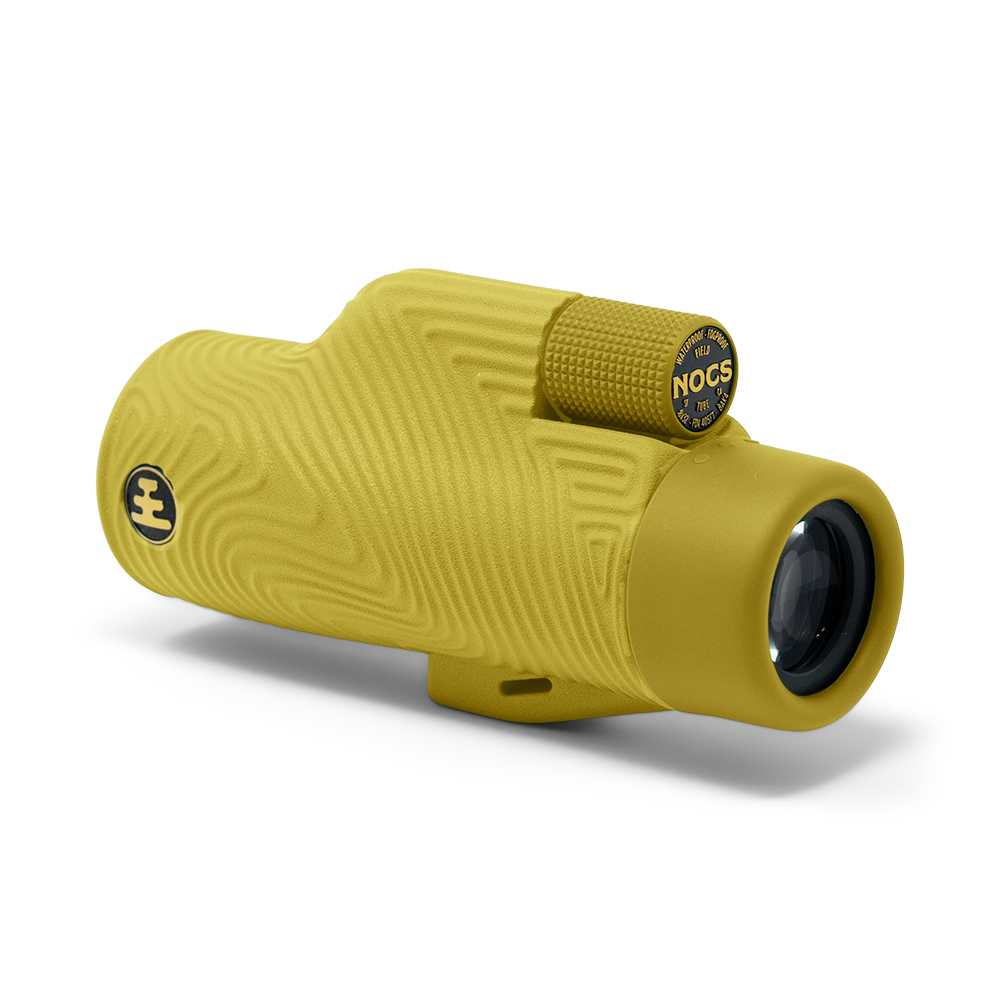
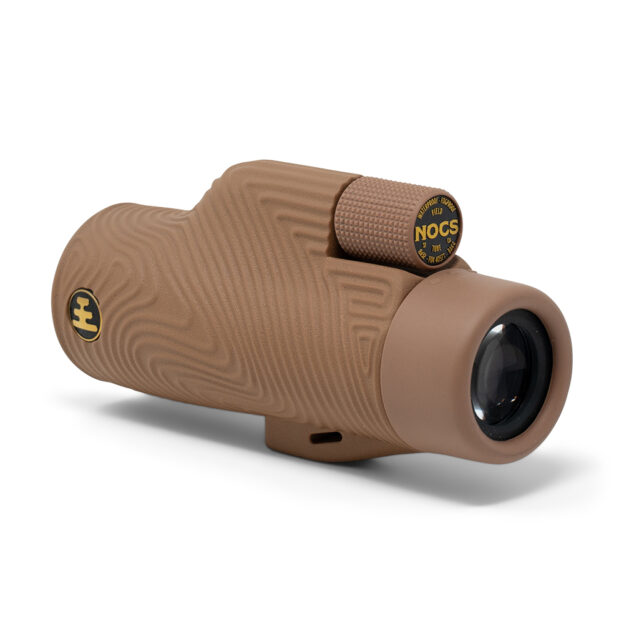
The 8X32 Field Tube shown in Banana Slug (Yellow). This version also comes in Corsican (Blue), Coral (Red), and Desolation (Black). The 10X32s I tested are offered in Ponderosa (Green), Paydirt (Brown), and Oxblood (Maroon). Order by clicking here or on the image above.

Nocs, though, also offers products with super cool designs. The rubber “wave grip” coating of the Field Tube not only offers a great gripping surface, it looks way bitchin’ compared to the standard black exteriors offered by most other manufacturers. Not only that, Nocs products are offered in different colors. Need a pair of binoculars to match your powder blue tux for the Birding Academy Awards? Perhaps something to blend in with your Ferrari while visiting Tuscany? Nocs has got you covered.

But let’s get to the main point, the Field Tube 10X32 monocular itself. First let me say that for birders, this is a “next item” purchase. It’s not intended to replace your binoculars. Rather, it is designed for situations where a slim profile and super light weight are of premium concerns. With a length of only five inches and weight of half a pound—or about a third of traditional binoculars—the Field Tube easily fits into a front pocket and can barely be felt hanging around your neck. This makes it perfect for backpacking, travel, and paddle-boarding. But I can envision other ideal scenarios for this equipment, too. For instance, imagine . . .
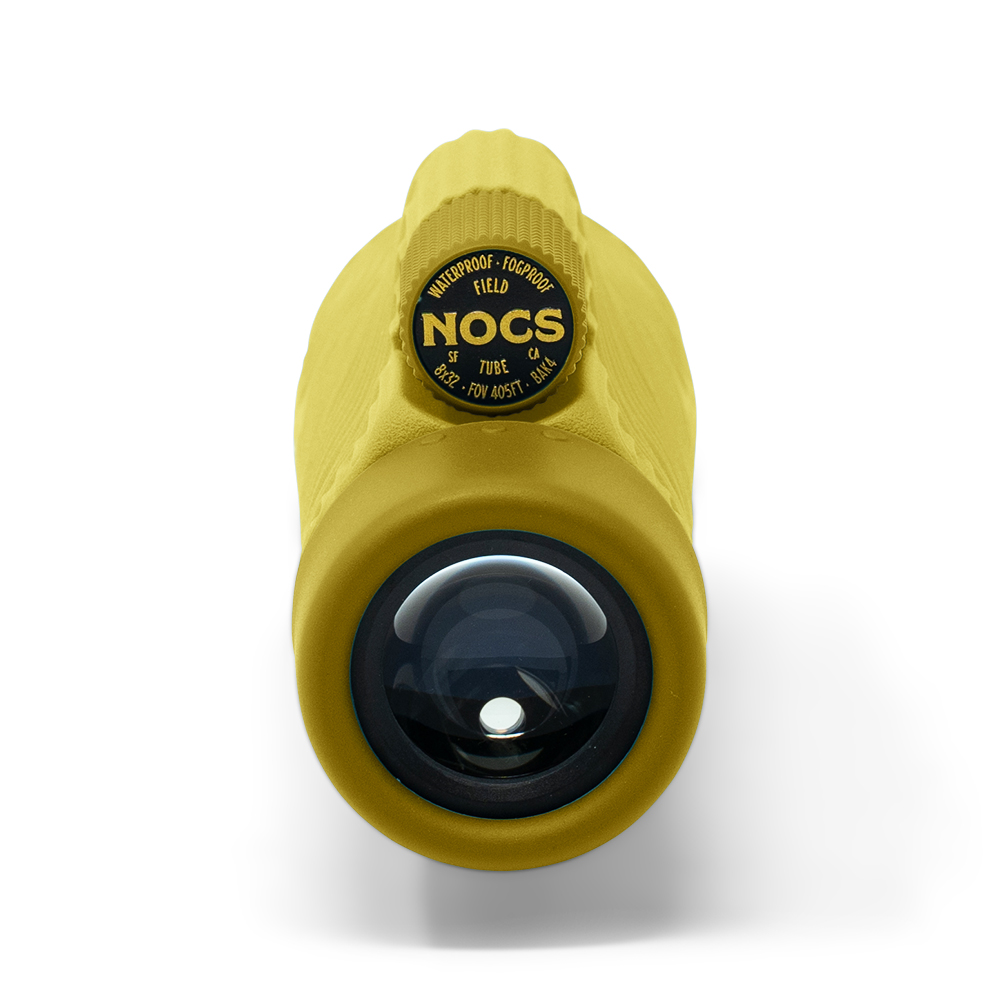
The Field Tube is so small and light that you can take it virtually anywhere without noticing it. We call this BIRD PREPARED!

You are in an expensive Tokyo restaurant trying to close a deal with a major Japanese tech company. Suddenly, an Azure-winged Magpie lands in a tree outside the window. You do not want to offend the company president sitting across from you, but . . . as soon as he gets up to use the restroom, you whip out the Field Tube from your front pocket for a delightful look at this long-hoped-for life bird. Or . . .

You’re waiting for your perfect big wave set at Mavericks near Half Moon Bay and an intriguing small black bird lands in the water. Unfortunately, it is too far away to ID with the naked eye. BUT, you just happen to have your Nocs Field Tube stuffed inside the neck of your neoprene wetsuit and, focusing in on the bird, you discover it is a Long-billed Murrelet, just flying in from Siberia! Not only is it a life bird, it allows you to break the ABA Big Year record for surfers, earning you glory, fat promotional contracts, and a sponsorship to bird and surf the world!

You can see where I’m going with this, and I’m sure you can come up with other equally realistic scenarios where you’ll want this item close by.
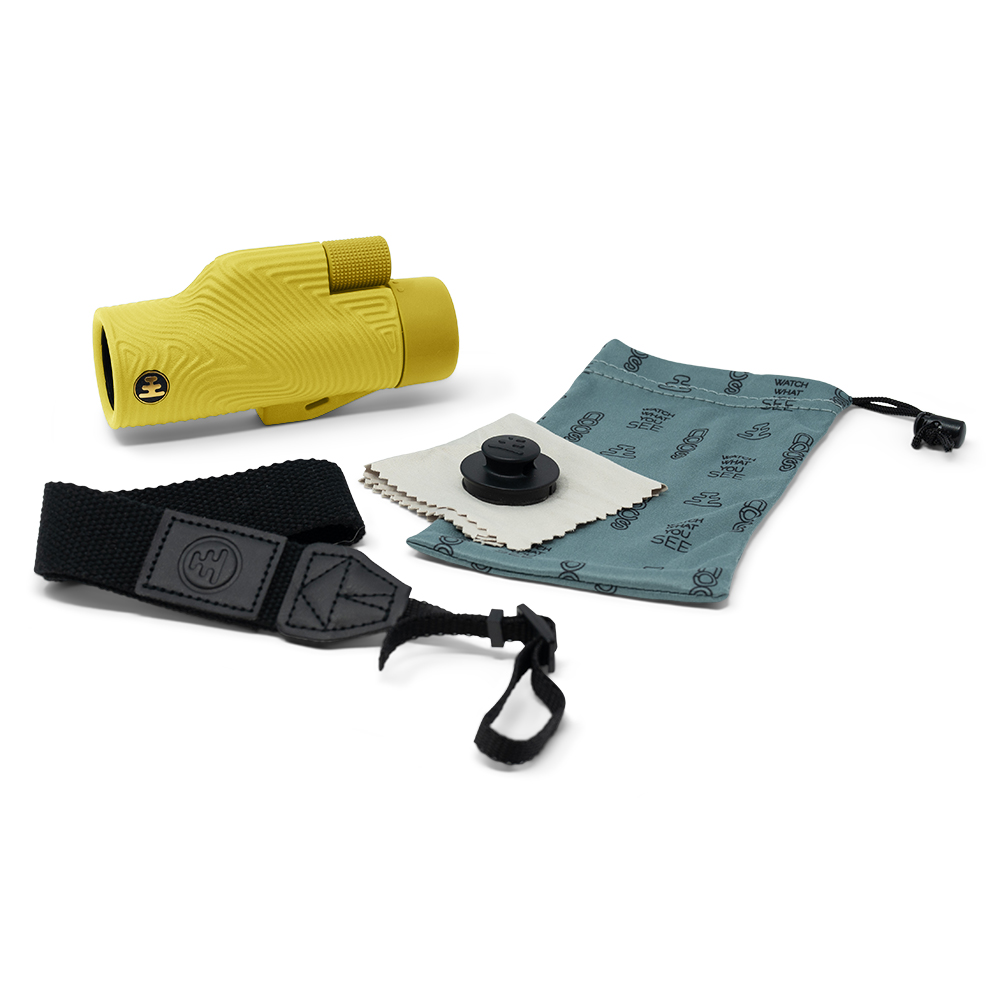
The Field Tube comes with a handy wrist strap, soft protective carrying bag, and lens cloth—all packed in 100% sustainable recyclable packaging.

A couple of things I especially like about Nocs products is that they come with solid rubber stoppers that snugly pop in over the objective lenses. It’s amazing how even high-end manufacturers have not solved the problem of keeping the objective lens covers firmly in place. I also really like the strap systems for Nocs products. In fact, when you order, I recommend purchasing the woven strap versions as they are more comfortable and, again, look cool.

But back to the Field Tube, it features a fairly close (9-10 feet) minimum focal length and is waterproof down to three feet deep for up to thirty minutes, making it perfect for birders, butterfly watchers, and surfers. As you would expect, Nocs uses fully coated lenses and prisms, and has a lifetime warranty. I found light transmission quite good in these despite the relatively small 32 mm objective lens.
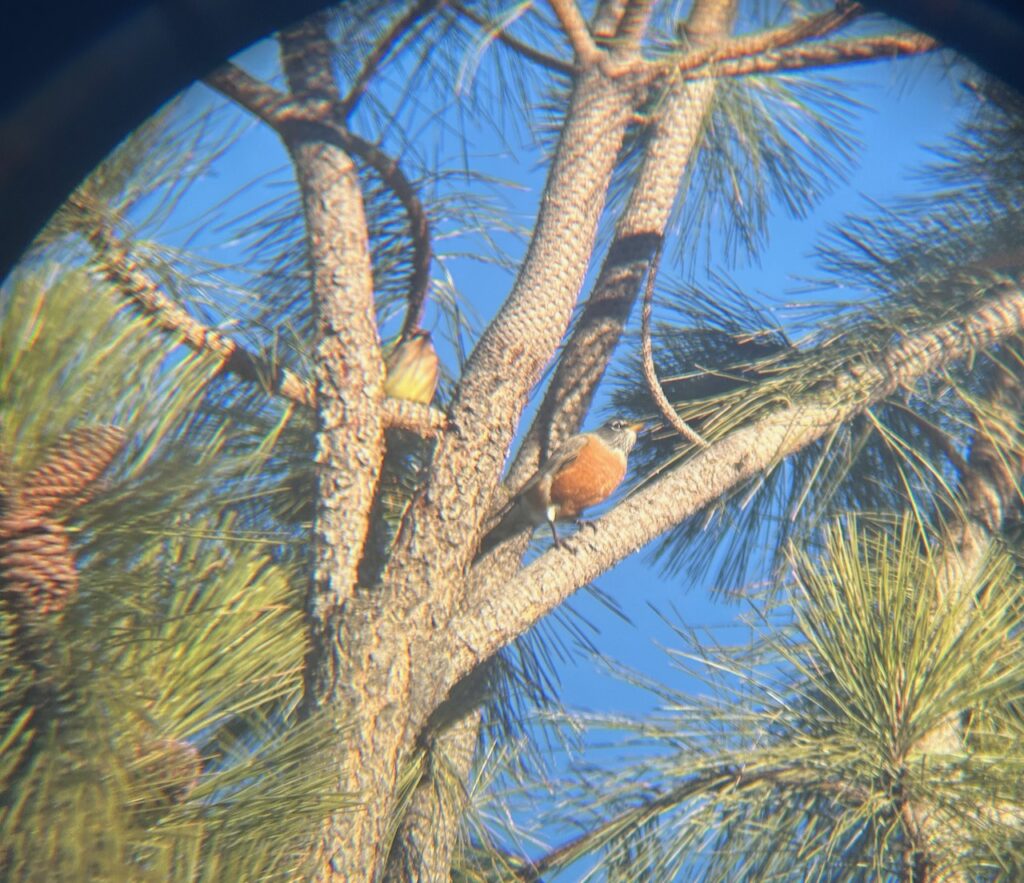
Just for fun, I decided to see if I could get a digiscope photo through my Field Tube. Not bad for my first effort, if I do say so myself. I mean, you can easily see both the Harpy Eagle and Imperial Woodpecker in the photo, right?

At a price of $129.95, you wouldn’t expect perfection from the Field Tube, and I did notice a couple of things that could use improvement. While the focus is quite sharp at close and medium ranges, it gets a bit softer at distance. I’d also like to see fewer turns of the knob required to bring the focus from close to far distance. However, most people will find these minor issues acceptable trade-offs for the incredibly small profile and convenience the Field Tube offers.

Nocs has recently unveiled a monocular upgrade called the Zero Tube which is even smaller and lighter than the Field Tube, and uses a different focusing mechanism. Hopefully, I’ll get to test that one in the future. Next up, though, will be my review of the Nocs Pro Issue 10X42 binoculars, which I am taking to Costa Rica on my trip with Braden next week. My initial impressions of the Pro Issues are extremely positive and I look forward to giving them a full tropical workout. Stay tuned!
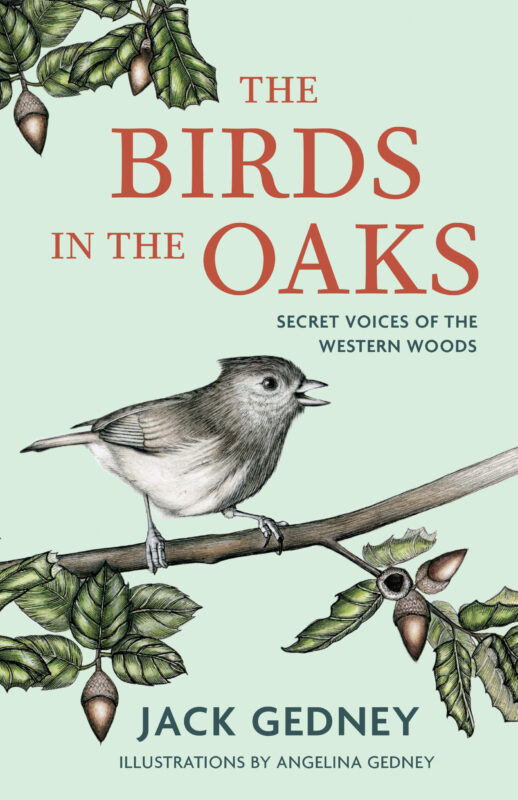

The Birds in the Oaks (Book Review by Scott Callow)

Braden and I head to Costa Rica next week, but before we go I am delighted—yes, delighted—to share the following guest book review by my buddy, Scott Callow. I predict you’ll enjoy his passionate, humorous review as much as the book itself! We challenge you to read it before our next post. And now, heeeeeeeeere’s SCOTT!

Sneed asked me to write a review of The Birds in the Oaks: Secret Voices of the Western Woods by Jack Gedney (HeyDey Press, 2024) before I completed reading it. Consequently, It was impossible for me to finish the last chapter without constant rereading because I became anxious and distracted, wondering how to share all the great things about it. For those of you who only read headlines or first paragraphs of news stories, let me present a few crafted comments that summarize my experiences, being careful not to exaggerate.

Order Jack Gedney’s The Birds in the Oaks by clicking here or on the above image.

* If you live near oak woodlands, you have no claim to being “interested in birds” if you do not read this book.  

* The Birds in the Oaks is overflowing with interesting ecological details that will keep me rereading chapters, and I expect I will mark the pages with notes like a seeker underlining sections of the Bible on the journey to become a better person.  

* The Birds in the Oaks is a superb example of well-crafted nature writing that mixes extensive and accurate observations with poetic prose, and mixes personal experiences with quotes from historical bird authors.  

Last fall, I was fortunate enough to accompany Scott to one of his favorite “oaky birdy” locations, Sugarloaf Ridge State Park in Sonoma County, where we saw a great variety of classic oak woodland species including Oak Titmouse, Golden-crowned Sparrow, and Nuttall’s Woodpecker. (See post World Series Birds in the Golden State.)

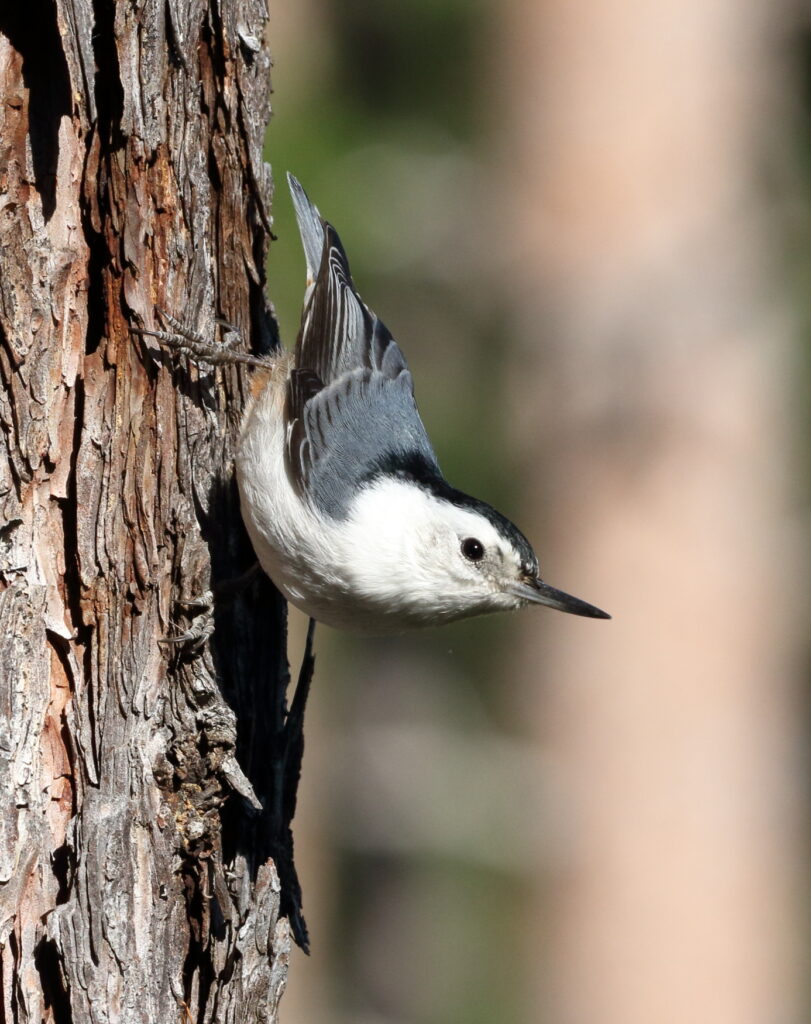
This book, admittedly, is personal for me. I live within walking distance of California oak woodlands. I volunteer at Sugarloaf Ridge State Park which is dominated by oak woodlands and mentioned in the book. The author’s former Wild Birds Unlimited store lies only 24 miles from me. Most importantly, I know these birds. I have learned so much about each of them from Gedney’s book that they have become even more familiar (emphasis in “family”). I will admit only here, amongst birders, that I sometimes say “Hey, buddy!” when I see my first Oak Titmouse of the day, and “Hey-hey-hey” when I see a White-breasted Nuthatch.  

Scott apparently has been known to converse with White-breasted Nuthatches. I can’t blame him as I talk to these guys myself!

Each curiously titled chapter is organized around a species. Each begins with key characteristics. Many chapters start with song and call, which I appreciate since I’m late in life to learning bird sounds. (Thank you Merlin.)  Example:

“I still hear the bird, steadily whit-whiting away as if mocking my inability to follow.” (A Bird at Our Level – Bewick’s Wren) (“whit-whit bew-wick” – record to memory)

As someone who seeks to be entertained by bird behavior and science, I enjoyed how Gedney explains bird ecology.  

“… to learn all the secrets of the woods, one must know … the birds beneath the oaks.” (Discontented Shadows – Spotted Towhee) (Cool we’re on a treasure hunt, I tell myself.)

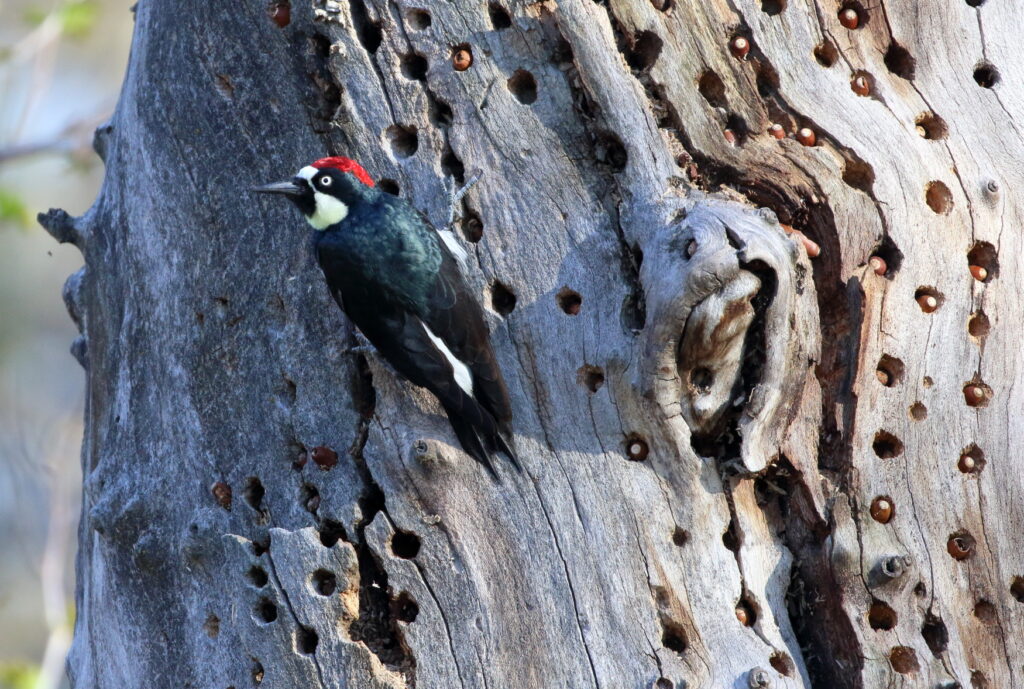
The ecological details too elaborate to be found in a guide have already enriched my birding.  Even if you don’t regularly see Acorn Woodpeckers, every birder should learn about their unique extended family groups and their cooperative food hoarding strategies. I also believe every birder should wonder how the Bushtit, weighing as light as a nickel, can engineer such an elaborate sock-shaped nest, insulate it, camouflage it, and then use it for such a short nesting cycle, all on a diet of insects too tiny to see, even with the help of binoculars.

The ultimate oak woodland bird, the Acorn Woodpecker, deservedly attracts abundant attention from birders, both for its stunning good looks and fascinating behavior that features cooperative breeding and storage of thousands of acorns. Isn’t that, ahem, nuts?

But this book is not written by or for the scientist. Gedney is not afraid to add his own appreciation of a bird or personal experiences or poetic descriptions. This at first raised my anthropomorphic alarms since I was trained to reject human sentimentality by my vertebrate bio prof, surprisingly an ornithologist who once said “birds are stupid; their behaviors are mostly determined by genetics; they have small brains.” (These prejudices were spoken decades before contradictory scientific information was shared in The Genius of Birds and several other books on bird intelligence.)  

The Birds in the Oaks is very accessible, humanly so. It is so well written that you just might re-imagine your own feelings about birds and get all warm-like inside. You just might be heard saying “Wow” when learning something new about one of the birds. You might just slow down and spend “an inordinate amount of time” observing a bird in one location. Maybe, maybe not. But I will risk one bold prediction: If you get this book, several times you will imagine walking through the woods with the author himself.  

No oak trees were harmed in the writing and publishing of this review.