Like all FSB posts, this one is written by REAL PEOPLE. Feel free to share it and support real writers and artists everywhere by shunning artificial intelligence. Despite the hype, AI is not “just a tool.” Its primary utility these days is to increase profits by putting people out of work. Don’t make it easy for the giant corporations that control it and are participating in the greatest theft of intellectual and artistic property the world has ever known.
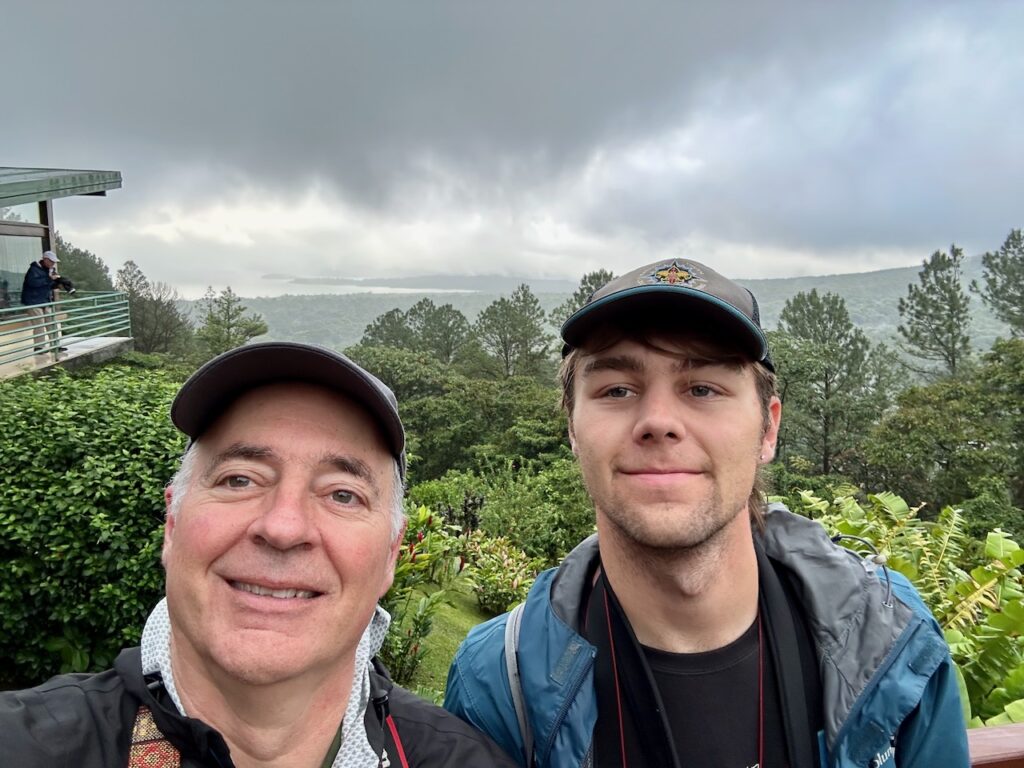
After our surprising morning birding near San Jose’s Juan Santamaría International Airport (see our previous post), Braden and I wasted no time heading into the heart of the region where we would spend the next nine days—the northern Caribbean slope of Costa Rica. Our first destination? The flanks of Arenal Volcano.
Despite having spent more than two months in Costa Rica back in 1994 (when I was writing my books The Forest in the Clouds and Monteverde: Science and Scientists in a Costa Rican Cloud Forest), I had never before explored this region. During his semester abroad here, however, Braden had thoroughly scoured the country for birds and had put together an itinerary that would give us the most bang for our birding buck. The Arenal area—near the bustling tourist town of La Fortuna—held many avian riches, but Braden and I had one group of birds we especially wanted to see: antbirds.
If you’re unfamiliar with them, antbirds are a group of birds that shadow army ant swarms—not to eat them, but to snag the many other invertebrates that the swarms dislodge during their ravenous raiding parties. I had seen many ant swarms during my time in Costa Rica, but again (and tragically), that was before I became a birder and if any antbirds were around, I had cluelessly overlooked them. Braden had, of course, been more alert and seen several kinds of antbirds—but never in the classic “insect-palooza” situation one reads about in scientific narratives.
We got our first shot at antbirds on our second morning in the country when we birded the internationally famous Arenal Observatory Lodge & Trails, a rather pricey destination with a fabulous sweep of nature to offer visitors. Fortunately, you don’t have to book a room to bird the place, but can simply pay a fee to spend the day. Unfortunately, waves of heavy rain greeted Braden and me when we arrived. Don’t get me wrong. We still had an incredible day here, including bird lists totaling more than 100 species and a fantastic sighting of a northern tamandua, a small, incredibly shy species of anteater—a first for both of us. Alas, we got only a brief glimpse of a single antbird—a Spotted Antbird—and encountered no army ant swarms where more antbirds might be plying their trade.

Still hopeful, the next morning we headed to another nearby spot, a combo nature area and zip-lining destination called Sky Adventures. And guess what? It was again pouring down rain! After spending the previous day pretty much soaked, neither of us looked forward to another day of damp garments and soggy boots. A ray of hope was that one of the Sky Adventures guides told us that he had seen antbirds only the day before and even told us where to look.
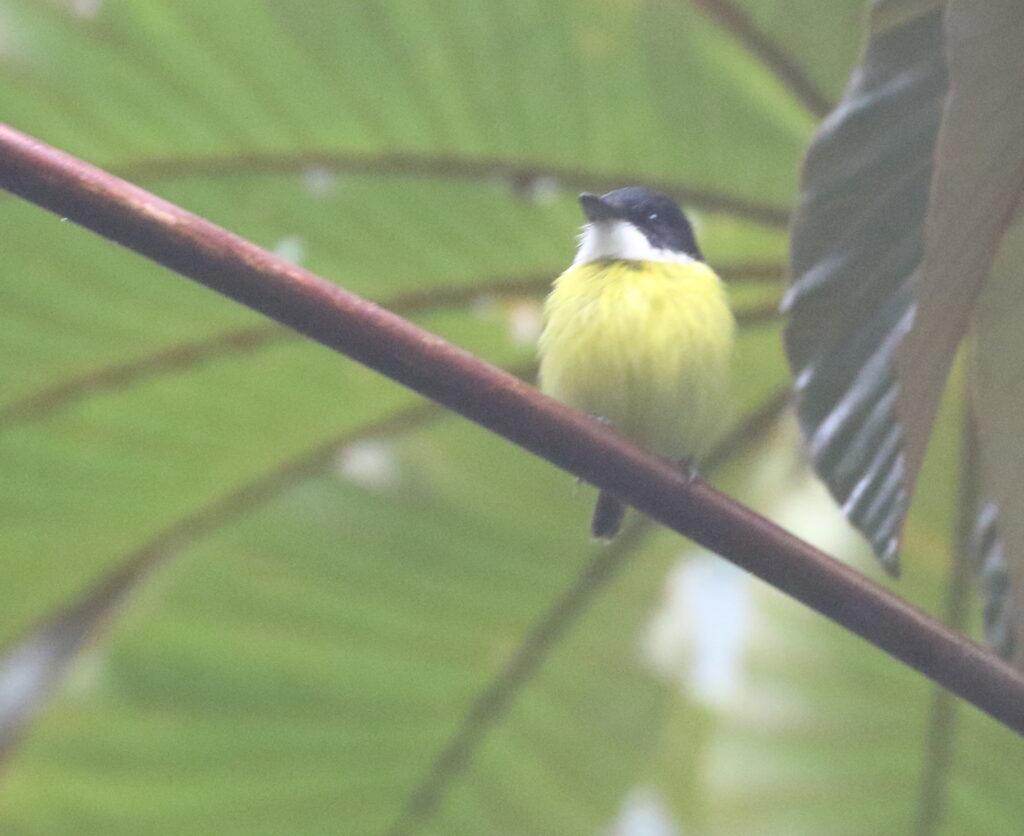
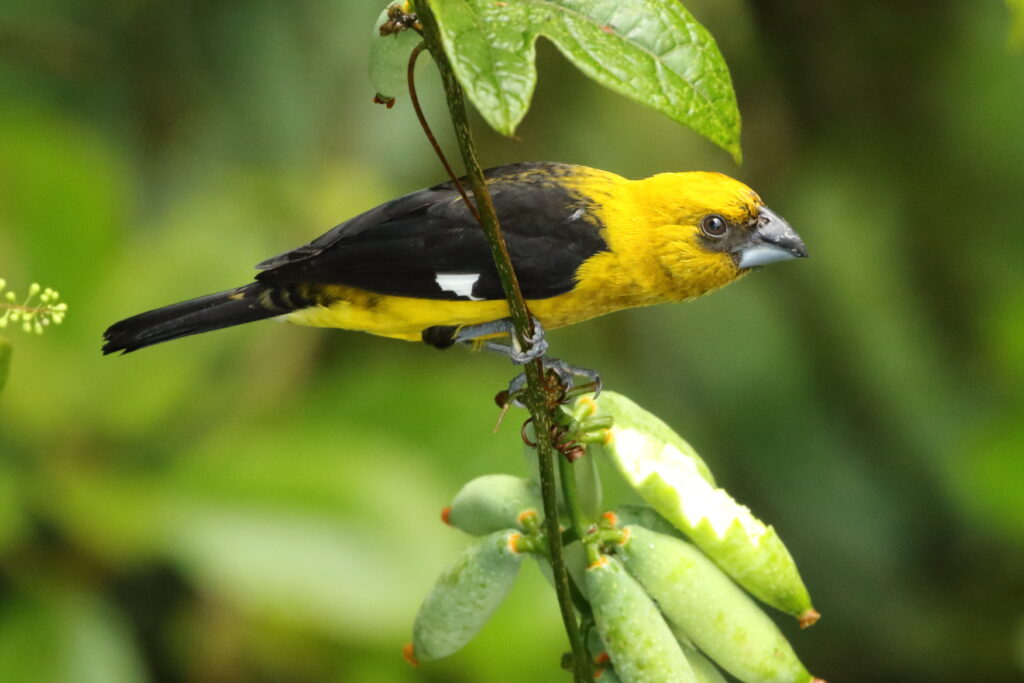
In this kind of weather, we had the trails pretty much to ourselves, and we realized that there was no shortage of birds around us. I should backtrack a bit and explain that while more than a third of the Costa Rican birds I was seeing were lifers, Braden had already seen so many birds in the country that he wondered if he’d get any lifers on our entire trip. That question got answered pretty quickly as we began crossing a spectacular hanging bridge over a lush ravine. Almost immediately, Braden said, “Black-headed Tody-Flycatcher!” Sure enough, on a branch hanging over the bridge, we spotted one of the cutest birds in the tropics—and a lifer for both of us! In fact, a huge variety of amazing birds seemed to be hanging out around the bridge, and before long a yellow and black bird landed just below us. Braden got even more excited by this one. “Black-thighed Grosbeak!” he exclaimed. Ka-ching! His second lifer in ten minutes!
Still, we hadn’t forgotten the antbirds and pressed across the bridge and up a winding trail. And at a sharp left, suddenly, there they were. Antbirds!
I confess that it took both of us a few minutes to embrace exactly what we were looking at. Columns of army ants marched along both sides of the trail, and the antbirds skittered and skaddled all about us.
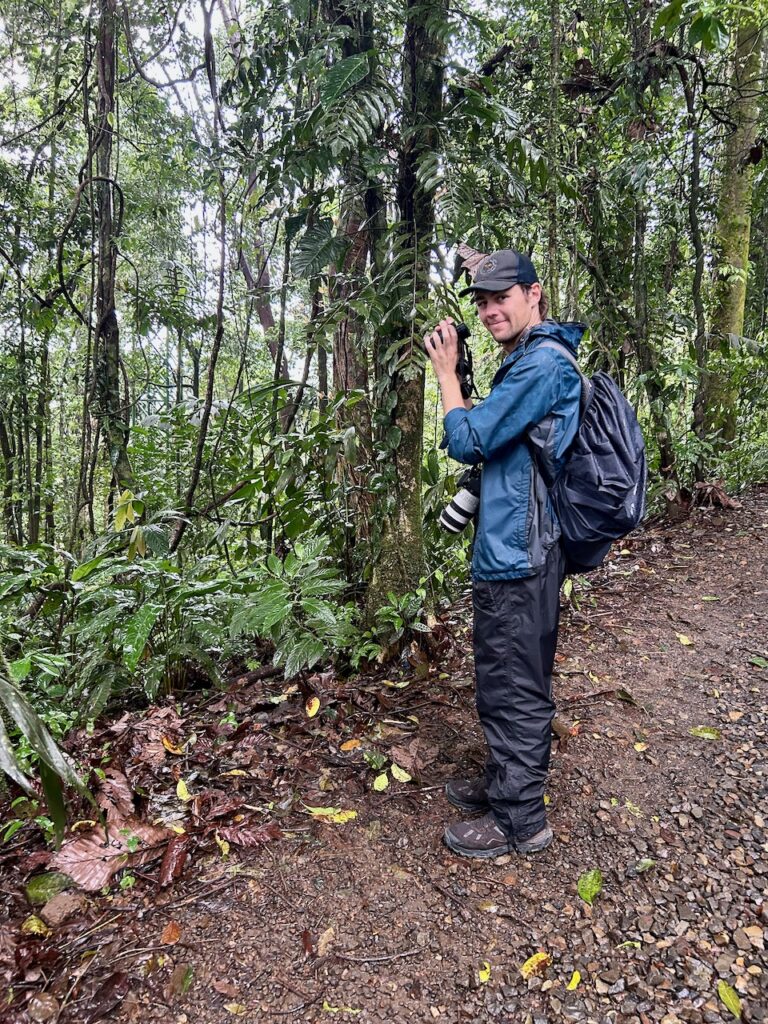
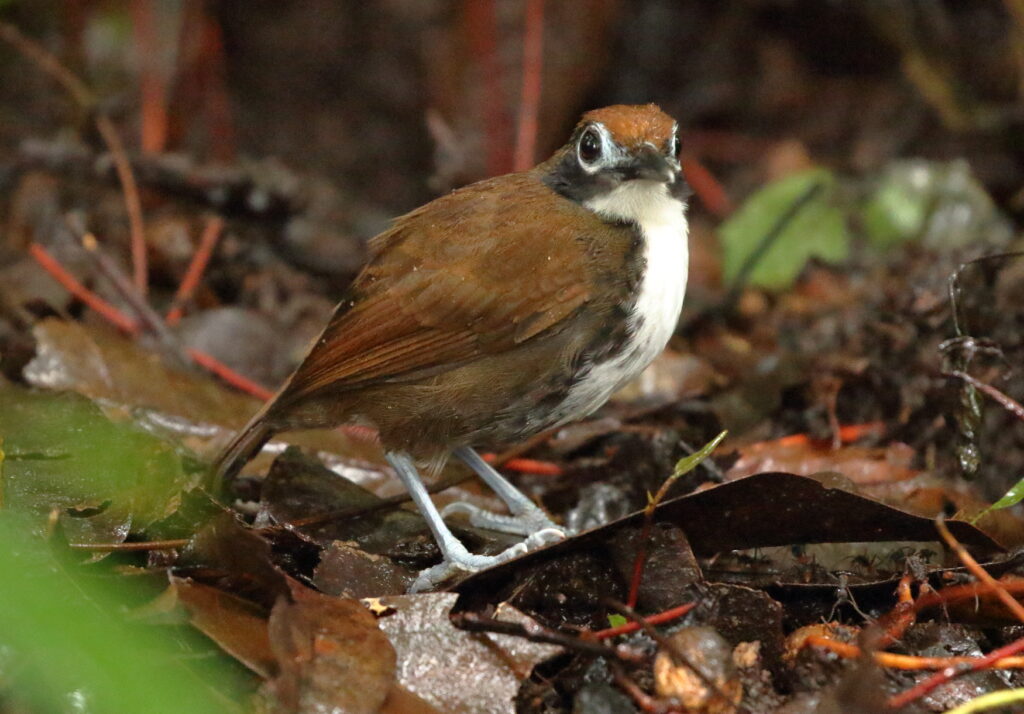
According to Vallely’s and Dyer’s Birds of Central America, Costa Rica hosts nine species of antbirds and we recognized four working the ant columns around us. These included Bicolored, Spotted, and Zelodon’s. It also included the one we both most wanted to see. “I’ve got an Ocellated!” Braden shouted with glee—his third lifer of the day.
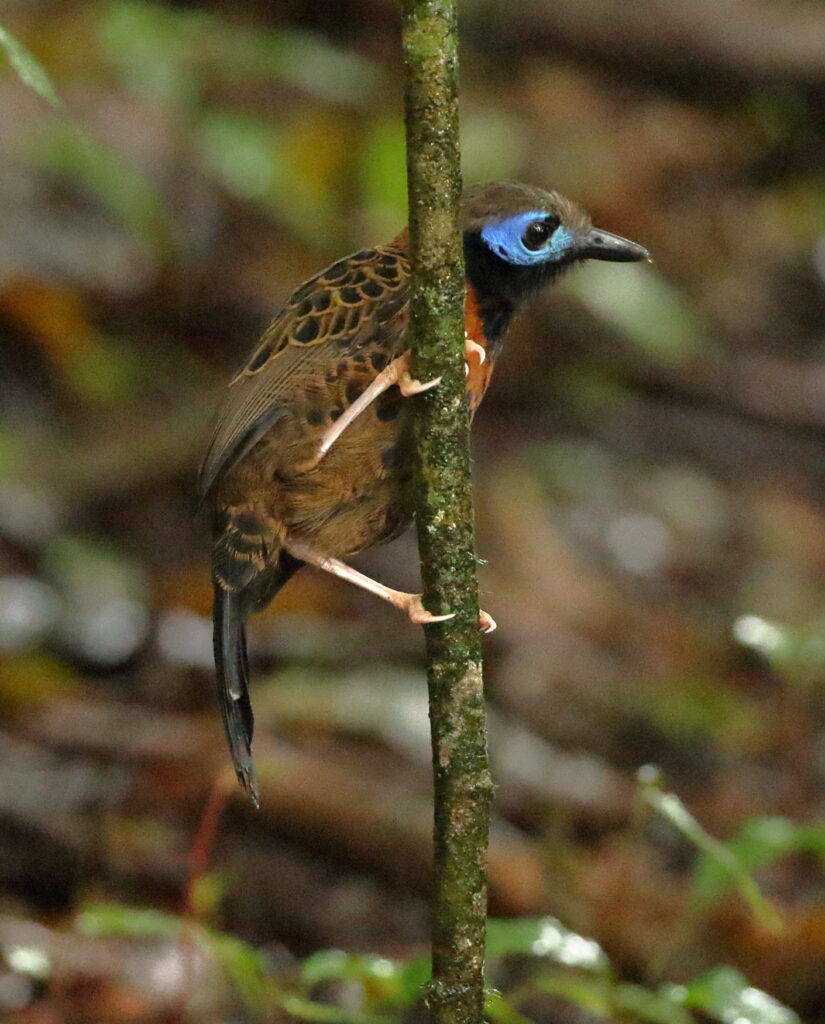
Why were we so excited about this bird? All antbirds are subtly beautiful, but Ocellated has the most distinct patterns of any Costa Rican species. It sports gorgeous blue, black, and rufous colors around the face and eye, and a remarkable scalloped pattern of feathers down its back and chest. As thrilled as we were to find it, we were even more thrilled to watch what the antbirds were doing.

Back and forth they darted snagging insects, spiders, and other arthropods that were startled by or fleeing from the army ants. Braden and I paced back and forth, mesmerized by this performance. At least fifteen or twenty antbirds surrounded us, the most abundant being the Bicolored, who were also the least shy. WATCH THE VIDEO BELOW!
Antbirds, though, aren’t the only birds that join in on following army ant columns. As we watched, we also saw Wedge-billed Woodcreepers, Northern Barred-Woodcreepers, and Fawn-throated Foliage Gleaners. As a bonus, the rain had let up by now, letting us fully enjoy what might be for me a once-in-a-lifetime spectacle. In fact, we spent at least half an hour with these remarkable birds, trying to grasp exactly what they were doing and just appreciating that things like this could still happen in the world. Finally, as the trail’s foot traffic increased, we moved on.
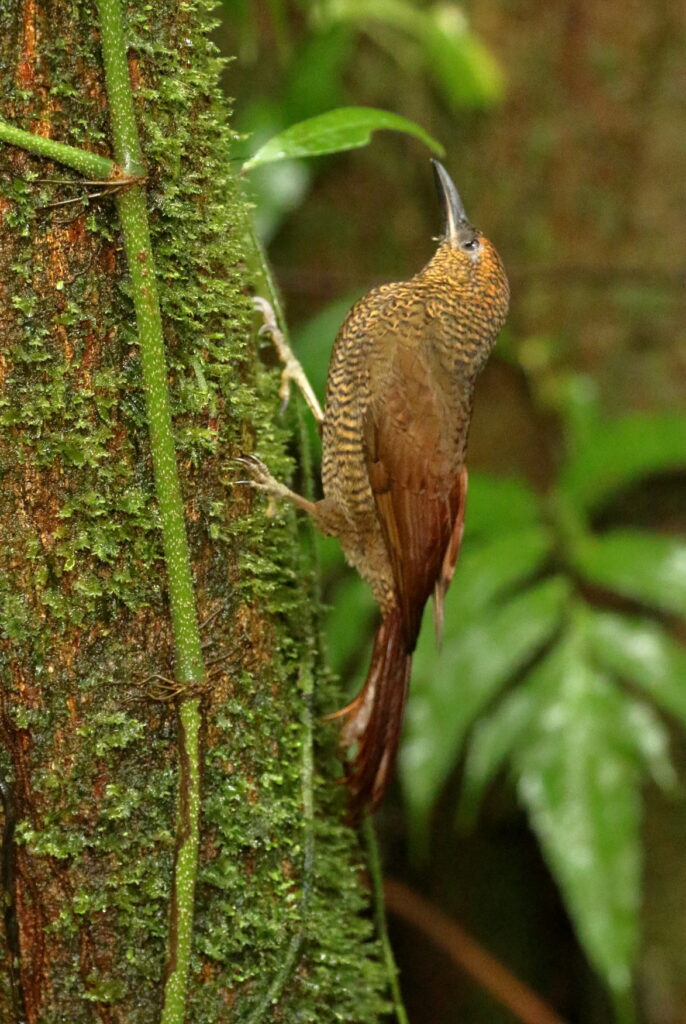
We, of course, saw many more species on this outing—including Braden’s fourth lifer of the day, a White-throated Shrike-Tanager—but it was the antbirds that would stay with us as we headed to our next, equally spectacular destination, Caño Negro wetlands.
Our Sky Adventures checklist: https://ebird.org/checklist/S303092147