Today, we are pleased to offer the third in Braden’s series about his adventures driving across the country from Maine to Montana. Already, it’s been an incredible birding journey—and he’s not even out of Maine! Sneed is also pleased to announce that two of his books, Birding for Boomers and Like No Other, have been named finalists for the High Plains International Book Awards. We hope some of you Montana residents will join Sneed for the celebration and to crown the winners at the awards ceremony in Billings on October 4th!
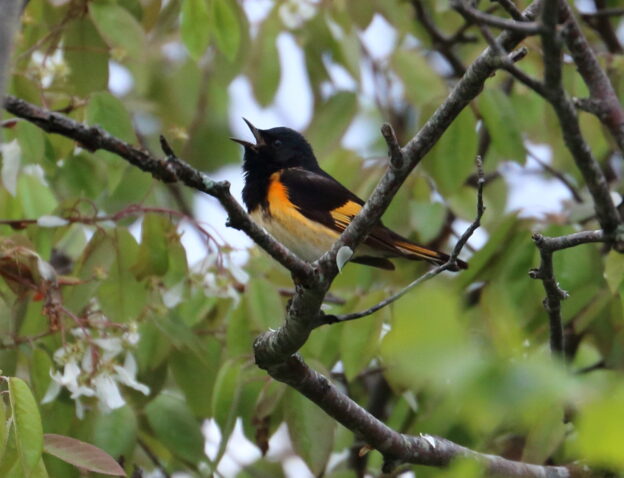
I had never seen so many American Redstarts. The birches and maples standing on the northern tip of Sears Island, at times, had more warblers on their branches than leaves. According to Wesley Hutchins, this was the norm for Sears Island during spring, and part of the reason why he’d been wanting to bring me here since we’d become friends four years ago.
I’d met Wes a month or two after arriving at the University of Maine, and thanks to the hours and days we’d spent together exploring the forests and coasts of the state, I now considered him one of my closest friends. Wes and I kept in close contact during the summers when we worked out-of-state (California and Pennsylvania for me, New York for him), keeping each other updated on all of the awesome birds we were seeing around the country. He’d graduated a year before me, but still visited UMaine every week to spend time with me and his other friends there. I had never visited his hometown of Belfast, however, despite it being only an hour away from the campus where I’d gone to college. This week, I was bent on changing that, and now here I was birding the spots that he’d fallen in love with over the last few years.
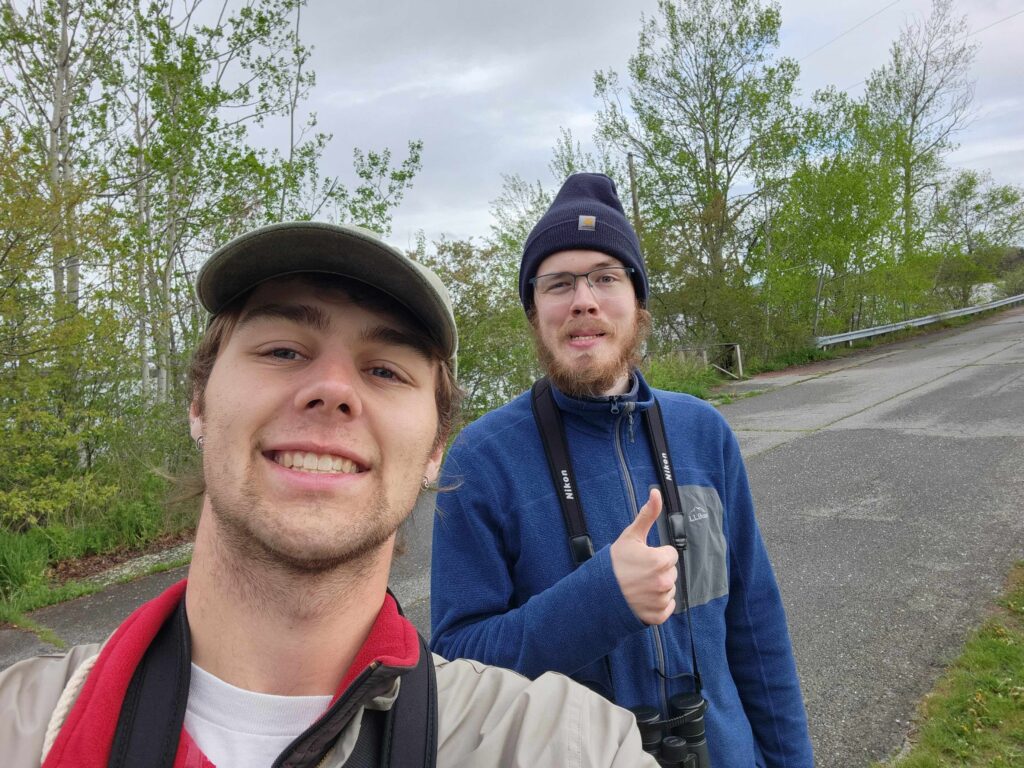
“It’s really weird seeing you here—in the good way!” Wes admitted, and I nodded. I’m sure I would feel the same way once I finally convinced him to visit me in Montana.
We’d spent the previous evening walking around Belfast Harbor, a pleasant little cove tucked away into the side of Maine’s midcoast region and another one of Wes’s favorite birding spots. This morning, however, he’d taken me to Sears Island, Waldo County’s best birding hotspot and a prime location to see migrating warblers. Upon setting foot on the island, I began to notice warblers—redstarts, a Chestnut-sided, a Northern Waterthrush—but nothing out of the ordinary. I’d been seeing warblers like this all week. We wandered a bit, down into the forested center of the island, but things stayed eerily quiet. After about twenty minutes, Wes turned to me and said, “We should go back to the northern point. That’s usually where all the action is.”
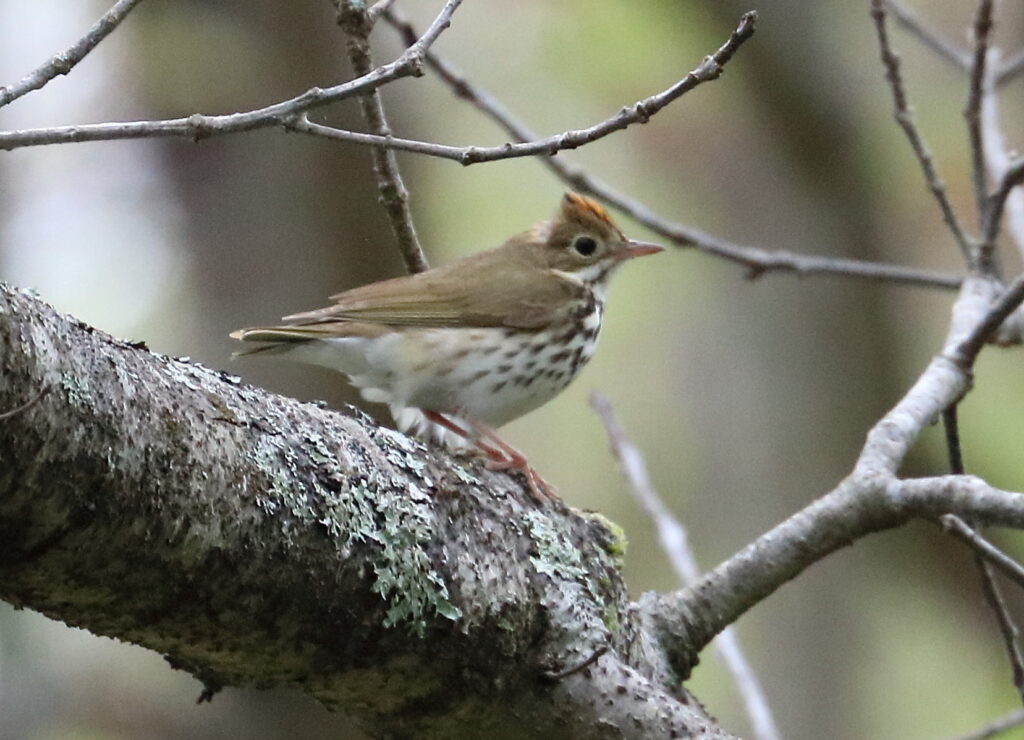
I felt skeptical. I much prefer walking around to staying in one spot to bird, but Wes had the local knowledge so I followed his lead. We walked back and we immediately began to see birds we hadn’t seen just twenty minutes ago—a Blackburnian Warbler and a couple of Magnolias. Then, I looked up.
In the sky above us floated dozens of warblers, all seeping and chipping as they struggled to combat the winds rushing over the island. Many of the birds faced north, while others zoomed in from the north, landing in the trees directly to our right and left. We stationed ourselves directly in front of a flowering apple tree that seemed to be overflowing the warblers and began calling things out.
“I’ve got two Magnolias on the same branch.”
“Is that a Tenness—no, it’s just a REVI.”
“Here’s our third Wilson’s of the day, a nice male!”
“Six redstarts in this one tree alone. Scratch that, seven.”
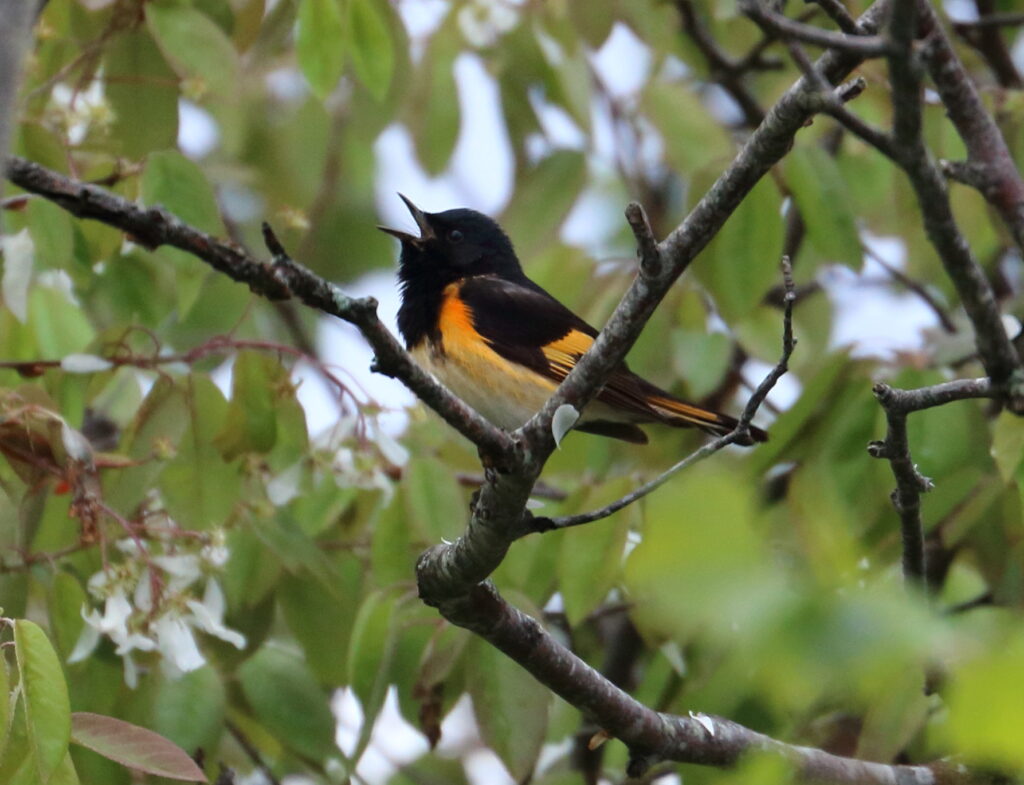
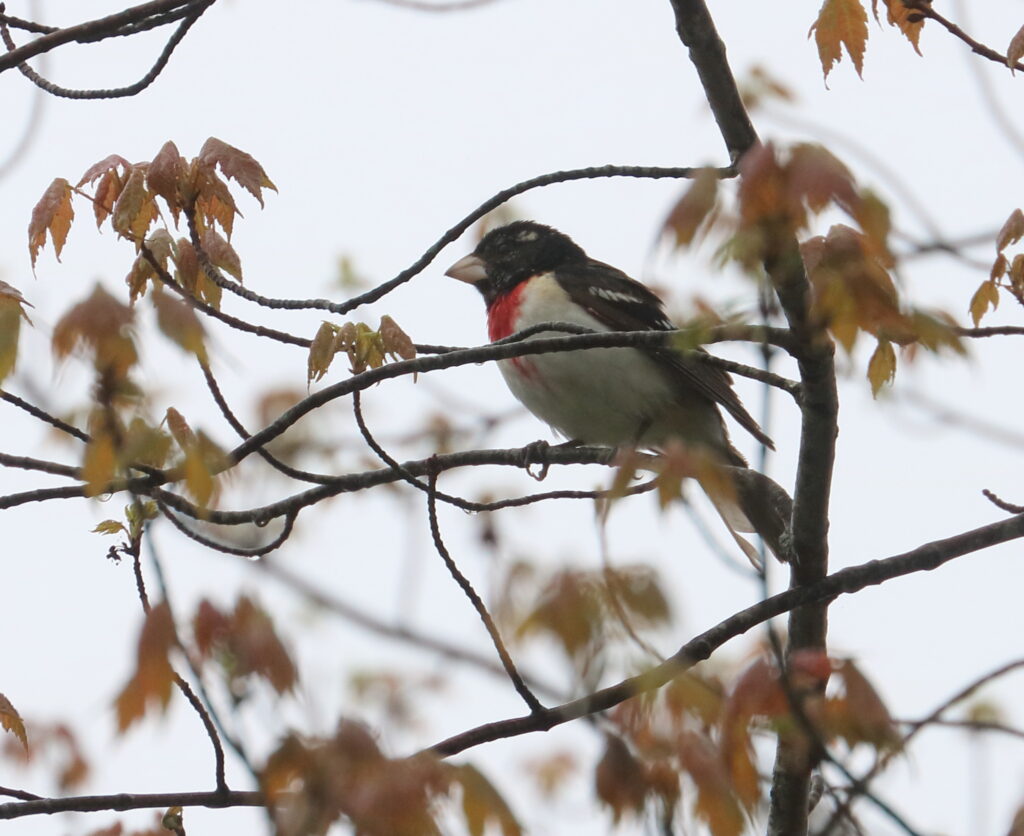
What we were experiencing was a river of warblers. Every three minutes or so, the birds we’d been staring at would vacate and be replaced by new birds dropping in from above, all slowly making their way toward the causeway that connected Sears Island to the mainland. One in every three warblers was an American Redstart, and there were easily hundreds of warblers. Mixed in with the warblers were small numbers of other species: vireos, flycatchers, a couple Rose-breasted Grosbeaks. It was exactly the experience I’d hoped to have when I’d signed up to go to school on the east coast. The West doesn’t do songbird migration like the East does, especially when it comes to warblers. Montana has fourteen regularly-occurring species of warblers. On Sears Island, we’d seen fourteen species in a matter of minutes.
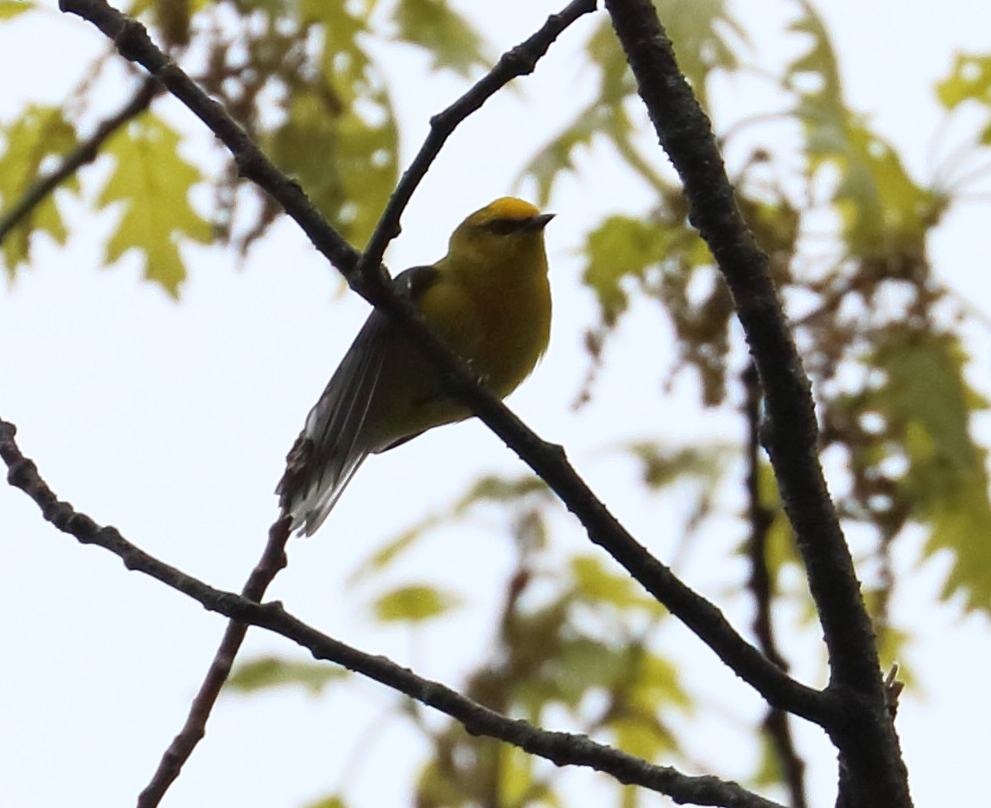
My focus had been warblers the whole week, in fact, with the notable exception of the Acadia Puffin Cruise (see our recent post, Puffin Party). Just a day or two earlier, I’d spent two nights in Portland, Maine, with my good friend Hayden Page. We’d birded hard, visiting many of Maine’s famous birding hotspots like Scarborough Marsh, Laudholm Farm and Portland’s urban Capisic Park. The morning we’d hit Laudholm Farm had been incredible, with 81 species at the preserve including seventeen warbler species and a White-eyed Vireo, a rarity this far north. At an airport in Brunswick, Main, we’d also chased a Blue-winged Warbler—another southerner not supposed to be here. In the coming decades it wasn’t hard to imagine both the vireo and the warbler showing up more and more frequently in Maine thanks to warming temperatures and changes in habitat.
The week had also exposed me to the diversity of Maine’s habitats. Living in Bangor during the colder months, my impressions of the state had mostly been of woods. And it is true that Maine has woods—it’s the most forested state in the country. But southern Maine, especially, holds its fair share of unique ecosystems. Kennebunk Plains Preserve, which I’d visited twice this spring, is a patch of grassland with Vesper and Grasshopper Sparrows and Eastern Meadowlarks. It is regularly burned to keep shrubs and trees from encroaching on it. Grassland used to be far more common in the state, following the intensive logging of the 1800 and 1900s, but now that the forest had grown back Kennebunk Plains was one of the only spots for certain species to be found.
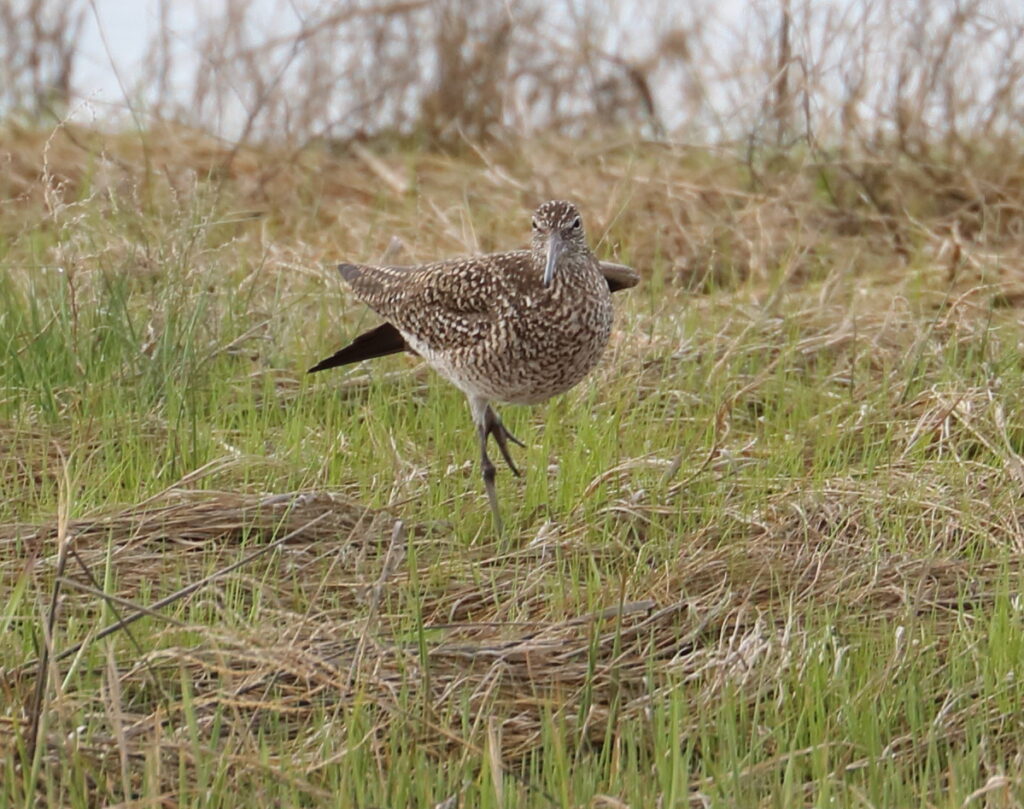
Scarborough Marsh, which my dad and I had visited when we’d come out to Maine in fall of 2021 (see this post), held the largest chunk of salt marsh in the state. This habitat, which looks like a savannah floating on the edge of the sea, is also threatened, both in the state and worldwide, thanks to rising sea levels. The birds that live here include Willets and Saltmarsh Sparrows, the latter of which was the focus of my Honors Thesis Project and is one of North America’s most endangered birds.
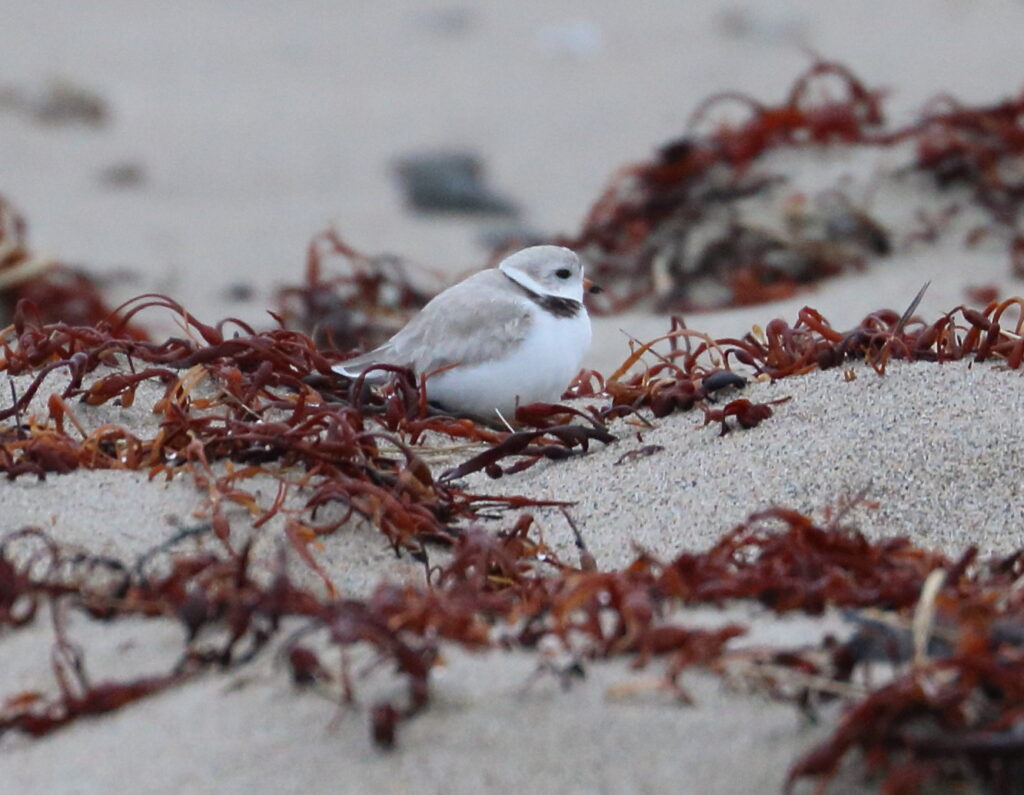
Southern Maine is also a prime location for sandy beaches, and both the birds and the tourists know it. Maine’s coastal towns go from sleepy and affordable in winter to bustling and expensive during the summer, when Americans from all over flock to them to enjoy the summer. This has created problems with the wildlife that depend on sandy beaches as their homes, namely the Piping Plover and Least Tern, two species who spend their days hunting for invertebrates along the coastline and breed in the grassy dunes just upland of the beach. Thankfully, the state of Maine has put in a lot of work to close off these dunes to tourists and their destructive dogs, allowing the birds to nest in a fragile security. At Pine Point, just five minutes from Scarborough Marsh, Hayden and I got to watch a trio of Piping Plovers chasing each other around the beach at close range. It was also at Pine Point that I got to see my lifer Roseate Terns, along with the more common Least and Commons.
Though I’d always joked about the cold weather, lack of mountains, and isolation of Maine, I was certainly going to miss the state I’d spent four years getting to know. The places AND the people. This was especially present in my mind after giving Wes a hug goodbye and driving away from Belfast, from the University, and from some of the best friends I’d ever made. I would make sure to see them again, though it would never quite be the same. Thankfully, I had one more night to spend in Maine before leaving, though it wouldn’t be in the comfort of a friend’s air mattress. No, I was headed for the last county I’d never visited in the state: Franklin County, the land of wind, mountains and moose.
To learn more about Sears Island and the ongoing fight over developing it, click here: https://friendsofsearsisland.org/wind-port-fact-sheet/