Today, we take a break in posting about our recent Costa Rica adventure to share one of Braden’s most memorable domestic birding experiences of 2026. His mission: to see a bird with very specific habitat requirements—and one that had frustrated him several times before. If you’re in Vegas for March Madness you will definitely want to read this post!
In 2025, I saw a lot of birds. Besides international trips to Oaxaca and Costa Rica, I birded across the United States and Canada in places I’d never been before—a road trip from Maine to Montana and another from Montana to southern California, with a side detour through southeastern Arizona. Not surprisingly, I racked up tons of life birds, including Whooping Crane, Roseate Tern, Kirtland’s Warbler, Buff-breasted Flycatcher and California Gnatcatcher. As 2025 came to a close, though, I started to wonder: how many regularly-occurring US species were left out there that I haven’t seen?
In considering the question, I didn’t count Hawaiian or Alaskan birds; those are species that will take extra, dedicated trips to see. I also cut out seabirds that require pelagic boat trips, a style of birding that is exclusive, expensive, and not particularly appealing to a landlubber such as myself. My list omitted rarities—birds that do not regularly occur in the United States—because I much prefer finding a species in its proper habitat as opposed to chasing a single individual bird in the wrong place found by another birder. Finally, I did not include three species that only breed in the Florida Keys—Mangrove Cuckoo, Antillean Nighthawk and Black-whiskered Vireo—because they only occur there in summer, a decidedly miserable time to visit the Sunshine State. I also believed that I’d encounter these species elsewhere when I eventually visited the Caribbean some day.
So, by my very specific standards, I came up with the following list of regularly-occurring US birds that I had yet to see as of January 1st, 2026:
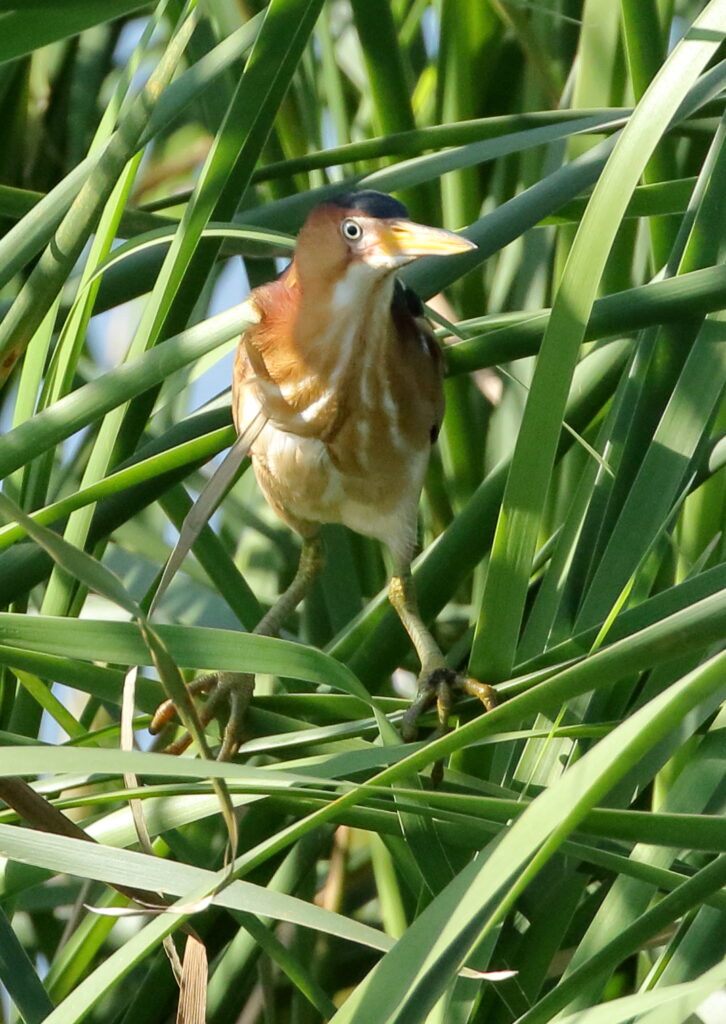
- Least Bittern
- Chihuahuan Raven
- King Rail
- Swainson’s Warbler
- Black-chinned Sparrow
- Fulvous Whistling-Duck
- Connecticut Warbler
- Golden-cheeked Warbler
- Black-capped Vireo
- Island Scrub-Jay
- Smith’s Longspur
- Colima Warbler
- Boreal Owl
- Lesser Prairie-chicken
- Gunnison Sage-grouse
- Crissal Thrasher
16 birds. 16 birds left in the US that I care about seeing that I’ve never seen before. Some of them I have pursued many times (looking at you, Least Bittern and Boreal Owl). Others, I’ve never even tried for once, because I’ve never been within their ranges.
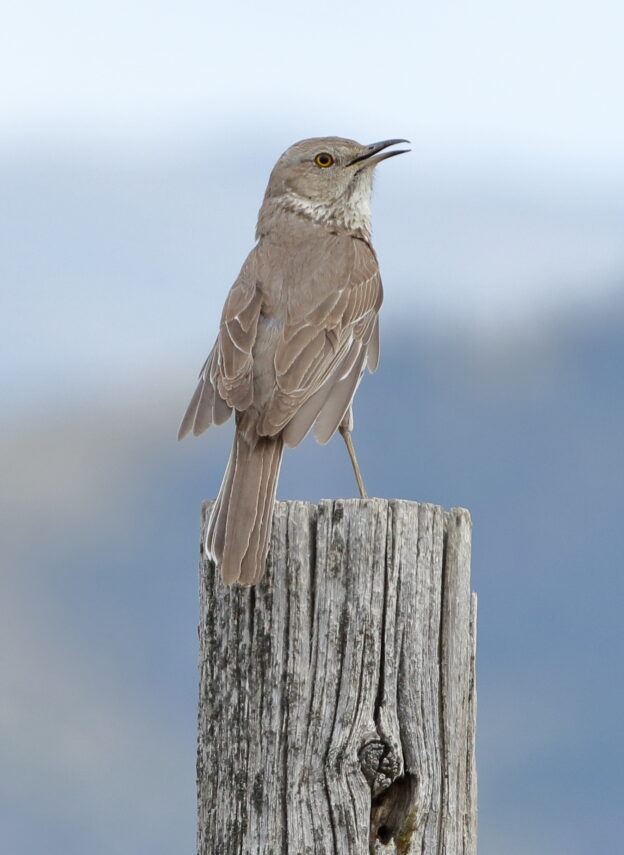
When I realized that I would be driving back to California after spending Christmas in Montana, however, and saw that the shortest route took me through Las Vegas, I knew that I needed to take another stab at Crissal Thrasher. This is the last US mimid (member of the family Mimidae) that I’d never seen before—and one that had frustrated me before.
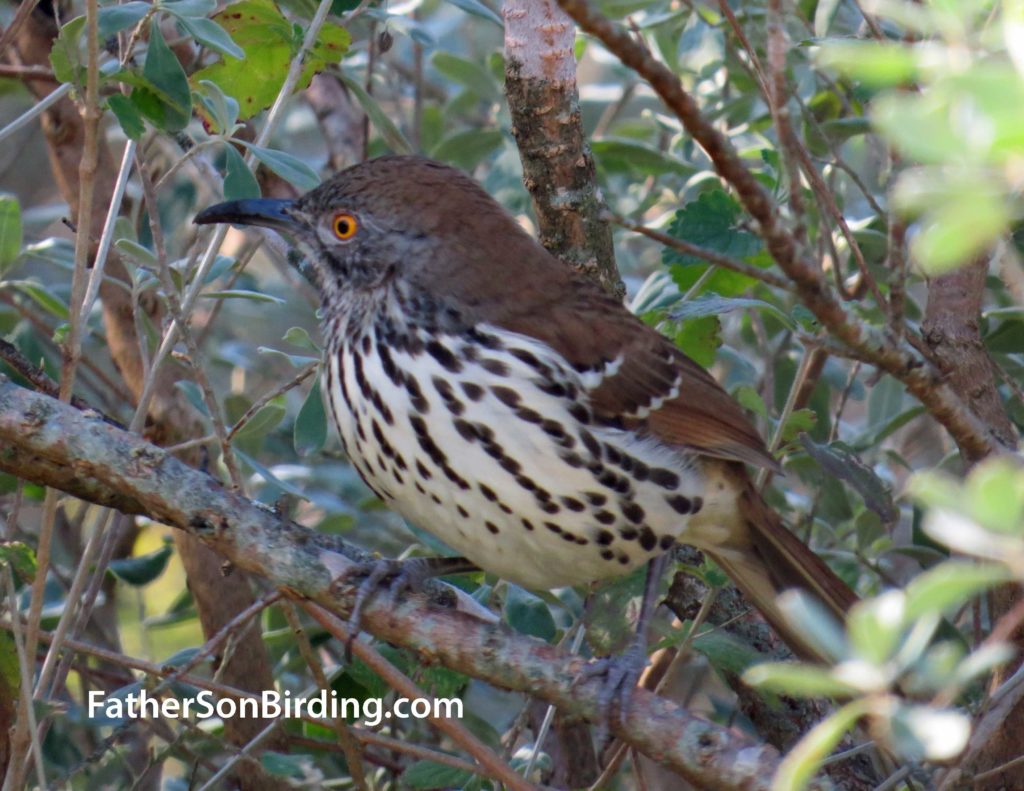
My dad and I had looked for Crissal Thrashers when we visited Arizona in May of 2022, in Yuma, Arizona. They were also on my target list when I visited the Chiricahuas in August of 2025, and while I did find my lifer Cassin’s Sparrow and Scaled Quail out in the desert near Portal, there were no Crissal Thrashers to be found. However, my most recent—and heartbreaking—near-miss had happened just a few weeks previously, at the beginning of December, 2025.
During one of our last weekends of work, three friends and I decided, almost on a whim, to drive four hours and camp near Death Valley National Park. On Saturday morning, my friend Sam and I snuck out of our tents early, staying quiet so as not to wake the others, and drove an hour west to a spot known for having Crissal Thrashers. The habitat featured tall, brushy vegetation growing along a desert wash. I’d later learn that Crissal Thrashers preferred this riparian desert habitat, and were much more common in this environment than out in the middle of the desert, away from water.
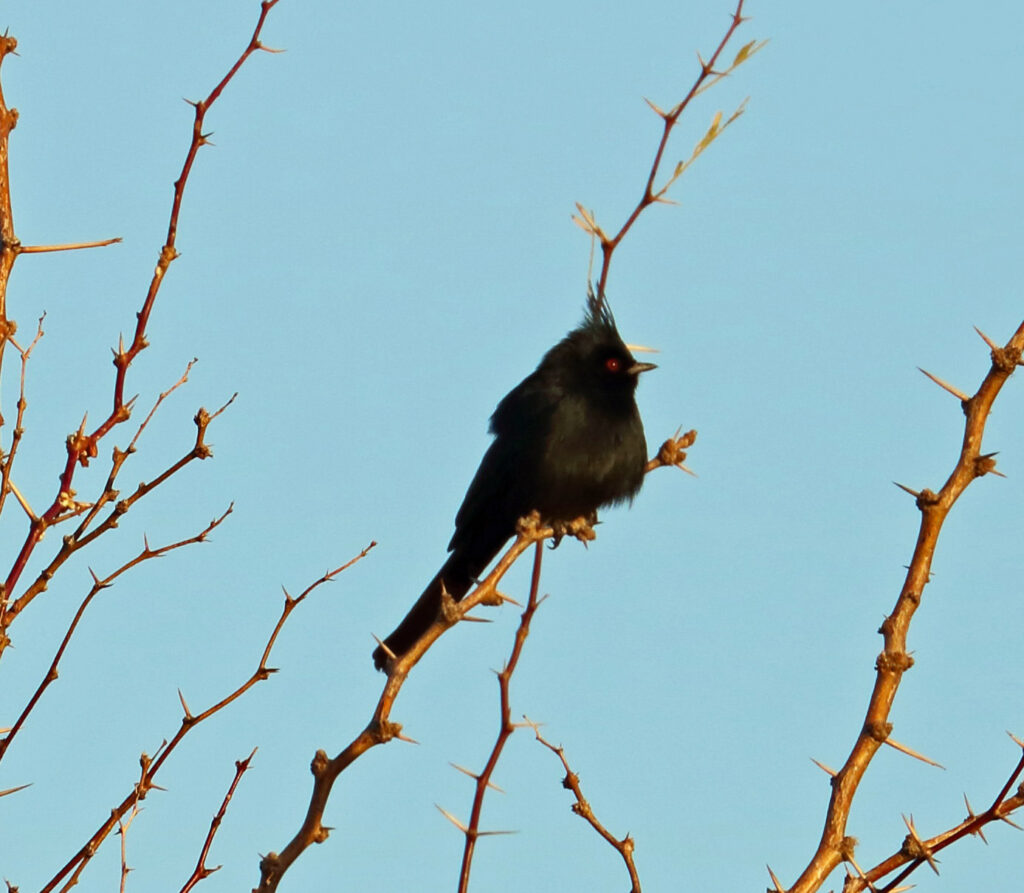
The place Sam and I visited that morning in December was called Shoshone Village, nothing more than a trail looping through the desert. We started to hike and immediately spotted some of the more common Mojave Desert birds—Phainopeplas and Gambel’s Quail. As we rounded a bend and entered some more dense vegetation, Sam pulled out his phone and ran the Merlin app.
“Crissal Thrasher,” he said, looking at me. Suddenly, I heard what the app had been hearing—the squeaky, repeating song of a thrasher coming from around the corner. I felt disappointed that I hadn’t picked up on it—the bird was singing quite loudly—but figured that it wouldn’t matter that an app had identified the bird if we got eyes on it. Unfortunately, a large mud puddle sat in the trail between us and the thrasher.
I carefully made my way around the edge of the slippery puddle, moving thorny branches out of the way and stooping underneath thick tree limbs. After about a minute of careful effort, I reached the other side, turning around to help guide Sam around it. Sam followed in my footsteps until halfway around the puddle he suddenly slipped into the mud puddle with a splash! Not only was Sam soaked and muddy (including the large seagull onesie he was wearing), but the commotion of us trying to avoid the puddle caused the thrasher to stop singing.
We never saw the bird.
Flash forward to the Clark County Wetlands, only two months later. Clark County Wetlands sits on the eastern edge of Sin City, just upriver from Lake Mead, the giant, now-shrinking reservoir created when President Herbert Hoover decided to dam the Colorado River, and it just so happens to be one of the best places in Nevada to find a Crissal Thrasher. The presence of year-round water (a rare commodity in these parts) in the Las Vegas Wash allows for the existence of perfect thrasher habitat, complete with more extensive, green vegetation than can be found elsewhere in the Mojave.
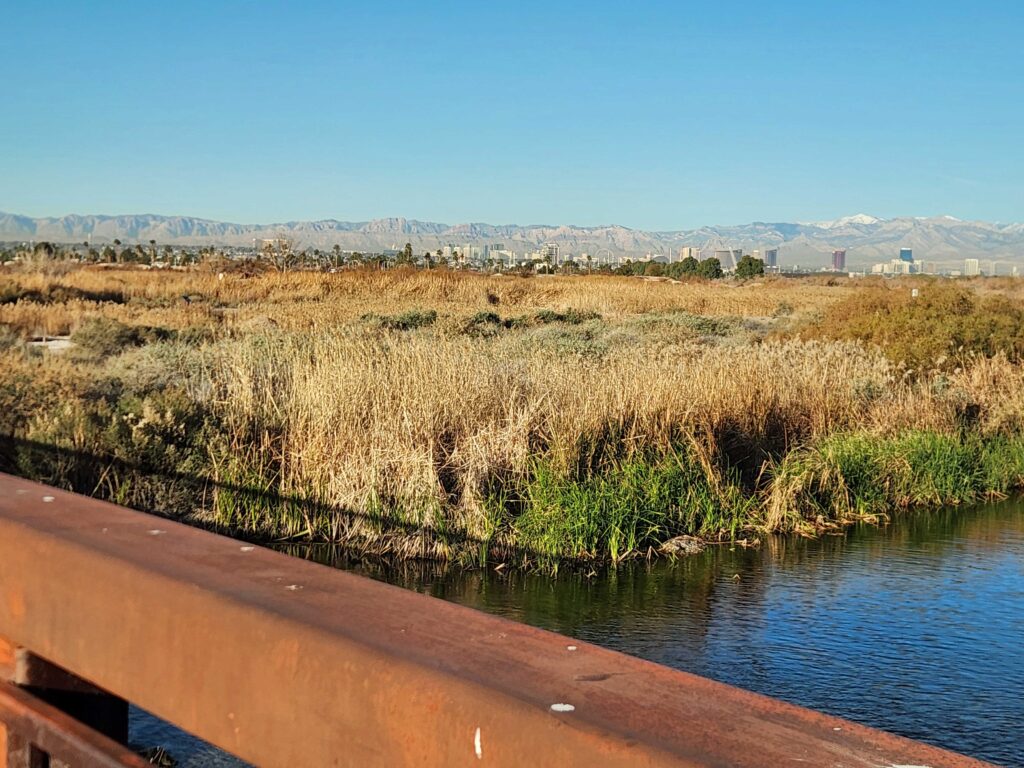
As I stepped out into the landscape of mesquite, palo verde, and barrel cacti, I immediately regretted wearing shorts and a tee-shirt. In contrast to the 100-plus temperatures during my last visit here, this morning I shivered in cool 45-degree air. Nonetheless, birds were far more vocal than they had been back in December. Mockingbirds called from atop the trees. Black-tailed Gnatcatchers and Verdins were in nearly every little scrap of brush. Again, there were Phainopeplas and Gambel’s Quail, as well as lots of wintering birds—Yellow-rumped Warblers, Ruby-crowned Kinglets, Northern Flickers.
Then, as I rounded a corner, I heard the song again—the same song I’d heard from the leeward side of that mud puddle in Shoshone Village. This time I was ready, with no puddle standing between me and my bounty. I bushwhacked off the trail, into the desert scrub, and soon spotted it, a long-tailed bird with a long, curving beak silhouetted against the early morning sky!
Me and that thrasher spent a good fifteen minutes together, with bare desert mountains looming on one horizon and the Las Vegas Strip looming on the other. Eventually, the thrasher flitted away, only to take up another perch a dozen meters away. After spending more minutes admiring it, I walked back to the trail, happy and at peace.
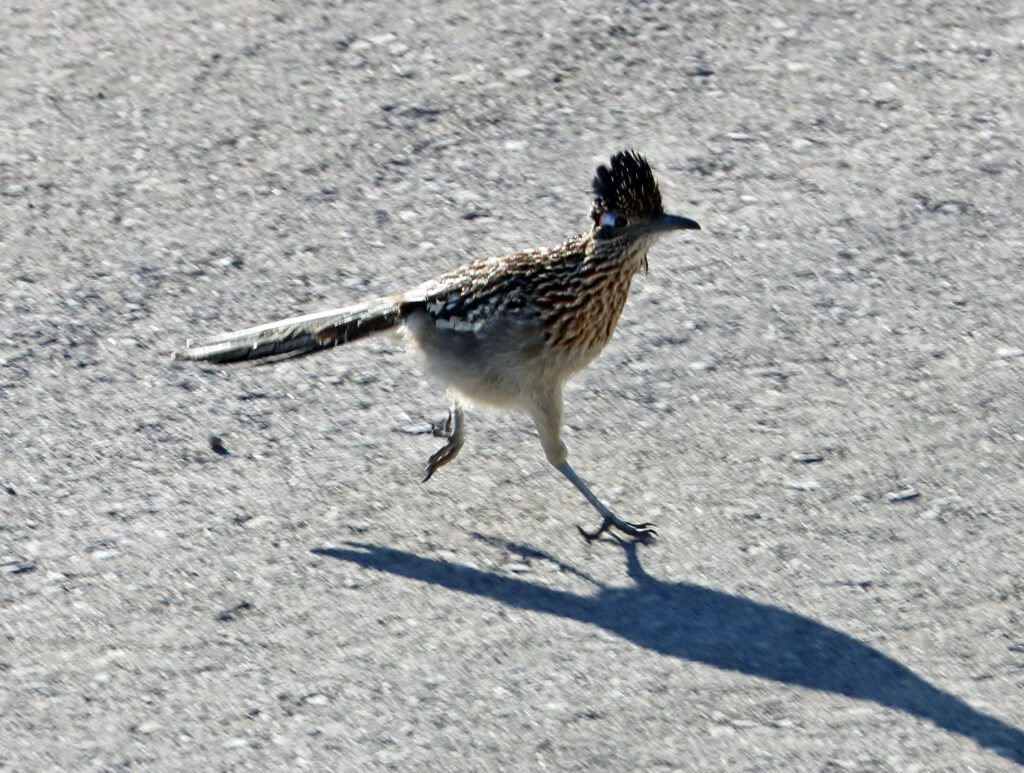
To be honest, that thrasher wasn’t even the coolest bird experience I had that day. As I continued along the trail, I got to watch an adult male Costa’s Hummingbird performing its flight display above my head. I found two rarities, a long-continuing Northern Parula and a Golden-crowned Kinglet that no one had reported. And from the deck of the Clark County Wetlands Visitor Center, a beautifully-designed educational building, I got to watch three Greater Roadrunners chase each other, constantly clacking their bills. The last time I’d been to Las Vegas had been a hot, emotionally turbulent week, but this morning that I spent at Clark County Wetlands was so enjoyable that it is now what I recall when I think of that gambler’s haven in the desert.
The content found on FatherSonBirding is fully protected under US copyright law. Please feel free to share our posts with others or include links to them on your own sites, but any other use—including training AI models—is strictly prohibited without our express permission.