Tag Archives: Glacier National Park

Warblers Across Montana

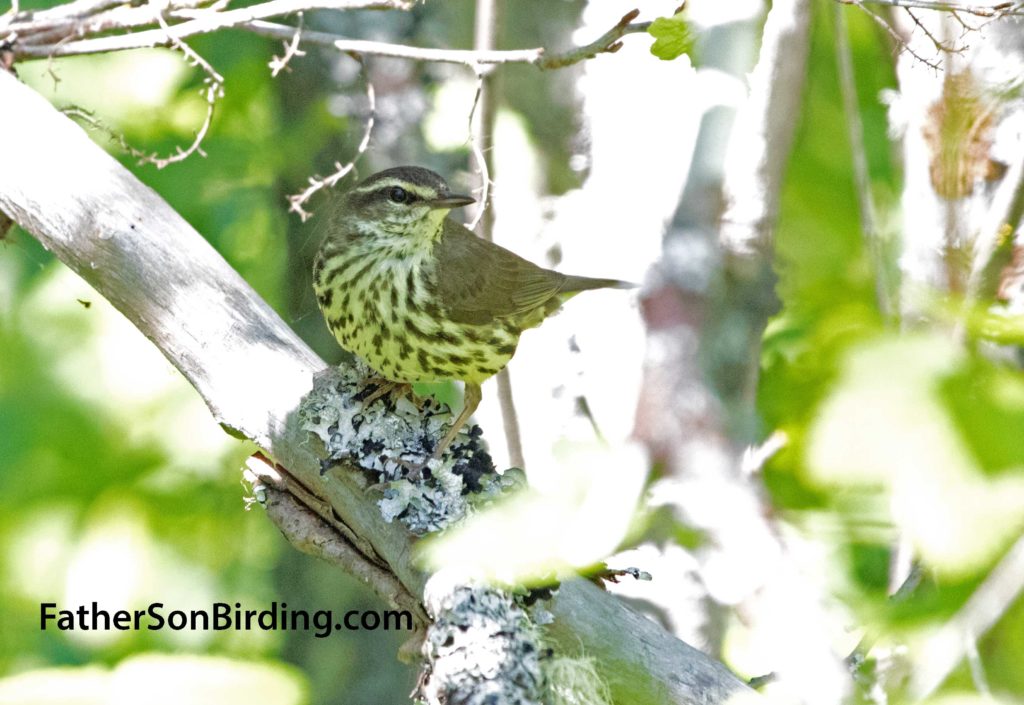
We heard more Northern Waterthrushes than saw them, but did manage an occasional glimpse. (photo by Sneed B. Collard III)

During our 2016 Big Year, Braden and I were fortunate to attend the Monterey Bay Birding Festival. Our all-day “California Specialties” field trip was one of the most exhilarating days of birding we’d had to that point and ever since, we’d wanted to attend a similar event. Last weekend, we finally got our chance by going to Wings Across the Big Sky, held in Kalispell, Montana. As you might imagine, the event was loaded with terrific speakers, good food, and amazing field trips.

Picking our field trips proved a challenge, but on Saturday Braden and I opted to bird in Glacier National Park. Our top target species? Varied Thrush, Chestnut-backed or Boreal Chickadees, Harlequin Duck, and a pie-in-the-sky possibility, the endangered Black Swift. Shortly after 6 a.m., we followed our intrepid leader, Steve Gniadek, out of Kalispell and by 7:30 were birding the woods around Apgar. Almost immediately, we picked up one of our target birds, Chestnut-backed Chickadee, but what really stunned us was the profusion of warblers. In the thick, damp woods, seeing the birds proved a challenge, but their calls rang out all around us and, under Steve’s tutelage, we did our best to start learning them. Over the next two hours, we heard (and eventually saw) eight species—Yellow, Yellow-rumped, Townsend’s, American Redstart, Northern Waterthrush, Orange-crowned, Common Yellowthroat and MacGillivray’s. For Montana, it was an astounding total and almost a quarter of the 33 species we recorded.
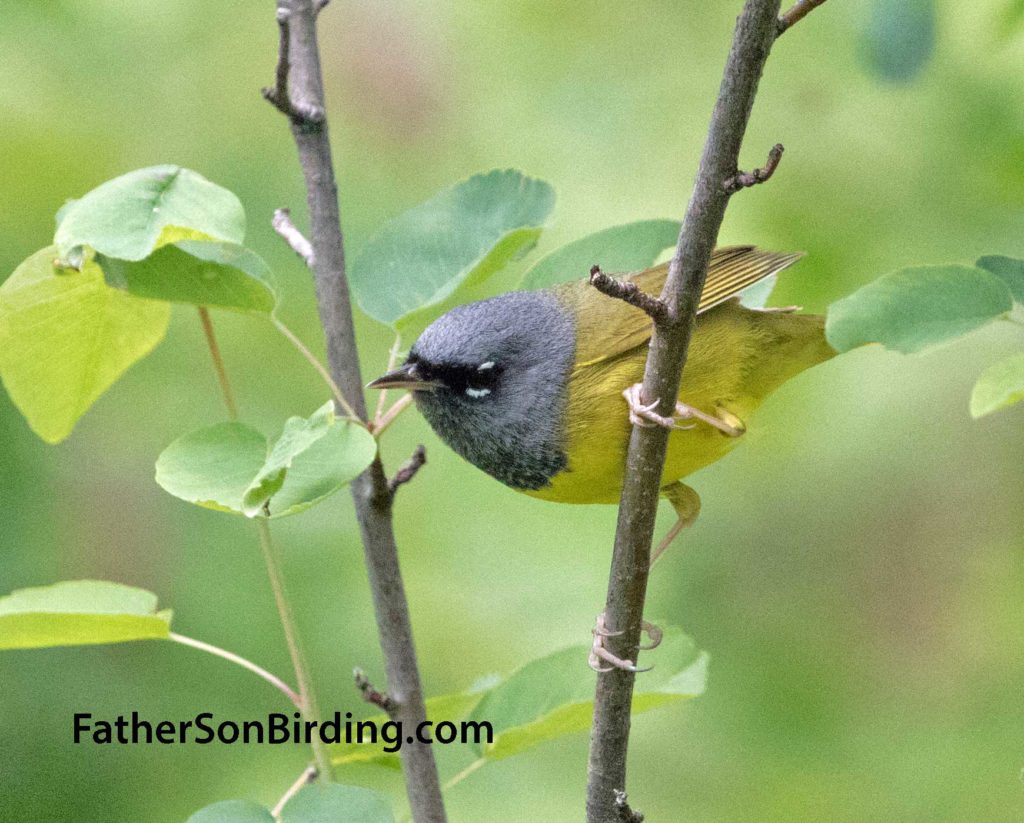
MacGillivray’s Warblers have become one of Braden’s and my favorite summer arrivals in Montana. (photo by Sneed B. Collard III)

Our group’s next mission: Harlequin Ducks. The iconic Going-to-the-Sun Road was still closed, but we drove to Avalanche Creek to find a mob scene of hikers and bikers taking advantage of the closed road before cars were allowed up and over Logan Pass. In the confusion, our cars got separated, but as soon as our group stepped out of our car, we heard the eerie, drawn-out call of a Varied Thrush. “Let’s find it!” Braden exclaimed, leading us into a patch of conifers and, sure enough, we caught good, brief glimpses of this spectacular bird.

No sooner had we stepped out into the open, Braden and another member of our group shouted “Black Swifts!” We looked overhead to see several large black birds zooming about 100 feet above us. “How do you know they’re not Vaux’s?” I asked. The large size and slower wing beats strongly suggested Black Swifts, but a few minutes later, we got a clear answer when a Vaux’s and a Black Swift flew right next to each other, articulating the size difference between the two.

Elated with this bonus—a Lifer for both Braden and me—we headed down to MacDonald Creek to try to locate Harlequin Ducks. We didn’t find them, but got a great look at a Fox Sparrow and heard yet more warblers. By this time our comrades had reformed and we all decided to walk up Avalanche Creek. None of us expected to find the ducks, but at our last stop along the creek, I happened to glance at a shady eddy upstream—just in time to see a large shape disappear beneath the surface!
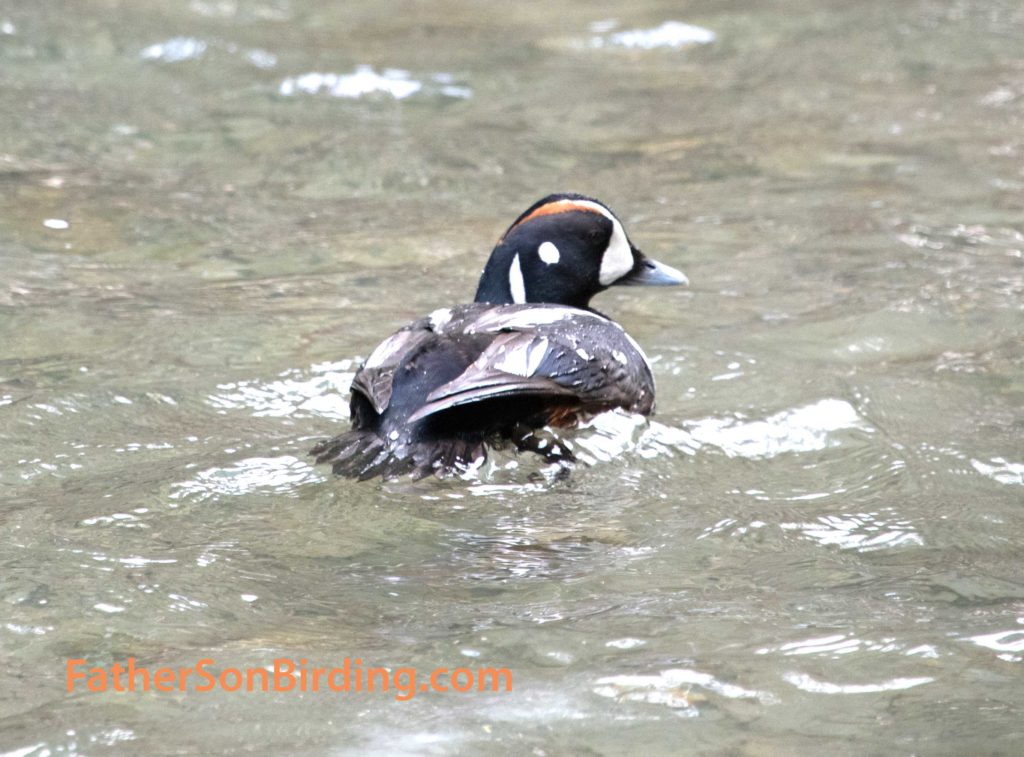
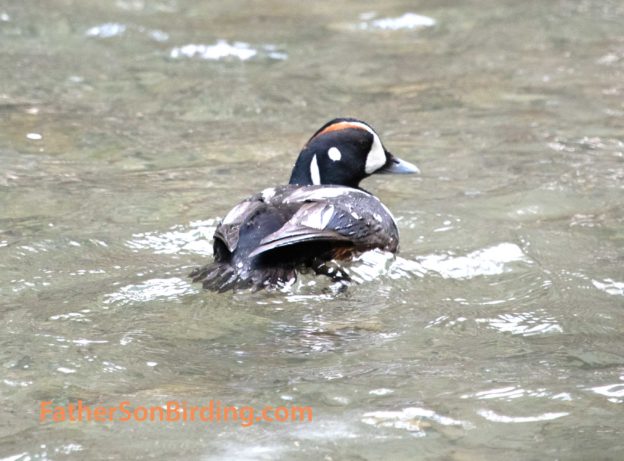
A Lifer for me, this Harlequin Duck put an end to a two-year search. (photo by Sneed B. Collard III)

I grabbed Braden’s arm. “Braden, watch that spot!” A few seconds later, a gorgeous male Harlequin Duck popped to the surface. The duck performed for our group for twenty minutes. I can’t say I got great photos, but watching this happy, rare white-water paddler enjoy the currents is something Braden and I will never forget.

Breaking News: My fall book, Warblers and Woodpeckers: A Father-Son Big Year of Birding is now available for preorder from Amazon. Click Here!
The Big Weekend, Version 3.0, Part One

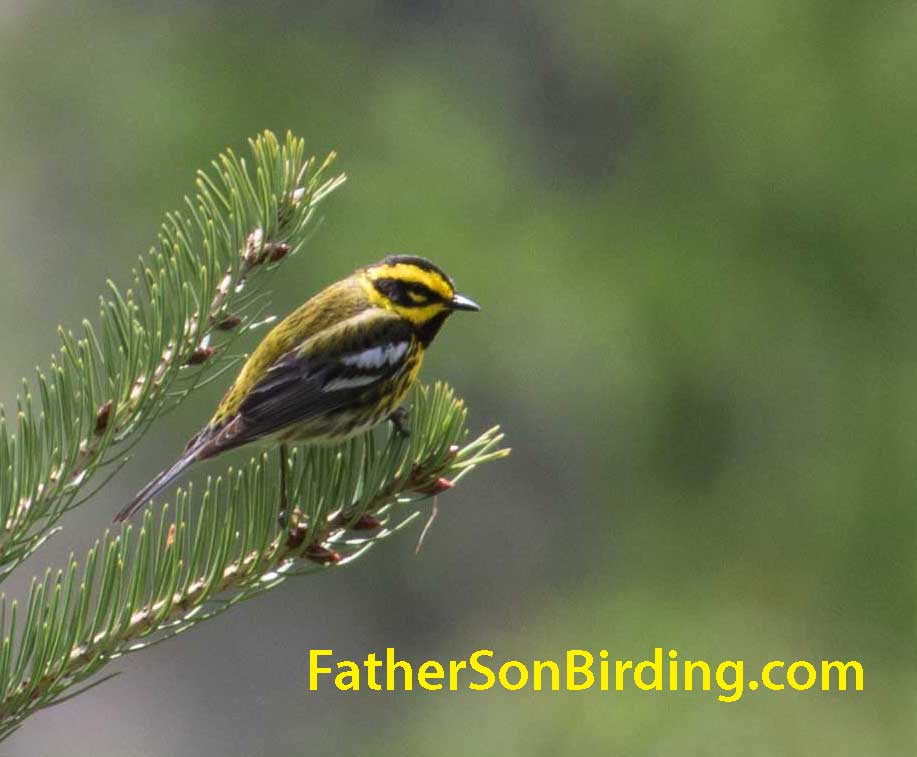
Townsend’s Warbler, Glacier National Park.


Braden present.

Ever since 2016, the year we did our Big Year, my dad and I have had a tradition of going all out on Memorial Day weekend. That year, with our friend Nick Ramsey guiding us, we raced from Lee Metcalf Widlife Refuge south of Missoula to the Seeley-Swan Valley close to Glacier National Park, picking up a variety of great birds: Black-backed Woodpecker, Ruffed Grouse, American Redstart (not as common for us as for you Easterners), and one of my favorite birds: Common Yellowthroat. The following year, we again focused on our area and racked up 56 species in 3 hours, including a stunning pair of Red-naped Sapsuckers.

This year, when I first heard that I had to go up to go to a Boy Scout camp called Grizzly Base on Memorial Day weekend, I was disappointed. As we grew closer to the date, though, I began realizing two things: Grizzly Base itself could be good birding, and we were only there for a day and a half, leaving almost three more days to bird. For the latter idea, I was thinking we could get up to Glacier National Park; it was pretty close and convenient to where we would be staying. Fortunately, we did even better than that.

The camp was really fun. I learned a lot of things, and got to know the people and place I would be working with this summer. Grizzly Base’s birds were nothing to look down upon either as we spotted more than twenty species including a Bufflehead nest, Townsend’s Solitaires, a Pileated Woodpecker, a Western Tanager and a pair of Wood Ducks.

Early Saturday afternoon, though, my dad and I packed up and set out to bird in earnest.

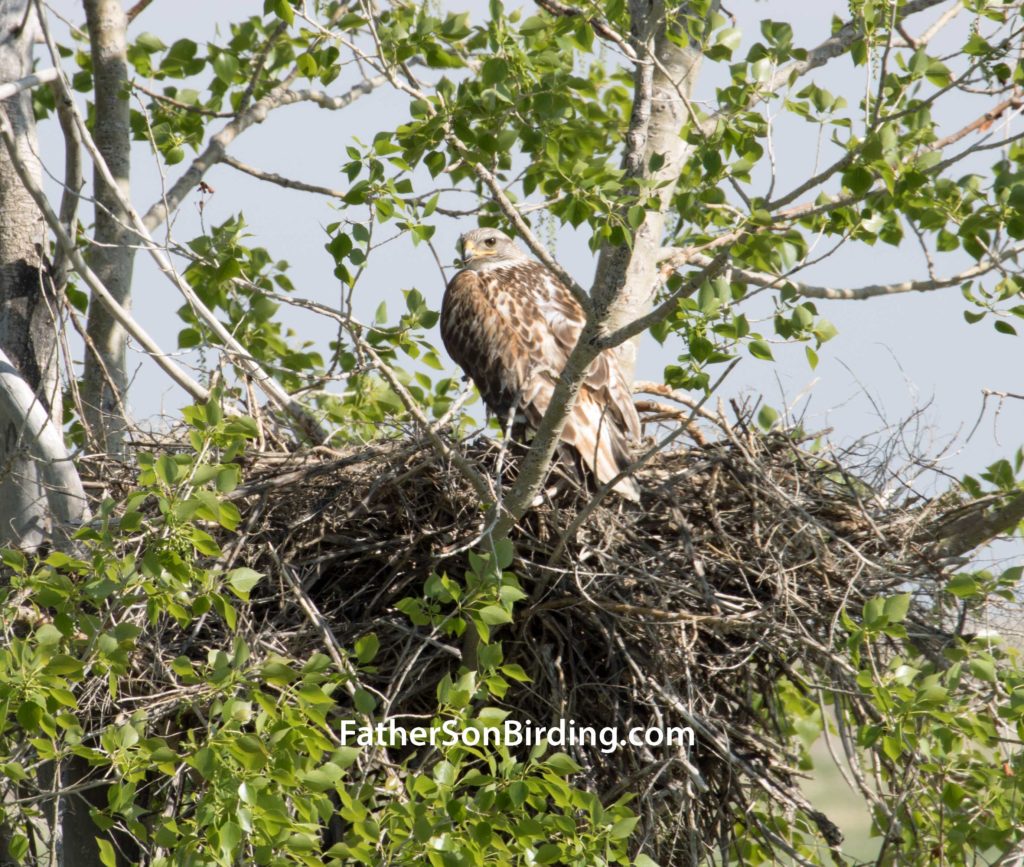
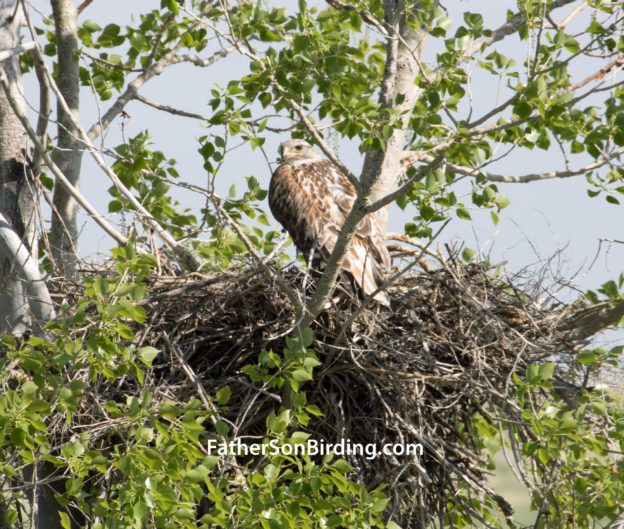
We followed Highway 2 around the southern border of Glacier National Park. We stopped at a spot for my dad to take a nap, and I was surprised to see and hear several Townsend’s Warblers, along with lots of Yellow-rumpeds and a pair of Rufous Hummingbirds. As we crossed the continental divide, things got drier. First, it was just drier forest; soon we were on the dry northern part of Montana known as the High Line, prairie pothole country. We stopped to photograph a Ferruginous Hawk nest right off the road, and spotted American Avocets, Wilson’s Phalaropes and dozens of ducks in the small ponds we passed.

Ferruginous Hawks are a generally a rare sighting–so finding a nest was amazing!

We also made a list of goal year birds. The three we had just seen were on there, along with as many small birds as possible: Lark Sparrow, Lark Bunting, Clay-colored Sparrow, Brewer’s Sparrow, Chestnut-collared Longspur, Grasshopper Sparrow, Baird’s Sparrow, Sprague’s Pipit. Baltimore Oriole topped our list, as it was on my Top Ten ABA Life needs list, and several had been reported around Malta the last couple days.

As we reached Havre, a large-ish city about halfway through Montana, the long drive was starting to get to us. Not helping was the fact that the road signs kept displaying Malta as at least 80 miles away, and we weren’t sure if we could make it. My dad kept driving, determined as ever.

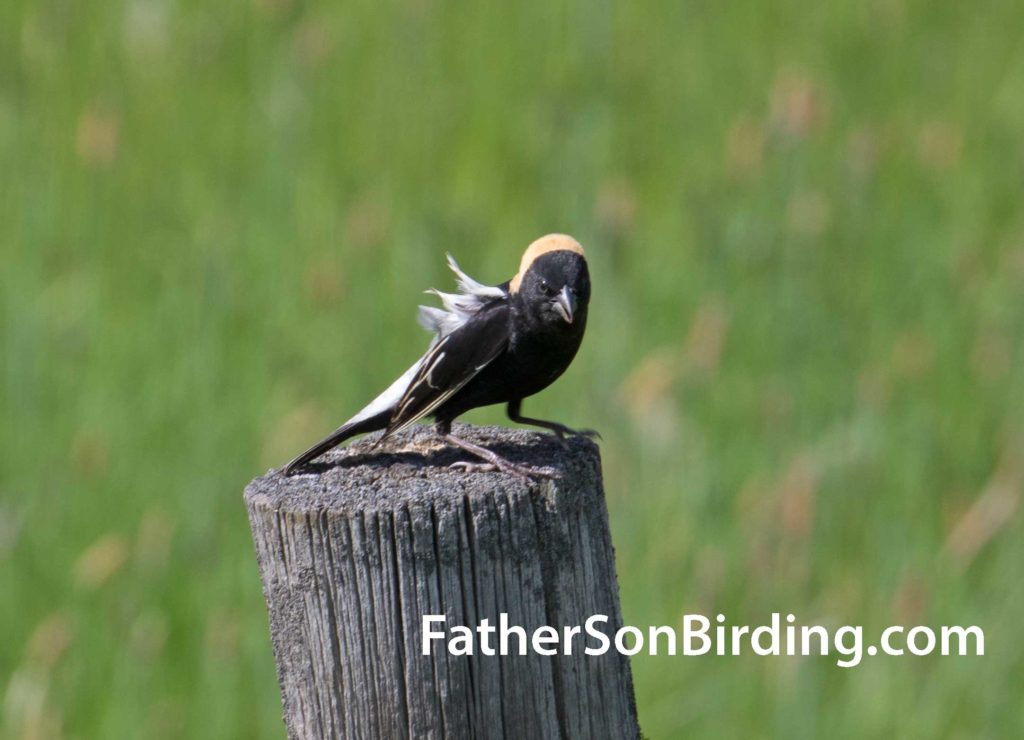
As we headed east from Havre, the ranches that had been lining the road transformed into crop farms instead; particularly irrigated fields. Red-winged Blackbirds lined the fences and gates, and I casually glanced at every one to verify its identity. Once, as we passed another one, the bird turned away from highway. The back of its head was a large patch of cream, and its back was a brilliant pattern of white.

“Bobolink!! Turn around!!” I shouted as we screamed by.

“What?! Do we have to?”

“Yes!” So we did. That Bobolink, a rare sighting for us, got us to Malta, where our intensive birding would begin.

As more prairie has been converted to farmland, Bobolinks have switched their habitat from tallgrass prairie to irrigated fields.