Tag Archives: Binoculars

Nocs Pro Issue 8X42 Waterproof Binoculars (FSB Equipment Review)

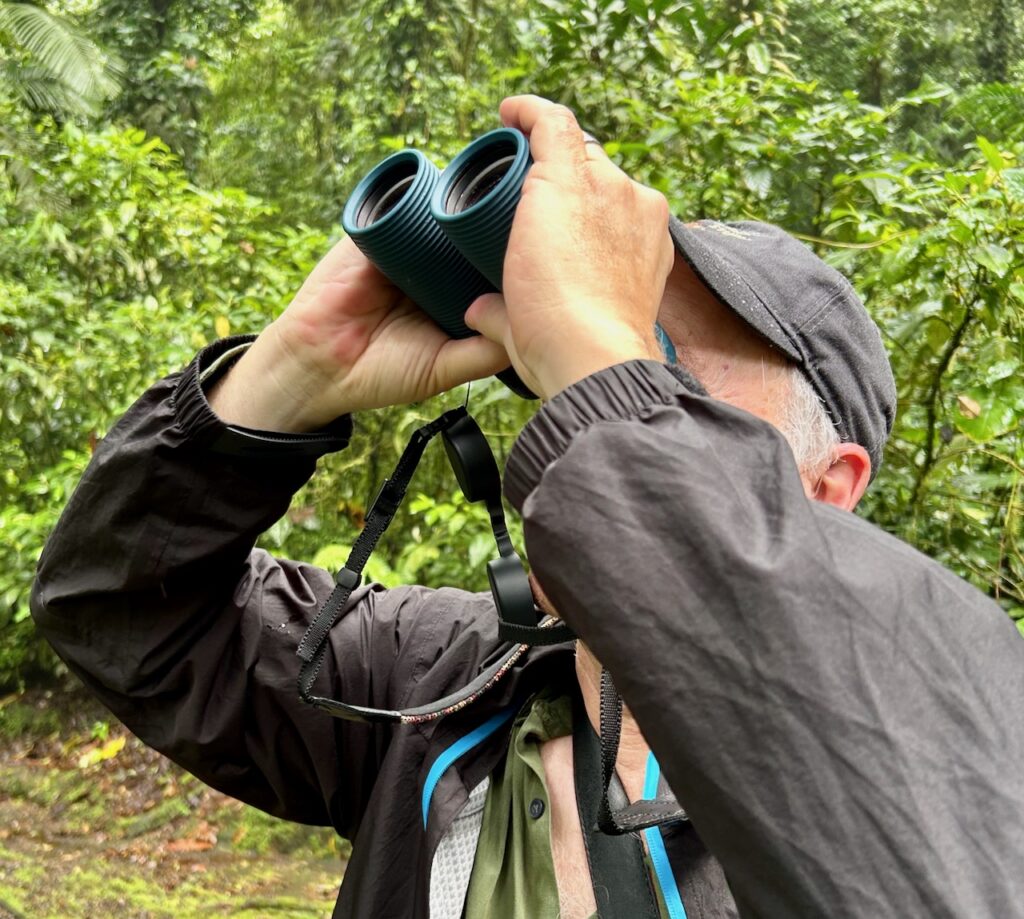
If you read our last post, you know that Braden and I recently completed an epic birding adventure to Costa Rica. One thing I didn’t mention is that, besides offering the chance to see an astonishing variety of neotropical birds, the trip gave me the opportunity to field test an exciting new piece of equipment: the Nocs Provisions Pro Issue 8X42 binoculars. And boy, did I put them to the test!
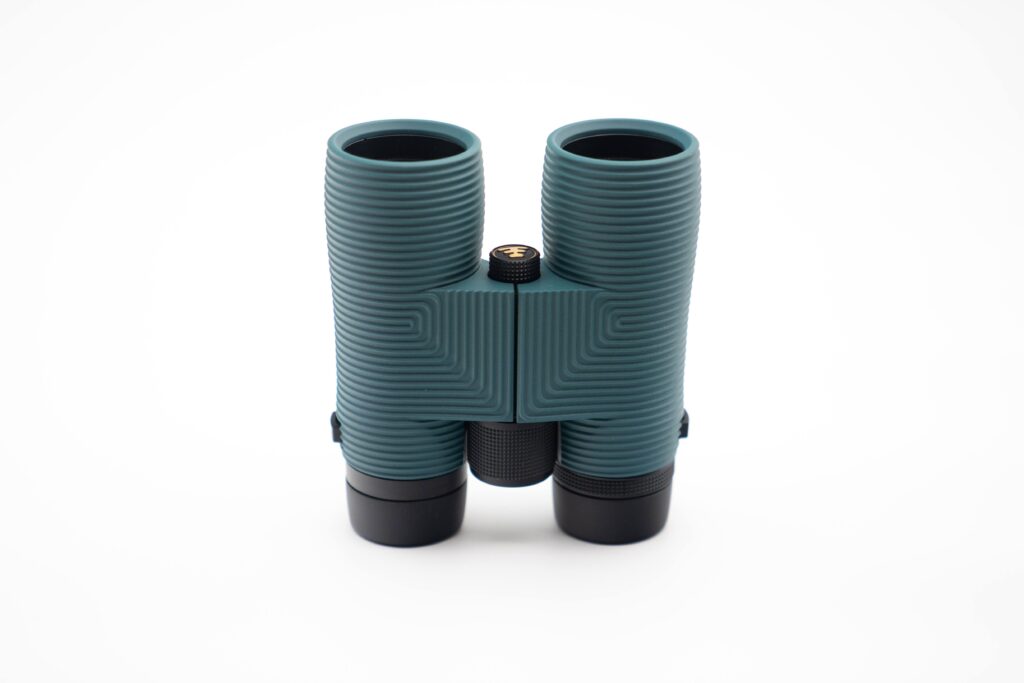
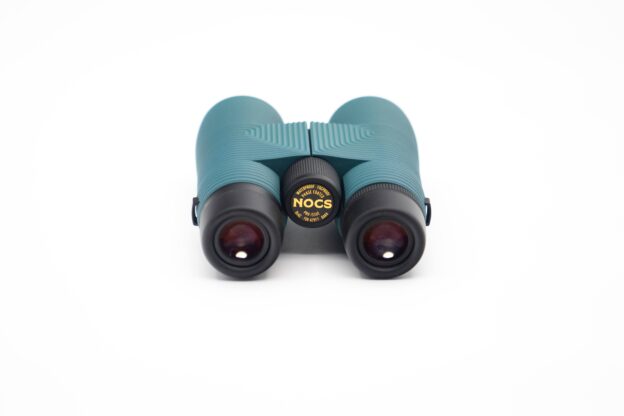
I must confess that I liked the Pro Issues right out of the box. As I explained in my recent review of the company’s Field Tube monocular, Nocs has put real thought into designing equipment that looks and feels different from the vast majority of products out there. The rubberized protective casing of my Pro Issues features a stylish ribbed design that is easy to grip, yet feels very comfortable to hold. Like the Field Tube monocular, these binoculars also have “pop in” caps for the objective lenses that are much more secure than any other design I’ve encountered.

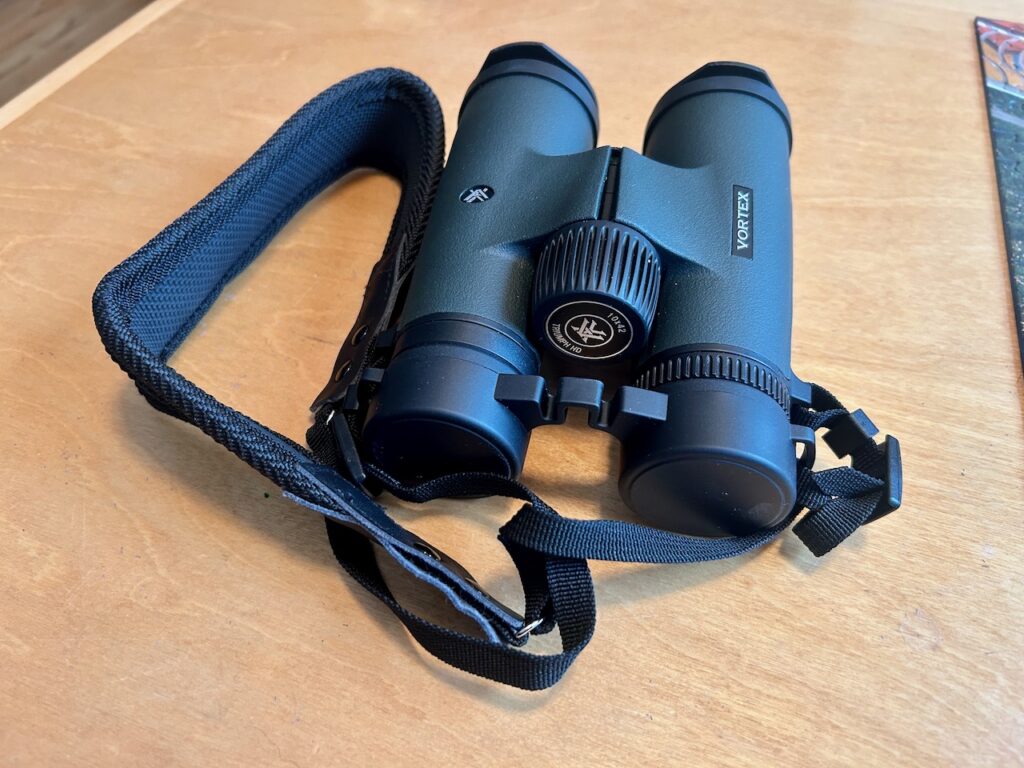
With my review sample of the Pro Issues, Nocs took the trouble to send me one of their woven tapestry neck straps, and if you purchase any Nocs binoculars, I highly recommend picking up one of these, too. Not only does the strap look way cooler than standard bino neck straps, it is more comfortable against the skin—and easier to attach to the binoculars than any other design I’ve seen. As far as the build, these binoculars couldn’t feel more solid. I fortunately didn’t drop them, but felt that if I had—or if I whacked them against a strangler fig tree—they would survive unscathed.
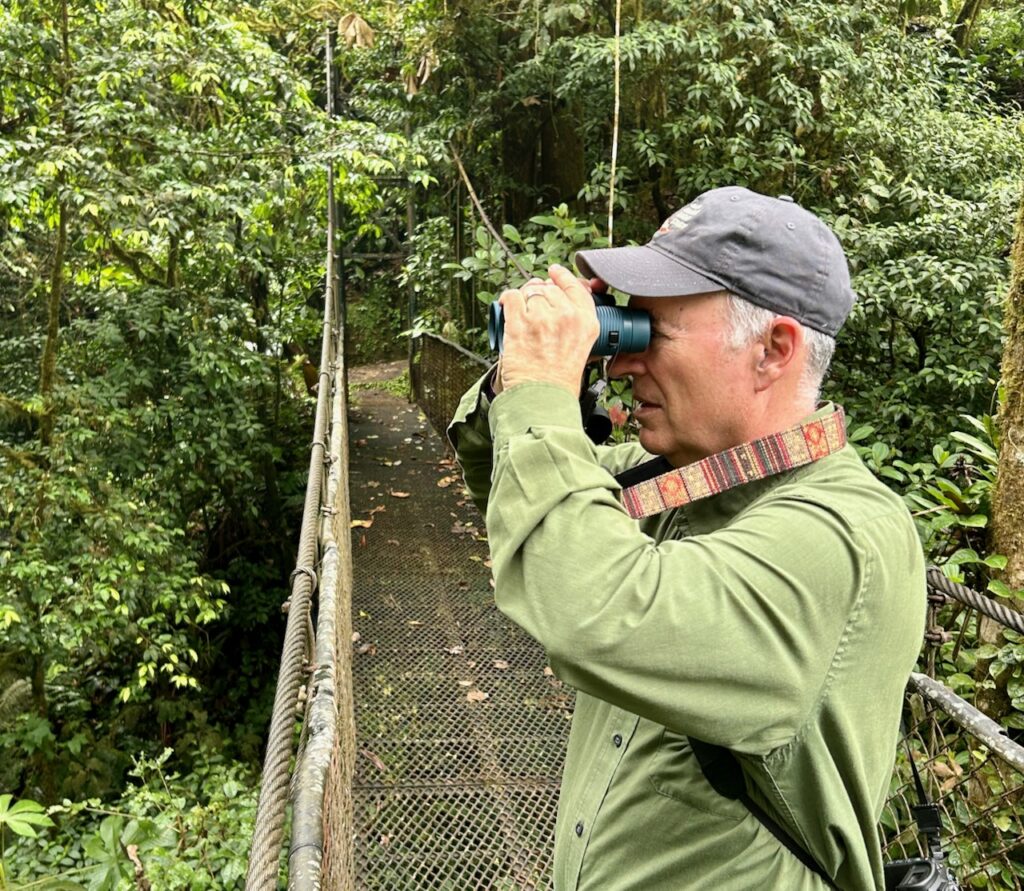
If you purchase Nocs binoculars, I highly recommend buying the woven neck strap, which is both easy to attach and very comfortable around the neck.

When I decided to take the Pro Issues to the tropics, I realized that waterproofing would be important—but I didn’t realize how important! For about half of our trip, Braden and I endured one of the wettest “dry seasons” on record. I mean, we got dumped on—to the point where, several times, we just stood under a tree and tried to will the rain to stop. Not only did the Pro Issues take on this full exposure without allowing water to penetrate the casing, the binoculars didn’t fog up even in the worst conditions.

As you can see, the rain on our trip showed no mercy—but the Pro Issues survived these tough conditions better than either Braden or I!

I should mention that one smart thing Nocs has done with their optics is to recess the objective lenses deep inside the tubes. This means that as they hang from your neck, rain won’t land on or “creep around” to the lenses—avoiding a potential constant hassle. One thing I do hope Nocs incorporates into future products is a “faster” focusing knob, requiring fewer revolutions to go from very close to very far focus. This would make it easier to zoom in on fast-moving birds.
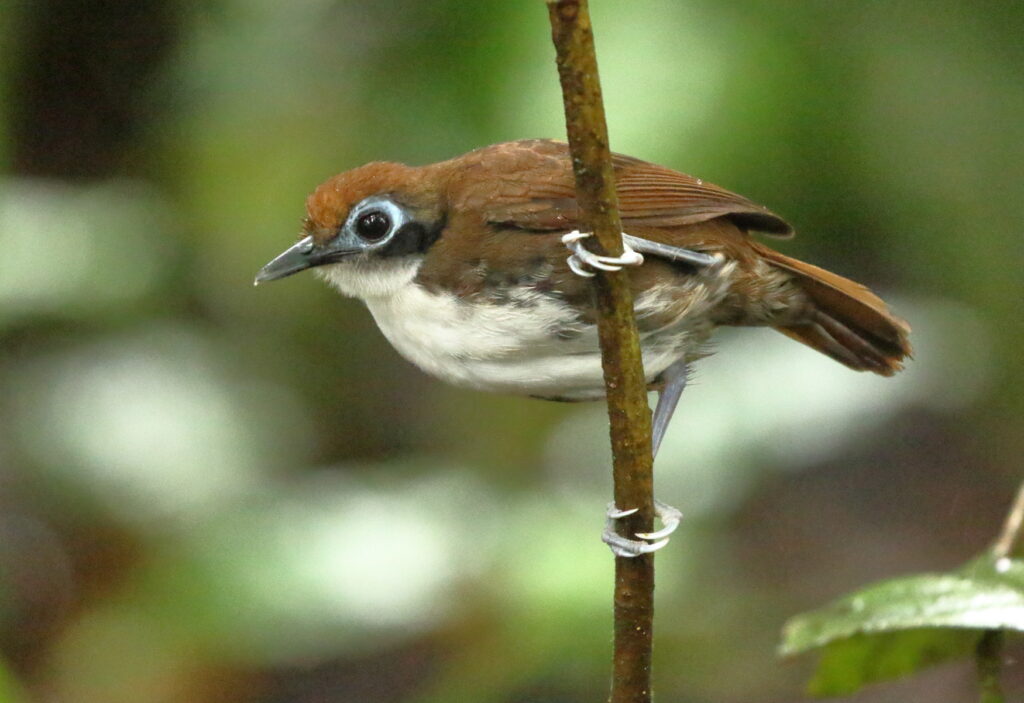
Even in the rainiest conditions, my Pro Issues stayed tightly sealed and did not fog—allowing me to fully enjoy marvelous birds such as this Bicolored Antbird (teaser for our next post!).

Of course none of the above matters without good quality optics, and the Pro Issues definitely hold their own against other equipment in a similar $300 price range. Nocs uses BaK-4 prisms, a higher quality prism that ensures even, full-spectrum light transmission. Like other quality companies, Nocs uses coated, scratch-resistant glass. The result? In bright to medium-low light, I got nice crisp, well-lit, full color looks at birds, even from a good distance. Taking 8X42 instead of 10X42 binoculars proved a good choice for in-close rainforest conditions by giving me a wider field of view and more light, and I rarely missed the extra 2X magnification of 10X42s.

As every birder knows, however, things do get tough in very dark, overcast rainforest understory conditions, challenging the abilities of almost any optics. In my equipment testing, finding binoculars that will “see through” the darkest most abysmal conditions—or the most awful gray backlit situations—requires a price jump up into the $1,000 range, not something most birders can afford. (See, for instance, this review and this one). That said, for $299.95 the Pro Issues offer solid, competitive value while boasting some additional advantages . . .
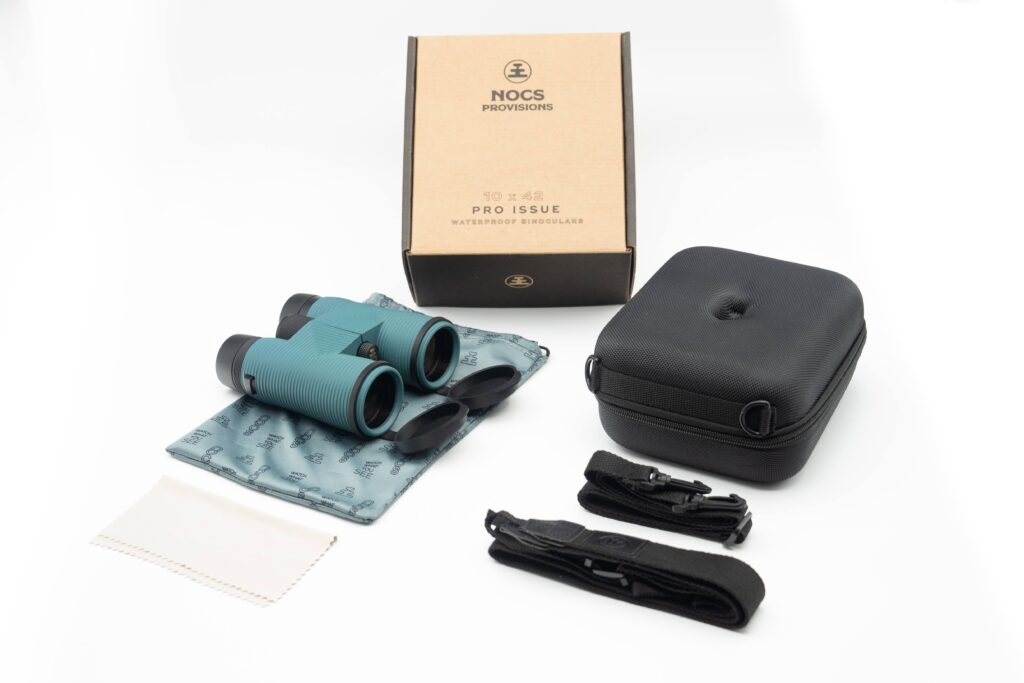
Nocs is committed to operating sustainably and that includes avoiding plastic packaging. Note, I especially like the cloth carrying bags (left, under the binoculars) that come with their equipment. While offering less protection than hardshell cases, the bags are much less bulky, saving precious space when traveling.

In an age when many corporations throw their weight around with little regard to the environment and social justice, Nocs offers a refreshingly positive set of values for the ethically responsible birder. The company is a member of 1% for the Planet, donating 1% of its revenue to supporting environmental organizations. It is also certified as climate neutral and is fully committed to sustainable packaging. In fact, I haven’t found a single piece of plastic packaging on any of the Nocs products I’ve received. The quality of its products also ensures that they will last long into the future, reducing the need for buying—and discarding—cheaply made equipment over and over. If your Nocs product should somehow break or fail, the company offers its “No-Matter-What Lifetime Warranty.”
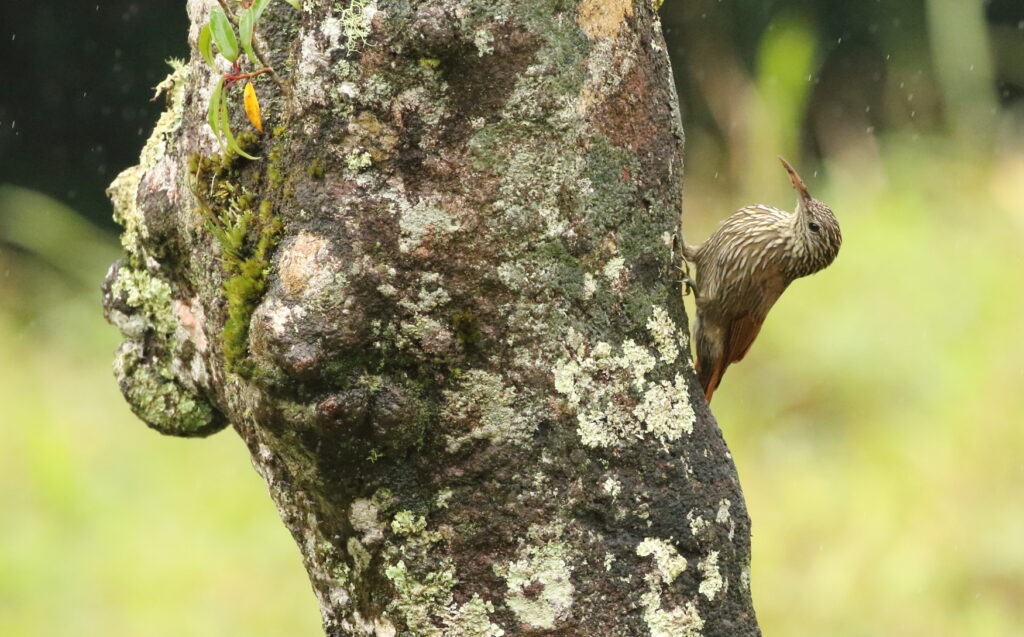
All of this makes me give the Pro Issues a big thumbs up. If you’re still not convinced, I should mention that the 8X42 Pro Issues come in Ponderosa (green), Oxblood Maroon, and Marianas (blue) colors. That will ensure that in addition to having a great set of binoculars to accompany you on your birding adventures, you will be the most stylish birder anywhere in sight!

The author received no financial compensation for this review.

Binoculars & Scopes for the Happy Holiday Birder (FSB Shopping Guide, Part 1)

Today, Braden and I celebrate our 250th blog post! We can hardly believe it ourselves, but it just shows what can happen when the passion of birds and birding infuses your souls. We also celebrate our first year of mixing things up by adding book and equipment reviews. Ahead of the holiday buying season, in fact, we’d like to recap some of our favorite items for that “Bird Nerd” in your life—or maybe even for yourself. If you’re tired of buying stuff, we also include some of our favorite groups working to protect birds around the globe. In Part 1 of this three-part effort, we run down great binoculars and spotting scopes. In our next two posts, we’ll talk about some of our favorite bird books and bird conservation groups. As always, we thank you for your interest and urge you to share these posts with your friends and family—especially if you want them to buy you something!

Serious about upgrading your birding optics? Read on!

As 2025 draws to a close, we don’t claim to have tested every brand and model of optics out there, but have been fortunate to put products from both Nikon and Vortex through the paces. We gotta say that if you’re in need of great optics at reasonable prices and with amazing warranties, you won’t do better than these two brands. Nikon products tend to sell close to their official list prices and can be purchased from their website here, or from third parties (see below). Vortex products, on the other hand, usually can be found at much lower prices than what they list for. To get the best price, start with your local indie sporting goods store, but if you can’t find what you want, Dick’s Sporting Goods, B&H Photo, and Land, Sea, & Sky are solid, reputable businesses we’ve had great experiences with.

Binoculars for around $100

Our most popular post of this year was our review of the Vortex Triumph HD 10X42 binoculars, and for good reason. Not only do the Triumphs offer excellent quality at an amazing price, they come with Vortex’s mind-boggling no-questions-asked replacement and repair warranty, something I still can’t believe even exists! One downside to the Triumph HDs is that their minimum focal length is a fairly long 16 feet. Then again, I only need a closer focus than that once or twice a year, so a casual or beginning birder will hardly be affected. See our full review here.

Vortex Triumph HDs offer excellent value for most beginning birders and, like other Vortex products, come with a lifetime no-questions-asked warranty.

Especially if small and lightweight is your goal—or if you’re buying binoculars for the kid in your life—you will also want to consider the new Vortex Bantam HD 6.5X32. Though aimed at kids, these lightweight little gems are fantastic for travel, backpacking trips, or people with sore backs. I loaned a pair to my brother and he didn’t want to give them back! Even more amazing, they can purchased for about $70—a sizzling deal at a time when many of us have to cut back on spending. See our full review here.

Binoculars for about $300

The first serious binoculars Braden and I ever bought were Nikon 10X42 Monarch M5s—and Braden still uses them today! How can that be, you ask? Well, not only are the Monarch M5s solid, well-built binoculars with sharp, clear optics, Nikon offers great repair and replacement policies. Braden has sent his in twice for repair—and received brand-new replacements free of charge. You can’t beat that. For $300, these are an excellent investment for those on a budget, but still wanting binoculars that are up for almost any birding situation.

Braden and I both relied on our Nikon Monarch M5s for the first eight years of our birding. They are still Braden’s go-to optics!

“Best Bang” Binoculars for about $500

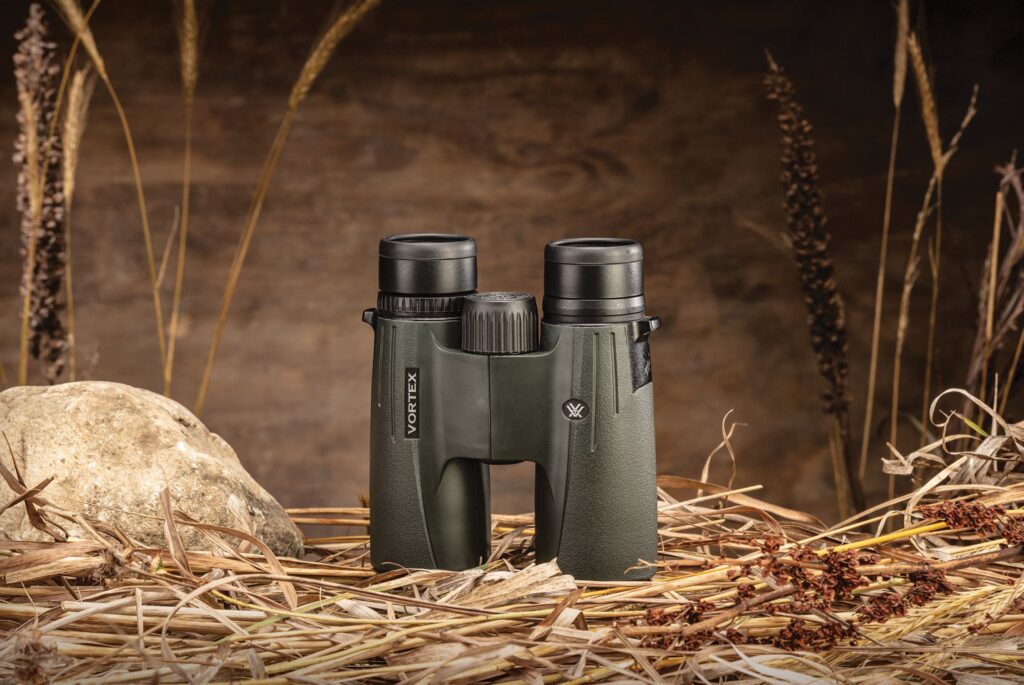
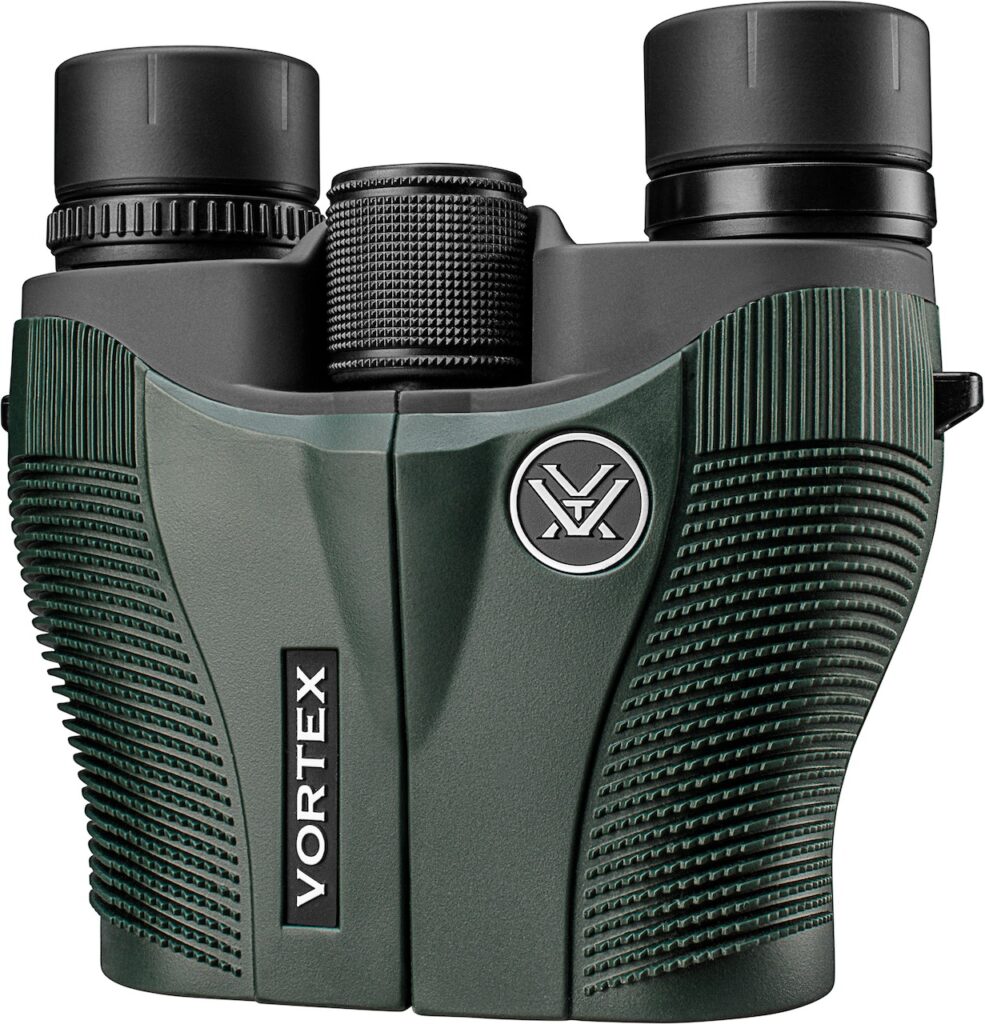
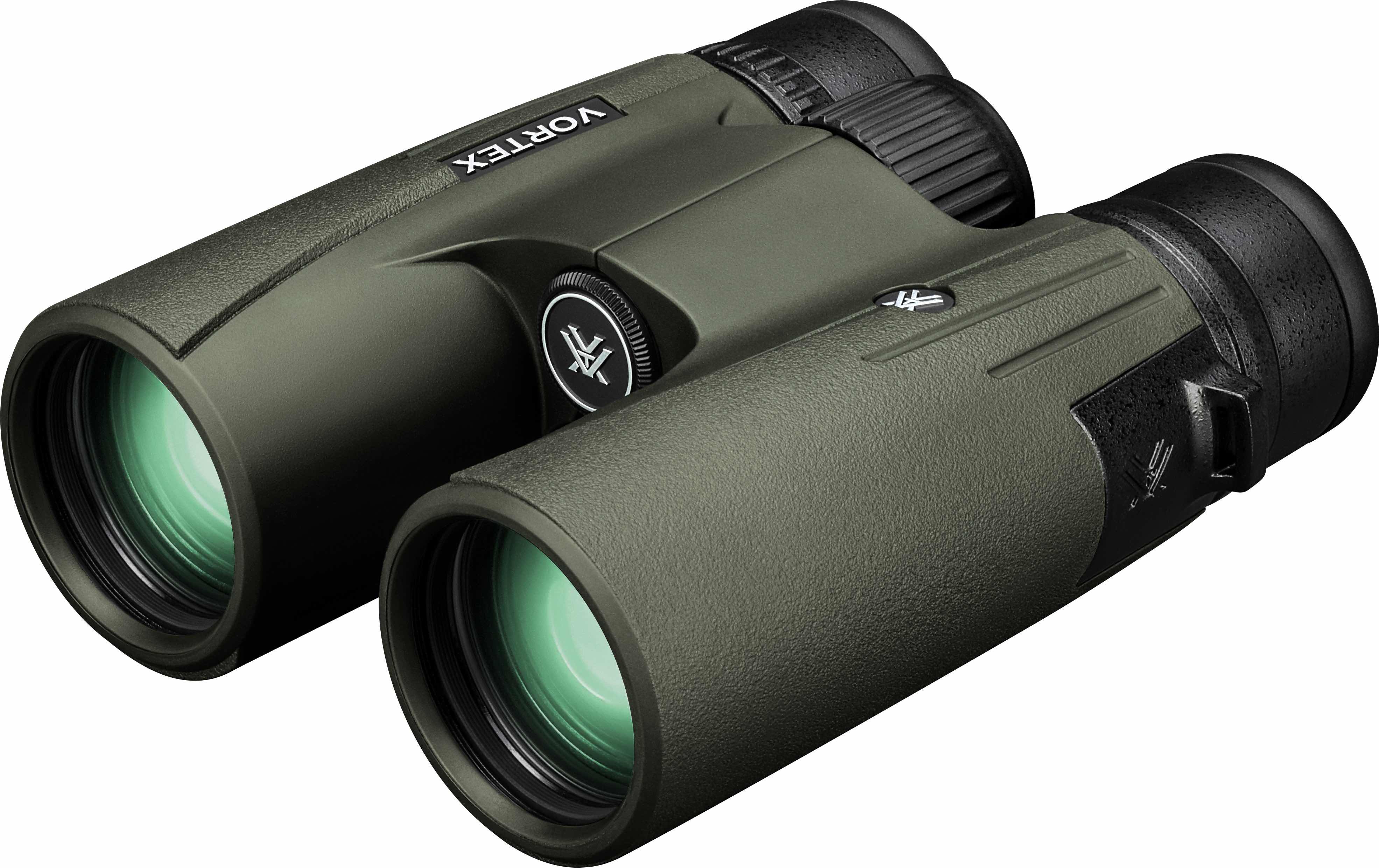
If you’re willing to shell out just a bit more, I was especially impressed with Vortex Viper HD binoculars. In fact, I’ll go so far as to say that these may deliver the best bang for your buck available. During my trip to Texas last spring, they performed extremely well in a variety of conditions. Our guest contributor Roger Kohn and his wife Claudia also use these and are very happy with them. See our full review here.

After testing products across the Vortex line, I have to say that I think Vipers deliver the biggest bang for your birding buck!

Gasp! Shelling out a Grand!

I’ll admit it: I never thought I’d be using $1,000 binoculars, but boy am I glad that I do! Especially if you bird a lot in dark, overcast conditions—or even in shockingly bright ones—stepping up the quality can really make a difference. My top pick in this price range? Nikon Monarch HG 10X42s. I took these on last winter’s trip to Colombia and was uber-impressed. My very first morning, I saw a woodpecker fly into a dark, overhanging branch of a tree at least two or three hundred yards away. I thought “No way will I be able to ID that.” When I raised my Monarch HGs to look, though, I was astonished to be able to recognize it as one of the birds I especially wanted to see: a Crimson-mantled Woodpecker! See our full review here. I must add that because these were the first binoculars I reviewed this year, I didn’t realize just how good the optics are, so if you have the cash, you will not regret getting these.

Also in this price range, you will want to check out the Vortex Razor HDs, also priced at about $1,000. I have been using the Razors extensively since last spring and have been very happy with them. I especially love the extra-smooth center focus knob. See our full review here.

Me and my birding amigo Roger in Colombia last February, where my Nikon Monarch HGs delivered superior performance! Meanwhile, Roger is shown happily birding with his trusty Vortex Vipers.

Ready for a Spotting Scope? Sure You Are!

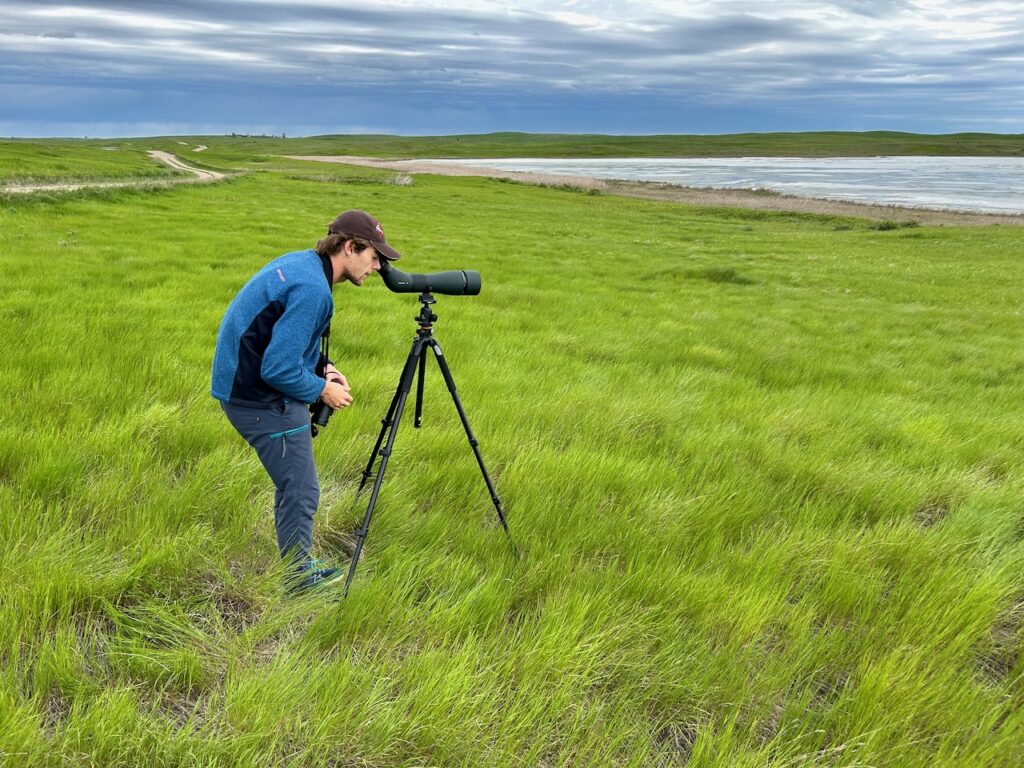
When we first started birding, Braden and I resisted getting a spotting scope because they seemed like such a pain to shlep around. Within a couple of years, we realized that scopes are essential birding equipment. Many, many manufacturers make and sell spotting scopes, but I’ll tell you, this is a purchase you will want to stretch for. We bought a cheaper scope in the $300 range—and are sorry we did. A couple years later, we sprung for a Vortex Viper HD 20-60X85, and love it. I just looked these up at B&H Photo and it looks like they can be had for about $700—a screaming deal. Don’t forget, though, that you also need a tripod to go with that scope. If you can afford it, I recommend buying a Vortex tripod to go with your Vortex scope, so that you won’t have to keep messing with a tripod adapter, which will invariably come loose as you are lugging your scope around.

Braden zeroing in on a rare Piping Plover in eastern Montana using our beloved Vortex Viper HD 20-60X85 spotting scope.

The above scope is definitely a “car model,” meaning it’s heavy enough that you won’t want to carry it more than a couple hundred yards. Last summer, though, I also tested a Vortex Razor HD 13-39X56 spotting scope with Mountain Pass tripod. At a total weight under five pounds, this lightweight combo is perfect for taking on planes in your backpack or even heading out into the wilderness if you’ve got to have a spotting scope with you. Just checking different outlets, it looks like the scope/tripod combo can be had for about $1,000 right now. It won’t pack the magnification of the bigger scope mentioned above, but it’s a great trade-off for those of us who travel a lot. In fact, I didn’t want to send my evaluation scope back to Vortex and am considering buying one for my own holiday gift! See our full review here.

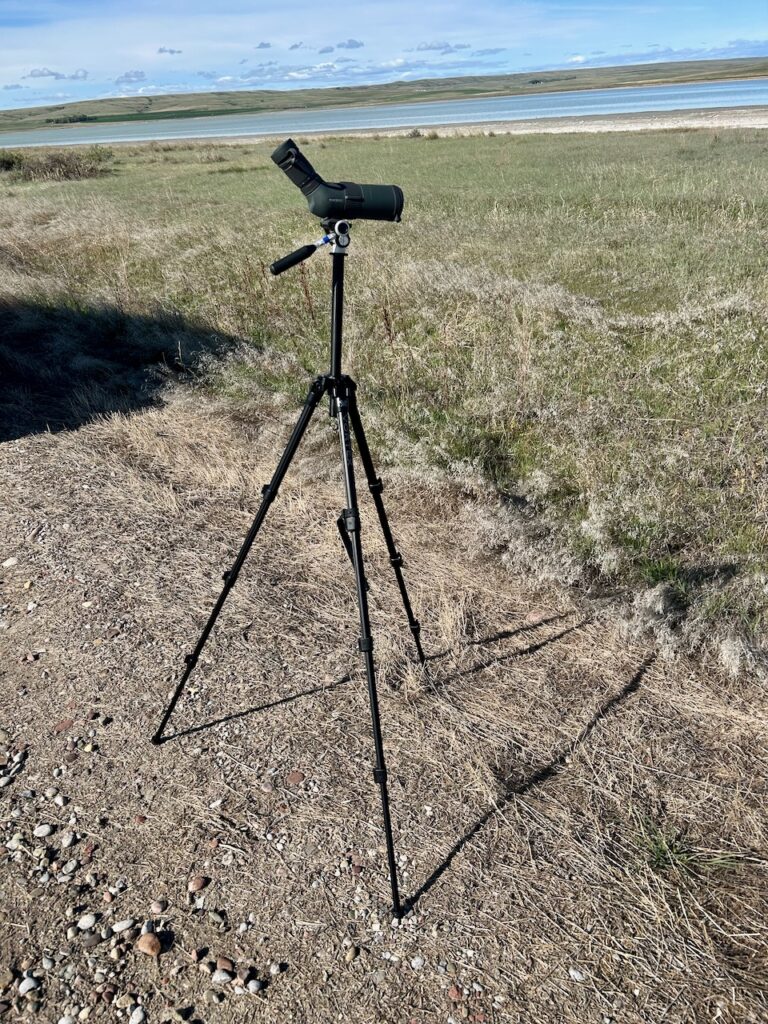
In calm conditions, the Razor HD 13-39X56 and Mountain Pass tripod perform like a dream. Because they are lighter, wind produces more shake, just as it does for all but the heaviest scope/tripod combinations, but a convenient hook allows you to hang a stabilizing weight from the tripod.

Vortex Razor HD 10X42s: Holiday Optics Upgrade (FSB Equipment Review)

All photos and text on FatherSonBirding.com are strictly protected under copyright law. To request permission for use, contact Sneed at sbcollardiii@gmail.com. We encourage you to share these posts, but you DO NOT have permission to use these posts to train Artificial Intelligence models or make other use of them without our okay.

One of the highlights of my 2025 has been the opportunity to field test various bird-related equipment, especially binoculars and scopes from Vortex. In fact, our review of the Vortex Triumph HD 10X42 binoculars nabbed top spot among our most popular posts for the year, narrowly beating out our review of the Nikon Monarch HGs. And speaking of the Monarch HGs, this week I am pleased to offer my thoughts on binoculars that run in the same $1,000 price range as the HGs—the Vortex Razor HD 10X42s.

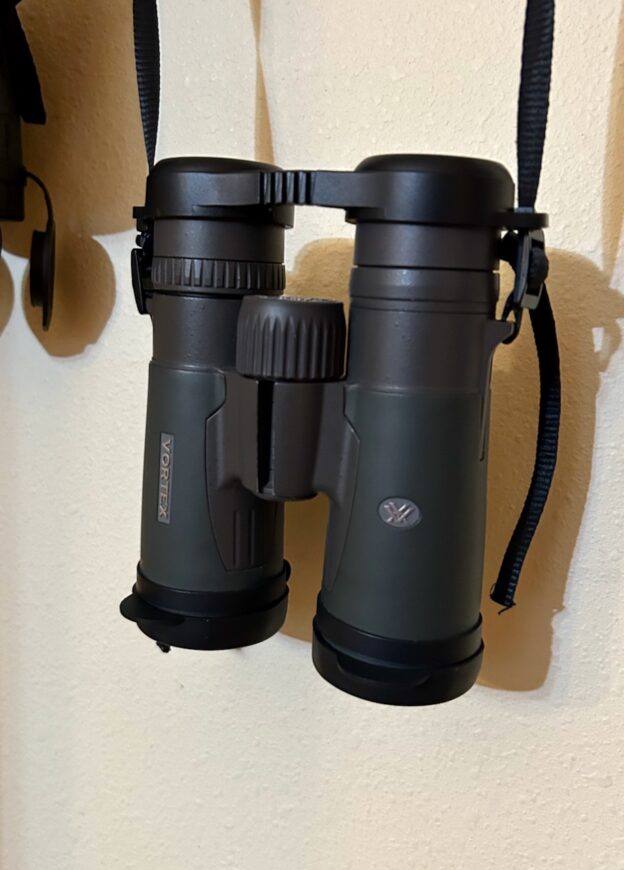
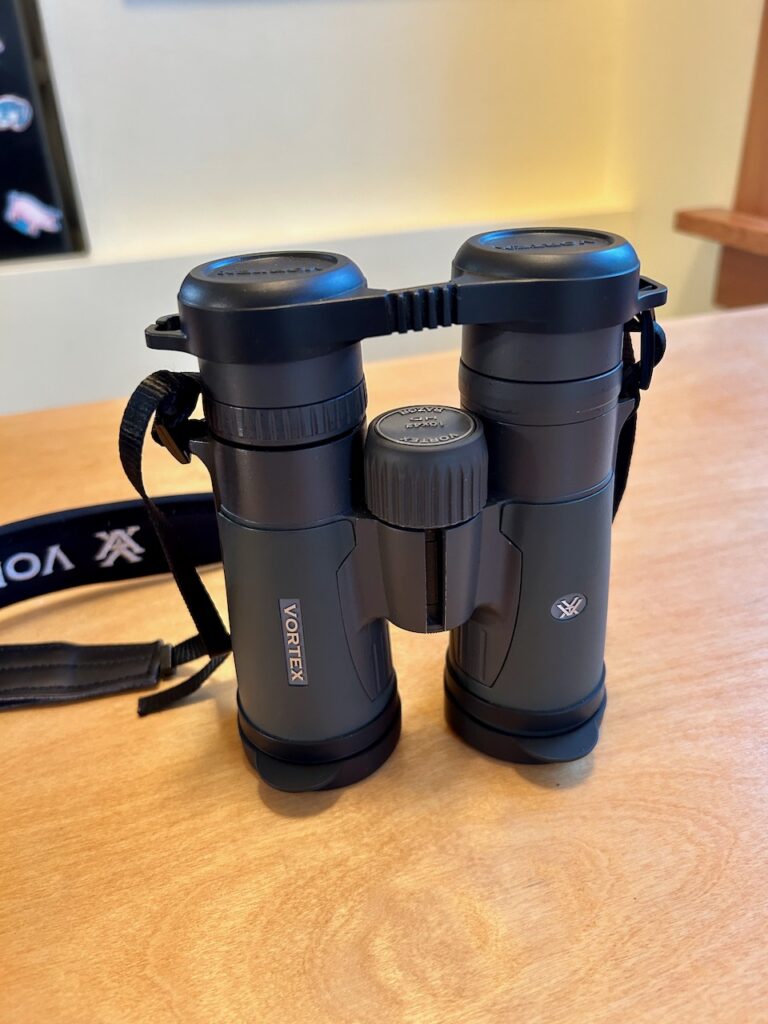
The Vortex Razor HD series of binoculars offers both superior optics and terrific build—and yet is still within reach of many (indeed, most?) serious birders.

The Vortex Razor HD series is not to be confused with the Vortex Razor UHD series—Vortex’s absolute top-of-the-line binoculars that come with price tags to boot. Maybe I’ll get a chance to review one of the UHDs sometime, but for now I am focusing on binoculars that a larger swath of typical birders can enjoy and afford—and the Razor HDs fit right in with that theme.

I’ve been using the Razor HDs for the past several months—a clue to how much I like them. Perhaps the best way to analyze them is to compare them to Vortex’s next step down, the Viper HDs, which we reviewed in this post.

Me with my buddy Scott—and my Razor HDs—during our recent outing to Bodega Head in California.

Right off the bat, I have to say that both the Vipers and Razors offer exceptional clarity and light transmission—to the point that I would be hard-pressed to place one above the other in a blind “binocular tasting” test. I have used both models in all kinds of situations, including dark and overcast conditions, and been thrilled with the images reaching my eyes. According to the Vortex website and my Vortex rep, however, the Razor HDs use a superior, tougher coating that provides better clarity and sharpness, and tougher protection so that the lenses are less likely to scratch.

Vortex has also gone to the trouble of using higher density glass for the Razors, as well as matching the lenses for better color matching at all wavelengths. Notably, in the Razors more of the image remains in focus at a range of 1,000 yards than is true of the Vipers. These things probably won’t be obvious to most users, but will, I predict, show up more in extreme conditions and as your own birding skills progress.

Where the differences between the Razors and Vipers really become obvious is in the build of each model. Both feel comfortable and solid to hold, but the Razor HD tubes are crafted from magnesium rather than from polymer—an upgrade you expect to find in all higher end binoculars.

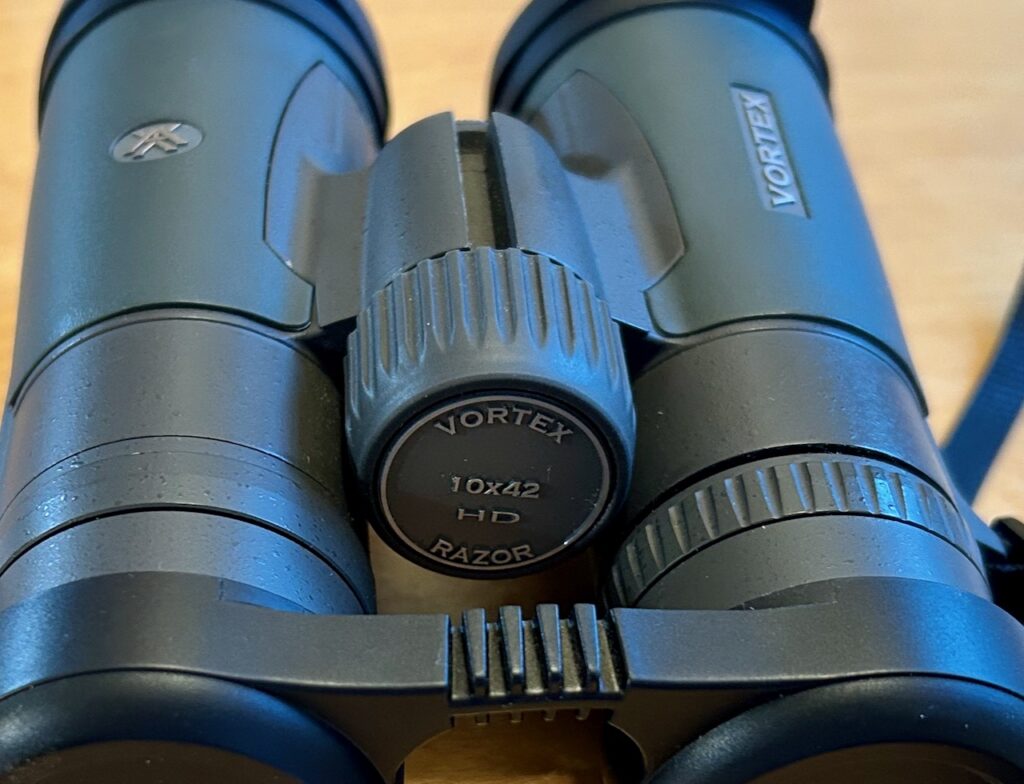
Even more impressive, the central focusing knob has much better action than you find on the less expensive models. One of my few complaints about the Viper HDs was the relative stiffness of the focusing knob, and how far you have to turn it to bring an image into focus. Vortex solves both of these problems with the Razor HDs. A single revolution of the knob takes you from a ten-foot focus to a distance of a mile or more! I can’t emphasize how awesome this is when you’re out in the field and have to switch from looking at a Lincoln’s Sparrow in front of you to a mystery raptor cruising a distant skyline. Not only that, the action is so smooth on the Razors that fine adjustments are accomplished with ease.

The smooth and functional central focusing knob is one of the features that really stands out on the Razor HDs.

Other specs on the Razors are very similar to what is found on the Vipers. The Razor HDs have a slightly wider field of view (6.9 degrees compared to 6.5 degrees) and are also .3” longer. Both weigh just under 25 ounces, light enough for most people to haul them around all day—especially if you use the Glasspak™ harness system that comes with most Vortex binoculars.

Both also have eye relief tubes, but the Viper’s are a bit longer—17 mm versus 16.5 mm on the Razors.

As you’d expect, the Razor HDs are waterproof, fogproof, and shockproof. Like the Vipers, the Razors also have locking diopter rings—the mechanism that corrects the central focusing knob for people whose vision is different in each eye.

The Vortex Razor HD series of binoculars is an excellent choice for those looking to step up the quality of their field optics—and not break the bank.

But what about price?” you are undoubtedly asking—and since I’ve been comparing the Vipers with the Razors, you’re probably wondering if paying more is worth it. While the Vipers can be purchased for under $500, the Razors take a hefty jump up to about $1,000 at the time of this writing. Oh, what to do?

Let me begin by saying that if you are used to cheaper, crummy binoculars, you’ll be delighted by either one of these models. Both are covered by the amazing Vortex lifetime, no-questions-asked warranty along with excellent customer service. If the Razors simply aren’t in your budget, the Vipers are a very nice investment in your birding activities and will last you as long as you can still bird.

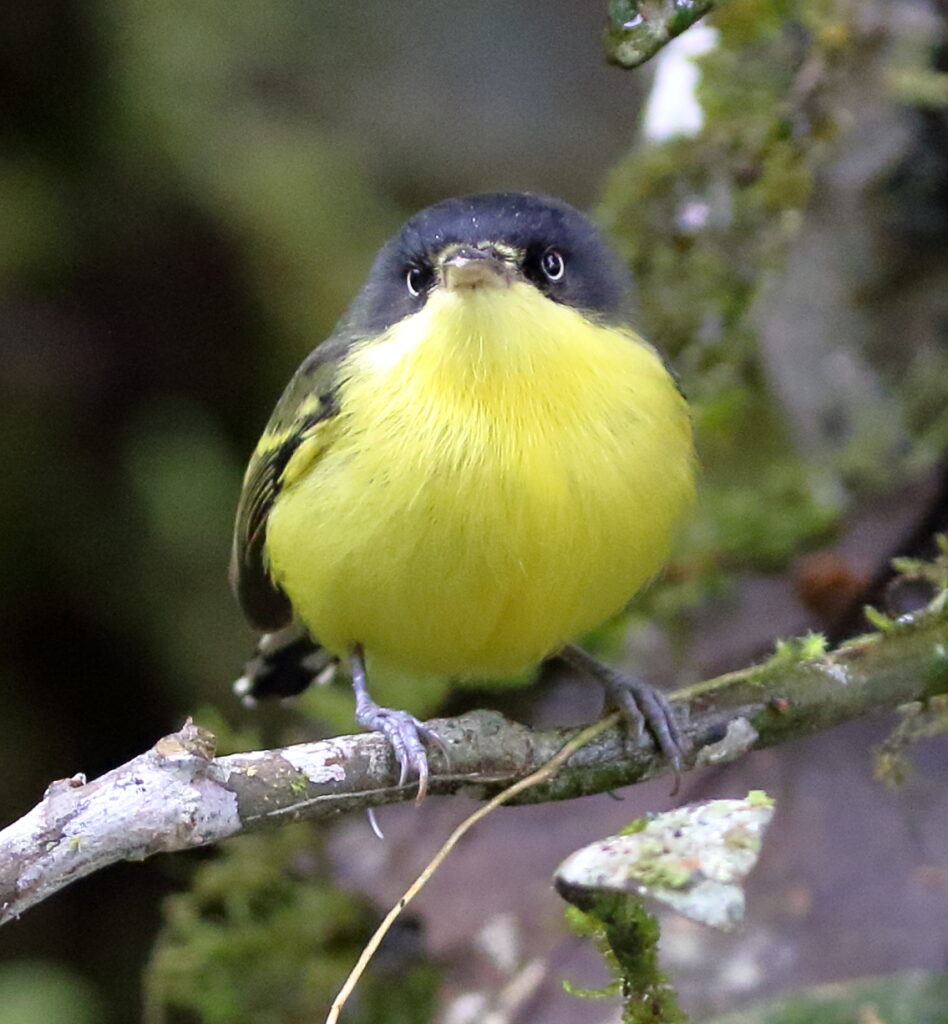
If, however, you’ve just sold some NVIDIA stock or have just benefited from recent changes to the tax code, I would definitely encourage you to opt for the Razors. Even if you’re not wealthy, but want to make sure you get the most pleasure out of your future birding, the Razors make a solid one-time investment that will last a lifetime. $500 extra sounds like a lot—and it is to most of us—but if you’re serious about birding, you will most likely forget about the price difference the first time you focus in on a Common Tody-Flycatcher in the mountains of Colombia, or perhaps even an Evening Grosbeak in the backyard.

So there you have it—and with Christmas coming up to boot. What a coincidence! Or . . . was it?

For more information on the Vortex Razor HDs including where to buy them, click here!

Seeing your first Common Tody-Flycatcher in the mountains of Colombia will likely make you forget any higher price you paid for your Vortex Razor HDs.

Vortex Bantam HD 6.5X32s: Binocs for Kids and Travelers (FSB Equipment Review)

Recently, my brother joined us to celebrate our youngest child’s graduation from high school. We had some extra time, so naturally we went to look for birds, an activity he has steadily been getting more interested in. He didn’t bring binoculars, so I loaned him a pair of Vortex Bantam HDs I have been testing out. The problem? When he departed, he didn’t want to give them back!

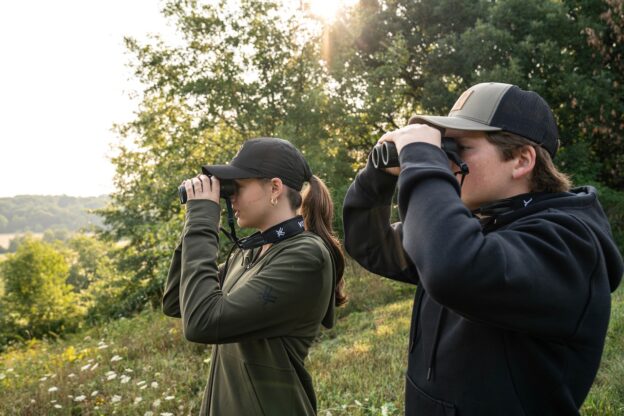
Although created and marketed for kids, the Bantam HD has terrific selling points for adults as well. But let’s start with the kids. Quite a few companies have been selling binoculars for kids lately, and that’s a no-brainer. As more and more adults get into birding, they naturally encourage their children to enjoy the activity, too. But most adult binoculars are too heavy and sometimes too complicated to use for the average kid, so it makes sense to seek out optics specifically designed for young people.

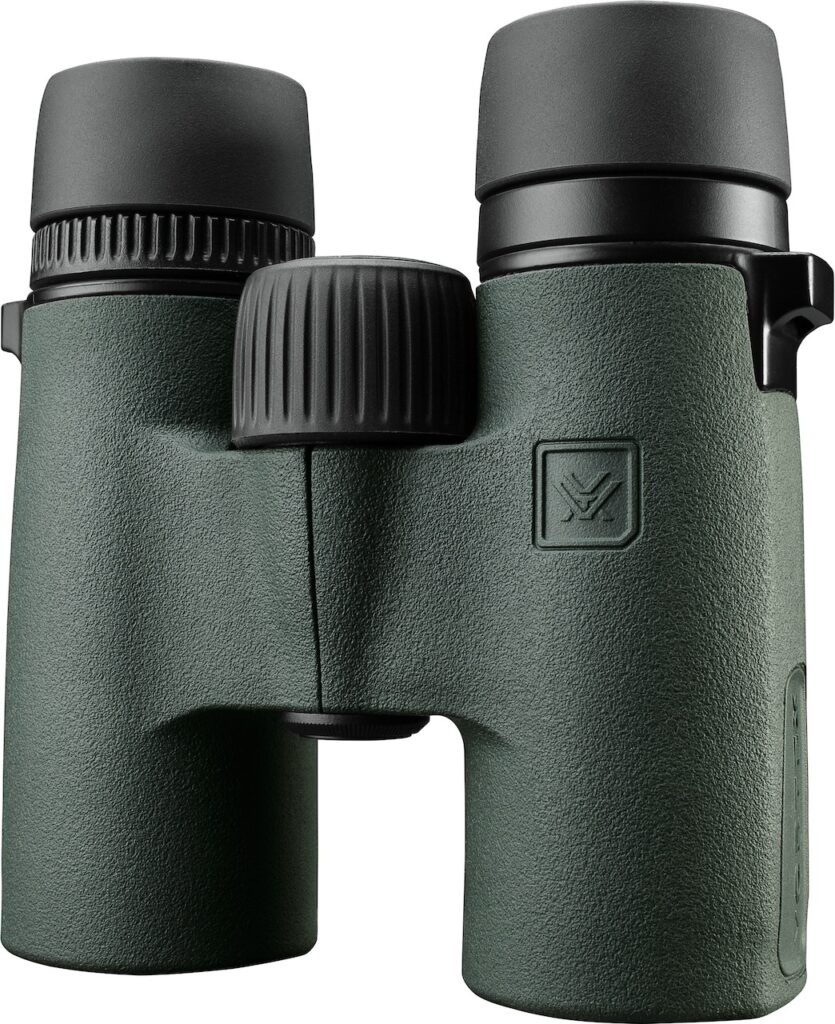
The Bantam HDs are lightweight, easy to use, and offer excellent light transmission and sharpness.

Unfortunately, many “kid binoculars” look and feel cheap—and often break almost immediately. Others come with high price tags (think $500 or more). I don’t know about you, but as a parent I can think of better places to put those extra few hundred bucks—at least until your child has shown an unquenchable passion for birds. And that’s where the Bantam’s first big selling point comes in: it can be purchased for only about $70.

More important, Bantams feel like real binoculars in your hands. They have sturdy construction, a comfortable grip, long eye-relief tubes for those with glasses, and a diopter ring to accommodate different vision between eyes. Oh, and did I mention they are waterproof, fogproof, and shockproof? Beyond all this, the clarity of the image they present is impressive. I hate to say this, but I found the focal sharpness to be better than the more expensive Triumphs we reviewed earlier in the year (see our review).

Though marketed for kids, the Bantams are an excellent choice for travelers as well.

The Bantam HDs do come with some trade-offs. While the optics are excellent, the rating 6.5X32 means that the magnification (6.5 power) is not as great as you find on most adult binoculars (including the Triumphs mentioned above). Also, minimum focal distance is a fairly lengthy 12 feet. This won’t be an issue for most users, but could come into play when looking at butterflies or other insects—or just screwing around, which of course most kids are wont to do when having a cool new toy in their hands. However, the Bantam HD’s light weight and ease-of-use more than compensate for these disadvantages.

Oh yeah, the weight, you may be thinking. I haven’t mentioned that yet, but here it is: these binoculars weigh a mere 14.4 ounces—less than a pound. In other words, they are light enough for almost all kids to carry them around for hours without complaint. And that means that they also are mighty attractive to adults as well.

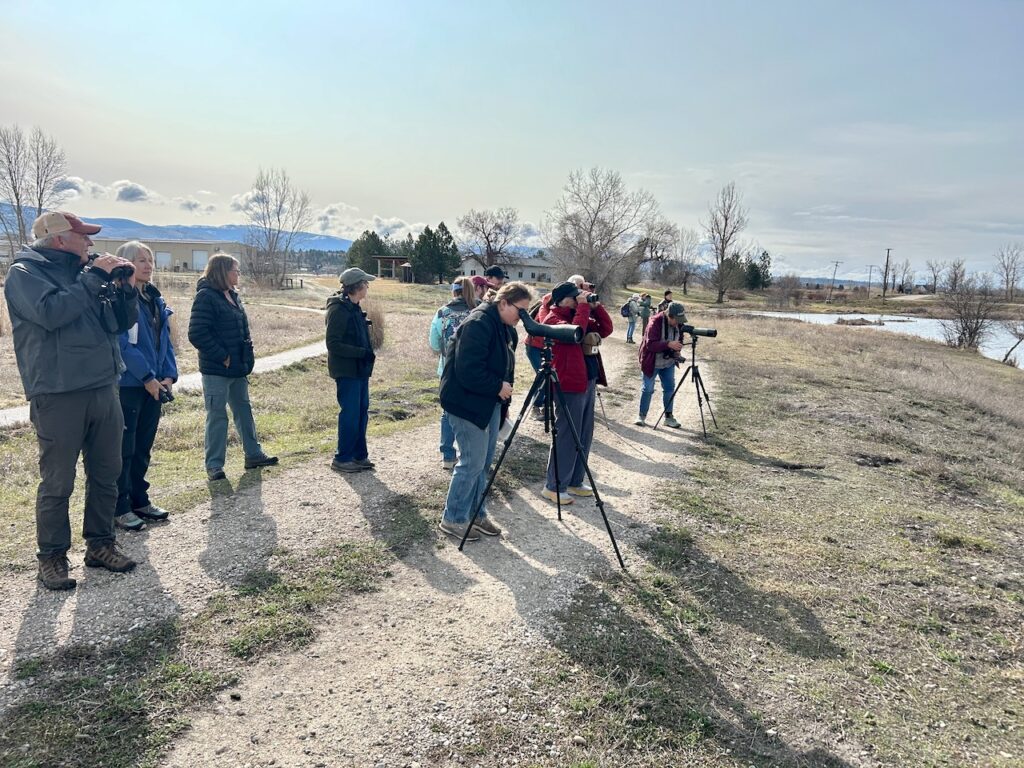
On several recent birding trips that I led, I let adults use my pair of Bantams. The coordinator from our local natural history center immediately ordered half a dozen pairs!

In fact, almost everything about the Bantam HDs screams TRAVEL BINOCULARS! Even if you’re not going on a dedicated birding trip, all birders understand that it is essential to take along a pair of binoculars on every adventure. But on a casual trip a regular pair of binocs, with its awkward size and weighing a couple of pounds, can make a person hesitate to stuff it into a carry-on. Years before trying out the Bantams, I bought myself a pair of Vortex Vanquish 8X26s for backpacking, travel, and to keep in our trusty minivan for “emergency birding.” They worked just fine for this—but despite their greater magnification and slightly lighter weight, I like the Bantams better. Why?

For travel, I found the Bantams to be a better choice than the more expensive Vortex Vanquish 8X26 (pictured here)—despite the greater magnification of the latter.

* The Bantam’s optics are just as good, if not better.

* Because the Bantam uses a roof prism system instead of a Porro (side-by-side) prism arrangement, I find the Bantams more comfortable to hold. According to Vortex, they also are more durable. (See this article for a comparison of roof versus Porro prism binoculars.)

* The Bantams are actually cheaper to buy.

You can probably tell that I’m unusually enthusiastic about the Bantams, and their low price makes them an almost risk-free investment—especially given that, like all Vortex products, they come with an unbelievably generous lifetime warranty. Whether you’ve got a promising young naturalist in your life or need a pair of handy travel birding binoculars, you won’t be sorry you checked these out.

Oh, and you might be wondering, Did my brother ever give my Bantams back before he left? The answer is yes—but he looked so forlorn about it I immediately ordered him his own pair!

Target Birds and a Shocking Surprise in the Texas Hill Country (Texas 2025 Part 3)

After spending two glorious birding days along the east Texas & Louisiana coasts (see “Peveto Woods, Louisiana: Spring Migration Hotspot.”), I returned to San Antonio for my four minutes—yes, you read that right—four minutes of work to promote my book Birding for Boomers. While there, I reprised my now-sort-of-famous birding route along San Antonio’s Riverwalk (see our post “Birding San Antonio’s Riverwalk—Are You Nuts?”). Once again, I found birds—but not enough to write another blog about it. As soon as I finished my speaking gig, though, I headed west into the Texas hill country. Why? To try to find two birds Braden and I had talked about our entire birding careers.

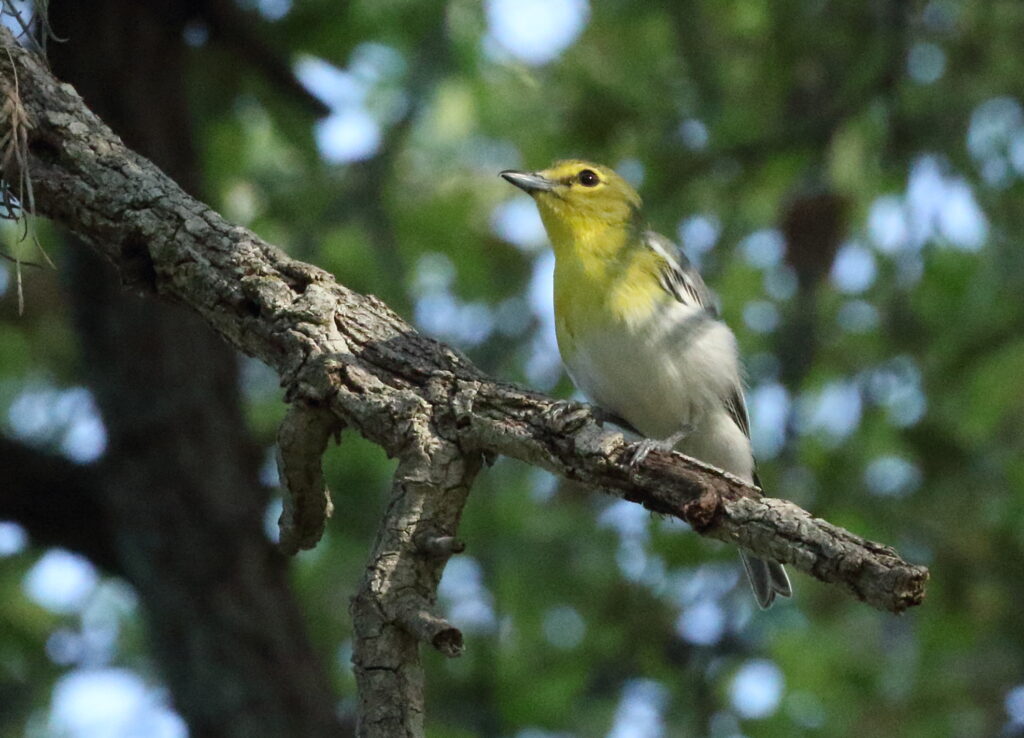
Leaving San Antonio, I drove two hours to the hot, fairly flat town of Uvalde and booked myself into a Hampton Inn. That afternoon, I picked up a few nice birds in the town’s Memorial Park including another Yellow-throated Vireo and my first—and only—Green Jay of the trip. I also grabbed an excellent Tex-Mex meal at El Herradero de Jalisco restaurant. The next morning, I hit the road before dawn.

One bonus to birding is that we birders invariably get to see spectacular sunrises and sunsets. As I headed north, I witnessed an unforgettable sizzling orange sunrise on one side of the car while an equally spectacular orange full moon set in the west. It boded well for what would be arguably the most important—and most demanding—birding day of my trip: my quest to find Black-capped Vireos and Golden-cheeked Warblers.

Anyone who has been birding for more than a couple of years has probably heard of these two Texas specialties. Of the near-threatened Black-capped Vireo, Braden simply says, “It’s the best vireo.” Quite a statement considering how cool other vireos are! The bird winters in Mexico, and its primary breeding range lies in central Texas—though it technically extends from far northern Mexico to southern Kansas. The endangered Golden-cheeked Warbler winters in Central America and far southern Mexico, but breeds exclusively in central Texas.

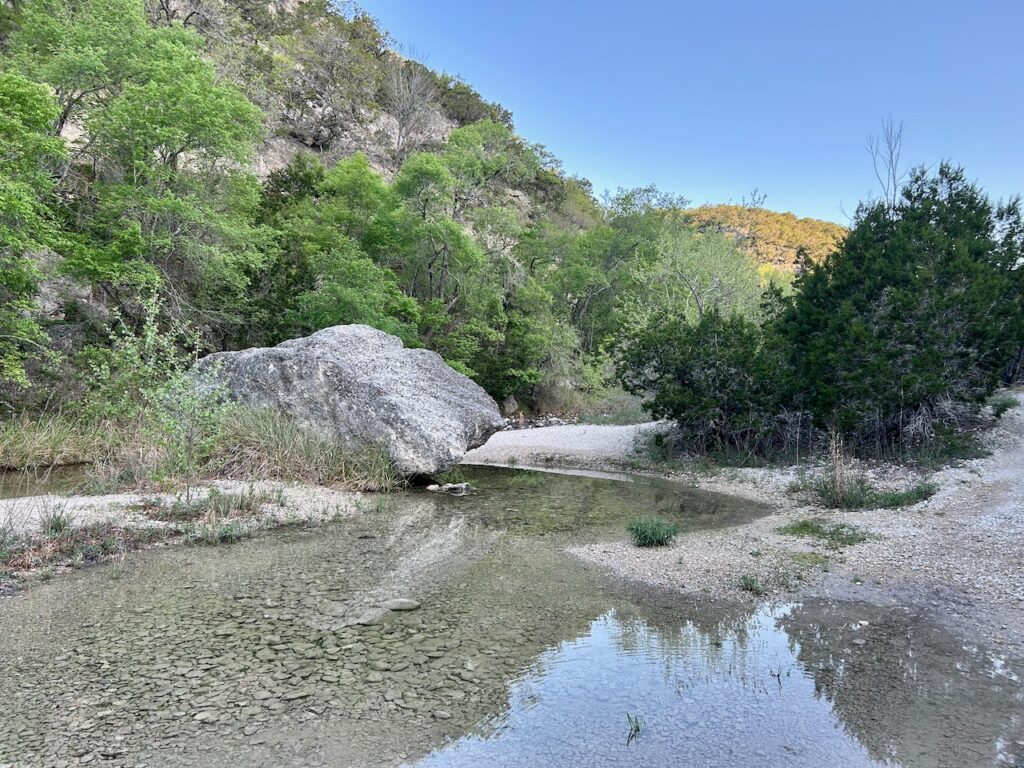
According to eBird lists, Lost Maples State Natural Area is one of the most reliable places to find both Black-capped Vireos and Golden-cheeked Warblers.

As usual, I felt a bit skeptical of my ability to find these birds. Call it psychological protection against failure. Nonetheless, I did have a plan. After scouring eBird hotspots, bar charts, and birding lists before the trip, I settled on Lost Maples State Natural Area as the most reliable location to find both species. Indeed, when I pulled into the parking lot, I met a couple who had staked out a bush where they had seen a Black-capped Vireo the previous day. “We saw Golden-cheeked Warblers in that tree about fifteen minutes ago,” the woman added, motioning to a nearby oak tree. I briefly pondered waiting around for either species, but the canyon before me beckoned and I reasoned I could hang around the parking lot later if need be.

I immediately loved Lost Maples, especially since its habitat reminded me of the chaparral and oak woodland I’d grown up with in Southern California.

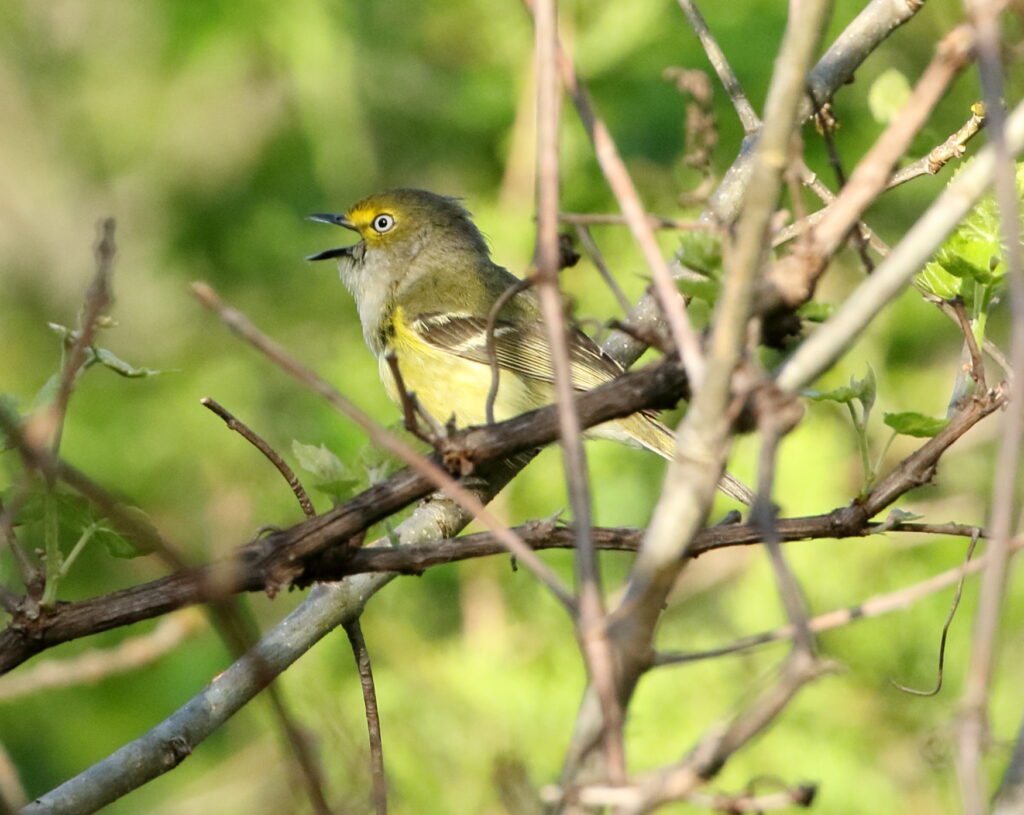
I headed up the park’s East Trail and immediately felt at home in the scenic canyon’s xeric landscape full of oaks, junipers, mesquite, and other classic Western vegetation. I also realized that I had tackled some tough birding! Birdsong rang out all around me, but I got few glimpses of actual birds. Thank god for Merlin’s Sound ID, which I ran multiple times to get an idea of what might be around me: an impressive list that included Canyon and Carolina Wrens, Olive Sparrows, Yellow-breasted Chats, and at least four (other) kinds of vireos. Finally, however, “Black-capped Vireo” popped up on Sound ID and I stopped to seriously scour the nearby vegetation. Over the next five minutes, I got a brief glimpse of a Blue-headed Vireo and good looks at a White-eyed Vireo.

I had to work hard for actual bird sightings at Lost Maples, but managed a great look at a White-eyed Vireo—one of five vireos on my checklist for the day.

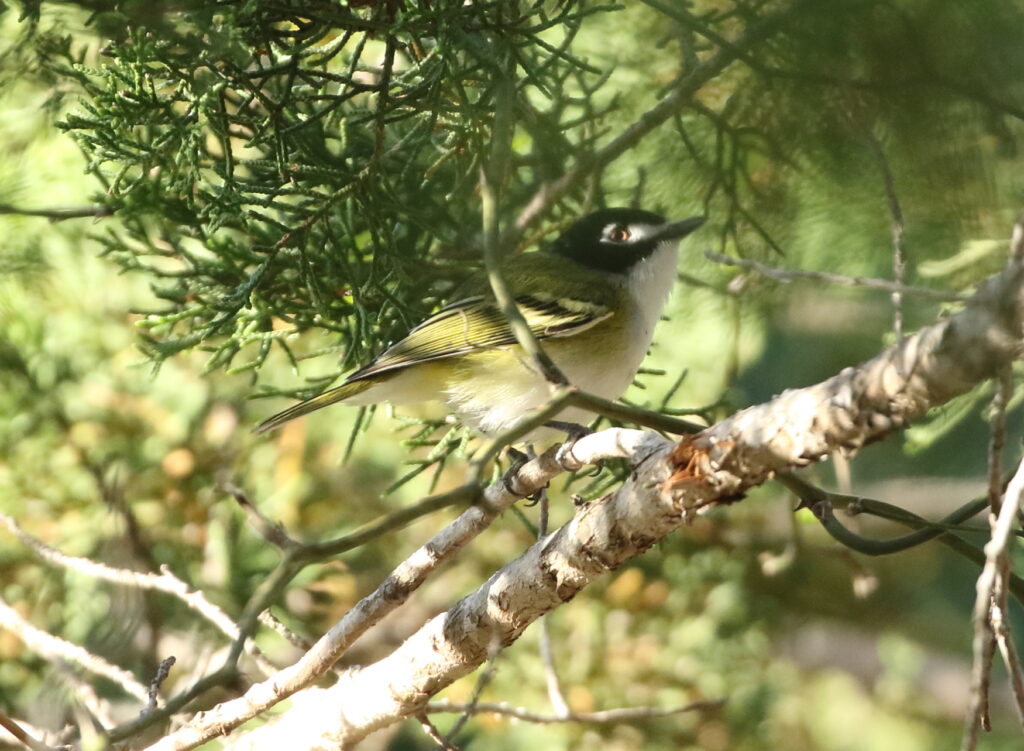
Finally, I saw the distinctive black head and white spectacles of the bird I most hoped to see: a Black-capped Vireo! Soon, I saw another. The birds definitely did not want to strike a pose and I followed them as they flitted almost frantically from bush to tree and tree to bush. I finally managed a couple of ID photos, and then just tried to relax and observe them. It was a good moment, and I felt glad I hadn’t just waited around the parking lot hoping for one to appear.

I was so glad that I hadn’t waited around the parking lot to find my Lifer Black-capped Vireos!

That left the Golden-cheeked Warbler. Sound ID had picked it up a couple of times as I hiked the canyon, but it wasn’t until I was back in the park next to my car that I began to figure out the bird’s song. With my imperfect hearing, it sounded like a high-pitched buzzing trill—a lot like an insect, but distinct from any other bird calls around me. Soon, I found myself standing for five minutes directly in front of an oak tree as a Golden-cheeked sang repeatedly.

I never saw it.

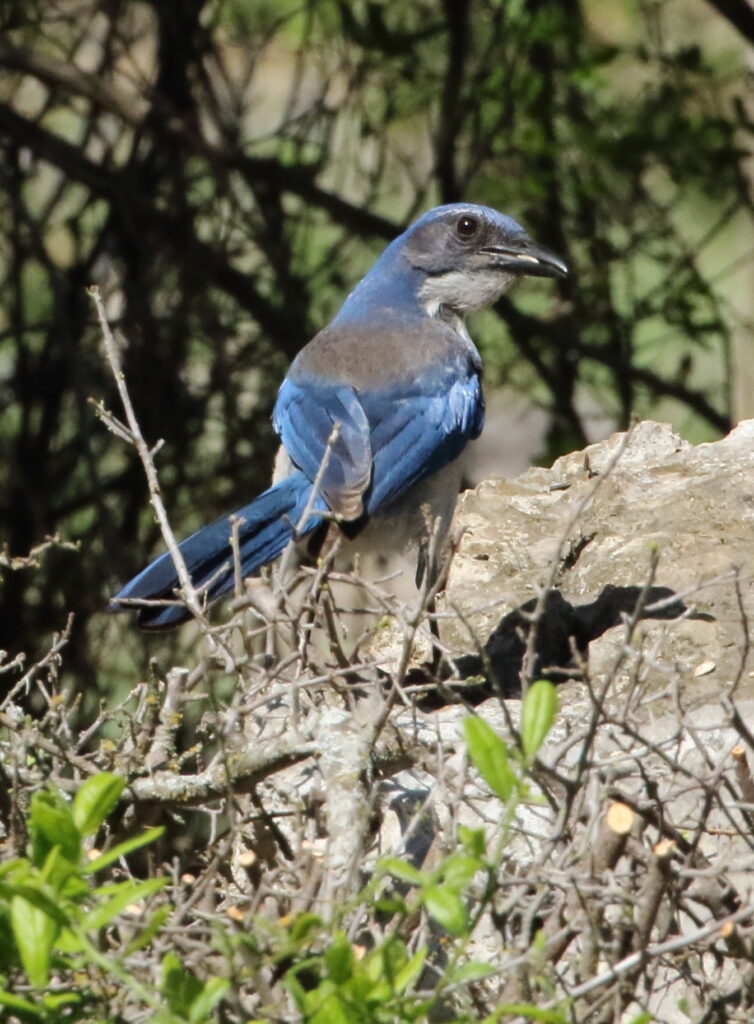
This frustrating experience repeated itself several times. I eventually added the bird to my eBird list (“Heard only”), but I was not a happy camper and I thought I might remove it later. As shy as they were, the Black-capped Vireos had been publicity hogs compared to the Golden-cheekeds! Knowing when I was beaten, I headed off to some bird feeders set up in the park about a mile away. There, I tried to console myself with leisurely views of Woodhouse’s Scrub-Jays and Scott’s Orioles. I also told the bird hostess about my lack of success actually seeing a Golden-cheeked Warbler. “Any suggestions?” I asked.

While pondering my next moves, I spent a pleasant half-hour watching Woodhouse’s Scrub-Jays and Scott’s Orioles at the Lost Maples bird feeders.

“Well,” she said, “I’d head up the East-West Trail right here until you come to the ponds about a mile on. Just keep scanning the trees as you walk.”

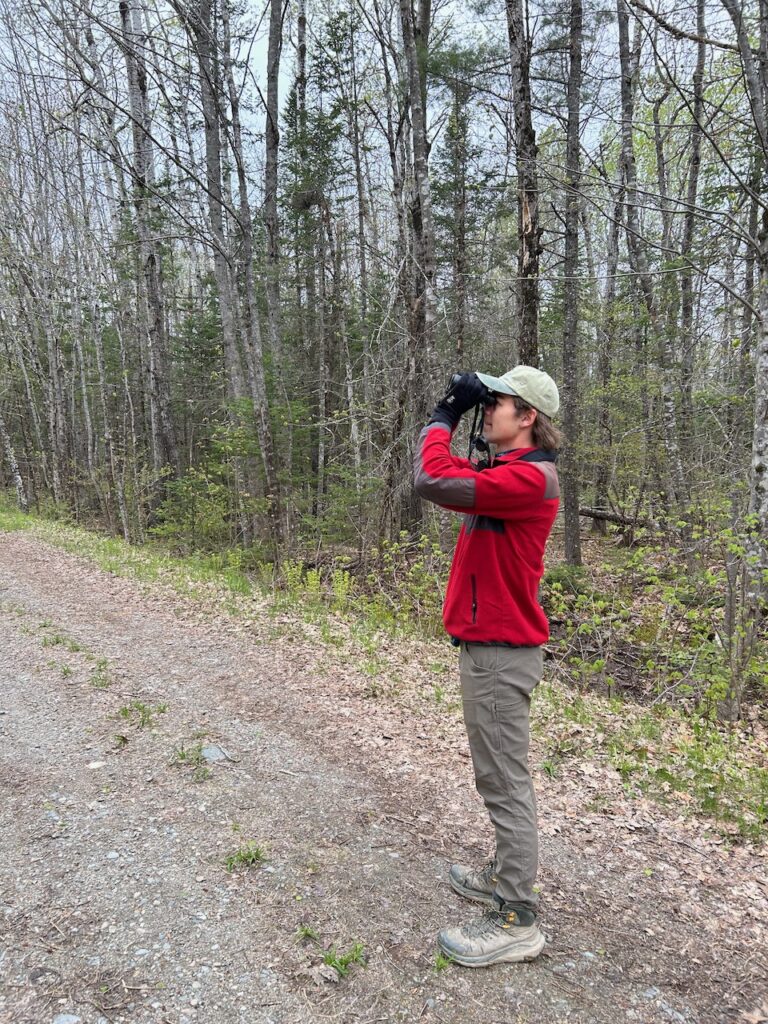
By now, the heat had built into the low 80s. Another hike did not sit high on my priority list, but darn it, I hadn’t come all the way to the Texas hill country for nothing! Slinging my camera and new Vortex Viper 8X42s over my shoulders I resolutely started marching.

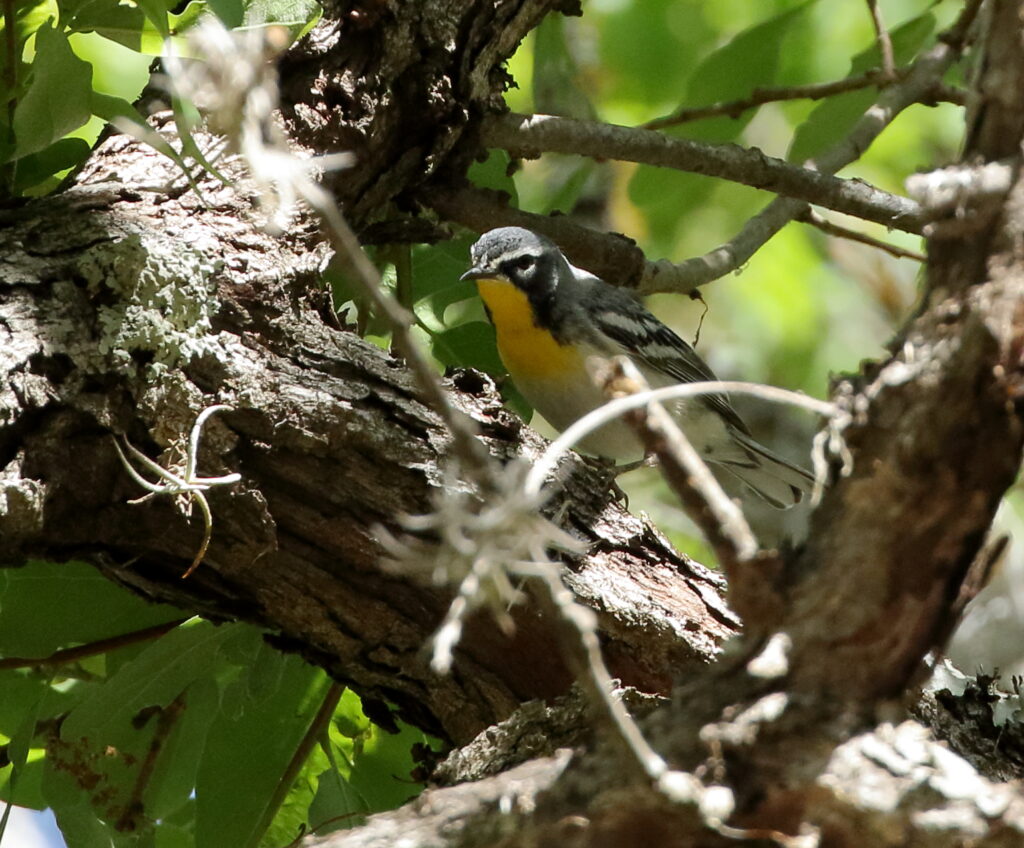
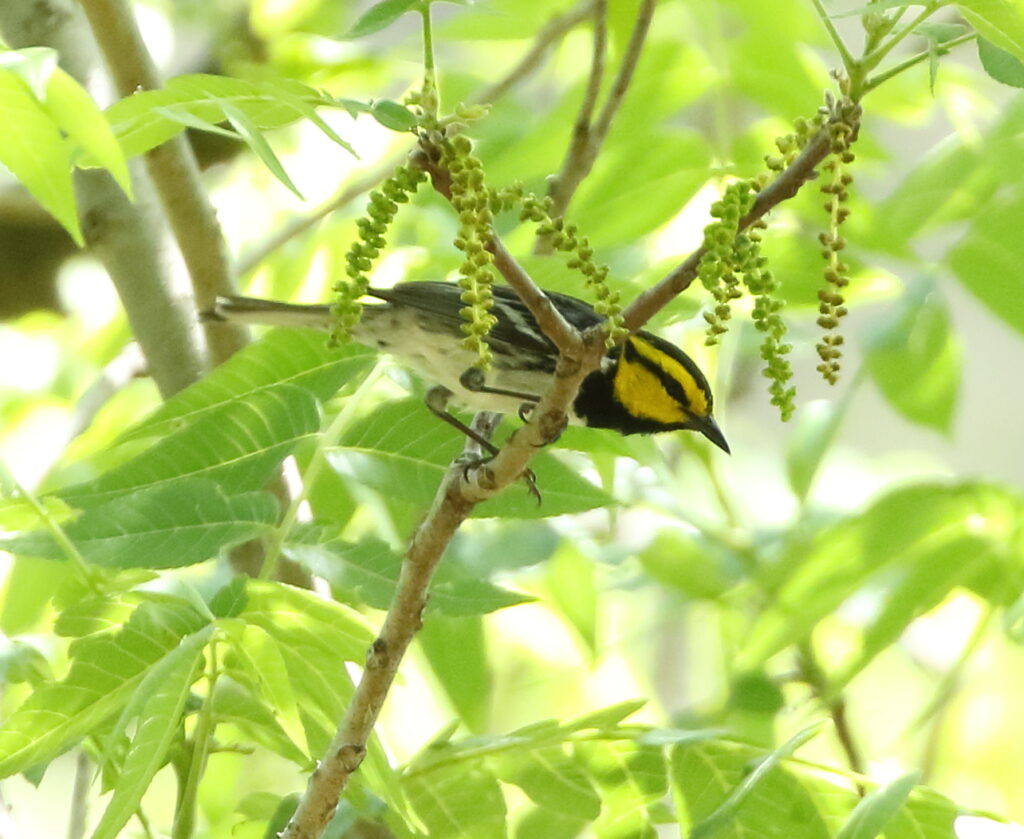
Fortunately, a number of beautiful oak trees provided shade to parts of the trail. I kept stopping frequently and soon enough began hearing more Golden-cheeked Warblers. Again, they absolutely refused to be seen, even when I seemed to be standing right in front of them! As I was scouring one oak tree, though, I detected movement and a flash of yellow. My excitement rose . . . but something didn’t look quite right. Finally, I got my binoculars on the bird and I realized what it was. This wasn’t a Golden-cheeked Warbler. For me, it was even better: my lifer Yellow-throated Warbler!

My Bird of the Day wasn’t actually the Black-capped Vireos or Golden-cheeked Warblers I’d set out to find. It ended up being my Lifer Yellow-throated Warbler—a complete surprise!

I couldn’t have been more thrilled. On other trips, I had hoped to see one of these birds multiple times without success, but today, it hadn’t even been on my radar! The bird was every bit as beautiful as a Golden-cheeked, and a quick look at the Merlin app confirmed that I was indeed within its breeding range—but just barely. According to Cornell’s Birds of the World, it has a relatively small, disjunct breeding range in central Texas separate from its more extensive breeding range across the Southeast. While fortunately not endangered or threatened, this bird had assumed an almost mythical status in my mind and to see it now . . . well, it felt exhilarating.

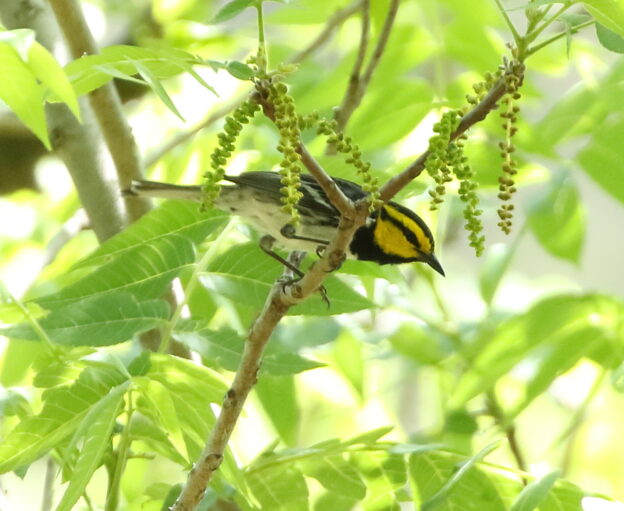
I felt both grateful and relieved to finally see a single Golden-cheeked after multiple GCWAs had taunted me all day!

Long story short: I finally spotted a single Golden-cheeked Warbler after spending almost an hour standing in front of trees where one or another GCWA sat singing and taunting me. While I had hoped to add just the Black-capped Vireo and Golden-cheeked Warbler to my life list during my entire Texas week, I had now seen an amazing seven lifers. Even better, having tracked down the BCVI and GCWA, I now had the entire next day to pursue one more. Check out the next post for details!

Shopping for a great new pair of binoculars that are reasonably priced? Be sure to check out our recent (unpaid!) review of Vortex Viper HDs by clicking here!