Category Archives: Birding

A Banner Yard-Bird Year

Yesterday, when I returned from walking our dog, Lola, I found a mob of Evening Grosbeaks attacking our bird feeder. In the nearby bushes sat a group of nervous Cassin’s Finches waiting for a break in the action, while in various other parts of the yard, I espied Red-breasted Nuthatches, a Song Sparrow, Black-capped Chickadees, a Pygmy Nuthatch, Violet-Green Swallows, and what I believe to be our First-of-the-Year Calliope Hummingbird. I freely admit that some of these birds would have been here anyway, but in many ways, this delightful assemblage was the culmination of dedicated, determined home habitat improvement.
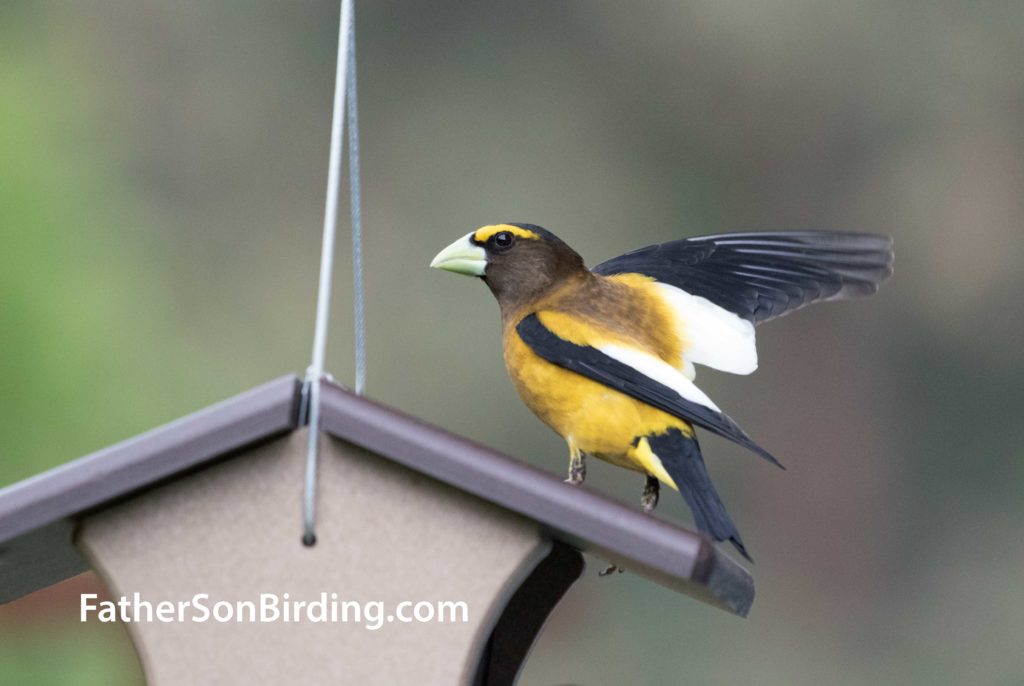
The last few years, Evening Grosbeaks have been regular visitors to our yard, even if they stay only a few days. (photo by Sneed B. Collard III)

We moved into our just-built house twelve years ago. Our new neighborhood had destroyed an old apple orchard that undoubtedly had provided habitat for a host of animals including birds, so one of my goals was to not only get a lot of plants in fast, but to plant as many native plants as possible. I painstakingly picked out a huge variety of annuals and perennials, imagining the native Eden that would soon blossom here.

The deer had other ideas.
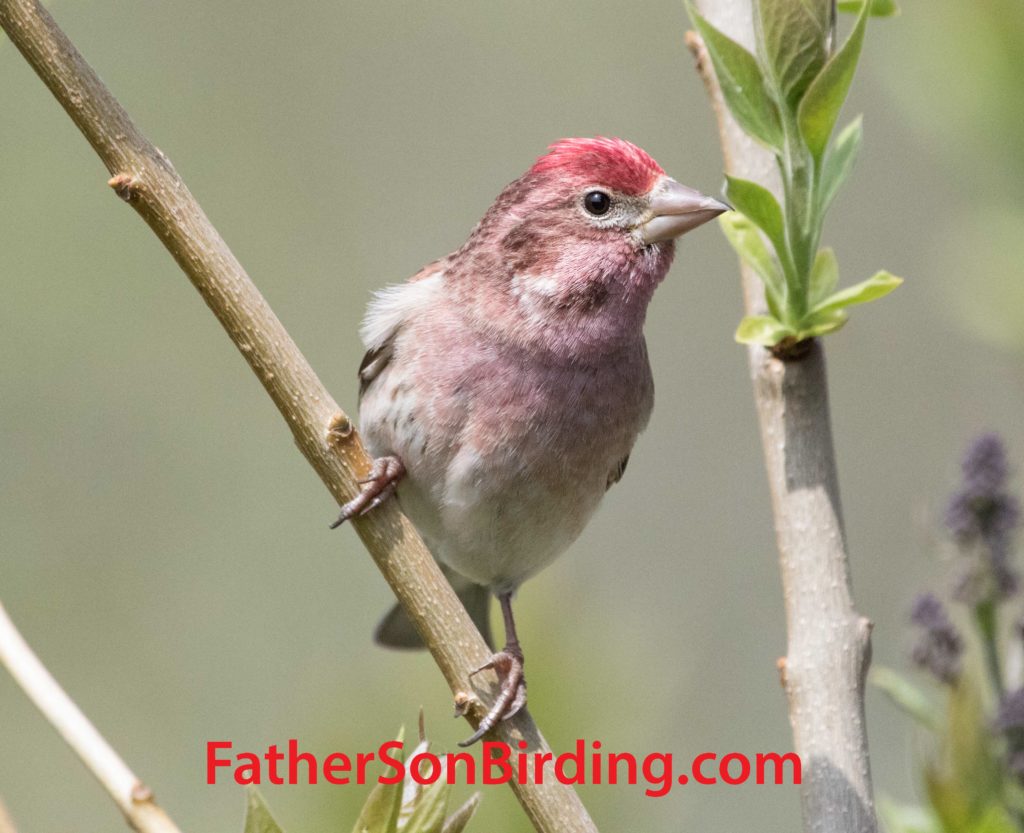
This year, Cassin’s Finches have ruled the back yard—that is when the Evening Grosbeaks aren’t around! (photo by Sneed B. Collard III)

For the next ten years, I waged an annual battle with these ruthless ungulates as I planted native plants and the deer gleefully ripped them out. During that time, their tastes evolved to include both “deer delicacies” and the vast majority of so-called deer-resistant plants various experts had touted. Fortunately, a few of my hardier species survived including buffalo berry, maple sumac, mountain mahogany, and golden current—along with aspen, larch, pine, and other plants that I took pains to protect.

Over the past three or four years, our persistence has visibly paid off as we have observed an ever-greater variety of species and numbers not only feeding from but finding shelter in the habitat we have created.

Of course, the feeder that Braden faithfully refills and the two new bird houses we installed don’t hurt (more on that in a future post), but most rewarding is to just spot birds such as Ruby-crowned Kinglets, Song Sparrows, and Lazuli Buntings that find safe haven in the plants that we have nurtured.
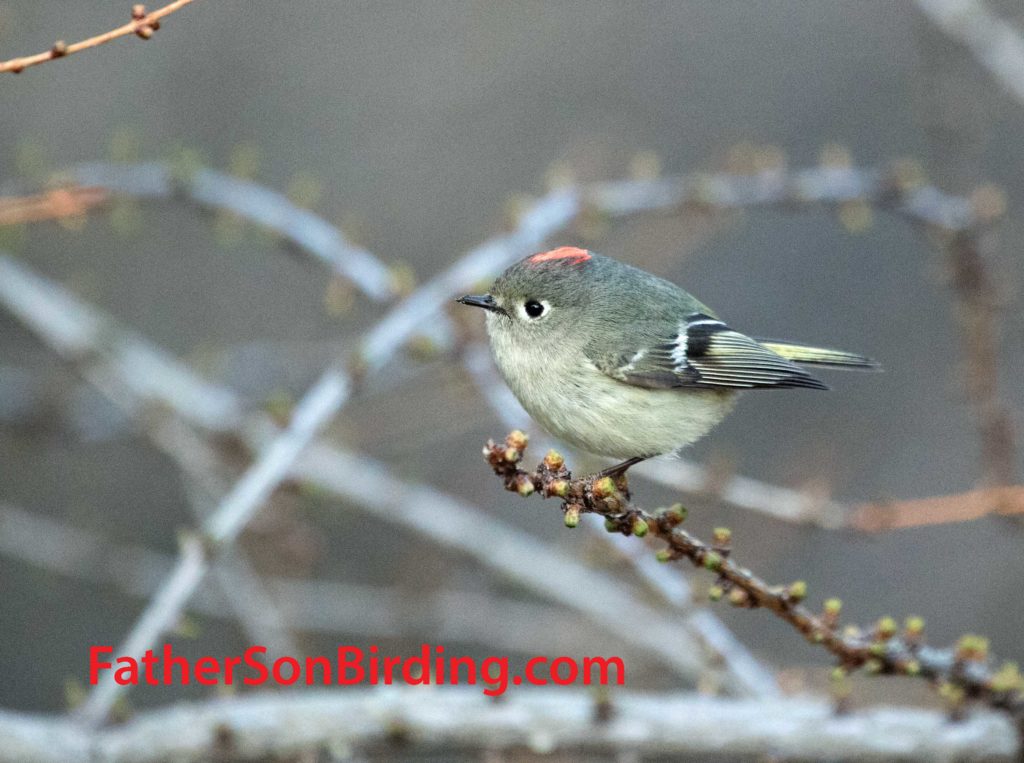
As our vegetation cover has increased, Ruby-crowned Kinglets have become regular visitors in both fall and spring. (photo by Sneed B. Collard III)

The take home message? Creating great bird habitat takes effort and persistence, but it’s absolutely worth it. In an age when birds face an overwhelming barrage of threats from habitat destruction to global warming, it’s the best feeling to know that we are making a few birds’ lives just a little bit better.
Big Hole, Big Day, Part Two

(continued from Big Hole, Big Day, Part One)

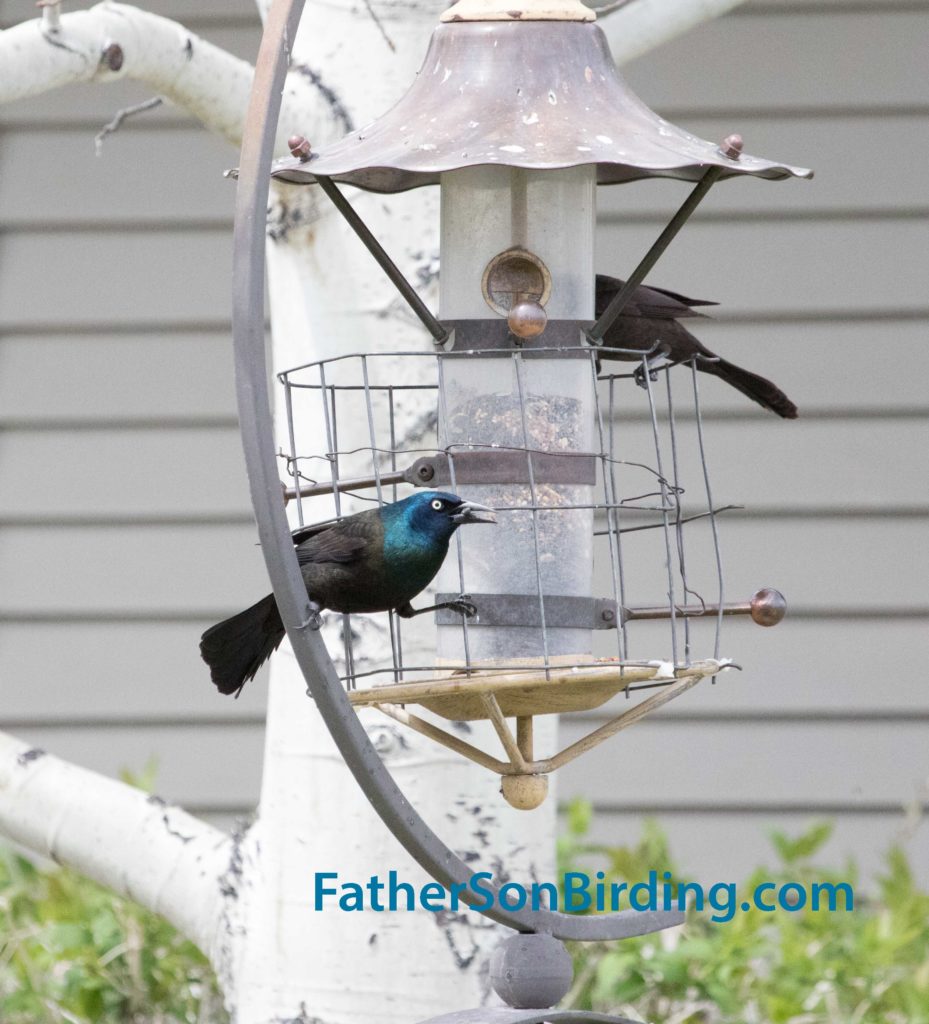
On the way to Dillon we stopped to admire First-of-Year Swainson’s Hawks and Western Kingbirds, many more Bald Eagles and one more Golden. Then, after a quick lunch at Sparky’s Garage, we cruised Central Street, Blue Jays in mind. A yard here received a pair daily, according to eBird, but we struck out. However, at the end of the street we were about to turn around when a black bird with a tail like a boat rudder flew across the road. Common Grackle! We followed it and soon found its buddies hanging out at a feeder. These birds are harder to find in western Montana than most places, so seeing them was a treat.

Common Grackles at Feeder in Dillon, MT (photo by Sneed B. Collard III)

Surprisingly, the feeder and others nearby also were covered in finches—Cassin’s Finches! We had been seeing them at our feeder recently as well, and these sightings pretty much confirmed it was an irruption year for them.

Finally reaching the Big Hole, we began our exploration of the Bannack area by driving four or five miles down Bannack Bench Road, which supposedly harbored Greater Sage-Grouse, Gray Flycatchers, Sagebrush Sparrows and Sage Thrashers, the latter three all Great Basin specialties. The birds shunned us, but where the road met the main road into the State Park, we picked up Mountain Bluebirds, a pair of Barn Swallows, and two Cinnamon Teal floating down Grasshopper Creek.

Hiking around the ghost town itself triggered a flood of memories and even more bird species. Rock and House Wrens sang from the hillsides, Red-naped Sapsuckers drummed on cottonwoods, and a surprisingly large flock of Clark’s Nutcrackers called from the scrub.

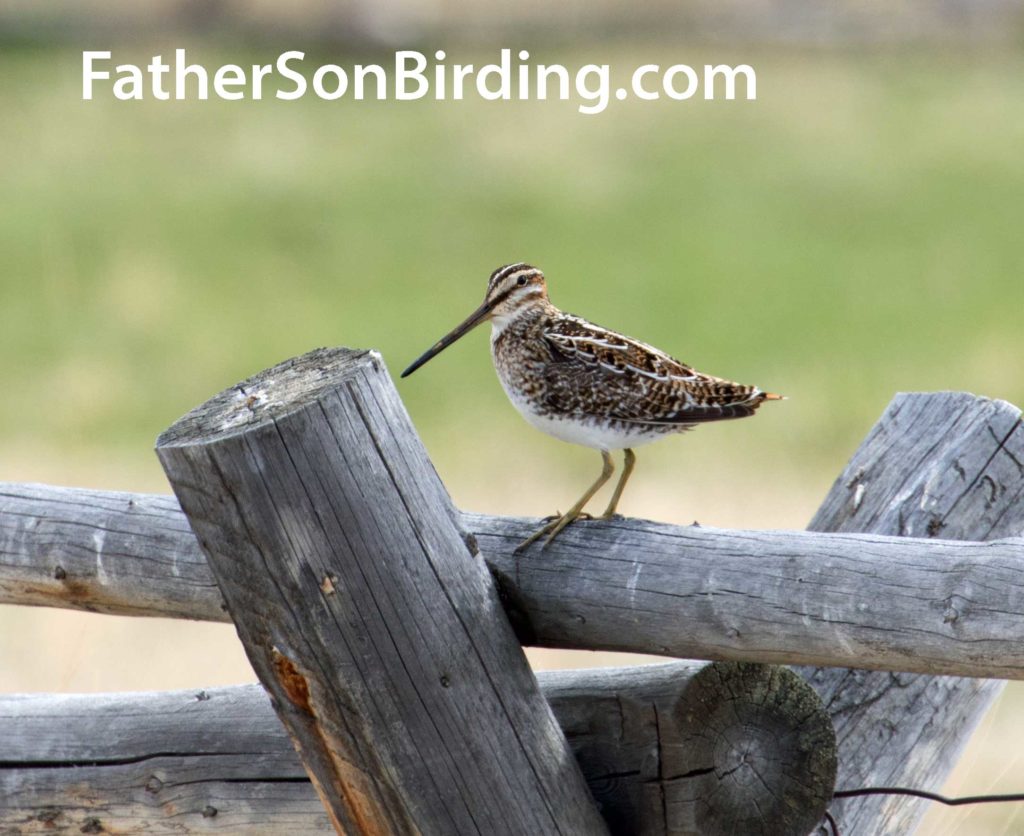
Wilson’s Snipe along Bannack Bench Road (photo by Braden Collard)

As the afternoon lengthened, we decided to give Bannack Bench Road one more try and were rewarded by a single Sage Thrasher, a Lifer for us. As the road emptied out into farmland, we also encountered a snipe singing on a fence, the coolest experience we’d ever had with one! Approaching and passing Clark Canyon Reservoir, we added White Pelican, Sandhill Crane, Northern Shoveler, Common Loon and Prairie Falcon to our day lists before tiredly making our way to Butte for the night.

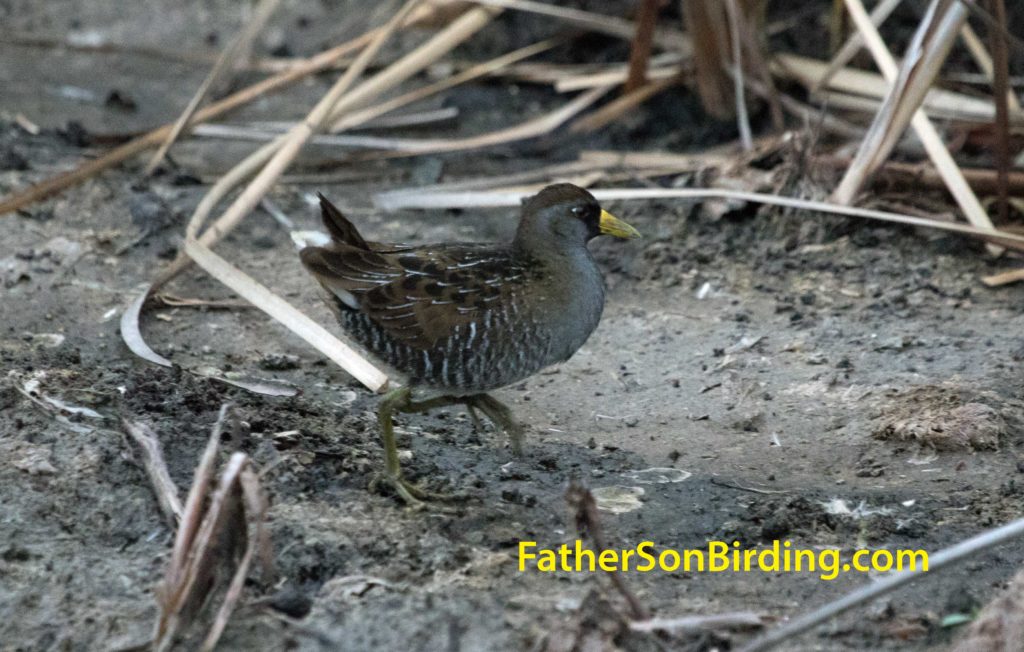
The next morning, we rounded out our weekend with a visit to Warm Springs before heading home. There, we saw an impressive variety of ducks and grebes, including an insane number of Cinnamon Teal. Taking a final drive out to the Ducks Unlimited Ponds, we suddenly heard a loud, alien call. My dad looked at me and said, “Sora?” We leaped from the car and within minutes, spotted a small, chicken-like bird scrambling through some cattails while two other Soras called nearby. It was a Montana Lifer for us, and an awesome way to end a memorable “Global Big Weekend.”

Sora photographed on South Padre Island, Texas (photo by Sneed B. Collard III)

Big Hole, Big Day–Part One

Braden here again.

May 5th was designated as the annual Global Big Day this year by Cornell University, the leading university in ornithology. Birders around the world were supposed to go out on that date and see, hear and record as many birds as possible on one day, on the site called eBird run by Cornell. Early May is the perfect time for a Global Big Day—migration is in full force: spring in the northern hemisphere and fall in the southern hemisphere. That means birders can go out and record upwards of 150, 200 species.

Migrants, however, weren’t on our minds when my dad and I set out the morning of May 5th; we were looking for species that had already arrived and set up territories. We were headed to the Big Hole, a big, dry valley in southwestern Montana. We hoped to hit some locations for various year and life birds, then finish up at Bannack State Park, an old ghost town that my dad had written a novel about years before. We were also indecisive about spending the night in Dillon or Butte and hitting Warm Springs Waterfowl Management Area, an old favorite of ours, the next morning.

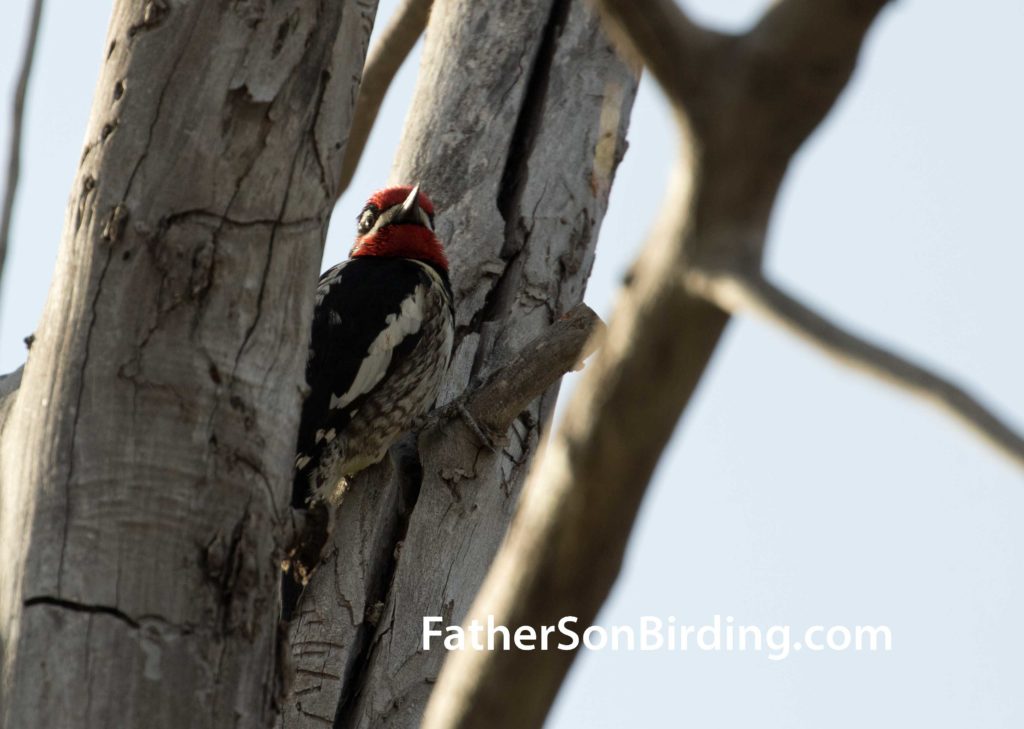
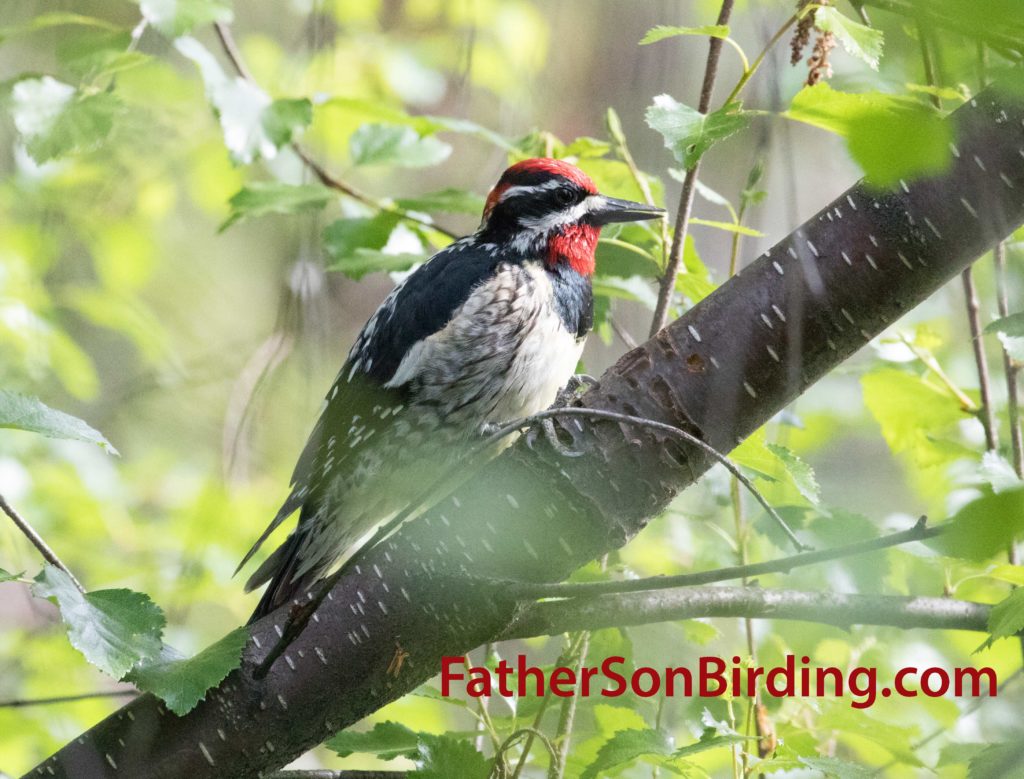
Red-naped Sapsucker (photo by Braden Collard)

We first stopped at my Eagle Scout project site at Rock Creek to check on the plants I’d planted to help restore bird habitat there. The majority of plants looked healthy, and the soil was moist, delaying having to water them for at least another week. Hooray! The bird life around the property chirped with activity. Vesper Sparrows sang from the fence, an Osprey guarded its nest from intruders that might want eggs for breakfast, and Cliff and Tree Swallows circled above. Right as we were pulling out, we were surprised by a very cooperative Red-naped Sapsucker drumming on a snag right in front of us.

The drive down was very birdy, and we got to our first stop north of Dillon at about nine in the morning. It was a road leading off into shortgrass prairie, and our goal here was an almost Montana-exclusive bird: the McCown’s Longspur. We had seen Chesnut-collared Longspurs last summer in eastern Montana, but now hoped to pick up their less common relatives.

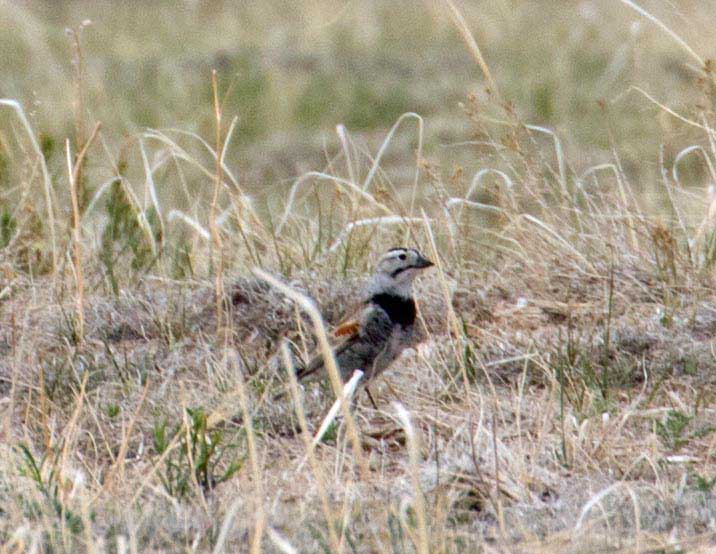
As we began driving down the road, we quickly began seeing more common prairie birds—Horned Larks, and Savannah and Vesper Sparrows. Soon, though, I spotted a bird fly into the air and then coast to the ground singing, similar to the display of the Chesnut-collareds we’d seen last year. As it landed, I got my binoculars on it. The bird was gray, with red wings, a white face and a black chest—McCown’s!

Male McCown’s Longspurs put on an amazing display in an attempt to attract a mate (photo by Braden Collard).

We continued down the road and then turned onto I-91, a highway parallel to I-15. As we said farewell to the longspurs, I turned my attention to raptors on power poles. Almost immediately we came across a huge one.

“Is it a Golden?” I asked, straining my eyes.

As we approached, its white head became obvious. Bald Eagles are still cool, but much less rare in Montana. Surprisingly, they’re also larger than Goldens.

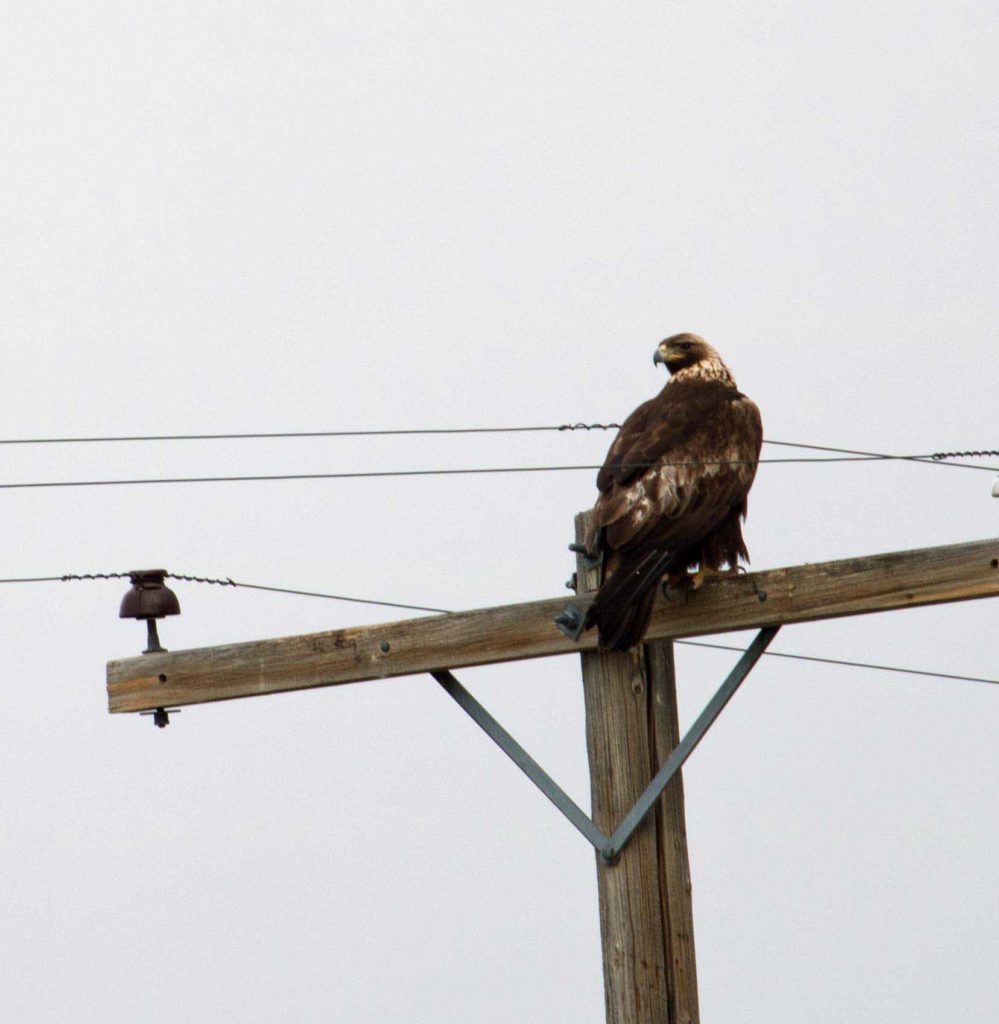
The second raptor, however, appeared to be just as large with no white head. As we passed, I glimpsed its face—the golden hood and powerful eyes of a Golden Eagle.

“Golden!” I said. “Turn around, turn around!”

We pulled into a parking lot across the road and and watched it, then tried for photos. It was fairly skittish, though, and flew away before we got close. We then continued driving, heading for our next stop: Dillon.

To be continued.

Golden Eagles are easier to find in spacious areas than mountainous valleys, but Balds outnumber them there, too. (photo by Braden Collard)


Celebrating Sapsuckers

When each calendar year begins in Montana, Braden and I always wonder which birds we’ll see—and which we’ll miss. Many species are gimmes. For others, we really have to luck out. Then there’s a whole column of birds that lie in between these two extremes. For us, sapsuckers are in between.

Red-naped Sapsucker at Lee Metcalf NWR (photo by Braden Collard)

We have two kinds in Western Montana: Williamson’s and Red-naped. Both are migratory so we’re never sure when they’ll show up. This year, we just happened to make our first real effort at finding them on Earth Day, April 22. We headed to Pattee Canyon, a place we’d had good success with woodpeckers before, and followed our dog Lola up the mountainside.

At first, results were disappointing. For the first fifteen minutes, the only bird we spotted was a solitary robin. As we began discussing what the problem might be, however, we suddenly heard a loud, throttling, dribbling, drumming sound. Braden and I spun toward it.

“That sounds like a sapsucker!” I exclaimed.

“It sure does!” said Braden.

But what kind? Though we can pick out sapsucker drumming from that of other woodpeckers, we haven’t yet learned to distinguish Williamson’s from Red-naped—and we’d seen both up Pattee Canyon. Moments later, however, we got our answer.

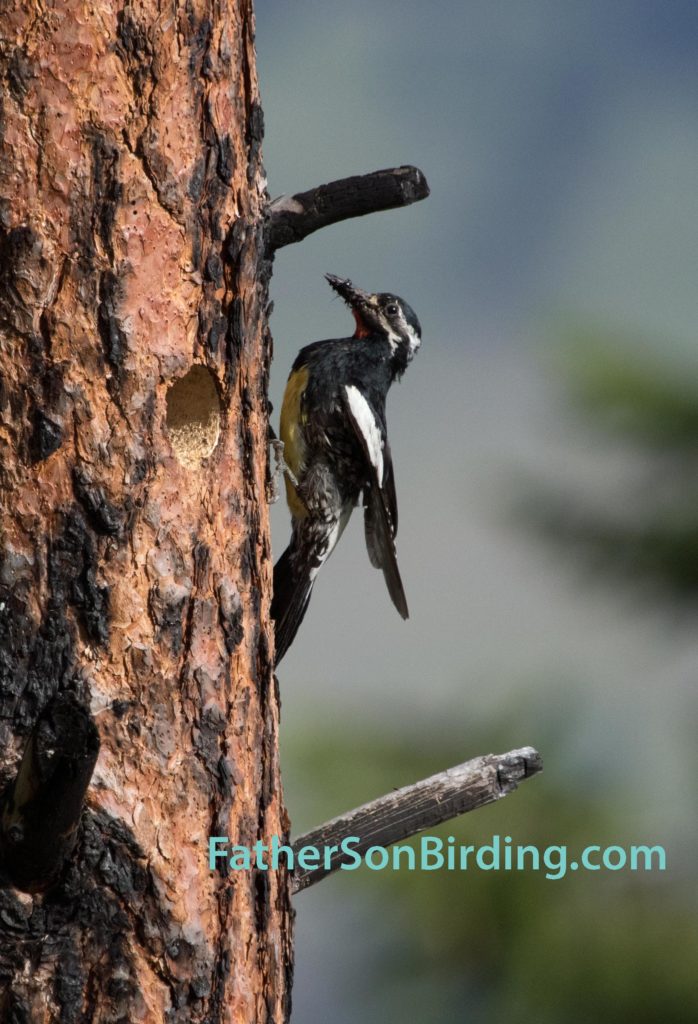
Williamson’s Sapsucker bring ants to babies (photo by Sneed B. Collard III)

“Williamson’s!” Braden shouted as a boldly-colored male flew from one ponderosa pine to another. Within moments, we were immersed in a sapsucker extravaganza. We heard drumming from three different directions. Then, we saw two males squabbling over a female. It was by far our most spectacular sapsucker experience ever.

The next morning, we picked up Braden’s birding buddy, Nick Ramsey, and headed to what has become our favorite local birding spot, the gravel quarry. Though a chilly forty degrees, the sun cast a spectacular light over the Missoula Valley, and the birds did not disappoint. Within half an hour, our day count passed thirty species including a slew of other “In-between Birds” such as Sandhill Cranes, Common Loons, and Horned Grebes. As we walked along the Bitterroot River, however, fresh sapsucker drumming again startled us. We hurried forward and within seconds, Nick raised his camera and said, “I’ve got a Red-naped!”

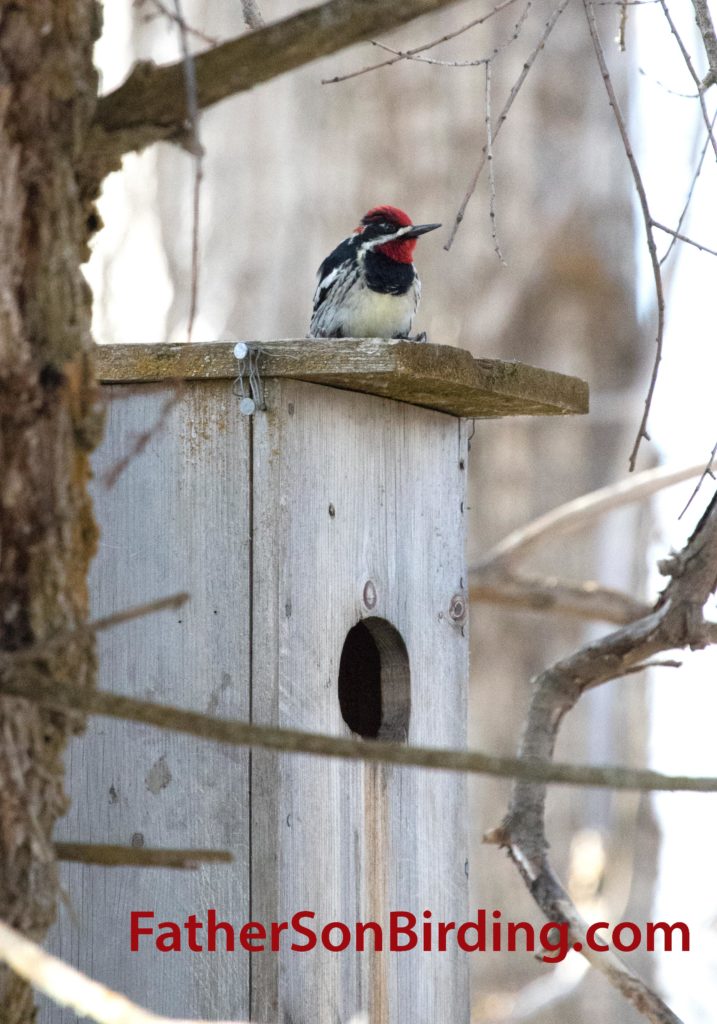
Red-naped drumming on a Wood Duck box. The Wood Ducks paddled nearby, looking none too pleased! (Photo by Sneed B. Collard III)

For the next hour, we enjoyed a veritable Red-naped convention, hearing and seeing at least four or five of the birds, obviously flush with courtship fever. The only sapsucker day that could rival it? Our previous day with the Williamson’s! We finished our two-hour session with more than fifty species, including a dozen Year Birds.

In-between Birds rock.


Woodpeckers: Drilling Holes and Bagging Bugs by Sneed B. Collard III (Bucking Horse Books, 2018)

(To learn more about sapsuckers and other woodpeckers, check out my new book, Woodpeckers: Drilling Holes & Bagging Bugs!)

King of the Tyrants

Braden again.

We had been in Peru almost three weeks, and birding was on our minds. Okay sure, it had been on our minds the entire trip so far, but none of the things we’d done had been birding-oriented—we’d had a homestay in Cuzco, a weekend getaway to Pisac, a week journeying the Sacred

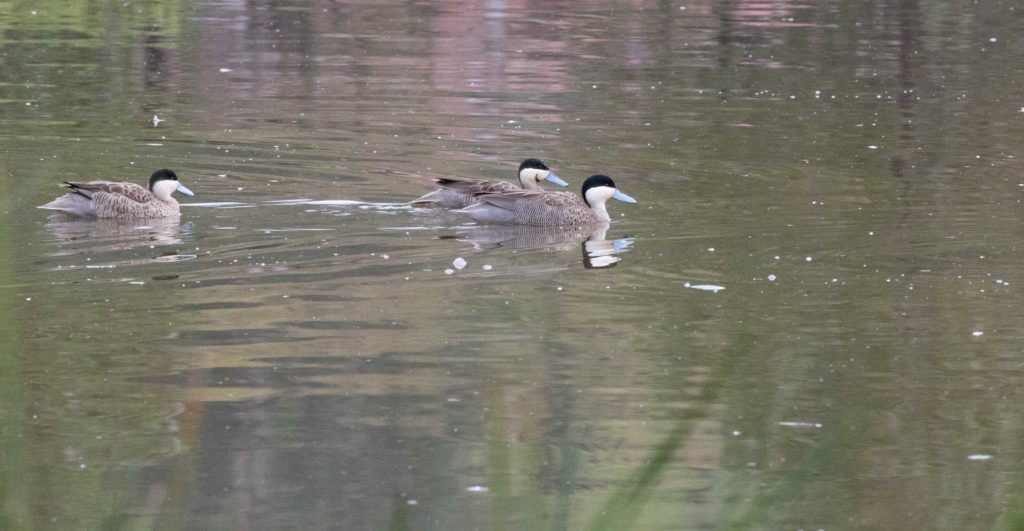
Probably the coolest ducks at Huarcapay, these Puna Teal glided effortlessly across the mountain lake. (Photo by Braden Collard)

Valley including Machu Picchu. Don’t get me wrong, we saw tons of great birds, including the national bird of Peru and quite possibly the most stunning bird in South America (see Post: “Washout at Machu Picchu”), but nothing on our schedule was designed to see birds. It just included them. So, as our time in Peru came to a close, we decided it was time to hire a guide and really see some birds.

At 5:30 a.m., we were picked up by our guide Juan Jose Salas Falcon and his stepfather from our hotel in Cuzco. We drove in the direction of the ruins of Sacsayhuaman (“Sexy Woman”), which we had visited about a week earlier. Our planned destination was Laguna de Huacarpay, which I had researched on ebird the night before. Thanks to recent lists, my dad and I had picked our target birds: Puna Ibis, Mountain Caracara, Aplomado Falcon, any kind of duck (only five species were common here) and the Many-colored Rush-Tyrant.

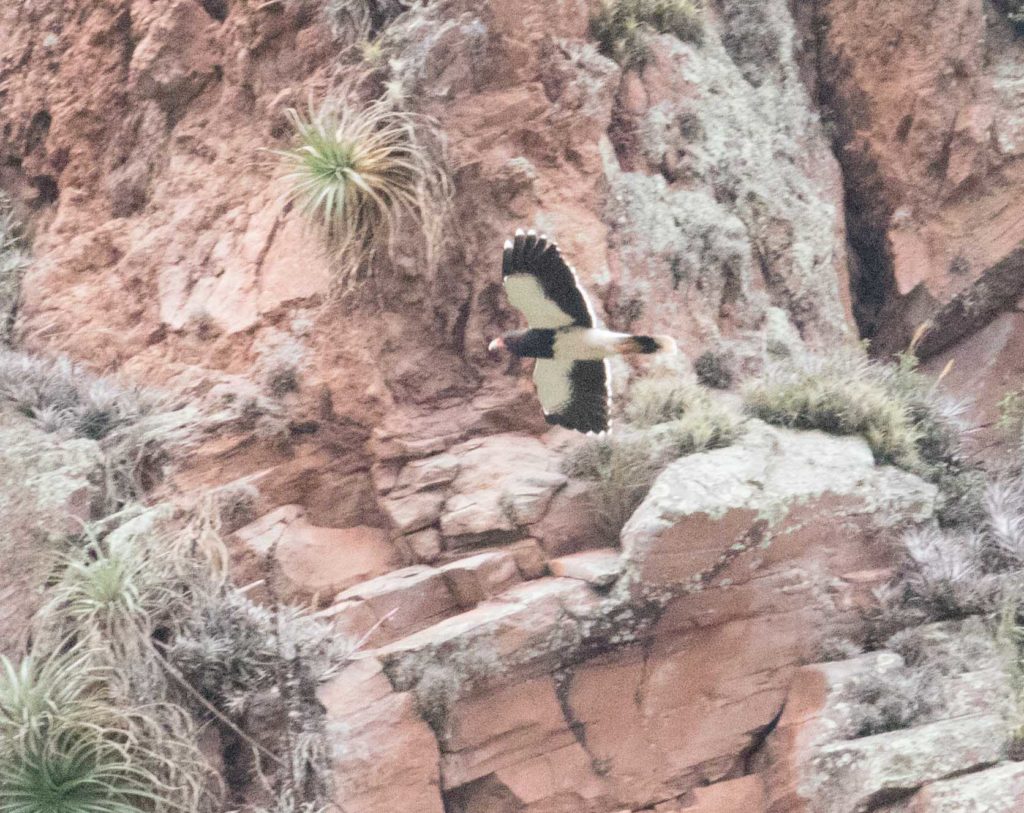
Just one of a trio we saw harassing a Variable Hawk, this Mountain Caracara was another Target Bird for the day. (Photo by Braden Collard)

We stopped at a few spots first to see some endemic landbirds (including the exotic-looking Chestnut-breasted Mountain-Finch) and get close to waterfowl, then arrived at the lake. At first glance, it resembled Lee Metcalf Wildlife Refuge, our local Montana go-to spot for waterfowl, but much, much bigger. Surrounding it were polluted neighborhoods, tall chain-link fences, and scrub-covered mountains.

We pulled to the side of the road shortly upon arriving and then trudged through the reeds to an observation tower where we got great looks at a solitary Chilean Flamingo feeding in the shallows. As we were heading back to the car, Juan Jose stopped us.

“Shhh! That rattle—it’s a rush-tyrant!”

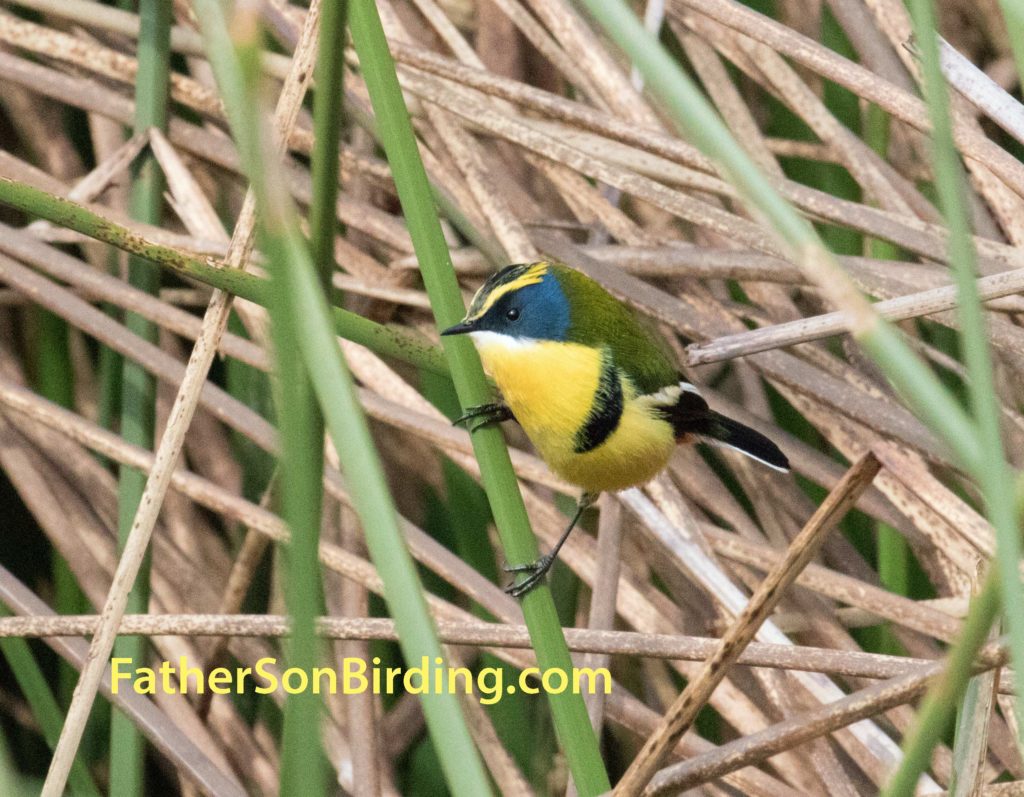
We moved towards the sound, and I thought about what he had told us about this bird on the drive up. He said the locals had a story about how this bird had stolen all of the other tyrant’s colors. Suddenly, in response to Juan Jose’s playback, a small rainbow bird popped into view! The bird had a blue face, yellow body, green back and red rump—the entire rainbow displayed on one bird. It reminded me of the Common Yellowthroats we had back home: skulkers, but beautiful. Success! The day following this great sighting was amazing; we got every single target bird, along with more endemics and surprises we could wish for.

This Many-colored Rush-Tyrant was just one of the birds that made our day. (Photo by Braden Collard)