Please follow Braden’s and Sneed’s birding adventures by subscribing to FatherSonBirding.com using the box on the right below. As always, feel free to share this with other birders, bloggers, editors at big high-paying publishing houses—anyone you wish!
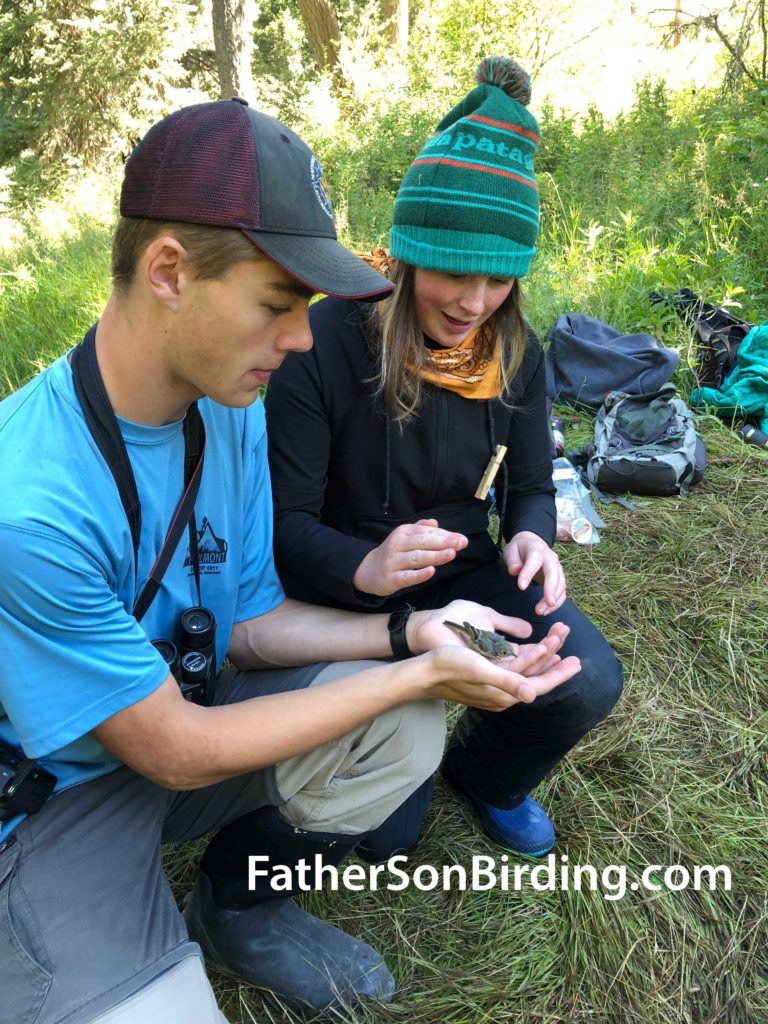
Last week, to celebrate the final days of summer, Braden and I did something we’ve always wanted to do: bird banding. This, however, wasn’t just any bird-banding session. We were lucky enough to accompany the team of biologist Debbie Leick, whom we first met during last year’s Christmas Bird Count.
Debbie works for MPG Ranch, a wonderful operation that supports a host of restoration and academic science. Debbie’s project? To see if she and her crew can count migrating birds by listening to their flight calls with a large array of microphones spread throughout the Bitterroot Valley. Before she and her team can start counting birds, however, they have to be able to distinguish their calls.
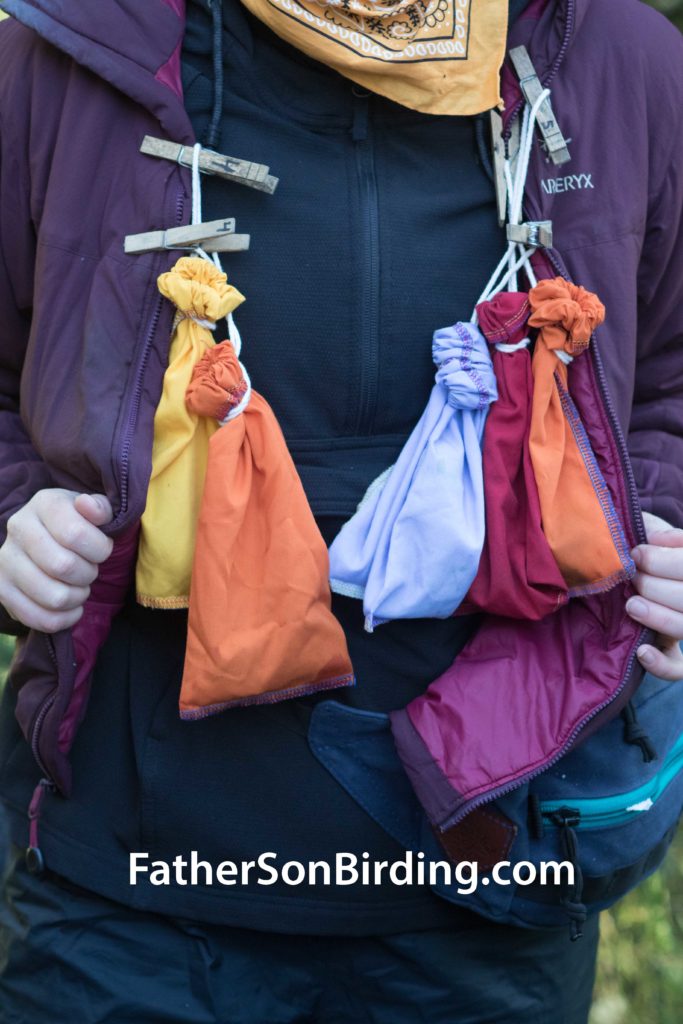
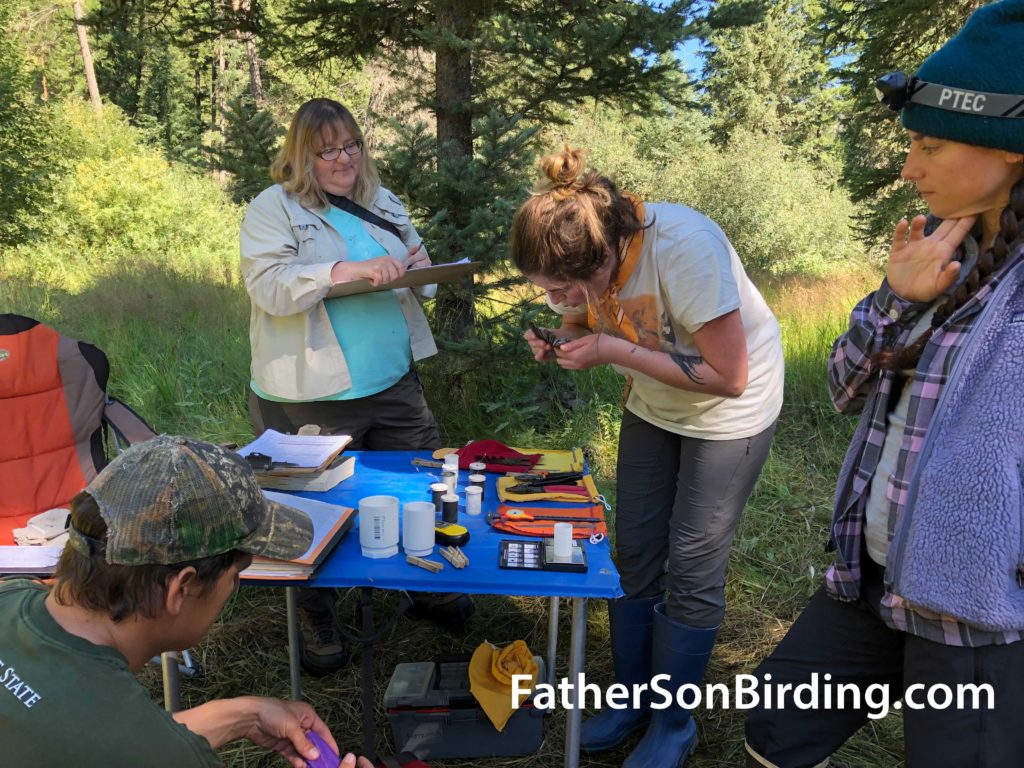
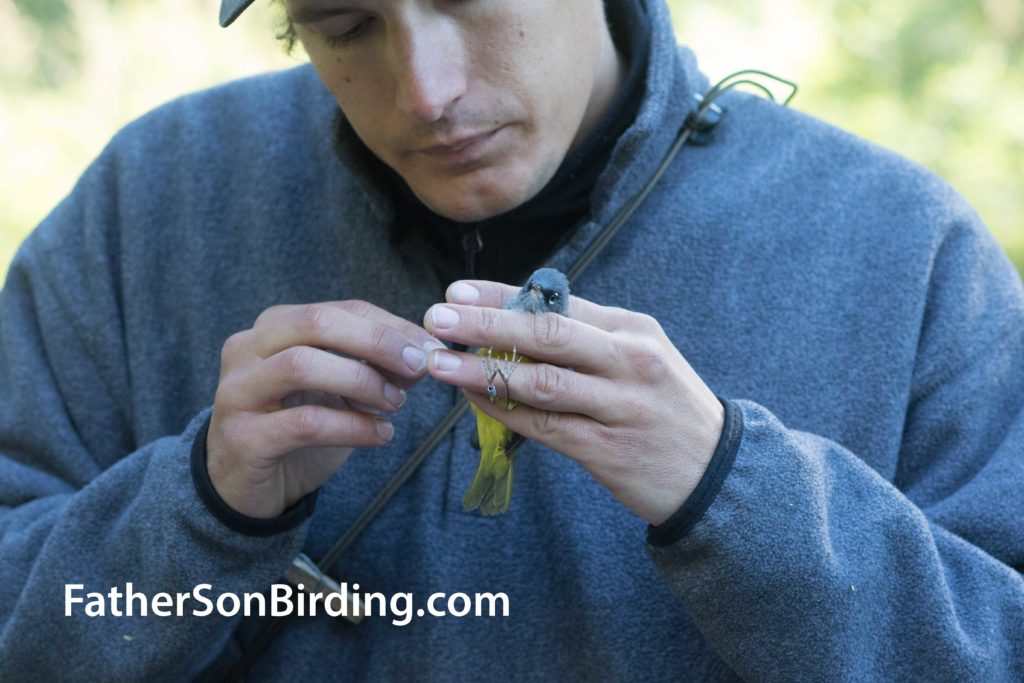
Braden, Debbie, and I joined the University of Montana Bird Ecology banding crew at a trapping station up Miller Creek. The team had set up mist nets to capture birds, and when we arrived, the action was in full swing. A Swainson’s Thrush, Yellow-rumped Warbler, MacGillivray’s Warbler, and a surprise (to us) Northern Waterthrush kicked off the bird parade. Some of these were recaptures, as evidenced by the bands around their legs. New or recaptured, each bird was carefully removed from its net, weighed and measured, and released. Some birds, however, got special treatment.
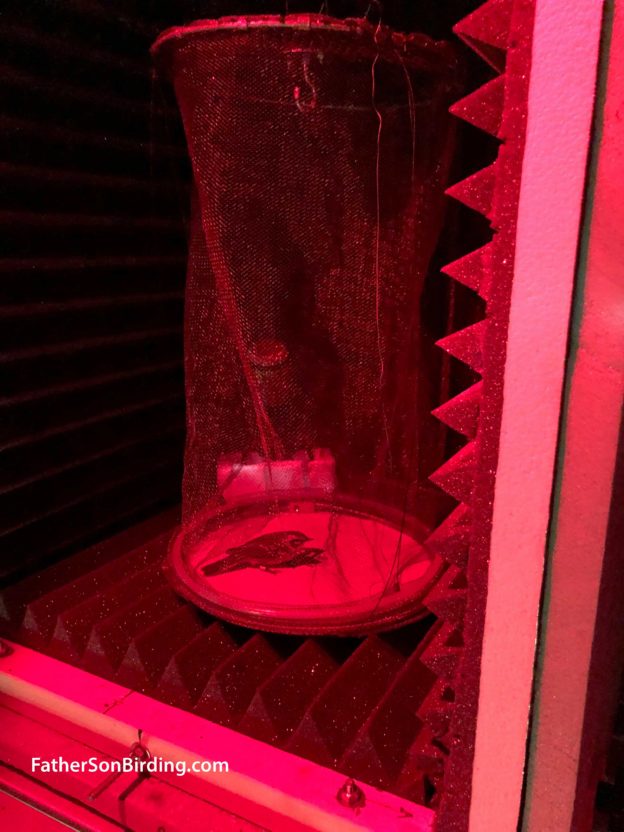
When we caught a Townsend’s Warbler, Debbie’s colleague Boo Curry (and yes, no typo there) led me and the bird to a PRS or Portable Recording Studio. The warbler was gently placed in its own soundproofed recording booth and then Boo piped in some warbler calls (a bird’s version of elevator music) to see if she could get the Townsend’s to respond.
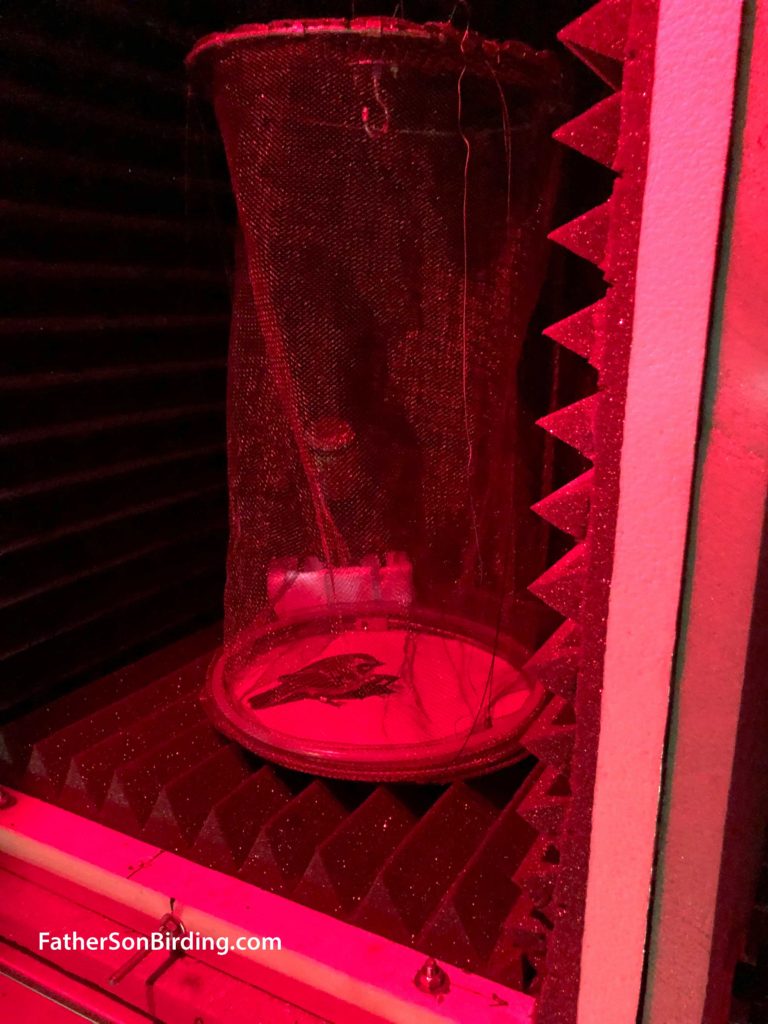
It did! In fact, it was the team’s first successful flight call recording of the season. Which just goes to show how painstaking field biology can be. The work of Debbie’s team, though, has great promise to improve not only our counting of migrating birds, but our understanding of them. Stay tuned for more when Braden and I follow up on their progress at a later date!