Author Archives: admin

King of the Tyrants

Braden again.

We had been in Peru almost three weeks, and birding was on our minds. Okay sure, it had been on our minds the entire trip so far, but none of the things we’d done had been birding-oriented—we’d had a homestay in Cuzco, a weekend getaway to Pisac, a week journeying the Sacred
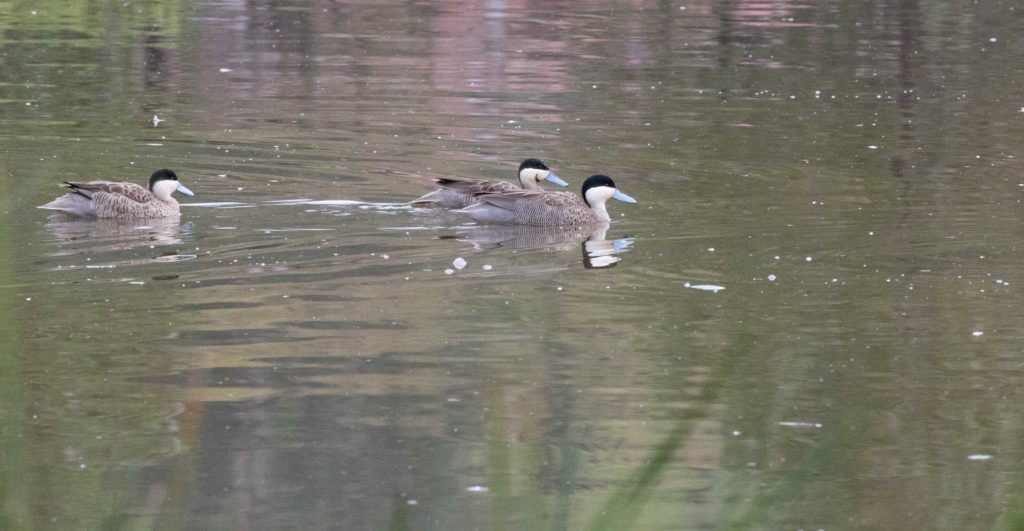
Probably the coolest ducks at Huarcapay, these Puna Teal glided effortlessly across the mountain lake. (Photo by Braden Collard)

Valley including Machu Picchu. Don’t get me wrong, we saw tons of great birds, including the national bird of Peru and quite possibly the most stunning bird in South America (see Post: “Washout at Machu Picchu”), but nothing on our schedule was designed to see birds. It just included them. So, as our time in Peru came to a close, we decided it was time to hire a guide and really see some birds.

At 5:30 a.m., we were picked up by our guide Juan Jose Salas Falcon and his stepfather from our hotel in Cuzco. We drove in the direction of the ruins of Sacsayhuaman (“Sexy Woman”), which we had visited about a week earlier. Our planned destination was Laguna de Huacarpay, which I had researched on ebird the night before. Thanks to recent lists, my dad and I had picked our target birds: Puna Ibis, Mountain Caracara, Aplomado Falcon, any kind of duck (only five species were common here) and the Many-colored Rush-Tyrant.
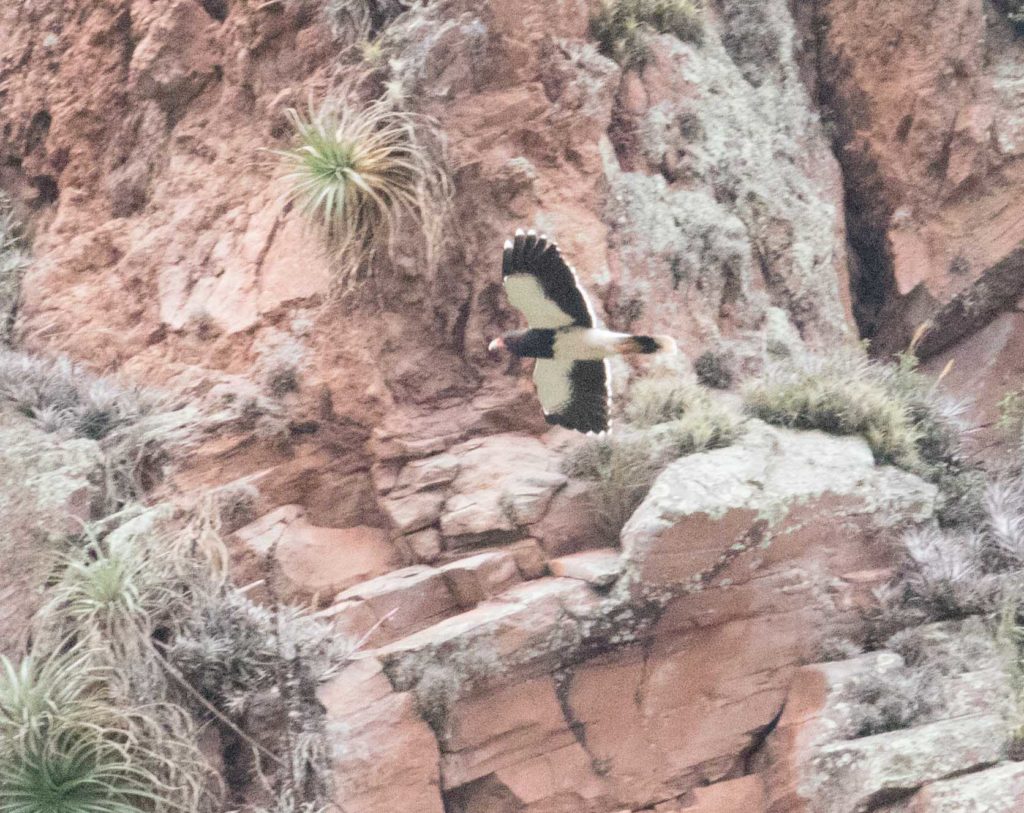
Just one of a trio we saw harassing a Variable Hawk, this Mountain Caracara was another Target Bird for the day. (Photo by Braden Collard)

We stopped at a few spots first to see some endemic landbirds (including the exotic-looking Chestnut-breasted Mountain-Finch) and get close to waterfowl, then arrived at the lake. At first glance, it resembled Lee Metcalf Wildlife Refuge, our local Montana go-to spot for waterfowl, but much, much bigger. Surrounding it were polluted neighborhoods, tall chain-link fences, and scrub-covered mountains.

We pulled to the side of the road shortly upon arriving and then trudged through the reeds to an observation tower where we got great looks at a solitary Chilean Flamingo feeding in the shallows. As we were heading back to the car, Juan Jose stopped us.

“Shhh! That rattle—it’s a rush-tyrant!”

We moved towards the sound, and I thought about what he had told us about this bird on the drive up. He said the locals had a story about how this bird had stolen all of the other tyrant’s colors. Suddenly, in response to Juan Jose’s playback, a small rainbow bird popped into view! The bird had a blue face, yellow body, green back and red rump—the entire rainbow displayed on one bird. It reminded me of the Common Yellowthroats we had back home: skulkers, but beautiful. Success! The day following this great sighting was amazing; we got every single target bird, along with more endemics and surprises we could wish for.
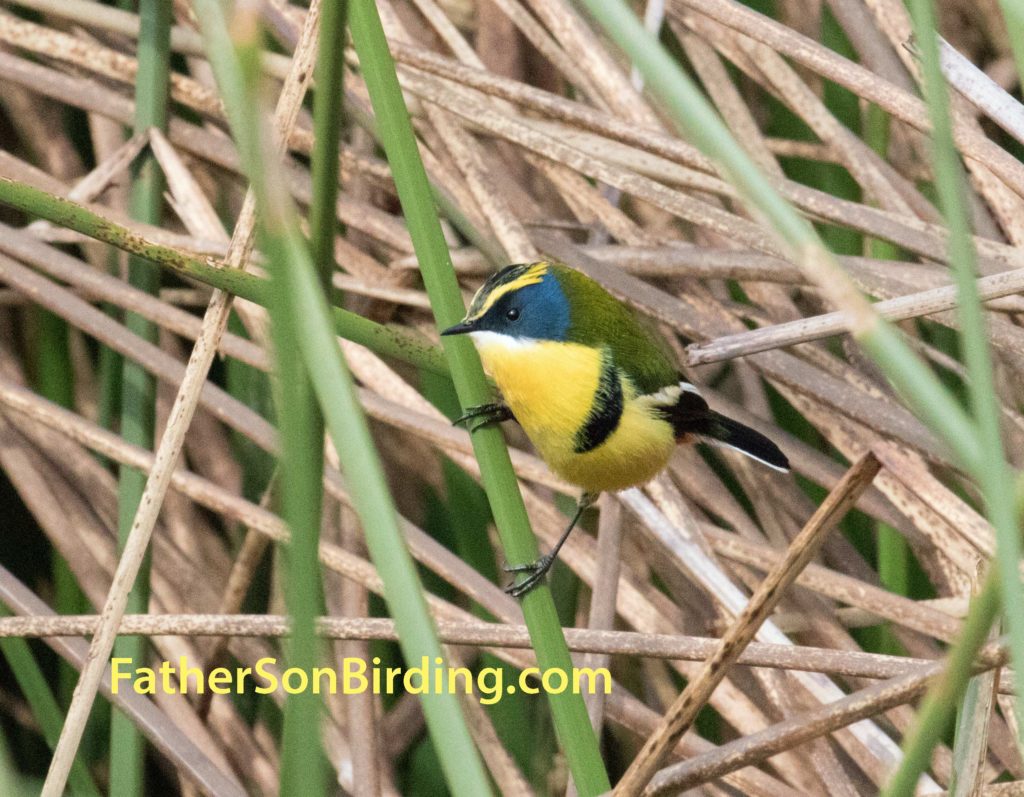
This Many-colored Rush-Tyrant was just one of the birds that made our day. (Photo by Braden Collard)
Washout at Machu Picchu

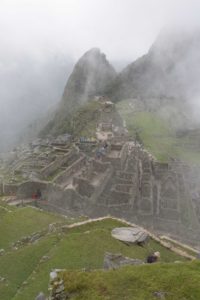
Machu Picchu between clouds.

Almost exactly a year ago, our family was traveling through Ecuador and Peru. Birding wasn’t the purpose of our five-week adventure, but Braden and I sought out birds wherever we went—including our visit to South America’s must-see archaeological destination, Machu Picchu.

The morning of our visit, we awoke to what can only be described as a gully-washer. Rain didn’t pour, it cascaded down on the streets and rooftops of Aguas Calientes, the ramshackle tourist town that serves as a staging area for MAPI, as it is known in Peru. Not only that, but Braden’s sister, Tessa, awoke with a terrible cold. Nonetheless, a guide met us at our hotel before dawn and led us to the shuttle buses and, as planned, we were some of the first people to reach the famed Incan site.

Our guide explained the significance of the ruins as we wandered, fascinated, through the main site. As the rain continued to drench us, however, my daughter looked ever more miserable. Worse, we knew this would be our only chance to see the ancient complex, as visitors must buy their tickets months ahead of time. Finally, about 11 a.m., Amy decided to take Tessa back down the mountain so that she could rest, leaving Braden and I pondering what we should do with the next several hours.

Birding saved the day.

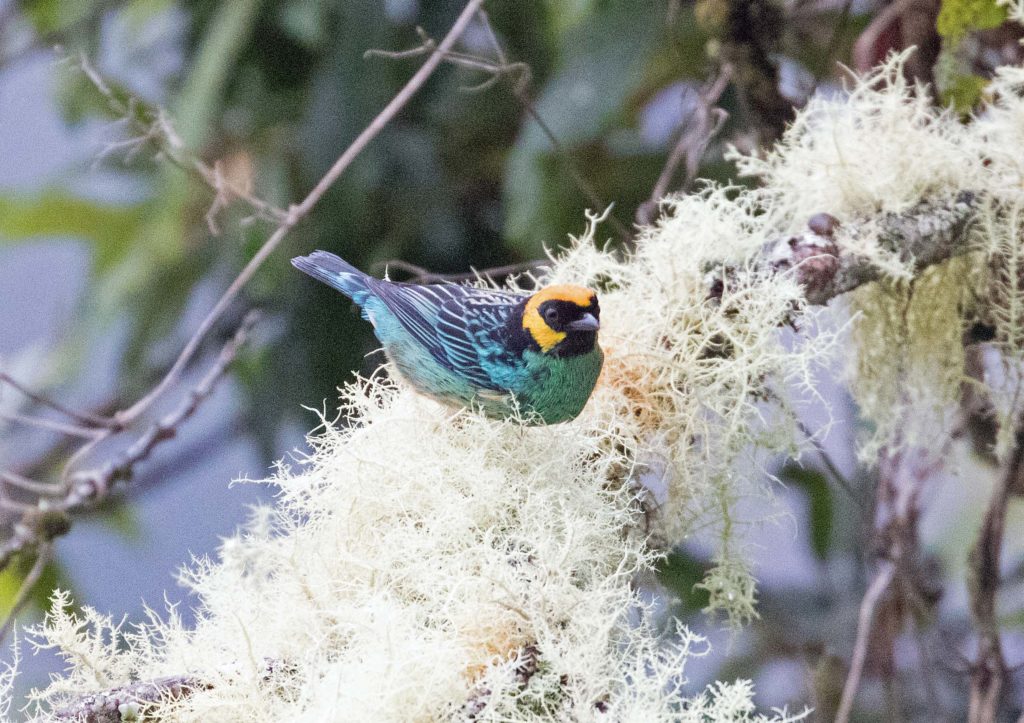
Saffron-crowned Tanager

On a whim, we decided to walk up the trail to the Sun Gate and almost immediately began seeing terrific birds. They included Saffron-crowned and Blue-capped Tanagers, Inca Wrens, a Tri-colored Brushfinch, and my favorites, Andean Guans.

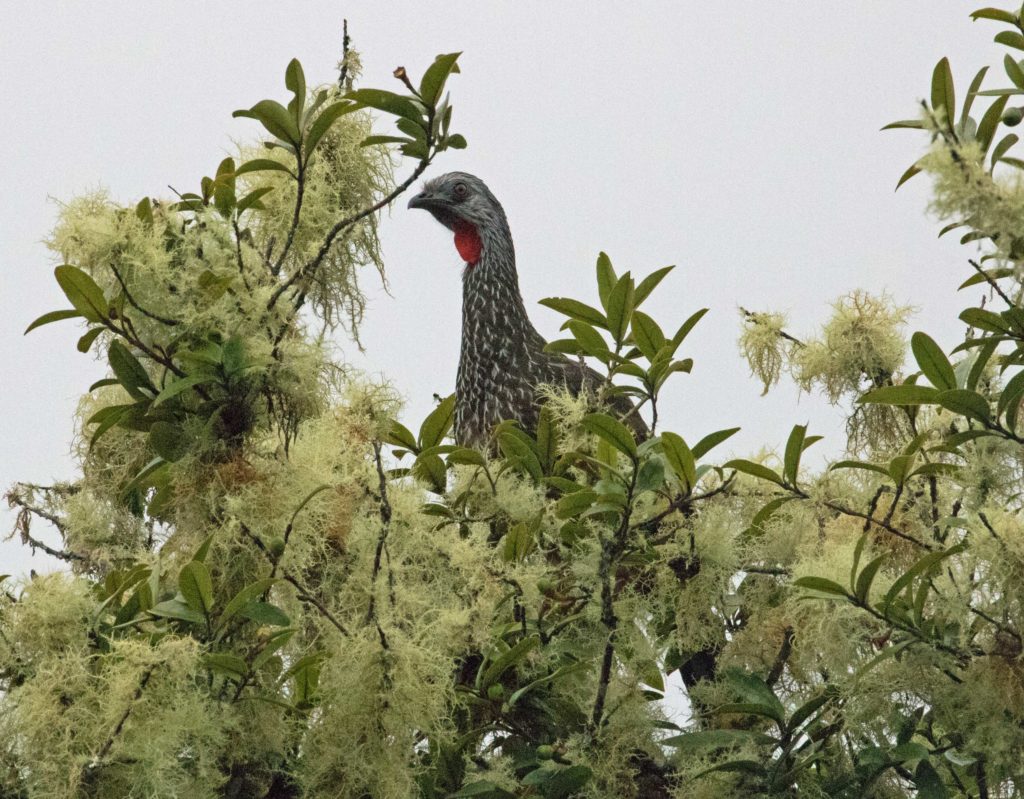
Andean Guan

After riding the bus back down to Aguas, we decided to visit the Inkaterra Hotel. We’d visited the previous evening and been rewarded by a host of hummingbirds at the hotel’s feeders, along with two Andean Motmots. As the rain finally lightened up, we again hit the hummingbird feeders and explored the rest of the grounds. At one point, we ran into another birder and began talking about what we’d seen.

“Did you see the Cock-of-the-rocks?” he asked us.

“You saw them?” Braden asked with astonishment and envy. The Andean Cock-of-the-rock was, after all, one of the birds we—like many birders—most wanted to see, but we had doubted we’d have the time or resources to visit one of the bird’s famed leks at any time during our itinerary.

Our new friend just grinned at us and said, “Turn around.”

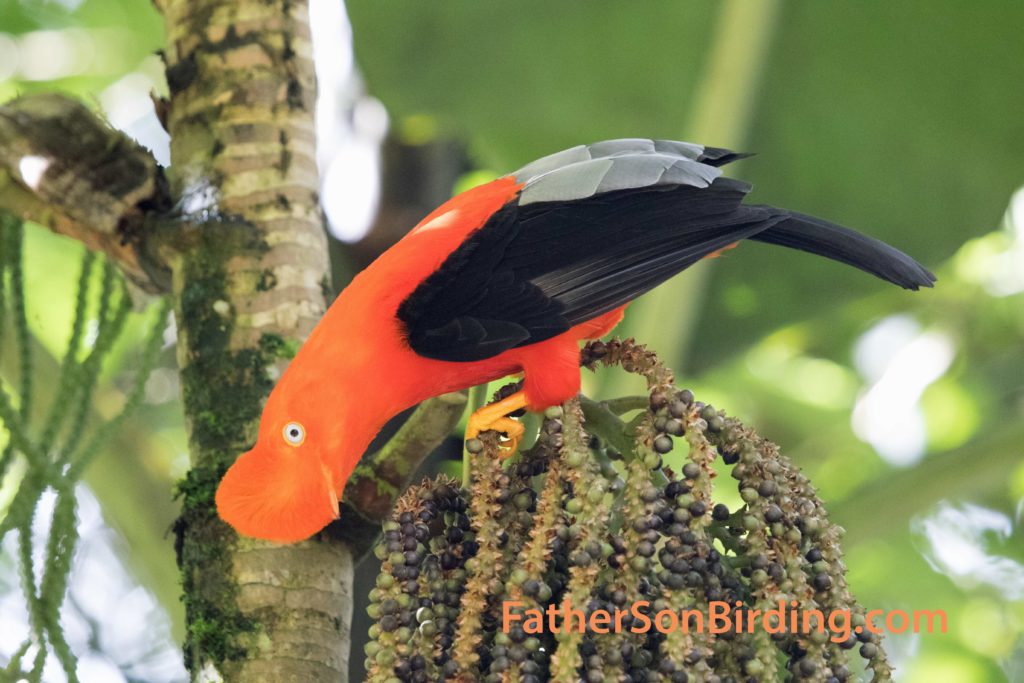
There, only twenty yards away sat a brilliantly orange and black male feeding on palm fruits in a tree.

Male Cock-of-the-Rock (Photo by Sneed B. Collard III)

“The female is over there,” the man pointed.

Braden and I spent the next twenty minutes admiring and photographing the birds. We couldn’t believe our good fortune at finding them and, honestly, it transformed our visit to this iconic location. From then on when we thought of Machu Picchu, we wouldn’t think of the Biblical deluge, cloud-obscured views, or how crummy Tessa felt. We would think of a vibrant orange and black bird sitting in a tree.

Wigeons and Pigeons

Braden here again. The Fort Missoula Gravel Quarry is one of, if not the best, spot to bird in all of the city of Missoula. In the past six months or so, my dad and I have gone there at least four or five times, picking up a lifer every single time. The lifers haven’t been common, either—at least in Montana. Last fall we spotted White-throated Sparrow, Horned Grebe, and Long-tailed Duck, none of which were supposed to be here. I’ll save those stories for another time.

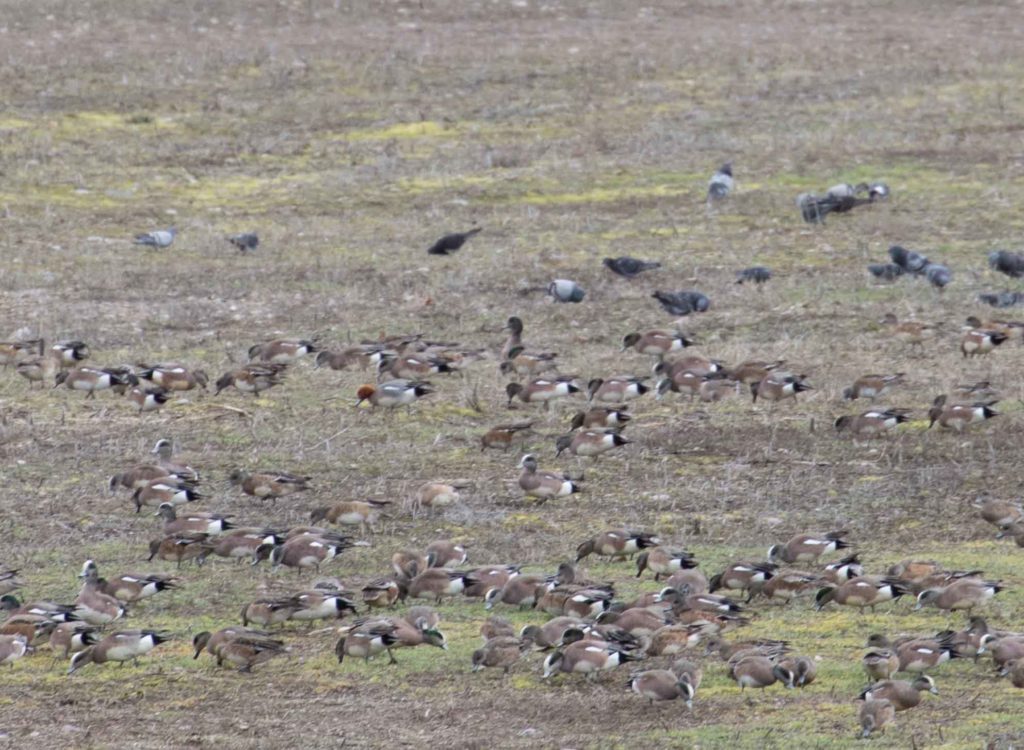
Can you find the Eurasian Wigeon in this photo of American Wigeons and pigeons?

As we headed out this morning, my dad confidently said, “I think we’ll get a lifer today.”

“Really?” I said. “Like what?”

“Eurasian Wigeon.”

“Huh. Aside from Ross’s Goose, which would be a lifer only for me, I guess that’s our best chance.”

On ebird there had been reports of many hundreds of American Wigeons at the quarry recently, but none of the experienced birders who had visited had reported a Eurasian. As we pulled up and exited the car, I began to set up the scope, which we still weren’t very experienced using. All of the ducks were on the close pond, thankfully, so we could view them pretty well through the scope.

Tons of wigeons floated on the pond and fed on the grass nearby with pigeons, flying back and forth randomly. We also spotted Lesser Scaup, Common Goldeneye, Mallards, Redheads, Canvasbacks and a Northern Shoveler.

I began searching for Barrow’s Goldeneye while my dad took a turn with the scope, turning it towards the feeding wigeons.

“I see something…with a red head. Not a Redhead. Could it be something cool?” he asked. My heart jumped.

“Yeah!” I said excitedly, “Lemme see!”

“Okay, its in the scope now.”

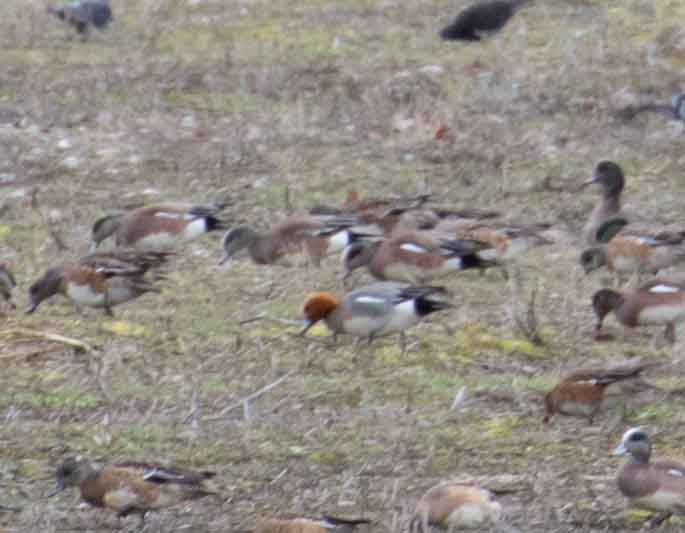
I looked through and saw the duck’s red head, yellow forehead and gray sides and back. There was no question as to what this was.

“Eurasian Wigeon! It’s a Eurasian Wigeon!”

I let my dad look again.

“That’s so cool! What did I tell you?” he said.

We watched the bird for a while, both feeding and swimming. I considered this a huge victory for us, not only getting a lifer, but finding a rare bird all on our own! We were moving up!

Even though it’s from a great distance, you can still clearly see the reddish head, gray body, and yellow crown—the field marks of a Eurasian Wigeon.

A Real Wild Goose Chase

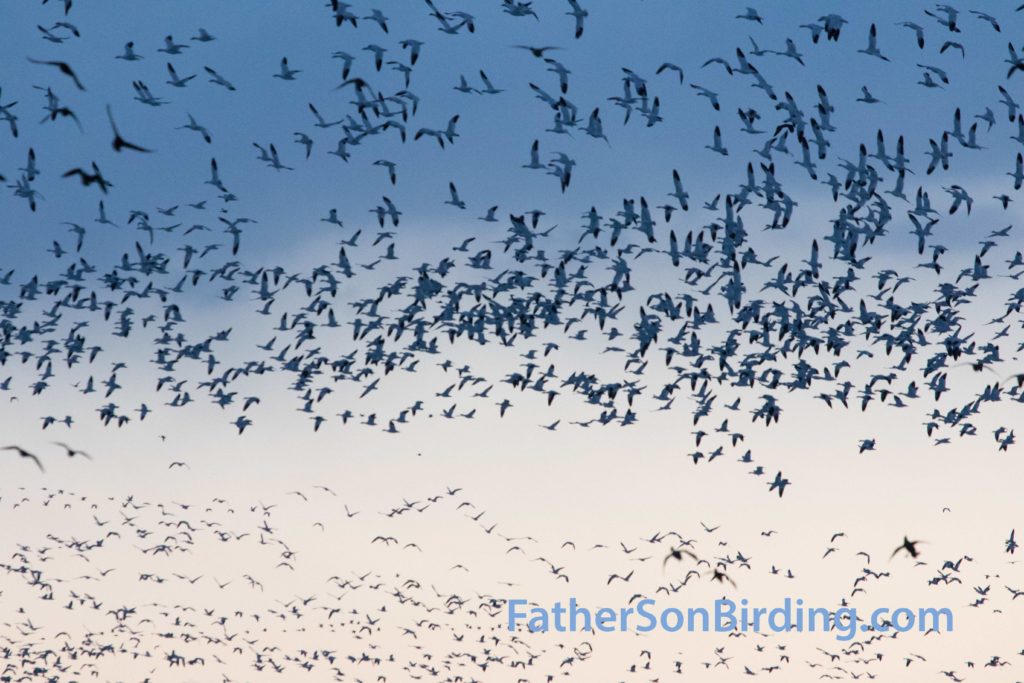
An enormous flock of Snow Geese swirling above the Freezeout Lake area before resuming their migration north. (Photo by Sneed B. Collard III)

One of Braden’s and my favorite spring traditions is to drive three hours to a place called Freezeout Lake. Why? To watch the annual appearance of white geese that “pit-stop” on their way to northern breeding grounds.

This year we headed out Monday morning, March 26 (Spring Break), hoping to find an abundance of the white birds. We first stopped in Great Falls to observe a good variety of ducks, especially Common Goldeneyes, on the Missouri River. Making our way up to Freezeout, we also encountered 1,000 Snow Geese feeding in fields near Powers, Montana. At Freezeout itself, however, our biggest finds were about 300 Northern Pintails and a few Tundra Swans.

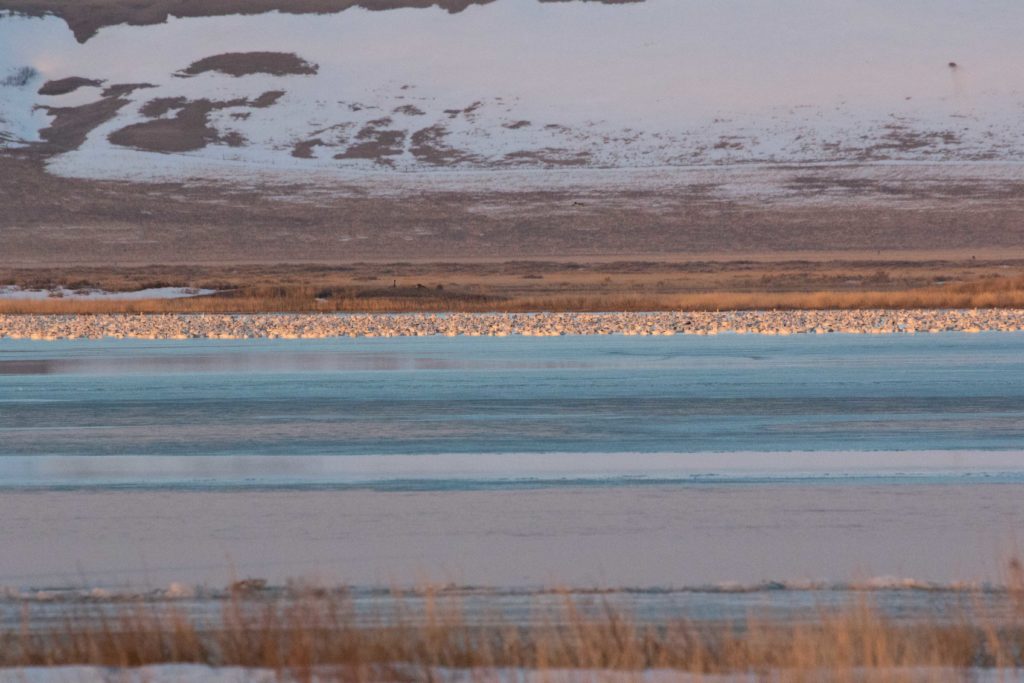
A “small” flock of Snow Geese hunkered on a frozen pond. (Photo by Sneed B. Collard III)

After spending the night in Choteau, we awoke before dawn and made our way back to Freezeout. We joined several other birders as a blue dawn stretched over the still-frozen ponds. 5-10,000 geese huddled on the ice—far fewer than we had hoped for—but as the sun peeked over the horizon, one flock rose into the air cackling and squawking, putting on a delightful show.

“Well,” I said, “I guess that’s about it for this year.”

Then, I glanced east.

“Look!” I shouted.

My fellow birders spun around to behold thirty to forty thousand more geese approaching. I had no idea where they’d come from, but they filled the skies! They circled around one pond and we thought they would head out to the adjacent fields to feed, but this large group of geese were on a mission to continue their migration. After checking in with the other geese, they bee-lined north in huge, dark flocks until they appeared only as smudges in the sky.

“Wow, that was great,” Braden said.

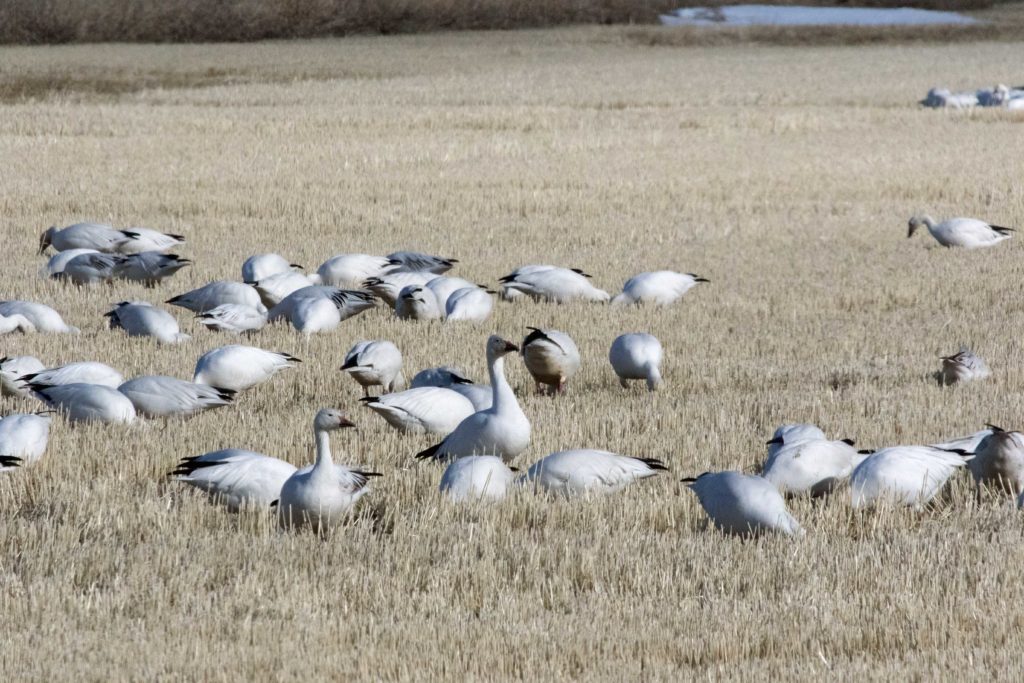
Before heading home, we observed about 300 Tundra Swans on another pond, and then drove into the neighboring countryside, where we discovered about 10,000 Snow Geese feeding in fields. It was a great way to kick off spring, and the kind of experience that will keep us coming back year after year.

Fattening up in a farmer’s field before continuing north. (Photo by Sneed B. Collard III)

The Rarest Bird in Brownsville

Plain Chachalacas at Estero Llano Grande SP.

Braden here. During the beginning of February this year, my dad and I had the great opportunity to visit and bird in southern Texas, one of the U.S.A.’s birding meccas. We saw tons of cool birds in South Texas, including sought-after species such as Altamira and Audubon’s Orioles, Green Jays, Buff-bellied Hummingbirds, Plain Chachalacas and more. We also missed quite a few species, including Green Kingfisher, which was a real thorn in our sides. Our rarest bird, however, was a Common Grackle at Estero Llano Grande State Park near McAllen, Texas. Let me explain.

When we first arrived at ELGSP’s visitor center, we ran into a trio of birders talking and watching birds from the center’s deck. The visitor center was quite possibly the best we had run across so far on the trip, with a gift shop, nice bathrooms, and a huge outdoor deck overlooking a lake. On most sides were also fruit or seed feeders, and at any given time one could pick up 20 species by standing in one place and turning in a slow circle.

One of the birders introduced another as the “legendary” Huck Hutchens, who had helped get the state park started in the first place in the early 21st century. He explained that being a resident, while we were marveling at the Great Kiskadees flycatching over the lake, he was here for one reason: to find a Common Grackle. He had just returned from a trip to Virginia where he had seen thousands of grackles, but here they were a rare sighting; their range did not extend past central Texas. Suddenly, as he was using his binoculars to comb through a large flock of Red-winged Blackbirds gorging themselves on seed, he shouted “I’ve got one!” We all found it, a surprisingly bronze animal among the horde of black. It reminded me of something Noah Strycker, holder of the 2016 Global Big Year Record, had said: Birders went to great lengths to find rare vagrants to their region; why not just go where they’re common? This was also one of his reasons for doing a Global Big Year.

The grackle certainly wasn’t the coolest bird we saw on the trip, or even that day, but it was a very interesting one. What made it even better was that we got to share it with other birders who enjoyed it just as much (or possibly more, in Huck’s case) as we did.

This Northern Parula was another species that we “weren’t supposed to see” on the trip.