In an earlier post, we may have let slip that both Braden and I are on a tear for our 2025 global species lists (see our post In Search of the Green-tailed Towhee). That’s due to a variety of factors. Braden not only drove across the country from Maine to Montana this past spring (see last post), he embarked on intense birding trips to Oaxaca, Mexico (see post Birding in Oaxaca, Mexico) and Costa Rica. As for me, I received delightful last-minute invitations to Colombia (post Antpittas and Tody-Flycatchers), thanks to FSB contributor Roger Kohn, and to Texas, where I spoke about my book Birding for Boomers. The upshot of all this is that Braden has seen almost 800 species of birds this year, while I am within twenty birds of breaking my all-time record of 527.
The thing is, twenty birds in Montana in late July is more challenging than it sounds. Birds common in May or June become increasingly difficult to detect and find, so if you don’t have them by August you may not get them at all. That means you’ll have to rely on migrants—which are notoriously unpredictable—or winter arrivals that you probably got earlier in the year. As a result, I’ve recently been focused on picking up the remaining common birds that I so far haven’t seen. Top on my list? Say’s Phoebe.
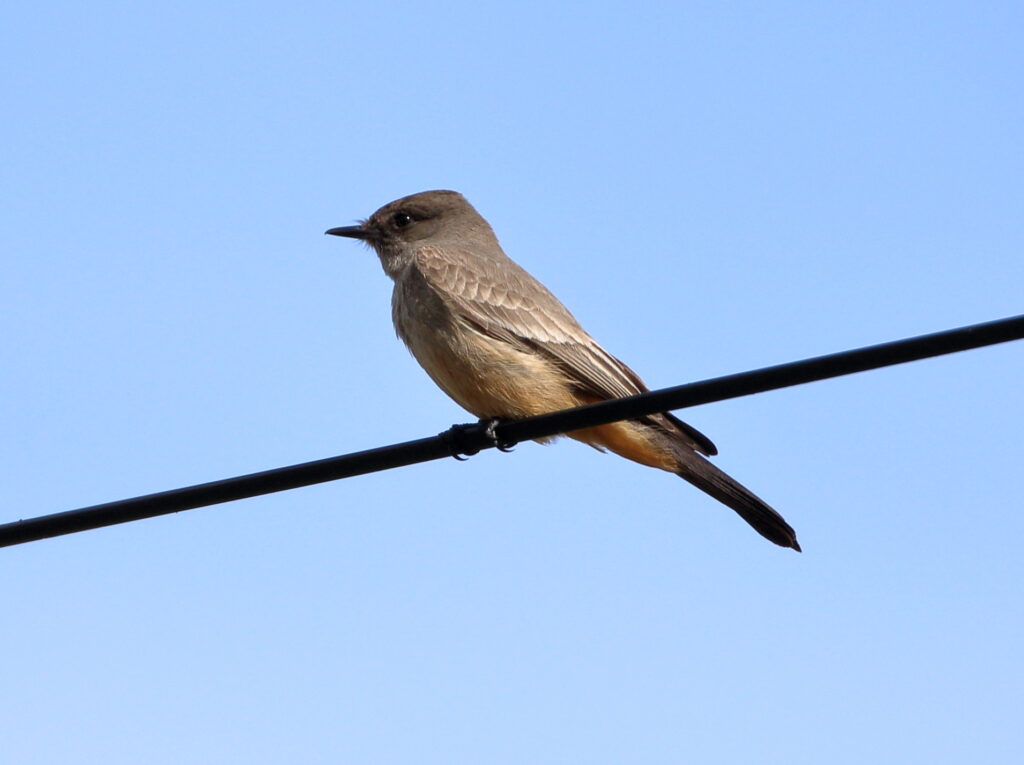
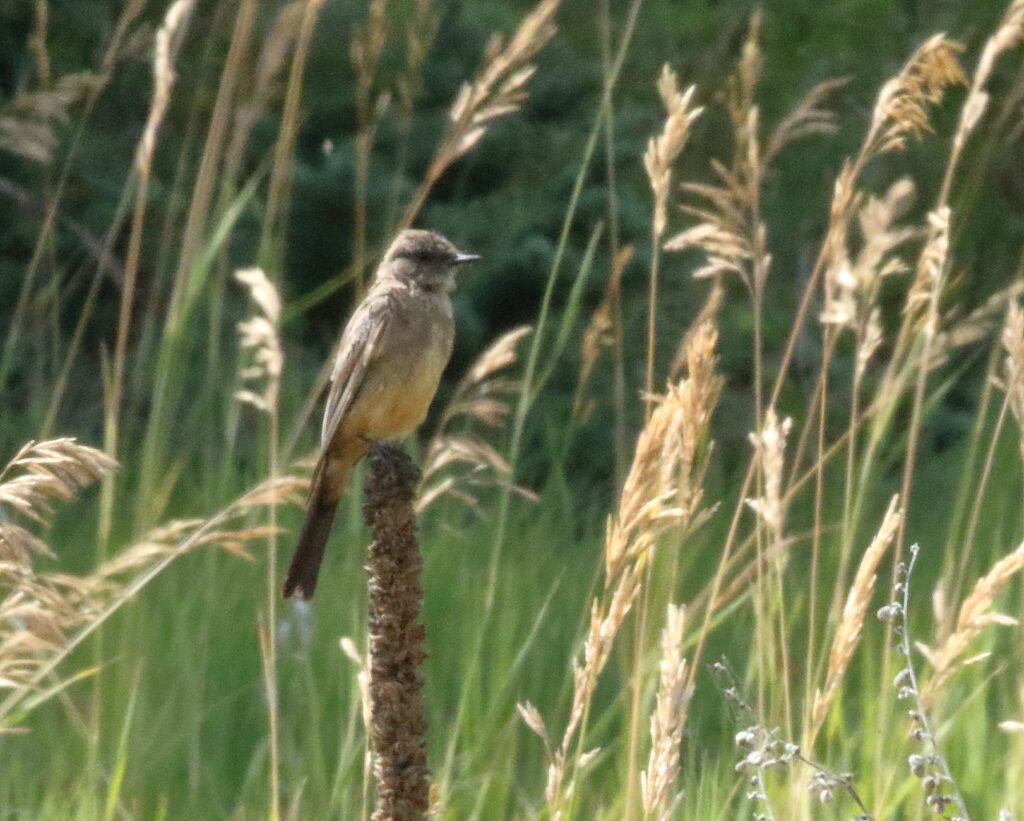
Say’s Phoebes are cool little flycatchers that love to nest on human-made structures such as barns, covered porches, and utility buildings. While not rare, they seem to be pretty picky about their accommodations, and we run into them only infrequently in Montana. As I write this, for example, only four sightings have been reported in Missoula County in the past month. While scouring eBird, though, I did note regular sightings up at Kerr Dam below Flathead Lake. Braden and I had discussed doing a birding day trip, so two Tuesdays ago we set out early, Say’s Phoebes our Number One goal.
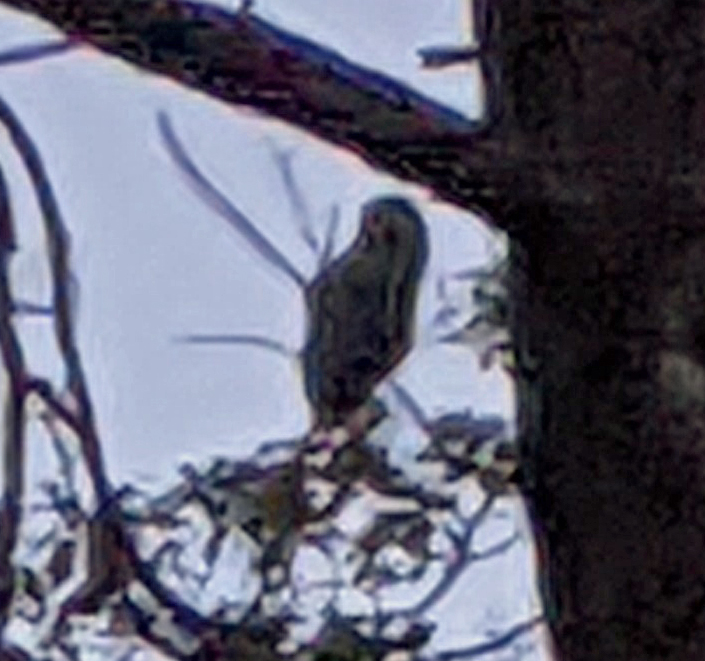
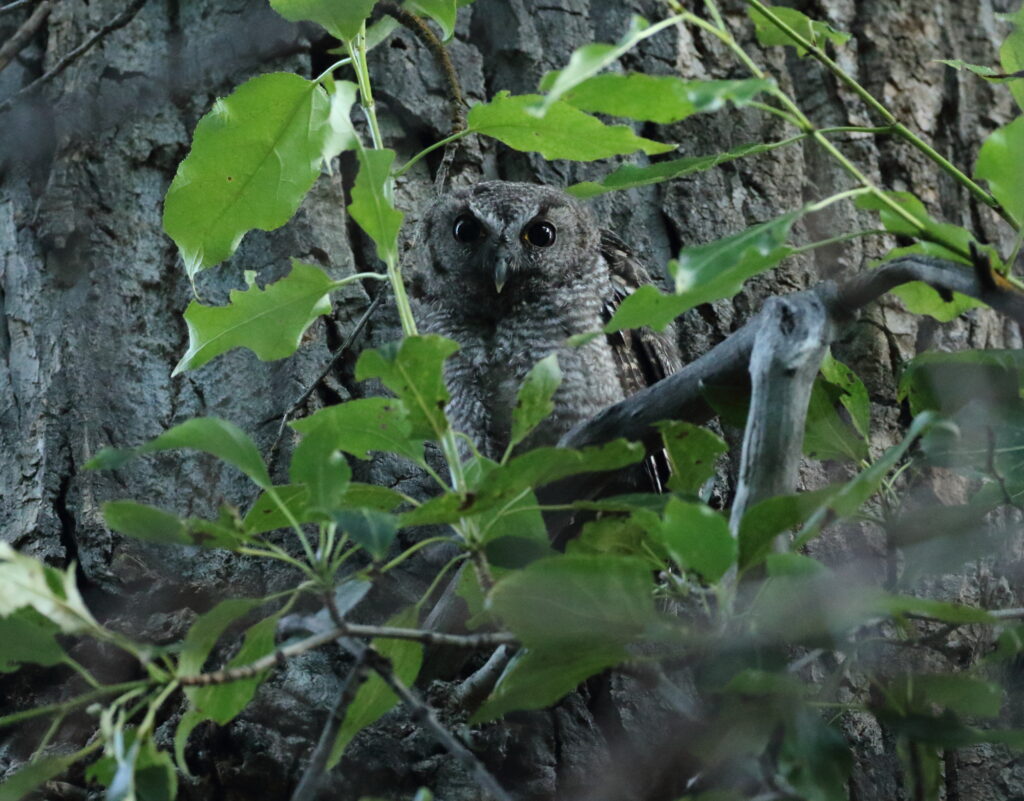
Before leaving Missoula, Braden asked if we could stop at Greenough Park. He had been pursuing a birding challenge with friends back East to see how many species they could find every day for seven days in a row. “I want to pick up Lazuli Bunting and Swainson’s Thrush,” he told me. This search happened to lead to the first delightful surprise of the day. As we were walking up a dirt trail, we approached a cottonwood tree where Braden had found a Western Screech Owl two days before. Today, he suddenly exclaimed, “Oh my god! It’s a baby!” Sure enough, a WSOW baby sat only a yard from its parent about twenty feet up the tree. Here, our day had just begun and already it had been a wonderful outing!
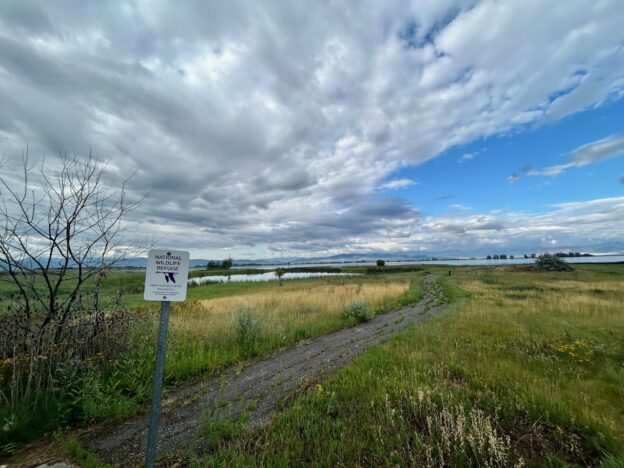
Still, we had a lot of ground to cover. After a fortifying meal at our favorite French restaurant, McDaniels (in honor of Rogére), we headed up to Ninepipe NWR. We didn’t have any major agenda there except perhaps to snag some shorebirds. For July, it was an unusually cool, overcast day and we joked that we might see some Black Swifts. For those unfamiliar with Black Swifts, they are one of the most elusive and rare birds in the US. They nest mainly behind waterfalls and, especially with climate change, are highly vulnerable throughout their range. In Montana, I had never seen one outside of Glacier National Park, and it was pie-in-the-sky logic to even hope we might see one here out in the valley.
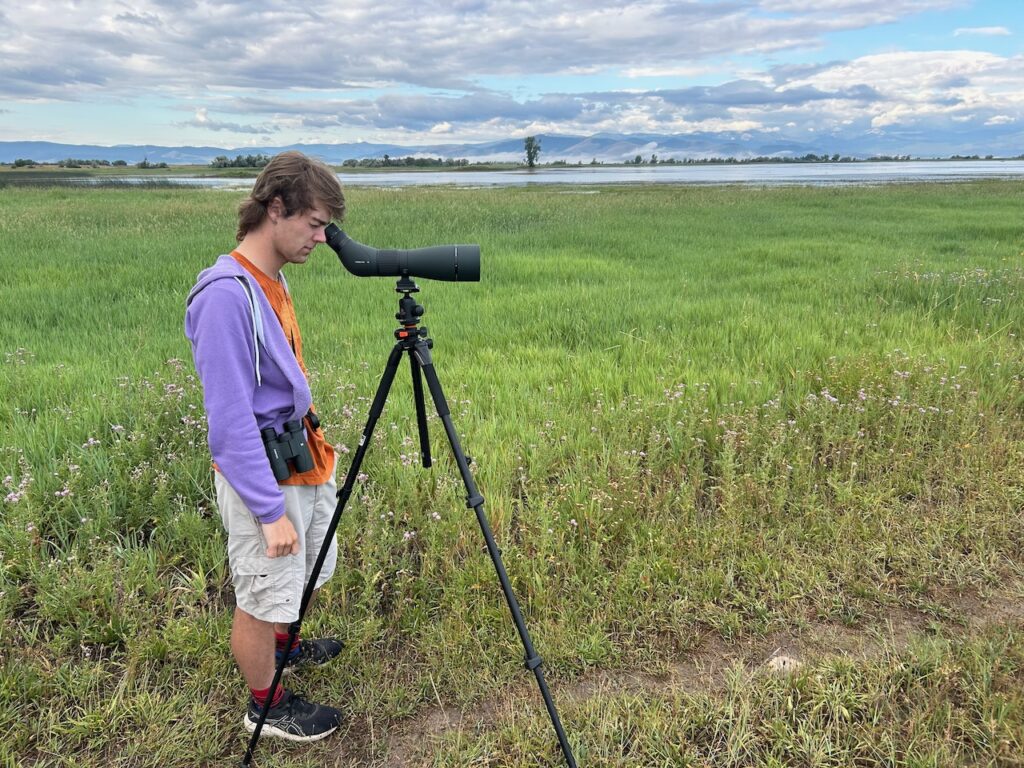
Anyway, we stopped at one Ninepipe pullout just off Hwy 93. The ducks were in their almost-impossible-to-identify intermolt plumages, but we still saw a nice variety of them plus Trumpeter Swans, American White Pelicans, Double-crested Cormorants, and Great Blue Herons. “Where are the Black Swifts?” I pressed Braden, but he shrugged off my flippant remark.
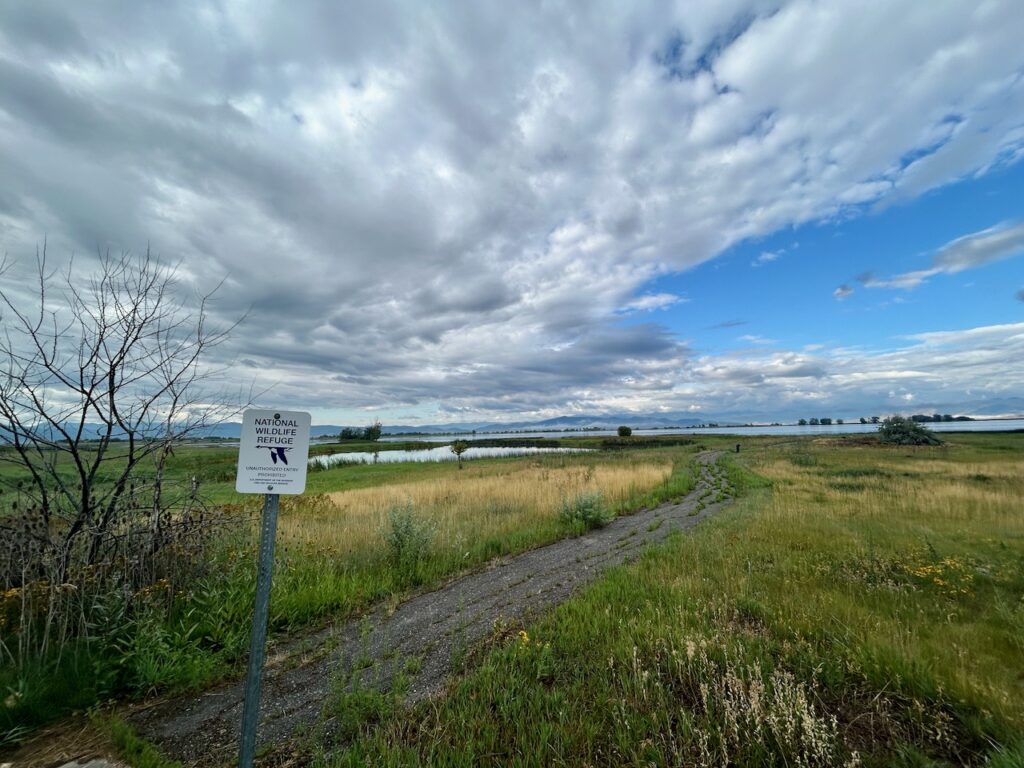
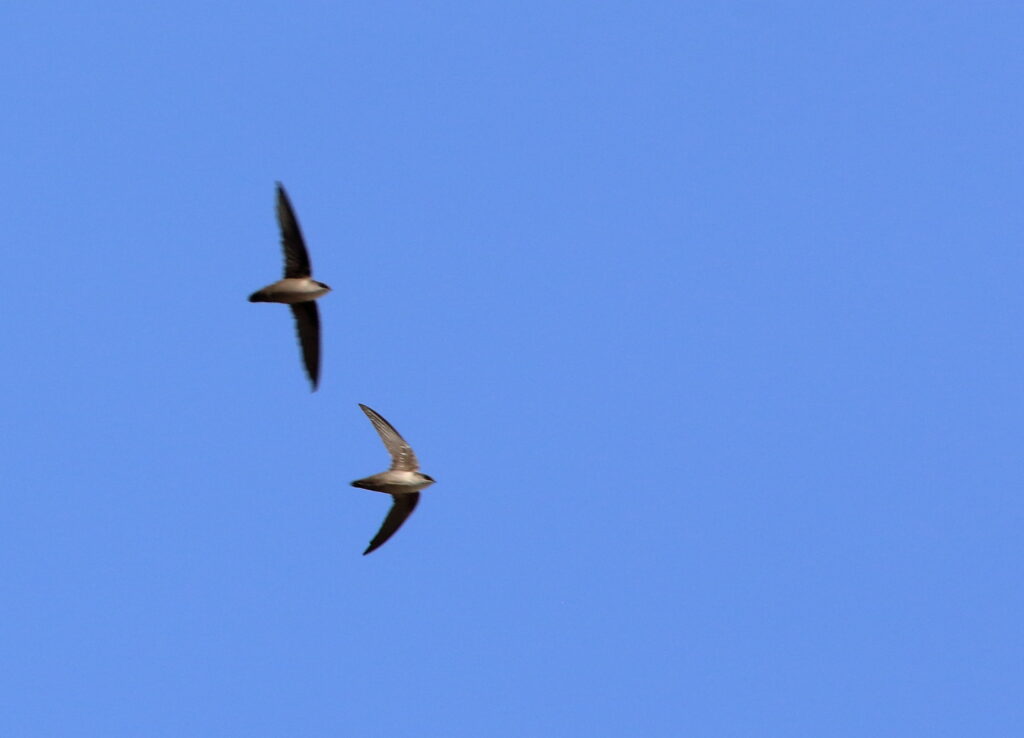
The phoebes on our minds, we didn’t want to spend too much time at Ninepipe, but decided to stop at one more pullout and, again, found the usual suspects. We both searched the skies for Black Swifts just in case, but didn’t see any. “I have to go to the bathroom,” Braden said, and I kept looking around for various birds. As soon as Braden emerged from the outhouse, however, he shouted, “Black Swifts!” Huh? My eyes darted back toward the low clouds, and there they were—four unmistakable dark shapes scything through the air!
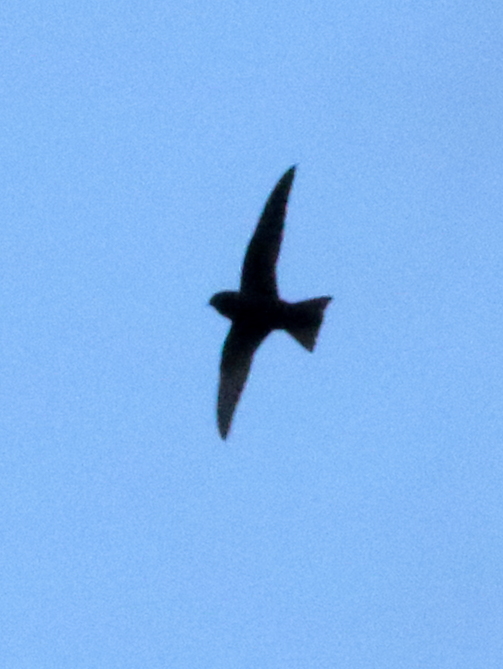
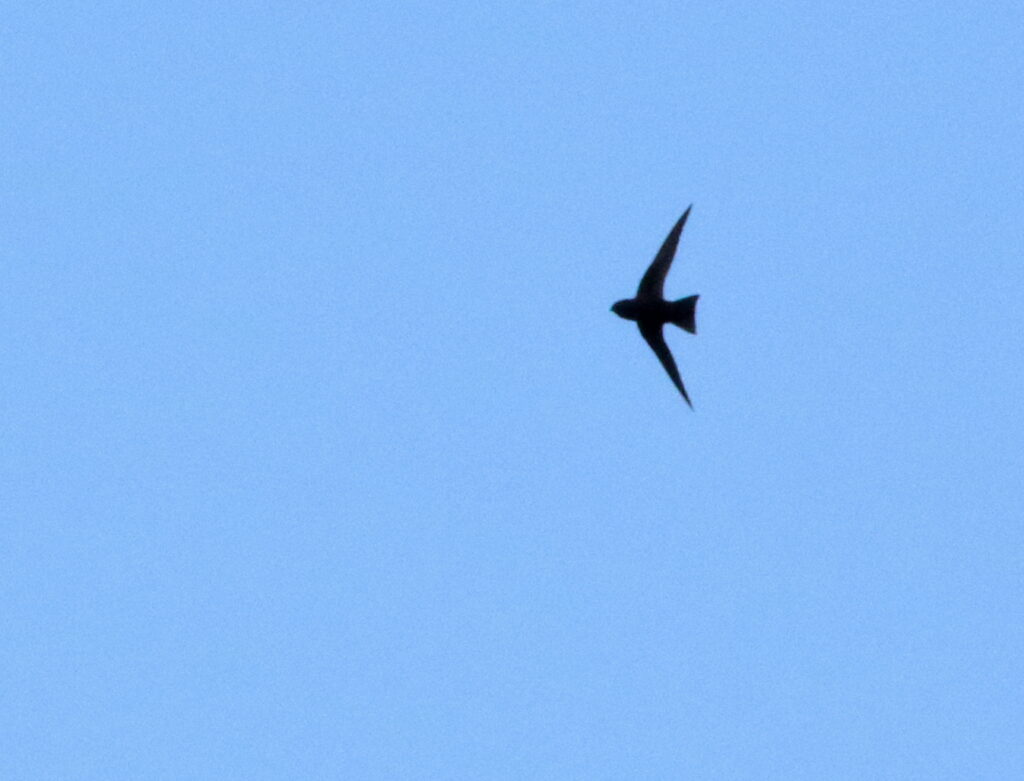
Though I’d seen Black Swifts before, this was my first time really getting to study them, and I noticed both similarities and differences between other swifts. Like other swifts, BLSWs have distinctive almost sickle-like shapes when they fly. With a wingspan of eighteen inches, however, they are significantly larger than Montana’s other swifts, and this shows in their flight. While Vaux’s Swifts zip around with almost mechanically stiff rapid wingbeats, Black Swift wings bend more noticeably. They still look like advanced jet fighters as they zoom through the sky, but with more flexible bodies. Braden also pointed out that Black Swifts show noticeable forks in their tails compared to Vaux’s Swifts, which look like their tails have been chopped off with a cleaver.
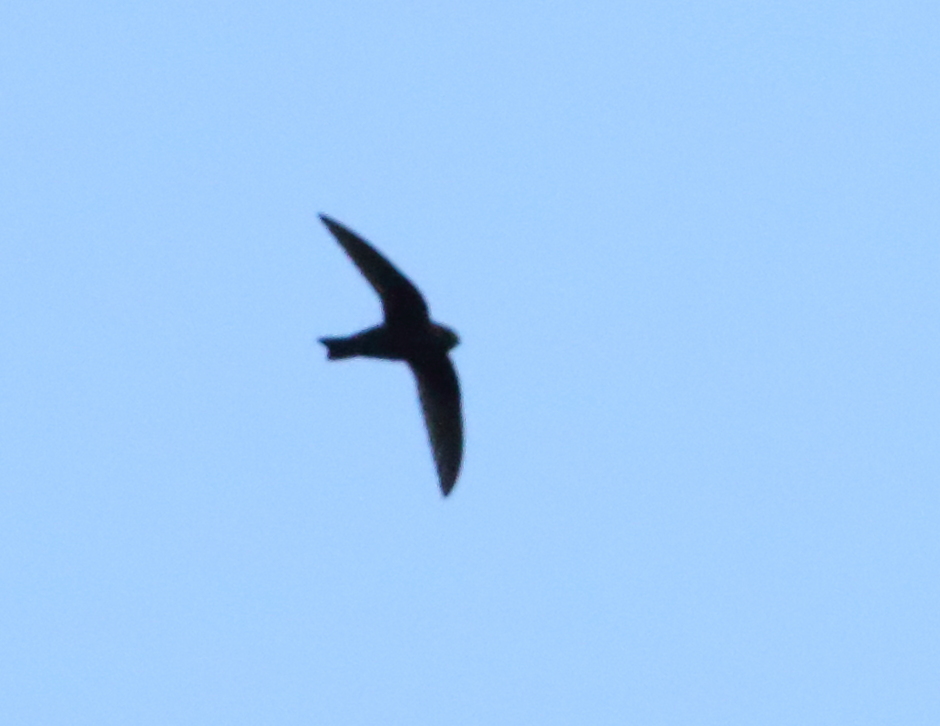
We watched these rare beauties for a full five minutes before they drifted away across the lake and I even managed some cool photos. After they had gone, Braden and I just looked at each other. “Black Swifts,” he said, and we gave each other a hug.
Remarkably, it was still only 8:30 and we had a ton of birding ahead of us. Our next stop was the roadside rest stop just south of Ronan where we picked up lone Semipalmated, Spotted, and Solitary Sandpipers, along with a pair of Long-billed Dowitchers, all undoubtedly in migration. After that, we headed to Pablo NWR in hopes of some interesting water birds. We struck out on those—but were amazed to see more than 300 Bank Swallows resting on the dirt road. “They must be migrating, too,” Braden marveled, and I agreed. In fact, it has been a very lucky swallow year for both of us with, for example, great looks at large numbers of migrating Tree Swallows and Cliff Swallows. This was the first time we’d ever seen Bank Swallows in such numbers, though. From there, it was on to our primary destination: Kerr Dam.
Braden had never been to Kerr Dam before, and I’d just gone to the overlook, but the entire site reminded me of a throwback to gentler, more civic times, when people shared more of a vision for the common good. From the overlook, we looked down on the dam itself with the Flathead River backing up into Flathead Lake beyond. Below the dam, dramatic, highly eroded cliffs framed a dramatic canyon full of promising riparian habitat.
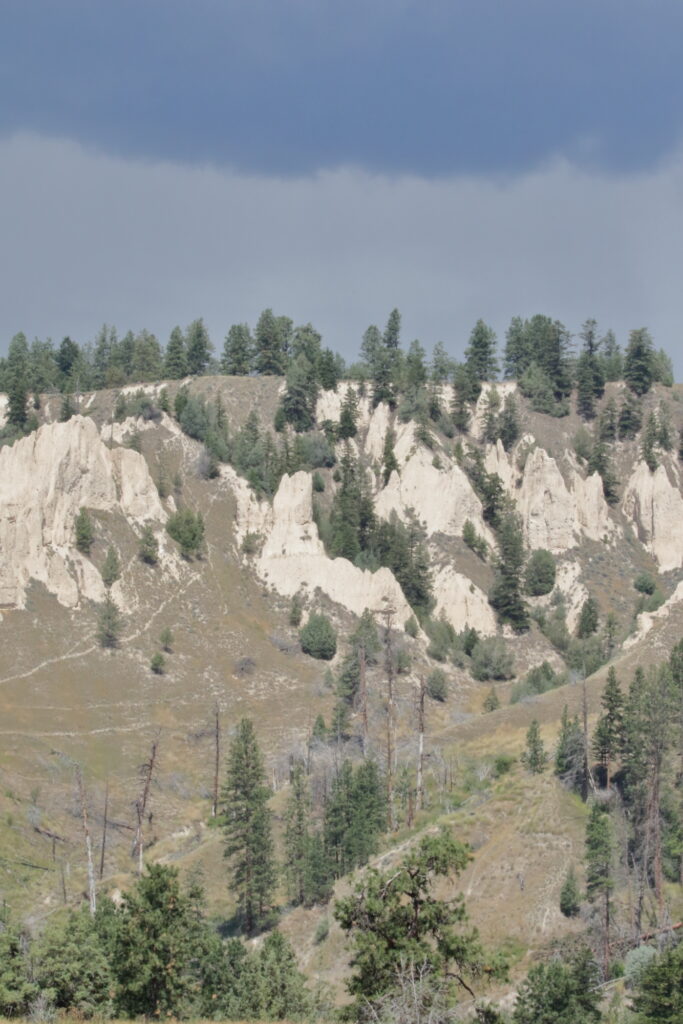
From the overlook, we watched Ospreys and Braden said, “Look, there are some Violet-green Swallows. White-throated Swifts should be here, too.” Not two minutes later, he spotted a pair flying overhead, their sickle-shaped wings and white breasts clearly visible against the blue sky. “Uh-oh,” I said. “That means that we might have to go for the Swift Trifecta and find some Vaux’s Swifts.” Braden sighed in agreement. Darn those swifts!
But we had not forgotten our main target, Say’s Phoebes. “I’m guessing they are down there at the power station below the dam,” I said. “You up for going down there?”
“Sure.”
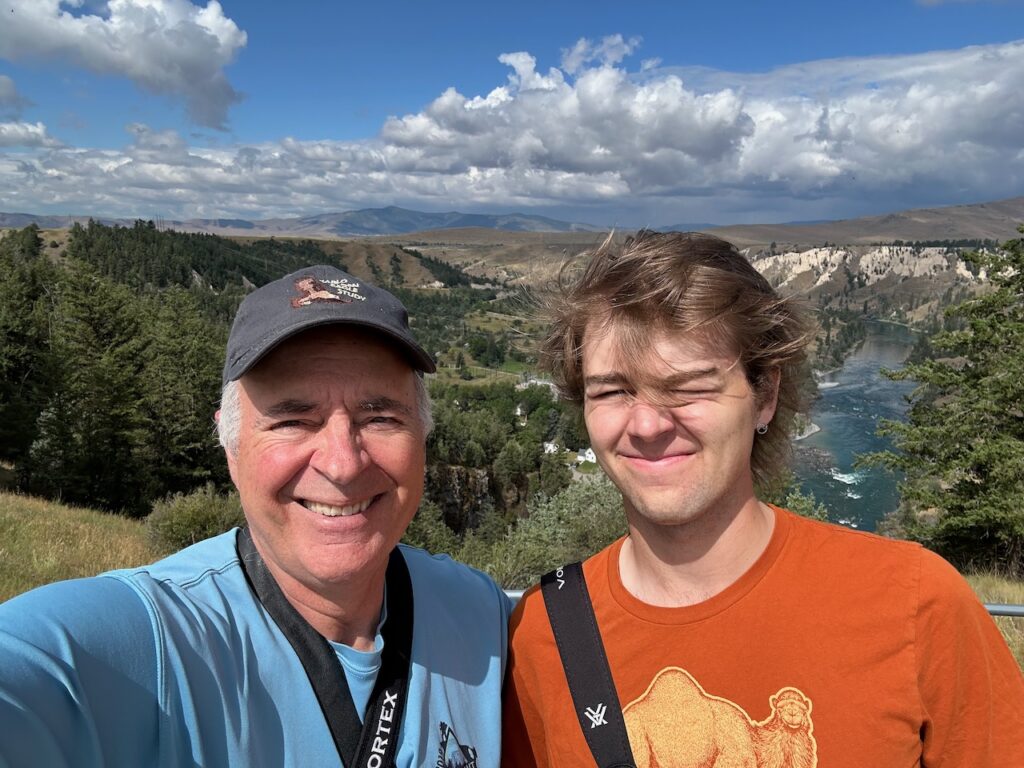
Winding our way down to the power station, we were greeted by a cluster of neatly-kept houses and a fenced-in area full of transformers and other “power stuff.” All of this was surrounded by an open, pleasant park-like setting that reminded me of my days working on the Pitt River dam network in northern California just after college. We decided to get out and walk around and immediately started seeing and hearing Western Wood-Pewees, American Goldfinches, robins, Eastern Kingbirds, and other songbirds. We hadn’t walked ten minutes when suddenly, some kind of flycatcher darted out in front of us to snag an insect.
“Say’s Phoebe!” I exulted, and Braden gave me a high five. There weren’t just one, but two, working the area around the fenced-in transformer area. “This is perfect for them,” I said. “Lots of insects and plenty of structures to nest on.” Alas, they didn’t care for our attentions and kept flying away as we approached, but they and the Black Swifts brought my global year total to 509 species—just nineteen shy of breaking my record of 527. Braden already had the phoebe for the year, but the Black Swifts took his global 2025 total to an astonishing 776 species! BUT . . .
There was still that little matter of a swift trifecta on our minds. After a cultural stop at Richwines Burgerville in Polson, we made our way slowly back to Missoula. Nowhere did we see the third Western Montana swift, Vaux’s Swift. “Let’s go to Caras Park,” Braden suggested as we reached Missoula. “I see them there pretty regularly.”
We parked near the iconic metal salmon sculpture and walked out onto the grass below the Higgin’s Street Bridge. The sun was out by now and things were warming up. Cliff Swallows flew to and from their mud nests on the side of the bridge, but I didn’t expect to see any swifts. “There’s one!” Braden suddenly shouted. Sure enough, several birds with fast, mechanical wingbeats darted back and forth after insects above the Cliff Swallows. It was a final satisfying sighting on a totally surprising, remarkable July day in Montana.
Our Day’s Trip Report: https://ebird.org/tripreport/396651?welcome=true