Tag Archives: tropical travel

Hawai’i: The International Jungle

If you haven’t done so already, please subscribe to our birdy blog by filling out your name and email in the form down in the right-hand column. We will not share your information with anyone. Thank you! Sneed & Braden

During Spring Break this year the Hellgate High School Band travelled to Oahu, Hawai’i for the Pacific Basin Music Festival. Almost every day my friends and I worked with music professors, performed, and enjoyed music in many different forms. The festival provided us with experiences we’d never forget. However, we did not spend every second playing—we actually had quite a bit of free time. During this time, we hiked, surfed, snorkeled and shopped around Honolulu, giving me time to take in the island and its birdlife.
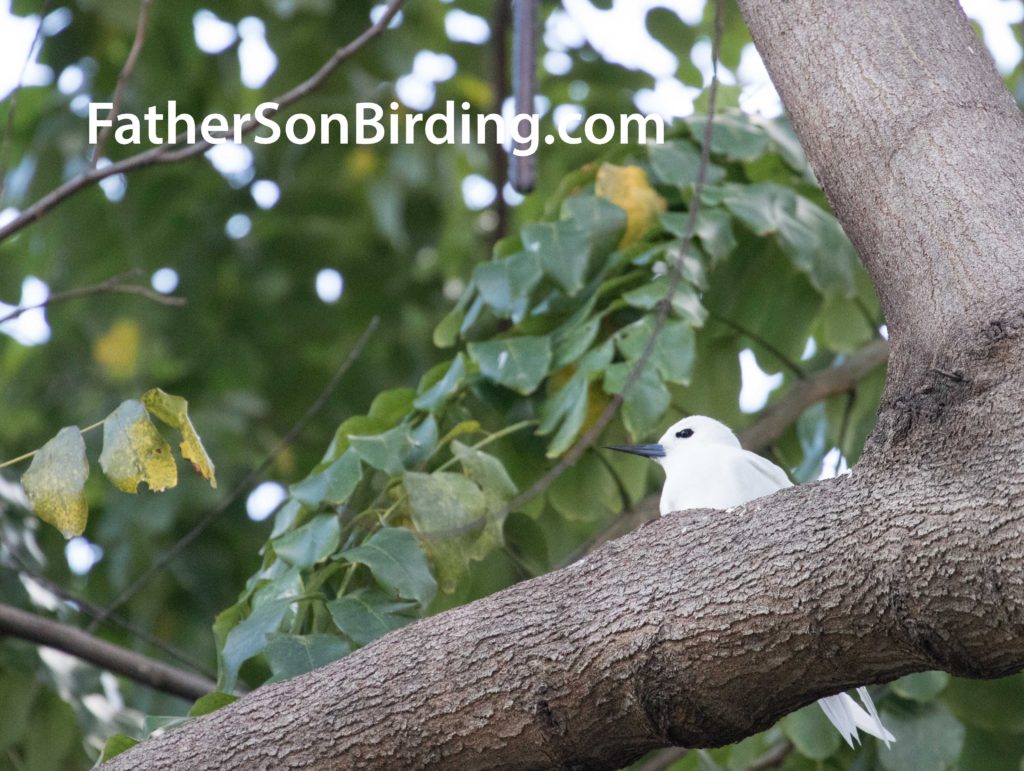
White Terns lay their eggs precariously on bare branches, without nests. In Oahu, the White Terns did not discriminate between native and nonnative trees.

Only about 6 of the birds I spotted on the trip were actually native to the island chain (Brown Booby, Hawai’ian Coot, White Tern, Pacific Golden-Plover, Oahu Amakihi and Wandering Tattler), which opened my eyes to the exotics of the tropics. The city of Honolulu itself was an international jungle, full of plants and birds from all over the globe. A few native Hawai’ian birds had taken to the civilized landscape; wintering Pacific Golden-Plovers lounged on lawns, suited in their dappled patterns, and ghostly White Terns floated between skyscrapers. The majority of the birds, though, hailed from other continents. Familiar birds included Rock Pigeons and House Sparrows (Europe), and House Finches and Northern Cardinals (North America). Lawns yielded a high diversity of species, including Common Mynas, Red-vented Bulbuls, Chestnut Muñias, Zebra and Spotted Doves, and Java Sparrows (Asia) and Cattle Egrets, Common Waxbills, African Silverbills and Yellow-fronted Canaries (Africa). Red-crested Cardinals (South America), which are brilliant gray birds topped with crimson crests, sang from palm trees.
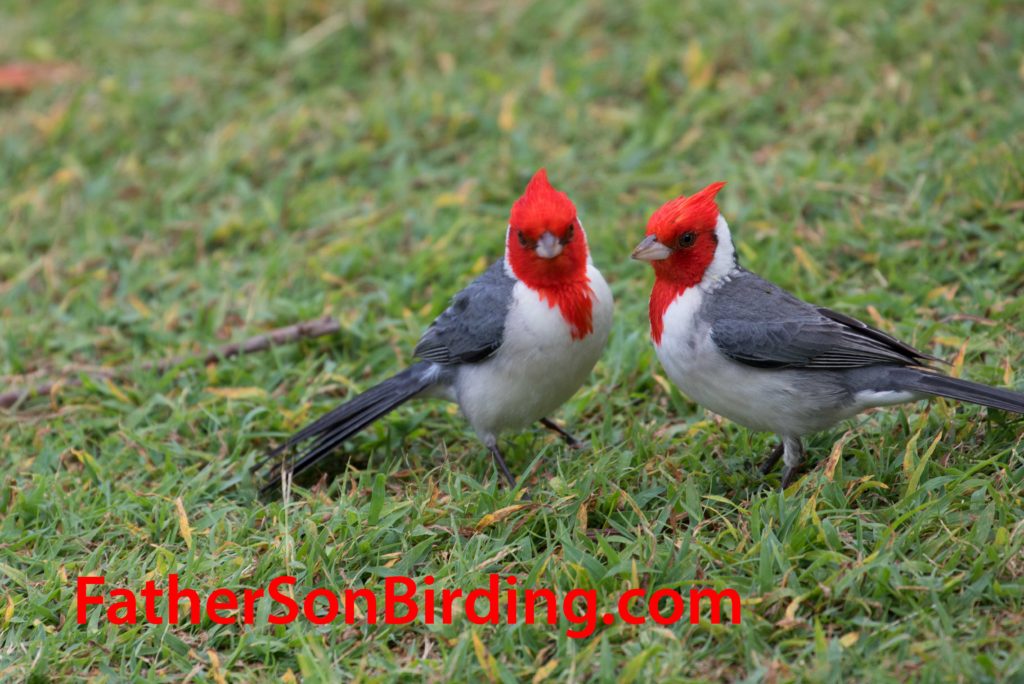
Red-crested Cardinals swarmed the streets of Honolulu. They were almost as common as pigeons!

One morning, when hiking through densely rain-forested canyons, I encountered a plethora of different species. I did manage to hear one native, the Oahu Amakihi, but the forest echoed with mostly non-natives’ songs, like in the city. White-rumped Shamas (Asia) belted out complex, froglike songs, and Red-billed Leiothrixes, Japanese White-eyes and Red-whiskered Bulbuls (Asia) lurked high in the damp canopies. Red Junglefowl (Asia), the ancestors of domesticated chickens, as well as actual domesticated chickens, ruled the streets. By the end of the trip I had reached my goal of 30 species, even if one of them was an unidentifiable white booby (I’m guessing a Red-footed) dodging the waves off of North Shore.
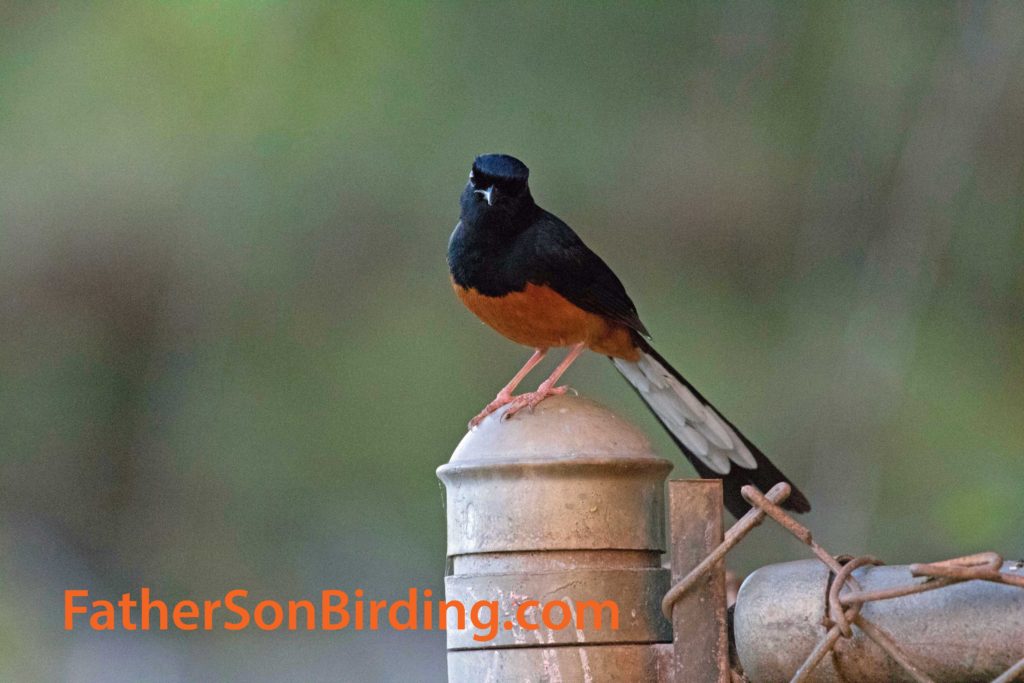
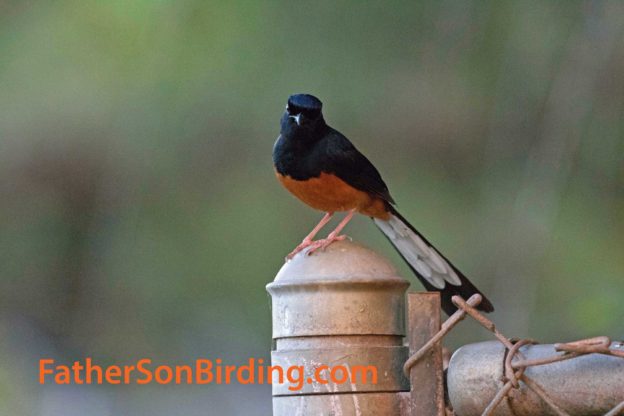
The White-rumped Shama is a subtly beautiful Asian songbird that now makes its home on the forest-covered slopes of Oahu’s extinct volcanoes.

We ran into large numbers of Rose-ringed Parakeets (Asia and Africa) on several occasions, and I glimpsed a pair of Red-masked Parakeets (South America) shooting past the scrubby slopes of Diamond Head volcano in southeastern Honolulu.
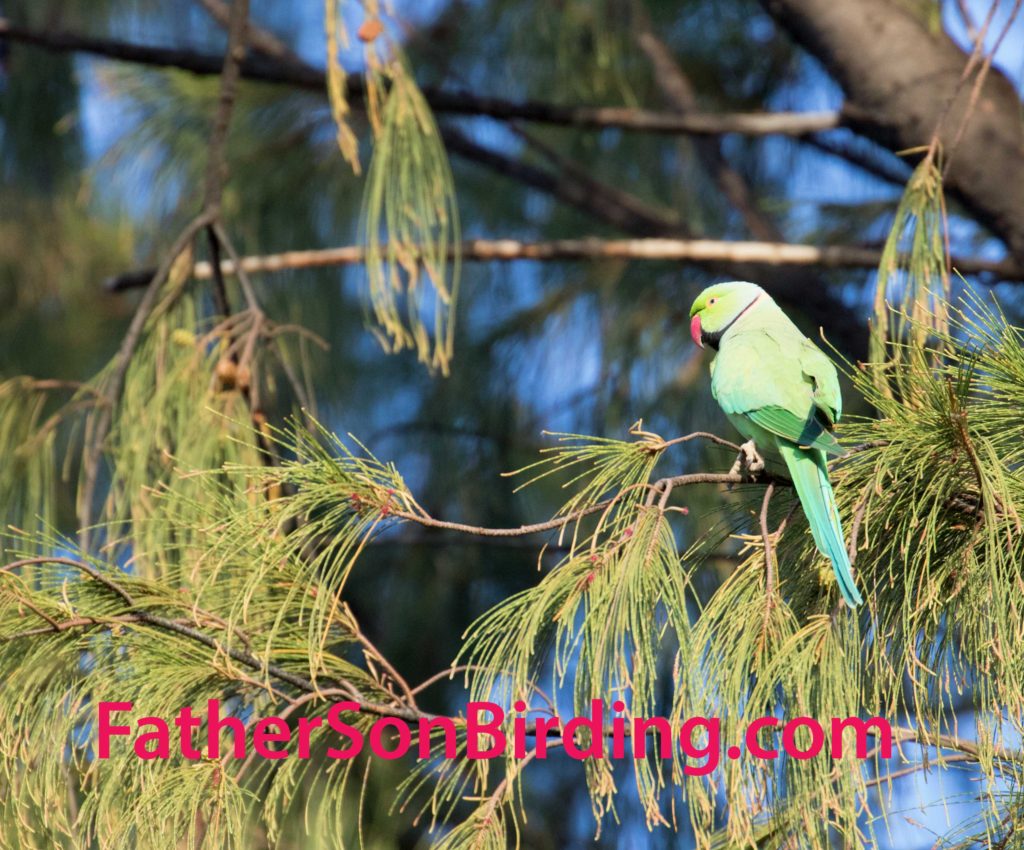
Rose-ringed Parakeets (or known by pet-lovers as Indian Ringnecks) aren’t just introduced to Hawaii. Parrots escaped from a damaged aviary in Bakersfield, California a while ago, and now also can be found there with a little effort.

This raised controversial questions. Most of these species definitely did not belong here, that much was true. But now, thanks to human involvement, they had established and thrived, and many of them caused no obvious harm to the native birds. So, what should we do with them? Should we eradicate them, killing innocent birds because of a crime humanity committed? Or should we allow them to stay, letting these foreign species form their own niches in Hawai’i and other places?

In the case of many of the birds, it is too late. For better or for worse, they will be here forever, and I think that if they are not harming indigenous birds, we should let them be, and let nature decide what to do with them. Introduced predators such as cats, rats, and mongooses, however, are another matter and take a terrible toll on all of the islands’ birdlife. More resources should definitely be allocated to eliminating these destructive invasive pests.
Birding the Galapagos

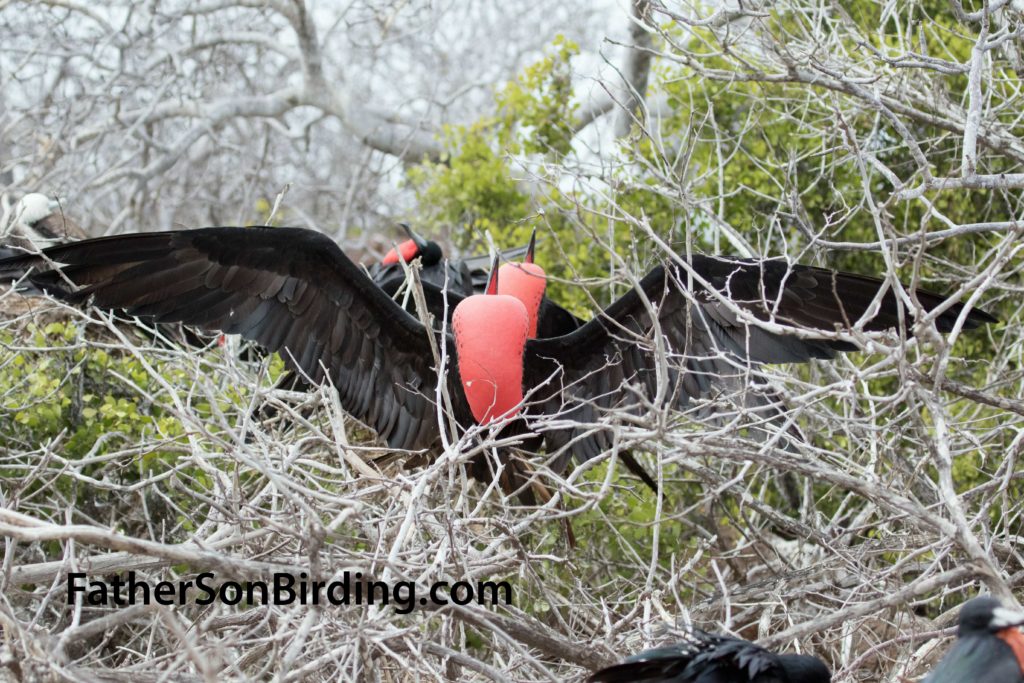
As we watched these male frigate birds ardently advertising for a mate, a female landed next to one of them. Let the family begin! (photo by Sneed B. Collard III)

Almost exactly two years ago, our family was fortunate to visit the Galapagos Islands. Braden and I eagerly anticipated the birds we might see, but weren’t sure what birding might be like in one of the world’s most famous places. Our findings? That while the Galapagos is full of fascinating birds to see, it is one of the world’s best places to think more deeply about birds, their evolution, and behavior.

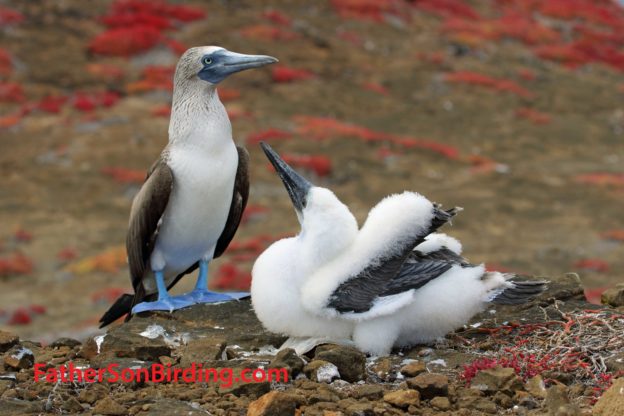
Upon arriving, the first thing we noticed is how tame Galapagos birds are. Many, after all, evolved with few predators to worry about, and this was clearly demonstrated as we hiked within a few feet of nesting Blue- and Red-footed Boobies, Magnificent Frigatebirds, and a sublime Galapagos Dove. Even Yellow Warblers hopped around our feet seemingly without fear. Just try getting close to one in Montana! This close proximity, of course, was great for photography, but also for watching bird behaviors up-close.

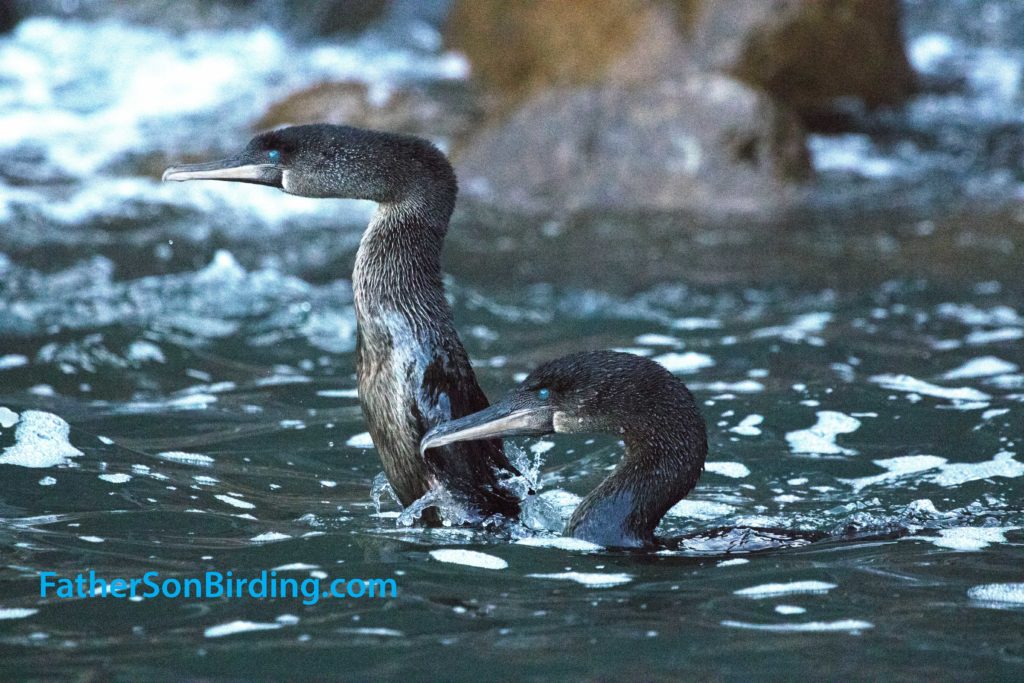
Watching these flightless (Galapagos) cormorants perform their intricate mating dance was one of many unexpected, delightful birding surprises we experienced in the islands. (photo by Sneed B. Collard III)

One time, we stood thirty feet from four or five male frigatebirds sitting in stick nests that they had built. When a female flew over, the males all spread their wings, puffed out their gular pouches, and “rattled” their beaks. It was their way of shouting “Choose me!” It worked too! As we watched, a female landed next to one of the males to begin the “dating” rituals.

The most interesting Galapagos birds were the finches. Perhaps the drabbest, least noticeable birds in the islands, the finches played a key role in helping Charles Darwin tease out the basics of evolution by natural selection. How? When he visited the islands in 1835, he collected many animal specimens—including finches—from the different islands. Back in England, a colleague informed him that the finches actually included many different species. This, along with observations he’d made on Galapagos tortoises and other species, helped Darwin realize how different habitats and conditions can shape animals and create new species.

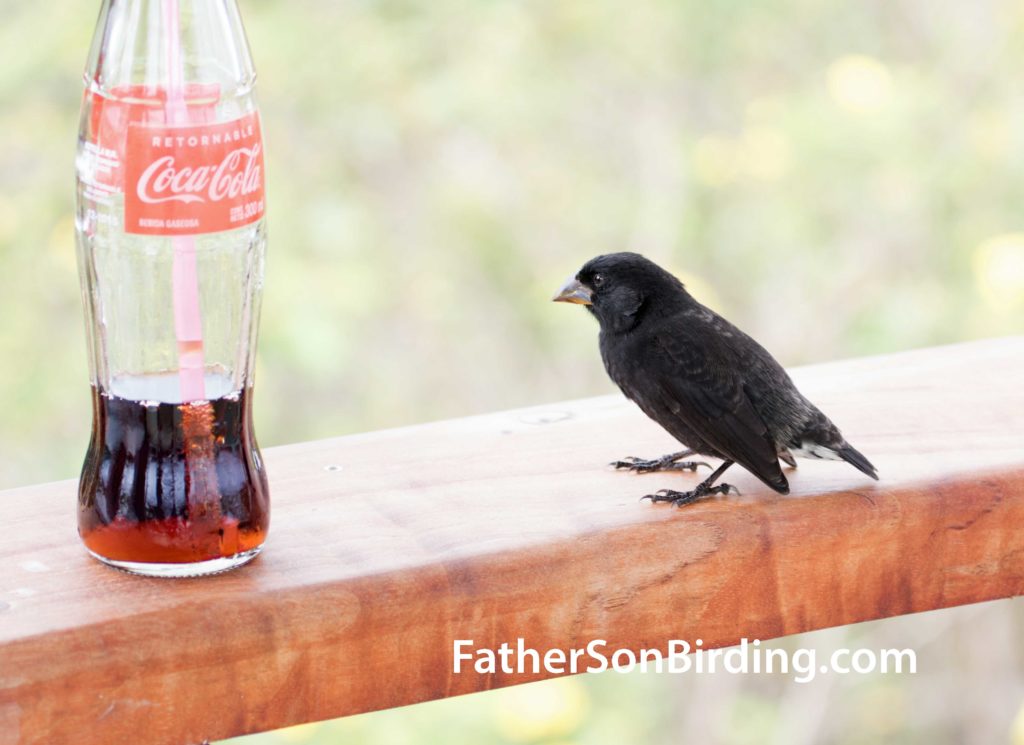
One Galapagos finch that Darwin missed is the Coke-swilling Finch—a rare species we were lucky enough to see in action! (photo by Sneed B. Collard III)

During our visit to the islands, Braden and I barely got started learning to identify the different finches, but we soon began to distinguish between larger and smaller species. Evolution has especially acted on the birds’ beaks, both in size and shape, as the beaks are a key to what size seeds and other foods the birds can eat. Not surprisingly, the beaks have formed the basis of long-term studies by modern scientists, as documented in one of my favorite books, Jonathan Weiner’s excellent The Beak of the Finch: A Story of Evolution in Our Time. Check it out—and if you ever get a chance to visit the Galapagos, jump on it. It will permanently alter your perspective on birds and life on our amazing planet.

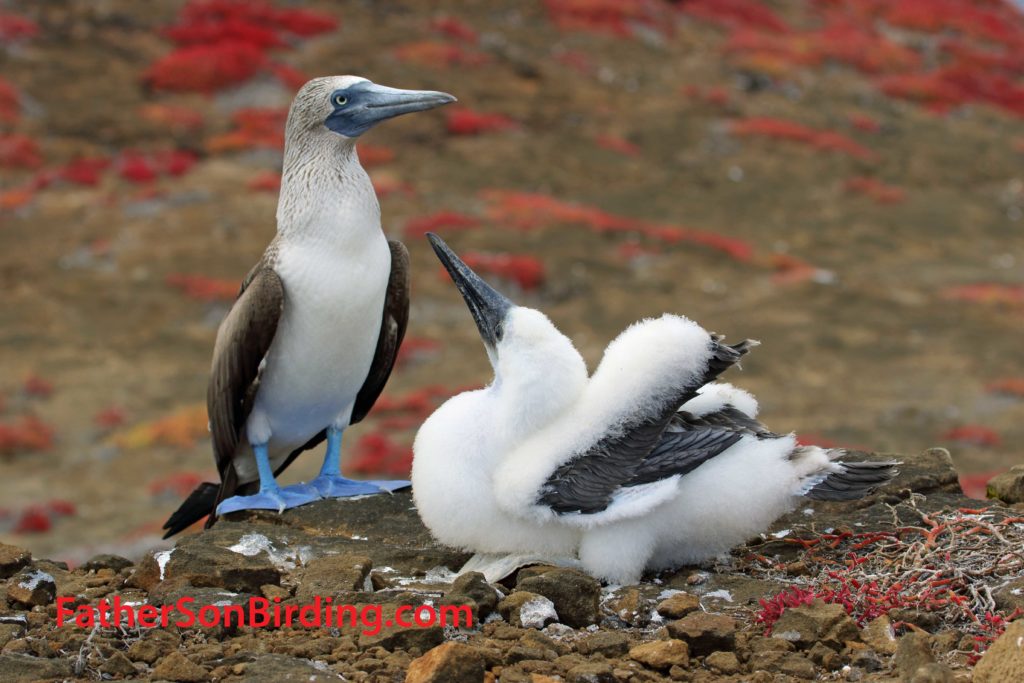
Braden and I never had any doubt about our Bird of the Trip. Every day, Blue-footed Boobies delighted us with their incredible flying and fascinating behaviors! (photo by Sneed B. Collard III)